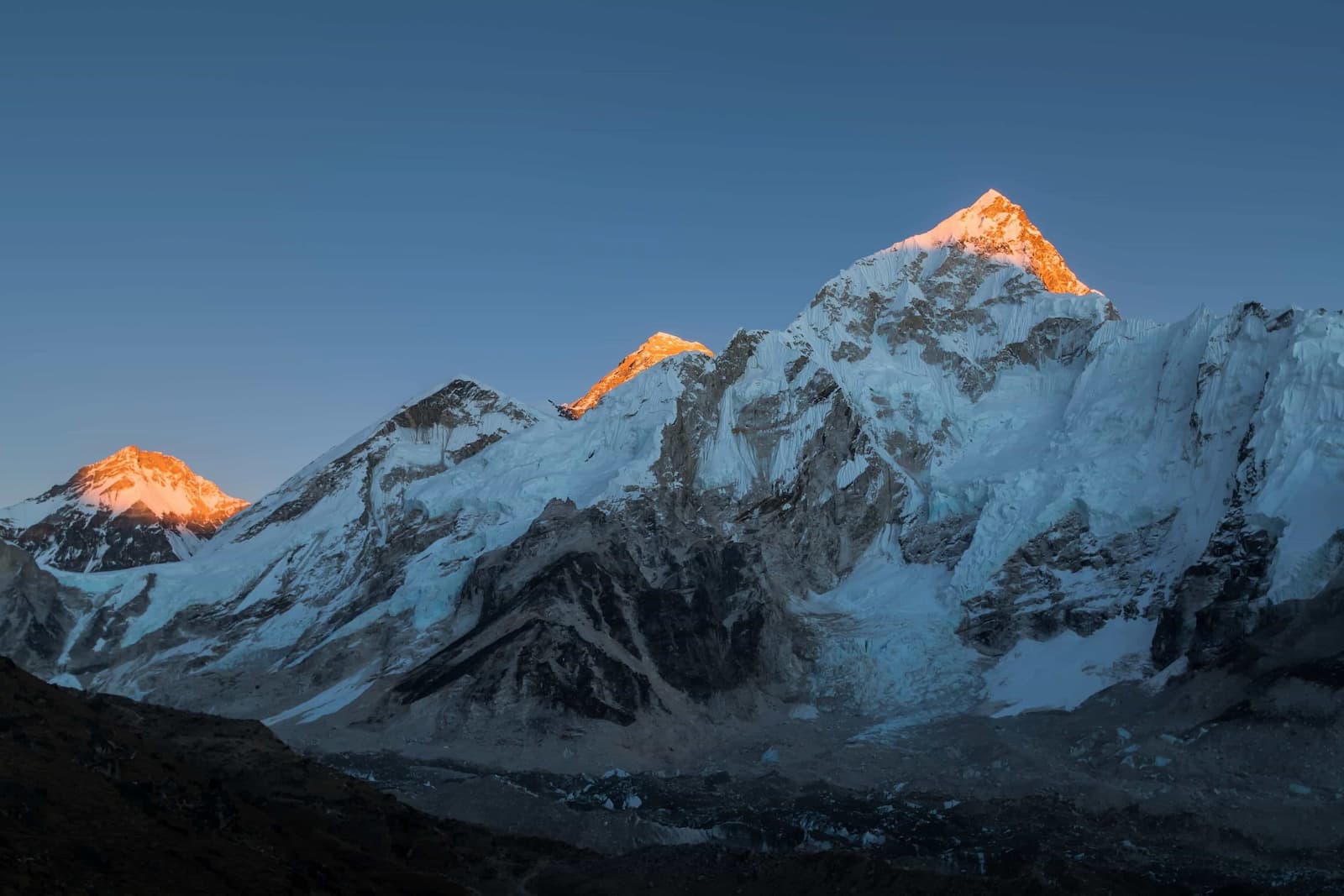
The Everest base camp Trek is one of the most popular and sought adventures around the Himalayan range. Since the conquest of Mt. Everest from South Col, of Nepal around the high Khumbu area.
Then it was exposed to the world, as one of the most exciting and picturesque countries of the Himalayas. Besides the lovely scenery of towering giant peaks, the route to Everest base camp is equally fascinating.
At present, trekkers can enjoy various types of comforts for overnight sojourns, from simple budgets to standard and luxury accommodations.
Everest Base Camp Trek includes a climb to the highest point of the adventure on the top rocky hill of Kalapathar. Rewards stunning panoramic views of majestic Mt. Everest at close distance, and walking around remorseless fields of ice and glaciers.
Adventure for all types of travelers from beginners to expert trekkers and adventurers, where the route leads on well-defined scenic trails.
Walk from one lovely village to another exciting settlement, enriched with age-old cultural heritage and through beautiful woodland. Finally reaching at sheer mountain wilderness amidst the arctic zone at Everest base camp, with close views of the tremendous Khumbu Ice-Fall.
The Everest base camp trek begins from Kathmandu, after being fully prepared and getting familiar with local cultures. Visiting around places of great historical and religious sites, and then towards our main destinations flying to Lukla.
Lukla is the starting point of various adventures around Khumbu and Everest region, the walk follows through Sherpa villages. To enter the famous Sagarmatha National Park, designated in World Heritage Sites enriched with flora and fauna.
Includes the world's highest and most famous peaks, with green forests to the rocky moraine of ice and glaciers. As the walk progress heading high to the famed Namche Bazaar, the major hub of Khumbu Sherpa and for visitors. An ideal place for a rest day to support acclimatization and exploring around its scenic viewpoints.
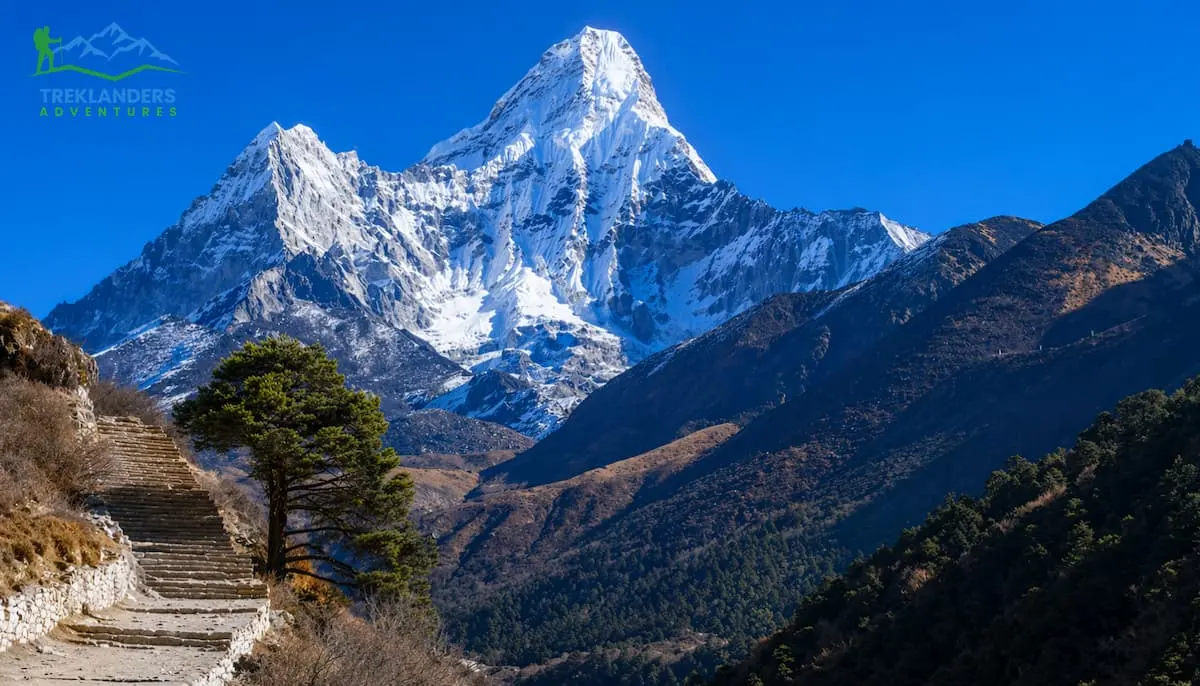
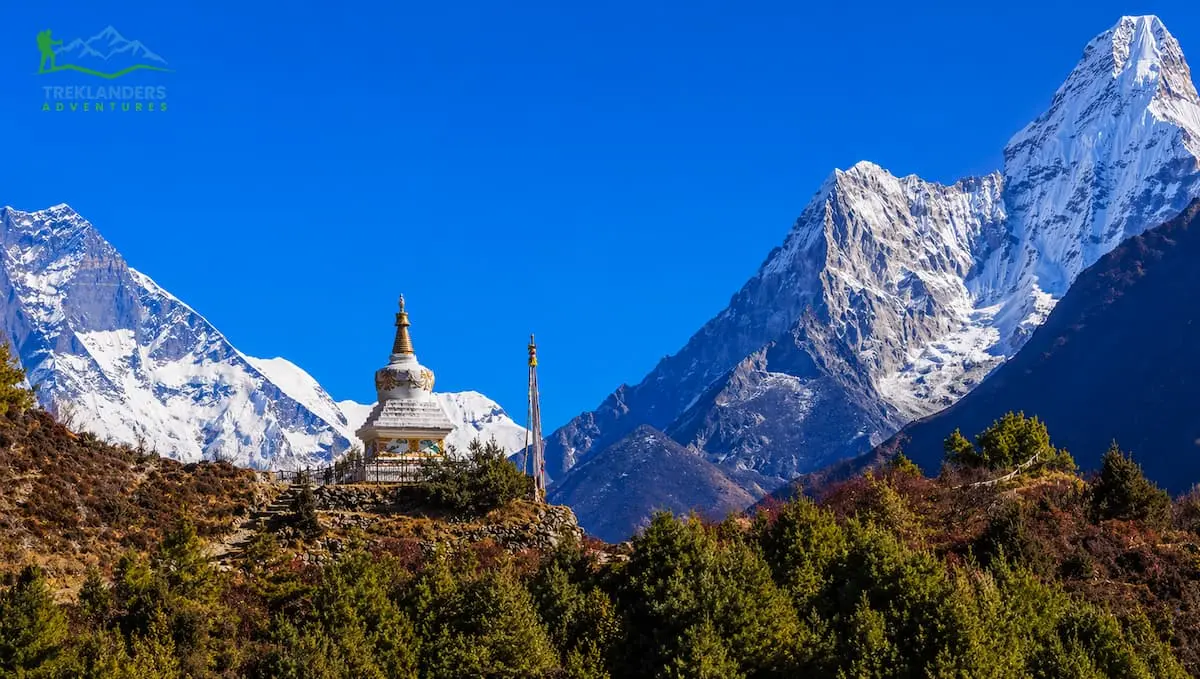
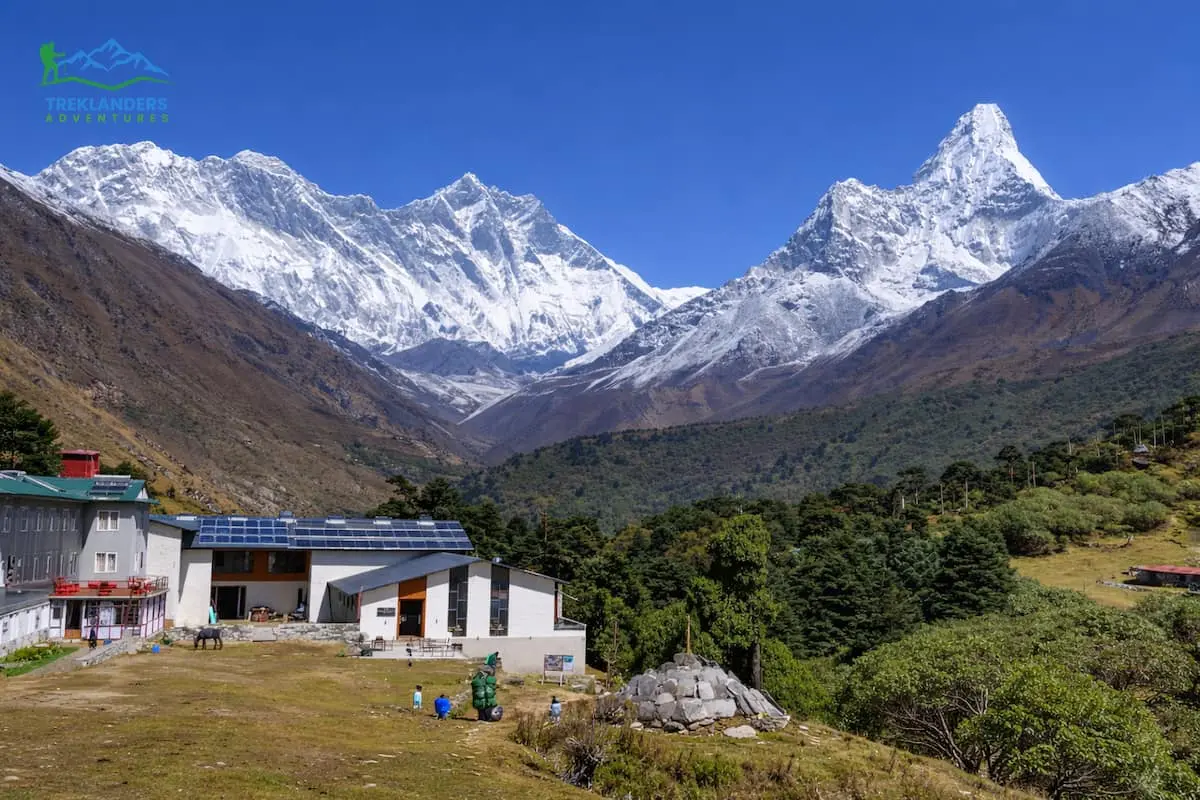
From Namche Bazaar, the adventure heads higher toward the beautiful location of Tengboche with a colorful impressive monastery. A great place for a grand vista of Everest, Ama Dablam, and arrays of peaks, amidst a lovely forest.
The trail follows higher leaving the tall tree lines behind for a mountainous terrain walk that leads to Pangboche and Dingboche settlements. Then finally our route heads towards our main highlight to reach Everest base camp, after Lobuche and Gorakshep. Enjoy the dramatic scenery at Everest base camp, enclosed by staggering peaks, standing on the foot of Mt. Everest.
Our next adventure leads to a steep climb on top of Kalapathar rocky ridge for the closest stupendous views of Mt. Everest. Surrounded by giant peaks of Nuptse, Lhotse, and Pumori with a series of towering snow peaks. After achieving the main goals and highlights of the trip, return journey on the same scenic route back to Lukla.
Reaching Lukla for the last overnight around Khumbu and Everest region, the next morning a short sweeping flight brings you to Kathmandu. After a marvelous adventure and exciting moments on Everest Base Camp Trek, with the grand services of Treklanders Adventure staff and guides.
The best season for Everest Base Camp is nearly all seasons of the year, except for monsoon time of mid-June to August. The right time is spring from March to May. The high season of autumn/fall, begins from September to November, interested people can visit during winter times of December to February.
But freezing temperatures during early morning, late afternoon, and night, as well in shades. Most days are clear with short sunny days for views and walks.
Springtime is bright and beautiful, most days are clear with sunny days, can be cloudy afternoons. Bringing cold chill in the late afternoon, and night till morning this is the time when wildflowers are in seasonal bloom. Expect snowfall sometimes during spring times, around the high areas.
The next best season is autumn/fall, where days are clear with sunny days for views and walks. But shorter days due to limited sunlight hours, cold morning and night time, expect snowfall sometimes.
The Everest region of the high Khumbu district is populated by the famous highlanders the Sherpa. The menfolk famous as natural mountaineers and expert Mountain Guides. The Sherpa interwoven with the teaching of Buddhism follows an impressive heritage and culture similar to its predecessors the Tibetans.
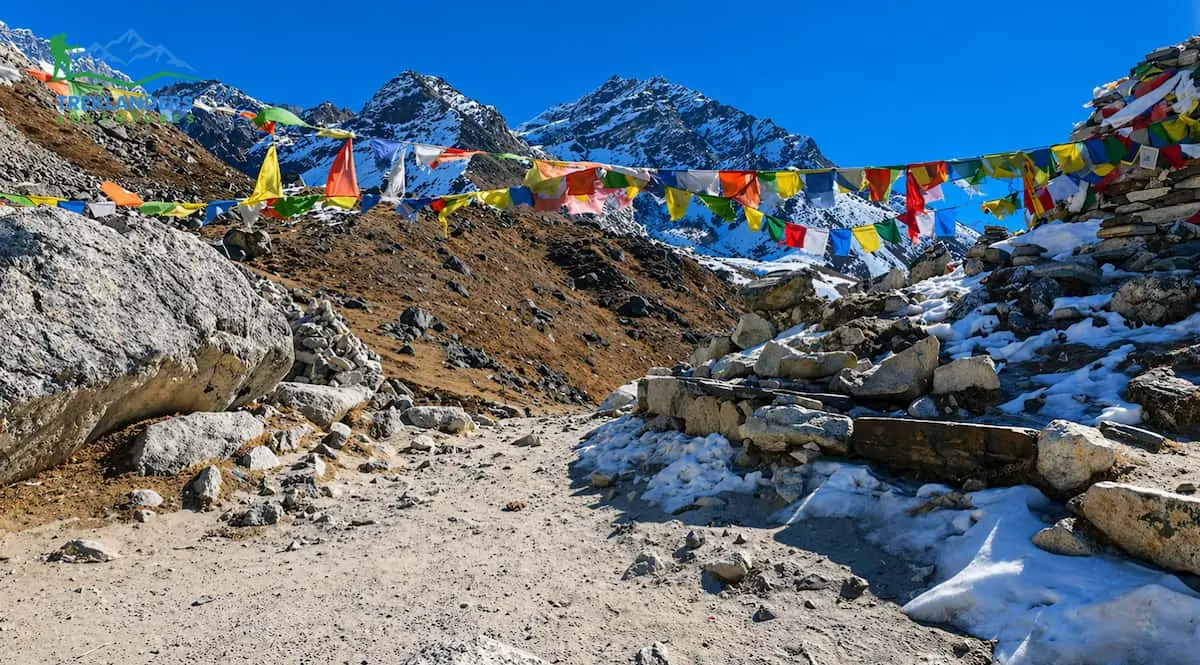
Most large villages have monasteries called Gompa, with every house adorned with prayer flags, and Buddhist monuments.
Trip Summary:
Mode of Trek: Best available lodge / guest house on treks.
Trekking Grade: Moderate to Adventurous walks.
Trekking Region: Around high Khumbu of Everest Region.
Start and End of trek: Lukla to Lukla with flights both ways.
Highest elevation: Kalapathar top at 5,643 m / 18,514 feet and
Everest Base Camp at 5,364 m / 17, 598 feet.
Trek duration: 11 Nights and 12 Days from Lukla to Lukla.
Total Trip: 15 Nights and 16 Days, from arrival to departures.
Please Note:
The flight to Lukla and back to Kathmandu, can get delayed sometimes or might be postponed for next morning. If weather is bad and unfavorable, this is normal, around the Himalayas. On this situations please bear with us, the company will try the best finding other solution to avoid inconvenience to all our clients.
The next important information for all trekkers to Everest and Khumbu region needs to be aware. The flight from Kathmandu to Lukla likely to be diverted to Manthali town airport at Ramechap district. The diversion made by the Nepal Civil Aviation due to heavy air-traffic at Kathmandu international and domestic airport.
This notice applies till further notice from respective Government departments.
Manthali airport of Ramechap located approx. 150 km / 93 miles from Kathmandu, driving distance of 4 to 5 hours. Might need to travel to Ramechap on the second day after international arrival in Kathmandu.

On reaching departure air terminal on landing at Kathmandu / international airport. Our staff and guide receives you for short transfer to respective hotels in the heart of Kathmandu city. After checking into your rooms, getting refreshed join with other members of the treks for group briefing. Provided by our guide or trek leader, briefing includes all important subjects related to the treks, includes information of Kathmandu and hotels. Evening a group welcome dinner in an authentic Nepalese restaurants, an introduction to Nepali meals and cultures.


Enjoy the day from Phakding onwards, morning walk heads higher past smaller villages to cross a long bridge. The climb leads to a nice Monjo village and then at the entrance of Sagarmatha National Park. (The name Sagarmatha for Everest in Nepal, the native Sherpa calls Chomolungma of Tibetan origin language).
From the park to the last village of Jorsalle before Namche Bazaar, possible lunch stop. Afternoon walk following the river bed and climb up to a high suspension bridge, and then on undulating uphill. Taking another few hours to famous
Namche Bazaar the capital of Khumbu Sherpa’s, and major hub for trekkers.
All house are in an amphitheater U shaped basin, the size of a town provides great facilities for visitors. As well as for the local also, where once a week a busy colorful Saturday market takes place. Hence the name as Namche Bazaar, arriving on this large settlement check into a nice lodge for two overnight stops.

An ideal place with perfect altitude for rest day to support acclimatization before heading higher destination. At Namche enjoy a leisure morning and take a hike around its scenic viewpoints. Suggested short hike and excursion around Namche Bazaar and beyond:
The short and scenic is short steep climb to Park museum above Namche Bazaar offers grand vista of Mt. Everest. Includes views of Lhotse and majestic Ama Dablam with arrays of snow clad peaks. Visit the park museum provides good interesting information of the Khumbu and its people, cultures and custom.
As well of exotic flora and fauna with history of mountaineering expeditions around Khumbu high mountains.
The next great hike is to Everest View Hotel at 3,880 m, located on a high ridge amidst forest surrounding. One of the world’s highest deluxe hotels offers superb views of Mt. Everest, Lhotse, Nuptse and magnificent Ama Dablam. A walk of 2-3 hours with an hour or more climb and down, overlooking birds-eye views of whole Namche Bazaar.
Rest of the afternoon rest or explore the fancy streets of Namche Bazaar, lined with shops, stores and restaurants. Includes café, fresh bakeries, pubs and bars with backdrop of stunning views of Kwangde Peaks.


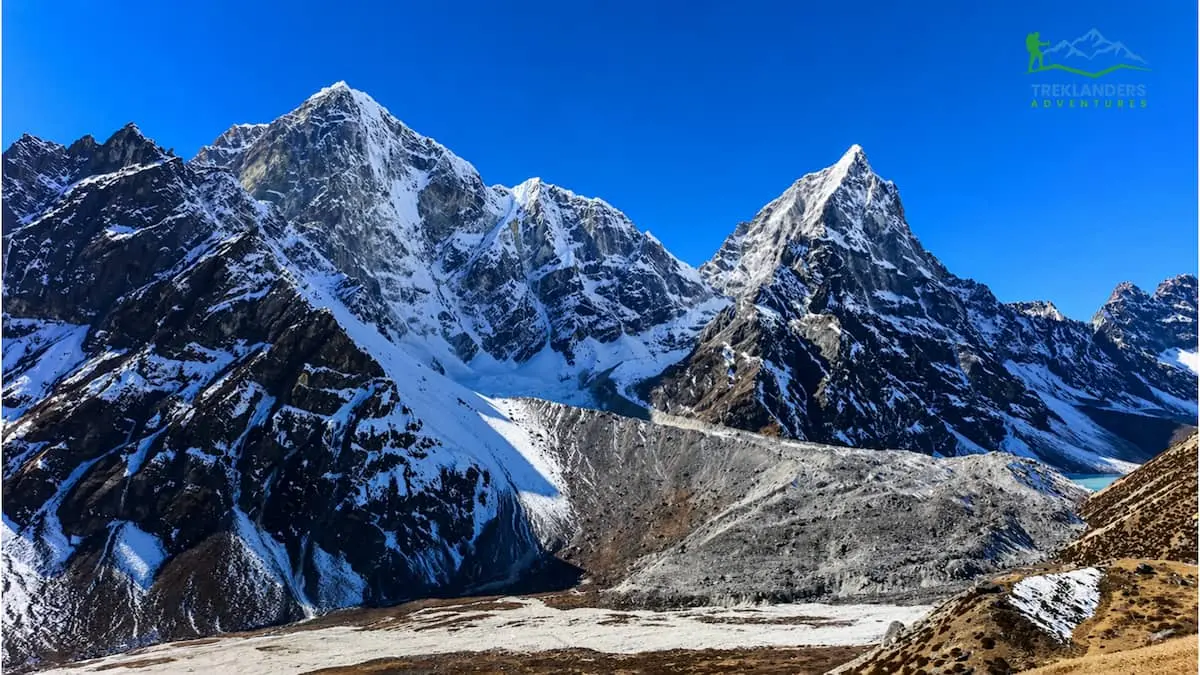
From Tengboche enjoying the morning glorious panorama of Everest and magnificent peak of Ama Dablam. The trail heads down to a river where tree lines drops for short juniper bushes, a slow climb to Pangboche. The last permanent village en route Everest base camp and beyond. Walk follows on gentle up to Somare for lunch break beneath the shadow of towering Ama Dablam peak.
After lunch heeding slowly down to cross a river and then climb towards Imjatse valley, where a nice settlement of Dingboche situated. A scenic lovely place with many good lodges for overnight stand, beneath North Face of Ama Dablam and Lhotse mountains. Facing views of Island Peak and surrounding snow-capped peaks that encircles the Imjatse valley. Overnight in the comfort of a nice cozy lodge at Dingboche with beautiful scenery to enjoy.

At Dingboche another pleasant rest day for acclimatization and short hikes, before heading towards our first pass over Kongma-La. Hike up to Nakarjung hill for best panoramic views of surrounding series of giant peaks. Rest of the afternoon at leisure to explore Dingboche and its scenic surroundings.

Our real and true adventure starts heading towards Everest base camp, having breakfast. The walk follows on the high trail above Imjatse valley and Dingboche, as our route
From the pass a slow descent to cross over Khumbu glacier, and then steep climb to a rocky dune. After completing the climb for the day reaching Lobuche for overnight in the best available lodge. Enjoy the comfort of a nice lodge after a great day and crossing the highest pass of the adventure.

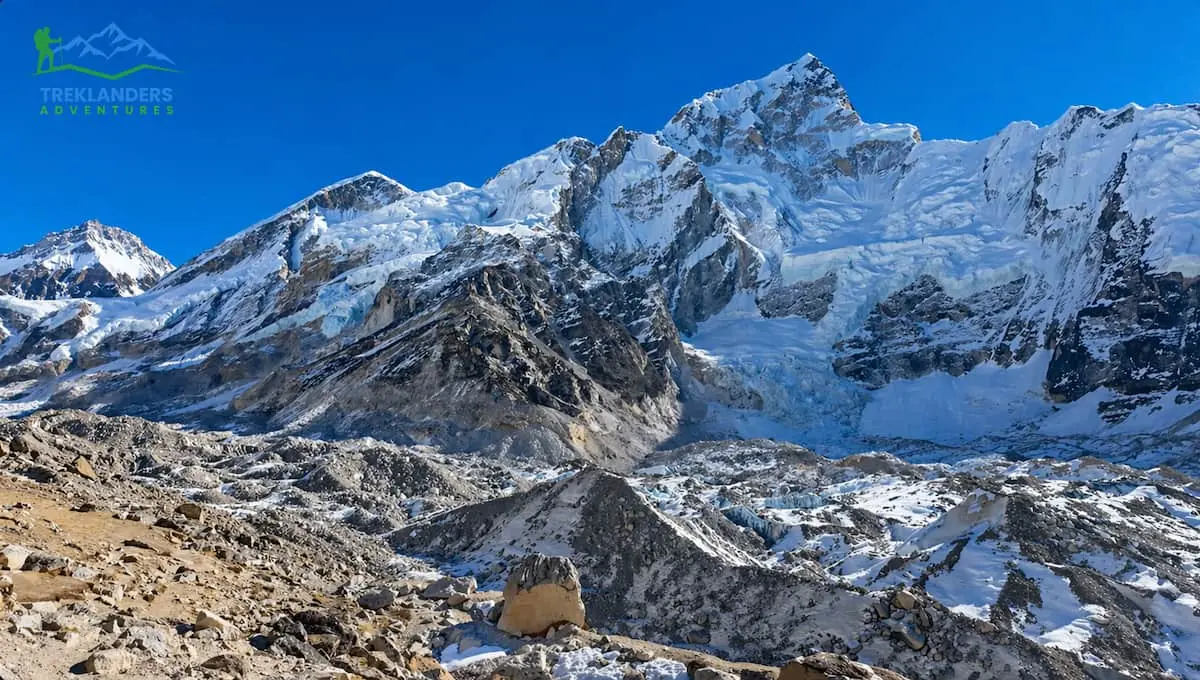
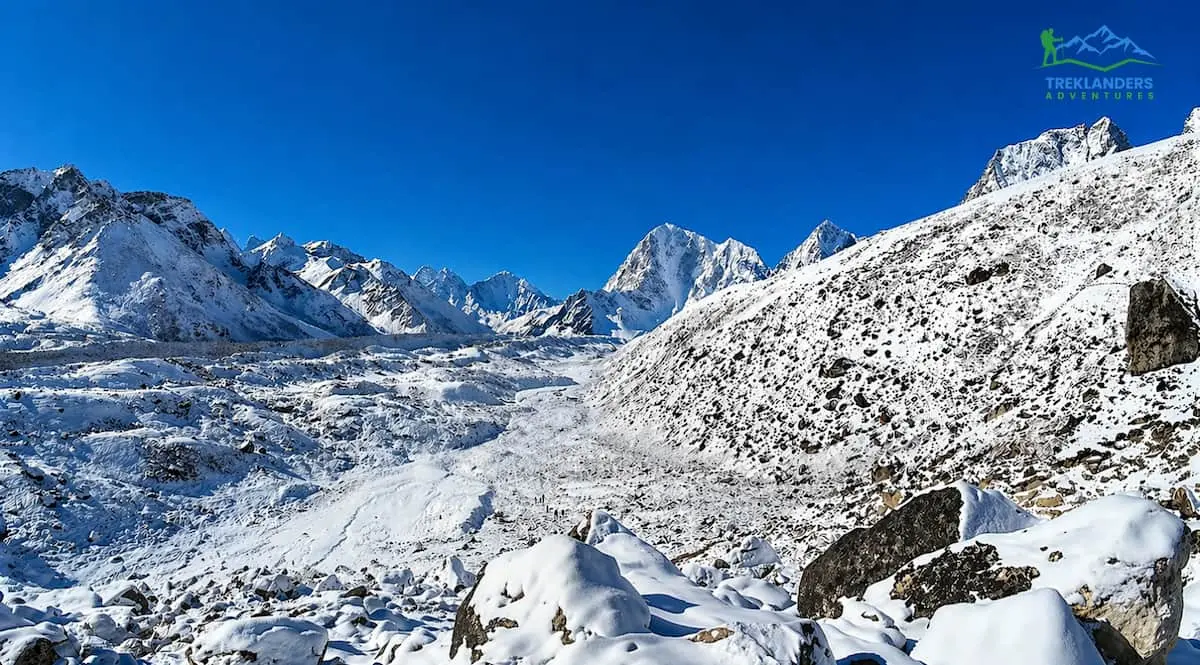
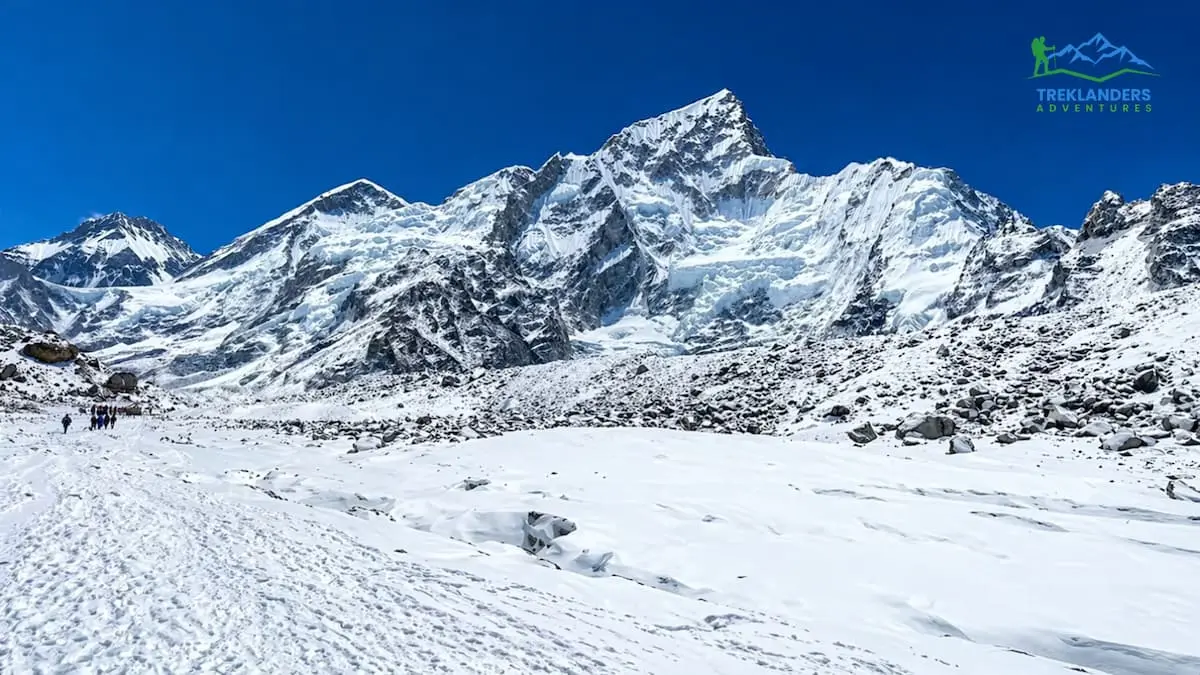
An exciting trek in the morning towards Everest base camp one of the highlight of the adventure. Start early morning for another long day, following a gentle path with few ups reaching rocky moraine areas above Khumbu glacier. After few hours of good morning walk reached Gorakshep, situated at the bottom of famous Kalapathar rocky hill. Gorakshep the last settlement of Khumbu area on route Everest and Lhotse base camp. Following the trail towards east on well-defined path for an hour and then the last leg of the hike. The walk continues over moraine of ice and glaciers to Everest base camp. Enjoy the dramatic scenery of arctic like landscapes enclosed by towering peaks of Lhotse, Nuptse and Lingtrin. The views of Mt. Everest is obstructed by adjoining peaks, however an amazing place to experience.
Overlooking close views of massif Khumbu Ice Fall as it tumbles down near the foot of Everest at base camp. From the base camp return walk back to Gorakshep for overnight stop.

Great options and opportunity for last steep climb and hike to the top of Kalapathar. The highest point of the adventure, start early morning heading towards at the base of Kalapathar. As climb begins heading higher and higher on steep slope then reach a rocky hill top of Kalapathar. One of the best view-points in all Himalayas for the closest looks of Mt. Everest at a stone throw distance.
Enjoy the tremendous panorama of giant peaks with close views of Mt. Everest, Lhotse, Nuptse and Mt. Pumori. After a refreshing morning hike head downhill to Gorakshep for breakfast, and getting ready for a long day walk to Pangboche village. The trail follows on the same route past Lobuche, reaching Thugla, where route of Dingboche and Pheriche meets. Our route leads down to Pheriche valley and reaching the nice settlement with many lovely lodges and resorts. Possible lunch stop at Pheriche, a place where HRA (Himalayan Rescue Association) Post is located. From Pheriche walk down to a river and then up to a small hill top, and then on easy downhill to Pangboche village for overnight stop.


Last day walk of the adventure, enjoy the pleasant walk downhill to Dudh Koshi River valley. A nice walk to Jorsalle crossing a bridge with short steep climb to the entrance and exit gate of Sagarmatha National Park. Walk continues past Monjo village heading towards Phakding for lunch stop. Afternoon few hours of good walks with last hour climb to reach Lukla. Arriving by late afternoon with ample time hang around and to enjoy the last dinner celebration with fellow members and trekking staff.

Early morning transfer to Lukla’s Tenzing and Hillary airport as the plane arrives either from Kathmandu or Ramechap. Board in a small aircraft of respective airlines for sweeping panoramic flight back to Kathmandu. Then get transferred to your hotel, with afternoon free at leisure.
If the flight lands at Manthali airport in Ramechap, our staff transfers you to a vehicles. A drive of 4-5 hours brings you back at the hotel in Kathmandu, after a great adventure on Everest base camp Trekking.

Enjoy an extra day in Kathmandu, we have reserved as contingency day in case of flight delay and cancellation. Due to unfavorable bad weather condition, if all goes well according to our itinerary days, have a great enjoyable day.
For individual activities or get into shopping spree, interested people can join for another interesting tour of other cities of Kathmandu valley. Sightseeing around Patan / Lalitpur or the famous Bhaktapur city Durbar Square, worth a visit.

After an enjoyable and most mesmerizing adventure in Nepal and around the Himalayas on Everest base camp Trek. As time for departure, our staff transfer you to international airport for flight homeward bound or to next port of call.
Farewell dinner last night in Kathmandu.
The Everest Base Camp trek was an absolute adventure of a lifetime! From the moment I set foot in Lukla to the final steps at Kala Patthar, it was a journey that exceeded all expectations. The breathtaking landscapes, quaint Sherpa villages, and the looming presence of Mount Everest were simply awe-inspiring. Our guide was not only experienced but also a wonderful storyteller, sharing the local legends and customs that added a unique dimension to the trek. The acclimatization days were invaluable, ensuring a safe and enjoyable experience at high altitudes. Reaching Everest Base Camp was the pinnacle of the trek, and the sense of accomplishment is indescribable. But it didn't end there; the sunrise from Kala Patthar cast an enchanting golden glow on the peaks, a moment I'll cherish forever.
Purpose: Keep sweat off the skin and maintain warmth.
Purpose: Trap body heat in cold air at altitude.
Tip: Keep electronics in inner pockets at night to prevent freezing.
Nearly all age group can join on this wonderful adventure, as long all interested trekkers should be in good physical shape. As well with sound health to take the challenge walking on high altitude. The walk is basically moderate and easy, but due to the ride in altitude makes the climb uphill quite strenuous for some people. However taking slow and having enough rest days for acclimatization can overcome the difficulties. Treklanders has set the itinerary with rest days where required to make the trek easier for all age group. However we recommend minimum 16 years of age to maximum of 70 years old can join on this wonderful adventure.
Nearly all villages and lodges have electricity with Hydro or Solar power, where one can charge their electronic items. Where client needs to pay an extra fee for using the power as per gadgets charged. As for internet and cell phone communications, every lodges have the Wi-Fi and internet services, but can be quite disturbing sometimes due to weather and location wise.
It also depends upon on a day for internet and Wi-Fi if the weather is clear and fine can receives much better. As well the change of landscapes and altitude might disturb the internet with poor links, but local cell-phone can receives transmission and it works.
From Lukla onwards to Dingboche and Lobuche till Gorakshep, one can enjoy the comfort of nice lodges and guest house. As well with warm traditional hospitality in every overnight stops, people can choose from budget, standard to luxury lodges where available.
The foods are well served in a large cosy dining hall, can choose various items of foods from the menu with wide range of meals and snacks to choose from.
Serves Continental, Chinese, Indian, Tibetan and Nepali foods, as well Mexican, Italian, Korean or Japanese in some lodge restaurants. Includes fresh bakery products also.
It is one of the most popular trek around the Himalayas, due to its accessibility with well-defined trails. As well with availability of good lodge accommodation and best foods till Gorakshep before Everest base camp. In high season of spring and autumn the trek to Everest base camp get very busy. Where one needs to book the lodge at designated overnight stops well in advance, especially for bigger groups.
As season wise with the mass flow of visitors to Lukla and vice versa from Kathmandu.
During high times of trekking season, the flight to Lukla and back can be quite busy. Where more than 20 flights operates in a fine clear day, which cause air traffic coinciding with the international and domestic airlines. To make the air traffic lighter, the flight to Lukla from Kathmandu is diverted in Manthali airport at Ramechap district. Which is about 150 k.m driving distance of 4 to 5 hours, the flight from Ramechap to Lukla is just 20 to 25 minutes. Which makes it easier and quicker before the bad weather closes in. For further updates the company will inform all the clients flying to Lukla joining with Trek Landers Adventures.
Nearly all villages and lodges have electricity with Hydro or Solar power, where one can charge their electronic items. Where client needs to pay an extra fee for using the power as per gadgets charged. As for internet and cell phone communications, every lodges have the Wi-Fi and internet services, but can be quite disturbing sometimes due to weather and location wise.
It also depends upon on a day for internet and Wi-Fi if the weather is clear and fine can receives much better. As well the change of landscapes and altitude might disturb the internet with poor links, but local cell-phone can receives transmission and it works.
The EBC trek is undoubtedly one of the most famous and marvelous trekking adventures across the globe. It is basically a hike to the base of Mount Everest (8,848.86 m) by foot which means it goes along stunning and picturesque paths of the Khumbu region with the fantastic view of Everest, Lhotse, Nuptse, and Ama Dablam. Along with that, it is an immersion into the Sherpa lifestyle, visiting the Buddhist monasteries, and experiencing the breath-taking landscapes of the Sagarmatha National Park.
The Everest Base Camp Trail is a once-in-a-lifetime experience that includes both the stunning nature of the Himalayas and the warm and friendly typical Sherpa way of life. Along the way, you will see the stunning mountains of the world, make a stop at historic places such as the Tengboche Monastery, and be able to say that you saw the biggest mountain on the planet up close. The venture is a great physical challenge and a source of spiritual motivation at the same time as it offers unlimited scenic views and an unbeatable cultural immersion.
Normally, the EBC trek is done in 12 to 14 days. The exact time varies depending on the route taken and the acclimatization schedule. The standard route is done by plane from Kathmandu to Lukla. From there, the trek goes through Phakding, Namche Bazaar, Tengboche, Dingboche, Lobuche, and Gorakshep until it reaches the base camp (5,364 m). Almost all trekkers also go to Kala Patthar (5,545 m), which offers the most spectacular sunrise view of Mount Everest.
Pick a trekking company that is officially registered with the Nepal Tourism Board (NTB) and is a member of the Trekking Agencies' Association of Nepal (TAAN). Make sure the guides are certified by the government, have insurance, and are skilled. You can check the realness of the sources by reading the clients' reviews on TripAdvisor or Google Reviews. Do not fall for extremely cheap offers; instead, choose professional agencies like Treklanders Adventures that commit to safety, giving the porter a fair level of service, and responsible tourism.
Almost all agencies facilitating the trek present a range of options for payment: wire transfers (SWIFT), card payments through the internet (Visa, MasterCard), or cash payments on arrival in Nepal.
Simply go to www.treklanders.com, find the Everest Base Camp trip page and complete the booking form with your personal details, date of your trip, and payment method. A confirmation will trigger the delivery of the detailed itineraries, permits, and guide information. You can also reach out to Treklanders Adventures directly through WhatsApp at +977 9851019683 or via email either at info@treklanders.com or treklanders@gmail.com.
The total walking distance from and to Everest Base Camp is roughly 130 kilometers (80 miles). The trip time is normally 12–14 days, covering around 10–15 kilometers per day depending on the terrain, altitude, and pace. The journey is from Lukla (2,860 m) to Everest Base Camp (5,364 m) via Namche Bazaar, Tengboche, Dingboche, and Lobuche. The distance can be considered as moderate, however, the altitude and trail conditions make it a tough and rewarding trek for the mountaineers.
In fact, the best EBC trek seasons are spring and autumn that are March–May and September–November respectively. These are the times when weather is quite stable and clear sky is observed for maximum visibility.
Spring (March–May)
Nature sings along the trail during this time to trek in the Khumbu region. Days are moderate in temperature and bright with clear blue skies, while nights are cool but comfortable. Ridge after ridge of rhododendrons brighten the trail with red, pink and white blossoms. There is also the Everest climbing season while trekking in the Khumbu, so climbers and trekkers frequently going in the same direction may meet on the way — thus, the journey becomes more motivating.
Autumn (September–November)
This is the main trekking season in Nepal when most tourists come to hike in the country. After monsoons the air is very pure and without any dust, thus amazing mountain views and pleasant temperatures during the day can be expected. Indeed, these are the best times for trekking and also great for experiencing local cultures and traditions as well since Dashain and Tihar festivals are celebrated during these months.
Winter (December–February)
Yes, one can trek during the cold season and it is better to expect freezing temperatures at night especially at a higher elevation. There are only a few people and the trails are deserted, so perfect if you want to be alone and enjoy spectacular winter views. The problem is that some high passes or areas around Gorakshep may be closed off due to snow.
Summer (June–August)
With the arrival of the monsoon, Nepal can expect heavy rain, dull weather, and also leeches in the lower regions. Most trekkers would not take this route, however, it is still doable for those who are not bothered by the rain and would like to see nature at its best and trails less crowded.
The ascent is from Lukla (2,860 m) to EBC (5,364 m) and Kala Patthar (5,545 m) with the increase in height done gradually. Over 90% of the lodges on the trek are within the 3,000–4,400 m range. Trekkers must prepare themselves for altitude-related problems and must also allow sufficient time for acclimatization.
It is not a condition to have experience before the EBC trek, but one has to be physically fit and well prepared. The EBC walk is a task of moderate to severe difficulty, where one has to walk 5–7 hours daily on steep paths. If properly trained, it is possible for any person with good stamina to make it to the end.
Indeed, a great number of first-time trekkers manage to finish EBC. The main thing is to go at a slow pace, drink plenty of water and have your acclimatization days at Namche Bazaar (3,440 m) and Dingboche (4,410 m). The employment of a skilled guide is the best course of action.
Begin your training 3–4 months before setting out on the Everest Base Camp journey. Physically getting ready for the trek should not be seen as an optional task — it is, in fact, the main factor that determines whether you will have a successful and pleasant trek.
Cardio Training for EBC Trek
To make your body cardio fit, go for trotting on the hills, climbing stairs, cycling, or rowing for 4–5 days a week to a duration of 30–45 minutes. The aim here is to make your heart and lungs stronger so that it will be easier for you to breathe in the thin mountain air.
Leg Strength for Everest Base Camp Trekking
Concentrate on leg exercises that include squats, lunges, step-ups, and calf raises 2–3 times per week. Gain the habit of going uphill with a 15–20 kg loaded-backpack to enhance power and breathing - in this way, your legs that will most likely be the ones to work on the trail will be sufficiently trained.
Altitude Simulation Training
Use HIIT (High-Intensity Interval Training) along with some sprints, burpees, or mountain climbers once or twice a week in which the body adapts to very low oxygen conditions just like in altitudes.
Core Strength for EBC Trek
Work hard on your core with planks, side planks, and dead bugs 3–4 times weekly for 15 minutes. A solid core not only helps the correct posture and keeps the balance, but also makes the individual less tired during long trekking days.
Backpack Training
Before your trip, do a minimum of 4 and maximum of 6 practice hikes using the same 8–12 kg backpack you plan to bring on your trip. Make the walk more challenging for your shoulders and back by including different terrain such as hills and descents that you will be facing on a real trail.
Sample Weekly EBC Training Schedule
Monday: 45-min hill run
Tuesday: Leg strength exercises
Wednesday: 2–3 hour hike with backpack
Thursday: Core workout
Friday: 45-min cardio
Saturday: 3+ hour hill trek with backpack
Sunday: Rest
Recovery and Nutrition
Try to sleep at least 7 hours but no more than 9 hours every night. Have more protein-packed meals, drink lots of water, and take your rest days seriously — recovery is also a part of the training.
Pre-Trek Health Check
Get a medical clearance by visiting your doctor before the trip. Talk about altitude problems as well as any other health conditions that you already have so that you can be absolutely sure that you are ready for high-altitude trekking.
Layered packing will allow you to deal with varying mountain weather. Make sure you have thermal base layers, a fleece jacket, a warm down jacket, a waterproof/windproof outer shell, a hat, gloves, and woolen socks included in your clothing set.
Optimal is a comfortable and supportive backpack of 40–50 liters capacity. A padded hip belt and adjustable straps will allow for better weight distribution, so choose one which has them.
Absolutely not — trekking poles, though, are very useful if you want to use them. They aid in walking steadiness, lessen knee strain, and provide support during steep climbs and descents.
Get a pair of strong, waterproof hiking boots with good ankle support. Make sure to wear them a few times before your trip so as not to get blisters and to be able to walk comfortably on the trail.
Don’t forget to take with you along the way sunglasses, sunscreen, headwear, headlamp or flashlight, first-aid kit, personal medications, toiletries, camera, and a small daypack for essentials.
Do not burden yourself with heavy or useless things such as jewelry, large sums of money, and expensive electronics. Keep your equipment light and handy the key to success in the Himalayas is being simple.
Trekkers must have two major permits if they want to go legally into the Everest region and Sagarmatha National Park.
Sagarmatha National Park Entry Permit
Khumbu Pasang Lhamu Rural Municipality Permit:
These permits are necessary for all trekkers, even those traveling with a guide and porter.
If you are doing the trek with a company such as Treklanders Adventures, you will have both permits arranged for you beforehand. In the case of an independent trek, you can pick them up at:
Sagarmatha National Park Entry Permit: NPR 3,000 (≈ USD 25)
Khumbu Pasang Lhamu Rural Municipality Permit: NPR 2,000 (≈ USD 15)
The permit prices are only in Nepalese Rupees and the permits are non-refundable.
April 2023 onward, the TIMS (Trekkers’ Information Management System) card is not mandatory for the Everest region. The Khumbu Municipality Permit has taken its place.
Suppose you decide to take the Gokyo Lakes, Chola Pass, or Three Passes Trek routes. In that case, you do not require any additional permits as the same two permits cover those paths. However, if your route leads you to different areas, such as Jiri or Salleri, then you may have to pay local entry fees.
You are expected to have:
Yes. Treklanders Adventures is your one-stop shop for all the permits you require during your trekking trip. There will be no need for you to stand in line or do paperwork — everything will be done before your trekking starts.
The typical price is between USD 50 and 150 for 14 days. Your age, country of residence and coverage limit will affect the final price of the policy. Think of it as a minor investment compared to the price of the evacuation that can be over 10,000 USD.
Absolutely, a travel insurance policy is a must for the trek to the Everest Base Camp. High-altitude trekking is inherently risky and may result in the development of conditions like altitude sickness; there can also be the occurrence of accidents or even flight delays. Thus, the availability of a reassuring insurance plan guarantees that any medical treatments or emergency evacuations (including a rescue via helicopter) will be paid for by the insurance company.
The policy that you hold should definitely cover the following scenarios:
Make sure that your plan explicitly includes high-altitude trekking that goes up to 6000 meters. Most regular travel policies frequently have clauses that exclude high-altitude trekking, so checking with the insurance provider is a must before your trip.
If you are looking for a complete and considerate insurance plan, then you should get it from your home country rather than Nepal. This is because the insurance offered locally may lack comprehensive coverage for international evacuation or may not be applicable for the high-altitude regions.
Definitely, most of the trekking agencies, which Treklanders Adventures is among, will ask for a copy of your insurance to be presented before the commencement of the trek. It guarantees that if the need for emergency support should arise, the help will not be far away and can be arranged in no time.
If a person doesn't have any insurance, he or she will have to cover all the costs out of his/her own pocket when an unfortunate incident happens. For example, the expenses for rescuing a person via helicopter or providing hospital care are known to be very high. Not to mention that if you happened to be trekking without insurance, then you are taking a great risk and it is a bad idea which is highly discouraged indeed.
Accommodation along the EBC trail is mainly in teahouses and lodges, which are simple yet cozy guesthouses run by local Sherpa families. Rooms typically include two single beds, a small table, and warm blankets. Bathrooms are mostly shared, with either squat or western-style toilets depending on the lodge.
Comfort levels vary depending on altitude and location. In lower villages like Phakding and Namche Bazaar, lodges offer comfortable beds, Wi-Fi, and even hot showers. Higher up, especially in Lobuche or Gorakshep, facilities become more basic due to remoteness — but all are clean, safe, and provide essential warmth and hospitality.
If you’re trekking with a licensed agency like Treklanders Adventures, all accommodations are pre-arranged. Independent trekkers can usually find rooms on arrival, though advance booking is recommended during peak seasons (March–May and September–November) when lodges fill up quickly.
Room rates range between NPR 500–25,00 (USD 4–20) per night. Many teahouses offer free or discounted stays if you eat meals at their restaurant. As altitude increases, prices rise slightly due to higher transportation costs.
Yes, most lodges provide hot bucket showers or solar-heated showers for a small fee (around NPR 300–600). In higher villages, where water may freeze overnight, hot showers might not be available daily.
Yes, Wi-Fi is available in most lodges via Everest Link or Airlink networks. The cost ranges from NPR 200–600 per session depending on altitude. Internet speed is slower at higher elevations but sufficient for messaging and light browsing.
Teahouses serve freshly prepared Nepali and Western-style meals. Popular items include Dal Bhat (rice and lentils), noodles, soups, pancakes, eggs, potatoes, and tea or coffee. Meals are simple, nutritious, and ideal for high-altitude energy requirements.
Yes, it’s highly recommended to bring your own warm sleeping bag (rated -10°C to -20°C). Though teahouses provide blankets, temperatures drop significantly at night, especially above 4,000 m.
Most lodges have twin private rooms, while shared dormitories are rare. In busy seasons, trekkers might share rooms if the lodge is full. Treklanders Adventures always tries to ensure private twin rooms for comfort and privacy whenever possible.
Some of the most reliable international airlines flying to Tribhuvan International Airport (KTM) in Kathmandu are Qatar Airways, Emirates, Turkish Airlines, Etihad Airways, Air India, and Thai Airways. These airlines offer regular flights and good service connections from major cities worldwide.
The Kathmandu–Lukla flight is one of the most scenic and thrilling short flights in the world. It lasts about 30 minutes and offers stunning aerial views of the Himalayas before landing at Tenzing–Hillary Airport (2,860 m) — one of the highest airports on earth.
Yes, advance booking is highly recommended, especially during peak trekking seasons (March–May and September–November) when flights are often fully booked.
Arrive at the domestic terminal at least 1.5–2 hours before your scheduled departure. Check-in may take extra time due to weather-related delays or luggage restrictions on mountain flights.
Most airlines allow 10 kg of checked luggage and 5 kg of hand carry per passenger. Excess baggage may incur additional fees, so pack light and keep essentials in your daypack.
Flight delays and cancellations are common due to changing weather conditions in the Himalayas. Trekkers are advised to keep 1–2 buffer days in their itinerary and remain flexible. Your trekking agency will help rearrange flights or accommodation if delays occur.
Yes. During busy seasons or poor weather, you can drive from Kathmandu to Manthali (Ramechhap) and take a short 20-minute flight to Lukla. This route is now frequently used to manage air traffic from Kathmandu.
The drive from Kathmandu to Manthali takes around 4–5 hours, passing through scenic countryside and hillside villages. The road can be winding but offers a glimpse of Nepal’s rural beauty.
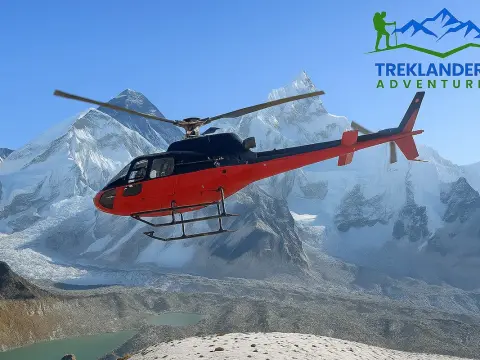
Yes, helicopter flights are available for those who prefer a faster and more comfortable journey. Helicopters operate from both Kathmandu and Manthali, depending on weather and demand.
Helicopters offer flexible schedules, private travel, and breathtaking aerial views of the Himalayas. They also operate in conditions when small planes might be grounded, saving time and avoiding long waits.
The main drawback is the cost, which can be five to six times higher than a regular flight. Availability may also be limited during peak trekking seasons.
Yes. You can drive to Salleri or Jiri and start trekking from there. This overland route adds 3–4 extra days to your journey but provides a less crowded and culturally rich experience through traditional Sherpa and Rai villages before joining the main EBC trail near Phakding.
In fact, any person who has good physical condition is determined, and loves adventure can trek to Everest Base Camp. Being a professional athlete or an experienced mountaineer is not necessary — just being healthy, prepared, and mentally strong is enough. The trek is considered as moderate to challenging, involving daily walks of 5–7 hours on different terrains and altitudes up to 5,364 meters (17,598 ft). If the trekkers take proper acclimatization, keep a steady pace, and are guided by a team like Treklanders Adventures which is experienced, they can be of any age (usually between 12 and 65 years) and still make it to the destination.
If you live an active lifestyle, are fond of hiking, and are willing to do some basic physical training 3–4 months prior your trip, then you will be able to take this amazing adventure. On the other hand, people with certain medical conditions should such as heart, lung, or severe knee problems and need to consult their doctor before going for high-altitude trekking. To sum up, if you are physically fit, motivated, and ready to experience mountain trails of Nepal, then the Everest Base Camp trek is your perfect match offering not only a challenging hike but also stunning views of the Himalayas.
Facilities
Facilities provided by Treklanders Adventures:
The Everest Base Camp Trek is a journey of a life time rather than a simple walk - it is a dream adventure that takes you to the center of the Himalayas. The view, the culture, and the thrill of the adventure are what you get when you go to the base camp of the highest mountain in the world which is at an altitude of 5,364 meters.
By Treklanders Adventures, you can make your trip to be comfortable, reliable, and memorable. Our professional teams guide you through the best of the Nepali trekking culture with the help of the licensed and experienced porters and friendly staff while we take care of all the logistics.
Mobile network coverage is available for the most part of the trek. For instance, there are cell phone signals in lower regions like Lukla, Phakding, Namche Bazaar, and Tengboche. NCELL and Nepal Telecom are the main providers. Both offer prepaid SIM cards which can be bought in Kathmandu prior to your trek. But the signal strength might be low or there might be no signal at all in the upper areas such as Lobuche and Gorakshep.
Wi-Fi is accessible in all tea houses and lodges. Additionally, many establishments use the Everest Link or Airlink systems, which allow the installation of the internet to be done up to Everest Base Camp. The fee varies from NPR 200–600 (USD 2–5) per session, depending on the place and the altitude. By the time you reach higher points, the connection speed is lower.
Staying in contact through Wi-Fi calling apps like WhatsApp, Viber, or Messenger is possible. You can have more connectivity in the lower regions if you buy a local SIM card with a data package. The Treklanders Adventures guides carry phones for emergency communication and will always be with you during the trek.
Charging tea houses are available but only by paying an additional fee (NPR 100–400 per device). Most of the energy is solar-originated, so charging can be limited at high altitudes or on overcast days. For the sake of comfort, bring a power bank (10,000–20,000 mAh) or a solar charger.
Definitely. An NCELL or Nepal Telecom SIM card can be purchased at the airport or in Kathmandu. All you need is a valid passport and a photo of your passport. If data is included, the package is cheap and works perfectly for almost all parts of the trek which are below 4,500 m.
Satellite phone is the only option for communication that some luxurious lodges and the rescue team use in the area without a mobile signal. In case of coordinated helicopter rescues or the need for medical help, Treklanders Adventures guides have reliable communication methods to share the information quickly.
In the Everest region, international roaming is definitely not a must and, in most cases, the charges for it are quite high. The best thing to do is to get a local SIM card or use the Everest Link Wi-Fi for making calls and sending messages.
When there is Wi-Fi, you can use WhatsApp or Viber to get in touch with Treklanders Adventures at +977 9851019683. Your guide also keeps in touch with the Treklanders office on a daily basis, letting them know your whereabouts and safety condition.
Freshly prepared meals will be served to you throughout the trek at local teahouses and lodges. The menu not only includes traditional Nepali dishes but also western favorites to keep you energized. Some of the most common dishes are Dal Bhat (rice, lentil soup, and vegetables), noodles, soups, fried rice, pasta, momos (dumplings), pancakes, and eggs.
Yes. Treklanders Adventures provides meals on a full-board basis (breakfast, lunch, and dinner) during the trek. The meals are planned to provide the right amount of carbohydrates, proteins, and hydration to give the energy which is very necessary at high altitudes. Along with meals, tea or coffee is also served.
Yes, certainly. The teahouses in which Treklanders Adventures sends you are very hygienic and they are very cautious about this. To ensure safety, meals are freshly made from the ingredients, and drinking water is either boiled or purified. We advise trekkers to refrain from eating raw salads or any uncooked foods at high altitudes.
Breakfast: barley porridge or other porridge, eggs, pancakes, toast, tea or coffee.
Lunch: Dal Bhat, fried rice, noodles, or soup with vegetables/meat.
Dinner: Soups, rice or pasta dishes, potatoes, vegetables, and hot drinks. Dal Bhat especially is very popular — it is healthy, filling, and oftentimes unlimited refills are offered in teahouses.
Definitely! Vegetarian and vegan meals are open to all the trekkers during the trek. Just tell Treklanders Adventures about your trip and our team will ensure that your dietary preferences are followed. We can also provide gluten-free and dairy-free meals if you send us a request.
At lower altitudes (Lukla, Namche, Tengboche) meat is available, but it is better not to consume it at a higher place because it is without refrigeration that it must be carried. Thus, many of the trekkers who are going above 3,500 meters select vegetarian meals for the sake of freshness and safety.
Tea, coffee, hot chocolate, and bottled or boiled water are always available. Some villages can offer you soft drinks and energy drinks but with the rise in altitude, so goes the price. It is not advisable to consume alcohol during the trek as it can slow down the process of acclimatization.
Yes, you can definitely bring your own energy bars, nuts, chocolates, or trail mix. Between meals, they provide a quick energy boost and are quite usable during long hiking days.
| No of people | Price per person |
|---|---|
| 1 - 1 | $1,550 |
| 2 - 3 | $1,315 |
| 4 - 8 | $1,200 |
| 9 - 30 | $1,100 |
| No of people | Price per person |
|---|---|
| Private - Heli Charter | $5,200 |
| 1 - 1 | $1,750 |
| 2 - 2 | $1,700 |
| 3 - 3 | $1,650 |
| 4 - 4 | $1,495 |
| No of people | Price per person |
|---|---|
| 1 - 1 | $3,000 |
| 2 - 3 | $2,400 |
| 4 - 8 | $2,200 |
| 9 - 30 | $2,100 |