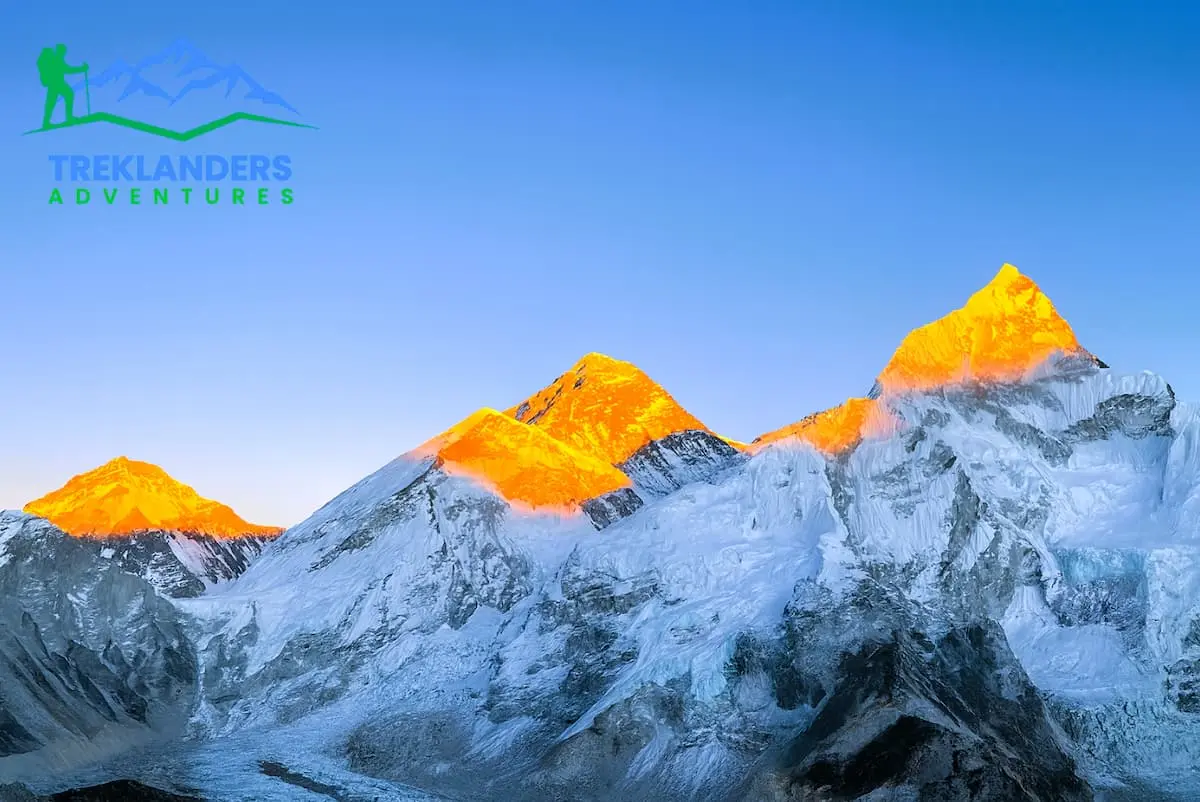
Everest Base Camp from Jiri Trekking involves moderate and adventurous walks from the mid-hills of Solu to the high valley of Khumbu. In the early days, it was one of the main routes to high Khumbu and towards Everest base camp.
Explorers, adventurers, pioneers, and mountaineers followed the classic route to Everest Base Camp from the town of Jiri. At present, the construction of a small airport in Lukla makes the trekking a week shorter. Most visitors choose the option of a flight to Lukla from Kathmandu, the original route is almost forgotten at present.
Everest base camp from Jiri Trekking is an enjoyable and exciting walk following the footsteps of legendary mountaineers and explorers.
Jiri town is also known as the Switzerland of Nepal, due to its beautiful scenic location. A town with a green valley lined with coniferous forest and snow-capped peaks, enclosed by tiers of rolling hills.
An exciting adventure on the original route to Everest base camp from Jiri, a town with a mild climate. The trek allows visitors to experience various cultures, and beautiful country landscapes of green hills to arid, barren mountainous terrain.
Everest base camp from Jiri Trek begins with an exciting overland journey from Kathmandu to Jiri town and beyond. Where motorable has extended further from Jiri, making the itinerary a few days shorter, starting the trek from Bhandar village.
Enjoy the walk following the terraced farm villages and to the nice place of Kenja, facing views of Numbur peaks. Slowly the trail leads to climbing toward cooler hills covered in the beautiful forest of rhododendron, oak, pines, and fir trees.
Walking past Sete village and then up to Lamjura-La pass, and then down to Junbesi village, enriched with Buddhism cultures. Populated by the Sherpa tribe the village is adorned with religious monuments and monasteries, the walk continues in higher areas. Facing first views of Khumbu Himal peaks with Mt. Everest, the walk on a winding path and then climb to Ringmo. A nice village with apple orchards, then with a gradual climb to Takshindo-La Pass, overlooking a grand view of snow peaks. A long descent leads to a large settlement of Nunthala and then down and ups to Khari-Khola and Bupsa villages. Slowly the walk enters the high Khumbu region of Everest to join the main route to Everest base camp.
A great change from lower Solu and high Khumbu with the main flow of trekkers arriving from flight to Lukla. An enjoyable pleasant walk following the Dudh Koshi River and through lovely traditional villages, encountering a series of prayer walls.
The adventure continues reaching the entrance of Sagarmatha National Park, which is listed as a world heritage site. The world's highest park with the tallest mountains on earth, enriched with high-altitude flora and fauna. From the park on the high trail to the famous Namche Bazaar, an unbelievable town amidst towering snow peaks range. Namche Bazaar is an ideal place with perfect altitude for acclimatization day, where one can enjoy a short scenic hike. From Namche Bazaar trek leads higher on the road to Everest base camp, reaching a picturesque spot at Tengboche.
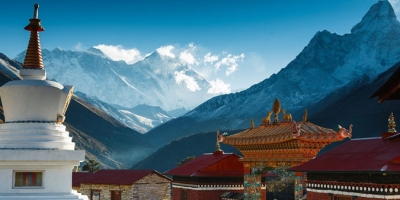
One of the most scenic places around the Himalayas, surrounded by giant peaks with a grand vista of Mt. Everest. Apart from the glorious Everest panorama, Tengboche famous for its colorful, magnificent monastery stands high above the plateau and its small settlement.
Leaving the beautiful Tengboche Monastery and forest of tall tree lines, our route leads due north towards the mountainous zone. Walking on windswept landscapes to Dingboche and then to high Lobuche and Gorakshep the last settlements before Everest base camp. Gorakshep, located at the base of high Kalapathar hill a popular ridge for a grand close look at Mt. Everest. From Gorakshep heading further east reaching our final destination at Everest base camp, covered in ice and glaciers. Standing close to the massif Khumbu Ice-fall is enclosed amidst the world’s highest peaks, namely Mt. Everest, Lhotse with other famous giant peaks.
From the base camp, views of Mt. Everest from base camp is blocked by adjoining mountains. To catch the best closest views of Mt. Everest, the adventure takes you to the top of Kalapathar rocky hill. From the highest spot, enjoy the overwhelming panorama of towering giant peaks with the closest views of
Mt. Everest.
After achieving all the highlights of the adventure return journey downhill to Pheriche valley, and back to Namche Bazaar. The walk then finally ends reaching Lukla town for the last overnight around Khumbu and Everest region.
The next early morning a short panoramic flight brings you to Kathmandu; after a marvelous adventure, on Everest base camp from Jiri Trekking.
Trip Summary:
Mode of Trek: Best available lodge / guest house on treks.
Trekking Grade: Moderate to Adventurous.
Trekking Region: Around Solu and high Khumbu around Everest Areas.
Start and End of trek: Jiri / Bhandar and end at Lukla with flights.
Highest elevation: Kalapathar 5,643 m / 18,514 feet and
Everest Base Camp 5,364 m / 17, 598 feet.
Trek duration: 17 Nights and 18 Days from Jiri to Lukla.
Total Trip: 21 Nights and 22 Days, from arrival to departures.
Best Seasons:
The best season for this wonderful adventure is on spring time from March to May. Including autumn/fall begins from September to November, interested people can visit all year round, except for the summer/monsoon time of mid-June to August. Springtime is bright and beautiful, most days are clear with sunny days, can be cloudy afternoons. Bringing cold chill in the late afternoon, and night till morning this is the time when wildflowers are in seasonal bloom.
Expect snow-fall sometimes during spring times, around the high areas.
The next best season is autumn/fall, where days are clear with sunny days for views and walks. But shorter days due to limited sunlight hours, cold morning and night time, expect snowfall sometimes. Interested people can trek during winter times of December till February, most days are clear for views and walks.
But freezing temperatures morning, late afternoon until night time with bright starry night sky. Can expect snow-fall sometimes during the trek.
Culture & Religion:
The Everest region of Solu and high Khumbu district, is populated by the famous highlanders the Sherpa. The lower Solu of mixed tribes of hill people with Kirat Rai, Magar, Tamang and Sherpa’s. Includes few Hindu people Chettries and Bharamins also. But more or less it’s dominated by the Sherpa from Solu to high Khumbu areas. The menfolk considered as finest natural mountaineers and expert Mountain Guides. The Sherpa’s are interwoven with the teaching of Buddhism follows an impressive heritage and culture similar to its predecessors the Tibetans. Most villages have monasteries known as Gompa, every house adorned with prayer flags, and prayer monuments.
Please Note:
The flight from Lukla to Kathmandu, can get delayed sometimes or might be postponed for next morning. If weather is bad and unfavorable for regular, this is normal, around the Himalayas. On this situations please bear with us, the company will try the best finding other solution to avoid inconvenience to all our clients.
The next important information for all trekkers to Everest and Khumbu region needs to be aware. The flight from Kathmandu to Lukla is diverted to Manthali town airport of Ramechap district. The diversion is made by Nepal Civil Aviation due to heavy air-traffic at Kathmandu international or domestic airport.
This notice applies till further notice from respective Government departments.
Manthali airport of Ramechap located approx. 150 km / 93 miles driving distance of 4 to 5 hours to Kathmandu.

On reaching departure air terminal on landing at Kathmandu / international airport. Our staff and guide receives you for short transfer to respective hotels in the heart of Kathmandu city. After checking into your rooms, getting refreshed join with other members of the treks for group briefing. Provided by our guide or trek leader, briefing includes all important subjects related to the treks, includes information of Kathmandu and hotels. Evening a group welcome dinner in an authentic Nepalese restaurants, an introduction to Nepali meals and cultures.


Morning options for half-day sightseeing tour around Kathmandu world heritage sites of great cultural and historical interest. After the tour free for trek preparation. In case if the flight operates from Ramechap, Manthali town airport. Trek Landers Adventure, will inform for early departure from the hotel to Ramechap airport for Lukla flight next morning.


Overnight in a lodge.Leaving the hotel, after good breakfast for exciting drive to Jiri Town, located within the district of Dolakha. The drive heads east on main road of Friendship Highway of Nepal & Tibet / China. Reaching a scenic old town of Dhulikhel, facing grand views of Himalayan peaks. Then heading towards Dolalghat and over the bridge of Sun-Koshi River to reach at Lama Chaur. From here our route diverts from the main highway heading above on winding road to Mure village.As drive continues past nice town of Charikot with views of Langtang Himal and Mt. Gaurishankar. Then down to Tama Koshi River, and back on high road towards Jiri, with short downhill drive reaching the town of Jiri. On arrival transfer into a nice lodge with time for stroll around the town of Jiri. A good way to observe local cultures of mixed hill tribes of eastern Nepal. Jiri is also known as Switzerland of Nepal, due to its scenic alpine

Drive to Bhandar (Chyangma) 2,195 m-02 hours and trek to Kenja 1,860 m - 04 hrs.Due to the extension of motorable road further from Jiri to make the trek a day shorter. Morning taking a drive of few hour drive from Jiri on dirt hilly tracks.
The drive leads past Jiri into lovely forest of pines and rhododendron, heading up to Deurali. A small pass at 2,740 m with few nice houses serving as Tea-House and lodges, heading downhill to a beautiful valley at Bhandar. A lovely village, from here within more Buddhism religion and cultures. From Bhandar walk on pleasant winding wide trail, and down to another nice village of Kenja for overnight stop.

From the lovely village of Kenja with morning views of snow peaks, the walk begins with steep climb. Walk past farm terraces and hamlets, then into a dense forest to reach Sete village. From here into cooler mountain air, entering within more Sherpa farm villages. As climb continues after lunch stop at Sete towards our overnight stop in a small settlement at Guranse. The name means Rhododendron flower, as this little place is surrounded by rhododendron and pine forest

orning after breakfast climb begins heading towards Lamjura-La pass, the highest point of the trek before reaching Khumbu high areas. Before crossing the pass, enjoy a refreshing break the area with few nice smaller tea-houses.
A short walk up to Lamjura-La pass, and then on downhill walk through dense forest, reaching Toc-Toc. Located at the base of Lamjura-La pass, stopping here for lunch stop in a small tea-house restaurants. Afternoon walk on winding gradual path, and then a long descent to Junbesi. One of the largest and lovely village around Solu areas, check into a nice lodge. Enjoy the afternoon exploring this traditional Sherpa village, adorned with Buddhist monuments of Stupas and prayer walls. As well overlooking views of Numbur peaks or Dudh-Kunda Himal.

Enjoying a pleasant overnight in a nice lodge at Junbesi village, walk leads down and ups on a wide trail. Reaching a small settlement at Syalung, a place with few shops and tea-houses; overlooking first views of Mt. Everest and Khumbu Himal range of peak. After a glorious views of snow-mountains, down to a river and cross a bridge, and up to Ringmo village for lunch stop. Afternoon climb starts on winding up into a nice forested trail to Takshindo-La. The pass adorned with a huge Stupa a Buddhist monuments, with few shops and tea-houses.
From the top of Takshindo-La pass a long downhill past Takshindo village and the Monastery to Nunthala a large village. Lined with many shops, stores and good Lodges, on reaching Nunthala check into a nice lodge.

From Nunthala village walk past the village and then descent to Dudh Koshi River to cross over a raging river. A short winding up brings to a small village of Jubing, and then climb up to another large village at Khari-Khola. After a refreshing stop cross the stream on a suspension, a steep climb of an hour more to Bupsa Danda for overnight halt. Bupsa a small settlement having few simple lodge facing grand views of surrounding beautiful landscapes.

Slowly our adventure leads to high Khumbu region, from Bupsa leaving the Solu areas, towards Khumbu. Morning walk uphill through cool shade of forest and past smaller settlements to Puiyan / Paya village for lunch. From Puiyan pronounced as Paya. The walk leads through the village on winding high trail and just before Surkhe, views of Lukla town and the airport. From the high ridge an hour descent to Surkhe village for overnight in the comfort of a nice lodge.
Surkhe located below Lukla and the runway, which is home to late Pasang Lamu Sherpa, the first Nepali woman to reach the summit of Mt. Everest.

At Surkhe, with the sound airplanes flying above to Lukla airport, morning walk on gradual uphill to Chowri Kharka. A lovely village with neat farm terraces, a short climb brings on the main trail. Where route from Lukla joins at a small settlement called Choplung. From here on the main trail to Everest base camp, following a winding path past several villages adorned with Buddhist prayer walls and spinning Mani wheels. After few hour walk on the main busy trail reaching Phakding village for overnight stop, in lovely lodge.

Enjoy the day from Phakding onwards, morning walk heads higher past smaller villages to cross a long bridge. The climb leads to a nice Monjo village and then at the entrance of Sagarmatha National Park. (The name Sagarmatha for Everest in Nepal, the native Sherpa calls Chomolungma of Tibetan origin language).
From the park to the last village of Jorsalle before Namche Bazaar, possible lunch stop. Afternoon walk following the river bed and climb up to a high suspension bridge, and then on undulating uphill. Taking another few hours to famous Namche Bazaar the capital of Khumbu Sherpa’s, and major hub for trekkers.
All house are in an amphitheater U shaped basin, the size of a town provides great facilities for visitors. As well as for the local also, where once a week a busy colorful Saturday market takes place. Hence the name as Namche Bazaar, arriving on this large settlement check into a nice lodge for two overnight stops.

An ideal place with perfect altitude for rest day to support acclimatization before heading higher destination. At Namche enjoy a leisure morning and take a hike around its scenic viewpoints.
Suggested short hike and excursion around Namche Bazaar and beyond:
The short and scenic is short steep climb to Park museum above Namche Bazaar offers grand vista of Mt. Everest. Includes views of Lhotse and majestic Ama Dablam with arrays of snow clad peaks. Visit the park museum provides good interesting information of the Khumbu and its people, cultures and custom.
As well of exotic flora and fauna with history of mountaineering expeditions around Khumbu high mountains.
The next great hike is to Everest View Hotel at 3,880 m, located on a high ridge amidst forest surrounding. One of the world’s highest deluxe hotels offers superb views of Mt. Everest, Lhotse, Nuptse and magnificent Ama Dablam. A walk of 2-3 hours with an hour or more climb and down, overlooking birds-eye views of whole Namche Bazaar.
Rest of the afternoon rest or explore the fancy streets of Namche Bazaar, lined with shops, stores and restaurants. Includes café, fresh bakeries, pubs and bars with backdrop of stunning views of Kwangde Peaks.

Morning enjoy the grand views of Kwangde peaks, having breakfast, walk starts to Tengboche and the monastery. A short steep up from Namche Bazaar outskirt, and then on scenic winding trail facing views of Mt. Everest. Then walk down to Imjatse River to cross a bridge reaching a small settlement of Phungi Tenga for possible lunch stop. After a refreshing stop, walk uphill into cool shade of lovely woods of tall rhododendron, pines, firs and junipers. As climb continues, then finally reaching atop a wide scenic plateau. Where Tengboche located with a colorful impressive monastery stands atop of the small settlement.
A picturesque spot for Everest Panorama with stunning views of Ama Dablam, Kantega, Tharmasarku and Kwangde range of peaks. This beautiful place surrounded by green lovely forest, enjoy the views and check into a nice lodge.
Late afternoon a refreshing tour of the monastery interior, witness the vibrant religious arts and paintings. Includes large statues of Lord Buddha with other famous saints and Gurus, and observe the monks and priest on prayer activities.

From Tengboche enjoying the morning glorious panorama of Everest and magnificent peak of Ama Dablam. The trail heads down to a river where tree lines drops for short juniper bushes, a slow climb to Pangboche. The last permanent village en route Everest base camp and beyond. Walk follows on gentle up to Somare for lunch break beneath the shadow of towering Ama Dablam peak.
After lunch heeding slowly down to cross a river and then climb towards Imjatse valley, where a nice settlement of Dingboche situated. A scenic lovely place with many good lodges for overnight stand, beneath North Face of Ama Dablam and Lhotse mountains. Facing views of Island Peak and surrounding snow-capped peaks that encircles the Imjatse valley. Overnight in the comfort of a nice cozy lodge at Dingboche with beautiful scenery to enjoy.

Our real and true adventure starts heading towards Everest base camp, having breakfast. The walk follows on the high trail above Imjatse valley and Dingboche, as our route
From the pass a slow descent to cross over Khumbu glacier, and then steep climb to a rocky dune. After completing the climb for the day reaching Lobuche for overnight in the best available lodge. Enjoy the comfort of a nice lodge after a great day and crossing the highest pass of the adventure.

An exciting trek in the morning towards Everest base camp one of the highlight of the adventure. Start early morning for another long day, following a gentle path with few ups reaching rocky moraine areas above Khumbu glacier. After few hours of good morning walk reached Gorakshep, situated at the bottom of famous Kalapathar rocky hill. Gorakshep the last settlement of Khumbu area on route Everest and Lhotse base camp. Following the trail towards east on well-defined path for an hour and then the last leg of the hike. The walk continues over moraine of ice and glaciers to Everest base camp. Enjoy the dramatic scenery of arctic like landscapes enclosed by towering peaks of Lhotse, Nuptse and Lingtrin. The views of Mt. Everest is obstructed by adjoining peaks, however an amazing place to experience.
Overlooking close views of massif Khumbu Ice Fall as it tumbles down near the foot of Everest at base camp. From the base camp return walk back to Gorakshep for overnight stop.

Great options and opportunity for last steep climb and hike to the top of Kalapathar. The highest point of the adventure, start early morning heading towards at the base of Kalapathar. As climb begins heading higher and higher on steep slope then reach a rocky hill top of Kalapathar. One of the best view-points in all Himalayas for the closest looks of Mt. Everest at a stone throw distance.
Enjoy the tremendous panorama of giant peaks with close views of Mt. Everest, Lhotse, Nuptse and Mt. Pumori. After a refreshing morning hike head downhill to Gorakshep for breakfast, and getting ready for a long day walk to Pangboche village. The trail follows on the same route past Lobuche, reaching Thugla, where route of Dingboche and Pheriche meets. Our route leads down to Pheriche valley and reaching the nice settlement with many lovely lodges and resorts. Possible lunch stop at Pheriche, a place where HRA (Himalayan Rescue Association) Post is located. From Pheriche walk down to a river and then up to a small hill top, and then on easy downhill to Pangboche village for overnight stop.

Morning starts with easy descent to a bridge, and then climb towards Tengboche Monastery. One of the most picturesque spot surrounded by snow peaks amidst lovely forest with impressive monastery. Having time for short tour of the monastery interior, and then continue downhill to Imjatse River. A slow steady climb for an hour past Sanasa village, and then on easy winding trail reaching the junction. The point, where route of Gokyo, Khumjung and Everest base camp branches off. From here few hour walks to Namche Bazaar for overnight halt after a tiring long day treks.

Last day walk of the adventure, enjoy the pleasant walk downhill to Dudh Koshi River valley. A nice walk to Jorsalle crossing a bridge with short steep climb to the entrance and exit gate of Sagarmatha National Park. Walk continues past Monjo village heading towards Phakding for lunch stop. Afternoon few hours of good walks with last hour climb to reach Lukla. Arriving by late afternoon with ample time hang around and to enjoy the last dinner celebration with fellow members and trekking staff.

Early morning transfer to Lukla’s Tenzing and Hillary airport as the plane arrives either from Kathmandu or Ramechap. Board in a small aircraft of respective airlines for sweeping panoramic flight back to Kathmandu. Then get transferred to your hotel, with afternoon free at leisure.
If the flight lands at Manthali airport in Ramechap, our staff transfers you to a vehicles. A drive of 4-5 hours brings you back at the hotel in Kathmandu, after a great adventure on Everest base camp from Jiri Trekking.

Enjoy an extra day in Kathmandu, we have reserved as contingency day in case of flight delay and cancellation. Due to unfavorable bad weather condition, if all goes well according to our itinerary days, have a great enjoyable day.
For individual activities or get into shopping spree, interested people can join for another interesting tour of other cities of Kathmandu valley. Sightseeing around Patan / Lalitpur or the famous Bhaktapur city Durbar Square, worth a visit.

After an enjoyable and most mesmerizing adventure in Nepal and around the Himalayas on Everest base camp from Jiri Trek. As time for departure, our staff transfer you to international airport for flight homeward bound or to next port of call.
My Everest Base Camp trek from Jiri was one of the most fulfilling adventures of my life, and Treklanders Adventures made every step of the journey unforgettable. Starting from Jiri gave me the chance to experience the classic route walked by early Everest pioneers, and it truly felt like a pilgrimage through Nepal’s heartland. The trail was challenging but deeply rewarding—lush hills, beautiful villages, suspension bridges, and peaceful forests gradually transforming into the raw, high-altitude landscapes of the Khumbu region. What impressed me most was how well-organized everything was. My guide was incredibly experienced, patient, and always encouraging, especially during the tougher ascents. He shared stories about the mountains, the Sherpa culture, and the history of the region, adding so much meaning to each day of the trek. Our porter deserves special thanks as well for his dedication and kindness throughout the journey. Reaching Base Camp felt emotional after walking such a long and historic route. The sense of achievement was unbelievable, and the views of Everest, Lhotse, Nuptse, and the Khumbu Icefall were something I will never forget. Treklanders Adventures took great care of my safety, accommodation, and meals from start to finish, which allowed me to enjoy the adventure without any worries. For anyone who wants the authentic Everest experience, away from shortcuts and crowded flights, I highly recommend starting from Jiri. And if you want the trek done right, Treklanders Adventures is the company to trust. I’m grateful for the memories and can’t wait to return to Nepal for another adventure.

Purpose: Keep sweat off the skin and maintain warmth.
Purpose: Trap body heat in cold air at altitude.
Tip: Keep electronics in inner pockets at night to prevent freezing.
Jiri town located east of Kathmandu at a driving distance of 183 km / 114 miles taking more than 5 hour drive. As the drive leads ups and down on hilly road past beautiful villages and towns with scenic views of snow-mountain range.
Nearly all villages and lodges have electricity with Hydro or Solar power, where one can charge their electronic items. Where client needs to pay an extra fee for using the power as per gadgets charged. As for internet and cell phone communications, every lodges have the Wi-Fi and internet services, but can be quite disturbing sometimes due to weather and location wise.
From Jiri and Solu area onwards to Khumbu / Everest region one can enjoy the comfort of nice lodges and guest house. As well with warm traditional hospitality in every overnight stops, people can choose from budget, standard to luxury (around Khumbu region) lodges where available.
The foods are well served in a large cosy dining hall, can choose various items of foods from the menu with wide range of meals and snacks to choose from.
Serves Continental, Chinese, Indian, Tibetan and Nepali foods, as well Mexican, Italian, Korean or Japanese in some lodge restaurants. Includes fresh bakery products also.
The trek from Jiri is almost forgotten, due to Lukla airport where most
trekkers enjoys short flight from Kathmandu to Lukla. The trekkers using
the old classic route to Everest base camp are quite few, compared to
visitors flying in at Lukla. But slowly the Jiri trek is gaining popular among those people, who enjoys quiet walk, away from mainstream trails.
At present motorable road has extended from Jiri as far to Khari-Khola village, but quite a drive on steep hilly areas. The drive with too much of bumpy journey, where one can feel tired before starting the trek. The itinerary we have designed
is the best with flexible walks and having rest days, where needed.
As season wise with flow of visitors to Lukla and vice versa from Kathmandu.
During high times of trekking season, the flight to Lukla and back can be quite busy. Where more than 20 flights operates in a fine clear day, which cause air traffic with the international and other domestic airlines. To make the air traffic lighter, the flight to Lukla from Kathmandu is diverted to Manthali airport at Ramechap district. Which is about 150 k.m driving distance of 4 to 5 hours, the flight from Ramechap to Lukla is just 20 to 25 minutes. Which makes it easier and quicker before the bad weather closes in. For further updates the company will inform all the clients flying in and out of Lukla, for trekkers joining with Trek Landers Adventures.
The Everest Base Camp Trek from Jiri is the original, classic, and the first route of Sir Edmund Hillary and Tenzing Norgay before Lukla Airport was constructed. The route from Jiri is not a short 12–14-day EBC trek with a direct flight to Lukla. Instead, it starts from the small town of Jiri located in the mid-hills region of Nepal. This path takes the journey to 20–24 days and lets you experience the rich culture, nature, and traditions of Nepal before you enter the Khumbu region. Namche Bazaar is where trekkers merge with the main Everest trail after trekking through terraced fields, Sherpa villages, river valleys, rhododendron forests, alpine meadows, and high-altitude areas. It is a perfect choice of the Himalayan adventure for those who want a genuine, long, and less-crowded trip.
Most of the routes are between 20 and 24 days, which depend on acclimatization stops, walking pace, and side trips such as Kala Patthar or Nangkartsang Peak. The part of the trek from Jiri to Namche Bazaar for 7–8 days involves going up and down several times, so it is physically more challenging than the rest of the EBC trek. Treklanders Adventures adjusts the length according to your time, fitness, and acclimatization requirements, thus ensuring that you get enough rest days and that your progression is safe.
The Jiri route is longer, more culturally immersive, and significantly quieter. You see rural Nepal in its purest form: traditional villages, farmlands, and mixed ethnic communities. The trails are peaceful compared to the busy Lukla–EBC route. Trekking difficulty is greater, especially in the beginning, due to continuous uphill and downhill walking. The entire experience is like a full Himalayan culture and nature combined with classic adventure.
Yes, but it is strongly discouraged for absolute beginners since it demands top-notch physical endurance. In the first week, there are a lot of steep ascents and long walking hours. That said, beginners with strong fitness, good preparation, and determination can complete it safely with a professional guide, proper pacing, and acclimatization days organized by Treklanders Adventures. Prior multi-day trekking experience helps but is not mandatory.
For adventurers, this path is a dream trail because it follows in the footsteps of the first Everest pioneers. Besides, it has spectacular sceneries, fewer footfalls, more animals to spot, and real cultural interaction, which is almost impossible on the commercial route of Lukla. The Jiri route makes the Everest Base Camp experience more meaningful, which is what most of the trekkers want to say because the journey feels gradual, real, and earned.
The best times are spring (March–May) and Autumn (September–November). These days are characterized by good weather with blue sky and great views of the mountains and temperatures that are not too hot or too cold. Not only that, but the trails are also dry, the rivers will be easy to cross, and teahouses will be open and at full service. Jiri is also very beautiful during spring when there are a lot of rhododendrons, while the autumn still has the advantage of sharp and bright mountain views.
Yes, but it comes with many difficulties. The Jiri part will be open, but places like Dingboche, Lobuche, Gorak Shep, and EBC at higher altitudes might get a lot of snow, making the paths slippery and the temperature very low. The thermometer can even show less than –20°C at night. Those who decide to go on such a trek must be very sure of their equipment and clothing and should also have prior high-altitude trekking experience. Winter treks are very beautiful and tranquil, but it is a must to take safety precautions.
Monsoon (June–August) is a season to avoid in general, characterized by heavy rain, which causes slippery trails and leeches in the lower parts, and also creates cloud cover, which in turn results in limited visibility. The Jiri side is also quite rainy, thus river crossings and steep slopes become harder to manage. Despite this, there are a few trekkers who choose to do monsoon because of the freshness and the less crowded trails. Besides that, water-resistant clothing and a flexible schedule are also must-haves if you nevertheless decide to trek during this season.
For photographers, autumn is really the best time because the mountains look neat and are covered with fresh snow, while there is no cloud in the sky and it is blue. Also, spring can be great for photography because of the lush green trees, bright landscapes, and warm lighting. Winter is dramatic but cold. For drone, sunrise, and sunset pictures, Kala Patthar in November is amazing.
The trek ranks as a difficult one mainly because it takes a very long time, has steep climbs, high altitude, and different types of terrain. The Jiri part is particularly hard due to several passes like Lamjura La and Deurali Pass. The combination of long walking days, daily elevation changes, and altitude risks at higher regions makes it very challenging. Yet, the right pace, drinking enough water, acclimatization, and following the guide's advice will make it possible for a physically strong and determined trekker.
Yes, trekkers must be capable of walking for 6–8 hours a day, negotiating steep climbs and descents, and coping with altitude gain. You should prepare your cardio by doing exercises, climbing stairs, and also going for long hikes while doing leg and core strength training for at least 6–8 weeks before the trek. Treklanders Adventures will be glad to give you personalized fitness tips to get you ready.
It is very important to have acclimatization days in Namche Bazaar and Dingboche. Taking it slow, drinking lots of water, and sticking to the “climb high, sleep low” rule will help to prevent altitude sickness. Symptoms monitoring by the guide is very important too, as he/she will observe headache, nausea, or dizziness from the very first stages so that there are no complications.
Throughout the trek, one stays in modest yet comfortable teahouses. Teahouses are local lodges that offer not only a warm place but also a familial atmosphere to relax after a tiring day of walking. Accommodation in the Jiri area looks more like that of a home with larger rooms, nicely-made beds, and traditional Nepali hospitality.
The majority of the bathrooms are shared, especially those located in the upper areas, where there are fewer facilities. In the lower Jiri areas, and some lodges in Namche Bazaar, there might be rooms with attached bathrooms, but this is subject to the season. Shared toilets are generally squat-style in villages that are far off, and western-style ones are in busy trekking towns. Trekkers are advised to bring toilet paper, hand sanitizer, and other handy personal hygiene products for their convenience.
There is no heating available in the rooms. The main dining hall, however, is heated through a stove that may use wood, kerosene, or yak dung as fuel. This is the place where trekkers meet in the evenings to get warm, eat, and chat. Since the nights can be extremely cold, especially at altitudes of more than 4,000 meters, it is a must to bring with you some warm clothes and a quality sleeping bag if you want to have a comfortable sleep.
Teahouses are definitely safe and clean, and the local people are very friendly. They are run by local families who are always there to take care not only of the trekkers but also of their teahouses. Although the rooms are clean, they are also very simple, and as far as cleanliness is concerned, there is little difference from lower to higher regions. Treklanders Adventures always takes care of the quality of the lodges that it works with in terms of service, bedding, and food preparation, as well as hygiene standards.
The answer to this question is yes, but it is an extra service that usually needs to be paid for. Gas- or solar-heated showers are typical for the lower and middle altitude regions. At high altitude, it is difficult to provide hot water, and thus, the prices are higher than usual. Many trekkers simply reduce the number of their showers after Tengboche because of the cold.
The majority of the teahouses make electricity available for the charging of the likes of phones, cameras, and power banks. However, it is not free of charge. There is a normal electricity supply in the lower regions, while the higher ones are powered by solar panels. One can charge devices at a certain altitude only for a certain amount of money, thus prices always go up the higher you are. It is also very useful to have an energy-storing device (battery) with you (10,000–20,000 mAh).
The majority of teahouses offer Wi-Fi service, especially from Namche Bazaar and further on; however, it is a paid service, and the speed can be slow. Namche Bazaar and other lower areas may offer free or inexpensive Wi-Fi, whereas high-altitude villages rely on “Everest Link” cards that cost more.
Teahouses that are located on the way serve simple, warm, and freshly made food that is full of energy and suitable for the long trekking days. Dal bhat is the most consumed food, which is a healthy combination of rice, lentils, and vegetables, and comes with free refills. You can also eat fried rice, noodles, pasta, momo, soups, potatoes, omelets, porridge, pancakes, and chapati. Food in the Jiri area is more diverse and produced with fresh local products, whereas the menus in the higher parts of the mountain are simpler due to fewer supplies. In spite of the isolated areas, you will always get clean, nutritious, and comforting meals on the way.
Certainly, water for drinking becomes safe after the proper treatment. Locally, villagers can provide you with bottled water, but be ready for the price that goes up with altitude. To limit the plastic waste while keeping the water safe, Treklanders Adventures recommends the use of water that has been boiled or treated with purification tablets, iodine drops, or a portable filter. That's why the trekkers are advised to have a bottle or hydration bladder (2 liters) with them so that they can fill it up at the teahouses or water stations on the way.
Teahouses always keep their kitchen areas neat and clean and prepare the meals freshly for the arrival of the guests. The food safety levels in the Khumbu and Jiri regions are up to standards and can be trusted, especially in the popular trekking villages. Vegetarian dishes are mostly suggested at higher elevations so that the issue of digestion will not arise. Vegan, lactose-free, gluten-free, and other dietary meals are often possible if one is a little bit flexible.
Yes, the trail from Jiri to EBC is well-developed with multiple teahouses at regular intervals. Breakfast, lunch, and tea breaks can be availed at almost every village. In addition, most of the tea houses have snacks such as biscuits, chocolates, energy drinks, and noodles for sale. Nevertheless, the prices are going up steadily along with the altitude as a result of the transportation problems.
Tea, black coffee, hot lemon, ginger tea, hot chocolate, and soups are the items that can be found in nearly all the teahouses and are served to the customers. Benefiting the body from both hot lemon and ginger tea is a very good idea when you are at a high altitude. On the contrary, drinking alcohol should stop when the person is at high altitudes because it slows down the acclimatization process and, at the same time, it provokes dehydration. In addition, it is better not to consume unboiled water, ice cubes, and raw dairy products.
At any teahouse, one can refill their water container. By using boiled water, a small fee is normally made, and it is considered the safest option, especially after the Namche Bazaar area. The reason is that the majority of tourists are also keen on boiling water, as it preserves warmth for a longer time, even if it is cold. In general, hot water is accessible along the entire trail, and by using insulated bottles, one can still enjoy the desired heat during the very cold nights.
The mobile coverage facilities are good in the Jiri region and the lower Khumbu villages. Ncell and NTC are the networks that work in places like Salleri, Phakding, Namche, and Tengboche, but you will find the signal getting weaker as you go higher. Around Lobuche, Gorak Shep, and Everest Base Camp, there is very limited network availability or even no network at all.
Most tea houses in the Khumbu region offer paid Wi-Fi through services such as Everest Link or Airlink, so the answer is yes. The connection is generally good for sending messages; however, the speed may vary depending on the altitude and weather.
Wi-Fi is almost always a paid service. There can be cheaper Wi, Fi services in the lower villages, while in the high altitude areas, prepaid cards are sold at a higher price due to the limited infrastructure.
Mobile data is available in many lower and middle region villages, but it becomes very weak in the high altitude areas. Trekkers are advised not to rely on mobile data solely.
To keep in touch even in the areas that lack a mobile network, Treklanders Adventures guides are always equipped with a satellite phone or a radio communication device.
Yes, it is good to buy an NTC or Ncell SIM card, which will be helpful during the first part of the trek. After that, coverage will be limited in higher regions.
Indeed, a guide holding a valid license is almost indispensable for the Jiri to EBC trail, which is long, isolated, and arduous. Treklanders Adventures offers the service of their competent guides who, apart from navigation, also take care of you by managing the pace, arranging accommodation and meals, and ensuring your safety. They are particularly helpful when the coming sections of the trek from Jiri get difficult, and also when you are at a high altitude.
One of the main benefits of having a professional guide is ensuring a safer trek, which is more comfortable and more enjoyable. They observe for any altitude symptoms, oversee daily plans, talk to teahouses, explain the local culture, and, in case of bad weather or emergencies, make decisions. The guide not only provides safety but also a trouble-free and pleasurable trek.
Indeed, the trek is more than 20 days long, and heavy backpack carrying can make the whole thing tiring, cause you to have pain in your knees, and negatively affect your acclimatization process. A porter is allowed to carry 15 to 20 kg of your luggage, thus you can comfortably walk with just a few essentials packed in a small daypack.
The guides and porters that Treklanders Adventures appoint are not only well-trained and experienced but also have good knowledge of the Jiri and Khumbu regions. Besides this, the team is proficient in first aid, altitude awareness, trail management, and customer care.
Of course, yes, Treklanders Adventures commits to providing their support staff with different types of insurance that cover accidents, medical needs, and rescue cases. It is their safety and security that are guaranteed through the trek.
Those who are on a trek need permits that include a Sagarmatha National Park Entry Permit as well as a Khumbu Pasang Lhamu Rural Municipality Permit. The national park permit is necessary when you are in the park close to Monjo, while the rural municipality permit is a must for trekking in the Khumbu region. Treklanders Adventures takes charge of the whole permit process to make sure everything is in order before your trek.
There are several official checkpoints along the route where permission slips are examined. Some places you will have to show them are Monjo, Namche Bazaar, Tengboche, and a couple of checkpoints higher up on the way to Dingboche and Lobuche. Besides, officers may check the permits again at the time of leaving the Khumbu region.
No, you are not allowed to go trekking without permits. At the checkpoints, you may be stopped, fined, or even denied access to the trail. All in all, it is very important to always have your valid permits with you if you want to have a trouble-free access, a safe journey, and legal travel along the route.
To adequately equip oneself for this long and diverse journey, one must put together a pack with warm clothing layers and a down jacket, thermal innerwear, trekking trousers, a waterproof and windproof jacket, gloves, protected sunglasses, a warm hat, trekking poles, a headlamp, good trekking shoes, power banks, and personal hygiene items. A sleeping bag with a temperature rating from 10°C to 15°C is a must, especially for the high altitudes. Additionally, Treklanders Adventures also carries sleeping bags and duffel bags if you wish to use them, and thus make your packing effortless and convenient.
Indeed, both are very useful and necessary. Trekking poles offer the user security, support the knees during steep lowering, and help keep balance on rough ground. In a warm sleeping bag, you will be comfortable even in cold teahouses and rooms without heating. Though blankets are available, they might not be warm enough at high altitudes.
You ought to plan your physical preparation at least 6 to 8 weeks ahead of your trek. Alongside the long walks or hikes, one should add stair climbing, cardio activities like jogging or cycling, and strength exercises for the legs and the abdominal muscles. By doing so, one builds up endurance and leg strength, thus facilitating the process of acclimatization and making the whole trekking experience safer and more pleasurable.
Certainly, a pair of well-fitting, high ankle trekking boots with good grip is necessary. Do it before the trek, and after you break them, to avoid blistering and foot discomfort. Light sandals or slippers will come in handy for the nights in teahouses.
Energy bars, nuts, chocolates, hydration salts, and some light snacks are very useful provisions to carry along, especially when walking the longer stretches between villages. While there is the option to buy snacks in teahouses, prices go up with altitude.
It actually takes a long drive from Kathmandu to Jiri or Bhandar to get along with your journey. A private jeep, a hired car, or a public bus can take you there. The ride is on a road that goes through the hills, small villages, and agricultural landscapes. The driving time usually ranges from 7 to 10 hours, depending on the traffic and the road conditions. Treklanders Adventures provides you with a comfortable private vehicle to make the beginning of your trek easy.
Public buses are low-cost but slow and not very comfortable, and thus, they stop frequently along the route. On the other hand, private jeeps promise you more comfort, safety, and even time flexibility. They are suitable for trekkers willing to have a fast and tranquil journey to Jiri or Bhandar.
The road is mostly safe; however, it can be rough in some places where there is road work or where the weather has affected it. Those drivers who know the route well will take you there safely. Treklanders Adventures is the company that uses skilled and qualified drivers for all your transfers.
Most trekkers take a short scenic flight from Lukla back to Kathmandu. The flight, which lasts 25 to 30 minutes, saves several days of walking. Treklanders Adventures is the company that is responsible for your ease in handling all the preflight and airport transfer arrangements.
If the weather is bad, Lukla flights might be canceled or delayed. Then, the next available flight is the option for the continuation of the journey. The helicopter is an alternative in case it is not possible to reschedule the flight. Treklanders Adventures is facilitating the alternative plans to be as efficient as possible.
Of course, if you are willing to extend the return trip, you can walk back to Jiri or Salleri. You are adding several days to your plan and getting more cultural exposure. Though the majority of trekkers decide to fly because it is more convenient and time-saving.
Altitude sickness is the most significant problem on the mentioned path. It is particularly severe in the areas of Namche, Dingboche, and Lobuche. Therefore, climbing slowly, taking an acclimatization day, drinking more water, and not consuming alcohol are the main means of defense. The Treklanders Adventures guides watch your condition during the trip and hence change the speed or itinerary if necessary. In the case that symptoms intensify, going down to the lower altitudes is the safest remedy.
In case of headaches, loss of appetite, dizziness, or nausea, assist without delay. The early stage of the disease always leads to the prevention of more severe complications. In their first aid kit, guides have the necessary medicines they may need and will help you hydrate, rest, or get down based on your condition. If the situation worsens, you will have to be evacuated, and the Treklanders will liaise with helicopter rescue to help you.
Indeed, the trails are safe to walk on, but one must concentrate there, especially on the parts that are steep, narrow, or rocky. Trekking poles give you aid and help you keep your balance on your descending walks. Be sure to always manage your trail on the inner side and let the yaks, mules, and porters that carry your goods have enough space. The weather can be very capricious and change suddenly, which is why suitable clothing ensures your safety.
Practicing good hygiene is essential in keeping oneself healthy. Clean your hands with soap or sanitizers quite often, and do not drink unboiled water or eat raw foods. Put on fresh socks to ward off blisters, apply sun block to protect your skin, and keep yourself warm during the cold nights and days. The consumption of hot foods and water is very important for one's stamina and to facilitate recovery after a day's work.
The paths are quite safe; however, you should be careful when the path is steep, narrow, or rocky. A trekking pole can help you keep your balance, and good shoes will give you stability. Do not go out on the edge of the path and let the yaks, mules, or porters pass beside you. Be prepared for the sudden change of weather by wearing suitable clothes and layers.
Good hygiene is one of the measures to keep away from diseases. Always wash and sanitize your hands, drink only treated water, and avoid raw or undercooked food. Put on fresh socks to prevent blistering, guard your skin with UV protection, and warm yourself in the cool mornings and evenings. Hot meals and plenty of water are the key to staying strong and to quick recovery from a long day of walking.
Water is the number one factor for the prevention of altitude sickness and keeping one's energy up. Trekking people should be taking about 3–4 liters of purified water every day. Dehydration is the cause of headaches, tiredness, and poor acclimatization. Apart from water, hot beverages like ginger tea, lemon tea, and soups are also perfect for hydration in chilly weather.
Each guide has a first-aid kit that is well-stocked with basic medications, bandages, blister plasters, antiseptics, hydration salts, and medicines for altitude.
Guides are skilled in identifying symptoms of altitude, helping the injured with minor problems, and handling uneasy situations. If the issue is beyond their capability, they promptly arrange for the departure of the patient to a medical facility.
The best protection is the wearing of correct layers. The base layer will keep you dry, the mid-layer will keep you warm, and the outer layer will protect you against wind, rain, or snow. A down jacket, gloves, a neck gaiter, a woolen hat, and socks that are nice and warm are the minimum requirements. During the night, use your sleeping bag and the blankets that are provided in the teahouses to keep you warm.
Certainly, travel insurance is highly recommended and is necessary for a high-altitude trek. Your insurance should also cover medical treatment and emergency helicopter evacuation, besides the high-altitude trekking aspect to 5,500 meters. This makes the rescue fast and safe in case of emergencies.
It ought to be clearly specified in your insurance that it provides cover for trekking in the Himalayas, altitude over 5000 meters, medical evacuation, accidents, trip delays caused by bad weather, and hospital care. Always possessing both digital and printed copies of your insurance information is crucial, as it allows the rescue team to act without delay upon your request.
Indeed, travel insurance is a must for this journey. As the walking will be at altitudes over 5,000 meters, your insurance should cover high-altitude trekking along with medical treatment and emergency helicopter evacuation. Proper insurance is the precondition for timely and safe rescue support when there is an emergency.
The main points that your insurance policy should cover are:
Trekking in the Himalayas; Altitude above 5,000 meters; Emergency helicopter evacuation; Accidents and medical care; Trip delays due to weather conditions, etc. Be sure to have both hard and soft copies of your insurance information with you all the time so that there will be no delays in rescue operations.
There are small health posts in bigger villages in the Sherpa east, like Namche Bazaar, Tengboche, Pheriche, and Dingboche. These are places where you can get a bit of treatment and advice for altitude-related issues. For a serious problem, you will need a helicopter to take you to a hospital because only in Kathmandu can you get advanced medical care.
| No of people | Price per person |
|---|---|
| 1 - 1 | $2,060 |
| 2 - 3 | $1,635 |
| 4 - 8 | $1,515 |
| 9 - 30 | $1,405 |
| No of people | Price per person |
|---|---|
| 1 - 1 | $2,060 |
| 2 - 3 | $1,635 |
| 4 - 8 | $1,505 |
| 9 - 30 | $1,405 |
| No of people | Price per person |
|---|---|
| 1 - 1 | $1,550 |
| 2 - 3 | $1,315 |
| 4 - 8 | $1,200 |
| 9 - 30 | $1,100 |