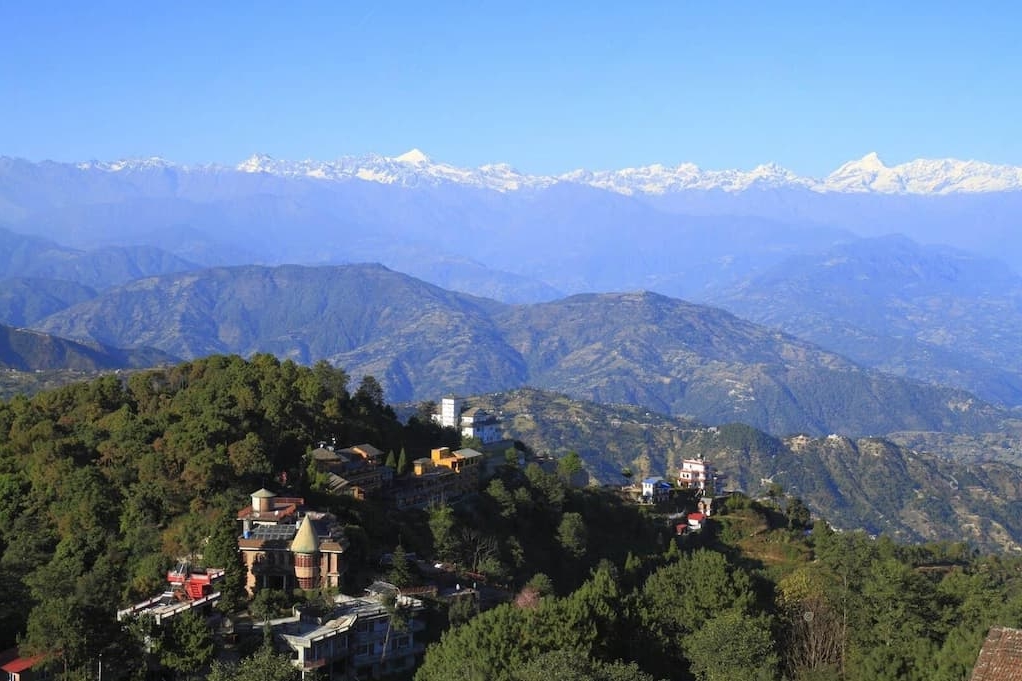
Chisapani, Nagarkot, and Dhulikhel with Namabuddha Trekking, a pleasant and the best way to escape from the Kathmandu bustling city. For a few days, around the cool and refreshing clean air within the high scenic hills of Kathmandu Valley. Surroundings rolling green hills around the Kathmandu Valley offer scenic hiking spots. One can enjoy the panorama of the Himalayan range.
Overlooking the views of the Central and Eastern Himalayas with Ganesh, Langtang, and Jugal Himal. Include as far as Manaslu and Annapurna in the Far West with Gaurishankar and Everest towards the far eastern horizon. Truly, it is an exciting scenery to experience at Chisapani, Nagarkot, and Dhulikhel with Namabuddha Treks. Besides walking on high hills within picturesque locations, visitors also have the opportunity to observe rural farm life.
Walk from traditional villages and towns to the other cultural sites at Dhulikhel and Namabuddha, a holy site for Buddhist followers. The walk leads to high ridges through a lovely, dense forested path covered in tall rhododendrons, oaks, and pine trees. The scenery of the massif Himalayan range of peaks follows from the start to the end of trekking. It is a great trek to enjoy for a few days amidst a serene surrounding in a pristine environment.
In the close harmony of the beautiful scenery, with majestic Himalayan snow-capped peaks and impressive cultures, of the mid-hills villagers. Chisapani, Nagarkot, and Dhulikhel, with Namabuddha Treks, starts from eastern Kathmandu Valley Rim. Then it climbs to beautiful waterways of fresh streams and waterfalls at Sundarijal. Then reaching, the high ridge of Chisapani, a scenic spot for stunning sunrise and sunset views over an array of peaks.
The walk continues towards the east with downs and ups through the nice forested path to Nagarkot. A famous and popular Hill Station for city folks to enjoy the weekend, overlooking a grand vista of the Himalayas. Includes spectacular sunrise as it reflects on snow peaks, enjoying the glorious scenery, then trek heads further east. Then reaches Dhulikhel, an old town, a great place to enjoy the views of the Himalayas. Experience the immense cultures of the Newari people, the main tribes of Dhulikhel and Kathmandu Valley.
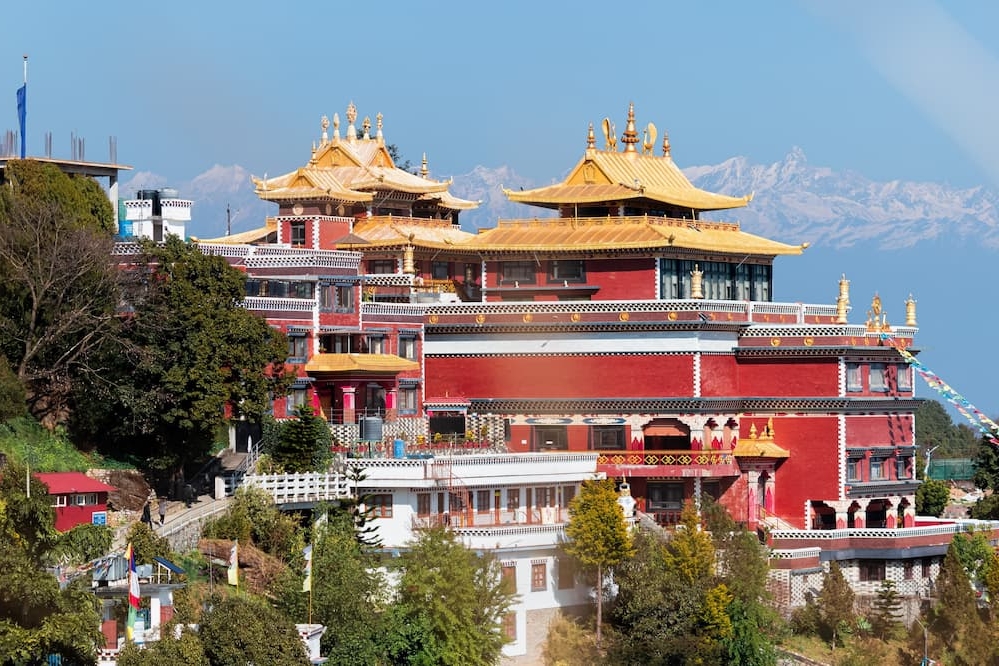
From Dhulikhel, our wonderful Chisapani, Nagarkot, and Dhulikhel Trek complete with the visit of Namabuddha, a sacred site. The monasteries stand amidst tranquil surroundings, a great religious and historical place steeped with ancient tales of religious interest.
After a marvelous experience, drive back to Kathmandu, then conclude the Chisapani, Nagarkot, and Dhulikhel with Namabuddha Trekking.
Day 01: Drive to Sundarijal and trek to Chisapani 2,300 m -04 hrs.
Day 02: Trek to Nagarkot 2,100m- 06 hrs.
Day 03: Trek to Dhulikhel 1,545m-06 hrs.
Day 04: Trek to Namabuddha 1,750 m and drive to Kathmandu.
For this short and scenic treks, can enjoy the walks around all seasons of the year except the wet monsoon and summer times. The right favorable and the best seasons are spring and autumn/fall.
Spring begins in early March and ends in May, where most days are bright with sunshine for longer hours. From early 6:30 am till 5 pm, but can get cloudy afternoon sometimes with chances of light rainfall.
Cold morning, late afternoon, and night times, as well with an extra wind-chill factor. The afternoon sun is bright, requires sunblock’s, sunglasses, hats, and long-sleeved tops.
Spring is a lively time when wildflowers are in seasonal blooms, mainly the rhododendrons of various species and colors.
The next best season is autumn/fall, from September to November, most days are fine and clear for views and walks. But much colder morning, late afternoon, and nighttime, chances of snowfall sometimes. Can get extra cold from the afternoon wind chill factor, however a pleasant season of autumn/fall for short moderate treks and hikes.
Interested people can enjoy this short trek, during the winter time of the Christmas and New Year holidays, despite the cold. Most days are fine with sunshine and get dark sooner due to winter and limited hours of sunlight.
But freezing temperatures in the morning, late afternoon, and nighttime, but enjoyable walks encountering fewer groups of trekkers.
Trekkers will be surprised to find various standards of lodge accommodation en route to Chisapani, Nagarkot and Dhulikhel Trekking. Trekkers have the options from budget, standard to luxury hotel accommodation, especially in Nagarkot and Dhulikhel. All tourist standard hotels and lodges with attached bath and toilets. Except in Chisapani with few lodges provides attached bath and toilets. Dining rooms are large and cozy with a fireplace to keep the environment warm, while you enjoy the meals. All lodges provide with comprehensive food menu, which includes a wide variety of breakfasts, from oats, porridge, and cornflakes. Bread, Chapatti, Pancakes with choices of eggs from scrambled, boiled, poached, and omelets. Followed by hot refreshing drinks, tea, coffee, and drinking chocolates. Lunch and dinner with a list of continental, Indian, Nepali, Chinese, and Tibetan foods.
All dining rooms are bright with lamps run by local hydroelectricity or from solar power. Some lodges also provide free internet or Wi-Fi, it is quite slow and disturbing. Due to landscapes and weather conditions on designated overnight stops. With large groups of more than 4 people, it is best to order a set menu, which saves time and fuel energy. As well as following the norms of Eco or Responsible Tourism.
Although Nepal is dominated by 75% Hindu religion, the higher mountains around the Himalayan range. The Tamang the main natives around and beyond the valley rim of Kathmandu district, interwoven with Buddhist religion and cultures. Trekkers will notice every house adorned with Buddhist prayer flags and the village trail lined with religious monuments. Like the prayer stone walls and spinning wheels, with large boulders engraved with prayer inscriptions.
Trekkers will have time to visit the monasteries en route, at Namabuddha.
The Tamang follows the same Buddhist religion and traditions, similar to their early Tibetan predecessors. The other tribes around the Kathmandu Valley are Newar, Hindu Chettries and Bharamins. The Newar are indigenous tribes of Kathmandu Valley, follows both Hindu and Buddhist religions. Having their own special cultures quite different from other tribes of Nepal.
Mode of Trekking: In the best available lodge, and guest house.
Grade of Trekking: Moderate with ups and downhill walks.
Trekking Region: North East around Kathmandu Valley Rim Hills.
Highest Points: At Chisapani 2,300 m / 7,545 feet, Nagarkot 2,175 m/ 7,136 feet.
Areas of Trekking: Kathmandu Valley and beyond within Baghmati Zone.
Trekking Duration: 03 Nights and 04 Days from Kathmandu to Kathmandu.
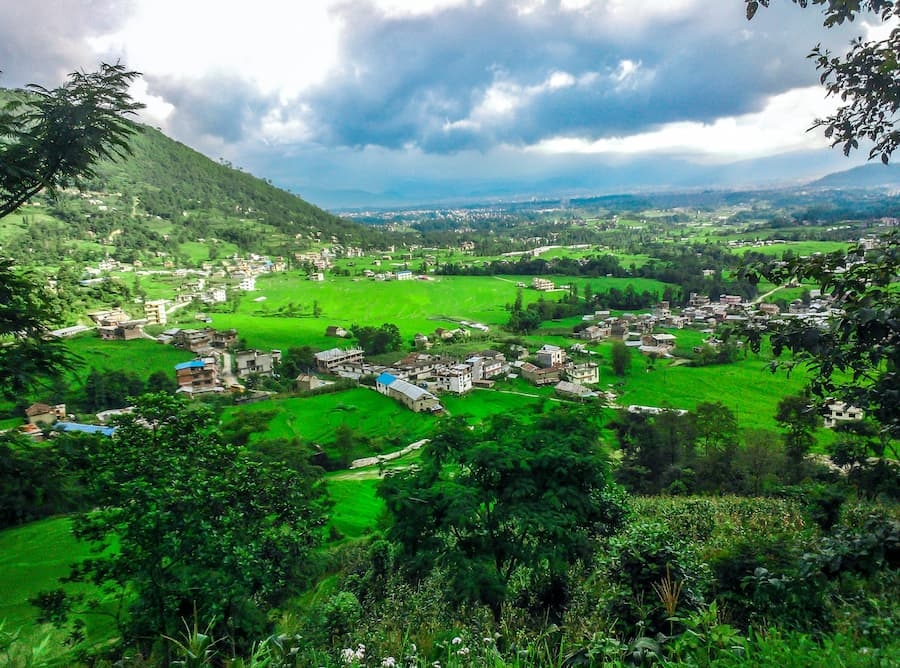
Chisapani, Nagarkot, and Dhulikhel with Namabuddha Treks, start with a morning drive from Kathmandu city heading east of the valley rim. Then reaching Sundarijal at 15 k.m. away from Kathmandu city. From here climb up to the waterways of beautiful Sundarijal with cascading waterfalls and fresh streams. As the walk heads to the entrance of Shivapuri National Park, the trail follows around spread-out farms and villages.
The walk then enters a deep forested path with a last climb to Chisapani, a small settlement located on a high ridge. North of Kathmandu Valley on a scenic spot with cool air on the highest point of our treks. A scenic place with several good lodges with the backdrop of the Himalayan range of peaks.
Includes views of Annapurna-Manaslu-Ganesh Himal, Langtang Himal, and extends to Jugal Himal facing Kathmandu valley down below. At Chisapani check into a nice lodge with rooms facing wonderful views of peaks and surrounding landscapes.


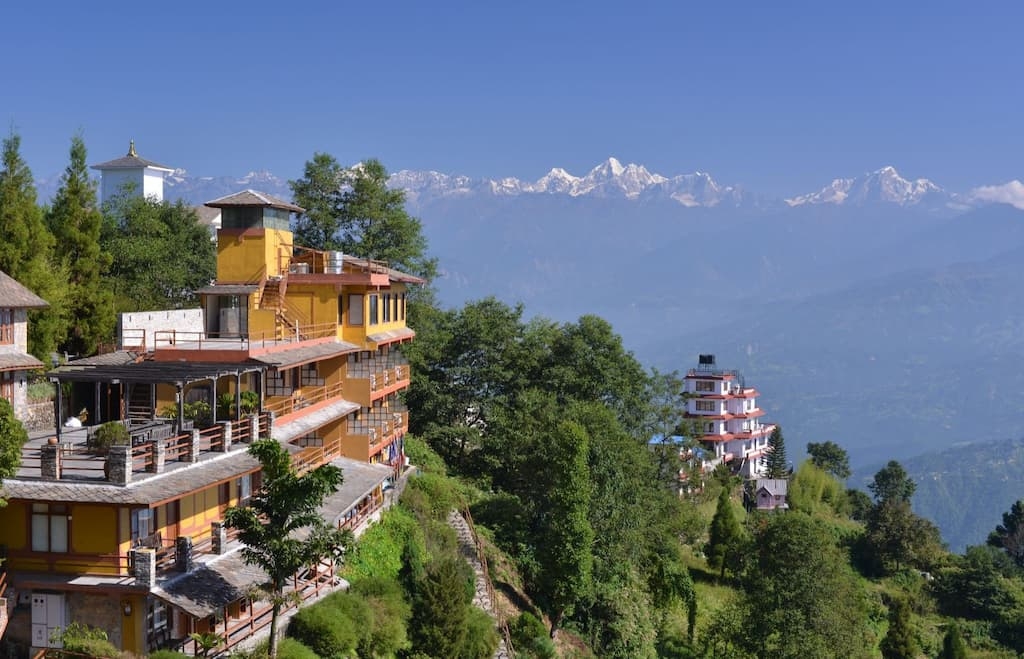
Rise early morning to catch a stunning sunrise, as it reflects on the snow-capped Himalayas. After breakfast with refreshing morning views, second-day walk heads east to another scenic spot at Nagarkot. The trail leads on a high ridge into the lovely forest of rhododendrons and pines, as the views of snow-capped follows.
The walk then heads down Chowki-Bhanjyang, a small farm village, with possible lunch stops. After lunch on a gradual winding path for a few hours to reach the lovely village of Jarsing Pawa. From here with slow winding ups to Kartike Bhanjyang, a small farm village. After a short rest then climbs for an hour or more to Nagarkot for overnight stop. Nagarkot, is a famous popular Hill station for spectacular sunrises and sunsets. As well as a wide 360° panorama of the Himalayan range snow mountains. From Mt. Manaslu, Ganesh Himal, Langtang-Jugal Himal, and Mt. Gaurishankar stretch as far as towards Everest in the east direction.
At Nagarkot with great choices of hotels, from simple, standard to luxury, as per the booking. Check into a nice hotel having rooms and balconies with a view of snow-capped peaks.
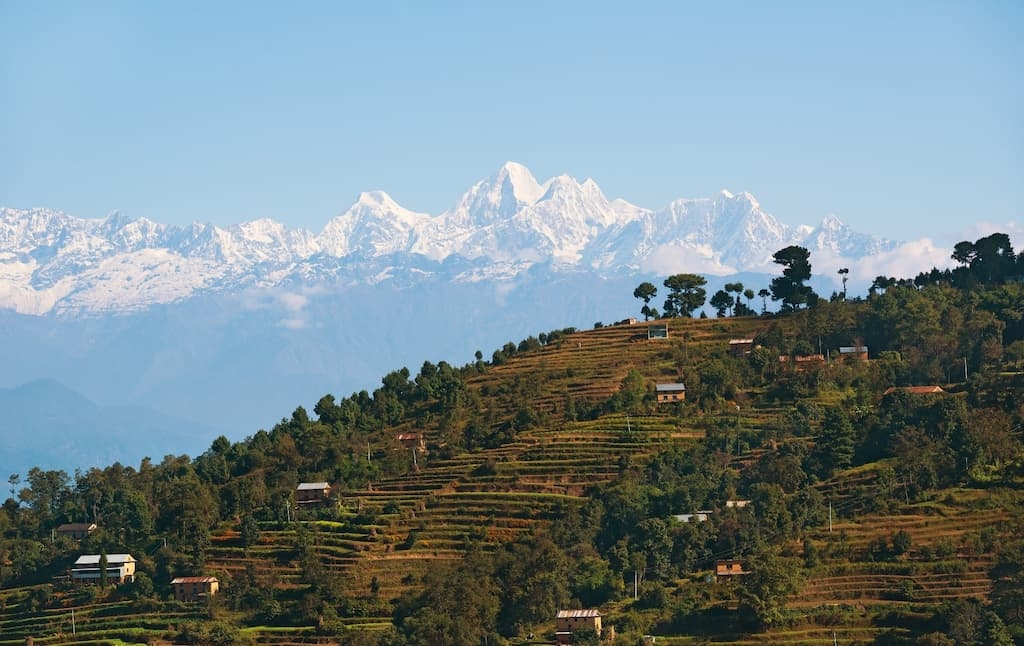
Another early morning for striking views of sunrise, a short walk to the viewpoint tower. Catch the spectacular sunrise as it gleams over the white Himalayan peaks, after a fresh morning. Back to the hotel for breakfast, and ready for the long scenic trek to Dhulikhel. The trail follows further east with ups and downhill through farm areas with a terrace and into a patch of forest. As the views of Himalayan peaks follows throughout the walk till you reach the old and new town of Dhulikhel.
It is also a famous hill town with several excellent hotels and Mountain Resorts, facing a panorama of Himalayan peaks. After checking into a nice hotel, explore the old Newar town with a great culture of traditional Newari heritage.
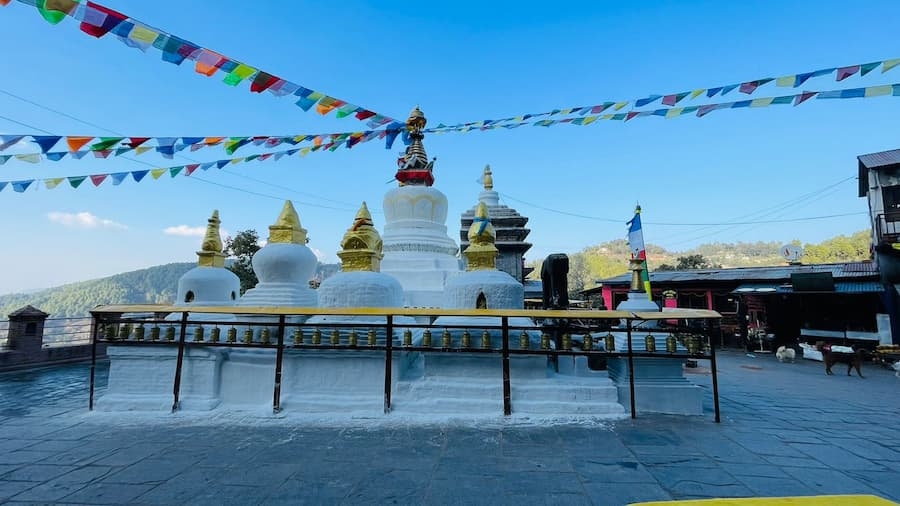
From Dhulikhel town, enjoy another fantastic sunrise view over Himalayan range of peaks. After breakfast, enjoy the last day's hike avoiding the main motorable for sometimes, with a short climb and downhill. Then reach a lovely and tranquil area where the holy spot of Namabuddha is situated amidst the beautiful forest.
Namabuddha, the holiest of all holy sites for Buddhist followers, is located south of Dhulikhel in a pristine location. The sacred site known as ‘Three Stupas in Nepal’ is Tagmo Lüjin "The place where future Maitreya Buddha sacrificed his flesh to a hungry tigress with cubs".
At this serene location, enjoy views the of Himalayan peaks towards the north, and visit the holy monuments. Lined with stupas and Gompa/monastery, shrines and then drive back to Kathmandu.
My 4-Day Trekking Adventure with Treklanders Adventures was absolutely incredible and far beyond what I expected. Even though it was a short trek, the experience felt rich, meaningful, and extremely well-organized from start to finish. From the moment I contacted Treklanders, their communication was fast, friendly, and informative. They customized everything based on my fitness level and trekking experience, which made me feel comfortable even before the journey began. Once the trek started, I realized how amazing their service truly is. The landscapes were breathtaking—lush forests, peaceful trails, charming local villages, and stunning sunrise views over the Himalayas. Every day offered something different, and the route was perfect for someone wanting a beautiful Himalayan experience in a short amount of time. I never felt rushed, and the pace was adjusted exactly to what I needed. A huge thank you to my guide, who was patient, knowledgeable, and genuinely kind. He explained local culture, checked on my safety, and always made sure I was enjoying the trek. The porter was also wonderful, always smiling and carrying the load with so much dedication. Together, they made the journey feel safe, enjoyable, and memorable. The teahouses arranged by Treklanders were cozy, clean, and welcoming, with great food and warm tea after long trekking days. Everything felt smooth and well planned, and I didn’t have to worry about a single thing. I am truly grateful for this experience. Treklanders Adventures made sure every moment felt special, and I left Nepal with memories I will cherish forever. I highly recommend them to anyone looking for a short yet unforgettable trekking experience. I will definitely return for a longer trek with Treklanders in the future

Clothing:- Trekking shirts & pants, Warm fleece & down jacket, Thermal layers, Rain/wind jacket, Hat, gloves, buff, Trekking boots & camp shoes, Trekking socks.
Gear:- Backpack & rain cover, Sleeping bag, Trekking poles, Sunglasses, Water bottle or hydration bladder, Headlamp.
The best season to do a 4-day trek in Kathmandu is definitely the two transitional periods - spring (March–May) and autumn (September–November). During such months, the weather usually remains stable, the temperature is comfortable, and there are practically no clouds; thus, these months are ideal for short treks around the Kathmandu Valley.
Indeed, trekking in winter is doable, and it frequently leads to very beautiful and crisp mountain views. Nevertheless, the coldest times or the mornings and nights may still be chilly in the areas of Nagarkot, Chisapani, and Shivapuri. Moreover, the use of warm layering is highly recommended.
In the monsoon season, you can expect lots of rain. This makes the trails slippery, the mountains not very visible, and leeches thrive in the forested areas. The monsoon period lasts from June to August. Nevertheless, it is still possible to undertake a trek in the monsoon if you love the beautiful greenery and are not bothered by the wet conditions.
Clear and crisp mountain views can be seen in October and November because the air quality becomes very good after the monsoon. Actually, the sunrises from Nagarkot, Chisapani, and Kakani are very beautiful during these months.
Spring is definitely the warmest season; however, it is still very pleasant. The days are mild, the rhododendrons are at their peak of flowering, and the trails are bright and lively. It is perfect for trekkers who are new to the trail and like moderate temperatures without the presence of extreme cold.
One can trek in the valley of Kathmandu throughout the year. Although each season has its unique qualities, spring and autumn can be considered the best times for the trek. During the winter, the weather is suitable for trekking if you have the appropriate clothing, while the monsoon should be reserved for those who love quiet trails and green scenery.
The 4-day Kathmandu trek is an easy-to-moderate type of challenge that is generally suitable for a novice, a family, or a traveler with a minimum of trekking experience. The trail consists of the road through the forest, the villages, and the gradual ups and downs without any technical problems.
No prior trekking experience is necessary. Such a hike would be the right choice for first-time hikers who want to spend a short time in the trekking culture of Nepal without going to the high altitudes. A person with even the most basic level of fitness would still be able to complete the route comfortably.
You may be required to walk 4 to 6 hours each day, depending on the route you have taken. The pace is leisurely with pauses for rest, photography, and meals.
In most cases, the route is not steep, and the only areas that are a bit intensive are the way through Shivapuri National Park or the climb to Chisapani. All age groups will find ways to deal with these parts if they wear good shoes and keep up a steady pace.
Basically, a middle level of fitness (such as being able to walk for a few hours a day) would be the best one. Those who regularly walk, jog, cycle, or generally stay fit will find the trek very comfortable.
Yes, Four-day Kathmandu trekking is a good choice for children, adults, and seniors as well, if only they are reasonably alive and active. Treks can be adjusted in line with your speed, thus the trip will be great for any age group.
The permits that you should have depend on the route you take, but mostly the ones that are on the way from Sundarijal to Chisapani require the Shivapuri Nagarjun National Park Entry Permit. Besides that, places on the path like Nagarkot or Changunarayan might collect small local entry fees.
This part of the trek passes through the centrally protected forests and the wildlife living areas of Shivapuri Nagarjun National Park, which is an important conservation area in Nepal. As the trail is going through protected forests, animal habitats, water catchments, and managed ecosystems, a permit is required. The permit fees contribute to the protection of the environment, keeping the trails in good condition, and managing the park.
A TIM’s card is not needed for a few days of trekking in Kathmandu Valley. The card is a must for ventures at higher altitudes like regions of Mount Everest, Annapurna, and Langtang. Here, the short and low-altitude trek makes the TIMS requirement obsolete.
There might be a little local entry fee in Nagarkot, which is usually collected at the checkpoint when you arrive on your route. Changunarayan Temple is the place where you can end your route, or it could be a pass-through, and you will need a heritage site ticket, which is mandatory for all visitors. As for NamoBuddha, it doesn't ask for a trekking permit, but it is always nice if you give a little donation when visiting the monastery.
The park entrance in Sundarijal is where you obtain the Shivapuri National Park permit. Going to the Nepal Tourism Board office in Kathmandu before the trek is another option. Many trekkers find it more convenient to have a registered trekking agency take care of all their permits in advance.
Indeed, each foreigner of a different age and origin should hold a valid entry permit. Although some heritage sites or local entrance fees may offer discounted rates for children, national park permits normally have a standard rate that is the same for adults, seniors, and children.
Lodging changes from place to place. Chisapani trekkers are housed in the local tea house lodges that offer basic but still quite comfortable rooms with twin beds, blankets, and a few simple commodities. Nagarkot and Dhulikhel accommodations are a blend of a regular hotel and a luxurious one, giving trekkers more comfort as well as excellent facilities, for instance, personal bathrooms and mountain-view rooms.
The tea houses in Chisapani feature clean rooms with very simple bedding, and the toilets are shared along with the dining areas. Besides this, the tea houses have a warm and friendly atmosphere. The facilities are all very basic; nevertheless, they provide a comfortable stay with the most beautiful Himalayan sunrises and sunsets, thus making the stay as authentic and unforgettable as possible.
Definitely yes, Nagarkot is known as a well-developed hill town, and great hospitality is one of its main features. Hotels here usually have comfortable rooms, attached bathrooms, balconies with mountain views, and good dining services.
Dhulikhel boasts a selection of accommodations that include boutique hotels and mountain resorts. The rooms will typically be equipped with comfortable bedding, private bathrooms, Wi-Fi, and breathtaking Himalayan views. The peaceful environment of the town and its cultural attractions make it a perfect place to still your nerves and relax your muscles after a hard day of trekking.
All the places where you will stay overnight have access to electricity, and a couple of hotels in Nagarkot and Dhulikhel offer quite a few hot showers from which you can pick. As far as Chisapani is concerned, the provision of hot water may depend on the solar water heating system or the facilities of the lodge; however, most of the tea houses will offer it for an extra small charge or during certain hours.
Certainly yes, every house of tea and hotel that lies on the path of the four-day trekking will allow its visitors to charge their mobile phones, cameras, and power banks. In tea houses, charging could be paid for, while hotels in Nagarkot and Dhulikhel generally offer free charging in the rooms.
Food during the trek is modest, fresh, and made in local kitchens. The tea houses in Chisapani serve Nepali dal bhat, noodles, soup, fried rice, chapati, vegetables, omelets, and simple Western-style food. By the time you get to Nagarkot and Dhulikhel, there are a lot of food choices with hotel restaurants serving a variety of continental, Nepali, and Asian dishes.
Indeed. Most packages feature meals throughout the trek, i.e., breakfast, lunch, and dinner. Lunch is most of the time served at the local villages where the trail passes, and breakfast and dinner are at your accommodation. The variety of hotel meals in Nagarkot and Dhulikhel is wider and therefore more comfortable after a long walk.
Along the Kathmandu Valley trekking routes, the food provided is safe, hygienic, and generally of good quality. Tea houses prepare the food fresh, and hotels in Nagarkot and Dhulikhel maintain a high level of cleanliness. Trekkers should refrain from consuming raw or unpeeled foods and opt for freshly cooked ones to lower the chances of getting stomach upset.
One can get bottled water at any stop, but using purification tablets, water filters, or a reusable bottle is a better way to reduce waste. The majority of tea houses will let you fill your bottle with boiled or filtered water for a small charge, which is the safest and most environmentally friendly way to stay hydrated throughout the trek.
Definitely not, the tap water in villages and tea houses is not for drinking unless it undergoes proper purification. It is best if trekkers only use water that is boiled, filtered, or has been treated in any other way. They are better off with water purification tablets or a portable filtration system for safety reasons as well as for the environment.
Certainly, In Chisapani, you will get essential but hearty meals, while in Nagarkot and Dhulikhel, you can find a greater variety of food, including Nepali thali sets, soups, pasta, curries, bread, pancakes, and vegetarian or non-vegetarian options. Through the combination of tea house and hotel meals, the trekkers will have enough food and energy throughout the journey.
Though the paths surrounding Kathmandu are quite clear and easy to follow, it is still strongly advised to have with you a licensed trekking guide. The guide not only helps with direction but also ensures your security, introduces you to the local culture, and generally facilitates your stay. A guide can turn your trip into an amazing one by dealing with all the behind-the-scenes work and by making sure you always follow the right trail.
The guide knows the route like the back of his hand, the weather changes that can be expected, and the local culture. They are a great support in communication when you visit off-the-beaten-path villages, taking care of your lodging, and even walking with you at a safe speed. In case of any trouble, they solve it for you immediately. Moreover, their company is a kind of protection in wooded areas and lone stretches of the trek.
Indeed, A professional trekking guide in Kathmandu is ready to take you not only through Sundarijal, Chisapani, Nagarkot, Dhulikhel, and NamoBuddha but also any other place on the route. They got to know the condition of the trail, the closest viewpoints, the safest shortcuts, the comfort levels of different tea houses, and where they should be. That's why your trekking will be safer and more fun.
Certainly, besides that, they are permitted to carry out only basic first aid and are always aware of the altitude. They are also well-versed in the fact that the altitude factor still holds at a lower level. Once you feel sick, tired, or even lost on the trail, the first thing your guide will do is to help you, be it changing the speed of the walk or the route. They are also there to help you get the means of transport if it is an emergency of any kind.
Generally, they are fluent in English, which is their main selling point to the trekking tourists. On top of that, they are rather versatile as they might master several other languages depending on the education they have obtained or the skills they have been honing for a long time. Peppered with the guide's help, you can understand all aspects of history, culture, and local customs without a hitch.
Certainly, apart from being your comrade in the trek, your guide is also the manager of the whole show. From booking tea houses, hotel check-ins in Nagarkot and Dhulikhel to meal waiting, all are done by him/her. The trekkers, by doing this, can only be pure tourists, where they soak in the beauty but do not bother with planning details.
Indeed, mobile network coverage is available almost everywhere on the trekking route, especially in the proximity of the villages and towns. Sometimes Chisapani might be a little off in terms of signal because it is on the top of a ridge, but Nagarkot, Dhulikhel, and NamoBuddha usually have good coverage from major Nepali networks like NTC and Ncell.
Wi-Fi facilities are different in each place. There is some paid Wi-Fi in a few tea houses in Chisapani, but the connection is quite weak. Wi-Fi is readily available in rooms and other areas of hotels in Nagarkot and Dhulikhel, so it is easy to keep in touch, upload photos, or send messages to the people you know.
Yes, mobile internet is available for most parts of the route. Forested and mountainous areas may have slower data connections, but it is usually good in towns like Nagarkot and Dhulikhel. Before you go, you should get a local SIM card with a data plan so that it will be easy to stay online.
It is certainly a good idea to buy a Nepali SIM card. NTC or Ncell SIM cards are cheap, and you can easily buy them in Kathmandu along with your passport. Holding your own SIM is the best way to ensure you have good connectivity for getting directions, calling for help if necessary, and staying in touch with your friends and family during the trek.
Certainly, all the tea houses and hotels on the route allow you to charge your devices. Chisapani may require you to pay a small fee for charging, while hotels in Nagarkot and Dhulikhel usually offer free charging in the room. Still, it never hurts to have a power bank with you for the times when you are on a long walk and don’t have access to electricity.
Communication is mostly available during emergency situations because local phones are with the guides, and they are aware of the places that have the strongest signals. In higher or heavily wooded areas, you might have to walk a short way to get a good signal, but the chances of needing to ask for help on this extensively used and popular route are very low.
Those who are on the trek should pack clothes that are light and comfortable to walk in, but at the same time, bring some warm clothes for the morning and the night. Ideal clothing would be a combination of moisture-wicking base layers, fleece jackets, windproof or waterproof outer shells, trekking pants, and a warm hat that will keep one comfortable throughout the temperature changes. The weather can change rapidly in hill areas like Chisapani and Nagarkot, and thus, the most important thing is layering.
Yes, one is strongly advised to put on a pair of durable, properly fitting trekking shoes that have a good grip. The walks will be along forest paths, stone steps, and sometimes uneven ground, so it will be especially important during the Sundarijal to Chisapani climb to have good shoes. Shoes that are comfortable and provide ankle support will not only prevent the wearer from getting tired quickly but also lower the chances of slipping and injuring themselves.
If you carry trekking poles, it is up to you, but it is really a great help to you if you are a beginner. They aid balance on uphill sections and, when going downhill, they relieve the pressure on the knees. Many hikers say that these tools are very handy on the Chisapani–Nagarkot as well as on the Nagarkot–Dhulikhel parts, where the trail is somewhat undulating.
A daypack with a capacity of around 25–35 liters would be perfect to carry your must-haves like water, food, a jacket, sunscreen, and a camera. Normally, porters are not needed for this trip, so it is better that your backpack is comfortable and has good shoulder support to carry out the journey smoothly and be organized.
Among the most important things are: sunscreen, sunglasses, a water bottle that can be refilled, personal toiletries, a small towel, a hat, a raincoat, and any necessary medication. Other useful things for comfort during the trekking time can be a power bank, hand sanitizer, and wet wipes.
Even though it is a trek that is generally at moderate altitudes, mornings and nights can be a bit chilly. A warm fleece or a light down jacket is a good choice, especially in Chisapani and Nagarkot. When it is winter, gloves, a thermal layer, and a heavy jacket packed in one's backpack will not only keep the trekker warm but also comfortable throughout the journey.
Definitely, this trek is counted among the safest short treks in Nepal. Not only does the path lead to established hiking trails and villages, but also to the popular viewpoints like Chisapani, Nagarkot, and Dhulikhel. With a guide, correct walking speed, and minimum preparation, a novice can easily get through the trek. Besides, the trek can be for first-timers as the altitude is not too high.
Altitude sickness is almost impossible on the trek since the highest point is somewhere near 2,300 meters, which is lower than the altitude from where symptoms normally arise. But on the other hand, some trekkers may report slight tiredness and dry mouth. Drinking plenty of water, taking breaks, and moving at your own pace are the things that will guarantee a comfortable trip.
The trek is of a moderate level and can also be done by people of average fitness. The daily walking takes 4–6 hours, while the trails feature gentle ascents and descents. Trekkers who are accustomed to walking or are engaged in some light exercise will have no difficulty in finishing this route. The right preparation and walking speed will make the experience a nice one.
Indeed, help is always at hand during the trek. Being near Kathmandu, the guide can quickly organize transportation or assistance if there is a need. With most parts of the trek open to mobile network, communication in case of an emergency becomes easy. The closeness to towns is what makes this trek one of the safest, not only in terms of accessibility but also in support.
Although travel insurance is not a must-have for such a low-altitude trek, it is still highly advisable. The insured who receives medical attention in case of emergency, suffers from trip delays, or has to cancel the journey for unforeseen reasons, is the one who enjoys peace of mind. While the trek is close to Kathmandu, having an insurance policy guarantees help if you get sick, hurt, or have any other emergency situations.
Put in your backpack basic first aid things like band-aids, blister patches, pain relievers, anti-inflammatory tablets, and any drugs that your doctor has prescribed for you. Normally, a guide will bring a complete first aid kit, but it is always nice to have your own small kit with you for personal comfort. Don't forget that protection against the sun, as well as lip balm and hand sanitizer, is very important during a walk.
The journey from Kathmandu to Sundarijal is a visual treat and takes about 45 minutes to an hour by car. Sundarijal is around 15 kilometers east of Kathmandu. The transportation is mostly facilitated by the trekking agency. The ride is quite comfortable and gives you a nice warm-up to nature after the city.
Basically, trekking offers come with private transport, which is usually a car, jeep, or van, depending on how many people are in the group. These vehicles are spotlessly clean, comfortable, and have professional drivers at the wheel. A private vehicle is the surest way to get off on time and have a better ride compared to a public bus.
The trek is a point-to-point route from Sundarijal to Chisapani, Nagarkot, Dhulikhel, and finally NamoBuddha, so you only need transport at the beginning and the end. The return from NamoBuddha to Kathmandu by car or jeep is the way to go and normally takes around two hours, depending on the condition of the road.
Day 1 kicks off with a beautiful drive from Kathmandu to Sundarijal, after which you walk among the waterfalls, streams of water, and the entrance of Shivapuri Nagarjun National Park. The trail ascends the forest, terraces, and small villages until it reaches the ridge-top settlement of Chisapani (2,300m). From there, hikers get to enjoy grand Himalayan views, including Langtang, Manaslu, and Ganesh Himal.
The walk is about 4 hours, with gradual uphill sections and paths through the forest. It is a nice first day, and the trek is not too hard to get you started on the journey.
On Day 2, you are taken to one of the most beautiful ridge walks of this trek. After the sun comes up in Chisapani, the trail leads east through pine and rhododendron forests. The way down is to Chowki Bhanjyang, where you can have your lunch, then the journey continues through Jarsing Pawa and Kartike Bhanjyang before it goes uphill to Nagarkot (2,100m)—a place from where the Sun is most beautifully seen and from where a long panoramic view of the Himalayan range, including Everest, is visible.
You should be prepared for 6 hours of walking with a good mixture of gentle ups and downs. Although the trail is moderate, it is still quite manageable for trekkers who have basic fitness.
After another stunning sunrise, the trek moves on to Dhulikhel (1,545m). The trail consists of rolling terrain, terraces, and the odd patch of forest, while it offers uninterrupted Himalayan views. Dhulikhel is an ancient Newar town whose beauty lies in the traditional architecture of its houses.
The final day is a walk to the holy Buddhist site of NamoBuddha (1,750m)—a tranquil monastery complex that is linked to an ancient Buddha legend. After sightseeing the stupas and shrines, you get back to Kathmandu by a beautiful drive, thus concluding the 4-day trek.
| No of people | Price per person |
|---|---|
| 1 - 1 | $1,300 |
| 2 - 3 | $1,200 |
| 4 - 8 | $1,000 |
| 9 - 20 | $900 |
| No of people | Price per person |
|---|---|
| 1 - 1 | $1,200 |
| 2 - 3 | $1,000 |
| 4 - 8 | $900 |
| 9 - 30 | $850 |

| No of people | Price per person |
|---|---|
| 1 - 1 | $665 |
| 2 - 3 | $550 |
| 4 - 8 | $450 |
| 9 - 20 | $420 |