Nar Phu with Thorang-La pass Trek, one of the most exciting adventures around Nepal Far North Mid-West, beyond Annapurna Himalayas.
Our itinerary days, are perfectly designed for trekkers to enjoy the picturesque countryside and the hidden Shangri-La, of Nar-Phu valley.
The high region of Upper Manang valley around Nar Phu remained a forbidden country for centuries. Until it was opened for outside visitors from 2003 onwards but remains a restricted area. Where all interested travelers require a special permit to enter the formerly forbidden country of Nar Phu.
A great adventure, for trekkers in search of new fresh, and raw areas around the Himalayas, away from mainstream routes. Nar Phu with Thorang-La Trek is a great combination of traversing from one end of the valley to another scenic area.
On this trip, trekkers can experience the spectacular country of Manang with the Mustang region at the end of the journey. The beautiful landscapes leave you spellbound, as the snow-mountains follow you from the beginning to the end of the adventure. This wonderful trek is not only of marvelous scenery of towering snow-capped peaks and spectacular scenery.
The local traditions and cultures of age-old heritage are equally charming and fascinating, as you explore the Nar Phu villages. As well at the end of the adventure around lower Manang towards Jomsom town visiting its impressive monasteries.
Nar Phu with Thorang-La Pass Trek, leads you to cross over two scenic high passes, although a strenuous climb. But makes you feel on top of the world standing on the highest points, where giant peaks of the Himalayas surround you.
Nar Phu valley due to its remoteness, around far-flung corners of the Annapurna Himalayas, away from the main popular trails. Retaining its pristine wilderness and its ancient traditional cultures as it were for hundreds of centuries.
One of the few wild countries around the Himalayas, which has remained, untouched, and undisturbed by modern civilizations.
The adventure commences with a long and interesting drive from Kathmandu to reach the cooler high hills of Manang at Dharapani. A nice village located on the main route of Nar Phu and towards the Manaslu and Annapurna Circuit treks.
Nar Phu with Thorang-La Pass, the real adventure begins from Dharapani onwards, following the main trail of the famous Annapurna circuit.
After a pleasant walk around the lovely Bagarchap, Danaque, and Timang villages on reaching Kodo village, our route branches off. Leaving the popular trail of Annapurna Circuit for a week, heading towards our main destination to Nar-Phu valley. The trail leads through a narrow river gorge covered in pines and rhododendron-dense tree lines. After days of steady walks, the gorge opens into the wide exposed, and scenic country of Nar Phu valley.
An exciting and amazing windswept high land with close views of Himlung Himal, the walk leads first to Phu village. Enjoy the unspoiled features of Phu village, a mixture of Tibetan heritage within harsh and beautiful terrains.
Steeped with fascinating Buddhist cultures and old impressive monasteries to enjoy the tour of cultural and religious interests.
From Phu, a day walk or more takes you to its adjoining village of Nar, quite similar to Phu. An interesting settlement to observe the ancient traditional customs and farm activities along with glorious scenic views of snow peaks.
On completing a wonderful visit to Nar Phu villages, and its picturesque surroundings. The adventure continues to cross over high Kang-La, to join on the main Annapurna Circuit route towards the main Manang village.
Experience the great difference, after being around Nar Phu and reaching back on the popular trekking areas at Manang village. The walk from Manang follows the main trail facing the grand vista of the Annapurna Himalayan range with Chulu’s peaks. Slowly the trek leads at the end of the Manang valley rim reaching the base of Thorang-La pass. An early morning climb on undulating winding up leads you to the top of Thorang-La, the highest spot of the trip.
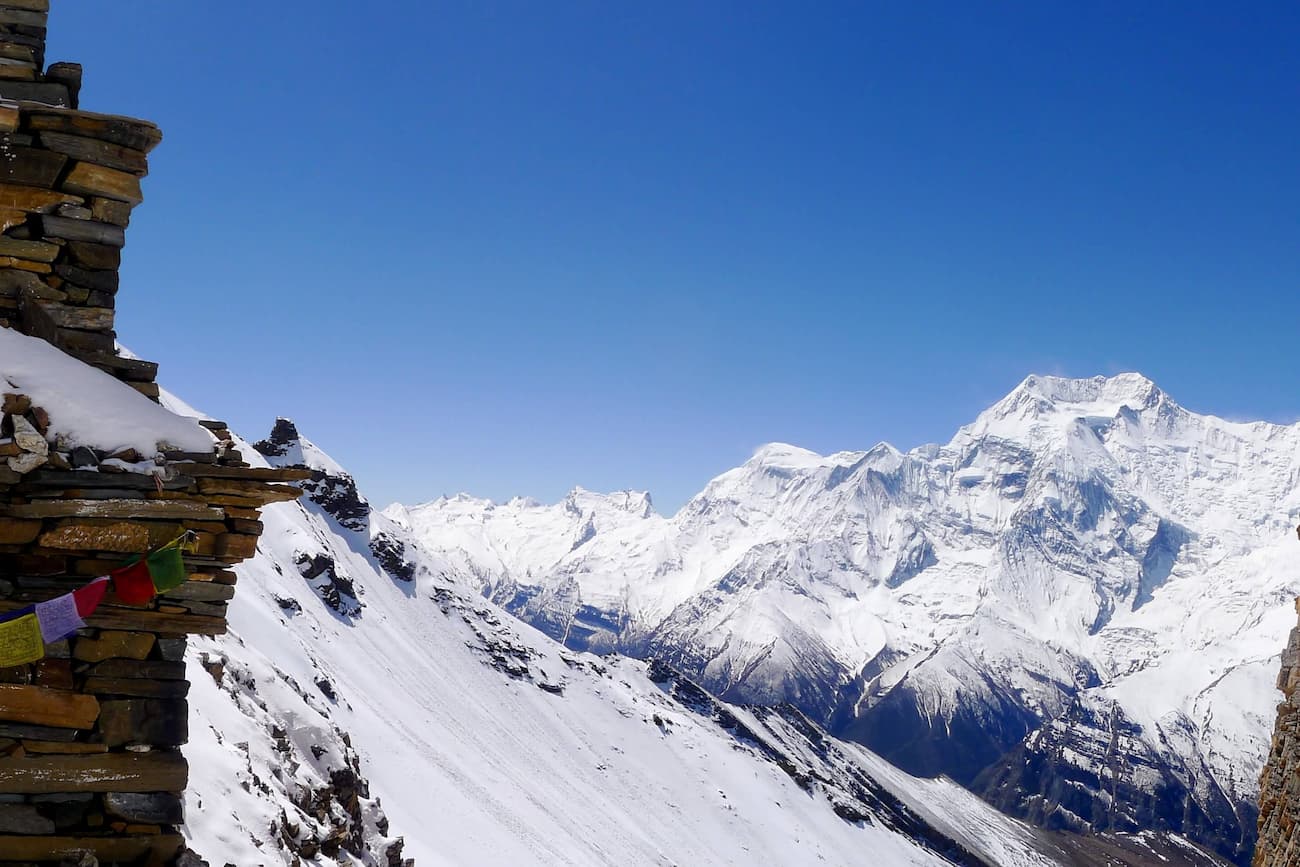
From Thorang-La overlooking a mesmerizing, wonderful panorama of Annapurna, Dhaulagiri Himalayas with Damodar and Chulu’s peaks as far as Manaslu Himal.
Enjoying the dramatic scenery of snow-capped peaks and tremendous views of landscapes, a long downhill walk to Muktinath. A famous holy site of the Hindu religion for a sacred pilgrimage around the Himalayas, the temple is dedicated to Hindu god Vishnu.
After an interesting tour of Muktinath Temple and its holy sites, the walk leads towards Kaligandaki River Valley. A long drop of nearly 3,000 meters from the high Thorang-La Pass to the large town of Jomsom.
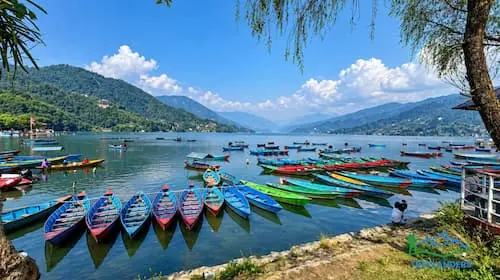
The administrative and headquarters of Mustang areas with a small airport, where our adventurous walks end at Jomsom. The next morning take a swift panoramic flight to beautiful Pokhara, a city of charm and beauty. A renowned tourist destination of Nepal blessed with natural wonders of snow peaks of Annapurna Himalayas with serene lakes.
Finally our marvelous adventure concludes in this lovely gem of a city in Pokhara; after a great overwhelming experience on Nar Phu with Thorang-La Pass Treks.
Trip Summary:
Mode of Trek: Best available lodge / guest house on treks.
Trekking Grade: Moderate to Adventurous.
Trekking Region: Around Manang district Northern side of Annapurna’s.
Start and End of trek: From Dharapani to Jomsom with drive and flight.
Highest elevation: On top Thorang-La Pass at 5,416 m /17,697 feet high.
Trek duration: 15 Nights and 16 Days with drives and flights to Pokhara.
Total Trip: 20 Nights and 21 Days, from arrival to departures.
Best Seasons for Nar-Phu with Thorang-La Pass Trek:
The best season for Nar-Phu with Thorang-La Pass Trek is late spring April and May. Including autumn/fall begins from September to early November.
Springtime is bright and beautiful, most days are clear with sunny days, can be cloudy afternoons. Bringing cold chill in the late afternoon, and night till morning this is the time when wildflowers are in seasonal bloom.
The next best season is autumn/fall, where days are clear with sunny days for views and walks. But shorter days due to limited sunlight hours, cold morning and night time can expect snowfall sometimes. But an enjoyable day for pleasant walks with clear views of the beautiful snow mountain range.
Culture & Religion:
The Nar-Phu areas above Manang district is populated by Manange tribe of strong Tibetan origin, quite different to other hills tribes the Gurung of Southern Annapurna and Lamjung Himal areas. The Manang’s people interwoven with similar to Tibetans, follows Buddhism religion with same heritage culture and traditional way of living. But beyond Manang crossing high Thorang-La pass around Mustang areas of Kaligandaki Valley dominated by Thakali people.
The tribes of Lower Mustang of Mongolian origin, interwoven to Buddhism. Follows similar culture to its neighbors of Upper Mustang and Manang people and Tibetan predecessors. Where trekkers will come across religious monuments of prayer walls, spinning wheels, Stupas, and monasteries. All houses are adorned with Buddhist prayer flags, as well on top of Kang-La and Thorang-La passes. Which symbolize a respect for the abode of gods and goddesses and holy mountain spirits. Traditionally the native of Manang and Nar-Phu areas are farmers and cattle herders, raising and breeding livestock.

On first arrival at Kathmandu-Nepal international airport, our staff and guide will receive with traditional welcome. A short drive to your hotel in the hub of Kathmandu city, on checking into your nice rooms. After getting refreshed from the jet-lag, join at the hotel lobby and at meeting room for trek briefing provided by our guide or leader. Information about the hotel, lodge on treks with full details of trekking trails, food and accommodation on treks. As well with do’s and don’ts with welcome group dinner in an authentic Nepali restaurants with local cultural program along with Nepali meals.


Enjoy the walk today, after a long hour drive of previous day feeling fresh, start the first day walk. A pleasant with gradual up on winding trail through lovely cool forest of pines and rhododendron. Walk through Bagarchap and Danaque villages,
from here onwards within strong Buddhist religion and cultures. As you come across Buddhist monuments of Stupa and Mani Walls. The trail leads to a steep climb reaching Timang a large village of mixed tribes of hill people Gurung, Magar and Manange. A possible lunch stop facing grand views of Lamjung peaks in the south with Manaslu Himal towards North East. From here a slow and easy walk to Koto village, where route to Nar-Phu and main Manang village branch-off.
Overnight stop in a nice lodge at Koto village, from here our route diverts from the main Annapurna Circuit trail for a week. At Koto with time for short walk up to Chame explore the town. Which is the headquarters of Manang district.

An early start to cover a long distance towards overnight stop in Meta, a small nice settlement. Walk leads to cross over a Phu River heading through lovely woods of pines and rhododendron trees. As trail follows past small overhanging cave, a natural shelter for travelers in early days. The walk leads a small settlement of Dharmasala to enter a narrow canyon of rocky cliffs and water falls. Slowly the tree lines drops, as the views opens up as walk leads to the last stretch onto Meta. Then climb to a steep hill, facing grand views of the giant snowy peaks that pop up above the rocky ridge line. Finally end the day walk on reaching Meta for overnight on entering the Nar Phu Valley. A wide stretch windswept terrain, having few nice simple lodges for overnight stop.

From Meta onwards within a dry country of Nar Phu valley, today a short morning trek to a small settlement. Reaching Junam, as walk continues towards the next semi-permanent settlement of Chako. Where in early days of 1960’s Tibetan refugees from the Khampas province of Tibet migrated to Nepal.
Settled at Chako making a temporary camp, from here few hours climb with downhill to Kyang for lunch and overnight. The area around Kyang an extensive winter settlement of Phu, situated on a high plateau above the winding Phu River.

Today walk leads to our first main highlight of the adventure to Phu village, morning walk starts heading higher areas. The trail leads to a unique and colorful Tibetan Buddhist monuments of Chorten that Nar and Phu are famous for.
As the trail meanders along a ridge, facing great views of a monastery, situated at Nar Phedi. Which is on the route after visiting Phu village, an hour walk leads through canyons and gorges. Then reaching a huge monolith that stands on the steep up to Phu; catching views of the three main villages of the region.
Grand looks of the old “Dzong” (Tibetan-style fortress) and the remains of two windblown and eroded forts. Which stands majestically above the valley before reaching Phu village, and just before crossing over a bridge to Phu. Coming across a series of Buddhist prayer Mani walls and Chorten that dots the beautiful country of Nar Phu. The morning walk finally completes on reaching the mystical, amazing Phu village for two overnight stops.

Enjoy the free and leisure day in Phu, amidst glorious scenery of high snow peaks and beautiful landscapes surrounding. An enjoyable place for short hike and tour uphill to the famous Tashi Lakhang Gompa, as a great noble respects; for Lama Karma Sonam Rinpoche. Migrated to Nepal along with His Holiness the great 14th Dalai Lama in the year 1959. Phu village is a perfect spot with right altitude for acclimatization before crossing the high Kang-La pass.
Have a pleasant day exploring the narrow alleyways of the closely knitted village. For energetic people can take a long hike to Himlung Himal base camp of more than 6 hours both ways. Rest of the day observe the local activities of the villagers as they spin their yak and sheep wool. Pounding mustard seeds with an old methods, making a paste for oil, and watch the daily chores of farm life.

After a pleasant extra day in Phu village, morning a short walk of few hours towards Nar the adjacent village. Walk lead back to the historical and traditional entrance and exit gate of Phu. The trail follows down to a river, and walk to Junam Kharka or Nar Phedi for overnight halt. A lovely spot with few simple huts serving as tea-house and lodges. Actually, the monastery is all that Nar Phedi has to offer for outside guest. But the rooms are neat and clean and the nuns are polite and welcomes with traditional greetings. An interesting place, where one can enjoy visiting the kitchen, observe lunch and dinner being prepared on a modest fireplace. Every evening by 5 pm the monastery a worship and prayer takes place. Guests are welcome to witness, it would be great support to contribute a donation in the box. For the monastery and nuns welfare, as well retaining this beautiful and friendly place.

Another short day walk, we have maintained the itinerary so that all can enjoy the picturesque Nar Phu at ease. Morning from Nar Phedi bidding farewell to happy, cheerful nuns, on the trail to an old bridge. Placed from the deep and narrow gorge, as climb continues facing views of old Gyalbu and Satte Gompa.
Located on the far side of a valley, the monasteries with 17th Century old history. At present it is deserted and in desolate condition, as climb advances reaching the entrance traditional gates of Nar village. The welcome gate a delightful painted, bamboo-topped Chorten, from here the morning walk completes transfer into a nice simple lodge. Nar a lovely place with well-tended barley and mustard fields, after lunch enjoy tour of four ancient colorful Gompa. A scenic hike facing snow peaks that towers above the monastery at Nar.
Rest of the day marvel the surrounding beautiful landscape scenery and observe the local daily farm life and village activities.

Leaving Nar for sheer wilderness, walk leads at the end of Nar-Phu to enter a complete windswept valley. The walk leads towards the remote corners at the western end of Nar-Phu valley. Slowly the trail winds up to cross icy streams, then reaching a wide area, which is a pasture field for yaks. A small temporary settlement of cattle and yak herders with small stone huts, provides as simple Tea-House. After lunch enjoy the afternoon relaxing and marveling the surrounding views of Chulu’s and Damodar Himal with Himlung Himal.

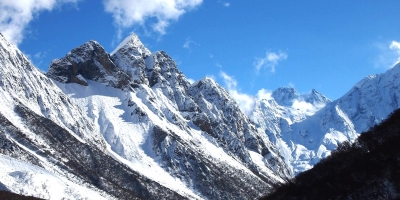
The first high pass to cross of the adventure over Kang-La ridge, morning after an earl breakfast, carrying packed lunch. Then head for the steep haul on slope sided hill, as climb continues to reach on top of Kang-La Pass. Located at 5,306 m high, forms the boundary of main Manang and Nar-Phu valleys. However the pass is not so difficult, but a long stretch with steep ups. In snow condition might be quite challenging and take much longer. On reaching the top, enjoy the fantastic panoramic scenery towards Annapurna-II, Gangapurna Himal and Tilicho Peak in the south. Includes views of Chulus and Damodar Himal range as far as Himlung Himal towards Far East.
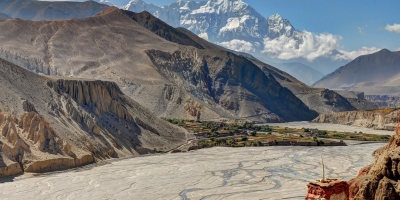
From the top of Kang-La a slow and easy descent leads to upper side of Manang valley in Ngawal. A scenic and isolated nice village on route to Chulu East and Nar-Phu areas. The walk leads to a Buddhist monument a large Chorten decorated with prayer flags and religious spinning wheels. As you enter Ngawal village and its stone paved path, and transfer in the comfort of a nice lovely lodge.

Enjoying a pleasant overnight in the comfort of nice lodge at Ngawal village, today’s walks is quite short. Leaving the remote village of Upper Manang valley, walk leads on winding downhill trail, overlooking range of snow-clad peaks of Annapurna’s, and Chulus with staggering Pisang peak.
After few hours of good scenic walks, then enter within main trail at Manang Valley, the route head downhill. Reaching Braga village with an oldest monastery of Manang. Having time for short visit of the monastery stand above the Braga village on a sandy hillock. A short climb to enter the monastery interior enriched with ancient idols of Lord Buddha and famous saints and gurus. From the monastery stunning panorama of snow-mountain range of Annapurna’s and Chulu’s with towering Pisang peaks. From Braga a short walk with few minutes climb to Manang village, enclosed by staggering mountain range. Located on a plateau above Marsyangdi River valley, an exciting place to enjoy additional day in Manang.


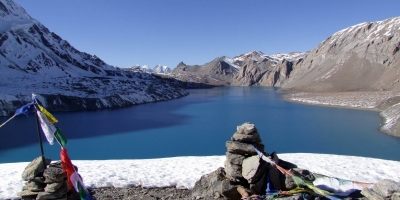
The toughest day walks of the adventure after Tilicho Lake Base Camp trek, an early morning start. Walk leads on nice narrow path for short while, and then climb begins on winding and undulating ups. Reaching a flat spot with a small hut near a glacial ponds, continue walk up to the top of Thorang-La. After a strenuous climb rewarded with glorious jaw-dropping views of Mid-Western Himalayan peaks, as far towards Mt. Dhaulagiri range. Includes views of Mustang Himal towards west with Damodar Himal, Chulu’s and Annapurna with Manaslu in the far eastern horizon. The pass is marked with a sign board with thousands of prayer flags, after an overwhelming moment. A long descent reaches to another Phedi with few small Tea-Shops, after a pleasant rest. Journey continue for another last hour on easy flat trail to Muktinath holy site and its nice village for overnight.
Muktinath regarded as holiest of all holy pilgrimage sites around the Himalayan range, the Hindu temple dedicated to Lord Vishnu. At Muktinath enjoy the comfort of a nice cozy lodge, provides wide-range of food menu, along with views of Dhaulagiri Himal.


Morning leaving the hotel in Pokhara, drive in a private vehicle or on regular Tourist Bus, as per size of a group. The scenic and interesting overland journey to Kathmandu on the same exciting highway. After hours of driving reaching back to your hotel in Kathmandu, rest of the day at leisure.
Note:-You can also fly to Kathmandu from Pokhara (25-minute flight), but you will need to pay extra.

Enjoy an extra day in Kathmandu with individual activities or get into shopping spree. Interested people can join for another interesting tour of other cities of Kathmandu valley. Sightseeing around Patan / Lalitpur or the famous Bhaktapur city Durbar Square, worth a visit.

After an enjoyable and most mesmerizing time in Nepal, around the Annapurna Himalayas on Nar Phu with Thorang La Pass Trek. As time for departure, our staff transfer you to international airport for flight homeward bound or to next port of call.
My journey through the Narphu Valley combined with the Thorong La Pass trek was nothing short of extraordinary, and Treklanders Adventures made the entire experience smooth, safe, and unforgettable. The Nar and Phu villages felt like stepping back in time — untouched landscapes, ancient monasteries, and warm local hospitality. Treklanders’ team handled everything with such professionalism that I was able to fully immerse myself in the culture and scenery without any worries. Crossing the high Thorong La Pass was the highlight of the trip. It was challenging, but the guides kept our pace steady, checked on us constantly, and ensured we acclimatized properly. Their knowledge of the terrain, weather, and safety made all the difference. The views from the top — snow peaks stretching in every direction — were incredibly rewarding. From the remote cliffs of Narphu Valley to the bustling trails around Manang and the thrill of Thorong La, the variety of landscapes was unbelievable. I’m deeply grateful to Treklanders Adventures for organizing such a well-planned, meaningful, and adventurous trek. I wouldn’t hesitate to recommend them to anyone dreaming of exploring this hidden Himalayan gem.
Purpose: Keep sweat off the skin and maintain warmth.
Purpose: Trap body heat in cold air at altitude.
Tip: Keep electronics in inner pockets at night to prevent freezing.
As this is a high altitude trek of moderate and adventurous walks of little more of two weeks. As long one is determined and physically fit and in sound health, can overcome the difficulty and tough climb with steep downhill’s.
The first part of the adventure is gradual with slow gain in altitude, but from Phu and Nar villages onwards. The difficult sections is long steep climb to Kang-La Pass top, the other hard climb is up to Thorang-La Pass. But taking slow with frequent rest stops will be the best to enjoy the difficult part of the adventure. Apart from the two high passes, rest of the walk is pleasant on moderate trails with short ups and down.
Nearly all villages and lodges have electricity from Hydro or Solar power, where one can charge their electronic items. Where client needs to pay an extra fee for using the power as per gadgets charged. But at Kang-La Phedi facilities for electricity is almost nil, just for few days. Rest of the trekking routes and overnight stops do have electricity power. As for internet and cell phone communications, every lodges have the Wi-Fi and internet services, but can be quite disturbing sometimes due to weather and location wise.
In major villages from budget to tourist standard lodge like in Manang. Including Muktinath and Jomsom with high-class accommodation of international standard. On treks most lodges and guest-house are simple with spacious rooms with attached or non-attached bathrooms and toilets. Where meals are served in a large dining room with a warm environment provides comprehensive food menu. Includes from Continental, Chinese, Indian, Tibetan and popular Nepali meals. As well varieties of snacks and appetizers with home-baked bakeries items in large villages. The only simple comfort of accommodation is on the route to Phu and Nar villages, with Kang-La Phedi and at Thorang High Camp.
Depends upon the trek and grade chosen, for below 3,000 m high no risk of altitude sickness, but for trekking above 3,000 m and crossing high passes of over 5, 000 m. All trekkers should be well aware of altitude sickness or AMS (Acute Mountain Sickness). Our guides, leaders offer safety advice about the route and rise of altitude on daily walks to designated overnight stops.
Enjoying the walks taking slow pace when required, having short stops to catch with your breath against getting exhaustion. Taking advice from your guide and walking slow, drinking enough water or any fluids (except alcoholic drinks) as well having rest. All our itineraries for high altitude treks, have rest days for acclimatization before heading higher ground.
Yes, certainly of course a short panoramic flight of 30 minutes to Kathmandu from Pokhara. But the flight airfare depends upon the cost as set on the itinerary days. If the flight is not included on trip cost, it will be at extra cost, where trekkers needs to inform the Trek Landers Adventure on early booking.
The Everest Panorama Trek is relatively short and straightforward in the Mount Everest area, offering magnificent views of Mount Everest, Ama Dablam, Lhotse, Thamserku, and other peaks without requiring high altitudes. This trek is ideal for beginners, families with kids, and travelers with limited time to spare.
The Nar-Phu trek is an expedition through the mysterious and locally untouched valleys of Nar and Phu in the Himalayas. Afterwards, the trek follows the traditional Annapurna Circuit and crosses the celebrated Thorong-La Pass at 5,416 meters. The trek is a blend of traditional Tibetan lifestyle, influenced by the culture, and stunning nature at high altitudes in the Himalayas.
Generally, the trek lasts from 18 to 22 days, depending on the trekking pace, acclimatization process, and the chosen itinerary. It is common among trekkers to spend additional nights in Manang or Phu for acclimatization and sightseeing.
The trek is categorized as difficult because the area it covers is remote, there are long days of walking, and the high altitude at Thorong-La Pass. The trek is intended for people who already have trekking experience and are physically fit.
The highest point of the trek is Thorong-La Pass at 5,416 meters, which is one of the highest trekking passes in the world. It is very important to be properly acclimatized before making the crossing.
The Nar–Phu Valley is a restricted area. Therefore, travelers should go with a licensed guide and carry special permission. Independent trekking is not allowed.
Basic teahouses and home stays are available in the Nar–Phu Valley, while the Annapurna Circuit segment of the trek offers more comfortable guest houses. The amenities are quite basic; however, you can expect the usual warm welcome.
Indeed, a guide is necessary as per the regulations of the restricted area and also due to the difficult, remote nature of the area. A guide ensures safety, helps with the route, and gives insight into the local culture during the trip.
The villages of Nar and Phu revolve around Tibetan Buddhism. There you will find ancient monasteries, prayer walls, yak herding communities, and traditional Himalaya-style stone houses that have been the way of life in the Himalayas for the past several hundred years.
Not at all, this trek is the right of the most skilled and accomplished trekkers only, and they must have previously done trekking in high-altitude areas. The lack of drop-in point facilities, tough environmental conditions, and long distances warrant a strong fitness level and great preparation.
Yes, altitude sickness is a potential problem as the main reason for the worry is the high altitude area, particularly in Phu, Nar, and Thorong-La Pass for submission. Good acclimatization, slow pacing, and drinking enough water are musts.
Yes, since the walk goes up to 5,416 meters at Thorong-La Pass, altitude sickness is a major problem. To keep away from serious situations of altitude, one need to acclimatize well, move slowly, take enough water, and have some rest days in Phu, Nar, and Manang.
In case you have a headache, dizziness, nausea, or you cannot breathe properly, tell the guide right away. The most secure reaction is to quit, take it easy, drink some water, and if the symptoms get worse, go downhill. The guides have got the altitude problems under control, and they will decide the best course of action for your safety.
The trek is best taken during the spring (March–May) and autumn (September–November). Both these seasons offer steady weather conditions, open sky, and appropriate temperatures not only for the off-the-beaten-path Nar–Phu but also for the high Thorong-La Pass.
Spring has gentle temperatures, flowering rhododendrons, and great visibility. Around Thorong-La, the snow is melting, thus the pass is getting safer and easier. The trails are invigorated with life, and the weather is still good both in the valley and on the high passes.
Among other things, autumn provides the sharpest views of the mountains, the driest trails, and stable weather conditions. The skies remain crisp and blue, and the temperatures are just right for long walks. In fact, it is the safest as well as the most predictable time to get across Thorong-La Pass.
During the wintertime, it is extremely cold, especially at altitudes above 4,000 meters, while thick snow can cause the closing of the Thorong-La Pass. Even if the Nar–Phu region can be accessed, a trek crossing Thorong-La in winter is a gamble and thus, not recommended for the majority of walking enthusiasts.
Monsoon comes with heavy downpours, landslides, slippery trails, and obscured views. The lower sections of the trek become muddy, and road travel is often delayed. The cloud-covered views make crossing Thorong-La dangerous due to poor visibility, and while the Nar–Phu region is in the rain-shadow area and receives less rain, it is not advisable to pass through Thorong-La.
October and November are generally regarded as the best months. The air is clean, the weather is stable, and in fact, these are the safest as well as the most scenic days for a crossing at Thorong-La Pass.
This trek is marked as a difficult one, for reasons such as the wild nature of the area, the lengthy days of walking, and the high altitude of the Thorong-La Pass. A trekker must be physically fit, have good stamina, and be familiar with high altitude trekking by experience.
The trekking routes are strenuous and include cliff trails that are both narrow and steep, and pass through areas that are at a very high altitude. Besides this, there are only a few facilities to be found in the Nar–Phu region. What make it additionally difficult is the remoteness of the valleys and the crossing of Thorong-La at 5,416 meters.
Indeed, it is highly advised. In particular, they need to have finished at least one multi-day high-altitude trek before taking on the challenge of Nar–Phu and Thorong-La. The altitude and rugged conditions may cause great discomfort for complete beginners.
It's the hardest part of the journey. In fact, the ascent is a rather long walk uphill where the air is thin and cold, thus it is usually done early in the morning. The extreme conditions in terms of wind and altitude make putting one foot in front of the other very slow and exhausting, but if the acclimatization is done properly, it is still feasible.
On average, 6–8 hours of trekking is done on most days, while some days are shorter and used for acclimatization. The days around Nar, Phu, Manang, and the ascent to Thorong-La can be longer and more difficult.
Besides possessing good aerobic capacity, a trekker also needs to have strong legs and stamina for him/her to be able to keep walking for hour’s non-stop. You are suggested to get in shape for the trek by taking part in hiking, stair climbing, and other endurance workouts for at least a month before the trek.
By area, the accommodation is different. Nar–Phu Valley teahouses and home stays that are run by local families will be your stay. When the trail goes to the Annapurna Circuit, the lodges become more beautiful and well-equipped.
Lodges at Nar and Phu provide a very basic level of service with shared rooms, wooden beds, some bedding, and communal toilets. Due to the remote location, facilities are quite limited, but the rooms are clean and the locals are very hospitable and friendly.
It is very seldom that there are attached bathrooms in the Nar–Phu Valley. Most places to stay have shared toilets. On the Annapurna Circuit side, there may be some attached rooms, especially in Manang, Braga, and Muktinath.
Hot showers can be found in some lodges, normally powered by solar or gas, but not in all of them. For instance, in remote areas like Nar and Phu, you cannot expect a hot shower but warm water in a bucket instead.
Electricity or solar power is available in most lodges; however, the power can be very weak in the higher villages. A few teahouses may charge a little if you want to charge your phone or camera, and this can happen in Nar and Phu.
It is necessary to have a warm sleeping bag on this trek because of the cold nights. Still, Treklanders Adventures has a good quality sleeping bag that they can provide you with for your comfort and safety, so if you want, you can bring your own, but it is not compulsory.
You can expect simple, fresh, and homemade food throughout the trek. Nar–Phu Valley offers very basic food options, but they are healthy and mostly made by local families. Whereas, Annapurna Circuit side teahouses provide more extensive menus with more variety.
Common meals include Dal Bhat (lentils with rice), vegetable curry, fried rice, noodles, thukpa, eggs, porridge, pancakes, and muesli. Dal Bhat is the most popular meal because it is a great source of energy for long walking days and is made fresh.
Absolutely, vegetarian meals are provided everywhere and are the most reliable food choice in the most inaccessible areas. The majority of lodges in Nar and Phu are naturally vegetarian because the meat supply is limited and not always fresh.
Certainly, food is always freshly prepared and served hot. In the remotest places, the meals are modest but hygienic. On the Annapurna Circuit, the standards of hygiene in kitchens are well maintained, and freshly cooked meals are typical for trekkers.
Buying bottled water or refilling a boiled water bottle at a lodge is your option. Water that has been boiled is the most reliable one, especially for areas that are located at a higher altitude or are remote. Using purification tablets or a filter bottle is highly recommended for safety and to lessen plastic waste.
Certainly, it is very helpful. Purification tablets or a portable filter will allow you to refill water anytime, anywhere, especially in Nar and Phu, where you may not always find bottled water. It is a safe, inexpensive, and environmentally friendly option.
Mobile phone signal in the Nar-Phu valley is almost non-existent. Some lower villages may receive weak NTC signals, but most of the region especially between Koto, Meta, Phu, and Nar has little to no network. The place is quite far from the city, so do not expect to have a signal for a long time.
That is right. The network signal strength of NTC and Ncell is more stable in Ngawal, Manang, Yak Kharka, and Muktinath. But even so, the fluctuation of the signal due to altitude and bad weather is possible.
In Nar and Phu, the Wi-Fi service is an exotic thing and is usually not available due to the limited connection. On the Annapurna Circuit side, there are a number of lodges providing Wi-Fi services, but the connection may not be very stable, and you might have to pay some amount for the service, especially if you are at a high-altitude place.
Indeed. It is a good idea to buy an NTC SIM card as it is the one that works better in most parts of the Annapurna region. But even with an NTC SIM, do not expect coverage in Nar-Phu Valley.
In the Nar-Phu Valley, be prepared for an absence of network most of the time during your trek, especially around Meta, Phu, Nar, and Kang La Pass areas. Only after the Annapurna Circuit does the network become available.
Guides with licenses usually have their own local phones and are also able to get in touch with the communication systems of nearby lodges. If the situation is really serious and they can't get in touch with anyone, they will use whatever local networks, lodge phones, or the nearest village connection points that are available to them to get in touch with others and solve the problem.
Indeed, a guide is required for the Nar-PHU trek since the area is a restricted zone. Together, you cannot go off on a trek. To get into the region, find less-traveled paths, and be safe in the areas of high altitude, a guide with a permit is necessary.
The Nar–Phu region is very far from anywhere and has villages that are only a few miles away, narrow pathways on cliffs, and the number of signboards is quite low. A guide takes care of the route, safety, talking with the locals, making a plan for acclimatization, and also in the case of changes in trails, weather, or any other unforeseen events.
One can hire a porter for the trek to be in a comfort zone. There are days during the trek when the walking lasts for a long time, the mountains are steep, and parts with higher altitudes appear. Your main bag is carried by a porter while you walk with a day pack, and thus, you can save energy for the Thorong-La Pass.
A porter is the one who normally carries 20–25 kg in total, and this amount is usually divided between two trekkers. Light, waterproof, and well-organized backpacks will make it easier for a porter to carry the load over a dangerous stretch.
Definitely, besides that, licensed guides are trained in first aid, altitude safety, navigation, and emergency response. They even recognize different weather patterns, safe acclimatization procedures, trekkers' needs, and health status. Porters are mountain lovers, strong and very typical local walkers with a lot of experience on the trail.
Definitely, travelling with the assistance of a guide and a porter is the best safety measure you can have, especially if you are planning to visit a restricted area or are going to a place with a high altitude. In addition to helping with the pace, health monitoring, and accommodation, and also giving you the much-needed moral support during the difficult Kang La and Thorong-La Pass crossings, they are the ones who will ensure that everything runs smoothly.
Absolutely no, the independent trekking option is foreclosed in the highly controlled areas. You have to have a licensed guide with you, and the permits must be handed out only by the trekking companies registered with the government.
You must have three permit types to walk the path of the Nar–Phu Valley with Thorong-La Pass: a Nar–Phu Restricted Area Permit (RAP) is required for the entrance in the two restricted valleys; an ACAP Permit is issued for the Annapurna Conservation Area; and a TIMS Card is to be given to the trekker for registration and safety tracking.
The areas of Nar and Phu are the restricted border regions close to Tibet that are designated. A special permit is required by the government in this case to control access, protect the culture and the environment, and ensure that the trekkers are safe. No independent trekking is permitted in these areas.
A registered trekking agency organizes a Restricted Area Permit for you only after it gets the details of your guide and the authorization of the company. While you are free to do your part of the work, the agency will do all the work, the whole process, and your preparation of the documents.
Apart from the KTM and POK Office of the Nepal Tourism Board, from where a trekking agency can get the ACAP Permit and the TIMS Card by heading off to the same places, they are also issuing the permits. A trekking agency can be your path of least resistance and a very welcoming way for a tourist, taking care of everything.
You cannot go through the pass of Thorong-La unless you have the necessary permits, but aside from the permits, nothing else is required from you. This area is on the Annapurna Circuit, so your ACAP Permit and TIMS Card can serve as a full cover for the entire region after you exit the restricted zone at Ngawal.
The trek you are going to take is hard, so you must be physically well-prepared. Your training should not be later than 3–4 weeks before the trek, and it should consist of long walks, stair climbing, light jogging, and exercises that strengthen your legs and core. High-altitude days and long climbs become so much easier when you have stamina.
The clothing you bring should be warm and layered for the high-altitude conditions. Your clothing must be of the moisture-wicking types, and must consist of a base layer, a fleece for warmth, and a down jacket for the outerwear. You will also need trekking pants, thermal wear, gloves, warm socks, a hat, and a waterproof jacket. The layering helps you regulate the temperature as it changes very rapidly during the trek.
Absolutely, Trekking shoes that provide good ankle support and have a strong grip are what you should bring. Your boots should already be somewhat worn from before, so you will not get blisters on the trek. Light shoes or sandals are good for the evenings in the teahouses.
The most essential gear is a comfortable daypack, trekking poles, sunglasses, sunscreen, headlamp, personal medications, water purification tablets, and basic toiletries. A warm sleeping bag is essential, and Treklanders Adventures is giving you a good sleeping bag, so you do not have to bring your own unless you really want it.
Do not put more than 10–12 kg of your stuff in your main duffel bag, which is going to be carried by the porter. Only the essentials like water, snacks, a camera, a warm layer, and personal items should be in your daypack. Being light helps you keep your energy, which is very important for the steep parts of the trek at a high altitude.
Definitely, Energy bars, nuts, and chocolates give quick energy during long days. Water purification tablets or a filter bottle are very necessary in remote places like Nar and Phu. Always bringing personal medications like altitude tablets, pain relievers, and any prescriptions you take regularly is a must.
The trek is considered to have started at Koto officially. Koto is a small village near Chame in Manang District. It is also the checkpoint for the Nar-Phu Valley, where all the trekkers have to come and get a passport before entering the region.
Mostly, trekkers from Kathmandu to Besisahar take a bus or a jeep. After that, they can proceed to Koto or Chame by a private jeep. Altogether, it takes about 8-10 hours to cover the entire trip on a bad or good road, of which a private jeep is the most comfortable and reliable option from Besisahar onwards.
The combination of a local bus, shared jeep, and private jeep can take you to Koto. While local buses are cheaper, they are also slower. On the other hand, while jeeps are faster, they are more suitable for the rugged mountain roads. Most trekking agencies will put you in a private jeep for easy transportation.
The trek generally comes to a close at Muktinath or Jomsom after the crossing of Thorong-La Pass. This is because these villages are connected quite well and therefore provide various means of transport for the onward journey to Pokhara or Kathmandu.
In the case of Jomsom, you could board a plane that will take you to Pokhara in a very short time if the weather is good. Otherwise, you can go by local bus or private jeep through the Kali Gandaki Valley. Due to flight cancellations that are mostly caused by wind, several trekkers opt to go over the ground.
There is a general trend that the roads around here are accessible, although their condition varies with the season. The time between spring and autumn is regarded as the most suitable for traveling. During the monsoon period, certain sections may get very muddy or be more prone to landslides, thus the only safe option will be that of private jeeps. Furthermore, snow in winter can also be a problem in areas near Manang and Muktinath with regard to traveling.
When done with the aid of an authorized guide and suitable preparation, the trek is definitely safe. Even though the area is quite isolated, there are solid trails and the guides are qualified to handle the direction, the emergencies, and the problems caused by the high altitudes.
The majority of the parts are safe, whereas the Nar–Phu Valley features narrow paths, rocky ground, and exposed Cliffside trails, which you can find especially at Meta, Phu, and the crossing of Kang La Pass. Trekking boots, poles, and sure-footedness will do. The trails on the Annapurna Circuit side are wider and better developed.
Make sure you eat hot meals that are freshly cooked, drink only water that is purified or boiled, and keep washing your hands. Things like sun protection, warm clothes, and drinking enough water will help you avoid the most common mountain problems. It is also advisable to bring along your personal medicines, altitude tablets, and basic first aid items.
There is no need for technical climbing gear, but some of the essential things would be a good headlamp, trekking poles, warm layers, gloves, a good sleeping bag, water purification tablets, sunscreen, and sunglasses. Any time during the trip, your guide will be the one to take care of safety and help you if any emergency occurs.
| No of people | Price per person |
|---|---|
| 2 - 3 | $2,105 |
| 4 - 8 | $1,805 |
| 9 - 30 | $1,715 |
| No of people | Price per person |
|---|---|
| 2 - 3 | $1,750 |
| 4 - 8 | $1,350 |
| 9 - 30 | $1,225 |
| No of people | Price per person |
|---|---|
| 1 - 1 | $2,105 |
| 2 - 3 | $1,405 |
| 4 - 8 | $1,315 |
| 9 - 30 | $1,220 |