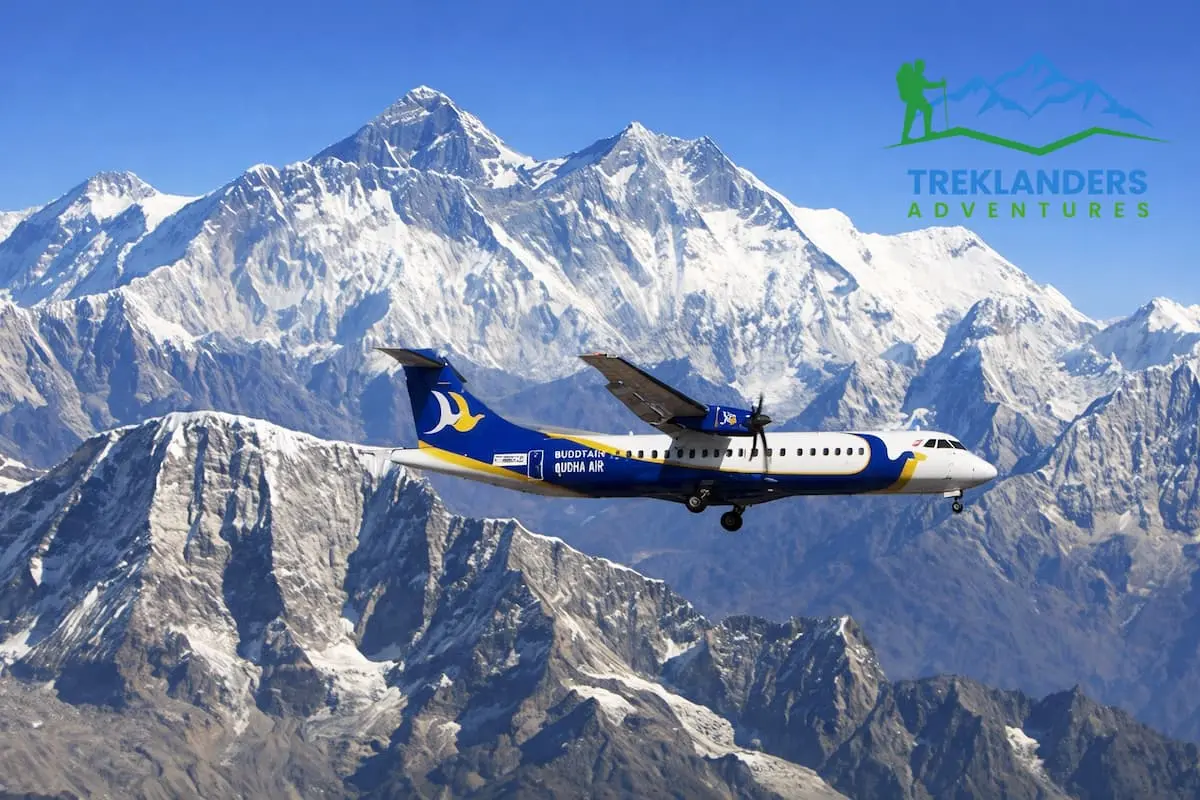
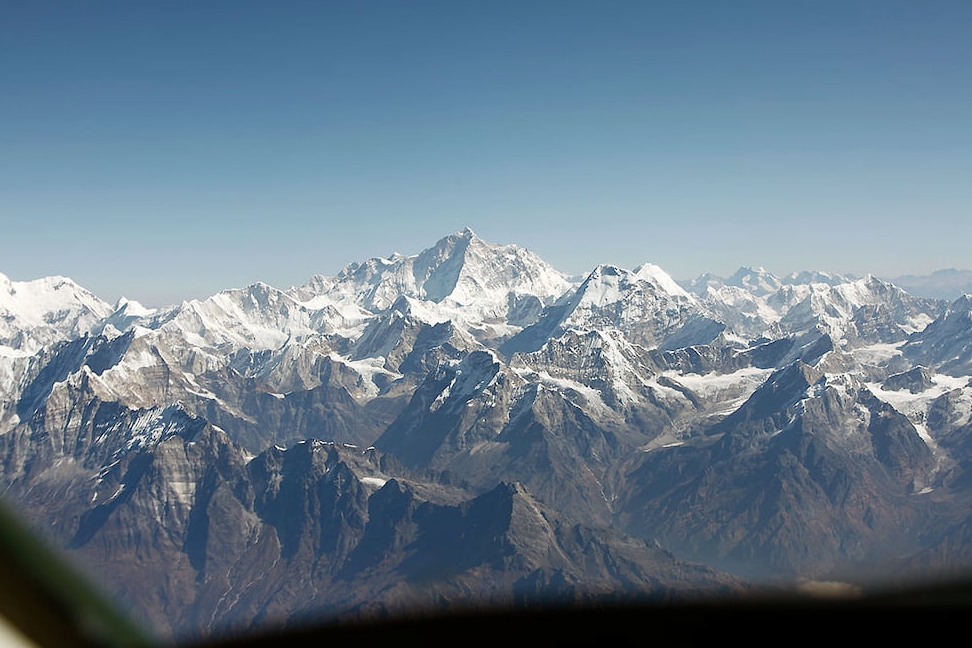
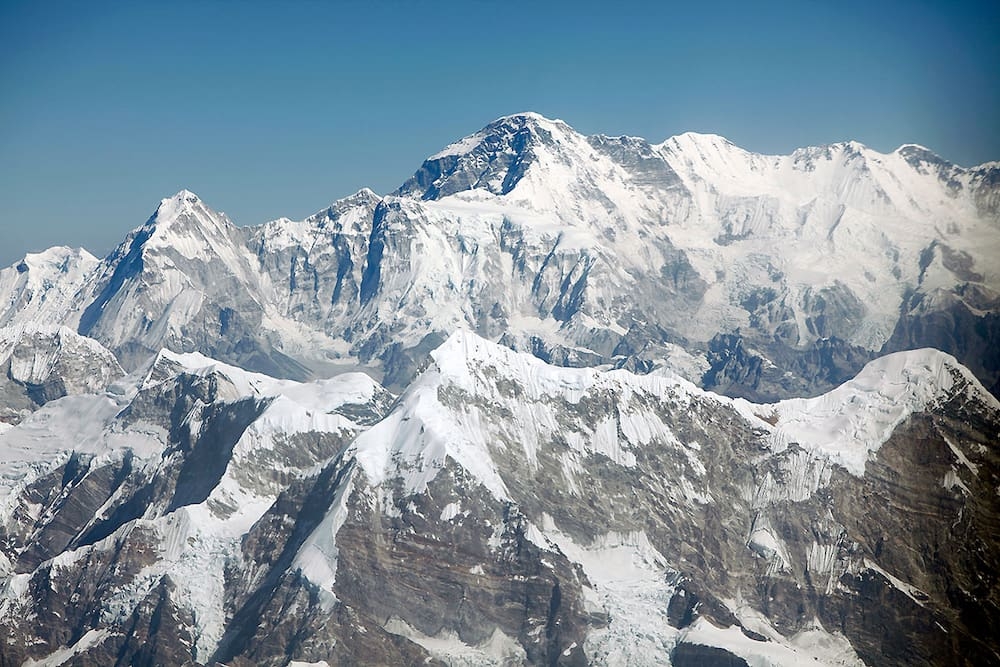
Everest Mountain flight is a leisurely way to view the Himalayan ranges of towering peaks with Mt. Everest. Passengers can enjoy the comfort of a spacious seated aircraft with a sweeping panorama of the Himalayas Snow Mountains. Within an hour of relaxing and exciting flights, full of thrill from the moments the aircraft lifts from the ground.
Everest Mountain flight is an opportunity for all types of people and age groups. Enjoy the majestic views of the world’s highest Mt. Everest with Lhotse and Mt. Makalu. Most wide-world travelers are unaware that Nepal captures the 8th of 14th world’s highest peaks. The country boasts hundreds of above 6,000 m and 7,000 meter peaks.
Most of the tallest peaks are located in the Nepal Himalayas, which makes the country a paradise for a wide range of adventures. From trekking to mountaineering includes other various outdoor sports and exciting activities for interested travelers. For visitors in Nepal, with limited holiday duration for trekking around the Himalayas. The trek to Everest Base Camp takes more than 10-12 days’ round trips. Where Everest Mountain flight fulfills your dreams, being close to the Himalayan giant mountains in just an hour of time frames.
Everest Mountain Flight started in Nepal more than three decades ago, providing travelers to enjoy the wonders of the Himalayas. It is an excellent and exclusive way to catch a 380° panorama of the Himalayan range. In the comfort of airplanes, where all the passengers get a guaranteed window seat.
Everest Mountain Flight is one of the best modes of enjoying a holiday in Nepal. Nevertheless, Everest Mountain Flights is popular and highly appreciated by all the visitors as one of the easiest and most pleasant ways. Where all can enjoy the spectacular views of Mt. Everest and the Himalayas.
Visitors can enjoy the Everest Mountain Flights, around all seasons of the year, on a clear morning. Excluding the wet monsoon of summer times of mid-June to August. The right favorable and the best seasons are spring and autumn/fall, including winter times if the day is promising. The spring begins in early March and ends in May, where most days are bright with sunshine for longer hours. From early 6:30 am till 5 pm, it can get cloudy afternoon sometimes with chances of light rains.
The next best season is autumn/fall, from September to November, where most days are fine and clear for views and walks. But much colder morning, late afternoon, and nighttime. It gets much colder during the late afternoon, but it is a pleasant season of autumn/fall. Visitors can also enjoy during the winter time of Christmas and New Year Holidays.
Most days are bright and sunny, with cold mornings and late afternoons. But an enjoyable time for views and mountain flights.
Tour Grade: Leisure and exciting moments as the plane lifts off.
Distance Covers: Approx.336 m/209 miles from Kathmandu to Kathmandu.
Flight Direction: North Central and towards Mid East.
Total Duration: Approx. 01 hour, excluding drives both ways to the airport.
Major Mountains: Ganesh, Langtang, Jugal Himal, Gaurishankar with Everest,
Lhotse and Makalu.
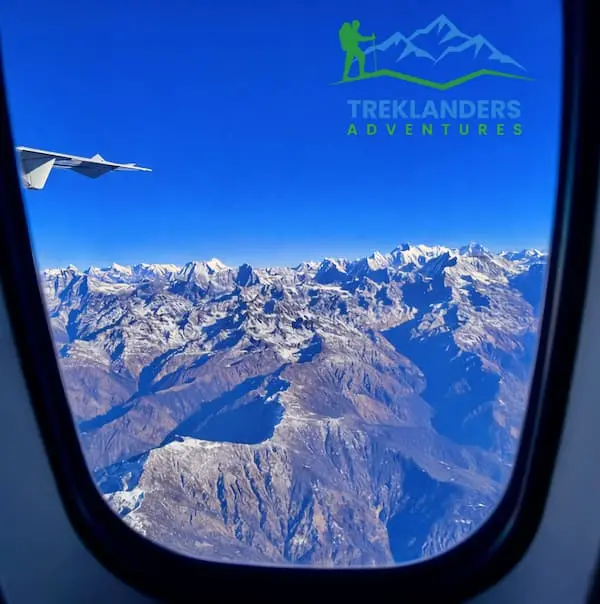
Taking the Everest Mountain Flight was one of the most unforgettable experiences of my life. Seeing the Himalayas from the air gave me a whole new appreciation for Nepal’s natural beauty. From the moment the plane took off, the views were absolutely breathtaking. Snow-covered peaks stretched endlessly beneath a clear blue sky, and the flight crew made sure every passenger had a chance to enjoy the scenery from the window. The highlight was, of course, Mount Everest itself. Watching the world’s highest peak rise above the clouds was a surreal and emotional moment. The flight was smooth and well organized, and the pilots provided information about the mountains we were flying past, which made the experience even more meaningful. The early-morning timing ensured perfect visibility and golden light on the peaks. This mountain flight is ideal for anyone who wants to experience Everest but doesn’t have the time or ability to trek. It’s comfortable, safe, and truly awe-inspiring. I would highly recommend the Everest Mountain Flight to anyone visiting Nepal—it’s a once-in-a-lifetime journey that stays with you long after you land.

The plane flies parallel from the Central to Mid-East Himalayan range, including most of the famous peaks with Mt. Everest. The view of Everest and Lhotse with adjoining peaks of Khumbu Himal is viewed at approx. 33 km or 20 miles, air distance, from the window of the plane.
Not exactly, as weather and season wise, for the views of Himalayan peaks as well for other adventures. The best favored seasons are spring and autumn/ fall, as well as winter times. When the morning is clear and promising for the views of Mt. Everest and other ranges of peaks. The only season where most mountain flights do not operate is in the monsoon, the summer season from mid-June to August.
On booking with Treklanders Adventures, the company will be in touch with the airport and airlines. As soon the company gets the information of the flight operation for the exact morning mountain flight and times. Then will inform the clients regarding the situation. Sometimes it can lead to delay and cancellation even in the best seasons of the year. Can be phoned for next early morning, but if some people, cannot make it will get a refund. However, the transportation and services charge will be deducted from the total cost.
Treklanders Adventures staff will be appointed to look after the client's needs and requests. As well as to inform you about the weather and flight details, they will accompany you to the airport counter. To hand you the boarding pass, and will wait at the airport with the vehicles at my disposal. Until the Everest Mountain Flight is complete within an hour or more in case of delays.
The Everest Mountain Flight is an early-morning scenic flight from Kathmandu that aims to impress the traveler with the fantastic view of the Himalayan range, including Mount Everest. The idea is to take the Mountain View to the travelers instead of the other way round, which obviously takes a lot of time and requires strenuous trekking. The flight thus helps folks with time constraints and those who might not be physically fit or simply wish to travel in a relaxed manner to see the world's tallest peaks.
The airplane gets very close to Mount Everest so that the views are not only clear but also awe-inspiring. The passengers on the flight are able to identify Mount Everest easily, along with the other peaks, and enjoy a once-in-a-lifetime aerial perspective that is incomparable to any other.
Different from the terrestrial journey, a flight over Everest allows you to see the Himalayas from above. The flight path is designed with the view in mind so that the traveler gets to see more peaks in less time.
It doesn't require any prior experience. The Everest Mountain Flight is a walk in the park for first-time flying enthusiasts, aged travelers, and basically, anyone who wants a comfortable way of experiencing the Himalayas sans the physical exertion.
Besides Mount Everest, passengers will see snow-covered peaks, verdant valleys, glaciers, and gentle hills. The flight back to Kathmandu will also offer some lovely views of the Nepali countryside.
Everest Mountain Flight is probably a once-in-a-lifetime chance for many people to get immediate access to the Himalayas. The flight is a perfect blend of comfort, thrill, and beautiful scenes, and as a result, seeing the mountain this way is one of the most unforgettable experiences for tourists in Nepal.
The whole thing is going to take place early in the morning. Generally, the hotel pick-up is done at around 5:00–5:30 a.m. Flights operating from 6:00 a.m. onwards are considered the norm. The early morning is the best time for clear views and the weather to be very calm.
The Himalayas are said to have their best and clearest skies in the early mornings. As for cloud cover, this is the time when there is the least amount of it. With the progression of the day, clouds and winds usually increase, thus affecting visibility. The reason why all the flights to Mount Everest are scheduled early in the mornings is exactly this.
The total duration of the whole experience is between 2.5 and 3 hours. The time invested in the journey includes the hotel-transfer to the airport, check-in, security, flight, and the return to the hotel in Kathmandu.
Generally, the time spent in the air is between 45 and 60 minutes. It is during this time that the plane takes a route that has been strategically planned for the passengers to see the Himalayas as well as Mount Everest from the left and right sides of the plane.
It can never be a situation in which only one factor is the cause of delay. We can consider the weather and air traffic as two main reasons. In such events, the passengers are informed about the delay via an announcement at the airport. Conditions permitting, the flights may be departing later in the morning. A reschedule may be necessary, however, if the situation doesn't change.
The majority of travelers, after completing the adventure, proceed to their hotels at around 8:30–9:30 in the morning on the same day. This, in turn, assures them the whole day is free to see other places, take a rest, or do anything else in Kathmandu.
When the sky is clear, the travelers can see the bright and majestic peaks of the highest and most well-known mountains in the world. These are the ones that include: Manaslu, Ganesh Himal, Langtang Himal, Gaurishankar, Cho-Oyu, Lhotse, Nuptse, Makalu, and definitely Mount Everest. On very clear days, the view might be far enough to even see Kanchenjunga all the way in the east.
The trip is coordinated in such a way that the great views are accessible from both sides of the aircraft. Once the region of Mount Everest is reached, the plane changes its course and passengers are able to see the mountain from the side they are seated, which is quite opposite to the previous one.
Indeed, it is their duty; the flight crew is always ready to give explanations, and they do so by naming and indicating the locations of the big mountains when they arrive on the scene. It is a great help for the visitors to know which one is Mount Everest and the other major Himalayan peaks.
Such mornings when the air is clear, the views could be very crisp and exact down to the tiniest details. You can see the snow-covered peaks, glaciers, ridgelines, and even deep valleys, and all these provide a wonderful aerial perspective of the Himalayas.
The answer is yes, the Mt. Everest Mountain Flight always takes the same, well-planned, and safest route that allows the most extensive views of the mountain from the air. The route is the one that has been worked out for many years to create the best possible experience for the users.
Certainly, besides the towering Himalayas, the views of Kathmandu Valley, the hills, terraced farmland, rivers, and small villages can also be seen by the travelers, which make the journey a feast for the eyes from the moment of takeoff to that of landing.
The flights of Mount Everest are done with a twin-engine turboprop aircraft of a type that is specially built for short routes and mountain flying. Generally, the models are ATR aircraft, SAAB-340, Jet stream, and similar planes which are quite common for the domestic aviation sector in Nepal.
Turboprop aircraft are suitable for mountain flights as they are stable at lower cruising altitudes, use less fuel, and can provide good visibility. Their layout enables people to view the mountains clearly while the highest safety standards are still kept.
Certainly, the airlines ensure that the seating is organized so that every passenger can have a window seat. Thus all the visitors are provided with an uninterrupted view of Mount Everest and other Himalayan peaks all along the flight.
In some parts of the flight, the crew may allow a few passengers to go and stand briefly at the cockpit from where they can have a closer look at Mount Everest but it always has to be in accordance with the instructions of the crew and safety regulations.
Definitely, the aircraft on Everest Mountain Flights are the ones that are made for passenger comfort on short scenic routes. Though seating is comfortable, the flight duration is short enough to be endured even by first-timers in the field of flying.
Several well-established Nepali airlines are operating the Mount Everest Flights which include Buddha Air, Nepal Airlines, Yeti Airlines, and other domestic carriers that have experience in aviation in the Himalayas.
Everest Mountain Flights are on the schedule for every day, but the last decision on whether to fly or not is always made based on the weather and visibility. The flights operate only when it is clear in order to guarantee the safety of the passengers and also give the best possible mountain views.
The best conditions with the clearest skies, the calmest winds, and almost no clouds in the Himalayas are found only in the early mornings. Clouds and wind usually increase as the day goes on, thus visibility is reduced, and this is why flights are arranged in the early hours.
In case of bad weather, the flights can be put on hold, rescheduled, or even canceled. Safety and visibility are the top priorities for the airlines, and hence, the decisions are taken after real-time weather evaluations.
The weather-related changes that go hand-in-hand with flights are more frequent during the monsoon season (June to August), while autumn and spring are generally characterized by more stable conditions. Although winter mornings can be clear, fog may occasionally occur.
Yes, airline or tour staffs inform a passenger as soon as possible in case of any delay or change. The updates are normally given at the hotel or airport before the boarding process starts.
The flight is along a fixed scenic route that has been designed for the best mountain viewing. The pilots may make a few minor changes to avoid clouds or turbulence, but they will still ensure safety and keep the route as scenic as possible.
No, trekking or climbing permits are not necessary for the Everest Mountain Flight. As this is a scenic flight and does not involve landing, trekking, or entering any restricted mountain areas, there is no need for any special permits.
No, a Sagarmatha National Park permit is not required. The flight may be passing over or close to the Everest region, but tourists are not walking in the park, so park entry permits have no relevance.
Other than a valid passport and a Nepal visa, no special travel authorization is needed. Standard travel documents are enough to take part in the Everest Mountain Flight.
Passengers should have their passports and a copy of their booking confirmation with them. These are mandatory for the airport check-in and security procedures at the domestic terminal.
There are no additional permits needed for children or elderly travelers. All passengers have the same documentation requirements regardless of their age.
Generally, permits are necessary for trekking, climbing, or entering protected areas on land. The Everest Mountain Flight is a non-landing aerial experience, which is done entirely in regulated aviation corridors; there is no need for ground permits.
It is not necessary to have travel or medical insurance for the Everest Mountain Flight. But, in general, it is better to have simple travel insurance when you are in Nepal so that your trip will be worry-free.
In general, the flight can be undertaken by most people, even those with minor medical conditions. Since the flight is of short duration, the aircraft is pressurized, and no physical exertion is involved, it is appropriate for the majority of travelers. Those with severe heart or respiratory problems should get advice from a doctor before the flight.
There are no substantial altitude-related symptoms expected. The plane is pressurized and takes off and lands at standard altitudes, and the short duration of the flight makes any uncomfortable feelings due to altitude nearly impossible.
In the event that a passenger is not feeling well, they operate from Kathmandu’s domestic airport, where medical facilities are never far away. After the flight, hospitals and clinics are readily available in the city.
Certainly, passengers can bring personal medication that they may require. Medicines should be kept in carry-on bags and, if necessary, clearly labeled.
If you are ill prior to the flight, you should communicate your condition to the airline or tour staff without delay. And if the symptoms arise after the flight, medical help is always available in Kathmandu, as well as support from the staff if needed, and you can contact them.
The weather is absolutely vital for the Everest Mountain Flight to be carried out. The flights are done in clear sky, and good visibility is a must, not only for security reasons but also for the spectacular view that the passengers can have of the whole Himalaya, with Mount Everest being the highlight.
One can expect the best flight weather during autumn or spring. These two seasons generally bring clear mornings, stable weather, and perfect visibility for viewing the mountain.
Winter flights are not impossible, actually, they do happen. In fact, winter mornings can be crisp and clear, and mountain views can be quite spectacular. However, fog and cold weather can cause some days to be cancelled or delayed.
Flights will definitely be affected by the monsoons in terms of cloud cover, rain, and reduced visibility. Despite flights being done on clear mornings, there is a higher likelihood of weather-related delays or cancellations during this period.
When visibility is limited due to clouds, pilots may choose to wait for a short time or change the flight schedule, if possible. The priority is, however, always safety, so flights can be held up or cancelled if clear views cannot be guaranteed.
Certainly, the airlines and the aviation authorities keep a close watch on weather conditions. Passengers can get such information through the hotel pick-up stage or at the airport before boarding when they receive the news of the delay, rescheduling, or change.
There is absolutely no risk of altitude sickness during the Everest Mountain Flight. Briefly, passengers are in a pressurized plane, and hence, there is no direct physical contact with high altitude settings.
The plane goes at a standard safe altitude of about a few thousand meters above the ground, which is more than enough for beautiful views but not for exposure to high altitudes. Such an altitude is totally different from what mountaineer’s experience.
Individuals who are sensitive to the lack of oxygen can go on the Everest Mountain Flight just as well. Oxygen deficiency will not cause any problem as there is no walking, adventuring, or staying overnight at heights.
Passengers do not need external oxygen provision. The airplane cabin is well taken care of to provide the same oxygen level as is found in a normal breathable atmosphere.
The symptoms of altitude sickness, including headache, dizziness, or vomiting, should not be possible on that trip. If any discomfort happens, it probably results from the motion of the plane or the passenger’s nervousness.
The trekking normally involves a gradual increase of altitude and longer exposure to less oxygen, whereas the Everest Mountain Flight is just a very brief one without any requirement for acclimatization. That is what makes it the safest way to visit the Everest region.
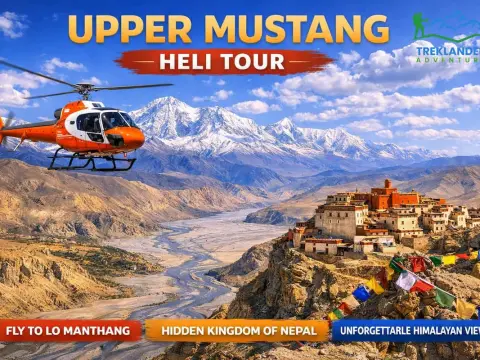
| No of people | Price per person |
|---|---|
| 1 - 1 | $5,000 |
| 2 - 2 | $2,500 |
| 3 - 3 | $1,650 |
| 4 - 4 | $1,250 |
| No of people | Price per person |
|---|---|
| Private - Heli Charter | $5,200 |
| 1 - 1 | $1,750 |
| 2 - 2 | $1,700 |
| 3 - 3 | $1,650 |
| 4 - 4 | $1,495 |
| No of people | Price per person |
|---|---|
| 1 - 1 | $3,000 |
| 2 - 3 | $2,400 |
| 4 - 8 | $2,200 |
| 9 - 30 | $2,100 |