Ghorepani Poonhill Trekking is one of the classical trekking destinations in Annapurna region giving the best insights of Annapurna and Dhaulagiri mountain range. This trekking is also known as Annapurna Sunrise Trekking. The fame of Ghorepani Poonhill trekking is explained by the beautiful ethnic villages and the spectacular mountains as well as many other reasons. You will observe the awesome sunrise and sunsets from low but favorable elevation of Poon Hill over the Himalayas which is the most significant of this trek.
Ghorepani Poonhill Trekking has always been the most attractive short and easy trekking in Nepal that takes you through the beautiful village of Annapurna region. This trekking route is considered as simple trekking route because the trekkers don’t have to pass through hardships that generally trekkers come across during the high altitude trekking. Ghorepani is also widely known as a rich of hidden treasure of Nepalese culture and tradition.
Our trekking to Ghorepani starts form Pokhara which is extremely beautiful city on the west of Kathmandu. Then the trek passes through Gurung and Magar charming village where one can see beautiful rhododendron and oak forest full of birds, deep terrain valleys and green hills, beautiful mountain river stream, musk deer and highland butterflies. The most fascinating thing about this trek is the glimpse of Annapurna, Mt. Fishtail and Dhaulagiri that adds beauty to the nature. You will surely mesmerized by the warm hospitality of local people during the trek.
Ghorepani Poonhill Trekking is also famous as “Photographer's Paradise”
Poonhill trekking will let you feel the Himalayan view and also provides the opportunities to get close to the local culture and tradition of different ethnic background here. Annapurna Ghorepani Poonhill Trekking is also famous as “Photographer’s Paradise”, so you can capture the best snaps of stunning Annapurna and Dhaulagiri ranges here. This is a rewarding trek that can be enjoyed by every lover of nature in this trekking.
Trip Summary:
Mode of Trek: Best available lodge / guest house on treks.
Trekking Grade: Moderate to Adventurous.
Trekking Region: Around Annapurna Himalayan range of Kaski & Myagdi district.
Start and End of trek: From Pokhara to Pokhara with drives both ways.
Highest elevation: At Poonhill 3,210 m / 10, 531 feet high.
Trek duration: 04 Nights and 05 Days from Pokhara to Pokhara.
Total Trip: 10 Nights and 11 Days, from arrival to departures.
Best Seasons for Ghorepani Poonhill Trek:
The best season for Ghorepani Poonhill Trek is spring from March to May. Including autumn/fall begins from September to November, as Ghorepani Poonhill Trek is a short moderate, adventurous trek. Interested people can visit all year round, except for the summer/monsoon time of mid-June to August.
Springtime is bright and beautiful, most days are clear with sunny days, can be cloudy afternoons. Bringing cold chill in the late afternoon, and night till morning this is the time when wildflowers are in seasonal bloom.
The next best season is autumn/fall, where days are clear with sunny days for views and walks. But shorter days due to limited sunlight hours, cold morning and night time can expect snowfall sometimes. Winter from December to February with clear sunny days, but cold mornings, late afternoons, and night time with freezing temperatures. But an enjoyable day for pleasant walks with clear views of the beautiful snow mountain range.
Culture & Religion:
The southern hills and valleys around the Annapurna region are populated by the famous Gurung. The most menfolk are recruited as Gorkha soldiers, renowned for their bravery and courage, all over the world.
The region is dotted with ancient monasteries and temples that reflect the spiritual practices of the people. You may have the chance to participate in religious ceremonies and witness traditional dances and music performances that are deeply rooted in the local culture.

On first arrival at Kathmandu-Nepal international airport, our staff and guide will receive with traditional welcome. A short drive to your hotel in the hub of Kathmandu city, on checking into your nice rooms. After getting refreshed from the jet-lag, join at the hotel lobby and at meeting room for trek briefing provided by our guide or leader. Information about the hotel, lodge on treks with full details of trekking trails, food and accommodation on treks. As well with do’s and don’ts with welcome group dinner in an authentic Nepali restaurants with local cultural program along with Nepali meals.


Morning after breakfast, the city / cultural guide will meet you at the hotel for tour around Kathmandu World Heritage Sites. As well visiting interesting places of steeped with history and culture. After the tour back at the hotel, preparation for Ghorepani Poonhill Trek.

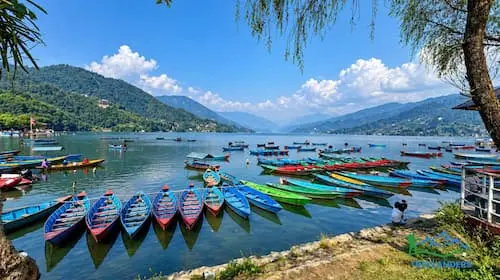
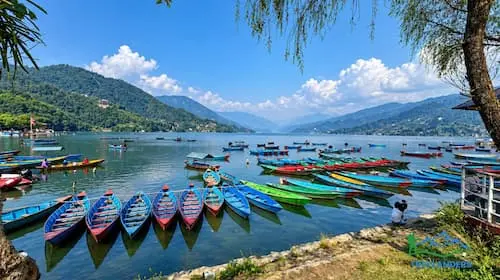
Morning leaving the hotel for exciting overland journey to beautiful Pokhara, the renowned tourist city in Nepal. The drive leads on the main highway following the Trisuli River, quite popular river for rafting. On reaching Mugling Bazaar, then heading due west facing views of Manaslu and Annapurna Himalayas.As the drive reach Pokhara city, and then transfer into a nice hotel by the calm Phewa Lake side. Where all good hotels, restaurants and shops are located.
Note:- You can also fly to Pokhara from Kathmandu (25-minute flight), but you will need to pay extra.


As we finish our breakfast, we soon start our Trek that crosses a stream (Bhurungdi Khola) on a suspension bridge. Our trail leads to a large Magar Village called Ulleri. We gently climb through rhododendron and oak forests , pastures and cultivated fields, then reach to Nangethanti. After resting for a while we start our trek to Ghorepani through the forest. Overnight in Ghorepani.

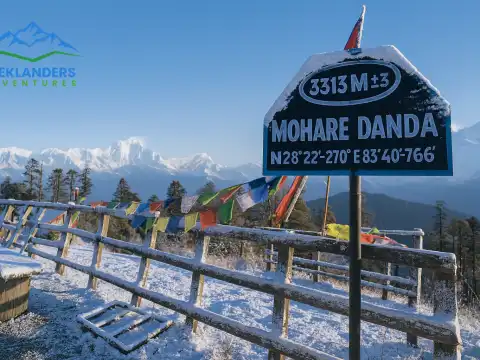
We will wake up early in the morning and hike to Poonhill for an hour. We will have our hiking stick and flash light to make our way easier. You will be able to see beautiful sunrise . After the most beautiful sunrise we will trek down to Ghorepani and have our breakfast there. From there we will head our trail to Tadapani climbing along ridges and passing through pine and rhododendron forest. Overnight in Tadapani.

Trek start to Ghandruk after the Breakfast. After 4hrs descent Trek to Big Gurung Village called Ghandruk. it is the most interesting tribal Gurung village in Nepal, which provides Gorkha soldiers. It has excellent close -up views of Annapurna South, Machhapurchhe and Himachuli. There is an ACAP office that provides information about its different activities. Overnight in Ghandruk.
After Breakfast we trek down through farm filed and local villgae. we cross the modi river bridge and reach in Nayapul. We drive to Pokhara from Nayapul. Overnight in Pokhara.

Morning leaving the hotel in Pokhara, drive in a private vehicle or on regular Tourist Bus, as per size of a group. The scenic and interesting overland journey to Kathmandu on the same exciting highway. After hours of driving reaching back to your hotel in Kathmandu, rest of the day at leisure.

Enjoy an extra day in Kathmandu with individual activities or get into shopping spree. Interested people can join for another interesting tour of other cities of Kathmandu valley. Sightseeing around Patan / Lalitpur or the famous Bhaktapur city Durbar Square, worth a visit.

Nous sommes partis à deux reprises avec Treklanders Adventures. La première fois pour un trek de 4 jours vers Poonhill, et la deuxième fois une demie-journée à Nagarkot. Ces deux expériences étaient superbes. Le guide et les sherpas sont top. L'organisation et la réactivité des équipes étaient parfaite. Nous avons eu la chance d'avoir de très belles vues sur la chaîne de l'Hymalaya. Les logements et les restaurants prévus étaient tout à fait adaptés à nos besoins. Le guide, les sherpas et les chauffeurs de Jeep ont bien assuré notre sécurité tout au long des périples. Je recommande grandement de partir à l'aventure avec Treklanders Adventures. Merci pour ces expériences.
Doing the Ghorepani Poon Hill trek with Treklanders Adventures as a solo traveler was a very reassuring experience. From the beginning, everything felt well organized and calm. Our guide, Ram, made sure the daily plans were clear and the pace was comfortable, which helped me feel confident on the trail. I had enough personal space to enjoy quiet walks through forests and villages, while always knowing support was nearby. Evenings in tea houses were relaxing and social, making the trek feel safe, balanced, and enjoyable. This journey helped me gain confidence and truly enjoy trekking in Nepal.
My Ghorepani Poon Hill trek with Treklanders Adventures exceeded all expectations. From start to finish, the trip was delivered exactly as described in the package, with no surprises or compromises. Every detail—from daily walking plans to accommodations—was well organized and smooth. The guides were truly amazing, always supportive, professional, and attentive to everyone’s comfort on the trail. What I appreciated most was how effortless the entire journey felt. I never had to worry about logistics, timing, or safety, which allowed me to fully enjoy the beautiful scenery and cultural experience. Everything felt perfectly managed and reliable. I would strongly recommend Treklanders Adventures to anyone planning to trek in Nepal. If you are looking for a company that delivers exactly what it promises, this is the right choice.
The Ghorepani Poon Hill trek with Treklanders Adventures was exceptionally well planned and enjoyable. From the first day to the sunrise at Poon Hill, everything ran smoothly. The trail was beautiful, accommodations were comfortable, and the support throughout the trek was excellent. I felt relaxed and well looked after at all times. This was a perfectly balanced trek with stunning views and reliable service. I would confidently recommend Treklanders Adventures for anyone looking for a quality trekking experience in Nepal.
Purpose: Keep sweat off the skin and maintain warmth.
Purpose: Trap body heat in cold air at altitude.
Tip: Keep electronics in inner pockets at night to prevent freezing.
Age is no bar for this short moderate trek for 5 days duration, family with young kids and elderly people can join. But all needs to be physically fit and in sound health to cope with ups and downhill walks. Rest of the walks is normal spending overnights in a nice lodge with comprehensive food menu to enjoy.
For young infants, can hire extra porter to carry the kids if required, especially on ups and downhill.
Nearly all villages and lodges have electricity from Hydro or Solar power, where one can charge their electronic items. Where client needs to pay an extra fee for using the power as per gadgets charged. As for internet and cell phone communications, every lodges have the Wi-Fi and internet services.
From Pokhara onwards to Poonhill one can enjoy the comfort of nice lodges and guest house. As well with warm traditional hospitality in every overnight stops, people can choose from budget, standard lodges. But from Chomrong onwards to ABC the lodges are simple with basic rooms having common bathe and toilets.
But serving good foods as per the menu provided on every lodge restaurants in a nice large dining rooms.
The foods includes from Continental, Chinese, Indian, Tibetan and Nepali foods, as well Mexican, Italian, Korean or Japanese in some lodge restaurants. Includes fresh bakery products also.
Yes, certainly of course a short panoramic flight of 30 minutes to land at Pokhara domestic airport, and vice versa on the way back. But the flight airfare depends upon the cost as set on the itinerary days. If the flight is not included on trip cost, it will be at extra cost, where trekkers needs to inform the Trek Landers Adventure on early booking.
Ghorepani Poonhill Trek difficulty ranges from easy to moderate, which means its ideal for those who are new to trekking and people who have done it occasionally. The trek consists in part of stairs built of stones, paths going through woods and ascending hills in a gentle manner, and it doesn't have severe or technically difficult areas. Given that the person is of average fitness and maintains a steady walking speed, almost all trekkers can accomplish the route without difficulty.
This hike is usually done in a 3-5 day duration, which is determined by the individual's walking pace and route preference. The standard trail is a circular one that links Ghorepani with Poonhill viewpoint and the charming Gurung village of Ghandruk. There is a considerable number of trekkers who, by adding an extra day to their trip, get to know the local culture and nature better.
The best and most suitable time for going to Poonhill is either in spring (March–May) or in autumn (September–November). The weather during these periods remains steady, the air is fresh, and the distant peaks of the Annapurna and Dhaulagiri mountains can be clearly seen. Forests of rhododendron flower in spring can be seen, while in autumn the sky is bright blue and sunrises are simply magnificent.
You definitely do not need any hiking experience beforehand. It is the most easily accessible trek in the Himalayas, and as such, it is appropriate for children, students, and first-time traveler groups. Being in good shape and having a pair of good walking shoes will suffice to go through the voyage.
Poonhill (3,210 m) is known for the spectacular view that can be enjoyed when the sun rises over the mountain range. After you get up there, you are going to see the light of the early morning sun reflecting off the following peaks – Annapurna South, Dhaulagiri, Machhapuchhre (Fishtail), Annapurna I, Hiunchuli, and Nilgiri. It is undoubtedly one of the most stunning vantage points in the whole Annapurna region.
The walk is clear with signboards at every turning, and hence you can manage without a guide, but still it is better to hire him because he is a local, licensed, and experienced. Safety is ensured when you have a guide with you; he collects your permits, helps you with accommodation, gets you conversant with the local culture and stories, and if you want to meet the closest and friendliest people during the high season, then he is the one.
In the region, be it for mountaineering or hiking, two permits are essential:
You can get them either in Kathmandu or in Pokhara, or your trek agency can also facilitate the whole process for you.
Local teahouses are the places where you will spend your nights. These are modest but neat lodges providing you with a basic room which normally has two beds, a warm quilt, and a shared bathroom. The dining room is a warm and comfy place, and freshly prepared meals are served there. In most teahouses, you can take a hot shower, use the internet and charging facilities, but sometimes for a small extra fare.
Try to keep your luggage light, but at the same time, do not forget about the necessity of each item. Very important are such things as hovering over the ground while walking, shoes, warm clothing, a raincoat, mittens, a hat, sunscreen, and sunglasses. Also, it is advisable that you carry a reusable water bottle, some food items, and your personal toiletries. Because this is a short trek and the accommodation will be in teahouses, a small backpack will be the most appropriate.
The answer is yes, it remains one of the safest and shortest treks most attractive to tourists in Nepal. The path has been there for a long time and is very clear, the local villages are peaceful, and there are small inns or teahouses at almost every stop. Therefore, it is quite safe for people of most age groups, provided that you take care of the guidance and advice of your guide and that you trek at a pace that you can afford.
There are two best seasons to do the Ghorepani Poonhill Trek, which are spring (March to May) and autumn (September to November) respectively. In such periods, the weather is quite stable with moderate temperatures, and the view of the mountains is the clearest.
What makes spring the most attractive and ideal time to hike Poonhill is a combination of factors, such as the fact that at this time the rhododendron forests are blossoming; also, the days are warm and the visibility is excellent. The trail gains more colors and becomes more lively, and as a result, the sunrise seen from Poonhill is fabulous, with the mountains being lit up in different colors.
Autumn comes right after the monsoon, and so the sky is very clear with fresh air and bright blue horizons. The temperatures that enable the trek to be carried out are just right, and hence, long-range sunrise views of the Annapurna and Dhaulagiri mountain ranges are the most spectacular ones.
Surely, winter (December–February) trekking can be carried out, albeit only for a skilled trekker. The weather conditions are good with clear skies and crisp views, but still, it gets very cold, especially in Ghorepani. So be sure to bring warm outfits.
The monsoon (June–August) is not recommended in most cases due to heavy rainfall, slippery, leeches, and bad visibility. Nevertheless, dense and green-looking forests are the best ones out of the two if he/she love trekking during off-season periods.
Either of the two seasons can boast of fantastic sunrises, and more often than not, autumn will be the one to have clear skies, thereby making it the best season for perfect Poonhill sunrise photography.
Indeed. Tea houses get fully booked rapidly in peak seasons (spring and autumn). During winter and monsoon periods, the number of trekkers also goes down, and thus accommodation is more attainable, but the service may be limited.
Indeed, it does.
In the first place, beginners should be in the best of conditions, which are found in spring and autumn, which also happen to be the safest and easiest walking periods. Not to mention, winter and monsoon will require you to have additional gear and be more prepared.
Ghorepani Poonhill Trek is mostly rated as easy to moderate, which means it is a trek that can be done by novices in Nepal. You are going to come across well-made stone steps, paths through the forest, and mild slopes on the trail.
Absolutely! The Poonhill Trek is a dream for beginners in trekking. People who have a basic level of fitness and own a pair of good walking shoes can undertake this trek.
Depending on the schedule, the trekkers are on their feet for 4–6 hours each day. The speed of walking is average, and one can take a break almost anywhere on the trail.
Following your walking speed, the sunrise journey is somewhere between 45 minutes and 1.5 hours. It is continuously going up the stairway built of rock, but the majority of people, even inexperienced ones, and families can do it.
If you talk about this trek, altitude sickness is never a big problem since the highest point, Poonhill, is at an elevation of only 3,210 meters. The best practice is to keep drinking water and walk at a slower pace, although most people do not have altitude problems.
The truth is that you do not have to be an athlete, but basic fitness is still very important. If you can go uphill for 2–3 hours and at the same time be capable of tackling long steps, then you will find the trek pleasant and comfortable.
The trails are definitely not steep or dangerous. There are some parts where you're going to find long staircases made of stones, but there are no technical climbs, sheer drops, or risky areas.
Definitely! There are lots of families with young children and people aged between 50 and 70 who have accomplished this trek. The trail is a safe one, and the pace can be changed according to the level of comfort.
The loftiest parts of the stone steps from Tikhedhunga to Ulleri and the early morning ascent to Poonhill are the things most people say are hardest, but they can still be done if you take it slow and rest in between.
It is not obligatory to have a guide, but it is highly advisable, particularly when you are a newbie. Besides security, a guide will facilitate not only the navigation but also cultural activities and logistics.
Though a guide is not compulsory, it is highly advised to have one. A certified guide will ensure your safety, assist in direction, help with accommodation, and let you experience more of the local culture.
A guide takes care of your permits, makes the teahouse bookings, chooses the right pace, ensures safety, gives you insight into local culture, and is at hand during any sudden situations like a change of weather or a minor health complaint.
Definitely, A guide provides much-needed help, motivation, and clear instructions to the beginners during the trek, which makes the whole experience much easier and more enjoyable for them.
Since it is very dark during the sunrise walk, the guide leads you to the right trail, and you get to the viewpoint on time to watch the sunrise. Besides, they assist you in your pace and safety throughout the journey.
Absolutely, the guides are very much aware of local situations and have good relations with the locals; hence they can get you good rooms even if there is a lack of availability. It greatly helps at places like Ghorepani and Ghandruk, where teahouses get fully booked in a short span of time.
Most trekking guides speak good English, along with Nepali and sometimes other languages. Hence, for foreign trekkers, engaging in a conversation becomes very easy and comfortable.
No doubt. Your guide will be with you all the time during the trek walking, eating, and even at rest - therefore, he not only ensures safety but also offers the required support anytime.
Certainly, Guides also receive training in first aid, altitude awareness, and emergency procedures. They are mentally prepared for, and know how to, deal with cases such as accidents, bad weather, or the occurrence of some ailment.
You are allowed to trek solo, but a great number of trekkers choose to have a guide with them for safety, easier access, and also to understand the indigenes' cultural understanding. Additionally, having a guide on your trek means injecting money into the local community.
A licensed guide could be arranged by you with the help of a local trekking company that is registered.
To make it simple, get in touch with:
The accommodation is a local teahouse-based that provides a homely atmosphere with fresh meals. Local teahouses are generally small, simple, and run by families. These lodges usually offer basic rooms, warm dining rooms, and freshly prepared meals. The facilities are adequate for trekkers but lack luxury.
Indeed, some teahouses may provide private rooms, particularly in the villages at lower altitudes. However, a limited number of private rooms with attached bathrooms are available, and they get reserved quickly during the peak season.
In most teahouses, toilets are shared. Some lodges may have attached bathrooms, but they are not always there, especially in a place like Ghorepani, where the demand is very high.
Many teahouses offer hot showers, which are generally heated by solar power or gas. Nonetheless, there may be an additional charge for hot water, and its availability depends on the season and the weather.
Charging points are there; however, they are often available for a small additional charge only. Since there can be limitations on the electricity supply, it is better to carry a power bank with you.
Wi-Fi is available in most teahouses, but the connection is not always good, and sometimes it may even be inaccessible; that is especially the case with high areas like Ghorepani. Thus, a few lodges may charge for Wi-Fi access.
Normally, a room is equipped with two single beds along with clean blankets and cushions. Yet, during the cold time of the year, it is wise to take a sleeping bag or a sleeping bag liner with you for additional heat.
Teahouses provide wholesome, home-cooked meals that include dal bhat, noodles, fried rice, soups, pasta, momos, porridge, and eggs. The food is made warm, clean, and energizing for trekking.
At a time when teahouses are full of visitors (March–May and September–November), it is very difficult to find a place quickly. One can walk with a guide who will book the rooms beforehand, and thus, you will not run out of options at the last minute.
Certainly, they are safe and also offer a friendly atmosphere, as well as being family-run. Besides, the presence of guides enhances the safety and comfort levels for solo and female trekkers.
Usually, rooms do not have heating facilities. The heating in the dining halls, which is shared, is provided by a stove that uses wood or yak dung.
Do not forget to equip yourself with an insulated sleeping bag, your own toiletries, and a towel that dries quickly, a headlamp, a power bank, and slippers/sandals so you can move comfortably around the teahouse.
Teahouses serve fresh-cooked food, which includes dal bhat, noodles, fried rice, pasta, soups, momos, chapati, porridge, omelets, and potatoes. The food is clean, simple, and loaded with energy just right for trekking.
Yes, meals in teahouses are mostly safe and made from fresh ingredients. In fact, most of the food is cooked thoroughly, which helps to eliminate the risk of foodborne diseases.
Definitely! Many teahouse dishes can be made vegetarian or even vegan if you ask. Dal bhat, vegetable soups, fried rice, noodles, and potatoes are all naturally vegetarian.
There is meat in some of the villages down the valley, but it is advisable to take vegetarian food at the high places. The reason is that meat is difficult to transport and not all of it can be fresh.
The most common breakfast dishes consist of porridge, eggs, pancakes, Tibetan bread, toast with jam or honey, chapati, and tea or coffee. These foods will provide you with sufficient energy for the morning walk.
Indeed, teahouses have snacks such as biscuits, chocolates, chips, and energy bars on sale, though the charges keep rising with the altitude. You are also allowed to bring snacks along.
Yes, one can get fresh water from teahouses where the water is either boiled or filtered. For safety reasons, one can also use water purification tablets or a UV purifier. There is bottled water too, but it is a bit costly.
Yes, teahouses serve hot beverages such as tea, coffee, lemon ginger honey, hot chocolate, and herbal drinks. A lot of trekkers take hot tea in the evening to get warm and cozy.
Yes, in many teahouses you are allowed to order as much dal bhat as you want. It is comforting, energizing, and the perfect meal for long trekking days.
Those with limited dietary needs can be served with simple food such as rice, potatoes, eggs, and vegetables. Still, it is advisable to notify your guide and teahouse beforehand so there is no inconvenience.
It is available, but only with limited coverage by cell towers, and that coverage changes depending on the specific spot. In the lower villages, NTC and Ncell services are easily accessible, whereas, for example, at Ghorepani, you might only be able to get weak or intermittent signals.
Most of the teahouses provide Wi-Fi facilities, but they are limited to the teahouse customers, to whom the connection might be very slow or unstable. There are lodges where the Wi-Fi facility is available on a charging basis.
Most of the time, NTC (Namaste SIM) is in a better position to cover your area than Ncell. Generally, your guide is equipped with a Nepali SIM for the smooth flow of the trek and safety communication.
In some places, you can make phone calls, but it is not 100% sure. Instead, using messaging apps connected with Wi-Fi is much more convenient.
Tea houses have charging stations for your devices, but will price them separately from your other bills most of the time. Don't forget to take a power bank with you during the trek.
At any rate, never put your internet connection in the category of being fully reliable and accessible. On most occasions, both Wi-Fi and mobile data networks will be accessible, but not continuously. You must do your maps, offline music, and essential files downloading prior to departure.
Of course, despite the incomplete network coverage, a license guide can provide you with safe communication, news, and instruction all the time.
In general, there is little or no signal at the Poonhill point. Thus, trekkers tend to take photos and get back to Ghorepani to be able to connect again.
Definitely, the trek is regarded as extremely safe for beginner trekkers. The route is easy to follow, and you will find teahouses available at each stop along the way.
Altitude sickness is infrequent since the highest point is only 3,210m. However, make sure to trek slowly, drink enough water, and do not take any alcohol.
Help your guide know about it as soon as possible. They are experienced in dealing with altitude symptoms, exhaustion, minor injuries, and other emergencies.
It is safe to perform the Poonhill trek at early morning hours, but you need to use a headlamp as the climb is done in the dark. Be sure to follow your guide and do not rush up the stairs.
The biggest risks are uneven stone steps and slippery areas during rain. Also, the right shoes and trekking poles will prevent you from hurting yourself.
I suggest you only drink water that is boiled, filtered, or purified. Also, if you want to use purification tablets or a UV filter, do so.
The majority of the teahouses implement good hygiene standards; however, it is still necessary to wash your hands regularly and refrain from consuming raw or uncooked food.
Have on you a small first aid kit and hand sanitizer, blister treatment, personal medicines, a rain jacket, warm clothing, and a power bank.
Certainly, a licensed guide not only ensures your safety to the next level, but also facilitates and handles any unexpected health or weather problems.
Definitely, if you want to be worry-free, I advise you to get travel insurance which covers trekking up to 3,500m.
Apart from the Annapurna Conservation Area Permit (ACAP) that needs to be purchased first, trekkers also need to get a TIMS Card (Trekkers’ Information Management System). The first one aims to fund the conservation of the area, given that the trekking will be done in Annapurna, while the letter offers safety and ensures that the trekkers' registry is maintained properly.
One can buy these permits at the offices of the Nepal Tourism Board in Kathmandu or Pokhara before the beginning of their trek. In case you are on a trekking trip with a registered agency, your guide or the company will provide all the required permits for you without queuing and other such activities.
Certainly, both permits have to always be in the hands of the trekkers as there will be inspections at several entrance points and different control units. Individuals are well advised to keep their permits handy, probably in a waterproof pouch.
Though the trek is classified as easy to moderate, a certain level of fitness will be very helpful. Your preparation for the trek should begin 3–4 weeks in advance with activities such as walking, stair climbing, and light cardio. Building up your leg strength and endurance will make the uphill parts of the walk, such as the Ulleri stone steps, a lot more enjoyable and comfortable.
It is crucial to wear several layers. Among the things you should pack are light thermals, a fleece jacket, a warm down or insulated jacket, waterproof outer layers, trekking pants, gloves, warm socks, and a wool hat. The mornings (especially when watching the Poonhill sunrise) may be chilly, while the trails during the day can be quite warm, hence layers allow you to adapt quickly.
Indeed. Trekking shoes that are comfortable, strong, and well-broken-in, and are good for uneven trails and stone steps, should be your footwear of choice. Shoes that keep your feet dry and warm are great if you are planning to trek in cold or rainy weather. Also, bring light shoes for camping or sandals so that you can take off your trekking shoes and relax in the teahouses.
Even though blankets are provided in teahouses, it is advisable to carry a 3-season sleeping bag (0°C to -5°C) for both comfort and hygiene reasons – this is particularly the case in Ghorepani, where the temperature at night tends to drop.
Aside from personal medication, you should have in your pack a small first aid kit and blister treatment. Other items that can enhance your comfort and safety are sunscreen, lip balm, hand sanitizer, wet wipes, and water purification tablets. A headlamp is also a must-have for the very early morning hike to Poonhill.
A small daypack is enough to carry essentials such as water, snacks, a camera, and an extra layer of clothing. If you plan to hire a porter, he will take care of your main duffel bag provided by Treklanders Adventures, making the trek lighter and easier for you.
Poles for trekking are a personal choice. However, they can significantly ease the long stone steps and steep parts of the trail. By using them, the poles will take part of the load off the knees, which will consequently be less strained, and your balance, especially when going downhill, will be better.
While it is true that there is food in the teahouses, you can still bring small snacks such as energy bars, nuts, chocolates, or electrolyte powder, which will keep you energized while doing long walks.
Indeed. The weather up in the mountains is quite unstable and can be very different from what it was just a few minutes ago. Therefore, you should always bring a light raincoat or poncho even if the weather forecast tells you it is going to be a nice day.
Definitely, Besides Kathmandu, where you can find many mountain shops for your trekking needs, Pokhara is also very good for that purpose. There, you can either buy or rent various gear such as jackets, poles, sleeping bags, and backpacks if you are the kind of person who likes to carry as little as possible.
Mostly trekkers go from Pokhara to Nayapul by a private car, taxi, or local bus. Nayapul is the place where the trek usually starts.
The trip usually lasts 1.5 to 2 hours, and the duration depends on both the road and the traffic.
Sure. Private cars and Jeeps can be hired in Pokhara and enable you to have a more comfortable and speedy ride to the point where the trek starts.
Most of the trekking packages include a round trip from Pokhara to Nayapul by car, but it depends on the company. Always check before you make a reservation.
The most common ways to get from Ghandruk or Nayapul to Pokhara are by Jeep, Taxi, or a Private Car that has been arranged in advance.
The road is accessible all year round, but can become rough during heavy rains. Private Jeeps are advisable during the Monsoon season for safer travel.
| No of people | Price per person |
|---|---|
| 1 - 1 | $1,550 |
| 2 - 3 | $1,315 |
| 4 - 8 | $1,200 |
| 9 - 30 | $1,100 |
| No of people | Price per person |
|---|---|
| 1 - 1 | $1,475 |
| 2 - 3 | $1,050 |
| 4 - 8 | $955 |
| 9 - 30 | $845 |
| No of people | Price per person |
|---|---|
| 1 - 1 | $1,205 |
| 2 - 3 | $965 |
| 4 - 8 | $850 |
| 9 - 15 | $755 |