Upper Dolpo Trek, is an adventure around the remote corners of the Far Wild West of Nepal. For most wide-world travelers are unaware, and unknown that a picturesque country like Upper Dolpo exists.
Interested adventurers might have read the famous classic novel named ‘Snow Leopard’ written by Peter Matessian. Which was published in the early year of the 1980’s, based on the story of Upper Dolpo. Similarly, the Nepal and French joint venture movie the Himalaya was released and nominated for Oscar Award in 1998. As best foreign language films, which was a great picture of Upper Dolpo and Dolpa.
From then on, the Upper Dolpo was exposed to the outside world; as influx of travelers slowly increased, exploring the scenic wilderness.
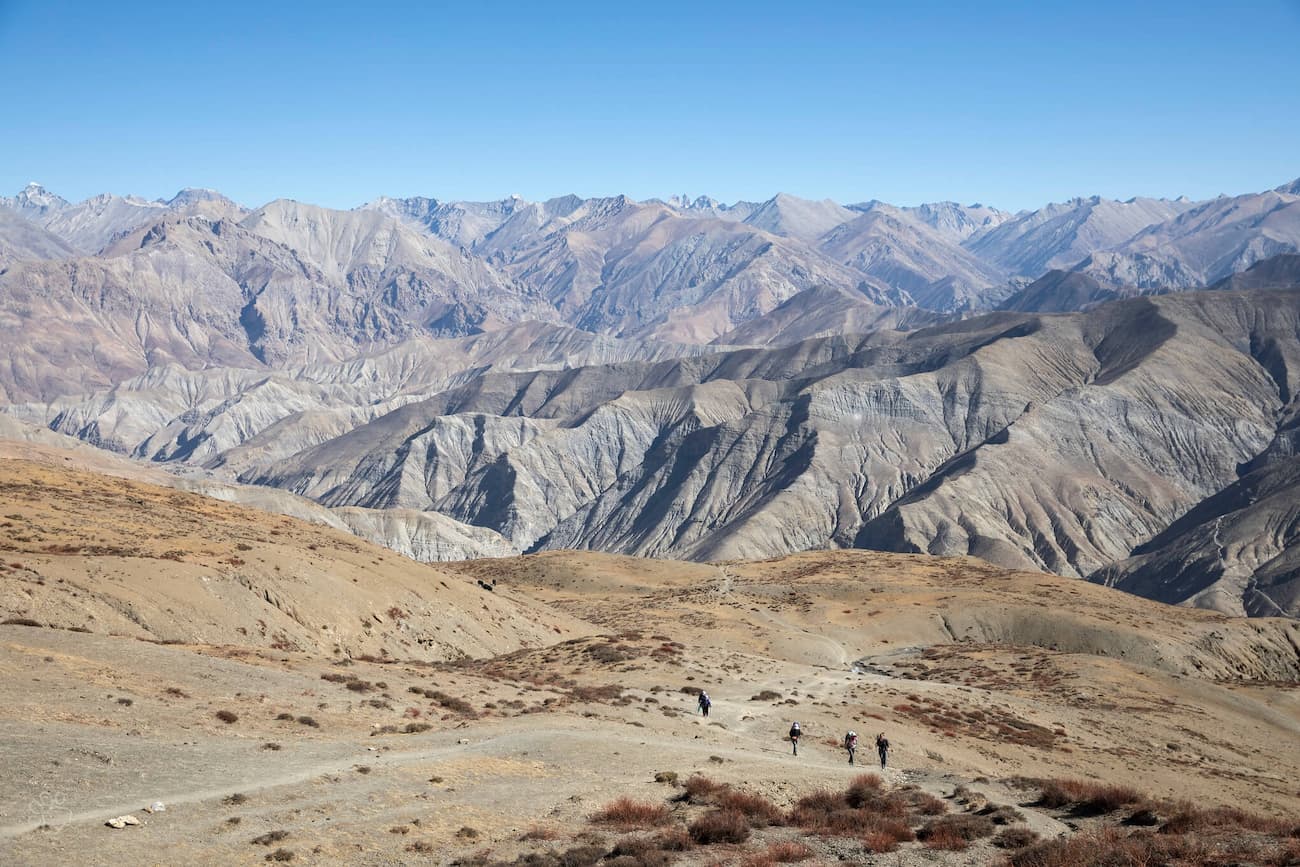
The hidden country of Upper Dolpo on less trekked trails is steeped with spectacular scenery and local impressive cultures. Makes Upper Dolpo Trek a perfect pristine wilderness, following the ancient Trans Himalayan Salt Trade Route of Nepal and Tibet.
The Upper sections of Dolpo are well hidden and least ventured and yet to be explored. This wonderful adventure allows visitors to experience the most amazing places in this part of the world.
The charm and beauty of Upper Dolpo Trek, its awesome landscape scenery, age-old heritage traditional customs, and religions.
As well as walking within Nepal’s largest National Park of Shey-Phoksundo enriched with exotic flora and fauna. Upper Dolpo Trek begins with a sweeping panoramic flight to
Jhupal on a small airstrip of Dolpo areas. Where walk leads to beautiful blue pine, firs, and spruce forests towards picturesque Phoksundo Lake with emerald-colored waters.
An exciting place to be and visit the lovely village of Ringmo adorned with interesting monuments of religious significance. The adventure continues to cross the highest point of the journey over Kang-La or Nangdala pass to Shey Gompa.
A mystical and holy land of Dolpa’s, one of the isolated settlements close to a sacred Crystal Mountain or Shey. An amazing windswept country and yet beautiful to enjoy its spectacular scenery of high rolling hills, and mountains with canyons. Visiting the monastery of great religious and cultural interest, the return walk leads to inner Dolpo. After a great marvelous adventure and experience on the higher side of Upper Dolpo and its great magnificent landscapes.
The journey leads to more interesting wind-blown villages through Saldang, and Yangze Gompa to cross another scenic pass over Jeng-La. Enjoy the magnificent views of the Dhaulagiri Himal range towards the east with an array of peaks that surrounds the valleys of Dolpo.
After being around the isolated region of Upper Dolpo, and then feeling the great changes and differences, in reaching beautiful settlements. The walk continues reaching the lovely villages of Tokyu and Do Tarap, walk on the scenic Do Tarap green wide valley.
The trail slowly leads to an end reaching the interesting village of Tarakot and then to Dunai; the headquarters town of Dolpo. Finally, the trek takes you to Jhupal, for a scenic flight back to Kathmandu via Nepalgunj city. On arrival in the bustling city of Kathmandu, concluding our wonderful, mesmerizing, and exciting adventures to Upper Dolpo Trek.
Trek Short Profile:
Mode of Trekking: Simple, basic lodges on treks with tented camping.
Trekking Grade: Moderate to Adventurous.
Area of Trekking: Far North West, around Dolpo district.
Highest Elevation: On top Kang-La Pass 5,350 m / 17, 552 feet high.
Start and End of trek: Jhupal to Jhupal.
Trekking duration: 20 Nights / 21 Days (Includes flights both ways).
Total Trip: 25 Nights / 26 Days from arrival to main departures.
Best Seasons:
The best season for Upper Dolpo Trek is on late spring time from April & May till pre-summer of June. Including autumn/fall from September and October only.
By November, most villages and lodges will be closed for cold winter, where all Dolpo people migrates to low warm region. Escaping the cold winter months from November till early spring of March.
Upper Dolpo falls within rain shadow, where all black monsoon clouds are blocked by the great Himalayan range. This is why the country is dry and arid with near desert like landscapes and yet beautiful. Most days in late spring, summer and autumn / fall is clear with bright sunny days, cold in the shade. As well in late afternoon till next early morning. Afternoon can be very windy bringing extra cold chill factor, can expect snow during all seasons of the year sometimes.
Culture & Religion:
The Dolpo region is populated by the Dolpa’s, the native closely related to Tibetans that borders with Northern Dolpo. The Lower Dolpo area is inhabited by some Hindu tribes the Roka and Malla Thakuri with Bharamins and Chettries.
The Dolpa’s follows Buddhism religion and cultures similar to its predecessors the Tibetans, with slightly different cultures and customs. The Dolpo natives besides farming high altitude crops like barley, buckwheat and wheat as well yellow mustards. Including breeding and keeping livestock’s, they are good business men and traders. They have been in trading and bartering goods across the border in Tibet. As Upper Dolpo falls on ancient Trans Himalayan Salt Trade Route of Nepal, India and Tibet / China. Besides Buddhism religion, the Dolpo people also practice Bon sect of pre-Buddhism, which exists in Dolpo, Upper Mustang and Langtang Himal regions. The menfolk considered as finest horsemen with impressive heritage and custom. In most large villages have monasteries / Gompa and every house are adorned with prayer flags, and religious monuments.

On reaching departure air terminal on landing at Kathmandu / international airport. Our staff and guide receives you for short transfer to respective hotels in the heart of Kathmandu city. After checking into your rooms, getting refreshed join with other members of the treks for group briefing. Provided by our guide or trek leader, briefing includes all important subjects related to the treks, includes information of Kathmandu and hotels. Evening a group welcome dinner in an authentic Nepalese restaurants, an introduction to Nepali meals and cultures.


Morning options for half-day sightseeing tour around Kathmandu world heritage sites of great cultural and historical interest. After the tour free for Upper Dolpo trek preparation.


Early breakfast and then transfer to Nepalgunj airport for short flight to Juphal in Dolpo, a scenic flight of 45 minutes. On landing at Jhupal small airstrip join with our trekking guide and camping crews. After getting organized a short walk of few hours leads beyond Jhupal village close en-route to Dunai the headquarters town of Dolpo district. Since the trail to Chepkpa, Phoksundo Lake and Shey Gompa leads before Dunai. We find it best in between of Juphal and Dunai, to make it easier and shorter for next day walks. The trail follows past farm lands and hamlets to reach a small settlement just on turn off to Chepkpa. Where our tents are set for overnight camping, from here onwards in tented camps most of the treks.

From this small farm areas with first night in tented camp with great meals served by our camping kitchen cook. Enjoy the day, along the classic route towards best part of Dolpo. The walk leads on gradual trail reaching Silu-Ghar check-post, after checking formalities of special trekking permits and park fees. As required for Upper Dolpo and Shey Phoksundo National Park. From here, entering Shey Phoksundo National Park, the largest park in Nepal.
The trail follows along Phoksundo River, as the terrain change dramatically, leading into lush coniferous forest. Walk past Kageni, Jutung and Shangta farm villages to cross a bridge over the confluence of Phoksundo; and Maiba Khola / streams. Then head north towards Chepkpa, where our overnight camp is set on a nice grassy meadow.

The walk today leads famous route of Lower Dolpo Circuit trek towards beautiful Phoksundo Lake and Ringmo village. The trail leads on the opposite side of the river to cross the bridge over Phoksundo River again. Walk leads on tranquil path to Rechi for possible lunch stop, in a nice surrounding.Having lunch, walk leads along the river side reaching Sulli-Ghat at Dovan, crossing a bridge over the confluence of Phoksundo River and Yulung Khola. Slowly the day ends on arriving Amchi Hospital for overnight camp.The words ‘Amchi’ comes from Bon sect of pre-Buddhism, means traditional healers or witch doctors, uses medicinal herbs to heal; infections or diseases. Hence, the name derived for the hospital as a treatment center for the local people of Dolpo.


After continues walks of several days, enjoy the rest day to explore around Phoksundo Lake and the Ringmo village. Visit Ringmo village of strong and typical Tibetan style and heritage village. Festooned with unique culture and traditional way of living with impressive customs. Tour of Tshowa, a Bon sect of pre-Buddhism monastery at the lake-shore, with more than 900 years of history.
The interior of the monastery, will be a great experience adorned with giant statues of Bon saints and gurus. As well with vivid arts and paintings on walls and ceiling with religious frescos. Rest of the day enjoy relaxing and marvel the beautiful scenery that surrounds the turquoise Phoksundo Lake.


Today a short trek of some hours towards Nangdala High Camp, walk leads to steep uphill. Climbing over a narrow trail of Tuk Kyaksa stream crossing over the same streams several times. As walk leads to cross over a small bridge, and then heading towards a wide exposed valley. The trail follows for another few hours along the huge canyon where overnight camp is set near a massive rock slab.

Adventure today takes you to our major and main highlight in the heart of Upper Dolpo to Shey Gompa. Located close to sacred and amazing Crystal Mountain, the holiest peak of Dolpo and villagers. Start the morning to cross over the highest pass of the adventure Kang-La, also known as Nangdala. The climb takes you graveled path with steep uphill for few hours, for all the hard effort offers magnificent views. Overlooking Crystal Mountain, with Tibetan mountains across the border with grand scenery of Dolpo landscapes and snow clad peaks.
Includes grand looks of Shey Shikhar, Kang Chunne as far towards Kanjibroba peaks as walk leads to Shey Gompa. At the entrance coming across a red Chorten then step on the soil of holy monastery and mountains of Shey.
Shey Gompa, an isolated and remote settlement on the far flung corners of Western Himalayas. An amazing experience being in this wild and holy land, spending two more overnights on this unique areas of Shey Gompa.

Enjoy a day at Shey Gompa and enjoy the interesting tour of the monastery.
Shey monastery, believed to be more than 800 years old, treasures ancient scroll describing the myths behind the Crystal Mountain. Shey Gompa is locally known as Shelri Sumdho Gompa. The monastery hosts a summer festival, popularly known as the Shey Festival. Which is also described in the classic novel “The Snow Leopard” authored by American author Peter Mathieson. As well pictured in the movie called Caravan, but later changed to ‘Himalaya’. The movie produced by French explorer and adventurers Eric Valli’s.
The Shey Festival takes place in the year of a dragon, which falls once in 12 years according to the Tibetan calendar. Trekkers can enjoy a hike to the base of Shey the Crystal Mountain embedded with crystal and quartz, truly amazing.

After an exciting and interesting time at Shey Gompa, begin the trek on return journey towards inner Dolpo areas. The trail follow along Sephu Khola for few hours entering within windswept terrain and climb over Shey-La pass.
From Shey-La, enjoy views of Mustang landscapes with Tibetan plateau, and Kanjiroba, Kagmara peaks, then long descend to Namgung. Where our overnight campsite is set close to the small village of Namgung and the Gompa.

Morning before heading to Saldang, visit the Namgung Monastery perched on a high windblown cliff. After an interesting tour of the Gompa walk follows along Namga Khola, past several summer grazing pasturelands. Then slowly walk ends on reaching Saldang village for overnight halt. One of the famous and large village of Upper Dolpo area. A lovely village placed on a windswept landscapes by mud canyons, surrounded by amazing eroded cliff hills. The ancient Bon sect and Amchi tradition in Dolpo flourished from this village.

From Saldang village, after a good breakfast, a few hours hike to Yangze, walk on windswept wilderness. The trail leads to few ups and down to a small shepherd settlement at Yangze. Where the richest monastery of the region located, after setting up the camp. Having time to explore around the monastery and enriched with ancient treasures of idols and holy scripts. Facing outstanding views of surrounding beautiful dry and arid landscapes with snow-capped peaks.

After an exciting time on an amazing wild country of Upper Dolpo, and leaving Yangze Gompa areas. There is two routes from Yangtze to Sibu, the long ways through remote isolated Nishal-Gaon and Shimen-Gaon. But the straightforward short route is heading back to Saldang outskirts. Then following the river bed past terraces, adorned with Stupas, Chorten and heaps of Mani stones.
Where walk leads to Chaiba monastery and past Namdo, a prosperous large village of more than 60 houses. For about 400 locals, from here walk leads further high and down to a river. The walk slowly follows to a small yak herder settlement of Sibu to set out overnight camp on route to Jeng-La Pass.

Slowly the adventure leads towards inner and lower areas of Dolpo, as morning walk follows the Nam Khong Khola. For sometimes coming across caravan of yaks laden with goods for trade across the border in Tibet. After days of following the same river, finally our route heads east reaching the confluence of two small tributaries. From here on walk leads to steep climb reaching beneath Jeng-La Pass for the overnight on a nice meadow.

Start the morning for few hours steep climb to the top of Jeng-La, offers excellent view of snow peaks. Includes grand look of Dhaulagiri Himalayan massif towards east, as it shines in the morning sun-light. Enjoying the superb panorama of surrounding towering high snow mountains range. From the top walk downhill towards Tarap valley, by afternoon reaching across a wide green valley. As walk continues to Tarap Chu amidst beautiful valley reaching a lovely village of Tokyu for overnight halt.
Afternoon with time to explore around the nice village of Tokyu and its impressive monastery, which belongs to the Chaiba sect of Buddhism.

A short morning walk to another lovely villages of inner Dolpo for overnight in Do Tarap. The walk follows downhill around Tarap Chu on a flat green valley, completely different from higher areas of Upper Dolpo. Walk leads towards a marshland, which is common features like in the desert and mountainous country of Tibetan landscapes. Slowly the walk ends reaching a large village of Do Tarap for overnight halt. A lovely village to explore and observe both Bon Po and Chaiba sects of pre-and present Buddhism blends in harmony.

From here onwards walk leads on moderate gradual trail, depending upon the choice of several different campsites. Making the itinerary flexible as chosen by the trekkers to enjoy more of this wild country. From the barren country of Tarap, the route leads down towards a wide valley. Eventually reaching a narrow gorge, walking within juniper bush and wild rose, which is typical vegetation of inner Himalayan valleys. Around the serene areas might spot herds of blue sheep, which is quite common around this part of lower Dolpo.As walk progresses reaching the confluence of Tarap Chu and the Lang Khola, a stream that joins with Tarap River. A perfect place to set our overnight camp on a nice green meadow. This isolated place, also known as Karma-Kharka, nearby the camp, a huge spacious cave located, makes a nice shelter or bivouac for some travelers.

Our adventure slowly comes to near end reaching the lower parts of Dolpo, as walk continues down Tarap River gorge. An exciting trek as the valley leads to narrow deep gorge, where one jump from one side to another. Walking into the also provides unexpected adventure in some areas. After an exciting walk of the day crossing icy streams, then reaching to our campsite at Tarap Khola within Khani-Gaon.


After completing the walks at Dunai town, having good breakfast a short drive brings to Juphal. For next morning early flight to Kathmandu via Nepalgunj airport, at Jhupal staying in the best available lodge. Rest of the day at leisure to explore the Jhupal village of cultural interest with scenic views of dramatic landscapes.

Morning as time for flight to Nepalgunj, for connecting flight to Kathmandu walk to the airport terminal. As the small aircraft reach Jhupal small airstrip, the board in the plane of respective airlines. A short sweeping flight of 40-45 minutes facing grand views of Western Nepal amazing country landscapes, then landing at low-warm city airport of Nepalgunj. The time for flight to Kathmandu can take some time or shortly, having space for refreshing break. Then board in a bigger aircraft for scenic flight back to Kathmandu, on arrival at the air terminal.
The guide and staff transfers you to the hotel, after an exciting adventure on Upper Dolpo Trek.

Enjoy an extra day in Kathmandu, we have reserved a contingency day in case of flight delay at Jhupal. This free day allows for individual activities or get into shopping spree, interested people can join for another interesting tour of other cities of Kathmandu valley. Sightseeing around Patan / Lalitpur or the famous Bhaktapur city Durbar Square, worth a visit.

After an enjoyable and most mesmerizing adventure in Nepal and around the Himalayas on Upper Dolpo Trek. As time for departure, our staff transfer you to international airport for homeward bound flight or towards next port of call.
My Upper Dolpa Trek was one of the most extraordinary journeys I have ever taken, and I am deeply grateful to Treklanders Adventures for making it such a memorable experience. From the moment we started the trek, I felt like I was stepping into a hidden world untouched by modern life. The landscapes were absolutely breathtaking—vast valleys, dramatic cliffs, turquoise Phoksundo Lake, and the ancient villages that seemed frozen in time. Every day brought a new surprise, whether it was walking through high passes, meeting warm-hearted locals, or seeing centuries-old monasteries nestled in remote mountains. Our guide and porter were exceptional. They were knowledgeable, patient, and always made sure I felt safe and comfortable on the trail. Their understanding of the local culture added so much depth to the journey. The region is extremely remote, but Treklanders handled everything with professionalism—from accommodation to meals—making the trek as smooth as possible despite the challenging terrain. Upper Dolpa is not just a trek; it’s a spiritual and emotional experience. The silence of the mountains, the purity of the landscapes, and the cultural richness make it a destination that leaves a lasting impression. I returned home with unforgettable memories and a deeper appreciation for Nepal’s hidden beauty. I highly recommend Treklanders Adventures to anyone planning to explore Upper Dolpa. Their expertise, dedication, and warm hospitality make all the difference.

Purpose: Keep sweat off the skin and maintain warmth.
Purpose: Trap body heat in cold air at altitude.
Tip: Keep electronics in inner pockets at night to prevent freezing.
Upper Dolpo one of the most adventurous and longer treks in Nepal Himalayas, to join on this longest adventure. Where all trekkers should be physically fit and in sound health to cope with ups and downhill. As well with the high altitude terrains and rough trails for some days. Rest of the walks is normal spending overnights in tented camps, due to its remote location. The lodges are available only few larger villages. Interested people for Upper Dolpo should be minimum 18 years of age to maximum of 70 years, can enjoy the adventure.
Not all villages have facilities of electricity with Hydro or Solar power, due to its remote location. Few areas around large villages do have small hydro plants or solar power to run electricity. Can charge electronic items on paying extra fee for using the power as per gadgets charged. As for internet and cell phone communications, only few large main villages may have the Wi-Fi and internet services. But can be quite disturbing, due to weather and its remote location amidst complete sheer mountain wilderness for many days.
We suggest all trekkers to carry a portable small solar panel for personal use.
The communication with local SIM like Ncell and NTC works well in most areas, except in deep gorges or enclosed by high mountains and cliffs.
As this adventure is staying in tented camps, the company will carry all needful camping equipment’s and foods for the whole treks. The camping is supported by separate kitchen unit of expert cook, kitchen staff, guides and trekking staff.
As well accompanied by strong porters and mules to carry all the camping gears and baggage. The camping includes two-man spacious tents, dining tents as per size of a group, toilet screens or tent. For showers tent or generator to run electric power, on request at extra cost. The foods are hygienic and nutritious, the cook serves all types of meals from Continental, Chinese, Indian and Tibetan including Nepali. Sometimes on special occasion our cook can bake cakes and pies also, including pizzas. Followed by warm refreshments tea, coffee and drinking chocolates also. The breakfast includes porridge, muesli with breads and eggs of variations. Lunch is quite simple depending on the location on trekking, sometimes needs to carry packed lunch on longer days or on crossing high passes.
Upper Dolpo Trek, is not much popular as other region of Nepal like Everest, Annapurna or Langtang Himal. Due to its remote isolated location, where long drive of few days or flight involves both ways after the long trek of three weeks or more. But from past few decade, it is slowly drawing more visitors than it used to be in early days, when Upper Dolpo was first opened in 1989 for outside visitors. As Upper Dolpo is less visited, where facilities of lodge accommodation and food qualities are not well maintained. All trekkers have to join with reputed companies like Treklanders Adventure with options for tented camping or staying in simple basic lodge en route trekking.
Few number of flight do operates in good seasons of the year depending upon the demand of trekkers or mountaineers. The flight main operates from Nepalgunj to
Jhupal during morning time when weather is clear and best. Afternoon hardly flight operates due to wind and overcast weather. Normally the flight operates in best time of the year, from March to June and September to November months only.
The Upper Dolpo Trek is an adventurous and culturally rich journey in the far-western part of Nepal. It is known for its beautiful landscapes, historic Bon monasteries, stunning high passes, and the impressive Phoksundo Lake. This trek offers a true wilderness experience influenced by Tibetan culture and features remote mountain communities.
The trek usually lasts from 18 to 28 days. The duration depends on the route you choose, your acclimatization needs, and how many high passes you plan to cross. Treklanders Adventures can customize the itinerary based on your schedule, pace, and fitness level.
Upper Dolpo is one of the few remaining restricted areas in Nepal, where ancient traditions continue to exist. Trekkers can see untouched nature, turquoise lakes, yak caravans, and old monasteries like Shey Gompa. Its isolation and unspoiled beauty make it truly unique.
Yes, it is considered challenging because of long walking days, rough trails, and high-altitude passes over 5,000 meters. Good fitness, stamina, and careful preparation are essential for this trek.
While having experience in multi-day high-altitude trekking is highly recommended, beginners who are in excellent physical shape and are determined can also complete the trek, provided they acclimatize properly and have support.
The best times are late spring (May to June) and autumn (September to October). During these seasons, you can expect stable weather, clear skies, and better conditions for crossing high passes.
The area is protected to preserve its culture, reduce the impact of tourism, and ensure safety due to its sensitive location near the Tibetan border. Access is controlled through special permits.
Upper Dolpo is one of the most remote trekking areas in Nepal. Lodges are very few, there is no road access, and modern services are scarce. Trekkers should be prepared for camping, long periods without settlements, and unpredictable weather conditions.
The best time to trek in Upper Dolpo is late spring (May to June) and autumn (September to October). These periods provide the most stable weather, clearer skies, comfortable temperatures, and safer trail conditions for crossing high-altitude passes. Since Upper Dolpo is in the rain-shadow of the Himalayas, these seasons offer good visibility and access.
Late spring is ideal because the snow on the high passes starts to melt, which makes trails easier to navigate. Days are warmer, the skies are bright, and the landscape becomes more vibrant. Temperatures at lower elevations remain mild, while trekkers at higher altitudes enjoy crisp mornings and pleasant walking conditions. Clear views of the barren mountains, cliffs, and Phoksundo Lake are major highlights of spring trekking.
Early spring is possible but a bit challenging. Snow often remains on higher sections, making passes like Kang La, Jeng La, and Saldang La tougher to cross. The weather can also be unpredictable, with sudden snowfall and cooler temperatures. Only experienced trekkers or those traveling with a well-equipped team should consider this time.
Autumn (September to October) is often regarded as the best time for Upper Dolpo. The monsoon rains wash away dust and haze, providing clear visibility. Trails are dry, the weather is stable, and daytime temperatures are perfect for long trekking days. Nights can be chilly, but manageable with the right gear. Autumn is also festival season in Dolpo, offering a rare chance to see traditional cultural events and monastery rituals.
Winter trekking is not recommended for most trekkers. Heavy snowfall blocks high passes, temperatures can drop significantly (often below -20°C), and many local communities move to lower areas. Lodges and campsites may be closed, and rescue operations can become very difficult. Only highly experienced expedition teams attempt Upper Dolpo in deep winter conditions.
High passes above 5,000 meters are the biggest challenge of Upper Dolpo. In spring, the snow gradually melts, making crossings safer. In autumn, the trails are clear and dry, with very little weather disruption. In winter, they are mostly blocked, while early spring and late autumn may still have icy patches. Choosing the right season is crucial to reducing risks and ensuring smooth trekking days.
High passes above 5,000 meters are the biggest challenge of Upper Dolpo. In spring, the snow gradually melts, making crossings safer. In autumn, the trails are clear and dry, with very little weather disruption. In winter, they are mostly blocked, while early spring and late autumn may still have icy patches. Choosing the right season is crucial to reducing risks and ensuring smooth trekking days.
If photography is important, autumn offers the clearest skies and Sharp Mountain contrasts. Spring brings softer light, blooming landscapes, and bright colors. Both seasons are excellent, but autumn usually provides the most dramatic, high-definition images of Upper Dolpo’s rugged terrain, turquoise lakes, and traditional stone villages.
The Upper Dolpo Trek is considered strenuous because of its remote location, rough terrain, and high altitudes. Trekkers walk through isolated valleys and cross several passes above 5,000 meters. This trek requires stamina, endurance, and solid physical preparation. It's more challenging than many popular Himalayan routes since facilities are limited and daily walking distances are longer.
Several factors make this trail difficult. Trails in Upper Dolpo are rough, rocky, and often steep, especially near the high passes. Many sections include long climbs and descents with little shade or place to rest. Trekkers also face thin air at high elevations, which makes breathing harder and causes physical fatigue. The remoteness adds another layer of difficulty since there are no quick evacuation options and very few teahouses or settlements.
Having prior multi-day trekking experience at high altitude is highly recommended. While beginners in excellent shape can try it, the trek is much tougher than standard routes like Everest Base Camp or the Annapurna Circuit. Previous experience helps with pacing, acclimatization, and managing the physical demands of long trekking days.
Trekkers usually walk 6 to 8 hours each day, and sometimes longer when crossing high passes. Campsites are spaced out due to the area's remoteness, so it's important to be mentally ready for full days of trekking without many facilities along the way.
The trek starts at around 2,500 to 3,000 meters and gradually climbs to elevations of 5,000 to 5,500 meters at major passes like Kang La, Jeng La, and Saldang La. These heights increase the risk of altitude sickness, so proper acclimatization and slow pacing are vital. Treklanders Adventures designs the itinerary to ensure a safe altitude gain and enough acclimatization days.
A good level of cardiovascular fitness is necessary. Trekkers should be comfortable walking uphill, carrying a daypack, and hiking for long hours. Training 6 to 8 weeks in advance, with a focus on hiking, running, stair climbing, and strength exercises, greatly improves comfort and performance during the trek.
Lodging options in Upper Dolpo are basic and scarce, particularly when compared to more popular trekking destinations like Everest or Annapurna. Most of the journey requires camping due to the limited availability of teahouses along the path. In lower regions, you may come across simple village lodges or home stays, but the amenities are quite basic. Throughout most of the trek, tents function as sleeping, dining, and cooking spaces.
Trekkers can locate basic teahouse accommodations only in the initial stages, around Juphal, Dunai, and occasionally near Ringmo (Phoksundo Lake). Once you move into the restricted zone of Upper Dolpo, lodging transitions to camping due to the isolated nature and absence of settlements. Treklanders Adventures sets up comprehensive camping provisions to provide comfort and security.
Treklanders Adventures offers high-quality tents, which consist of sleeping tents, dining tents, kitchen tents, and toilet tents. Foam mattresses or sleeping pads are also included. The support crew handles the setup of the camp, food preparation, and logistics. Meals are cooked freshly in the kitchen tent, ensuring a comfortable experience despite the remote environment.
Each trekker is allocated either a private or shared tent depending on their preferences and group size. Sleeping conditions are rudimentary but warm and secure. Due to the chilly nights in Upper Dolpo, trekkers should have a sleeping bag rated for -10°C to -15°C, which Treklanders Adventures can help arrange if necessary.
In camping areas, Treklanders provides a portable toilet tent to facilitate hygiene and privacy. Shower facilities are generally unavailable for the majority of the trek, but the team can heat water upon request for basic washing purposes. In the lower teahouse regions, rooms typically offer shared washrooms and basic bucket hot water if accessible.
Electricity is quite limited. Teahouses in the lower regions may have solar power, but charging options are nearly absent once you reach Upper Dolpo. Trekkers are advised to bring extra power banks or solar chargers to keep their devices powered.
The lodging in Upper Dolpo is uncomplicated, yet it provides an authentic and adventurous experience. The Treklanders camping team ensures that tents are clean, meals are warm, and campsites are secure, creating a comfortable atmosphere even in one of Nepal’s most remote regions.
Yes, Treklanders Adventures can organize private tents, meals tailored to dietary needs, or other special comfort requirements with prior notice. The team is adept at coordinating safe, hygienic, and well-organized camping throughout the area.
During the Upper Dolpo Trek, the food mainly comes from freshly made camping meals since there are hardly any teahouses in the area. The trekking crews of Treklanders Adventures take care of cooking healthy meals with the help of a full kitchen team using local ingredients whenever available. You can expect to have hot soups, rice, lentils, pasta, vegetables, Tibetan bread, noodles, porridge, eggs, and pancakes, and occasionally some local dishes.
Food is prepared by professional trekking cooks who live by hygiene and safety standards. The preparation of food is carried out in a specified kitchen tent where the water used is purified, the utensils are clean, and the right procedures are followed. So indeed, trekkers are assured of healthy meals during the whole trek.
Certainly, Treklanders Adventures is in a position to provide vegetarian, vegan, gluten-free, and lactose-free diets or any other dietary preference if they are informed in advance. The team only leaves you with the task of receiving nutritious and safe meals daily.
Water for drinking is always subjected to one or more purification processes, such as boiling, filtering, or using a purifier before it is served. Safe water will be given to trekkers all along the trek, and it is better to have a few purification tablets or a filter bottle in your rucksack as a backup.
There is almost no bottled water available in Upper Dolpo. Besides, the use of bottled water is discouraged from an environmental point of view. Therefore, trekkers should look to the purified water that the guide and the kitchen team are providing them.
Make sure that you have with you a minimum of 2–3 liters of water per day. It is very important to be well hydrated, considering the high altitude and the long hours of walking.
Water becomes safe once it is boiled or purified. Trekkers must not drink water directly from the natural sources, as it may lead to infection due to contamination of the water.
Mobile signal in Upper Dolpo is very weak and is almost totally absent once the higher remote valleys are entered. Some network coverage may be available to trekkers in low areas such as Dunai or Juphal, where simple NTC or Ncell connections are occasionally functioning. However, as the path goes further into the restricted area, not only does the ground get more rugged and farther away from the village, but also there are no communication towers for this area. For many days, trekkers will have no access to telephone networks, so they should be ready to stay offline most of the trip.
Wi-Fi service is likewise infrequently found. A few teahouses near Phoksundo Lake at Ringmo might have solar-powered internet that is very slow and hardly available due to the weak energy source and weather conditions. There is basically no Wi-Fi in the Upper Dolpo area, and trekkers should not use it as a means of communication.
Due to the unpredictable communication and guided by safety considerations, Treklanders Adventures equip their guides with satellite phones or walkie-talkies. The devices are the means through which the team can call for assistance, follow up with the main office, or communicate with the rescue squad if the situation that needs it arises. This mechanism is a safety system that enables the emergency routes to be open for the trekkers even in areas with no mobile coverage.
There are hardly any charging options. It is possible to do solar charging in a few villages in the lower parts for a small price, but once in Upper Dolpo, there are no places for charging properly. Trekkers must keep their devices running with the help of power banks, spare batteries, or solar chargers.
Using a local SIM card can only be of some advantage in lower areas, so if you get one, it will not work in Upper Dolpo. The local SIM card is good for the beginning and end of the trip, but not for the whole trekking journey.
It is mandatory to hire a licensed guide for Upper Dolpo trekking, as it is a restricted area only accessible to a registered guide. The guide’s details must be part of the permit application, and it is not allowed to go to the upper region without a registered guide. Besides, a guide makes sure the district is safe in the wilds of a remote area.
Your guide deals with the route navigation, campsite arrangement, safety checking, altitude management, and even the cultural interpretation. They take the lead, check and monitor your health, get in touch with the locals, and if everything goes according to plan, they ensure that your itinerary runs smoothly. Also, due to the guide’s knowledge of the environment, weather, and local customs, the whole trek becomes not only easier but also more profound.
Indeed, porters are made available as the trek entails carrying a heavy load of tents, food, and camping gear. Porters are responsible for the duffel bags and the group’s equipment, which is usually the great burden of the trekkers; in this way, they can carry a light daypack themselves.
On average, a porter shoulders not more than 20-25 kg that cover his personal and the group's equipment. Meanwhile, trekkers are given advice to bring only the necessary items in their luggage so that porters will comfortably deal with their burden throughout the camping days.
Guides who are assigned to help Upper Dolpo trekkers have the knowledge of, and they are sure of their skills in high-altitude trekking, wilderness navigation, and are trained in providing first aid. For them, it is very easy to understand the area as well as the climate and take safety measures because this is such an isolated trekking route.
Tipping is a normal and welcome tradition in Nepal. Usually, it is given as a token of thankfulness for their diligent work towards the end of the trek. The amount is dependent on the size of the group, the length of the trek, and the level of the service.
First of all, Upper Dolpo needs two kinds of permits: The Upper Dolpo Restricted Area Permit and the Shey Phoksundo National Park Entrance Permit. No one can enter the area without these documents, and hikers should have them ready before embarking on the journey.
It is not possible to get a permit for a restricted area in Upper Dolpo on an individual basis. One has to organize the permits with a trekking agency that is registered, and a guide with a license should be there along with the trekker. For safety reasons, solo trekking in the restricted zone is strictly banned.
The Upper Dolpo Restricted Area Permit is priced at $500 per person for the initial ten days, and $50 per day for any time after that. The Shey Phoksundo National Park entrance fee is a separate charge, and it is required for all hikers who come to the park.
Each of the trekkers should submit copies of their passports, photos of their faces, and a valid Nepali visa. As a part of the permission process, the agency organizing the trekking also needs the information of the guide holding the license. Permits will not be given if these documents are not presented.
Authorities verify permits at various checkpoints such as Dunai, Shey Phoksundo, and several entrances leading to Upper Dolpo. Hikers are obliged to have their permits with them at all times and show them to officials when asked.
Operating the body six to eight weeks before the trek is a must, and that is when the preparation should also start. With the support of regular exercises of the cardiovascular system, for example, jogging, hiking, or running, the person should do strength exercises for the legs and abdomen. Walking on stairs and long walks carrying a small backpack are the best ways to get the required stamina for long trekking days in high altitude areas.
The main points of the travelers' apparel should be warm clothes for cold nights, a pair of solid trekking boots, a down jacket, a pair of warm gloves, a hat, a pair of sunglasses; they also need water purification methods, a first aid kit, and a sleeping bag that is made for -10 to -15 degrees. To some extent, this category also includes power banks and headlamps, as the use of batteries is almost impossible.
Absolutely not! Trekking tourists don't have to worry about carrying camping tents or kitchen equipment on their backs. Treklanders Adventures provides all the camping necessities like tents, mattresses, dining, and kitchen tents from their camp.
Your daypack has to be light and comfortable, and the perfect weight should be between five and eight kilograms. It has to be a place for water, energy, food, extra clothes, sunscreen, gloves, and a camera. The rest of the heavy bags are in the hands of porters.
A mountaineer of a beginner level might do the trek if his physical fitness is great and he is of strong character. For this reason, experience in high altitude trekking is highly advisable, as long as the trekking days are going to be long, the place is isolated, and the high passes are challenging.
Altitude sickness is a problem that may happen to a person in their upper Dolpo journey, as this is a very high altitude trek that goes beyond 5000 meters. Climbers should go up step by step, drink plenty of water, and follow the proper acclimatization schedules. Treklanders Adventures guarantees the pace of the trek to be safe and assures that acclimatization days are planned in the itinerary.
Though safety is emphasized and guides receive first aid, altitude, and wilderness management training, so that they can be excellent safety officers. The team is also equipped with medical kits, oxygen cylinders, and satellite phones to make communication and help during emergencies possible even in the deepest areas of the wilderness.
If it is an emergency, the guide uses a satellite phone to talk with the required rescue team and make arrangements for that. At the same time, due to the isolation of the district, it may be necessary to descend quickly until the helicopter can come and get you, subject to weather and access conditions.
Temperatures will be below -10 and -15 degrees on some nights, in particular near high passes. In order to be safe and comfortable, one must have enough warm clothing and a good-quality sleeping bag.
The area is without any dangers from animals, and the only animals here are blue sheep, yaks, and Himalayan foxes. Snow leopards are inhabitants of Dolpo, but it is very unlikely that you will come across one.
It is safe to do the journey with the help of a guide, but you cannot go alone in Upper Dolpo. For safety and regulation adherence, a licensed guide is a must.
Indeed, travel insurance is a must-have for the Upper Dolpo Trek. Owing to the isolation of the area, the region's high-altitude passes over 5,000 meters, and few medical facilities, trekkers must hold an insurance that covers high-altitude trekking, emergency helicopter evacuation, medical treatment, and trip cancellations. If altitude sickness, injury, or sudden weather changes happen, evacuation might be the only way out, and insurance will make sure that you do not have to bear the expensive costs alone.
Hikers ought to acquire a thorough insurance plan that covers trekking to a height of at least 6,000 meters, together with helicopter rescue and emergency evacuation. Such a plan should also take care of medical emergencies, hospitalization, high-altitude diseases, baggage loss, and delays in the trip due to flight cancellations. As Upper Dolpo is a tent-based and far-off trek, the insurance policy should be valid for adventurous activities. Insured persons should have both hard and soft copies of their insurance papers on hand, and they should inform their guide of the policy number before the trek.
The trip to Upper Dolpo mostly starts with a plane from Kathmandu to Nepalgunj. After that, a short flight from Nepalgunj to Juphal is required. Juphal is the nearest airstrip to the Dolpo region and the main point of arrival for tourists. Due to the impassable terrain, these domestic flights are considered the quickest and most reliable ways to reach the starting point, although flying schedules may change based on weather conditions.
Flights to Juphal are highly influenced by weather changes since the airport is in the mountains. Generally, the morning flights are more stable, while the afternoon ones may get delayed or canceled. Treklanders Adventures always schedules the itinerary with extra days to be sure that flight changes do not affect the overall schedule. Travelers should be in a position to make the necessary adjustments during the journey.
First of all, driving straight to Upper Dolpo is strongly discouraged due to the poor road infrastructure in the area. Roads do not extend to Juphal or the inner Dolpo areas. It is possible to reach lower Dolpo by road after a long off-road drive, but the trek’s starting point can only be accessed by walking or via a connecting flight. Therefore, flight is still the most feasible and time-saving option.
The only way to get around after the trek has started is on foot since there are no roads in Upper Dolpo. The terrain includes narrow trails, towering passes, rivers, and remote mountain paths. Besides, porters and helpers are in charge of carrying the goods, food, and other equipment, while travelers are free to carry their daypacks. What’s more, the whole area is vehicle-free, which means that the hikers have the opportunity to fully immerse themselves in nature.
| No of people | Price per person |
|---|---|
| 1 - 1 | $2,060 |
| 2 - 3 | $1,635 |
| 4 - 8 | $1,515 |
| 9 - 30 | $1,405 |
| No of people | Price per person |
|---|---|
| 1 - 1 | $2,505 |
| 2 - 3 | $1,905 |
| 4 - 8 | $1,615 |
| 9 - 30 | $1,495 |
| No of people | Price per person |
|---|---|
| 1 - 1 | $1,475 |
| 2 - 3 | $1,050 |
| 4 - 8 | $955 |
| 9 - 30 | $845 |