9-Day Everest Base Camp Trekking with Helicopter Return, is the fastest and the most exciting way to enjoy the adventures. Especially for visitors with dreams to experience the world's highest Mt. Everest at a close distance. Treklanders offers the solution with the shortest itinerary day for interested people to be in front of Mt. Everest. Then heads back to Kathmandu in the comfort of a helicopter after achieving the goal of a lifetime experience.
Everest base camp trekking begins from Kathmandu on a scheduled flight to Lukla. The adventure starts following the mainstream trails through serval lovely Sherpa villages to enter Sagarmatha National Park.
As the walk progresses, the climb leads up to the famous Namche Bazaar, a large village and a small town. A perfect spot for rest days to support acclimatization by exploring its scenic viewpoints. In the close harmony of local Sherpa immense traditional heritage and cultures of Buddhism religion.
The adventure heads beyond Namche Bazaar, with a climb amidst an enchanting forest of rhododendrons and pines to a scenic spot. Tengboche is a picturesque location with a majestic monastery, where the great religious festival Mani Rimdu, is held.
From Tengboche, enjoy the stunning panorama of Everest, with an array of towering giant snow-capped mountains. After Tengboche, the walk heads higher, leaving behind the lush green forest for sheer mountain wilderness towards high Imjatse Valley. Reaching Dingboche for a pleasant rest day to explore its scenic high ridges.
After Dingboche, the adventure leads around the windswept mountainous high country to Lobuche and then towards Everest base camp.
Enjoy the exciting moments and the fruits of success after a tough climb for serval days of trekking. At Everest Base Camp, stand amidst the staggering giant towering mountains of Lhotse, Nuptse, and beautiful Pumori. Include grand views of the massif tumbling Khumbu Icefall and glaciers. On completing the main highlight of the journey, the next adventure leads to a steep climb.
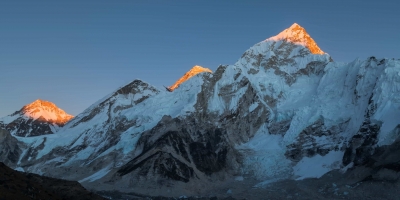
To the top of Kalapathar black, rocky ridge, one of the best viewpoints in all the Himalayas. From the top of Kalapathar, enjoy the closest views of Mt. Everest and the adjoining giant mountain range. As well as within front of towering Mt. Pumori, with fabulous scenery of surrounding snow-capped peaks.
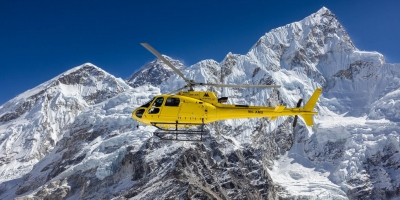
After completing the main highlights of the adventures, return journey to Kathmandu in the comfort of a Helicopter. A smooth, dramatic, and luxurious way to conclude our wonderful adventure, Everest Base Camp Trekking, and return by helicopter.
Day 01: Fly to Lukla 2,860 m and trek to Phakding 2,610 m-04 hrs.
Day 02: Trek to Namche Bazaar 3,440 m-06 hrs.
Day 03: Rest day in Namche Bazaar for acclimatization with short hike.
Day 04: Trek to Tengboche Monastery 3,867 m-05 hrs.
Day 05: Trek to Dingboche 4,410 m -05 hrs.
Day 06: At Dingboche rest day for acclimatization and short hike.
Day 07: Trek to Lobuche 4,928 m -05 hrs.
Day 08: Trek to Everest base camp 5,364 m via Gorakshep 5,180 m-06 hrs.
Day 09: Climb Kalapathar 5,630 m and return to Kathmandu on a helicopter. 03 hours hike and 1-2 hour’s flight on a chopper.
Trekkers will be surprised to find various standards of lodge accommodation en route to Everest Base Camp. Starting and ending the treks at Lukla, trekkers have options as per one's budgets.
From simple tourist standards to moderate and Luxury deluxe lodge accommodations, having attached baths and toilets. After Namche Bazaar and Tengboche or Deboche, the lodge provides common baths and toilets. Extra charge for using hot showers, the toilets for common use, due to the harsh terrains. As well the pipeline and plumbing systems freezes due to minimum morning and night cold temperatures. Dining rooms are large and cozy with a fireplace to keep the environment warm, while you enjoy the meals.
All lodges provide a comprehensive food menu, which includes a wide variety of breakfasts, from oats, porridge, and cornflakes. Bread, Chapatti, Pancakes with choices of eggs from scrambled, boiled, poached, and omelets. Followed by hot refreshing drinks, tea, coffee, and drinking chocolates. Lunch and dinner with a list of continental, Indian, Nepali, Chinese, and Tibetan/ Sherpa foods. Some lodge restaurants also provide Mexican, Italian, Japanese, and Korean foods, including fresh bakery items. All dining rooms are bright with lamps run by local hydroelectricity or from solar power. Some lodges also provide free internet or Wi-Fi, it is quite slow and disturbing. Due to landscapes and weather conditions on designated overnight stops. For large groups of more than 4 people, the best to order a set menu, which saves time and fuel energy. As well as following the norms of Eco or Responsible Tourism.
Although Nepal is dominated by 75% Hindu religion, the higher mountains around the Himalayan range. The Sherpa highlanders of Everest, are interwoven with Buddhist religion and cultures. Trekkers can notice every house adorned with Buddhist prayer flags and the village trail lined with religious monuments. Like the prayer stone walls and spinning wheels, with large boulders engraved with prayer inscriptions.
Trekkers will have time to visit the monasteries en route, like the famous Tengboche Monastery. The Sherpa follows the same Buddhist religion and traditions, similar to the early Tibetan predecessors.
Mode of Trekking: In the best available lodge, and guest house.
Grade of Trekking: Moderate to Adventurous with touch of high altitude.
Trekking Region: Nepal Far North Mid-East around high Khumbu region.
Highest Points: On top of Kalapathar High Ridge at 5,643 m/18,514 feet.
Including Everest Base Camp 5,364 m/17,598 feet.
Trekking Duration: 08 Nights and 09 Days from Kathmandu to Kathmandu.
For Everest base camp treks, can venture around all seasons of the year except the wet monsoon and summer times. The right favorable and the best seasons are spring and autumn/fall.
Spring begins in early March and ends in May, where most days are bright with sunshine for longer hours. From early 6:30 am till 5 pm, but can get cloudy afternoon sometimes with chances of light snowfall.
Cold morning, late afternoon, and night times, as well with an extra wind-chill factor above 3,000 meters. The afternoon sun is bright with strong UV (ultraviolet) and requires sunblock’s, sunglasses, hats, and long-sleeved tops.
Spring is a lively time when wildflowers are in seasonal blooms, mainly the rhododendrons of various species and colors.
The next best season is autumn/fall, from September to November, most days are fine and clear for views and walks. But much colder morning, late afternoon, and nighttime, chances of snowfall sometimes. Can get extra cold from the afternoon wind chill factor, however a pleasant season of autumn/fall for Everest base camp treks.
Interested people can enjoy the Everest base camp trek during the winter time of the Christmas and New Year holidays despite the cold. Most days are fine with sunshine and get dark sooner due to winter and limited hours of sunlight. But freezing temperatures in the morning, late afternoon, and nighttime, but enjoyable walks encountering fewer groups of trekkers.
Please Note
Trekkers joining for Everest Base Camp or any other adventures around high Khumbu. The flight to Lukla or vice-versa from Kathmandu, could get diverted to another airport at Manthali Town, Ramechap. Due to busy air traffic at Kathmandu airport during high seasons of spring March to May.
Including the autumn/fall of September to November, if the flight gets diverted to Manthali small airport in Ramechap. Which is approx. 154 km driving distance of 3-4 hours from Kathmandu to Manthali Town and vice-versa. In this situation we might have to stay overnight in the local hotel at Manthali.
For an early morning flight to Lukla, the other options are driving to Manthali, Ramechap early morning by 2-3 pm. To reach on time to catch the flight to Lukla.
In this case, extra cost will incur, As well as for using Helicopter service, if needed with bad weather condition for flights to and from Lukla, Kathmandu.
Sometimes, the Helicopter might land, and takes off from Pheriche Valley, which is about 3-4 hours walks from Gorakshep.
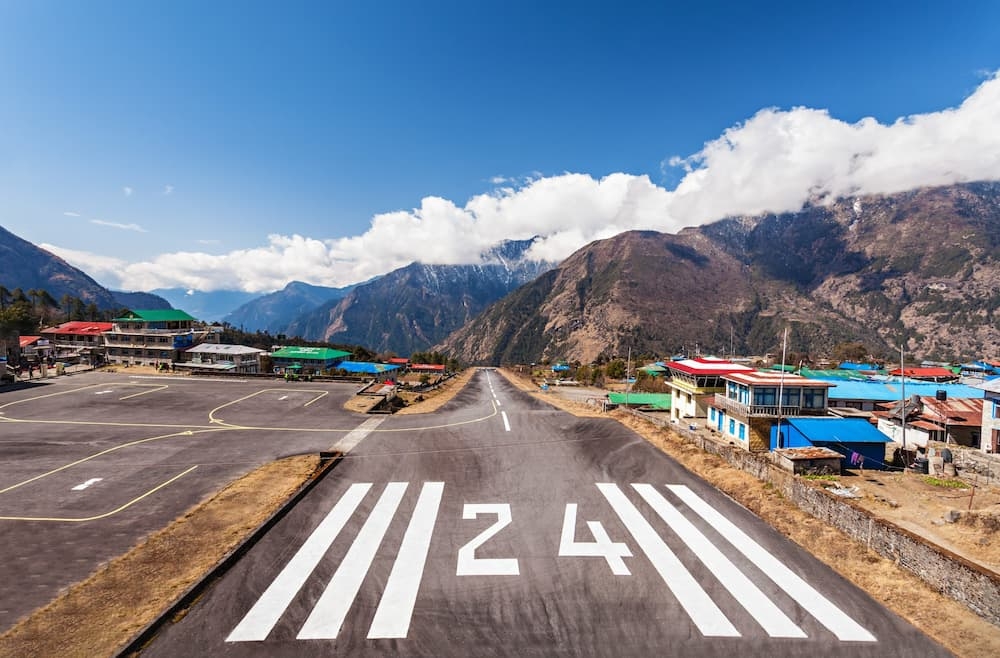
Morning with early breakfast, a short drive to Kathmandu domestic airport. After checking in at respective airlines, and then boarding in a small aircraft for sweeping, scenic short flight to Lukla. During air breathtaking panorama of Himalayan peaks with views of Everest, Lhotse and Makalu. As plane makes landing at Lukla’s Tenzing & Hillary Airport, after getting organized with the baggage. Have a short refreshing rest, and then start the first day trek, following the lead guide. As the route heads through Lukla town,with down and ups past nice villages to reach Phakding for overnight halt.


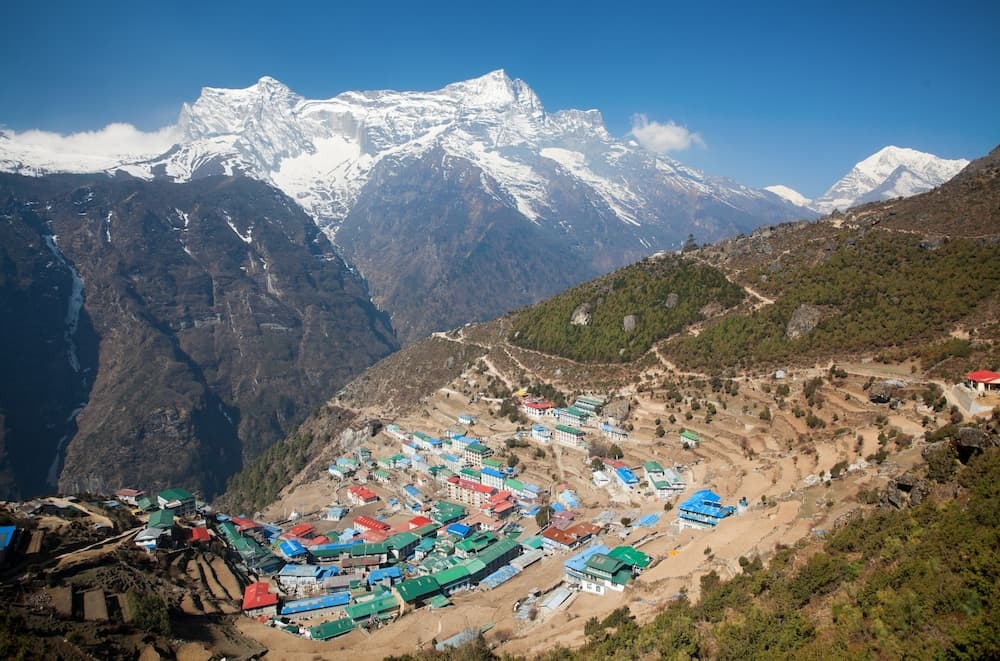
Today a pleasant walk for first half, en route to Namche Bazaar after a good breakfast. The trail follows on gradual down with short climb and crossing bridges to reach Monjo Village. Then enter Sagarmatha National Park, listed in the World Heritage Sites as one of the highest park. Enriched with exotic flora/fauna and famous world’s highest peaks, the walk then leads across the bridge above Dudh Koshi River. Reaching a small settlement at Jorsalle for lunch stop, afternoon walk on the river bank. Covered in dense trees of rhododendron and pines as the trail heads up to cross a high bridge. From the bridge, an undulating climb of few hours to Namche Bazaar for two overnights.
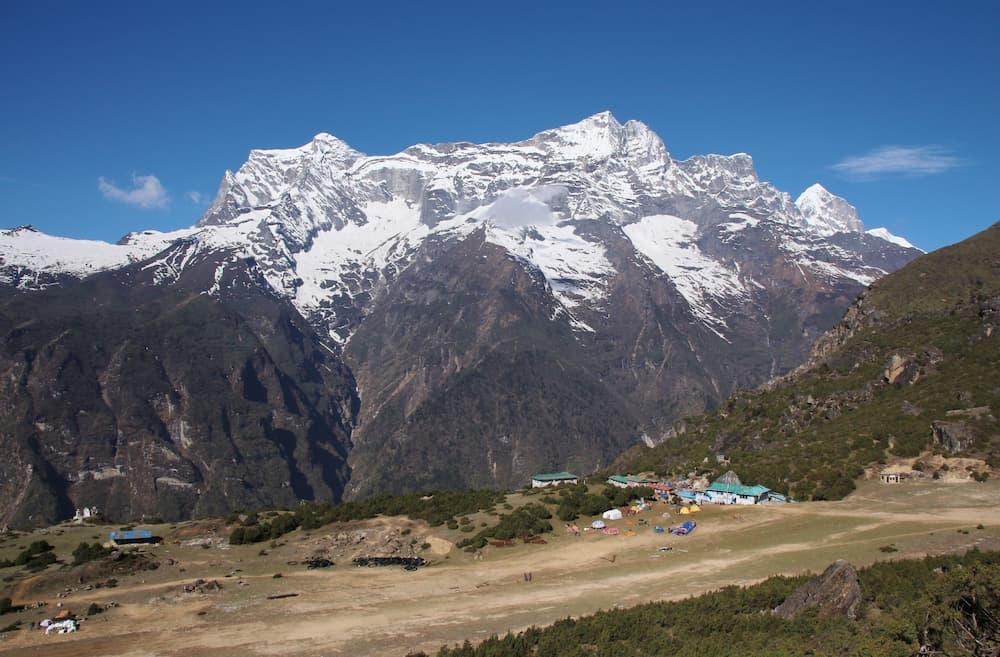
An extra day on this lovely spot in Namche Bazaar, the hub of Khumbu villagers.Where once a week a Saturday market held, hence the name as Namche Bazaar, a great place for rest day. Enjoy a short hike to support acclimatization before heading higher terrains, a nice walk on top of Namche Bazaar.For grand vista of Everest, Lhotse and beautiful Ama Dablam with an arrays of peaks. Visit the interesting museum treasures good information of the Khumbu region with local culture, flora, fauna and mountaineering history.
The other best hike is to Everest View Hotel of few hours climb above Namche Bazaar. The first luxury hotels around Khumbu and Everest areas, listed in Guinness World Record as the highest hotels. From the hotel views of Mt. Everest and Ama Dablam, located on a serene forested surrounding.Rest of the afternoon after lunch, explore the Namche Bazaar lined with shops,stores and fancy restaurants, café, bakeries.
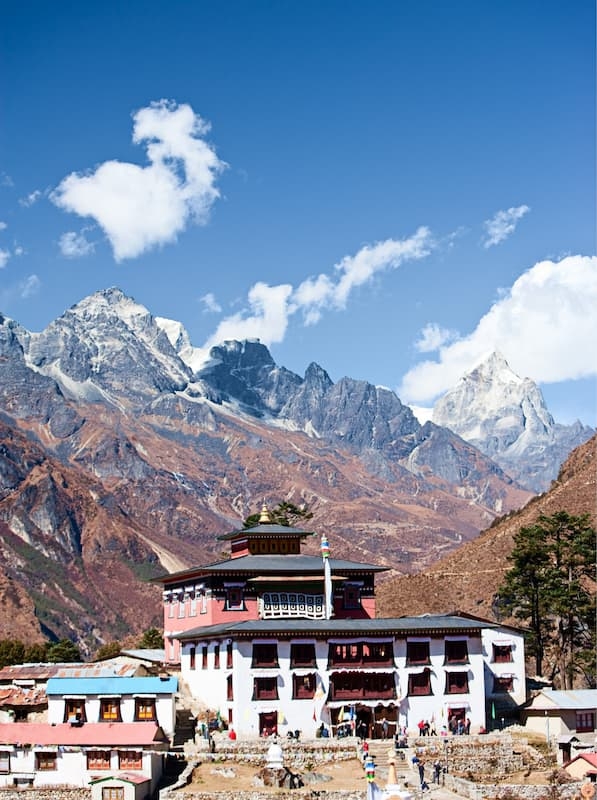
After a pleasant overnight stops in Namche Bazaar, morning walks follows on a scenic gradual trail. Overlooking, great views of Everest and arrays of snow-capped peaks, as walk heads down to a small place. At Phunki Tenga for lunch stop, amidst beautiful rhododendron and pine woods. Afternoon a slow climb for few hours to Tengboche and its colorful Monastery, check into a nice lodge.
At Tengboche enjoy tour of the monastery interiors, of great cultural and religious interest with vibrant arts and paintings. Tengboche located on a picturesque spot surrounded by series of snow peaks with Mt. Everest, amidst lovely forest.
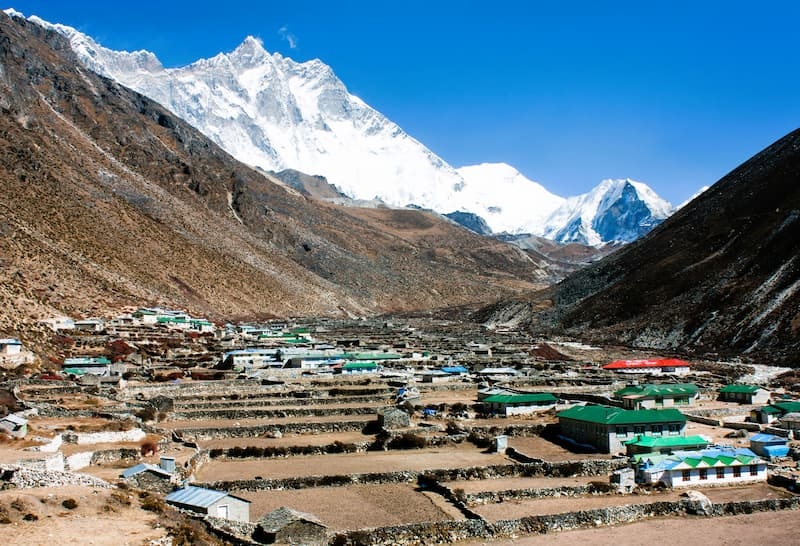
Enjoy the morning panorama of the majestic Himalayan peaks, and walk down to cross a bridge. Leaving the forest behind, the walk leads uphill to Pangboche Village, the last permanent human settlement. From Pangboche a gentle climb to Somare for lunch break, with close views of staggering Ama Dablam.
After lunch, on an open exposed trail to Dingboche as walk leads down to a stream. Then head for the climb of an hour enter the beautiful Imjatse Valley, where Dingboche a large settlement situated. At the bottom of towering north face of Ama Dablam with views of Island Peak, towards east of a valley.
At Dingboche enjoy the comfort of a nice lodge accommodation and marvel the beautiful surrounding scenery.

Another rest day in Dingboche for acclimatization and short excursion to Nakarjung high ridge top. Enjoy the fantastic views of surrounding giant peaks with Ama Dablam and Island Peak. As far as Mt. Makalu towards east direction,after a refreshing morning hike, rest of the day at leisure.

From Dingboche, slowly our adventure gets closer towards our destination, the morning walk leads to short steep climb. From the top and above Imjatse Valley and Dingboche, a pleasant walk on a gradual uphill to Thugla. A small place, situated on the mid-way of Dingboche and Pheriche routes to Everest base camp. At Thugla for the lunch stop, afternoon a steep climb of less than an hour to a high ridge. The walk gets better on gradual ups as the altitude gains, making the trek slower. After a good walk of few hours reaching Lobuche for an overnight stop, before reaching Everest Base Camp.

Start the morning early as possible, carrying packed lunch for the long day to Everest Base Camp. The walk starts on a nice pleasant trail, and then climb up to reach around rocky areas above Khumbu glacier. The walk continues with short descent to Gorakshep, a small settlement with few good lodges. Located on a wide glacial sandy field beneath towering Mt. Pumori and Kalapathar black rocky hill. After a short refreshing stop, then head towards the final destination to Everest Base Camp.
The trail leads on winding gradual path in between rocks and glaciers, then reaching at Everest Base Camp. Stand beneath the towering mighty Mt. Everest amidst, remorseless fields of ice, snow, rocks and glaciers.Enjoy the dramatic scenery similar to arctic zone landscapes enclosed by giant Lhotse, Nuptse and Pumori peaks. After an exciting and wonderful experience at Everest Base Camp, return to Gorakshep for overnight halt.

Another early morning adventure, start the cold morning heading to a steep climb to the top of Kalapathar high ridge. A popular and famous spot for closest views of Mt. Everest at a mere distance. Stand in front of towering face of Mt. Pumori with range of high snow mountains that surrounds the top.
After a magnificent views of glorious mountain scenery, from the highest point of the adventure. Descend to Gorakshep for breakfast and then get ready for sweeping panoramic flight to Kathmandu. Taking the comfort of a spacious seated helicopter, as the chopper arrives at Gorakshep. The pilot greets you and then get on board, the helicopter heads above Pheriche and Tengboche.
A short possible landing at Lukla for re-fueling, and then heads towards Kathmandu. Covering 153 km/96 miles’ air distance from Gorakshep, taking more than an hour or more. On reaching Kathmandu transfer back to your respective hotels. After a great wonderful experience on Everest Base Camp Trekking and return by Helicopter.
My 9-day Everest Base Camp Trek with Helicopter Return was one of the most unforgettable adventures of my life, and all credit goes to Treklanders Adventures, our amazing guide Hari, and our friendly, hard-working porter. From the very first day, Hari made everything feel safe, comfortable, and well-organized. His knowledge of the mountains, local culture, weather patterns, and altitude tips kept us confident throughout the trek. He checked our oxygen levels every evening, made sure we were hydrated, and always walked at the perfect pace for the whole group. His calm nature and genuine care made a huge difference, especially on the tougher days. Our porter was equally incredible—always smiling, always ahead of us, and carrying our bags with unbelievable strength and kindness. We truly could not have completed this journey without him. The trek itself was breathtaking. Every day brought new views—suspension bridges, Sherpa villages, pine forests, and eventually the dramatic ice world of Everest. Reaching Everest Base Camp felt emotional and surreal, a lifetime dream finally coming true. The helicopter return was the perfect ending. Flying above glaciers, icefalls, and the Himalayas was an experience I will never forget. It saved days of walking and gave us the most stunning aerial views of Everest. I am deeply grateful to Treklanders Adventures, guide Hari, and our porter for giving me this once-in-a-lifetime experience. If you are thinking about trekking to Everest Base Camp, I highly recommend this team—they make the journey safe, memorable, and truly special.
Purpose: Keep sweat off the skin and maintain warmth.
Purpose: Trap body heat in cold air at altitude.
Tip: Keep electronics in inner pockets at night to prevent freezing.
The return is by helicopter after a classic trek to the base camp of Mount Everest, offering both comfort and magnificent views from the air. One can save half the time by not walking back along the same route and, at the same time, getting fantastic views of the Himalayas from the air.
The usual trek is doable within 10–12 days, which also depends on the number of acclimatization days. The return with a helicopter is thus a good way to shorten the total duration of stay and to decrease the physical load.
No, it is not necessary to have a prior trekking experience. On the other hand, one has to be physically fit, be mentally prepared, and has the will to walk 5–7 hours a day at high altitudes.
Three permits needed: Sagarmatha National Park Permit, Khumbu Pasang Lhamu Rural Municipality Permit. These permits will be organized by Treklanders Adventures on your behalf.
To ensure safety, the helicopter return is facilitated by pilots who have been certified and are working through aviation companies that have been registered. Also, weather conditions are closely observed before departure is given.
The best season will be the months of March to May and September to November when the weather is sunny, temperatures are good, and one can enjoy great views of the mountains.
At very high altitudes, for instance, during the night, temperatures can be as low as -10°C to -20°C. It is very important that one wears proper warm clothes.
Yes, it is possible that anyone could be affected by the altitude. Even so, they should not forget to use acclimatization days and drink abundantly. And in addition, the guides are always watching the trekkers’ health during the trek.
Tea houses and lodges are the places where you will be accommodated. They offer rooms which can be considered basic but still comfortable, with local meals available.
Charging is allowed, but it may be that it is costlier than usual if it is done above Namche Bazaar. The source of the power will be either the sun or generators.
Some of the items that should definitely be in your bag are warm layers, a down jacket, gloves, trekking boots, trekking poles, thermal wear, a power bank, a headlamp, and medicines. I can provide a detailed list of things you need to carry if you want.
If you go for the Helicopter Return Package, then the flight will be part of the deal. There is also another way by which you can arrange it as a departure.
Yes, it is a must. Besides that, the insurance must include high-altitude trekking, and it must also cover emergency helicopter evacuation.
If you are trekking in a place like the Everest high-altitude region, travel insurance is a must. The insurance will be your savior if you have a medical emergency, are afflicted with altitude sickness, or encounter any other unforeseen situation. Hence, in the absence of proper insurance, it can become a challenging task to get rescue and medical help.
Firstly, your policy should include high-altitude trekking up to 5,500 meters and medical emergencies. Secondly, it has to offer the complete package with treatment, hospitalization, and trip interruption. Besides, it is important that the policy specifically mentions cover for trekking in Nepal.
Absolutely, a drone/emergency helicopter evacuation is necessary in the case of the EBC trek. Your insurance has to be very explicit that it will support you in case a helicopter rescue is necessary. This, therefore, allows for quick and, most importantly, safe evacuation if you need it.
First aid is available in tea houses, though limited in nature, and the guide carries a medical kit for common issues like headache, blisters, stomach problems, etc. Besides, you should bring your personal medications along. For any serious conditions, a helicopter rescue service is available.
Indeed, an emergency helicopter evacuation can be organized at high-altitude places such as Gorakshep or Lobuche. The local guides are in touch with the rescue team and will expedite the process when the situation calls for it. Nevertheless, it is very important to have the right insurance that covers this type of evacuation.
Condensed oxygen for extra help is available only in some higher mountain lodges and at medical posts. Your guide will see to it that if oxygen is needed, it will be the symptoms that determine it. It is a medical aid that serves as a last resort.
If you bring with you medications that you may need to consume, such as painkillers, altitude pills (if recommended by a doctor), stomach medicine, and rehydration salts, that will be great. It is also good to have a small first-aid kit for personal use. Your guide's medical kit is equipped to cover general trekking needs.
Most villages have access to the Everest Link Wi-Fi, which is available at a small cost. The network also allows coverage up to Namche and Tengboche.
There is a mobile signal in Lukla, Phakding, Namche Bazaar, Tengboche, and some areas of Dingboche. As you go toward Lobuche and Gorakshep, the network gets weak. At the top, you may have very limited or no connection at all.
Everest Link is a Wi-Fi network that can be found in the majority of tea houses along the trail. Each user can access the internet with one data code, which works in different locations. It is more stable than mobile networks at high altitudes.
Indeed, buying a SIM card from Ncell or NTC in Kathmandu will be useful for the lower parts of the trek. The SIM card can offer a good connection up to Tengboche. For higher parts, Everest Link is still the best way to stay in touch.
The absolute best seasons to do it are during spring (from March to May) and autumn(from September to November). The weather during these months is the most stable, the temperatures are very pleasant, and the sky is bright and clear, which is very important not only for trekking but also for the helicopter ride back to Lukla or Kathmandu.
The season of spring is accompanied by warm days, cooler nights, and, in addition to that, it is the time when a variety of rhododendron trees line the trails. The general situation of the sky is clear, the mountains are very visible, and the weather is perfect for walking longer distances. Helicopter flights on this day must also be successful because of the good weather.
Autumn is the season with the most comfortable weather and clearest skies, which provide magnificent views of the mountain range. This is a time after the monsoon has finished, and the air is clean and free from dust. The season offers the greatest possibility of uninterrupted helicopter flights, along with the very beautiful scenery of the flight route.
Indeed, but the trek during the cold months is much harder. On the other hand, the winter trek offers a clean and quiet trail, views of snow-covered mountains, and relaxed villages, but the downside is that it can get as cold as -20°C or even lower in the highlands. Some lodges may shut down in this period, and it is not unusual for heavy snow to cause the suspension of flights. Perfect only for those trekkers who are used to and can bear the cold.
The answer is yes, the monsoon period is characterized by continuous heavy downpours, an abundance of leeches on the lower trails, predominant clouds, and a high probability of flight cancellation. It is also a time of poor visibility, which makes returning by helicopter very dangerous. The monsoon season is the worst season for your plan.
The question of the clearest and sharpest of all views from which the mountain peaks could be seen is answered with autumn. But if the colorful landscapes and the greener hills are what you are looking for, then spring should be the time of your trip. Both seasons guarantee the safest flights and the most stunning views of the Himalayas from the air.
The trek can be anywhere from moderate to hard, depending on the length of walking days and the high altitude. No technical climbing will be required, but one has to be in good shape; fitness is essential. By using a helicopter to go back, the trek is still there, but the journey is made easier as there is no need to hike down to Lukla.
On most days, you will have to trek on foot for 5–7 hours; of course, this varies with the terrain and altitude. For instance, walking to Base Camp or Kala Patthar may be very tiring but at the same time rewarding. The pace is very slow and steady to facilitate acclimatization.
The most difficult problems are the lack of oxygen, the steepness of the terrain, and the cold at the top. Above 4,500 meters, the air can be scarce, and the walk can feel very tiring. The helicopter return eliminates going down the most difficult sections of the trek.
Yes, anyone new to trekking can manage the trip if they are well prepared and take the right guidance. Regular walks, the use of stairs in the house, and basic cardio workouts will go a long way in helping your preparation. Your mind is just as important as your body when it comes to trekking.
Yes, the most serious problem which leads to the biggest challenge in this trail is altitude. This can be helped with proper acclimatization, enough hydration, and of course, following your guide's advice to the letter. The helicopter return will definitely come in handy if one feels very uncomfortable because of the altitude on the way back.
Yes, treadmill walking for about an hour would be enough to equate to a good cardio workout. Climbing the stairs in your home or office would best simulate the conditions during the trek. Less than perfect fitness will only make the trip more enjoyable and dangerous.
The weather also has a significant impact on the difficulty of the trek; for instance, during the coldest part of winter, most activities are halted. However, the best seasons for the trek are obviously spring and autumn, when one enjoys nice weather and daylight hours are longer. The weather can also pose a challenge to walking, and consequently, it is slower and more tiring than usual.
The trail is quite straightforward, though there are some rocky parts, bridges, and a bit of steepness. No climber would need to take along his or her gear, nor there a need for skillful climbers. Most trekkers will find that walking at a slow and steady pace is sufficient.
Absolutely, the helicopter makes it possible to skip all those parts where one has to go downhill for quite a distance back to Lukla. As a result, there is less wear and tear on the knees, the person becomes less tired, and in general, the degree of difficulty is lowered. At the same time, it is a great time saver as well.
Of course! Many novices have managed to complete the EBC trek simply by being well prepared and having a good guide with them. There is no doubt that the helicopter return is one of the main reasons why this trek has thus far been made more accessible to beginners, as it takes away the most difficult part, i.e., the long descent. Key factors would be a positive attitude and a walking pace that is not too fast and not too slow.
The tea houses and local lodges will take care of your accommodation needs with basic but clean rooms and twin-sharing beds. Most of them have minimal bedding, blankets, and a common dining hall with heating. The lodges of the higher altitudes are more basic but still quite comfortable once you are on a trek.
Generally, it is twin-sharing rooms in tea houses, while in some places you can find a single room if you decide to pay extra. Moreover, at very high places during the peak season, there might be less availability of rooms. Your guide will make arrangements for the best options that are available.
For example, in Phakding and Namche, the lower villages, attached toilets are available, but in Tengboche and beyond, it is hardly found. Most of the higher regions prefer shared toilets to be used by the people there. Although they are simple, they are clean and well-maintained ones.
However, the rooms are not heated, but the main dining hall has a stove for warming oneself. Tea houses give blankets to their guests, but still buying a good sleeping bag is a better option. The temperature in the high places can easily go below zero even in summer.
Yes, most of the lodges have a Wi-Fi service either through Everest Link or local networks. In the lower parts, the connection is good, while in the upper parts, it is weak. The Wi-Fi is charged for in most cases.
It is the lack of oxygen that is the main problem for the human body at high altitudes, which is why altitude sickness is the biggest challenge for the EBC trek, particularly for those parts over 3000 meters. Even though altitude sickness can happen to anyone, the most common cases are those of children and older people. The main threat is the danger of neglecting the symptoms and still going up.
Traveling on foot without rushing, keeping your body hydrated, not drinking alcohol, and going along with your guide’s pace are the things one should do in order to prevent altitude sickness. It is necessary to take acclimatization days in Namche and Dingboche. On top of it, good nutrition, rest, and even warmth will not let your body down.
If high altitude sickness symptoms occur, the patient normally has a headache, tummy upset, nausea, dizziness, and difficulty sleeping. The patient may become disoriented, breathe heavily even when resting, and may lose coordination. Tell your guide immediately if you notice any of the symptoms listed above.
Your guide, monitoring you, will reduce the speed and advise you to take a day off. Should symptom aggravation be the case, he will help you get down to a lower area. If it is an emergency situation, a helicopter will be there to evacuate you, and your insurance will cover the cost.
They certainly do, because days without work in Namche Bazaar and Dingboche are there for the body to adapt to the lack of oxygen in the air. Normally, rest days are accompanied by a short trip to a higher viewpoint and then coming back to sleep at a lower level. The probability of being struck with altitude sickness is thus extremely low.
Tea houses serve Nepali, Tibetan, and basic Western meals such as dal bhat, noodles, pasta, soups, eggs, and potatoes. Dal bhat is the most popular one because it is fresh, filling, and unlimited. The menus stay the same, but the food becomes simpler as you go higher.
One can purchase bottled water, but most trekkers opt for the boiled water that they can refill from lodges. Purification tablets or water filters should be used at all times. This method is safer, cheaper, and more eco-friendly.
Sure, vegetarian and vegan options are available everywhere, which mainly include dal bhat, vegetable soups, fried rice, and chapati. Meat is not recommended at high altitudes as it may not remain fresh. Plant-based meals are safe and easily accessible.
Tea houses are very hygienic, especially in lower villages. At higher altitudes, kitchens may be simple but are still clean, and the food is freshly cooked. Do not eat raw foods and only consume hot, well-cooked meals.
Yes, at almost every lodge, you can buy snacks such as biscuits, chocolates, tea, coffee, and energy bars. Costs increase the higher you go. It is also good to have a few personal snacks with you from Kathmandu.
It takes the helicopter about 10-15 minutes to fly from EBC to Lukla, and from EBC to Kathmandu, the flight is around 45-60 minutes. This mode of transport is quick, easy, and offers magnificent views of the Himalayas from above. You save several days of walking down the trail by taking the flight.
Yes, the rules for safety are strictly adhered to, and the flights are operated by very experienced pilots. Helicopters only take off in good weather to ensure both safety and good visibility. If the weather is not good, the flight will be postponed for your safety.
Good weather and clear skies are necessary for both the departure and the arrival of flights, especially when it is at a high altitude. Flights can be postponed when there is fog, snow, or strong winds. The two seasons when the weather is the most stable and thus suitable for flights are spring and autumn.
Certainly, helicopters are very strict about the weight limit, and therefore the number of people allowed on board is normally 4-5, depending on the total weight. To be able to balance the aircraft and do it in a safe manner, some bags might be weighed. If there is a large group, that group may be split up into a few flights.
The choosing of seats is done according to weight distribution for the sake of safety and not according to people's wishes. Each seat offers amazing window views, and the lightest passenger may be given the front seat. Your guide and pilot will assist you when you get on board and provide safety instructions.
Basically, two permits are needed: The Sagarmatha National Park Permit and Khumbu Pasang Lhamu Rural Municipality Permit. The park permits are an integral part of the EBC trek. So, Treklanders Adventures will take care of your permits and other formalities.
Permit checks take place at Monjo (park entry), Jorsalle, Namche Bazaar, and various other locations en route to EBC. It is very easy to do, and your guide will take care of it. Make sure you have your permits with you at all times during the trek.
A TIM’s card is not mandatory for trekkers in the Everest region. The Khumbu/Pangboche Rural Municipality Permit serves as a substitute. The only permits you need are the two main ones for the Everest region.
Yes, but it’s a lot more convenient and time-saving if your trekking company does it for you. In case you decide to do it, you will need to go to the offices with your passport and photos in Kathmandu or Monjo. Most trekkers take the guide option to avoid waiting for a long period.
With Treklanders Adventures, permit fees are included in the overall cost of your trip. A minor government change may impose some additional charges from time to time. For ease, your guide will be the bearer of the permits throughout the trek.
Layered clothing with thermals, a fleece, and a warm down jacket, waterproof outerwear, gloves, and warm socks should be brought along. Layering makes it easier for one to change the temperature from Lukla to Base Camp. Good-quality trekking boots and a warm hat cannot be left out.
In addition to a sleeping bag, trekking poles, headlamp, sunglasses, and sunscreen, a water bottle should be carried as well. Besides this, a power bank and personal toiletries are equally important. Your porter will be carrying your duffel bag while you carry a small daypack.
Preparation through 3-4 weeks of daily walks uphill, stair climbing, and light cardio is a must. One should also develop leg muscles and overall endurance to cope with long trekking days. A good level of fitness makes the trek more fun and less tiring.
Pack your medications, blister plasters, lip balm, hand sanitizer, and water purifying tablets. Remember also to take the passport, insurance, and some cash for personal expenses in the form of copies. Besides this, a warm sleeping bag (–10°C to –15°C) is highly recommended.
The climb is a non-technical one, so there is no need for climbing gear. Your boots should just be broken in, and your warm clothes should be reliable. The use of a good backpack and trekking poles can help greatly on the uphill parts.
Temperatures can drop dramatically, especially from 4000 meters onwards, when it is below zero almost every night. Days are quite warm and are suitable for trekking during spring and autumn. The coldest season is definitely winter, and the temperature at a high altitude can drop to –15°C to –20°C.
During the day, temperatures can be as low as 5°C and as high as 15°C, the exact degree depending on altitude and season. Lukla and Namche are warmer areas, while Lobuche and Gorakshep are quite cold. Bright days in spring and autumn provide the most suitable weather for trekking.
At night, temperatures are usually between –5°C and –15°C, and can be much lower during winter. Since tea house rooms lack heating, a comfortable sleeping bag is a must. After sunset, the temperature drops very fast, and this happens especially around Base Camp.
Absolutely, the weather in the Himalayas is known for being very unstable and can change in a matter of minutes, bringing wind, clouds, or snow. This time of day is often clear, but it gets cloudy in the afternoon, and this is especially true during the monsoon season. Spring and autumn are the most suitable periods for trekking and helicopter flights.
Both spring (March–May) and autumn (September–November) offer the best weather conditions with bright days and not very cold weather. The cold period is still manageable if the trekker is skilled and experienced. The wettest season is also the most inconvenient one, as it is characterized by rain, clouds, and delayed flights.
Besides safety, navigation, and acclimatization management, a guide also takes care of your daily planning through the trek. They not only ensure and monitor your health and prevent altitude sickness, but they also take on permit bureaucracies and all the logistics. Also, guides help you learn about local culture and history, and make your trip smoother and more fun.
Porters look after your main luggage (usually up to 12–15 kg), carrying it while you trudge with just a small daypack. They regularly go ahead to ensure that your bags safely reach each teahouse on time. Their support makes the trek less tiring and more comfortable.
One porter usually carries the total weight of 20–25 kg, which is the combined luggage of two trekkers. The fair and safe regulation requires that each trekker's duffel shouldn't exceed 10–12 kg. This guarantees that porters will not be overburdened on long, high-altitude days.
Guides are the leaders, planners, and managers of the trek, while porters are the ones who carry the heavy loads and support the team. They, thus, provide you with a journey that is safe, comfortable, and well-organized. They are the backbone of trekking in Nepal, and what porters and guides do is to make your EBC experience stress less.
Yes, a tip to the guides and porters is one way to thank them for their hard work. The exact amount is left to you, but mostly, trekkers tip at the end of the trek based on their satisfaction and the quality of the service. Your guide is the one who can tactfully help with the coordination of letting people know that it's time to tip.
First, the trek goes via a short plane ride from either Kathmandu or Ramechhap to Lukla. It takes roughly 20-30 minutes to fly through the breathtaking mountain scenery. Your guide will take care of all the airport formalities and timing.
A helicopter comes to pick you up from Gorakshep or another point nearby after the trek and takes you back to Lukla or directly to Kathmandu. Along with being quick and easy, the ride also provides magnificent views of the Himalayan range. So, most of all, it saves you from the long walk back down the trail.
Yes, flights to Lukla are very much dependent on good weather and visibility. Sometimes, delays can be caused by fog or strong winds in the mountains. The guide you have along will be in charge of the timing changes and will let you know.
Delays can sometimes happen due to bad weather, in which case you will have to wait until things get better. Alternatives include flying later in the day, taking a helicopter, or making a slight change in the schedule. Your trekking agency will be with you every step of the way.
Generally speaking, a helicopter is a good option if the weather is nice and stable. To guarantee your safety, the pilots will only fly when the conditions are good. The best times of the year for flawless flying are spring and autumn.
The guide keeps monitoring your wellbeing, pace, water intake, and altitude symptoms all along the trek. They have the power to decide on acclimatization, rest, and safety stops. Also, guides have undergone training for emergencies and thus can protect you against the changing mountain conditions.
| No of people | Price per person |
|---|---|
| 1 - 1 | $2,060 |
| 2 - 3 | $1,635 |
| 4 - 8 | $1,515 |
| 9 - 30 | $1,405 |
| No of people | Price per person |
|---|---|
| Private - Heli Charter | $5,200 |
| 1 - 1 | $1,750 |
| 2 - 2 | $1,700 |
| 3 - 3 | $1,650 |
| 4 - 4 | $1,495 |
| No of people | Price per person |
|---|---|
| 1 - 1 | $1,300 |
| 2 - 3 | $1,200 |
| 4 - 8 | $1,000 |
| 9 - 20 | $900 |