Mardi Himal Base Camp Trekking with Treklanders Adventures, leads you to beautiful surroundings, on off-the-beaten trails. Away from main trails and villages for some days in the harmony of complete mountain wilderness.
The Mardi Himal Base Camp Trekking itinerary is designed with flexible days that all types of people can enjoy. From family, school/college groups as well as corporate executives, walking for an average of four hours. This allows ample time for trekkers to enjoy the beauty of this marvelous adventure at Mardi Himal Base Camp.
Mardi Himal a lesser trekking peak at 5,587 m / 18,325 feet high, stands beneath the towering giant Machhapuchare Himal. The famed Fish Tail peaks dominate most of the southern Annapurna hills and valleys of scenic Pokhara.
The trek to Mardi Himal Base Camp is less ventured by mass flow of trekkers but from last few decades. The Mardi Himal region is drawing more visitors, due to its moderate and scenic high-altitude trail. Including its beautiful serene woods of rhododendron and pine trees, during spring the whole forest is lively and bright.
When wildflowers are in seasonal bloom, especially the rhododendron of various species and different colors from tall trees to a bush. As the walk proceeds, leaving the tree lines behind for short alpine bushes. Then climbing towards our final destination to Mardi Himal base camp, on the highest point of the adventure.
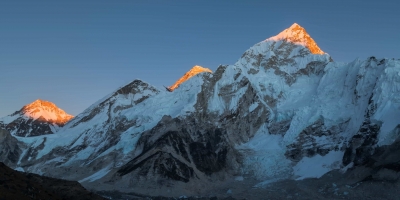
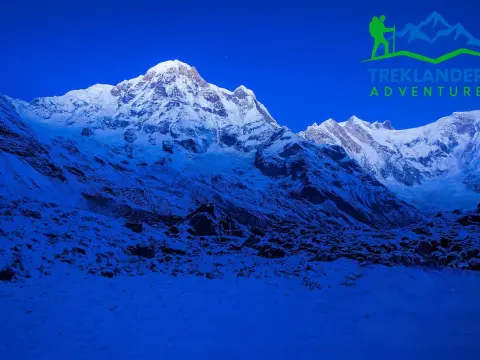
After walking on the high and scenic ridges of Mardi Himal, reaching the main highlight. Enjoy the spectacular panorama of the surrounding peaks of the Annapurna Himalayas, as far as the Manaslu range. Standing close beneath Mardi peak and staggering Machhapuchare Himal with its twin summits shaped like a Fish-Tail.
The Mardi Himal Base Camp Trek starts and ends at a picturesque city in Pokhara. From Pokhara drive leads to the foothills of the Annapurna Himalayas, then the climb begins towards scenic places for the overnight halts.
The walk continues leaving the mainstream trail to follow the high route and ridge lines to Mardi Himal Base Camp. Enjoying the magnificent panorama of more than 350° wide views of Annapurna’s eastern and western Himalayan mountain range. The return journey leads on an alternative route through pristine forest to the base of Mardi Himal hill at Siding village. The trek completes with a short drive to Pokhara, after a marvelous adventure and experience on Mardi Himal Trekking.
Trip Summary:
Mode of Trek: Best available lodge / guest house on treks.
Trekking Grade: Moderate to Adventurous.
Trekking Region: Around Annapurna Himalayan range of Kaski district.
Start and End of trek: From Pokhara to Pokhara with drives both ways.
Highest elevation: At Mardi Base Camp/ View Point 4,500 m / 14,763 feet.
Trek duration: 07 Nights and 08 Days from Pokhara to Pokhara.
Total Trip: 13 Nights and 14 Days, from arrival to departures.
Best Seasons for Mardi Himal Base Camp:
The best season for Mardi Himal Base Camp Trek is spring from March to May. Including autumn/fall begins from September to November, as Annapurna Base Camp is a short moderate, adventurous trek. Interested people can visit all year round, except for the summer/monsoon time of mid-June to August.
Springtime is bright and beautiful, most days are clear with sunny days, can be cloudy afternoons. Bringing cold chill in the late afternoon, and night till morning this is the time when wildflowers are in seasonal bloom.
The next best season is autumn/fall, where days are clear with sunny days for views and walks. But shorter days due to limited sunlight hours, cold morning and night time can expect snowfall sometimes. Winter from December to February with clear sunny days, but cold mornings, late afternoons, and night time with freezing temperatures. But an enjoyable day for pleasant walks with clear views of the beautiful snow mountain range.
Culture & Religion:
The southern hills and valleys around the Annapurna Himalaya and Mardi Himal region are populated by the famous Gurung. The menfolk are recruited as Gorkha soldiers, renowned for their bravery and courage, all over the world.
The Gurung people interwoven with the teaching of Buddhism follow an impressive heritage and culture similar to its predecessors the Tibetans.
The villages are adorned with prayer flags and shrines, the Gurung also follows the ancient practice of Bon. A pre-Buddhism, worship of spirits and nature with shamanism, as the healers or medicine men.
Traditionally Gurung is farmers and cattle herder, raising and breeding livestock, the Gurung has their own typical ancient cultures besides Buddhism. The main villages en route are Mardi Himal Kande, Potana, and Siding. Where one can witness and explore the local interesting cultures and customs of the Gurung people.
Please Note:
For interested people having time in Nepal for the trek can extend from Mardi Himal to Annapurna base camp trek. As well with Ghorepani-Poon hill trek also.
The trail branches off from Badal Danda or at Forest Camp for other extension trip to exciting mountain destinations.

On first arrival at Kathmandu-Nepal international airport, our staff and guide will receive with traditional welcome. A short drive to your hotel in the hub of Kathmandu city, on checking into your nice rooms. After getting refreshed from the jet-lag, join at the hotel lobby and at meeting room for trek briefing provided by our guide or leader. Information about the hotel, lodge on treks with full details of trekking trails, food and accommodation on treks. As well with do’s and don’ts with welcome group dinner in an authentic Nepali restaurants with local cultural program along with Nepali meals.


Morning after breakfast, the city / cultural guide will meet you at the hotel for tour around Kathmandu World Heritage Sites. As well visiting interesting places of steeped with history and culture. After the tour back at the hotel, preparation for Mardi Himal base camp Trekking

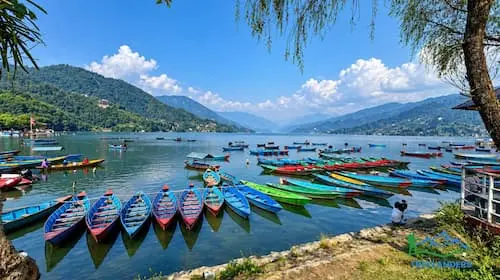

Morning after a good breakfast, a few hours of interesting drive leads beyond the Pokhara city and the valley outskirt. During drive enjoy views of Annapurna range of peaks with majestic Machhapuchare Himal the famous Fish Tail that dominates the Pokhara valley. The drive leads on Pokhara-Baglung, Beni highway reaching Kande village, situated on the roadside. From here walk begins with climb leaving the low warm farm land of paddy fields.
The uphill walk continues through several farm settlements and thin forest to a beautiful spot at Australian Camp, also called as Thulo Kharka. A wide grazing field with number of nice lodges, facing grand vista of Annapurna, Manaslu and Dhaulagiri peaks. After enjoying the views of Himalayan peaks, walk leads down on the main trail with short climb to Potana. A small nice settlement with many good lodges facing magnificent views of Machhapuchare Himal. At Potana having lunch, afternoon walk uphill into cool forested path to Pritam Deurali.
A small place, situated on a high ridge with few nice lodges, where our route diverts from this scenic hill top. Check into a lodge, rest of the afternoon marvel the surrounding beautiful dramatic landscapes of rolling hills with snow-capped peaks.

Morning with lovely views of Mt. Dhaulagiri above the ridges of Ghandruk village, today a short moderate walks to Forest Camp. After good breakfast, the walk heads north from the main trails of Dhampus and Landruk routes.
Leaving the lodge at Deurali, walk starts heading north following off the beaten trail, seldom trekked by few trekkers. The walk leads to short climb and on gradual winding path amidst dense woods. Then slowly the walk ends on reaching a small forest clearing at Forest Camp for overnight stop. Enjoy the afternoon with short walks facing views beautiful rolling hills and snow-clad peaks.

Another short day walk to Lower Camp, before reaching towards higher terrain the morning walk follows through lovely woodland. After few hours of exciting and pleasant trek with short uphill to reach Low Camp. Enjoy the overnight in the comfort of a nice simple lodge, after lunch free at leisure for rest or short hike.

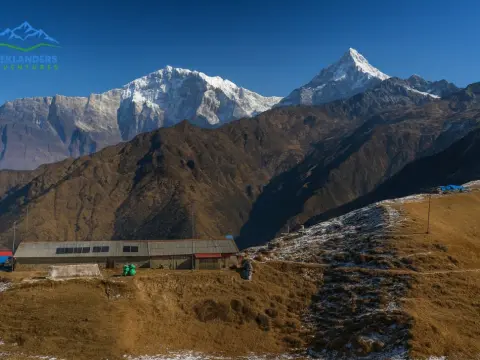
From Low Camp, the walk enters the higher ridges of Mardi Himal, as tree lines slowly fades for short alpine bush. The trek follows the high trail through a small settlement of Badal Danda camp. As trail leads to climb on dry and barren terrain reaching High Camp for lunch and overnight halt for two overnights.
Afternoon at leisure and relax around the high altitude areas, a good place for rest and acclimatization.

Leaving High Camp, after an early breakfast then setting off towards our main goal and highlights to Mardi Himal Base Camp. Follow our guide walking on high ridges reaching at a wide spot, where Mardi View Point located.
Having a refreshing break, continue walk further up on vague path, seldom used only by trekkers for Mardi Himal climb. After a tough strenuous walks of few hours reaching at the bottom of Mardi Himal and close to towering peaks of Machhapuchare Himal. Enjoying the surrounding spectacular panorama of snow-capped peaks, head back to High Camp for last overnight around Mardi Himal.

From High Camp a long descent to Badal Danda, means a misty place where most afternoon is filled with thick mist. The trail follow on the same route till the small settlement of Badal Camp is reached for overnight halt.

Today, one of the longest walks of the journey, leaving the Badal Camp on the downhill trail to Siding village. Walk follows through dense woodland crisscrossing on the winding path with more downhill. As walk continues to reach a nice farm village at Siding. Enjoy the last overnight around the foot-hills of Mardi and Annapurna Himalayas. Staying in the comfort of a nice simple country lodge before heading back to Pokhara.
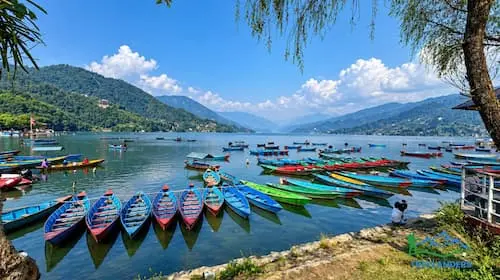
Having breakfast walk towards the motor stand on the road-head for drive to Pokhara. Board on vehicle for exciting drive back to beautiful Pokhara for lunch and overnight stop. Enjoy the afternoon exploring the lakeside facing grand views of Annapurna and Manaslu Himal range. Pokhara offers wide range of short Adventure Sports activities, like Para Gliding, Bungee Jumping, Zip Line and Ultra-Light flight etc.

Morning leaving the hotel in Pokhara, drive in a private vehicle or on regular Tourist Bus, as per size of a group. The scenic and interesting overland journey to Kathmandu on the same exciting highway. After hours of driving reaching back to your hotel in Kathmandu, rest of the day at leisure.

Enjoy an extra day in Kathmandu with individual activities or get into shopping spree. Interested people can join for another interesting tour of other cities of Kathmandu valley. Sightseeing around Patan / Lalitpur or the famous Bhaktapur city Durbar Square, worth a visit.

After an enjoyable and most mesmerizing time in Nepal, around the Himalayas on Mardi Himal Base Camp Trek. As time for departure, our staff transfer you to international airport for flight homeward bound or to next port of call.
We had an unforgettable 5D4N Mardi Himal trekking experience with our amazing guide Raj and our cheerful porters Ramesh and Anuraj, who kept our spirits high and even prepared fresh fruits for dinner. Although we were unlucky with the weather and only enjoyed a clear view on the last day at the viewpoint, the stunning scenery and their incredible support made it all worthwhile. Our adventure ended with a thrilling bumpy jeep ride, crossing rivers and even passing by a waterfall — a perfect wild finish to an incredible trip!. Can’t believe we can made it without train much, just climb 25 level of stairs case 1-2 times per week for 2-3 weeks and one time flat route for 8 hours.
Trekking to Mardi Himal Base Camp felt richer thanks to our guide Ram. He shared local stories, explained mountain names, and pointed out hidden viewpoints along the trail. The trek felt meaningful, not just scenic, but deeply connected to the land.

I started the Mardi Himal Base Camp trek with great happiness and excitement. Although the weather was not always in our favor, the places we visited were absolutely amazing. Forest trails, open ridges, and mountain viewpoints made every day special despite the conditions. The journey remained enjoyable and well managed. Thank you to Treklanders Adventures for organizing such a wonderful trek.

The Mardi Himal Base Camp trek with Treklanders Adventures became more than just a mountain journey; it turned into a meaningful personal experience. Each day offered moments of reflection, from peaceful forest walks to quiet viewpoints surrounded by vast landscapes. The trek gently pushed me beyond my comfort zone while remaining manageable and rewarding. Reaching the base camp brought a deep sense of satisfaction and calm. This journey strengthened my connection with nature and left me with lasting memories that I will always value.
From the beginning to the end, the Mardi Himal Base Camp trek with Treklanders Adventures was handled with professionalism and care. Communication was clear, arrangements were well organized, and each day followed a smooth and well-planned routine. The balance between guidance, comfort, and flexibility made the journey stress-free and enjoyable. The team’s experience in the Himalayas was evident throughout the trek. Overall, this was a well-managed and rewarding trekking experience that I would confidently recommend to anyone planning to explore Nepal’s mountains.

Purpose: Keep sweat off the skin and maintain warmth.
Purpose: Trap body heat in cold air at altitude.
Tip: Keep electronics in inner pockets at night to prevent freezing.
Age is no bar for this short moderate trek for a week duration, family with young kids and elderly people can join. But all needs to be physically fit and in sound health to cope with ups and downhill walks. Rest of the walks is normal spending overnights in a nice lodge with comprehensive food menu to enjoy.
For young infants, can hire extra porter to carry the kids if required, especially on ups and downhill.
Nearly all villages and lodges have electricity from Hydro or Solar power, where one can charge their electronic items. Where client needs to pay an extra fee for using the power as per gadgets charged. As for internet and cell phone communications, every lodges have the Wi-Fi and internet services, but can be quite disturbing sometimes due to weather and location wise.
From Potana onwards to Mardi Himal and High Camp, accommodation are simple and basic till the end of the trek at Siding village. All lodges en route are simple with basic rooms, having common bathe and toilets. But serves good foods as per the menu provided on every lodge restaurants in a nice large dining rooms.
The foods includes from Continental, Chinese, Indian, Tibetan to Nepali meals and refreshing hot drinks of choices.
The itinerary we have provided, allows much time for acclimatization, although a high altitude walk. Where steep climb involves for some days, but taking short rest and enjoying the surrounding views will overcome the toughness. As well enjoying the climb to reach Mardi Himal base camp. Overall it is a moderate adventure, taking slow and following the itinerary days we have set to make the trek enjoyable and most interesting for all trekkers.
Yes, certainly of course a short panoramic flight of 30 minutes to land at Pokhara domestic airport, and vice versa on the way back. But the flight airfare depends upon the cost as set on the itinerary days. If the flight is not included on trip cost, it will be at extra cost, where trekkers needs to inform the Trek Landers Adventure on early booking.
Definitely, the best times are the two nice weather periods, i.e. spring (March–May) and autumn (September–November). In these months, the sun shines almost every day, and temperatures are neither too warm nor too cold. As a result, the view of Annapurna, Machhapuchhre (Fishtail) and Hiunchuli is very clear and spectacular. Spring is the season when the forests of rhododendrons become bright and colorful while autumn is characterized by fresh air and very stable weather conditions. Of course, winter (December–February) is still an option but it can be really chilly, especially if you go above 3,500m. A monsoon (June–August) trek is not advisable because the trail is slippery, it rains a lot, and some parts will be full of leeches.
Usually, the Mardi Himal Trek takes about 5–7 days. The time it takes to do the trek depends on the nature of your route and your walking speed. There are some very fast-paced plans in which the trek can be finished in 4–5 days and more relaxed versions can take up to 7–8 days. Your walking speed, the need for acclimatization, weather conditions and whether you decide to add more views or village stays are the determinants of your duration of stay here. Longer itineraries give you more time to rest, better time for acclimatization and extra time to enjoy a sunrise at High Camp or Mardi View Point.
Yes, you need to have two permits: the ACAP (Annapurna Conservation Area Permit) and the TIMS (Trekkers Information Management System). These permits are not only necessary but also help support conservation and safety measures in trekking areas. ACAP for a foreigner is approximately NPR 3,000 and TIMS for an independent trekker is around NPR 2,000 while a guide plus a trekker combination will be NPR 1,000. You can get permits in Kathmandu (Tourism Board) or Pokhara before your trekking starts.
The Mardi Himal Base Camp (4,500m) is where the trek reaches its highest point. Most of the people refer to the Mardi Himal View Point when they talk about the trek as it is the nearest and the most stunning looks of Machhapuchhre (Fishtail), Annapurna South, and Hiunchuli can be seen from here. Due to the slow altitude gain, the occurrence of altitude sickness is less on this trek but still, trekkers must be very careful i.e. they should move slowly, drink plenty of water and not go up too fast to avoid AMS symptoms.
Certainly, tea house lodgings can be found all along the trail. These small hotels offer you basic rooms in which there are two beds, blankets are provided and the bathroom is for the common use of residents. The amenities get less and less as you go up. On these lower camps, you have nice and comfortable dining rooms whereas in the High Camp, due to the altitude, there are simple rooms only. What you eat is prepared fresh and the menu consists mainly of local dishes, soups, porridge, and tea. If you are coming during the peak season, then booking in advance or going with a guide will make your accommodation easy as room vacancies will be few in the lodges.
It is not a must that you have a guide but it would be nice if you did. A guide makes your trekking journey safer, and finding your way easier, and if there are language barriers, you can communicate with local tea-house owners through the guide. The route signs are clear but if there is fog or rain it is difficult to find your way. Besides that, guides can take care of the booking of hotels, give you information about the culture, and be there for you if an emergency situation arises. You can go trekking alone but it would be better if you had a guide especially if it is your first time and you want to have an overall better experience.
Tea houses provide a variety of foods, and you can choose either Nepali or international ones. Dal bhat (rice, lentil soup, vegetables, and pickles) is the most frequently served and balanced meal that you should take. On top of that, noodles, soup, pasta, momos (dumplings), fried rice, omelets, chapati, and veggies of the season will also be on offer. As for breakfast, one can eat porridge, pancakes, Tibetan bread, and eggs. Besides that, hot tea, ginger lemon honey, and coffee are also available almost everywhere. Your meals will be freshly cooked; however, menu choices will become limited at higher camps.
You are going to need clothing layer that can give you warmth, jackets that are waterproof, shoes that are appropriate for trekking, trousers for hiking, gloves, a cap, sunglasses, and a headlamp. Other must-have things are a water bottle that can be refilled, hiking or trekking poles, sunscreen, your medicine, a power bank, and toiletries. Be aware that the weather can change very quickly at a high altitude and that is why you have to bring layers with you. A small backpack (30–40L) would be enough for the things you need on a daily basis and if you have a heavy bag, a porter will be able to help you.
It is very good if one has travel insurance and more so if the insurance covers high-altitude trekking and emergency helicopter evacuation. Lack of medical facilities in the mountains means that having insurance will give you peace of mind in case you are suffering from altitude sickness and sudden illness or you get injured. Always make sure that your insurance policy allows you to go trekking at more than 4,000m as there are some companies that charge an additional fee for high-altitude coverage.
One could do without a guide but it would be a good idea to have him especially if you are a beginner. Guides, among other things, assist with navigation, safety, managing pace, and booking lodges, which makes the trek easier and more enjoyable.
Mardi Himal Trek is an adventure of a moderate level and can be done even by a first-time trekker with proper planning. The pathway leads you upward gradually through wooded areas, you walk along the ridge, and there are some steep parts near the High Camp. The increase in height is slow, which makes it less challenging than other treks in the high mountains. Trekking people of average fitness level, having some hiking experience, and good stamina will probably find the trek easy. Besides taking short breaks, drinking water, and walking at a comfortable pace, one can lessen the feeling of exhaustion.
Definitely, lots of novices make the Mardi Himal their first Himalayan trek. The paths are clearly marked, and the altitude increase is gradual. If you keep a steady pace and make short stops, the trek will be very comfortable and manageable for you.
Some of the most difficult parts will be steep sections of the trail and uneven portions, and the weather may also change suddenly. Higher altitudes often cause lack of energy, especially if you are above 3,500m. A few places may be slippery during monsoons or icy in winter. Good footwear and preparation will help you get through.
Walking for 5–6 hours is done on most of the days, but it can be more or less depending on the pace and itinerary. The longest, and the most demanding day is normally that of hiking from High Camp to Mardi Viewpoint or Base Camp that takes about 6–7 hours round-trip due to the altitude here is higher.
The highest point is Mardi Himal Base Camp lying at 4,500m. The popular viewpoint is at 4,200m. Even though the altitude is moderate, trekkers should still be careful and follow the slow ascent rule in order to avoid altitude sickness.
It is a good idea to go on Mardi Himal Trek in the spring (from March to May) or in the fall (from September to November). In those two periods, the weather is more or less stable, there are less clouds, and the visibility is very good which makes it safe and enjoyable to trek. The temperature is not too hot or too cold and mountain peaks look very clear and attractive.
Spring offers the trekker the sight of colorful rhododendron forests, blossoming flowers, as well as comfortable temperatures. Days are usually warm, and mornings often bring good visibility of Machhapuchhre (Fishtail), Annapurna South, and Hiunchuli. This time of the year is perfect for taking pictures and is also very attractive to nature lovers.
The autumn time is characterized by the clearest and most unobstructed views of the mountains. After the monsoon, the weather stays fairly stable which makes hiking less strenuous. With cool daytime temperatures and very little rain, autumn gives you the desired conditions for sunrise, ridge walks, and panoramic views.
Trekking is allowed in winter (December–February), however, it is very cold—especially at altitudes over 3,500m. Snow may fall and it can get very cold at night. The good thing, though, is that the routes are less crowded and the mountain views after a fresh snowfall can be great. You should take warm clothes and the right equipment with you.
Yes, it can be done but the monsoon (June–August) period is not the most favorable for trekking. Continuous heavy rain, slippery trails, fog and leeches are some of the reasons that cause hiking in the area less pleasant and more dangerous. The mountain views are not very stable and landslides may block the way at some points. In case you decide to trek during this period, wearing waterproof clothes and being able to change your plans are two of the most important things.
Quite clear and most of the time very bright mountain views are made in autumn and to a slightly lesser extent in the spring as well. Both seasons give good opportunities for photographing sunrise viewpoints as these are also the times when the Himalayan panorama is out to be enjoyed in the best way possible.
The trek to Mardi Himal is mostly moderate and thus can be a good adventure for a relatively fit beginner. The trail features a variety of sceneries like wooded areas, gentle climbs, and steep slopes near High Camp. Though you do not need any technical skills of climbing, you should be capable of walking for 5–7 hours daily.
Daily jogging or walking for 30–45 minutes over 2–3 weeks leading to the trek will be of great help in building stamina. Also, by doing light exercises, stretching, and practicing uphill walking, your endurance level will be raised. Moreover, if you stay hydrated, eat proper meals and take rest during the trek, it will be less difficult.
Prepare for the trek by starting some light training around 2 to 3 weeks prior to the trek. To build up your stamina you can do any of these activities: walking, jogging, hiking, and going up the stairs. When you are practicing an uphill walk you are not only strengthening your legs but also increasing your stamina. It is better to work on your slow and steady pace rather than to be fast.
You should bring warm clothes that suit layering, i.e. a base layer, fleece jacket, and waterproof outer jacket. Trekking pants, warm hat, gloves, and thermals are some of the things you can wear during a cold night. The reason for layering is that the temperature change is quite rapid.
The most necessary things are a good pair of trekking boots, a nice-fitting backpack (30–40L), trekking poles, sunglasses, a headlamp, and a water bottle that can be used again. Along with these, you can also carry a power bank, sunscreen, your personal medication, and a rain cover for your bag.
While getting a blanket from a teahouse is OK, it is better to carry your own sleeping bag (rated -5°C to -10°C) to be warm and for hygienic reasons, especially if you are going to stay at a height that is cold at night.
The maximum weight that should be allowed in your daypack is only 6 to 8 kilograms. You should pack light and only include the most necessary items. In case you employ a porter, his load can be as heavy as 20–25 kg, thus, you can comfortably trek with a lighter pack.
On the Mardi Himal Trek, you will mostly find teahouses and small lodges for accommodation. These are modest, family-run establishments that provide simple rooms, food, and a warm welcome. Typically, the rooms have two beds, blankets, and the bathroom is common for all.
The rooms are hygienic and comfortable though they are very basic. The lodges at the lower levels of the trek provide more comfortable beds and warmer rooms, while those at the higher levels are simple. The rooms, in general, are not heated but the dining areas usually have a stove for warmth.
You can have a hot shower in almost all the lodges at the base or the middle stations, but usually, one has to pay for it. For the higher places, hot water is a luxury and sometimes there is none due to extreme cold and the problem of water supply. It is good to check with the lodge on arrival.
Indeed, teahouses offer freshly prepared meal choices such as Nepali, Tibetan, and Western dishes. Common meals are dal bhat, noodles, fried rice, soups, potatoes, and omelets. Breakfast is generally porridge, pancakes, eggs, and tea or coffee.
Accommodation options you can find in Mardi Himal during spring and autumn when the weather is good for trekking are crowded and so are the teahouses. You can be sure to find a room if you book in advance or trekking with a guide especially at High Camp where it is hard to get there.
Private twin rooms can be found at the lower levels, but as you climb higher the rooms become smaller and more basic. If it’s a busy season and there are no vacancies, then you might be offered a shared room.
Wi-Fi can be accessed in some teahouses where it is not very fast and a small amount must be paid for it. The connection becomes weaker due to weather and limited infrastructure as you climb higher.
Most teahouses have the facilities for charging your gadgets but it is usually for a small fee that you pay. Charging can be done only in the dining area due to the limited power supply at higher places.
Teahouses serve a variety of freshly cooked meals. The most common and healthy choice is Dal Bhat (rice, lentil soup, and vegetables) that provides energy for a longer period. Besides that, you can also order noodles, soups, fried rice, pasta, potatoes, momos, omelets, chapate, and seasonal vegetables.
Indeed food is cooked fresh and generally, it is safe for trekkers. However, it is advisable to consume only hot foods and refrain from eating raw salads at a higher altitude because of water quality issues. By sticking to simple foods, you also help prevent stomach problems.
Without a doubt vegetarian meals are easily accessible all along the trek. Dal Bhat, vegetarian noodles, veg fried rice, soups, and potatoes are usually served as vegetarian dishes. Vegan food can be served, but it is limited at a higher elevation, so it is better to explain your food preferences.
Breakfast generally consists of porridge, pancakes, Tibetan bread, chapati, eggs, toast, and tea or coffee. These foods are hot, nutritious, and suitable for starting a trekking day full of energy.
Indeed tea houses have snacks like biscuits, chocolates, energy bars, and chips on sale. Making a choice from the warm drinks list, one can have tea, coffee, ginger lemon honey, or hot chocolate. The prices go up as you move higher because of the difficulties in transportation.
You should not be drinking from the tap water unless it has undergone treatment. Free water can be obtained from local sources after which one must use water purification tablets or filters to turn it potable. At high altitude, it is very important to keep your body hydrated.
Some teahouses may serve chicken dishes while it is advisable to be cautious. The meat comes from the lower areas and might not always be fresh. For health reasons, most trekkers choose to consume only vegetarian meals.
Certainly bringing some extra snacks such as nuts, chocolates, and energy bars is great especially during long trekking days. These foods can provide you with a quick burst of energy whenever you are in need.
Mardi Himal trail has mobile network coverage for most of the parts of the trail which are at the lower altitudes. NTC signal as well as Ncell work till you go quite far up; however, the signal becomes weaker as you climb higher. It is possible that you may experience brief coverage or no coverage at all around High Camp and Mardi Viewpoint.
Yes, some tea houses along the trail provide internet. Lodges usually provide Wi-Fi for a nominal fee. The speed is average and it can be slow during bad weather or if you are at a high altitude. It is perfect for sending text messages but not for large data-consuming activities.
Wi-Fi is not free in most tea houses. A small fee is charged per device or per password. The price may get higher the more you go up because there will be less electricity and access to the network.
Yes, you can do it in lodges or tea houses. Nevertheless, charging points may be few in the rooms. Most lodges only allow charging in the dining area for a small fee. A power bank can come in handy.
Yes, a local SIM is very convenient if you already have a NTC or Ncell SIM card before you start your trek. A local SIM gives better connectivity and cheaper data rates. Make sure you have enough data on your pack before you start.
The use of satellite communication is not required on the Mardi Himal Trek, but a few guides might have a satellite phone with them to be used in case of emergency. If you are going on a solo trek, then a local SIM and a power bank will be enough.
Not completely. Signal strength will be good in lower areas but may be weak or absent in higher areas. It would be wise to let your family members know that communication will be limited during your trekking days.
A guide is not mandatory, but having one makes the trek much safer and more organized. For first-time trekkers, a guide provides support, manages daily routines, and ensures you stay on the correct trail, especially in areas with changing weather.
A trekking guide assists with navigation, secures accommodation, checks trail conditions, and adjusts the pace based on your fitness. They also monitor your health, especially for altitude-related symptoms, and help in emergencies. Guides also share local culture, traditions, and mountain knowledge, making the journey more meaningful.
The Mardi Himal trail is generally well-marked, but certain sections—especially near Forest Camp, Badal Danda, and High Camp—can become confusing in fog, rain, or snow. A guide helps you stay on the right track, reducing stress and ensuring a smoother trek.
Yes, guides can handle all necessary permits such as ACAP and TIMS. They know the process well and complete it quickly, saving you time and avoiding paperwork mistakes.
Yes, most guides speak good English and are trained in customer service. They communicate clearly, guide responsibly, and help you understand local culture, mountain names, and traditions along the trail.
Yes, you can hire a porter to carry your luggage. Porters usually carry up to 20–25 kg. For budget travelers, hiring a guide-cum-porter is a great option as they can both guide and carry lighter loads.
Absolutely, Guides are trained in first aid, altitude awareness, and emergency response. They keep track of weather updates, your health condition, and trail conditions, making the trek safer and more enjoyable.
You need two permits:
These permits are compulsory for all trekkers entering the Annapurna region. They help support conservation, maintain trails, and ensure trekking records for safety.
Permits can be obtained at:
Both places have an easy application process. You need your passport, passport-size photographs, and basic trekking information such as your itinerary and contact details.
The approximate cost is:
Prices may change depending on updated regulations.
Permits help fund conservation projects, protect the natural environment, and maintain trekking routes. They also help authorities track trekkers, which improves safety and rescue operations in case of emergencies.
Yes, professional guides and trekking agencies can arrange all required permits on your behalf. This is very convenient and saves time because they know exactly where to go and how to complete the process.
Yes, you must carry both permits throughout the trek. There are checkpoints along the route where officials verify your documents. Keep your permits in a safe and dry place, such as a zip-lock bag or secure pocket.
Yes, there are ACAP and TIMS checkpoints at different points of the trail. Officers may check your permits, record details, and verify your route for safety monitoring.
Yes, permits can be issued on the same day, as the process is fast. However, it’s best to obtain them a day early to avoid delays, especially during peak trekking seasons.
The Mardi Himal Trek should be safe for basic-fit people and those who have made proper preparations. The trail can be considered safe and is in good condition so long as weather and altitude factor in accordingly. Besides that, the only things that can be hazardous to your safety are the weather condition to which the trail is exposed and your altitude acclimatization. We could not emphasize enough that seeking a pace that is comfortable for you and following your intuition would be the safest way to assure your security.
To start with, the main problems to be cautious of are becoming sick owing to lack of oxygen, dehydration, lack of energy, and extreme cold experienced during the night in the high mountains. In addition, the weather is very unstable and for that reason, the trail may be dangerous due to ice and snow. There are various ways to stay safe as well as healthy and those are drinking plenty of water, eating well and dressing in layers.
It is indeed possible. On the other hand, the progressive and gentle ascent of the Mardi Himal trail will help to lessen the risk of this incidence. It is suggested to trekking slowly, taking good care of one's hydration and not drinking alcohol if people would like to avoid such unpleasant syndromes. When such signs become intensified a descent to a lower altitude is of utmost importance.
Stick fast to the steps of others already safe and sound, use also your brain to keep you safe. Do it by walking steadily, taking a drip of water every now and then, and not forgetting to rest. Make sure that your climbing shoes are fitted tightly and nicely. To make the matter even safer you can also use your sticks while walking. Besides, one always has to be aware of the fact that the sun is still there even in the coldest of days. What is more, wearing layers of clothes will always make the temperature easier to tackle. Furthermore, letting others know about your feeling through your guide or lodge can be of great help.
Sure thing, nevertheless, it is more prudent to undertake such an adventure with the help of a guide. Guides offer help with choosing the best routes, providing support in case of emergencies, and contact if you don't speak the local language. Also, making sure that your phone is fully charged, you have a power bank and a local SIM card will give you safety and peace of mind when going alone.
The very first and most important action that you will need to take is to inform your guide or a teahouse staff member that you are nearby, of course, of the situation. Taking the role of communicator, first aider, and finally, facilitating the departure, the local guide or teahouse staff is who you will be counting on in tough times. Trying to keep your cool and responding to the situation quickly are the most important things during a emergency.
Not only travel insurance, but the one that covers trekking up to 4500m and the cost of the helicopter emergency rescue is the most suitable and should be purchased by the traveler before starting the trip. The main goal of such insurance would be to give the traveler a relaxation moment in the event that bad things happen it leads to panic. Just be aware of the fact that this will only give you assurance, not make you immune to any accidents.
If we are to talk about the local medical care, then it would be fair to say that health services are almost non-existent and only a few limited medical shops found in the lower villages may provide basic medicine for the common ailments. Higher altitudes are less developed and there are teahouses but no medical resource es. Due to such situations, only the serious cases that are evacuated to Pokhara or Kathmandu may afford the health care they need and this is why having an insurance plan is advisable.
Besides the typical bus, local buses, or private cars, you can also fly to Pokhara from Kathmandu. A flight takes approximately 25 minutes and is, therefore, the most time-efficient way to get there. Tourist buses are a great alternative to flights if you are looking for both comfort and a good price. Alongside the ticket and booking services, Treklanders Adventures will ensure that you have a hassle-free journey with the means you choose.
It is very common that the Mardi Himal Trek route starts at Kande, which is roughly 1-1.5 hours away from Pokhara by car. Local buses, taxis, or private jeeps will safely get you to your destination. Besides the various transportation options, you can also pick the most comfortable and fastest way with Treklanders. For an extra comfortable, hassle-free experience they will arrange for you to be directly picked up from your hotel in Pokhara.
Indeed, taxis, jeeps, and private cars are quickly attainable. If you cooperate with Treklanders, you will surely get the opportunity to reserve a private vehicle that is comfortable and safe along with an experienced driver. Apart from the flexibility of departure hours, a relaxed drive to the starting point of the trek is thus guaranteed.
Definitely, local buses are accessible from Pokhara to Kande or neighboring villages. They are ideal for those on a tight budget; however, they are slower and more cramped. In case you select comfort and trustworthiness, then Treklanders will be happy to organize excellent-condition tourist vehicles or jeeps for your party.
Mostly, the Mardi Himal Trek route ends at Sidhing or Potana. Thus, with a jeep or local vehicle, you can easily return to Pokhara. Treklanders Adventures is always there reminding you that they will take care of the pickup arrangements in advance so that you can have your ride waiting for you at the end of the trek.
| No of people | Price per person |
|---|---|
| 1 - 1 | $2,060 |
| 2 - 3 | $1,635 |
| 4 - 8 | $1,515 |
| 9 - 30 | $1,405 |
| No of people | Price per person |
|---|---|
| 1 - 1 | $1,475 |
| 2 - 3 | $1,050 |
| 4 - 8 | $955 |
| 9 - 30 | $845 |
| No of people | Price per person |
|---|---|
| 1 - 1 | $1,485 |
| 2 - 3 | $1,105 |
| 4 - 8 | $965 |
| 9 - 30 | $855 |