Annapurna Base Camp Trek is an adventure that takes you to the heart of the massif Annapurna Himalaya range of giant peaks. One of the shortest and most scenic, cultural walks around the whole Himalayas for above 8,000 m peaks base camp.
Mt. Annapurna-I, 8, 091 m /26,545 feet high, is listed as the world’s tenth tallest peak in the globe. Mt. Annapurna-I is also the first above 8,000 m peaks ever summited in the history of mountaineering by French Expeditions.
Climbed by the late legendary M. Herzog on June 3rd, 1950. Three years ahead Mt. Everest was conquered by Tenzing & Hillary in 1953. This makes Annapurna Base Camp an interesting and special than any other adventure around the Himalayas.
The amazing facts about Annapurna Base Camp, a trek of a short distance of little over a week duration. The walk leads from low-warm paddy fields reaching cooler alpine hills and ending at the arctic zone of ice and glaciers. A great dramatic change in landscapes and climate just within a few days of walking. This makes the Annapurna Base Camp trek so special and a unique adventure.
Annapurna base camp is located amidst a beautiful Sanctuary enclosed by amphitheaters of giant snow-capped peaks. The only base camp around the whole Himalayas, having the facilities of a nice and cozy lodge.
An adventure for nearly all seasons of the year-round, where all types of trekkers can join in. From a family with young kids to elderly people of all age groups, the elevation gains at a gradual pace. The safest high-altitude adventure, without the hassle and problem of catching AMS (Acute Mountain Sickness) or altitude sickness.
The Annapurna Base Camp Trek starts and ends at scenic Pokhara a city blessed with charm and beauty. Located on a verdant valley surrounded by green hills and snow peaks of the Annapurna Himalayas with serene calm lakes.
From Pokhara, a short drive to the foothills, where the climb takes you to high green hills around mountain villages. Overlooking ever-present views of Annapurna Himalayas with majestic Machhapuchare Himal, the famous Fish-Tail peak.
Walk leads to beautiful Kimrong valley and up towards the last village of Chomrong, the gateway to Annapurna base camp. Leaving Chomrong with ups and down to enter the deep Modi River gorge at Bamboo and Dovan.
The trail follows the Modi River upstream right up to its glacial source at Annapurna base camp. After walking through a dense green forest of rhododendron, oaks, and pines reaching the picturesque Annapurna Sanctuary.
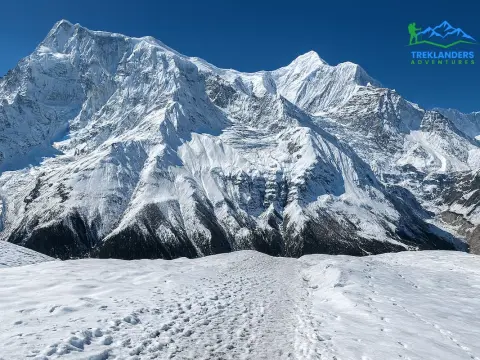
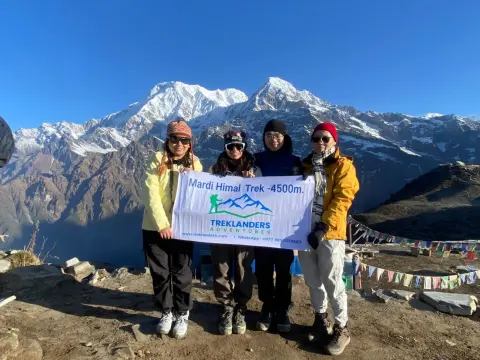
Annapurna base camp, located at the western rim of the sanctuary, is enclosed by an array of Annapurna Himalayas peaks. A dramatic place within remorseless fields of ice and glaciers surrounded by giant mountains. Enjoying the spectacular panorama of the Annapurna Himalaya range in the comfort of a nice lodge, with a room facing grand mountain scenery.
Return journey on the same scenic and exciting route to Chomrong village, and then our walk diverts downhill to Jhinu. For the last overnight halt at Jhinu, the village with a natural hot-spring to enjoy a refreshing dip and a warm bath.
From Jhinu village, after an enjoyable moment around the high hills of Annapurna, an interesting drive brings you to Pokhara. A perfect place to end our fabulous adventure on Annapurna Base Camp Trekking with the grand services of Treklanders Adventures.
Trip Summary:
Mode of Trek: Best available lodge / guest house on treks.
Trekking Grade: Moderate to Adventurous.
Trekking Region: Around Annapurna Himalayan range of Kaski district.
Start and End of trek: From Pokhara to Pokhara with drives both ways.
Highest elevation: At Annapurna Base Camp 4,130 m / 13, 550 feet high.
Trek duration: 07 Nights and 08 Days from Pokhara to Pokhara.
Total Trip: 13 Nights and 14 Days, from arrival to departures.
Best Seasons for Annapurna Base Camp:
The best season for Annapurna Base Camp Trek is spring from March to May. Including autumn/fall begins from September to November, as Annapurna Base Camp is a short moderate, adventurous trek. Interested people can visit all year round, except for the summer/monsoon time of mid-June to August.
Springtime is bright and beautiful, most days are clear with sunny days, can be cloudy afternoons. Bringing cold chill in the late afternoon, and night till morning this is the time when wildflowers are in seasonal bloom.
The next best season is autumn/fall, where days are clear with sunny days for views and walks. But shorter days due to limited sunlight hours, cold morning and night time can expect snowfall sometimes. Winter from December to February with clear sunny days, but cold mornings, late afternoons, and night time with freezing temperatures. But an enjoyable day for pleasant walks with clear views of the beautiful snow mountain range.
Culture & Religion:
The southern hills and valleys around the Annapurna region are populated by the famous Gurung. The most menfolk are recruited as Gorkha soldiers, renowned for their bravery and courage, all over the world.
The Gurung people interwoven with the teaching of Buddhism follow an impressive heritage and culture similar to its predecessors the Tibetans. In most villages adorned with prayer flags and shrines, the Gurung also follows the ancient practice of Bon. A pre-Buddhism, worship of spirits and nature with shamanism, as the healers or medicine men.
Traditionally Gurung is farmers and cattle herder, raising and breeding livestock, the Gurung has their own typical cultures besides Buddhism. The main villages en route are Ghandruk and Chomrong. Where one can witness and explore the local interesting cultures and customs of the Gurung people.
Please Note:
For interested people having time in Nepal for the trek can extend the Annapurna base camp trek, with Ghorepani-Poon hill trek also. Taking a few days more to combine Ghorepani-Poon Hill with Annapurna base camp. Which joins at Chomrong village and then to ABC following the same itinerary as below.


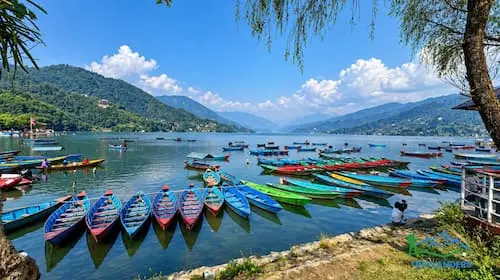

Morning after a good breakfast, a few hours interesting drive leads beyond the Pokhara city and the valley outskirt. During drive enjoy views of Annapurna range of peaks with majestic Machhapuchare Himal the famous Fish Tail. Which dominates the Pokhara valley. The drive leads on Pokhara-Baglung, Beni highway reaching Nayapul town, and then following the Modi River past nice Bhirethati village, the end the drive at a small farm village of Syali. From here walk begins with climb leaving the low warm farm land of paddy fields. The uphill walk continues through several farm settlements to Kimche village, and then a slow climb up to a large village of Ghandruk. A place on top of a hill facing views of Annapurna Himalayas, and surrounding lovely country landscapes.
At Ghandruk check into a nice mountain lodge, with time to explore the Gurung village, the main hill tribes of southern Annapurna region.


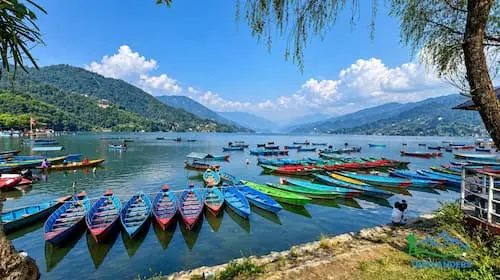


Farewell Dinner in Kathmandu
I had the pleasure of embarking on an unforgettable journey with Treklanders in Nepal. The entire experience was simply remarkable! The team exhibited exceptional professionalism and an extensive knowledge of the terrain, ensuring that every detail was meticulously handled. Our accommodations were cozy, and the cuisine was truly delectable. The trekking routes offered awe-inspiring vistas of Nepal's breathtaking landscapes. Notably, the company's dedication to sustainability and responsible tourism was truly praiseworthy. I wholeheartedly recommend Treklanders for an extraordinary adventure in Nepal! One particular highlight that stood out was our visit to the Annapurna Base Camp, an absolutely amazing and unforgettable experience 😊.
My Annapurna Base Camp (ABC) trek with Treklanders Adventures deserves a perfect rating, especially because of our guide Raj From the first day, he demonstrated strong knowledge of the route, culture, and local communities. Walking through villages, forests, and river valleys, Raj explained the significance of places, traditions, and mountain life, making the journey informative and engaging. The teahouse network along the ABC trail was comfortable and well organized. Every day felt balanced between walking, rest, and enjoyment. Standing at Annapurna Base Camp, surrounded by massive peaks, was unforgettable.
The Annapurna Base Camp (ABC) trek was my first multi-day trek, and I was nervous at the beginning. Treklanders Adventures made the entire experience easy and stress-free. The guide explained daily plans clearly, checked on us regularly, and ensured proper acclimatization. Walking through rhododendron forests, mountain villages, and river valleys was magical. The teahouses along the ABC route were comfortable and welcoming. Every detail, from meals to accommodation, was well managed. By the time I reached Annapurna Base Camp, I felt confident and proud. This trek gave me a new love for trekking.
We did the Annapurna Base Camp (ABC) trek as a family, and it turned out to be one of our most memorable trips together. Treklanders Adventures planned everything carefully, keeping our family’s comfort and safety in mind. The guide adjusted the pace perfectly, especially for the older and younger members. The ABC route was scenic and enjoyable, with warm teahouses and delicious meals along the way. The guide shared stories about local culture, villages, and mountains, which made the trek educational as well as fun. Our family felt well cared for every day. Reaching ABC together was a proud and joyful moment for all of us
Purpose: Keep sweat off the skin and maintain warmth.
Purpose: Trap body heat in cold air at altitude.
Tip: Keep electronics in inner pockets at night to prevent freezing.
Age is no bar for this short moderate trek for a week duration, family with young kids and elderly people can join. But all needs to be physically fit and in sound health to cope with ups and downhill walks. Rest of the walks is normal spending overnights in a nice lodge with comprehensive food menu to enjoy.
For young infants, can hire extra porter to carry the kids if required, especially on ups and downhill.
Nearly all villages and lodges have electricity from Hydro or Solar power, where one can charge their electronic items. Where client needs to pay an extra fee for using the power as per gadgets charged. As for internet and cell phone communications, every lodges have the Wi-Fi and internet services, but can be quite disturbing sometimes due to weather and location wise.
From Pokhara onwards to ABC one can enjoy the comfort of nice lodges and guest house. As well with warm traditional hospitality in every overnight stops, people can choose from budget, standard lodges. But from Chomrong onwards to ABC the lodges are simple with basic rooms having common bathe and toilets.
But serving good foods as per the menu provided on every lodge restaurants in a nice large dining rooms.
The foods includes from Continental, Chinese, Indian, Tibetan and Nepali foods, as well Mexican, Italian, Korean or Japanese in some lodge restaurants. Includes fresh bakery products also.
From Pokhara aerial distance of 37 k.m. / 23 miles, but walking after the drive covering maximum of 15 k.m. and minimum of 4-6 k.m.
The total walking distance is approx. 75 k.m. or 47 miles, the longest hours of walks is from Chomrong to Dovan and back to Bamboo, from Annapurna Base Camp. Rest of the walk average of 4-6 hours, depends upon one physical fitness also.
Yes, certainly of course a short panoramic flight of 30 minutes to land at Pokhara domestic airport, and vice versa on the way back. But the flight airfare depends upon the cost as set on the itinerary days. If the flight is not included on trip cost, it will be at extra cost, where trekkers needs to inform the Trek Landers Adventure on early booking.
Annapurna Base Camp Trek is one of the most popular trekking routes in Nepal which leads you to the foot of Mount Annapurna (8,091 m). The trek provides the incredible views of the mountain, the varied nature of the landscape, and the local culture of the Annapurna Conservation Area.
The Annapurna Base Camp Trek is undoubtedly one of the visually stunning and satisfying experiences in Nepal. It combines the untainted nature with the vibrant local culture. The trekker can see the broad view of the peaks such as Annapurna I, Machhapuchhre (Fishtail), and Hiunchuli, to guava trees, and terrace farming from the rhododendron forest. Besides, the trek passes through the Gurung and Magar villages, where one can get the real mountain life. Moreover, you can see diverse nature from the sub-tropical valley to snow-clad alpine areas.
Still, you may want to go to Annapurna Base Camp for its easy access and become comfort of the route. The trail is of moderate level of difficulty and is suitable for a newbie as well as an experienced trekker. There are good tea houses along the way to get your accommodation, friendly people to mingle with, and to top it all off, natural hot springs at Jhinu Danda. The moment of exultation at the very base of the world's 10th highest mountain where the view is spectacular in all directions is really out of this world - thus holding the title of one of the most rewarding treks in Nepal.
Annapurna Base Camp Trek normally takes 7 to 12 days to be finished depending on what path, speed, and plans you take. Generally, the standard trek starts from the Pokhara area and goes through the villages of Ghandruk, Chhomrong, Deurali, and at last, Annapurna Base Camp (4,130 m) is reached. A shorter itinerary (7–8 days) is only suitable for the trekkers who are very experienced and have limited time, whereas a longer (10–12 days) provides an opportunity to get used to the altitude, have some rest days as well as side trips such as Poon Hill for the sunrise view.
The trek is not very long, but the total time can depend on the fitness level, condition of the trail, and weather. Some trekkers choose to extend one or two days in between Kathmandu-Pokhara for sightseeing or relaxation and hot spring bathing in Jhinu Danda after the trek. Therefore, if you want to have a nice and pleasant experience, it is better to have a 10-day plan for the whole Annapurna Base Camp trek.
Start by selecting a company that is registered with the Nepal Tourism Board (NTB) and a member of the Trekking Agencies' Association of Nepal (TAAN) to locate a reputable trekking agency for the Annapurna Base Camp Trek. Make sure that their website is open about the prices, that the company has valid licenses, and that there are good reviews from the clients on reliable platforms such as Trip Advisor or Google Reviews. The correct agencies will offer you a guide who is experienced and licensed by the government, insurance for their staff, and they will tell you exactly what is included in the trip such as permits, accommodation, meals, and transportation.
Moreover, you can get recommendations from people who have already done the trek and travel forums to be sure of the agency's and guide's credibility. A reliable guide should be able to communicate in English without any problem, should know the local culture and routes, and have a good safety record. Don't go for the cheapest option — instead, put your money into agencies that are concerned about your safety, give good wages to porters, and trekking in an environmentally friendly way. In this way, you are assured of a safe, real, and nicely planned trekking experience in Annapurna.
The majority of trekking agencies in Nepal provide a variety of payment options for the Annapurna Base Camp (ABC) Trek that are suitable for different kinds of customers. In general, there are card payments done online (Visa, MasterCard), bank or wire transfers (SWIFT) to a Nepal-based account, and cash payments on the spot in Kathmandu. Also, a few agencies might be willing to accept payments made through PayPal or locally via an e-wallet like eSewa to make transactions faster and comfortable. In case of credit card payments, a certain percentage of the amount (approximately 3–5%) may be charged as a transaction fee, and in the case of bank transfers, additional fees may be levied if your bank has a certain policy.
Trekkers are normally instructed to pay a deposit of one-fifth to one-half of the total trip cost when making a reservation and that will be the guarantee of their place while the remaining amount is to be paid during the arrival before the trek starts. Agency terms and conditions, especially those concerning refund policies and payment deadlines, are very important, hence one needs to be thoroughly familiar with them. In the event that you have already set off on the trek, you will not be able to make electronic payments, therefore, it is necessary to have enough local cash (Nepalese Rupees) for meals, Wi-Fi, charging, and tips.
Go to Treklanders ABC trekking booking page, where they have listed the package options and prices. you can book directly through our website. You should complete the booking form with your information: country, number of travellers, preferred departure date, email, and phone number.
Decide on your payment method — you can pay the full amount at once or just give a deposit to secure your booking. The agency will confirm your booking after the submission and give you details about your guide, itinerary, services included, and permit arrangements.
In case you need help or want to talk to them, you may WhatsApp or Viber them at the number they’ve given.
It is indeed a good idea to have a licensed guide during your Annapurna Base Camp (ABC) trek. According to the new trekking regulations in Nepal, it is now compulsory to have a guide.
Here are the reasons:
The best time to trek to Annapurna Base Camp (ABC) is in the spring (March–May) and autumn (September–November) seasons.
Spring (March–May): During this time of year the temperatures are neither too hot nor too cold, the sky is usually very clear, and rhododendron forests are blooming. The colorful and beautiful nature makes it perfect for taking photos and enjoying the trek.
Autumn (September–November): The most popular trekking season is definitely autumn when the weather is very stable, the air is fresh and you can see long-range mountain views of unsurpassed beauty. The sky is mostly clear, so you can see the peaks of Annapurna, Machhapuchhre, and the surrounding range very well.
The Annapurna Base Camp (ABC) Trek altitude range varies along the route, with the starting point in lowland villages at about 1,000–1,200 meters (3,280–3,940 ft) near Pokhara. From there, the ascent is gradual through terraced fields, forests, and small villages in the high mountains. The average altitude of the trek is approximately 2,000–3,000 meters (6,560–9,840 ft) as most villages and rest houses are located in this altitude range.
The highest point of the trek is Annapurna Base Camp at 4,130 meters (13,550 ft) and the lowest point is around Phedi or Nayapul at 1,070–1,100 meters (3,510–3,610 ft). If you are going to be hiking at these altitudes, you will need to get used to the altitude gradually, especially when you are near the base camp, in order to reduce the risk of altitude sickness.
Yes, ABC trek is a moderate level and you don't necessarily have to have prior trekking experience to be able to complete it. The paths are clearly marked, and tea houses or guesthouses can be found along the way, so the trek is open to those who are physically fit but have no trekking experience.
Nevertheless, a little preparation wouldn't hurt:
Engage in some jogging, hiking, or stair climbing to develop your stamina.
Work on your leg and core strength to be able to cope with steep slopes and descents.
Go on practice hikes with your backpack to acclimatize yourself to carrying weight for several hours.
Absolutely! The Annapurna Base Camp (ABC) Trek is very much doable by a first-time trekker. It is a moderately difficult trek and the routes are easy to follow. There are tea houses for lodging almost everywhere along the trail and you can always take a break at any point of time. Motor skills in climbing and experience in altitude trekking are not necessary.
Physical training required before Annapurna Base Camp (ABC) Trek
Instead of a trek, what you really need is a proper physical training. This should be started 3-4 months prior to the day of your trek in Annapurna Base Camp. Get out and run on hills. Go for a hike while carrying a weighted backpack. Climb stairs while simulating a higher altitude with your breathing.
Strengthen your legs and improve your cardiovascular fitness. A first-time trekker who is well-prepared will be able to perform better than a seasoned trekker who is not.
Make your training a regular part of your life and don’t miss your sessions. Follow acclimatization steps carefully. Monitor your health and condition and adjust accordingly. Drink plenty of water. Consume adequate amounts of food. These elements are of much bigger importance than being experienced in trekking.
You should begin your preparations four months prior to your ABC trek. Your goal should be to work on stamina, strength, and endurance.
Cardio Training:
Leg Strength:
Altitude Simulation Training:
Core Work:
Backpack Training:
Sample Weekly Training Plan:
2. Recovery and Nutrition
3. Pre-Trek Health Check
Proper Acclimatization is the ABC (Annapurna Base Camp) trek is the main thing that makes it a safe and enjoyable trek. It is a process that gradually the body adjusts to the altitude and oxygen decreases in the air. If acclimatization is not properly done, altitude sickness is highly likely to occur, with symptoms such as headaches, nausea, vomiting, dizziness, and weakness. If the condition is serious, it can lead to HAPE (High Altitude Pulmonary Edema) or HACE (High Altitude Cerebral Edema), which are potentially fatal.
Moreover, during the trekking, the body adapts if an extra day is spent at these places: Chhomrong, Dovan, or Deurali. This strategy slows down the climbing, increases oxygen intake, and lessens tiredness. Acclimatization also enables trekkers to delight in the views and indulge in the trek rather than fret over being worn out or sick. To summarize, it is the very factor that ensures a safe, successful, and memorable ABC experience.
The ABC trek is definitely a challenging one, but it gets tougher with every kilometer you ascend. The air gets thinner and contains less oxygen, making it hard for your body to adjust to such changes; thus, it will breathe faster, its beat will quicken, and it will become tired and weak. Also, there might be some headaches, dizziness, and nausea or vomiting. These are the symptoms of mild altitude sickness that may occur in any person going above 2,500–3,000 meters and at higher elevations, physical performance can drop even more. In case of very severe situations, this might progress to HAPE (fluid in the lungs) or HACE (brain swelling) -the two conditions that can lead to death. The rule of thumb dictates that the risk of accidents should be reduced to minimum when ascending, acclimatizing, hydrating, and being cautious are some of measures one takes while trekking.
Symptoms of Altitude Sickness You Will Pretend Not to See:
On the Annapurna Base Camp trek, acclimatization typically requires 1–2 days at intermediate altitudes (approximately 2,500–3,500 meters) for the body to get used to the lower oxygen level. Trekkers usually take an additional night in the villages such as Chhomrong, Dovan, or Deurali before going up higher, which not only makes the trek safer by reducing the risk of altitude sickness but also more comfortable.
Acclimatization Factors You Are Not Able to Control
While age, fitness, and experience at altitude may seem like factors that would help you get used to the altitude, they do not necessarily work that way. There are 65-year-olds who acclimatize without any problems, and there are 25-year-olds who get altitude sickness severely. Your individual physiology decides. Respect this unpredictability by taking acclimatization seriously.
Acclimatization on the Annapurna Base Camp Trek can be done effectively by a slow ascent and not going up more than 300–500 meters per day once the altitude is above 3,000 meters. It is also a good idea to have a rest or “acclimatization day” in villages like Chhomrong, Dovan, or Deurali where you can let your body get used to it. Drinking enough water, eating light meals, and not taking alcohol or exercising too much are good ways to prevent altitude sickness. If you listen to your body, then in the case of altitude sickness symptoms, you should stop or go down. Doing light activities, taking short walks, and gently moving at higher elevations will help your body get used to the altitude without tiring yourself too much and thus making your trek safer and more enjoyable.
Climb High, Sleep Low
At a high point in the day, go hiking and then take a rest at a lower level. This method allows your body to gradually get used to the thin air and it decreases the chance of altitude sickness.
Active Rest Days
Slow Altitude Gain
Hydration
Nutrition
Sleep
Altitude Medication
Know Your Symptoms
Cessation of climbing, resting, keeping hydrated and eating light foods are the things to do if symptoms appear. Usually within 24–48 hours, mild cases will get better on their own. In the case of severe symptoms, a drop of 500 meters or even more must be done immediately.
Drinking Water Options
Medical Access
Besides being on the safer side, you should also consider the environment and other people if you decide to use the following safety precautions: Use marked trails for your walk, don’t separate yourself from your group, communicate with your guide about your plans and be careful of avalanches or falling rocks.
Definitely, The ABC travel insurance should be regarded as a necessity rather than an option. The money for bringing a person down from an altitude can be as high as $3,000–$10,000. At the same time, medical care at altitude is very expensive. It means that if you do not have a travel insurance policy, you must cover the costs of the helicopter rescue and hospital care yourself. There is a very real possibility that an accident may happen to you at a high altitude. Having travel insurance for the ABC trek is probably the most sensible thing to do with your money before your trek.
High-altitude evacuation: Helicopter rescue should be covered up to at least 5,500–6,000 meters.
Emergency medical treatment: Care at the hospital, operation if necessary, and medication at altitude.
Medical repatriation: Coming back home with you for the continuation of the treatment.
Trip cancellation: The money will be returned to you if you are incapable of trekking either due to an injury or illness prior to departure.
Altitude sickness coverage: It has to be specifically HACE and HAPE and the associated evacuation.
Baggage coverage: The lost or delayed luggage which is a part of your trip to Nepal.
Important verification before purchasing package:
Talk to your insurer personally. Check: elevation coverage 5,500–6,000 meters, HACE/HAPE coverage, Nepal coverage, trekking (not mountaineering), evacuation $100,000+ minimum, and medical repatriation included. Make sure that you have everything in writing.
Travel Insurance Budget while on the ABC Trek
The cost of ABC trekking travel insurance ranges from $50–150 US dollars for two weeks and varies according to the insured person's age and coverage limits. This is quite a small amount of money in comparison to the evacuation costs. It is advisable not to forego travel insurance in order to save money—helicopter rescue will cost you $10,000+.
A Nepal visa is quite obtainable at the airport where it is given on the spot or you can have it in advance at any embassy of Nepal. The visa requirements for the Annapurna Base Camp (ABC) trek are as easy as getting a tourist visa anytime - either before or after arrival.
Tourist Visa Types for Nepal Trekking:
Option 1 – On Arrival: You can do the application at the airport immigration office in Kathmandu. Make sure you have your passport, one passport-size photo, and the visa fee (in USD or NPR) ready for the desk. The whole thing takes about 15–30 minutes.
Option 2 – In Advance: An application through a Nepali embassy in your home country is the way to go if you want to save the time at the airport. It usually takes 3–5 working days.
A regular tourist visa covers all the different trekking areas that you may want to visit, and that includes the Annapurna Base Camp as well. Apart from the common trekking permits (ACAP & TIMS), no other special or restricted-area permits are needed.
Passport with a minimum of 6 months of validity beyond the trek end date
Visa Extension for Trekking in Nepal
Your accommodation will mainly be in teahouses or lodges, where you can expect simple rooms equipped with twin beds, blankets, and shared bathrooms.
Hardly ever—during regular seasons you can book on the spot, however, in a peak period (Oct–Nov & Mar–Apr) it is more reliable to book via your guide or agency.
Nightly prices vary between NPR 500–2500 ($4–20 USD) and that can be influenced by both altitude and season.
A hot shower is available but you have to pay for it (approximately NPR 200–500) as wireless gas or solar panels are used to heat the water.
Yes, however, the charging fee is NPR 100–300 per device; most of the electricity is solar-powered and there are limitations.
Most teahouses provide Wi-Fi for which you have to pay (NPR 200–500 per session), where connection gets weaker the higher you go.
The teahouses serve fresh Nepali and Western meals—Dal Bhatt, noodles, soups, and tea being the most common. Prices go up with altitude due to the cost of transport.
In spring (March–May), you can expect bright weather, warm days, and cool nights, which is also the best time for rhododendron blooming.
In the fall (September–November), the weather is usually clear, dry, and stable, with breathtaking views of the mountains and comfortable temperatures during the day. That being said, the Annapurna region is known for having sudden changes in weather, so you should still be prepared for a little rain or cold wind.
It can sometimes be very dangerous when there is a lot of fresh snow at high altitudes and the mountain slopes are covered with ice, as the trail becomes very slippery and there is a risk of avalanches close to the base camp. During the monsoon months (June–August), the trails become muddy and leech-infested due to rainfall, while strong winds can make it difficult to see where you are going and increase the chances of suffering a cold-related problem such as hypothermia. It is always a good idea to keep an eye on local weather forecasts and bring suitable clothing and equipment if you are expecting a range of different weather conditions.
Of course, it is your choice to be transported by a domestic flight which only takes 25 minutes or by tourist bus or a private car which takes 6-8 hours depending on your budget and time.
While the flights are the quickest and one can enjoy the Himalayan views but if you travel by car you save money and you can also enjoy the countryside landscape which is very beautiful.
The Annapurna treks usually start from Nayapul, Ghandruk, or Kande. These places are 1-2 hours by jeep or bus from Pokhara.
Of course, you can rent a private jeep or taxi in Pokhara to make your journey comfortable and timings flexible.
Yes, there are local buses and shared jeeps which run daily from Pokhara to Nayapul or nearby villages and you can get on them for a small fare.
From the endpoint (like Jhinu Danda or Siwai), you can take a local bus or jeep to Pokhara and come back.
Yes, during the monsoon or foggy season, flights are sometimes delayed or canceled because of bad visibility.
Yes, most of the trekking agencies registered in Nepal gladly undertake airport pickup, transfers to trailheads and return trips along with other transport logistics with which you have to deal.
On average, the total cost is around 1500$ per person. The final amount varies with the number of days, guide, and comfort level.
The prominent expenses are the permits (ACAP & TIMS), guide/porter fees, food and accommodation, transportation, and some small gear or snacks.
You will be required to have two permits: ACAP – NPR 3,000 ($25 USD) and TIMS card – NPR 2,000 ($15 USD).
It is recommended that one should have a daily budget of $25–$40 USD for ordinary meals and teahouse accommodation. The prices will rise as you go higher in the mountains.
A guide that is officially recognized will cost you about $25–$35 USD per day, whereas a porter will charge you around $20–$25 USD per day.
The ticket for the bus going from Kathmandu to Pokhara will cost you around $10–$20 USD, while a one-way flight will be approximately $100–$130 USD. A local jeep ride to or from the trailhead will cost you $10–$30 USD.
Indeed, there are small additional costs of $1–$5 USD each that one needs to be prepared for if they want to charge their devices, use Wi-Fi, take a hot shower, or drink bottled water.
| No of people | Price per person |
|---|---|
| 1 - 1 | $2,505 |
| 2 - 3 | $1,905 |
| 4 - 8 | $1,615 |
| 9 - 30 | $1,495 |
| No of people | Price per person |
|---|---|
| 1 - 1 | $1,475 |
| 2 - 3 | $1,050 |
| 4 - 8 | $955 |
| 9 - 30 | $845 |
| No of people | Price per person |
|---|---|
| 1 - 1 | $1,205 |
| 2 - 3 | $965 |
| 4 - 8 | $850 |
| 9 - 15 | $755 |