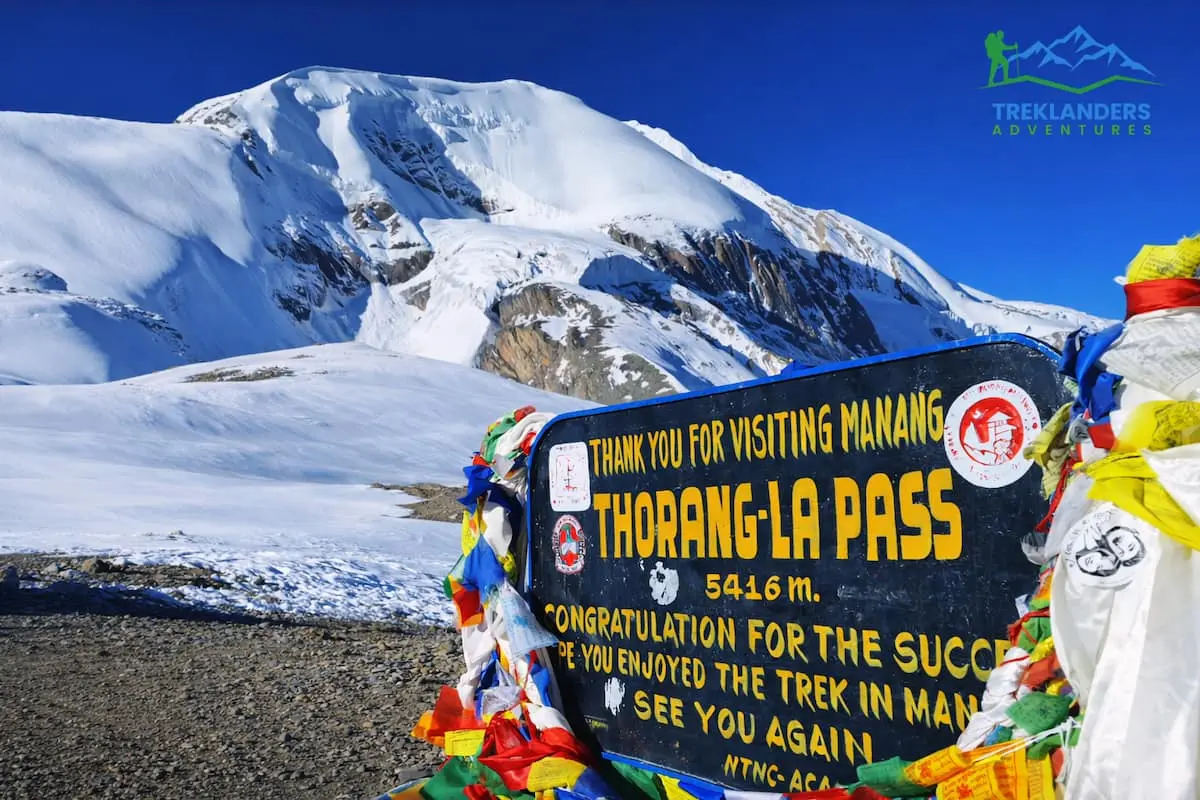
Annapurna Circuit Trekking is one of the demanding trek which takes you around the entire Annapurna massif reaching the summit at Thorong La Pass from where you can see the valley of the upper Manang, home of Tibetan Buddhists, down to the Hindu pilgrimage site, Muktinath, and the Kali Gandaki valley, the world’s deepest river gorge before heading down to Pokhara.
Annapurna Circuit Trekking gives you the fabulous mountain views from Poon Hill and see the diverse Annapurna region. We can experience different geographical variation during the trek. Also, Annapurna Circuit Trek takes us to Manang, Jomsom and the Muktinath region which gets you familiar with the diverse Nepalese landscape and culture. During the trek you will see beautiful villages of Tibetan style, people with different ethnic background and many other excited things. This trek has been proved as a spectacular trekking route in the Annapurna region since it opened to in 1977.
The trek to Annapurna Circuit starts from Besishahar and goes along the Marshyangdi River, with the great view of Manaslu and Himal Chuli to the east. This wonderful trek leads you to the village inhabited by a wide diversity of people from different ethnic groups and also offers majestic view of the white Himalayas. As the trek continues to the north of the main Himalayan range, the scenery is equally breathtaking. The total day for Annapurna Circuit Trekking will be 17 days. During the whole trek you can enjoy beautiful rhododendron forests, mountains and villages. You will also see the world’s highest mountains while encountering temples and monasteries.
Once you visit Annapurna region you will be mesmerized!
We are sure that, once you visit Annapurna region you will be mesmerized by its beauty and hospitable people that you see everywhere with huge smile on their face. Don’t delay, you can make Treklanders Adventures your preferred choice for adventure holidays.
Trip Summary:
Mode of Trek: Best available lodge / guest house on treks.
Trekking Grade: Moderate to Adventurous.
Trekking Region: Around Manang district Northern side of Annapurna’s.
Start and End of trek: From Dharapani to Jomsom with drive and flight.
Highest elevation: On top Thorang-La Pass at 5,416 m /17,697 feet high.
Trek duration: 19 Nights and 20 Days with drives and flights to Pokhara.
Total Trip: 22 Nights and 23 Days, from arrival to departures.
Best Seasons for Annapurna Circuit Trek:
The best season for Annapurna Circuit Trek is late spring April and May. Including autumn/fall begins from September to early November.
Springtime is bright and beautiful, most days are clear with sunny days, can be cloudy afternoons. Bringing cold chill in the late afternoon, and night till morning this is the time when wildflowers are in seasonal bloom.
The next best season is autumn/fall, where days are clear with sunny days for views and walks. But shorter days due to limited sunlight hours, cold morning and night time can expect snowfall sometimes. But an enjoyable day for pleasant walks with clear views of the beautiful snow mountain range.
Culture & Religion:
The Manang district is populated by Manang Gurung tribes, quite different to Gurung of Southern Annapurna and Lamjung Himal areas. The Manang people of Tibetan origin with similar Buddhism culture and religions. But beyond Manang crossing high Thorang-La pass around Mustang areas of Kaligandaki Valley dominated by Thakali people. The tribes of Lower Mustang of Mongolian origin, interwoven to Buddhism. Follows similar culture to its neighbors of Upper Mustang and Manang people and Tibetan predecessors. Where trekkers will come across religious monuments of prayer walls, spinning wheels, Stupas, and monasteries. All houses are adorned with Buddhist prayer flags, as well on top of the Thorang-La pass. Which is a symbol of respect, the abode of gods and goddesses and holy mountain spirits. Traditionally the native of Manang are farmers and cattle herders, raising and breeding livestock.




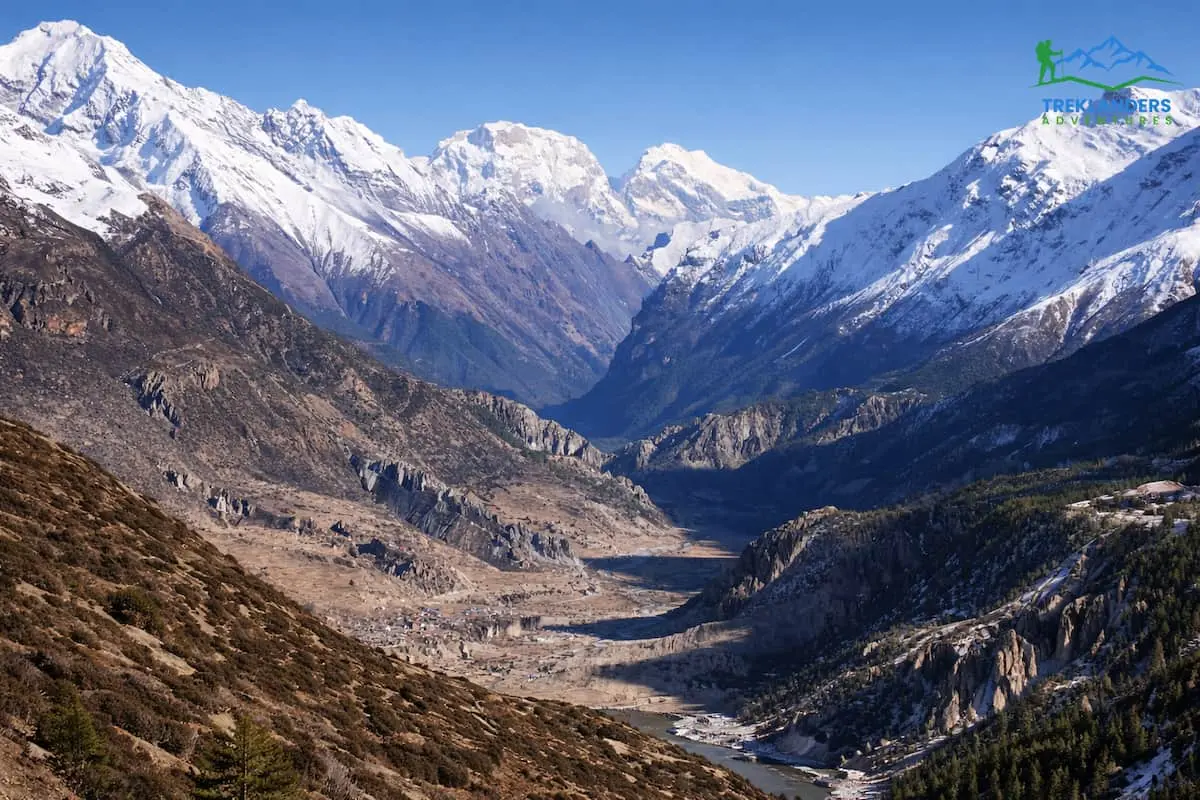
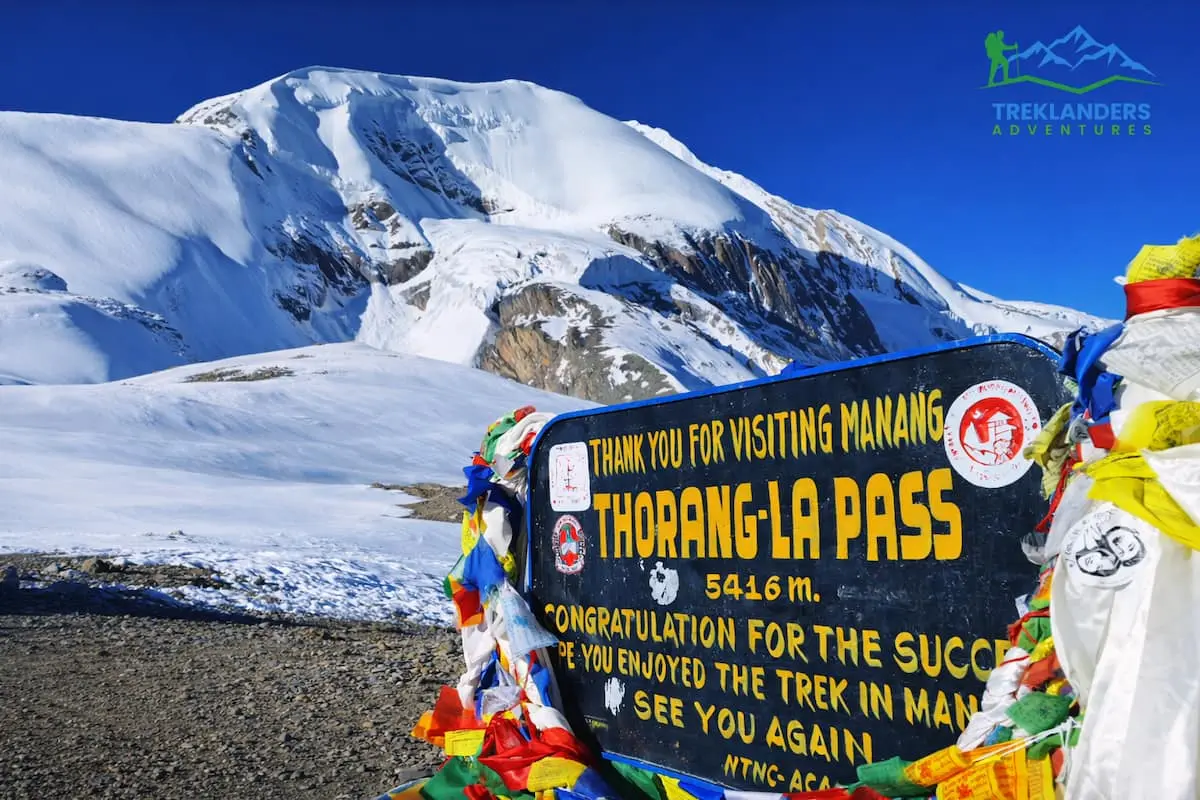
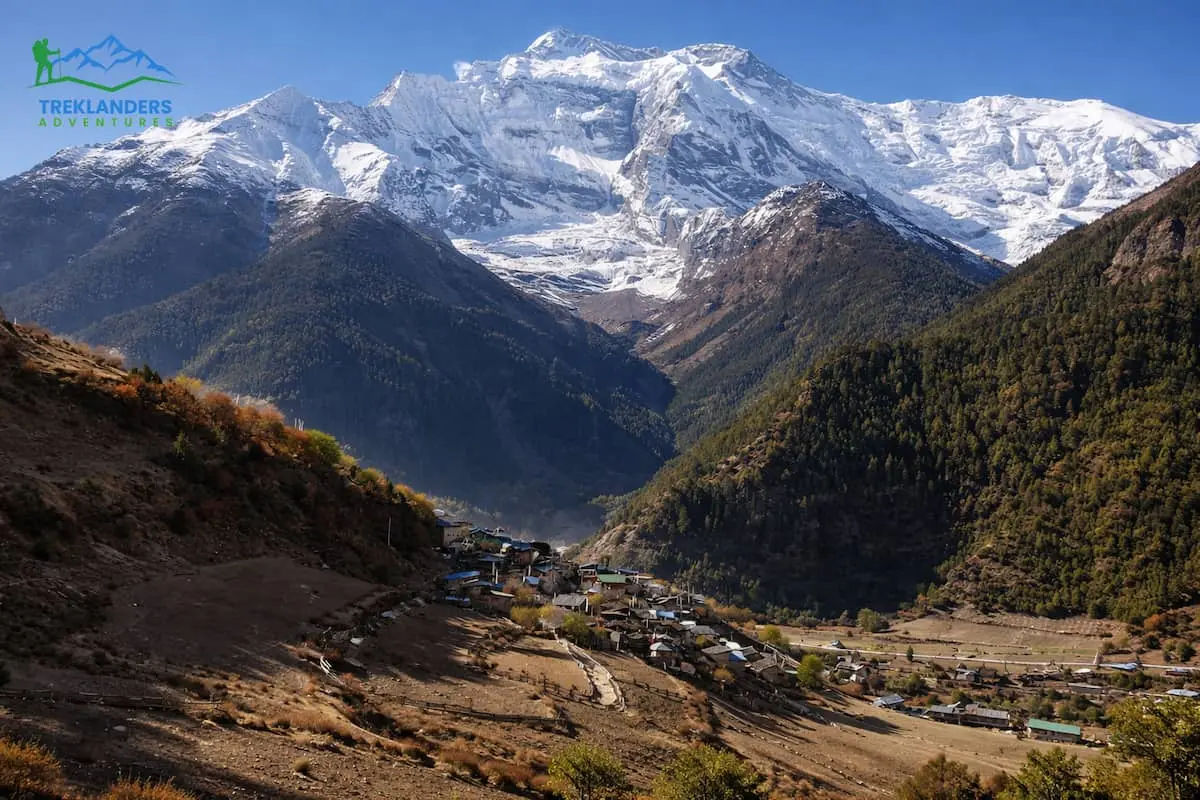
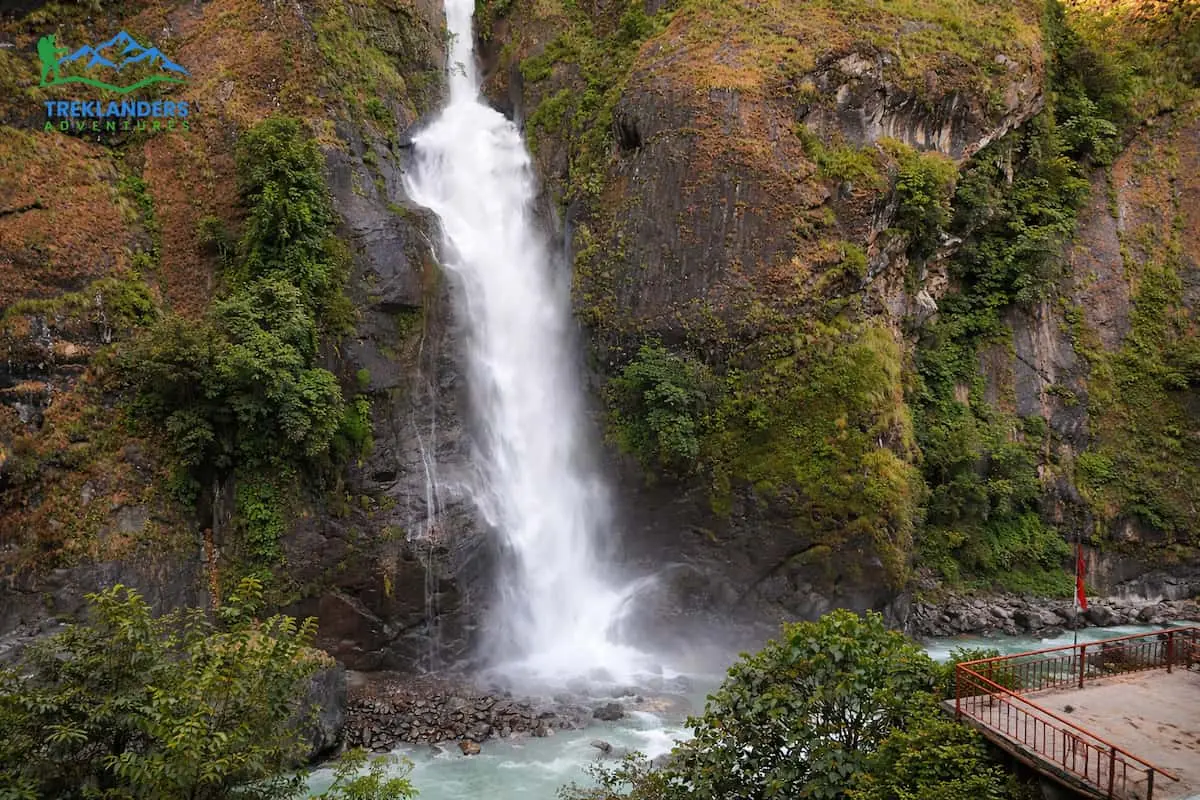
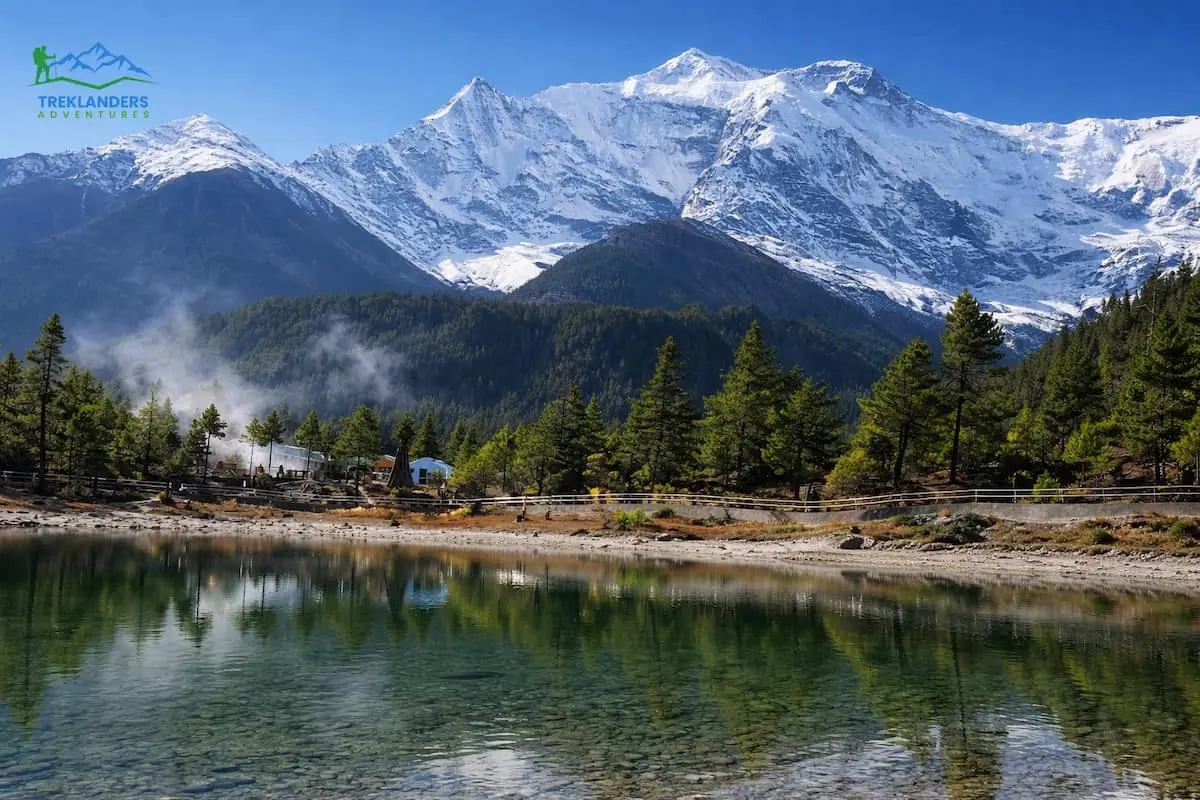
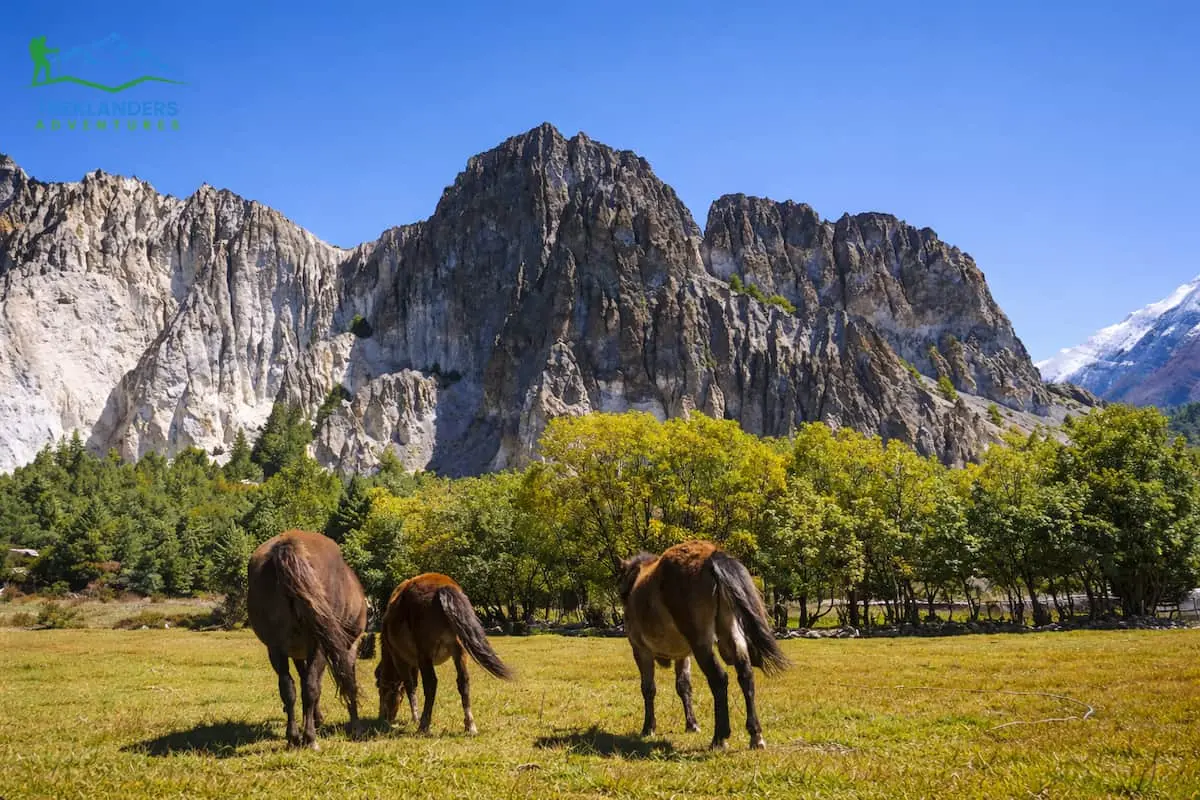
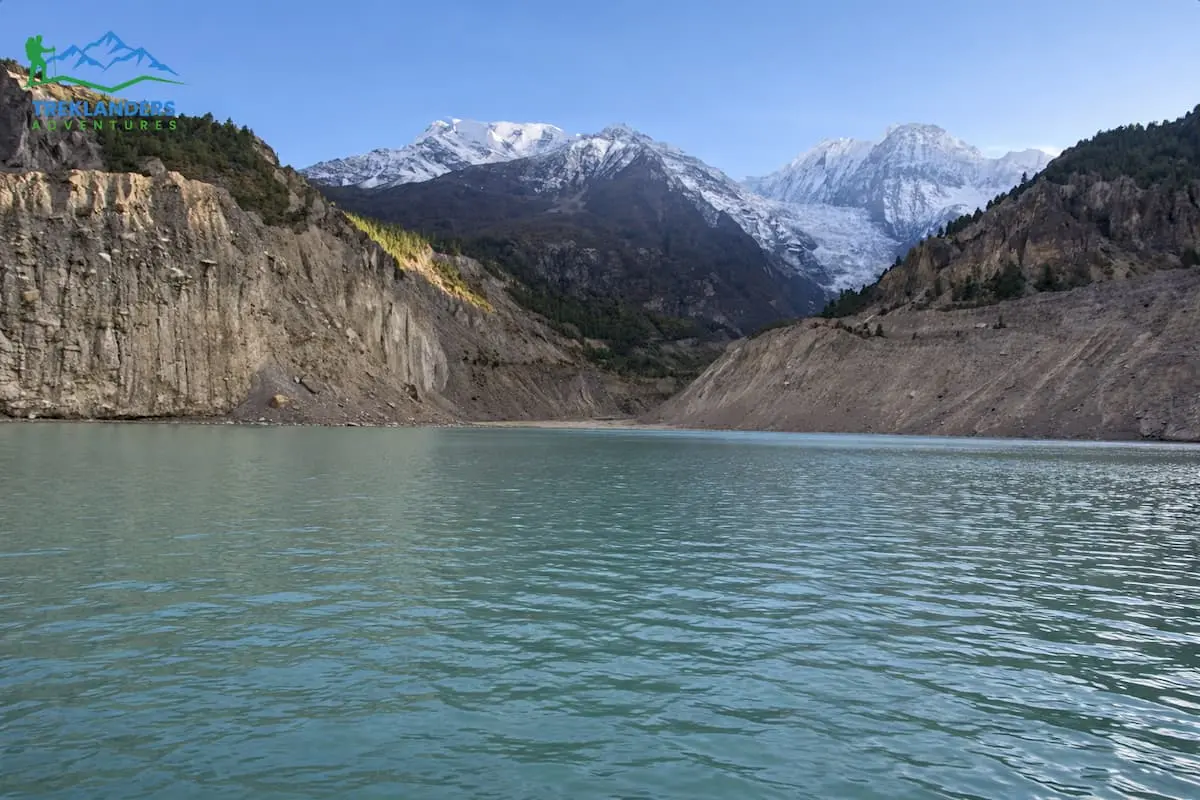
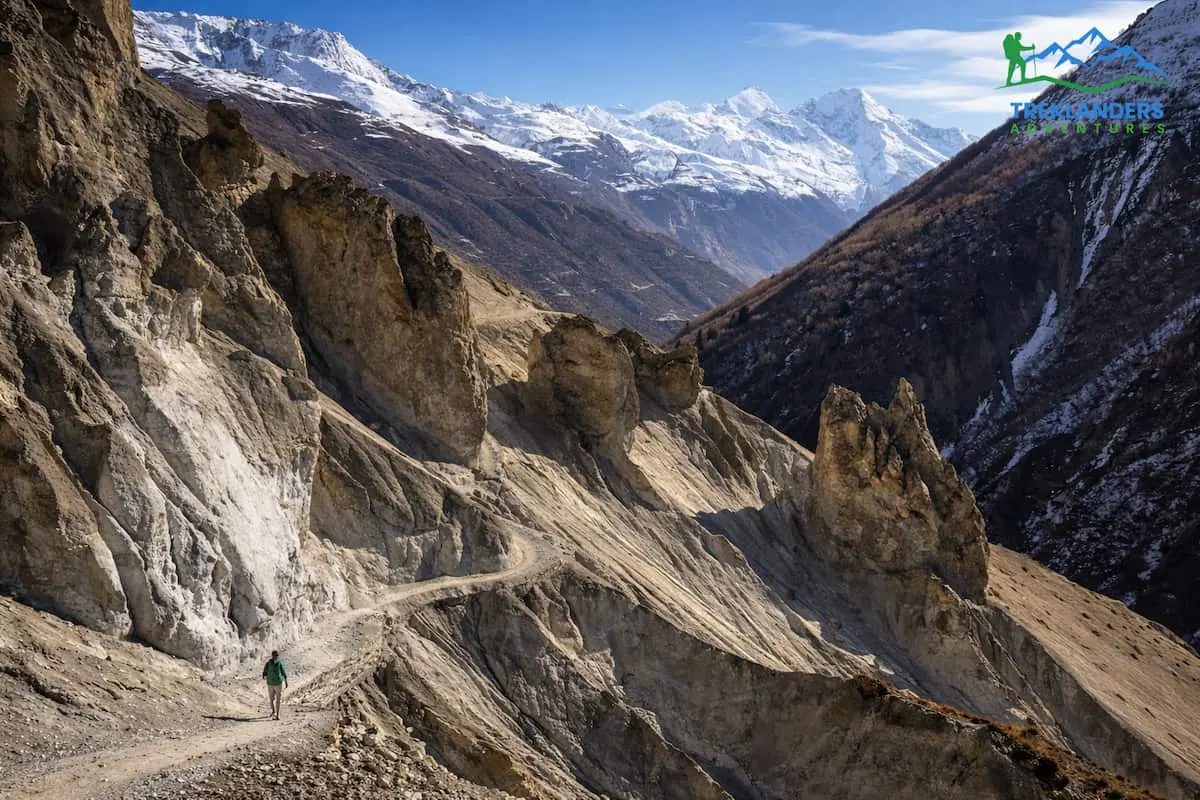
I recently completed the Annapurna Circuit Trek with Treklanders Adventures, and it was one of the most beautiful experiences I’ve ever had. From the very beginning, everything was handled with such care. My guide, Bikash, was truly exceptional. He has a calm, reassuring presence that made me feel safe every single day. He knew the mountains so well and always explained what to expect—weather changes, trail conditions, altitude tips—and because of him, I felt confident even in the more challenging sections. More than a guide, he became a friend I trusted. Our porter, Niraj, His energy, positivity, and strength amazed me. Every time we reached a teahouse, he greeted us with a warm smile, no matter how long or steep the trail had been. He carried our bags with such dedication that I truly felt grateful for him throughout the journey. Crossing Thorong La Pass was emotional for me—it was tough, but the support from Bikash and Niraj made it possible. The views, the silence of the mountains, the charming villages, and the kindness of the people made this trek unforgettable. Thank you, Treklanders Adventures, for giving me a journey I will cherish forever. And a huge thank you to Bikash and Niraj—you two made this adventure truly special. I highly recommend this team to anyone dreaming of trekking in Nepal.
Trekking the Annapurna Circuit with Treklanders Adventures was one of the most rewarding experiences of my life. From the very first day, everything was well organized, from transportation to accommodation and meals. The trail offered constantly changing landscapes, from lush valleys and traditional villages to high alpine terrain and dramatic mountain passes. Crossing Thorong La Pass was challenging but incredibly fulfilling, and the views from the top were beyond anything I had imagined. Our guide Raj was outstanding—knowledgeable, patient, and always attentive to our safety and comfort. He explained the local culture, monasteries, and daily life in Manang and Mustang, which made the journey even more meaningful. I highly recommend Treklanders Adventures to anyone seeking a professionally guided and unforgettable Annapurna Circuit Trek.
My Annapurna Circuit trek with Treklanders Adventures was truly memorable. The landscapes were breathtaking, from Manang to Thorong La Pass. Our guide Ram was professional, friendly, and always supportive, making the trek feel safe and enjoyable. Excellent organization, comfortable lodges, and great local insight made this journey unforgettable. Highly recommended.
The Annapurna Circuit trek with Treklanders Adventures exceeded all my expectations. Every day brought new scenery, from peaceful villages to dramatic mountain landscapes. Crossing Thorong La Pass was challenging but extremely rewarding. Our guide Anurag was exceptional—very knowledgeable, calm, and always encouraging the group. He carefully managed acclimatization and shared fascinating insights about local culture, monasteries, and daily life in Manang and Mustang. The logistics, accommodation, and meals were well arranged throughout the trek. I felt safe, supported, and fully immersed in the Himalayan experience. I would confidently recommend this trek to anyone seeking adventure in Nepal.
The Annapurna Circuit trek with Treklanders Adventures was an unforgettable adventure that perfectly combined natural beauty, cultural exploration, and personal challenge. From the green valleys near Besisahar to the dry landscapes of Mustang, every day offered something new and inspiring. The views of Annapurna, Dhaulagiri, and Manaslu were simply breathtaking. Our guide was highly professional, caring, and well experienced. He ensured proper acclimatization, maintained a comfortable pace, and was always attentive to the group’s needs. His knowledge of local traditions, monasteries, and mountain life added great depth to the journey. The lodges were comfortable, meals were satisfying, and the overall organization was smooth and reliable. Crossing Thorong La Pass was the highlight of the trek and a moment I will never forget. I strongly recommend Treklanders Adventures to anyone planning the Annapurna Circuit.
As a first-time trekker, choosing the Annapurna Circuit with Treklanders Adventures was the best decision I could have made. I was nervous at first, but our guide Raj made everything feel comfortable and safe. He was patient, encouraging, and always checked on how we were feeling, especially during acclimatization days. The scenery was absolutely stunning, from peaceful villages to snowy mountain passes. Crossing Thorong La Pass felt like a huge personal achievement. The organization, lodges, and meals were excellent throughout the trek. This experience gave me confidence and unforgettable memories in the Himalayas.
Trekking the Annapurna Circuit with Treklanders Adventures was an adventure I will never forget. The trek offered incredible scenery, from lush rhododendron forests to high alpine deserts and breathtaking snow-capped peaks. Every village we passed had its own charm, and learning about the local culture was fascinating. Our guide Thapa was exceptional—knowledgeable, patient, and very supportive. He carefully managed our pace and acclimatization, making sure everyone felt safe and comfortable, especially when approaching Thorong La Pass. His stories about the local people, monasteries, and traditions added a unique dimension to the trek. The accommodations were cozy, meals were hearty, and the logistics were seamless. Crossing the pass and reaching Muktinath felt like a huge achievement, made even better by Thapa’s guidance and encouragement. I highly recommend Treklanders Adventures for anyone looking to explore the Annapurna Circuit safely and memorably.
The Annapurna Circuit trek with Treklanders Adventures was truly unforgettable. The landscapes were stunning, from green valleys to snowy mountain peaks. Crossing Thorong La Pass was challenging, but our guide Raj made it manageable and enjoyable. He was knowledgeable, patient, and attentive, always ensuring everyone was safe and comfortable. The lodges were cozy, and the meals were well-prepared, giving us the energy we needed each day. Raj also shared fascinating insights about the local culture, villages, and monasteries, which made the trek even more meaningful. I highly recommend this trek for adventure lovers.
Embarking on the Annapurna Circuit with Treklanders Adventures was an experience I will cherish forever. From the very start in Kathmandu, everything was well organized—transportation, accommodation, and meals were seamless. The trek itself was a perfect mix of challenge, adventure, and cultural discovery. The landscapes kept changing daily, from the lush Marshyangdi valley to the high-altitude deserts of Manang and the awe-inspiring Thorong La Pass. Our guide, Ram, was incredible. As a first-time trekker in the Himalayas, I felt completely safe and supported under his guidance. He patiently explained the local culture, traditions, and religion, making every stop in villages, monasteries, and prayer sites enriching. Ram also monitored our acclimatization and made sure we were comfortable during difficult sections. Crossing Thorong La Pass was the highlight of the trek. The sunrise over the snow-capped peaks was breathtaking, and reaching Muktinath felt like a true achievement. Lodges along the route were cozy, food was warm and nutritious, and the team spirit among fellow trekkers made the journey even more memorable. I wholeheartedly recommend Treklanders Adventures and Ram as a guide to anyone seeking a safe, inspiring, and unforgettable Annapurna Circuit trek.
The Annapurna Circuit trek with Treklanders Adventures was an unforgettable adventure. The trail offered stunning views of snow-capped peaks, lush valleys, and charming traditional villages. Crossing Thorong La Pass was challenging but extremely rewarding, with breathtaking panoramas that made every step worthwhile. The lodges along the route were comfortable, and meals were hearty and satisfying. The trek allowed me to experience Nepalese culture up close, from monasteries to local festivals. Every day brought new discoveries and personal accomplishments. I highly recommend this trek for anyone seeking adventure, natural beauty, and cultural immersion in the Himalayas.
My Annapurna Circuit trek with Treklanders Adventures was an amazing experience from start to finish. The route offered incredible diversity, from lush valleys to high mountain deserts. Crossing Thorong La Pass was tough but extremely rewarding. Our guide Ram was excellent—friendly, experienced, and always focused on safety and comfort. He handled acclimatization perfectly and motivated the group every day. The lodges and meals were well organized, making the trek comfortable despite the challenging terrain. I highly recommend Treklanders Adventures to anyone looking for a reliable and memorable Himalayan trekking experience.
Purpose: Keep sweat off the skin and maintain warmth.
Purpose: Trap body heat in cold air at altitude.
Tip: Keep electronics in inner pockets at night to prevent freezing.
Annapurna Circuit Trek is a diversely famous trekking trail in Nepal that goes around the Annapurna massif and presents the trekker with a total change of flora, climate, and culture. The trek takes you from lower altitude forest and rice terraces to a high dry barren land of the Himalayas that is covered by snow. What makes it stand out among other treks is a pass crossing Thorong La Pass at 5,416 meters is considered one of the highest trekking passes on Earth. Along with altogether, the trek provides fantastic Himalayan views, traditional villages, local Buddhism, and the hotel-like treating of the local people, thus it is undoubtedly one of the most wonderful walks of the Himalayas.
This trek will probably take 12-18 days to finish which greatly depends on your route and walking pace and mode of travel as well. It is a very common practice for trekkers to start their journey from Besisahar or Bhulbhule and end it in Jomsom, Muktinath, or Tatopani. Though the roads and vehicles have actually made the trek doable in less time, the core essence of the trek is still the same. Proper acclimatization is a must especially if one is preparing to cross the Thorong La pass.
The Annapurna Circuit is probably the most diversified trek in the world. Within less than a week, a trekker can witness the tropical forest, riverside gorges, alpine meadows, Tibetan-like barren lands, and high Himalayan peaks. The richness of the five major ethnic groups Gurung, Manangi, and Thakali serves as the backbone of the journey. Only a few treks can claim such diverse nature and immersion in culture all in one trek and thus the Annapurna Circuit trek is in a list of those few left for the world.
The highest point of the trek would be Thorong La Pass at an altitude of 5,416 meters, where it is a very laborious, challenging, yet can be conquered when done slowly. The ascent is long and steep, especially the final part from High Camp, but the panoramic views at the top are spectacular. It is a safe and fulfilling experience when you do proper acclimatization and start your climb early in the morning.
If one has trekking experience it will be an advantage but still it is not a must. A lot of first-time trekkers successfully finish the Annapurna Circuit if they have a good preparation, follow a slow pace and have the support of a licensed guide. Good physical fitness, strong determination, and proper acclimatization are more important than previous trekking experience.
You are best off during the two seasons of spring (March–May) and autumn (September–November). At that time, the weather is stable, the sky is usually clear, and temperatures are trekking friendly. Winter can also be an option if you don’t mind the extreme cold at Thorong La, whereas the monsoon will come with heavy rains and low visibility during the whole trail.
Yes, the revised trekking rules of Nepal, state that a licensed guide must accompany all tourists who trek alone in Nepal. A guide will ensure your safety, do the navigation, help with acclimatization, and manage the hotels and permits. High altitude like Thorong La, where the air is thin and medical help is far away, a guide can make your safe stay easier, give you more confidence and provide you with a better overall experience.
Yes, it is mandatory to employ a licensed guide as per the revised trekking regulations of Nepal. For safety reasons, it is also very advisable to do so. The Annapurna Circuit comprises a combination of long walks, high elevations, and varying weather before finally arriving at the challenging Thorong La Pass. A guide will allow you to go at a safe speed, provide instruction on acclimatization, guide you through the route, and give you support if you have a health problem or an emergency. Besides safety, the trek becomes more relaxing and enjoyable if you have a guide.
A trekking guide is like a manager of the whole process of your trekking-he or she leads the way, keeps the pace at a nice level, takes care of the stays, and helps you order good food for high altitude. They check on your health every day, look for altitude sickness symptoms, and know when to take a rest or go down. Besides that, guides can tell you a lot about the culture of the area, explain you the local customs, and talk with tea-house owners and villagers – thus making the trek not only safer but also more fun and interesting.
Normally, the guides on the Annapurna Circuit are not only very experienced but are also officially licensed by the authorities and have a thorough knowledge of the terrain, weather, and culture at high altitudes. The majorities of them have done the trek numerous times and are quite familiar with the difficult areas of the Thorong La Pass, Manang, and Yak Kharka. Because of their experience, they can help you stay away from dangerous situations and make sure you have a safe and well-organized trek.
A trek without a guide in most of the trekking areas in Nepal, such as the Annapurna Conservation Area, is not allowed. The reason for this regulation is to have fewer accidents, faster rescues, and better management of the trekking routes. If you do not have a guide, you are in greater danger of being caught off-guard at Thorong La Pass, where the altitude and the weather can change rapidly. A guide will make sure that you are safe, properly acclimatized, and that you receive the assistance you need during the entire trekking journey.
Generally, the periods of spring (March through May) and autumn (September through November) are the best times to accomplish Annapurna Circuit trek. These times of year allow for the most stable weather conditions, the least amount of clouds, and comfortable temperatures for the crossing of the Thorong La Pass and subsequently, being able to enjoy the mountain views without any interruption. Paths are dry, visibility is perfect, and the possibility of weather-related delays is very low as compared to other seasons.
Indeed, one of the most gorgeous periods of the Annapurna Circuit is definitely the spring time. During the period between March and May, temperatures become progressively warmer, rhododendron forests burst into a kaleidoscope of colors, and the sections of the route at higher altitudes remain stable and clear. Morning offer fresh and clear views of the mountains while the longer daylight hours make the trek easier and more fun. It’s an ideal season for people with cameras and nature enthusiasts.
From September to November, the weather of autumn is considered to be the most favorable one for the Annapurna Circuit as it provides the clearest visibility during the whole year. In fact, the monsoon rains clean up all the dusty air and residue from the atmosphere thus leaving the sky perfectly blue and the view of Annapurna, Dhaulagiri and other surrounding peaks absolutely stunning. Weather remains dry and steady offering more safety and comfort to the people who want to cross Thorong La Pass making sure that they don’t encounter snowstorms or heavy winds along the way.
Yes, you may perform a winter trek; however, it will be very difficult. The temperatures are very low during December through February, in particular near Thorong La, where the night temperatures can be very low. Snowfall is frequent and can close the pass, thus making it very dangerous to be able to cross it. On the other hand, winter trails are less busy, and the scenery might be awesome, however, only experienced trekkers equipped with appropriate winter gear and having the possibility of being flexible with the duration of their trip should consider undertaking winter trekking.
landslides is also increased, and the visibility is very limited. Nevertheless, since the upper Mustang side after the pass is a rain shadow area, a few trekkers take a diversion to that route. However, if you want to do the classic Annapurna Circuit, then the monsoon season is not the right time because of rain, leeches, overcast sky, and there being frequent interruptions.
The Annapurna Circuit Trek would fall somewhere between the moderate and challenging categories of difficulty most of the time. This is due to its length and high altitude of Thorong La Pass (5,416 m). Although the path is quite clear and less technical, trekkers should be prepared with long hours of walking, steep ascents, and changes in the weather. Proper acclimatization and a steady pace will allow most of the trekkers to do the trekking circuit even if they are first-timers.
The most difficult part of the Annapurna Circuit is the left of Thorong La Pass, which has steep ascents in the cold and thin air. It is the last part of the climb from High Camp to the top that is the most challenging, particularly at night (sunrise). Despite this, the views from the pass are beyond words, and hence the effort is really worth it.
Trekking getting-on-the-circuit experience is a plus, but not firmly needed. The motivating fact would be that a lot of first-time trekkers get through the Annapurna Circuit with no problem as long as they are well-prepared and guided properly. What still remains as the most important is being physically fit, able to walk for a few hours daily, and having a positive attitude. Preparations through hikes, stair-climbing, and cardio-exercises done well before the trek will surely build up the confidence of a total beginner to step on the trail.
On average the walk would be 6 to 8 hours per day and it is different every day depending on the altitude and the distance between the villages. The first parts of the trek have less difficult terrain while the walking hours might be longer going to Manang, Yak Kharka, and Thorong La. A well-managed pace of walking, short rest periods, and acclimatization days make the long trekking days doable and even fun.
Absolutely, altitude is the main enemy of Annapurna Circuit. The air above 3,000 meters becomes thinner and this could lead to tiredness, headache, and difficulty breathing. Acclimatization days in Manang or other nearby villages allow the body to adjust little by little. Slow and steady walking and drinking enough water are the best ways to lower the risks of altitude sickness.
The paths on the Annapurna Circuit are not difficult and trekkers normally do not run into dangers here. Yet, parts such as the way to Thorong La, the paths along the cliffs, and those close to Jomsom are areas where one can be more exposed to the wind and may be slippery after snow. These parts, however, can be safely walked through without any problems if a licensed guide accompanies you and you have the right gear.
You are not asked to be an athlete; however, a good fitness level will make the trek much more comfortable. The ones who are very physically active regular through jogging, hiking, cycling, or stair climbing will find the trek less hard. Having strong legs, good endurance, and the ability to walk long distances will help you a lot, especially during days in high altitudes. With constant training for a couple of weeks, the majority of healthy people will be able to complete the trek without encountering problems.
The main accommodation on the Annapurna Circuit is that of the traditional tea houses, with the vast majority being local family-run mountain lodges. The tea houses provide basic rooms with twin beds, blankets, and shared toilets, but these are also comfortable. Though the facilities are minimal, they contain everything a trekker would require for a hot meal, a good night's sleep, and a welcome space to relax after a day of trekking.
Most tea houses have private twin-bed rooms, and this is especially true for those in the lower parts of the trek. When you get higher up in Manang, Yak Kharka, and Thorong Phedi, the rooms may be more basic but still, private. Tea houses can be booked up to the brim during the peak seasons, but usually, the guides help in arranging the rooms beforehand or on the spot.
A hot shower can be found in the majority of tea houses in the first half of the trek and the heating is either solar or gas. Nevertheless, if you go beyond 3500 meters, not only will hot water be rare but even tea houses may bill those who want to take warm showers. Quite a few trekkers don't take a bath at very high altitudes because of the cold and the possibility of getting a cold.
Generally, even in the case of high altitudes bedrooms are not heated. Dining room is the only place where the central stove can be found and here it keeps the trekkers warm in the evening. Because nights are very cold in rooms - especially around Thorong Phedi and High Camp - carrying a warm sleeping bag is the only way to ensure that you are both comfortable and warm.
The dining rooms of the tea houses are warm and thus, they are very often the most attractive part of the whole lodge. Here, workers together with travelers consume hot meals, tea, and engage in talks. These public spaces offer all the comforts of home, are lively, and are in fact the main meeting place for relaxation, charging and planning the next day’s trek.
Wi-Fi and charging services are available in the majority of tea houses, nevertheless, both have extra costs, and speed may go down with increasing altitude. Most of the time electricity is by solar power, therefore on a cloudy day or if there are too many users the charging may be limited. Thus, a power bank is definitely necessary, particularly if you are heading toward the higher parts near the pass.
Generally, booking is not necessary but during the peak seasons of trekking which occur in March to May and September to November tea houses may be full and this is especially true for the areas near Manang and Thorong La. So the presence of a guide helps you greatly in that they can call the tea houses in advance or get the rooms on their arrival. Besides, solo trekkers may find it more difficult to locate rooms if there is a great rush during a busy day.
The food on the Annapurna Circuit is served by tea houses located along the trail, providing a variety of hot and fresh meals. The most typical meal is dal bhat, a nutritious and energizing combination of rice, lentil soup, and vegetable curry that is perfect for trekking. Besides that, the trail is also offering noodle soups, fried rice, pasta, momos, pancakes, omelets, potatoes, and Tibetan bread. The meals are modest but healthy, made with the purpose of providing sufficient energy to trekkers in the high altitude environment.
The food served in tea houses is mostly safe and done properly. Thus, hot dishes such as dal bhat, soups, and noodles are also the best choices, in particular when you are going up to higher altitudes. Water for drinking has to be boiled or purified all the time to prevent stomach problems. Following the consumption of hot and freshly prepared foods is the surest way of protecting oneself during the trekking from catching diseases.
Vegetarian food is not a problem to find in the entire Annapurna Circuit. Almost every tea house has vegetarian-friendly meals, which include dal bhat, vegetable noodles, soups, potatoes, fried rice, and chapatis. As fresh meat becomes more difficult to transport at high altitudes, many trekkers choose vegetarian food for their own safety and better digestion effects.
You can find meat in the valleys along the trek that is Besisahar, Jagat, and Chame. Nevertheless, as you head up towards Manang, Yak Kharka, and Thorong Phedi, it is better not to eat meat as it is without refrigeration that is carried up. For health and hygiene reasons, most trekkers who decide to switch to vegetarian meals after reaching higher altitudes become the majority.
Surely, tea houses and small shops offer snacks such as candy bars, biscuits, chips, nuts, and energy bars as well as tea, coffee, and hot lemon. However, these goods get to cost more and more as you go up in the mountains. Taking your sensible snacks along for the trek like nuts, chocolates, or protein bars will not only save money but will be very helpful in long trekking days.
Mobile network signal is reachable at several villages in the lower part of Annapurna Circuit like Besisahar, Chame, Pisang, and Manang. But if we consider higher altitudes like Yak Kharka, Thorong Phedi, or the pass area, the network is either too weak for usage or not available at all. While in the lower areas, Ncell and NTC can be handy, in the upper regions of the circuit, it is better to assume that there is no network.
Without a doubt, most of the tea houses on the Annapurna Circuit provide Wi-Fi for a fee. The service is mainly available from the lower to the middle altitude range. The quality of internet in localities like Chame and Manang is good but if you go upwards toward Thorong La, the signal gets worse and worse. As for the villages at higher elevations, there might not be any Wi-Fi at all due to extremely cold weather, limited power from the solar panels, and very weak signals.
Actually, some areas up to the mid-altitude are enabled for mobile data and one can use it, but it is not good for a continuous communication session. While Ncell and NTC sometimes can offer 3G or 4G in certain areas, but anyhow, there are always higher spots without data connection. Hence, on their accounts, trekkers can redeem Wi-Fi vouchers from tea houses for the sake of simple messaging and getting updates.
Indeed, bringing along a power bank would be very wise as power supply is scarce and there is usually a charge for electricity in the tea houses. What many lodges do is they take advantage of solar power which in turn makes the charging slow or limited during cloudy days or when several people are using it at the same time. So it is a power bank (if 10,000–20,000 mAh in capacity) which is going to keep your phone, camera, GPS, or whatever uninterrupted during the trek.
Usually, a trekker is in a position to reach his relatives or the guide at the lower or middle altitude villages by means of Wi-Fi and mobile networks. However, communication gets extremely hard or even impossible due to the altitude and weather factors when you are around Yak Kharka, Thorong Phedi, or the pass area. To ensure safety, local phones are carried by the guides and they also possess the knowledge of the spots where communication can be established.
Acclimatization plays a very crucial role in the Annapurna Circuit Trek as the trek goes above 5000 meters where oxygen becomes scarce. It is very helpful to spend more nights in a place like Manang in order that your body can get used to the new environment and minimize the chances of altitude sickness. The closest area to Thorong La Pass may be very difficult for people who have not properly acclimatized so it is very important to take it slow, drink enough water, and follow the guide's instructions to accomplish the trek safely and successfully.
Normally, headaches, dizziness, nausea, loss of appetite, and insomnia are the first symptoms of altitude sickness. These symptoms can be very small at the beginning but can become very serious in a short time if the situation is not taken into consideration. In effect, it may end in life-threatening situations such as HACE (High Altitude Cerebral Edema) or HAPE (High Altitude Pulmonary Edema). Preparing for this situation by knowing the symptoms, taking rest, and getting off the mountain if the case is important for safety at high altitude.
Definitely, the Annapurna Circuit is not unsafe for first-time trekkers provided they have a guide with them who is licensed, walks at their own pace, and keeps a check on their health condition. The trail is available for anyone who would like to use it and there are tea houses on the whole trekking route to use as a stop and refreshment. Nevertheless, anyone who is not used to high altitudes and long distance walking should be very careful and well prepared for the trek. Conditioned novices that also get help from acclimatization instructions will be able to successfully and safely complete the trek as well as have fun.
If you are feeling unwell and your condition is due to altitude, exhaustion, or even if you have a minor ailment, you should talk to your guide right away. Besides guides being prepared for spotting the symptoms of altitude sickness and recognizing signs of other health issues, they also have the capability to make the right decision concerning treatment, taking medicine or descending to a lower place. If you decide to totally ignore the symptoms and even keep pushing yourself, serious health problems may result. Hence, it is much safer to communicate your problem at an early stage.
Hikers have to obtain permits. They are the Annapurna Conservation Area Permit (ACAP) and the Trekker's Information Management System (TIMS) Card. These are required to enter the Annapurna region and are used for the preservation of the area and the safety of the trek.
ACAP and TIMS are available at the offices of the Nepal Tourism Board in Kathmandu and Pokhara. If you are with a trekking agency, they will normally take care of your permit formalities.
Indeed, permits are verified at several checkpoints during the trek, especially in places like Besisahar, Chame, and Manang. It is better to have your permits with you in order to facilitate your checking process.
Trekking without proper permits is prohibited. Authorities can checkpoint you or give you a fine, thus it is very necessary to have both permits in hand prior to starting the Annapurna Circuit Trek.
The Annapurna Circuit physical preparation involves the development of your stamina, leg strength, and general endurance. For four to six weeks before the trek, people going on the trek are advised to train by taking long walks, climbing stairs, and doing some light cardio workouts. This will allow your body to adjust to the long days of trekking and the high-altitude nature of the trek will be less of a problem.
Considering the usage of layered garments for temperature changes is the most fitting thing to do. Some of the most necessary items are thermals, fleece jacket, a warm down jacket, waterproof outer layers, trekking pants, gloves, warm socks, and a wool hat. Dressing in layers gives you the opportunity to keep the body warm in the case of high-altitude areas, and you can remove some layers and thus let's say you can refresh a bit during the daytime trekking.
Trekking boots must be strong and comfortable if they are to be used on the Annapurna Circuit. It is suggested that the boots are waterproof and already broken in before the trek in order to avoid the formation of blisters. Light camp shoes or slippers may come in handy during tea houses where you can rest and relax.
One should always remember to bring a warm sleeping bag with a temperature rating from -10°C to -15°C as tea house rooms at high altitude are never heated. This definitely allows for a warm and comfortable sleep especially when the location is near Thorong La Pass where at night temperatures can drop dramatically.
First aid kit with painkillers and blister treatment, altitude sickness medication (if prescribed by a physician), water purification tablets, and personal hygiene items are some things that the trekkers must have with them. The importance of the three has to do with protection from the sun and keeping the body both clean and healthy during the trek. Apart from this, things such as sunscreen, lip balm, and hand sanitizer must not be overlooked, so as to maintain good health throughout the journey.
The majority of trekkers have a light daypack in which they put only necessary things such as water, food, and extra clothing, and porters carry the rest of the gear in a large duffel bag. This not only makes walking easier but also helps in keeping the weight of the load that is carried under control throughout the journey.
Most of the trekkers take either a bus or a private jeep from Kathmandu to Besisahar which is considered the gate way for Annapurna Circuit. The trip normally takes six to seven hours. There are some hikers who take the jeep and go as far as Bhulbhule or Chamje to save the first day's walk.
Yes private jeep service is available and it provides more comfortable and quicker mode of transport than public buses. A private jeep will get you straight to Bhulbhule or Chame if the roads are good and you can then start your trek from there smoothly and flexibly.
Yes, flights are between Jomsom and Pokhara with the intention of giving travelers the chance to undertake the return leg in a short time. The flight takes about 20 minutes but it totally depends on good weather. Many trekkers choose this option to avoid the long jeep ride through rough mountain roads.
Most of the trekking agencies are more than willing to make all your transportation arrangements like buses, jeep, and flying. It relieves the travelers from the hustle of looking for means of transport during the busy seasons. Also, they ensure safety and reliability throughout the journey.
| No of people | Price per person |
|---|---|
| 1 - 1 | $2,060 |
| 2 - 3 | $1,635 |
| 4 - 8 | $1,515 |
| 9 - 30 | $1,405 |
| No of people | Price per person |
|---|---|
| 1 - 1 | $2,060 |
| 2 - 3 | $1,635 |
| 4 - 8 | $1,505 |
| 9 - 30 | $1,405 |
| No of people | Price per person |
|---|---|
| 1 - 1 | $2,105 |
| 2 - 3 | $1,405 |
| 4 - 8 | $1,315 |
| 9 - 30 | $1,220 |