Khopra Ridge and Khair Lake Trekking, are located close to the world’s 7th-highest Mt. Dhaulagiri and 10th-high Mt. Annapurna-I. An exclusive adventure around the hidden corners of the Annapurna Himalaya range and close to the Dhaulagiri range. One of the most exciting, picturesque high-altitude walks around the western end of Annapurna Himalaya within green hills and scenic ridges.
Khopra Ridge and Khair Lake trekking, although not far from the main popular route of Ghorepani and Poon Hill. But it leads off the beaten tracks away from the mainstream trail towards the hidden corners of the Annapurna Himalayas.
A great combination of adventurous treks, from the main trail to remote mountain wilderness amidst towering snow-capped peaks. The Khopra Ridge and Khair Lake Trekking, due to its hidden, remote location, only a few groups of trekkers seldom venture.
Certainly, a great country walks with a great difference from the main busy trail to isolated mountainous areas. Where hills are covered in lush green alpine forests of dense tree lines of tall rhododendron, pines, and firs. During spring time the whole region will be alive, with riots of colors from the seasonal bloom of wildflowers.
Khopra Ridge & Khair Lake Trekking, begins from the renowned scenic tourist city of Pokhara, heading beyond from city limit. Reaching the foothills of the Annapurna Himalayas, where climb follows to high mountain villages of Ulleri and Ghorepani. While staying at Ghorepani, an hour morning hike leads to the famous and most popular viewpoints of Poon Hill. Offers stunning sunrise views over a wide range of Himalayan peaks from Dhaulagiri, Annapurna as far as the Manaslu range.
From Ghorepani onwards our route diverts from the main trail, heading north to remote hidden pockets of Khopra Ridge. A high ridge in between the staggering peaks of Mt. Dhaulagiri and Mt. Annapurna with an array of snow-capped mountains.
A mind-blowing and scenic ridges of Khopra, with views of dramatic landscapes and rolling green hills. At Khopra ridge, have a day for an exciting hike to the holy Lake of Khair, located within towering peaks. Where an annual religious festival takes place in August, on Janai Purnima. The full moon is an auspicious time for Hindu men to change their holy threads. As well as taking a bath in the sacred lake of Khair, the belief is; it cleanses the sins of hundreds of lifetimes.
After exciting and enjoyable moments on the high Khopra ridge and a visit to Khair Lake. The return journey follows downhill on an alternative route to join the main trail at Tadapani and the large Ghandruk village.
Our marvelous walks then completes, with a drive back to the scenic lovely Pokhara. A perfect place to conclude our fabulous adventure ‘Khopra Ridge and Khair Lake Trekking’.
Trip Summary:
Mode of Trek: Best available lodge / guest house on treks.
Trekking Grade: Moderate to Adventurous walks.
Trekking Region: Around Annapurna Himalayan range of Kaski district.
Start and End of trek: From Pokhara to Pokhara with drives both ways.
Highest elevation: At Khopra Ridge 3,870 m / 12, 697 feet and
Khair Lake 4,247 m/13,934 feet high.
Trek duration: 08 Nights and 09 Days from Pokhara to Pokhara.
Total Trip: 14 Nights and 15 Days, from arrival to departures.
Best Seasons for Khopra Ridge & Khair Lake Treks:
The best season for Khopra Ridge & Khair Lake Trek is spring from March to May.
Including autumn/fall begins from September to November, as this is a short moderate trek. Interested people can also visit all year round, except for the summer/monsoon time of mid-June to August.
Springtime is bright and beautiful, most days are clear with sunny days, can be cloudy afternoons. Bringing cold chill in the late afternoon, and night till morning this is the time when wildflowers are in seasonal bloom.
The next best season is autumn/fall, where days are clear with sunny days for views and walks. But shorter days due to limited sunlight hours, cold morning and night time can expect snowfall sometimes. Winter from December to February with clear sunny days, but cold mornings, late afternoons, and night time with freezing temperatures. But an enjoyable day for pleasant walks with clear views of the beautiful snow mountain range.
Culture & Religion:
The southern hills and valleys around the Annapurna Himalayas and Khopra Ridge areas, populated by the Magar people the main hill tribes of western Nepal.
The menfolk are recruited as Gorkha soldiers, renowned for their bravery and courage, all over the world. The Magar people, are interwoven to both Hindu and Buddhism religions as well worships nature and mountain spirits.
The villages are adorned with small shrines and temples, traditionally the Magar are farmers and cattle herder, raising and breeding livestock. The main villages en route are Ulleri, Ghorepani and Chitre. Trekkers can explore the local interesting cultures and customs of the Magar people. At the end of trekking reaching Ghandruk villages in populated by the Gurung tribes. The main hill people of Annapurna before Ghorepani village, the Gurung quite similar to Magar tribes but follows Buddhism religion, with every houses adorned with prayer flags.

On first arrival at Kathmandu-Nepal international airport, our staff and guide will receive with traditional welcome. A short drive to your hotel in the hub of Kathmandu city, on checking into your nice rooms. After getting refreshed from the jet-lag, join at the hotel lobby and at meeting room for trek briefing provided by our guide or leader. Information about the hotel, lodge on treks with full details of trekking trails, food and accommodation on treks. As well with do’s and don’ts with welcome group dinner in an authentic Nepali restaurants with local cultural program along with Nepali meals.


Morning leaving the hotel for exciting overland journey to beautiful Pokhara, the renowned tourist city in Nepal. The drive leads on the main highway following the Trisuli River, quite popular river for rafting. On reaching Mugling Bazaar, then heading due west facing views of Manaslu and Annapurna Himalayas.
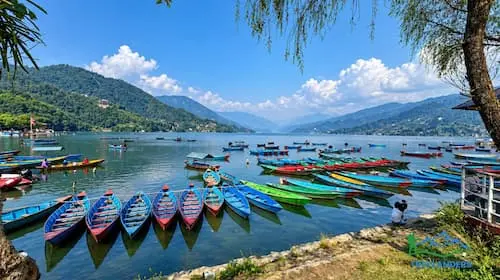
As the drive reach Pokhara city, and then transfer into a nice hotel by the calm Phewa Lake side. Where all good hotels, restaurants and shops are located.
Note:- You can also fly to Pokhara from Kathmandu (25-minute flight), but you will need to pay extra.

Morning after a good breakfast, a few hours interesting drive leads away far from Pokhara city and valley outskirt. On drives enjoy views of Annapurna range of peaks with majestic Machhapuchare Himal the famous Fish Tail that dominates the Pokhara valley. The drive leads on Pokhara-Baglung, Beni highway reaching Nayapul town, the drive follows on dirt rough dirt road. Then ending the bumpy and exciting ride at a small village of Hille and Tirkhedhunga. Our walk begins crossing over a bridge with views of wonderful waterfalls. The climb continues on stone steps all the way on top of a hill at Ulleri village. On arrival check into a nice local simple lodge facing views of Annapurna peaks.

After an exciting walk and climb on first day, morning a pleasant trek amidst beautiful rhododendron and pine forest. Following on winding gradual uphill to Ghorepani village, inhabited by the Poon-Magar people, the tribes of western Himalayan hills. Ghorepani one of the most popular short moderate treks around Annapurna region, due to its magnificent views from Poon Hill.
At Ghorepani check into a lovely lodge for lunch and overnight halt, with time to explore facing grand views of Dhaulagiri Himal.

Early morning before breakfast at the break of dawn, a short hike of an hour climb to Poon Hill. From the top of Poon Hill, enjoy glorious sunrise views reflecting over an arrays of snow peaks. Overlooking Mt. Dhaulagiri, Nilgiris and Annapurna Himalayas with Manaslu range of peaks, including majestic Machhapuchare Himal the famed Fish-Tail. After a refreshing morning hike with marvelous views down to Ghorepani for breakfast and continue walks towards Khopra Ridge.
The trail leads down to Chitre village, from here our route diverts from the main trail. As walk leads towards off the beaten tracks, away from popular trekking areas to remote isolated village of Sauta. At Sauta transfer to a nice simple guest-house or lodge, facing wonderful views of Dhaulagiri Himalaya range.

Morning leaving the last permanent farm village of Sauta, a short day walks of few hours. Following the forested path, and the climb starts heading into dense woods through nice grassy meadows. Then ending the morning trek reaching Chistibung, a small settlement amidst lovely forest surroundings. Having few small simple huts, serving as lodges with basic facilities but nice and cosy.
Enjoy the lunch and relax, or take a short hike with chances of spotting some Wildlife like mountain goats, and colorful Danfe pheasant. The national bird of Nepal, often seen around this serene surroundings.

A short and wonderful morning hike to our main destination and highlight of the adventure to high Khopra Ridge. Morning after a simple breakfast, walk into dense vegetation and tall tree lines, soon the tree lines fades. As climb follows on a high grassy hill to reach on top of Khopra Ridge, an amazing place.
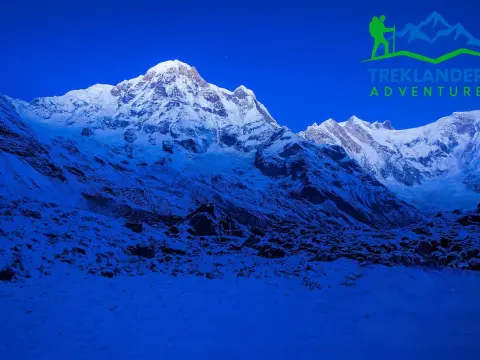
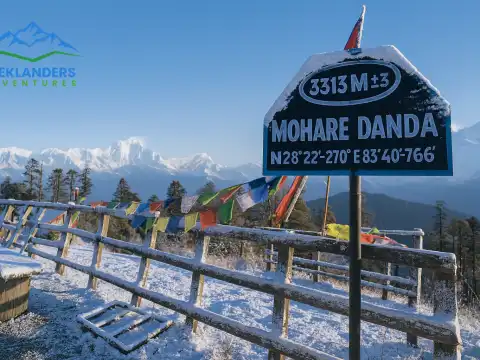
Facing close views of Mt. Dhaulagiri in the North West with Annapurna Fang / Vara Shikar towards North. Includes Annapurna South at near distance from where you stand at Khopra Ridge. Enjoying the stunning scenery then check intoa nice lodge for two overnights. Having lunch, afternoon at leisure relax and enjoythe glamorous scenery or taking short scenic walks.

At Khopra Ridge for a day hike to hidden Lake of Khari, regarded as a holy place,morning having breakfast. As well carrying packed lunch, start the hike following a ridge line, high above from where we walked previous days. Heading close toAnnapurna South, then route leads due north in front of Vara Shikhar and Annapurna-I and Gangapurna Himal. Having short rest, then climb to a high ridge and then down to Khair Lake, a beautiful spot. Located amidst stunning surroundings of towering white peaks and rocky high cliff walls.
Khair Lake with a small temple and shrine of Lord Shiva, as well having few shades and shelters for pilgrims. Once a year in monsoon wet time of August as per Hindu Lunar calendar, a religious festival is held. Hundreds of pilgrims, devoteesand villagers pays homage to the lake for a holy bath and a dip.
As wash in the sacred pond relinquishes the sin of a hundreds life time.It is also an auspicious day for Jani Purnima for Hindu men and boys to change their holy threads. After feeling in high spirits and getting blessed with lovely scenery and being in holy spot. Return journey to Khopra Ridge for last overnightaround the high ridges of Annapurna and Dhaulagiri Himalayas.

Morning enjoy the final spectacular views of Dhaulagiri Himalaya range, and then downhill near Chistibung. Were route heads east with uphill into dense forested path to Bhainse Kharka, a wide pasture field with few huts serving as tea-houses. Walk follows on a narrow trail to reach overnight stop at Dobato, means a place of two routes. Dobato a summer grazing areas for local villager’s cattle to graze in midst of beautiful woods of rhododendron trees. The place at present provides few basic facilities for trekkers, like a simple lodge for overnights.
As well serving few limited food menu to enjoy, but this place offers superb views of Annapurna Himalayas in the north direction.

Enjoy the fantastic panorama of Annapurna Himalaya range with towering Machhapuchare Himal. Having breakfast, walk leads downhill through lovely forest reaching on the main trail of Ghorepani and Ghandruk villages at Tadapani.
Tadapani a small settlement of Gurung people the main hill tribes of southern Annapurna Himalayas. At Tadapani for short rest and continue walk through serene forest and down to Ghandruk village for last overnight.
Ghandruk, one of the largest villages around Annapurna range populated by the Gurung hill tribes. At Ghandruk enjoy the comfort of nice lodge accommodation with wide range of food menu.
Having breakfast along with grand views of Annapurna peaks, last day walk leads Kimche farm village. Ending the trek and taking a few hours of interesting drive back to Bhirethati village and at Nayapul town. Rest of the drive on main highway on winding up to Kande village, and then down to Pokhara valley.
As drive enters the Pokhara city around local markets, then finally reaching by Phewa Lakeside, and to the hotels. Afternoon enjoy leisure time in Pokhara Lakeside. An exciting and fun place where all shops, stores and top class restaurants are located.

Morning leaving the hotel in Pokhara, drive in a private vehicle or on regular Tourist Bus, as per size of a group. The scenic and interesting overland journey to Kathmandu on the same exciting highway. After hours of driving reaching back to your hotel in Kathmandu, rest of the day at leisure.
Note:- You can also fly to Kathmandu from Pokhara (25-minute flight), but you will need to pay extra.

Enjoy an extra day in Kathmandu with individual activities or get into shopping spree. Interested people can join for another interesting tour of other cities of Kathmandu valley. Sightseeing around Patan / Lalitpur or the famous Bhaktapur city Durbar Square, worth a visit.

After an enjoyable and most mesmerizing time in Nepal, around Annapurna Himalayas on Khopra Ridge & Khair Lake Trek. As time for departure, our staff transfer you to international airport for flight homeward bound or to next port of call.
My Khopra Ridge & Khair Lake Trek with Treklanders Adventures was one of the most unforgettable experiences of my life. I had trekked in Nepal before, but this route felt truly special—quiet, less commercial, and incredibly rewarding. The views from Khopra Ridge were absolutely breathtaking, with towering peaks like Annapurna South, Dhaulagiri, and Nilgiri appearing so close it felt like I could almost touch them. Reaching Khair Lake was a moment I will never forget. The trail was peaceful, the landscape dramatic, and the lake itself looked magical surrounded by rugged mountains. It was challenging at times, but my guide from Treklanders made everything safe, smooth, and encouraging. His knowledge of the mountains, local culture, and nature added so much depth to the journey. The teahouses along the way were cozy and welcoming, and the hospitality of the local people made me feel at home. I especially loved how the trek avoids the crowds, giving a true sense of Himalayan wilderness. I highly recommend this trek to anyone looking for a quieter, more authentic, and incredibly scenic adventure in Nepal. Treklanders Adventures made the whole experience perfect—professional team, great communication, and genuine care for their guests. I’m already dreaming of my next trek with them!
Purpose: Keep sweat off the skin and maintain warmth.
Purpose: Trap body heat in cold air at altitude.
Tip: Keep electronics in inner pockets at night to prevent freezing.
As this trek involves moderate to adventurous walks of more than a week preferable age are above 15 years to 70 years people can join. But all needs to be physically fit and in sound health to cope altitude with ups and downhill walks.
Rest of the walks is normal spending overnights in a nice simple lodge with basic food menu to enjoy, after Ghorepani until Ghandruk villages.
Nearly all villages and lodges have electricity from Hydro or Solar power, but on this trek on leaving Pokhara. As the trek leads to remote isolated settlements around the mountain village. Most lodges provides electricity run by solar power, where one can charge electronic items. On paying an extra fee for using the power as per electronic items charged. As for internet and cell phone communications, every lodges have the Wi-Fi and internet services, but can be quite disturbing sometimes due to weather and location wise.
From Pokhara onwards to Ghorepani, accommodation are nice with large rooms with common or attached bath and toilets. But after Ghorepani until Ghandruk villages around Sauta, Chistibung, Khopra and Dobato. The lodge facilities are basic and simple, but clean and tidy small rooms. Best to carry own sleeping bags for personal comforts, the food menu are basic with limited items. But Ulleri, Ghorepani and Ghandruk villages with good accommodation and serves wide range of comprehensive food menu. The foods includes from Continental, Chinese, Indian, Tibetan to Nepali meals and refreshing hot drinks of choices.
The itinerary we have provided, allows much time for acclimatization, although a high altitude walk. Where steep climb involves for some days, but taking short rest and enjoying the surrounding views will overcome the toughness. As well enjoying the climb to Khopra Ridge and to the highest point at Khair Lake.
Overall it is a moderate adventure, taking slow and following the itinerary days we have set to make the trek enjoyable and most interesting for all trekkers.
Yes, certainly of course a short panoramic flight of 30 minutes to land at Pokhara domestic airport, and vice versa on the way back. But the flight airfare depends upon the cost as set on the itinerary days. If the flight is not included on trip cost, it will be at extra cost, where trekkers needs to inform the Trek Landers Adventure on early booking.
The Khopra Ridge & Khair Lake Trek is an amazing, less popular trek in the Annapurna region, which showcases the amazing sceneries of the Himalayas, teahouse trails, and the real village life. This trek takes you to the rewarding vantage point of the Khopra Ridge and the pure Khair Lake, a high-altitude glacial lake surrounded by snow-capped peaks. The trek is less crowded than Ghorepani or Poon Hill, so it is a perfect choice for people who want solitary trekking.
The majority of the itineraries are between 7 and 10 days, with variations depending on whether you add Poon Hill or Tadapani to your route or start from Ghandruk. This is a very versatile trek that can be tailored to suit your pace and area of interest.
This is considered a moderate trek, especially for beginners and those with prior trekking experience. The trek comprises gentle climbs and walks through the forest, with steps made from stones, and culminates in a challenging one-day hike to Khair Lake. Having good stamina will facilitate the process; nevertheless, it is still less difficult than other high-altitude treks such as the Annapurna Circuit or Everest Base Camp.
The ridge of Khopra is arguably one of the most incredible vantage points in the Annapurna region. There is a breathtaking view of the following mountain peaks from the lookout: Dhaulagiri, Annapurna South, Nilgiri, Hiunchuli, Machhapuchhre, and Tukuche Peak. Apart from the ridge view, the ridge itself provides a very tranquil and calm atmosphere, thus the perfect place to be if you are looking to get away from the busy trekking routes.
This trek would be of great help to beginners, intermediate-level trekkers, photographers, and nature lovers. It is a great outdoor activity for people who are looking for the stunning beauty of nature, real Gurung village experiences, and fantastic mountain views devoid of the crowd.
No, previous trekking experience is not a must. Some good basic fitness, the capability of walking for 5-6 hours a day, and having a positive attitude are the only requirements. Beginner-supportive Treklanders Adventures conducts safe and well-paced treks to suit novice trekkers.
The highest point is Khair Lake, which is at about 4,600 meters. The road to the lake is quite steep and challenging, but it is one of the most spectacular viewpoints in Annapurna, which makes it totally worthwhile.
Certainly! The trek goes through traditional Gurung and Magar villages, where visitors can indulge in local hospitality, observe traditional farming, and gain insights into the rural Himalayan traditions. The lodges that are community-managed and are located along the trek support conservation as well as village development.
When compared to Ghorepani, Annapurna Base Camp, or Mardi Himal, the Khopra Ridge trek is much quieter. Even during the busiest periods, paths remain calm, and thus, visitors get to see the nature that surrounds them in a quiet and leisurely way.
Certainly, a trek such as this would be fairly safe if done with a qualified guide. Trails are there for walking, tea houses will give you food and shelter, and if you take it easy, the altitude should not be an issue. Treklanders Adventures takes good care of your safety by using skilled guides, providing comfortable lodging and ensuring you have a well-planned itinerary.
The ideal period for hiking the ridge of Khopra and visiting Lake Khair is the two seasons of spring and autumn. The climate during these months is very stable with bright and sunny days, the temperatures are also moderate, and the natural beauty of the area is at its peak. You can enjoy the dry trails, clear skies, and awe-inspiring views of the mountains.
During spring, the weather is warm, and there is an extensive bloom of rhododendron in the forests. The hillsides are lush green, and the views of Dhaulagiri, Annapurna South, and Machhapuchhre are spectacular. The weather is usually quite moderate, and the trek to Khair Lake is less tiring as the snow from the winter season gradually melts.
After the monsoon, autumn gives you the benefits of the most beautiful and clearest sky, driest trails, and the best visibility. The air is generally cool but comfortable, which makes it perfect for the ridge walk as well as the long day hike to Khair Lake. This season is famous for the crisp and dramatic mountain views, and also the most reliable weather of the whole year.
Winter is a time when one can only imagine the most difficult of situations; however, the answer in this case is yes, it is possible, but only to a very limited extent. This means that firstly you have to be very experienced, have the appropriate winter gear with you, and secondly you have to be mentally prepared to face some very harsh conditions, namely heavy snow, icy paths, and cold nights. Lower villages, on the other hand, are still good, quiet, and peaceful places to visit during this time.
Monsoon trekking is inadvisable due to a number of reasons, such as heavy rainfall, slippery trails, and the presence of leeches. Also, it detracts quite considerably from the view of the mountain, which becomes almost completely obscured by clouds. Besides the fact that the forests in the lower parts of the route are looking very fresh and green, you will also notice that the number of people going there is minimal.
Photography enthusiasts would prefer autumn in the first place due to the great clarity of the air, deep blue skies, and vibrant mountain landscapes.
The spring season is also very appealing to photographers as there are a lot of flowers both on the hill sides and in the valleys, and further, the soft rays of the morning sun add to the beauty of the ridge and the peak views.
The Khopra Ridge trek is a moderate-level trek. The hike during this trek is quite easy and can be done by people who are generally fit. The one-day hike to Khair Lake, which is at an altitude of 4,600 m, is, however, long and steep, and therefore the most difficult part of the entire journey. If one walks properly and follows the instructions of the guide, the trek isn't very difficult.
Answer no, first of all, previous trekking experience is not necessary for this type of activity. However, trekkers should be in a condition to walk 5-7 hours per day. Many people on their first journey decide to undertake the Khopra Ridge trek because the altitude is manageable, the trails are good, and there is not much of a crowd.
It's their toughest day when they have to go up to Khair Lake. It means that a long climb ensues, the way is stony, and the higher part of the mountain is more challenging. The place can be cold and windy as well. Treklanders Adventures, however, prepares this part of the trip with an early start, the right acclimatization, and slow steps.
In most parts of the walk, you follow paths through the woods and stone steps, and ascend gradually. There are only gentle slopes on the ridge, but the road to Khair Lake is a steep one. Using walking sticks silently takes off half your weight from your knees and also helps in maintaining a stable posture or balance.
You only need to have a moderate level of fitness. The suggestion is that you do regular walks, climb stairs, or do light cardio for 2-3 weeks before the trek. It will be so much easier and more enjoyable if your legs are strong and your endurance is good.
Altitude sickness may happen, but it's less frequent than on higher Himalayan treks. The Khopra Ridge is at an altitude of around 3,600–3,800 meters, so it is generally safe provided that the acclimatization is done gradually. The only day trip that goes above 4,500 meters is the one to Khair Lake, hence your guide always keeps an eye on you.
Yes, altitude sickness is among the risks a climber might encounter on a trek. Particularly so during the tight, small, and steep walk to Khair Lake (4,600 m). Most of the trek is at a moderate altitude; however, the final ascent is tough, and you should take it slow and acclimatize.
Generally, the symptoms are headache, dizziness, loss of appetite, vomiting, tiredness, and inability to sleep. In addition, shortness of breath, severe headache, and loss of coordination are symptoms that lead to immediate descent.
One should walk slowly, drink lots of water, take breaks regularly, and not consume alcohol throughout the trek. The guides from Treklanders Adventures will check on your condition and will keep a safe pace. Besides, you should be eating warm meals and drinking enough water throughout the day.
Tell the guide if you get that symptom immediately. Rest, drink plenty of water, and take warm liquids may help in the case of mild symptoms. If symptoms become severe, the only solution is to descend to a lower altitude. Your guide will determine the best way to ensure your safety.
Some climbers have Diamox in their kit just in case, but it should be used only under proper knowledge or a doctor’s advice. The Khopra Ridge trek is a situation where you don’t have to use it all the time, but it can help if you experience slight altitude symptoms, especially on the day of Khair Lake.
The answer is yes to trail safety. They are properly signposted and take good care of them. The area is not very popular among tourists, which is why it is quiet and peaceful. The guides on Treklanders Adventures ensure that the pace is safe, they choose the right route, and does weather check all along the trek.
Washing or sanitizing hands regularly, not drinking untreated water, and consuming only hot and freshly prepared meals are very important. Every day, make sure you have a clean pair of socks to avoid blisters, and cover your skin with sunscreen. Hygiene will help to avoid stomach issues and infection.
Use your clothing in layers, keep a warm sleeping bag, stay dry, and don't be out in the wind for long periods at high altitudes. Hot drinks, warm meals, and wearing gloves and a hat are good for keeping the body at a comfortable temperature. Nights at Khopra Ridge can get very cold, so you must have the right gear.
For the most part, the trail is secure, but fog, rain, or snow could make some areas slippery, especially near Khopra Ridge. Treklanders Adventures guides keep an eye on the weather and change the plan if necessary. They always put safety first; it is never a question of time or schedule.
The main provision for accommodation is through community lodges and local teahouses that are run by village communities living along the trail. Rooms are not elaborate but comfortable and usually arranged with twin beds, blankets, and basic furniture. The lodges along the Khopra Ridge are some of the best community lodges in the Annapurna region, where you can have a quiet and peaceful stay.
In most cases, teahouses provide twin-sharing private rooms. But, during trekking seasons when there are lots of people, rooms may already be occupied, and thus, trekkers may have to share common areas. As for the upper sections like Khopra Ridge, the number of rooms is limited but comfortable.
On this trek, very few teahouses provide attached bathrooms. Generally, bathrooms are shared and are located outside of the main room in most teahouses. Some places have Western-style toilets, while others may have squat-style toilets. The lower the area, the better the facilities will be.
There is no heating inside the rooms. But the dining hall can be heated with a wood or pellet stove, where trekkers come together in the evenings to get warm. It can get really cold at night at Khopra Ridge, so a good warm sleeping bag should be part of your trekking gear.
In the lower villages, hot showers are available and are mostly gas or solar-heated. As you get higher, hot water becomes a luxury, and sometimes it may not be there at all. Many trekkers will simply wash quickly with warm water, and some will forego showers altogether in the coldest spots.
Teahouses along the Khopra Ridge route are safe and clean places to stay, and the staff there are always eager to help. Especially, community lodges take pride in their cleanliness and welcoming nature. Treklanders Adventures ensures safety, security, and hygiene through local, reliable partners for the duration of your trek.
Although teahouses provide blankets, they may not always suffice at higher altitudes. Treklanders Adventures advises that one should definitely carry a warm sleeping bag for extra comfort, at least while staying at Khopra Ridge and during the Khair Lake hike.
Food is simple, warm, and freshly made at teahouses along the trek. In particular, dal bhat is a traditional Nepalese meal of rice, lentils, vegetables, and pickles with unlimited refills and is the most favorite meal. Other foods are noodles, pasta, fried rice, potatoes, soups, omelets, chapati, pancakes, and Tibetan dishes. Even though the food of this route is not as diverse as would be expected of a busier trekking route, the food is always nutritious and filling.
As a rule, food is newly made in nearly all local teahouses. Products in lower villages are grown locally, so you get clean and homemade-style meals. At very high places like Khopra Ridge, it is a little menu, but it is still made with care since supplies are brought up by porters or mules.
Vegetarian dishes can be found anywhere and are very typical in this trek. Vegan foods can also be made with the help of potatoes, rice, vegetables, chapati, and soups. Nevertheless, due to the isolated nature of the area, those on a strictly limited diet may want to bring along some extra snacks or supplements.
Water to drink is safe only after purification. Water that is boiled can be purchased from the tea houses, or you can use purification tablets, iodine drops, or a filtering bottle to purify tap water. There is bottled water available in some areas down the hill, but it becomes more expensive as the altitude increases. To help save the environment from plastic pollution, trekkers are advised to use refillable bottles.
One can fill their bottles with water at every teahouse along the route. For a small sum, hot or boiled water is available. It is a good idea to have at least one or two reusable bottles or a hydration bladder in which you can carry water and still keep your hands free.
The most common drinks are tea, lemon tea, ginger tea, hot chocolate, instant coffee, soups, and fruit juices. These warm drinks help stay hydrated and maintain body temperature. Alcohol consumption should be avoided at higher altitudes and especially on the way to the Khair Lake hike.
Basically, snacks such as energy bars, nuts, trail mix, chocolate, or rehydration salts should be in your carry-on. Although some snacks are available in teahouses, they are more expensive and limited in variety at higher elevations. By bringing your own, you are always sure that you have enough energy during the trek.
Several villages located in the lower parts, where Ghandruk, Tadapani, and Dobato are, have mobile network coverage. However, the network becomes weaker or even unavailable as you go higher in the mountains, like at Khopra Ridge. Some parts of the trek, Ncell and NTC signals are available, but you cannot expect full coverage all along the route.
It is possible to get Wi-Fi in many lodges that are located in the lower and middle hills. Nevertheless, due to weather conditions and less-developed infrastructure, the connection can also be quite slow or unstable. At Khopra Ridge, Wi-Fi service is very limited and may not be available at all.
Mobile data may be operational in the villages at the lower parts of the trek, and become quite weak and even non-existent in the upper regions. Thus, one should not rely solely on mobile data for communication during the entire trek, especially near Khopra Ridge and Khair Lake.
Besides the mobile phones, the Treklanders Adventures guides may use communication networks or radio systems for help when necessary. When there is no signal in a high-altitude area, the guides use the communication points they have established along the route to contact our base office or get help.
Indeed, it is convenient to get a local SIM card (NTC or Ncell) for the lower part of your trek. On the other hand, you should be aware of the fact that the network coverage gets weaker at higher altitudes, so don’t think of it as a necessity, but rather as an option.
During the beginning part of the trek, where there is availability of the internet or mobile signal, you can inform and update your family. As soon as you get to the higher villages or Khopra Ridge, you will not be able to communicate. A lot of trekkers inform their families before the trek that they will be out of reach for some days.
Indeed, most tea houses have provision for charging, and you will have to part with some token of money for a recharge. Electricity is very limited, and thus carrying a power bank is very necessary if you want to keep your devices charged throughout the trek, especially in the higher areas.
The Khopra Ridge route is not as technical as other high-altitude treks; however, it is still advised to have a guide with a proper license. Besides safety, a guide also takes care of navigation, organization, teahouse booking, and introduces you to the local culture. Treklanders Adventures offers you the best guides who are well acquainted with the route and thus help you have a trouble-free trek.
A porter will take the burden of your main backpack (usually 15–20 kg) and will just leave you with a light daypack. As a result, the exhaustion will be less, the acclimatization will be better, and the long day to Khair Lake will not be so hard. So, by having a porter, the trek can be enjoyable and not like a heavy gear load put on you.
With Treklanders Adventures, the guides and porters are not only the ones who have the knowledge of the route, but are also the ones who have done the Khopra Ridge trek several times. They are skilled in rapid aid, altitude changes, security during the trek, and in guiding the route. Besides that, their being locals and having considerable experience make you feel safe and happy.
The answer is affirmative. Insurance is provided for any eventualities like medical emergencies, accidents, and rescue support. This ensures the good health of the guides and porters and represents a plus of security for the mountaineers.
Most guides have a good command of the English language, and they can explain without difficulty.
Tipping is not obligatory; however, it is a very helpful gesture and is deeply understood in the Nepalese trekking culture. Usually, tips are provided after the trek as thanks for their assistance, encouragement, and loyalty.
Guides have the necessary skills to deal with changes in altitude, modifications of the path, and the sudden appearance of bad weather, and give basic first aid. In case it is a severe issue, they contact Treklanders Adventures to seek help or get the evacuation. Their mastery in such matters ensures that there is not much time for them to decide and that safe trekking habit are followed.
Besides the Annapurna Conservation Area Permit (ACAP), trekkers must carry the Trekkers' Information Management System (TIMS) Card. The money for these permits goes towards conservation, trail maintenance, and local infrastructure in the Annapurna region. The Treklanders Adventures will obtain both permits for you before the trek.
These permits can be obtained from the Nepal Tourism Board offices in Kathmandu and Pokhara; however, you do not need to be physically present there. The Treklanders Adventures takes care of all permit processing on your behalf. This way, you keep more time for yourself, and everything is set before your trek starts.
The Khopra Ridge route goes through the Annapurna Conservation Area, a highly protected area rich in animals, forests, and cultural heritage, so an ACAP must be taken. The TIMS card keeps track of information regarding safety, search, and rescue operations, as well as trail management. In fact, these are the only two permits that can be considered as the main river on which safety and sustainable trekking flow in beautiful nature.
Indeed, permits are verified at different gates, mainly at the checkpoints of the conservation area and the entrances of the major villages along the way. Those on the trek should be able to produce their permits at any time.
Definitely not! Otherwise, you will be breaking the law. Additionally, the ones not holding the proper permits will be charged with fines or turned back at checkpoints. Having the correct permits is the only way to go about your experience without any troubles.
The must-haves are a valid passport, two passport-size photos, and simple personal details. The Treklanders Adventures takes charge of every paperwork detail and hands it over to you when done.
For most of Treklanders Adventures' journeys, the charge for the permit comes as part of the total cost. That is why it is open to the client; there is no risk of unexpected expenses, and everything is predetermined before the trek you are about to undertake.
You must pack the correct equipment because the trek will take you through dense forests, ridge areas, and a long, high-altitude day hike to Khair Lake. Bring with you warm layers, a down jacket, thermal wear, moisture-wicking shirts, trekking pants, gloves, a warm hat, UV-protected sunglasses, a headlamp, trekking poles, and a sleeping bag suitable for cold nights. In addition to that, sturdy trekking boots, a rain jacket, reusable water bottles, and personal toiletries are also required.
Certainly, trekking poles are extremely useful. On steep descents, they take off the load from the knees, help to keep the balance on rough ground, and thus, the long walk to Khair Lake becomes less tiring. A lot of trekkers even go as far as saying that poles double their endurance.
It is better to have a warm sleeping bag, especially for Khopra Ridge, where the temperature can be very low at night, and the rooms are not heated. In the teahouses, although blankets are provided, they are probably not sufficient at higher altitudes. A –10°C rated sleeping bag will definitely make your night cozy and comfortable.
Those planning a trek should start 3–4 weeks beforehand, gradually introducing regular walks, stair climbing, light jogging, and basic strength exercises into their routine. The trek itself is of moderate difficulty; however, the ascent to Khair Lake is quite demanding, so good stamina and strong legs will give you more pleasure from the trek.
Yes, you need to bring your own snacks that may include nuts, chocolate, energy bars, and hydration salts. Teahouses offer snacks; however, as one goes higher, the snacks get limited, and prices rise. Therefore, by having a stock of your own, you can keep your energy level at a steady pace, especially on trekking days that last for several hours.
Treklanders Adventures guides are equipped with a basic first-aid kit, but the trekkers themselves should also carry personal medications, which include pain relievers, altitude tablets (if prescribed), anti-diarrheal medicines, allergy tablets, blister patches, and any other medication that has been prescribed to them. During the trek, pharmacies will not be available, so it is of great importance to carry the essentials.
The answer is yes, the Khair Lake day is the most difficult part of the whole trek because of steep ascents and high altitude. Get ready by gaining the necessary stamina through intensive cardio exercises, long hikes, and walking uphill. In addition to that, starting early, walking at a slower pace, and not forgetting to drink water all make this part of the trek safe and doable.
Indeed, it is a must that the traveler obtains insurance for this journey. In spite of the fact that Khopra Ridge is relatively low compared to other Himalayan routes, there is always a possibility of accidents, altitude sickness, and health problems. The insurance must cover trekking up to at least 4,600 meters, which is the altitude of Khair Lake.
A policy should include trekking permission in Nepal, emergency medical care, trip interruption, and emergency evacuation. Even though no one opts for a helicopter evacuation on this trek due to its relatively low altitude, you still need to have it in your insurance because the remote areas might not be able to provide fast access to medical help.
Medical facilities in Khopra Ridge & Khair Lake are very few, and if there is a serious condition, evacuation will be the only option. Insurance offers a kind of financial safety, besides a quick help assurance that, thus, guarantees prompt deliverance whenever help is needed without the stress of high charges.
There are very basic health posts in some villages of lower Ghandruk and its surroundings; however, Khopra Ridge and the area near the Lake have no big medical facilities. Therefore, the trekker must be equipped with personal medicine and follow proper guidance.
Only simple first-aid services are provided in teahouses and local health posts. The Treklanders Adventures team of guides is equipped with an essential first-aid kit and can take care of minor injuries and help with acclimatization-related issues. In the case of serious situations, the support can be evacuation to Pokhara or Kathmandu.
The nearest hospital with full facilities is in Pokhara, which you can only get to after descending and traveling by jeep or air. In case of emergency, helicopter evacuation is the fastest way, which is the reason why having proper insurance is vital.
The majority of trekkers drive from Pokhara to Ghandruk, Tadapani, or Nayapul, which depends on their itinerary. By far, private jeeps are the most comfortable and convenient mode of transport, while local buses are cheap but take more time. To make the start of your trek hassle-free, Treklanders Adventures is always there to provide you with safe and reliable transportation.
This trek is mostly finished at one of the locations: Tatopani, Ghorepani, or Ghandruk. Trekkers usually hire a jeep or take a bus to get back to Pokhara. The return trip by car normally takes 3–5 hours, depending on the endpoint and the condition of the road. For your convenience, Treklanders Adventures is there to take care of all your transfers.
Indeed, the roads leading to and from the trekking areas are mostly safe. Although there might be some parts that are a little rough and bumpy, especially if it has rained recently. If compared to local buses, private jeeps offer better comfort as well as safety. The drivers who have the necessary skills and experience are the ones who provide you with safe journeys to and from the trail.
| No of people | Price per person |
|---|---|
| 1 - 1 | $1,475 |
| 2 - 3 | $1,050 |
| 4 - 8 | $955 |
| 9 - 30 | $845 |
| No of people | Price per person |
|---|---|
| 1 - 1 | $1,475 |
| 2 - 3 | $1,050 |
| 4 - 8 | $955 |
| 9 - 30 | $845 |
| No of people | Price per person |
|---|---|
| 1 - 1 | $1,205 |
| 2 - 3 | $965 |
| 4 - 8 | $850 |
| 9 - 15 | $755 |