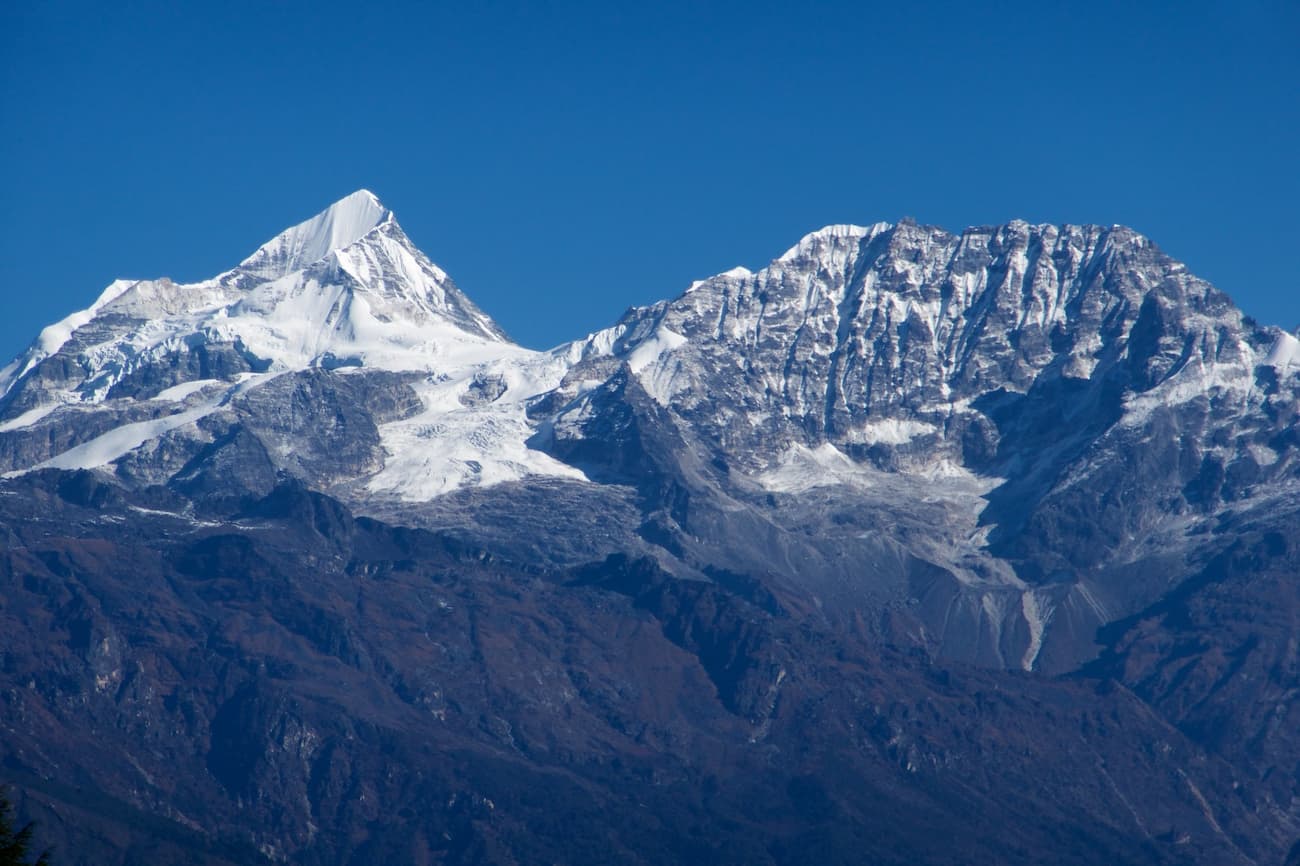
Helambu Trek, a perfect and ideal country walks as well as getting into the local cultures of the hills and mountain people. Helambu Trek, where all can join in for enjoyable week-long trekking, as the walk leads on high scenic ridges.
Staying overnights in the comforts of lovely mountain farm villages facing grand vistas of stunning sunrise and sunsets. Helambu Trek is a great way to experience the beautiful landscapes, and cultures of the villagers in the close backdrop of the Himalayas. The spectacular scenery of snow-capped follows throughout the trek to Helambu, reaching Chisapani and Thade Patti.
The highest point of the adventure, as well for excellent panoramic views of an array of Himalayan towering peaks. Overlooking Manaslu, Ganesh, Langtang, and Jugal Himal range as far towards Annapurna towards the far west horizon.
Helambu Trek, commence with a short drive from Kathmandu city heading towards the eastern outskirt of the valley rim. Reaching a nice small town at Sundarijal, to start the walk heading uphill through lovely waterways and cool forest surrounding. The trail climb towards farm villages, entering dense woodland of rhododendron and pine trees reaching a scenic ridge at Chisapani.
A small settlement with a backdrop of a magnificent panorama of the Himalayan Mountain range, the scenic spot offers striking sunrise and sunsets.
The adventure follows north, walking on scenic high ridges through the beautiful farm settlements of Pati and Gul Bhanjyang. Then reaching the Helambu areas at Kutumsang village and the highest point at Thade-Pati, the highest spot of the trek. From the high hills of Thade-Pati enjoy glorious views of a towering snow mountain range in the north. Facing dramatic scenery of rolling tiers of green hills and valleys, the trail follows entering our major highlights. On reaching Tarke-Gyang the main major village of Helambu and hub of indigenous Hyalmo people, these small tribes dominate the Helambu region.
Explore the lovely village of Tarke Gyang, festooned with colorful prayer flags, and Buddhist monuments of religious walls. Enjoy a pleasant time experiencing the ancient cultures and customs of great heritage linked to Tibetan Buddhism.
As well visiting the old Monastery of Goddess Ama Yangri located above the beautiful village of Tarke Gyang. The houses are carved with intricate designs on wooden doors and window ledges, displaying the gem and treasures of Helambu.
Enjoying a wonderful time and experience at Tarke Gyang and around picturesque Helambu high hills and villages. Slowly our adventure comes to the end of the trek, with an exciting drive back to Kathmandu.
After a marvelous moment on a weeklong Helambu Trek and soaking into local impressive cultures.
Trip Summary:
Mode of Hike: Best available lodge / guest house on treks.
Hiking Grade: Moderate with Ups & Downhill.
Hiking Region: North Eastern Hills beyond Kathmandu valley.
Start and End of hike: Sundarijal to Sermathang with drives both ways.
Highest elevation: At Thadepati 3, 597 m / 11, 801 feet high.
Trek duration: 07 Nights and 08 Days from Kathmandu to Kathmandu.
Total Trip: 11 Nights and 12 Days, from arrival to departures.
Best Seasons:
The best season for Helambu Trek is on spring time from March to May. Including autumn/fall begins from September to November, interested people can visit all year round, except for the summer/monsoon time of mid-June to August.
Springtime is bright and beautiful, most days are clear with sunny days, can be cloudy afternoons. Bringing cold chill in the late afternoon, and night till morning this is the time when wildflowers are in seasonal bloom.
The next best season is autumn/fall, where days are clear with sunny days for views and walks. But shorter days due to limited sunlight hours, cold morning and night times. Winter from December to February is also best for this short few days trekking, with clear late sunshine hours. But cold mornings, late afternoons, and night times. But enjoyable for pleasant walks with clear views of beautiful scenery of snow clad peaks.
Culture & Religion:
The higher hills of Kathmandu valley, mostly populated by the Tamang people, the indigenous tribes of Central Himalayas. Including around the Kathmandu valley rim hills. From Kutumsang onwards to Helambu, major inhabitations of small hill tribes the Hyalmo people. Similar cultures like the Tamang, the Hyalmo are interwoven with the teaching of Buddhism. Follows an impressive heritage traditional customs. Most houses are adorned with prayer flags, and prayer monuments with colorful monasteries.

On first arrival at Kathmandu-Nepal international airport, our staff and guide will receive with traditional welcome. A short drive to your hotel in the hub of Kathmandu city, on checking into your nice rooms. After getting refreshed from the jet-lag, join at the hotel lobby and at meeting room for trek briefing provided by our guide or leader. Information about the hotel, lodge on treks with full details of trekking trails, food and accommodation on treks. As well with do’s and don’ts with welcome group dinner in an authentic Nepali restaurants with local cultural program along with Nepali meals.


Starting the morning with short drive of less than an hour, heading North-East of Kathmandu Valley rim. Reaching a small farm town of Sundarijal, located 15 k.m. east of Kathmandu city. Following our guide with climb towards Shivapuri National Park entrance, facing nice views of waterfalls, brooks and fresh streams.
The trail follows uphill to a nice farm villages and then into a lovely rhododendron and pine forest. The last short climb reaches Chisapani, located on a high ridge north of Kathmandu valley. Where air gets cooler facing views of snow-capped peaks from Annapurna-Manaslu-Ganesh Himal and Lang tang Himal.
The views extends towards Jugal Himal with Annapurna and Manaslu in the far west, check into a nice simple lodge. Late afternoon enjoy the stunning views of sunsets reflects over chain of Himalayan peaks in the north.

Enjoying the glorious morning views of striking sunrise over an array of white peaks, having breakfast. Walk begins heading down to Pati Bhanjyang a nice village, as walk continues with steep climb towards a high ridge. The walk follows on gradual winding path through small cool serene forest. Then ending the morning walks on reaching Gul Bhanjyang for lunch and overnight stop.
Gul Bhanjyang a Tamang village with lively small bazaar lined with shops, stores and tea-houses. The village festooned with Buddhist prayer monuments of Stupas and colorful flags of religious significance.

Another short morning walks, allowing visitors to enjoy more of local cultures and simple villages farm activities. From Gul Bhanjyang climb leads to another nice village of Chipling, the walk continues past farm villages. Facing grand scenery of surrounding green rolling hills. Then slowly the morning walk ends arriving in Kutumsang, a lovely small village of the Sherpa-Hyalmo and Tamang natives. Afternoon at leisure to explore this small nice near farm village overlooking grand views of surrounding beautiful landscapes terrains with snow clad peaks.

Today’s morning walk although a short treks of few hours leads to the highest point of the adventure. Starting the day with fresh morning walk, as the trail follows towards higher areas with climb. Reaching on top Yurin Danda / Ridge, a lovely walk amidst dense rhododendron, pines and oak forest.
From the top of Yurin Danda at 3,510 m high, a short descend to cool woodland reaching a nice open meadow. A small place of Mange Goth with few little shades serves as tea-houses, from here a slow climb to Thadepati. Reaching our overnight stop as well for refreshing lunch. Thadepati located on the mid-ways of holy Gosainkunda lakes, and towards our destination to Tarke Gyang.
Thadepati with few simple lodges and teahouses and the highest point of the trek. From this high spot, enjoy spectacular views of rolling high hills with range of peaks of Langtang and Jugal Himal. Afternoon at leisure for short walks around this wonderful high spot.

Morning from Thadepati with morning glory of beautiful scenic surrounding views a short up to the ridge top. Then on long downhill within dense tree lines of rhododendron and pines to enter around inner Helambu. The walk continues crossing a small stream of Chyodi Khola. After hours of pleasant walks then reaching Melamche-Gaon for overnight stop. Located on a nice grassy field surrounded by beautiful coniferous forest.

From this quiet quant little village of Melamche-Gaon, a short morning walk leads downhill to Melamche Khola (Stream). After crossing over a suspension bridge with steep short climb to Tarke Gyang, a nice gem of a village. The main village of Helambu area, reaching by lunch time transfer to a nice homely guest house for overnight stop. Tarke-Gyang, home of Hyalmo hill tribes, a charming settlements afternoon with time to explore the village and its old monastery. The Hyalmo natives of Helambu follows Buddhism and similar culture, traditions to its neighbors Sherpa and Tamang tribes.
Tarke-Gyang and around Helambu is also famous for Buddhism heritage and culture, as well for arts and handicrafts that one can observe around the houses.

On completing our major highlights of the treks, having pleasant, enjoyable time at Tarke Gyang and Helambu villages. Morning walk leads on gentle forested trail then reaching another lovely village Sermathang. Transfer into a nice lodge and enjoy the afternoon tour of village and its interesting Gompa (monastery).

Our marvelous walks comes to an end, with short morning walk to a road-head for exciting drive to Kathmandu. Riding on jeep or similar type of vehicles, heading towards winding downhill. Then reaching low warm heavily farmed areas around large town of Melamche Bazaar. Having a short refreshing stop, drive continues leaving the rough dirt track for a good road. The drive heads to winding uphill to cooler hill at Dhulikhel, a scenic town. A famous hill station for grand panorama of Himalayan Mountains. After a possible lunch stop in Dhulikhel town, few hours of good scenic drive to Kathmandu. On checking into your hotel rooms, rest of the afternoon at leisure after an exciting Helambu treks.

We have reserved a free day in Kathmandu, where all can relax and enjoy individual activities or shopping. Interested people can join in for exciting sightseeing tour of Patan / Lalitpur and Bhaktapur cities, worth a visit.

Last day in Nepal and at Kathmandu, get ready for final departure as per your international flight time. Himalayan Forever Trek guide and staff transfer you to the airport. Bidding farewell to the guide and staff as you depart for homeward bound flight, after a wonderful experience and adventure on Helambu Treks.
My Helambu Trek was one of the most refreshing and peaceful trekking experiences I’ve had in Nepal. Unlike the busier trails, Helambu offered a perfect blend of quiet forests, traditional villages, and warm hospitality from the Hyolmo people. Every day felt calm and rewarding, with beautiful views of snow-capped peaks like Langtang Lirung appearing unexpectedly around the corners. The trail was moderate and perfect for someone like me who wanted a less crowded route with authentic cultural experiences. I especially enjoyed staying in the local teahouses—simple, cozy, and filled with genuine kindness. The food was fresh and delicious, and the locals always made me feel at home. One of my favorite parts was walking through rhododendron and pine forests early in the morning, hearing nothing but birds and the wind. It felt like a true escape from the busy world. The trek also gave me insight into the Hyolmo culture, their monasteries, and their daily lifestyle, which made the journey even more meaningful. Overall, the Helambu Trek is a hidden gem—peaceful, culturally rich, and perfect for trekkers seeking nature without the heavy crowds. I highly recommend it to anyone looking for a short yet fulfilling Himalayan adventure.

Purpose: Keep sweat off the skin and maintain warmth.
Purpose: Trap body heat in cold air at altitude.
Tip: Keep electronics in inner pockets at night to prevent freezing.
The treks starts from Sundarijal farm town, north-east of Kathmandu valley and ends at Sermathang village. Located around Helambu areas and then taking a drive to the east suburb of Kathmandu valley. The drive leads past scenic Dhulikhel town to reach the city areas in Kathmandu, the trek includes drives both ways.
Starting walks from Sundarijal, and then leaving the Kathmandu areas, reaching the hill district of Sindupalanchok and Langtang National Park, the first park around the high Himalayan region of Nepal.
Walking through hills villages, populated by Tamang tribes with Sherpa and Hyalmo. As walk enters Helambu areas and at Tarke Gyang more of Hyalmo people interwoven to Buddhism similar heritage culture to its predecessors the Tibetans. The walk leads to scenic views points at Chisapani and Thade-Pati for stunning sunrise and sunsets. Overlooking series of Central and Western Himalayan mountain range, walking amidst enchanting forest of tall rhododendron and pine trees. The scenic views of Nepalese country landscapes and snow-capped along with local impressive cultures is the highlight of Helambu Treks.
As season wise, during spring and autumn the best time for trekking, most days are fine and clear. To enjoy views and pleasant walks, however can expect light rain sometimes. But most days are bright full of sunshine in the best seasons of March to May. The next best times is autumn / fall from September to November, in all good seasons, above 2,000 m high. Minimum temperatures drops to minus 0° and maximum of 20° Celsius. In autumn the sun rise late by 5:30 a.m. and sunsets by 5 p.m. makes the morning and night time much colder of minimum temperatures from minus 5° to 10° Celsius.
Depending upon altitude wise. Maximum of 15° to 20° Celsius, around high altitude above 2,500 the sunlight gets bright with strong UV. Trekkers needs to carry sun-blocks and wearing sun-hats to block the sun against the UV rays around higher altitude, especially in direct sunlight of afternoon.
One of the best moderate adventure, the trail are fine and well defined with many good places for refreshing stops. Although all Himalayan destinations leads to steep climb and downhill. Taking slow, having time for short stop to enjoy will be the best. Only few days is quite tough climb towards Chisapani and reaching Kutumsang and Thade Pati. But most days walk is normal with gradual ups and downhill.
Every villages and settlements have hydroelectricity or solar power, where trekkers can charge electronic items. A fee is charged for each gadgets as per hour basis, the price differs from one place to another.
The Helambu Trek is a Nature trek from short to moderate in the Langtang area. The trek is perfect for people seeking calm and solitude along the trail, meeting and observing the village way of life, visiting and learning about Buddhist monasteries, and getting outstanding views of the Himalayan peaks. Because the Helambu Trek is the closest of all the trekking circuits to Kathmandu, you can take your pick and only utilize a minimum of your time for travel, but still enjoy the breathtaking mountains.
The majority of the Helambu trek schedule remaining days will be between 5 and 7 days, which is a direct function of individual pace and selected mountain route. Sundarijal and Melamchi are usually considered the two possible starting points from where you can adjust itineraries to suit beginners, families, or even seasoned trekkers.
Indeed, the Helambu Trek ranks among the easiest nature treks you can take in the Himalayan region of Nepal. The altitude involved is mid-level, the routes are clearly marked, and the total number of hours walking per day is generally quite manageable. It allows users to slowly build up experience and stamina for progressively more difficult Himalayan treks.
Helambu is well known for its Hyolmo (Yolmo) culture, beautiful monasteries with a long history, apple and other fruit orchards, green forests, and breathtaking views of snow-clad mountains. The area features sustainable tourism as the main source of income, and thus a perfect haven for the tired and overworked who are longing for peace and, at the same time, experience the rich traditional cultural life of the region.
Usually, the highest point is around 3,600 meters next to Tharepati. Most people find that this elevation is quite comfortable and up to 10 times less likely to cause mountain sickness than going further up the Himalayas.
Definitely no, a basic level of fitness and the ability to walk for 5–6 hours a day are enough to complete this trek. The Helambu Trek is suitable for first-timers, families, and people who want to have a short adventure near Kathmandu.
The treks around the Helambu area are not overcrowded, and you may compare the rate of traffic to that of the valley of Langtang or the routes of Everest and Annapurna. The trails remain serene and quiet all the time, and give you a chance to have a relaxing and immersive trekking experience.
Among the many beautiful things you will be able to see on this hike are streams, the blooming of rhododendrons in the woods, terraced agricultural fields, Tamang and Hyolmo villages, monastery yards, and stunning views from the ridgeline. It is one of the most attractive treks in the lower Himalayas of Nepal.
That is true. The Helambu route's safety is beyond question. The hiking paths have been looked after properly; there are some lodges all along the trek where one can stay, and the altitude has been kept at a moderate level. Treklanders Adventures guarantees the presence of experienced guides for the safety of the trekkers and the efficient execution of the itineraries lay down.
This journey would be well-suited to individuals just starting, cultural-loving trekkers, families; camera-happy people, those who like to take their time slowly, and anyone who wants to do a beautiful Himalayan trek without encountering too many people and at a moderate level of difficulty.
The most suitable seasons for the Helambu Trek are spring and autumn. The months of March to May and September to November, respectively, are characterized by stable weather, moderate temperature, clear sky, and beautiful natural surroundings. These conditions make the journey both pleasant and safe.
Spring days are warm, and the visibility becomes excellent due to the flowering of rhododendron trees and the greenery of the hills. The trails are alive with color, and the air is warm, thus making it one of the most attractive times to visit Helambu.
The primary factors determining the popularity of autumn are mountain views without the slightest trace of fog or mist, pleasant weather, and almost no rainfall. After the monsoon, the air is fresh and clean, which is ideal for photography and trekking. This is also the most weather-wise stable period.
Certainly, a trek could be made in winter (December–February), albeit with the understanding of cold mornings and nights, and an occasional snowfall at the highest point, like Tharepati. Quietness is a feature of the trails during this time, and the views are usually very clear. Appropriate winter wear is a must.
The Monsoon (June–August) is not a good time due to heavy rains that make the trails slippery, leeches mostly found in forested areas, and the mountain peaks covered with clouds, thus no views. However, the lower Helambu region continues to be green and fresh, and only the most skilled and experienced trekkers might find some pleasure in the isolation. Forested areas require extra care.
Helambu is least crowded during the winter and monsoon seasons. These two seasons offer a quiet and serene trekking experience to those who are at peace with the harsh weather and like trails without other people.
The Helambu Trek is an easy-to-moderate one; thus, it ranks as one of the most beginner-friendly treks in Nepal. The altitude has not gone very high, and the walking trails are also nice and clean. So basically, any person with average fitness can do it without any problem.
Not at all, the Helambu Trek is the perfect choice for those who have never been trekking before. It is also suitable for families and casual trekkers who want to experience a beautiful Himalayan journey without the hassle of physically demanding high-altitude treks.
The climb to Tharepati (at about 3,600 meters) is certainly the hardest part due to longer walking hours and steeper trails. But most trekkers encounter it with slow pacing and take proper rest, and therefore, they handle it well.
Walking 5 to 6 hours each day is what you can expect, but it also depends on your pace and overnight stops. There are days when you will walk less, and the path will be easy; however, on ridge sections and climbs, you might have to walk for longer hours.
Yes, you do need to be physically fit. Even though the trek is not very demanding, just having basic fitness would be of great help. Doing regular walking, light cardio, and stair climbing for 2-3 weeks before the trek will get you into good shape for the trek.
Certainly, the trails are for the most part safe, nicely marked, and used by both locals and trekkers. However, Treklanders Adventures guides are always there to ensure the safe pacing of the trek, route navigation, and also to check the weather conditions.
The chance of altitude sickness is very minimal as the highest place is only approximately 3,600 meters, which is way lower than other Himalayan treks. Still, walking slowly, being hydrated and taking rest breaks will help in acclimatization, and therefore, it will be safe.
The most common symptoms are headache, nausea, dizziness, tiredness, lack of appetite, and difficulty sleeping. These symptoms usually occur when the body is in the process of acclimatizing to high elevation. Recognizing symptoms early is the key to preventing serious health problems.
One should minimize the walking speed, keep the body hydrated, take short breaks, and also refrain from drinking alcoholic beverages. Even when going on a not-so-high trekking route like Helambu, holding a steady pace is what enables the body to acclimatize. The Treklanders Adventures guides keep an eye on your condition and make sure that you are ascending safely.
Altitude sickness symptoms coming to you? Then, your guide must be the first person to know. Minor symptoms may get better if one takes rest, drinks warm fluids, and follows a slower pace. If symptoms deteriorate, the key to success is getting lower in elevation quickly. The very first thing that should be done is not to push yourself uphill when you are feeling bad.
Usually, Helambu is not an area where one would need Diamox because its elevation is moderate. However, to be on the safe side, a few trekkers might have it with them, but only after a consultation with their doctor. In case you have ever been susceptible to altitude, it would be best to discuss with your doctor medication before embarking on the trek.
Accommodation is arranged in local teahouses and family-run lodges along the trail. The rooms are modest but comfortable and are usually equipped with twin beds, blankets, and basic furniture. Helambu is a well-established trekking area, so you will not have any difficulty in finding teahouses at your overnight stops.
Most of the teahouses have private twin-sharing rooms. During the peak seasons, for instance, in spring and autumn, the rooms may be occupied quickly, but your guide will always make sure that you have the best available option. There might only be a few instances in which you will have to share a room with other people.
There are a few lodges with attached bathrooms at lower elevations, but as you go higher, they become fewer and farther apart. The majority of the teahouses have shared bathrooms, which are clean and functional but may be basic.
The rooms normally do not have heating. The dining hall, however, usually has a wood or gas stove where trekkers can gather for warmth during the evenings. The nights can be very cold, especially in higher villages, so it is advisable to bring a warm sleeping bag.
Hot showers are available in most villages located at the lower part of the trail and are usually heated by gas or solar power. As you go further up, the availability of hot showers may become limited, and there may be a small charge. Hot water may not always be available during the coldest days.
Definitely, the Helambu area has safe and hospitable teahouses. The level of cleanliness is mostly good, especially in the lodges that are run by the local community. Treklanders Adventures picks the teahouses that are not only reliable but also provide quality services, hygienic meals, and comfortable lodging.
Blankets are provided by the teahouses, but they may not always be sufficiently warm during the cold seasons or at high altitudes. It is a good idea to have a sleeping bag with a temperature rating of -10°C for extra comfort and warmth.
The Helambu trail or trek teahouses serve wholesome meals that are cooked fresh and warm. Various dishes like dal bhat (rice, lentils, vegetables), fried rice, noodles, pasta, omelets, soups, potatoes, Tibetan bread, thukpa, and pancakes are usually served. It is said that lower villages generally offer more vegetables and homemade food, while the higher areas provide simpler foodstuffs because of the limited supply.
Definitely, the food in teahouses is made in hygienic kitchens with fresh and local ingredients. The Helambu area is known for its great hospitality and home-style cooking, which in turn makes the food both hygienic and nutritious. The best way of keeping fit on the trek is by taking freshly cooked and hot food.
Indeed, vegetarian meals are widely accessible, and vegan options such as potatoes, rice, chapati, soups, and vegetable dishes are easily made available. Those with strict dietary needs may want to bring a few extra snacks with them for the trek.
Water for drinking is good when it is boiled or purified. Teahouses sell boiled water at a small price, and trekkers can use purification tablets, drops, or a filtration bottle. Bottled water is available in the lower villages, but it becomes more costly as you go up.
Dually, at every teahouse on your path, you can fill up your water bottle. Hot or boiled water is accessible, and purified water can be obtained without difficulty. Two reusable bottles or a hydration bladder will be very convenient during your long walking days.
Generally, drinks are black tea, ginger tea, lemon tea, hot chocolate, instant coffee, juice, and a wide range of soups. Warm drinks are great for hydration and body temperature adjustment, especially during cold mornings and nights. You'd better not drink alcohol until you are done with the higher-altitude parts.
Of course, if you are bringing with you snacks such as nuts, chocolate, trail mix, energy bars, and hydration salts, it will be very convenient for you. Teahouses do offer snacks, but the amount may be limited, and the price may be higher at the altitude. So, if you bring them with you, it is an assurance of energy during long trekking hours.
Yes, there is mobile network coverage for both NTC and Ncell in most villages on the Helambu route. Sundarijal, Chisapani, Kutumsang, and Melamchi, etc., places of lower and mid-altitude have good signals. Nevertheless, due to elevation and terrain, the network may be too weak or only sporadically available in higher areas like Tharepati.
Wi-Fi services are available in a few teahouses, especially in the lower villages, but the speed is not always the same. Some lodges might give Wi-Fi free of charge or at a small fee. However, in the upper regions, the internet may be very slow, or there might not be a Wi-Fi connection at all.
Mobile data is a good option in the lower regions, but it is not always reliable in the upper regions. If you wish to have mobile data, then you should see it as a bonus, not a communication source that is always available during the trek.
When it comes to support, communication among the guides takes place through the use of mobile networks. Also, the help comes from locals who contact different places, and guides inform the staff of the situation quickly. Treklanders Adventures guides have undergone emergency management training and, hence, will be in a position to immediately offer support or organize an evacuation if required.
Buying a SIM card for NTC or Ncell in Kathmandu will make your life easier if you want to stay connected in the lower villages. NTC, in general, can offer better service in the Langtang–Helambu region.
Most teahouses have a service where one can charge their phone or other gadgets, but it is done for a small fee. The electricity used is mainly from the sun or from a local stream, so being dependent on the weather is inevitable. For multi-day treks, it is a good idea to carry a power bank with you.
In villages of lower and mid-level, yes, you can do it without any stress via mobile data or Wi-Fi, which your family will appreciate greatly. Communication, however, might be at times or completely not at all, once you reach higher altitudes such as Tharepati. Many trekkers announce to their families before the trek that they will not be able to communicate for a day or two.
A guide is not necessary, but it is very safe and helpful. If you are doing the trek for the first time, a guide is definitely the best choice. A certified guide guarantees a safe trek, takes care of the day-to-day logistics, introduces you to the local culture, and changes the speed of the walk according to your fitness level. Treklanders Adventures offers you guides full of knowledge, and they know every village and each part of the way.
Simply, a porter will carry your heavy luggage (generally 15–20 kg) while you walk with a light daypack of your own. This will make your trek less tiring, and you will lower your chances of getting an injury, which makes the whole trek better. The money from hiring porters contributes to the local employment of the Helambu region.
Absolutely, Treklanders Adventures only assigns those guides and porters who have been to the Helambu Trek a great number of times. Besides, they have also been trained in various areas such as first aid, metal direction, altitude, safety, and emergency response. Hence, they can ensure that trekkers have support throughout their journey.
Yes, mostly trekking guides have excellent English knowledge and can give clear explanations regarding the trail conditions, cultural insights, safety tips, and daily plans. Therefore, communication is usually hassle-free and helpful throughout the trek.
Guides are well prepared for dealing with situations such as bad weather, altitude sickness, and minor injuries. If there is a serious problem, they inform our office and, together with the team, coordinate a quick evacuation or medical support. They always put your safety first.
First of all, the trekker along the Helambu trail must equip himself with two permits: a park entrance ticket of Shivapuri-Nagarjun National Park, which is necessary if you start your journey from Sundarijal, and a TIMS Card (Trekkers’ Information Management System). All these permits play an important role in forest protection, the upkeep of trail safety, and proper registration of trekkers.
You can acquire both permissions at the Nepal Tourism Board (NTB) in Kathmandu. When taking the trekking path from Sundarijal, you can obtain the park entrance permit at the Shivapuri National Park ticket counter. By Treklanders Adventures taking care of your permit needs, you save a lot of time, and your day stays hassle-free.
Indeed, permit-checking staff along the path scrutinizes your papers several times, for instance, at the national park entry and certain villages, where police or rangers are stationed. The trekkers have to show their TIMS card and park entry permit on demand; thus, it is advisable to keep these documents at hand all the time during the trek.
Well, hacking a mountain trek without proper permits can get you into trouble. In case you are caught lacking these documents, you might receive a fine, be delayed considerably, or even get stopped on your way. Holding the correct permits makes things easy and fast without any unnecessary hold-ups.
Firstly, grab your passport, one passport-size photo, and be ready with relevant data such as your emergency contact and trekking itinerary details. However, if you want to go all the way with a corporate-managed solution, Treklanders Adventures will act as your representative, completing the permit process for you.
Indeed, the majority of packages from Treklanders Adventures have already factored in all the necessary fees needed for such permits. Consequently, you are not required to make any extra payments or seasonal courtesies, and you are spared the trouble of lining up in long queues—all will be sorted out even before the start of your trek.
For the Helambu Trek, you need to bring comfortable trekking clothes, warm layers, a down jacket, thermal wear, a rain jacket, and hiking boots. Along with these, get a good sleeping bag, trekking poles, UV-protected sunglasses, gloves, a cap, sunscreen, water bottles, toiletries, and a small first aid kit. Since the weather in the mountains can be quite unstable, it would be good to have warm as well as light clothes.
Trekking poles are a must if you want to reduce the risk of injuries and increase your stability. The Helambu route has a lot of steep uphill and downhill sections, and the poles will help you take the load off your knees, keep balance, and make walking easier, especially when on uneven or forested trails.
Yes, a sleeping bag will come in handy as it gets very cold at places like Tharepati. Although teahouse blankets are available, they may not be sufficient for insulating during cold nights. Sleeping bags rated for low temperatures will provide better heat and comfort.
Physical conditioning is the key to a hassle-free experience. Preparing 2-3 weeks before the trip with daily walks, stair climbing, light cardio, and leg-strengthening exercises will dramatically increase your stamina. The trek is moderate, but it pays off to be physically fit, as it raises your trekking enjoyment level.
Yes, it is wise to carry your own snacks such as nuts, chocolates, energy bars, and rehydration salts. Though basic snacks can be found in teahouses, they may be limited and priced higher in remote villages. By stocking yourself with food, you ensure energy levels remain constant throughout the day.
Your daypack must be kept as light as possible and thus easily portable. The most important things to be kept in it are water, snacks, a warm layer, rain protection, sunscreen, and essentials such as a mobile phone and documents. Should you decide to hire a porter, he will be the one to carry your main backpack or duffel bag, so you can comfortably walk with the least amount of weight.
The weather in the Helambu area can change from hot in the lower parts to cold and windy at peaks like Tharepati. There are still some chilly mornings and evenings, even during the best seasons. If you have warm layers, a windproof jacket, and waterproof clothing with you, then you can be sure that you will be comfortable no matter what the weather is like.
You should keep with you your personal medications such as pain killers, altitude tablets (if advised), anti-diarrheal medicine, bandages, and other necessary items. Medical facilities along the route are only basic, so it is very important to have your own medication readily available.
Absolutely, travel insurance is advisable and should accompany you (whatever the case may be), as the trek is not a super high one. An insurance policy protects the insured during medical emergencies, accidental injuries, unexpected illnesses, or trip-related delays. So, the insurance acts as an extra layer of safety throughout the whole journey.
An insurance policy should be inclusive of expenses related to medical treatment, emergency evacuation, accidental injuries, high altitude up to approximately 4,000 meters, cancellations, and delays of the trip. A comprehensive policy equips you with all the protective measures in the face of unpredictable events while in remote trekking areas.
Despite the fact that the Helambu district is not very far from Kathmandu, serious health problems might still necessitate an urgent evacuation. To state it simply, helicopter evacuation coverage will enable the sick person to be transported quickly and safely to a hospital if that's the case. The availability of such a service not only stops you from having to pay an exorbitant bill for a rescue but also guarantees a speedy response to the situation at hand.
Healthcare facilities available along the Helambu Trek are limited to small, rundown local health posts that can be found in villages like Kutumsang or Melamchi. These centers are capable of managing minor issues such as a common cold, headaches, or light injuries. However, in the case of severe health problems, trekkers will have to make a trip back to Kathmandu to get the right medical treatment. It is strongly advised to carry personal medications and a basic first aid kit along with you.
Even so, altitude sickness can be a risk; however, it is much less frequent. For comparison, Langtang or Everest Base Camp are known to be high-altitude treks where altitude sickness is a more serious problem. The highest point on the Helambu route is at Tharepati, with an elevation of about 3,600 meters, which is still regarded as a moderate altitude. Trekkers should definitely keep their pace under control and drink enough water so as not to develop symptoms.
Practicing good hygiene is vital if one wants to have a safe trip. Before eating, always wash your hands with soap or sanitize them, and do not forget to drink water that is either boiled or purified. Also, stay away from uncooked foods as they might cause stomach upset. By wearing clean socks, keeping your body warm, and not letting the cold wind hurt you, you will be able to prevent getting sick and becoming weak. Consuming hot and fresh meals will also supply you with the necessary energy tanks throughout the trek.
Most of the time, the trek is secure, but bad weather may strike suddenly in the hills. During the rainy period or foggy days, the trails that go through the forests may get very slippery, and thus one should be very careful. While it is true that in winter the highest points like Tharepati could be covered with ice, it is not always the case. The weather condition at the moment decides not only the safety, but also the speed and the guide's next step. Proper footwear and waterproof clothing are a must when the weather is uncertain.
Generally, trekkers take off for the Helambu Trek from Sundarijal, which can be reached without any trouble from Kathmandu. In this way, private cars, jeeps, and local buses run regularly. While private vehicles are a faster and more comfortable way to get there, local buses can be used by those who want a cheaper way of traveling.
Most of the routes, therefore, lead to Melamchi or Timbu, from where one can get to Kathmandu by jeep or bus. The return journey is usually between 4 and 6 hours, depending on time, weather, and road conditions.
They are generally safe roads, but there are still some areas that may be a little risky; for example, close to Melamchi or during the monsoon season, where the roads are narrow, uneven, or muddy. Private jeeps give you the most safety and comfort. Treklanders Adventures ensures a pleasant travel experience by providing safe and comfortable transportation.
| No of people | Price per person |
|---|---|
| 1 - 1 | $2,060 |
| 2 - 3 | $1,635 |
| 4 - 8 | $1,515 |
| 9 - 30 | $1,405 |
| No of people | Price per person |
|---|---|
| 1 - 1 | $1,475 |
| 2 - 3 | $1,050 |
| 4 - 8 | $955 |
| 9 - 30 | $845 |
| No of people | Price per person |
|---|---|
| 1 - 1 | $1,475 |
| 2 - 3 | $1,050 |
| 4 - 8 | $955 |
| 9 - 30 | $845 |