Gosainkunda Lake Trek with Treklanders Adventures leads to an exciting thrill towards the mountainous destination around Central Langtang Himal. The nearest Himalayan range from Kathmandu valley, at an aerial distance of 44 km / 27 miles. Drive leads about 6 hours covering 122 km / 57.8 miles to Syabrubesi, starting point of the trek. From Kathmandu an interesting overland journey on the high winding road to Dhunche, the headquarters town of Rasuwa district. As well as the Langtang National Park entry point, where Gosainkunda and the whole Langtang Himal range are located.
Apart from the normal straight route to Gosainkunda, ours is slightly different taking a day longer. This allows trekkers to soak more into local cultures, as well as for acclimatization purposes. Ending the long scenic drive at Syabrubesi, the walk starts heading high hills of Thulo Syabru, an interesting Tamang village. Thulo or Upper Syabru is perched on a high ridge facing grand views of the Ganesh and Langtang Himal range. The adventure continues heading higher into the dense forest of beautiful rhododendron and pine tree lines to Sing Gompa.
The main gateway to our destination to Gosainkunda and beyond to Helambu region, a nice small settlement with an old monastery. From Sing Gompa onwards to a higher elevation as the climb proceeds through lovely forest and then reaches a wide exposed ridge. Where tree lines drop for short rhododendron and juniper bushes facing a tremendous panorama of Western and Central Himalayan peaks.
Overlooking grand views of Annapurna, Manaslu, and Ganesh with Langtang Himal Mountain range, as the climb reaches the top of Laurabinaya. A high ridge is well the highest point of the trek at above near 4,500 m / 14, 763 ft. The trail then follows down to Bhairab Kund to reach Gosainkunda our main highlight.
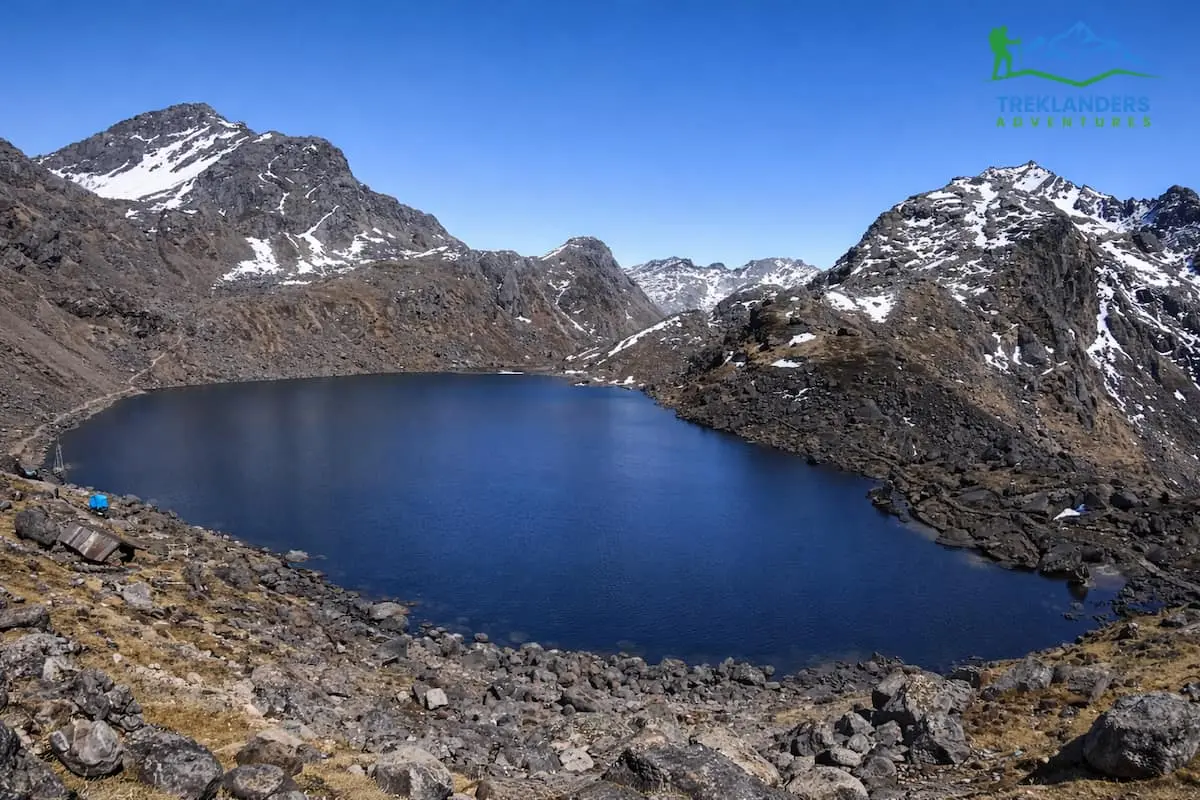
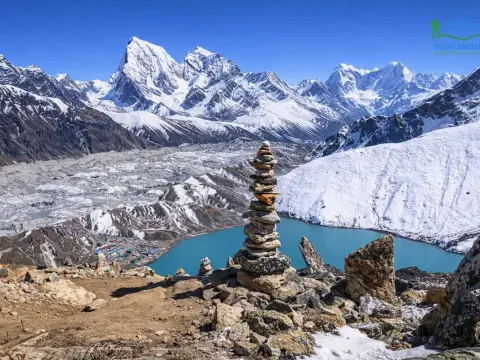
Gosainkunda a glacial lake, is regarded as the most sacred pilgrimage spot in all Himalayas, the lake, is placed on a basin. Enclosed by rocky ridges, and high cliffs with snow-capped peaks, the lake often gets frozen in early spring and late autumn.
In the area around Gosainkunda, in early times there were 108 ponds and large lakes at present more than half a dozen exist. Likewise Saraswati Kunda, Bhairab Kunda, Surya Kunda, and Saraswati, Naga Kunda, with the main Gosainkunda lakes. The calm serene Gosainkunda Lake is worshiped by the Hindus with few Buddhist Devotees on special occasions. Which annually takes place in August, according to the Hindu religious calendar, thousands of Hindus throng for worship and prayers. A small shrine of Lord Shiva is located on the lake shore, the creator of the lakes around Gosainkunda.
After a wonderful visit to Gosainkunda around its pristine surroundings, walk down to Sing Gompa. Then on an alternative route to reach Dhunche town for the last overnight halt within Gosainkunda and Langtang Himal region.
A scenic drive brings you to the hustle, bustle city of Kathmandu, after a marvelous adventure and experience on Gosainkunda Lake Trek.
Trip Summary:
Mode of Trek: Best available lodge / guest house on treks.
Trekking Grade: Moderate to Adventurous.
Trekking Region: Around Rasuwa district and Langtang Himal.
Start and End of trek: Dhunche to Dhunche with drives both ways.
Highest elevation: At Gosainkunda 4,380 m / 14,370 feet.
Trek duration: 06 Nights and 07 Days.
Total Trip: 10 Nights and 11 Days, from arrival to departures.
Best Seasons:
The best season for Gosainkunda Lake Trek is spring from March to May. Including autumn/fall begins from September to November. Gosainkunda leads to short moderate and adventurous walks, interested people can visit all year round. Except for the cold winter months of December to February, as most mornings and late afternoons with freezing temperatures.
Springtime is bright and beautiful, most days are clear with sunny days, can be cloudy afternoons. Bringing cold chill in the late afternoon, and night till morning this is the time when wildflowers are in seasonal bloom.
The next best season is autumn/fall, where days are clear with sunny days for views and walks. But shorter days due to limited sunlight hours, cold morning and night time can expect snowfall sometimes.
Culture & Religion:
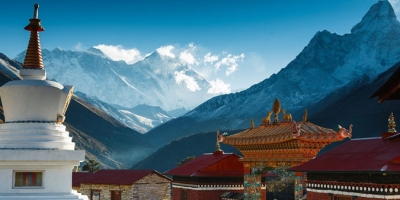
The Langtang Himal and Gosainkunda region is populated by the famous Tamang the main tribes of Langtang and Central Himalayas. As well around the Kathmandu Valley rim hills, the Tamang interwoven with the teaching of Buddhism follows an impressive heritage and culture similar to its predecessors the Tibetans. Most villages have monasteries known as Gompa, every house adorned with prayer flags, and religious monuments.
Around the Langtang Region, more than 80% of people are from Tamang. Follows a brilliant tradition, and unique culture including a distinct language, cultural dress, script, ethnic instrument, and social manners. Their language comes from a branch of Tibeto-Burman origin. However, Gosainkunda is regarded as a holy site for the Hindus but is respected by the Tamang Buddhist followers also. Where a great religious festival is held at Gosainkunda, which falls during the monsoon wet month of August. As per the Hindu Lunar Calendar, where thousands of Hindu followers visit Gosainkunda for a holy bath and a dip. Belief is that relinquishing the sins of hundreds lifetimes, the event is known as Jani-Purnima on full moon time. An auspicious day for Hindu men to change their sacred threads, which bounds them from certain restrictions.
Please Note:
Interested people can enjoy a short visit to worship and prayers at Gosainkunda Lake. Treklanders Adventure also organize Helicopter Tour to Gosainkunda of 1-2 hours.

On first arrival at Kathmandu-Nepal international airport, our staff and guide will receive with traditional welcome. A short drive to your hotel in the hub of Kathmandu city, on checking into your nice rooms. After getting refreshed from the jet-lag, join at the hotel lobby and at meeting room for trek briefing provided by our guide or leader. Information about the hotel, lodge on treks with full details of trekking trails, food and accommodation on treks. As well with do’s and don’ts with welcome group dinner in an authentic Nepali restaurants with local cultural program along with Nepali meals.


Start the trek early from Dhunche (1,960 m) and follow the uphill trail that leads through pine and rhododendron forests. The path gradually ascends past small settlements and teahouses, offering occasional mountain views. Continue climbing through shaded forest sections until you reach Deurali, a common stop for rest and lunch.
After a short break, the trail becomes steeper as you hike through dense woodland and higher ridges. The final stretch offers cool air and glimpses of the Langtang Himal before you arrive at Sing Gompa (Chandanbari, 3,250 m). This beautiful village is known for its monastery, peaceful atmosphere, and a traditional cheese factory.
After checking into a lovely rooms, with time for short stroll to a small yak cheese

Morning from Sing Gompa, starts with a steep climb, facing grand vista of Langtang Himal range to the north. Includes the Ganesh-Himal, Manaslu and peaks of Annapurna range towards far northwest. The first part of the walk is on gradual winding path through oak, pine, and rhododendron forest. Then reaching an open areas on leaving the tree lines, a small place with a tea houses.
Enjoy the brief break having refreshments along with beautiful surrounding scenery. Ascend leads further to Laurabinaya high ridge, a place where pilgrimage leaves their walking sticks. Pilgrims visit to Gosainkunda during the full moon in August to pay homage and take a ritual bath. Where they abandon their walking sticks as they return down to Dhunche. After a half-hour descent, you'll come across the first ponds Saraswati and Bhairab Kunda. From there, after a short climb, spend your night at Gosainkunda small simple lodge, above the holy lake.


After a wonderful time at Gosiankund with last overnight on the hills of Langtang Himal. Morning drive on the scenic and exciting highway to Kathmandu, drive leads beyond Dhunche, Ramche towns and near Trisuli Bazaar. On reaching the city in Kathmandu, transfer to your hotels. Rest of the day at leisure after an enjoyable, marvelous trek to Langtang Valley.

Enjoy an extra day in Kathmandu with individual activities or get into shopping spree. Interested people can join for another interesting tour of other cities of Kathmandu valley. Sightseeing around Patan / Lalitpur or the famous Bhaktapur city Durbar Square, worth a visit.

After an enjoyable and most mesmerizing time in Nepal, around the Himalayas on Gosainkunda Lake Trek. As time for departure, our staff transfer you to international airport for flight homeward bound or to next port of call.
My Gosainkunda Lake Trek was one of the most unforgettable journeys I’ve ever taken. From the very first day, the trail felt like a perfect blend of adventure, culture, and pure Himalayan beauty. The climb up through the forests and small villages was rewarding, but nothing prepared me for the moment I reached Gosaikunda. The frozen lake surrounded by snow-covered peaks looked absolutely magical—like stepping into another world. The sunrise over the lake was the highlight of my entire trip. Watching the first light hit the mountains and reflect on the icy surface was truly breathtaking. The trail was challenging at times, especially the final ascent to the lake, but completely worth every step. I also appreciated the warm hospitality along the way. The lodges were simple and comfortable, with delicious food and friendly people who made the experience even better. Treklanders Adventures arranged everything smoothly, and my guide made sure I felt safe, informed, and encouraged throughout the journey. If you’re looking for a trek that offers spiritual significance, natural beauty, and a real Himalayan adventure, Gosainkunda is absolutely the one. I’d do it again without hesitation.
I had never done a proper trek before, so choosing the Gosainkunda trek felt both exciting and scary for me. I’m really glad I decided to go with Treklanders Adventures, because they made the whole experience comfortable from the very beginning. As a first-time trekker, I had many questions and worries, but everything was explained clearly and patiently. Our guide, Ramkumar, played a huge role in making this trek successful for me. He was calm, encouraging, and always attentive to everyone’s pace. Whenever I felt tired or unsure, he motivated me with positivity and practical advice. He also shared interesting stories about the region, culture, and the spiritual importance of Gosainkunda, which made the journey even more meaningful. The trekking pace was perfect for beginners, and safety was clearly a top priority throughout the trip. I never felt rushed or left behind. Seeing Gosainkunda Lake for the first time was an emotional moment for me, and I honestly couldn’t have imagined a better introduction to trekking. This experience gave me confidence to do more treks in the future. I highly recommend Treklanders Adventures and especially guide Ramkumar for anyone doing their first trek.
Having completed several treks in Nepal and other regions, I can confidently say that the Gosainkunda trek with Treklanders Adventures was well organized and professionally handled. The route planning, daily pacing, and logistics were smooth throughout the journey. Our guide, Anurag, demonstrated strong leadership and deep knowledge of the terrain, weather, and local culture. He knew exactly when to push the pace and when to slow down, which is something experienced trekkers truly appreciate. The trek felt balanced—challenging yet enjoyable. Gosainkunda itself was stunning, and the overall experience met high trekking standards. I would gladly trek again with Treklanders Adventures.
As an international traveler visiting Nepal for the first time, the Gosainkunda trek with Treklanders Adventures was an unforgettable experience. Everything was well organized, from permits to accommodation, which made the journey stress-free for someone unfamiliar with the region. The team was professional, friendly, and always ready to help, which made me feel welcome and safe throughout the trek. The landscapes were absolutely breathtaking, changing every day as we moved higher into the mountains. I also appreciated the cultural insights shared along the way, which helped me understand the local lifestyle and spiritual importance of Gosainkunda. The trekking pace was comfortable, allowing time to enjoy the scenery and connect with fellow trekkers. This trek exceeded my expectations and gave me a true taste of Nepal’s natural beauty.
Doing the Gosainkunda trek with Treklanders Adventures as a solo traveler felt surprisingly comfortable. During the tougher uphill sections, Rajkumar(Guide) was always nearby, quietly checking in and making sure no one felt left behind. The group dynamic was friendly, the planning was smooth, and the peaceful mountain environment made the entire journey deeply rewarding.
We did the Gosainkunda trek with Treklanders Adventures as a group of friends, and it turned out to be one of the best trips we’ve taken together. From start to finish, everything was well coordinated, which allowed us to focus on enjoying the trek rather than worrying about logistics. The walking pace was flexible, the stops were well planned, and there was plenty of time to laugh, take photos, and soak in the mountain views. Reaching Gosainkunda Lake together was a special moment for all of us. The trek created strong memories, great bonding, and stories we’ll be talking about for years. Highly recommended for friends traveling together.
Traveling with family always requires extra care, and the Gosainkunda trek with Treklanders Adventures met our expectations perfectly. From daily planning to accommodation, everything felt thoughtfully managed, which allowed us to relax and enjoy the journey together. Some members of our family were slower, but the trek never felt rushed or stressful. A lot of the credit goes to Ramkumar, who handled the group with patience and quiet confidence. He paid close attention to everyone’s condition and adjusted the pace when needed, which made a big difference for us. His knowledge of the area and calm attitude created a sense of trust throughout the trek. Reaching the sacred Gosainkunda Lake as a family was a truly meaningful experience. We felt safe, supported, and well cared for from start to finish.
The Gosainkunda trek with Treklanders Adventures was a dream for someone who loves nature and photography. The timing of the walk allowed for peaceful mornings and dramatic mountain light. Every turn revealed a new landscape worth capturing. The journey felt calm, unhurried, and deeply connected to the surroundings. Gosainkunda itself was absolutely magical.
As someone always mindful of travel costs, I was pleasantly surprised by the Gosainkunda trek with Treklanders Adventures. The trek offered excellent value for money—accommodation, meals, and logistics were all included without hidden fees. Every aspect felt well planned and transparent. A special mention goes to Anurag Thapa, whose guidance made the trek smooth and enjoyable. He was attentive, practical, and always ready to help, which made the whole journey feel effortless. From breathtaking landscapes to thoughtful planning, this trek proved that a high-quality experience doesn’t have to break the bank. I’d happily recommend it to anyone traveling on a budget.
Booking the Gosainkunda trek with Treklanders Adventures was seamless from start to finish. The team was quick to respond to my questions, explained the itinerary clearly, and ensured all permits and accommodations were organized in advance. During the trek, everything ran smoothly, and any small issues were handled efficiently, which made the experience stress-free. I especially appreciated how the guide quietly managed the group, anticipating needs and making adjustments without being asked. This attention to detail and professionalism made a big difference, particularly for someone like me who values organization and support. Overall, the combination of excellent customer service and thoughtful on-trail guidance made this trek memorable and worry-free.
The Gosainkunda trek with Treklanders Adventures was more than just a trek—it was a journey that left a lasting impact on me. From the moment we started, every day brought new challenges and breathtaking scenery that pushed me beyond my comfort zone. Along the way, Rajkumar was a steady presence, guiding us with patience, encouragement, and quiet wisdom. His insights about the mountains, local culture, and the spiritual significance of Gosainkunda added depth to the experience that I’ll never forget. Reaching the sacred lake after days of trekking was an emotional moment. The sense of accomplishment, combined with the serene beauty around me, made me reflect on perseverance, nature, and the importance of being present. This trek wasn’t just about physical achievement—it changed the way I see the world and myself. I feel grateful to Treklanders Adventures and especially to Rajkumar for making it so meaningful.
Purpose: Keep sweat off the skin and maintain warmth.
Purpose: Trap body heat in cold air at altitude.
Tip: Keep electronics in inner pockets at night to prevent freezing.
Age is no bar for this short moderate trek for a week duration, family with young kids and elderly people can join. But all needs to be physically fit and in sound health to cope with ups and downhill walks. Rest of the walks is normal spending overnights in a nice lodge with comprehensive food menu to enjoy.
For young infants, can hire extra porter to carry the kids if required, especially on ups and downhill.
Nearly all villages and lodges have electricity from Hydro or Solar power, where one can charge their electronic items. Where client needs to pay an extra fee for using the power as per gadgets charged. As for internet and cell phone communications, every lodges have the Wi-Fi and internet services, but can be quite disturbing sometimes due to weather and location wise.
Despite the remoteness, the valley provides suitable accommodation with typical Nepalese food service. The local provides good hospitality as for accommodation, in the Langtang region, the accommodation. It is simple with twin-sharing beds. All lodges with warm dining hall and cozy rooms as well, most places on treks having common toilets and bathroom. The foods according to lodge menu, serves continental, Chinese, Indian, Tibetan and Nepali cuisines. As well various warm refreshing drinks.
The itinerary we have provided, allows much time for acclimatization, although a moderate walk. Where steep climb involves for some days, but taking short rest and enjoying the surrounding views will overcome the toughness.
As well enjoying the climb to Sing Gompa, overall it is a moderate adventure, taking slow and following the itinerary days we have set to make the trek enjoyable and most interesting for all trekkers.
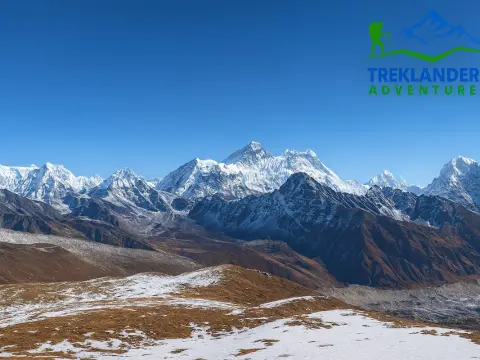
Magnificent Panorama Scenarios with local impressive cultures throughout the trek. Walking with mesmerizing views of the Ganesh Himal, Langtang Lirung (7, 324 m). Includes views as far as Annapurna and Manaslu Himalaya range in the far west. Including local fascinating cultures around Tamang villages of Syabrubesi, Thulo Syabru and Sing Gompa, as well around Dhunche town.
The Gosaikunda Trek is an awe-inspiring short or moderate hike through the Himalayas in the Langtang area of Nepal. The main highlight of the trek is the pilgrimage to Gosaikunda Lake, a glacial lake at a very high altitude and surrounded by breathtaking mountains. In addition to the amazing natural world, the trek is also rich in culture and has a deep spiritual background; thus, it is perfect for both adventure seekers and religious pilgrims.
Most of the trek itineraries are between 4 and 7 days, which would be determined by your route, pace, and whether you head towards Helambu or go back to Dhunche. It is a flexible trekking trail and can be adjusted for beginners as well as experienced trekkers.
The trek is considered to be of moderate difficulty. Although the route is clear, the steep climb to Lauribina and the high-altitude walk to Gosaikunda can be hard. A trekker who has a reasonable level of fitness will be able to do the trek with the right acclimatization without any problem.
Gosaikunda is a sanctified lake for both Hindus and Buddhists; it is said that it was created by Lord Shiva. During the festival of Janai Purnima, thousands of devotees make a pilgrimage to the lake. Besides its religious importance, the lake is also recognized for its beautiful alpine setting and tranquil nature.
Not at all, you don’t need to have been on a trek before to be able to do this one. If you are capable of walking for 5–6 hours a day and have been preparing with light exercises, then the Gosaikunda trek will be of no trouble to you. That said, one should never take altitude lightly, especially when it is above 4,000 meters.
The highest elevation is where Gosaikunda Lake is, at 4,380 meters, and if you happen to go over the Lauribina Pass, you will be around 4,610 meters. Being able to control one’s speed and proper acclimatization are some of the factors that really count at this height.
Certainly, a solo traveler can do the trek, and it is both suitable and safe to do so that way. Most of the time, especially during the peak seasons, the trails are quite busy with other trekkers. Even so, a considerable number of trekkers decide to employ a guide for a smoother journey, greater personal security, and cultural understanding.
You will find the place moderately packed during spring and autumn, while it will be extremely crowded during the Janai Purnima festival. If not for the busiest of days, trekkers can expect quiet trails and untouched nature.
The trekking path unveils numerous marvelous views of Langtang Lirung, Ganesh Himal, and Hiunchuli. Along the way, one will travel through forests that are indigenously comprised of pine and rhododendron and villages that are Tamang in nature. Afterwards, there is high alpine terrain that leads to the picturesque and clear-blue Gosaikunda Lake.
Indeed, the trek can be regarded as fairly safe, but only when one is well prepared. The major problem that comes with this trek is altitude; thus, taking things slow and drinking plenty of water is what has to be done. Treklanders Adventures is committed to ensuring safety through correct pacing, providing comfortable accommodations, and the presence of an experienced guide.
The very lowest parts of the paths are not very difficult, and they include trails through the woods and stone steps. Also, once you go higher, the terrain gets steeper and more rugged. Trekking poles will be very helpful both when you are going up and when you are going down.
The ideal time to hike the Gosaikunda trail is during the spring (March to May) and autumn (September to November) seasons. The place to be at these times of the year is where the weather is stable, the sky is clear, the temperature is warm, and the mountains are visible. Not only are the trails dry, but the Gosaikunda Lake is also crystal blue, which makes the stay more rewarding.
During spring, the days are warm, and the rhododendron forests are blooming; besides, the trekking temperature is very inviting. View of Langtang Lirung, Ganesh Himal, and the surrounding peaks could not be better. This season is the best choice for people who love nature and are delighted to see colorful landscapes and breathe fresh mountain air.
Autumn indeed brings the clearest weather of the year, with blue sky and clear mountain views. After the monsoon, the forests are green, and the air is fresh. The temperatures are nice and warm, so the walk to Lauribina and Gosaikunda Lake becomes very light and pleasant.
Indeed, one can, however, winter (December to February) is very unfavorable and difficult. It snows very heavily, and the temperatures go very low, making the ascent to Gosaikunda and Lauribina Pass very cumbersome and treacherous. Moreover, trails can get really slippery and teahouses in the upper area may close quietly. It is better not to take this risk unless you are a seasoned trekker and you have all the necessary winter clothing and equipment.
Monsoon (June to August) is a period when the fewest things need to be done, and the most problems will be encountered. There will be a lot of rain, slippery trails, leeches, little visibility, and the thick clouds will cover the lake and mountains. In addition, landslide risk will be high. The only good aspect is that the forests and waterfalls will be very green and attractive.
The Gosaikunda trek is full of people during Janai Purnima, which is a major Hindu festival held in July–August, and when thousands of pilgrims go to the holy lake. Apart from the fiesta time, the paths are quiet and peaceful most of the time.
Gosaikunda trek is definitely not an easy task and is a moderate to difficult level of challenge. Especially when you are going from Lauribina to Gosaikunda, it is really steep and requires a lot of physical strength, while rest days are forest walks with gradual ascents through the villages. The elevation factor, especially above 3500 m, is what makes it a lot harder.
The trail is suitable for novice trekkers, but the fitness of the individual should be factored in. In fact, trekkers should be capable of a 5–6-hour walk daily. Besides that, the previous hiking experience will make you feel the steep parts are not so hard, particularly near Gosaikunda Lake.
The moment when you leave Lauribina to go to Gosaikunda Lake is the most difficult one. Not only does the slope get very steep along the way, but the air also gets thinner and the temperature drops. It is also a hard day if you are going to Helambu via the Lauribina Pass (4610 m).
Average fitness will be enough. You will be very well prepared if you do regular walks and stair climbing along with light cardio for 2–3 weeks before the trek. Besides physical fitness, mental strength and the ability to keep a constant pace are equally important.
Yes, altitude is one of the biggest factors that must be dealt with when one is above 3800m. To name a few, symptoms of altitude sickness are headache, dizziness, vomiting, and loss of appetite. Thus, among other things, the slow pace and proper acclimatization that the company of Treklanders Adventures provides are some of the measures to ward off the risks.
It sure is. Altitude sickness is the most difficult part of the trek as the Gosaikunda lake is at 4,380 meters, and some people in the group go over the Lauribina Pass (4,610 m). Most of the time, if the body is not acclimatizing well; the symptoms will follow immediately after the sudden elevation.
Late hypoxia symptoms, to some extent, and at the same time, others can include the following: headache, dizziness, nausea, loss of appetite, shortness of breath, and difficulty sleeping. All of these symptoms are the early signs that the body is not adjusting to the altitude and needs a break or descent.
By not overexerting yourself. But that is pretty much everything that you can do: pace yourself, drink a lot of water, and divide it into small periods. Do not drink wine and keep your pace steady, which is especially important for the three Sing Gompa, Lauribina, and Gosaikunda sectors. Treklanders Adventures guides are always attentive to your condition and make sure the climb is not rushed.
Let the assistance crew know as soon as possible. If the symptoms are mild, they can go away after a rest, drinking warm liquids, or a slower pace, but if they get worse, a step down from the height is the safest and most effective way. You should never continue your way up if you are experiencing symptoms.
It is held by a few of the trekkers who take it as a preventive measure or during mild symptoms. One should consult a doctor prior to its usage. Though not always needed, carrying such medication might come in handy in the high mountain parts like Lauribina.
The trails are not dangerous as they are well-marked and can be easily used by trekkers without any fear. The weather, however, can still play tricks on you, and it is good to know that even when it is sunny at a lower elevation, it can be cold, foggy, and the paths can be slippery at a higher elevation. The safety of the Treklanders Adventures guides is always at the forefront of their minds; therefore, they also decide both the best route and the time for it accordingly.
Keep your hands clean, do not consume unboiled water, and eat fresh meals. Use good socks, protect your skin with lotion, and keep warm with layers. Proper hygiene will help prevent stomach problems and infections.
Under normal circumstances, it is safe to walk along the trail, but fog, snow, or rain can make certain parts, especially those close to Lauribina, very slippery. Treklanders Adventures guides look at weather reports and change their timing or route to be sure you are safe all the time.
Along the route, there are local teahouses that will provide you with accommodation. The rooms are quite basic but still good enough, and normally they will have two single beds, blankets, and some simple furniture. As you ascend, things become less convenient because the area is more remote and the weather is getting colder.
In general, teahouses have private rooms for two people. Nevertheless, during high trekking seasons or the festival period of Janai Purnima, there might be a situation where all the rooms are occupied, and thus, you will be asked to share common areas with other trekkers.
There are very few attached bathrooms on this trek. Most of the teahouses have common bathrooms that might feature both Western and squat-style toilets. The greater your altitude, the less developed the toilet facilities will be.
Not even at higher altitudes are rooms equipped with heating. The dining room is where people come together, and here the wood or gas stove is placed. The nights at Gosaikunda Lake are extremely cold, and for that reason, a thermal sleeping bag is something that you really have to bring with you.
The teahouses at lower elevations will be able to provide you with a hot shower that will be heated either by gas or solar energy. On the other hand, as you go up, it is less and less likely that you will have access to hot water due to freezing temperatures and limited fuel supply. Some trekkers might decide to go without showers on days when it is too cold, while others will opt for a quick washing of some body parts.
Indeed, teahouses that are situated along the Gosaikunda trekking path are not only safe and hospitable but also in good shape regarding maintenance. The level of cleanliness depends on the height, but Treklanders Adventures takes the commitment to pick out good quality teahouses that are known not only for providing comfortable stays but also for offering hygienic meals.
Certainly, it is better to have your own insulated sleeping bag with you since a blanket that is given in the teahouse might not be sufficient when you go up to the higher areas. Around Gosaikunda, the temperature can go below zero even if it is the dry season.
One can get fresh, warm, and simple foods in teahouses that are suitable for trekking. Some of the popular options are dal bhat (rice, lentil soup, and vegetables), fried rice, noodles, pasta, potatoes, omelets, pancakes, soups, and Tibetan dishes like thukpa. Although the menu becomes limited as you ascend, your meals are always filling and energizing.
Along the route, the meal preparations in the teahouses are done in hygienic kitchens using fresh local ingredients. Villages at the lower level have more variety and fresher produce, while the places at the top rely on what porters bring. In fact, all the meals are freshly cooked and served hot.
Yes, certainly. Vegetarian foods are available everywhere and very common in the Langtang region. Vegans may consume potatoes, rice, chapati, soups, and vegetable dishes. People with very strict dietary needs might want to bring some additional snacks.
Water for drinking is safe after purification or boiling. A few dollars are charged for the water, which is sold after boiling in the teahouses, and the mountaineers can use water purification tablets, drops, or filtration bottles. However, bottled water, which is available in the lower villages, becomes costly as you go up and also contributes to the waste; thus, the use of reusable bottles is advisable.
Ambient water is accessible to you at every teahouse through a refill of your water bottle. In most places, one can get hot water that has been boiled. To remain hydrated during the tough sections, such as Lauribina, one can either carry two bottles of water or a hydration bladder.
The most common drinks are tea, lemon tea, ginger tea, hot chocolate, instant coffee, and juice, apart from various soups. Warm drinks are the best for cold nights and help the body to remain hydrated, especially at high altitude. Alcohol consumption is not advised until the high-altitude section is completed.
Indeed, it will be more comfortable if you take with you some snacks like nuts, chocolate, energy bars, and hydration salts. Teahouses provide snacks, but only in small quantities, and at a higher price, they are available at an altitude. Having your own snacks gives you the required energy for the long days of trekking.
Mobile network coverage is available in a few villages down the valley and can also be found around Dhunche, Sing Gompa, and Cholangpati. But as the altitude of Lauribina and Gosaikunda Lake increases, the signal becomes weaker and less stable. Generally, NTC works better than Ncell in the Langtang area, but one should not expect full coverage.
Wi-Fi is available in a few teahouses in the lower parts of the trek; however, it becomes restricted or is not available at all in the higher areas. Even where Wi-Fi is available, the speed might be slow due to bad weather and limited infrastructure. Walkers should accept that they will have partial or no connection to the lake.
Mobile data is very efficient in the lower areas; however, it becomes very inconsistent and sometimes even completely unreliable once you are in the high-altitude sections. It is definitely not a safe assumption to rely entirely on mobile data for communication during the trek, especially on the day to Gosaikunda.
When possible, Treklanders Adventures guides are on the mobile network, while they also use local communication points or radios in the areas that are out of the coverage zone. In case of very few exceptions, communication may have to go down to a lower village where the signal is better.
Indeed, getting a local SIM card, ideally NTC is quite helpful in the villages down the valley. It is a good companion on the first days of the trek when one has to stay connected. But as a matter of fact, you should expect limited or no network when you are close to Gosaikunda Lake.
Yes, most teahouses provide charging services for a small fee. The electricity is either generated from solar power or from a local hydropower station, so it depends on the weather and the village's resources whether the power is available or not. It is also a great idea to bring a power bank along so as to keep your gadgets charged, especially on cold nights.
A guide is not required, but definitely needed. Particularly, if it is the first time to trek or if you do not have knowledge of the Himalayan trails. To be more specific, the path will lead you to a steep uphill and eventually to high altitudes where the safety support and guidance can be helpful. Thus, Treklanders Adventures has a great team of licensed and skilled guides to assist and accompany you in your adventure.
A porter can be thought of as your personal helper who will take over the job of carrying your main backpack, which is usually not more than 15–20 kg. Thus, you can walk freely with just a light daypack. This procedure will also reduce fatigue, improve acclimatization, and the steep climb to Lauribina and Gosaikunda will be easier for you. Supplying a porter will be good for the area because it will provide a new source of income for residents.
Trekkers by the Gosaikunda path are the majority, so this is why Treklanders Adventures is confident to assign their support staff among the experienced ones who have done the trek over and over. They were also trained in the awareness of the effects related to altitude, giving medical assistance and emergency procedural guidance, and most of all, route navigation experience. Their knowledge of the culture, weather, and trekking safety will make your journey more enjoyable and safer.
Definitely yes, all the personnel of Treklanders Adventures have different types of insurance policies that cover them for various risks related to their jobs. The insurance package includes medical cover, accident support, and emergency evacuation. Hopefully, this is what makes their trek less and gives you peace of mind during the trek.
Yes, most of the trekking guides have good English skills. They can deliver the daily plans, cultural and safety messages, trail, and other information effectively. Availability dependent, some guides may speak other languages as well.
The provision of tipping does not come under the obligation category, but is an accepted practice of the trekking culture in the Himalayas. Usually, the hikers will do these things at the end of the tour as a token of appreciation for the help, commitment, and support offered by the guide and porter.
They closely observe the condition of your body, and they really do not miss anything, especially when you are at a height of over 3,500 meters. If symptoms of altitude sickness are observed, they alter the route, assist with rest and water, or recommend descending if the condition is serious. In the case of coordination, they work in conjunction with Treklanders Adventures for the fastest evacuation or getting medical assistance.
Trekkers have to get two primary permits: the Langtang National Park Entry Permit and a TIM’s card (Trekkers’ Information Management System). These permits not only attract money for conservation efforts, but they keep the trekking trails in good condition and, through safety registration, ensure the security of the trekkers.
Permits are available either in Kathmandu at the Nepal Tourism Board office or at the Langtang National Park entrance gate in Dhunche. Treklanders Adventures provides miscellaneous permits to make your trip smooth and trouble-free.
Langtang region is a national park that has to be protected and is home to a diverse range of trees and plants, glaciers, animals, and holy lakes. The permits pay for the clean energy initiatives, trekking activities, and the management of rescue operations. The TIMS card is your trekking diary, which is kept in case of safety or emergency support.
Indeed, permits are inspected at official authorization checkpoints, particularly at Dhunche and other access points of your route. Trippers should always have their permits with them during the whole trekking period.
It is not possible to go on a trek without having valid permits since it is against the law. In the case of those who are caught without them, fines will be paid, delays will be suffered, or they will be turned back at the control points. Carrying the proper permits will facilitate traveling smoothly, without unnecessary interruptions.
You are required to have a valid passport as well as a photograph. Treklanders Adventures gets ready with all paperwork on your behalf, so you have all permits at hand before the trek.
Yes, Treklanders Adventures usually takes permit fees as a part of the trekking package, so you are free from paying costs or waiting lines at government offices.
One should pack several warm layers and a down jacket. Don't forget the thermal wear, trekking pants, gloves, and a warm hat. Wear moisture-wicking shirts and carry a rain jacket. Take a pair of sturdy hiking boots and a sleeping bag suitable for cold nights. It's also necessary to have trekking poles, UV-protected sunglasses, sunscreen, water bottles, toiletries, and a small first-aid kit for safety and comfort.
Indeed, trekking poles are very good to have on hand, in particular, when you are making a steep climb, such as the Lauribina, and when you are going down for a long way. With their help, one can improve balance, lessen the load on the knees, and walking becomes more comfortable at higher altitudes.
The need for a warm sleeping bag is quite evident since the blankets provided in the teahouses may not be enough at high altitudes, especially near Gosaikunda Lake, where the temperature can go below zero. The best choice is a sleeping bag prepared for –10°C or even lower.
Those who want to go on this trek must get ready at least 2–3 weeks before their departure by doing such activities as hiking, stair climbing, brisk walking, and light cardio. Increasing stamina and strengthening the legs will bring a lot of help to the steep ascent to Gosaikunda and the long walking hours.
Yes, carrying energy bars, nuts, chocolate, and hydration salts for snack purposes is of great use. Snack options become limited and expensive at higher altitudes. The one who has his own will be able to keep his energy level at a steady pace throughout the day.
Yes, please carry the essential medicines you need, such as pain relievers, altitude medication (if prescribed), anti-diarrheal tablets, allergy medicines, blister plasters, and, of course, any medication your doctor has prescribed. The medical facilities on the route are almost non-existent, so personal medication is very important.
Your daypack must be very light. It should contain only the most necessary things, such as water, snacks, an extra layer, rain protection, and some basic items. If you decide to hire a porter, the porter will be the one carrying your main backpack or duffel bag, thus making the trek not only safer but also more comfortable and enjoyable.
Absolutely, it is a must-have when carrying out such a tour. This implies that your insurance policy should allow the insured to carry out the trek at 4,600 meters and beyond. It should also cover emergency medical care and evacuation.
Your policy also has to cover high-altitude trekking, helicopter evacuation, medical treatment, accidents, trip delays, and emergency rescue. The whole point behind this is: if there is a health-related emergency, you will have quick and safe support.
Gosaikunda is not near major towns and is located at a high altitude. So if a serious case of mountain sickness or a health problem happens, the fastest way out might be a helicopter evacuation. Insurance that pays for evacuation puts you away from the high rescue charge and guarantees a quick response.
There are basic health posts in lower villages such as Dhunche and Sing Gompa, well equipped to take care of minor health problems, but they are not capable of treating advanced altitude sickness or severely injured patients. In case of serious health problems, the only option is to be flown to a hospital in Kathmandu.
Transportation for the Gosaikunda Trek mainly involves road travel. During the trek itself, all movement is on foot since there are no roads or vehicles along the hiking trail. After completing the trek, a jeep or bus is used to return to Kathmandu.
Generally, the hike is done in a circle, and one gets back to Dhunche or Sundarijal, depending on the route. Trekkers are taking a jeep or bus to Kathmandu from these locations. Normally, the return drive is 5–7 hours long.
Indeed, the roads are safe for the most part, but there are some parts of the road that are still in bad shape, are narrowed, or are affected by the weather, especially during the rainy season. Private jeeps bring you more safety and comfort than local buses. Skilled and experienced drivers are there to take you safely to your destination during the whole trip.
| No of people | Price per person |
|---|---|
| 1 - 1 | $2,060 |
| 2 - 3 | $1,635 |
| 4 - 8 | $1,505 |
| 9 - 30 | $1,405 |
| No of people | Price per person |
|---|---|
| 1 - 1 | $1,550 |
| 2 - 3 | $1,315 |
| 4 - 8 | $1,200 |
| 9 - 30 | $1,100 |
| No of people | Price per person |
|---|---|
| 1 - 1 | $1,105 |
| 2 - 3 | $925 |
| 4 - 8 | $845 |
| 9 - 20 | $735 |