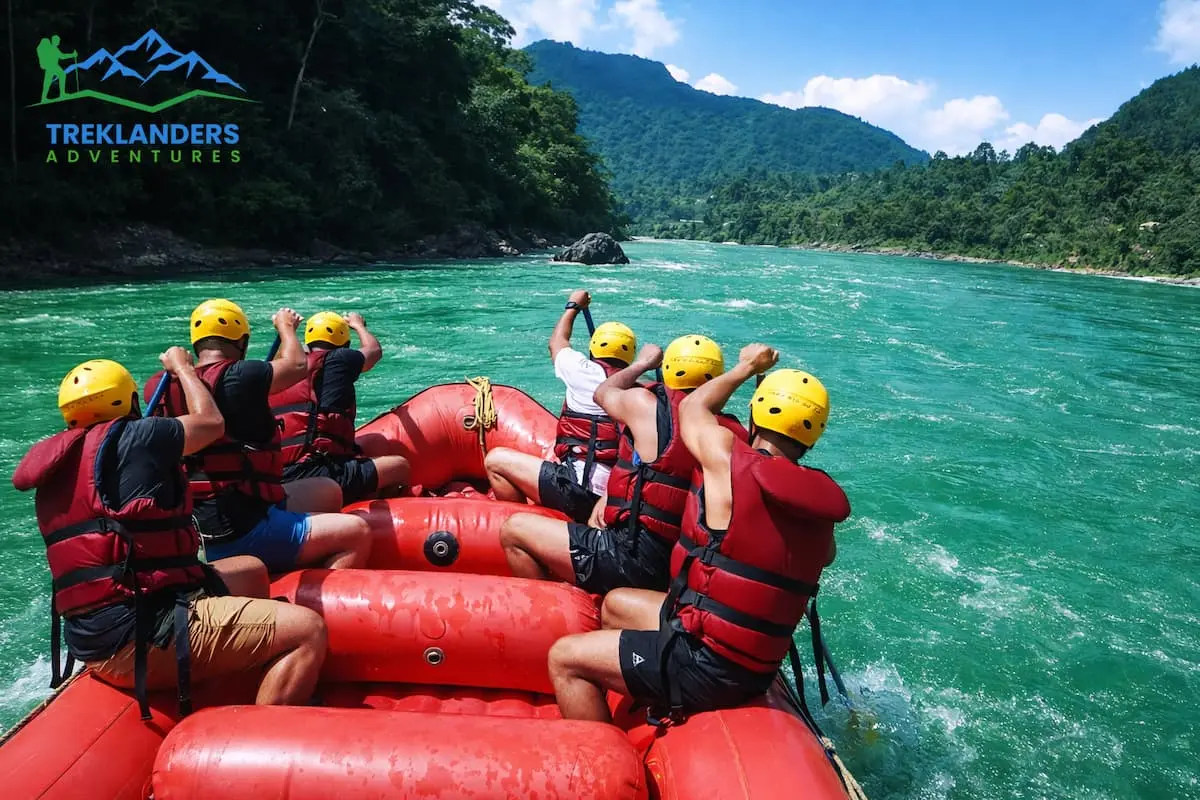
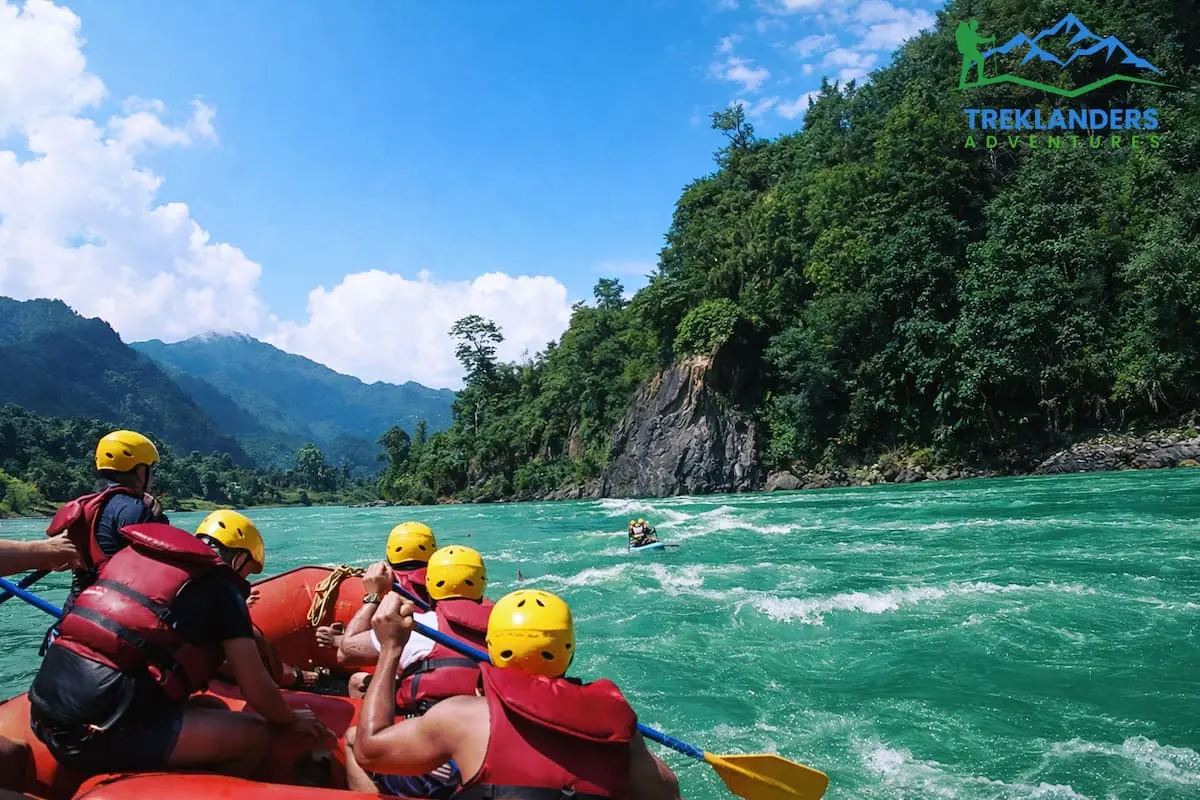
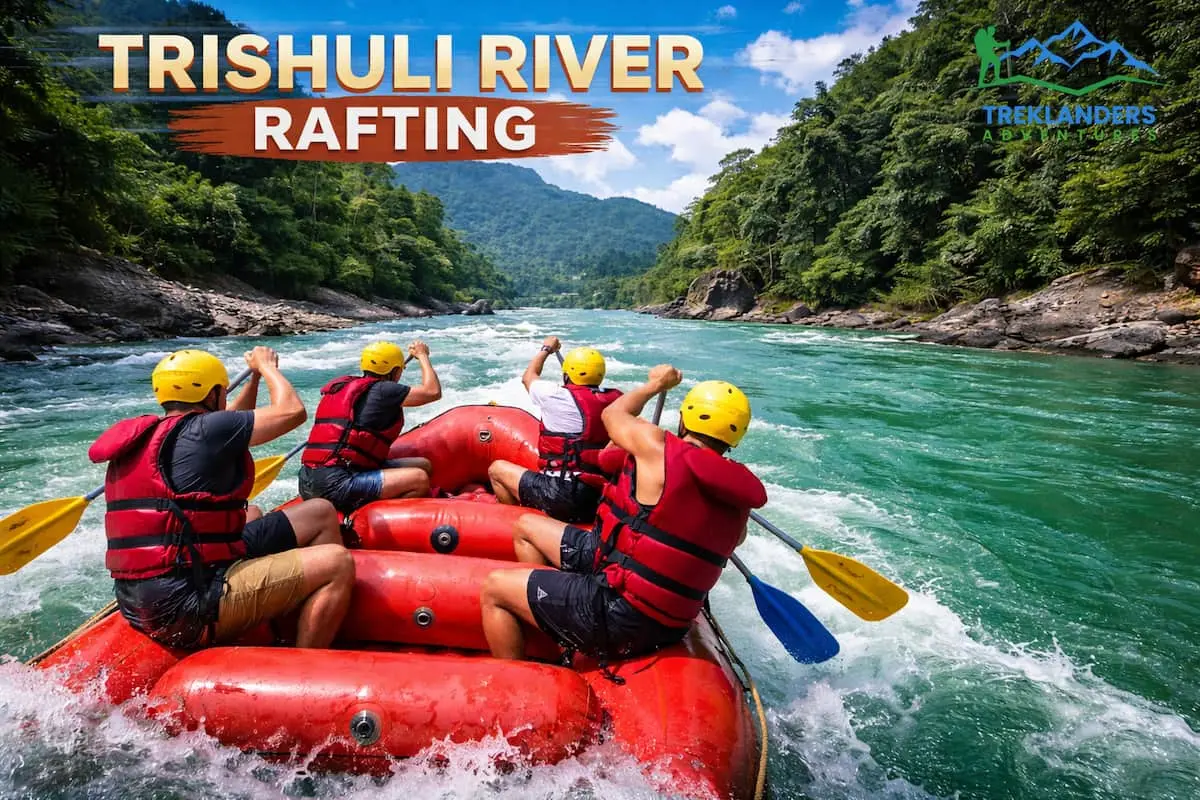
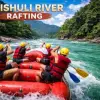
Trisuli River Rafting, is an adventure on the most popular and scenic Trisuli River. It is an enjoyable adventure paddling downstream, encountering loads of waves with powerful and enjoyable rapids and bouncy waves. Offer full of excitement and thrills with a combination of white-water rapids to soothing and scenic floats. Trisuli River Rafting is exciting and enjoyable, for a day or more to experience the roller coaster waves and rapids. Trisuli River with an exciting thrill of rafting moment to experience. The expert River Guide ensures safety measures with paddling instructions.
The Trisuli River and its water volume change every season of the year, from Grades I and II to IV. Trisuli River is fed, by various tributary streams, where all the river flows from the glaciers of Ganesh, Manaslu, and Langtang Himal.
The river runs further downstream to create the great Narayani River around the lowland of Terai. The flat land of Mid Central Nepal, with warmer sub-tropic temperatures, is where the famous Chitwan National Park is located.
Trisuli is a friendly and enjoyable river for rafting, ideal for beginners, families, adventurers, and expert rafters. As well as for birdwatchers.
Different species of bird habitats along the river and at its sandy shoreline. Is lined with a lush green forest where some monkeys and other wildlife are often spotted while rafting. Besides the superb scenery on the float, one can enjoy and explore the farm village rural life. While rafting or at the end of the exciting trip, as well as one can spend overnight in the comfort of River Lodge / Resorts or camping on sandy beaches close to lovely farm villages.
Visitors can enjoy Trisuli River Rafting, around all seasons of the year. Excluding the wet monsoon of summer times of mid-June to August.
The right favorable and the best seasons are spring and autumn/fall, including winter times. The spring begins in early March and ends in May, where most days are bright with sunshine for longer hours. From early 6:30 am till 5 pm, it can get cloudy afternoon sometimes with chances of light rains.
The next best season is autumn/fall, from September to November, where most days are fine and clear for enjoyable rafting. But much colder morning, late afternoon, and nighttime. It gets much colder during the late afternoon, but it is a pleasant season of autumn/fall. Visitors can also enjoy during the winter time of Christmas and New Year Holidays. Most days are bright and sunny, with cold mornings and late afternoons. But enjoyable time for rafting, and the best for bird watching along the river with different species of birds.
Rafting Grade: Leisure to moderate and adventurous as per the season.
Distance Covers: For a day rafting approx. 20 to 24 km or 12, 05 to 15 km.
Rafting Areas: Trisuli River from Dhading to Chitwan districts
Rafting Duration: Approx. 03-04 hours with lunch stops, excluding drives.
Put In Point: Charaudi or Fisling (02-03 hrs. drive from Kathmandu.
Ending Point: Kurin Ghat or further to Kurintar village.
(Depends on season with water volume and river current)
Activities: Exciting drive, the thrill of rafting with scenic float.
Personal items and necessary things to carry is towel, options for wet-suit or rain gear. Sun Block, people wearing glass should have string attached, wearing shorts and T-shirts for rafting. As well carrying spare clothes, after being wet from rafting, sun-hat or caps as optional. Important to wear sneakers, running or sports shoes, while rafting. Camera, Cell-Phones, wallets or valuables will be kept in the rafting water-proof barrel or drum.
6:30 AM TO 7 AM AND BACK BY 5 PM OR 6 PM.
Morning as time informed by Treklanders Rafting guide and staff, having early breakfast, and carrying necessary items for rafting. The drive heads beyond Kathmandu city and the valley's western rim, driving on the main busy highway of the country. Heading downhill to lower mid-hills and valleys within farm villages and towns with views of snow-capped peaks. Then the drive follows the Trisuli River to reach at Rafting Put-In-Point at Chauradhi. A small town on the roadside and close to the Trisuli River bank, a short walk to the shore. Where the rubber boat and raft will be ready for rafting downstream of Trisuli River. After changing the clothes for rafting (shorts, T-shirts, wet suits), important to wear sports shoes or similar.
The Captain and senior River Rafting guide will brief on safety measures, paddling techniques, as well as about Trisuli River. The flow, speed, and current as per the seasons wise, including the rapids to encounter.
A picnic lunch, either before rafting or in between downstream on a sandy beach, depends upon the time. Reaching the Rafting Put-In-Point at Chauradhi and Trisuli River, after the briefing equipped with helmet, life-jacket, and paddle. Get on board, and sit on a tube of the raft, while the captain is seated on the back.
The captain holds the big paddle, to maneuver the raft and gives orders of paddling techniques. Like forward, back paddle, and when not row, as well as the word hang-on, when going through the big rapids.
The rafting starts heading downstream encountering a few exciting bouncy waves, as the paddling progresses. Then getting ready to challenge the Big Rapids, like Ladies Delights, Monsoon, and Upset the biggest with a rip curl.
As the rafting continues and paddling downstream, enjoying going through the exciting rapids and getting wet, from the splash. Slowly the rafting comes to an end after going through the last rapid called Surprise and Bijali (Electrifying) Rapids. The row towards the river bank of Trisuli is close to the village of Kurin Ghat, located by the main highway. After changing into dry clothes then got ready for the drive back to Kathmandu. Taking more than 2-3 hours to reach the hub of the city and back at the hotel; after a wonderful experience on Trisuli River Rafting.
(After rafting options for drive to Pokhara or towards Chitwan for a wildlife safari)

Trishuli River rafting was an exciting and refreshing experience and a perfect outdoor adventure in Nepal. The river had just the right balance of fun rapids and calm sections, making it enjoyable even for first-time rafters. Paddling through lush green hills and scenic riverbanks was incredibly relaxing and thrilling at the same time. The rafting guides were professional, friendly, and made safety a top priority. Before getting on the raft, everything was clearly explained, which gave us confidence and made the trip even more enjoyable. The teamwork, splashing through rapids, and laughter on the raft created unforgettable memories. This one-day rafting trip is a great escape from the city and fits perfectly into a travel plan between Kathmandu, Pokhara, or Chitwan. I would highly recommend Trishuli River rafting to anyone looking for a fun, safe, and scenic adventure in Nepal. It’s an experience I would happily do again.
Approx. 70 to 80 km/ 44 or 49 miles) depends upon the seasons to start and end the rafting. As well as with the speed and flow of the river on each seasons of the year. The drive takes about 2-3 hours, one way.
Depending upon reaching the Put-In-Point of Rafting, either at Chauradhi, sometimes further at Fisling. If arriving late after 12 pm, a lunch will be set on the beach with a huge tarpaulin. Spread out, with dishes of foods from sandwiches, fried rice, or noodles (pasta). Canned Sardines and tuna with fresh vegetable salad, including refreshment of orange juice or lemonade. If it’s early for lunch before rafting, lunch will take place further downstream on quite lovely sandy beaches.
From 8 years, above to 75 years of age, should be in good physical shape and with sound health. For younger below 15 and above 70 years need to be accompanied by parents, guardians, and close friends.
Yes, can do so but need to inform Treklanders Adventures beforehand if not traveling back to Kathmandu after rafting. So that the company will arrange transportation to your destinations after completing the Rafting. People who are in Pokhara and Chitwan can also join in Rafting the Trisuli River. Reaching from Pokhara or Chitwan to the Put-In-Point of the Rafting either in Chauradhi or Fishing Village.
Trishuli River Rafting is one of the most adventurous and thrilling white water rafting activities in Nepal. It is equally suitable for beginners as well as experienced adventure lovers. The Trishuli River, flowing through lovely hills, terraced farm villages, and river valleys, is a mixture of both excitement and the beauty of nature. Also, due to its easy accessibility from Kathmandu, Pokhara, and Chitwan, it is a perfect option for those packed with short outdoor experiences but want to add some thrill to their trip.
The time for the actual rafting on the Trishuli River is mostly between 3 and 4 hours, and sometimes this depends on the water levels of the season, river conditions, and the speed of the group's paddling. In a whole day, including safety briefing, lunch, transport to and from the site, and the trip itself, one usually goes from early morning until late afternoon or even early evening.
Generally, the rafting adventure along the Trishuli River, which is the put-in point at Chauradhi, starts there and ends at Kurin Ghat, which is near the main highway, where the take-out is located. The trip, both leaving and returning to Kathmandu are by land and can be comfortably covered with the local transport offered.
Trishuli River Rafting is a great adventure for almost all kinds of people. New rafters, the lone backpackers, groups of friends, a family (with elder children), or thrill-seekers can all get in on it. The only condition is that participants should be physically fit and must not have any problems with outdoor activities. They do not need to have had a rafting experience before.
Among other rivers, the Trishuli River is famous for its well-balanced rapids, attractive views, and accessibility throughout the year. Besides the short period of time when the river is frozen and thus not navigable, the rest of the year, rapids will be up to grade 3+ and will be both fun and wet, while there will also be some calm areas where one can relax and admire the views of nature, making it one of the best introduction rivers of Nepal.
Indeed, the Trishuli River Rafting would be the perfect choice for travelers who have time constraints. As it is a one-day journey, there will be no need for overnight stays, and visitors will be able to fully indulge in the adventure experience, making it a great Nepal itinerary for travelers with limited time.
Definitely, creeking along the Trishuli River is safe if you go with a professional company. In such trips, the river rafting guides are not only experienced and licensed but also have full knowledge of the river's flow, rapids, and the effect of the seasons. Before starting the rafting, a detailed safety briefing is given to the guests so that they can learn proper paddling techniques and safety procedures.
It is not necessary to have rafting experience. Rafting on the Trishuli River is a fun activity for newcomers and thrill seekers as well. The guides will show you instructions on how to paddle, listen to the commands, and keep your balance in the raft. Thus, the first-time rafters will be guided through the process, and it will be an easy and enjoyable experience.
All safety equipment is made available to the participants, among which are a top-notch life jacket, helmet, and paddle. The equipment is always checked for its compliance with safety standard regulations. A life jacket is compulsory for all.
Indeed, the rafting guides have been trained in river rescue techniques, and they also possess basic first aid knowledge. In any situation where the group is large and the river condition is not favorable, a safety kayaker or a support staff member may accompany you along with your rafting guides. They coordinate with each other in facilitating a timely rescue or giving assistance in case of an emergency.
Before getting on the river, guides tell you about the indications for paddling, the position of the body, what to do if somebody falls into the river, and how rapids can be negotiated. This briefing gives all the participants a sense of security and preparations for the upcoming activity.
Non-swimmers can also comfortably participate in rafting on the Trishuli River. The only thing that has to be done is that a life jacket MUST be worn at all times, and in case the non-swimmer needs help, a guide trained in assistance and rescue is there, ready for that. Non-swimmers are also to inform the guide of their situation before starting the trip.
Trishuli River Rafting is a Grade II to III+ adventure, thus it is perfect for those who have no experience and those who have some experience in rafting. This grading signifies the river is a place where one can find challenging rapids with rocking but controlled waves, interspersed with calmer zones for rest. It guarantees a pleasurable experience without the necessity of having extra technical skills or taking high risks.
You will be introduced to the most fascinating rapids of the Trishuli River during the rafting expedition. They are the Ladies Delight, Monsoon, Upset, Surprise, and Bijali Rapids. These rapids have different shapes and strengths, and as a result, the rafting experience will be lively and varied from beginning to end.
On the Trishuli River, yes, the rapids are suitable for first-time rafters. The professional guides not only give clear paddling commands but also provide safety instructions; hence beginners can navigate each rapid with confidence. Besides, the calm parts of the river between rapids give the participants a chance to relax and admire the view.
The water levels on the Trishuli River are quite inconsistent season-wise. In Spring and Autumn, the river offers balanced rapids at moderate flow. In the rainy season, the upper reaches will have high water rapids. The rafting in winter will be low-grade, and it will be an adventure and perfect for beginners.
Indeed, the Trishuli River has a number of quiet stretches in between the rapids. These are times to reinvigorate, take in the surrounding landscapes, bathe in safe areas if allowed, and get ready for the next rapids with the guide’s help.
Children above a certain age and older participants who are physically fit can be allowed to join, contingent on the condition of the water and the guide’s advice. The difficulty level being moderate, the Trishuli River rafting is doable for various age groups.
Trishuli River Rafting is a fun water sport adventure for travelers who are generally physically fit. Basically, the age limit is set at 10 years, with the final decision resting on conditions and the guide. Moreover, the trip is not only suitable for newcomers and families of teenagers, but also for solo travelers and groups looking for an entertaining nature experience.
Non-swimmers can go for a rafting trip on the Trishuli River. It is a must for all participants to wear a life jacket at any time. The guides who are experts in their field are always ready to help non-swimmers and make sure they are safe during the whole rafting experience.
A basic level of fitness is required, but being highly athletic is not necessary. Participants must be able to comfortably sit in the raft, paddle when they are instructed, and follow safety commands. There is only a small amount of physical activity involved, so the majority of travelers can partake in it.
If any of the following medical conditions are present: heart problems, severe back injuries, recent surgeries, or pregnancy, then the person should be discouraged from participating. In case of any medical condition, guests should notify the rafting team in advance, so that suitable advice can be given.
Yes, a lot of elderly people take pleasure in doing Trishuli River rafting. The wise saying health is wealth applies here; if the elderly are in good health and okay with a bit of physical exercise, then age should not be considered a hindrance. The pace is kept steady by the guides, and help is given whenever necessary.
The guides are very attentive, and they keep an eye on every single participant throughout the trip. This also means that the times when the river is calm are used for relaxing, and the guides can also lessen the intensity of the paddling if it is required. Safety and comfort are, in fact, the two things that this adventure is always centered around.
If we were to pick the 3 best seasons for Trishuli River rafting, the list would look like this: spring (March–May), monsoon (June–August), and autumn (September–November). Trishuli River rafting is a year-round activity in Nepal, which makes it the most adventurous of Nepal's.
River water level truly has a great impact on where and how fast the water is flowing, and how intense the rapids are. Spring and fall have more or less the same water level, which is perfect for floating. Monsoon brings heavy and foggy days, while winter has lighter river flows. What kind of raft experience one will have depends on the season.
Yes, during high seasons it is highly advisable to reserve your spot ahead of time, in particular in the cases of spring and autumn, Trishuli River rafting being very trendy and places getting taken up quickly.
Rafting can achieve a higher level of excitement during a monsoon. As the water level increases, extreme rafting sites become very challenging. Rapids turn into bigger and faster ones, which is what the adventurers who seek higher levels often want. This season's safety measures need to be up to par for these expeditions to be feasible, and allowing this kind of excitement is their privilege.
Besides, one can do (winter) rafting on the Trishuli River from December to February. The water is low, and the river is quite calm. Therefore, it is a very good situation for a raft trip with any newbie’s. Nevertheless, at times the temperatures can drop, so it is essential to wear warm clothes and have the right gear.
Weather conditions can be a factor to consider for raft companies. However, when the bad weather continues for days and thus affects the river's situation, there will be no rafts that leave their docks. Operators are always very cautious of safety and keep an eye on atmospheric conditions at all times.
It is advisable to wear comfortable and quick-dry clothing such as shorts and a T-shirt. Light synthetic fabrics are the best as they dry quickly and are comfortable even when wet. For colder seasons, it is better to wear thermal layers under rafting clothes. Do not wear cotton clothing, as it absorbs water and takes longer to dry, hence you will feel cold and uncomfortable.
Wear sports shoes, water shoes, or sandals that can get wet and provide a good grip. Footwear should be tight and comfortable for walking on slippery riverbanks. Flat shoes or loose footwear are not good, as they can easily come off in the water.
Yes, it is very important to bring a complete set of dry clothes. After the rafting session, you will be able to change into dry clothing before the return drive. A small towel will also be helpful for drying off after the river activity.
Take with you the necessary things like sunscreen, sunglasses with straps, a water bottle, and, if needed, personal medication. Put valuables such as phones, wallets, and cameras in a waterproof bag or leave them in a safe place in the vehicle.
Do not bring heavy luggage, valuable jewelry, or non-waterproof electronic devices. Traveling with less will make you comfortable and safe during rafting and will overall be more enjoyable.
Foods are arranged during the trip and may be served either before the rafting session or during a break on a sandy river beach, depending on the time and river conditions. Meals are simple, fresh, and are designed to be eaten during outdoor adventure activities.
Round-trip land transport from Kathmandu is included in the offer of a Trishuli River rafting trip. So after the rafting trip, you will be dropped back to the city in the late afternoon or early evening.
The transport used will be in a comfortable and well-conditioned vehicle such as a car, van, or bus. This depends on the number of people in your group. Your trip will be along the main highway of Nepal, so you will have great views of rivers, hills, villages, and the countryside.
From Kathmandu to the rafting put-in point at Chauradhi, the drive usually lasts about 3 hours. It also depends on the traffic and the condition of the road. After the rafting, boarding the return vehicle will take a similar amount of time.
Of course, you can go to Pokhara straight after the rafting trip if you want to. This is the most preferred route by the travelers who are combining the rafting trip with trekking or sightseeing in the Annapurna region and Pokhara. It is a must to arrange in advance.
Yes, the visitors who would like to experience a jungle safari or other nature activities in Chitwan can head there after rafting. In the Kurin Ghat case, the place where the rafting trip ends is on the main highway that connects Kathmandu, Pokhara, and Chitwan, so going there by another vehicle is easy.
If you decide to go to Pokhara or Chitwan after rafting, you'd better tell the operator beforehand. This way, the transport coordination will be as smooth as possible, and you will not have to wait for your trip after the activity.
It is very important that all participants of a One Day Trishuli River Rafting Adventure carry travel insurance with them. The insurance acts as a safety net in case of any unforeseeable incidents that might happen during traveling or rafting activities.
They should be insured with a policy that accepts in the inclusion of the adventurous or water-based activities, in particular white-water rafting. The insurance must also take care of health emergencies, hospital accommodations, and evacuation if necessary.
The rafting operator abides by the usual safety standards and has an operational insurance policy covering the staff and equipment. Nevertheless, the participant must carry his/her own travel and medical insurance and make sure it is in place before the journey.
Injuries on the river are rare, yet in case this happens, the guides on board who are trained in first aid will assist and administer first aid immediately. Any further medical care or costs for evacuation are normally to be paid by the participant's insurance policy.
Indeed, it is. Insurance is a must for everyone, beginners and non-swimmers as well. Though Trishuli River rafting is considered safe and easy for first-timers, insurance still offers extra security.
When considering buying insurance, you need to make sure that it covers white-water rafting in Nepal without any doubts or restrictions check the limits, exclusions, and emergency evacuation benefits of the policy. In case of doubt, talking with your insurer will help clarify it.

| No of people | Price per person |
|---|---|
| 1 - 1 | $500 |
| 2 - 3 | $400 |
| 4 - 8 | $350 |
| 9 - 30 | $330 |
| No of people | Price per person |
|---|---|
| 1 - 1 | $200 |
| 2 - 3 | $180 |
| 4 - 8 | $165 |
| 9 - 30 | $150 |
| No of people | Price per person |
|---|---|
| 1 - 1 | $400 |
| 2 - 3 | $305 |
| 4 - 9 | $275 |
| 10 - 30 | $230 |