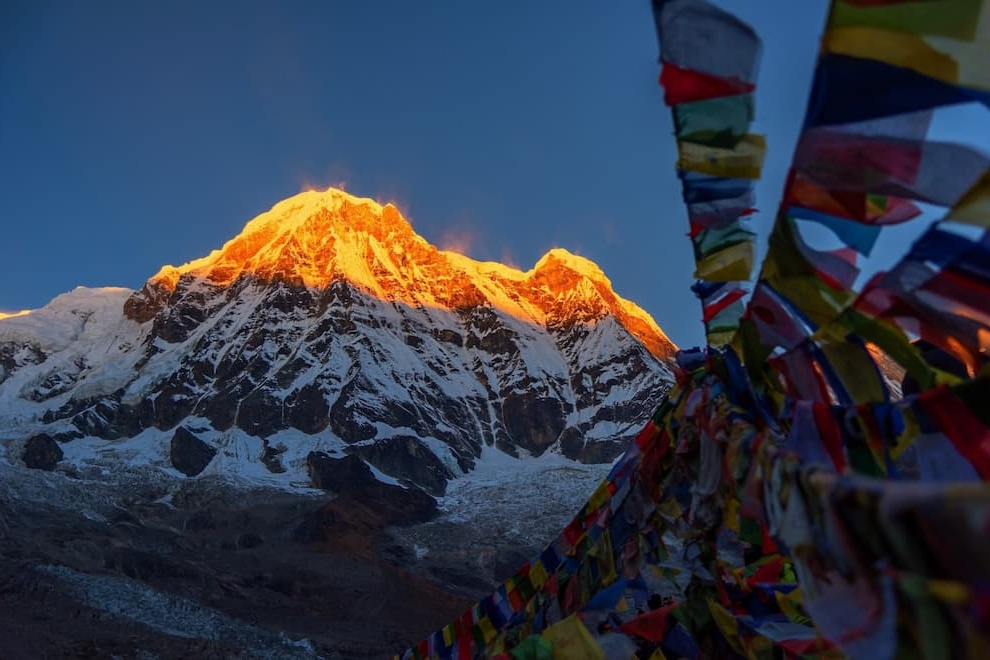
Ghorepani, Poon Hill with Annapurna Base Camp Trekking, is a marvelous combination covering all the scenic hills of southern Annapurna. Exciting adventures to enjoy and experience the local cultures and magnificent scenery with the Snow Mountains and the beautiful landscapes.
The beauty of this trek to Ghorepani Poon Hill, with Annapurna Base Camp, leads you amidst a great diversity of climate, vegetation, landscapes, and local cultures. Walk from the lower warm sub-tropical paddy fields to alpine hills and towards the arctic zone of ice, snow, and glaciers.
The adventure begins in beautiful Pokhara city, where most treks and adventures around the Annapurna Himalaya start and end. An exciting drive leads you to the foothills of the Annapurna Himalayas, then climbing higher to high hills. Amidst the lovely forest of rhododendrons, magnolia, and pine trees, the walk leads to traditional mountain villages.
Reaching first at Ghorepani, situated on a high ridge and beneath the scenic Poon Hill. Next early morning, an hour's climb to Poon Hill for stunning views of sunrise. Includes unparalleled 360° panorama of the Himalayan range with the world’s 7th highest Mt. Dhaulagiri with 8th highest Mt. Manaslu. As well as Annapurna Himal which is the world’s 10th highest peak, besides the spectacular views of snow-capped peaks.
Enjoy the dramatic scenery of beautiful rolling green hills that surrounds the top of Poon Hill. After completing the first phase of the major highlight of the treks to Ghorepani and Poon Hill. The next adventure follows toward our final destinations to Annapurna Base Camp and the picturesque Sanctuary.
The route beyond Ghorepani and Poon Hill leads uphill through the cool shade of rhododendrons and pine woods. The trail follows east to Tadapani and then down and up to reach Chomrong. The gateway village to the Annapurna Sanctuary and Base Camp, as the adventure continues into dense tree lines.
Then enters the Modi River gorge, following the river upstream to the glacial source at the sanctuary and Annapurna base camp. Finally, the walk reaches the heart of the massif Annapurna Himalayas, encircled by giant mountains with amphitheaters of snow peaks. Enjoy the Jaw-Dropping views of the spectacular scenery in the comfort of a nice and cozy lodge at Annapurna base camp.
On completing our major highlights and goal of the adventure, the return journeys heading back to Chomrong Village. The route diverts towards lower warm farm areas at Jhinu and then on the drive to Pokhara. At Pokhara, the wonderful adventure of great experience on Ghorepani Poon Hill with Annapurna Base Camp Trekking concludes.
For Ghorepani Poon Hill with Annapurna Base Camp treks, all can enjoy the treks around all seasons of the year. Apart from the wet monsoon and summer times. The right favorable and the best seasons are spring and autumn/fall.
Spring begins in early March and ends in May, where most days are bright with sunshine for longer hours. From early 6:30 am till 5 pm, it can get cloudy afternoon sometimes with chances of light snowfall.
Cold morning, late afternoon, and night times with an extra wind-chill factor above 3,000 meters. The afternoon is bright with a strong UV (ultraviolet) and requires sunblock, sunglasses, hats, and long-sleeved tops. Spring is lively when wildflowers in seasonal blooms, especially the rhododendrons of various species and colors.
The next best season is autumn/fall, from September to November, where most days are fine and clear for views and walks. But much colder morning, late afternoon, and nighttime, chances of snowfall sometimes. Get much colder during the late afternoon with a wind chill factor. Nevertheless, it is a pleasant season of autumn/fall for Ghorepani Poon Hill with Annapurna Base Camp treks.
Trekkers will be surprised to find various standards of lodge accommodation on treks to Ghorepani and Annapurna Base Camp.
At Ghorepani and Chomrong, the last permanent villages before entering Annapurna Sanctuary. From a simple tourist standard to moderate lodges, accommodations are available, with attached baths and toilets.
But after Chomrong towards Annapurna Sanctuary and Base Camp, with only temporary settlements with simple lodges for the trekkers.
All lodges and Tea Houses from Ghorepani and Chomrong onwards are simple and basic, using the common baths, and toilets. Due to the high altitude, the pipeline and plumbing systems freeze due to cold temperatures in the morning and nighttime.
Dining rooms are large and cozy with a fireplace to keep the environment warm, while you enjoy the meals. The lodges provide a comprehensive food menu, which includes a wide variety of breakfasts, from oats, porridge, and cornflakes. Bread, Chapatti, and Pancakes with choice, of eggs, from scrambled, boiled, poached, and omelets. As well as refreshing drinks, tea, and coffee including hot chocolates.
Lunch and dinner with a list of continental, Indian, Nepali, Chinese, and Tibetan/ Sherpa foods. Some of the lodge restaurants in Chomrong also provide Mexican, Italian, Japanese, and Korean foods, including fresh bakeries. All the dining rooms are bright with lamps run by local hydroelectricity or from solar power. The lodges provide free internet and Wi-Fi services, which is slow and disturbing. Due to its landscapes and weather conditions on designated overnight stops.
For larger groups of more than 4 people, it is best to order a set menu, which saves time and fuel energy. Following, the norms of Eco or Responsible Tourism.
Although Nepal is dominated by 75% Hindu religion, the higher mountains around the Himalayan range. On this trek to Annapurna Base Camp, the main inhabitants are Gurung and Poon, Magar people. Gurung are the major tribes of Southern Annapurna Hills. Follow Buddhist religion and culture, as well as their ancestral and ancient Bon sect of pre-Buddhism.
As well as practice Shamanism, on this trek coming across villages, where every house is adorned with Buddhist prayer flags.
From Ulleri to Ghorepani Villages, the inhabitants are Poon, Magar, one of the largest hill tribes of Nepal. The Poon from the Magar tribe, are interwoven with Hindu and Buddhist religion, including their own tribal cultures.
Mode of Trekking: In the best available lodge and guest house.
Grade of Trekking: Moderate to Adventurous.
Trekking Region: Nepal Far North Mid-West at Kaski district and
Annapurna Himalayan range.
Highest Points: At Annapurna Base Camp 4,130 m/13,550 feet.
Trekking Duration: 09 Nights and 10 Days from Pokhara to Pokhara.


Today’s morning walks reaches to the main destination at Ghorepani Village, start the walk on gradual path. Then entering a lovely cool alpine forest of rhododendrons and pine trees. As the walk progresses with few short steep ups then reaching the lower Ghorepani with a welcome entrance gate.
After a short rest a short climb to a high ridge called Deurali and top of Ghorepani Village is located. Arriving by lunch time and for overnight halt in the comfort of a nice lodge, amidst beautiful rhododendrons trees. From the lodge at Ghorepani, enjoy the views of Dhaulagiri Himal with snow peaks of Annapurna Himal.

An early morning hike of an hour or more to Poon Hill, the highest point of the adventure. From the top of Poon Hill enjoy the glorious sunrise views, as it reflects over the white snow peaks. Overlooking grand panorama of Dhaulagiri,
Annapurna and Manaslu Himalayas with majestic Machhapuchare Himal, the famous Fish-Tail peak. After a refreshing morning scenic hike down to Ghorepani for breakfast and packing, then getting ready for the day walks.
Leaving Ghorepani, the trail follows to a steep up through lovely rhododendron, and pine forest. After few hours of good climb reach on top a hill called Deurali, almost the same height at Poon Hill. From the top facing panorama of Dhaulagiri, Tukuche, Nilgiri’s and Annapurna Himalayan range of peaks. After a long climb, enjoy the downhill to Bhanthati, a small settlement with number of lodges and restaurants. Located on deep gorge by the small fresh stream, stopping here for lunch, afternoon a short descend to bridge. Then following a steep climb for an hour to overnight stop at Tadapani, a small settlement. Check into a nice lodge, and enjoy the close views of Annapurna South, Huin Chuli with Machhapuchare Himal.

Morning depending upon the seasons, for views of sunrise from Tadapani as it strikes on the snow peaks of Annapurna. Having breakfast, start the trek towards Chomrong en route to Annapurna Base Camp. From Tadapani, the trail follows downhill through cool shade of forest to reach Kimrong River.
After crossing a bridge with steep climb for an hour to reach on a level gradual path. As walk follows on nice stone paved trail with short downhill to Chomrong for overnight, populated by the Gurung. The main hill tribes of the southern
Annapurna Himal range, as well the last permanent village and human settlement. Chomrong provides many good lodges along with the views of Annapurna peaks, enjoy the overnight in a nice lodge.

After a pleasant overnight in Chomrong, having good breakfast and getting ready for a long and interesting trekking. The walk leads down to Chomrong river, after the bridge, climb on stone steps for an hour or less. Reaching a high ridge of Sinuwa Danda with few shops and lodges, from here enter a dense wood of Rhododendrons and pines.
Then a short descent to a small settlement of Bamboo, located on Modi River gorge. Amidst forest of bamboo groves, possible lunch stops, as well the place for overnight, after visiting Annapurna Base Camp. Afternoon a slow climb through cool shade of forest to Dovan, a small place above Modi River. Check into a nice simple lodge for overnight halt, with the sound of a river flow.

From Dovan, heading higher towards our destination to Annapurna Sanctuary and base camp. As walk starts with slow climb into dense forest and lush vegetation to reach a huge overhanging cave called Hinko. Then reaching a small settlement of Himali Hotel, located directly south of Annapurna South and Huin-Chuli peaks.
From here a short down reaching by the river, and climb towards a small flat field at Deurali. A place with number of lodges and guest house, a perfect lunch stops, afternoon walk across the raging Modi River. As climb leads through smaller bamboo stalks, as the climb gets steeper for an hour then reaching Machhapuchare Base Camp.
A lovely scenic high ridge with several lodges, located beneath the towering Machhapuchare Himal, the famous Fish-Tail Peak. At MBC, check into one of its good lodges for overnight facing views of Annapurna-I, A-South and Huin Chuli peaks.

Today the shortest walks of the adventure to Annapurna Base Camp, morning enjoying the fabulous views of peaks.
Start the morning with short climb to enter a picturesque plateau at Annapurna Sanctuary. Enclosed by amphitheaters of snow mountains, as walk proceeds towards north-west, then reaching Annapurna Base Camp for lunch and overnight. Stand on the highest spot of the adventure beneath the giant staggering Mt. Annapurna-I, Vara Shikar (Annapurna Fang).
At ABC, enjoy the comfort of a nice simple lodges with room facing views of snow-capped mountains. Afternoon explore around the scenic location facing tremendous scenery amidst towering mountains, in the heart of Annapurna Himalayas.

Morning enjoy the glorious panorama of white peaks as far as your eyes can reach. After breakfast get ready for a long downhill to Bamboo for overnight stop, the trail follows to MBC. The downhill to Deurali with short climb to Himali Hotel and then down towards Dovan. Reaching back into dense forest and at Bamboo for overnight in a nice lodge close by the Modi River.

Enjoy the last day of walking around the high green hills of Annapurna southern range. From Bamboo a short steep climb and on gradual winding path through dense forest to Sinuwa Danda. As walk continues down the steps to cross a river with steep climb to Chomrong for lunch stop.
Afternoon, a short walk of few hours to Jhinu Village for last overnight around the high hills of Annapurna. Jhinu Village with a natural hot spring to enjoy refreshing bath and dip in its pools of hot water. Located about 40 minutes from the lodge by the bank of the Modi River.
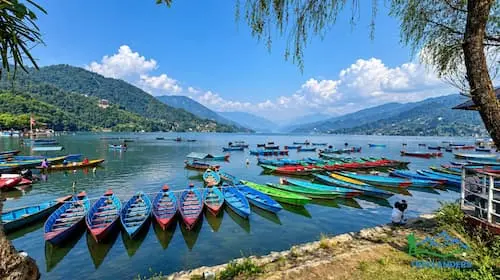
The last day of trekking a short walk across the long bridge to the roadhead, for an interesting drive. The country's rough road follows back to Bhirethati village andat Nayapul, and then on the main highway to Pokhara. On reaching the hotel at Pokhara by the serene Phewa Lake, our great wonderful adventure to Ghorepani, Poon Hill with Annapurna Base Camp completes.
I never imagined that a 10-day trek could change the way I see the world, but that’s exactly what happened during my Ghorepani Poon Hill and Annapurna Base Camp adventure with Treklanders Adventures. From the very first step on the trail, everything felt magical — the warm smiles in the villages, the scent of rhododendron forests, and the sound of distant waterfalls guiding the way. Treklanders made the entire experience feel effortless. My guide wasn’t just knowledgeable; he was a truly caring companion who made sure I stayed safe, comfortable, and confident every single day. Our porter, who carried everything with unbelievable strength and kindness, made the journey even more meaningful. The sunrise at Poon Hill was a moment I will remember forever. The sky slowly changed colors as the Himalayas lit up in gold. Standing there, watching Annapurna and Machhapuchhre glow in front of me, felt like witnessing a blessing from nature. Reaching Annapurna Base Camp was another emotional milestone. Surrounded by massive snow peaks on all sides, I felt tiny yet incredibly connected to the world. It was peaceful, powerful, and almost dreamlike. What truly set Treklanders Adventures apart was their attention to detail. Every lodge, every meal, every transition from one day to the next was thoughtfully arranged. I never had to worry about permits, timing, or logistics — it was all handled so gracefully that I could fully enjoy the journey. This trek gave me moments of pure joy, quiet reflection, and genuine connection — and Treklanders Adventures was the reason it all felt so special. If you’re dreaming of Nepal, do yourself a favor and choose them. They made my adventure unforgettable, and I’m already planning to return for another trek with their incredible team.

Purpose: Keep sweat off the skin and maintain warmth.
Purpose: Trap body heat in cold air at altitude.
Tip: Keep electronics in inner pockets at night to prevent freezing.
One of the best moderate adventures, with an enjoyable walk it is not a tough and difficult trek, as altitude wise. The only hard is on the first few days of a steep climb, for a few hours, before Ghorepani and Annapurna and base camp. The rest of the walk is on a gradual winding path with down and ups, after visiting the Poon and Annapurna Base Camp.
Both Ghorepani with Poon Hill and Annapurna Base Camp Trek is one of the most popular treks, due to the moderate distance to cover the main highlights to Ghorepani and Annapurna Base Camp. As well the area offers tremendous scenery of surrounding giant peaks with dramatic views of landscapes.
This trek is suitable for all age groups, staying in the comfort of a nice mountain lodges. A popular trek around the Himalayas, as the altitude gains slowly and gradually, getting acclimatized on daily walks. Before reaching the highest point at Annapurna Base Camp, make this trek one of the best adventures.
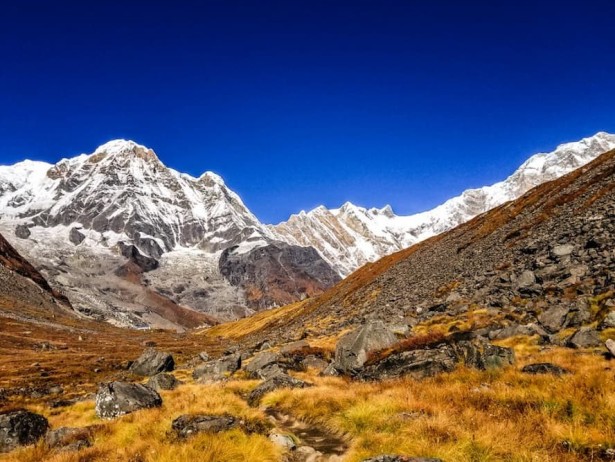
A lovely country walk through a beautiful forest lined with tall rhododendrons, pines, and fir trees. Daily views of snow peaks with the local fascinating cultures of the Gurung tribes. The major expectation besides scenic scenery is uphill and downhill walks for a few hours. As well as reaching the most spectacular country amidst the towering peaks of the Annapurna Himalayas. The walk leads amidst an enchanting rhododendron forest; in spring time the whole area will be lively.
With wildflowers in the blooming seasons of spring, March to May, the walk leads to nice mountain traditional villages. Where you can observe the cultures and experience the hospitality of the natives of Annapurna.
All lodges on overnight stops, have electricity facilities either run by Hydro or solar power. Trekkers can charge their electronic items by paying extra for each gadget. Some lodges offer free Wi-Fi and Internet services while few places might charge extra. But the connection in some places can be disturbing and it takes time to run the service either in long-distance calls or using the internet.
This trek features the best of two worlds: first, the beautiful Ghorepani-Poon Hill trek that is extremely popular for the breathtaking views of the sunrise over the mountains, and then the equally spectacular Annapurna Base Camp (ABC) trek. You walk through varied nature, meet traditional villages, and see rhododendron forests along with the amazing view of the Annapurna Sanctuary, all in just 10 days.
The combined trek is of moderate difficulty. The Poon Hill portion is a bit more physically demanding due to stair climbing and forest trails, while the ABC part is longer with higher altitude. A good level of fitness is necessary, but still, a strong-willed novice can do it without any problem.
Despite the fact that the base camp of Annapurna is at a height of 4,130 meters, the slow climb makes acclimatization less of an issue than in other high-altitude treks. However, no rest day is required, and it is advisable to continue with slow walking and drinking plenty of water.
The ideal periods are spring (March–May) and autumn (September–November). These are the months when one can expect clear views of the mountains, mild temperatures, and good weather conditions. In fact, winter can still be an option, but it will be colder, and the monsoon will bring clouds and rain.
Not at all, this trek is also suitable for first-time trekkers. The trail is safe and well signposted, there are good tea houses available, and the daily walk is not too long. Having a basic level of fitness will make the trek more enjoyable.
Generally, between 5 and 7 hours of walking are required, depending on the distance and nature of the trail. The climb to Poon Hill is an hour or less and is done very early in the morning.
Yes, a solo traveler is not at risk here. This route has many travelers, and the tea houses along the trek are good and safe places. A guide with a license is comforting in terms of safety, helps with directions, and also provides local knowledge.
Together you will lodge in tea houses which give you a twin-sharing room, a warm meal, and provide you with basic comfort. Some Ghorepani and Chhomrong lodges have upgraded rooms, while the Annapurna Base Camp area has only the basic ones.
Yes, you need the Annapurna Conservation Area Permit (ACAP) and the TIMS card. Both will be arranged by your trekking agency before you set off on your trek.
Definitely, this plan is meant to allow a person to see and do all the main things without being forced to walk fast – witnessing the sunrise at Poon Hill, Gurung villages, green forests, and last but not least, awe-inspiring Annapurna Sanctuary. It is a perfect balance between the two quite different activities, trekking and resting, within 10 days.
The best months for this trip are certainly those in spring (March–May) and autumn (September–November). These periods are characterized by having good weather, clear skies, and mountains can be seen at their most stunning. Such conditions not only make the whole trekking experience safer but also more fun.
Spring makes the trail burst with colors. This is the time when rhododendrons, a famous type of forest of the Nepalese Himalaya, which covers the region of Ghorepani, are in full bloom. Temperatures are neither too hot nor too cold, the length of day is longer, and the quality of the view is great. So, for photographers and nature enthusiasts, spring is an ideal season.
One of the reasons that autumn is very popular among trekkers is that it is the most dependable trekking season in Nepal. Clean and fresh air replaces the monsoon that characterized September; thus, there are very few clouds at the peaks of Annapurna, Dhaulagiri, Machhapuchhre, and many other such mountains, giving the trekker stunning scenery. The weather stays dry and is not too warm, which are perfect conditions for seeing amazing views both when the sun rises over Poon Hill and when you are at Annapurna Base Camp.
Indeed, trekking during winter (December–February) is doable and definitely tranquil since there are not many trekkers along the route. It is not often that the heavens are without their coverings, but at night the temperatures go very low, especially at Annapurna Base Camp. Certain areas of the trail might be covered with snow, so it is necessary to have proper warm gear as well as be prepared.
Monsoon trekking is not really advisable because June to August is the period when heavy rains are expected, trails become very slippery, and clouds cover the mountains, thus making it very difficult to see, increasing the chances of leech attacks in the forest sections. But the environment is getting greener, and the lower areas appear more attractive after the rain.
Both spring and autumn offer good opportunities for photography. Besides forests full of colors and good light, in spring, we have warm sunny days, while in autumn the air is very clear, so reefs can be spotted from far away, and also the frail light of the sun gives room to snap amazing photos while the sun is rising. For many photographers, autumn is better because of the clearest view; however, no one can beat spring in terms of natural colors and flowers.
The route is of moderate difficulty and hence can be done by a person new to trekking as well as one who has trekking experience. The Poon Hill trek path is mainly stairs and forest trail, while the Annapurna Base Camp part of the trek comprises long walks and higher altitudes. Therefore, a person with a little bit of fitness who walks at their own pace can do the whole track without any problem.
A bit of trekking experience is not necessary. Many of the first-timers taking this route say it is suitable because the climb is gradual and the trails are good. However, if you are physically prepared through regular walks, hikes, or cardio exercises, then you can have a better journey.
We are expected to walk 5 to 7 hours on average each day. There is some rest on days such as those going to Poon Hill (approximately 45 minutes to 1 hour), while the days going to Annapurna Base Camp can be a little longer. The timing is such that it allows trekkers to get used to higher altitudes without hurrying.
Altitude sickness may be an issue on this trek; however, the risk is considerably lower than that of other high treks in the Himalayas. Annapurna Base Camp is at 4,130 meters, thus it is high enough to warrant caution. People who move slowly, drink a lot of water, and take proper rest are less likely to get altitude sickness.
These paths have signboards and are frequently used by trekkers, locals, and guides. The trails take you through forests, hanging bridges, stone steps, and open valleys, and along the way, signposts make it easy for you to follow the trails. Just in case there is some doubt, a guide at your side will not only ensure your safety and help with navigation but will also provide you with cultural knowledge.
Certainly, this trek is great for those new to trekking and the solo travelers as well, since it is of manageable difficulty, has reliable tea houses, and plenty of assistance along the route. With moderate fitness and good spirits, one can very well accomplish this trek.
On the route, you will be accommodated in tea houses- simple and comfortable small hotels typically run by local families. The rooms are usually for two people sharing, and the beds are made of basic bedding, blankets, and the walls are wooden. Tea houses center around the theme of warmth, hospitality, and comfort after a hard day of trekking.
In most villages at lower altitudes like Tikhedhunga, Ghorepani, Tadapani, and Chhomrong, private rooms are available. On the way to Annapurna Base Camp, due to high demand and fewer lodges, the number of rooms may be limited. In any case, tea houses offer neat and comfortable rooms.
There are attached bathrooms in a few tea houses that are situated at the lower altitudes. Going higher, especially after Chhomrong, most lodges have shared bathrooms that are located outside the rooms. The facilities are simple but are properly maintained.
Most tea houses provide hot water for a shower; sometimes, it is for a small additional charge. When you get to high places like the Himalaya and Annapurna Base Camp, there might be no hot water for you because it is too cold, and the energy supply is low.
Tea houses offer you warm, freshly cooked meals. The food cooked is usually Nepali dishes such as Dal Bhat. Along with that, pasta, fried rice, soups, noodles, potatoes, pancakes, eggs, and local delicacies are also served. The meals are filling, clean, and energizing---just right for long trekking days.
Yes. The Annapurna region is very vegetarian-friendly, and tea houses provide a variety of plant-based meals. If you happen to have any dietary restrictions, please notify your guide or the lodge owner, who will be willing to accommodate you.
Tea houses provide water that is either boiled or filtered for drinking. You can also fill your water bottle with tap or spring water and use purification tablets or water filters. Remember to keep your body well hydrated, especially when you are going higher in altitude.
Tea houses found on the trail serve fresh, home-prepared meals made with locally sourced ingredients. Besides regular Nepali foods like Dal Bhat, the menu also features international dishes like pasta, soups, noodles, fried rice, and so on. The food is planned to be of a simple type, warm, and full of energy in order to help those on the trek regain their strength.
Definitely, tea houses on the Ghorepani–ABC trail are well-equipped to serve trekkers and maintain their hygienic conditions. They prepare the meals fresh, and in most cases, water that is boiled or purified is used in food preparation. Eating hot and freshly cooked food is helpful in keeping good health during the trek.
Of course, The Annapurna area is highly accommodating to vegetarians, and numerous tea houses provide plant-based meals such as vegetable soups, fried rice, potatoes, lentils, noodles, and porridge. If you are a vegan or have gluten or dairy limitations, you can tell the lodge staff, and they will do their best to prepare meals that fit your dietary requirements.
Meat is mostly fresh in the lower parts like Tikhedhunga and Ghorepani. But, as you go higher toward Annapurna Base Camp, it would be better to take vegetarian foods. The reason is that at higher altitudes, not only is it difficult to transport and store meat, but also there is a higher chance of it being less fresh.
Water from the tap or a stream is never safe to drink unless it has been treated. Boiled or filtered water is generally made available to drink, for which a small charge is levied, by tea houses. Besides, you can also refill your bottle and take a purification tablet or use a water filter. It is especially important to keep the body adequately supplied with water as one goes higher up.
Yes, please. The provision of purification tablets, chlorine drops, or a filter bottle in one's luggage is a guarantee that one can always have safe drinking water with them, thus a reduction in the use of plastic bottles, and money-saving in the long run.
Even if the trails are clear, it is definitely safer and more comfortable, as well as enjoyable, to use the services of a licensed trekking guide. Guides know the routes, take care of your daily timetable, organize lodgings, and even if you do not tell them, they will see to it that you do not overexert yourselves in the higher parts like Deurali and ABC.
In addition, a guide looks after your health, introduces you to the local culture, negotiates with tea houses, and keeps you informed about the weather and the condition of the trail. Likewise, they can be a source of help if you encounter an altitude-related problem, over-exertion, etc. With the logistics taken care of, you can focus on the trekking itself, and you will have the confidence to go ahead.
Porters perform an indispensable function on this journey by carrying your main baggage, which is, in general, 15-20 kg for two trekkers combined. In this way, you will be able to move with only a small daypack, thus comfortably. The hiring of porters is not only beneficial to the local economy but also alleviates the need for physical strength to be used, especially in the long uphill walks.
The majorities of the guides are proficient in English and have been taught to express themselves clearly when the conversation is about the trekking plan, the safety precautions, and the local customs. The porters might speak a little English, to understand the simple directions given to them and to greet and give basic information to the trekkers in return.
Well-known and reputable trekking agencies make sure that their guides and porters have the necessary insurance, are appropriately dressed, and have the necessary items that are suitable for the Annapurna region. It is warm jackets, shoes, and other articles needed for safe and comfortable journeys that are included in this.
Tipping is, indeed, a common practice in the Nepal trekking industry. It is a means of showing gratitude for the energy, the help, and the service that they provide to you during the trek. You are the one who decides whether or not you want to do it, and the amount also depends on how pleased you are with the overall experience.
Indeed, mobile connections are accessible for the majority of the trek; villages like Tikhedhunga, Ghorepani, Tadapani, and Chhomrong are particularly well-served. That being said, the signal deteriorates or may even drop entirely as you move to higher locations such as Deurali, Machhapuchhre Base Camp, and Annapurna Base Camp. Weather and terrain can also impact the connection.
Both Ncell and Nepal Telecom (NTC) services are available in the Annapurna region. NTC is mainly better in the areas of Chhomrong and Deurali due to higher altitudes, while Ncell is suitable for the lower regions. Many trekkers decide to have both SIM cards to get better coverage.
Yes, nearly all the tea houses located along the Ghorepani and Annapurna Base Camp route provide Wi-Fi. In well-known villages like Ghorepani, Tadapani, and Chhomrong, the connection is good enough for sending messages and light internet use. However, Wi-Fi gets slow as one goes higher, due to the lack of proper infrastructure and cold weather in that area.
Wi-Fi is usually available in exchange for a small fee in most places. Some lodges located in valleys might give you free Wi-Fi, but the ones at higher altitudes almost always have it as a paid service since the cost of maintaining a connection in remote mountain areas is pretty high.
Yes, almost all tea houses have charging facilities. For sure, the lower villages will provide free charging, and the higher-altitude lodges will charge you a small amount. For sure, a power bank will be very useful, especially for long trekking days or during times when electricity is limited.
Yes, besides the fact that your trekking guide is always equipped with a mobile phone, they are also very familiar with the safest spots for good signals in areas where it is hard to find. In case of high-altitude or emergencies, your guide is able to get in touch with local authorities or your trekking agency very quickly for help.
It is essential to have two main permits: the Annapurna Conservation Area Permit (ACAP) and the TIMS Card (Trekkers’ Information Management System). These tokens are the most important ones to get into the Annapurna region, and at the same time, they are for security, environmental protection, and proper documentation of all the trekkers who are on the trail.
These two permits can be bought in Kathmandu at the Nepal Tourism Board office or in Pokhara at the ACAP office. Most of the trekkers are willing to get them in Pokhara because it is closer to the place where the trek will start. In case you are trekking with an agency, they will set everything up for you before the trek starts.
Certainly, it is a must to have both ACAP and TIMS permits with you at all times. Throughout the trek, there are several checkpoints where officials may ask to see your permits; these checkpoints are located at Ghorepani, Ghandruk, Chhomrong, and Sinuwa.
Poon Hill does not require a separate permit. Besides, the ACAP permit is valid for both the Ghorepani–Poon Hill route and if you are heading to the Annapurna Base Camp trail.
Yes, one needs to provide a valid passport along with passport-sized photos to apply for ACAP and TIMS. In case a trekking agency is coordinating, they will request copies of your documents.
Indeed, the trekkers must check out at the designated checkpoints to have a proper record of the trekking journey. The procedure also assures your safe return from the trail.
Definitely, the permit-related administrative affairs, such as paperwork, fees, and documentation, are usually handled by a good and reliable local trekking agency so that you can be free of the effects of the local administration and concentrate on your trek from the very first day.
You should pack clothes that can be layered and are suitable for different temperatures. Must-haves for your packing list are moisture-wicking base layers, warm fleece jackets, a good down jacket, trekking pants, thermal wear, gloves, hats, and a windproof/waterproof jacket. The weather is warm in the lower areas and cold near Annapurna Base Camp, hence layering is the best option.
Certainly, your trekking boots should be comfortable, waterproof, and well-worn and should provide ankle support. As the trail comprises stone steps, forest paths, and rocky terrain, proper boots will help you avoid injuries and blisters. Do not wear new boots on the trek.
Trekking poles are certainly a great help and thus suggested. They ease the pressure on your knees that rubbing uphill and downhill, especially if these steep parts are unavoidable, provide stability on uneven surfaces, and overall make long walking days easy. In particular, the area around Ghorepani and the ABC climb need poles.
A 30-40-liter daypack is perfect for carrying the minimum that includes water, snacks, an extra jacket, sunscreen, gloves, and the camera. The rest of your stuff will be put in a big duffel bag that a porter will carry for you, so your daypack should be light, comfortable, and equipped with padded straps.
Yes, although tea houses offer blankets, it can be very cold at Annapurna Base Camp, where the temperature can drop below zero. A sleeping bag with a temperature rating from -10°C to -15°C will keep you warm and comfortable, especially if you are trekking during the cold season or in the early hours of the day.
Please bring sunscreen, sunglasses, lip balm, toiletries, wet wipes, a water bottle that you can refill, purification tablets, a headlamp with spare batteries, and any personal medication. These are the items that will help you to keep clean, be comfortable, and above all, safe while trekking.
Weight-wise, most porters can carry up to 15-20 kg in total for two trekkers. Be wise when you pack and do not bring heavy things that you don't really need. Keep your daypack light and only put in it what is necessary.
Certainly, Energy bars, nuts, dried fruits, and chocolate are perfect for giving a quick boost of energy during the long trekking days. Though tea houses will take care of your meal needs, the extra snacks will give you the energy that you need between meals.
The trek is safe and considered reasonable for beginners, as the paths are well-marked, tea houses are available, and there are experienced guides. If one is well-prepared, keeps the right pace, drinks enough water, and is aware of the effects of altitude, he/she will not face any problems.
Some of the important things one should do during the trek are: consuming water liberally, eating warm food, not overexerting oneself, and sleeping adequately. Drinking alcohol at a high altitude and not taking care of your personal hygiene are a no-no. Make sure you have the right clothes for the weather and are following the guide's instructions for a secure and healthy trip.
Altitude sickness is rare but possible, especially if one is not careful above 3000 meters. Compared with high Himalayan treks, the risk is taken to be lower. As ABC is at 4130 meters, the approach is to take a slow walk, drink enough water, and follow the advice of your guide. Mild symptoms such as headache and tiredness can be experienced, but they are easy to handle with rest.
Guide the symptoms you have to your guide as soon as possible. Drinking water and taking rest even in mild symptom cases helps a lot, but if the problem gets worse, for example, if the person feels faint, vomits, or has breathing difficulties, the logical solution is to go down to a lower altitude. The guide is a person trained to detect this type of problem and to help immediately.
Travel insurance is a must in this situation. It should cover up to 4,500 meters of trekking, medical expenses, and emergency evacuation. Even though this trek is free of emergencies for the most part, if it should happen and is unavoidable, insurance will help provide quick and safe support.
There are only small first-aid kits available in the tea houses and carried by the guides. Larger villages such as Chhomrong have health posts, though options become limited as you go higher up in the mountains. If the situation is grave, one will be taken to Pokhara for care.
By tourist bus, private car, or a 25-minute flight (optional), you can get from Kathmandu to Pokhara. Buses are the cheapest, flights are the quickest, and private cars give you more comfort and freedom. Most of the trekkers, thus, take the transportation that suits their time best.
The trek is usually started after a short drive from Nayapul, Ulleri, or Kimche, depending on which route you take. The drive is about 1–2 hours long, and your trekking agency will get the vehicle ready for a comfortable transfer.
The last part of the trek is at Siwai or Ghandruk, where you can take a private jeep or local vehicle that will drop you at Pokhara in around 2–3 hours. From Pokhara, there is an option to fly or drive back to Kathmandu.
| No of people | Price per person |
|---|---|
| 1 - 1 | $1,475 |
| 2 - 3 | $1,050 |
| 4 - 8 | $955 |
| 9 - 30 | $845 |

| No of people | Price per person |
|---|---|
| 1 - 1 | $500 |
| 2 - 3 | $400 |
| 4 - 8 | $350 |
| 9 - 30 | $330 |
| No of people | Price per person |
|---|---|
| 1 - 1 | $795 |
| 2 - 3 | $585 |
| 4 - 8 | $495 |
| 9 - 30 | $420 |