[{"name":"Everest Base Camp Trek","duration":"16","image_url":"https:\/\/www.treklanders.com\/storage\/trip-galleries\/1\/thumb_419a755c003cc609f3030ee332965ebe.jpg","offer_price":1405,"url":"https:\/\/www.treklanders.com\/trips\/everest-base-camp-trek"},{"name":"Gokyo Valley Trekking","duration":"16","image_url":"https:\/\/www.treklanders.com\/storage\/trip-galleries\/2\/thumb_676d1021b574aeba4d19d3f2a0b04ed2.webp","offer_price":1205,"url":"https:\/\/www.treklanders.com\/trips\/gokyo-valley-trekking"},{"name":"Annapurna Circuit Trek","duration":"23","image_url":"https:\/\/www.treklanders.com\/storage\/trip-galleries\/3\/thumb_2a9a92ea23c62f41de27b37f5e3e8c17.webp","offer_price":1495,"url":"https:\/\/www.treklanders.com\/trips\/annapurna-circuit-trek"},{"name":"Everest Panorama Trek","duration":"12","image_url":"https:\/\/www.treklanders.com\/storage\/trip-galleries\/4\/thumb_35c9f677ea2e88b1ff11a9f43daa3ddb.jpg","offer_price":1100,"url":"https:\/\/www.treklanders.com\/trips\/everest-panorama-trek"},{"name":"Everest Base Camp Trekking from Jiri","duration":"22","image_url":"https:\/\/www.treklanders.com\/storage\/trip-galleries\/6\/thumb_14763592492417b294aa66bf0ebf4e64.webp","offer_price":1400,"url":"https:\/\/www.treklanders.com\/trips\/everest-base-camp-trekking-from-jiri"},{"name":"Everest Base Camp via Cho la Pass from Gokyo Valley Trekking","duration":"18","image_url":"https:\/\/www.treklanders.com\/storage\/trip-galleries\/7\/thumb_d4e470e98d4e9e2ab8e93e39b8b7d252.jpg","offer_price":1405,"url":"https:\/\/www.treklanders.com\/trips\/everest-base-camp-via-cho-la-pass-from-gokyo-valley-trekking"},{"name":"Everest Three Passes Trekking","duration":"22","image_url":"https:\/\/www.treklanders.com\/storage\/trip-galleries\/8\/thumb_b413b221e913171500bb3dfd5c08ceea.jpg","offer_price":1635,"url":"https:\/\/www.treklanders.com\/trips\/everest-three-passes-trekking"},{"name":"Annapurna Base Camp Trekking","duration":"14","image_url":"https:\/\/www.treklanders.com\/storage\/trip-galleries\/9\/thumb_2e71f2ffe116c659fa66b01c2d571b4e.webp","offer_price":845,"url":"https:\/\/www.treklanders.com\/trips\/annapurna-base-camp-trekking"},{"name":"Mardi Base Camp Trekking","duration":"14","image_url":"https:\/\/www.treklanders.com\/storage\/trip-galleries\/10\/thumb_d7b2d2dc638f6bbf2c31c167ac68029d.webp","offer_price":845,"url":"https:\/\/www.treklanders.com\/trips\/mardi-base-camp-trekking"},{"name":"Mohare Danda Trekking","duration":"12","image_url":"https:\/\/www.treklanders.com\/storage\/trip-galleries\/11\/thumb_a384c8d35d789d29b19991c1d675c910.webp","offer_price":755,"url":"https:\/\/www.treklanders.com\/trips\/mohare-danda-trekking"},{"name":"Khopra Ridge & Khair Lake Trekking","duration":"15","image_url":"https:\/\/www.treklanders.com\/storage\/trip-galleries\/12\/thumb_c0f50461ddc74acfb553ba85be00fab0.webp","offer_price":855,"url":"https:\/\/www.treklanders.com\/trips\/khopra-ridge-khair-lake-trekking"},{"name":"Upper Mustang Trekking","duration":"17","image_url":"https:\/\/www.treklanders.com\/storage\/trip-galleries\/13\/thumb_7aa4dfdb69186b0f224a303d80a25c95.jpg","offer_price":1715,"url":"https:\/\/www.treklanders.com\/trips\/upper-mustang-trekking"},{"name":"Langtang Valley Trek","duration":"12","image_url":"https:\/\/www.treklanders.com\/storage\/trip-galleries\/14\/thumb_8650b4b1a3c160cff75da65369398353.webp","offer_price":735,"url":"https:\/\/www.treklanders.com\/trips\/langtang-valley-trek"},{"name":"Gosainkunda Lake Trek","duration":"11","image_url":"https:\/\/www.treklanders.com\/storage\/trip-galleries\/15\/thumb_bfe94c14e760c48234e117021105be84.webp","offer_price":735,"url":"https:\/\/www.treklanders.com\/trips\/gosainkunda-lake-trek"},{"name":"Chisapani-Nagarkot to Dhulikhel Hiking","duration":"7","image_url":"https:\/\/www.treklanders.com\/storage\/trip-galleries\/16\/thumb_468defe9a4000ee3129cd7e6421ee105.webp","offer_price":565,"url":"https:\/\/www.treklanders.com\/trips\/chisapani-nagarkot-to-dhulikhel-hiking"},{"name":"Kanchenjunga Trek","duration":"23","image_url":"https:\/\/www.treklanders.com\/storage\/trip-galleries\/17\/thumb_51f43fa4203106cc49aaedc89d76e01d.jpg","offer_price":1725,"url":"https:\/\/www.treklanders.com\/trips\/kanchenjunga-trek"},{"name":"Helambu Trek","duration":"12","image_url":"https:\/\/www.treklanders.com\/storage\/trip-galleries\/18\/thumb_0fe8e3fa1299d2e43bf1fb5977875ce2.jpg","offer_price":685,"url":"https:\/\/www.treklanders.com\/trips\/helambu-trek"},{"name":"Upper Dolpo Trek","duration":"26","image_url":"https:\/\/www.treklanders.com\/storage\/trip-galleries\/19\/thumb_d6080d490e1db83b0a711e7304000864.jpg","offer_price":3005,"url":"https:\/\/www.treklanders.com\/trips\/upper-dolpo-trek"},{"name":"Manaslu Circuit Trek","duration":"18","image_url":"https:\/\/www.treklanders.com\/storage\/trip-galleries\/20\/thumb_1fdd224e849f4f328e73d2d12b3d282d.jpg","offer_price":1225,"url":"https:\/\/www.treklanders.com\/trips\/manaslu-circuit-trek"},{"name":"Tilicho Lake Base Camp Trek","duration":"19","image_url":"https:\/\/www.treklanders.com\/storage\/trip-galleries\/21\/thumb_eba8ac5e029e6543e0c17630ebd9e2fb.jpg","offer_price":1220,"url":"https:\/\/www.treklanders.com\/trips\/tilicho-lake-base-camp-trek"},{"name":"Nar-Phu Valley With Thorang-La Pass Trek","duration":"21","image_url":"https:\/\/www.treklanders.com\/storage\/trip-galleries\/22\/thumb_43597423a5a366fe9c8937fb30d2fe2a.jpg","offer_price":1315,"url":"https:\/\/www.treklanders.com\/trips\/nar-phu-valley-with-thorang-la-pass-trek"},{"name":"Nepal Round Trip of Kathmandu-Pokhara-Lumbini and Chitwan Tour","duration":"10","image_url":"https:\/\/www.treklanders.com\/storage\/trip-galleries\/23\/thumb_32497d170b2ab340b0a1b3310e91e784.webp","offer_price":845,"url":"https:\/\/www.treklanders.com\/trips\/nepal-round-trip-of-kathmandu-pokhara-lumbini-and-chitwan-tour"},{"name":"Nagarkot Day Hike","duration":"2","image_url":"https:\/\/www.treklanders.com\/storage\/trip-galleries\/24\/thumb_a5a654930fd8ba7852e41738105bacfc.webp","offer_price":105,"url":"https:\/\/www.treklanders.com\/trips\/nagarkot-day-hike"},{"name":"Nagarkot Sunrise Tour","duration":"1","image_url":"https:\/\/www.treklanders.com\/storage\/trip-galleries\/25\/thumb_17dc28a29cfa44381ad503f0a75ee84f.webp","offer_price":22,"url":"https:\/\/www.treklanders.com\/trips\/nagarkot-sunrise-tour"},{"name":"Namobuddha Day Tour with Shiva Statue","duration":"1","image_url":"https:\/\/www.treklanders.com\/storage\/trip-galleries\/26\/thumb_beeb34202f9077764aa08c67ef2867f9.webp","offer_price":45,"url":"https:\/\/www.treklanders.com\/trips\/namobuddha-day-tour-with-shiva-statue"},{"name":"Kathmandu Full Day Sightseeing Tour","duration":"1","image_url":"https:\/\/www.treklanders.com\/storage\/trip-galleries\/27\/thumb_d045fc0f1acee2cfa6b3c95f3c656d18.jpg","offer_price":30,"url":"https:\/\/www.treklanders.com\/trips\/kathmandu-full-day-sightseeing-tour"},{"name":"Patan and Bhaktapur Sightseeing Tour","duration":"1","image_url":"https:\/\/www.treklanders.com\/storage\/trip-galleries\/28\/thumb_750eacac3424b5dba686dd93656ab87c.jpg","offer_price":30,"url":"https:\/\/www.treklanders.com\/trips\/patan-and-bhaktapur-sightseeing-tour"},{"name":"Upper Mustang Heli Tour","duration":"1","image_url":"https:\/\/www.treklanders.com\/storage\/trip-galleries\/29\/thumb_0b785f69a15557f8660c805c76fda14e.webp","offer_price":1250,"url":"https:\/\/www.treklanders.com\/trips\/upper-mustang-heli-tour"},{"name":"Everest Heli Tour","duration":"1","image_url":"https:\/\/www.treklanders.com\/storage\/trip-galleries\/30\/thumb_dc45f2beb36a3699e0decf0de41a6f17.jpg","offer_price":1495,"url":"https:\/\/www.treklanders.com\/trips\/everest-heli-tour"},{"name":"Island Peak Trek & Climb","duration":"21","image_url":"https:\/\/www.treklanders.com\/storage\/trip-galleries\/31\/thumb_a0f3e3468c92a8e436045cf8b2fbf361.jpg","offer_price":2295,"url":"https:\/\/www.treklanders.com\/trips\/island-peak-trek-climb"},{"name":"Mera Peak Trek & Climb","duration":"18","image_url":"https:\/\/www.treklanders.com\/storage\/trip-galleries\/32\/thumb_3e8128a23c36f02fa38135475e811b9e.jpg","offer_price":2815,"url":"https:\/\/www.treklanders.com\/trips\/mera-peak-trek-climb"},{"name":"Chandragiri Cable Car Tour","duration":"1","image_url":"https:\/\/www.treklanders.com\/storage\/trip-galleries\/33\/thumb_faa70b716449eada6d7f1450335edbb3.jpg","offer_price":30,"url":"https:\/\/www.treklanders.com\/trips\/chandragiri-cable-car-tour"},{"name":"Everest Base Camp Trek and Returning via Heli","duration":"13","image_url":"https:\/\/www.treklanders.com\/storage\/trip-galleries\/34\/thumb_11190941866206e1d578db11986ebc73.webp","offer_price":2100,"url":"https:\/\/www.treklanders.com\/trips\/everest-base-camp-trek-and-returning-via-heli"},{"name":"Annapurna Semi Circuit Trek","duration":"15","image_url":"https:\/\/www.treklanders.com\/storage\/trip-galleries\/35\/thumb_30ddd8ba818cdcb52efd5eb0a017bcdb.jpg","offer_price":965,"url":"https:\/\/www.treklanders.com\/trips\/annapurna-semi-circuit-trek"},{"name":"Everest Base Camp Luxury Trek","duration":"14","image_url":"https:\/\/www.treklanders.com\/storage\/trip-galleries\/39\/thumb_6079aea3c5dd83e745a16fd6162270dc.jpg","offer_price":2685,"url":"https:\/\/www.treklanders.com\/trips\/everest-base-camp-luxury-trek"},{"name":"Mt. Kailash & Lake Manasarover Tour","duration":"15","image_url":"https:\/\/www.treklanders.com\/storage\/trip-galleries\/41\/thumb_cf3fededfd7dd2b40399af399e04f95a.jpg","offer_price":2205,"url":"https:\/\/www.treklanders.com\/trips\/mt-kailash-lake-manasarover-tour"},{"name":"Ghorepani Poonhill Trek","duration":"11","image_url":"https:\/\/www.treklanders.com\/storage\/trip-galleries\/43\/thumb_602d9a56976e1b836ba8adc69b8d09c5.webp","offer_price":720,"url":"https:\/\/www.treklanders.com\/trips\/ghorepani-poonhill-trek"},{"name":"11 Days Gokyo Valley Trekkking","duration":"11","image_url":"https:\/\/www.treklanders.com\/storage\/trip-galleries\/45\/thumb_ab552c3c91de392f94230a937b1c4801.jpg","offer_price":900,"url":"https:\/\/www.treklanders.com\/trips\/11-days-gokyo-valley-trekkking"},{"name":"9-Day Everest Base Camp Trekking with Helicopter Return","duration":"9","image_url":"https:\/\/www.treklanders.com\/storage\/trip-galleries\/46\/thumb_9a8ba2b582500cd86786be056902c31a.webp","offer_price":1990,"url":"https:\/\/www.treklanders.com\/trips\/9-day-everest-base-camp-trekking-with-helicopter-return"},{"name":"12-Day Everest Base Camp Trek","duration":"12","image_url":"https:\/\/www.treklanders.com\/storage\/trip-galleries\/47\/thumb_d12c9ef776c0b395ceea817fe05c5892.jpg","offer_price":1000,"url":"https:\/\/www.treklanders.com\/trips\/12-day-everest-base-camp-trek"},{"name":"8-Day Everest Panorama Trek","duration":"8","image_url":"https:\/\/www.treklanders.com\/storage\/trip-galleries\/49\/thumb_c81ae3a8ac757a317a9362e6872e2dcb.jpg","offer_price":850,"url":"https:\/\/www.treklanders.com\/trips\/8-day-everest-panorama-trek"},{"name":"7-Day Langtang Valley Trek","duration":"7","image_url":"https:\/\/www.treklanders.com\/storage\/trip-galleries\/50\/thumb_99c2904df5475ab028c9e3633ea95ef3.jpg","offer_price":420,"url":"https:\/\/www.treklanders.com\/trips\/7-day-langtang-valley-trek"},{"name":"4-Day Trekking Adventure near Kathmandu","duration":"4","image_url":"https:\/\/www.treklanders.com\/storage\/trip-galleries\/51\/thumb_594681060514dc57be1959236a6996d0.jpg","offer_price":275,"url":"https:\/\/www.treklanders.com\/trips\/4-day-trekking-adventure-near-kathmandu"},{"name":"4-Day Ghorepani Ponnhill Trek from Pokhara","duration":"4","image_url":"https:\/\/www.treklanders.com\/storage\/trip-galleries\/53\/thumb_eede04edac01f983d9af2c16f55d03e8.webp","offer_price":500,"url":"https:\/\/www.treklanders.com\/trips\/4-day-ghorepani-ponnhill-trek-from-pokhara"},{"name":"7-Day Annapurna Base Camp Trek from Pokhara","duration":"7","image_url":"https:\/\/www.treklanders.com\/storage\/trip-galleries\/55\/thumb_547e91c74088c491111ebe31a759cfbb.jpg","offer_price":420,"url":"https:\/\/www.treklanders.com\/trips\/7-day-annapurna-base-camp-trek-from-pokhara"},{"name":"13-Day Manaslu Circuit Trekking","duration":"13","image_url":"https:\/\/www.treklanders.com\/storage\/trip-galleries\/56\/thumb_aef1af4f0c4a2a9622d518ad5959542b.jpg","offer_price":1050,"url":"https:\/\/www.treklanders.com\/trips\/13-day-manaslu-circuit-trekking"},{"name":"5-Day Mardi Himal Trek from Pokhara","duration":"5","image_url":"https:\/\/www.treklanders.com\/storage\/trip-galleries\/57\/thumb_dcd598d556c14835f0a18169afafcbc6.webp","offer_price":420,"url":"https:\/\/www.treklanders.com\/trips\/5-day-mardi-himal-trek-from-pokhara"},{"name":"Nagarkot Sunrise Tour with Day Hike","duration":"1","image_url":"https:\/\/www.treklanders.com\/storage\/trip-galleries\/58\/thumb_7cdfa1f16719486da2a0718da45b1f2f.webp","offer_price":30,"url":"https:\/\/www.treklanders.com\/trips\/nagarkot-sunrise-tour-with-day-hike"},{"name":"Seven Unesco Heritage Sites Day Tour in Kathmandu","duration":"1","image_url":"https:\/\/www.treklanders.com\/storage\/trip-galleries\/59\/thumb_92aed7b9c67e76740000aab9313dced7.jpg","offer_price":40,"url":"https:\/\/www.treklanders.com\/trips\/seven-unesco-heritage-sites-day-tour-in-kathmandu"},{"name":"10-Day Ghorepani Poonhill with Annapurna Base Camp Trek","duration":"10","image_url":"https:\/\/www.treklanders.com\/storage\/trip-galleries\/60\/thumb_d4c2c089497950ccb5f8541d76e1269b.webp","offer_price":835,"url":"https:\/\/www.treklanders.com\/trips\/10-day-ghorepani-poonhill-with-annapurna-base-camp-trek"},{"name":"3-Day Chitwan Wildlife Tour","duration":"3","image_url":"https:\/\/www.treklanders.com\/storage\/trip-galleries\/61\/thumb_7963c9033b4ecfb5d29583fb0965d521.webp","offer_price":150,"url":"https:\/\/www.treklanders.com\/trips\/3-day-chitwan-wildlife-tour"},{"name":"3-Day Pokhara Sightseeing Tour","duration":"3","image_url":"https:\/\/www.treklanders.com\/storage\/trip-galleries\/62\/thumb_61542f3c38329bcce9d2771c96f265a4.jpg","offer_price":230,"url":"https:\/\/www.treklanders.com\/trips\/3-day-pokhara-sightseeing-tour"},{"name":"7-Day Kathmandu Pokhara and Chitwan wildlifeTour","duration":"7","image_url":"https:\/\/www.treklanders.com\/storage\/trip-galleries\/63\/thumb_803b98ae15f14366124ebb109a32f49d.webp","offer_price":545,"url":"https:\/\/www.treklanders.com\/trips\/7-day-kathmandu-pokhara-and-chitwan-wildlifetour"},{"name":"Nagarjun Jamacho Day Hiking","duration":"1","image_url":"https:\/\/www.treklanders.com\/storage\/trip-galleries\/64\/thumb_85867eb85c60c8228e44f927341f67d1.jpg","offer_price":30,"url":"https:\/\/www.treklanders.com\/trips\/nagarjun-jamacho-day-hiking"},{"name":"Everest Mountain Flight from Kathmandu","duration":"1","image_url":"https:\/\/www.treklanders.com\/storage\/trip-galleries\/65\/thumb_1a66526d340ec175023842c38efd8a95.webp","offer_price":120,"url":"https:\/\/www.treklanders.com\/trips\/everest-mountain-flight-from-kathmandu"},{"name":"One Day Trishuli River Rafting Adventures","duration":"1","image_url":"https:\/\/www.treklanders.com\/storage\/trip-galleries\/66\/thumb_55ba0ea676c9c625f99f3d41bda224fb.jpg","offer_price":35,"url":"https:\/\/www.treklanders.com\/trips\/one-day-trishuli-river-rafting-adventures"},{"name":"13-Day Annapurna Circuit Trek","duration":"13","image_url":"https:\/\/www.treklanders.com\/storage\/trip-galleries\/67\/thumb_859e7a1fbb468a9252d365cab8379f10.jpg","offer_price":815,"url":"https:\/\/www.treklanders.com\/trips\/13-day-annapurna-circuit-trek"},{"name":"15-Day Tilicho Base Camp with Thorong-La Pass Trekking","duration":"15","image_url":"https:\/\/www.treklanders.com\/storage\/trip-galleries\/68\/thumb_56a5fd1506c9b9f1f83844353dc55edf.jpg","offer_price":920,"url":"https:\/\/www.treklanders.com\/trips\/15-day-tilicho-base-camp-with-thorong-la-pass-trekking"},{"name":"Cooking Class in Thamel-Full Course Meal","duration":"1","image_url":"https:\/\/www.treklanders.com\/storage\/trip-galleries\/69\/thumb_ed5cfbc0d94b624642d347c0776d36bb.webp","offer_price":30,"url":"https:\/\/www.treklanders.com\/trips\/cooking-class-in-thamel-full-course-meal"},{"name":"Cooking Class in Thamel-Full Course","duration":"3 Hours 30 Minutes","image_url":"https:\/\/www.treklanders.com\/img\/default.gif","offer_price":30,"url":"https:\/\/www.treklanders.com\/trips\/cooking-class-in-thamel-full-course"},{"name":"Cooking Class in Thamel-Full Course Meal","duration":"3 Hours 30 Minutes","image_url":"https:\/\/www.treklanders.com\/img\/default.gif","offer_price":30,"url":"https:\/\/www.treklanders.com\/trips\/cooking-class-in-thamel-full-course-meal"},{"name":"Momo Making Class in Thamel","duration":"1","image_url":"https:\/\/www.treklanders.com\/storage\/trip-galleries\/72\/thumb_a36e5ceca4d5c4cb0ecda367505b31d3.webp","offer_price":20,"url":"https:\/\/www.treklanders.com\/trips\/momo-making-class-in-thamel"},{"name":"8 Days Bhutan Tour from Kathmandu","duration":"8","image_url":"https:\/\/www.treklanders.com\/storage\/trip-galleries\/73\/thumb_df319d7d3ac21bcd9cf728cb1a70ea09.webp","offer_price":2275,"url":"https:\/\/www.treklanders.com\/trips\/8-days-bhutan-tour-from-kathmandu"},{"name":"10 Days Bhutan Tour with Druk path Trek","duration":"10","image_url":"https:\/\/www.treklanders.com\/storage\/trip-galleries\/74\/thumb_c7d4a4b89aceaf5d3aac313265729bb3.webp","offer_price":5715,"url":"https:\/\/www.treklanders.com\/trips\/10-days-bhutan-tour-with-druk-path-trek"},{"name":"9 -Day Langtang Valley Trek","duration":"9","image_url":"https:\/\/www.treklanders.com\/storage\/trip-galleries\/75\/thumb_65e69cec8917e39091c9e40ae06df3da.webp","offer_price":620,"url":"https:\/\/www.treklanders.com\/trips\/9--day-langtang-valley-trek"},{"name":"14 Day Everest Base Camp Trek","duration":"14","image_url":"https:\/\/www.treklanders.com\/storage\/trip-galleries\/76\/thumb_446e7f33a5f43896c9cdf470cd7be947.webp","offer_price":1175,"url":"https:\/\/www.treklanders.com\/trips\/14-day-everest-base-camp-trek"},{"name":"Lhasa Tour from Kathmandu: 10-Day Tibet Overland Journey via Gyirong","duration":"10","image_url":"https:\/\/www.treklanders.com\/img\/default.gif","offer_price":null,"url":"https:\/\/www.treklanders.com\/trips\/lhasa-tour-from-kathmandu-10-day-tibet-overland-journey-via-gyirong"},{"name":"13 Day Lhasa Tour from Kathmandu via Everest Base Camp","duration":"13","image_url":"https:\/\/www.treklanders.com\/storage\/trip-galleries\/78\/thumb_8a2bfb2abd99ba9ddc902b768e7b0759.webp","offer_price":2565,"url":"https:\/\/www.treklanders.com\/trips\/13-day-lhasa-tour-from-kathmandu-via-everest-base-camp"},{"name":"11 Day Annapurna Base Camp Trek","duration":"11","image_url":"https:\/\/www.treklanders.com\/storage\/trip-galleries\/79\/thumb_4e48a19c538c00cc8c36160ca97c5f21.webp","offer_price":720,"url":"https:\/\/www.treklanders.com\/trips\/11-day-annapurna-base-camp-trek"},{"name":"9 Day Mardi Himal Trek","duration":"9","image_url":"https:\/\/www.treklanders.com\/storage\/trip-galleries\/80\/thumb_8214945c5614ac9a84e5ca0b58b1f5a3.webp","offer_price":735,"url":"https:\/\/www.treklanders.com\/trips\/9-day-mardi-himal-trek"},{"name":"14 Day Manaslu Circuit Trek","duration":"14","image_url":"https:\/\/www.treklanders.com\/storage\/trip-galleries\/81\/thumb_b3ec98cd4036da5cb6e92250afa0d59e.webp","offer_price":1085,"url":"https:\/\/www.treklanders.com\/trips\/14-day-manaslu-circuit-trek"},{"name":"20 Day Manaslu Circuit with Tsum Valley Trek","duration":"20","image_url":"https:\/\/www.treklanders.com\/storage\/trip-galleries\/82\/thumb_b8c202cf8e16197517811d535f2a6795.webp","offer_price":1765,"url":"https:\/\/www.treklanders.com\/trips\/20-day-manaslu-circuit-with-tsum-valley-trek"},{"name":"15 Day Langtang Gosaikunda Lake Helambu Trek","duration":"15","image_url":"https:\/\/www.treklanders.com\/storage\/trip-galleries\/83\/thumb_a9c7bbb74f733cdc9a3469a448df7109.webp","offer_price":985,"url":"https:\/\/www.treklanders.com\/trips\/15-day-langtang-gosaikunda-lake-helambu-trek"},{"name":"14 Day Tamang Heritage with Langtang Valley Trek","duration":"14","image_url":"https:\/\/www.treklanders.com\/storage\/trip-galleries\/84\/thumb_57fe1b0ad2b7d0489273633b906d2f43.webp","offer_price":895,"url":"https:\/\/www.treklanders.com\/trips\/14-day-tamang-heritage-with-langtang-valley-trek"},{"name":"6 Day Pikey Peak Trek","duration":"6","image_url":"https:\/\/www.treklanders.com\/storage\/trip-galleries\/85\/thumb_f69c5c05ac7a2100c9010f66292efc86.webp","offer_price":550,"url":"https:\/\/www.treklanders.com\/trips\/6-day-pikey-peak-trek"},{"name":"Everest Base Camp Trek with Lobuche East Peak Climbing Expedition","duration":"17","image_url":"https:\/\/www.treklanders.com\/storage\/trip-galleries\/86\/thumb_9e7f330ecdbd7f74fe6f16202d3fed28.webp","offer_price":2295,"url":"https:\/\/www.treklanders.com\/trips\/everest-base-camp-trek-with-lobuche-east-peak-climbing-expedition"}]
Annapurna Base Camp Trek Cultural Guide: History, Sacred Machhapuchhre & Himalayan Heritage
Annapurna Base Camp Trek Cultural Guide: History, Sacred Machhapuchhre & Himalayan Heritage
The Annapurna Base Camp (ABC) Trek is not merely a trip to the central part of the Himalayas, but a stroll through living history and cultural richness, where one interacts with the mountains, people, and time. It is situated in the Annapurna Conservation Area of central Nepal and facilitates the traveler’s journey through ancient villages, terraced farmlands, sacred forests, and high alpine landscapes, pinnacles of the world testify, among which, Annapurna (I8,091 m./ 26,545 ft), Machhapuchhre (Fishtail) (6,993 m./ 22,943 ft), Hiunchuli (6,441 m./ 21,132 ft) and Annapurna South (7,219 m./ 23,684 ft). Ethnic groups of different origins have been living in this region for centuries, and their way of life, religion, and culture have all been profoundly influenced by the natural setting.
Initially, the Annapurna area was utilized as a main natural corridor for seasonal migration and local trade as well as for the interchange of cultural influences between the lowland valleys and the high Himalayan settlements. Before organized trekking was introduced, locals were going up and down these paths to do livestock business, exchange salt and grains, attend to religious and social ceremonies and so on. Anthropological research on the mountain group of Annapurna became of worldwide interest when, in 1950, the French climber Maurice Herzog headed the first successful summit of Annapurna I, thus marking a new era in mountaineering, and at the same time, the region became globally known for the first time.
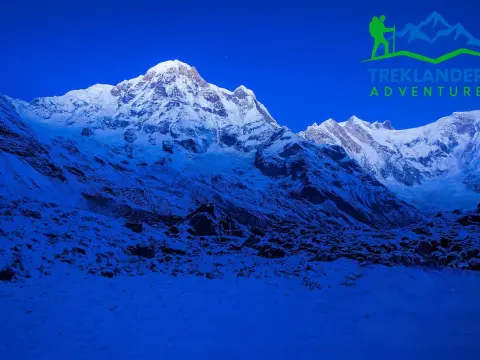
A breathtaking sunrise over the Annapurna massif as seen from Annapurna Base Camp.
Culturally, villages along the Annapurna Base Camp Trek are mostly inhabited by Gurung and Magar people, who are well known for their strong communal life, rich oral traditions, and their unique customs. Traditional stone houses, colourful prayer flags, chortens, and monasteries are a few of the visual elements of a mix of Hindu and Tibetan Buddhist influences. Machhapuchhre, the mountain regarded as sacred and which has never been officially climbed, the local people cherish it as a very spiritual symbol of their respect for nature and the Divine. Festivals, rituals, and the simple day-to-day life along the trail demonstrate culture and spirituality as the two main sources of inspiration for life in the mountains.
Nowadays, the Annapurna Base Camp Trek has become an epitome of history, culture, and nature living in harmony. Though it lures trekkers from all over the world, the area still remains so firmly rooted in its traditions. The visitors are provided with not only breathtaking mountain sceneries but also the privileged insights into a strong Himalayan heritage that has been passed down from generation to generation.
Ancient Trade Routes and Early Human Settlement in the Annapurna Region
Ghandruk Village
People had been living in the Annapurna region for a very long time, even before the area was known as a trekking paradise. One major factor that contributed to the settlement of human beings in the Himalayas was the ancient trade routes. These paths connected central Nepal's fertile lowland areas with the high valleys of the mountains and extended even to Tibet. For survival, communication, and cultural exchange, locals relied heavily on these pathways, which in turn became the mainstay of life in the Annapurna region.
In those days, traders and villagers used to walk or accompany their goods with pack animals such as mules and yaks. They would bring up essential commodities like salt, wool, herbs, and livestock from the highlands, which they would exchange for rice, grains, metal tools, and handmade items from the lowlands. Particularly, the salt trade had great significance as it was a highly sought-after commodity in the hilly areas. Although these journeys were arduous and lengthy, they had the effect of settlements being continuously set up along the trails as people required places not only to rest and trade but also to protect themselves from the harsh weather.
7-Day Annapurna Base Camp Trek from Pokhara | 7 days
Eventually, villages such as Ghandruk, Chhomrong, and Landruk came into existence along these trade routes. These villages were situated in such a way that they had easy access to water, arable land, and natural shelters. The pioneers chose farming and animal husbandry as their main occupations. They cultivated barley, millet, and potatoes while still keeping livestock. Ploughing land divided into terraces became everyday work for farmers, and it was the only way they could grow food on steep mountain slopes. Such a tight bond with nature helped to form not only their lifestyle but also their cultural upbringing.
They were not only for trading goods, but also for trading ideas, beliefs, and customs. Religious traditions, languages, fashion, and building designs were some of the things that got spread through these routes. The influences of Hinduism and Tibetan Buddhism interchanged and mixed over time, thus resulting in a distinct cultural identity of the Annapurna region. Prayer flags, chortens and sacred forests that we can see nowadays are evidence of this exchange of cultures over the centuries.
In spite of the fact that contemporary roads and trekking tourism have almost completely done away with the significance of the ancient trade routes, the latter's heritage is still deeply ingrained. Most of the trekking trails today are the same ones that traders and the first settlers used. Hiking these paths now enables the visitors to lay the historical ground of the Annapurna region and to realize the role of early human settlement in the formation of the area, which is agriculturally and culturally so vibrant as we see it on the Annapurna Base Camp Trek.
Role of Gurung and Magar Communities in Shaping Annapurna Culture
Gurung woman in traditional dress – Annapurna Base Camp Trek
The Gurung and Magar peoples have heavily influenced the culture and identity of the Annapurna region. These two native groups have been residing in the middle hills and high valleys of Nepal for centuries, and gradually they have come up with traditions and ways of living that are perfectly compatible with the mountainous environment. Along the Annapurna Base Camp Trek, you will find that many villages, such as Ghandruk, Landruk, and other settlements, are traditionally the home of the Gurung and Magar people, whose ways and customs continue to impact the daily life of the region.
Traditionally, the Gurung and Magar people made their living by farming, raising animals, and doing seasonal trade. You can still spot terraces of millet, maize, barley, and potato on the hillsides, which speak of the great knowledge of agriculture the locals have inherited through generations. Domesticated animals like sheep, goats, and buffalo were their main sources of food and income. The closeness to the land and the resulting dependence on it for subsistence led them to a profound reverence for nature, which they have continued to maintain as a very significant aspect of their culture.
Among the prominent features of the Gurung and Magar cultures is their extraordinary communal spirit. Their villages were structured on the basis of mutual help and shared accountability. Not only were festivals, weddings, and religious rituals occasions for gathering and celebration, but they also served as means of strengthening the social ties and making the community more cohesive. Traditional dances, folk songs, and storytelling are still part of the cultural expressions during festivities, and thus the history and values are handed down from one generation to another.
Gurung people performing a traditional dance – Annapurna Base Camp Trek
Religion has been one of the main factors in shaping Annapurna culture. Gurung and Magar peoples' beliefs and customs are an excellent example of this. They have blended Hinduism in their practices while at the same time influenced by Tibetan Buddhism and holding fast to their ancient animist beliefs. Along the trail, you see plenty of temples, prayer flags hanging from trees, and little monasteries. It is also very common that local people perform rituals at home to local gods and mountain spirits whom they see as community protectors and providers of good harvest and safe journeys.
Today, Gurung and Magar people have creatively combined their traditional lifestyles with the new trend of trekking tourism, and they still hold on to their cultural heritage. At present, numerous families open their doors to visitors in tea houses, lodges, or through guiding services, and they are greeted with warm hospitality. Through their customs, style of houses, food, and day-to-day life, the Gurung and Magar continue to dominate the cultural core of the Annapurna region. It is thanks to them that the Annapurna Base Camp Trek is not only a scenic adventure but also a culturally enriching experience.
Spiritual Importance of Machhapuchhre (Fishtail Mountain) in Local Beliefs
Machhapuchhre (Fishtail Mountain)
Machhapuchhre, which is better known as Fishtail Mountain, is a figure of reverence for the residents of the Annapurna region. It is an elegant mountain standing out among the others in the area. Since the two peaks of the mountain look like the tail of a fish, the mountain was named after this feature. In the Nepali language, Machhapuchhre means "fish tail." The mountain is a symbol of faith, protection, and harmony with nature for the local communities, primarily the Gurung and Magar people.
In the Hindu pantheon, one of the major gods, Lord Shiva, is believed to reside on Machhapuchhre by the locals. Due to this belief, the mountain is considered sacred, and it has been left in its natural state. This is a notable contrast to the majority of Himalayan mountains, which are open for climbers. Machhapuchhre has not been subjected to climbing due to the long prohibition that was put in place. It is the spiritual reverence that people have for the mountain that has motivated them to keep it pure, and that is reflected in the fact that the mountain has never been climbed officially. To this day, people think that if the mountain is disturbed, it will bring bad luck and the natural world will be thrown out of balance.
Tibetan Buddhist traditions also play a part in shaping the spiritual significance of Machhapuchhre. Banners with prayers, memorials, and small temples seen on the way to Annapurna Base Camp are some of the ways that show the Buddhist tradition of honouring the mountain as the home of pure spiritual energy. The mountain is considered to be a watchdog of the area, and it is said that it protects the people and the nature of the place. The first thing that many of the trekkers see is that the mountain is shrouded by clouds most of the time. Locals believe this to be a manifestation of the divine presence of the mountain.
People's daily living in the Annapurna area is quite intertwined with these religious beliefs. Prior to going on long expeditions, new farming seasons, or major events, the locals may conduct rituals and prayers to seek the mountains' protection and blessings. The senior ones usually let the younger ones hear the tales about Machhapuchhre, thus teaching them to be humble and to have reverence for nature.
On the other hand, for trekkers, a close encounter with Machhapuchhre is commonly a deeply moving experience. Its pristine charm hints that the Annapurna area is not merely a land of thrill but also a holy land. The sacred value of Machhapuchhre still influences people's beliefs, the culture, and the harmonious living of humans with the Himalayan nature.
Buddhist and Hindu Influences Along the Annapurna Base Camp Trail
Monastery in Ghandruk
The Annapurna Base Camp (ABC) Trail is famous for breathtaking landscapes of mountains; however, the trail also reveals strong Buddhist and Hindu cultural influences. As hikers pass through local villages, trekking into the forest, and making their way through the high mountain area, they can see very evidently how religious beliefs deeply influence the locals' daily lives. For a very long time, Hinduism and Buddhism have been two religions peacefully coexisting in the Annapurna area, and their harmonious coexistence has resulted in a very special spiritual environment along the trail.
Hinduism is predominant in the lower villages and valleys of the trek. Several houses have family shrines where members worship gods and goddesses like Shiva, Vishnu, and Durga. Near the villages, it is common to find stone temples, sacred trees, and ritual water sources. Rivers that flow from the Annapurna mountains are considered holy; locals think that water from these rivers brings purity and blessings. Major life events like birth, marriage, and death are Hindu-influenced, and religious festivals are also celebrated by the community with prayers, music, and gatherings.
Shrine Reflecting Buddhist and Hindu Influences
The influence of Buddhism grows as the trek ascends to higher altitudes. Colourful prayer flags decorated with Buddhist mantras and symbols are spreading kindness, peace, and prayers throughout the mountains. Along the trails, there are Mani walls inscribed with Buddhist chants, serving as a reminder for the trekkers to be respectful. Small monuments and monasteries are utilized for meditation and worship. Tibetan Buddhist practices, followed by the Gurung and other mountain ethnic groups, stress living in accordance with nature and showing kindness to all beings.
What sets the Annapurna area apart is that Hindu and Buddhist beliefs are harmoniously mixed without any tensions. Most people are merging different aspects of both religions in their daily lives. Members of the same family can worship Hindu gods and perform Buddhist rituals, too. Both Buddhists and Hindus consider mountains such as Machhapuchhre as holy and powerful places.
For hikers, such sacred signs and ceremonies give the trek a profound significance. They are a symbol of the spiritual bond between mankind and the Himalayas. The heritage of Buddhism and Hinduism along the Annapurna Base Camp Trail communicates to the visitors that, besides being a physical challenge, the trek is also an experience of a living spiritual and cultural environment formed by the generations.
Traditional Architecture and Mountain Village Life on the ABC Trek
Museum in Ghandruk
Traditional architecture and mountain village life play a big role in the Annapurna Base Camp (ABC) Trek experience. When trekkers walk through villages such as Ghandruk, Chhomrong, Landruk, and Bamboo, they can observe how local people have constructed their houses and organized their lives around the mountain environment. These villages hold the accumulated wisdom, culture, and nature awareness of several generations.
Traditionally, most houses in the Annapurna region are constructed using the local materials that are readily available, like stone, wood, and mud. Stone walls not only keep homes warm during the cold winter but also cool during the hot summer. Roofs in the past were made of stone slabs or wooden shingles, and they were very effective in dealing with heavy rains and snowfall. Houses are typically located near each other, which helps the village to be less impacted by the strong winds, and it also fosters a strong sense of community.
Traditional houses in Ghandruk
Life in villages along the ABC trail is very basic and closely linked to nature. Farming is the main source of income, with terraced fields being made on the steep hillsides. Locals cultivate crops like maize, millet, barley, potatoes, and seasonal vegetables. It is also quite common for them to raise goats, cows, and buffalo for milk, meat, and farming purposes. The daily tasks are mostly determined by the seasons, weather, and farming cycles.
The local community is the heart of village life in mountainous areas. During seasons of planting and harvesting, festivals, and even hard times, neighbors help each other out. Like neighbors helping each other at festivals, during difficult times, and in the planting and harvest seasons. Traditional values of cooperation and respect, which are the basis of the community, are handed down from one generation to another. Often, villages have communal areas such as courtyards, water taps, and small temples where people meet for socializing and rituals.
Along with the development of trekking tourism, a large number of traditional houses were changed into teahouses and lodges. Although the external walls were made of modern materials and facilities were added, the majority of the buildings still retained their traditional designs. The tourists get excellent treatment: they are served with warm hospitality, traditional food, and cultural performances.
Along the Annapurna Base Camp Trek, traditional architecture and the life of the village give the hikers a look into an environmentally friendly way of life in the mountains. These settlements demonstrate how the local inhabitants have been co-existing with the Himalayan nature for several generations, thus maintaining their culture and at the same time gradually getting used to the modern world influences.
Festivals, Rituals, and Seasonal Celebrations in Annapurna Villages
Buddhist Monastery - Annapurna Base Camp Trek
Festivals, rituals, and seasonal celebrations contribute significantly to daily life in the Annapurna region. On the way to the Annapurna Base Camp (ABC) Trek, locals take part in such events to manifest their faith, strengthen community bonds, and acknowledge the changes of the seasons. Sharing a common ground with the Hindu and Buddhist traditions, these festivities are a reflection of the profound spiritual and cultural values of the locals.
In fact, the whole world recognizes Dashain as one of the most widely celebrated festivals in the Annapurna villages. It is the biggest Hindu festival representing the victory of good over evil. People from the same family unite to get blessings from the old folks, pray to goddess Durga, and have delicious meals together. After that comes Tihar, which is the festival of lights. This festival honors animals such as crows, dogs, cows, and oxen. In other words, it is a way of showing respect for all living beings. To round it up, houses and villages are adorned with lamps, flowers, and colourful patterns, which bring about a festive and merry atmosphere.
10-Day Ghorepani Poonhill with Annapurna Base Camp Trek | 10 days
However, Buddhist festivals are not left out, especially in those villages where the influence of Tibetan Buddhism is quite strong. There, Losar, the Tibetan New Year, is another occasion when people pray, perform traditional dances, play music, and enjoy a great meal together. At the same time, monasteries and homes get a thorough cleaning and are decorated, plus people don the traditional outfits. Besides that, Buddha Jayanti, a day commemorating the birth of Lord Buddha, is marked through prayer, chanting, and good deeds. Prayer flags are usually refreshed at such times so that the message of peace and compassion is carried far and wide.
Seasonal rituals were originally and still primarily tied to farming and nature. The villagers would conduct various ritual ceremonies aimed at requesting good weather, healthy crops, and to be spared from natural calamities, even before they sowed the seeds or harvested their crops. They regard mountains, forests, and rivers as sacred places and make offerings to the local gods and guardian spirits of the land. These customs represent a deep bond of mutual love and respect between people and their environment.
Community involvement plays a key role in all celebrations. Festivals serve the purpose of uniting the villagers by engaging them in singing, dancing, storytelling, and sharing meal times. The older people impart traditions and share stories with the younger ones, thus helping to keep the cultural legacy alive. For trekkers, these festivals are not just mere entertainment but a valuable, eye-opening experience into the life of an Annapurna villager, where culture, spirituality, and nature are in a perfect symbiotic relationship throughout the year.
History of Mountaineering and the First Annapurna Expeditions
Annapurna I (8,091 meters)
The mountaineering history in the Annapurna area represents a significant figure in Himalayan exploration. In the times before modern expeditions, the local communities were the only ones to have knowledge of the high peaks of Annapurna, and they revered the mountains as sacred and mighty. The mountains were considered not to be the objects of human conquest, but rather, they were seen to be the spiritual protectors of the land. This traditional belief was the main reason why people saw the Himalayas throughout the ages.
One of the main turning points happened in 1950, when the Annapurna region made the headlines worldwide. Under the leadership of Maurice Herzog, a French team achieved the feat of climbing Annapurna I (8,091 meters), thus setting the record of being the first ascent of a peak over 8,000 meters in the world.
Up to now, Annapurna I remains one of the most challenging and dangerous peaks in the world, with a high fatality rate among climbers attempting it. Indeed, the line between life and death is very thin in those early days when climbers faced tremendous hardships, had only limited and rudimentary gear, very little weather information and hardly any maps. The environment was so isolated that there were no roads or modern communication systems. Local guides and porters were instrumental in leading the climbers along the treacherous paths, carrying their loads, and generally enabling their survival in such extreme conditions. Their indispensable work, however, has always been somewhat neglected in those first accounts.
After the first ascent, the Annapurna massif saw a surge of interest from climbers and explorers. In the next few decades, the area witnessed the exploration and climbing of different peaks, although Annapurna was still labelled as one of the most formidable and perilous mountain ranges in the world due to its avalanches and unstable weather. Meanwhile, some peaks like Machhapuchhre were off-limits to climbers as a sign of respect for the local spiritual beliefs.
The boom of mountaineering also meant the inception of trekking routes, such as the Annapurna Base Camp Trail. What started as exploration gradually turned into adventure tourism. Nowadays, the tales of early expeditions are known not only for human accomplishments but also for the lessons of respect, safety, and cultural understanding that they impart. The first Annapurna expeditions' heritage remains a source of motivation for trekkers and climbers worldwide.
Sacred Landscapes, Forests, and Nature Worship in the Annapurna Region
Sacred Fishtail (Machhapuchhre) and snow-covered landscape – Annapurna Base Camp Trek
The Annapurna region is widely recognized for the towering peaks of the Himalayas; however, it is also famous for its holy mountains, the forests, and deep nature worship alongside the mountains. For the natives, the mountains, rivers, and forests are more than just geographical features; they are living beings with a spiritual dimension. The Gurung, Magar, and other Himalayan ethnic groups have been religiously revering nature as a deity for a long time, which has influenced their living, culture, and traditions on the Annapurna Base Camp (ABC) Trek.
Some mountains like Machhapuchhre, Annapurna I, and Hiunchuli are regarded as sacred and thus linked with gods, spirits, and ancestral guardians. People living in these areas covet such superstitions where these mountains shelter their homes, supply them with water, and help them have a good harvest. Hence, some peaks are left unclimbed while others are honored with rituals. Prayer flags that decorate a mountain carry mantras that promote universal peace, kindness, and blessings for every living being. Along the trails to the Annapurna sanctuary, one can frequently see Mani walls, chortens, and tiny shrines that illustrate how spiritual activities are part of the landscape.
Likewise, forests and woodland in the Annapurna region are highly valued. Sacred groves are those forested areas wherein cutting down trees, hunting, or farming is prohibited. People in the villages are convinced that gods, spirits, and the souls of their ancestors inhabit these forests. Apart from being a place of worship, such a locale also provides clean water, fuel, herbs, and a home for animals, all of which correspond to the close connection between faith and nature. Through the tradition of leaving offerings, conducting prayers of the different seasons, and performing rituals of purification, people living around the sacred groves express their obedience and love towards the Lord of Nature.
Rivers, streams, and waterfalls are similarly revered. Many rivers are considered holy and used for purification and ritual ceremonies. Before planting crops or starting important journeys, villagers often perform rituals along riverbanks, asking for blessings and protection.
This close connection to nature shapes sustainable practices in the Annapurna region. Sacred beliefs encourage conservation, respect for wildlife, and careful use of resources. For trekkers, these sacred landscapes provide more than scenic beauty—they offer insight into how culture, spirituality, and environmental stewardship are intertwined, making the Annapurna Base Camp Trek a journey through both nature and living heritage.
Impact of Trekking Tourism on Local Culture and Traditions
Trekking tourism has significantly influenced the local culture and traditions of the Annapurna area. The Annapurna Base Camp (ABC) Trek invites thousands of tourists yearly, thus creating economic opportunities for the villages along the trail. However, it also deeply affects traditional lifestyles. Tourism is a double-edged sword in that it may help preserve some cultural elements while at the same time it introduces changes that influence everyday life and customs.
In trekking tourism, local communities have been given a ray of hope in generating income. A lot of families have their own tea houses, lodges, and restaurants, while some members work as guides, porters, or local transport providers. With the help of these economic supports, communities are now able to upgrade schools, healthcare, and infrastructure. Besides, the young generation is no longer compelled to go to cities for work. Tourism has been an instrument for the preservation of traditional dances, music, clothing, and crafts. Locals are encouraged to keep up such cultural expressions when they perform festivals and rituals in front of visitors.
4-Day Ghorepani Ponnhill Trek from Pokhara | 4 days
Despite all these positive sides, tourism has brought some demerits, too. The daily contact with foreigners has changed the way of living, dressing, and eating food. In some cases, to satisfy tourists more, cultural practices are altered or simplified, thus losing their original meaning. Building modern teahouses and lodges, which are a necessity for tourists to get comfort, has displaced the traditional village architecture. At the same time, increased waste, pollution, and environmental pressure have affected forests, rivers, and trekking trails, which are not only central to the spiritual beliefs of the locals but are also seen as sacred.
Another effect is the changing of social values. In the old days, for instance, the cooperative spirit and communal work formed the essence of village life, but sometimes the cash economy brought in by tourism can lead to the diminishing of these traditional ways of living. The youths, for example, may go into tourism-related work at the expense of farming or keeping up traditional crafts, thus altering the balance between the modern needs and the preservation of the culture.
However, there are still a lot of people who, in the Annapurna area, manage to find a good mix of tourism and tradition. For instance, community-based tourism, raising awareness about local culture, and adopting responsible ways of trekking are some of the measures taken to preserve both the nature and the way of life of the locals. For hikers, being aware of the cultural effects of tourism is a step toward travelling with respect, which in turn will keep the Annapurna region a place where the old ways, spirituality, and the great outdoors are all in harmony.
Cultural Preservation and Community-Based Tourism in Annapurna Conservation Area
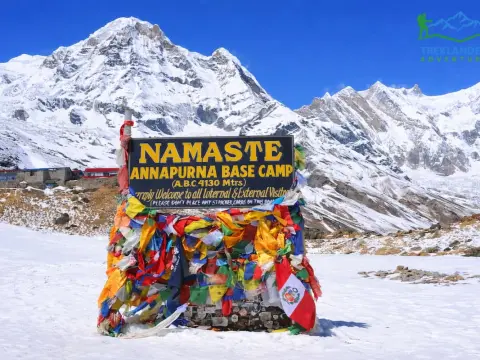
Annapurna Base Camp
Preserving cultural traditions and developing community-centered tourism are essential for maintaining the heritage and natural environment of the Annapurna region. Spanning a remarkable diversity of natural and cultural features, such as mountain ranges, forests, rivers, and villages, the Annapurna Conservation Area (ACA) is the largest protected area in Nepal. It belongs to indigenous communities such as the Gurung, Magar, and others, whose lifestyle, festivals, and cultural practices have been developed over generations. Community-based tourism (CBT) is an approach that trekking and tourism activities should be the source of the prosperity of these communities without touching their culture and nature.
Community-based tourism gives locals the opportunity to run the entire operation of lodges, teahouses, guiding services, and homestays themselves. It also makes it possible for them to earn money directly from tourists who go trekking while still being able to decide how tourism is operated in their community. Besides that, the villagers' income from tourism will be the main reason for them to continue their work in preserving traditional architecture, handicrafts, and culinary practices, as these are the cultural elements which attract trekkers who are looking for authentic experiences. Take the example of a homestay in a village like Ghandruk or Chhomrong, which, among other things, gives guests a chance to try cooking with the locals, learning about their festivals, and attend their daily routines, all of which help in deepening cultural understanding and appreciation.
ACA also strives for the promotion of culture through education and raising awareness. Tourists are briefed about the local customs, clothing, ceremonies, and spiritual habits before going on a trek; this facilitates their being respectful in their interactions with the locals. Proceeds from the tourism industry have enabled local schools and community centers to provide kids with the opportunity to receive a modern education while at the same time getting to know their cultural roots. In fact, festivals and rituals which years ago only the locals took part in have become occasions for the demonstration of the living traditions in a manner that preserves their spiritual value.
There exists a strong tie between environmental conservation and cultural preservation. As part of ACA's management plan, the sacred forests, rivers, and mountains are protected. Villagers and trekkers are being encouraged to adopt responsible trekking habits, such as not littering, using only the marked paths, and showing respect to the sacred sites. By doing these things, the natural and spiritual balance of the area is preserved, which is fundamental to the local belief system.
Through community-based tourism, the Annapurna Conservation Area is an example of how sustainable tourism can preserve both culture and nature. ACA guarantees that trekking in the Annapurna region is not just a physical journey but also a cultural one, by giving power to the local communities, facilitating cultural exchange, and supporting ecological awareness. In this way, the heritage, traditions, and sacred landscapes that characterize the Annapurna Base Camp Trek are being conserved.
Conclusion
Tea Houses Lodges at Annapurna Base Camp Trek
The Annapurna Base Camp Trek provides an experience far beyond merely going through stunning mountains. It is a journey through time, culture, and spirituality as well. The area along the track is a mirror to centuries of human adaptation and cultural development, going back to ancient trade routes and early human settlements and showing the rich traditions of the Gurung and Magar people. Local people are shown to have a strong bond with nature through the worship of mountains like Machhapuchhre, which is one of the sacred peaks, as well as the reverence for forests and rivers. At the same time, the presence of Hindu and Buddhist influences can be seen in the rituals, festivals, and everyday life on the trail.
Exploring the mountains in the past and current trekking activities have brought in new opportunities. The region is connected to the outside world, and at the same time, traditional practices are being challenged. However, through the efforts of community-based tourism and cultural conservation, the local people have managed to find a way to keep their traditions while at the same time benefiting from sustainable tourism. The Annapurna adventure goes hand in hand with the villages, traditional dwellings, and cultural practices that are still alive and well here. Experiencing these things, visitors get not only the thrill of adventure but also a glimpse of the resilient Himalayan way of life.
Fundamentally, the journey to Annapurna Base Camp is both a cultural and natural discovery. It gives travellers the opportunity to travelers to see a rare combination of history, spirituality, and community life that has been going on for a long time. The locals, traditions, and environment will be preserved if tourists continue to respect the local customs, the sacred areas, and the environmental practices. This way, the Annapurna region will keep on flourishing as a trekker's heaven and at the same time as a living heritage site. The harmony between culture, nature, and adventure is what makes the Annapurna Base Camp Trek so memorable - it's a journey that touches the very core of the Himalayas.