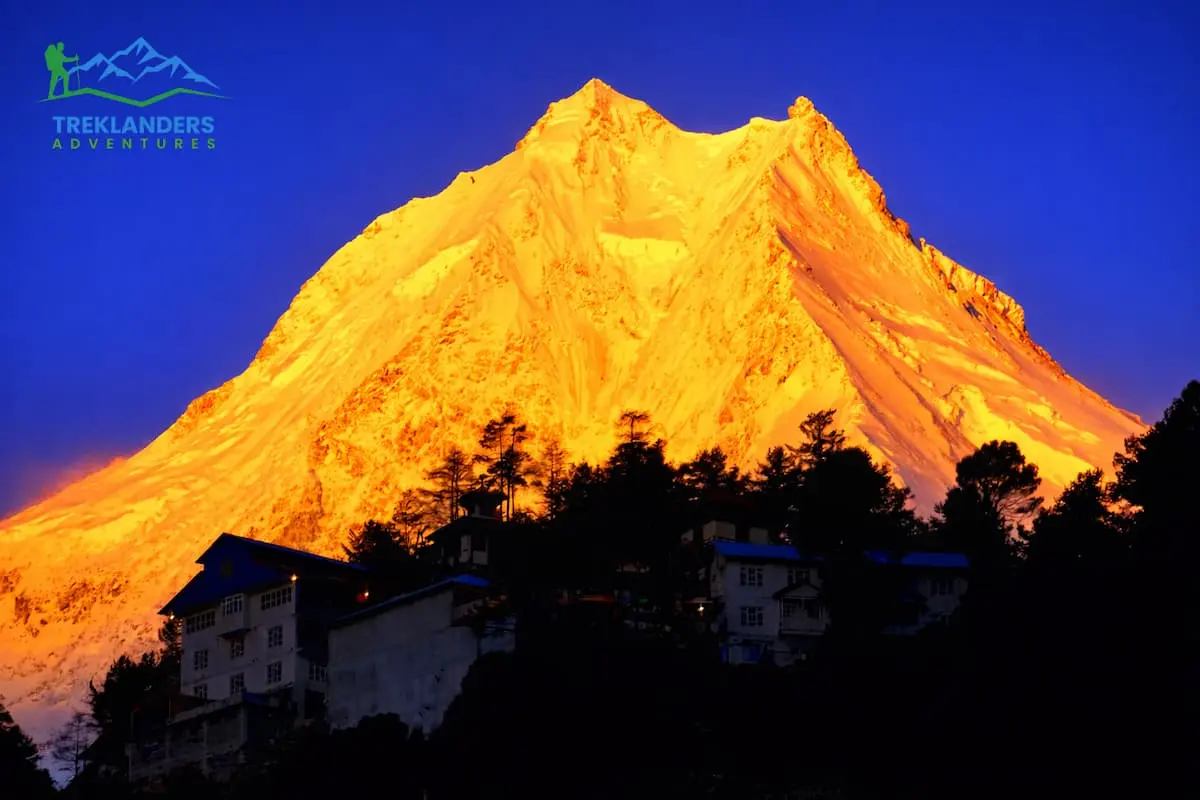
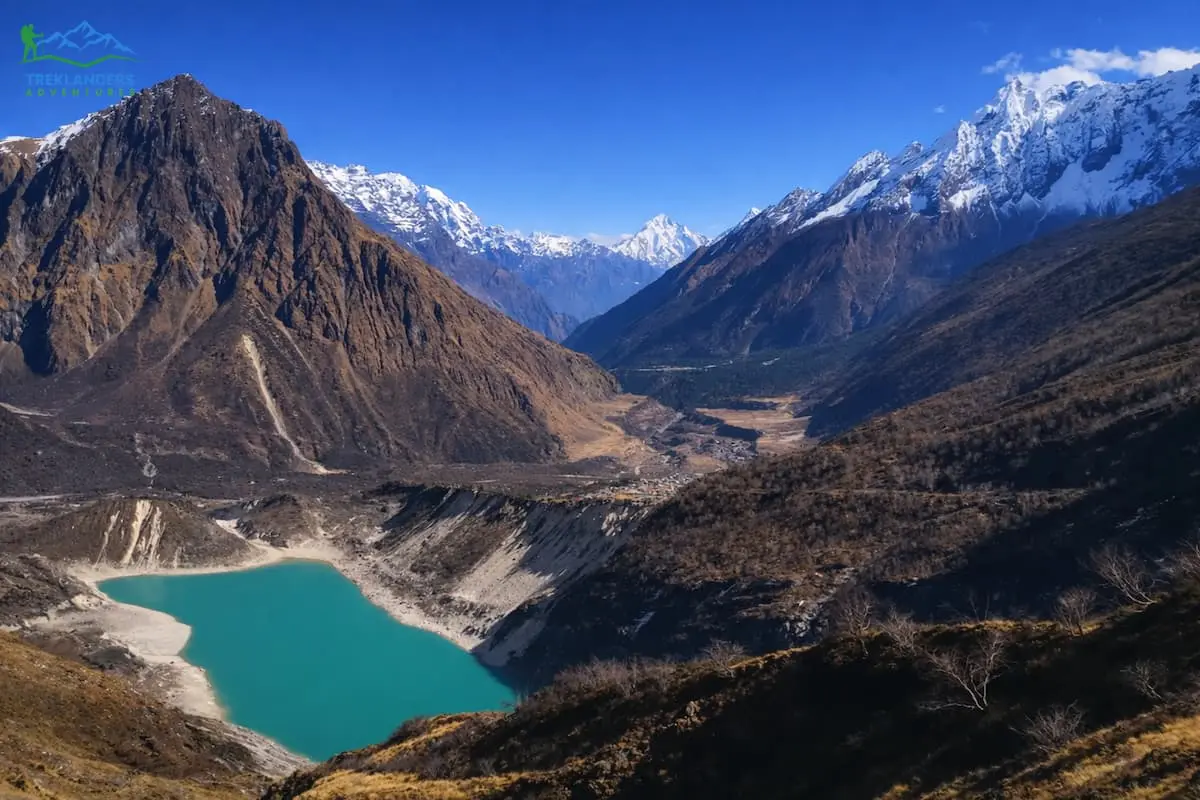
The 14-day Manaslu Circuit Trek Package route is among the most rewarding and less-crowded Himalayan trekking experiences that Nepal has to offer, with a nice mix of adventure, culture, and untouched mountain scenery. It is a circuit trek around Mount Manaslu (8,163 m), the eighth-highest peak on the planet, that opens the door to deep and remote valleys, traditional village settlements, and breathtaking high-altitude landscapes which are barely influenced by mass tourism.
This is a perfect trek for those who want to escape the crowd and experience a very authentic and adventurous route that is significantly less commercial than the popular ones like Everest Base Camp or Annapurna Base Camp. The journey begins with an exciting drive from Kathmandu to Machha Khola, then continues onwards with a slow and steady climb following along the Budhi Gandaki River.
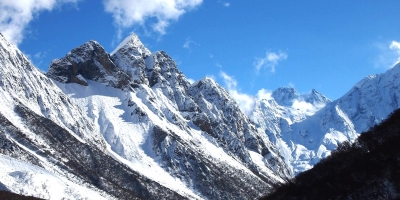
As your elevation increases, the scenery changes from dense forests of subtropical varieties and the crop fields that are formed by terraces of the natural land to pastures at the tree-line and glaciers, along with the rugged mountain landscape.
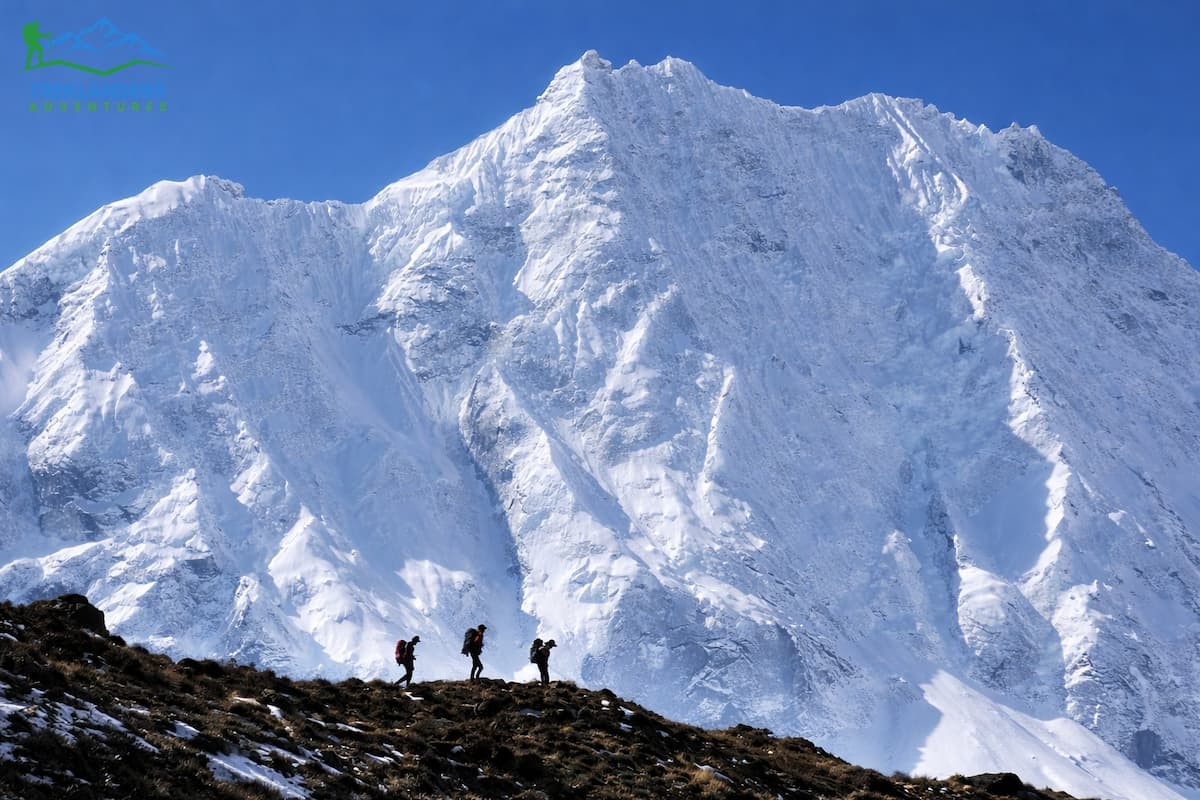
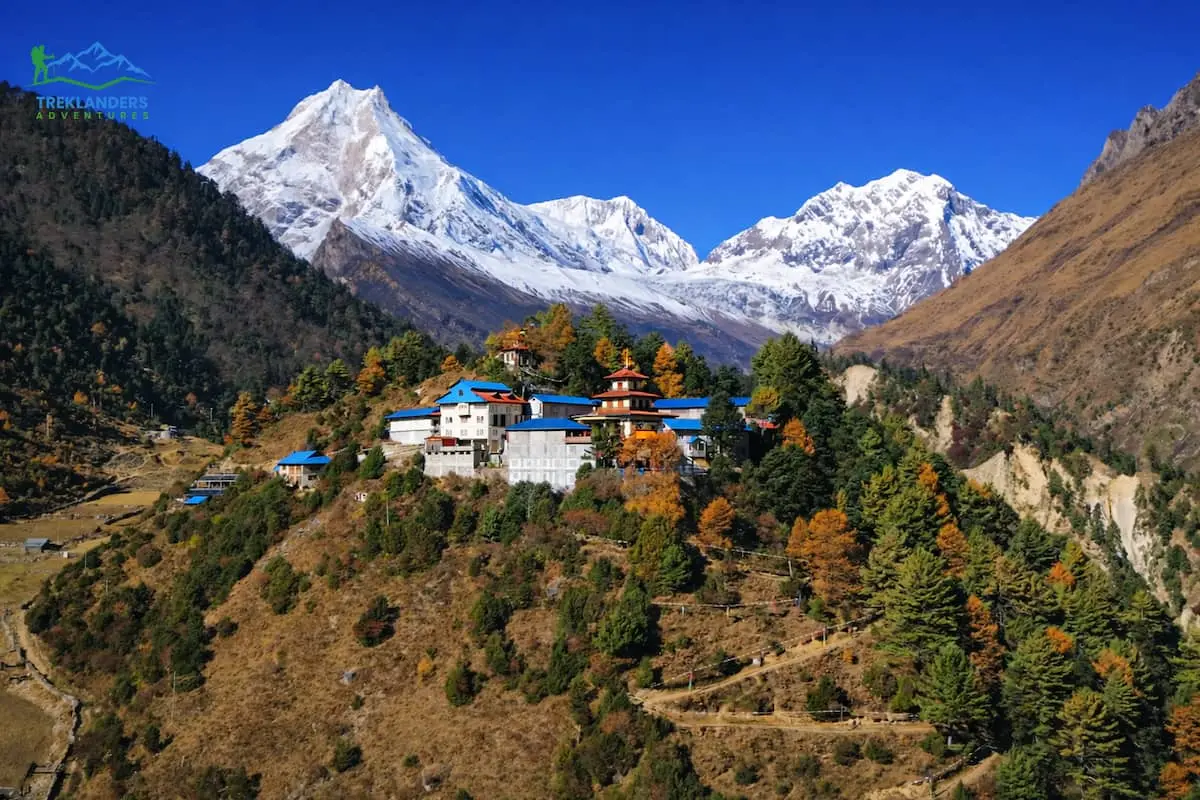
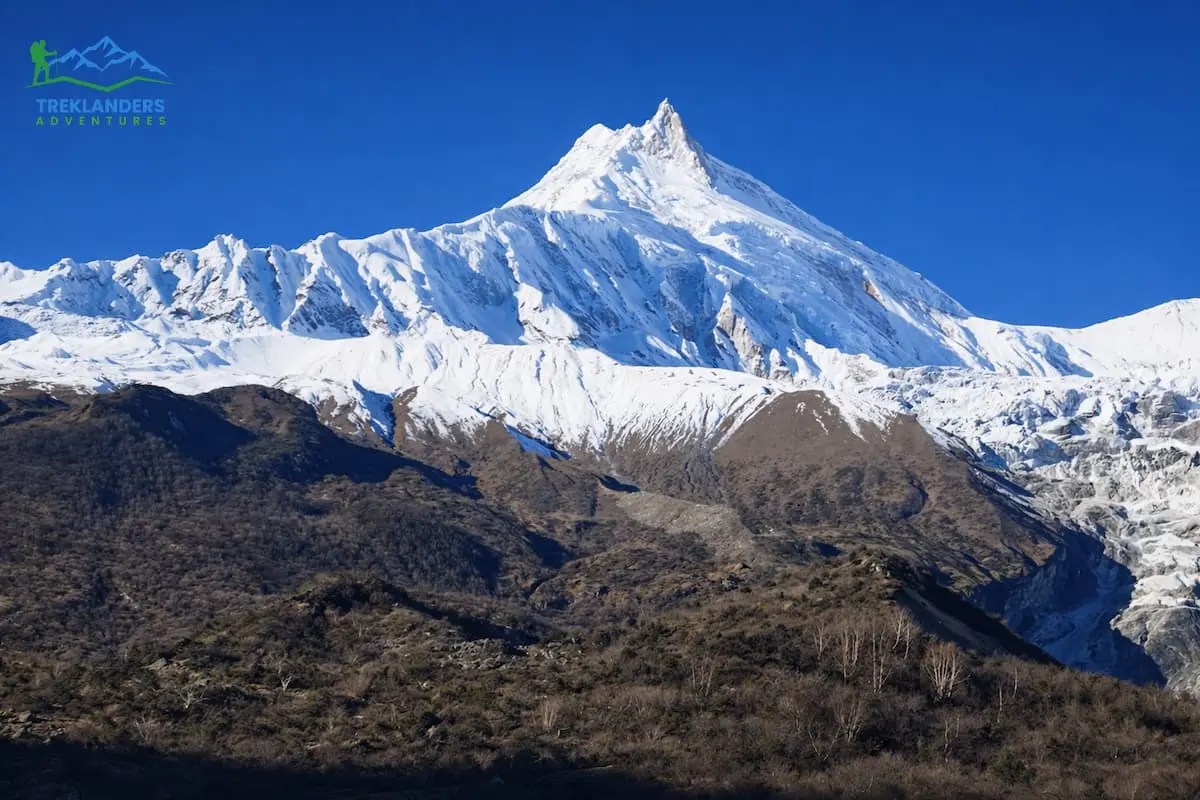
Walking around the world-famous 8th-highest peak, Manaslu 8163m is one of the major highlights of the Manaslu circuit trek. The trek is culturally rich with Tibetan Buddhist influences, with strong traditions found in villages like Lho, Samagaun, and Samdo.
Mani mounds, prayer flags, temples, and traditional stone houses allow one to get an in-depth cultural experience in parallel with the natural beauty. In Samagaun, one of a kind, well-thought-out rest/ acclimatization day to maximize the safety and comfort before heading to higher altitudes.
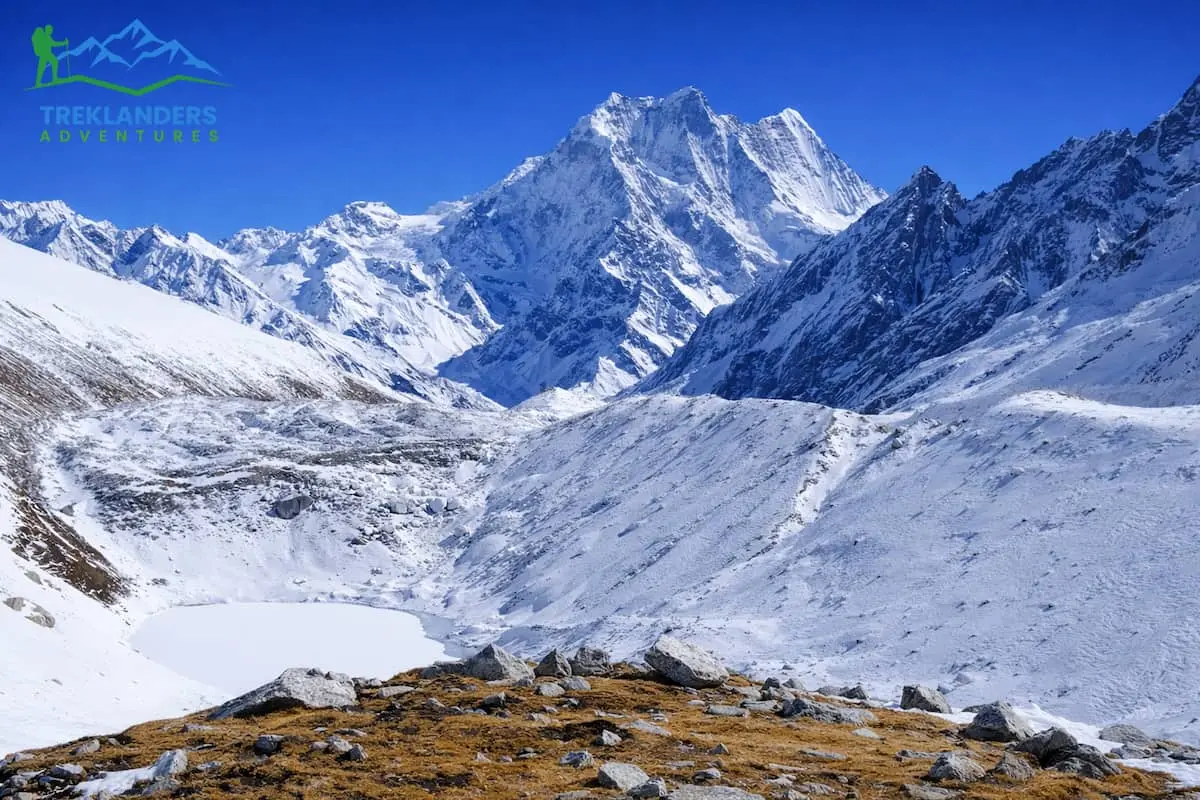
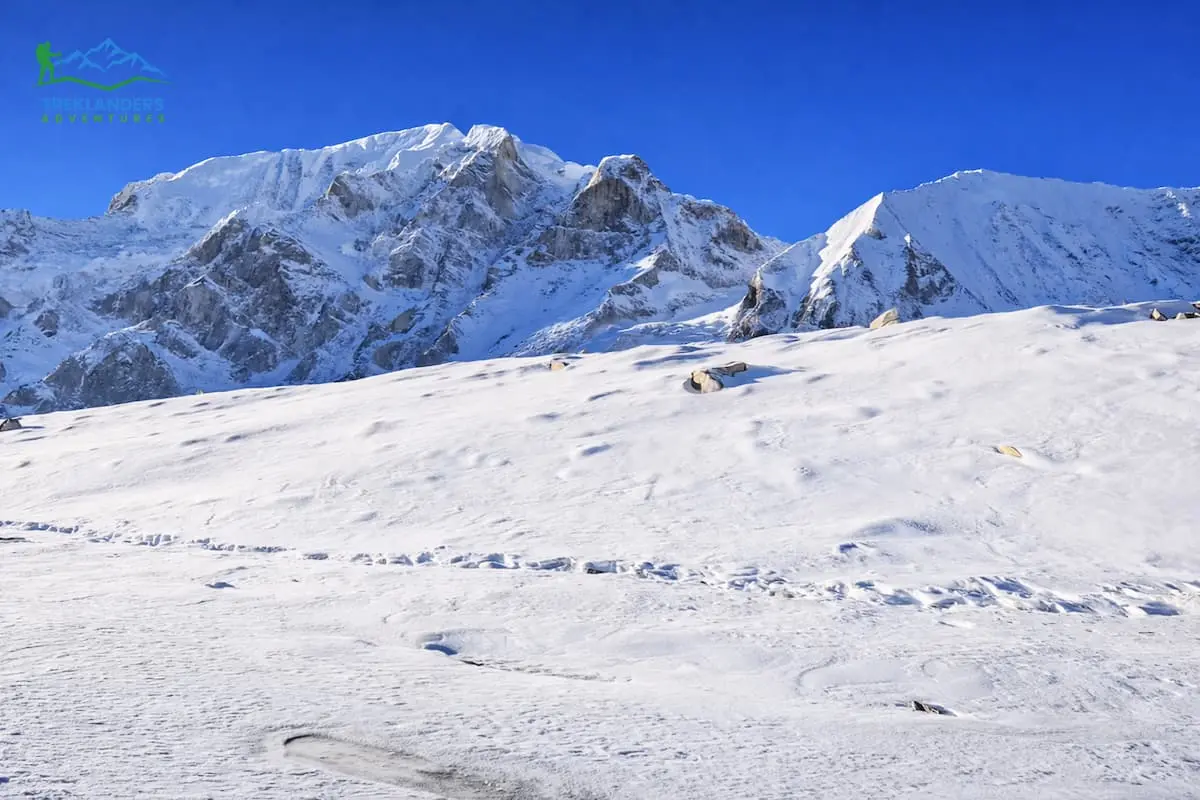
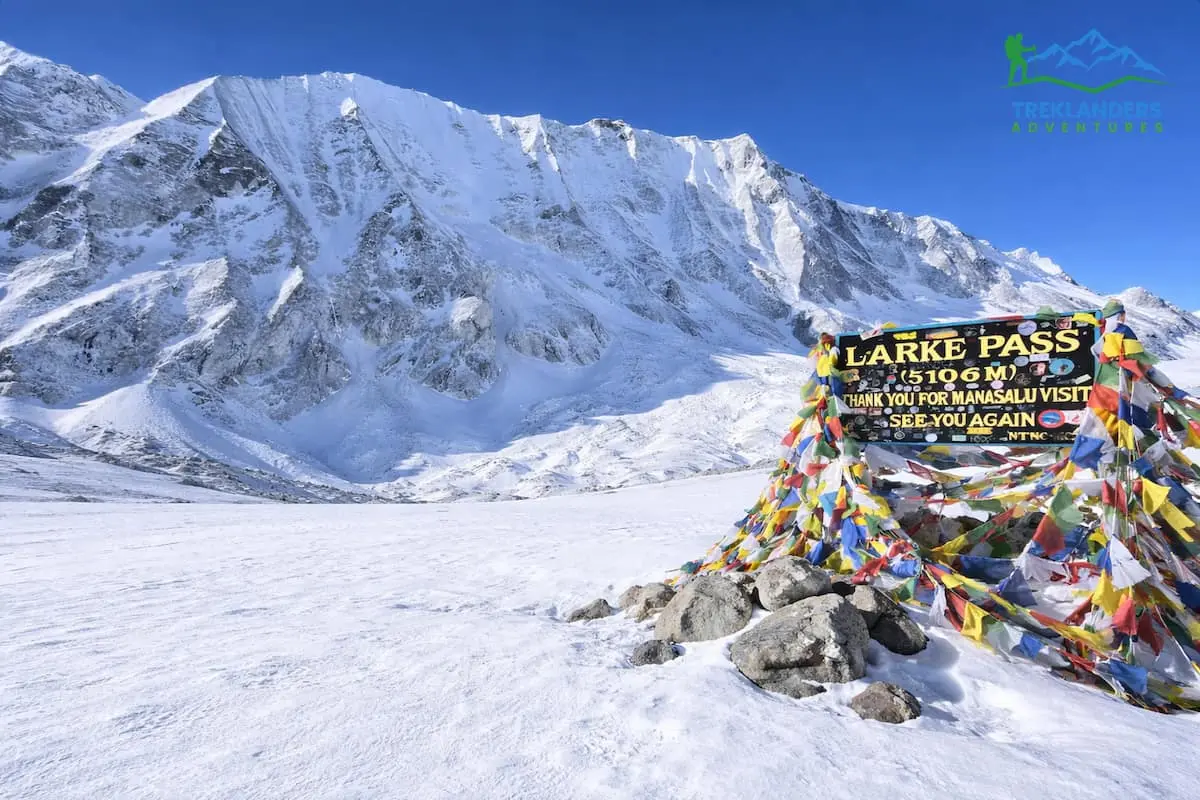
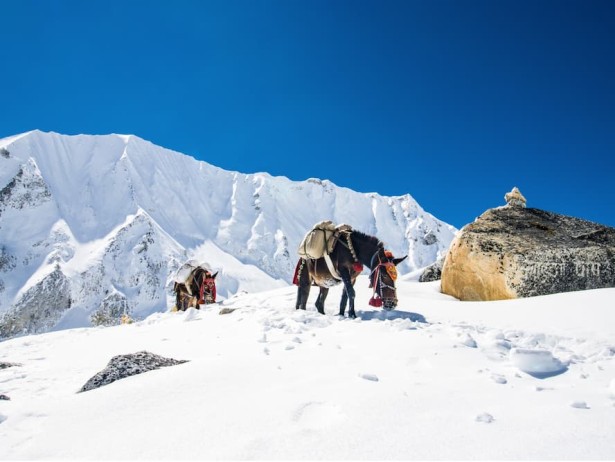
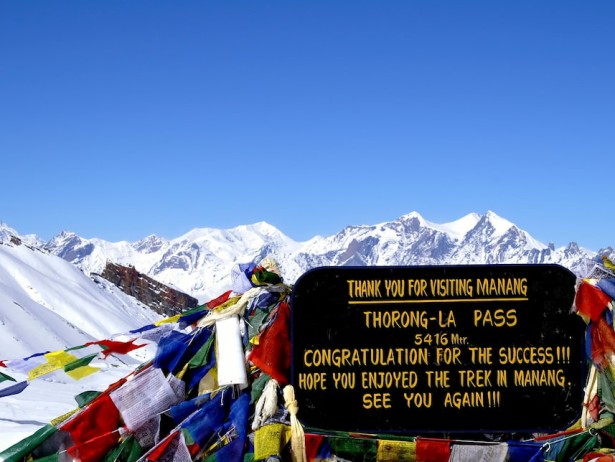
The highlight of the trekking adventure is undoubtedly the crossing of Larke Pass (5,106 m), which is also the highest point of the journey. In fact, it is a tough day physically, but at the same time, totally worth it because you get to see Mount Him lung, Mount Cheo, Kang Guru, and Annapurna II from the sky in one of the most stunning panoramic views.
Down this way to Bhimthang, the change of season is so dramatic that you can hardly believe you were just on top of a huge mountain covered in snow and ice. There, the valley is much greener, and the trail is lined with dense forests, which is a sign that you are slowly making your way back to the lower altitude.
This 14-day package offers a thoroughly planned itinerary that balances proper acclimatization, reasonable trekking hours, and a gradual and safe altitude gain. One can expect to stay in local tea houses where there is not only the warmth of hospitality but also an opportunity to know about the lives of the people in the mountains.
The Manaslu Circuit Trek, which is a combination of trekking and scenic drives, is just the right choice for trekkers who want to experience the wilderness, the cultural depth, and a real high-Himalayan adventure in Nepal.
Day 1: Arrival in Kathmandu (1,400 m) – Airport transfer and trek briefing
Day 2: Drive from Kathmandu to Machha Khola (930 m) – 8–9 hrs
Day 3: Trek from Machha Khola to Jagat (1,340 m) – 6–7 hrs
Day 4: Trek from Jagat to Deng (1,860 m) – 6–7 hrs
Day 5: Trek from Deng to Lho Gaun (3,180 m) – 6–7 hrs
Day 6: Trek from Lho Gaun to Samagaun (3,530 m) – 4–5 hrs
Day 7: Acclimatization day at Samagaun – Optional hikes and rest
Day 8: Trek from Samagaun to Samdo (3,875 m) – 4–5 hrs
Day 9: Trek from Samdo to Dharamsala (4,460 m) – 4–5 hrs
Day 10: Cross Larke pass (5,106 m) and trek to Bhimthang – 8–9 hrs
Day 11: Trek from Bhimthang to Tilje (2,300 m) – 6–7 hrs
Day 12: Trek to Dharapani and drive to Besisahar – Trek 3–4 hrs, drive 4–5 hrs
Day 13: Drive from Besisahar to Kathmandu – 6–7 hrs
Day 14: Final departure from Kathmandu
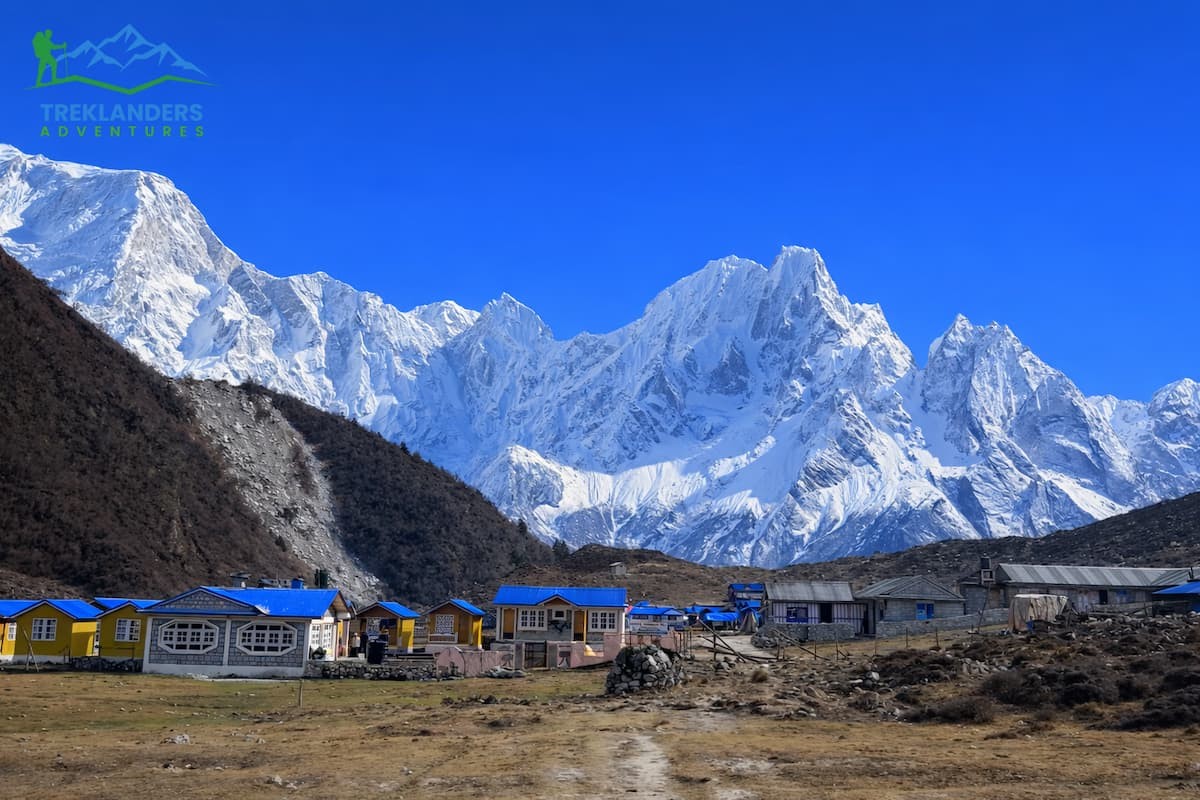
Manaslu Circuit Trek is best during the spring and autumn seasons as the weather is stable, the mountains are clearly visible, and the Larke Pass, a high-altitude crossing, is generally safe.
Spring runs from March to May, and it is regarded as one of the best times to do a Manaslu region trek. The temperature during this period is moderate at the lower and mid-elevations, so a day of trekking is comfortable. As you ascend, conditions are still quite fine, and the danger of extreme cold is very limited when compared to winter. The trails in spring are exceptionally delightful with the rhododendron forests blossoming and the Budhi Gandaki valley having fresh greenery. Usually, the visibility is excellent, especially in the morning, and the views of Mt. Manaslu and the neighboring Himalayan peaks are very clear. Provided the Larke Pass weather conditions are usual, it is generally accessible during this period.
Autumn is also popular (from September to November) and is often considered the best season for high-altitude trekking in Nepal. After the monsoon rains, the air is so clean and fresh that the visibility is excellent and the mountain views are very sharp throughout the trek. It is nice to walk during the day, but the nights at higher altitudes, such as Samdo, Dharamsala, and near the Larke Pass, can be cold. The trail is mostly dry and stable in conditions, thus autumn is perfect for safe and pleasant trekking as well as photography.
Winter, from December to February, can be done, but it is definitely tougher. There will be a big temperature drop, and a heavy snowfall can even block the Larke Pass. Thus, the trip will be a lot riskier and maybe even impossible if you do not have an option to reschedule your trip. Only very experienced trekkers who want to be completely isolated and are also ready for extremely low temperatures should consider doing it in winter.
The rainy season, June to August, should be avoided because of the heavy rain, slippery paths, floods, and low visibility. For the safest, most beautiful and comfortable hike, the Manaslu Circuit trek should be done either in spring (March-May) or autumn (September-November).
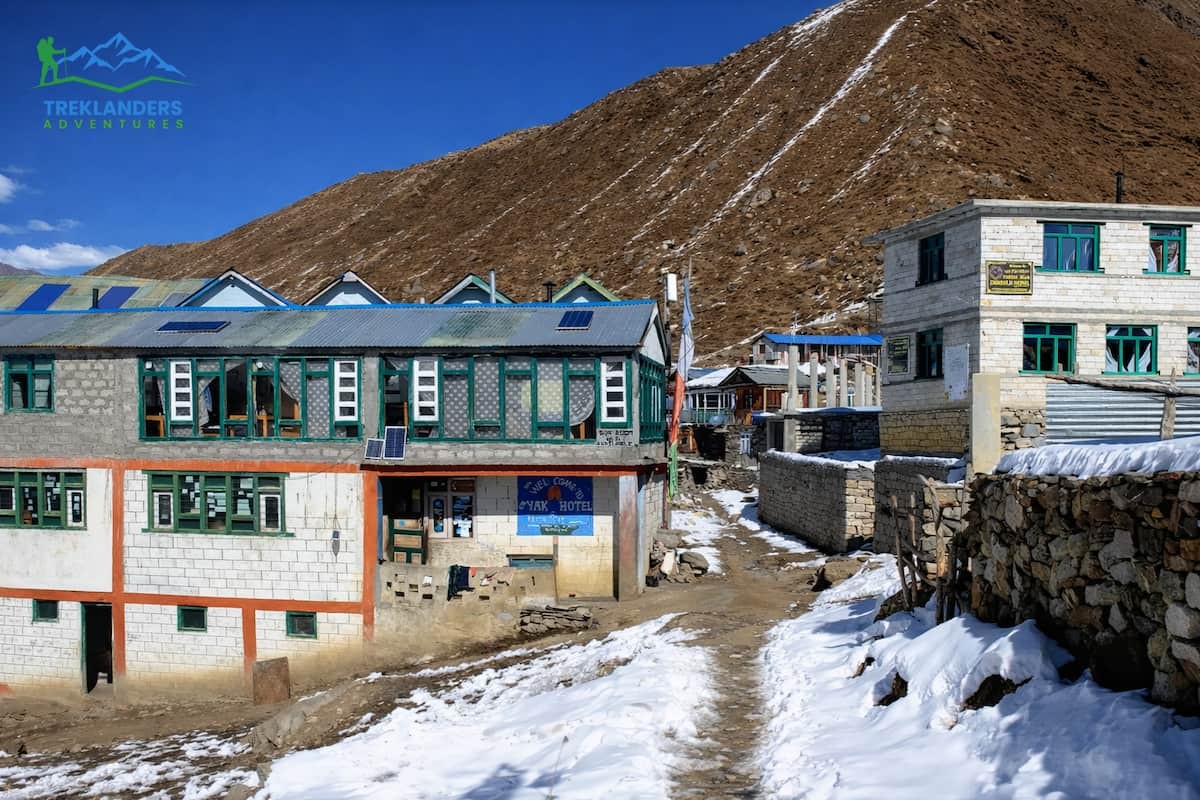
Accommodation during the Manaslu Circuit Trek follows a teahouse pattern, whereby trekkers stay in inexpensive, locally-run guesthouses and lodges along the way. Such teahouses offer rather simple, clean, and neat accommodation that is in harmony with the traditional lifestyle of the Manaslu region, yet satisfying the basic demands of the trekkers.
Teahouses in villages at low and mid-altitudes like Machha Khola, Jagat, and Deng are fairly well-developed. The rooms are generally twin-sharing and have wooden beds, mattresses, pillows, and blankets. A few lodges at lower elevations may have some limited facilities, such as the use of a solar-heated hot shower and charging point for an electronic device that is normally offered at a small extra charge.
When the trek reaches higher villages such as Lho Gaun, Samagaun, Samdo, and Dharamsala, accommodations get more primitive because of the location and severe weather conditions. The rooms are still tidy but very simple, and often with shared bathrooms. There is no heating in bedrooms, but usually, dining areas are warmed by a stove in the evenings, giving a nice place to relax and socialize. At Dharamsala (Larke Phedi), accommodations include very basic facilities and typically, dormitory-style rooms since it is a high-altitude stop chiefly used for resting before crossing the Larke Pass.
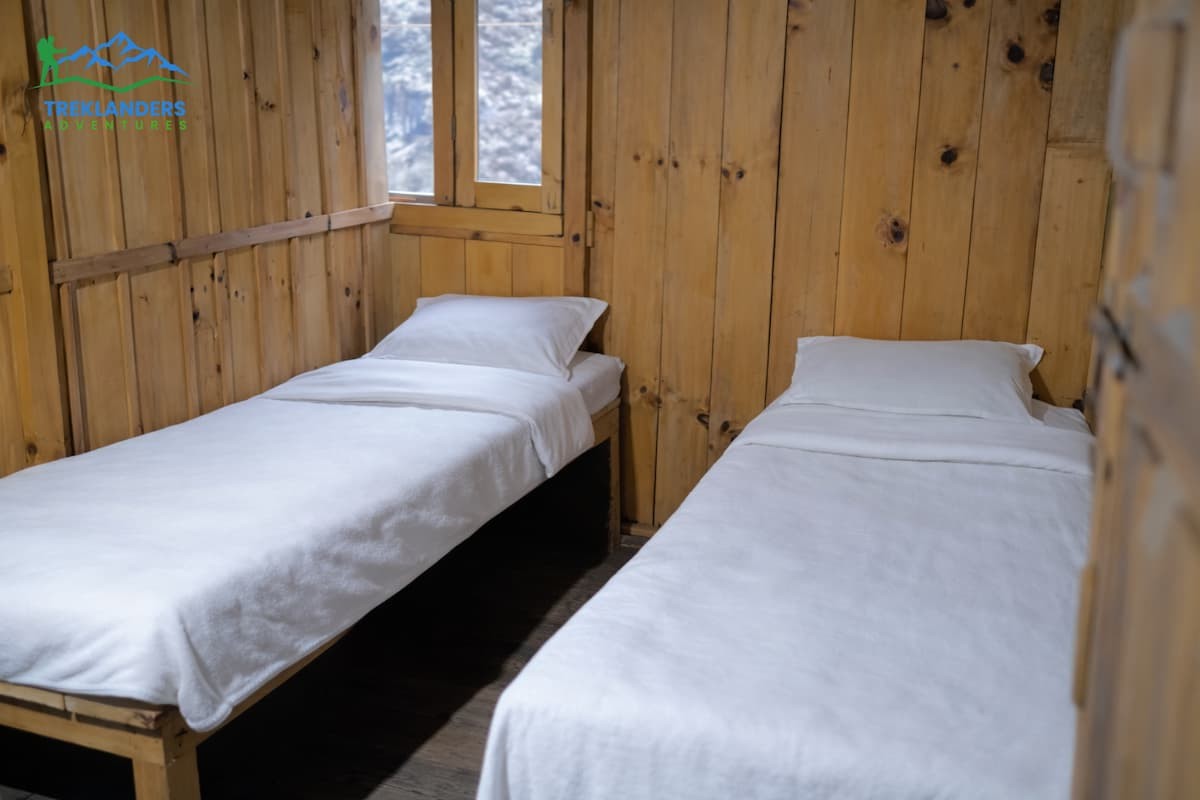
Teahouses, despite their lack of luxury, have an essential function in helping local communities, and therefore, a stay in one of them ensures that the money is directly injected into the local economy. In the very same lodges, meals are served, which means that trekkers can have a warm meal and stay in a single spot to rest after their day of trekking.
In Kathmandu, accommodation is arranged at a nice tourist standard hotel with bed-and-breakfast facilities, allowing you to have a decent sleep before and after the trek.
As a whole, even though lodging on the Manaslu Circuit is quite basic and not so fancy when compared to other more commercial trekking routes, it is sufficient, safe, and good enough for a genuine Himalayan trekking adventure.
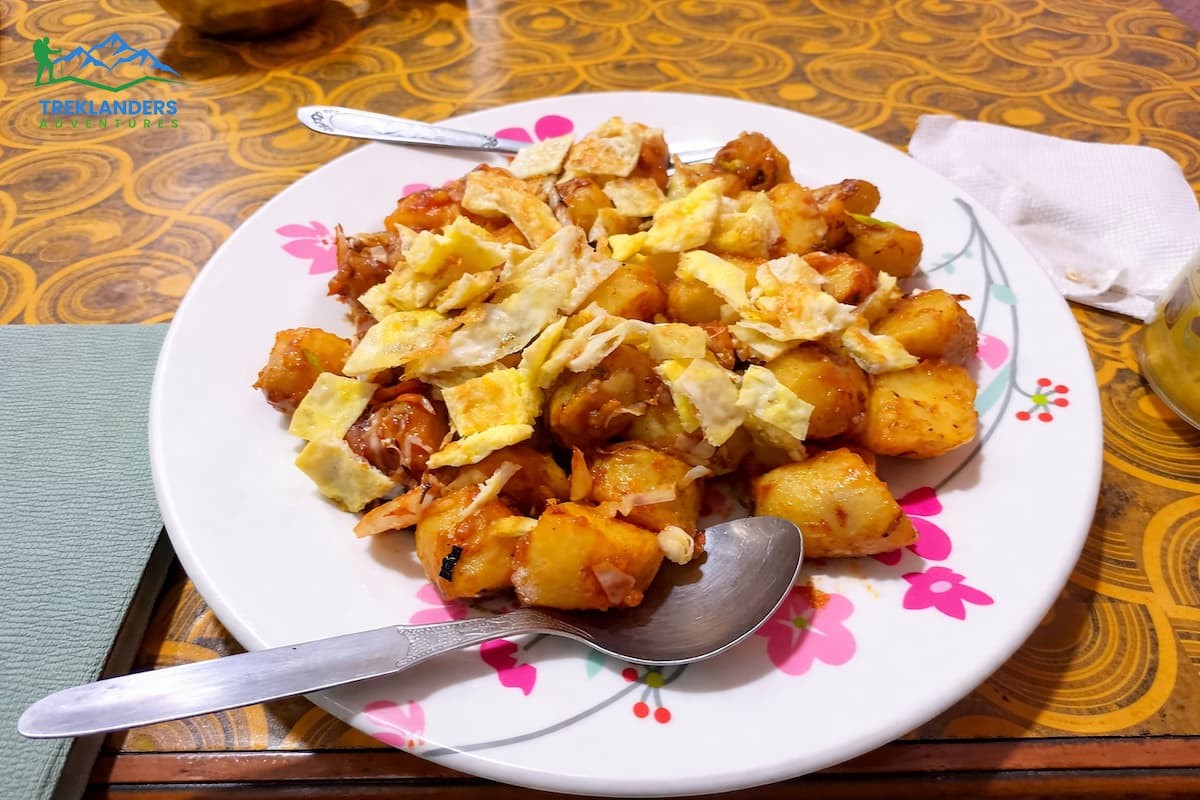
Food and drinking water on the Manaslu Circuit Trek are made available through local teahouses dotted along the trail, serving simple, wholesome meals that are energy efficient for the demands of high-altitude trekking. The choices on the menu are not as vast as those on the more commercial trekking routes; still, the food is fresh, hearty, and quite suitable for the conditions in the Manaslu area.
You generally have three meals a day in the teahouses where you stay overnight. Breakfast usually offers porridge, Tibetan bread, chapati, eggs, pancakes, and tea or coffee. Lunch and dinner are often a mix of traditional Nepali dishes and basic international items. The trek's most favorite meal is Dal Bhat, a local staple featuring rice, lentil soup, seasonal vegetables, and possibly curry, which gives complete nutrition and is often served with free refills. Other popular choices are noodles, fried rice, pasta, soups, momos, and potatoes cooked differently.
As you go higher in altitude, food becomes more basic as a result of the limited supply, but hot, freshly prepared meals can always be expected.
Water for drinking is available without any problems during the trek, but it is necessary to treat it before drinking. Teahouses and small shops sell bottled water; nevertheless, prices go up drastically in the higher altitude areas, and the use of bottled water leads to environmental pollution. So, carrying a reusable water bottle and using water purification methods such as tablets, drops, or a filtration system is highly recommended. Most teahouses are willing to give you boiled water at a small charge, which is safe to drink after treatment or cooling.
It is very important to be well hydrated, especially in high-altitude regions, as this helps with acclimatization and staying healthy. Trekkers should have lots of water during the day as well as warm fluids such as tea or soup, which are available almost everywhere in the lodges. Along with proper food choices and good practices in drinking safe water, the Manaslu Circuit Trek provides sufficient and reliable nourishment throughout the trip.
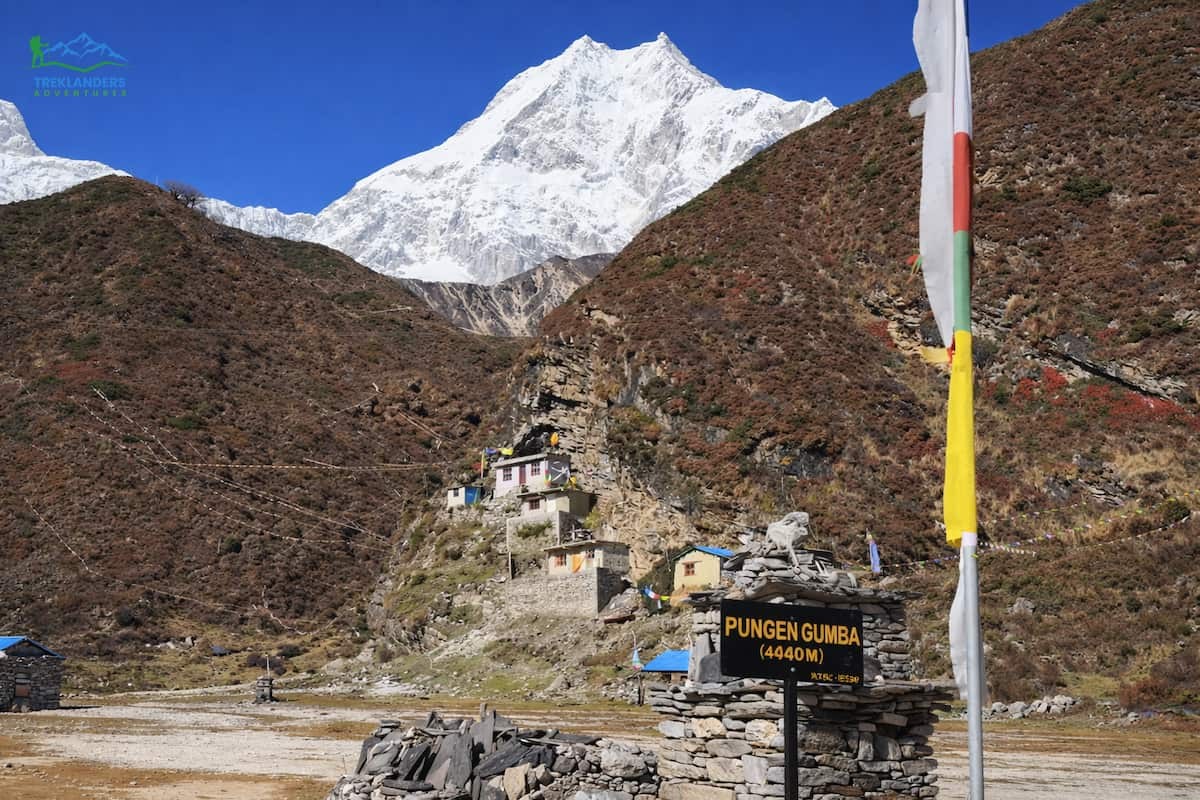
Religion and Culture largely determine the nature of the Manaslu Circuit Trek experience. These aspects expose trekkers to the traditional Himalayan lifestyle. Manaslu is a culturally vibrant area where the Tibetan form of Buddhism has a strong impact, particularly in villages at the higher elevations near the Tibetan border.
Starting the trek in the lower areas around Machha Khola and Jagat, you will see communities whose lifestyles are mainly Hindu with some ethnic mixes such as Gurung and other hill communities. The presence of small temples, prayer shrines, and traditional farming is the hallmark of these areas. When you continue beyond Philim and Deng, the cultural scenery changes, and the Tibetan Buddhist impact becomes predominant.
People in Lho Gaun, Samagaun, and Samdo are mostly of Tibetan descent. Their daily life is centered on Buddhist principles and ceremonies. Mani walls with deeply engraved sacred mantras, prayer flags of various colors flying in the gusts, chortens (stupas), and ancient monasteries are seen along the hike and at village gates. For example, monasteries such as Ribung Monastery in Lho Gaun provide spiritually and culturally significant spaces, where monks carry out liturgical ceremonies on a daily basis and keep up age-old traditions.
Communities in the Manaslu area lead a life that is pretty much in unison with their nature. Farming, yak herding, and seasonal trading are the main economic activities of the locals. Festivals, religious ceremonies, and communal gatherings mark the rhythm of village life. Visitors are usually given a warm welcome and shown great respect. Local costumes, Tibetan-style houses, and indigenous traditions are still very much alive and well, mainly owing to the fact that the region is not easily accessible and has seen very little outside influence.
Manaslu region locals and their traditions are to be respected, along with the general etiquette geared towards religious practices, when one is on a trek in the area. Trekkers should be mindful of walking clockwise around Mani walls and chortens, always seek permission before taking pictures of people or religious sites, and wear modest clothing when visiting villages and monasteries. Being immersed in the local culture and feeling the deeply spiritual environment of the high Himalayas, the Manaslu Circuit Trek thus transforms into not only a physical challenge but a significant cultural experience as well.
Permits are essential for the Manaslu Circuit Trek as the trail goes through a protected and restricted area of Nepal. The Government of Nepal controls these permits to maintain the delicate environment, safeguard the local culture, and guarantee the safety of the trekkers. All permits should be secured through a registered trekking agency ahead of time, and solo trekking is not allowed in this area.
The Manaslu Restricted Area Permit (RAP) is the principal permit needed. Since the Manaslu region is designated as a restricted trekking area, the RAP is mandatory. The RAP is for at least two trekkers and requires a licensed trekking guide. The permit cost differs with the seasons, being higher in the popular months and lower during the off-season.
Besides the restricted area permit, trekkers need to get the Manaslu Conservation Area Permit (MCAP). This permit lets the trekkers go to the Manaslu Conservation Area, which is a refuge for the wildlife, forests, and the traditional villages located along the trekking route. The fee is constant and applies to all trekkers regardless of the time of the year.
As the trek leaves the Manaslu region and joins the Annapurna trekking routes near Dharapani, the Annapurna Conservation Area Permit (ACAP) is also necessary. This permit is for the last part of the trek that is within the Annapurna Conservation Area.
In order to get these permits, trekkers need to present a valid passport, Nepal visa, passport-size photographs, and confirmed trekking dates. The permits are examined at various checkpoints on the trail. It is not permitted to trek without carrying the appropriate permits, and one may be fined or denied entry to the region.
One of the advantages of booking the Manaslu Circuit Trek as a package is that all necessary permits, which are the responsibility of the trekking agency, will be handled for you, thereby making your trek go smoothly without any stress.
Since the Manaslu Circuit Trek is through a remote area with high altitudes and very few medical facilities, health and safety are especially important. With good preparation, a reasonable pace, and the help of professionals, the trek can be done in a safe and pleasant way.
If you're trekking the Manaslu Circuit, you should be most aware of altitude sickness as the primary health issue. The trek starts slowly, going up over 3,000 meters, but the highest point is the Larke Pass at 5,106 meters. To minimize the risk of AMS, the schedule provides for a full day of acclimatization at Samagaun and follows a gradual ascent pattern. Trekkers should maintain a steady pace, drink plenty of water, eat properly, and avoid alcohol. Immediately report to your guide if you have symptoms such as a worsening headache, dizziness, nausea, or trouble breathing,
The Manaslu area is very far away from medical facilities, and along the trekking route, there are hardly any places where one can get medical help. It is always possible to get first aid at any teahouse, but for any serious condition, you will need to be taken out all the way to Kathmandu. So it is compulsory to have a good travel insurance that covers high-altitude trekking and emergency helicopter evacuation. A local guide carries a basic first-aid kit with him and is also trained to check on the health conditions of the trekkers and assist them in case of an emergency.
The trail may change depending on the weather and the season. Some parts are made up of narrow paths, suspension bridges, rocky trails, and there can be landslides. Near the Larke Pass during the coldest months, you may find snow and ice. Having the right trekking equipment is very important for your safety and comfort: these include sturdy boots, warm clothes, and trekking poles.
One should also consider the hygiene of food and drinking water as a matter of health care. One is protected from stomach-illnesses if one only drinks treated or boiled water and eats freshly prepared meals. It is also strongly advised to maintain personal hygiene, for example, by regularly washing one's hands or using sanitizer.
Manaslu Circuit Trek can be a safe and exhilarating high-altitude adventure if you have knowledgeable guides, do proper acclimatization, use suitable equipment, and follow responsible trekking practices.
Due to the Manaslu Circuit Trek being a remote route with high-altitude terrain and limited access to medical facilities, travel insurance is mandatory for this trek. Having a proper insurance plan is crucial for the safety, financial security, and mental well-being of a trekker during the entire journey.
The insurance should specifically state that high-altitude trekking is covered up to at least 5,200 meters since the trek's highest point is Larke Pass (5,106 m). It must also cover emergency helicopter rescue and evacuation, which may be necessary in cases of severe altitude sickness, injury, or sudden illness. Helicopter evacuation in the Manaslu region is generally the only quick way to get to advanced medical facilities in Kathmandu.
Besides emergency evacuation, the insurance should also cover medical treatment, hospitalization, and any other related expenses that may be incurred during the trek. It is also highly advisable to have coverage for trip interruption, trip cancellation, and delays since weather conditions or other unforeseen circumstances can affect road access, flights, or trekking schedules.
Insurance that covers personal trekking gear loss, theft, or damage is a bonus. Before the trek, trekkers must submit a copy of their insurance policy details to the trekking agency. This way, the guide and the support team will be able to react swiftly and efficiently should an emergency occur. Certainly, it is extremely important to read the policy carefully and ensure that it allows trekking in Nepal's restricted areas.
An insurance policy that only covers standard travel activities is not enough for the Manaslu Circuit Trek. It is advisable for trekkers to check that their insurance policy is suitable for adventure travel and high-altitude trekking. When you have good insurance, you can totally relax and enjoy the trek, as you will be confident about being safeguarded against any unforeseen situations in this isolated Himalayan region.
Transportation for the Manaslu Circuit Trek is by road, and it is really part of the overall trekking experience as it also gives you a good look at Nepal's countryside and river valleys. Since this is a remote area for trekking and there are no airstrip access points along the route, all the ground transportation is done through private or shared vehicles based on the package arrangement.
The first leg of the trip features a car ride from Kathmandu to Machha Khola, which is the place where the trek starts. This drive runs parallel to the Trishuli and Budhi Gandaki rivers, and you have the opportunity to see hills, terraced farmland, and small towns along the way. The road situations are different - you can find paved highways in the beginning, and the roads become rougher in the mountains towards the end of the journey. To guarantee safety and flexibility, transportation is normally provided by a private jeep or a comfortable tourist vehicle, depending on group size and road conditions.
After completing the trek, a local jeep or private vehicle is arranged. Besisahar to Kathmandu is a scenic drive back to Kathmandu via the main highway. You are allowed to relax and think about the trekking experience while watching the changing landscapes of the mountains and Kathmandu Valley on the return trip.
As part of the trekking package, all airport transfers in Kathmandu, including arrival and final departure, are arranged. Besides providing timely transfers and minimizing the challenges of logistics, using organized transportation also enhances safety overall. This is particularly important in remote areas where public transport can sometimes be unreliable.
By taking into consideration all necessary local transportation, the Manaslu Circuit Trek package provides an easy and well-organized journey from Kathmandu to the starting point of the trek and back again, so that trekkers can fully immerse themselves in the trekking experience without worrying about travel arrangements.
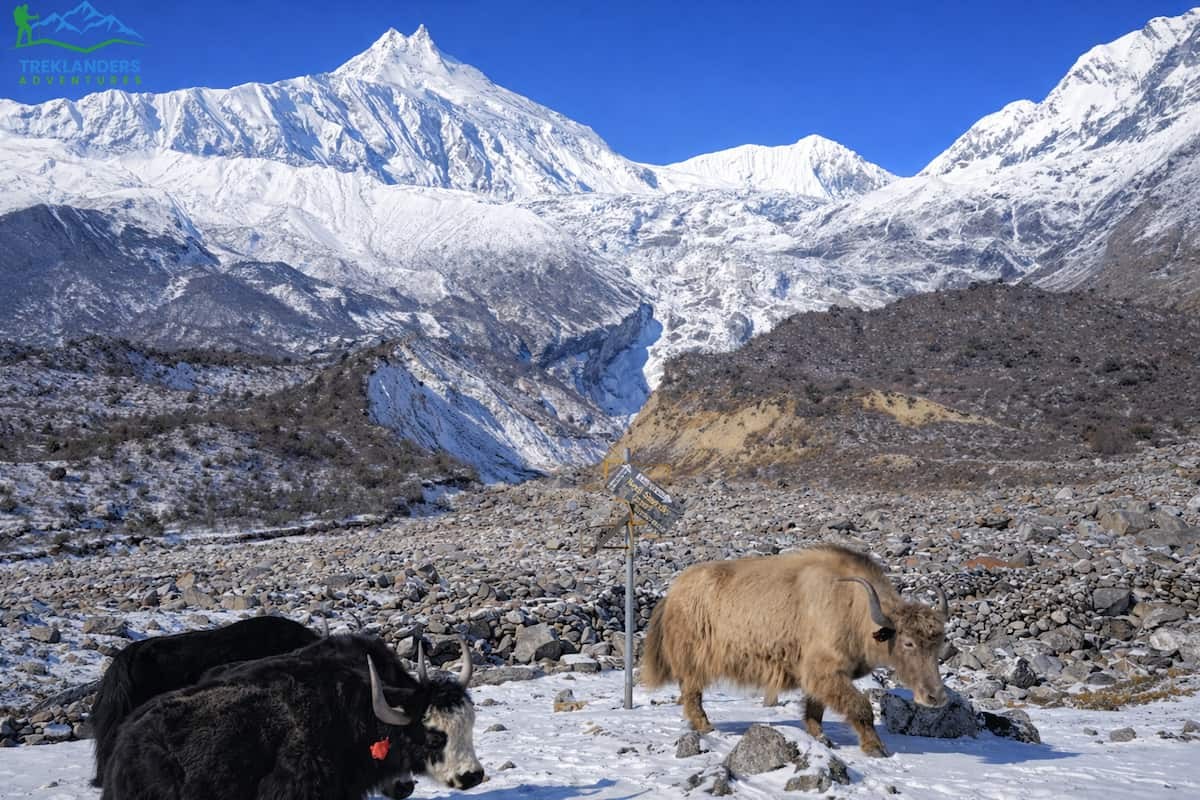
The Manaslu Circuit Trek 14 Days Package offers a full high-Himalayan adventure of remote wilderness, dramatic mountain scenery, and deep cultural immersion.
This circle along the massive Mount Manaslu, which is the world's eighth-highest peak, provides a quieter and more authentic alternative to Nepal's main commercial trekking routes. It is an excellent choice for nature lovers who want both a challenge and peace.
The trek is planned perfectly to allow proper acclimatization, comfortable daily walking hours, and a gradual and safe ascent to high altitude. The peak of the experience is the Larke Pass crossing at 5,106 meters, which is tough but very rewarding and more than makes up for the effort with gorgeous, sweeping views of the surrounding Himalayan peaks. This trek is all about awakening every sense: along the way, you are surrounded by the ancestral villages, immersed in the Tibetan Buddhist culture, and treated to the genuine hospitality of the locals, all of which add up to a hike that is so much more than just nature's beauty.
Booking this package means safe, teahouse accommodation, delicious local food, knowledgeable guides, and well-organized trekking logistics, all of which make it a perfect choice for trekkers with good fitness who are looking for a professionally supported adventure. The mix of scenic drives, changing landscapes, and cultural richness results in an all-around trekking experience that has something for everyone at every stage.
In a nutshell, the Manaslu Circuit Trek is a true Himalayan classic- it is remote, scenic, culturally rich, and adventurous. The 14-day Manaslu Circuit Trek package perfectly meets the needs of those who want to be away from the crowd but still prefer to have safety, comfort, and expert guidance while exploring the mountains of Nepal.
Short Trek Profile
Mode of Trekking: Teahouse trekking with accommodation in the best available local lodges and guesthouses along the route.
Grade of Trekking: Moderate to adventurous, suitable for trekkers with good fitness and some prior trekking experience.
Trekking Region: Nepal Far North Mid-West, Manaslu Himalayas, covering remote areas of Gorkha District and Manang District.
Highest Point: Larke La Pass at 5,106 m / 16,752 ft, the highest elevation reached during the trek.
Trekking Duration: 12 nights and 13 days trekking program, from Kathmandu to Kathmandu (excluding international arrival and departure days).
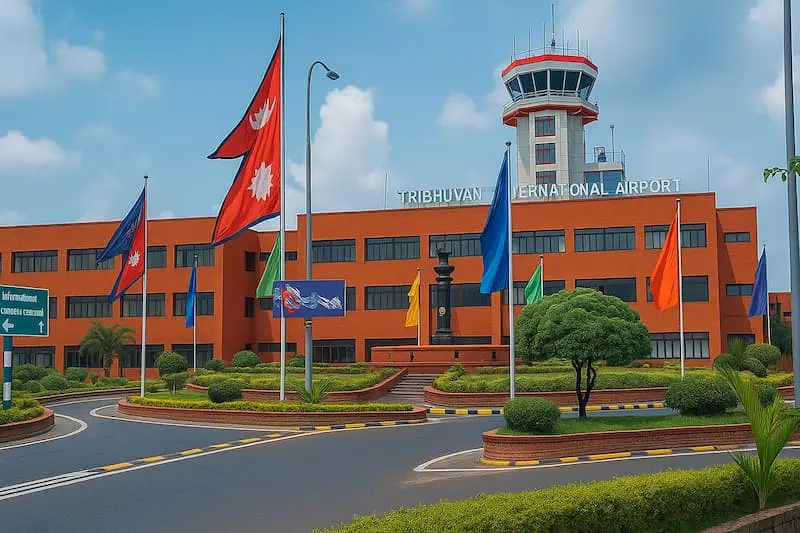


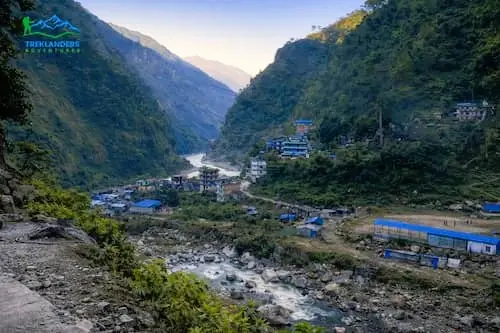
Today begins with a long but scenic drive from Kathmandu to Machha Khola, taking approximately 8–9 hours. The journey follows the Trishuli and Budhi Gandaki rivers, passing terraced farmland, hills, and traditional villages. As the road becomes narrower and more rugged, you will experience Nepal’s rural landscapes before reaching Machha Khola, the gateway to the Manaslu trekking trail.

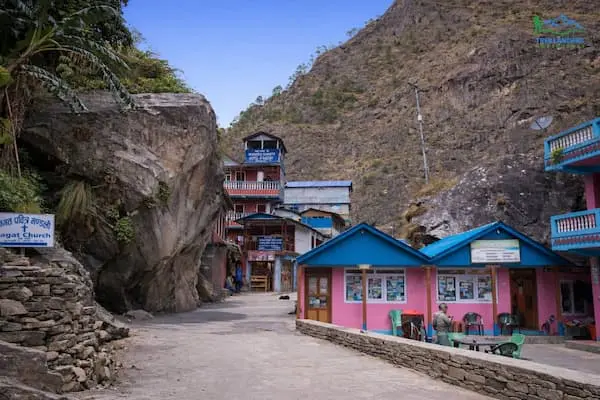
Your trek officially begins today as you walk along the Budhi Gandaki River, crossing suspension bridges and passing small settlements. The trail includes gradual ascents and descents through subtropical forests and rocky paths. After 6–7 hours of trekking, you reach Jagat, a traditional stone-paved village and an important checkpoint for the Manaslu Conservation Area.
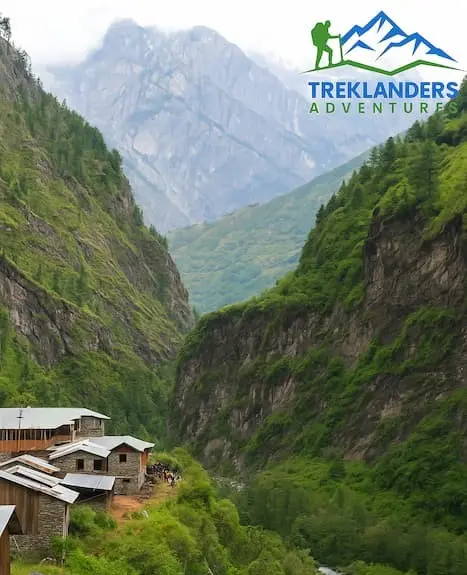
Leaving Jagat, the trail enters deeper into the Manaslu region. You pass through charming villages, cross rivers, and walk through narrow gorges carved by the Budhi Gandaki. The cultural atmosphere becomes more Tibetan-influenced as you gain altitude. After trekking for 6–7 hours, you arrive at Deng, a small settlement surrounded by forested hills.
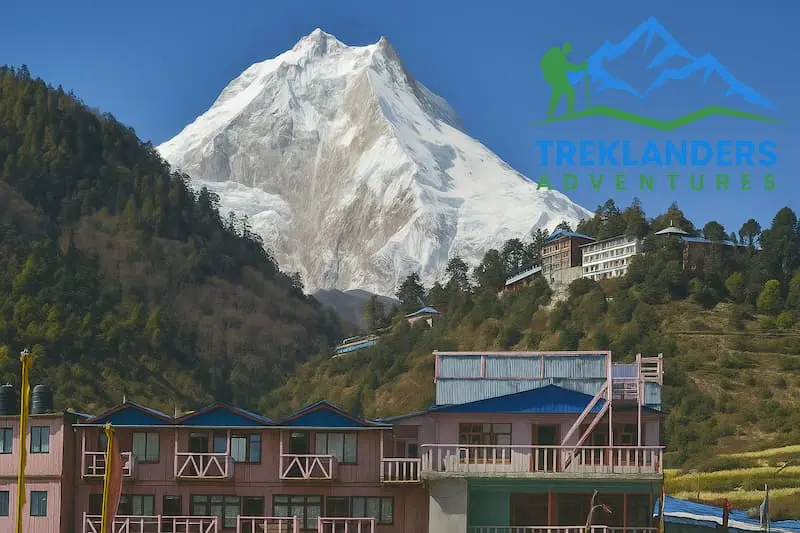
Today’s trek involves a significant altitude gain as you move into higher alpine terrain. The trail passes through villages such as Ghap, with prayer flags and mani walls reflecting Tibetan Buddhist culture. Snow-capped peaks begin to appear as you approach Lho Gaun. After 6–7 hours of trekking, you reach this beautiful village, which offers your first close views of Mount Manaslu.
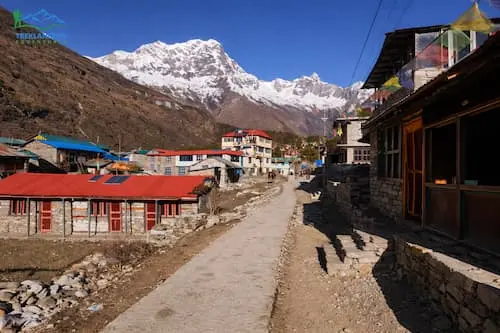
The trek from Lho Gaun to Samagaun is relatively shorter and more relaxed, allowing your body to adjust to the increasing altitude. Walking for 4–5 hours, you pass yak pastures, monasteries, and glacial landscapes. Samagaun is one of the largest villages in the region and sits at the base of Mount Manaslu, offering stunning mountain views and a rich cultural setting.
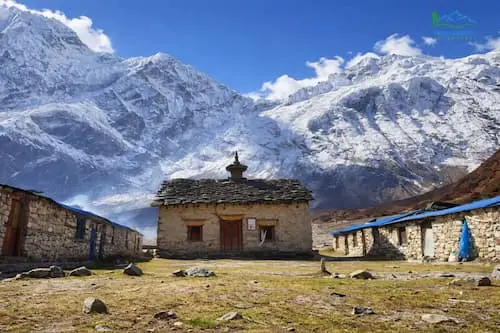
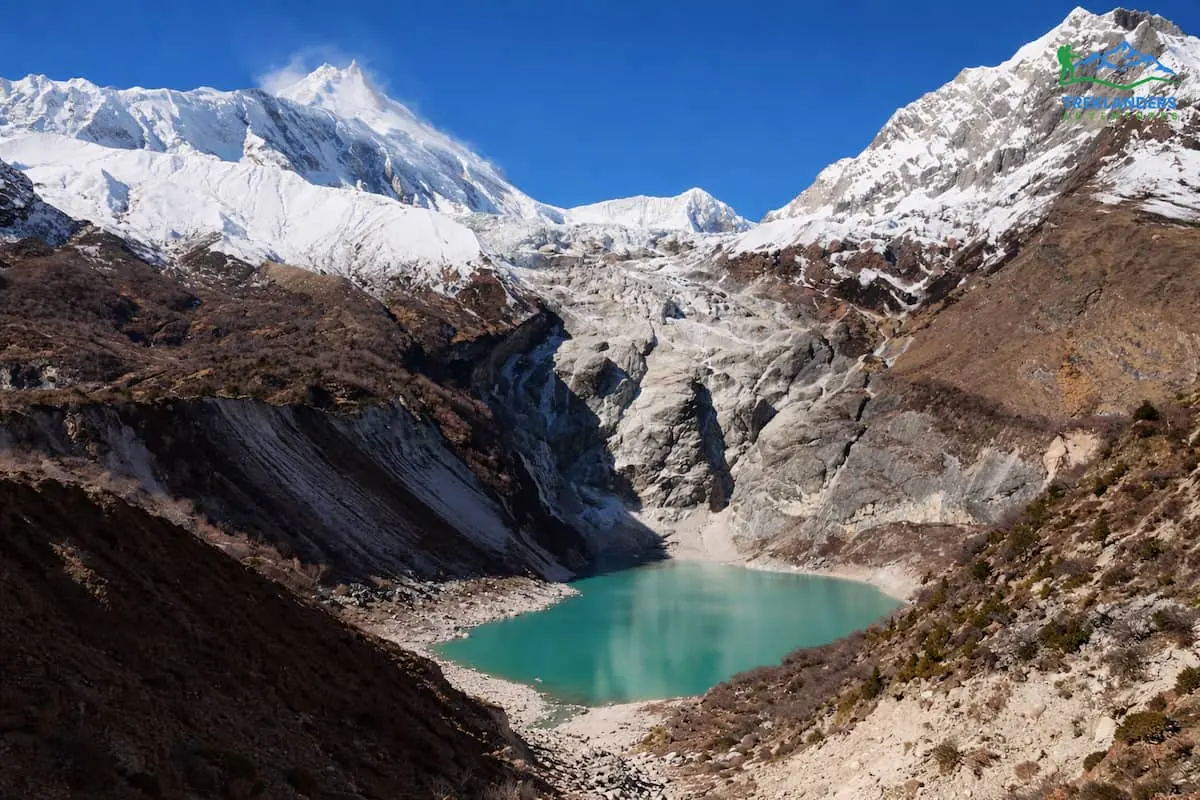
This day is reserved for acclimatization to help your body adapt to the altitude. You can take short hikes to nearby viewpoints, visit the local monastery, or hike toward Manaslu Base Camp or Birendra Lake. These optional hikes improve acclimatization while providing incredible scenery. The rest of the day is spent relaxing and preparing for higher elevations ahead.
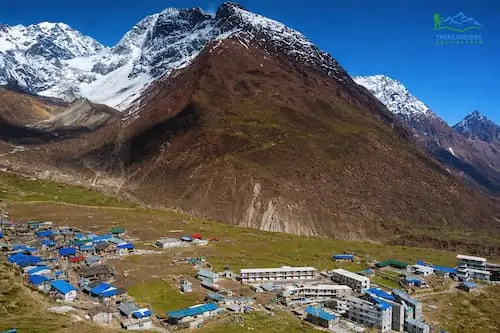
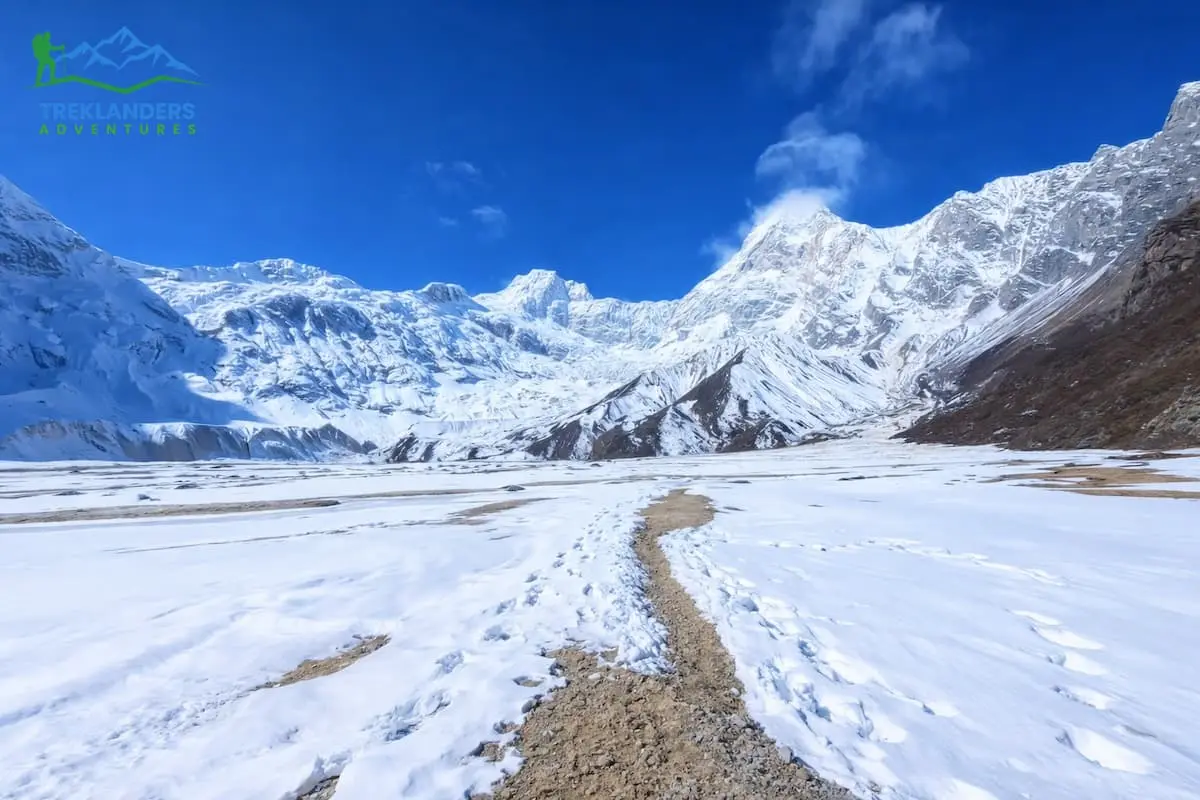
Today’s trek is a gradual ascent through open alpine landscapes. The trail follows the Budhi Gandaki River as vegetation becomes sparse and the terrain more rugged. After 4–5 hours of walking, you reach Samdo, a remote village near the Tibetan border, surrounded by dramatic mountain scenery and high-altitude wilderness.
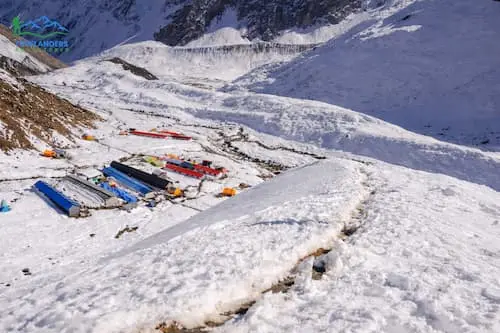
Leaving Samdo, you trek toward Dharamsala, also known as Larke Phedi, the last settlement before crossing the Larke Pass. The trail steadily ascends through rocky and windswept terrain. After 4–5 hours of trekking, you reach Dharamsala, where you rest early in preparation for the challenging pass crossing the next day.
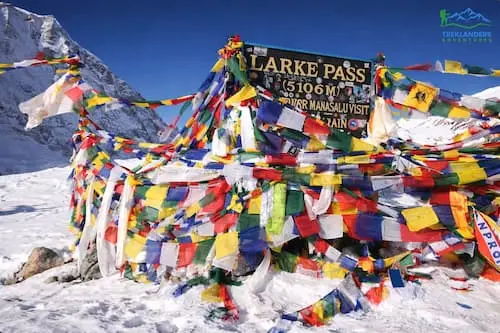
This is the most challenging and rewarding day of the trek. Starting early in the morning, you ascend to Larke Pass, the highest point of the trek, offering breathtaking panoramic views of Himlung Himal, Cheo Himal, and Annapurna II. After reaching the pass, you descend carefully to Bhimthang. The entire trek takes about 8–9 hours and is physically demanding but extremely memorable.
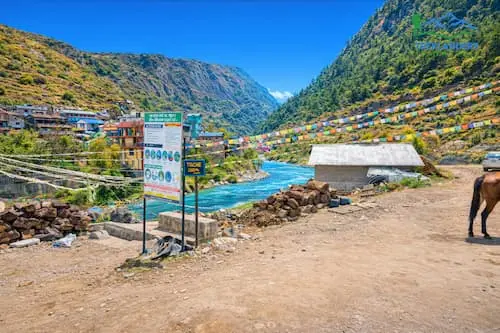
The trail descends from high alpine terrain into lush forests filled with rhododendron, pine, and oak trees. You pass through rivers, meadows, and small settlements as the altitude decreases. After 6–7 hours of trekking, you arrive in Tilje, a pleasant village with warmer temperatures and a relaxed atmosphere.
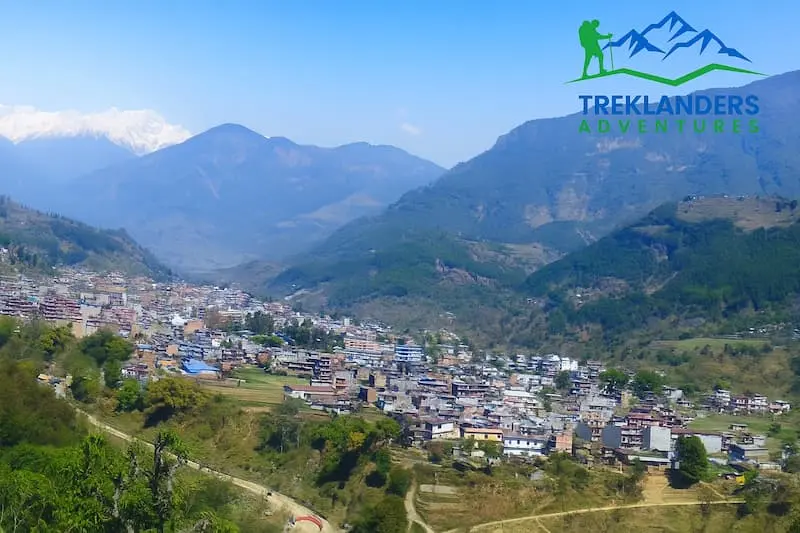
Today begins with a short 3–4 hour trek from Tilje to Dharapani, where the Manaslu trail connects with the Annapurna Circuit route. From Dharapani, you continue by vehicle to Besisahar on a scenic mountain drive lasting approximately 4–5 hours, marking the end of your trekking journey.
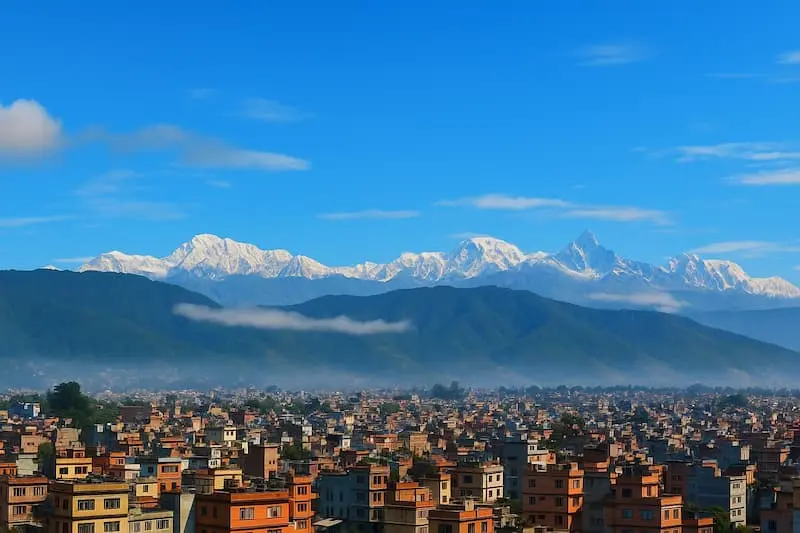
After breakfast, you drive back to Kathmandu, following rivers and highways through hills and countryside. The journey takes about 6–7 hours. Upon arrival, you transfer to your hotel, where you can rest, enjoy a farewell dinner, or explore the city at your leisure.
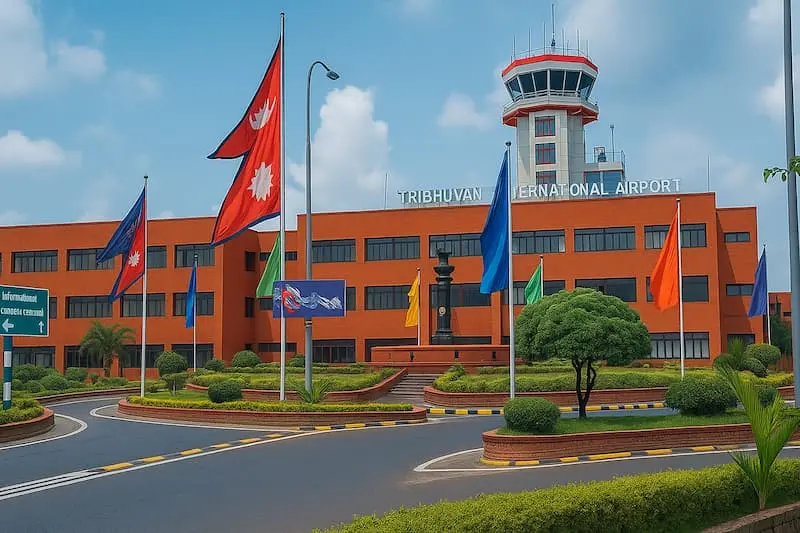
After an enjoyable adventure, and mesmerizing time in Nepal around the Himalayas on Manaslu Circuit Trek. As time for departure, our staff transfer you to international airport for homeward bound flight or to next port of call.
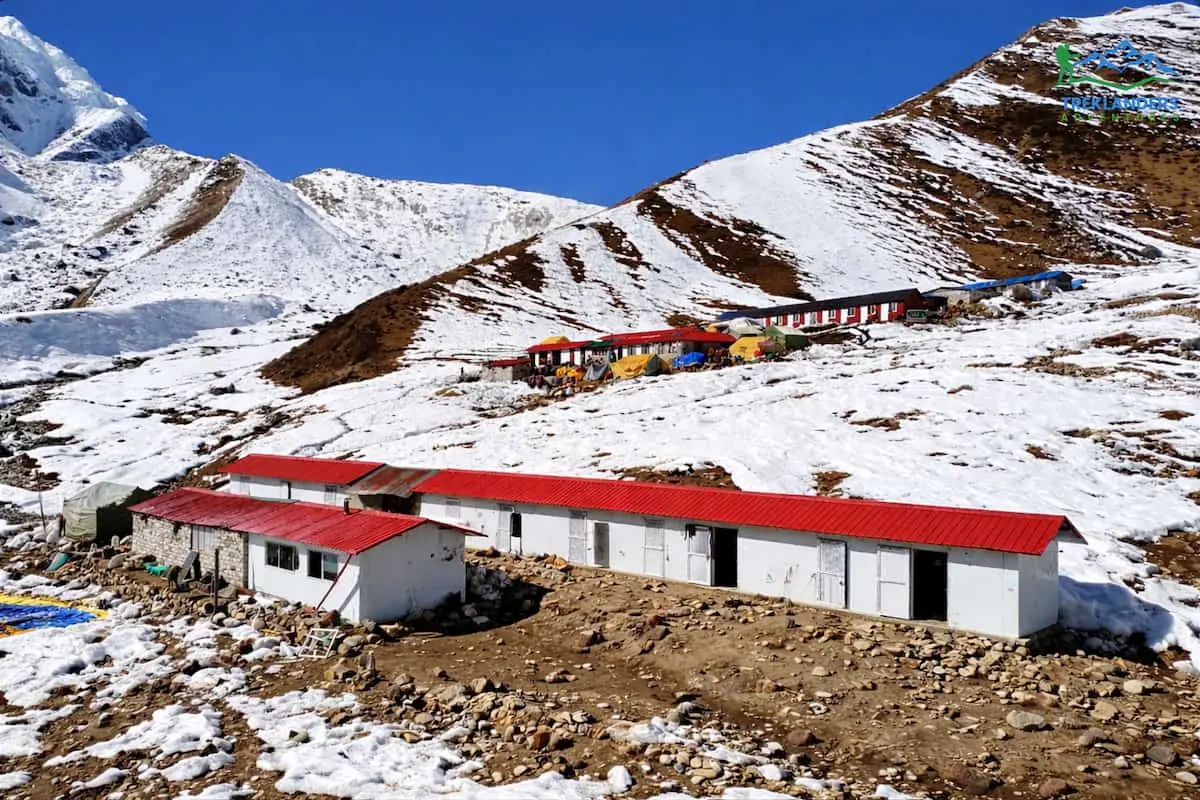
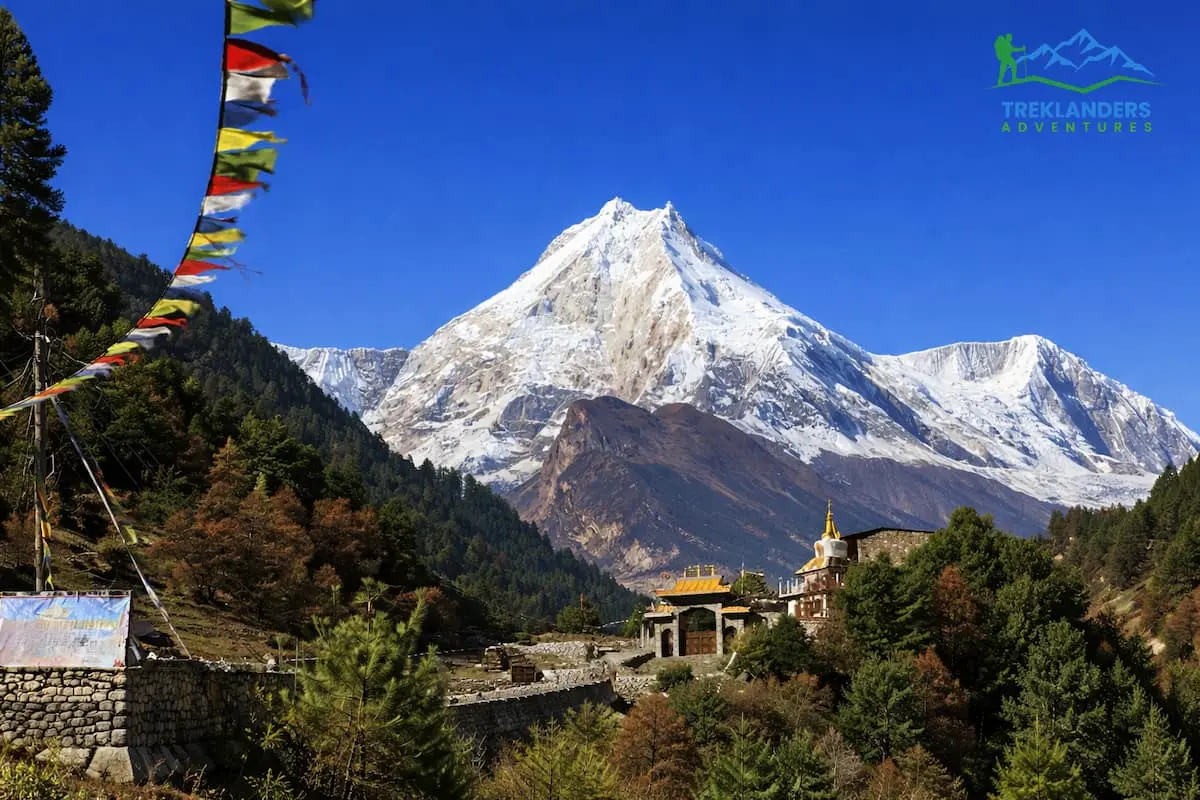
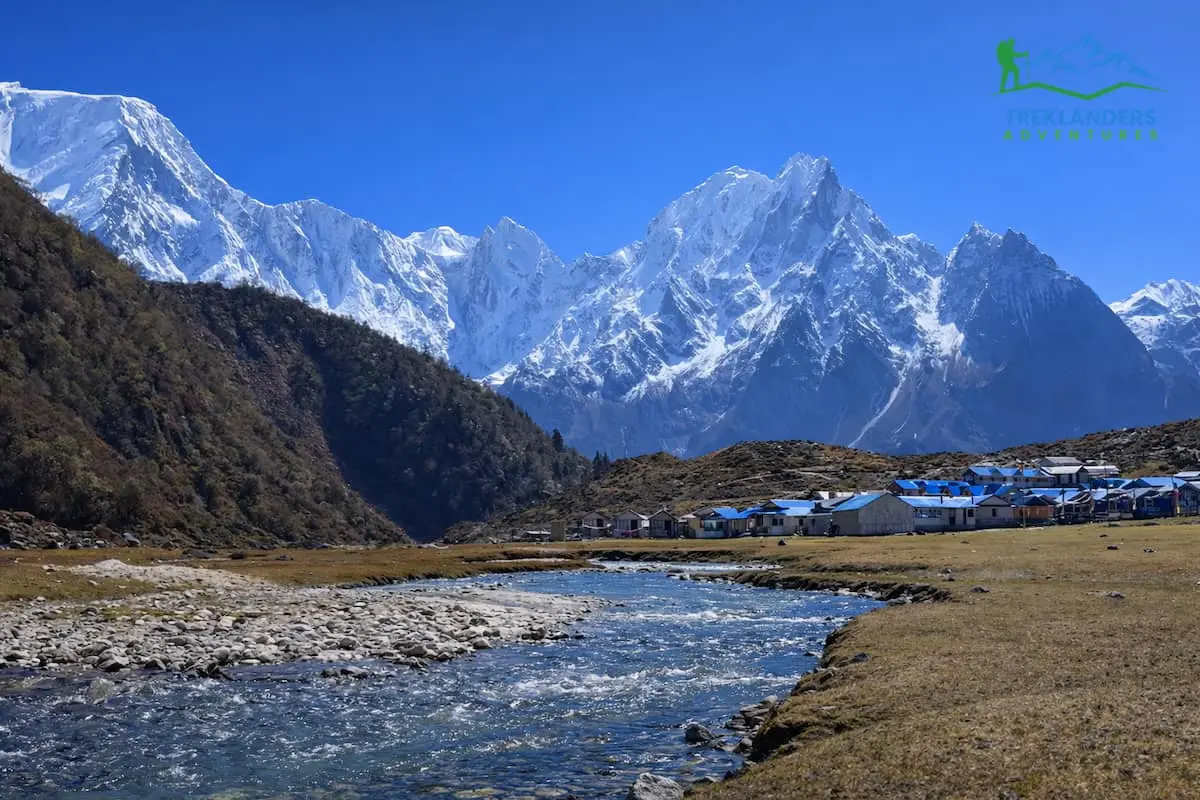
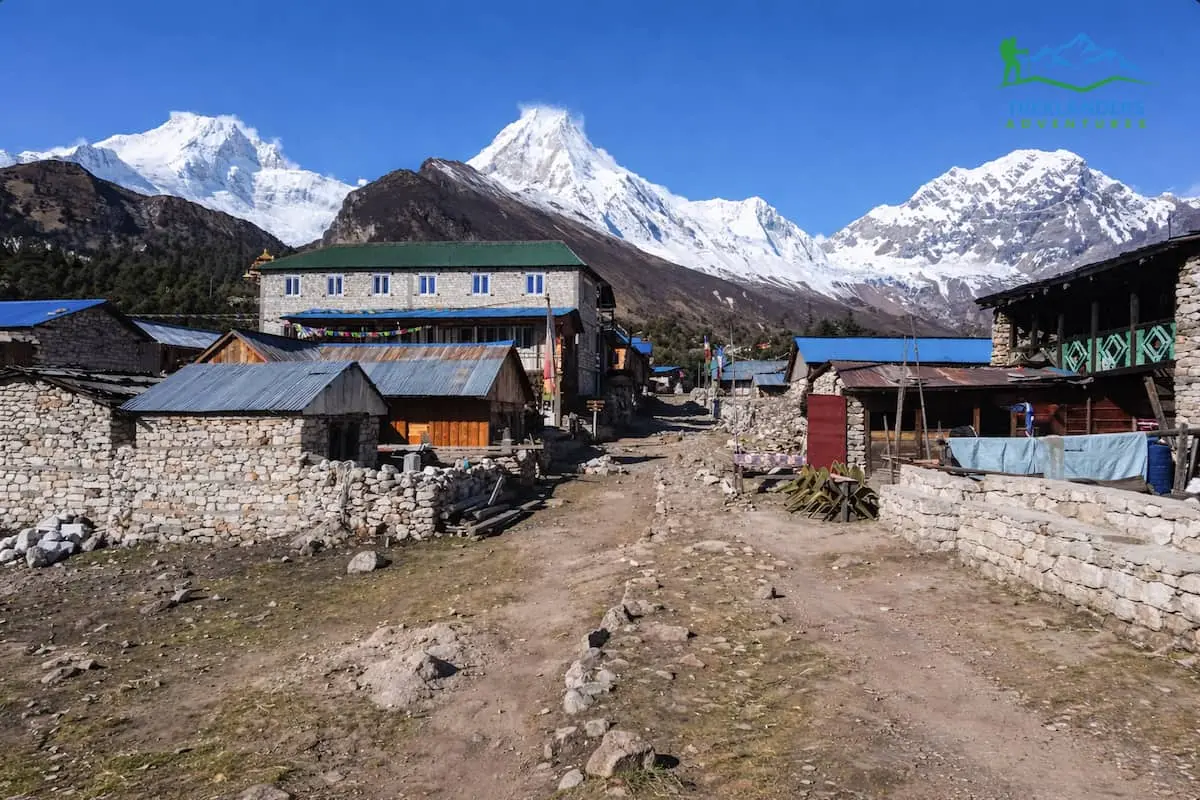
The 14-day Manaslu Circuit Trek was one of the most rewarding trekking experiences I have ever had in Nepal. From the very beginning, the reinforces feeling of traveling through a remote and less-crowded region made this trek truly special compared to more popular routes. The journey started with a scenic drive from Kathmandu, followed by beautiful trekking days along the Budhi Gandaki River. Each day offered something different—suspension bridges, deep gorges, quiet villages, and an increasing sense of Himalayan wilderness as we gained altitude. The cultural experience was equally impressive, with strong Tibetan influences, monasteries, mani walls, and welcoming local communities. One of the highlights for me was staying in Samagaun and taking the acclimatization day seriously. The short hikes around the village helped a lot with altitude adjustment and also gave incredible close-up views of Mount Manaslu. Crossing the Larke Pass at 5,106 meters was challenging but extremely rewarding. Starting early in the morning, walking over snow-covered trails, and finally reaching the pass with panoramic mountain views was a moment I will never forget. The descent to Bhimthang felt like entering a different world, with wide valleys, glaciers, and later lush forests as we continued toward Tilje and Dharapani. The itinerary was well-paced, allowing enough time for rest, acclimatization, and enjoying the surroundings without feeling rushed. Overall, the Manaslu Circuit Trek offered the perfect balance of adventure, culture, and natural beauty. It is an ideal choice for trekkers looking for a remote Himalayan experience with fewer crowds, stunning landscapes, and a real sense of achievement. I would highly recommend this 14-day trek to anyone seeking an authentic and challenging trekking journey in Nepal.
Purpose: Keep sweat off the skin and maintain warmth.
Purpose: Trap body heat in cold air at altitude.
Tip: Keep electronics in inner pockets at night to prevent freezing.
The Manaslu Circuit Trek altitude varies from 1,400 meters (4,593 feet) at Kathmandu to 5,106 meters (16,752 feet) at the Larke Pass. There is a lot of climbing involved in this trek, and you have to be careful about your breathing and body acclimatization during the days when you will be close to Samagaun and especially on the day when you will cross Larke Pass.
Manaslu Circuit is a very challenging trek that can only be done by people with a good level of fitness. Those who will take part in it have to be ready for walks of 6 to 8 hours a day over different terrains, including some very steep treks up and down. Having been on a high-altitude trek before is good, but not necessary if you are already very fit.
During the Manaslu Circuit, you will be staying in teahouses and lodges along the route, where you can expect basic but clean and comfortable rooms. The meal options are mostly Nepali and Tibetan foods, which include dal bhat (lentils and rice), noodles, soups, and tea. You can easily get vegetarian meals there.
Altitude sickness can be prevented by following an itinerary that has rest days for acclimatization, especially in Samagaun. Guides keep an eye on the health of the climbers and give them tips on how to take in enough water, how to keep a good rhythm when walking, and how to rest properly. When the symptoms are very severe, the plan is flexible so that one can take more rest or go down.
The Manaslu Circuit is a restricted area, so the permission follows accordingly. You will need to purchase a Manaslu Restricted Area Permit (MRAP), a Manaslu Conservation Area Permit (MCAP), and an Annapurna Conservation Area Permit (ACAP) for the final sections. All the permits are made by the trekking company and included in your package, so all you need to carry with you for verification is your passport and photos.
The Manaslu Circuit is best visited during the spring (March to May) and autumn (September to November) seasons. These are the months when the weather is more or less stable, the sky is clear, and the temperature is moderate. The trek will be the most comfortable, and you will get the best mountain views.
Manaslu Circuit Trek's best time to visit is definitely in autumn (September to November) and spring (March to May). You can expect these seasons to bring along the most stable weather, clear skies, and safe trails, which are particularly important when crossing Larke Pass (5,106 m / 16,752 ft). Not only is visibility perfect, but the temperature is also just right for long hours of walking.
It is said that autumn is the best season overall, as the monsoon rains wash away the dust from the air, and one can get extremely sharp views of the mountains along with dry trails. Weather changes in this season are quite predictable, and the likelihood of snow at the higher elevations is also less, so it is great for both beginners and skilled high-altitude hikers.
The answer is yes, spring (March to May) is a wonderful time for nature lovers. Along the route, a lot of rhododendron woods are blossoming, so they will add enormous shade to the scenery. As the temperature gets warmer day by day, mornings mostly let you see Manaslu and neighboring peaks clearly, but don't be surprised if clouds appear in the afternoon.
Here is the thing: yes, the trek is doable in winter (December to February), but don't expect to enjoy it unless you are an expert trekker. Extreme cold, heavy snow and even the Larke Pass being shut might totally change your plans. Also, be aware that winter trekking means you have to be flexible, have the right gear, and know about high-altitude trekking from your past.
The monsoon season (June to August) is characterized by heavy rains, which lead to muddy trails, landslides, and leeches at lower elevations. Due to the cloud cover, mountain visibility is often restricted, and road access to trailheads may be interrupted, thus making trekking less safe and less enjoyable.
To avoid crowds while still having good conditions, late spring (May) and early autumn (September) are the best options. These shoulder seasons still have good weather and offer a quieter trekking experience compared to the busy months of October and April.
The Manaslu Circuit Trek is classified as a challenging to strenuous hike mainly due to very long daily walking hours, high mountain altitude, and the remoteness of the trail. Trekkers need to be ready for a series of 6 to 8-hour walks each day, and the most difficult stretch is definitely going over Larke Pass (5,106 m / 16,752 ft).
The Manaslu Circuit is not the best option for total beginners who have not done any kind of trekking before. On the other hand, well-trained walkers with good stamina, a strong mind, and the right gear can easily do the Manaslu Circuit, particularly if they hire a professional guide and follow an acclimatization plan.
It is physically hard because you have to climb and descend steep slopes, you have long days of hiking, you have very few facilities in the villages that are far away from the towns, and the high altitude also makes it harder. The trail changes a lot - you can be walking through a forest or along a river, and then you suddenly find yourself on a rocky, glacial, or snow-covered path near the pass.
Altitude is one of the biggest challenges. The trek goes up slowly from low altitudes to more than 5,000 m, where there is a much lower percentage of oxygen in the air. To reduce the chances of altitude sickness, one has to take acclimatization days, walk slowly, drink lots of water, and rest a lot.
Certainly, treks in the Manaslu Circuit that are well planned have acclimatization days, especially at Samagaun (3,530 m / 11,581 ft). These rest days allow the body to get used to the altitude and thus make the crossing of the pass much safer and more comfortable.
You should be physically well prepared by doing regular cardio exercises, toning your leg and core muscles, as well as going for hikes carrying a loaded backpack. Moreover, being mentally ready, having the right equipment, and trekking with knowledgeable guides are also very important factors in the successful, safe, and comfortable completion of the trek.
Essential items consist of layered clothes for both warm and cold weather, a waterproof jacket and trousers, sturdy trekking boots with good ankle support, thermal base layers, a warm down jacket, gloves, a hat, and good-quality trekking socks. Additionally, a cold-weather sleeping bag, trekking poles, sunglasses, sunscreen, and a reusable water bottle or hydration system are very helpful.
Get in shape at least 6-8 weeks before your trekking expedition. Cardiovascular workouts like hiking, running, cycling, or stair climbing should be done along with leg and core strengthening workouts. Carrying a backpack during long walk sessions will help develop stamina and get your body accustomed to trekking for hours daily.
A 40-50 liter backpack is perfect for those carrying their own stuff, while the porters carry a duffel bag weighing no more than 10-12 kgs. The use of packing cubes or dry bags makes it easier to organize things and keep them safe from getting wet.
The answer is yes, mainly because the trek takes you higher than 5,000 meters, where the temperature drops drastically. Warm insulated jackets, thermal layers, warm gloves, and a sleeping bag rated for the cold are must-haves for your nights at the higher altitudes. Good quality shoes and gaiters are also necessary for the snowy areas around the Larke Pass.
One of the most important measures to be taken at altitude is to gradually acclimatize, get enough fluids, and keep a proper pace. You should consider getting a medical check-up before the trek if there is any chance of your existing medical conditions worsening. It is wise to have your personal medications, a simple first-aid kit, and your altitude medication with you if it is prescribed.
Make sure that your passport is legally valid for at least six months and that you bring passport photos for your permits. Travel insurance that covers not only high-altitude trekking but also emergency evacuation is a must. You should also consider checking/finalizing your gear in Kathmandu before setting off.
Apart from the occasional stay in the lodge, accommodation along the Manaslu Circuit is a tea-house style, where local families offer basic but quite comfortable lodges. Normally, the rooms operate on a twin-sharing basis with simple bedding, thus giving a nice and friendly spot to relax after arduous hours on the trail.
Private rooms can be found in a few villages at the lower levels, like Machha Khola, Jagat, and Samagaun. Nevertheless, the further you go up, especially around Dharamsala (Larke Phedi), the lodgings get rougher, and you will mostly find shared bathrooms due to limited facilities.
At higher altitudes, teahouses are definitely less comfortable than the ones you find at the bottom. Usually, the dining room gets heated with a stove, but the bedrooms remain cold. A sleeping bag that keeps you warm will be your best friend for nights in the cold, especially above 3,000 meters.
Tea-houses usually have electricity either from solar energy or from generators. They may offer to charge your electronics for a small fee, which is more common the higher the altitude. To avoid your essential devices running out of battery, it is a good idea to have a power bank with you.
Tea-houses will most of the time provide you with blankets and some sort of bedding, but don't always expect them to be very clean or warm. To have a more comfortable and hygienic sleep, trekkers are strongly encouraged to carry and rely on their own sleeping bag for the high-altitude nights.
Typically, trekking companies organize accommodation in advance, especially if the trek is during the busy season. If you book beforehand, you are guaranteed to be met with a spot, and you will not need to worry about facing the villagers without the proper arrangements; thus, you will have a smoother trekking experience.
Food during the trek of the Manaslu Circuit is mostly served in the teahouses. Locals prepare Nepali, Tibetan, and basic Continental dishes for the trekkers. Meals that are mostly served are dal bhat (rice, lentils, and vegetables), noodles, fried rice, pasta, soups, momos, potatoes, eggs, and Tibetan bread. Dal bhat is highly recommended as it is not only filling but also nutritious, and usually it comes with unlimited refills.
Vegetarian meals are definitely available. In fact, the whole trek is replete with vegetarian meals, and these are usually the best choice at higher altitudes. It is believed that vegetarian food is safer, and the chances of stomach problems are reduced by giving the digestive system a break from meat. There are places where you can have meat, but it is not advisable at higher altitudes due to the difficulties of storage.
Water that is taken directly from the tap or stream is not safe for drinking. Trekkers are advised to always purify any water they get before drinking it by using water purification tablets, drops, or a filter bottle. Water that is boiled could be obtained in the teahouses for a few extra charges and is a safe alternative, especially in the colder regions.
Buying bottled water in the villages in the lowlands is not a problem. However, going higher, the supply will be limited, and the water will be very expensive. To avoid both plastic waste and costs, it is highly recommended to carry a reusable bottle and use the purification methods rather than depending on bottled water.
Yes, teahouses provide different kinds of hot drinks such as black tea, milk tea, ginger tea, lemon tea, coffee, and hot chocolate, among others. Herbal teas are commonly used for hydration and warming up the body, mainly at night time.
It is very important to stay hydrated at high elevations. People who go on a trek should try to consume 3-4 liters of water daily. Besides, one should increase the amount of water intake while being at higher altitudes in order to help the body cope with altitude sickness and tiredness.
To do the Manaslu Circuit Trek, one needs three permits: the Manaslu Restricted Area Permit (MRAP), the Manaslu Conservation Area Permit (MCAP), and the Annapurna Conservation Area Permit (ACAP). It is mandatory to have and carry with you all three permits on the trek.
Because some of the areas of Manaslu have been designated as restricted by the Government of Nepal, an MRAP is a permit that you have to get. This permit is for limiting the number of tourists, protecting the local culture, and making sure that the tourists have security and conservation through guides with licenses.
The trekking company will take care of getting you permits for the whole trip before your arrival. You do not have to go to government offices. All you have to do is let the company have your passport and passport photos for the paperwork.
No, due to the restricted nature of the Manaslu Circuit, it is compulsory to have a licensed guide with you. Solo trekking is not permitted, and the minimum number of trekkers in a group, excluding the guide, is two.
Along the way, you will have your permits checked by the police and conservation authorities at different places, such as Jagat and other main entry points. You should always carry your permits with you.
Yes, permit fees are generally included in the package cost when trekking through a registered agency unless it has been stated otherwise. This helps to ensure a peaceful and trouble-free trekking experience without any administrative worries.
Following the Government of Nepal's directive, you must hire a licensed trekking guide if you want to do the Manaslu Circuit Trek. Indeed, since the area is labeled as a restricted region, anyone willing to travel there using the trekking route must be accompanied by an authorized agency. Independent trekking is not allowed. Besides ensuring that the rules are followed, a guide also provides safety in the secluded trails and makes permit checks easier throughout the walk.
Besides leading the way, the trekking guide ensures safety, checks for symptoms of altitude sickness, finds suitable accommodations, and takes care of the daily logistics. They provide information about the trail and help the group get used to the altitude, quickly respond in case of an emergency, and deliver messages to the teahouses. On top of that, they also share their deep knowledge of the local culture, traditions, and nature with the group, which makes the trek very interesting.
Depending on your personal preference, you may or may not hire a porter, but it is strongly suggested if you are doing the physically challenging and lengthy Manaslu Circuit Trek. Doing so, the porter will take the heavy pieces of luggage, allowing the trekkers to simply carry a light daypack and save their energy, which is the main thing to be considered when going to high altitude regions.
In general, a porter can carry a maximum weight of 2025 kg, which is the sum of two trekkers' loads. A trekker, in most cases, is allowed to have 1012 kg of his/her personal items that are put in a duffel bag given by the trekking company. Usually, trekkers carry only that which is really necessary, like water, a camera, and personal items in their daypack.
Yes, to ensure the safety of their clients, professional trekking companies only hire guides and porters who have been trained, licensed, and are fully insured. They are familiar with the challenges of the trek at high altitudes, have been trained on first aid, and are capable of handling emergencies. Their insurance will cover peak-related accidents and illnesses, such as altitude sickness, as well as evacuation, so they are adept at both ethical and environmentally-friendly trekking.
Trekkers should remember that guides and porters are also human beings with their own culture and traditions. They should always give them respect and be aware of their feelings. The company ensures that the workers receive a reasonable wage, have adequate clothing, food, and a place to stay. At the end of the trek, it is customary to leave a tip, which is one of the ways that a trekker can express his or her appreciation for the hard work and dedication of the staff.
Health risks that are most likely to occur on the Manaslu Circuit Trek include altitude sickness, exhaustion, dehydration, and small wounds like blisters or muscle strain. Since the trek goes up to very high places like the Larke Pass (5,106 m / 16,752 ft), it is very important to get used to the altitude gradually and not to overexert yourself if you want to stay healthy and safe during the whole trip.
Altitude sickness can be prevented by following a mounting schedule that allows for a gradual increase in altitude and includes an acclimatization day in Samagaun. The guides keep a close eye on the trekkers to see if any of them show symptoms such as headache, vomiting, dizziness, or loss of appetite. In case the symptoms are detected, the first things that the patients are offered are rest, drinking, and going down the mountain. When the situation is extreme, the evacuation procedure must be started.
Having a decent fitness level will by far increase the safety of the trip. Doing regular cardiovascular workouts and strengthening legs prior to the trip are ways to help one not only to get less tired but also to be more protected from injuries. Moreover, being mentally ready and having a good mood are also very important factors in dealing with long walking days and variable weather.
The availability of medical services in the Manaslu area is very scarce. The guides have a small first-aid kit with them, and they are also trained to give first aid for altitude sickness. Trekkers should bring their own drugs and see a doctor before going. A very good and comprehensive travel insurance that covers not only high-altitude trekking but also emergency helicopter evacuation is a must.
It is very important to maintain good hygiene to prevent yourself from getting stomach illnesses. One should always wash or sanitize hands before eating, use only purified or boiled water for drinking, and refrain from eating undercooked food at high altitudes. Additionally, opting for vegetarian meals significantly lowers the chances of getting ill while trekking.
To be safe in emergencies, there are various safety measures like having experienced guides, conducting regular health checks, allowing for itinerary changes, and having evacuation procedures ready. Every day, the weather and trail situation are checked to decide whether to continue with the plan or not. When necessary, communication is maintained by using mobile phones or satellite phones in areas where there is no mobile network.
No, it is not only necessary but also compulsory to have travel insurance for the Manaslu Circuit Trek. Trekkers must have real insurance due to the trek's extreme conditions (remote area, high altitude, and difficult terrain). The majority of trekking agencies will require you to show your insurance policy before setting off.
Your insurance must definitely cover trekking at high altitudes up to at least 5,200 m (17,060 ft) because the Manaslu trek crosses Larke Pass (5,106 m / 16,752 ft). It should cover emergency medical procedures, helicopter evacuation, hospital stays, trip interruption, and repatriation. If you do not have high-altitude coverage, you may not get the evacuation expenses reimbursed.
Helicopter evacuation can be a matter of life and death because medical facilities near Manaslu are not advanced enough. Only if you need to be airlifted due to a very bad case of altitude sickness, injury, or sudden illness will helicopter evacuation be the last resort and safe option. Since evacuation costs tend to be quite exorbitant, having insurance that covers air rescue will not only aid one in such a predicament but also be a great financial saver.
Yes, most of the time, trekking companies that have a good reputation in the industry provide insurance for the staff, like guides and porters that includes medical treatment and emergency evacuation. This contributes to ensuring that you are trekking ethically while still taking care of the people who make your trek possible.
It is best to buy travel insurance before you come to Nepal, and the perfect moment is when you reserve your trek. Checking the policy thoroughly and making sure that trekking in restricted areas and high-altitude activities are covered will be helpful. Carry both a digital and a printed copy of your insurance policy while trekking.
Your trekking guide will evaluate the situation and organize medical help or evacuation if necessary after the emergency. You might be instructed to get in touch with your insurance company first to get the evacuation approved. Having a clear policy and emergency numbers at hand will facilitate the procedure. To sum up, a solid travel insurance package that includes high-altitude and evacuation coverage is an absolute must for the Manaslu Circuit Trek. It is a way of ensuring safety, being prepared, and getting a great sense of security at all times during the trip.
In most cases, the transportation to the Manaslu region from Kathmandu is done by private jeep or tourist bus. Initially, the trip entails a beautiful drive along the Trishuli River to Machha Khola or Soti Khola, based on which road is better, and it usually takes 8-9 hours.
Jeep-type vehicles (4WD) are utilized for the most part, especially when traveling on rough, unpaved mountain roads. Such vehicles are more secure and comfortable for traveling on narrow, uneven, and occasionally muddy stretches. Tourist buses can be utilized on the more highways-like and smooth portions.
Once the trek is finished at Dharapani or Tilje, the way forward is by vehicle to Besisahar and then drives back to Kathmandu. It normally takes 6-7 hours without a problem.
Road conditions can be quite rough and uneven, especially on the mountainous parts when you are going to Machha Khola and when you are coming back from the trek. Weather, landslides, and seasonal road maintenance may require a longer time for the trip. Safety is always ensured because they use experienced drivers.
By booking with a trekking company registered, one gets all the ground transportation related to the trek, including the transfers to and from the trailhead, unless it is otherwise stated as a part of the package. This makes the travel and logistics very convenient and trustworthy.
Yes, the schedules of the transportation may be changed because of the weather, road blockages, or any local factors. One should be flexible, and it is the guide who arranges alternative routes if necessary to ensure safety, even though the schedule is changed.
| No of people | Price per person |
|---|---|
| 2 - 3 | $1,750 |
| 4 - 8 | $1,350 |
| 9 - 30 | $1,225 |
| No of people | Price per person |
|---|---|
| 1 - 1 | $1,600 |
| 2 - 4 | $1,295 |
| 5 - 10 | $1,100 |
| 11 - 20 | $1,050 |
| No of people | Price per person |
|---|---|
| 1 - 1 | $1,495 |
| 2 - 4 | $1,050 |
| 5 - 9 | $890 |
| 10 - 20 | $815 |