The - 15 Day Langtang Gosaikunda Helambu Lake Trek is a classic Himalayan journey that blends dramatic mountain scenery, sacred alpine lakes, and culturally rich highland villages, all within close proximity to Kathmandu. This trek is perfect for hikers who want to experience a varied and less commercialized route that offers the beauty of nature combined with the spiritual significance and authentic Tamang and Sherpa lifestyles.
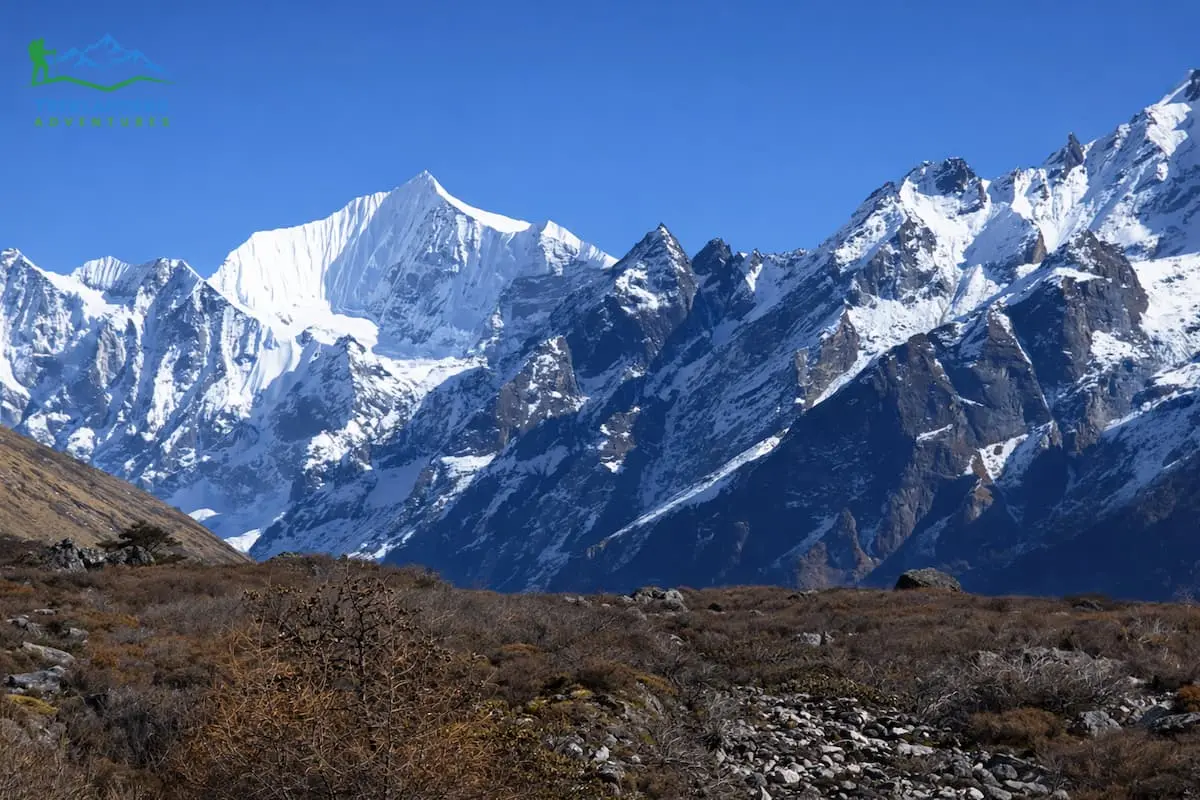
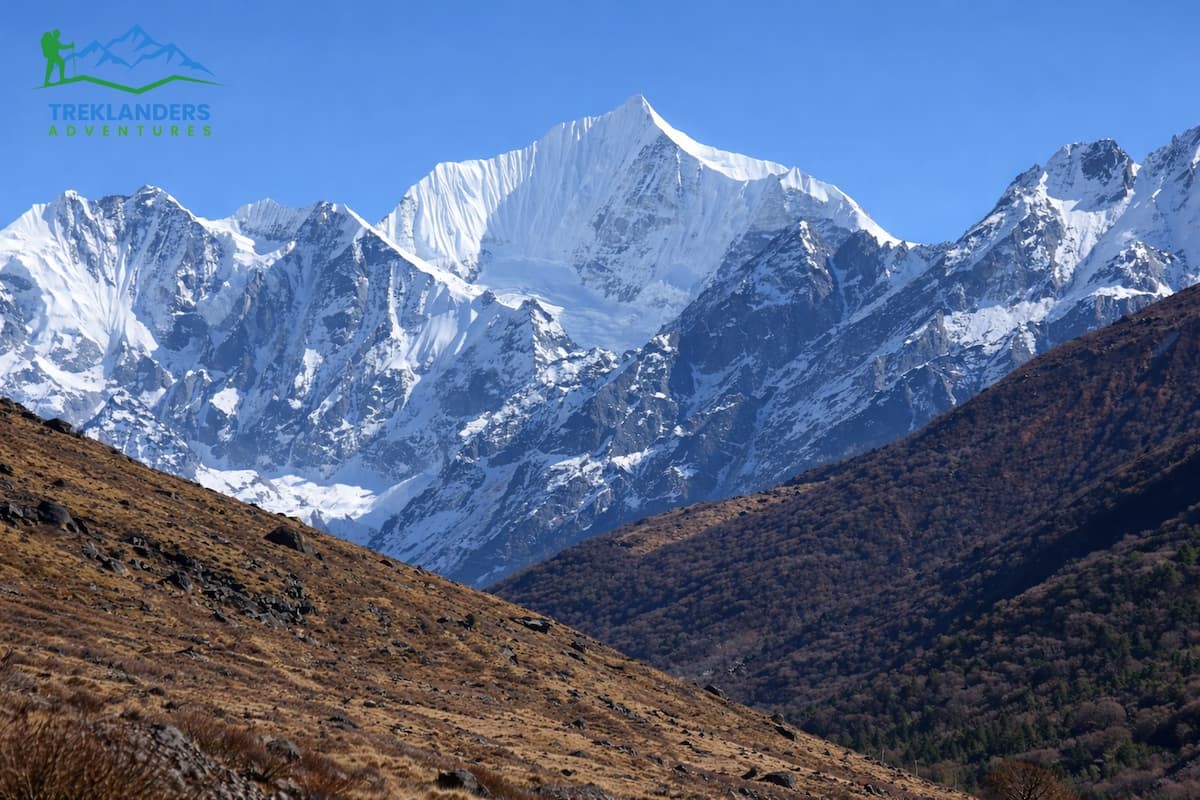
The journey starts with a beautiful drive from Kathmandu to Syabrubesi, and then the trail goes into Langtang National Park, which is the first Himalayan national park of Nepal. Besides being famous for its dense forests of rhododendron, oak, and bamboo, the park is also home to beautiful natural scenery. When the trek goes up to Lama Hotel and Langtang Village, the trekkers can enjoy not only the great nature but also the snow-capped mountains, namely Langtang Lirung (7227 m), Ganesh Himal, and Dorje Lakpa. The slow ascent also makes the proper acclimatization possible, giving the trek a good balance of challenge and enjoyment.
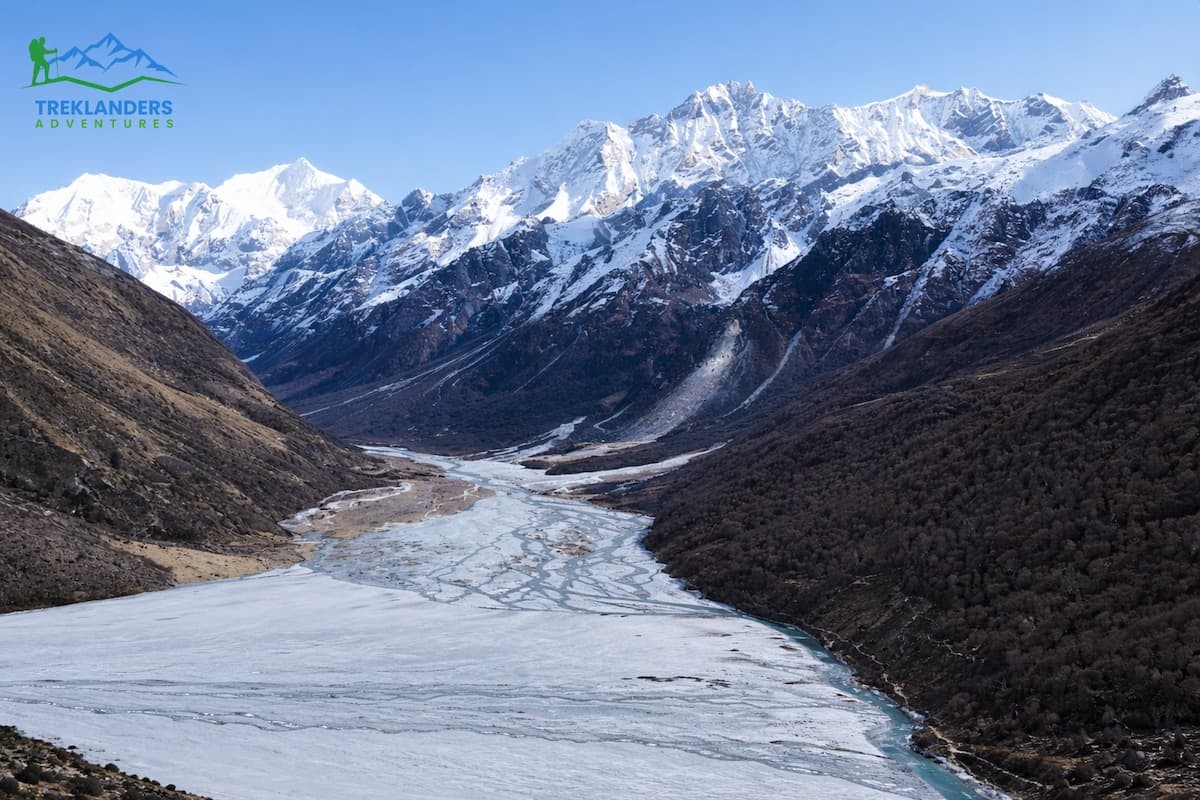
One of the most fascinating sides of the trek is Kyanjin Gompa, a picturesque settlement nestled at a high altitude and surrounded by glaciers and majestic mountains. This area, where you can spend an extra day for exploration, offers trekkers the chance to hike to nearby vantage points such as Kyanjin Ri or Tserko Ri, which provide stunning panoramic views of the Himalayas. The area, in addition, gives the opportunity to understand the local way of life as evidenced by the yak herding and cheese-making traditions.
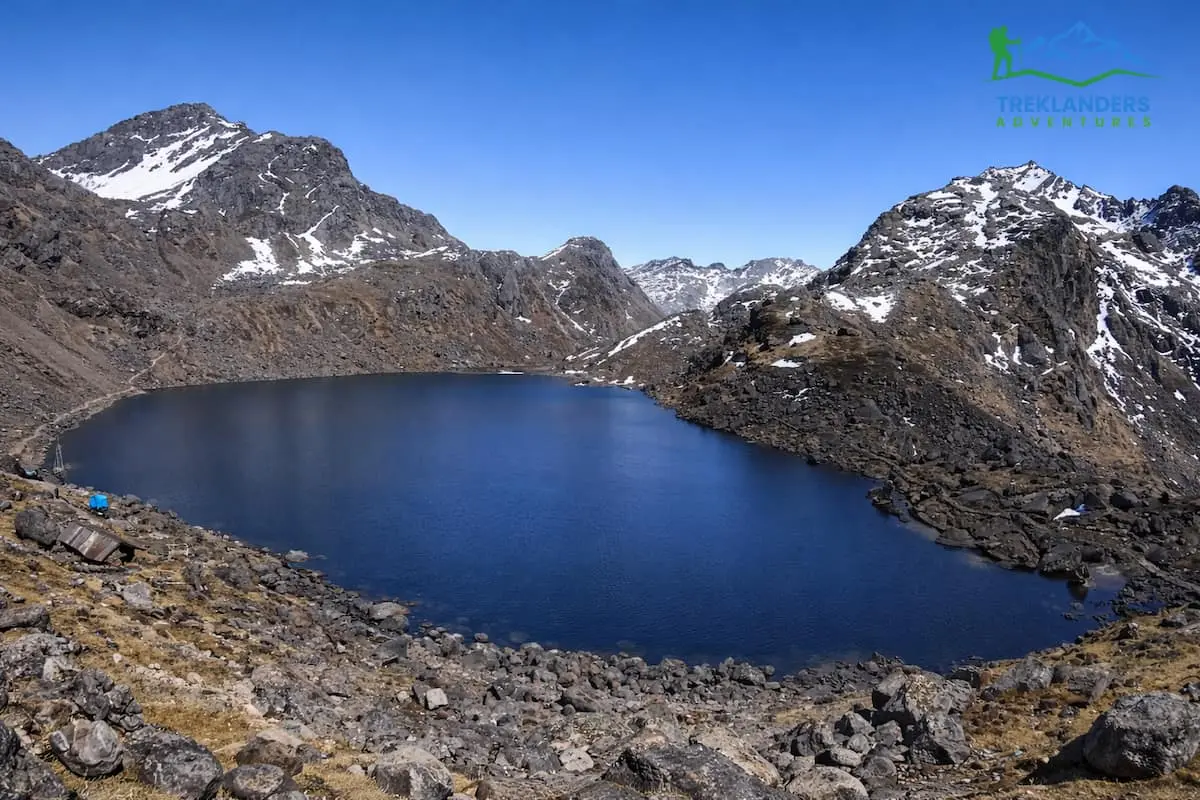
The Langtang trek gradually leads you into the sacred Gosainkunda Lake, one of the most popular pilgrimage spots in Nepal and finally to the peaceful Helambu area. Gosainkunda Lake is Located at an altitude of 4,380 meters, which is a place of great religious worship for both Hindus and Buddhists. The lake gains special importance during the festival of Janai Purnima. The crossing of the high Laurebina Pass (4,610 m) gives a tough, yet pleasurable alpine outing with spectacular mountain views.
The descent is along forested ridges and lovely villages such as Ghopte, Kutumsang, and Chisopani. The ending point is Sundarijal, which is just outside Kathmandu Valley. This 15-day itinerary is a great mixture of adventure, culture, and spirituality, making it a fantastic option for trekking enthusiasts who want to go right into Nepal's central Himalayas in one complete trip.
The perfect time to go on a Langtang Gosaikunda Helambu Lake Trek mainly depends on how stable the weather is, good visibility, and the state of the trails. Because there are some parts of the trek at very high altitude and going over Laurebina Pass, it is very important to pick the right season for safety and outing pleasure.
Spring (March-May) is one of the best times to do this trek. In spring, the weather is usually quite good, the temperature is neither too hot nor too cold, and the sky is clear, so you can: get a great view of the mountains The nature around the trek is beautiful as you can see flowers of rhododendron and other wild plants blooming in the forests of Langtang National Park The air temperature on the trail will be fine for walking, but the higher you go, the colder it gets at night. Photographers and nature enthusiasts can take great advantage of this season without having to worry about torrential rains or slippery trails, which are typical for spring.
Autumn (September - November) is the most frequently chosen season and a really dependable trekking season in Nepal. When the monsoon is over, the atmosphere becomes very pleasant, and the air is oh-so-crisp, which allows you to have amazing views of the Himalayan mountains. The weather stays calm all day, there is hardly any rain, and the paths are very well maintained. Autumn also happens to be the time of the most important festivals in Nepal, like Dashain and Tihar, which gives you a chance to learn about the culture along the way. Because of these perks, autumn is a great time for safe trekking across high passes like Laurebina Pass and for a visit to Gosainkunda Lake.
Summer/Monsoon (June to August) is normally a bad time for this trek. Due to heavy rain, the footpaths become very slippery, landslides on the way to Syabrubesi are more likely, and the mountains are often hidden by the clouds. Leeches are quite a headache in the lower forested areas, and the weather can quickly change, so you need to keep an eye out. On the other hand, if you dislike crowds, you will be happy to know this season has fewer trekkers. Besides, the scenery is vibrant and green. Only well-armed and skilled hikers ought to take a chance on this time of year.
Winter (December to February) is a season of quietness and the beauty of mountain peaks through crystal-clear air on good weather days, but it is not without significant risks. For instance, heavy snowfall may result in the closure of Laurebina Pass and thus no way to Gosainkunda Lake, not to mention the temperature would fall to degrees well below freezing at the upper parts of the mountain. This time should not even cross the mind of anybody but people with trekking experience and equipment for outdoor winter living.
In short, if you want to have the greatest experience of Langtang Gosaikunda Lake Helambu Trek, you should plan for the spring or autumn seasons as these are not only the safest but also the most beautiful and visually rewarding.
The Langtang Valley & Gosainkunda Trek through Helambu requires a set of official permits if one wants to go on the trip legally to these protected areas and along the routes. These permits serve a dual purpose, namely environmental conservation and the safety of trekkers, and are therefore mandatory and checked at a number of control points along the trail.
The Langtang National Park Entry Permit is the first and most significant permit that one needs to have. Since a large part of this trek goes through Langtang National Park, all trekkers must get this permit. The park is a refuge to a wide variety of plants and animals, as well as fragile alpine ecosystems, and the permit fee is one of the ways through which the park gets support for both biodiversity conservation and local community development. One can get the permit either before the start of the trek or on arrival at the park gate because the permit is normally checked at entry points like Dhunche or Syabrubesi. Foreigners have to pay a higher price than the SAARC countries nationals, whereas Nepali people have to pay only a small amount.
Apart from that, one needs to have the Trekkers Information Management System (TIMS) Card. The primary purpose of the TIMS card is to keep a record of trekkers' details as a safety and security measure. It assists the authorities in finding trekkers in the event of a mishap, natural calamity, or when a rescue is needed. TIMS also plays a role in maintaining official statistics of trekking in Nepal. Generally, one can get the TIMS card through the Nepal Tourism Board located in Kathmandu, or it can be arranged by a registered trekking agency if one goes on the trek with a guide.
Moreover, since the route terminates at Sundarijal and goes through Shivapuri-Nagarjun National Park, trekkers have to get a separate Shivapuri National Park Entry Permit. This permit is typically sold at the park gate next to Sundarijal on the last day of the hike. It is a measure to protect the forested hills around Kathmandu Valley, which are home to diverse species and are a major water source for the capital.
To get these permits, trekkers must have a valid passport, a Nepal tourist visa, and passport-sized photos. Although permits may occasionally be granted at trailheads, it is highly advisable to sort out all permits in Kathmandu before the trip to be free of unnecessary waiting. In general, getting the necessary permits is one of the steps taken to have a frictionless, lawful, and considerate trekking outing in the Langtang and Helambu areas.
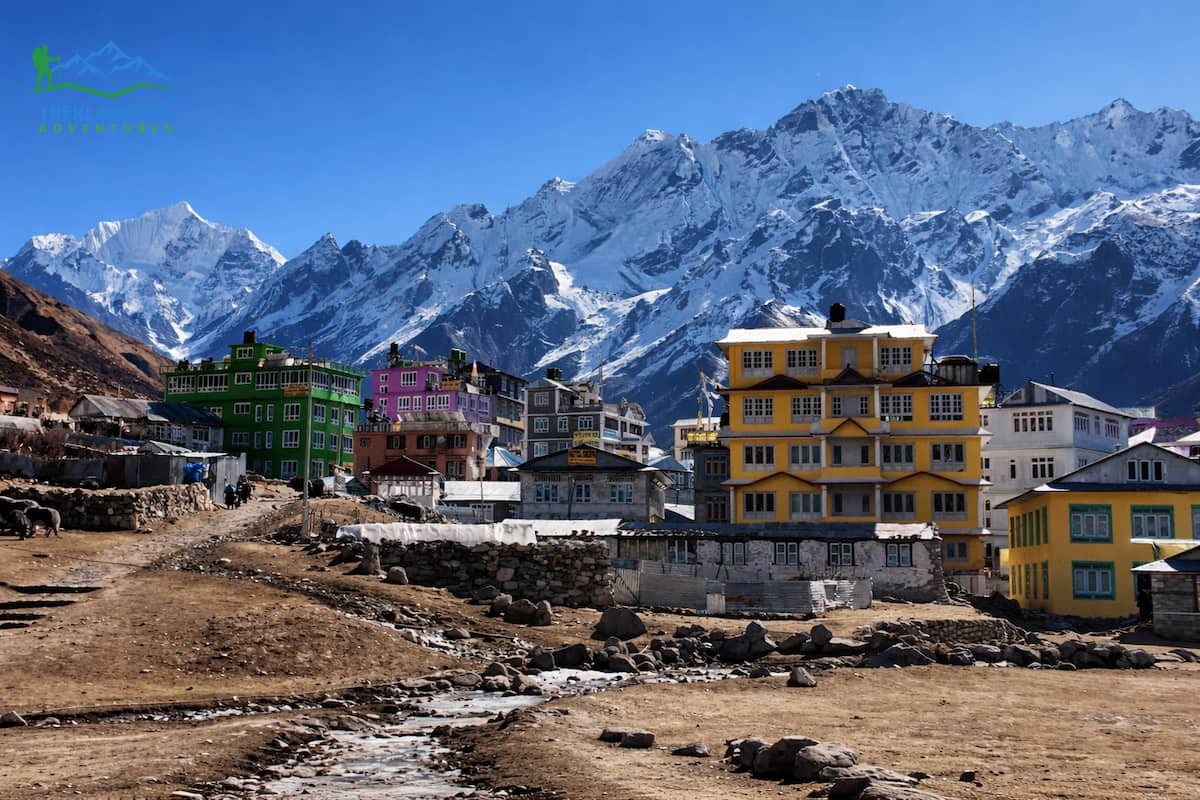
Throughout the Langtang Valley and Gosainkunda Trek, most of the accommodations are just simple, comfy teahouses and lodges where hikers can experience the real Himalayan life. Usually, these lodges are run by families, and they offer very basic facilities like a private or shared room with a bed, blanket, and sometimes just a mattress. If you want a hot shower, you can get one in bigger lodges or pay extra, but generally, the toilets will be either squat or western-style, depending on the lodge. Since electricity is usually limited and sometimes sourced through solar panels, it is a good idea to have a headlamp or power bank with you to charge your gadgets.
The first night in Syabrubesi is spent in a local guesthouse, providing a cozy and peaceful place, perfect for relaxing after the long drive from Kathmandu. Pass the Langtang Valley line to the Lama Hotel, Langtang Village, and Kyanjin Gompa, where the lodges provide snug rooms along with communal dining facilities. Kyanjin Gompa, a notable trekking location, offers a slightly higher standard of lodging with a few shops, restaurants, and the possibility of internet access at some lodges. In addition, the trekkers have an opportunity to get to know the local culture, meet people from nearby villages, and the cheese factory is just around the corner.
During the Helambu extension, houses in Thulo Syabru, Chandanbari, Ghopte, Kutumsang, and Chisapani offer the closest experience to traditional tea houses with great hospitality. Though the amenities are minimal, the emphasis is on comfort, cleanliness, and the stunning environs. Some lodges have heating facilities, especially those located at higher elevations; thus, after long trekking days, evenings become cozy. The last night at Sundarijal signifies the shift back to lower altitudes, and trekkers usually stay in a guesthouse or lodge before going back to Kathmandu.
All inns have been chosen to match comfort, cultural immersion, and nature views so that trekkers get to soak in the one-of-a-kind vibe of the Langtang and Helambu areas. Eating at the lodge is usually a situation of staples being both Western and Nepali ones. Generally, the accommodation along this 15-day trek provides a mix of rustic charm, cultural authenticity, and even the convenience required for a safe and happy Himalayan expedition.
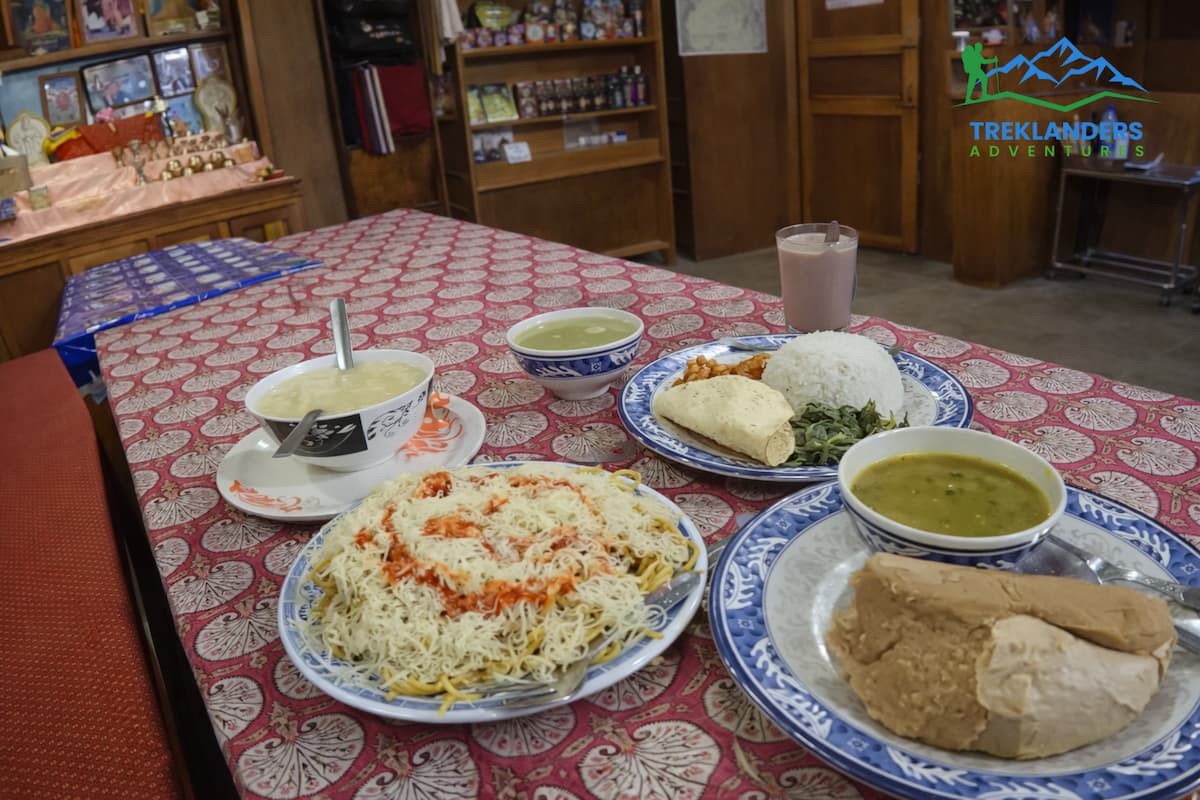
Food along the Langtang Valley & Gosainkunda Trek is primarily a mixture of traditional Nepali dishes and simple Western-style options, all prepared to provide the necessary energy to trekkers during the journey. The accommodations on the trek route, such as lodges and teahouses, typically operate on a fixed meal schedule of three meals a day: breakfast, lunch, and dinner, with snacks provided at times between the main meals. Breakfast is generally made up of items such as porridge, eggs, bread, and pancakes, along with tea or coffee, which is enough to keep a person going for the whole trekking day. Lunch and dinner may feature dal Bhat (rice with lentil soup) as the staple, along with noodles, soups, vegetable curries, and the occasional meat dish like chicken or yak. Western dishes, for example, pasta, fried rice, and sandwiches, are also regularly found in most lodges in order to satisfy different tastes. Towards the top of the route, especially in Kyanjin Gompa, Chandanbari, and close to Gosainkunda, there are fewer choices on the menu, but the quality and warmth of the food are still very pleasant.
Regarding the safety of drinking water, it is important to mention that this is a major concern on the trek. It is highly recommended that trekkers boil their water, use purification tablets, or a water filter of their own to be 100% sure that the water is safe to drink. Most of the teahouses charge a small amount for boiled or filtered water. Bottled water can also be purchased at major stops; however, it may cost more due to the transportation from the remote areas. When it comes to hydration, it shouldn't be overlooked, especially at high altitudes where the air is dry, and the body loses water more rapidly.
You can find a large variety of hot drinks like tea, coffee, hot chocolate, and local herbal teas wherever you go. These drinks give you both warmth and energy after a cold day of trekking. At bigger lodges, you can buy a variety of sweets like biscuits, chocolate, energy bars, and dried fruits, which are perfect to have quickly before continuing on the path. Locals also have momos, sel roti, and Tibetan-style noodles available for people who want to eat like the locals and experience the culture through the taste of these dishes.
Generally, the arrangements for food and drinking water on this trekking route are dependable, varied, and prepared with consideration of the nutritional needs of trekkers. Thus, providing them with enough energy for long walking days, and at the same time giving them a chance to savor the authentic taste of Nepali mountain culture. When trekkers have enough water to drink and their meals are well-balanced, they can not only complete the trekking journey safely and comfortably but also enjoy the tastes of the local cuisine along the route.
Maintaining health and safety is of paramount importance if one wants to have a successful Langtang Valley & Gosainkunda Trek experience, as it is known that trekkers come across diverse landscapes, high altitudes, and isolated areas. As the trail goes through altitudes starting from 1,500 meters up to more than 4,600 meters, the danger of altitude sickness escalates. Good acclimatizing, slow climbing, and frequent rest days like the acclimatization day at Kyanjin Gompa some of the measures that can effectively bring down the chance of Acute Mountain Sickness (AMS). Its symptoms comprise headache, vomiting, dizziness, and tiredness. It is also given that trekkers should keep an eye on their state of health, drink a lot of water, and inform the guides immediately if they experience any symptoms.
One of the things one needs to consider when trekking the Himalayas is that it is physically demanding over long distances, and the weather is always changing. To avoid any accidents like falls, twisted ankles, and other injuries, it is necessary to use the right footwear, wear a few layers of clothes, and have trekking poles with you. It is also mandatory to wear sunglasses, use a sunblock, and put on hats to be protected from the sun, especially at higher altitudes where there is a greater threat from UV rays. Besides this, other cold-weather measures such as wearing insulation jackets and gloves are a must, especially during early morning, late evenings, and at higher passes like Laurebina Pass.
One other very important factor of health safety is the hygiene of food and water. Water should only be consumed after it has been boiled, filtered, or taken out of a sealed bottle, and raw or insufficiently cooked foods should be avoided. It is strongly advised to pack a simple first aid kit consisting of painkillers, band-aids, antiseptics, altitude sickness medicine, and diarrhea medicine. Guides and porters generally know how to give first aid, and some guesthouses are equipped with small medical kits, but in the case of a serious incident, it might be necessary to get to a bigger town such as Syabrubesi or Kathmandu for help.
Weather conditions in the area can change quite quickly, and you may have rain, snow, or strong winds, which could affect the safety of the trail. You should listen to the guide, not take dangerous shortcuts, and be ready to change the plan if it gets unsafe. Having communication devices or mobile phones with local SIM cards can be useful to call for help, but in very remote areas, the coverage will be limited.
In general, the trek is safe if all the necessary preparations are made, you are aware of the risks, and you follow health and safety instructions. Guidelines on how to prevent altitude sickness, maintain good hygiene, take precautions against the weather, and be physically fit, if followed, will not only help ensure the safety of trekkers but also provide an opportunity to appreciate the natural beauty, cultural experiences, and spiritual highlights of the Langtang Valley and Gosainkunda region.
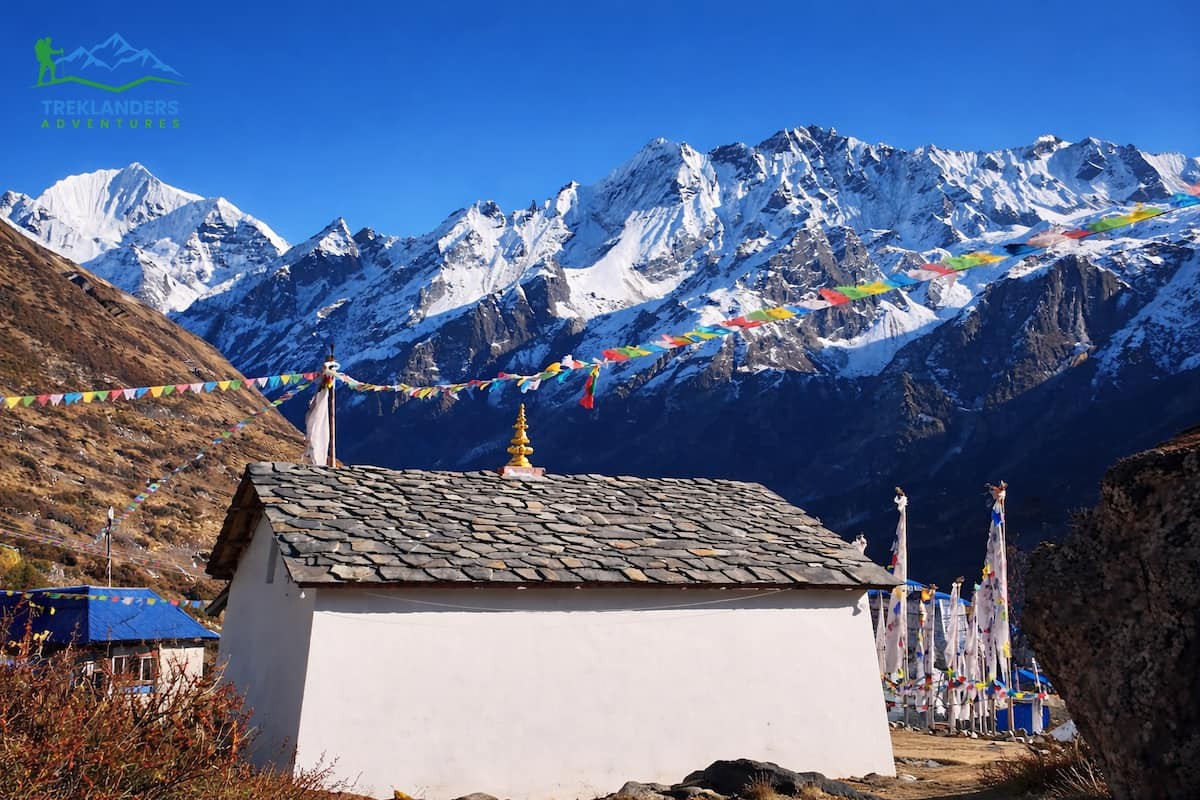
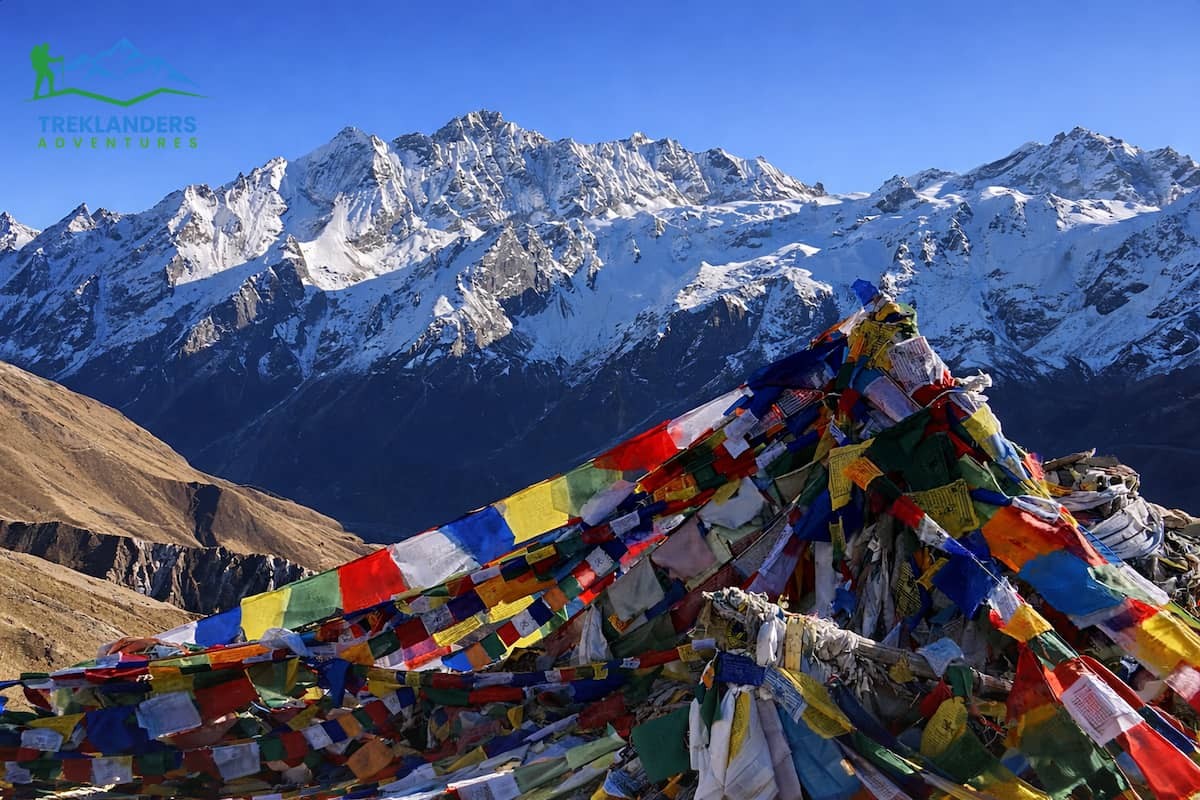
The Langtang Valley and Helambu region are laden with cultural and religious heritage, a treasure the trekkers can share in by experiencing Nepal's Himalayan traditions firsthand. Tamang and Sherpa make up the majority of the population, and their lifestyles are a reflection of Tibetan Buddhist and Hindu syncretic beliefs. On your journey through the villages of Langtang, Thulo Syabru, and Chisopani, you will see prayer flags, mani walls, chortens (stupas), and Buddhist temples, which are all a legacy of the spiritual practices that have been going on for centuries.
Kyanjin Gompa monastery is nestled in the middle of the varied forested landscape that a hike from Langtang to Kyanjin passes through. A functioning Buddhist monastery, Kyanjin Gompa, welcomes visitors who may wish to observe rituals, chanting, and meditation practices closely. The secluded atmosphere is conducive to introspection and the revelation of Himalayan monastic life and devotion.
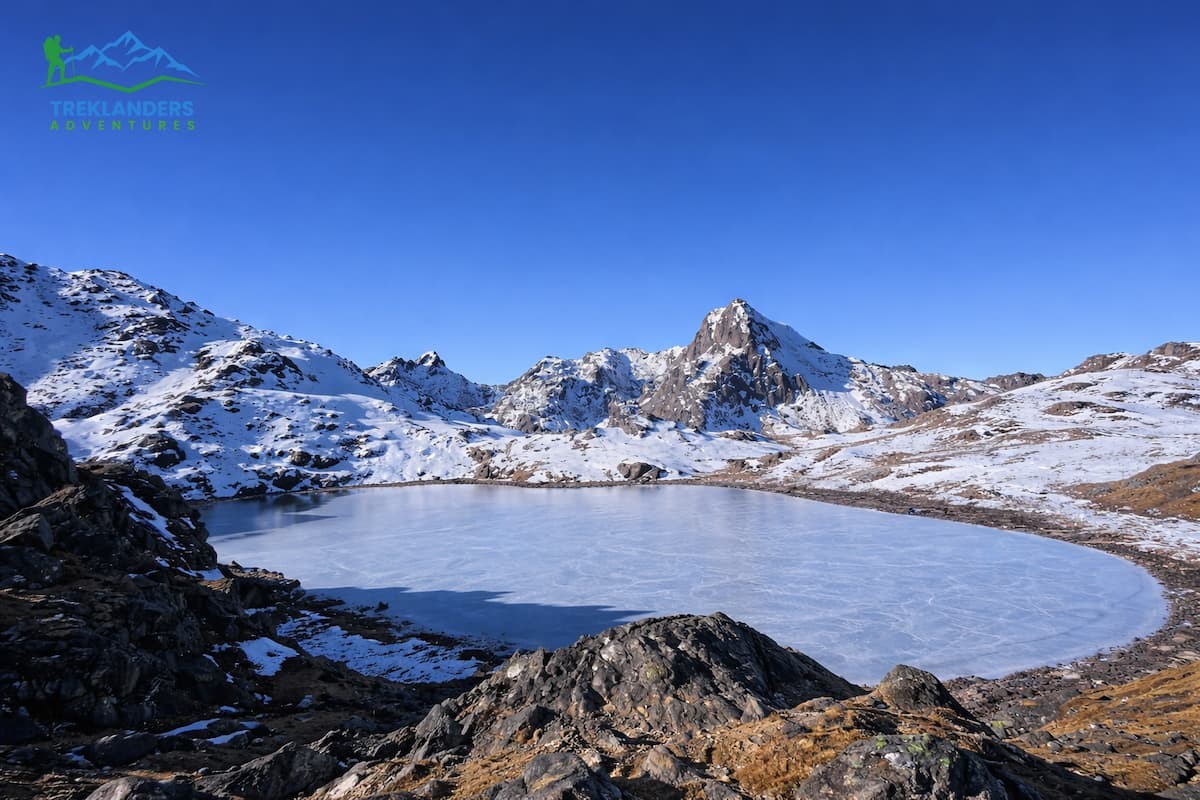
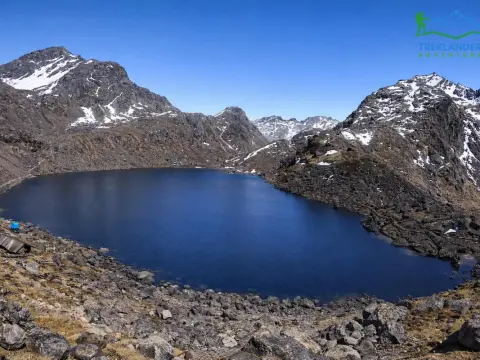
Gosainkunda Lake, situated at 4,380 meters, is a site of worship that holds a special place in the hearts of Hindus and Buddhists alike. Hindus believe that the lake is the home of Lord Shiva and, thus, pilgrimage is made during the Janai Purnima festival. On their way to the lake, pilgrims and trekkers will encounter rituals, offerings, and prayers that portray the spiritual reverence of the great Himalayas.
The local people in remote areas are very attached to religious traditions, so it is crucial for the trekkers to acknowledge and respect such practices.
Another major factor of the trek is the cultural interaction. The Tamang and Sherpa people continue to live their separate cultures, follow their own traditions, and be hospitable. Teahouses apart from accommodation serve as great trading point locals, learning about traditional crafts, mountain farming, and Buddhist art. Festivals, music, and local food allow hiking to get a peek at daily life in high altitude settlements. Traditional clothing, prayer ceremonies, and folktales make a dense cultural fabric which goes well with the natural beauty of the region.
Walking in the area thus is not only a physical journey but also a cultural and spiritual exploration. Through the respectful observation of local practices, engaging in cultural activities, and getting to know religious customs, visitors experience a profound connection with the lifestyle of the Himalayas. The perfect balance of nature, culture, and spirituality in the Langtang and Helambu areas turns this hiking trip into a complete adventure, linking the travelling folk with both the mountains and the locals who dwell there.
Langtang Valley & Gosainkunda Trek through Helambu is an amazing journey that unites the beauty of nature, cultural immersion, and adventure, making it a perfect option for trekkers with different levels of experience. Unlike the commercialized routes, this one is less crowded but still has well-established trails, teahouses, accommodations, and wonderful Himalayan views. The trail wanders through various landscapes places such as subtropical forests along the Langtang Khola, alpine meadows, yak pastures, and glacial areas near Kyanjin Gompa and Gosainkunda Lake. At every step, trekkers get a chance to enjoy stunning views of Langtang Lirung, Ganesh Himal, and the neighboring mountains.
Besides being surrounded by nature, this trek also offers a glimpse into the lives and cultures of the people who live in the area. Following the path, one can come to the Tamang and Sherpa Villages, where the traditions, the way of life, and the Buddhist beliefs of the communities are clearly visible. One can stay in a local guesthouse, have conversations with the inhabitants, eat typical Nepali food, and be a witness to the ceremonies in monasteries like Kyanjin Gompa. The sacred place for Hindus and Buddhists, Lake Gosainkunda, is an important part of the spiritual journey through Nepal's religious past.
One more reason why you should take this trek is that the level of the physical challenge ranges from moderate to adventurous, thus those who want a very demanding but not extremely difficult outdoor activity will find it a perfect choice. Slow ascensions, days for acclimatization, and not too long hiking hours enable trekkers to have a safe and enjoyable time while increasing their strength and stamina. Besides, Helambu and Laurebina Pass have been incorporated in the itinerary, thus offering a great mix of forest paths, high mountain passes, and peaceful valleys.
Besides that, the trip is also remarkable because of its very easy access and good infrastructure. Kathmandu being a starting point, the entire route is basically one of the best hikes, with the standard of trail walking, tea house lodging, and food and water availability being quite reliable, so this actually makes the trek not only quite feasible for complete beginners but also very satisfying for those who are used to the difficulty. And of course, one can always hire guides and porters to make it even safer, easier, and culturally richer.
In summary, the Langtang Gosaikunda Lake Helambu Trek encompasses all the aspects of nature and culture that one can desire, from stunning Himalayan landscapes, through genuine cultural interaction and moving spiritual experiences, to the physically very satisfying challenge of the hike. Such a trip, touching on pretty much all the senses, that after it one keeps the memory alive like a photo in mind, allows the hikers to literally lose themselves in the mighty mountains, have the locals at their fingertips, and at the same time experience the serene beauty and deeply spiritual traditions of Nepal's central Himalayas.
Trip Summary:
Mode of Trek: Best available lodge / guest house throughout the trek.
Trekking Grade: Moderate, with sections of high-altitude trekking.
Trekking Region: Nuwakot, Rasuwa and Sindhupalchowk districts, covering Langtang Valley, Gosainkunda Lake, and Helambu region.
Start and End of Trek: Kathmandu to Kathmandu
Highest Elevation: Laurebina Pass 4,610 m / 15,121 ft. (Optional Hike Tserko Ri :- 4,984 m./ 16351 ft.)
Total Trip Duration: 15 days from arrival in Kathmandu to final departure.
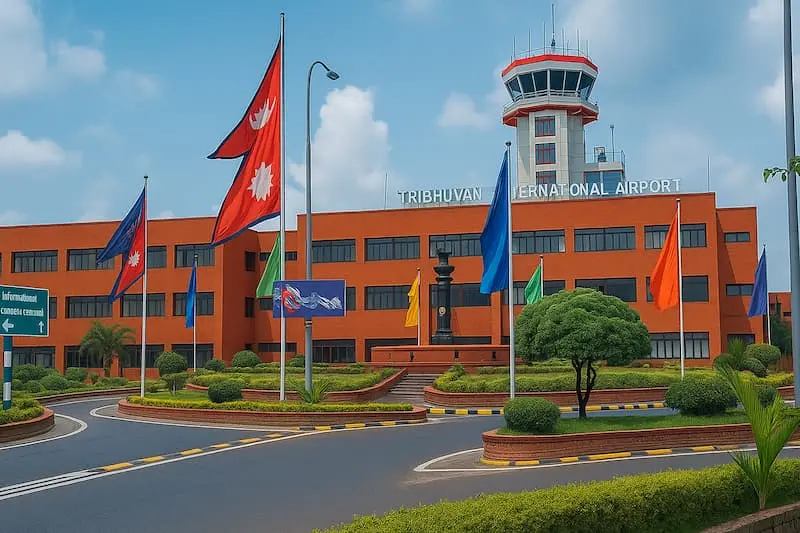


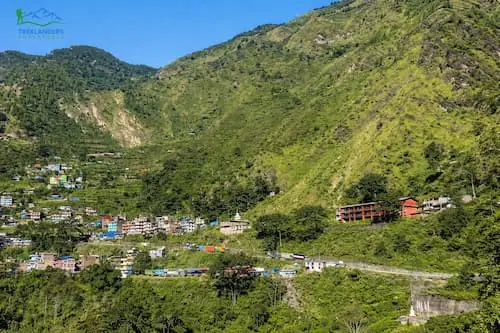
The adventure begins as you depart Kathmandu early in the morning for Syabrubesi, a small village located in the Langtang region. The journey covers approximately 115 kilometers and takes around 7–8 hours, depending on road conditions. The drive itself is scenic, passing through terraced hills, rivers, and small settlements. Along the way, you will witness the Trishuli River’s meandering course and the dense forests that form the lower reaches of the Langtang National Park.
Upon arrival in Syabrubesi, the starting point of your trek, you will check into your lodge and rest. Syabrubesi is a typical Sherpa village with stone houses and traditional wooden windows, offering a glimpse of the region’s culture. It is a great spot to prepare your trekking gear, meet fellow trekkers, and acclimatize slightly to the altitude before setting out on the trail.

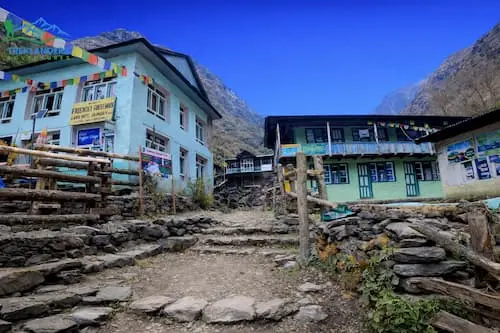
The trek starts in earnest as you follow the Langtang River upstream. The trail is relatively gentle in the beginning, winding through dense forests of pine, rhododendron, and oak. You will cross several small suspension bridges and pass-through traditional villages, where locals engage in agriculture and animal husbandry.
Lama Hotel is a popular stop for trekkers and lies at an altitude of 2,470 meters. Along the way, enjoy the stunning views of Langtang Lirung, one of the highest peaks in the region. The trail gradually ascends, offering a moderate challenge for your first day of trekking. Upon arrival, you will rest at a teahouse or lodge, enjoy local food such as dal bhat (lentil rice), and prepare for the next day’s ascent.
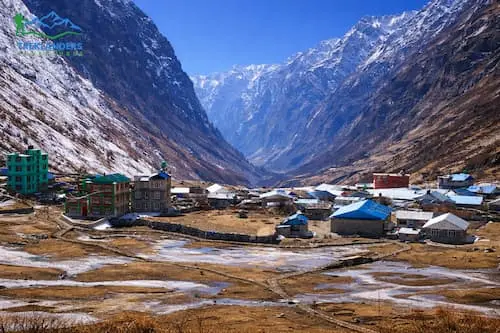
Today’s trek is longer and more challenging, as you ascend through lush forests into the alpine zone. The trail passes through Bamboo, Ghoda Tabela, and Langtang Khola, offering continuous views of Langtang Lirung and other peaks. The terrain becomes rockier, and the air thinner as you approach Langtang Village.
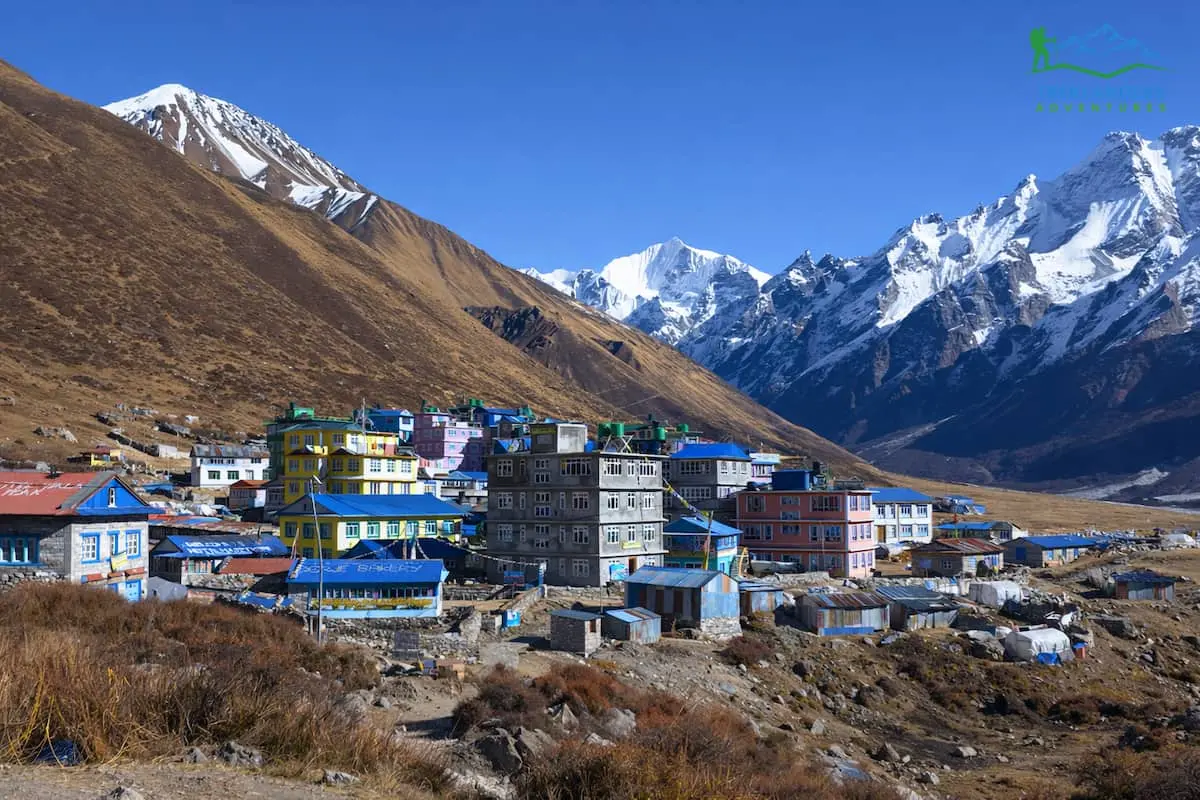
Langtang Village, at 3,430 meters, is a picturesque settlement with traditional stone houses and prayer flags fluttering in the wind. You will experience a peaceful Himalayan village atmosphere, meeting locals who are predominantly Tamang people. Accommodation is in local lodges, where you can enjoy hot meals and rest after a long day of trekking.
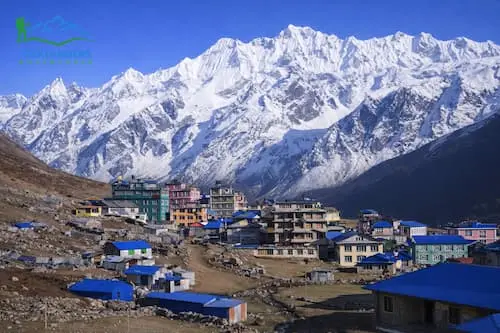
The trek from Langtang Village to Kyanjin Gompa is a highlight of the Langtang region. The trail gradually ascends, passing through boulder-strewn paths and alpine meadows. Kyanjin Gompa is renowned for its ancient monastery and stunning panoramic views of Langtang Lirung, Langtang Ri, and other Himalayan peaks.
Upon arrival, you can explore the monastery, interact with monks, and enjoy views of the surrounding valleys. This is a crucial point for acclimatization due to the higher altitude, and you may take short hikes to nearby viewpoints or visit the local cheese factory, famous for yak cheese production.
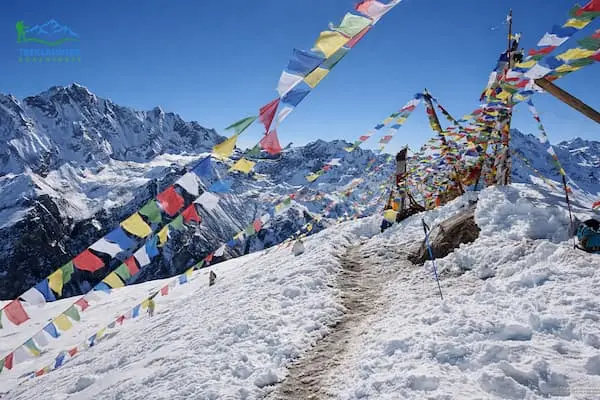
This day is dedicated to proper acclimatization and exploration around Kyanjin Gompa, allowing the body to adjust to altitude while enjoying some of the best viewpoints in the Langtang region; trekkers can hike to Kyanjin Ri Viewpoint (approximately 4,350 m / 14,272 ft) for a short but rewarding climb of 2–3 hours round trip, offering close-up views of Langtang Lirung and surrounding glaciers, or undertake the more challenging ascent to Tserko Ri (4,984 m / 16,352 ft), the highest viewpoint in Langtang Valley, which takes about 6–7 hours round trip and rewards hikers with a spectacular 360-degree panorama of Langtang Himal, Ganesh Himal, and Tibetan peaks, before returning to Kyanjin Gompa for overnight stay.
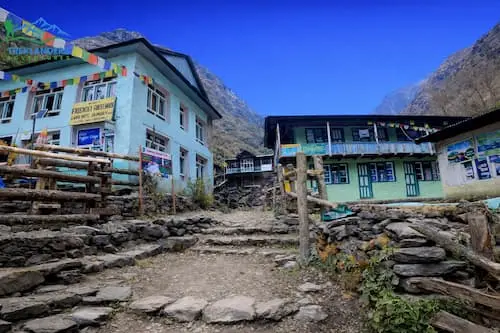
Descending from Kyanjin Valley to Lama Hotel is a relatively long but gentle trek. The route retraces part of your earlier trail, passing through lush forests and traditional Tamang villages. You can enjoy the scenic beauty along the Langtang River, encounter local wildlife such as langurs, and observe the changing vegetation as you descend to lower altitudes.
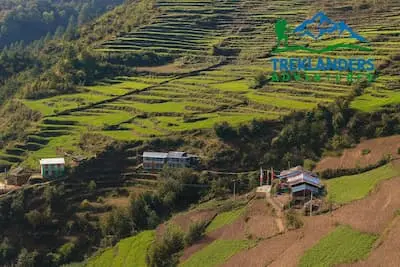
From Lama Hotel, the trek continues to Thulo Syabru. The trail is less steep than the previous days, following the course of the Langtang Khola. Thulo Syabru is a charming village known for its stone houses and local culture. Here, you will enjoy interacting with local villagers, observing daily life, and preparing for the higher-altitude segment of the trek ahead.
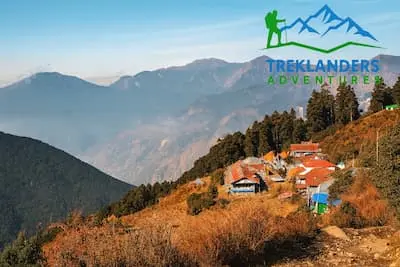
The trek from Thulo Syabru to Chandanbari involves a steady climb through rhododendron forests and open meadows. Chandanbari is perched at 3,654 meters and provides excellent views of the surrounding peaks. The trail challenges your endurance but rewards you with pristine landscapes, glacial streams, and the serenity of the high Himalayas.
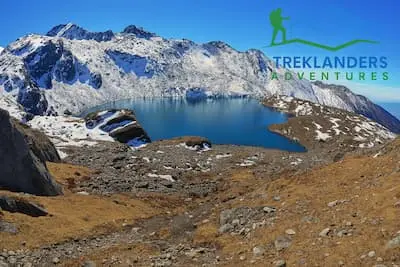
Today is a significant day, as you trek to the sacred Gosainkunda Lake. The trail ascends steadily through rocky terrain and high-altitude meadows, culminating at the pristine alpine lake at 4,380 meters. Gosainkunda is revered by both Hindus and Buddhists, attracting pilgrims annually. Here, you can rest by the lake, enjoy the reflective beauty of the snow-capped peaks, and take photographs of this spiritual and natural wonder.
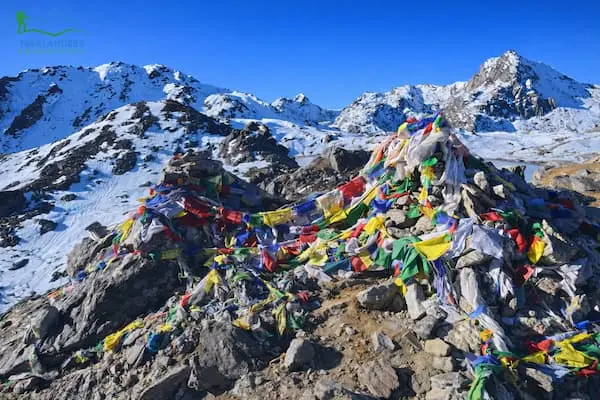
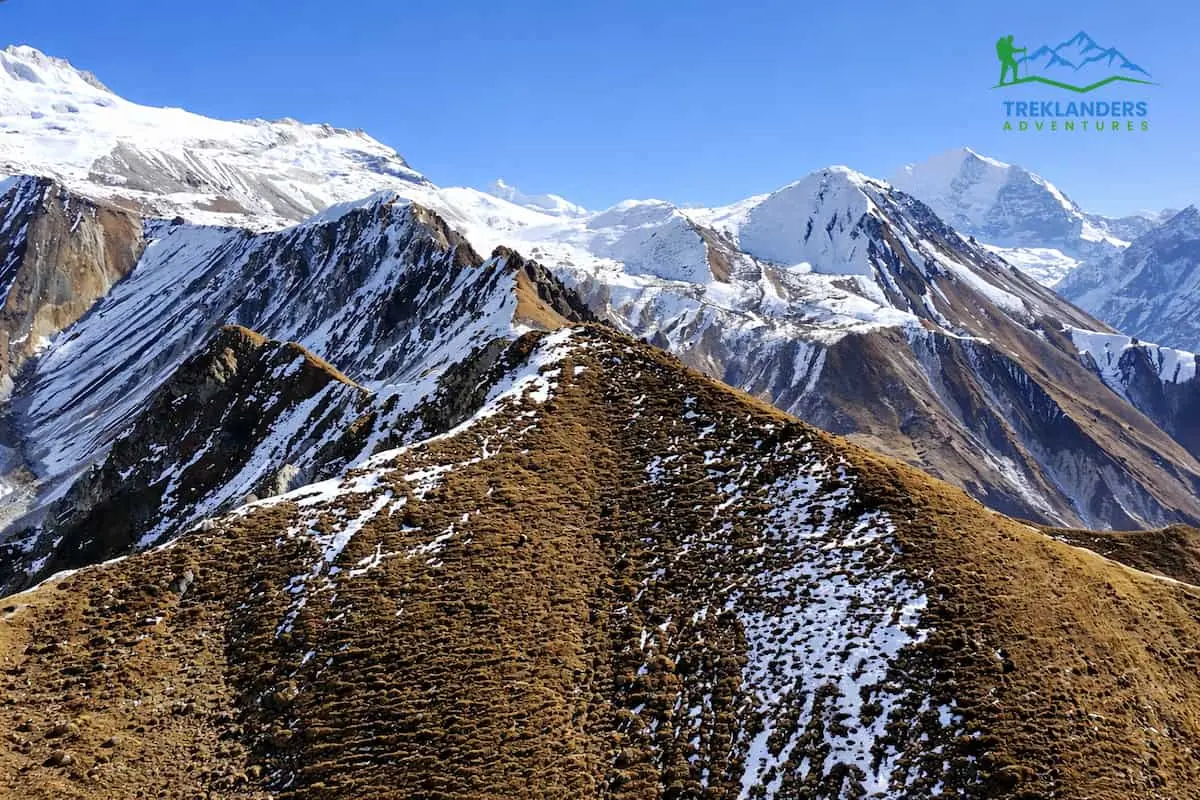
This is one of the most challenging days of the trek, as you cross the high-altitude Laurebina Pass at 4,610 meters. The ascent is steep, with rocky trails and potential snow patches, demanding focus and stamina. Upon reaching the pass, you are rewarded with panoramic Himalayan vistas, including views of Ganesh Himal and Langtang Lirung. The descent to Ghopte is equally scenic, passing through alpine valleys and yak pastures. Overnight stay at Ghopte.
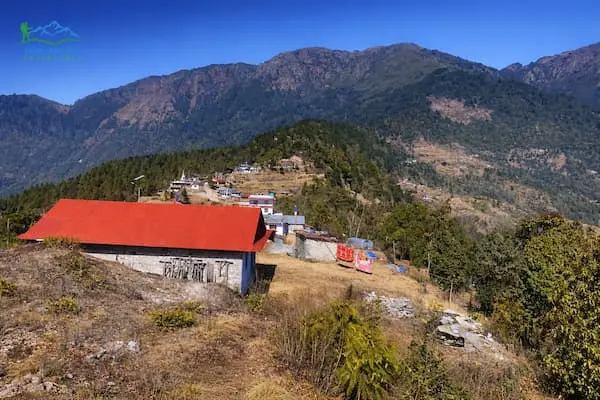
Descending from Ghopte to Kutumsang allows your body to recover from the high-altitude exertion. The trail passes through forests, rivers, and small villages, offering insight into rural Himalayan life. Kutumsang is a small settlement where you can enjoy local hospitality, hot meals, and a peaceful overnight stay.
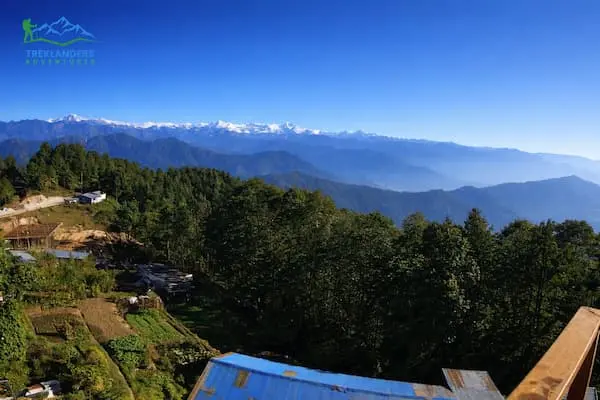
The trek continues downhill to Chisopani, located at 2,295 meters. The path is shaded by dense forests of pine and rhododendron, offering a serene trekking experience. From Chisopani.
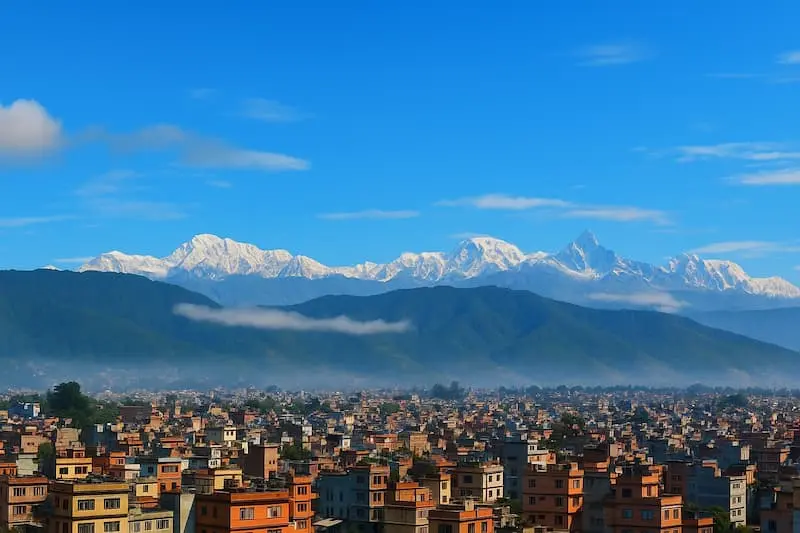
After breakfast, trek from Chisopani (2,295 m / 7,530 ft) to Sundarijal (1,460 m / 4,790 ft) through Shivapuri National Park, descending via forested trails, waterfalls, and stone steps for approximately 4–5 hours, followed by a scenic drive from Sundarijal to Kathmandu (1,350 m / 4,429 ft) taking about 1–2 hours.
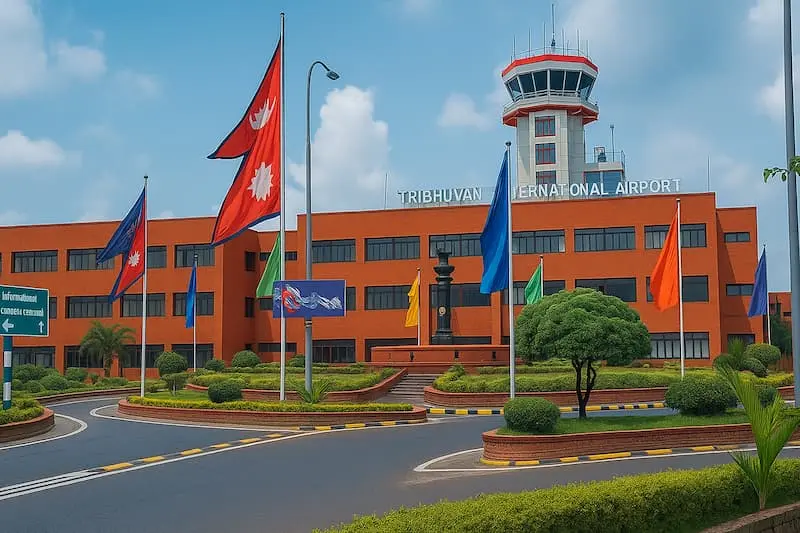
After an enjoyable and most mesmerizing time in Nepal, around the Himalayas on Langtang Valley Trek. As time for departure, our staff transfer you to international airport for flight homeward bound or to next port of call.
My 15 Day Langtang Gosaikunda Lake Helambu Trek with Treklanders Adventures was an unforgettable experience from start to finish. This trek perfectly combined raw Himalayan nature, sacred alpine lakes, and rich local culture, and Treklanders handled every detail with exceptional professionalism. The journey through Langtang Valley offered breathtaking mountain scenery, peaceful forests, and welcoming Tamang villages. Reaching Gosaikunda Lake was deeply spiritual—the crystal-clear sacred lakes surrounded by snow-covered peaks felt truly magical. The final stretch through the Helambu region was equally rewarding, with scenic trails, green hills, and charming Sherpa villages that provided a beautiful contrast to the high alpine landscapes. Our guide was highly experienced, knowledgeable, and attentive, always ensuring our safety and comfort while sharing insights into local culture, history, and nature. Accommodation and meals throughout the trek were well chosen, clean, and satisfying, even in remote areas. The itinerary was perfectly paced, allowing proper acclimatization and enough time to enjoy each destination without feeling rushed. What stood out most about Treklanders Adventures was their genuine care, clear communication, and flexibility. From planning to execution, everything was smooth and stress-free, making the trek enjoyable even on challenging days. I highly recommend the 15 Day Langtang Gosaikunda Lake Helambu Trek with Treklanders Adventures to anyone seeking a complete Himalayan experience—adventure, culture, spirituality, and stunning scenery all in one journey.
Purpose: Keep sweat off the skin and maintain warmth.
Purpose: Trap body heat in cold air at altitude.
Tip: Keep electronics in inner pockets at night to prevent freezing.
This itinerary is generally a moderate to challenging high-altitude trek. It is ideal for individuals with good physical condition and prior hiking experience. You do not necessarily need to have technical climbing skills; however, the trek is quite long, includes continuous ascents and descents, and crosses a high mountain pass at 4,610 m (Laurebina Pass). People with no hiking experience can complete the trek only if they adequately prepare their bodies through cardiovascular training and strictly follow the acclimatization rules.
The highest point of the trek is Laurebina Pass at 4,610 meters, followed by Gosainkunda Lake at 4,380 meters. The itinerary has been built up very carefully, with acclimatization giving special emphasis on a day for acclimatizing and exploring at Kyanjin Gompa and gradual altitude gain on the trekking days. Altitude sickness mitigation also involved planned descents to lower elevations.
On this trek, you stay in local teahouses or lodges, which offer basic but adequate facilities. Normally, rooms are for two people and have basic bedding. Meals are available at the lodges. They mostly consist of the local Nepali food, for instance, dal Bhat, and can also include noodles, soups, rice, potatoes, eggs, and some international dishes. In Kathmandu, the hotel is nice, and the stay is on a bed-and-breakfast basis.
The best seasons for this trek are spring (March to May) and autumn (September to November). These are the times when the weather is mostly stable, the skies are clear, and you get the best views of the mountains. Spring means rhododendrons are flowering, while autumn means fresh air and great visibility. Winter trekking is doable, but it is colder, and the pass may be covered in snow.
Yes, trekkers need a Langtang National Park Entry Permit and a TIMS (Trekkers Information Management System) card. It is strongly advised to hire a licensed guide, especially because of the isolated area and the high-altitude pass crossing. On top of ensuring safety, guides are also facilitators, and they offer great cultural and environmental knowledge throughout the trip.
Among the must-have items are durable trekking boots, multi-layered clothes that are good for both cold and warm weather, a down jacket, a sleeping bag, rainwear, trekking poles, sunscreen, sunglasses, personal medicines, and a basic first-aid kit. As it gets really cold at higher altitudes, having suitable cold-weather gear is not only good for comfort but also necessary for safety.
The spring (March to May) and autumn (September to November) seasons are generally considered the best time to do a Langtang and Gosainkunda trek. These are the times when the weather is most stable, the mountain views are clear, and the trekking conditions are comfortable. At the lower elevations, the temperatures are mild, and at the higher ones, they are cool but still bearable, so the trip is not only safer but also more fun.
Visiting in spring is highly recommended as the temperatures are nice and the surroundings are very alive with nature. The hiking paths in the month of spring are decorated with rhododendrons in full bloom and other species of flowers that are native to the alpine region, especially in the forests of low and mid-altitude. Usually, days are warm with the sun already shining early, while at night it is cooler, and the higher you go, the more you feel it. Hence, one can say that the time is perfect for those who like to be close to nature, take photos, or just soak in the beautiful and colorful environment.
Overall, September to November or the autumn season has got to be the topmost choice of a trekking season, not just in Nepal but in the whole world. Right after the rainy season, the sky clears up completely, giving the trekkers the best opportunity of seeing the snow-clad peaks of the Himalayas. The weather is without much moisture, very stable and dry, and the paths are also in the best of conditions. The biggest and most important festivals of the year, such as Dashain and Tihar, are, however, held during this period, thereby making it possible for the walkers to experience not only the local culture but also the close encounter with the Nepalese way of life.
Generally, the monsoon season (June to August) is not ideal for this trek. Heavy rains not only make the trails slippery but also create a higher possibility of landslides, especially on the drive to Syabrubesi from Kathmandu. Due to the clouds, mountain views are often hidden, and there might be leeches at the lower altitude. Nevertheless, seasoned trekkers who crave isolation may still do the trek by taking necessary precautions.
The temperature drops significantly in winter (December to February), and the cold is even more severe at heights above 3,500 meters. Snow will cover the trails, and it might be too dangerous or impossible to cross Laurebina Pass. The sky is usually clear, and there is barely anyone around; however, trekkers have to be really well prepared to face the extreme cold and be ready to change their plans if necessary. Winter trekking is a good idea only for those who have enough experience and are very well prepared.
Beginners are advised to go for spring or autumn. Both these seasons are characterized by good weather, safe trails, and availability of teahouses and other facilities. A correct choice of season goes a long way towards safety, comfort, and enjoyment of the trekking in the Langtang and Gosainkunda area.
The Langtang and Gosainkunda trek is normally marked as a moderate to challenging trek. It doesn't require technical climbing or mountaineering skills, but it involves good physical condition, mental stamina, and the capability to walk 5-7 hours a day on different landscapes. The trek becomes harder than the short or low-altitude ones due to the combination of long trekking days, constant elevation gain, and high-altitude parts.
It is possible for the physically fit, motivated, and well-prepared beginners to do this trek. Nonetheless, the trek is not suitable for complete beginners with no previous hiking or endurance experience. Beginners should prepare themselves through training such as regular walking, stair climbing, and cardio exercises over several weeks before the trek. To ensure safety and comfort, it is highly recommended to hire a professional guide.
Altitude stands for one of the greatest difficulties of the trek. The schedule tops 4,600 meters at Laurebina Pass, where the oxygen concentration is extremely low. Without the proper acclimatization, one could become tired, have difficulty breathing, and experience altitude sickness symptoms. Slowly gaining height and having rest days are planned to avoid the worst, but trekkers still need to be careful, take it easy, and drink plenty of water.
The landscape changes a lot through the trek. The lower parts are mainly forested trails with some stone steps and suspension bridges, while the higher ones are rocky paths, alpine meadows, and exposed ridges. Some days you have steep climbs and descents, especially on the way from Thulo Syabru to Chandanbari and Gosainkunda. The weather may also impact the difficulty of the trail, particularly near the high pass.
Crossing the Laurebina Pass (4,610 m) between Gosainkunda and Ghopte is probably the most difficult day. It is a day that demands a steep climb, the possibility of snow or ice, and a long descent afterward. In this section, your physical strength and mental concentration are very important, and the weather also significantly influences the overall difficulty.
Good preparation can make the trek much easier. If you physically train, carry the right equipment, follow acclimatization tips, walk slowly and steadily, and listen to your guide, you will be well prepared for the hike. In addition, proper rest, diet, and hydration are the main factors for a safe and comfortable Langtang and Gosainkunda trek.
Sturdy, well-broken-in trekking boots, warm layered clothes, a down or insulated jacket, moisture-wicking base layers, trekking pants, and a waterproof outer shell are some of the essential items one should carry by their side. Apart from these, having a quality sleeping bag, especially one rated for sub-zero temperature is very important in case you are going above 3,500 meters. Other items needed for the trek include a backpack, trekking poles, sunglasses, sunscreen, a headlamp, reusable water bottles, and basic toiletries.
The approach to choosing the right clothing is the use of layers when there are a lot of temperature changes that happen during the day. At lower altitudes and while walking during the day, light clothing is used, but for the cold mornings and evenings at the higher altitudes, thermal layers are necessary. You can protect yourself from quick weather changes by having a windproof and waterproof jacket, especially around Gosainkunda and Laurebina Pass. Gloves, a warm hat, and thermal socks are some of the necessities if you are going to be in cold and windy places.
Although there is no need for technical climbing equipment, high-altitude trekking is still a challenge that requires proper insulation and protection. If snow or ice at the pass is the problem, then having crampons or micro spikes will be a great help during winter or early spring. Trekking poles are beneficial as they lessen the pressure on your knees when you are going up steep inclines or coming down. It is also a good idea to have a personal first aid kit with you, which should contain medicine for altitude if it has been given to you.
You need to start getting fit at least 4-6 weeks before the trip. The main training should be on your heart and lungs through activities like walking, jogging, cycling, or stair climbing. Besides that, your leg and stomach muscles should be made strong, as this will help you to be more stable when the ground is uneven. Going for a practice hike with a heavy backpack will give you a taste of what the trek will be like and will also make you more comfortable on long walking days.
One must bring a valid passport, visa, travel insurance that covers high-altitude trekking, and the necessary permits, such as the Langtang National Park permit and TIMS card. It is always a good idea to carry photocopies of your important documents and some cash in the local currency, as there are no ATMs along the trekking route.
Being well-prepared and having a complete package not only ensures safety but also a comfortable and enjoyable time. Having the right equipment will keep you warm and dry, whereas being physically fit will help you feel less tired and lower the chances of getting injured. Besides that, being mentally prepared, being flexible with the weather or trail conditions, and following your guide's instructions will most definitely lead to a pleasant and rewarding trekking experience in Langtang and Gosainkunda.
The accommodation on the Langtang and Gosainkunda trek mainly consists of local teahouses and mountain lodges. These are simple, family-run businesses that have trekking visitors as their main focus. Although the facilities are basic, they are clean, hygienic, and suitable for high-altitude trekking. A tourist-standard hotel of a comfortable level is offered as accommodation in Kathmandu.
In most cases, teahouse rooms are for twin-sharing and come with two single beds, a mattress, a pillow, and a blanket. At lower altitudes, the rooms might be a bit bigger and better insulated, whereas they become more basic as you go up the heights. Private rooms are quite common, but private bathrooms with a direct door to the room are hardly ever available and are mostly at lower elevations like Syabrubesi and Lama Hotel.
Above all, bathrooms are mostly shared in the trekking lodges, especially at altitudes above 3,000 meters. The available facilities usually comprise squat or western-style toilets, depending on the lodge. You may get hot showers at lower and middle altitudes for an extra fee, but at higher altitudes, hot water may be scarce, or the showers may be replaced by bucket showers because of cold temperatures and limited resources.
Teahouses usually have electricity, which, at higher altitudes, is mostly through solar panels. You can charge your devices, including phones and cameras, but it is common to pay a little extra for that. Since power cuts are a frequent occurrence, having a power bank with you is a must, especially on long trekking days.
One should not expect most teahouses to have heaters in individual rooms. There is typically only one main dining room, which, as the presence of a stove and evening meal usage shows, is heated and therefore the warmest place in the lodge. A good-quality sleeping bag is a must in order to be warm and comfortable because of the cold nights at higher altitudes.
Though teahouse accommodation is basic, one can generally expect it to be safe and the hosts welcoming. They are well-versed in catering to trekkers and thus can provide a hot meal and help you out if necessary. One gets modest but adequate comfort, and the friendly vibe, along with the beautiful mountain scenery, turns the lodging experience into a favorite memory of the Langtang and Gosainkunda trek.
Food on the Langtang and Gosainkunda treks is basically supplied by tea houses and lodges and consists of simple, nutritious meals meant for trekkers. The staple meal is dal Bhat (rice, lentil soup, vegetables, and pickle), which is very satisfying and often comes with an unlimited supply. Besides that, you can have noodles, fried rice, pasta, potatoes, soups, eggs, pancakes, chapati, and Tibetan-style food like momos and thukpa.
Yes, food is usually safe if you eat at known teahouses. Although the food is freshly made, as you go higher, the hygiene standards may be less strict because of fewer resources. You should only eat hot, thoroughly cooked food and not raw vegetables, salads, or unpeeled fruits, especially if your location is above 3,000 meters, so as to keep away from stomach-related problems.
Vegetarian meals are available almost everywhere, and some even advise you to have vegetarian meals during the trek. Due to no refrigeration, the meat is carried from the lower areas; thus, the meat used in the dishes at the higher altitudes may not be fresh. Vegetarian meals like dal Bhat, vegetable curries, eggs, potatoes, and noodles are not only a safer choice, but they are also less heavy on the stomach and offer sufficient energy for the trek.
Drinking water can be obtained at teahouses where the water has been boiled, and you can buy it for a small price. Bottled water is sold at the lower elevations, but it becomes quite expensive and environmentally unfriendly if you buy it at the higher altitudes. You will be seeing natural water sources very often, like taps and streams; however, you should treat the water always before you drink it.
It is strongly recommended that trekkers bring along water purification tablets, drops, or a portable water filter. The safest option would be to drink boiled water from teahouses, whereas filtered or treated water from taps and streams is quite okay as well. In order to help the body acclimatize properly, one has to be well hydrated, so it is best to drink at least 3-4 liters of water a day.
Yes, teahouses serve a range of hot beverages, including tea, coffee, hot lemon, ginger tea, and soup, which are perfect for cold weather. You can get snacks such as biscuits, chocolate bars, and energy foods but they will be priced higher as you go up in altitude. For your own comfort and energy, it is a good idea to carry some snacks with you.
By following the Langtang and Gosainkunda trails, trekkers need to have two main permits at their disposal: the Langtang National Park Entry Permit and the TIMS (Trekkers Information Management System) card. Whether one is an independent trekker or with a group, these permits are compulsory and should be carried by all trekkers throughout the trek.
The Langtang National Park Entry Permit grants the license to the trekkers to enter and roam in the confined Langtang area. The money from the sale of a permit is used to help conserve the park, protect wildlife, and maintain the trails. The permit is inspected at the official checkpoints, which are usually at or near Dhunche or Syabrubesi, before one goes into the trekking area.
The TIMS card is a safety measure to keep track of people's arrival and departure from a certain area. In case of an accident, authorized personnel and the rescue squad can use the information to find the trekkers. The TIMS card is also a part of the sustainable tourism effort by regulating the trekking activities all over Nepal.
Permits for Langtang National Park and the TIMS card can be picked up in Kathmandu either at the Nepal Tourism Board offices or via a recognized trekking agency. In case you are trekking with an agency, they generally take care of all the permit arrangements for you. Permits should be secured before the start of the trek.
There is no requirement for any special or restricted-area permits for Gosainkunda Lake and Laurebina Pass. These spots are in the Langtang region, and hence one standard Langtang National Park permit and TIMS card cover them, which makes the trek administratively less complicated than it would be in restricted areas.
For the permit’s application, a valid passport, passport-sized photographs, and permit charges in Nepali currency are the essential requirements. Besides that, it is always a good idea to carry photocopies or digital copies of the permits while trekking, as checkpoints can ask for verification at several places.
Although the Langtang and Gosainkunda treks are not restricted-area-treks, it is highly advisable to hire a licensed guide. The route passes through isolated areas, high-altitude zones, and a difficult pass crossing at Laurebina Pass. A guide not only raises the level of security but also helps with directions, takes care of daily chores, and is a source of knowledge about the local culture and environment during the trek.
The trekking guide is the one who plans the route, sets a walking pace that is safe for everyone, keeps a check on the health and acclimatization of trekkers, and is ready to give an emergency response. They have received first aid and altitude assistance training and keep in contact with the local lodges to help guests with accommodation and meals. On top of that, they provide explanations about the local culture, customs, and the natural world, thereby substantially augmenting the trekking experience.
A porter carries most of your baggage so that you only have to carry a light backpack while you walk. This lessens your physical effort and weariness, especially on long or steep days. Using a porter is not compulsory, but it is very advantageous and might be a great help, especially for trekkers who have to carry heavy equipment or those who want to have a relaxing and pleasurable trip.
Generally, a porter carries 2025 kilograms, a load shared mostly between two trekkers. For ethical and safety reasons, porters' loads shouldn't exceed the recommended limits. Trekking agencies that care about the welfare of porters fully adhere to the porter welfare guidelines, such as providing the porters with proper clothing, decent accommodation, insurance, and fair wages.
Guides and porters know local terrain, weather, and other local conditions very well. If there is altitude sickness, an injury, or bad weather comes suddenly, the guide will be able to make a good decision, and he will also probably have contacts for the local authorities and be able to arrange a rapid evacuation. Having one or more of these helpers can mean a great difference in terms of risk, not just in the high-altitude zones but also in those that are very remote.
Tipping is a nice and appreciated custom, which is not compulsory. Generally, it is given to the staff at the end of the trek as a token of appreciation for their good service. The amount of the tip depends on the length of the trek and one's satisfaction. It is usually done collectively, and the guides and porters are given their fair share of the tip.
The biggest health hazards that one may face on the Langtang and Gosainkunda trek are altitude sickness, dehydration, exhaustion, and minor injuries like blisters or muscle strain. At higher altitudes, especially near Gosainkunda and Laurebina Pass, you can also get cold problems like hypothermia. Proper acclimatization, hydration, and appropriate clothing can greatly lower these risks.
The potential risk of altitude sickness can be greatly lessened by slowly climbing, sticking to the itinerary's acclimatization schedule, and maintaining a slow and steady walking pace. Drinking plenty of water, having regular meals, and not drinking alcohol are vital. Also, trekkers need to watch for symptoms such as headache, nausea, dizziness, and difficulty in breathing, and report to the guide at once if any symptoms occur.
Amongst the safety measures are trekking with a licensed guide, checking the health status daily, and choosing routes based on weather and trail conditions. Guides always carry a basic first-aid kit and are experienced in handling altitude sickness cases. Staying is done at established teahouses along recognized routes, thus keeping away from unnecessary risks.
In the case of a serious illness or injury, the guide will evaluate the situation and decide on a course of action which may involve a descent to a lower altitude or an arrangement for helicopter evacuation. It is compulsory to have travel insurance that not only covers the high-altitude trekking portion but also the emergency evacuation. At the very first manifestation of health problems, it is indispensable that you communicate clearly with the guide.
Yes, drinking untreated water and eating food that is not properly prepared can lead to stomach illnesses. Trekkers should always consume only boiled, filtered, or purified water and eat freshly cooked, hot meals. Besides, not eating raw foods and doing basic personal hygiene like handwashing or using sanitizer are good practices for preventing stomach ailments.
Good physical conditioning, correct packing, and having a positive attitude are safety factors. The use of proper footwear can lower the chance of injury, while wearing clothes in layers can protect you from the weather changes. By complying with the guide's directions, staying within your limits, and valuing your health over the pace, you will not only be safe but also have a successful Langtang and Gosainkunda trekking trip.
Yes, comprehensive travel insurance is highly recommended and practically mandatory for the Langtang and Gosainkunda trek. The remote nature of the terrain and high-altitude parts, such as Laurebina Pass, which is at 4,610 meters, make insurance absolutely necessary for the provision of financial security in case of any medical emergencies, evacuation, trip interruption, or delays beyond your control.
Clearly, your insurance plan should cover trekking at high altitudes, up to at least 5,000 meters. It should cover emergency medical treatment, helicopter rescue and evacuation, hospital stay, and repatriation. Moreover, it is highly recommended that your policy includes provisions for trip cancellation, trip delay, loss or damage to luggage, and personal liability.
In the Langtang and Gosainkunda area, there is very little road access, and the most efficient way to deal with cases of serious altitude sickness or injury, which sometimes requires a helicopter evacuation, is required.
If you are not insured and therefore without a valid insurance policy, the costs of a helicopter rescue can be extremely high and must be paid immediately. Having a proper insurance policy guarantees evacuation without any financial worry.
It is best to buy travel insurance before you get to Nepal, preferably as soon as you confirm your trekking plans. Purchasing it early allows you to be covered in case of cancelling the trip or delayed flights, even before you depart. If you buy a policy after arrival, it may not cover you for high-altitude trekking or emergency evacuation.
It is advisable for trekkers to always carry a copy of their insurance policy along with emergency contact numbers and the insurance company's emergency assistance phone number. Usually, the guide or the trekking agency will ask for these details prior to the start of the trek so they can quickly arrange help in case there is an emergency.
The insurance company may deny the claim if the adventurers have gone above the altitude limit stated in the coverage, have ignored medical advice, gone trekking without the necessary permits, or have put themselves in danger knowingly Hence, it is very important to thoroughly go through the policy clauses, be sure that you are meeting all the conditions, and refrain from any suspicious acts to avoid losing a claim during an emergency.
| No of people | Price per person |
|---|---|
| 1 - 1 | $1,105 |
| 2 - 3 | $925 |
| 4 - 8 | $845 |
| 9 - 30 | $735 |

| No of people | Price per person |
|---|---|
| 1 - 1 | $665 |
| 2 - 3 | $550 |
| 4 - 8 | $450 |
| 9 - 20 | $420 |
| No of people | Price per person |
|---|---|
| 1 - 1 | $865 |
| 2 - 3 | $750 |
| 4 - 8 | $655 |
| 9 - 30 | $620 |