The 9-Day Mardi Himal Trek is a well-balanced Himalayan journey that combines cultural exploration, scenic travel, and a rewarding high-altitude trekking experience in Nepal's Annapurna region. Designed with a relaxed pace, this itinerary allows trekkers to acclimatize comfortably while enjoying some of the most beautiful mountain landscapes near Pokhara. It is an excellent choice for beginners, moderate hikers, and travelers who want a short yet immersive Himalayan adventure without rushing the experience.
The journey begins in Kathmandu, where trekkers have time to rest, explore the vibrant streets of Thamel, and prepare for the trek ahead. A scenic drive or short flight takes you to Pokhara, Nepal's most picturesque lakeside city and the gateway to the Annapurna region. From here, the trek officially starts with a drive to Dhampus, followed by a gradual walk through charming hill villages, terraced farmland, and lush rhododendron forests. The trail soon becomes quieter as it moves away from the main Annapurna routes, offering a peaceful and less-crowded trekking experience.
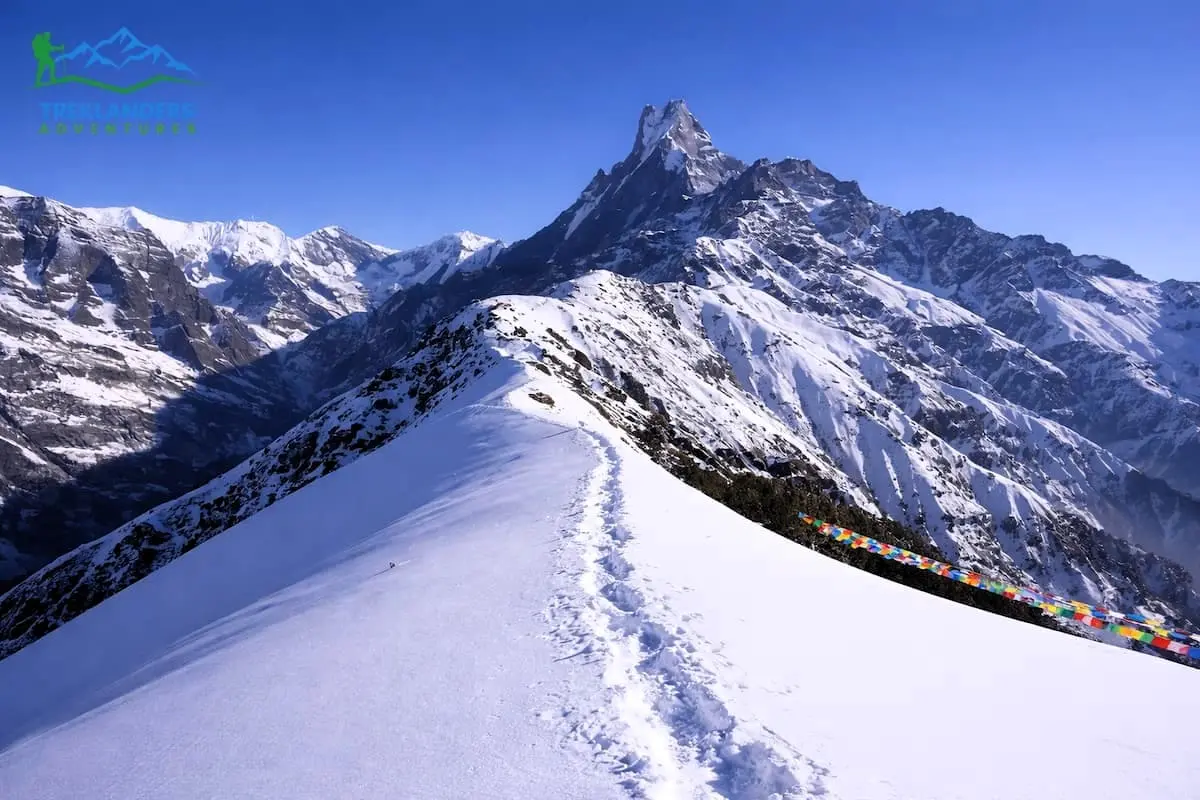
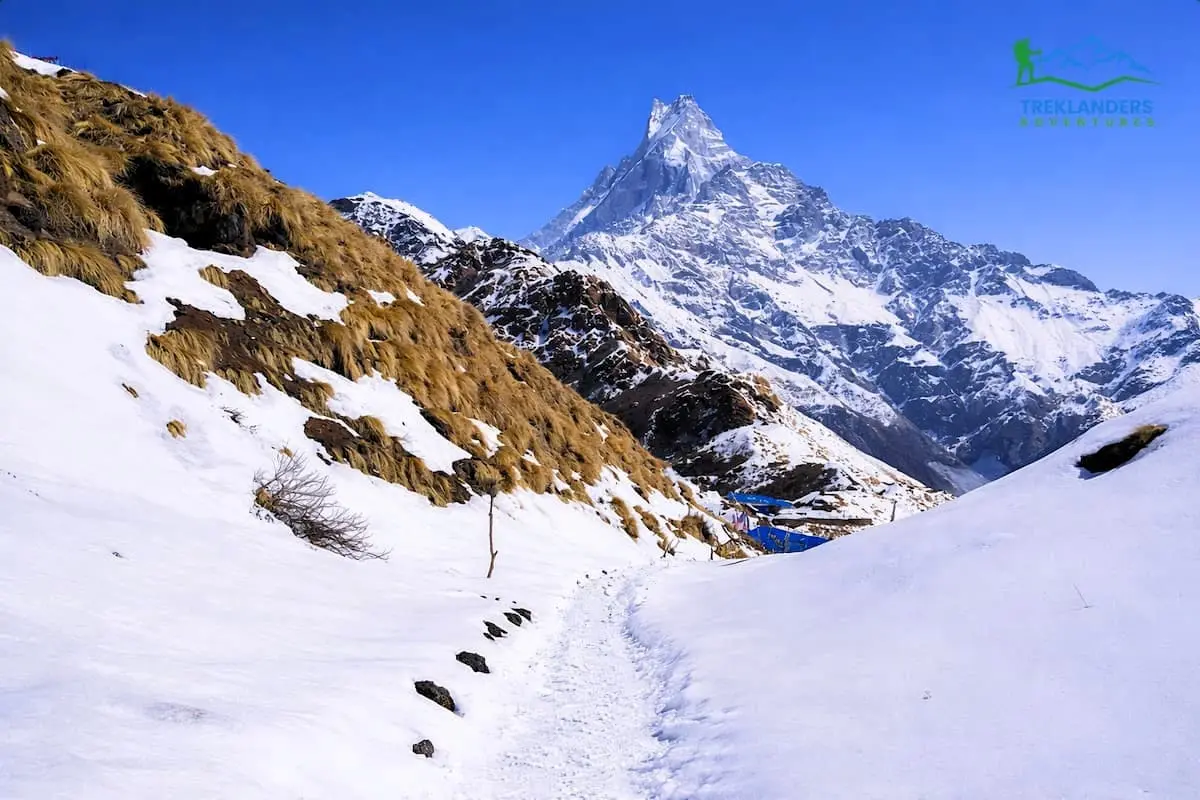
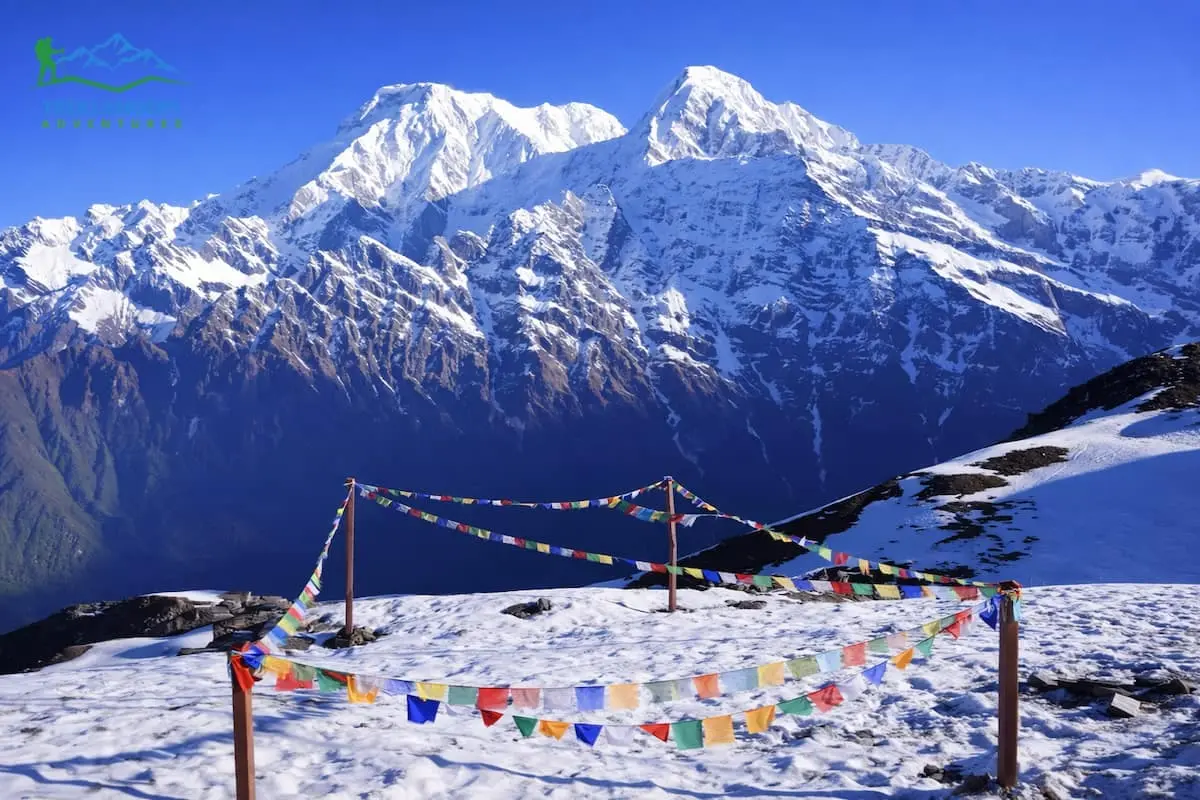
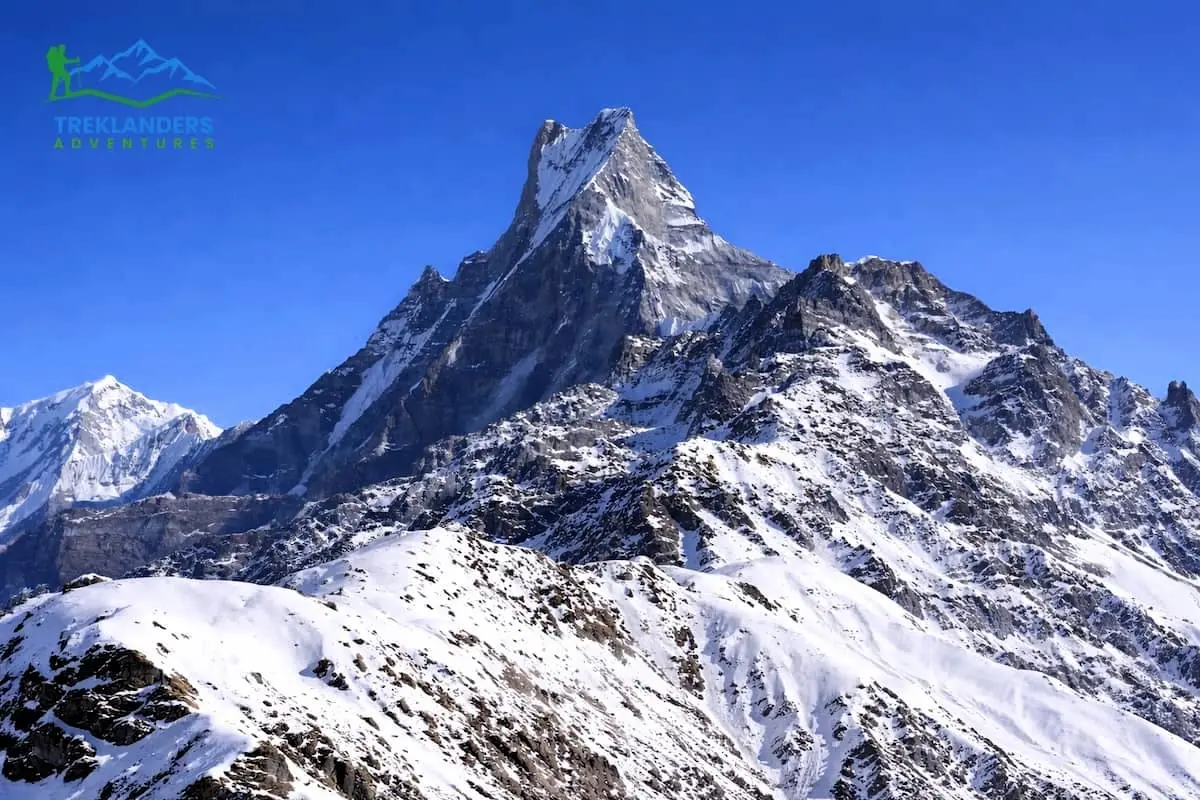
The trek follows gradually changing terrain from dense forest to open alpine terrain. Overnight stops at Forest Camp, Low Camp, and High Camp allow steady altitude gain and excellent acclimatization. With each day passing, the views get increasingly dramatic, showing close-up panoramas of Machhapuchhre (Fishtail), Annapurna South, and Hiunchuli.
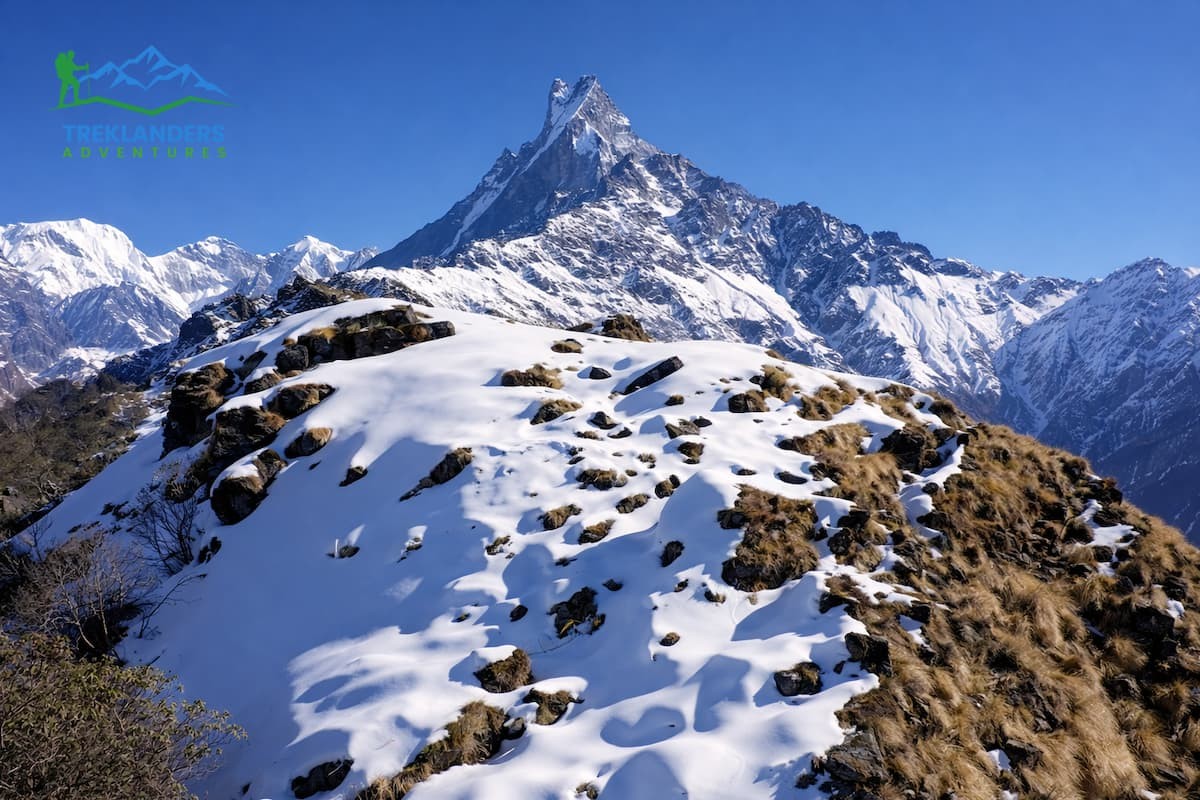
A major highlight of the trek is the early-morning hike to Mardi Himal Viewpoint (4,200 meters), where trekkers are rewarded with breathtaking sunrise views and a rare frontal perspective of the sacred Fishtail Mountain.
The descent through Badal Danda, mostly above a sea of clouds, gives a magical touch to the journey. The trek ends at Siding Village, a traditional settlement that offers insight into local Gurung culture and rural mountain life. After returning to Pokhara, trekkers enjoy a relaxed end to the adventure before heading back to Kathmandu for departure. In short, the 9-Day Mardi Himal Trek is a perfect combination of pure nature, manageable trekking distances, cultural encounters, and high Himalayan rewards. It is an ideal itinerary for those who want a scenic, peaceful, and well-paced trekking experience in Nepal.
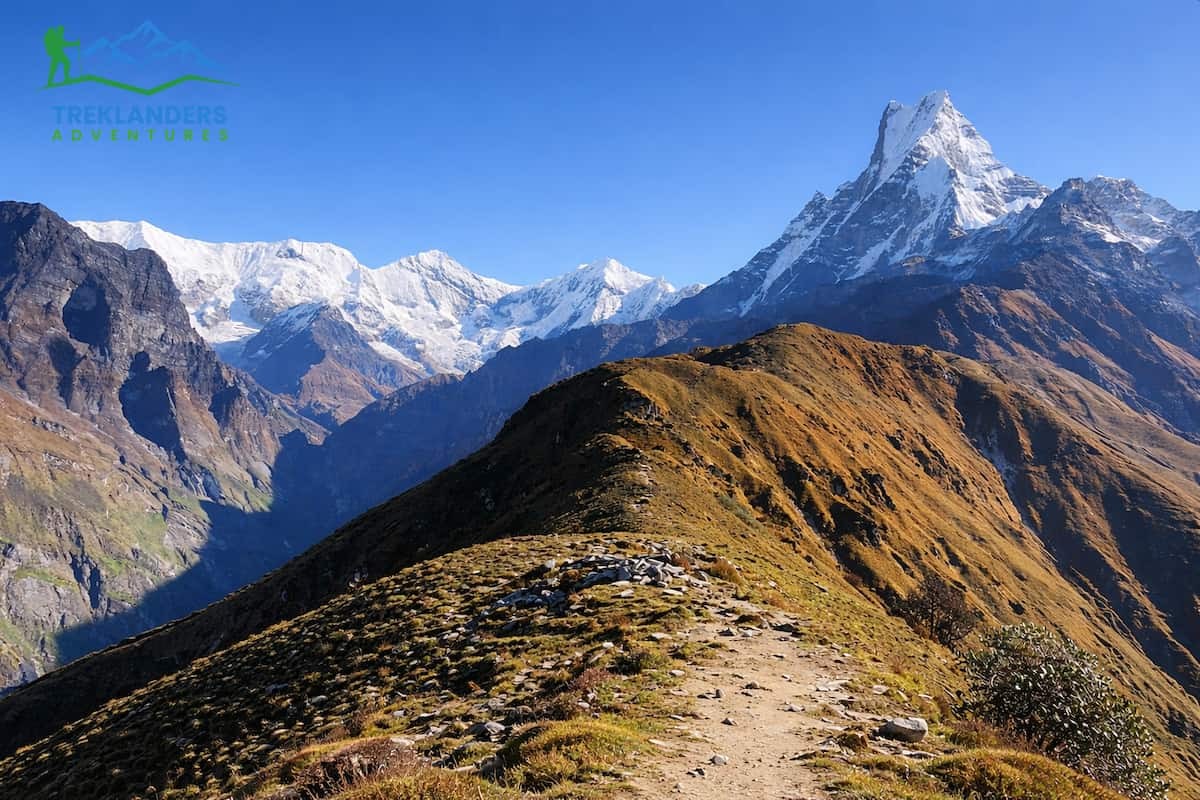
The Mardi Himal Trek is best done in the season of spring (March to May) or autumn (September to November) when the weather is most stable, and the mountains are at their clearest. Both these seasons offer the best of mild temperatures, safe trails, and splendid Himalayan views, thus turning them into the most attractive and advisable times to trek.
Spring (March-May) on the Mardi Himal trail is absolutely breathtaking. With the departure of winter, the forests are literally covered in flowering rhododendrons, magnolias, and wildflowers, and the lower trail becomes a colorful corridor of nature. The daytime temperatures are pleasant enough for walking, while the nights remain cool but still bearable at the higher camps. Mountain visibility is mostly perfect, and a number of the peaks, such as Machhapuchhre (Fishtail), Annapurna South, and Hiunchuli, look very sharp and dramatic, particularly in the early mornings and during sunsets. Furthermore, spring is also a good period for spotting wildlife and birds, which is an added delight to the trekking experience.
Autumn (September-November) is undoubtedly Mardi Himal's peak season. After the monsoon rains, the air becomes very fresh and free of dust, which means that the mountain views are at their clearest, and the sky is a deep blue. The weather is also dry and stable, thus making the walking easier and safer. The temperatures are great during the day, though the nights in High Camp and Badal Danda can be quite chilly. Among others, photographers love this season the most. The long-range visibilities, as well as the consistency of the colors during sunrise and sunset over the Annapurna range, make it an ideal time for photography.
It is a quieter and more challenging time to trek during the winter (December-February). The temperature is very low, especially at night, although the skies are practically always clear and the mountains look very beautiful. It is possible that snow covers some parts of the trail near the High Camp and the viewpoint, so you will have to be very careful. A winter trek is definitely for an experienced trekker who is also properly equipped for cold conditions.
The least advisable period is the monsoon (June-August), when there are heavy rains, slippery trails, and leeches, and no mountain views. But the landscape gets greener, and the route is very quiet if you are looking for solitude.
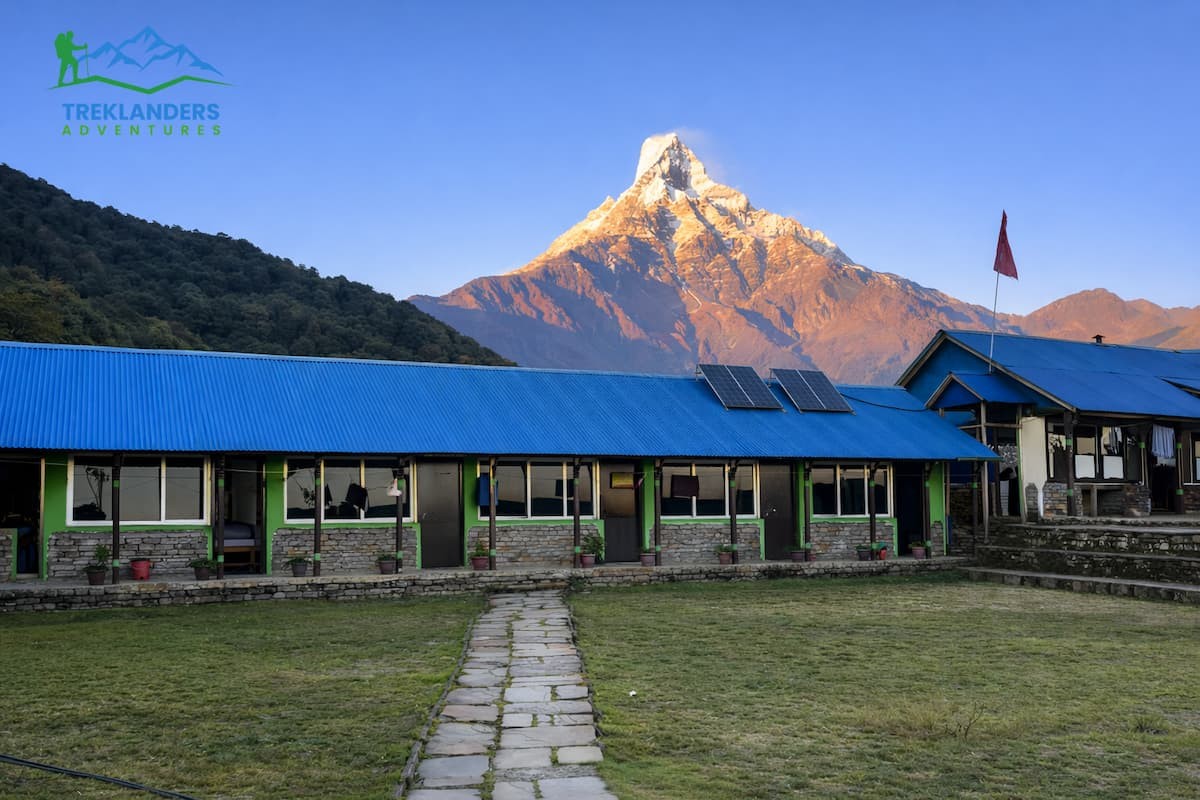
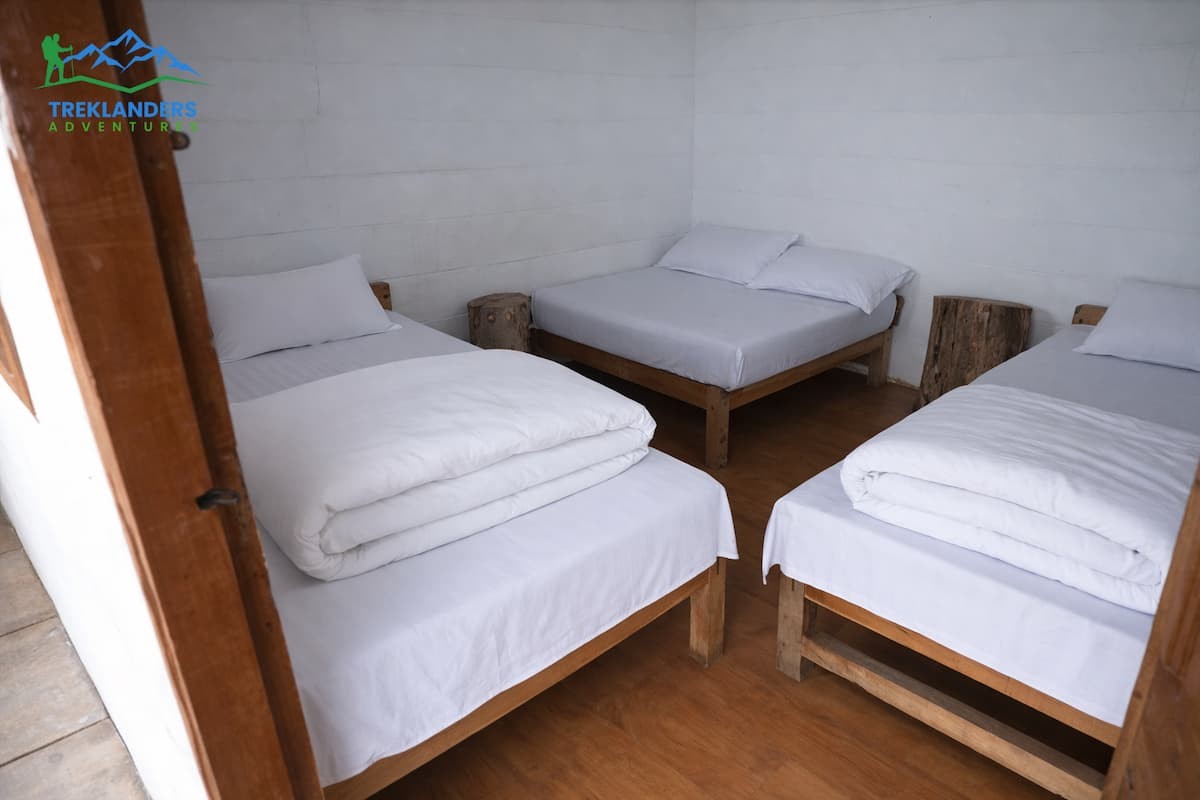
Accommodation along the Mardi Himal Trek follows the traditional teahouse system of trekking, with simple, clean, and comfortable lodges available on the trail. Although the facilities are basic compared to hotels in the city, they are well-equipped for trekkers and offer everything necessary for a warm and restful stay in the mountains. Additionally, the teahouses on the Mardi Himal route are usually quieter and less crowded than those of the standard Annapurna Circuit or Everest Base Camp, which is one of the reasons why the Mardi Himal Trek is so peaceful in general. Most of the teahouses have twin or triple-sharing rooms with basic wooden beds, mattresses, pillows, and warm blankets. The rooms are usually made of wood or stone, and are meant for sleeping only, as trekkers generally spend their evenings in the communal dining areas. Private rooms can be found at a lower altitude, like Dhampus or Forest Camp, while the rooms become progressively more basic as one goes up in the mountain, especially at Low Camp, High Camp, and Badal Danda.
Dining halls are where the spirit of the teahouses lives. These common areas are bright, friendly, and warm places where trekkers come to eat, rest, and exchange their experiences. At night, most lodges fire up a wood-burning stove or heater to ensure warmth during the cold nights. Although almost all teahouses provide electricity, it is still common to be charged for battery charging in addition to the cost of the device; thus, the supply of solar power may limit the time available for charging.
Lower and mid-altitude lodges usually have hot showers powered by solar or gas systems. Hot water becomes less reliable as you go higher, and it may involve an extra charge. Some teahouses have Wi-Fi, but the connection is often slow and weather-dependent, especially at higher camps.
The accommodation highlights are the unique overnight stays at High Camp and Badal Danda, where lodges are located along ridgelines offering direct mountain views and unforgettable sunsets and sunrises. Sleeping above the clouds at Badal Danda is a particularly memorable experience. In general, accommodation on the Mardi Himal Trek is basic but comfortable, offering a warm bed, delicious meals, and a friendly atmosphere.
Although luxury is not to be expected, the hospitality, scenery, and mountain ambiance more than make up for it, so teahouse stays are an indispensable and pleasant part of the trekking journey.
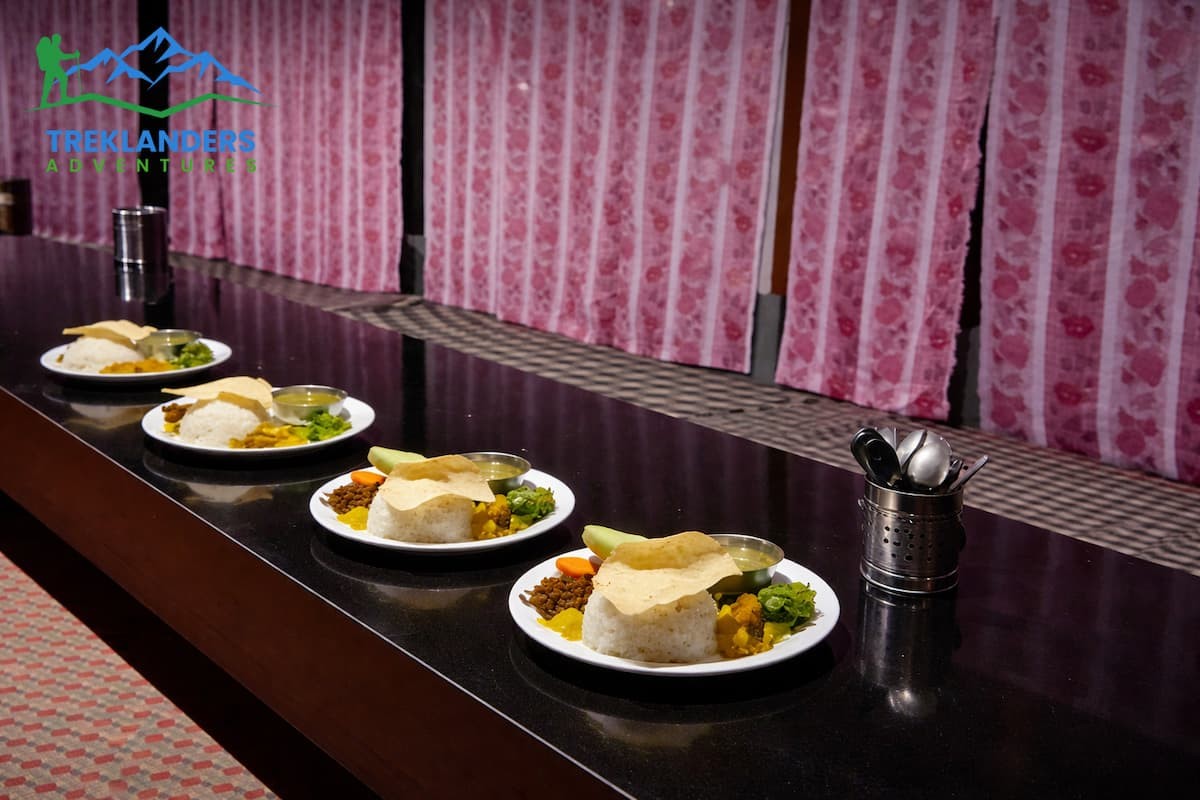
Food on the Mardi Himal Trek is available at local teahouses along the trail and consists of simple, wholesome, and freshly prepared meals that are perfect for trekking at altitude. The food is almost the same throughout the trekking route, with lots of choices to keep you energized for your long walks. Generally, the cooks use ingredients sourced from the local areas, and the portions are large enough to satisfy the calorie requirements of the trekkers' daily intake.
Dal bhat, a traditional Nepali meal made up of rice, lentil soup, vegetables, and sometimes pickle, is the most frequent and recommended dish. Dal bhat is embraced by the trekkers as it is hearty, high in carbohydrates and protein, and usually comes with free refills. In addition to that, there are meal choices such as noodles, pasta, fried rice, potatoes, soups, momos, pancakes, eggs, chapati, and porridge. Breakfast normally has items such as bread, eggs, porridge, Tibetan bread, and tea or coffee. Food choices at higher altitudes are a little bit limited, but the quality and freshness are still good.
Hot drinks are generally served and highly encouraged, particularly at the upper elevations. Some of the popular beverages are black tea, ginger tea, lemon honey tea, hot chocolate, and coffee. Drinking warm liquids helps to keep the body hydrated and to adjust to the cold mountain environment.
Water for drinking is available all along the trek in teahouses or from rivers, streams, and other sources in the natural environment. But tap and stream water should not be drunk without sterilization. Therefore, trekkers should have water purification tablets, drops, or a filtration bottle with them. At lower camps, bottled water can be bought, but it costs more as the altitude increases, and also contributes to plastic waste.
Overall, food and drinking water on the Mardi Himal Trek are sufficient and safe when proper precautions are taken, ensuring trekkers remain well-fueled and hydrated throughout the journey.
To access the Mardi Himal trek, visitors must carry permits specifically issued by the Government of Nepal. Apart from being compulsory, these permits equip the region to maintain the trail and promote sustainable tourism in the Annapurna region. If found without the required permits, trekkers might be turned back at roadblocks or checkpoints along the route.
The principal permit for the Mardi Himal Trek is the Annapurna Conservation Area Permit (ACAP). Since the trek is within the Annapurna Conservation Area, anyone going for the trek - foreign or Nepalese - has to be in possession of the permit. The ACAP is a major source of revenue for environmental protection, conservation of the natural habitat, and community development projects in the region. Permit checks are usually done at the main entrances, such as Pokhara, or near the trailheads. Those trekking should also keep their permits at hand throughout the trek.
Besides the ACAP, those willing to trek have to secure a TIMS (Trekkers Information Management System) card. The TIMS card is a security and safety measure that keeps track of the trekkers in Nepal. It facilitates the work of the authorities in charge of safety, and if any emergency occurs, it shortens the time to locate the missing persons. There are separate TIMS cards: one for individual trekkers (FIT) and the other for trekkers who travel in an organized group with a registered trekking agency and guide.
Permits for the Mardi Himal Trek are available in Kathmandu or Pokhara at the Nepal Tourism Board offices or can be procured through a licensed trekking agency. In the case of a group trek, your agency will generally take care of all the permit arrangements for you, thereby eliminating any inconvenience. The usual documents required are a copy of your passport, two passport-sized photographs, and the money for the permits.
Permit rules and changes in requirements are always possible, so those planning to trek should familiarize themselves with the most up-to-date regulations before setting off. Holding permits that are valid is a must, as going without them may lead to the imposition of fines or being stopped and sent back at checkpoints.
In brief, getting the necessary permits is a simple but very important moment of Mardi Himal Trek preparation that guarantees legal access, safety, and the help of the local people through your contribution to their conservation efforts in the Annapurna region.
Health and safety measures are paramount to the Mardi Himal Trek. The area is moderately to highly mountainous, and the weather may change quickly; hence, these concerns are very valid. The trek can be safely undertaken by most trekkers, even those who are not experienced, provided they are properly prepared and vigilant.
The biggest health risk with the Mardi Himal Trek is the risk of altitude sickness, as the path leads to Mardi Himal Viewpoint at 4,200 meters. Despite the fact that the program permits a gradual ascent, hikers should always be on the lookout for symptoms of acute mountain sickness (AMS) such as headache, dizziness, nausea, loss of appetite, and insomnia. The most effective protection is to take care of oneself, drink plenty of water, avoid alcohol consumption, and allow enough rest. Going down to a lower level is, of course, the surest remedy if the signs intensify.
Good physical fitness will go a long way in preventing you from injuring or tiring yourself during the trek. There is no difficult climbing involved, but one must be physically fit to be able to walk for 4 to 5 hours on a steep path. The use of proper trekking shoes, implementation of trekking poles, and carrying the right-sized backpack will assist you in lessening the pressure on your joints and muscles.
The weather in the mountains can turn for the worse rather quickly, even during the best seasons. Those on the hike should be equipped to handle the cold, strong wind, and sudden covering of clouds, especially at High Camp and Badal Danda. It is vitally important to have layered clothes, a warm jacket, gloves, and a hat. Snow and ice on the trails during winter will require the use of extra caution, while slippery trails will be a problem during the rainy season.
Medical facilities are very basic along the Mardi Himal trail. First aid may be available at some teahouses, but each trekker should have a personal medical kit with common medicines, blister treatment, and any necessary prescription medicine. Insurance that covers high altitude trekking and evacuation in case of emergency is advisable.
While not mandatory, safety is greatly improved through the use of a guide, who can help assess health conditions, take care of logistics, and provide a quick response in case of an emergency. In general, the Mardi Himal Trek, if done safely by adhering to safety measures, listening to your body, and trekking responsibly, can be a safe and fulfilling Himalayan adventure.
Proper travel insurance is a must for anyone planning to do the Mardi Himal Trek. It is a source of financial backup and peace of mind in case of any unforeseen events. Mardi Himal may be a moderate trek, but it goes above 4,000 meters, which is where medical risks and complications increase.
Your travel insurance should cover you for trekking at high altitudes and preferably be valid for at least 4,500 meters, as the highest point of the trek is Mardi Himal Viewpoint (4,200 m) with the extension to Mardi Himal Base Camp. Most of the time, standard travel insurance plans do not include high-altitude trekking by default, so make sure you check the details of the policy carefully before buying.
The most important part of insurance coverage is that it should cover the cost of emergency medical evacuation, including helicopter rescue, without which the life-saving operation can be very expensive. If altitude sickness becomes severe, the injured get hurt, or the sick become ill suddenly, it is most likely that the evacuation by helicopter will be the only option, and it will cost a lot if you are not insured. Your insurance plan should explicitly mention that it covers helicopter evacuation in the mountains of Nepal.
Insurance should also be extended to include medical expenses such as hospital stays, doctor visits, and medicines. Since the trekking route's medical facilities are barely there, serious cases will have to be taken to Pokhara or Kathmandu. Besides that, trip cancellation or interruption coverage may come in handy if your flights get delayed, the weather takes a turn for the worse, or you get into a personal emergency that makes it impossible for you to follow your itinerary.
Additional areas of coverage suggested are the loss or theft of luggage, damage to trekking equipment, and travel delays. In case you are going to trek on your own, make sure that your insurance policy does not prohibit the validity of your insurance in case you are on a mandatory guided trek.
Before setting out on the trek, trekkers must have a printed copy of their insurance policy and emergency contact numbers with them. It is possible that guides and trekking agencies will ask for this information before the time of departure for security reasons.
To sum up, complete travel insurance is not an option but a necessary element of the Mardi Himal Trek plan. It provides safety, financial protection, and the required assistance on time, thus giving you the opportunity to enjoy the Himalayan journey without worries.
Transportation for the Mardi Himal Trek is straightforward and well-organized, as the route begins and ends near Pokhara, one of Nepal’s major tourist hubs. The journey typically involves a combination of road travel and trekking, with optional domestic flights depending on time and preference.
The trip usually starts in Kathmandu, Nepal’s capital. From Kathmandu to Pokhara, trekkers can choose between a scenic overland drive or a short domestic flight. The drive takes approximately 6–7 hours, passing through rivers, hills, terraced farmlands, and rural towns. This option is budget-friendly and offers a glimpse of Nepal’s countryside. Alternatively, a 25–30 minute flight provides spectacular aerial views of the Himalayas and is ideal for travelers with limited time or those seeking comfort.
Once in Pokhara, local transportation is used to reach the trek’s starting point. On the first trekking day, a private vehicle or local jeep is arranged to drive from Pokhara to Dhampus or Kande, depending on the chosen trail variation. This drive usually takes 45 minutes to 1 hour. Roads are paved up to Dhampus/Kande, making access relatively easy compared to more remote trekking regions.
At the end of the trek, transportation is arranged from Siding Village back to Pokhara. This involves a jeep or private vehicle drive of around 2 hours, following a rough but scenic mountain road. From Pokhara, trekkers return to Kathmandu by road or flight, similar to the inbound journey.
All transportation can be arranged by trekking agencies, ensuring smooth transfers and reducing logistical stress. For independent trekkers, local buses, taxis, and jeeps are available, though private transport is more convenient and time-efficient.
Overall, transportation for the Mardi Himal Trek is flexible, accessible, and reliable, making it one of the easiest Himalayan treks to reach while still offering an authentic mountain experience.
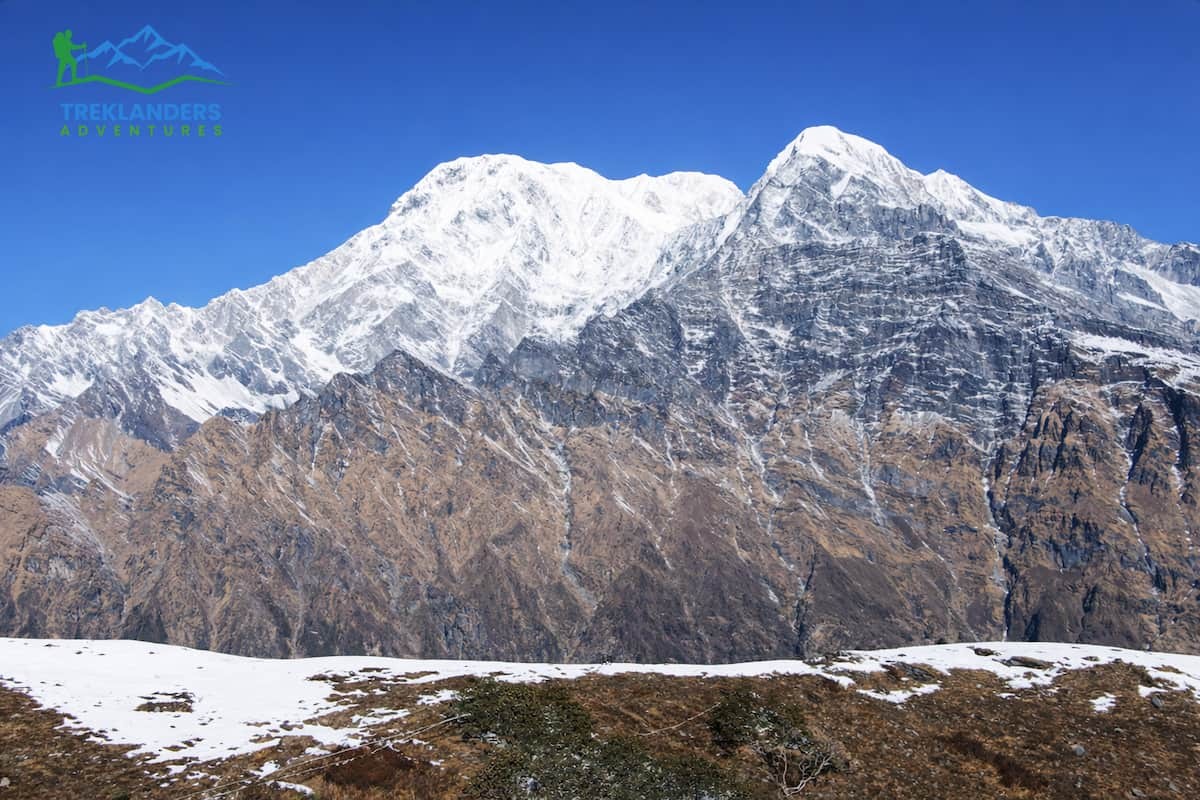
The Mardi Himal Trek is a wonderful Himalayan adventure for travelers seeking spectacular mountain scenery, tranquil trails, and a well-paced trekking experience within a short timeframe. Rich in fragrant rhododendron forests, alpine ridges, and close-up views of the spectacular peaks such as Machhapuchhre (Fishtail), Annapurna South, and Hiunchuli, this trek gives you incredible results without the crowd of a popular route.
Through a well-planned itinerary, comfortable teahouse accommodation, and gradual altitude gain, the trek is suitable for beginners while still offering enough challenge to satisfy experienced hikers. The sunrise hike to Mardi Himal Viewpoint, overnight stays at High Camp and Badal Danda, and the cultural experience in Siding Village are some of the highlights that add depth and variety to the journey. Easy access from Pokhara, convenient transportation options, and good facilities are some of the other reasons why the trek is so popular.
Indeed, the Mardi Himal Trek is a beautiful, safe, and unforgettable trek in the Annapurna region. It is an ideal place for people who want to see the beautiful Himalayas in a peaceful and rewarding way, and hence this trek becomes one of the unforgettable journeys that stay with you long after you have finished your trek.
Trip Summary
Mode of Trekking: Teahouse trekking with the best available lodges and guesthouses.
Trek Grade: Moderate to adventurous; suitable for fit beginners with good stamina.
Trekking Region: Annapurna region, Kaski District, Nepal.
Highest Point: Mardi Himal Viewpoint – 4,200 m / 13,780 ft.
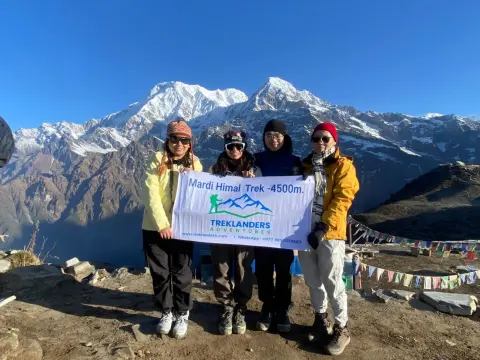
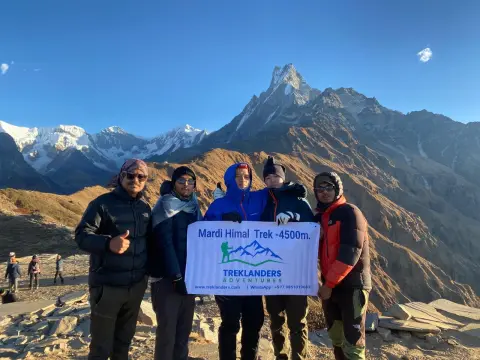
Optional Extension: Optional hike to Mardi Himal Base Camp (4,500 m / 14,764 ft)
Trekking Duration: 04 nights / 05 days, Pokhara to Pokhara.
Total Duration: 08 Nights / 09 days


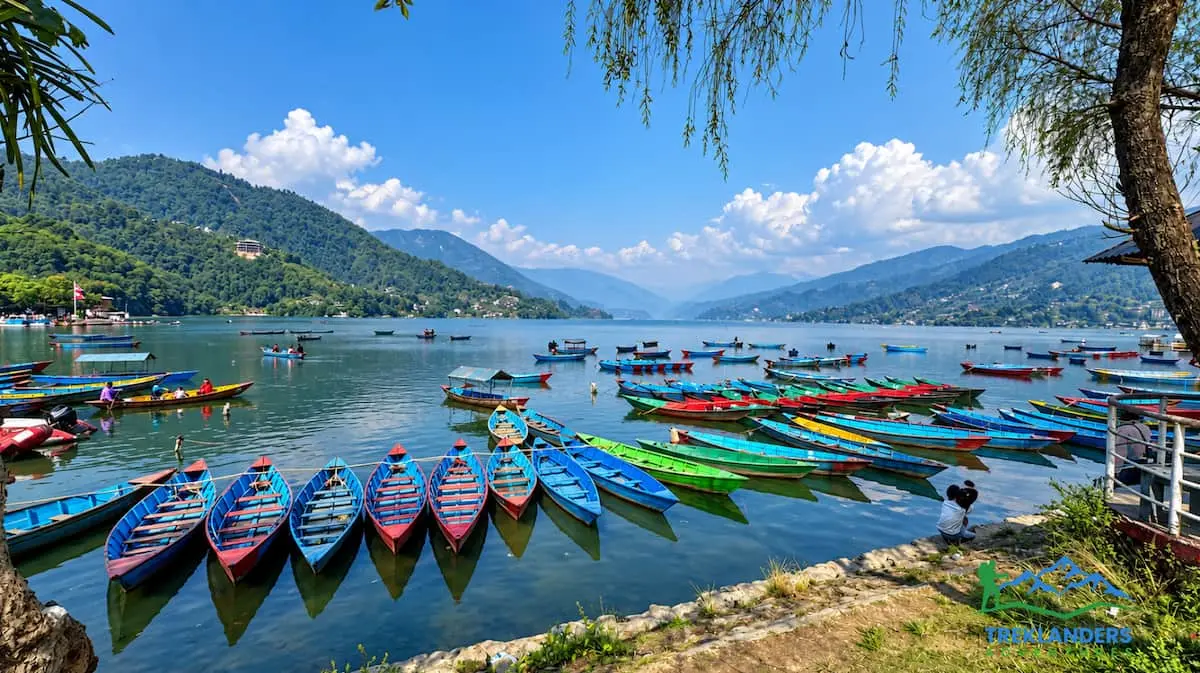
After breakfast, you travel to Pokhara on a scenic drive lasting approximately 6–7 hours. The route follows rivers, terraced farmlands, and rolling hills, offering a glimpse of Nepal’s countryside. Pokhara is a beautiful lakeside city known for its relaxed atmosphere and stunning mountain views. Upon arrival, you check into your hotel and have time to explore Lakeside or relax by Phewa Lake.

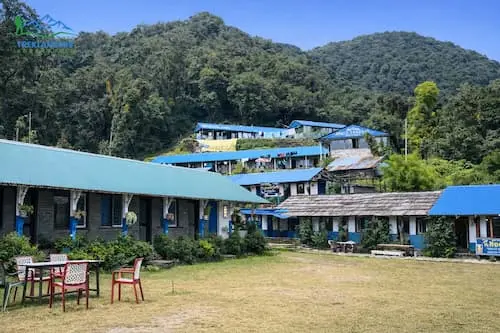
The day starts with a short drive from Pokhara to Dhampus. From here, the trek begins through traditional Gurung villages such as Dhampus and Potana, passing through stone staircases, rhododendron forests, and scenic ridges. After crossing Pritam Deurali, the trail enters quieter forest paths leading to Forest Camp. This day combines cultural encounters with natural beauty and gradually introduces altitude.
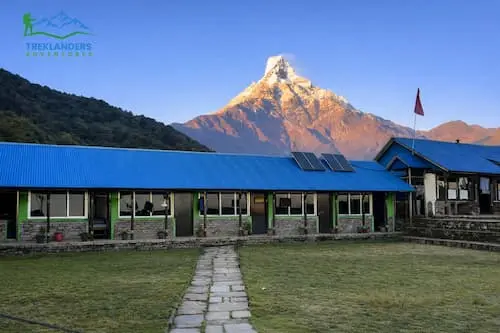
Today’s trek continues through dense forests of oak, pine, and rhododendron as you climb steadily toward Low Camp. The trail is peaceful, with fewer settlements and increasing mountain views as the tree line begins to thin. The walking duration is moderate, allowing time for rest and acclimatization. Upon reaching Low Camp, you can enjoy clear views of Machhapuchhre (Fishtail) and surrounding peaks if the weather is clear.
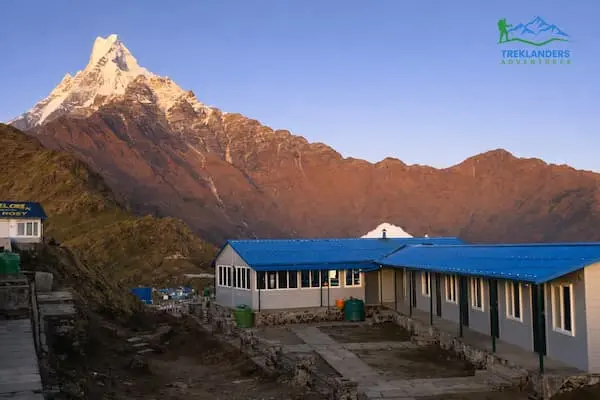
Leaving Low Camp, the trail becomes more open and alpine in character. You trek above the tree line, with dramatic views of Mardi Himal, Machhapuchhre, and Annapurna South unfolding along the way. As you gain altitude, the air becomes cooler and thinner, so the pace remains slow and steady. Reaching High Camp feels rewarding, as the landscape opens into wide ridges and high Himalayan scenery.
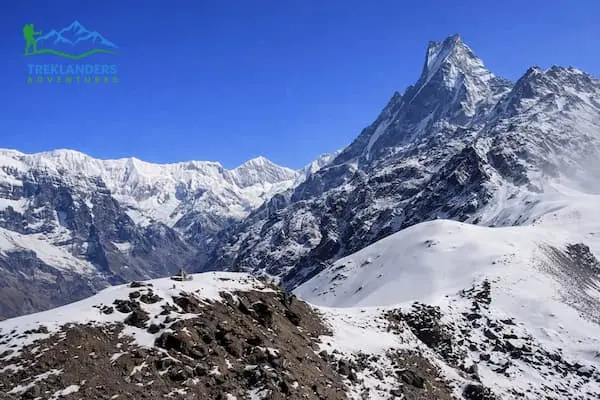
An early morning start takes you on a breathtaking hike to the Mardi Himal Viewpoint, the highest point of the trek. From here, you are rewarded with close-up panoramic views of Machhapuchhre, Annapurna South, Hiunchuli, and Mardi Himal itself. After spending time at the viewpoint, you return to High Camp for breakfast before descending carefully to Badal Danda, a scenic ridge that offers dramatic sunset and sunrise views over the Annapurna range.
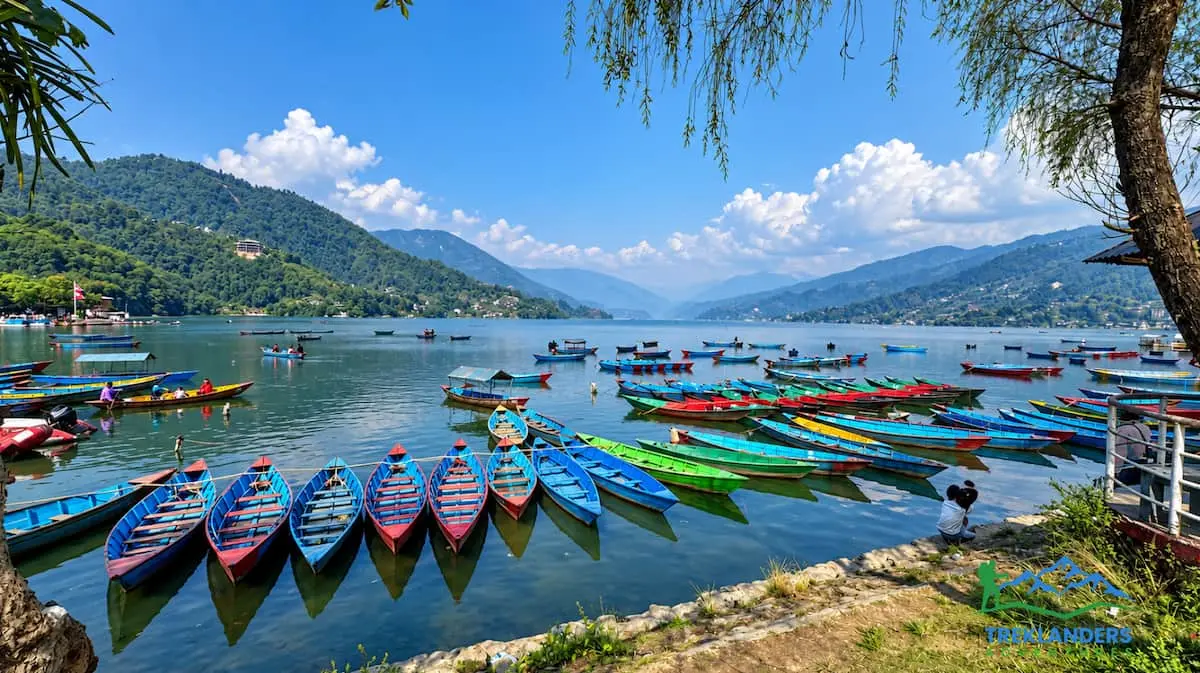
The trail descends steeply from Badal Danda through forests and terraced farmland toward Siding Village, a traditional and less-visited settlement. This section offers insight into rural mountain life and local culture. After reaching Siding, you take a short drive back to Pokhara, where you can enjoy a hot shower, comfortable accommodation, and a relaxed evening by the lake.
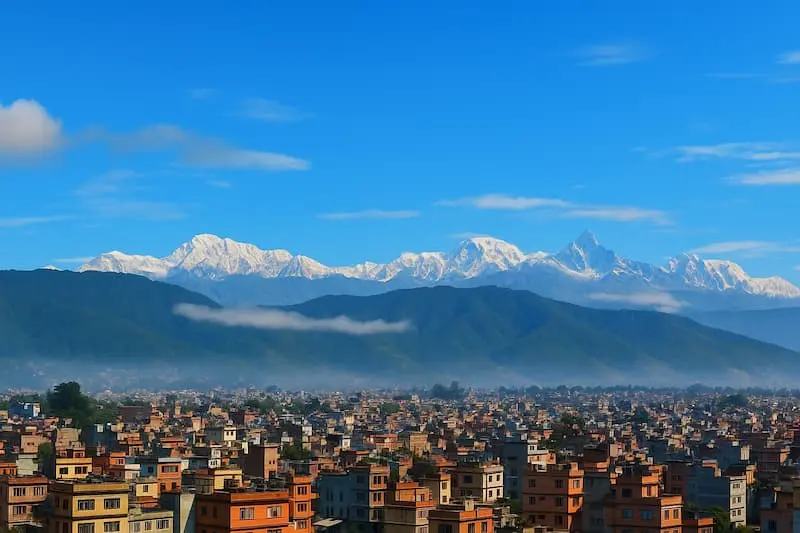
After breakfast, you begin the return journey to Kathmandu, driving through scenic river valleys and hilly landscapes. The drive takes around 6–7 hours, depending on traffic and road conditions. Upon arrival in Kathmandu, you check into your hotel and have free time for last-minute shopping, sightseeing, or a farewell dinner.
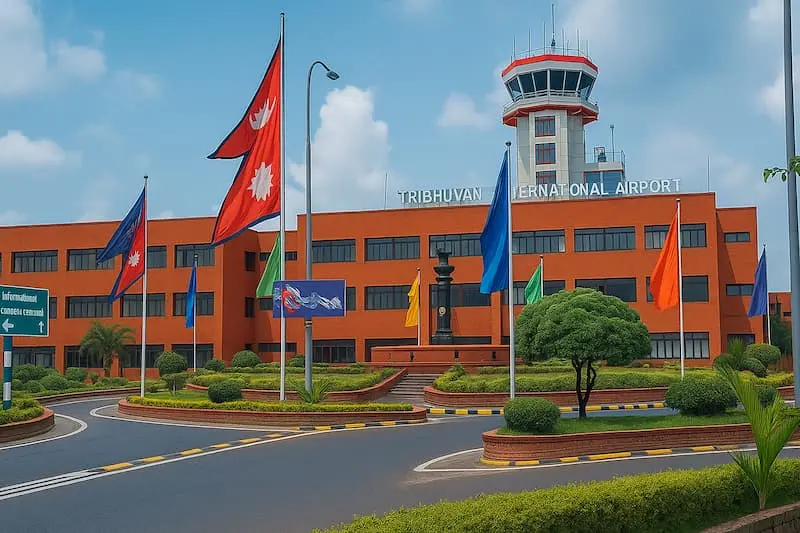
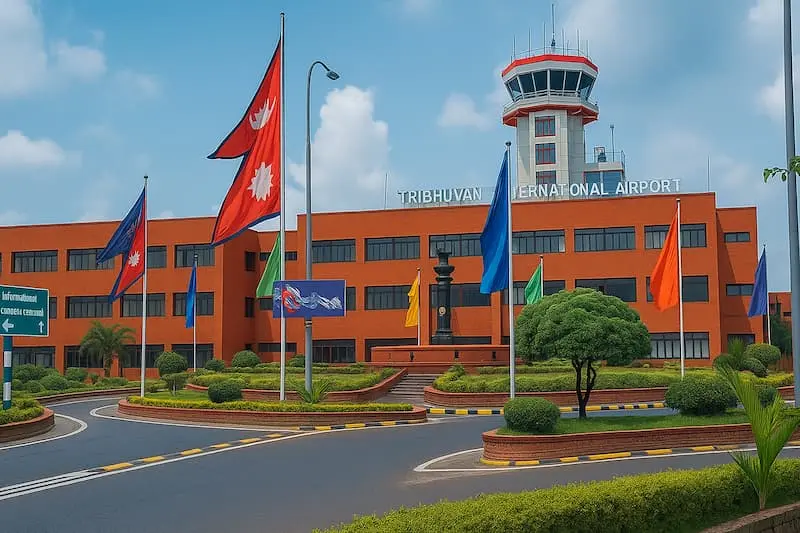
Your trek concludes today as you are transferred to Tribhuvan International Airport for your onward journey. Depending on your flight schedule, you may have some free time in the morning. You depart Nepal with lasting memories of the Mardi Himal Trek, breathtaking mountain views, and warm cultural experiences.
The 9-day Mardi Himal Trek with Treklanders Adventures was an unforgettable experience and one of the best decisions I made while traveling in Nepal. From the very beginning, everything was well organized, clear, and handled with genuine care. As someone who enjoys nature and mountain views but prefers a quieter trail, Mardi Himal was perfect. The trek offered stunning scenery every single day—lush forests, peaceful ridges, and incredible close-up views of Machhapuchhre, Annapurna South, and Hiunchuli. Reaching Mardi Viewpoint was a highlight I will never forget; the mountains felt so close and powerful. What truly made the experience special was the Treklanders Adventures team. Our guide was professional, patient, and very knowledgeable about the route, local culture, and mountains. The pace was comfortable, altitude was managed properly, and I always felt safe and supported. Treklanders paid close attention to details, from accommodation and meals to daily briefings and health checks. The guesthouses along the way were simple but warm and welcoming, especially at Low Camp and High Camp. After long trekking days, having clean rooms, hot meals, and friendly service made a big difference. This trek was not just about walking—it was about enjoying the journey without stress. Treklanders Adventures handled all logistics smoothly, allowing me to focus fully on the mountains and the experience itself. I highly recommend Treklanders Adventures to anyone planning the Mardi Himal Trek or any trek in Nepal. Their professionalism, care for clients, and love for the mountains truly show in the way they operate. I would gladly trek with them again.
As a first-time trekker, the 9-Day Mardi Himal Trek felt perfectly paced and stress-free. Treklanders Adventures took great care of everything, and our guide Raj was patient, supportive, and always encouraging. The mountain views were unforgettable and gave me confidence to trek again.
I chose the Mardi Himal Trek because I wanted a quiet trail and time to truly connect with the mountains, and Treklanders Adventures delivered exactly that. Walking through silent forests, along open ridges, and waking up to clouds below Badal Danda was deeply peaceful. Our guide Thapa was calm, knowledgeable, and always aware of everyone’s comfort, which made the journey feel safe and personal. The sunrise from Mardi Himal Viewpoint was one of the most powerful moments I’ve ever experienced in the Himalayas. This trek gave me not just views, but clarity and unforgettable memories.
Having completed several treks in Nepal, including busier routes in the Annapurna region, I found the 9-Day Mardi Himal Trek with Treklanders Adventures to be a refreshing and well-designed experience. The itinerary is intelligently planned, with gradual altitude gain and excellent acclimatization at Forest Camp, Low Camp, and High Camp. The trail itself is quieter than the main routes, yet the mountain views are incredibly close and dramatic, especially of Machhapuchhre and Annapurna South. Our guide Ram was highly professional and experienced, providing clear explanations about the terrain, weather, and surrounding peaks. His pacing was spot on, making the trek comfortable without feeling slow. Logistics, accommodation, and meals were handled smoothly throughout the journey. Compared to other short Himalayan treks, Mardi Himal offers outstanding value and scenery, and Treklanders Adventures executes it with impressive attention to detail.
As a female traveler, feeling safe and supported on a trek is very important to me, and Treklanders Adventures exceeded my expectations on the Mardi Himal Trek. From the start, everything was well organized and professionally handled. Our guide Raj was kind, respectful, and always attentive to everyone’s health and comfort. He regularly checked our pace and made sure we were adjusting well to the altitude. The teahouses were clean and welcoming, and the overall atmosphere was relaxed and friendly. I felt confident and secure throughout the journey and truly enjoyed every moment of this beautiful trek.
The Mardi Himal Trek with Treklanders Adventures was an incredible journey through some of the most beautiful landscapes I have ever seen. Every day offered stunning views of Machhapuchhre and the Annapurna range. Our guide Ram was knowledgeable and always made sure we were comfortable and informed. The porter was truly brave and hardworking, carrying loads with a smile and helping whenever needed on the trail. Their teamwork made the trek smooth and enjoyable. The care, effort, and dedication from the entire team made this experience unforgettable.
We completed the 9-Day Mardi Himal Trek with Treklanders Adventures as a couple, and it was one of the most rewarding adventures we have shared together. The trail was peaceful, scenic, and perfectly paced, allowing us to enjoy each day without feeling rushed. From walking through rhododendron forests to standing at Mardi Himal Viewpoint with the mountains glowing at sunrise, every moment felt special. The organization of the trek was excellent, from transportation to accommodation and meals. What truly stood out was the support from the team—the guide and porter were amazing, always attentive, positive, and ready to help. Their professionalism allowed us to relax and focus on enjoying the journey. This trek created memories we will cherish for a lifetime, and we highly recommend Treklanders Adventures for couples seeking a meaningful Himalayan experience.
The 9-Day Mardi Himal Trek with Treklanders Adventures was extremely well organized and offered great value for money. From airport transfers to accommodation, meals, and transportation, everything ran smoothly and exactly as promised. The itinerary was well balanced, allowing enough time to enjoy the scenery and adjust to the altitude comfortably. Our guide Raj was professional, punctual, and always ready to assist with any needs on the trail. The teahouses were better than expected, and the overall service quality was excellent. I would confidently recommend Treklanders Adventures to anyone looking for a reliable and well-managed trekking experience in Nepal.
The Mardi Himal Trek with Treklanders Adventures was calm, scenic, and very comfortable. The pace was relaxed, which allowed me to enjoy the forests, mountain views, and peaceful lodges along the way. Our guide Anurag was friendly, patient, and always made sure everyone was comfortable. The food, accommodation, and overall management were better than expected. It was a perfect trek for anyone who prefers a smooth and enjoyable Himalayan experience without pressure.
The Mardi Himal Trek with Treklanders Adventures offered more than just mountain views—it provided a meaningful cultural experience as well. Walking through traditional villages and ending the trek at Siding Village gave real insight into local mountain life. Our guide Raj shared interesting stories about the Gurung culture, daily life, and traditions, which added depth to the journey. The interactions with local people, combined with the peaceful trail and stunning scenery, made this trek truly special. Everything was well organized, and the balance between nature and culture made the experience both enriching and memorable.
The 9-Day Mardi Himal Trek with Treklanders Adventures is an outstanding choice for anyone looking to experience the Himalayas in a peaceful yet rewarding way. The itinerary is perfectly designed, offering gradual altitude gain, comfortable walking days, and spectacular mountain scenery throughout the trek. From lush forests to high alpine ridges, every day brings something new and unforgettable. The sunrise from Mardi Himal Viewpoint was breathtaking, with close-up views of Machhapuchhre, Annapurna South, and Hiunchuli. Our guide Ram was highly professional, knowledgeable, and attentive, ensuring the trek ran smoothly and safely from start to finish. Accommodation, meals, and transportation were well managed, making the entire experience stress-free. Treklanders Adventures truly delivers quality service, strong local expertise, and memorable adventures. I highly recommend them to anyone planning the Mardi Himal Trek or trekking in Nepal.
Purpose: Keep sweat off the skin and maintain warmth.
Purpose: Trap body heat in cold air at altitude.
Tip: Keep electronics in inner pockets at night to prevent freezing.
The Mardi Himal Trek is a beautiful and peaceful route in the Annapurna region of Nepal. It offers quiet trails with forest walks and incredible mountain views up close. The trek is perfect for beginners who have a good level of fitness, moderate trekkers, and travelers seeking a less crowded Himalayan experience while still having access to stunning nature.
This trek is classified as a moderate one. The hikers will not face any technical climbing, but it is suggested that they be physically prepared for uphill walking on narrow ridges and long trekking days. The acclimatization is taken care of in the gradual itinerary, hence the trek would be doable by fit beginners if they take it at a comfortable pace.
One can undertake the trek in either spring (March-May) or autumn (September-November). Spring is characterized by rhododendron forests in full bloom and good temperatures, whereas autumn gives clear skies and crisp mountain views. Trekking in winter is allowable, but the temperature is lower, and generally, the monsoon season is avoided because of the rain and clouds.
The accommodation is offered in teahouses that are basic but adequate mountain lodges. Most of the time, a room will have two beds, blankets, and a bathroom that is shared, while dining halls are warm and social. As one goes higher up the camps, the facilities will be more basic, but meals and shelter will be available without any problems throughout the route.
Teahouses offer delicious food made fresh, such as dal bhat (rice, lentils, and vegetables), noodles, soups, rice dishes, eggs, potatoes, and breakfast items like porridge and pancakes. Dal bhat is very good, and therefore it's highly recommended for the trekker to take it. Warm drinks are available throughout the day and encouraged.
Yes, a permit for Annapurna Conservation Area (ACAP) and a TIMS card are required for trekkers; both can be organized by a trekking agency. Insurance that covers high-altitude trekking and emergency evacuation is highly recommended for safety and a relaxed state of mind.
The best overall time to visit the Mardi Himal Trek is in the spring (March to May) and autumn (September to November) seasons. These seasons have stable weather, comfortable trekking conditions, and good visibility of the mountains. The trails are dry, teahouses are open fully, and the views of Machhapuchhre (Fishtail) and the Annapurna range are at their best.
Spring is one of the most visually appealing seasons on the Mardi Himal trail as the rhododendron forests, magnolias, and other wildflowers are in bloom. Temperatures are moderate during the day, so walking is comfortable, while the nights are still cool. The landscape is colorful, and in fact, the mountain views are spectacular in the early mornings, so spring is chosen by nature lovers and photographers.
Autumn is the peak trekking season mainly because the weather is dry and stable after the monsoon rains. The air is fresh, the skies are clear with a deep blue color, and therefore, distant mountain views are very clear. Additionally, trail conditions are perfect, and the season also happens to be the time of major Nepali festivals, thus giving an extra cultural dimension to the trekking experience.
Yes, winter (December to February) trekking is possible and offers very clear mountain views and quieter trails. However, temperatures can be cold, especially at High Camp and Badal Danda, and snowfall may occasionally affect the trail. Winter trekking is best suited for well-prepared trekkers with proper cold-weather gear and flexible schedules.
The monsoon season (June to August) brings heavy rainfall, slippery trails, leeches, and limited mountain visibility due to clouds. While the landscape becomes lush and green, trekking conditions are challenging, and views are often obstructed. This season is generally avoided unless travelers are seeking solitude and greenery rather than scenery.
For first-time trekkers, spring and autumn are strongly recommended. These seasons provide predictable weather, safer trail conditions, reliable teahouse services, and better acclimatization opportunities, making the overall trekking experience more enjoyable and stress-free.
The Mardi Himal Trek is usually considered a moderate-level trek. It doesn't require any technical climbing or mountaineering skills. However, it involves walking on mountain trails, ridges, and forest paths for consecutive days. Most people with average fitness can complete the trek if they take proper precautions and don't rush.
Indeed, the Mardi Himal Trek can be attempted by beginners who are in good physical shape and have a positive mindset, as well as basic trekking preparation. The itinerary is designed to provide a gradual ascent with proper rest. First-time trekkers who are capable of walking for several hours and can easily follow the guide's instructions should have no problem completing the trek.
The steep uphill stretches, mainly narrow ridge trails near the High Camp, and long walking days on rough ground are the main challenges. Changes in weather, cold at the higher camps, and physical tiredness can also make the trek difficult. Nevertheless, with good preparation and the right gear, these challenges can be overcome.
Altitude is one of the factors, as the trail ascends to a viewpoint that is higher than 4,000 meters. Although the climb is gradual, some trekkers may feel mild symptoms related to altitude, such as shortness of breath or fatigue. Drinking plenty of water, walking at a slow pace, and following the acclimatization protocol will greatly lower the risks.
A moderate fitness level is recommended. Trekking parties should be able to handle walking 57 hours per day on trails that go both uphill and downhill. Pre-trek activities like hiking, stair climbing, cycling, or doing cardio workouts help to build the necessary endurance and also to instill confidence on the trail.
By employing a licensed guide, using a porter, maintaining a steady pace while trekking, and selecting the right season, one can significantly reduce the difficulty of the trek. In addition, correct trekking boots, wearing clothes in layers, using trekking poles, and being mentally prepared make the trek pleasurable and less taxing physically.
Good quality trekking boots, warm layered clothing, a waterproof jacket, trekking pants, thermal wear, gloves, a woolen cap, and a comfortable backpack are essentials for the Mardi Himal trek. A cold-rated sleeping bag, trekking poles, sunglasses, sunscreen, and a refillable water bottle should also be there with you.
Layering is a must because the weather tends to change abruptly. One should wear base layers that are moisture-wicking, mid-layers that are insulating, like fleece or down jackets, and the last layer should be a waterproof and windproof outer shell. This way, one can easily adjust the clothing as the temperature varies from the forest to the ridge to the upper camps.
Personal items are toiletries, wet wipes, quick-dry towels, hand sanitizer, lip balm, headlamp with extra batteries, power bank, and basic toiletries. A personal first-aid kit including blister treatment, pain killers, altitude medicine (if prescribed), and any personal prescriptions is very important.
Physical preparation should start at least a few weeks prior to the trek. Regular walking, hiking, stair climbing, cycling, or cardio workouts help in building stamina and leg strength. Trying out with a backpack and trekking shoes before arrival helps in preventing discomfort and injuries on the trail.
No technical climbing equipment is necessary for the Mardi Himal Trek. However, trekking poles can be very useful for balance and alleviating pressure on the knees. If there is snow near High Camp or the viewpoint in the winter months, you might find microspikes helpful. Most equipment can be rented or bought in Kathmandu or Pokhara.
Make sure permits, insurance, and documents are ready before you start the trek. During the pre-trek briefing, check your equipment, keep yourself hydrated, stay away from alcohol, and get enough sleep. Preparing mentally for simple accommodation and changing weather will make the trek more comfortable and enjoyable.
Accommodation on the Mardi Himal Trek is mostly teahouse-based. Teahouses are small, family-run mountain lodges that provide basic but comfortable lodging for trekkers. They offer a warm place to sleep, freshly cooked meals, and a friendly atmosphere, making them an essential part of the trekking experience.
Most teahouse rooms are simple and functional, usually with twin beds, foam mattresses, pillows, and blankets. Rooms are primarily for sleeping, while trekkers are in the shared dining areas most of the time. At lower elevations, private rooms are sometimes available, but as you ascend, the facilities become more basic.
Bathrooms are usually shared and can be either Western-style or squat toilets, depending on the locality. Hot showers are almost always available at lower and mid-altitude teahouses, usually are gas or solar-powered, and are sometimes charged for the service. At higher camps, hot water may be limited or unavailable due to low temperatures.
With increasing altitude, teahouses become more basic. Generally, only the dining room is heated by a stove or a heater, while bedrooms remain cold. Even though teahouses are simple, they are well-prepared for mountain conditions and provide enough comfort to trekkers, especially when used in conjunction with a proper sleeping bag.
Most teahouses have electricity or solar power, mostly for lighting and charging devices; charging is often done at an extra cost. Wi-Fi can be available at some lodges, mainly at lower altitudes, but connections can be slow and unstable or dependent on weather conditions at campsites located at higher elevations.
Trekkers can expect basic but clean accommodations, warm hospitality, and a communal mountain atmosphere rather than luxury. Being mentally prepared for shared facilities, limited power, and simple comforts will help to elevate the overall trekking experience. The beautiful locations of teahouses, especially at High Camp and Badal Danda, are far better than what you could expect from the lack of modern amenities.
Food during the Mardi Himal Trek is available at local teahouses that are located along the trail. The food served is simple, freshly prepared, and mainly made from seasonal produce to keep trekkers energized. The menu is almost the same throughout the route and comprises Nepali, Tibetan, and basic Western dishes.
Definitely, dal bhat is very much recommended and is the meal that is most commonly chosen by trekkers. It is a complete meal that includes rice, lentil soup, seasonal vegetables, and sometimes pickles. Dal bhat is a balanced meal that provides plenty of carbohydrates and protein, and because it is often served with free refills, it is perfect for long trekking days that are long.
Besides dal bhat, one can choose from noodles, pasta, fried rice, potatoes, soups, momos, chapati, pancakes, porridge, eggs, and toast. Usually, the breakfast menu serves eggs, porridges, Tibetan bread, and hot drinks. Food choices become more and more limited at the higher camps, but the quality is still good.
There is a wide range of hot and cold drinks available in the teahouses, such as black tea, ginger tea, lemon-honey tea, milk tea, coffee, and hot chocolate. Visitors are strongly advised to take hot drinks as they help with hydration and temperature regulation in the cold mountain environment. Alcoholic drinks can be purchased in some places, but are not recommended at a higher altitude.
Although it is possible to get water at teahouses or from local taps, springs, or streams, the water must be treated first. Trekkers can use water purification tablets, drops, or filtration bottles. Water in plastic bottles is available at the lower heights of the mountains, but it gets pricey and polluting at the higher elevations.
Trekkers are advised to drink as much water as possible throughout the day, particularly when they are walking. The most efficient way is to carry a bottle that can be refilled and then fill it with treated water. The intake of warm fluids at regular intervals and non-consumption of alcoholic drinks will not only keep trekkers hydrated but also lessen the chances of getting tired.
To undertake the Mardi Himal Trek, a couple of permits are mandatory. Every trekker must have an Annapurna Conservation Area Permit (ACAP) and a TIMS Card (Trekkers Information Management System). These permits are the main requirements for legal entry into the area and for ensuring safety.
An ACAP is a permit that has to be obtained by anyone who goes trekking in the Annapurna region. The amount paid for the permit is used for forest conservation, trail maintenance, animal protection, and community development in the local area. Patrols are often seen at entry points of the trail and checkpoints along the route where the permit must be presented.
Coordinated under a single registration system, the TIMS Card represents the security facet of the trekking initiative. In this way, if there is an accident, the authorities could seek help based on the information on this card. There are different kinds of TIMS cards; however, the majority of trekkers get one from a registered trekking agency accompanied by a licensed guide.
One can procure these permits from the offices of Nepal Tourism Board in Kathmandu or Pokhara. If you are with a trekking agency, it is their responsibility to secure these permits for you, so you do not need to worry. Those who trek independently can also get their permits at the respective offices by dropping in before hitting the trail.
The standard documents required for permit issuance typically include a photocopy of a valid passport, a few passport-sized photographs, and the remittance of the dues. When one books a trek through an agency, all these details are gathered beforehand to facilitate the permit issuance.
No one can hike without proper permits. In case of an inspection, trekkers may be penalized with monetary fines, held up for some time, or told to return the way they came. Thus, it is advisable to have them available at all times, not only for safety reasons but also as a means of contribution to environmental protection and sustainable tourism in the Annapurna area.
The trail of the Mardi Himal Trek is indeed clear and easy to follow; nevertheless, the use of a guide is highly advised. A guide not only guarantees safety but also takes care of the daily logistics, keeps an eye on the health conditions, and lets you know a lot of things about the local culture, nature, and the mountains. Also, recent trekking regulations in Nepal have introduced a recommendation for trekking with licensed guides in order to ensure safety.
A trekking guide makes the experience much better by taking care of the navigation, the accommodation, and the meal orders at the teahouses. Guides are well-prepared as far as altitude awareness, first aid, and emergency response are concerned, and this is the main reason why they are very helpful at higher elevations. They also help you keep a comfortable trekking pace and, being rich in local knowledge, they can make your trip more interesting.
Basically, a porter is our main luggage carrier, usually up to a fixed weight limit, allowing us to trek with only a light daypack. This not only makes the physical part less hard, but also helps save energy to be saved, and makes the trekking wonderful. At the same time, porters are extremely familiar with the terrain, and they are the ones who make long trekking days doable.
Generally, one porter carries the luggage for two trekkers, with a total weight limit of about 20-25 kg. Trekkers should be very careful while packing and only carry the most necessary things. A small daypack with water, snacks, camera, and personal items should be trekkers own load.
If you organize the trek with a licensed agency, then your guides and porters will be trained, supported, and government-licensed (guides). Their insurance covers medical care and an emergency flight if required. If you hire through a responsible company, it not only guarantees the ethical treatment of trekking staff, but also their good wages and safety.
Certainly, hiring a guide and porter is a must if you want to enhance the safety, comfort, and overall happiness of the trek. It gives you the freedom to concentrate on the views and the experience instead of the trail's logistics and physical exertion. Besides that, the local staff gets paid directly from the mountain communities, and thus, responsible tourism is promoted.
The Mardi Himal Trek is considered safe for the most part. This is a well-marked route, and teahouses are available along the way. The itinerary is also planned for acclimatization. Most safety risks can be greatly reduced by trekking responsibly, following a guide's directions, and listening to your body.
Mardi Himal is a high-altitude trek, and therefore altitude sickness is a possible risk. That said, the gradual ascent profile helps a lot in alleviating this risk. Headache, dizziness, fatigue, and loss of appetite are some of the typical symptoms. Preventive measures include drinking plenty of water, walking at a slow pace, not taking any alcohol, and resting well. If symptoms become severe, the best solution is to descend immediately.
Moderate fitness is enough, but one should be mentally and physically ready for the day-to-day uphill and downhill walk on rough trails. You can get yourself fit by going for a walk, hiking, or using stairs, each of which will prepare your legs, lungs, and heart. Besides, trekking poles can help you better stabilize and put less pressure on the knee joints.
The weather in the mountains can be quite unstable, and changing fast is normal, regardless of the season. It can get cold, windy, or there can be some snow. Properly layered clothes, waterproof gear, gloves, a warm sleeping bag, etc., are all essential items you need to ensure your safety. Besides this, checking for weather conditions daily and being flexible with plans ensures your safety.
The medical facilities on the trail are very minimal. While some teahouses might have basic first aid to offer, there are no hospitals along the route. Each trekker must have a personal first-aid kit that should contain blister care, pain relief, and any medicine that is prescribed. Besides travel insurance, which should be inclusive of emergency evacuation, is also highly recommended.
The role of a licensed guide in safety and security is essential as he/she ensures proper acclimatization, spotting the very early symptoms of altitude sickness, handling logistics, and, in case of an emergency, facilitating the response. Moreover, guides are well-versed in first aid and are knowledgeable about altitude, hence making the trek less risky and more enjoyable, particularly if it is a trekker's first time.
Travel insurance is not a legal requirement; however, it is highly advised to have one for the Mardi Himal Trek. This trek involves high altitudes and is carried out in the remote Himalayas, where access to healthcare can be challenging. So, having an insurance policy in place is a way to ensure financial security and emotional calmness if you encounter an emergency.
The insurance policy should cover high-altitude trekking, preferably up to 4,500 meters or more. In addition to that, it must contain provisions for emergency medical treatment, hospitalization, and, above all, emergency helicopter evacuation, which is usually the only option available when a rescue situation occurs in the mountains.
If the situation is altitude sickness to a severe level, injury, or sudden illness, then the only way to get to the medical facilities in Pokhara or Kathmandu might be by helicopter. In Nepal, helicopter rescues can cost a lot if you do not have insurance to cover them. Therefore, it is very important to have an insurance policy that specifically mentions coverage for helicopter evacuation.
Standard travel insurance does not always cover trekking. A lot of standard travel insurance policies specifically exclude trekking above a certain altitude or may consider it an adventure activity that requires an additional upgrade. Trekkers must thoroughly check the policy details and ensure that high-altitude trekking in Nepal is not just covered but is mentioned explicitly before they buy the insurance.
In addition to medical and evacuation coverage, insurance that covers trip cancellation or interruption, flight delays, loss or damage of luggage, and theft of trekking equipment is what is recommended. Such benefits can be invaluable in the event of weather disruptions or other unexpected changes to your itinerary.
Having a printed copy of the insurance policy along with emergency contact numbers is a must before the onset of the trek. Giving your insurance details to your trekking agency or guide is also a good idea, as they may require them in case of an emergency. Making sure that your insurance is valid for the whole trekking period is definitely a part of the trek preparation.
The Mardi Himal Trek generally starts with a flight or road travel from Kathmandu to Pokhara. Next, a short trip takes trekkers to Dhampus or Kande, which are the typical trailheads. Compared to other trekking regions in Nepal, transport here is well-structured and easily reachable.
Passengers may opt for a lengthy yet more beautiful road trip or a brief domestic flight. The road journey showcases nature along the way with rivers, hills, terraced fields, and small towns, thus making it a cultural experience. A domestic flight, however, is much quicker and more comfortable with stunning aerial views of the Himalayan range.
Trekking by private vehicle or local jeep, the route from Pokhara to Dhampus or Kande is the usual plan. The drive is less than an hour and takes the travelers along a paved road; thus, accessibility is not an issue. Trekking agencies typically arrange this transport to ensure smooth timing and coordination with the trekking schedule.
The journey ends with the Siding Village trek, from where the return to Pokhara is by jeep or private vehicle. This return trip follows a mountain road and leads back to the lakeside city, where exhaustion will be replaced with relaxation prior to moving forward with the next stage of the trip.
Yes, generally, trekking packages cover all necessary ground transportation that is directly related to the trek. This includes, for instance, the vehicle pickups from Pokhara to the trailhead and from the endpoint back to Pokhara. If you book through an agency, transportation is taken care of beforehand, which means less hassle and more time for you to enjoy your trek.
Yes, those who are independent can travel via local buses, taxis, or jeeps from Kathmandu to Pokhara and then to the trailhead. That being said, private transport is definitely more comfortable and trustworthy, plus it goes well with your trekking timetable. There are quite a few trekkers who opt for agency-arranged transport just for the convenience and time-saving.
Essential gear for the Mardi Himal Trek would be good trekking boots, layered clothing, a waterproof jacket, trekking pants, thermal base layers, a warm down jacket, gloves, a warm hat, and a good backpack. Trekking poles, sunglasses, sunscreen, and a reusable water bottle would also be very useful.
High-quality ankle-support trekking boots with a firm grip are a must as the trail goes through forest paths, stone steps, ridges, and there could be snow depending on the season. Some of the well-known and reliable brands suited for this trek are Salomon, Merrell, Scarpa, Lowa, and The North Face. Make sure you break your boots in before the trek, so you won't get blisters.
Layered clothing is the main thing. Wear moisture-wicking base layers, insulating mid-layers (fleece or light down), and a waterproof outer shell. A down jacket from brands like The North Face, Mountain Hard wear, or Decathlon (Forclaz series) would be perfect for cold nights at higher camps. This set of clothes makes it very easy to regulate temperature.
Yes, a sleeping bag is definitely needed, particularly at the higher camps where it gets really cold at night. A sleeping bag rated between -10 °C and -15 °C would be just right for any season. Some of the good brands are Sea to Summit, Marmot, Rab, and Decathlon. There are also sleeping bags for rent in Kathmandu and Pokhara.
Trekking poles are not a must, but they can be very useful for balancing and lessening the load on your knees when going uphill and downhill. Adjustable poles from Black Diamond, Leki, or Decathlon would be perfect. A 40-50 liter backpack is enough if you are employing a porter; otherwise, you might need a bigger bag.
Absolutely, almost all trekking gear can either be rented or bought in Kathmandu and Pokhara at reasonable rates. Thamel and Lakeside are well-equipped with trekking shops, in which you can find both international and local brands. Renting heavy items like sleeping bags and down jackets is a money-saving solution for a large number of trekkers.
| No of people | Price per person |
|---|---|
| 1 - 1 | $1,475 |
| 2 - 3 | $1,050 |
| 4 - 8 | $955 |
| 9 - 30 | $845 |

| No of people | Price per person |
|---|---|
| 1 - 1 | $500 |
| 2 - 3 | $400 |
| 4 - 8 | $350 |
| 9 - 30 | $330 |
| No of people | Price per person |
|---|---|
| 1 - 1 | $685 |
| 2 - 4 | $525 |
| 5 - 9 | $465 |
| 10 - 20 | $420 |