
Top 5 Reasons You Must experience Everest Base Camp Trekking in Nepal
10 Oct 2023
Discover the top reasons why the Everest Base Camp Trek is a must-experience adventure, from breathtaking views to rich Sherpa culture.


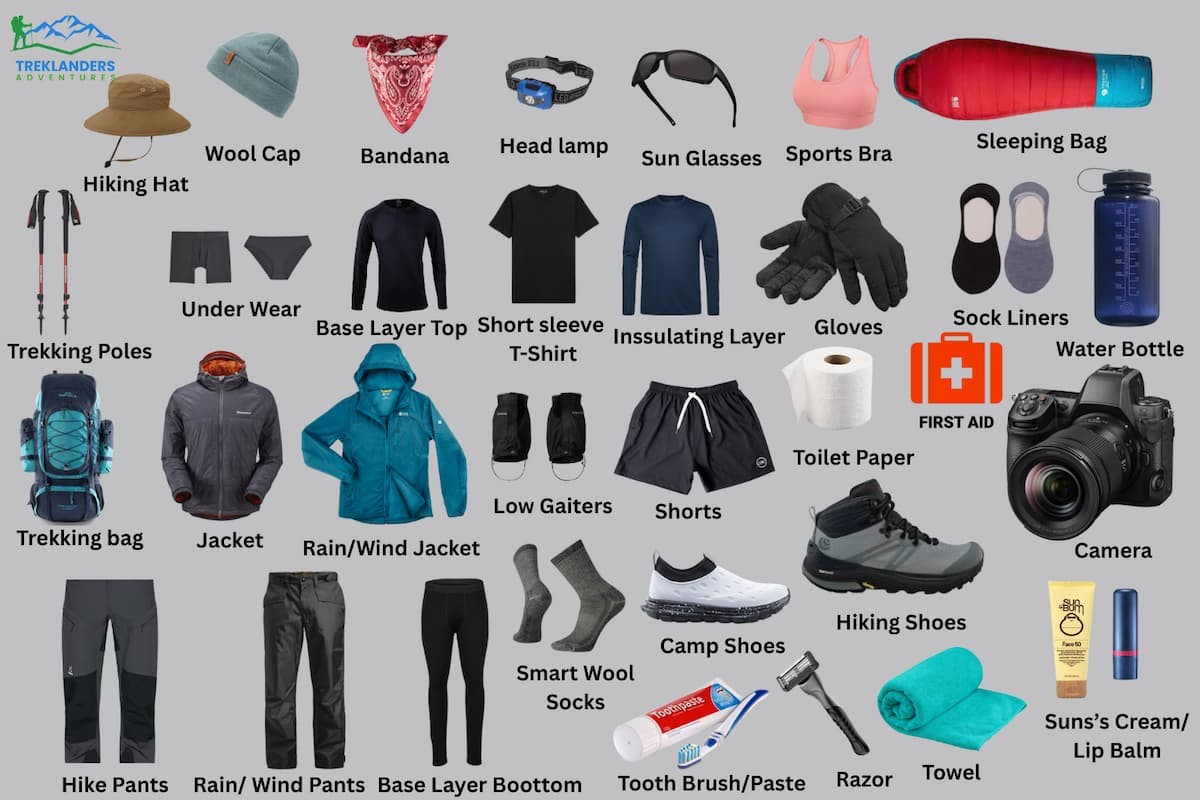
One of the vital steps when organizing the Everest Base Camp Trek is getting the right gear prepared. Since the trip will take you through various types of nature, such as hot valleys and icy trails, packing intelligently will keep you both comfortable and safe. A lot of trekkers do not realize how fast the weather can change in the Himalayas; hence they find that having the right gear is the only way to be able to deal with such things as strong winds and cold nights.
The decision on what clothing layers, footwear, and trekking equipment to use should be made in a way that makes each day of the trek easier and more enjoyable. Besides that, the correct gear defends you against the extreme cold; it also lessens your tiredness, gives you more balance and coordination, and assists you in avoiding such issues as blisters and altitude sickness. With great preparation, even those who have never done it before can be sure of themselves on the EBC trail.
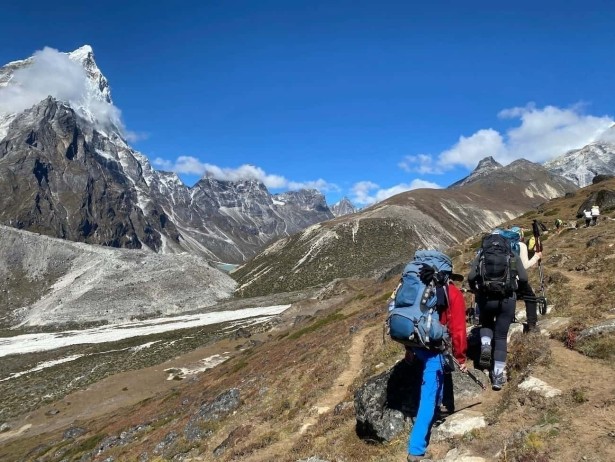
This handbook is a rundown of indispensable equipment that a trekker cannot do without when going to the Mount Everest Base Camp. Every bit of gear, from backpacks to sleeping bags and personal stuff, is like a little key to the big success of your trek. If you are going with Treklanders Adventures or making your own plan, packing smartly is the way to ensure that you welcome both the difficulties and the charm of the world’s most famous trekking route.

The single most crucial clothing technique on the Everest Base Camp Trek is layering, which is used to describe wearing several layers of clothing that can be added or taken away as necessary. This is so because both temperature and weather vary greatly with altitude. Although the trek is carried out in favorable weather conditions at Lukla, the climate gradually gets colder, windier, and more unpredictable as you walk toward Namche, Dingboche, Lobuche, and Gorakshep. Sometimes mornings are very cold, afternoons are warm while you are walking, and evenings are freezing. By far the best way to deal with such temperatures is a proper layering system, which allows you to take off, put on, or change your clothing depending on the temperature, your activity level, or the ever-changing weather in the Himalayas. The main objectives of this system are to prevent overheating and keep the clothes breathable, lightweight, and comfortable.
Thermal underwear is the basis of the layering system. They are worn closest to the skin and are the main components that keep body heat while absorbing sweat. The ability to remove moisture from the body is very important at high altitude because if one is wet, he/she can quickly catch a chill. Having a moisture-wicking set of thermals, both for a top and bottom, is what will keep your body dry during early morning hikes and during cold nights. The best are merino wool or synthetic thermals since they provide the user with warmth, breathability, and are resistant to any smell, which is very handy when you are limited in laundry options while on the trail.
The mid-layer is the insulating barrier that provides warmth for the body when the temperature drops. On the EBC trek, a fleece jacket is the most favorable choice as it is light in weight, dries quickly, and at the same time gives you very good warmth without limiting your movement. One can regulate the temperature a little with full-zip or half-zip fleeces and can strip the layer off when the weather is warm. Some of the trekkers, who are visiting during the colder season, may choose to add a second mid-layer or wear a light synthetic insulated jacket for extra warmth, especially if their trekking route and plans are above 4,000 meters, where the air is thinner and much colder.
Situations at high altitudes call for a down jacket, which is a must-have layer, especially from Dingboche and further up. Down jackets are the perfect choices for chilly mornings, acclimatization hikes, and nights spent in tea houses where heating is limited, as they have an excellent warmth-to-weight ratio, which adds very little extra weight to the wearer. A good quality down jacket with a hood will keep you comfortable during sub-zero temperatures and will also serve as protection against the cold winds, which can be expected near Everest Base Camp and Kala Patthar.
The outermost layer is your outer shell, whose job is to shield you against wind, snow, and occasional rainfall. To protect yourself from the cold and strong winds coming from the snowy mountains, a waterproof and windproof shell jacket (Gore-Tex or similar material) is the most important piece of your wardrobe. It also takes care of you when the wind is strong on exposed ridges, and you want to stay dry during sudden changes in the weather, which occur frequently in the Khumbu region.
To sum up, this layering system, consisting of a base layer, fleece mid-layer, warm down jacket, and waterproof shell, provides the flexibility and freedom of movement that are necessary for you to be comfortable and fully prepared for the varying conditions of the Everest Base Camp Trek.
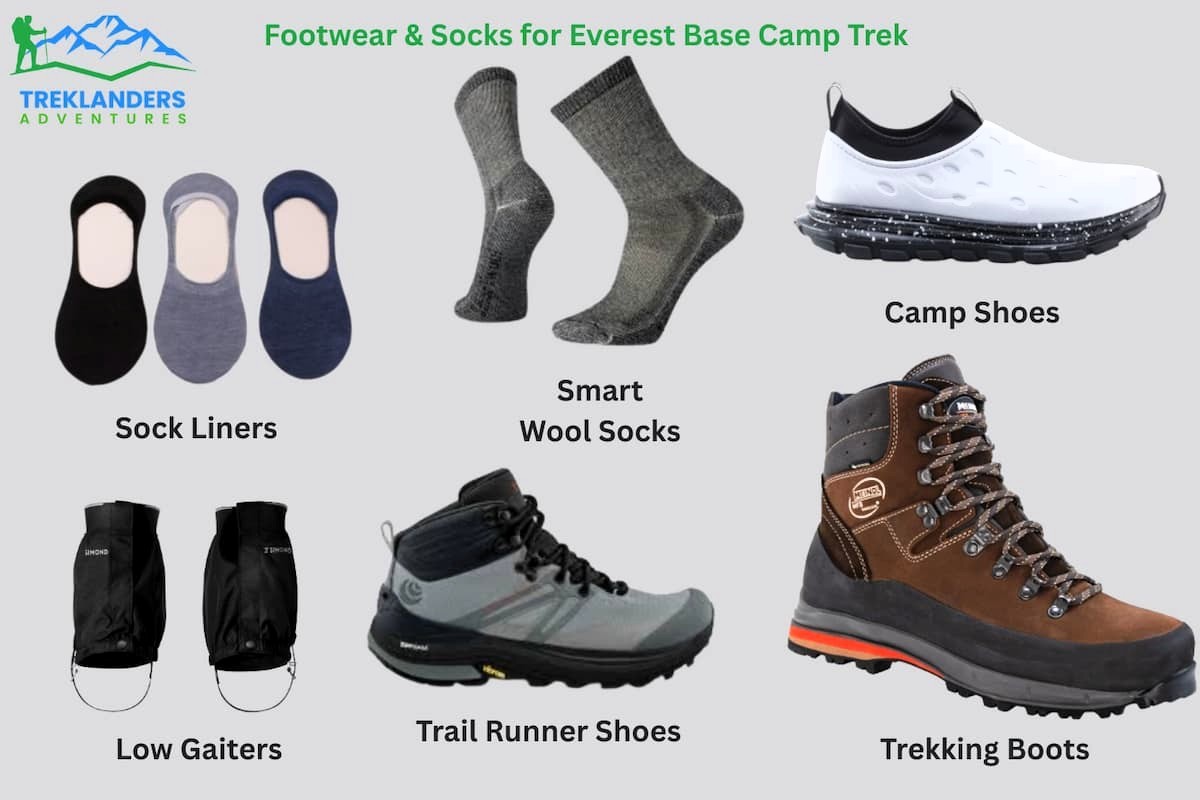
Arguably, one of the most crucial aspects of getting ready for the Everest Base Camp Trek is to decide on the right footwear. Throughout the trail, you will encounter rocks on the ground, steep climbs, crossing over suspension bridges, rough ground, and, in some cases, areas covered with snow. Thus, your boots and socks have to provide you not only with comfort but also with grip, stability, and protection. In this sense, the right footwear will not only improve the walking performance but also prevent blisters, ankle injuries, and generally, discomfort. Given that trekkers walk for about 5–7 hours every day, your shoes should be capable of giving strong support and, at the same time, remain comfortable throughout the trip.
A waterproof trekking boot is, without a doubt, the most fundamental piece of equipment one needs to have. Such a boot needs to be of a high-ankle type, to be able to prevent possible ankle twists and also to give the necessary stability when walking on rocky trails. It is through waterproofing that the feet are kept dry from snow, puddles, or rain, and this is very important, especially when going above Tengboche and Dingboche. It is equally important to be able to break in your boots before embarking on your trek new, stiff, and unbroken boots will almost certainly cause you to get blistered in the first few days of your trip. People are usually advised to cover at least 40–60 km on foot in their boots to get their feet naturally accustomed to the trek. A boot with a strong grip, durable sole and breathable material will perform best in varying Himalayan conditions.
Besides boots, the importance of good-quality trekking socks cannot be underestimated when it comes to comfort during the trek. Merino wool or synthetic trekking socks serve the following purposes: they help to reduce sweating, take off the sweat, and help with temperature regulation, and at the same time, they keep the feet warm at higher altitudes. The majority of trekkers stock up on several pairs in order to be able to change daily. The right socks, if any, would be a great help, especially when making a long climb uphill in the cold or during a cold morning. There are some trekkers who use liner socks as an anti-blister measure.
Gaiters would have been an excellent option if the trek were to be in winter or early spring. Apart from keeping the snow, dust, and small stones out of the boots, they also help in warmth and moisture by providing another layer of the boot. Although not necessarily worn for all seasons, they are right when one is in the snow or mud at an altitude of over 4,000 meters.
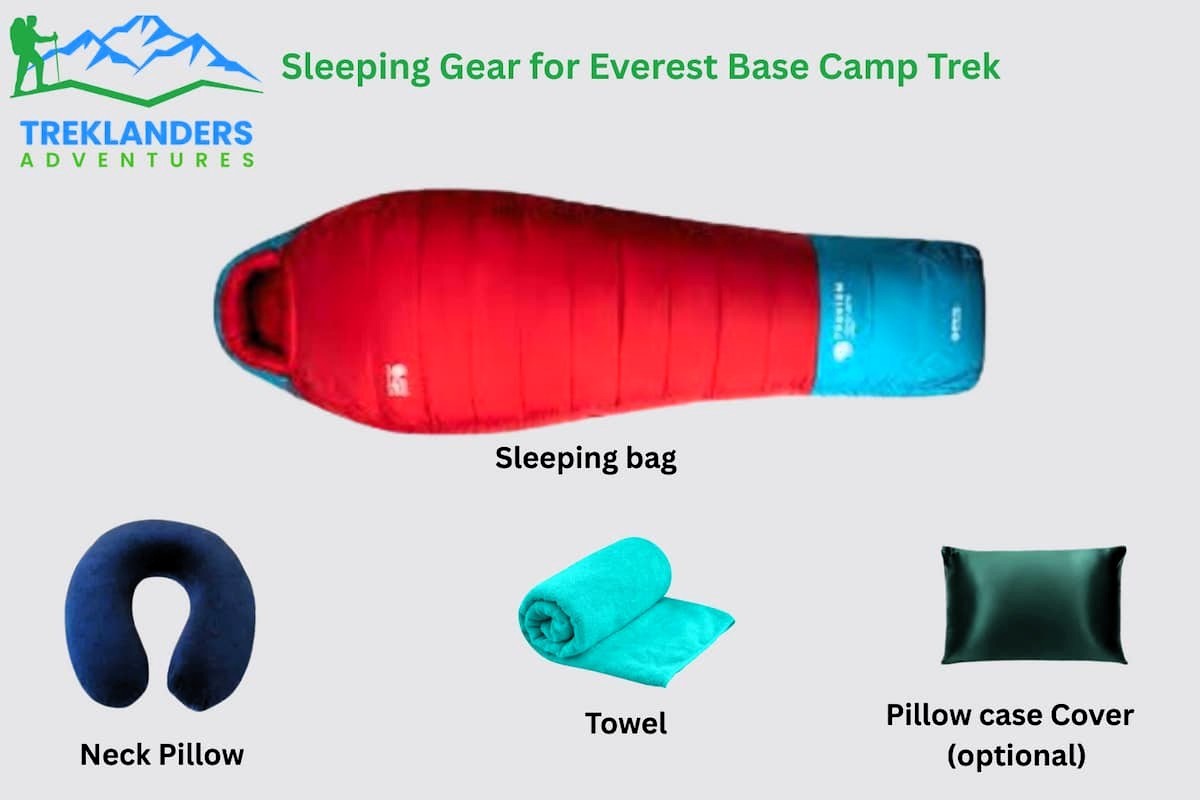
Proper sleeping gear is vital to help maintain comfort and warmth on the Everest Base Camp Trek, where it gets really cold at night. Rooms in tea houses along the trail are very basic and almost unheated, so having proper sleeping equipment is necessary to get a good sleep. Treklanders Adventures offers quality sleeping bags, which not only make the preparation easy but also ensure that the trekkers remain warm in the cold Himalayan nights.
A sleeping bag with a temperature rating of -10°C to -15°C would be the best choice for the EBC trek, particularly for the villages at high altitudes like Dingboche, Lobuche, and Gorakshep, where it can get very cold at night. These types of sleeping bags are made in such a way that they keep the user warm while still being light and comfortable. Although there are blankets in tea houses, they are usually not sufficient, hence the need for a proper sleeping bag.
Another smart move would be to add a liner to your sleeping bag. Liners give additional insulation, are more hygienic, and help in keeping the inside of the sleeping bag clean. They are small, light, and can make a significant difference in terms of warmth during very cold nights.
Some of the trekkers, for extra comfort, choose to bring along a pillowcase as an optional item. As tea house pillows are shared among many travelers, having your own pillowcase ensures cleanliness and provides a more familiar sleeping experience.
Once you have the correct sleeping gear, your sleeping quality will be better, your recovery will be faster, and you will be able to keep warm throughout the entire Everest Base Camp journey.
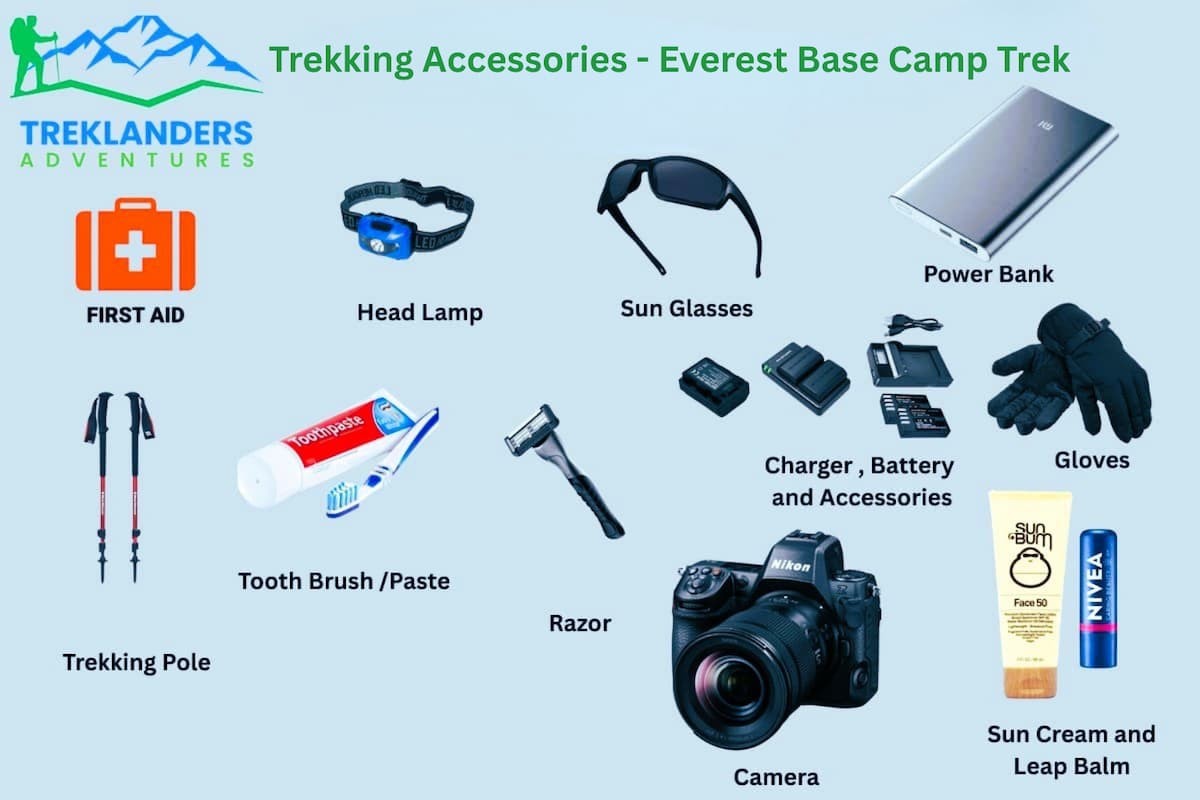
Trekking accessories are small things that may be overlooked at first, but they are very necessary for the comfort, safety, and convenience of a person throughout the Everest Base Camp Trek. Quite a handful of newbie’s neglect these add-ons only to find out how indispensable they are while on the trail. The steep ascents, the rocky paths, the cold walks early in the morning or in the evening are what the EBC route is all about. Having the right accessories gives you more energy, lowers the risk of getting tired, and keeps you safe against the cold Himalayan weather and high-altitude situations.
Trekking poles are probably the single most effective instrument for the EBC trek. They lessen the load on your knees, help keep your balance, and make the movements in both uphill and downhill areas very easy. Poles are of great help, especially when you are on the rocky paths around Namche, Tengboche, and doing that long descent from Kala Patthar. Trekking poles that are light and adjustable will give you comfort on any trek.
Also, a headlamp complete with a set of spare batteries is a must-have item. Tea houses are places where there might be no or little electricity at night, and if you have to go on an early morning hike especially to Everest Base Camp or Kala Patthar you have to be able to see well. A headlamp that you can always depend on is the solution to the problem of walking in pitch darkness while also being able to use your hands for something else.
The fact that you are high up in the mountains makes it even more important to protect your eyes. Sunglasses with UV protection are prepared to deal with the extreme sunlight and the glare off the snow or ice that comes from the sun. UV radiation increases significantly above 3,000 meters, so high-quality sunglasses are the only way of preventing snow blindness and eye fatigue.
Besides that, to keep warm and to be adequately insulated, trekkers cannot do without a warm hat, buff, and gloves. None of these simple items can be accused of being superfluous, as together they guard one against wind, cold mornings, and sudden changes of the weather. A buff protects not only your neck but also your face, and at the same time, warm gloves will keep your hands nice and comfortable during early starts as well as high-altitude trekking sections.

It is very important to select the appropriate method of carrying your stuff for the whole Everest Base Camp Trek in order to maintain order and comfort. As you will be walking for several hours each day, you need to have a way that will not weigh heavily on you, and that will also allow you to quickly get to your important things. The majority of trekkers separate their belongings between two bags: a daypack (which is carried by you) and a duffel bag (which is carried by your porter). With this method, you go light while trekking, and yet you have all your equipment with you at the tea house each night.
Daily, a 30–40L daypack is what you need. This is the sack that you bring along yourself during the trek, and, therefore, it should be of low weight and high comfort and should also be equipped with shoulder straps and a hip belt, both of which should be padded. The main daily pack holds the trekkers' essentials, e.g., water, energy-giving food, a camera, sunscreen, additional clothing, and rainwear. The personal supplies are to be found in the daily pack as well. Since the weather in the Himalayas is known to be very unstable, the possession of these things saves your day greatly and makes it more comfortable.
Put your big ones wear, toiletry pack, sleeping gear, and extra warm clothes—in a 60–80L duffel bag that is normally carried by your porter. Treklanders Adventures gives you the porters who transport your duffel bag from one tea house to the next in a safe way, while you are free to go on with your trekking without having a heavy load on your back. A duffel bag of this size is the right one to hold everything that you need for the 12–14 days of the journey, and at the same time, it is not heavy enough to surpass the porter's weight limit.
Since the weather is highly likely to turn against you when you are at high altitude, it is a must to have a rain cover for your backpack. In fact, it is the cover that saves your daypack from quick rain, snow, or mist, and at the same time, it ensures that electronic gadgets, articles, and clothes remain dry. Strong, waterproof covers are what will keep your equipment safe until the end of the trek. Lastly duffel bags are provided by Treklanders for trekkers.
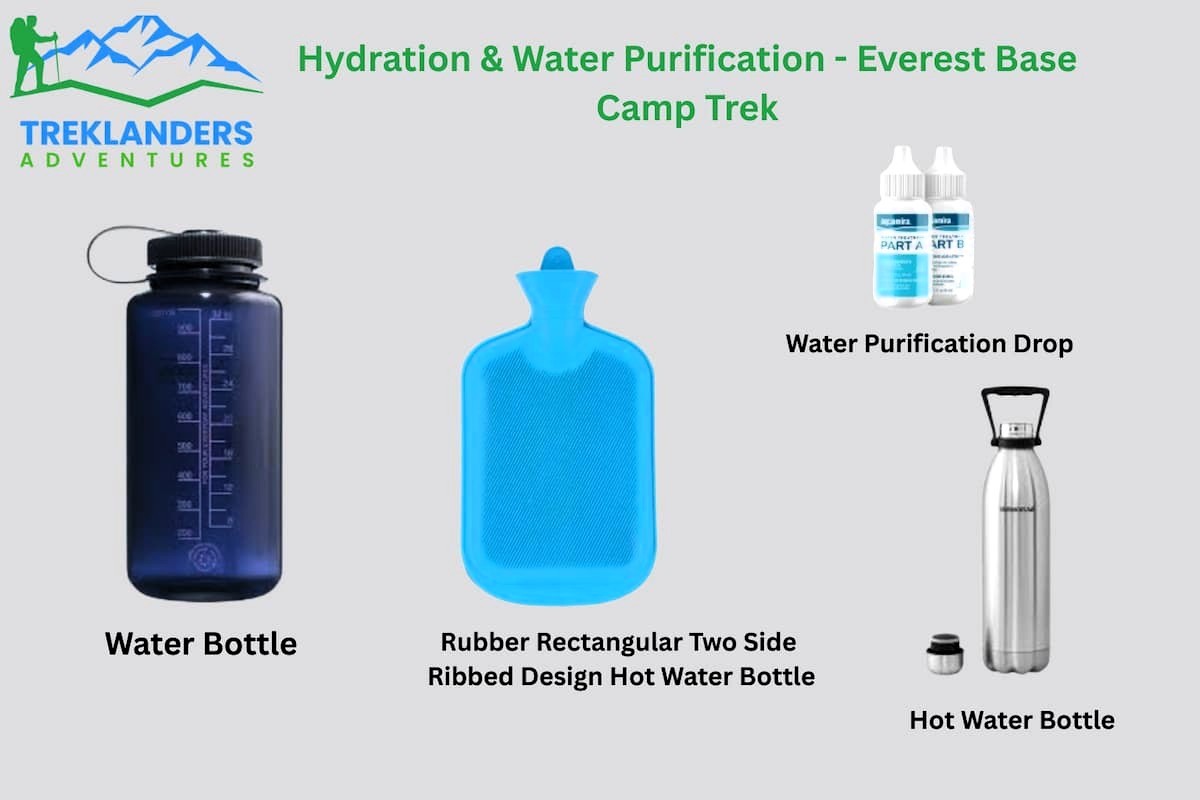
One of the major things you should always keep in mind while trekking to Everest Base Camp is that you are well hydrated. The altitude, the long hours of walking, and the dry mountain air are some of the factors that contribute to dehydration very fast, which, in turn, increases the chances of getting mountain sickness. Therefore, travelers in the area need a water-carrying and purification system that is very safe and reliable to keep them going throughout the journey. As bottled water is getting too expensive and a waste of Mother Earth at higher altitudes, it is a lot more efficient and eco-friendly if you have a refillable bottle and your own water purification method.
Daily trekking cannot go without a water bottle or hydration bladder containing 2L–3L of water.
Hydration bladders are designed in such a way that you do not have to cease what you are doing just to drink water. If you root for this option, it is possible to be constantly hydrated even while you are on steep climbs. On the other hand, water bottles can at times be more functional and are easier to refill at tea houses or from running water sources. Regardless of what you decide to go for, it is very important that your water container be strong and hygienically maintained since it will be your companion several times a day.
Water purification tablets or water purification drops should be a must in conjunction with water consumption, especially when in the Himalayas, because tap water there is not suitable for direct drinking. The items help to remove bacteria and viruses that cause diseases, thus making the water safe to use. Being highly effective as well as convenient, purification tablets have won the hearts of backpackers, and therefore, quite a few of them are. Although some might opt for a UV sterilizer, the majority still maintain that tablets are the most straightforward and suitable option for the EBC region.
When it comes to very cold places such as Gorakshep and Lobuche, a flask with insulation will come in handy a lot of times. The flask makes it possible to keep hot water for a long time, such as when it is very early in the morning or at night when it is terribly cold. Tea houses can provide you with boiled water, but if you already have a flask, you're sure that your hot water will be kept warm and ready for you to take whenever you need it in the freezing temperatures.
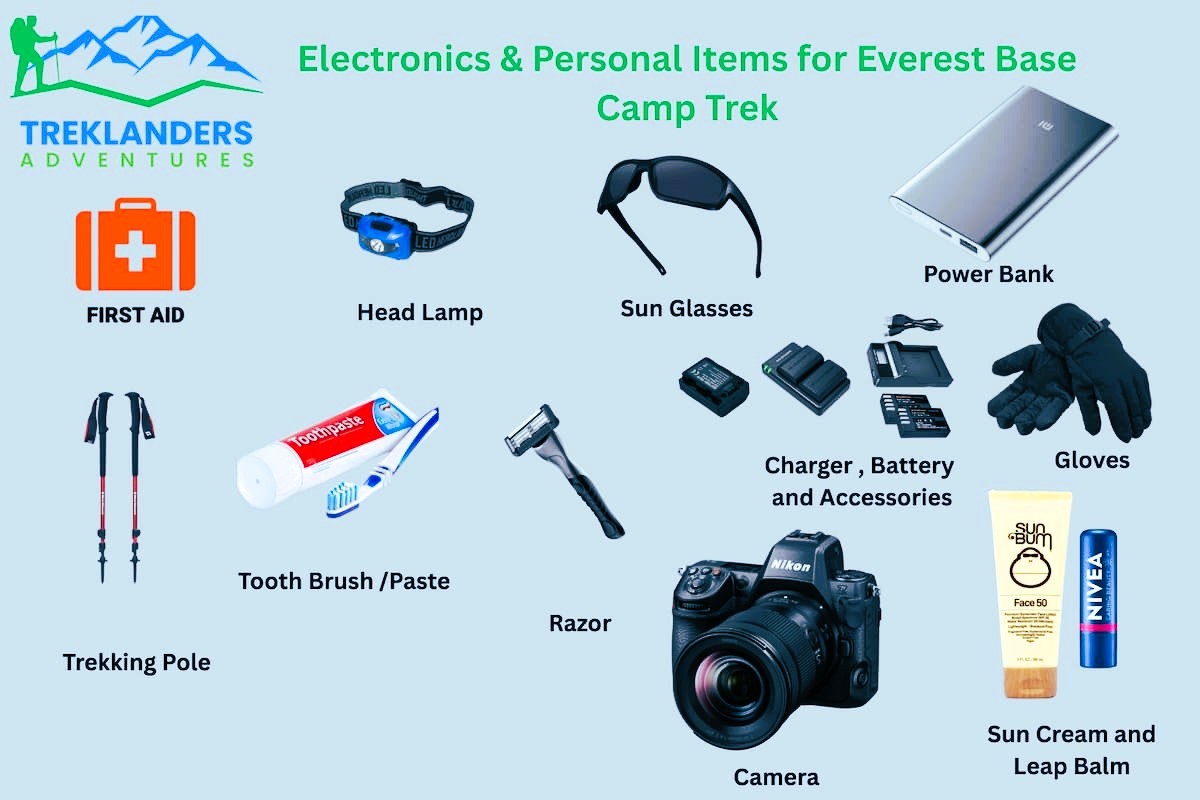
Today, a trek is not complete without the right electronics and some personal items, and by no means are these two the least important facets of the Everest Base Camp Trek. The trail goes through villages in the Himalayas that are quite far from modern civilization and are hence prone to having limited access to electricity. In such situations, charging costs are bound to be high while temperatures can become the source of battery drainage. So what you need to do is to carry reliable electronics that will not only enable you to stay connected and capture memories but also help you manage essential gear effectively throughout the journey.
The single most important item to have on you is a power bank (10,000–20,000 mAh). This is because a power bank in cold weather at high altitude is something that will save your device batteries from draining very fast. And so a powerful one is what keeps your phone, camera, and other devices charged throughout the day. Also, if you consider that the tea house charging electricity comes with extra fees, especially above Namche Bazaar, then you will see that bringing your own power supply is both cost-effective and convenient.
Besides, most of the trekkers are on the lookout for the best shots, and that is the very reason why they are mostly found with cameras or a GoPro. With these devices, one can get the beautiful landscapes, the suspension bridges, and the unforgettable moments of the EBC trail. But in order to use them properly in cold conditions, one must be sure to keep some extra batteries warm (in a pocket) because this helps to maintain battery life. Also, do not forget to bring all the charging cables for your electronics and a universal adapter, as plugs in tea houses might be of different types.
When in a high-altitude trekking environment, one should protect the skin as well. UV rays coming from the sun can do a lot of harm very quickly, especially when the sun is reflecting off the snow, and so what you need to do is to have with you sunscreen and lip balm. The better the protection provided by the product, the more your face and lips will remain hydrated, uncracked, and free of sun damage.
For instance, they can provide local support and quick medical intervention if the need arises; hence you get the reassurance of safety for the entire journey. Nevertheless, carrying a small personal kit that contains blister patches, your medication, and some hand sanitizer, for instance, will make your trek easier and more enjoyable.
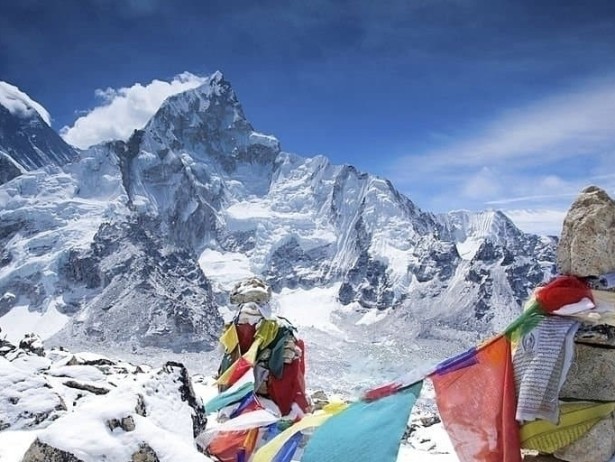
Discover the top reasons why the Everest Base Camp Trek is a must-experience adventure, from breathtaking views to rich Sherpa culture.
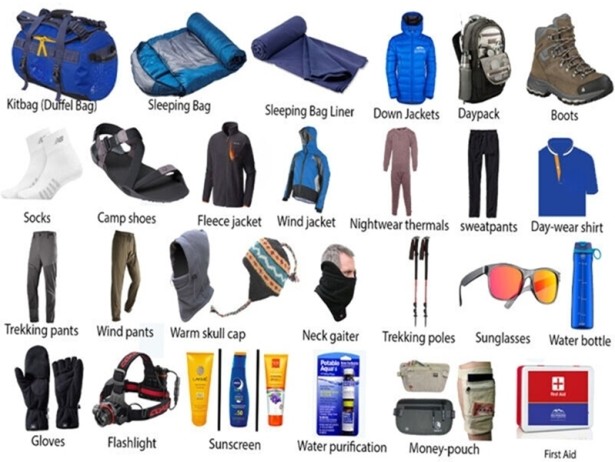
A quick guide to the must-have gear and clothing you need to pack for a successful and comfortable Everest Base Camp Trek.
A concise guide to the Everest Base Camp route, covering key details on preparation, difficulty, weather, and essential tips.



