[{"name":"Everest Base Camp Trek","duration":"16","image_url":"https:\/\/www.treklanders.com\/storage\/trip-galleries\/1\/thumb_419a755c003cc609f3030ee332965ebe.jpg","offer_price":1405,"url":"https:\/\/www.treklanders.com\/trips\/everest-base-camp-trek"},{"name":"Gokyo Valley Trekking","duration":"16","image_url":"https:\/\/www.treklanders.com\/storage\/trip-galleries\/2\/thumb_23ed0891a1c25539fd69a1bdd50f9a85.webp","offer_price":1205,"url":"https:\/\/www.treklanders.com\/trips\/gokyo-valley-trekking"},{"name":"Annapurna Circuit Trek","duration":"23","image_url":"https:\/\/www.treklanders.com\/storage\/trip-galleries\/3\/thumb_2a9a92ea23c62f41de27b37f5e3e8c17.webp","offer_price":1495,"url":"https:\/\/www.treklanders.com\/trips\/annapurna-circuit-trek"},{"name":"Everest Panorama Trek","duration":"12","image_url":"https:\/\/www.treklanders.com\/storage\/trip-galleries\/4\/thumb_35c9f677ea2e88b1ff11a9f43daa3ddb.jpg","offer_price":1100,"url":"https:\/\/www.treklanders.com\/trips\/everest-panorama-trek"},{"name":"Everest Base Camp Trekking from Jiri","duration":"22","image_url":"https:\/\/www.treklanders.com\/storage\/trip-galleries\/6\/thumb_14763592492417b294aa66bf0ebf4e64.webp","offer_price":1400,"url":"https:\/\/www.treklanders.com\/trips\/everest-base-camp-trekking-from-jiri"},{"name":"Everest Base Camp via Cho la Pass from Gokyo Valley Trekking","duration":"18","image_url":"https:\/\/www.treklanders.com\/storage\/trip-galleries\/7\/thumb_d4e470e98d4e9e2ab8e93e39b8b7d252.jpg","offer_price":1405,"url":"https:\/\/www.treklanders.com\/trips\/everest-base-camp-via-cho-la-pass-from-gokyo-valley-trekking"},{"name":"Everest Three Passes Trekking","duration":"22","image_url":"https:\/\/www.treklanders.com\/storage\/trip-galleries\/8\/thumb_b413b221e913171500bb3dfd5c08ceea.jpg","offer_price":1635,"url":"https:\/\/www.treklanders.com\/trips\/everest-three-passes-trekking"},{"name":"Annapurna Base Camp Trekking","duration":"14","image_url":"https:\/\/www.treklanders.com\/storage\/trip-galleries\/9\/thumb_2e71f2ffe116c659fa66b01c2d571b4e.webp","offer_price":845,"url":"https:\/\/www.treklanders.com\/trips\/annapurna-base-camp-trekking"},{"name":"Mardi Base Camp Trekking","duration":"14","image_url":"https:\/\/www.treklanders.com\/storage\/trip-galleries\/10\/thumb_d7b2d2dc638f6bbf2c31c167ac68029d.webp","offer_price":845,"url":"https:\/\/www.treklanders.com\/trips\/mardi-base-camp-trekking"},{"name":"Mohare Danda Trekking","duration":"12","image_url":"https:\/\/www.treklanders.com\/storage\/trip-galleries\/11\/thumb_a384c8d35d789d29b19991c1d675c910.webp","offer_price":755,"url":"https:\/\/www.treklanders.com\/trips\/mohare-danda-trekking"},{"name":"Khopra Ridge & Khair Lake Trekking","duration":"15","image_url":"https:\/\/www.treklanders.com\/storage\/trip-galleries\/12\/thumb_c0f50461ddc74acfb553ba85be00fab0.webp","offer_price":855,"url":"https:\/\/www.treklanders.com\/trips\/khopra-ridge-khair-lake-trekking"},{"name":"Upper Mustang Trekking","duration":"17","image_url":"https:\/\/www.treklanders.com\/storage\/trip-galleries\/13\/thumb_7aa4dfdb69186b0f224a303d80a25c95.jpg","offer_price":1715,"url":"https:\/\/www.treklanders.com\/trips\/upper-mustang-trekking"},{"name":"Langtang Valley Trek","duration":"12","image_url":"https:\/\/www.treklanders.com\/storage\/trip-galleries\/14\/thumb_8650b4b1a3c160cff75da65369398353.webp","offer_price":735,"url":"https:\/\/www.treklanders.com\/trips\/langtang-valley-trek"},{"name":"Gosainkunda Lake Trek","duration":"11","image_url":"https:\/\/www.treklanders.com\/storage\/trip-galleries\/15\/thumb_bfe94c14e760c48234e117021105be84.webp","offer_price":735,"url":"https:\/\/www.treklanders.com\/trips\/gosainkunda-lake-trek"},{"name":"Chisapani-Nagarkot to Dhulikhel Hiking","duration":"7","image_url":"https:\/\/www.treklanders.com\/storage\/trip-galleries\/16\/thumb_468defe9a4000ee3129cd7e6421ee105.webp","offer_price":565,"url":"https:\/\/www.treklanders.com\/trips\/chisapani-nagarkot-to-dhulikhel-hiking"},{"name":"Kanchenjunga Trek","duration":"23","image_url":"https:\/\/www.treklanders.com\/storage\/trip-galleries\/17\/thumb_51f43fa4203106cc49aaedc89d76e01d.jpg","offer_price":1725,"url":"https:\/\/www.treklanders.com\/trips\/kanchenjunga-trek"},{"name":"Helambu Trek","duration":"12","image_url":"https:\/\/www.treklanders.com\/storage\/trip-galleries\/18\/thumb_0fe8e3fa1299d2e43bf1fb5977875ce2.jpg","offer_price":685,"url":"https:\/\/www.treklanders.com\/trips\/helambu-trek"},{"name":"Upper Dolpo Trek","duration":"26","image_url":"https:\/\/www.treklanders.com\/storage\/trip-galleries\/19\/thumb_d6080d490e1db83b0a711e7304000864.jpg","offer_price":3005,"url":"https:\/\/www.treklanders.com\/trips\/upper-dolpo-trek"},{"name":"Manaslu Circuit Trek","duration":"18","image_url":"https:\/\/www.treklanders.com\/storage\/trip-galleries\/20\/thumb_1fdd224e849f4f328e73d2d12b3d282d.jpg","offer_price":1225,"url":"https:\/\/www.treklanders.com\/trips\/manaslu-circuit-trek"},{"name":"Tilicho Lake Base Camp Trek","duration":"19","image_url":"https:\/\/www.treklanders.com\/storage\/trip-galleries\/21\/thumb_eba8ac5e029e6543e0c17630ebd9e2fb.jpg","offer_price":1220,"url":"https:\/\/www.treklanders.com\/trips\/tilicho-lake-base-camp-trek"},{"name":"Nar-Phu Valley With Thorang-La Pass Trek","duration":"21","image_url":"https:\/\/www.treklanders.com\/storage\/trip-galleries\/22\/thumb_43597423a5a366fe9c8937fb30d2fe2a.jpg","offer_price":1315,"url":"https:\/\/www.treklanders.com\/trips\/nar-phu-valley-with-thorang-la-pass-trek"},{"name":"Nepal Round Trip of Kathmandu-Pokhara-Lumbini and Chitwan Tour","duration":"10","image_url":"https:\/\/www.treklanders.com\/storage\/trip-galleries\/23\/thumb_32497d170b2ab340b0a1b3310e91e784.webp","offer_price":845,"url":"https:\/\/www.treklanders.com\/trips\/nepal-round-trip-of-kathmandu-pokhara-lumbini-and-chitwan-tour"},{"name":"Nagarkot Day Hike","duration":"2","image_url":"https:\/\/www.treklanders.com\/storage\/trip-galleries\/24\/thumb_a5a654930fd8ba7852e41738105bacfc.webp","offer_price":105,"url":"https:\/\/www.treklanders.com\/trips\/nagarkot-day-hike"},{"name":"Nagarkot Sunrise Tour","duration":"1","image_url":"https:\/\/www.treklanders.com\/storage\/trip-galleries\/25\/thumb_17dc28a29cfa44381ad503f0a75ee84f.webp","offer_price":22,"url":"https:\/\/www.treklanders.com\/trips\/nagarkot-sunrise-tour"},{"name":"Namobuddha Day Tour with Shiva Statue","duration":"1","image_url":"https:\/\/www.treklanders.com\/storage\/trip-galleries\/26\/thumb_beeb34202f9077764aa08c67ef2867f9.webp","offer_price":45,"url":"https:\/\/www.treklanders.com\/trips\/namobuddha-day-tour-with-shiva-statue"},{"name":"Kathmandu Full Day Sightseeing Tour","duration":"1","image_url":"https:\/\/www.treklanders.com\/storage\/trip-galleries\/27\/thumb_d045fc0f1acee2cfa6b3c95f3c656d18.jpg","offer_price":30,"url":"https:\/\/www.treklanders.com\/trips\/kathmandu-full-day-sightseeing-tour"},{"name":"Patan and Bhaktapur Sightseeing Tour","duration":"1","image_url":"https:\/\/www.treklanders.com\/storage\/trip-galleries\/28\/thumb_750eacac3424b5dba686dd93656ab87c.jpg","offer_price":30,"url":"https:\/\/www.treklanders.com\/trips\/patan-and-bhaktapur-sightseeing-tour"},{"name":"Upper Mustang Heli Tour","duration":"1","image_url":"https:\/\/www.treklanders.com\/storage\/trip-galleries\/29\/thumb_0b785f69a15557f8660c805c76fda14e.webp","offer_price":1250,"url":"https:\/\/www.treklanders.com\/trips\/upper-mustang-heli-tour"},{"name":"Everest Heli Tour","duration":"1","image_url":"https:\/\/www.treklanders.com\/storage\/trip-galleries\/30\/thumb_dc45f2beb36a3699e0decf0de41a6f17.jpg","offer_price":1495,"url":"https:\/\/www.treklanders.com\/trips\/everest-heli-tour"},{"name":"Island Peak Trek & Climb","duration":"21","image_url":"https:\/\/www.treklanders.com\/storage\/trip-galleries\/31\/thumb_a0f3e3468c92a8e436045cf8b2fbf361.jpg","offer_price":2295,"url":"https:\/\/www.treklanders.com\/trips\/island-peak-trek-climb"},{"name":"Mera Peak Trek & Climb","duration":"18","image_url":"https:\/\/www.treklanders.com\/storage\/trip-galleries\/32\/thumb_3e8128a23c36f02fa38135475e811b9e.jpg","offer_price":2815,"url":"https:\/\/www.treklanders.com\/trips\/mera-peak-trek-climb"},{"name":"Chandragiri Cable Car Tour","duration":"1","image_url":"https:\/\/www.treklanders.com\/storage\/trip-galleries\/33\/thumb_faa70b716449eada6d7f1450335edbb3.jpg","offer_price":30,"url":"https:\/\/www.treklanders.com\/trips\/chandragiri-cable-car-tour"},{"name":"Everest Base Camp Trek and Returning via Heli","duration":"13","image_url":"https:\/\/www.treklanders.com\/storage\/trip-galleries\/34\/thumb_11190941866206e1d578db11986ebc73.webp","offer_price":2100,"url":"https:\/\/www.treklanders.com\/trips\/everest-base-camp-trek-and-returning-via-heli"},{"name":"Annapurna Semi Circuit Trek","duration":"15","image_url":"https:\/\/www.treklanders.com\/storage\/trip-galleries\/35\/thumb_30ddd8ba818cdcb52efd5eb0a017bcdb.jpg","offer_price":965,"url":"https:\/\/www.treklanders.com\/trips\/annapurna-semi-circuit-trek"},{"name":"Everest Base Camp Luxury Trek","duration":"14","image_url":"https:\/\/www.treklanders.com\/storage\/trip-galleries\/39\/thumb_6079aea3c5dd83e745a16fd6162270dc.jpg","offer_price":2685,"url":"https:\/\/www.treklanders.com\/trips\/everest-base-camp-luxury-trek"},{"name":"Mt. Kailash & Lake Manasarover Tour","duration":"15","image_url":"https:\/\/www.treklanders.com\/storage\/trip-galleries\/41\/thumb_cf3fededfd7dd2b40399af399e04f95a.jpg","offer_price":2205,"url":"https:\/\/www.treklanders.com\/trips\/mt-kailash-lake-manasarover-tour"},{"name":"Ghorepani Poonhill Trek","duration":"11","image_url":"https:\/\/www.treklanders.com\/storage\/trip-galleries\/43\/thumb_602d9a56976e1b836ba8adc69b8d09c5.webp","offer_price":720,"url":"https:\/\/www.treklanders.com\/trips\/ghorepani-poonhill-trek"},{"name":"11 Days Gokyo Valley Trekkking","duration":"11","image_url":"https:\/\/www.treklanders.com\/storage\/trip-galleries\/45\/thumb_ab552c3c91de392f94230a937b1c4801.jpg","offer_price":900,"url":"https:\/\/www.treklanders.com\/trips\/11-days-gokyo-valley-trekkking"},{"name":"9-Day Everest Base Camp Trekking with Helicopter Return","duration":"9","image_url":"https:\/\/www.treklanders.com\/storage\/trip-galleries\/46\/thumb_9a8ba2b582500cd86786be056902c31a.webp","offer_price":1990,"url":"https:\/\/www.treklanders.com\/trips\/9-day-everest-base-camp-trekking-with-helicopter-return"},{"name":"12-Day Everest Base Camp Trek","duration":"12","image_url":"https:\/\/www.treklanders.com\/storage\/trip-galleries\/47\/thumb_d12c9ef776c0b395ceea817fe05c5892.jpg","offer_price":1000,"url":"https:\/\/www.treklanders.com\/trips\/12-day-everest-base-camp-trek"},{"name":"8-Day Everest Panorama Trek","duration":"8","image_url":"https:\/\/www.treklanders.com\/storage\/trip-galleries\/49\/thumb_c81ae3a8ac757a317a9362e6872e2dcb.jpg","offer_price":850,"url":"https:\/\/www.treklanders.com\/trips\/8-day-everest-panorama-trek"},{"name":"7-Day Langtang Valley Trek","duration":"7","image_url":"https:\/\/www.treklanders.com\/storage\/trip-galleries\/50\/thumb_99c2904df5475ab028c9e3633ea95ef3.jpg","offer_price":420,"url":"https:\/\/www.treklanders.com\/trips\/7-day-langtang-valley-trek"},{"name":"4-Day Trekking Adventure near Kathmandu","duration":"4","image_url":"https:\/\/www.treklanders.com\/storage\/trip-galleries\/51\/thumb_594681060514dc57be1959236a6996d0.jpg","offer_price":275,"url":"https:\/\/www.treklanders.com\/trips\/4-day-trekking-adventure-near-kathmandu"},{"name":"4-Day Ghorepani Ponnhill Trek from Pokhara","duration":"4","image_url":"https:\/\/www.treklanders.com\/storage\/trip-galleries\/53\/thumb_eede04edac01f983d9af2c16f55d03e8.webp","offer_price":500,"url":"https:\/\/www.treklanders.com\/trips\/4-day-ghorepani-ponnhill-trek-from-pokhara"},{"name":"7-Day Annapurna Base Camp Trek from Pokhara","duration":"7","image_url":"https:\/\/www.treklanders.com\/storage\/trip-galleries\/55\/thumb_547e91c74088c491111ebe31a759cfbb.jpg","offer_price":420,"url":"https:\/\/www.treklanders.com\/trips\/7-day-annapurna-base-camp-trek-from-pokhara"},{"name":"13-Day Manaslu Circuit Trekking","duration":"13","image_url":"https:\/\/www.treklanders.com\/storage\/trip-galleries\/56\/thumb_aef1af4f0c4a2a9622d518ad5959542b.jpg","offer_price":1050,"url":"https:\/\/www.treklanders.com\/trips\/13-day-manaslu-circuit-trekking"},{"name":"5-Day Mardi Himal Trek from Pokhara","duration":"5","image_url":"https:\/\/www.treklanders.com\/storage\/trip-galleries\/57\/thumb_dcd598d556c14835f0a18169afafcbc6.webp","offer_price":420,"url":"https:\/\/www.treklanders.com\/trips\/5-day-mardi-himal-trek-from-pokhara"},{"name":"Nagarkot Sunrise Tour with Day Hike","duration":"1","image_url":"https:\/\/www.treklanders.com\/storage\/trip-galleries\/58\/thumb_7cdfa1f16719486da2a0718da45b1f2f.webp","offer_price":30,"url":"https:\/\/www.treklanders.com\/trips\/nagarkot-sunrise-tour-with-day-hike"},{"name":"Seven Unesco Heritage Sites Day Tour in Kathmandu","duration":"1","image_url":"https:\/\/www.treklanders.com\/storage\/trip-galleries\/59\/thumb_92aed7b9c67e76740000aab9313dced7.jpg","offer_price":40,"url":"https:\/\/www.treklanders.com\/trips\/seven-unesco-heritage-sites-day-tour-in-kathmandu"},{"name":"10-Day Ghorepani Poonhill with Annapurna Base Camp Trek","duration":"10","image_url":"https:\/\/www.treklanders.com\/storage\/trip-galleries\/60\/thumb_d4c2c089497950ccb5f8541d76e1269b.webp","offer_price":835,"url":"https:\/\/www.treklanders.com\/trips\/10-day-ghorepani-poonhill-with-annapurna-base-camp-trek"},{"name":"3-Day Chitwan Wildlife Tour","duration":"3","image_url":"https:\/\/www.treklanders.com\/storage\/trip-galleries\/61\/thumb_fc4de9cbf5bc83d67491b41df5725552.jpg","offer_price":150,"url":"https:\/\/www.treklanders.com\/trips\/3-day-chitwan-wildlife-tour"},{"name":"3-Day Pokhara Sightseeing Tour","duration":"3","image_url":"https:\/\/www.treklanders.com\/storage\/trip-galleries\/62\/thumb_a79a253f1a8bcbbf288eefc1d2f4038f.jpg","offer_price":230,"url":"https:\/\/www.treklanders.com\/trips\/3-day-pokhara-sightseeing-tour"},{"name":"7-Day Kathmandu Pokhara and Chitwan wildlifeTour","duration":"7","image_url":"https:\/\/www.treklanders.com\/storage\/trip-galleries\/63\/thumb_4f963fc141d7ef39e8a6a3c60317ae9b.jpg","offer_price":545,"url":"https:\/\/www.treklanders.com\/trips\/7-day-kathmandu-pokhara-and-chitwan-wildlifetour"},{"name":"Nagarjun Jamacho Day Hiking","duration":"1","image_url":"https:\/\/www.treklanders.com\/storage\/trip-galleries\/64\/thumb_85867eb85c60c8228e44f927341f67d1.jpg","offer_price":30,"url":"https:\/\/www.treklanders.com\/trips\/nagarjun-jamacho-day-hiking"},{"name":"Everest Mountain Flight from Kathmandu","duration":"1","image_url":"https:\/\/www.treklanders.com\/storage\/trip-galleries\/65\/thumb_1a66526d340ec175023842c38efd8a95.webp","offer_price":120,"url":"https:\/\/www.treklanders.com\/trips\/everest-mountain-flight-from-kathmandu"},{"name":"One Day Trishuli River Rafting Adventures","duration":"1","image_url":"https:\/\/www.treklanders.com\/storage\/trip-galleries\/66\/thumb_55ba0ea676c9c625f99f3d41bda224fb.jpg","offer_price":35,"url":"https:\/\/www.treklanders.com\/trips\/one-day-trishuli-river-rafting-adventures"},{"name":"13-Day Annapurna Circuit Trek","duration":"13","image_url":"https:\/\/www.treklanders.com\/storage\/trip-galleries\/67\/thumb_859e7a1fbb468a9252d365cab8379f10.jpg","offer_price":815,"url":"https:\/\/www.treklanders.com\/trips\/13-day-annapurna-circuit-trek"},{"name":"15-Day Tilicho Base Camp with Thorong-La Pass Trekking","duration":"15","image_url":"https:\/\/www.treklanders.com\/storage\/trip-galleries\/68\/thumb_56a5fd1506c9b9f1f83844353dc55edf.jpg","offer_price":920,"url":"https:\/\/www.treklanders.com\/trips\/15-day-tilicho-base-camp-with-thorong-la-pass-trekking"},{"name":"Cooking Class in Thamel-Full Course Meal","duration":"1","image_url":"https:\/\/www.treklanders.com\/storage\/trip-galleries\/69\/thumb_ed5cfbc0d94b624642d347c0776d36bb.webp","offer_price":30,"url":"https:\/\/www.treklanders.com\/trips\/cooking-class-in-thamel-full-course-meal"},{"name":"Cooking Class in Thamel-Full Course","duration":"3 Hours 30 Minutes","image_url":"https:\/\/www.treklanders.com\/img\/default.gif","offer_price":30,"url":"https:\/\/www.treklanders.com\/trips\/cooking-class-in-thamel-full-course"},{"name":"Cooking Class in Thamel-Full Course Meal","duration":"3 Hours 30 Minutes","image_url":"https:\/\/www.treklanders.com\/img\/default.gif","offer_price":30,"url":"https:\/\/www.treklanders.com\/trips\/cooking-class-in-thamel-full-course-meal"},{"name":"Momo Making Class in Thamel","duration":"1","image_url":"https:\/\/www.treklanders.com\/storage\/trip-galleries\/72\/thumb_a36e5ceca4d5c4cb0ecda367505b31d3.webp","offer_price":20,"url":"https:\/\/www.treklanders.com\/trips\/momo-making-class-in-thamel"},{"name":"8 Days Bhutan Tour from Kathmandu","duration":"8","image_url":"https:\/\/www.treklanders.com\/storage\/trip-galleries\/73\/thumb_df319d7d3ac21bcd9cf728cb1a70ea09.webp","offer_price":2275,"url":"https:\/\/www.treklanders.com\/trips\/8-days-bhutan-tour-from-kathmandu"},{"name":"10 Days Bhutan Tour with Druk path Trek","duration":"10","image_url":"https:\/\/www.treklanders.com\/storage\/trip-galleries\/74\/thumb_c7d4a4b89aceaf5d3aac313265729bb3.webp","offer_price":5715,"url":"https:\/\/www.treklanders.com\/trips\/10-days-bhutan-tour-with-druk-path-trek"},{"name":"9 -Day Langtang Valley Trek","duration":"9","image_url":"https:\/\/www.treklanders.com\/storage\/trip-galleries\/75\/thumb_65e69cec8917e39091c9e40ae06df3da.webp","offer_price":620,"url":"https:\/\/www.treklanders.com\/trips\/9--day-langtang-valley-trek"},{"name":"14 Day Everest Base Camp Trek","duration":"14","image_url":"https:\/\/www.treklanders.com\/storage\/trip-galleries\/76\/thumb_446e7f33a5f43896c9cdf470cd7be947.webp","offer_price":1175,"url":"https:\/\/www.treklanders.com\/trips\/14-day-everest-base-camp-trek"},{"name":"Lhasa Tour from Kathmandu: 10-Day Tibet Overland Journey via Gyirong","duration":"10","image_url":"https:\/\/www.treklanders.com\/img\/default.gif","offer_price":null,"url":"https:\/\/www.treklanders.com\/trips\/lhasa-tour-from-kathmandu-10-day-tibet-overland-journey-via-gyirong"},{"name":"13 Day Lhasa Tour from Kathmandu via Everest Base Camp","duration":"13","image_url":"https:\/\/www.treklanders.com\/storage\/trip-galleries\/78\/thumb_8a2bfb2abd99ba9ddc902b768e7b0759.webp","offer_price":2565,"url":"https:\/\/www.treklanders.com\/trips\/13-day-lhasa-tour-from-kathmandu-via-everest-base-camp"},{"name":"11 Day Annapurna Base Camp Trek","duration":"11","image_url":"https:\/\/www.treklanders.com\/storage\/trip-galleries\/79\/thumb_4e48a19c538c00cc8c36160ca97c5f21.webp","offer_price":720,"url":"https:\/\/www.treklanders.com\/trips\/11-day-annapurna-base-camp-trek"},{"name":"9 Day Mardi Himal Trek","duration":"9","image_url":"https:\/\/www.treklanders.com\/storage\/trip-galleries\/80\/thumb_8214945c5614ac9a84e5ca0b58b1f5a3.webp","offer_price":735,"url":"https:\/\/www.treklanders.com\/trips\/9-day-mardi-himal-trek"},{"name":"14 Day Manaslu Circuit Trek","duration":"14","image_url":"https:\/\/www.treklanders.com\/storage\/trip-galleries\/81\/thumb_b3ec98cd4036da5cb6e92250afa0d59e.webp","offer_price":1085,"url":"https:\/\/www.treklanders.com\/trips\/14-day-manaslu-circuit-trek"},{"name":"20 Day Manaslu Circuit with Tsum Valley Trek","duration":"20","image_url":"https:\/\/www.treklanders.com\/storage\/trip-galleries\/82\/thumb_b8c202cf8e16197517811d535f2a6795.webp","offer_price":1765,"url":"https:\/\/www.treklanders.com\/trips\/20-day-manaslu-circuit-with-tsum-valley-trek"},{"name":"15 Day Langtang Gosaikunda Lake Helambu Trek","duration":"15","image_url":"https:\/\/www.treklanders.com\/storage\/trip-galleries\/83\/thumb_a9c7bbb74f733cdc9a3469a448df7109.webp","offer_price":985,"url":"https:\/\/www.treklanders.com\/trips\/15-day-langtang-gosaikunda-lake-helambu-trek"},{"name":"14 Day Tamang Heritage with Langtang Valley Trek","duration":"14","image_url":"https:\/\/www.treklanders.com\/storage\/trip-galleries\/84\/thumb_57fe1b0ad2b7d0489273633b906d2f43.webp","offer_price":895,"url":"https:\/\/www.treklanders.com\/trips\/14-day-tamang-heritage-with-langtang-valley-trek"}]
Manaslu Circuit Trek Flora and Fauna: Biodiversity, Wildlife, and Ecosystems from 1,000m to Larkya La Pass
Manaslu Circuit Trek Flora and Fauna: Biodiversity, Wildlife, and Ecosystems from 1,000m to Larkya La Pass
The Manaslu Circuit Trek is renowned not only for its stunning mountain views but also for its diverse array of rich flora and fauna, which are protected within the Manaslu Conservation Area. The trek extends all the way from low river valleys to high alpine passes and thus crosses several ecological zones, thereby making it one of the biologically most attractive trekking trails in Nepal.
The trek usually starts from MachhaKhola and Soti Khola, and initially, the trail goes along the Budhi Gandaki River through the subtropical forest. At these lower altitudes, the trekkers will see luxuriant vegetation such as sal forests, bamboo groves, banana plants, and wild ferns. Later on, as the route ascends and passes through the villages of Jagat, Deng, and Namrung, the scenery changes into temperate forests dominated by oak, pine, maple, and rhododendron, which are particularly spectacular during the spring flowering season.
At the highest elevations, say Lho, Shyala, and Samagaun, the setting shifts to subalpine and alpine zones. In such places, tough vegetation like juniper, dwarf rhododendron, alpine grasses, and medicinal herbs grows even though the conditions are quite severe. After Samagaun, around Samdo and the lofty Larkya La Pass (5,106 m), the vegetation level is almost non-existent, with only mosses and lichens being able to survive the very cold temperatures and strong winds.
In the Manaslu area, the variety of wildlife is just as magnificent. The thick forests of the area are home to some of the rarest and most endangered species in the world, among which are the snow leopard, Himalayan tahr, blue sheep, musk deer, and red panda. In fact, though there have only been very few cases of large mammals being spotted, the trekkers can still be fairly sure of seeing the prints and other signs of their habitation. Not only is there a great variety of mammals in the area, but the birdlife is also thriving. Bird species like the Himalayan monal (Nepal's national bird), griffon vultures, lammergeiers, snow pigeons, and different kinds of pheasants can be expected to be encountered on the trail very often.
Along the Manaslu Circuit, the main villages and points of interest are Philim, Ghap, Namrung, Lho, Samagaun, Samdo, Dharamsala (Larkya Phedi), Bhimthang, Tilije, and Dharapani, the last one being where the trek intersects with the Annapurna region. The trail unravels a different ecosystem for each segment, the shaping factors being altitude, climate, and traditional land use.
In essence, the plant and animal species along the Manaslu Circuit Trek reveal that the Himalayas are a living ecosystem and not just a mountain destination. The trek is a good way to witness the natural biodiversity of Nepal along with the traditional villages. This makes the trek a perfect one for nature lovers, photographers, and eco-conscious trekkers.
Flora and Fauna by Altitude in Manaslu Circuit Trek (1,000m–5,106m)
Beautiful waterfall seen during the Manaslu Circuit Trek
The Manaslu Circuit Trek encompasses a wide variety of altitudes, from about 1,000 meters in the lower valleys up to 5,106 meters at Larkya La Pass. Since temperature, rainfall, and oxygen levels vary with height, different kinds of plants and animals live at different altitudes. Thus, the trek is a nature-lover's paradise, visually experiencing nature's changes day by day.
1,000m to 2,000m (Subtropical Zone)
The trek passes through warm and humid areas like Soti Khola, MachhaKhola, and Jagat. This zone is a blanket for a thick green forest. Sal trees, bamboo, banana plants, ferns, and wild orchids are the common plants that may be seen. These forests offer food and shelter to animals like monkeys, langurs, jackals, and porcupines. Birdlife is also very active, and one can often see kingfishers, bulbuls, and parrots near rivers and villages.
2,000m to 3,000m (Temperate Zone)
When the path goes up through Deng, Namrung, and Ghap, the weather becomes cooler. The forests turn into oak, pine, maple, and rhododendron trees. In spring, the slopes are covered with rhododendron flowers. The animals that can be found here include Himalayan black bears, musk deer, and barking deer, as well as numerous birds such as woodpeckers and pheasants.
3,000m-4,000m (Subalpine Zone)
In the villages of Lho, Shyala, and Samagaun, forests are reduced in size due to cold temperatures. The main types of vegetation are juniper, birch, dwarf rhododendron, alpine shrubs, and medicinal herbs. It is difficult to find animals, but one may spot Himalayan tahr, blue sheep, and red panda. Additionally, Himalayan monal birds can be seen in the open areas sometimes.
4,000m-5,106m (Alpine and High-Altitude Zone)
After Samdo and up to Larkya La Pass, very few plants grow. Only alpine grasses, mosses, and lichens survive in this very cold place. There are few animals, but this area is the habitat of snow leopards, blue sheep, as well as high-altitude birds like snow pigeons and vultures. To sum up, by examining the flora and fauna by altitude on the Manaslu Circuit Trek, we can see how nature changes to fit the environment. Each altitude zone has its own ecosystem, which means that the trek is a pleasurable and rewarding adventure not just for trekkers, but also for nature lovers.
Wildlife Sightings Probability on Manaslu Circuit Trek
Rare snow leopard spotted during the Manaslu Circuit Trek
Manaslu Circuit Trek is a top Nepal route by which to encounter wildlife in their natural habitat and a less crowded environment. It is not a wildlife safari; however, trekkers can spot some animals and birds along the trail, especially since the trek is in the Manaslu Conservation Area. The chance of seeing wild animal’s changes with altitude, season, time of day, and human activity.
Lower elevation (1,000m to 2,000m) around Soti Khola, MachhaKhola, and Jagat, the chances of seeing wild animals are pretty high. These warm and forested areas are home to animals such as monkeys, langurs, jackals, porcupines, and mongooses. You can see many birds easily here, including kingfishers, bulbuls, drongos, and eagles, mainly near rivers and farmland.
At the middle altitude (2,000 m to 3,000 m) near Deng, Namrung, and Ghap, there are moderate chances of spotting wildlife. Thick forests are home to musk deer, barking deer, Himalayan black bears, and wild boar; however, these animals are very timid and mostly active at dawn or dusk. The bird population is still great, with pheasants, woodpeckers, and Himalayan griffon vultures being commonly seen.
Himalayan Snow Partridge (Lerwa lerwa).
At higher elevations (around 3,000m-4,000m) near Lho, Shyala, and Samagaun, there are very few chances of seeing large animals, though it is not completely impossible. Far up on the open slopes, you may come across Himalayan tahr and blue sheep grazing. The very beautiful Himalayan monal, which is also the national bird of Nepal, could be one of the sightings in this zone. You are more likely to see small mammals like pikas and marmots.
In the high-alpine region (above 4,000m) near Samdo and Larkya La Pass, the only thing you might get from wildlife is just a glimpse. This area is considered to be the home of the snow leopard, so its presence is known here, but seeing one is extremely rare. Nevertheless, travellers can find the footprints and droppings of these animals, and they also come across the prey of these animals, the blue sheep. Birds such as snow pigeons and ravens, as well as lammergeiers, will be more frequently seen.
As a whole, birds and small mammals have the highest probability of being spotted during a Manaslu Circuit Trek. You can see the signs of mid-sized animals sometimes, but the chances of seeing very rare species like snow leopards are very minimal. Being noise-free, early hours, and small groups of people considerably improve the chances of having meaningful encounters with wildlife.
Rhododendron Forests of Manaslu: Blooming Seasons and Locations
The Manaslu Circuit Trek is well-known not only for stunning mountain views but also for its charming rhododendron forests, which brighten the scenery in spring with their colours. Rhododendron, being the national flower of Nepal, the Manaslu region is an excellent place to witness its natural growth in different elevations.
Rhododendron forests are mainly located in the mid-altitude zones between 2,000 meters and 3,500 meters, where the environment is cool and moist. On the Manaslu Circuit, these beautiful forests become visible once the path ascends from the lower river valleys into temperate and subalpine zones. The trees are a varied range of species from small shrubs to tall forest trees, depending on the height of the land.
The best rhododendron flowering season in Manaslu is spring (March to April). In this period, hills and forest paths are decorated with flowers of different colors such as red, pink, white, and purple. Lower-altitude rhododendrons start flowering in early March, while the higher-altitude forests generally get full blossoming in April. The flowering time can vary a little depending on the weather conditions each year.
Jagat, Deng, Namrung, Ghap, Lho, and Shyala are some of the best places in the Manaslu Circuit Trek where you will find rhododendron forests. The trail from Namrung to Lho is a visual treat, with rhododendrons mingling with oak, pine, and maple, thus forming the most colourful forest paths. Rhododendrons at Shyala village go hand in hand with open alpine landscapes and spectacular views of Manaslu Himal.
When you go higher than 3,500 meters, the rhododendron forest is less dense, and the trees are smaller. However, in places such as Samagaun, you can see the small and compact rhododendron bushes that have adapted to the cold and windy conditions. Above this point, especially at Samdo and Larkya La Pass, the rhododendrons have completely disappeared due to the extreme cold.
Rhododendron forests are not only beautiful but also useful for the ecosystem as they offer shelter to birds, insects and small mammals besides holding the soil together on steep mountain slopes. What is more, it is very special for hikers to do the Manaslu Circuit Trek amid rhododendron trees blooming in spring. In short, Manaslu's rhododendron forests are the prettiest in March and April, mainly from Jagat to Shyala, thus giving you a colourful and unforgettable trekking experience surrounded by nature.
Animals Protected Under Manaslu Conservation Area Regulations
Himalayan Blue Sheep seen during the Manaslu Circuit Trek
The Manaslu Conservation Area (MCA) is a park precinct that was launched mainly for wildlife protection and nature conservation in the Manaslu region, along with an effort to provide for the local communities. Since the MCA stretches over a wide range of altitudes, it harbours a great variety of species by ensuring a safe habitat for many rare, threatened, and protected animal species. Stringent rules aim at preventing hunting, deforestation, and other activities that lead to the overuse of natural resources.
One of the most significant and treasured animals within the Manaslu Conservation Area is the snow leopard. This elusive and endangered species, at least one of these beautiful predators, inhabit the high-altitude areas above 3,500 meters, particularly around Samdo and Larkya La Pass. Even if the chances of encounters are very slim, the snow leopard is very important for the environment because, as a top predator, it keeps the numbers of herbivores in check. The local community and visitors should be aware that it is illegal to cause any type of harm or disturbance to this species.
The red panda is another representative of rare and protected species of wild animals of the Manaslu region. It is at home in temperate and subalpine forests situated between 2,200 and 4,000 meters. The dependency of the red panda on bamboo forests around Deng, Namrung, and Lho is almost complete. Their vulnerability is caused by a combination of the destruction of their habitat and a slow birth rate. As a result, they are given total protection according to conservation laws. The musk deer of the Himalayas is additionally protected as a result of illegal hunting for its valuable musk gland in the past. It inhabits forested areas at elevations of between 2,500 and 4,000 meters, frequently near Ghap and Samagaun. Likewise, the Himalayan tahr and blue sheep, which are herbivores and protected species, are commonly seen on open slopes and rocky areas. These creatures are the key prey of snow leopards.
Manaslu Conservation Area is a haven for various bird species, such as the Himalayan monal, which is the national bird of Nepal, the lammergeier (bearded vulture), and the Himalayan griffon vulture. These avian species are protected as they are ecologically significant, and their numbers have started to decline in certain areas.
Within the MCA provisions, hunting, trapping, and trafficking of wildlife are completely prohibited. Both trekkers and locals are advised to engage in responsible tourism practices by not disturbing wildlife and by showing respect to the natural environment. In essence, the fauna that are safeguarded by the Manaslu Conservation Area regulations embody the diverse biological wealth of the area and underscore the significance of nature preservation as a means of safeguarding the Manaslu environment for future generations to come.
Himalayan Mammals Found Near Larkya La Pass Region
Himalayan Tahr spotted along the Manaslu Circuit Trek.
The section around Larkya La Pass (5,106 meters) is probably one of the most elevated and isolated parts of the Manaslu Circuit Trek. Only a few Himalayan mammals that are genetically adapted to extremely cold, windy, and oxygen-deficient environments can survive here. These animals are scarcely spotted; however, their occurrence makes the area ecologically significant and intriguing for nature lovers.
Among the mammals that inhabit this high-altitude region, the snow leopard is probably the most famous one. It occupies areas of rocky and rugged terrain above 4,000 meters, which also include places near Samdo and Larkya La Pass. Snow leopards are very timid and mostly nocturnal, which is why direct encounters are extremely uncommon. Nevertheless, the area is considered one of their natural habitats, and trekkers may see footprints or other traces in the snow or sand.
Blue sheep (bharal) are another typical high-altitude mammal. Blue sheep are extremely agile on steep and rocky slopes and, thus, they are frequently spotted in small groups near the pass. Besides, they are the favorite prey of snow leopards and can live off the scarce alpine grasses.
20 Day Manaslu Circuit with Tsum Valley Trek | 20 days
The Himalayan tahr is present in this area as well, but it is more commonly found a little below the pass. This tough-looking mountain goat is covered with thick fur, which allows it to withstand very low temperatures. You will usually find it on rocks and very steep slopes, and it is capable of running smoothly on quite rough terrains.
Besides the large animals, one can easily find here different kinds of small animals. For example, among a variety of fauna found in the Himalayas, you can find Himalayan marmots being particularly the cases near the Larkya La. If you prefer, alpine meadows and similar open places during the warm seasons, you might get lucky to spot them since they are out in daylight at this time. They spend the colder seasons in their underground shelters by monastic. As already mentioned, pikas are small, cute animals similar to rabbits that are also part of the normal fauna. They are always on the move, and you can see them generally scurrying among the rocks while picking grass for their diet.
The Tibetan wolf is yet another interesting animal that belongs to the category of rare mammals and occurs in the highland areas of Manaslu. However, I am telling you, the situation of this kind of wolf is so rare that the drug is extremely difficult to detect. Wolves have a wide range of food, and they travel long distances to find food. They also lean against freezing temperatures and open landscapes very well.
As a result, the wild animals of the Himalayas living around Larkya La Pass are very few but truly amazing creatures. The fact that they can be alive under such rough conditions is a demonstration of how powerful and balanced the mountain ecosystem is. For hikers, imagining these animals roaming the area is like a metaphor for their own adventure and a reminder of the grandeur of nature when crossing one of the most spectacular Himalayan passes.
Plant Life Around Samagaun and Samdo Villages
Sacred juniper tree growing in the high-altitude landscapes of the Manaslu Circuit Trek
Samagaun and Samdo villages are located at the top of the Manaslu Circuit Trek, surrounded by towering mountains and facing severe weather. These places, situated between 3,500 meters and 3,900 meters, are exposed to low temperatures, strong winds, and a brief growing season. Even so, there is a large number of tough and well-adapted plants that are flourishing here, being a significant part of the natural environment and the villagers' daily life.
The area around Samagaun is still capable of supporting subalpine vegetation. The woods become less dense, but you can still see birch, juniper, and dwarf rhododendron trees. Locally, juniper holds great significance since the inhabitants burn it as incense in religious rituals. Dwarf rhododendrons get close to the soil, thus avoiding the abrasion of vigorous winds and snow.
Stepping out of Samagaun towards Samdo, the zone changes progressively into an alpine one. The almost disappearance of trees is noticeable, and plant species are getting lower and more sporadic. Among the most common species are alpine grasses, tough shrubs, mosses, and lichens. These plants have a slow growth rate, but they are adapted efficiently to cold soils and scarce oxygen levels. In summer, the grasslands of Samdo become green, turning into pastures for yaks, sheep, and goats, which are very important to the locals' way of life. Besides, the area has gained a reputation for medicinal and aromatic plants. Local herbs, including Jatamansi, Yarsagumba (a seasonal fungus), and alpine herbs of the area, are some examples. These natural products have become a source of traditional medicines, incense, and trading commodities; however, their gathering is now controlled for the sake of the delicate environment.
The vegetation surrounding the villages of Samagaun and Samdo helps in the prevention of soil erosion as well as provides a habitat for the wildlife, such as blue sheep, pikas, insects, and birds. Although the amount of green cover is very low, it is extremely significant for the ecological balance of the high Himalayas.
To summarize, the flora around the villages of Samagaun and Samdo in the upper Manaslu region is nature's testimony to the remarkable ability of life to adapt to inhospitable environments. Such hardy vegetation not only coexists with the extreme climate but also contributes to the local culture, fauna, and the delicate ecosystem of the Manaslu region.
Impact of Climate Change on Manaslu’s Biodiversity
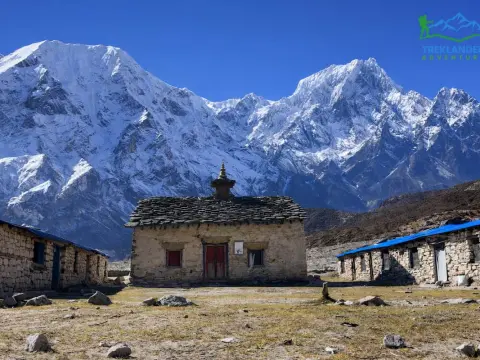
Beautiful landscapes of the Manaslu Circuit Trek.
The Manaslu area, which is full of beautiful forests, alpine flowers, and various types of wildlife, is showing clear signs of climate change. The increase in temperature, erratic changes in weather, and melting glaciers are affecting the Manaslu Circuit Trek's natural environment and putting the local flora and fauna at risk.
A significant impact of climate change is the shifting of plant zones. Due to elevated temperatures, certain subalpine and alpine species have started growing at higher elevations than before, while plants of the lowland areas are moving up the mountains. Thus, for example, rhododendrons and oak trees are now growing a little higher than in the past. This change in location disorganizes the habitats that already exist and makes it difficult for animals to live, particularly those locked in a very narrow altitude range.
Animals have to deal with this issue too. Species like the Himalayan tahr, blue sheep, and snow leopard are on a very exact altitude and temperature basis for their grazing and hunting, respectively. With the upward shift of plant zones, herbivores will find fewer of their favorite leaves and grass, and for predators, it will be challenging to locate their prey. Small creatures such as pikas and marmots have a very high-temperature sensitivity level, and when the weather suddenly warms up in an unusual way, their normal winter sleep gets disrupted, which negatively impacts their chances of survival.
7-Day Annapurna Base Camp Trek from Pokhara | 7 days
Another grave issue is the glacial retreat around the Manaslu area. Glaciers receding in this way means less freshwater is available in the form of streams and rivers. So, both the animals and the plants in the valleys face problems. Besides, variations in precipitation patterns, such as more intense monsoons and extended dry seasons, make it easier for landslides, soil erosion, and damage to forests to occur, which in turn results in the loss of habitats.
Climate change also affects seasonal cycle events, which are crucial for biodiversity. For instance, the flowering of rhododendrons and of some other alpine plants is getting delayed, which may lead to the disappearance of certain pollinators like bees, birds, etc. In addition, the arrival time of migratory birds may be thrown off, and feeding and breeding will be affected.
For this reason, the management of Manaslu Conservation Area has initiated sustainable tourism, tree planting and raising environmental awareness among the locals who live inside the area. To guard biodiversity, it is a combination of large-scale cessation of fossil fuel (greenhouse gas) emissions and small-scale maintenance of natural (fragile) ecosystems.
In a nutshell, climate change is like a catalyst that is causing Manaslu's biodiversity to gradually change: revealing different kinds of plants, showing new behavior of animals, etc. Trekkers and nature lovers can see with their own eyes these changes that call for an urgent measure to save this one-of-a-kind Himalayan area for our descendants.
Sacred Plants and Animals in Tibetan Buddhist Culture of Manaslu
The Manaslu area is not just a natural marvel but also a cultural and religious environment that has been influenced by Tibetan Buddhism. Numerous plants and animals found on the Manaslu Circuit Trek are thought to be sacred by the local communities. These sacred species are venerated, protected, and frequently linked with religious beliefs, rituals, and everyday life.
Juniper is one of the most treasured plants in the area. The fragrant wood and leaves of juniper trees are often used as incense during Buddhist rituals. Burning juniper is believed to purify the mind, get rid of negative energy, and attract blessings. Dwarf rhododendrons, which are commonly spotted close to monasteries and on high-altitude trails, are also regarded as sacred and represent beauty, strength, and spiritual development.
Plants with medicinal and aromatic qualities like Yarsagumba and Jatamansi are respected not only for their healing attributes but also for their spiritual meaning. The harvesting of these plants is generally done very carefully and with offerings, as the locals think that misuse could result in bad luck or disrupt the harmony of nature.
Besides this, animals are integral to Tibetan Buddhist lore. Although the snow leopard is seldom spotted in the wild, it is always depicted as a spiritual protector of the lofty mountains. Blue sheep and Himalayan tahr are possibly linked with nature's bountifulness and tranquility. Birds, particularly Himalayan monal (the national bird of Nepal), are prized for their colourful plumage and regarded as emblems of beauty and spiritual enlightenment.
Besides religious symbols, sacred plants and animals also play a role in shaping local conservation practices. People are generally not allowed to hunt or harm these species, which is a traditional norm helping to preserve biodiversity in the Manaslu Conservation Area. Locals also maintain the sanctity of sacred groves and high-altitude meadows that are used by rare wildlife as their habitats.
In a nutshell, the sacred plants and animals of Manaslu reveal how culture, religion, and the environment are interwoven in the Himalayas. Deep respect for these species is manifested in everyday activities, celebrations, and spiritual rituals, thus demonstrating how the Tibetan Buddhist worldview fosters ecological conservation. For hikers, the experience of coming across such sacred beings constitutes a window not only into the natural splendor but also the spiritual wealth of the Manaslu area.
Nature Photography Guide for Flora and Fauna in Manaslu Trek
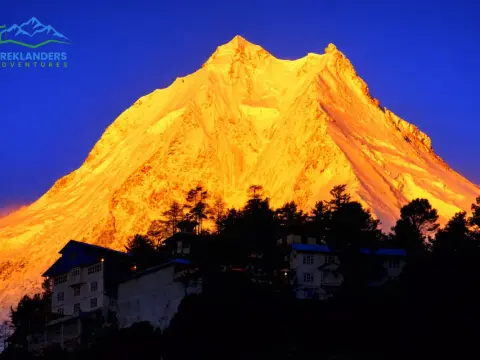
Mt. Manaslu
The Manaslu Circuit Trek is one of the most spectacular opportunities for nature photography Nepal has to offer to trekkers. The area is very abundant in biodiversity, surrounded by high mountains and with a lot of changing landscapes to provide a paradise for photographing flora, fauna, and breathtaking views. To fully enjoy your photography, it is necessary to learn the geography, animal behavior, and plant locations.
Flora Photography
There is a great variety of vegetation in Manaslu that changes with the altitude. Locally in lower subtropical zones (1,000 to 2,000m), the flora includes forests, bamboo groves, and riverside vegetation along MachhaKhola and Jagat, all of which are beautiful subjects to photograph. You can find rhododendrons flowering in spring, which is the right season to photograph them, especially around the areas of Deng, Namrung, and Lho. A macro lens will help you to focus on tiny flowers, leaves, and herbs used for medicinal purposes. On days when the sky is cloudy, the light is more diffused, and shadows are less prominent, which is very suitable for plant photography, as the colours get visually enhanced.
Fauna Photography
Animals are not very often seen along the Manaslu trek; however, if you wait long enough, you will be rewarded. At the mid-altitude levels (2,0003,500m), you might spot secretly living Himalayan black bears, musk deer, and pheasants. A telephoto lens will enable you to shoot animals without getting too close and disturbing them. You should focus the cameras during early mornings and evenings when the animals are more energetic. Among birds, the colourful Himalayan monal and the impressive lammergeier are the easiest to photograph while grazing or flying through the open sky.
High-Altitude Photography
Above 3500 meters, in the surroundings of Samagaun, Samdo, and Larkya La Pass, the green cover is limited to a few alpine flowers, mosses, and lichens that make a nice subject for your photos. Besides them, the snow-capped peaks and presence of high-altitude animals like blue sheep or Himalayan tahr offer great opportunities for spectacular shots. A wide-angle lens would be the right choice to get both the animals and their gorgeous environment in the frame.
Tips for Success
Most importantly, keep a respectful distance from wild animals, do not touch plants, and keep noise to a minimum. Since cold weather makes the battery run out faster, you should bring along spare batteries and memory cards. Play with the lighting, focal-length, and position to depict the rich biodiversity of the Manaslu trek more effectively in your pictures.
To sum up, the Manaslu Circuit Trek offers great opportunities for a photographer to capture the Himalayan flora and fauna. Besides stunning images, your knowledge about which plants and animals to photograph, and when and how, helps you adhere to the nature and local norms of conservation, thereby earning you the respect of the locals.
Best Seasons to See Flora and Fauna in Manaslu Circuit Trek
Himalayan Monal spotted along the Manaslu Circuit Trek.
The Manaslu Circuit Trek grabs the spotlight not only for the spectacular mountain views but also for the abundance of flora and fauna that vary with the seasons. The best time to witness this biological diversity naturally depends on the altitude, prevailing weather conditions, and the flowering or migration cycles of plants and animals. Knowing the changes throughout the year allows trekkers to decide on the most fulfilling trip.
Spring (March to May)
The spring season is definitely one of the most favorable times to witness the nature of the Manaslu region at its peak. On the hillsides, rhododendrons, which are Nepal's national flower, are seen in abundance in different shades of red, pink, and white, especially in the areas of Deng, Namrung, Lho, and Shyala. The subalpine and temperate forests are lively with the presence of oak, pine, and maple. This season is also great for birdwatching as migratory birds are coming back and the local ones are more active. Weather conditions are mostly favorable, which makes it a possibility to see wild animals like musk deer, Himalayan tahr, and pheasants at the open spots.
Autumn (September to November)
The autumn season is equally great for the observation of plant and animal life. The monsoon has ended, the forests are green, and the rivers are full. Alpine meadows and valleys are lush, and the sky is clear, which ensures the visibility of high-altitude animals like blue sheep roaming around Samdo and Larkya La Pass. Birdlife is vibrant, and trekkers have the chance to spot Himalayan monal, lammergeiers, and vultures hunting from the valleys. The temperatures are a bit lower than in spring, especially in the higher parts, but the fresh air makes the experience of seeing animals even better.
Summer/Monsoon (June to August)
During the monsoon season, the region experiences heavy rain, and landslides occur frequently, which limit the accessibility of trekking and wildlife sightings. Nevertheless, the lowland forests become thick and green, and some medicinal plants continue to grow. Trekking becomes quite difficult, and many trails in the upper regions may remain inaccessible.
Winter (December to February)
The winter season in the higher areas of Manaslu sees a reduction in plants and animals due to the snow and cold temperatures. Most of the animals, such as snow leopards, pikas, and alpine grasses, that are adapted to the high-altitude, are still around during this season. The snow-covered sceneries are ideal for beautiful pictures, but there are very few animals seen.
Overall, spring and autumn are considered to be the ideal seasons for observing the flora and fauna of the Manaslu Circuit Trek. In fact, during these seasons, the weather is so good, and the combination of flowering plants, wildlife, and climate is so ideal that the trek is both beautiful and very exciting from a biological point of view.
Importance of Flora and Fauna in Manaslu Circuit Trek
Biodiversity hotspot – Supports a wide variety of plants and animals unique to the Himalayas.
Ecosystem balance – Maintains soil fertility, water cycles, and natural harmony.
Cultural significance – Sacred plants and animals hold spiritual value in Tibetan Buddhism.
Wildlife habitat – Provides shelter for endangered species like snow leopards and red pandas.
Tourism attraction – Enhances trekking experiences for nature lovers and photographers.
Climate indicator – Changes in flora and fauna show the effects of climate change.
Local livelihoods – Medicinal plants, grazing areas, and forests support village communities.
Respect sacred species – Some plants and animals have cultural importance.
Conclusion
Birendra Lake- Manaslu Circuit Trek.
The Manaslu Circuit Trek presents an extraordinary combination of natural splendor, biodiversity, and cultural wealth. The journey from the subtropical forests of the lower valleys to the alpine meadows near Larkya La Pass is a showcase of different kinds of plants and animals that thrive in their respective altitudes and climatic conditions. Trekking enthusiasts may delight in the sight of rhododendron flowers, herbal plants, alpine grass, and mosses, along with rare animals such as snow leopards, Himalayan tahr, blue sheep, and beautiful birds like the Himalayan monal.
Plants and animals of the area that are considered sacred and are a fundamental part of the Tibetan Buddhist traditions signify the harmonious relationship between nature and spirituality. On the other hand, the Manaslu Conservation Area park rules help to protect the endangered species and the delicate ecosystems. Nature's changing scenes greatly influence the existence of various species, and thus, spring and autumn are the best seasons to see both flora and fauna. Nevertheless, environmental issues such as global warming, ice melting, and the shifting of animal habitats are threatening the natural world and require locals and tourists to be mindful of the environment and support conservation efforts.
Wildlife lovers, animal lovers, and photographers will find that the Manaslu Circuit Trek is much more than just a route over mountains; it is a vibrant ecosystem where each altitude zone has its own story of survival, adaptation, and ecological harmony. By trekking responsibly and observing local traditions and wildlife, tourists can enjoy the marvels of Manaslu's nature, and at the same time help preserve this Himalayan gem for the generations to come.
In essence, the flora and fauna of Manaslu reflect the resilience and diversity of the Himalayas, making the trek an unforgettable adventure that combines breathtaking landscapes, vibrant wildlife, and cultural heritage in one remarkable journey.