The Tamang Heritage with Langtang Valley Trek Package offers a culturally immersive and visually spectacular experience within the Langtang region of Nepal, located just north of Kathmandu. The combination of the two treks presents a rare opportunity to witness the authentic life of Tamang villages, set against the stunning alpine surroundings of the Langtang Valley, which can rightly be called Heaven on Earth.
The first part of the pilgrimage unfolds through the lyrical, almost mystical-looking Tamang villages of Gatlang, Tatopani, Thuman, and Briddim, along the border with Tibet. This is the area where Tibetan Buddhism has had the greatest influence on local culture over the centuries. Trekkers can expect to see stone houses, colourful prayer flags, mani walls, ancient monasteries, and experience the traditional, friendly hospitality of the locals. The Tamang people are believed to have originated from Tibet a long time ago, yet they have managed to preserve their language, clothing, traditions, and festivals largely unchanged. Thus, they offer travellers a genuine glimpse of living Himalayan culture rather than a well-rehearsed show staged for tourists.
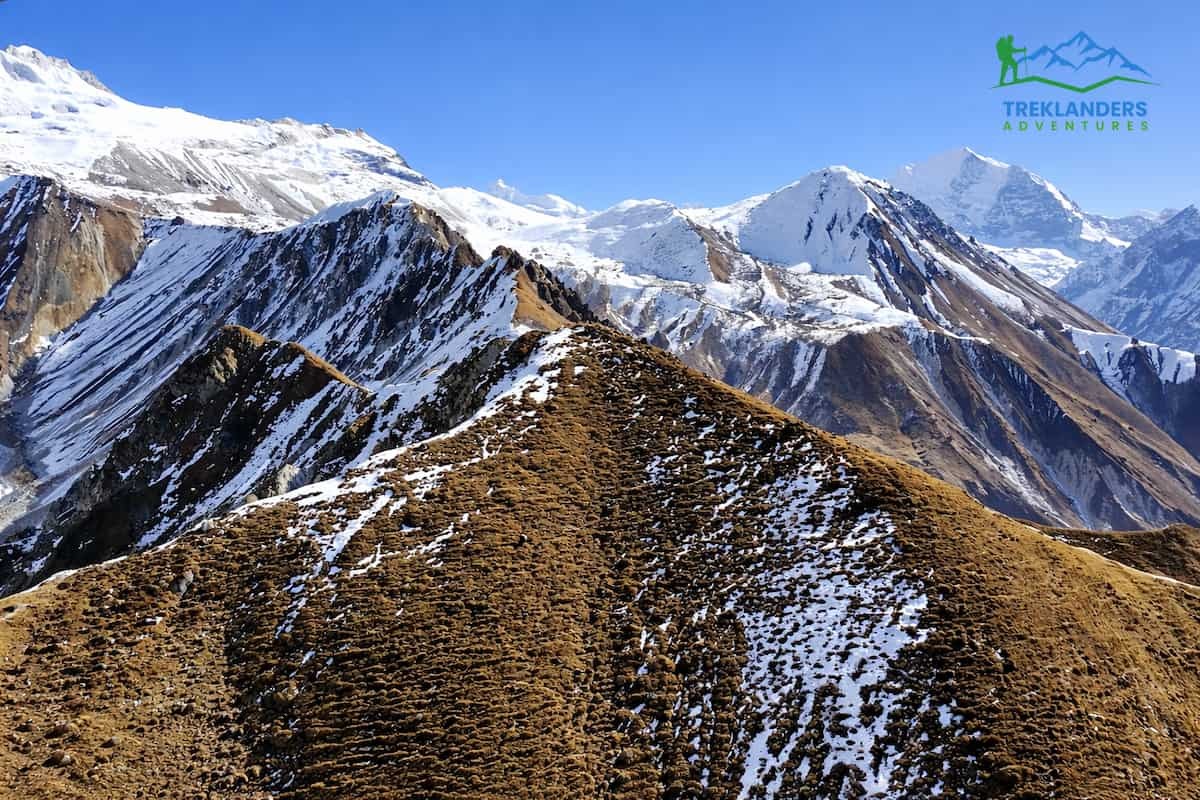
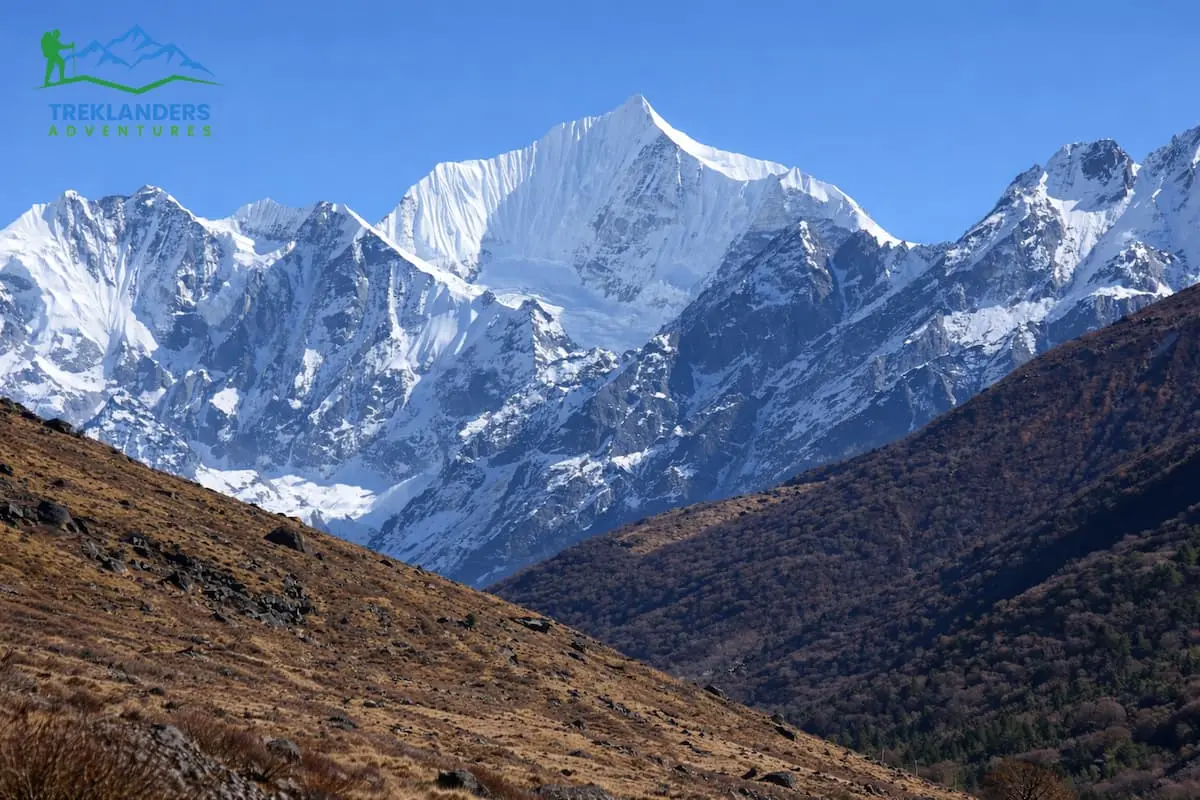
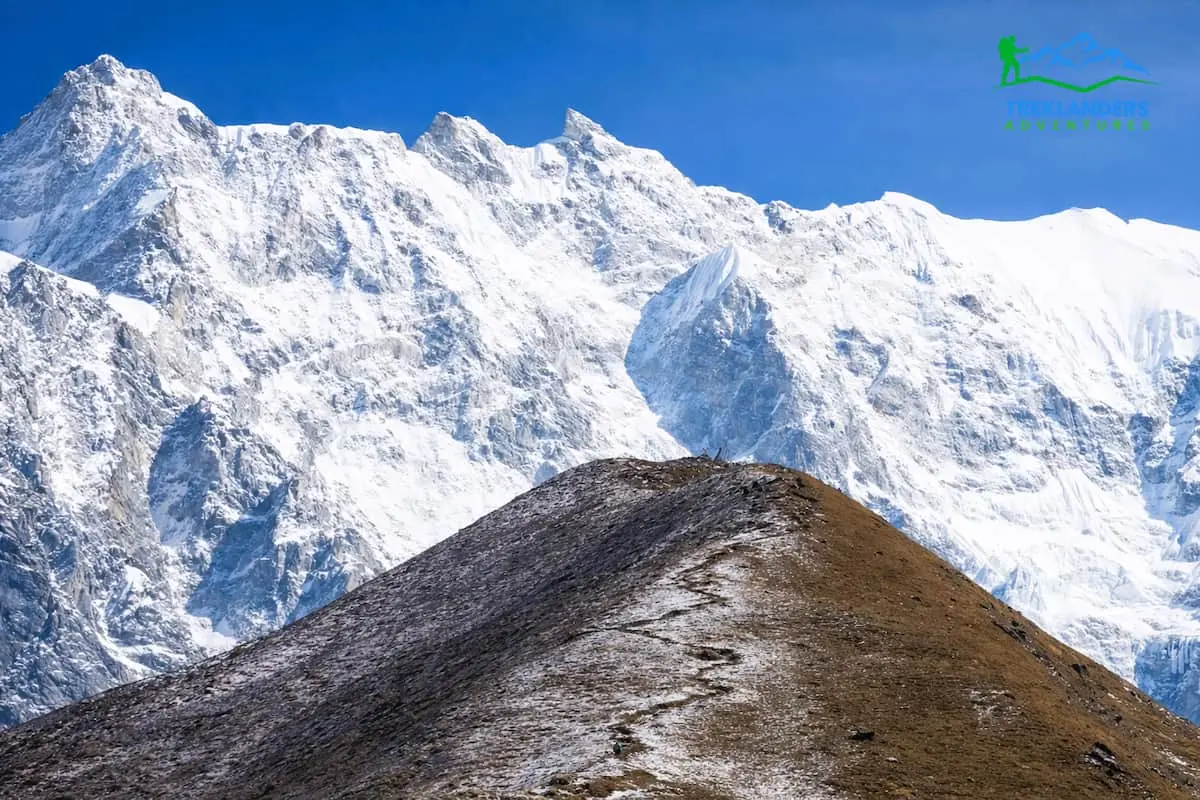
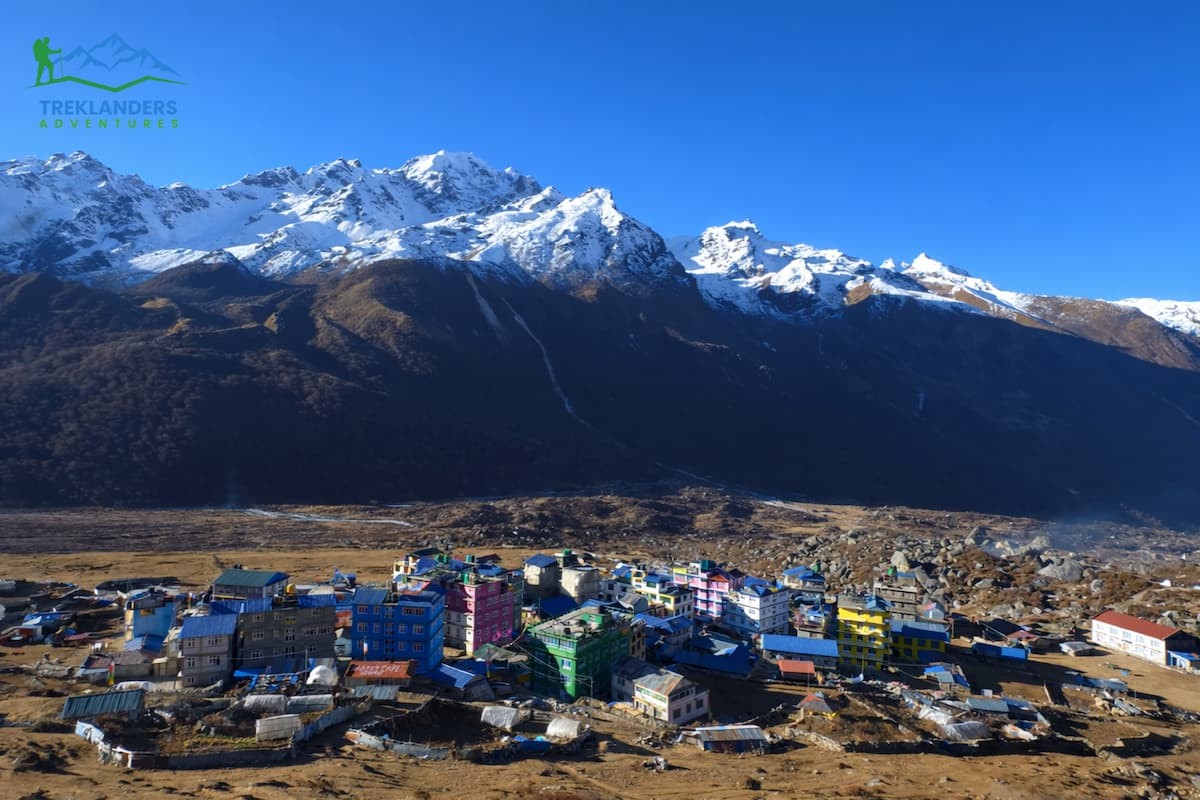
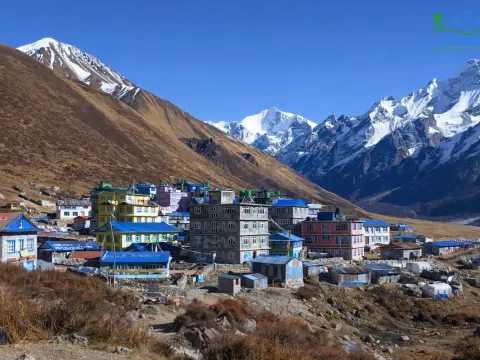
The transition to the Langtang Valley brings a change in the scenery as well. What used to be terraced farming and red rhododendron forests gradually turn into beautiful alpine meadows and glacial valleys. After passing through Langtang Village and Kyanjin Gompa, you will find Langtang Lirung (7,227 m), Dorje Lakpa, and Ganesh Himal towering above. Optionally, you can hike up to Kyanjin Ri or Tserko Ri for a view that is truly spectacular, snow-covered peaks, glaciers, and the pristine wilderness of the high altitude.
This trek is of moderate difficulty and is thus ideal for trekkers with average fitness levels. The clear and well-maintained paths, a steady rise in elevation, and quality teahouse accommodation make it a doable yet substantially rewarding trek. The most favorable seasons are spring (from March to May) when the forests are adorned with the rhododendrons, and autumn (from September to November), which is famed for clear skies and stable weather.
On the whole, the Tamang Heritage Trek, along with the Langtang Valley Trek Package, is a perfect mix of culture, nature, and adventure. The itinerary includes provisions for supporting local people through homestays and teahouses while offering a gratifying trekking experience far from the crowded routes of Nepal. It is a suitable trek for those travellers who significantly appreciate culturally meaningful encounters combined with the stereotypical Himalayan landscape.
Out of all the factors that matter, choosing the right season is the most important if you want to have an incredible experience of the Tamang Heritage Trek with Langtang Valley. The thing is that the weather is a major player here, as it not only determines how safe the trail will be but also influences the kind of mountain views and cultural experiences you'll get. So, basically, the trek is doable at any time of the year. However, spring and autumn stand out as the top seasons mainly because the weather is nice, the sky is clear, and the temperature is just right.
Spring is definitely among the high seasons for the Tamang Heritage Trek route. Throughout these months, the weather is not too hot or cold, and the nature around the trail gets so colourful with the blooming of rhododendrons, magnolias, and wildflowers that even the Tamang Heritage villages and the nearby forests become a part of the flower scenery.
Generally, the temperature during the day can be around 10-20 °C at the lower altitudes, and if you go to the higher ones, such as Kyanjin Gompa, it might be a bit cold but still okay. Mountains are usually perfectly visible in the mornings, which is the best time to enjoy the magnificent views of Langtang Lirung, Ganesh Himal, and Dorje Lakpa. It is also a good time culturally, as the locals are busy with the community festivals, and therefore, the trekkers get a chance to be part of authentic Tamang traditions and folkways.
Autumn is, without doubt, the best season one can choose if they want to do the Tamang Heritage and Langtang Valley trek. Post monsoon, the air is very clean, the skies have no clouds, and the mountain views are the most vibrant of all the seasons. Temperatures during the day are generally warm, while nights are cool at the top points.
Walking paths are dry and safe; thus, trekking is quite enjoyable even for those who are going to high altitudes for the first time. Festivals like Dashain and Tihar, being the top ones, happen during this period, giving an added cultural experience to the village stays. Autumn is also the busiest season owing to the perfect conditions.
Winter hikes are more peaceful as there are fewer people and the surroundings are covered in snow, which is especially nice at elevations above 3,000 meters. That said, temperatures can fall below freezing at night, and large accumulations of snow may close off the passes high up and the viewpoints such as Tserko Ri.
Monsoon is characterized by heavy downpour, leeches, and the possibility of landslide especially along the road sections. With frequent cloud cover, it is hardly possible to spot the mountains but then the whole landscape turns to the color of green and is very lively.
Overall, spring and autumn are the best seasons not only because of the weather but also due to the stunning views and cultural experiences one can have while doing the Tamang Heritage Trek in Langtang Valley.
Trekking companies organizing the Tamang Heritage Trek with Langtang Valley offer their clients official permits before entering the area. It is a must for every foreign and domestic visitor to have these permits, and the local authorities run checks at several points along the route. The permit system helps mainly with the conservation of natural resources, the regulation of tourism activities, and the safety of trekkers in the Langtang area.
The most essential document to have for this trek is the Langtang National Park Entry Permit. Since the Tamang Heritage Trail as well as the Langtang Valley are in Langtang National Park, this permit is always with you from the beginning of the trek until the end. The park houses various species of fauna, flora, and alpine ecosystems, and the permit contributes to supporting conservation and sustainable tourism programs. Trekkers have to show this permit all the time, as it is controlled at the starting points like Syabrubesi or Dhunche and sometimes at the checkpoints on the route.
Besides the national park permit, trekkers must obtain a Trekkers Information Management System (TIMS) card as well. This card stores the main details of a trekker, such as the route they are taking and their emergency contacts. The TIMS system is used for the safety of trekkers in that it allows the authorities to monitor the movements of the trekkers in the region so that they can give a timely response if there is an emergency, e.g. altitude sickness, any natural disaster, or accidents. Regardless of whether you are trekking on your own or with an organized group, having a valid TIMS card is required.
Both permits can easily be secured in Kathmandu prior to the trek, either directly through the Nepal Tourism Board or via a licensed trekking agency. Normally, trekkers need to show a valid passport and recent pictures at the time of submitting the application. With an agency, you can usually count on the staff to take care of the paperwork, so you can concentrate completely on the trek arrangements and preparations.
It is important that you get the permits before you actually go into the trekking area because you might not be able to get them on the trail. Permits are strictly for the holder, cannot be transferred, and should be presented to the authorities at any time they are asked.
In brief, proper permits are a must for the Tamang Heritage Trek with Langtang Valley. Having valid paperwork on hand not only guarantees a hassle-free trek but also helps in conserving the environment and promotes safe and responsible tourism in the Langtang area.
Accommodation options on the Tamang Heritage Trek with Langtang Valley mainly include teahouses and community-run homestays that provide trekkers with a luxurious yet genuine Himalayan experience. Although the amenities are minimal, they perfectly match the remote mountain surroundings, and guests are offered warm hospitality, local cuisine, and an opportunity to deeply experience village life.
Along the Tamang Heritage Trail segment, the majority of the accommodation is in traditional homestays in villages like Gatlang, Tatopani, Thuman, and Briddim. These homestays feature local stone architecture and show strong cultural influences of Tibetan and Tamang. Generally, the rooms are very simple, mostly twin-sharing, with fresh bedding and shared bathrooms. By staying in homestays, trekkers are able to experience the lifestyle of the villagers, the local dishes, and the cultural customs firsthand. Usually, the nights are spent around a communal dining area, and sometimes traditional Tamang songs and dances add to the cultural exchange experience.
When the trekking trail reaches the Langtang Valley part, accommodation becomes slightly more standard, teahouse type. These establishments offer more amenities than homestays and are especially well-equipped in places like Lama Hotel, Langtang Village, and Kyanjin Gompa. Rooms are still basic but comfortable, normally having two beds, blankets, and shared toilet facilities. At higher elevations, the facilities are more basic due to limited resources as well as severe weather conditions.
Dining rooms in teahouses generally have a cozy and inviting atmosphere; a central stove often provides the heating. Meals are typically a combination of Nepali staples, such as dal bhat, along with some uncomplicated international dishes. Some places might have facilities like hot showers, charging points, and Wi-Fi; however, the higher you go, the less availability there will be. It is best for trekkers to have a sleeping bag for extra warmth, especially if they are going during the colder months.
The level of accommodation depends on the place and season, but generally, the standards of cleanliness and safety are well kept. If you come at a time when the trekking season is busy, the rooms are likely to be taken very fast, so it is better that you book your room through a trekking agency in advance. Although they are simple, these accommodations can be considered one of the top experiences on this trek since they focus on sustainability and community-based tourism.
In general, accommodation on the Tamang Heritage Trek with Langtang Valley combines comfort and authenticity in a perfect way. Not only does staying in local homestays and teahouses support rural livelihoods, but it also adds to the cultural richness of the trekking experience, thus making the journey both worthwhile and memorable.
Food and drinking water on the Tamang Heritage Trek with Langtang Valley are easily obtainable throughout the route, mainly through teahouses and community-run homestays. Although the menus are not varied, the meals are nutritious, freshly made, and fit the needs of trekking in the Himalayas very well.
Most meals during the trek are made from locally produced ingredients. The standard and most dependable meal is dal Bhat, a typical Nepali dish of rice, lentil soup, seasonal vegetables, and pickles. It is favored by trekkers since it is very filling, of high-energy content, and often accompanied by free refills. Other foods that can generally be purchased are noodles, fried rice, pasta, potatoes, soups, pancakes, eggs, and simple Tibetan-style bread. In Tamang villages like Gatlang, Thuman, and Briddim, trekkers might even have the chance of tasting traditional local dishes prepared in homestays, which are a congenial expression of regional cuisine.
As the altitude rises towards Langtang Village and Kyanjin Gompa, the food options become increasingly scarce because of transportation problems and severe weather conditions. Nevertheless, the variety offered by the local teahouses is still sufficient to satisfy the daily energy requirements of the trekkers. It is best to consume warm, freshly prepared meals and refrain from eating raw or undercooked food, particularly at higher altitudes.
Water for drinking is accessible from streams along the trek, but it must be boiled or otherwise treated before drinking. Water in plastic bottles can be bought in the villages in the lower valley, but as you ascend, the supply of bottled water will become increasingly limited, and in any case, plastic usage is discouraged in this area. A water bottle that you can refill and water purification tablets, drops, or a filter are a much more environmentally friendly and hence recommended way of proceeding. A lot of teahouses offer boiled or filtered water, which is safer than directly drinking from the tap or the river.
Keeping oneself properly hydrated is one of the most effective ways of avoiding health problems caused by high altitudes. Trekkers are advised to keep themselves well hydrated throughout the day by drinking different fluids such as warm water, herbal tea, and soup. Drinking alcohol while trekking is not advisable as it could lead to dehydration and make you more susceptible to altitude sickness.
To conclude, food and drinking water on the Tamang Heritage Trek with Langtang Valley are sufficient, safe, and of the highest standards for trekking. If you combine proper hydration practices along with sensible food choices, you will be able to keep your energy levels up and have a nice and healthy trip through this culturally rich Himalayan region.
Health and safety during the Tamang Heritage Trek with Langtang Valley should be paramount since the trip takes you into the wild, changing weather, and high-altitude conditions. In fact, if you are well prepared and act responsibly, this trek is quite safe, and a good fitness level of an average person fits the bill for the trek.
The major health risk on this trek is altitude sickness, basically, because the trail goes on higher and higher above 3,000 meters, and Kyanjin Gompa is the place where you stay the night at the highest point. Acclimatization is a must, and that is why the daily plan is made to include a gradual increase in altitude and a rest day. Trekkers should not race in their movement but rather walk at a steady pace and be attentive to their body signals. Headache, dizziness, nausea, or loss of appetite are the common symptoms that should never be neglected. If symptoms become severe, then, as a matter of fact, going down the mountain is by far the best treatment.
Moreover, observing good hygiene while nourishing our bodies also assists in not getting sick. Consuming freshly prepared food and drinking the water which has been treated or boiled, and washing hands frequently are the best weapons against stomach diseases. It is highly advised to bring along your personal medications, a basic first-aid kit, and any prescribed medicines, since once you start the trek, the possibility of coming across medical facilities is negligible.
The weather in the Langtang area is known for its unpredictability, and the changes in weather can be very sudden, especially higher up the mountain. Travellers should always be equipped to handle extreme cold, gusty winds, and precipitation in the form of either rain or snow, depending on the season it is coming. The right garments, such as those that can be layered, waterproof coats, and warm clothing, are not only needed for comfort but are also lifesaving in the case of hypothermia or being left exposed to the elements. High-quality trekking shoes provide immense help in preventing mishaps like slipping or getting the foot hurt while walking over rocky or uneven surfaces.
Safety of the trail is, on the whole, satisfactory, with paths that are easy to follow and numerous tea houses. That said, one should not relax one's vigilance when crossing suspension bridges, going down steep slopes, or when the weather is bad. One of the best safety measures during a trek is being accompanied by a licensed guide who is knowledgeable about altitude sickness, equipped with first aid skills, and who knows the way very well.
In the most remote areas, the situation is that there are hardly any communication means, and even if there is a mobile network, it may not be functioning properly. It is a very good idea to keep family members or other contacts aware of your plans before setting out. If there is a need for rescue, then a helicopter can easily be arranged; however, the time of arrival of help is dependent on the state of the weather and other means of transport.
In general, if one has a reasonable program, gets used to the altitude slowly, and knows when to stop, then doing the Tamang Heritage Trek along the Langtang Valley is quite safe. Besides, it is a wonderful and highly satisfying Himalayan trekking experience.
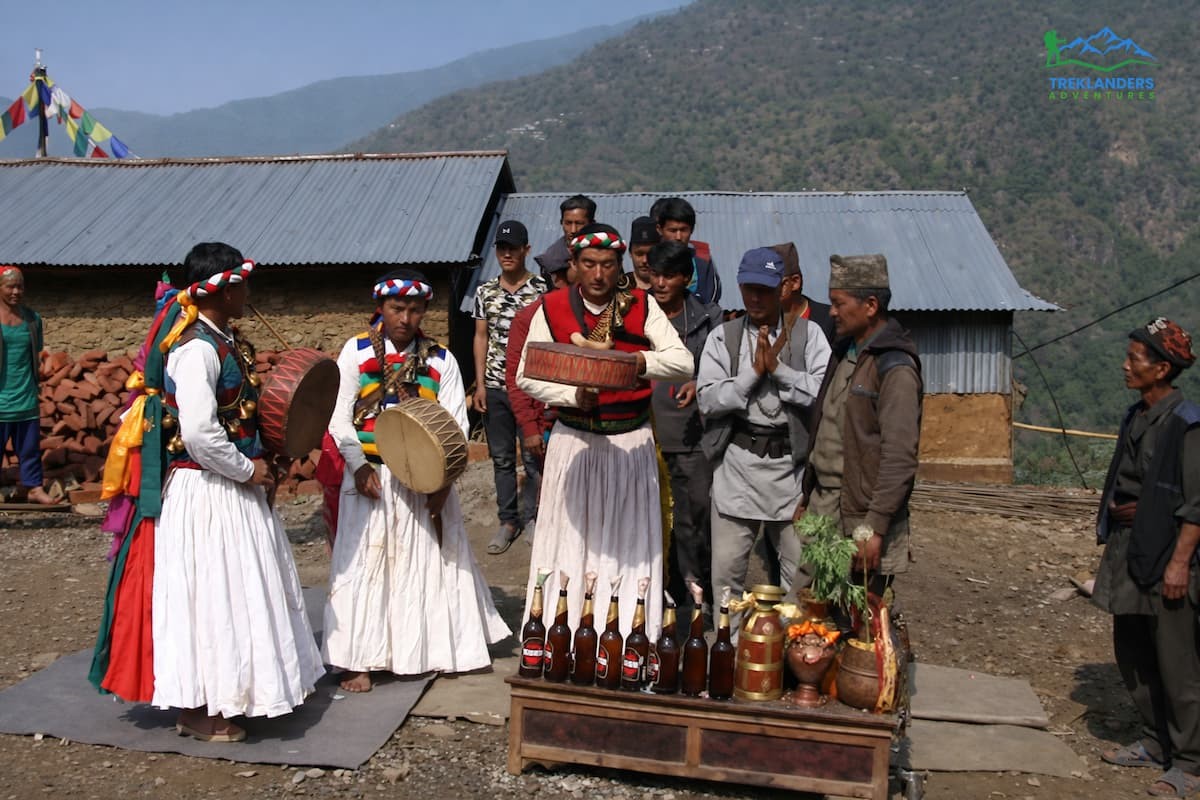
The Tamang Heritage Trek with Langtang Valley can immerse you in a cultural and spiritual journey to the very depths of the region, which is mainly inhabited by the Tamang people, one of Nepal's oldest native communities. The life of the Tamang people has been greatly influenced by Tibetan Buddhism that also governs the local culture, ceremonies, building styles, and everyday habits all along the trek.
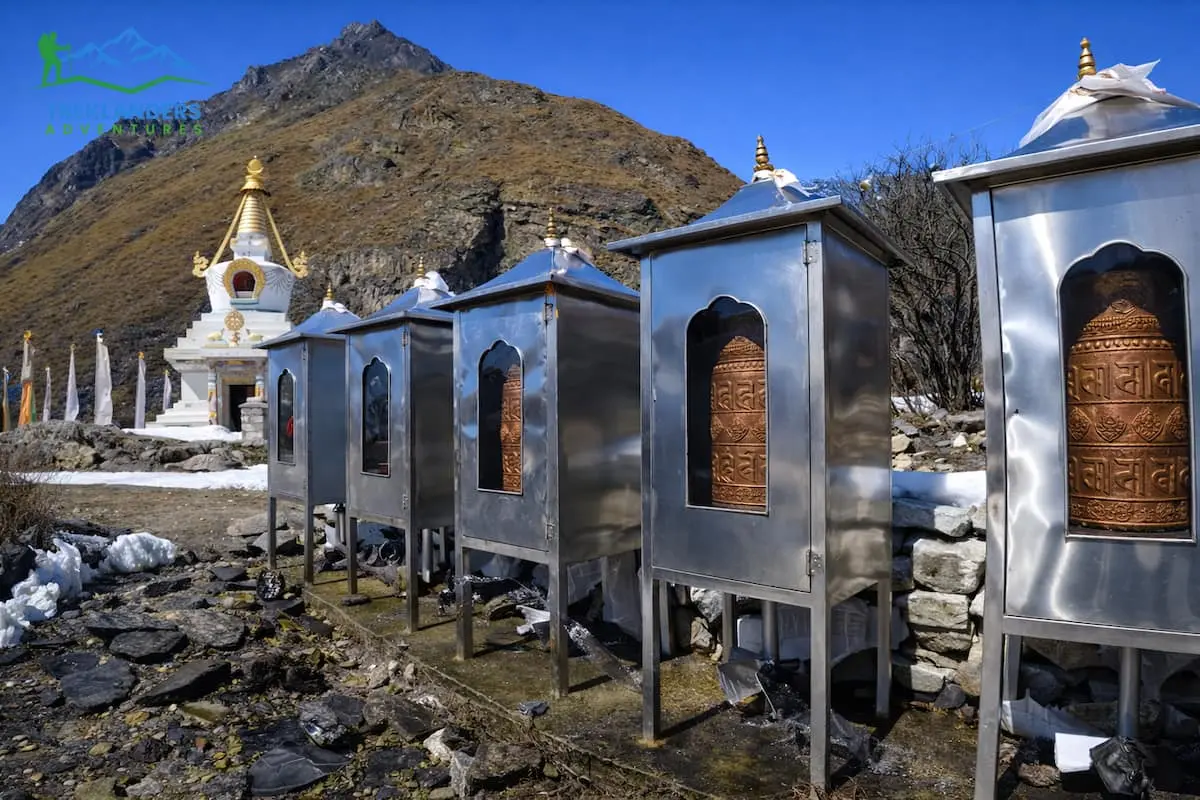
Religion is the main focus of the locals' way of life in the villages along the Tamang Heritage Trail. Buddhists in this area are mainly the followers of the Nyingma and Kagyu sects, which have a strong link with Tibetan religious heritage. The trekkers on the way see many walls deeply engraved with prayers, bright prayer flags, chortens (stupas), and old monasteries.
These religious edifices are not only sanctuaries but also help to preserve the culture and serve as centers for local gatherings. The locals usually circumambulate the mani walls and stupas in a clockwise direction, which shows the deep spiritual roots of their culture that visitors are advised to respect.
Some of the villages, like Gatlang, Thuman, and Briddim, are best known for their traditional Tamang culture. Stone houses with wooden carvings, flat roofs, and well-ordered villages disclose the ancient ways of architecture designed to fit the life in the mountains.
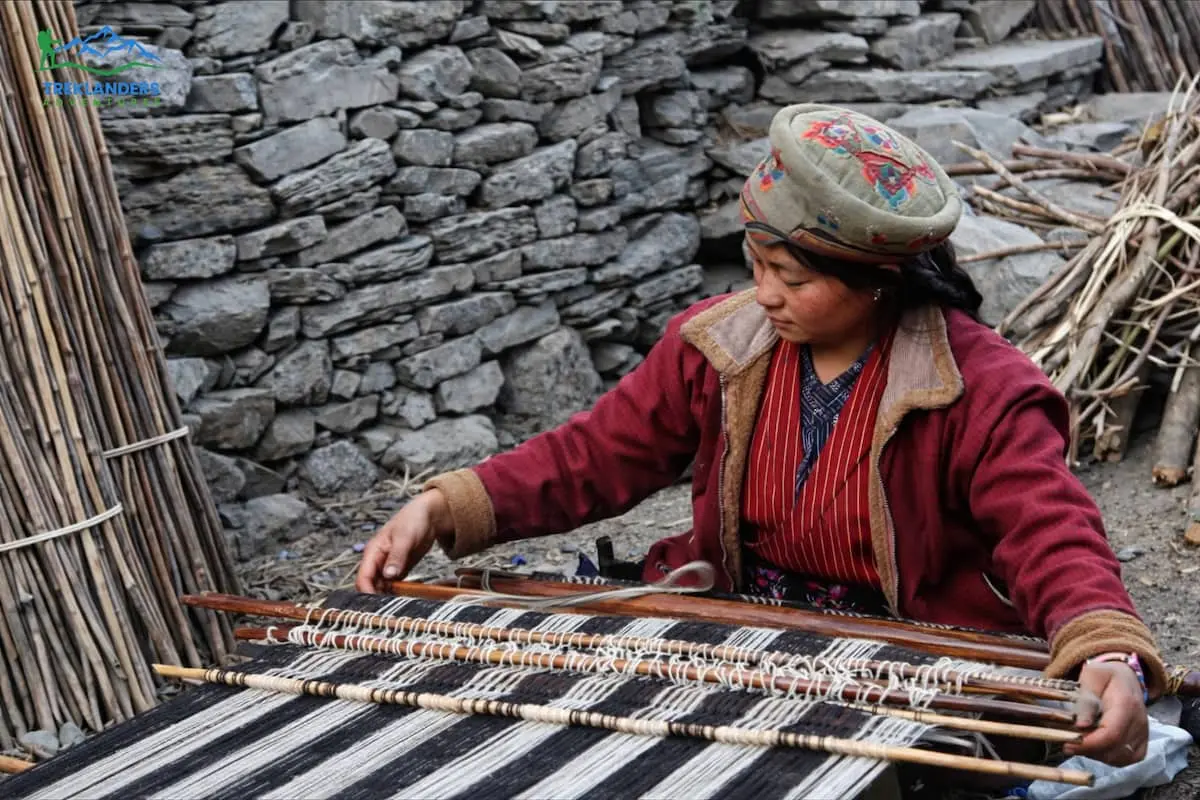
Hand-made clothes are usually worn at the times of religious festivals and other big ceremonies. The dresses are made of handwoven textiles, and the ornaments are the symbols of the wearer's social status and cultural background.
Music and dance are deeply intertwined with the cultural identity of the Tamang people. Folks usually gather around the damphu drum when they are performing their age-old songs on occasions like festivals, weddings, and other community celebrations. These songs are basically a form of pictorial expression depicting stories of ancestors, migration, scenery, and spiritual faith. Visitors who stay at homestays can sometimes get a chance to see traditional performances or even take part in them and thus have an authentic cultural experience.
When the trail goes further to the Langtang Valley, we find a convergence of different cultures where Sherpa and Tibetan influences also become evident. Localities such as Langtang and Kyanjin Gompa illustrate a pretty good blend of Buddhist tradition, yak herding culture, and mountain life. Just like in any other parts of the world, people here continue shaping their lives around the calendar of seasonal festivities, religious observances, and ceremonies conducted in the monasteries, even though these are high-altitude areas.
Changes brought about by modernity and the devastating earthquake of 2015 couldn't erase the locals' strong community spirit. In fact, they are so determined to protect their religious and cultural ways. One of the means through which they can achieve this is community-based tourism, which essentially is a two-way process. Visitors not only get to enjoy the spectacular trekking routes but also have the chance to get along with the locals in a manner that is respectful and mutually beneficial.
In short, the mix of religion and culture that one is able to experience along the Tamang Heritage Trek through Langtang Valley is a great window into the spiritual dimension of Himalayan life in the mountain regions. It makes this trek a culturally rewarding journey, besides being a visually stunning one.
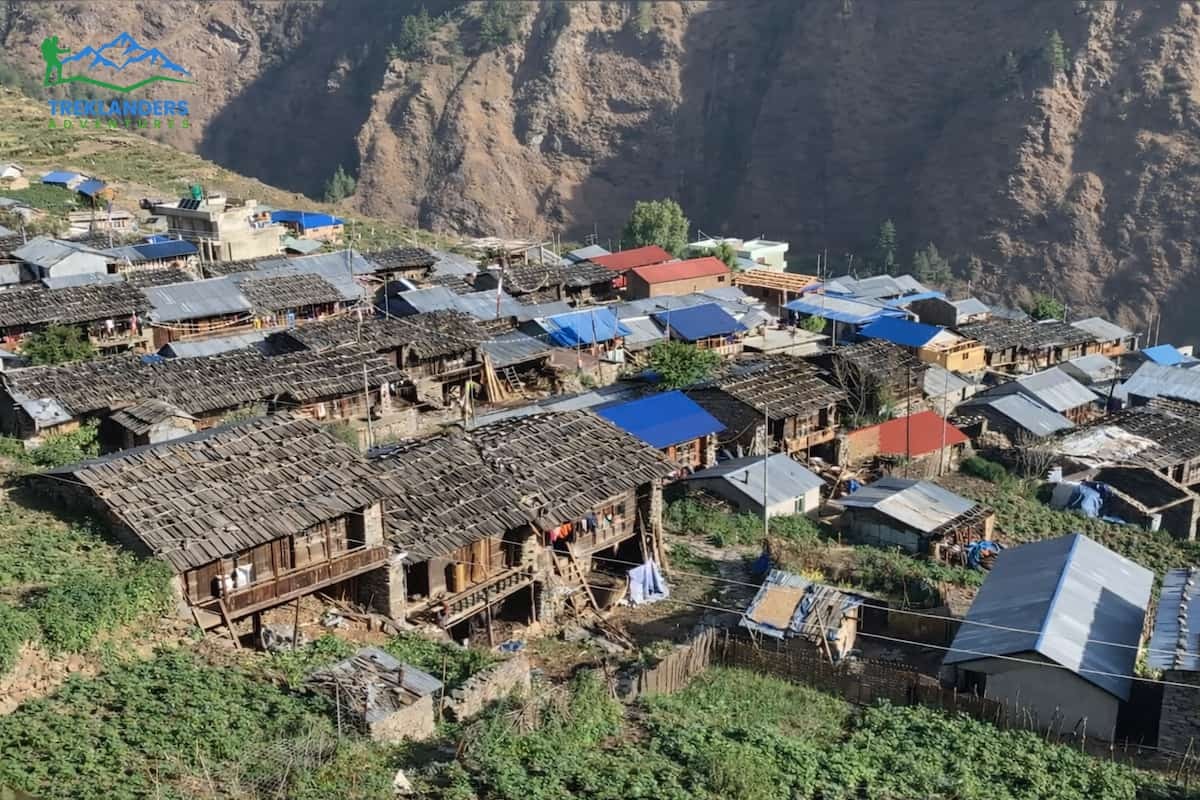
One of the most significant reasons to pick this trek is its deep cultural immersion. The Tamang Heritage Trail winds through traditional villages such as Gatlang, Thuman, Tatopani, and Briddim, where age-old traditions, Tibetan Buddhist rituals and local ways of life are still preserved. In contrast to massively commercialized trekking routes, this path offers the real chance to meet locals through homestays, traditional food, and cultural performances. It reveals the locals' lifestyle in the Himalayas rather than a superficial tourist experience.
Besides that, the major attraction is the mixture of landscapes. A single trek takes you through terraced farmland, thick rhododendron and pine forest, alpine meadows, glacial valleys, and mountain viewpoints. Since the path leads to Langtang Valley, the scenery is getting more and more spectacular with the sights of snow-capped summits like Langtang Lirung, Ganesh Himal, and Dorje Lakpa at close range. The difference between cultural villages and the pure alpine wilderness makes this trek a feast for the eyes and soul.
The hike is also recognized for being less congested than other famous trails, such as Everest Base Camp or Annapurna Circuit. This means a quieter and more serene hiking experience that perfectly suits travellers looking for solitude, self-reflection, and a stronger bond with nature. Though the trail has a secluded vibe, it is a familiar path with teahouses and local support.
Looking at it from a practical standpoint, the trek is straightforward to get to from Kathmandu, and it doesn't entail domestic flights, which means there are fewer travel expenses and less hassle. The plan of the trek considers slow and steady altitude ascent with days of acclimatization so it can be a good option for average fitness trekkers who are not very experienced at high altitudes.
Lastly, the decision of this trek is a vote for community-based and sustainable tourism. The money that goes to the village families through the homestays and local teahouses becomes a part of the earthquake recovery effort in Langtang.
To sum up, the Tamang Heritage with Langtang Valley Trek suits perfectly those who value cultural authenticity, admire natural beauty, cherish quiet trails, and want to do responsible travel while experiencing a Himalayan trekking adventure that is both rewarding and within their capability.
Trip Summary
Mode of Trek: Best available teahouses and lodges
Trekking Grade: Moderate; 5–6 hours daily with gradual altitude gain
Trekking Region: Langtang Valley, Langtang National Park
Highest Elevation: Kyanjin Gompa – 3,870 m; Kyanjin Ri – approx. 4,773 m
Optional Hikes: Tserko Ri – approx. 5,033 m
Trek Duration: 11 Nights, 12 Days trekking
Total Trip Duration: 14 Days (Arrival in Kathmandu to final departure)


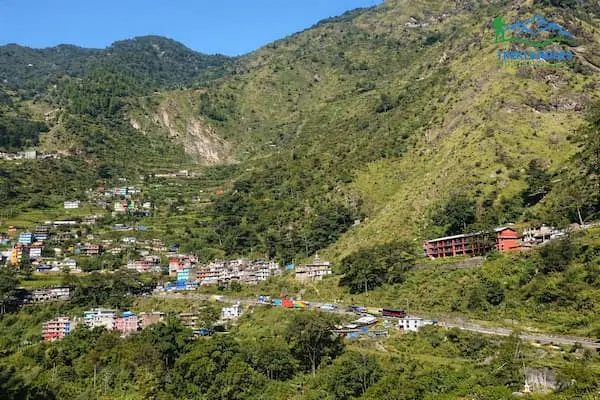
After breakfast, you drive north from Kathmandu to Syabrubesi, the gateway to both the Tamang Heritage and Langtang Valley treks. The road follows rivers and hills, passing through Trishuli Bazaar, rural villages, and terraced farmland.
As the drive progresses, views of Ganesh Himal and lush valleys appear. Though the road is rough in sections, the journey is scenic and culturally interesting. You arrive at Syabrubesi, a small settlement at 1,460 meters, and prepare for the trek.

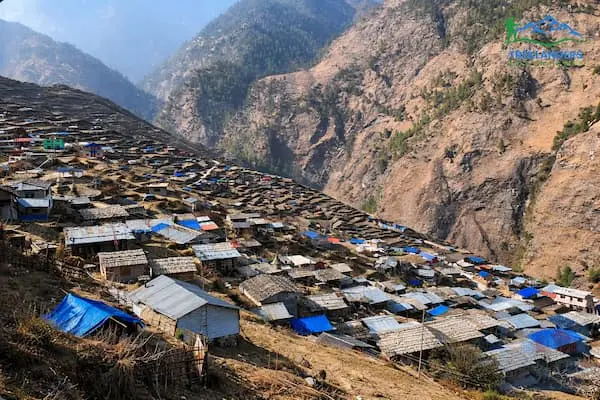
Today’s trek begins with a steady uphill climb through forests and traditional Tamang villages. Crossing suspension bridges and stone staircases, the trail gradually ascends to Gatlang, a beautiful Tamang heritage village.
Gatlang is known for its stone houses, prayer flags, and monasteries. The village reflects strong Tibetan Buddhist influence and offers a warm homestay experience. Altitude gain is noticeable, so a slow pace is maintained.
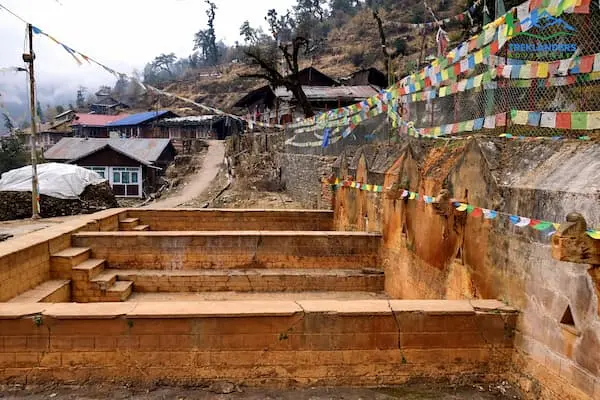
The trail descends from Gatlang to lush forests before climbing again toward Tatopani. Along the way, you pass waterfalls, yak pastures, and traditional settlements. Tatopani, meaning “hot water,” is famous for its natural hot springs.
After a day of trekking, soaking in the hot springs helps relax tired muscles and improves circulation. The village sits at 2,607 meters and is surrounded by alpine scenery.
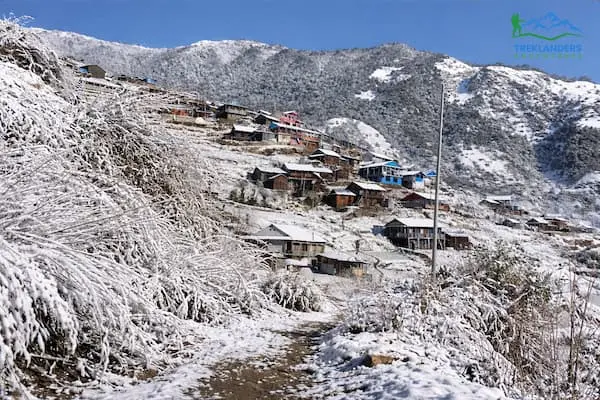
This is one of the most scenic days of the Tamang Heritage section. The trail ascends to Nagthali Danda (approx. 3,165 m), a sacred ridge offering panoramic views of Langtang Lirung, Ganesh Himal, and Tibetan peaks.
Passing through Brimdang, a seasonal settlement, you descend gradually to Thuman, a culturally rich Tamang village known for traditional songs, dances, and architecture. Overnight in Thuman.
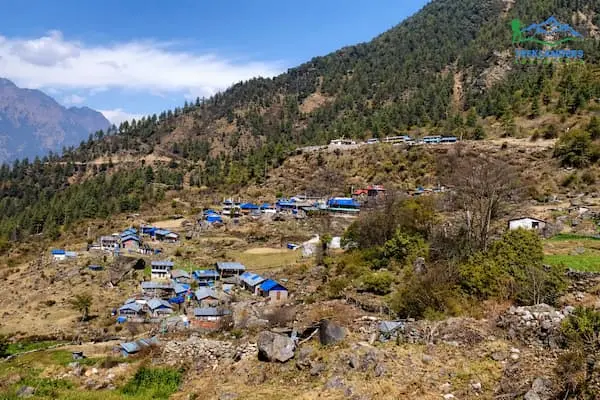
Today’s trek is relatively shorter and easier. The trail passes through pine and rhododendron forests, crossing small streams and mani walls. Briddim is a model community-based tourism village with well-managed homestays.
The village strongly reflects Tibetan culture, and local’s welcome trekkers warmly. Cultural interaction is a highlight of this day. Overnight in Briddim.
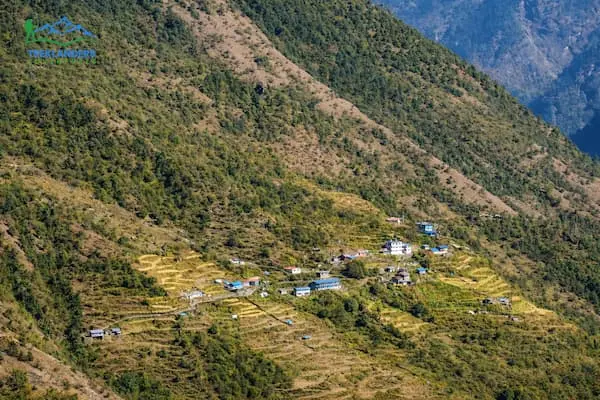
Leaving the Tamang Heritage trail, you gradually connect toward the Langtang Valley route. The trail ascends through forests and joins the main Langtang trail near Lama Hotel before climbing to Sherpa Gaon.
Sherpa Gaon offers peaceful surroundings and mountain views. Altitude gain continues steadily, so rest and hydration are important. Overnight in Sherpa Gaon.
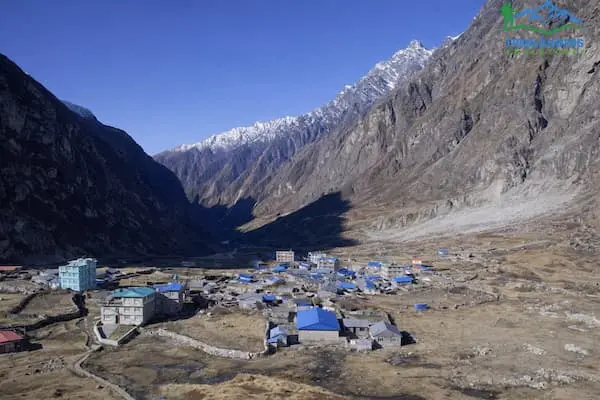
The landscape opens into a wide alpine valley as you trek along the Langtang River. Passing Ghodatabela, the trail gradually ascends to Langtang Village, rebuilt after the 2015 earthquake.
Surrounded by towering peaks, Langtang Village lies at 3,430 meters and offers dramatic mountain scenery. Overnight in Langtang Village.
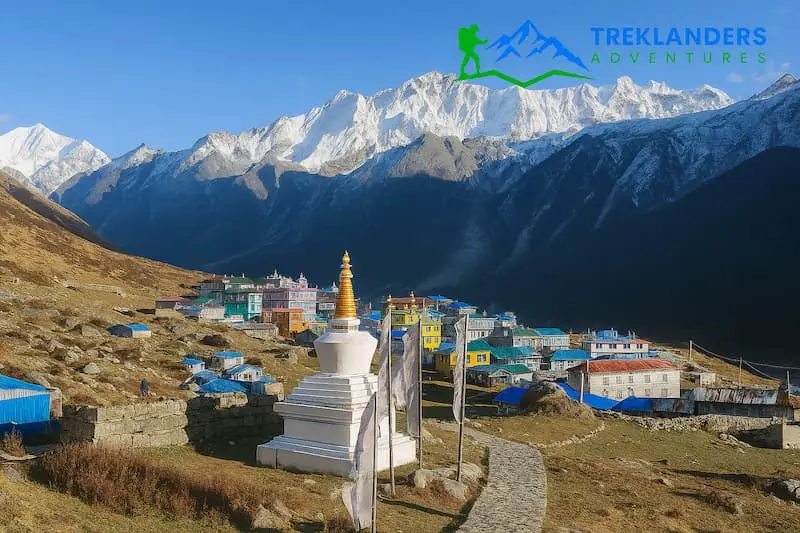
A shorter trekking day allows better acclimatization. The trail climbs gently past yak pastures, prayer wheels, and glacial streams to Kyanjin Gompa, the spiritual and scenic heart of Langtang Valley.
From here, close views of Langtang Lirung, glaciers, and surrounding peaks dominate the landscape. Overnight in Kyanjin Gompa.
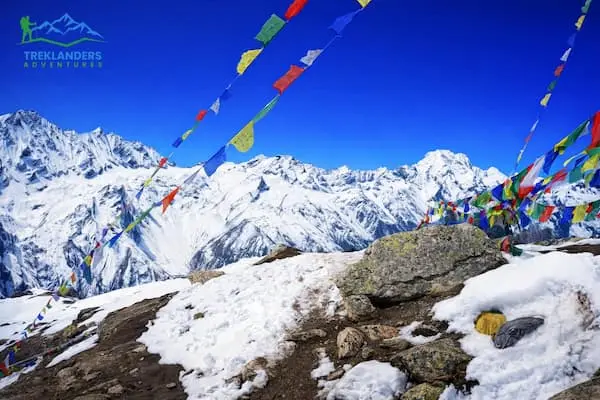
This rest and acclimatization day includes optional hikes.
From Kyanjin Gompa, you can enjoy one of the most rewarding day hikes in the Langtang Valley by ascending either Kyanjin Ri or Tserko Ri.
Kyanjin Ri (4,773 m / 15,659 ft) is the more accessible option, taking around 3–4 hours round trip. The trail climbs steadily above the village and offers stunning views of Langtang Lirung, glaciers, and the surrounding Himalayan peaks. It’s ideal for acclimatization and for trekkers who want incredible scenery without extreme effort.
Tserko Ri (4,984 m / 16,352 ft) is higher and more demanding, usually requiring 6–7 hours round trip. The ascent is steeper and more strenuous, but the reward is panoramic, unobstructed views across the Langtang range and deep glacial valleys. This hike is best attempted early in the morning and only in good weather.
Both hikes are excellent acclimatization walks and highlights of the Langtang Valley Trek, offering breathtaking mountain scenery and a strong sense of achievement before returning to Kyanjin Gompa.After the hike, return to Kyanjin Gompa for rest. Overnight in Kyanjin Gompa.
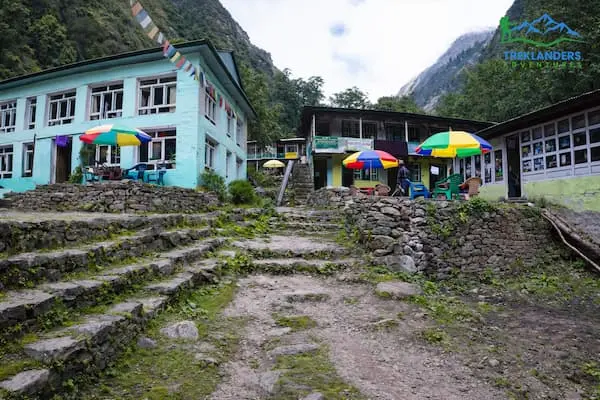
The return journey begins with a long descent through Langtang Valley. Retracing your steps, you pass Langtang Village and Ghodatabela, descending into forested terrain.
Lama Hotel provides a comfortable stop after a long day. Overnight at Lama Hotel.
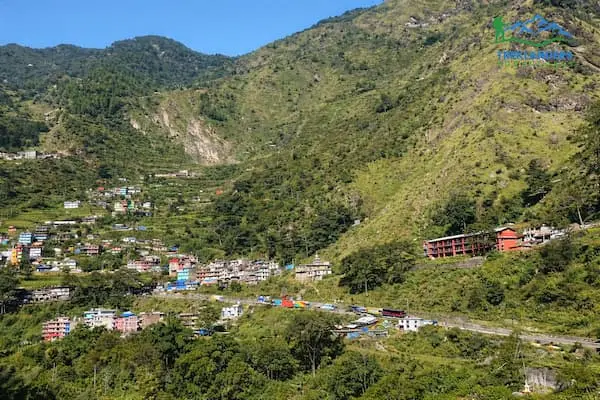
The final trekking day descends through forests and river crossings back to Syabrubesi. The lower altitude brings warmer temperatures and lush greenery.
Celebrate the completion of the trek with your team. Overnight in Syabrubesi.
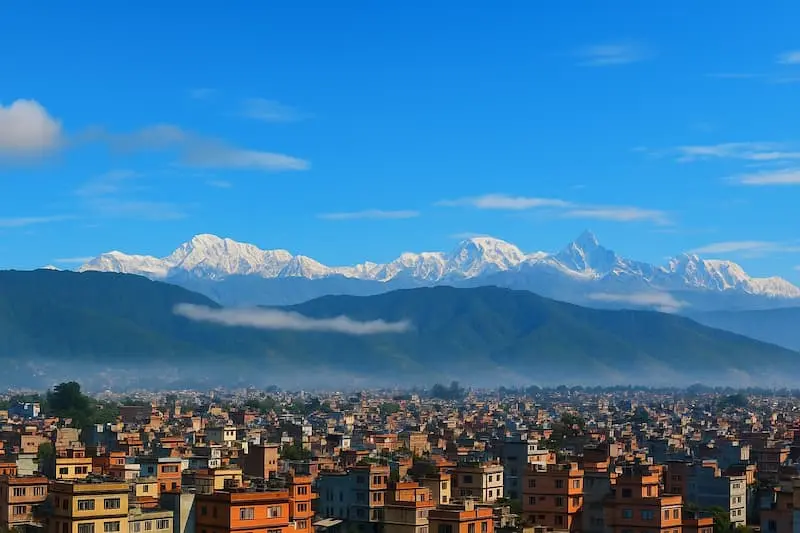
After breakfast, drive back to Kathmandu via the same scenic mountain roads. Upon arrival, check into your hotel and enjoy a farewell dinner or souvenir shopping. Overnight in Kathmandu.
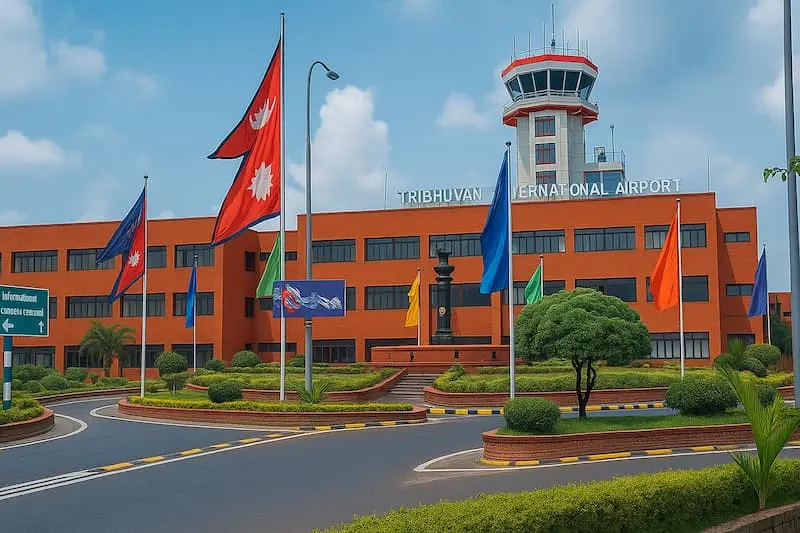
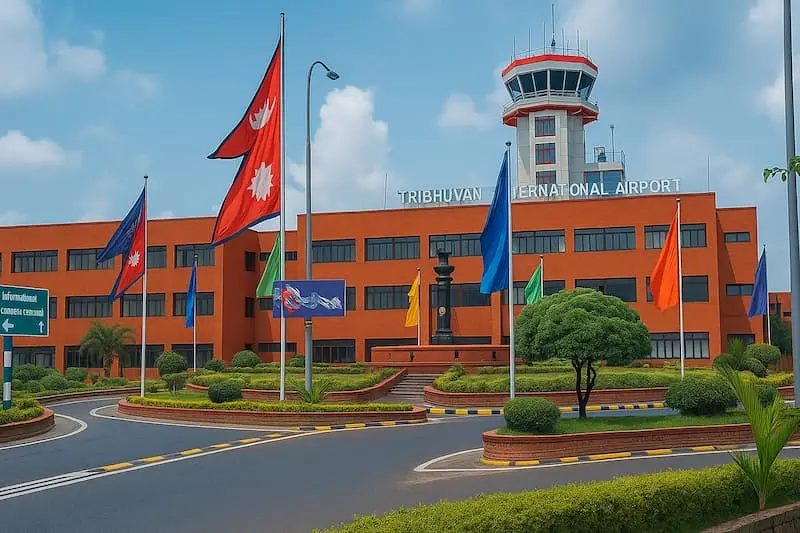
After an enjoyable adventure, and mesmerizing time in Nepal around the Himalayas on Tamang Heritage with Langtang Valley Trek. As time for departure, our staff transfer you to international airport for homeward bound flight or to next port of call.
I recently completed the 14 Day Tamang Heritage with Langtang Valley Trek with Treklanders Adventures, and it was truly one of the most meaningful trekking experiences I’ve ever had in Nepal. From the very beginning, the Treklanders team was professional, friendly, and well organized. Communication before the trip was clear, and they were always happy to customize details and answer questions. Once on the trail, everything ran smoothly—accommodation, meals, permits, and daily plans were perfectly managed. The Tamang Heritage Trail was a cultural highlight for me. Staying in traditional villages, interacting with local families, visiting monasteries, and learning about Tamang traditions gave this trek a deep cultural value beyond just mountain scenery. It felt authentic and untouched. The Langtang Valley itself was breathtaking—snow-capped peaks, glaciers, beautiful forests, and peaceful yak pastures. Reaching Kyanjin Gompa and hiking viewpoints like Kyanjin Ri and Tserko Ri were unforgettable moments with incredible panoramic views. Our guide was knowledgeable, patient, and genuinely cared about our safety and comfort. He shared insights about local culture, nature, and the mountains, which made the trek even more special. The pacing was perfect, with good acclimatization and plenty of time to enjoy the surroundings. Overall, this trek offered the perfect balance of culture, nature, and adventure, and Treklanders Adventures delivered it with professionalism and heart. I highly recommend them to anyone looking for a genuine Himalayan trekking experience in Nepal. Thank you, Treklanders Adventures, for an unforgettable journey!
Purpose: Keep sweat off the skin and maintain warmth.
Purpose: Trap body heat in cold air at altitude.
Tip: Keep electronics in inner pockets at night to prevent freezing.
This trek is rated as moderate, suitable for trekkers with a fair level of fitness. The total time spent on walking will be from five to six hours daily, and there will be gradual ups and downs on the trail. The trek doesn't involve technical climbing, which makes it very attractive to the first time Himalayan trekkers who are physically fit and ready to do multi-day walking.
You do not necessarily need to have experienced trekking at very high altitudes, although it will definitely make you more comfortable on the trek. The route has been designed to have a slow altitude gain with an acclimatization day at Kyanjin Gompa. Most of the participants only need to be regularly walking, doing some light cardio exercises, and getting a bit of general fitness before the trip.
The highest place where an overnight stay can happen during the trek is at Kyanjin Gompa (3,870 meters). There are also two optional hikes, Kyanjin Ri and Tserko Ri, which will give trekkers a chance to reach even higher elevations during the day, but these hikes are not required and can be done only if you feel fit and comfortable.
Accommodations are a mix of community-run homestays in the Tamang Heritage villages and teahouses or lodges in the Langtang Valley. The rooms are basic but clean, usually twin-sharing with a bathroom that is shared. The experience is more about cultural interaction and enjoying comfort that is suited to the conditions in the remote mountains.
At the teahouses and villages, water is available, but it should be treated before drinking. Boiled or filtered water is typically available, and trekkers are recommended to have purification tablets or a water filter. It is very important to keep yourself well hydrated, especially when going to higher altitudes.
Yes, the trek can be done by solo travellers, couples, and small groups. However, because of the challenging nature of the terrain and the need to take altitude into account, it is advisable to go trekking with a licensed guide. Families with older children who are physically fit can also have a great time on this trek with proper planning.
The most suitable seasons for the Tamang Heritage Trek with Langtang Valley are spring (March to May) and autumn (September to November). These are the months when the weather is more stable, the sky is clear, and the visibility of the mountains is the best. Also, the trails are not mud-soaked and are more comfortable to walk on, which not only makes them safer but also more fun.
Spring is the best time to do this trek because during this time, the forest along the route will be full of beautiful flowers such as rhododendrons, magnolias, and wildflowers, especially in the Tamang Heritage Villages and lower Langtang areas. The daytime temperature will be just right, and the scenery will be very lively. The view of the mountains is usually a spectacular sight in the morning, and the weather is generally not too hot or cold.
One of the reasons that make autumn so popular and the most preferred trekking season is because after the monsoon, visibility is at its best and most pristine. The freshness of the air, the unparalleled mountain vistas, and the pleasantness of the temperature make it very comfortable to be outdoors for long hours. During this season, the biggest Nepali festivals, such as Dashain and Tihar, are celebrated. Hence, the trek becomes more cultural even beyond the natural attraction.
Indeed, the trek can be done in winter (December to February) for those who particularly want to be on the quiet trails or experience the snow-covered landscapes. Even so, at the higher elevations, the temperature can drop to the point of being dangerously cold, and whenever there is a heavy snowfall, it might be impossible to reach certain spots like Tserko Ri. So, one should not forget to bring the proper winter gear.
The monsoon period, which lasts from June to August, is the least recommended period. There is a higher possibility of trails being slippery due to the heavy rains, and one is prone to landslides, especially on the road portions. Mountain views are mostly blocked by clouds; however, the scenery is green and fresh.
For beginners, autumn and spring are the seasons when the environment is safest and most comfortable. During these months, the weather is stable, the paths are in better condition, and getting used to the altitude is easier, so you can enjoy the Tamang Heritage Trek with Langtang Valley cultural and natural attractions quite well.
The best overall seasons for this trip are spring, from March to May, and autumn, from September to November. During these months, the weather is good, the sky is clear, and the mountains are at their most beautiful. The paths are dry and pleasant, which makes walking safer and more fun.
Spring is a great time because the woods along the route get full of rhododendrons, magnolias, and wildflowers, especially those in the Tamang Heritage villages and the lower Langtang region. The temperature during the day is just right, and everything looks green and beautiful. You get to enjoy very good mountain views in the early hours of the day, and generally, the weather is pleasant.
The monsoon period (June to August) ranks as the most unsuitable season. Besides heavy rainfall that will create slippery trails, one should also be aware of a possible landslide in the areas of the road. Usually, there is no mountain view due to the clouds, but nature turns into a green and fresh one.
Autumn and spring are the most favorable and comfortable seasons for first-time trekkers. Stable weather, good trail conditions, and easy acclimatization are great attractions of these months for the Tamang Heritage Trek with Langtang Valley, both culturally and scenically.
The Tamang Heritage Trek with Langtang Valley is a moderately difficult trek. It caters to trekkers who have decent fitness and can take a comfortable walk of about five to six hours a day. The route mainly consists of gentle slopes and valleys, so it is quite accessible to most people.
Absolutely! Beginners can embark on this trip if they are physically capable and have the right mindset for long walks over several days. It does not entail the experience of trekking at a high altitude. The route follows a slow ascent, and an acclimatization day is included to lower the chances of altitude sickness.
The uphill walk from Syabrubesi to Gatlang, going up the Nagthali ridge, and the sightseeing trips to Kyanjin Ri or Tserko Ri are the toughest itineraries in the trek. These parts of the trek will require continuous uphill walking, but it can be done by taking the walk slowly and having frequent breaks.
The effect of altitude cannot be overlooked as the trek moves above the elevation of 3,000 meters, and the highest overnight stay is Kyanjin Gompa. At higher altitudes, the oxygen level is lower, which increases tiredness, decreases walking speed, and may even give rise to mild altitude sickness. But if one takes good care by acclimatizing, drinking plenty of water, and ascending slowly, these problems will be no issue.
It is generally suggested that individuals have an average level of fitness. They should be able to comfortably go for a walk along the rugged trails for a few hours while carrying a light daypack. Conditioning the body through regular walking, climbing stairs or doing cardio exercises before the trek can greatly enhance your comfort and endurance on the trail.
If trekkers walk at a steady speed, stop for short rests frequently, drink enough water, and eat well, it is possible to make the trek less difficult. Apart from these, safety and the overall trekking experience are also enhanced by using walking sticks, wearing appropriate shoes, and going on the trek with a licensed guide.
The autumn season is the most popular and most dependable time because the visibility becomes crystal-clear after the monsoon. The air is very clean, you can see the mountain panoramas very clearly, and the temperatures are just right for long walks. Dashain and Tihar, the two main festivals of Nepal, happen in the same season, and you can experience the cultural festival along the trek.
Yes, the trek is possible during the winter months (December to February), especially for those who want to experience quiet trails and snow-covered landscapes. The temperature can be very low at high altitudes, and the heavy snowfalls may block the route to the viewpoint, like Tserko Ri. A good winter outfit is necessary to be safe.
Different layers of clothes are the most reasonable option for the Tamang Heritage Trek with Langtang Valley. You will find big temperature changes between the lower villages and higher spots like Kyanjin Gompa. To deal with sweat, wicking base layers. You will keep warm with insulating mid layers, and a windproof or waterproof outer layer will protect you from cold winds and sudden changes in the weather. Gloves, woollen hats, and thermal wear are some of the warm clothing items that you cannot do without if you want to be comfortable at dawn and dusk.
Uneven trails, stone steps, and sometimes snow in the higher parts are some of the reasons why it is almost a must to have sturdy trekking boots with very good ankle support. To prevent blisters, boots should be a little bit worn in before the trek. After long and tiring days, comfortable sandals or lightweight shoes can be very handy for the teahouse breaks.
This trek is not very challenging, so by doing some physical routines which include fitness or exercises on a daily basis, you can easily overcome discontinuity, lack of endurance and fatigue. You can do jogging, hiking, climbing stairs or brisk walking that would last for 30, 60 mins, 3, 4 days/week for 3 weeks before the trek day. To sum up, one needs to have a positive and open mind, be patient and tolerant to changes; these qualities can help one to quickly adjust to the altitude and rural lifestyle.
A daypack, trekking poles, sunglasses, sunscreen, lip balm, reusable water bottle, and headlamp should always be kept close at hand. A warm sleeping bag is nice to have in the villages at altitude, where nights can be cold. Toiletries, wet wipes, and quick, dry towels can come in handy when the water supply is limited in some places.
Of course, trekkers are advised to carry their own personal medications as well as a small first aid kit. The kit should include remedies for headaches, blisters, stomach upsets, and minor injuries. Altitude medication should only be brought after a consultation with a medical professional.
Original documents such as passport copies, permits, insurance papers, and emergency contacts should be kept in waterproof sleeves. Storage of valuables should be at a minimum since the facilities available are rudimentary. Good planning and organising will help you keep your valuables safe and give you peace of mind during the trek.
Anyone going on a trek must have two documents - a Langtang National Park entry permit and a Trekkers Information Management System (TIMS) card. These two permits are necessary if you want to be legal in the Langtang area, and they are checked at different points along the trail.
One usually gets the permits in Kathmandu before the trek starts. They may be organised through the Nepal Tourism Board or taken care of by a licensed trekking agency. Trekkers should get all the essential documents beforehand because getting permits while on the trail is not always possible.
No, permits are necessary for all foreign nationals and Nepali citizens who intend to enter Langtang National Park. The rules are the same for solo trekkers, guided groups and organised trekking parties. Kids also need permits, but the documentation process may be different.
No, a guide is not a must if you want to get permits, but trekking with a licensed guide is highly recommended for safety and guidance. If you are trekking through an agency, usually, your permit arrangements will be taken care of by the agency, thus lessening your administrative burden.
Typically, trekkers require a valid passport, passport-size photographs of themselves, and some basic details about their itinerary. It is crucial for the information on your permits to match the information on your passport exactly because any differences may lead to problems when you are checked.
Trekking permits are issued to a person only, cannot be given to someone else, and you have to show them along the whole trek. There may be several checks on the route. If you lose the permit, you may be delayed or fined, so mentally reminding or physically keeping it safe and handy is very important.
For accommodation on the Tamang Heritage Trek with Langtang Valley, you will be able to choose from a range of teahouses, mountain lodges, and community-run homestays. When you are in the Tamang Heritage villages, the travellers normally stay in traditional homestays that give a real cultural experience. After the trail goes to the Langtang Valley, the accommodation becomes standard teahouses for trekkers.
Rooms are mostly very simple but quite clean and comfortable, usually on a twin-sharing basis. A bed with a mattress, pillow, and blanket is given to the trekkers. Toilets are usually shared, especially at higher altitudes, and the facilities get less and less sophisticated with the increase in elevation. Nevertheless, teahouses have a hospitable and pleasant ambience.
In certain villages, especially at lower elevations and during the less busy seasons, the availability of private rooms might be available. However, during the peak trekking months, their availability is extremely limited. Making a booking before trekking through an agency is the most certain way to get the accommodation that you prefer.
Heating is normally limited to communal dining rooms only, which is often provided by a central stove. At higher altitudes, the bedrooms are generally unheated. A high-quality sleeping bag is highly recommended to carry for staying warm during cold nights.
Most villages have electricity, but the power supply is often limited and unstable. You might be able to charge your electronic devices for a small fee at some places. Some teahouses, especially those in Langtang Village and Kyanjin Gompa, offer Wi-Fi, but the connection is generally slow and unreliable.
Certainly, meals and drinking water are provided in all teahouses and homestays. Alongside local Nepali dishes, menus typically offer a few simple international choices. Boiled or filtered drinking water is usually available, and hikers are advised to treat water properly before drinking.
Food on the Tamang Heritage Trek with Langtang Valley mainly comes from the teahouses and local homestays, as the land is highly agricultural. Meals are quite basic, freshly made, and aimed at giving the right amount of energy for trekking. Some of the common dishes are traditional Nepali meals like rice with lentil soup and vegetables. Besides that, there are also noodles, soups, potatoes, eggs, and Tibetan-style bread.
Yes, food is generally safe when eaten at established teahouses and homestays. It is advised that trekkers should always opt for freshly cooked food and refrain from the consumption of raw or less-cooked food, especially when at higher elevations. Besides, eating warm meals not only helps in energy maintenance but also lessens the risks of illnesses related to the stomach.
During the trek, there are plenty of vegetarian meal options available, and sometimes they are the safest choice. Usually, you can have your vegan meals, or some just egg-based dietary patterns, but the choices become very limited when you get to the highest points. If you happen to have specific dietary needs, you should let your guide or the lodge staff know beforehand.
You can get drinking water at teahouses and villages; however, it should always be treated before you drink it. It is common for teahouses to provide boiled or filtered water. To make sure that your water is safe and also to help reduce plastic waste, it is highly recommended that you use water purification tablets, drops, or a filtration bottle.
Bottled water can be bought in villages at lower altitude but it becomes very rare as you go higher. Since there is a limited number of waste facilities and people are more environmentally conscious, carrying reusable bottles and purifying the water you drink is what should be done during the trek.
Tea, coffee, and other hot drinks are easily available and are very good for warming the body as well as hydrating. Alcohol can be found in a few villages, but it is better not to drink it during the trek, especially when you are at a high altitude, because it can make you more dehydrated and also you will be at a greater risk of getting altitude sickness.
Though one does not necessarily have to hire a licensed guide on the Tamang Heritage with Langtang Valley Trek, it is strongly recommended. A guide can direct you safely, handle daily logistics, tell you about local culture and traditions, and come to the rescue in case of altitude sickness or other emergencies, particularly in the trail's more secluded areas.
Walking with a guide offers the opportunity to considerably broaden the scope of the trip by having a local expert share in-depth knowledge of the village and monastery cultures as well as their histories along the route. Also, a guide is a person trained in first aid and altitude awareness, thus capable of spotting the first signs of altitude sickness and is able to understand the patient's condition and make an informed judgment when circumstances change.
A porter takes on the major trekking load. Therefore, the trekkers can move only with a light daypack and comfortably. This lessens the trekkers' strain and weariness, especially if the travel days and the uphill parts of the journey are long. Besides, porters are skilful in navigating mountain terrain, so they contribute greatly to safe and time-saving trekking.
To guarantee their safety and well-being, porters normally take on a limited load around 20 kg per person. Efficiency in packing is one of the things trekkers are required to do, along with following the weight instructions given by the trekking agencies. By doing these things, not only do trekkers take care of their own health and safety, but they also help to protect porters' fair treatment and a safe working environment.
Physically fit trekkers can certainly decide to trek without a porter and have all their gear on their backs. That said, carrying a heavy backpack in high altitudes might make you more tired and less happy. A great number of trekkers hire a porter so they can fully enjoy the trek without worrying about the weight of their luggage.
It is expected that most certified guides can speak good English for the most part, and porters might only know a few words of English. Guides are also used as interpreters in local villages where the locals speak their language, so that trekkers can understand the hosts and the community members.
Yes, the trek is usually safe for trekkers with a decent level of fitness, provided that it is well-planned. The trails have been properly laid out, there are teahouses available all along the route, and the local people are quite used to hosting travellers. Sticking to the route, being a responsible trekker, and looking at the weather and one's health are the factors that contribute to a safe experience.
The main health risk is altitude sickness because the highest point of the trek is above 3,000 meters. Aside from that, fatigue, dehydration, getting cold, and slight stomach problems are the most frequent issues. The chance of getting these problems will be reduced if the walk to higher altitudes is done step by step, the person keeps drinking enough water, takes enough rest, and eats sensibly.
You can prevent altitude sickness or at least reduce its effect by not running up to the top, not doing too much physical activity, drinking lots of water, and following the rules for acclimatization. For example, this program offers a gradual increase in altitude plus a rest day at Kyanjin Gompa. Trekkers are advised to refrain from drinking alcohol and smoking at higher altitudes and to report any symptoms like headache or dizziness to the guide without delay.
Along the trail, there is almost no healthcare facility. In some cases, medicine and other essentials might be found, but for serious medical treatment, the patient will have to be airlifted to Kathmandu. The trekkers should have their own medications with them, a first-aid kit with the essentials, and a travel insurance policy that also covers high-altitude trekking and emergency evacuation.
Generally, the trails are safe but may become slippery when it rains or snows. The weather is especially changeable at higher altitudes. Wearing the right footwear, carrying the necessary clothing, and heeding your guide's instructions are the main elements of safety on the trail. Don't go trekking if the weather is really bad.
In emergency situations, a helicopter is able to rescue you; however, the waiting time can depend on the weather and visibility. That is why it is very important to have a thorough travel insurance plan. Walking with a licensed guide is much safer because guides are not only familiar with emergency procedures but also have means of communication.
Medical facilities and services along the Tamang Heritage Trek via Langtang Valley are practically nonexistent. A few small health posts may be located in the lower villages, but they can only provide basic care and have very limited supplies. Since hospitals or advanced medical centers are absent during the trek, it is advisable that trekkers carry necessary medications and be prepared for minor health problems.
In cases of minor illnesses or injuries, it is generally enough to take a rest, drink fluids, and perform standard first-aid measures. Guides have knowledge and have been trained to help manage common problems that arise from trekking, and they can also make a judgment call on whether or not the trekker can continue safely. A drop in altitude is the initial and most potent method of treatment of symptoms.
Yes, in extreme cases, such as severe altitude sickness or grave injuries, a helicopter will be sent to evacuate the patient. That being said, for a rescue to be successful, favorable weather, good visibility, and a suitable landing spot are required. Hence, it cannot be ruled out that there will be a delay, which is why it is crucial to always be honest about your symptoms.
It is not a legal requirement to have travel insurance; however, ones that are extensive in coverage are highly recommended and most of the time required by trekking agencies. The policy should include coverage of high-altitude trekking, emergency medical treatment, and helicopter evacuation up to the highest altitude reached during the trek.
The insurance should cover trekking at altitudes exceeding 3,000 meters, emergency helicopter evacuations, and hospital stays. It should also include coverage for trip interruption, personal accident, and repatriation. Trekkers must be very attentive to the policy details and confirm that the altitude limit is compatible with their trekking plan.
In case of pre-existing medical conditions, consult your doctor before going on a trek. Make sure you have all the medicines you require, a small first-aid kit for emergencies, and any prescriptions. One should be up-to-date with vaccinations recommended for Nepal, and being physically fit is a great way to lessen the chances of getting sick.
To start the trek, you first travel overland from Kathmandu to Syabrubesi, the main entrance for the Tamang Heritage and Langtang Valley trails. This travel is either by private vehicle or local transport, and it is along mountain roads passing through hills, rivers, and rural settlements.
Under normal circumstances, the drive should take between 7 and 8 hours. This period can vary according to the different road conditions, traffic, and weather. Despite some sections of the road being quite rough, the whole trip is very scenic, and you get to see the terraced farmland, rivers, and Himalayan foothills.
Transportation is normally offered by a jeep, a van, or a bus, depending on the size of the group and travel arrangements. A private vehicle can bring more comfort and flexibility, while shared transportation is a more budget-friendly option. The choice of vehicles is made based on the safety aspect and the suitability of mountain roads.
There are no domestic flights for the Tamang Heritage Trek with Langtang Valley. This is one of the major benefits of the trek as it helps to cut travel expenses, and you don't have to worry about flight delays. All the entry points are connected by road, thus making the whole setup uncomplicated and dependable.
Roads in the mountains can easily be affected by bad weather, landslides, or repair works. If that is the case, the time taken to travel can be longer than what you have originally planned. Having a seasoned driver at the wheel and having a schedule that allows for time to be changed are good ways to handle the situation when the road is delayed. Besides that, safety should always be the priority, not speed.
On the day when the trek ends, transportation will be arranged from Syabrubesi to Kathmandu as well. Once you get to Kathmandu, there is a short transfer to your hotel or the international airport, which completes the trip without any hassle.
| No of people | Price per person |
|---|---|
| 1 - 1 | $865 |
| 2 - 3 | $750 |
| 4 - 8 | $655 |
| 9 - 30 | $620 |
| No of people | Price per person |
|---|---|
| 1 - 1 | $1,675 |
| 2 - 3 | $1,405 |
| 4 - 8 | $1,275 |
| 9 - 30 | $1,175 |
| No of people | Price per person |
|---|---|
| 1 - 1 | $1,375 |
| 2 - 4 | $1,185 |
| 5 - 10 | $1,095 |
| 11 - 30 | $985 |