[{"name":"Everest Base Camp Trek","duration":"16","image_url":"https:\/\/www.treklanders.com\/storage\/trip-galleries\/1\/thumb_419a755c003cc609f3030ee332965ebe.jpg","offer_price":1405,"url":"https:\/\/www.treklanders.com\/trips\/everest-base-camp-trek"},{"name":"Gokyo Valley Trekking","duration":"16","image_url":"https:\/\/www.treklanders.com\/storage\/trip-galleries\/2\/thumb_676d1021b574aeba4d19d3f2a0b04ed2.webp","offer_price":1205,"url":"https:\/\/www.treklanders.com\/trips\/gokyo-valley-trekking"},{"name":"Annapurna Circuit Trek","duration":"23","image_url":"https:\/\/www.treklanders.com\/storage\/trip-galleries\/3\/thumb_2a9a92ea23c62f41de27b37f5e3e8c17.webp","offer_price":1495,"url":"https:\/\/www.treklanders.com\/trips\/annapurna-circuit-trek"},{"name":"Everest Panorama Trek","duration":"12","image_url":"https:\/\/www.treklanders.com\/storage\/trip-galleries\/4\/thumb_35c9f677ea2e88b1ff11a9f43daa3ddb.jpg","offer_price":1100,"url":"https:\/\/www.treklanders.com\/trips\/everest-panorama-trek"},{"name":"Everest Base Camp Trekking from Jiri","duration":"22","image_url":"https:\/\/www.treklanders.com\/storage\/trip-galleries\/6\/thumb_14763592492417b294aa66bf0ebf4e64.webp","offer_price":1400,"url":"https:\/\/www.treklanders.com\/trips\/everest-base-camp-trekking-from-jiri"},{"name":"Everest Base Camp via Cho la Pass from Gokyo Valley Trekking","duration":"18","image_url":"https:\/\/www.treklanders.com\/storage\/trip-galleries\/7\/thumb_d4e470e98d4e9e2ab8e93e39b8b7d252.jpg","offer_price":1405,"url":"https:\/\/www.treklanders.com\/trips\/everest-base-camp-via-cho-la-pass-from-gokyo-valley-trekking"},{"name":"Everest Three Passes Trekking","duration":"22","image_url":"https:\/\/www.treklanders.com\/storage\/trip-galleries\/8\/thumb_b413b221e913171500bb3dfd5c08ceea.jpg","offer_price":1635,"url":"https:\/\/www.treklanders.com\/trips\/everest-three-passes-trekking"},{"name":"Annapurna Base Camp Trekking","duration":"14","image_url":"https:\/\/www.treklanders.com\/storage\/trip-galleries\/9\/thumb_2e71f2ffe116c659fa66b01c2d571b4e.webp","offer_price":845,"url":"https:\/\/www.treklanders.com\/trips\/annapurna-base-camp-trekking"},{"name":"Mardi Base Camp Trekking","duration":"14","image_url":"https:\/\/www.treklanders.com\/storage\/trip-galleries\/10\/thumb_d7b2d2dc638f6bbf2c31c167ac68029d.webp","offer_price":845,"url":"https:\/\/www.treklanders.com\/trips\/mardi-base-camp-trekking"},{"name":"Mohare Danda Trekking","duration":"12","image_url":"https:\/\/www.treklanders.com\/storage\/trip-galleries\/11\/thumb_a384c8d35d789d29b19991c1d675c910.webp","offer_price":755,"url":"https:\/\/www.treklanders.com\/trips\/mohare-danda-trekking"},{"name":"Khopra Ridge & Khair Lake Trekking","duration":"15","image_url":"https:\/\/www.treklanders.com\/storage\/trip-galleries\/12\/thumb_c0f50461ddc74acfb553ba85be00fab0.webp","offer_price":855,"url":"https:\/\/www.treklanders.com\/trips\/khopra-ridge-khair-lake-trekking"},{"name":"Upper Mustang Trekking","duration":"17","image_url":"https:\/\/www.treklanders.com\/storage\/trip-galleries\/13\/thumb_7aa4dfdb69186b0f224a303d80a25c95.jpg","offer_price":1715,"url":"https:\/\/www.treklanders.com\/trips\/upper-mustang-trekking"},{"name":"Langtang Valley Trek","duration":"12","image_url":"https:\/\/www.treklanders.com\/storage\/trip-galleries\/14\/thumb_8650b4b1a3c160cff75da65369398353.webp","offer_price":735,"url":"https:\/\/www.treklanders.com\/trips\/langtang-valley-trek"},{"name":"Gosainkunda Lake Trek","duration":"11","image_url":"https:\/\/www.treklanders.com\/storage\/trip-galleries\/15\/thumb_bfe94c14e760c48234e117021105be84.webp","offer_price":735,"url":"https:\/\/www.treklanders.com\/trips\/gosainkunda-lake-trek"},{"name":"Chisapani-Nagarkot to Dhulikhel Hiking","duration":"7","image_url":"https:\/\/www.treklanders.com\/storage\/trip-galleries\/16\/thumb_468defe9a4000ee3129cd7e6421ee105.webp","offer_price":565,"url":"https:\/\/www.treklanders.com\/trips\/chisapani-nagarkot-to-dhulikhel-hiking"},{"name":"Kanchenjunga Trek","duration":"23","image_url":"https:\/\/www.treklanders.com\/storage\/trip-galleries\/17\/thumb_51f43fa4203106cc49aaedc89d76e01d.jpg","offer_price":1725,"url":"https:\/\/www.treklanders.com\/trips\/kanchenjunga-trek"},{"name":"Helambu Trek","duration":"12","image_url":"https:\/\/www.treklanders.com\/storage\/trip-galleries\/18\/thumb_0fe8e3fa1299d2e43bf1fb5977875ce2.jpg","offer_price":685,"url":"https:\/\/www.treklanders.com\/trips\/helambu-trek"},{"name":"Upper Dolpo Trek","duration":"26","image_url":"https:\/\/www.treklanders.com\/storage\/trip-galleries\/19\/thumb_d6080d490e1db83b0a711e7304000864.jpg","offer_price":3005,"url":"https:\/\/www.treklanders.com\/trips\/upper-dolpo-trek"},{"name":"Manaslu Circuit Trek","duration":"18","image_url":"https:\/\/www.treklanders.com\/storage\/trip-galleries\/20\/thumb_1fdd224e849f4f328e73d2d12b3d282d.jpg","offer_price":1225,"url":"https:\/\/www.treklanders.com\/trips\/manaslu-circuit-trek"},{"name":"Tilicho Lake Base Camp Trek","duration":"19","image_url":"https:\/\/www.treklanders.com\/storage\/trip-galleries\/21\/thumb_eba8ac5e029e6543e0c17630ebd9e2fb.jpg","offer_price":1220,"url":"https:\/\/www.treklanders.com\/trips\/tilicho-lake-base-camp-trek"},{"name":"Nar-Phu Valley With Thorang-La Pass Trek","duration":"21","image_url":"https:\/\/www.treklanders.com\/storage\/trip-galleries\/22\/thumb_43597423a5a366fe9c8937fb30d2fe2a.jpg","offer_price":1315,"url":"https:\/\/www.treklanders.com\/trips\/nar-phu-valley-with-thorang-la-pass-trek"},{"name":"Nepal Round Trip of Kathmandu-Pokhara-Lumbini and Chitwan Tour","duration":"10","image_url":"https:\/\/www.treklanders.com\/storage\/trip-galleries\/23\/thumb_32497d170b2ab340b0a1b3310e91e784.webp","offer_price":845,"url":"https:\/\/www.treklanders.com\/trips\/nepal-round-trip-of-kathmandu-pokhara-lumbini-and-chitwan-tour"},{"name":"Nagarkot Day Hike","duration":"2","image_url":"https:\/\/www.treklanders.com\/storage\/trip-galleries\/24\/thumb_a5a654930fd8ba7852e41738105bacfc.webp","offer_price":105,"url":"https:\/\/www.treklanders.com\/trips\/nagarkot-day-hike"},{"name":"Nagarkot Sunrise Tour","duration":"1","image_url":"https:\/\/www.treklanders.com\/storage\/trip-galleries\/25\/thumb_17dc28a29cfa44381ad503f0a75ee84f.webp","offer_price":22,"url":"https:\/\/www.treklanders.com\/trips\/nagarkot-sunrise-tour"},{"name":"Namobuddha Day Tour with Shiva Statue","duration":"1","image_url":"https:\/\/www.treklanders.com\/storage\/trip-galleries\/26\/thumb_beeb34202f9077764aa08c67ef2867f9.webp","offer_price":45,"url":"https:\/\/www.treklanders.com\/trips\/namobuddha-day-tour-with-shiva-statue"},{"name":"Kathmandu Full Day Sightseeing Tour","duration":"1","image_url":"https:\/\/www.treklanders.com\/storage\/trip-galleries\/27\/thumb_d045fc0f1acee2cfa6b3c95f3c656d18.jpg","offer_price":30,"url":"https:\/\/www.treklanders.com\/trips\/kathmandu-full-day-sightseeing-tour"},{"name":"Patan and Bhaktapur Sightseeing Tour","duration":"1","image_url":"https:\/\/www.treklanders.com\/storage\/trip-galleries\/28\/thumb_750eacac3424b5dba686dd93656ab87c.jpg","offer_price":30,"url":"https:\/\/www.treklanders.com\/trips\/patan-and-bhaktapur-sightseeing-tour"},{"name":"Upper Mustang Heli Tour","duration":"1","image_url":"https:\/\/www.treklanders.com\/storage\/trip-galleries\/29\/thumb_0b785f69a15557f8660c805c76fda14e.webp","offer_price":1250,"url":"https:\/\/www.treklanders.com\/trips\/upper-mustang-heli-tour"},{"name":"Everest Heli Tour","duration":"1","image_url":"https:\/\/www.treklanders.com\/storage\/trip-galleries\/30\/thumb_dc45f2beb36a3699e0decf0de41a6f17.jpg","offer_price":1495,"url":"https:\/\/www.treklanders.com\/trips\/everest-heli-tour"},{"name":"Island Peak Trek & Climb","duration":"21","image_url":"https:\/\/www.treklanders.com\/storage\/trip-galleries\/31\/thumb_a0f3e3468c92a8e436045cf8b2fbf361.jpg","offer_price":2295,"url":"https:\/\/www.treklanders.com\/trips\/island-peak-trek-climb"},{"name":"Mera Peak Trek & Climb","duration":"18","image_url":"https:\/\/www.treklanders.com\/storage\/trip-galleries\/32\/thumb_3e8128a23c36f02fa38135475e811b9e.jpg","offer_price":2815,"url":"https:\/\/www.treklanders.com\/trips\/mera-peak-trek-climb"},{"name":"Chandragiri Cable Car Tour","duration":"1","image_url":"https:\/\/www.treklanders.com\/storage\/trip-galleries\/33\/thumb_faa70b716449eada6d7f1450335edbb3.jpg","offer_price":30,"url":"https:\/\/www.treklanders.com\/trips\/chandragiri-cable-car-tour"},{"name":"Everest Base Camp Trek and Returning via Heli","duration":"13","image_url":"https:\/\/www.treklanders.com\/storage\/trip-galleries\/34\/thumb_11190941866206e1d578db11986ebc73.webp","offer_price":2100,"url":"https:\/\/www.treklanders.com\/trips\/everest-base-camp-trek-and-returning-via-heli"},{"name":"Annapurna Semi Circuit Trek","duration":"15","image_url":"https:\/\/www.treklanders.com\/storage\/trip-galleries\/35\/thumb_30ddd8ba818cdcb52efd5eb0a017bcdb.jpg","offer_price":965,"url":"https:\/\/www.treklanders.com\/trips\/annapurna-semi-circuit-trek"},{"name":"Everest Base Camp Luxury Trek","duration":"14","image_url":"https:\/\/www.treklanders.com\/storage\/trip-galleries\/39\/thumb_6079aea3c5dd83e745a16fd6162270dc.jpg","offer_price":2685,"url":"https:\/\/www.treklanders.com\/trips\/everest-base-camp-luxury-trek"},{"name":"Mt. Kailash & Lake Manasarover Tour","duration":"15","image_url":"https:\/\/www.treklanders.com\/storage\/trip-galleries\/41\/thumb_cf3fededfd7dd2b40399af399e04f95a.jpg","offer_price":2205,"url":"https:\/\/www.treklanders.com\/trips\/mt-kailash-lake-manasarover-tour"},{"name":"Ghorepani Poonhill Trek","duration":"11","image_url":"https:\/\/www.treklanders.com\/storage\/trip-galleries\/43\/thumb_602d9a56976e1b836ba8adc69b8d09c5.webp","offer_price":720,"url":"https:\/\/www.treklanders.com\/trips\/ghorepani-poonhill-trek"},{"name":"11 Days Gokyo Valley Trekkking","duration":"11","image_url":"https:\/\/www.treklanders.com\/storage\/trip-galleries\/45\/thumb_ab552c3c91de392f94230a937b1c4801.jpg","offer_price":900,"url":"https:\/\/www.treklanders.com\/trips\/11-days-gokyo-valley-trekkking"},{"name":"9-Day Everest Base Camp Trekking with Helicopter Return","duration":"9","image_url":"https:\/\/www.treklanders.com\/storage\/trip-galleries\/46\/thumb_9a8ba2b582500cd86786be056902c31a.webp","offer_price":1990,"url":"https:\/\/www.treklanders.com\/trips\/9-day-everest-base-camp-trekking-with-helicopter-return"},{"name":"12-Day Everest Base Camp Trek","duration":"12","image_url":"https:\/\/www.treklanders.com\/storage\/trip-galleries\/47\/thumb_d12c9ef776c0b395ceea817fe05c5892.jpg","offer_price":1000,"url":"https:\/\/www.treklanders.com\/trips\/12-day-everest-base-camp-trek"},{"name":"8-Day Everest Panorama Trek","duration":"8","image_url":"https:\/\/www.treklanders.com\/storage\/trip-galleries\/49\/thumb_c81ae3a8ac757a317a9362e6872e2dcb.jpg","offer_price":850,"url":"https:\/\/www.treklanders.com\/trips\/8-day-everest-panorama-trek"},{"name":"7-Day Langtang Valley Trek","duration":"7","image_url":"https:\/\/www.treklanders.com\/storage\/trip-galleries\/50\/thumb_99c2904df5475ab028c9e3633ea95ef3.jpg","offer_price":420,"url":"https:\/\/www.treklanders.com\/trips\/7-day-langtang-valley-trek"},{"name":"4-Day Trekking Adventure near Kathmandu","duration":"4","image_url":"https:\/\/www.treklanders.com\/storage\/trip-galleries\/51\/thumb_594681060514dc57be1959236a6996d0.jpg","offer_price":275,"url":"https:\/\/www.treklanders.com\/trips\/4-day-trekking-adventure-near-kathmandu"},{"name":"4-Day Ghorepani Ponnhill Trek from Pokhara","duration":"4","image_url":"https:\/\/www.treklanders.com\/storage\/trip-galleries\/53\/thumb_eede04edac01f983d9af2c16f55d03e8.webp","offer_price":500,"url":"https:\/\/www.treklanders.com\/trips\/4-day-ghorepani-ponnhill-trek-from-pokhara"},{"name":"7-Day Annapurna Base Camp Trek from Pokhara","duration":"7","image_url":"https:\/\/www.treklanders.com\/storage\/trip-galleries\/55\/thumb_547e91c74088c491111ebe31a759cfbb.jpg","offer_price":420,"url":"https:\/\/www.treklanders.com\/trips\/7-day-annapurna-base-camp-trek-from-pokhara"},{"name":"13-Day Manaslu Circuit Trekking","duration":"13","image_url":"https:\/\/www.treklanders.com\/storage\/trip-galleries\/56\/thumb_aef1af4f0c4a2a9622d518ad5959542b.jpg","offer_price":1050,"url":"https:\/\/www.treklanders.com\/trips\/13-day-manaslu-circuit-trekking"},{"name":"5-Day Mardi Himal Trek from Pokhara","duration":"5","image_url":"https:\/\/www.treklanders.com\/storage\/trip-galleries\/57\/thumb_dcd598d556c14835f0a18169afafcbc6.webp","offer_price":420,"url":"https:\/\/www.treklanders.com\/trips\/5-day-mardi-himal-trek-from-pokhara"},{"name":"Nagarkot Sunrise Tour with Day Hike","duration":"1","image_url":"https:\/\/www.treklanders.com\/storage\/trip-galleries\/58\/thumb_7cdfa1f16719486da2a0718da45b1f2f.webp","offer_price":30,"url":"https:\/\/www.treklanders.com\/trips\/nagarkot-sunrise-tour-with-day-hike"},{"name":"Seven Unesco Heritage Sites Day Tour in Kathmandu","duration":"1","image_url":"https:\/\/www.treklanders.com\/storage\/trip-galleries\/59\/thumb_92aed7b9c67e76740000aab9313dced7.jpg","offer_price":40,"url":"https:\/\/www.treklanders.com\/trips\/seven-unesco-heritage-sites-day-tour-in-kathmandu"},{"name":"10-Day Ghorepani Poonhill with Annapurna Base Camp Trek","duration":"10","image_url":"https:\/\/www.treklanders.com\/storage\/trip-galleries\/60\/thumb_d4c2c089497950ccb5f8541d76e1269b.webp","offer_price":835,"url":"https:\/\/www.treklanders.com\/trips\/10-day-ghorepani-poonhill-with-annapurna-base-camp-trek"},{"name":"3-Day Chitwan Wildlife Tour","duration":"3","image_url":"https:\/\/www.treklanders.com\/storage\/trip-galleries\/61\/thumb_7963c9033b4ecfb5d29583fb0965d521.webp","offer_price":150,"url":"https:\/\/www.treklanders.com\/trips\/3-day-chitwan-wildlife-tour"},{"name":"3-Day Pokhara Sightseeing Tour","duration":"3","image_url":"https:\/\/www.treklanders.com\/storage\/trip-galleries\/62\/thumb_61542f3c38329bcce9d2771c96f265a4.jpg","offer_price":230,"url":"https:\/\/www.treklanders.com\/trips\/3-day-pokhara-sightseeing-tour"},{"name":"7-Day Kathmandu Pokhara and Chitwan wildlifeTour","duration":"7","image_url":"https:\/\/www.treklanders.com\/storage\/trip-galleries\/63\/thumb_803b98ae15f14366124ebb109a32f49d.webp","offer_price":545,"url":"https:\/\/www.treklanders.com\/trips\/7-day-kathmandu-pokhara-and-chitwan-wildlifetour"},{"name":"Nagarjun Jamacho Day Hiking","duration":"1","image_url":"https:\/\/www.treklanders.com\/storage\/trip-galleries\/64\/thumb_85867eb85c60c8228e44f927341f67d1.jpg","offer_price":30,"url":"https:\/\/www.treklanders.com\/trips\/nagarjun-jamacho-day-hiking"},{"name":"Everest Mountain Flight from Kathmandu","duration":"1","image_url":"https:\/\/www.treklanders.com\/storage\/trip-galleries\/65\/thumb_1a66526d340ec175023842c38efd8a95.webp","offer_price":120,"url":"https:\/\/www.treklanders.com\/trips\/everest-mountain-flight-from-kathmandu"},{"name":"One Day Trishuli River Rafting Adventures","duration":"1","image_url":"https:\/\/www.treklanders.com\/storage\/trip-galleries\/66\/thumb_55ba0ea676c9c625f99f3d41bda224fb.jpg","offer_price":35,"url":"https:\/\/www.treklanders.com\/trips\/one-day-trishuli-river-rafting-adventures"},{"name":"13-Day Annapurna Circuit Trek","duration":"13","image_url":"https:\/\/www.treklanders.com\/storage\/trip-galleries\/67\/thumb_859e7a1fbb468a9252d365cab8379f10.jpg","offer_price":815,"url":"https:\/\/www.treklanders.com\/trips\/13-day-annapurna-circuit-trek"},{"name":"15-Day Tilicho Base Camp with Thorong-La Pass Trekking","duration":"15","image_url":"https:\/\/www.treklanders.com\/storage\/trip-galleries\/68\/thumb_56a5fd1506c9b9f1f83844353dc55edf.jpg","offer_price":920,"url":"https:\/\/www.treklanders.com\/trips\/15-day-tilicho-base-camp-with-thorong-la-pass-trekking"},{"name":"Cooking Class in Thamel-Full Course Meal","duration":"1","image_url":"https:\/\/www.treklanders.com\/storage\/trip-galleries\/69\/thumb_ed5cfbc0d94b624642d347c0776d36bb.webp","offer_price":30,"url":"https:\/\/www.treklanders.com\/trips\/cooking-class-in-thamel-full-course-meal"},{"name":"Cooking Class in Thamel-Full Course","duration":"3 Hours 30 Minutes","image_url":"https:\/\/www.treklanders.com\/img\/default.gif","offer_price":30,"url":"https:\/\/www.treklanders.com\/trips\/cooking-class-in-thamel-full-course"},{"name":"Cooking Class in Thamel-Full Course Meal","duration":"3 Hours 30 Minutes","image_url":"https:\/\/www.treklanders.com\/img\/default.gif","offer_price":30,"url":"https:\/\/www.treklanders.com\/trips\/cooking-class-in-thamel-full-course-meal"},{"name":"Momo Making Class in Thamel","duration":"1","image_url":"https:\/\/www.treklanders.com\/storage\/trip-galleries\/72\/thumb_a36e5ceca4d5c4cb0ecda367505b31d3.webp","offer_price":20,"url":"https:\/\/www.treklanders.com\/trips\/momo-making-class-in-thamel"},{"name":"8 Days Bhutan Tour from Kathmandu","duration":"8","image_url":"https:\/\/www.treklanders.com\/storage\/trip-galleries\/73\/thumb_df319d7d3ac21bcd9cf728cb1a70ea09.webp","offer_price":2275,"url":"https:\/\/www.treklanders.com\/trips\/8-days-bhutan-tour-from-kathmandu"},{"name":"10 Days Bhutan Tour with Druk path Trek","duration":"10","image_url":"https:\/\/www.treklanders.com\/storage\/trip-galleries\/74\/thumb_c7d4a4b89aceaf5d3aac313265729bb3.webp","offer_price":5715,"url":"https:\/\/www.treklanders.com\/trips\/10-days-bhutan-tour-with-druk-path-trek"},{"name":"9 -Day Langtang Valley Trek","duration":"9","image_url":"https:\/\/www.treklanders.com\/storage\/trip-galleries\/75\/thumb_65e69cec8917e39091c9e40ae06df3da.webp","offer_price":620,"url":"https:\/\/www.treklanders.com\/trips\/9--day-langtang-valley-trek"},{"name":"14 Day Everest Base Camp Trek","duration":"14","image_url":"https:\/\/www.treklanders.com\/storage\/trip-galleries\/76\/thumb_446e7f33a5f43896c9cdf470cd7be947.webp","offer_price":1175,"url":"https:\/\/www.treklanders.com\/trips\/14-day-everest-base-camp-trek"},{"name":"Lhasa Tour from Kathmandu: 10-Day Tibet Overland Journey via Gyirong","duration":"10","image_url":"https:\/\/www.treklanders.com\/img\/default.gif","offer_price":null,"url":"https:\/\/www.treklanders.com\/trips\/lhasa-tour-from-kathmandu-10-day-tibet-overland-journey-via-gyirong"},{"name":"13 Day Lhasa Tour from Kathmandu via Everest Base Camp","duration":"13","image_url":"https:\/\/www.treklanders.com\/storage\/trip-galleries\/78\/thumb_8a2bfb2abd99ba9ddc902b768e7b0759.webp","offer_price":2565,"url":"https:\/\/www.treklanders.com\/trips\/13-day-lhasa-tour-from-kathmandu-via-everest-base-camp"},{"name":"11 Day Annapurna Base Camp Trek","duration":"11","image_url":"https:\/\/www.treklanders.com\/storage\/trip-galleries\/79\/thumb_4e48a19c538c00cc8c36160ca97c5f21.webp","offer_price":720,"url":"https:\/\/www.treklanders.com\/trips\/11-day-annapurna-base-camp-trek"},{"name":"9 Day Mardi Himal Trek","duration":"9","image_url":"https:\/\/www.treklanders.com\/storage\/trip-galleries\/80\/thumb_8214945c5614ac9a84e5ca0b58b1f5a3.webp","offer_price":735,"url":"https:\/\/www.treklanders.com\/trips\/9-day-mardi-himal-trek"},{"name":"14 Day Manaslu Circuit Trek","duration":"14","image_url":"https:\/\/www.treklanders.com\/storage\/trip-galleries\/81\/thumb_b3ec98cd4036da5cb6e92250afa0d59e.webp","offer_price":1085,"url":"https:\/\/www.treklanders.com\/trips\/14-day-manaslu-circuit-trek"},{"name":"20 Day Manaslu Circuit with Tsum Valley Trek","duration":"20","image_url":"https:\/\/www.treklanders.com\/storage\/trip-galleries\/82\/thumb_b8c202cf8e16197517811d535f2a6795.webp","offer_price":1765,"url":"https:\/\/www.treklanders.com\/trips\/20-day-manaslu-circuit-with-tsum-valley-trek"},{"name":"15 Day Langtang Gosaikunda Lake Helambu Trek","duration":"15","image_url":"https:\/\/www.treklanders.com\/storage\/trip-galleries\/83\/thumb_a9c7bbb74f733cdc9a3469a448df7109.webp","offer_price":985,"url":"https:\/\/www.treklanders.com\/trips\/15-day-langtang-gosaikunda-lake-helambu-trek"},{"name":"14 Day Tamang Heritage with Langtang Valley Trek","duration":"14","image_url":"https:\/\/www.treklanders.com\/storage\/trip-galleries\/84\/thumb_57fe1b0ad2b7d0489273633b906d2f43.webp","offer_price":895,"url":"https:\/\/www.treklanders.com\/trips\/14-day-tamang-heritage-with-langtang-valley-trek"},{"name":"6 Day Pikey Peak Trek","duration":"6","image_url":"https:\/\/www.treklanders.com\/storage\/trip-galleries\/85\/thumb_f69c5c05ac7a2100c9010f66292efc86.webp","offer_price":550,"url":"https:\/\/www.treklanders.com\/trips\/6-day-pikey-peak-trek"},{"name":"Everest Base Camp Trek with Lobuche East Peak Climbing Expedition","duration":"17","image_url":"https:\/\/www.treklanders.com\/storage\/trip-galleries\/86\/thumb_9e7f330ecdbd7f74fe6f16202d3fed28.webp","offer_price":2295,"url":"https:\/\/www.treklanders.com\/trips\/everest-base-camp-trek-with-lobuche-east-peak-climbing-expedition"}]
Gosainkunda Trek in Autumn (Oct–Nov): Complete Guide with Itinerary, Weather, Altitude & Tips
Gosainkunda Trek in Autumn (Oct–Nov): Complete Guide with Itinerary, Weather, Altitude & Tips
Autumn, especially October and November, is the best time to do this trek. The monsoon ends in late September. Dust and haze settle. You get stable weather, dry trails, and sharp mountain views. Daytime temperatures stay comfortable. Nights get cold, but remain manageable with proper gear.
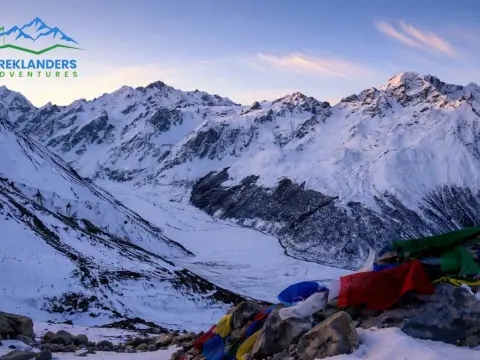
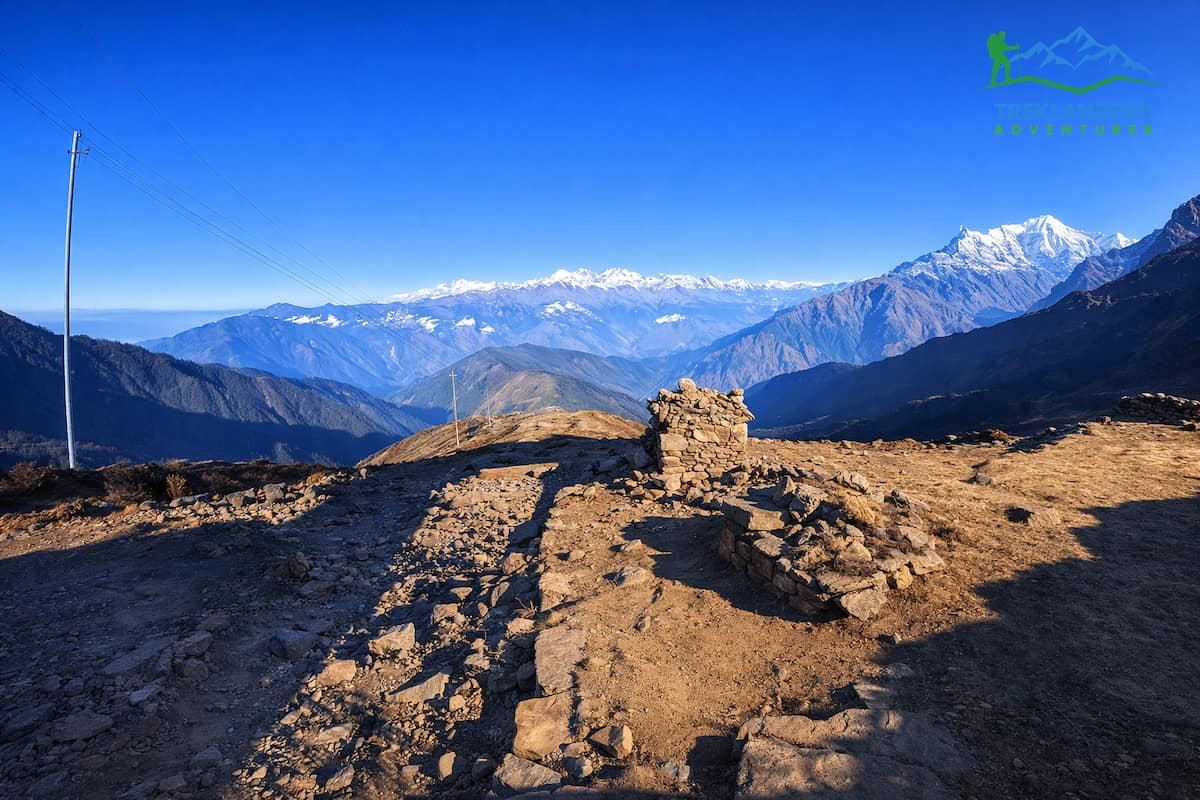
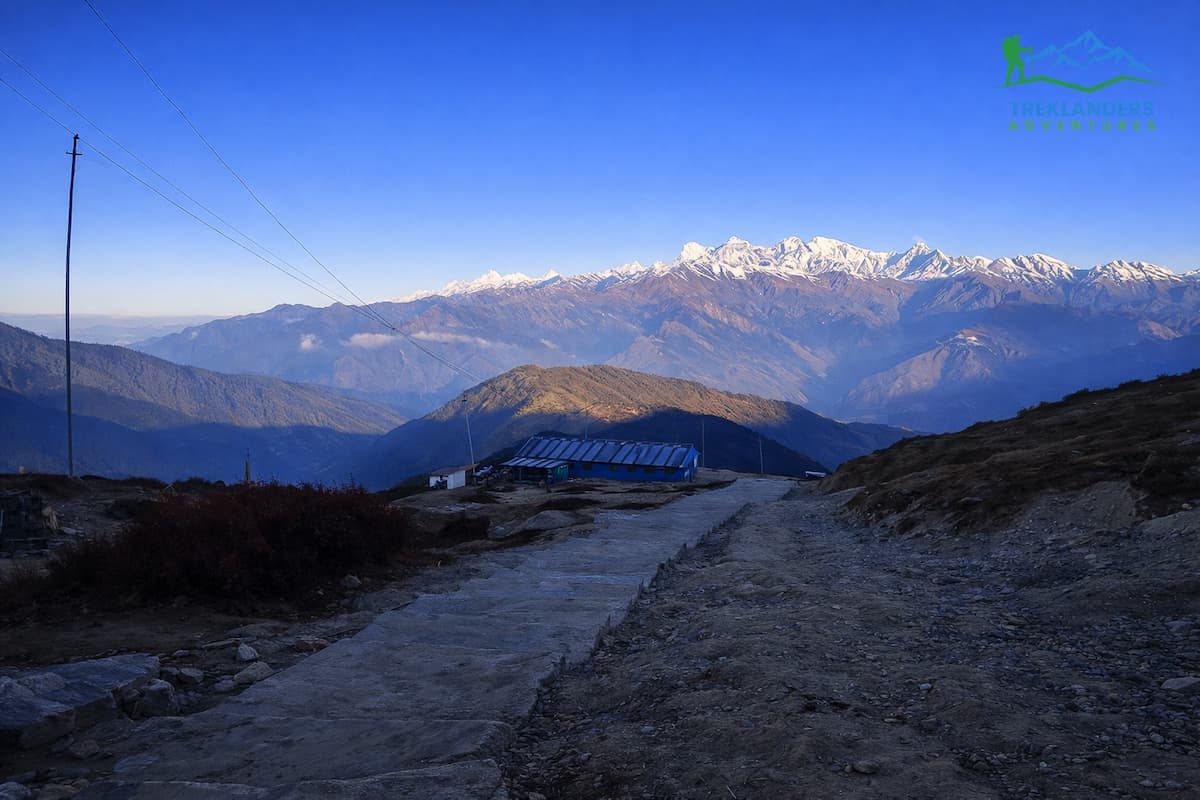
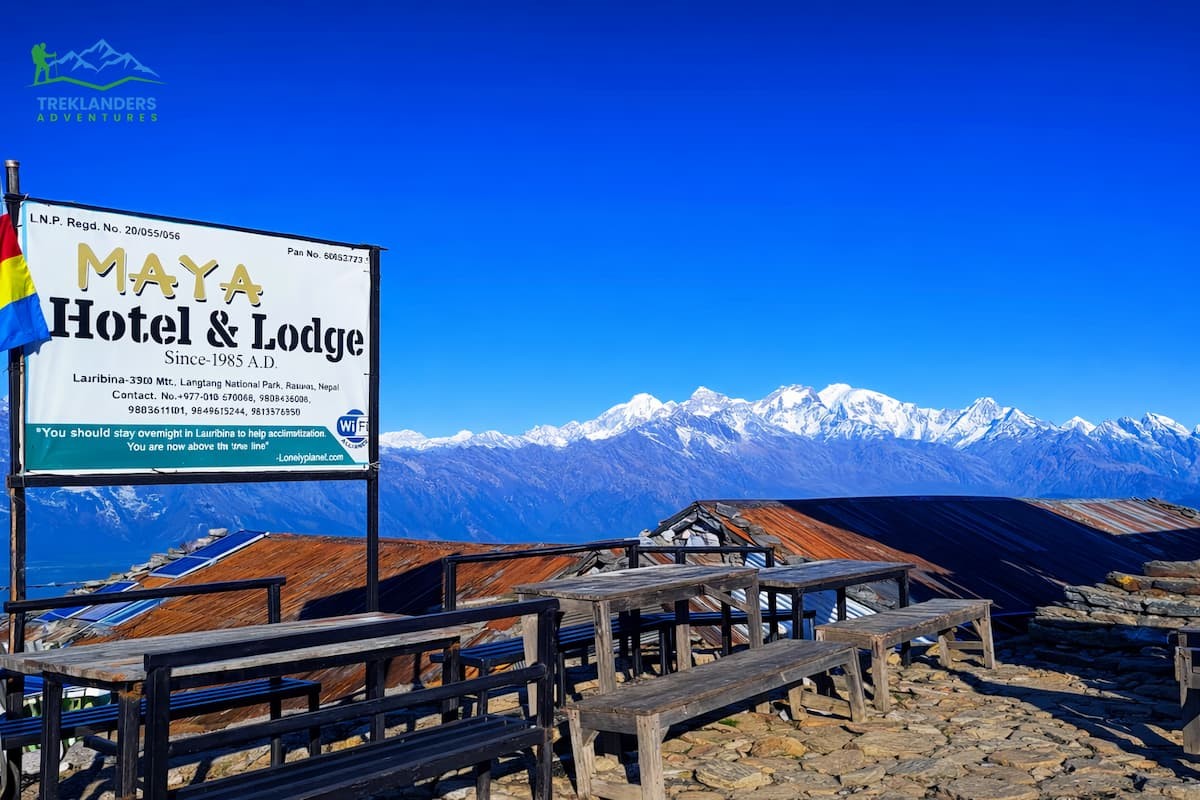
Visibility is the biggest advantage. You can clearly see peaks like Langtang Lirung, Ganesh Himal, and even the distant Annapurna ranges on clear days. The sky stays deep blue. Sunrises and sunsets are sharp and vivid. This matters on this trek because viewpoints like Lauribina offer wide panoramas.
The trail condition improves in autumn. After the rains, the forests look fresh. The lower sections through Dhunche and Sing Gompa show green hills, pine forests, and rhododendron zones. By November, the greenery starts to fade, but the views become even clearer. Trails stay dry, which reduces slip risk.
Culturally, this trek holds strong religious value. Gosainkunda is linked to Lord Shiva. Many pilgrims visit during festivals like Janai Purnima, though that falls earlier in the year. In autumn, the trail feels quieter and more focused on trekkers rather than large pilgrim crowds.
This trek is suitable for a wide range of trekkers. For one thing, it is shorter than, say, Everest Base Camp or the Annapurna Circuit. Generally, it takes people 5 to 7 days to walk it. In spite of the reduced time, the elevation gain is quite steep. You must take acclimatization seriously and be careful with your pace.
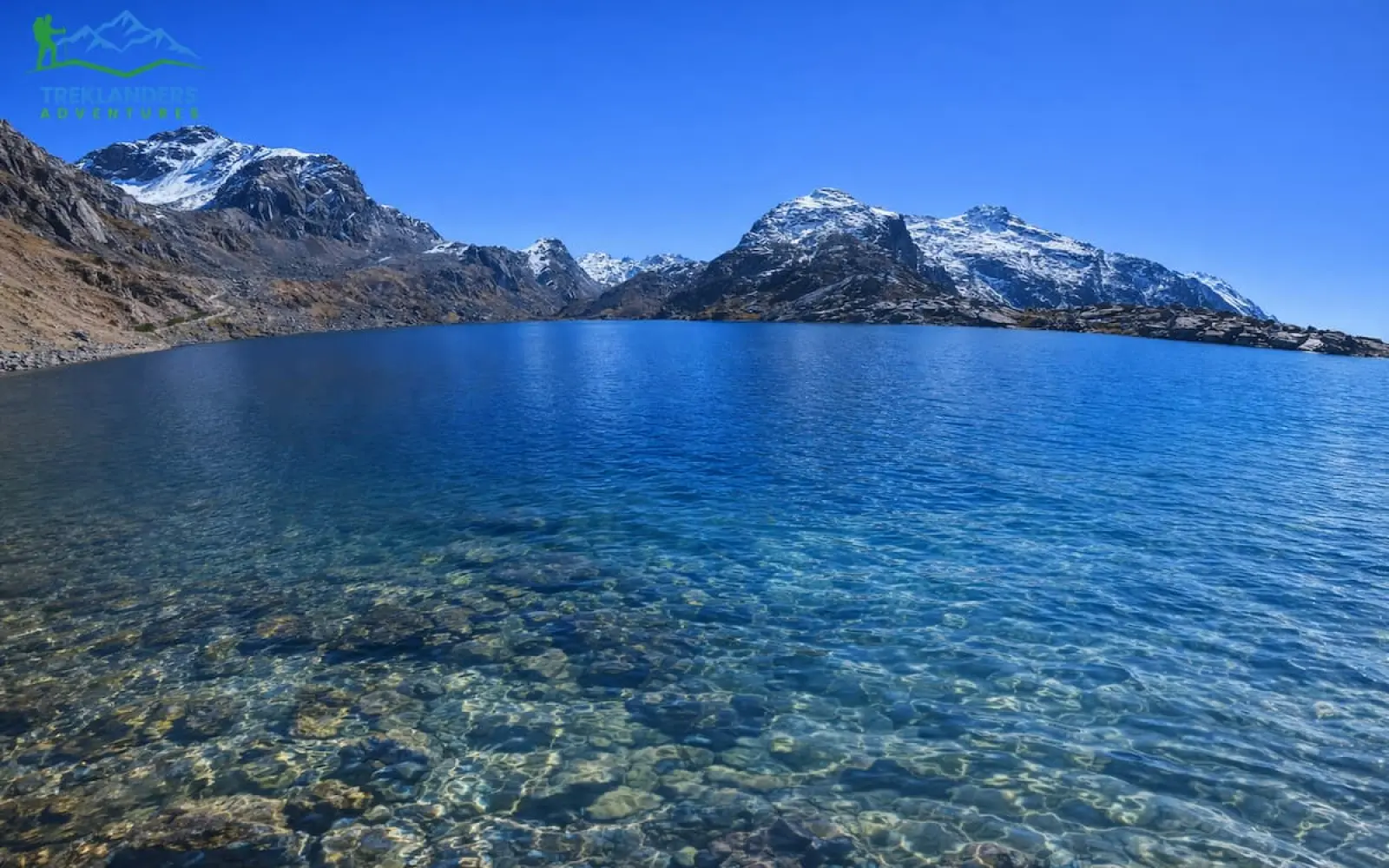
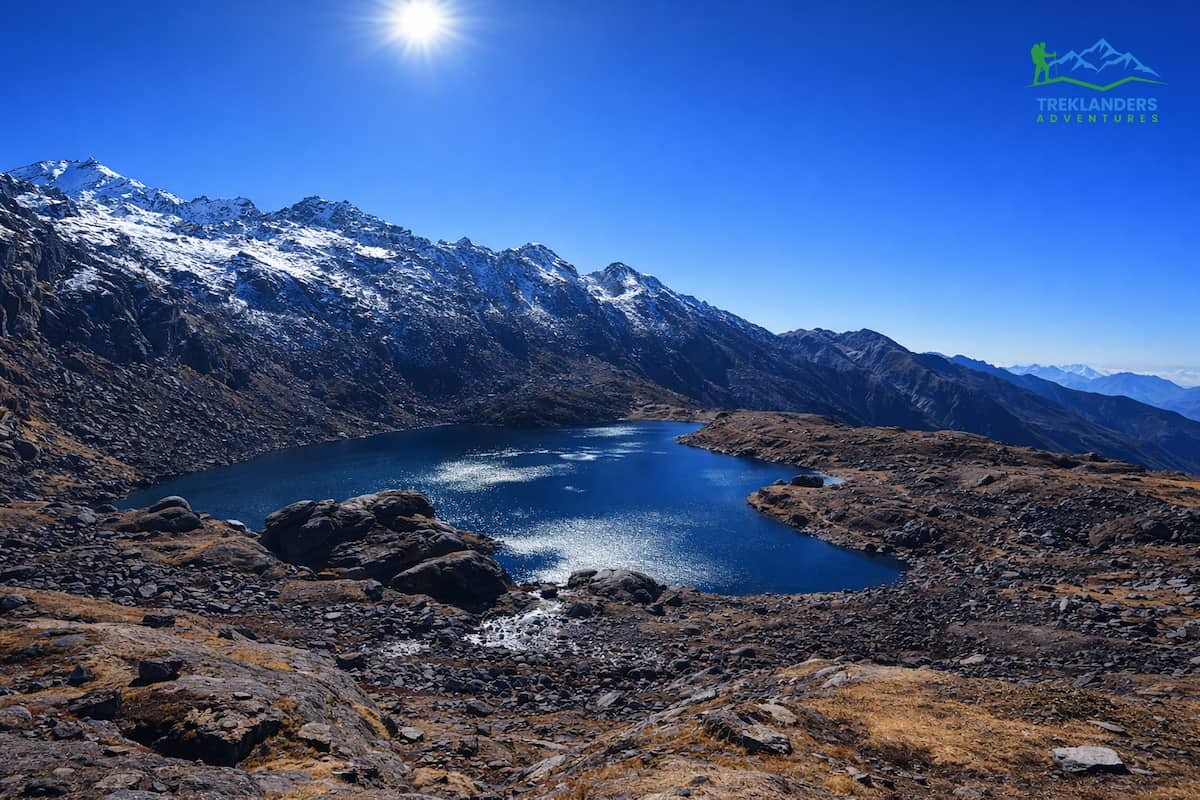
In October, you get the best of the mild weather and nice vista. November still has better skies, but the nights get very cold, especially around the lakes and Lauribina Pass. Both months are good enough to go trekking. You don't have to take any planes because you can start by driving from Kathmandu to Dhunche or Sundarijal. This is a great way to save money and make your journey as uncomplicated as possible. If you want a short Himalayan trek with high-altitude lakes, cultural depth, and reliable weather, autumn is the right season for Gosainkunda. Overview: The Gosainkunda Lake Trek is a brief but high-altitude trek located in the Langtang region of Nepal. It begins not far from Kathmandu and continues into the Langtang National Park. The main attraction of the hike is Gosainkunda, a lake situated at an elevation of 4,380 meters.
One of the features of this trek is the rapid increase in altitude. In just a couple of days, you can be at elevations above 4,000 meters. Hence, proper pacing and acclimatization become very important.
Key Facts
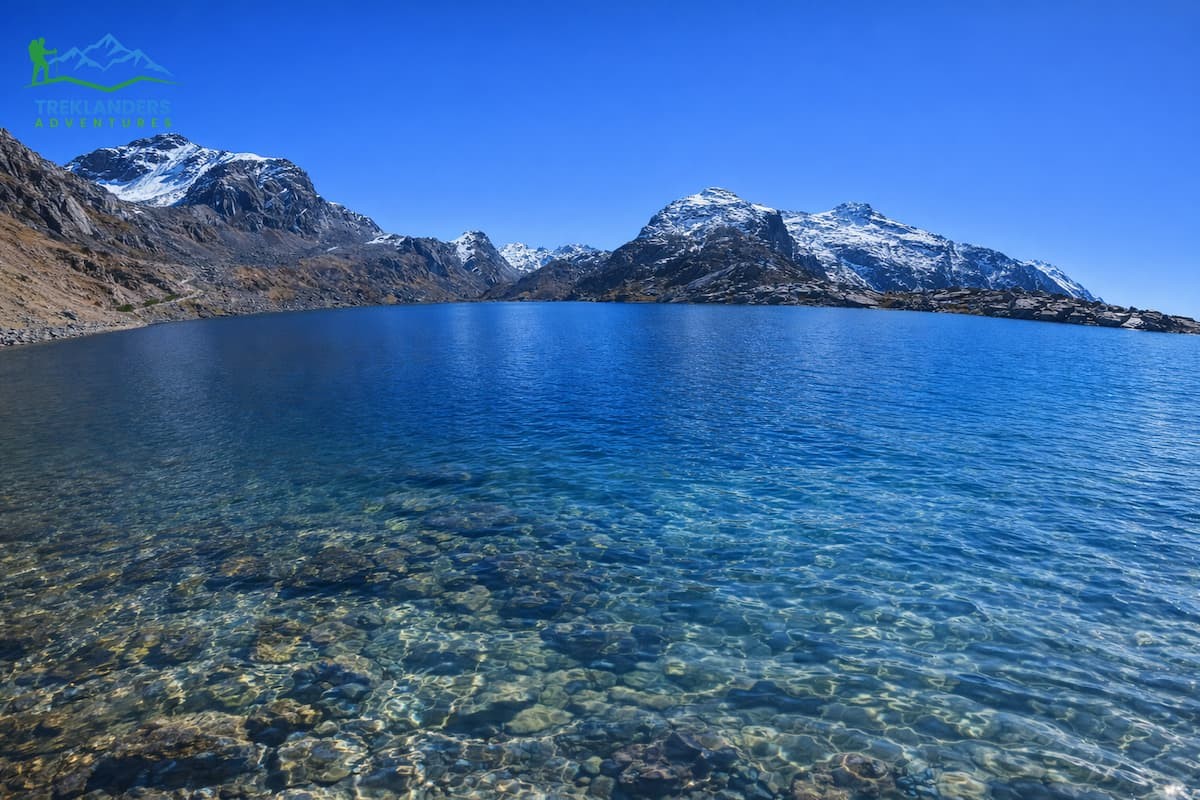
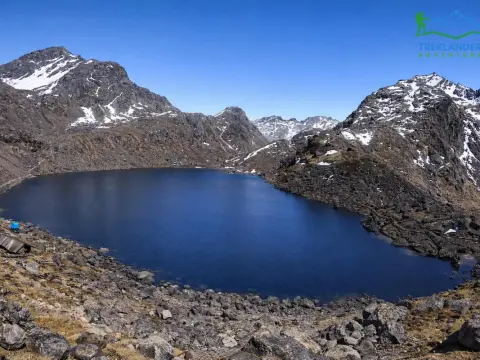
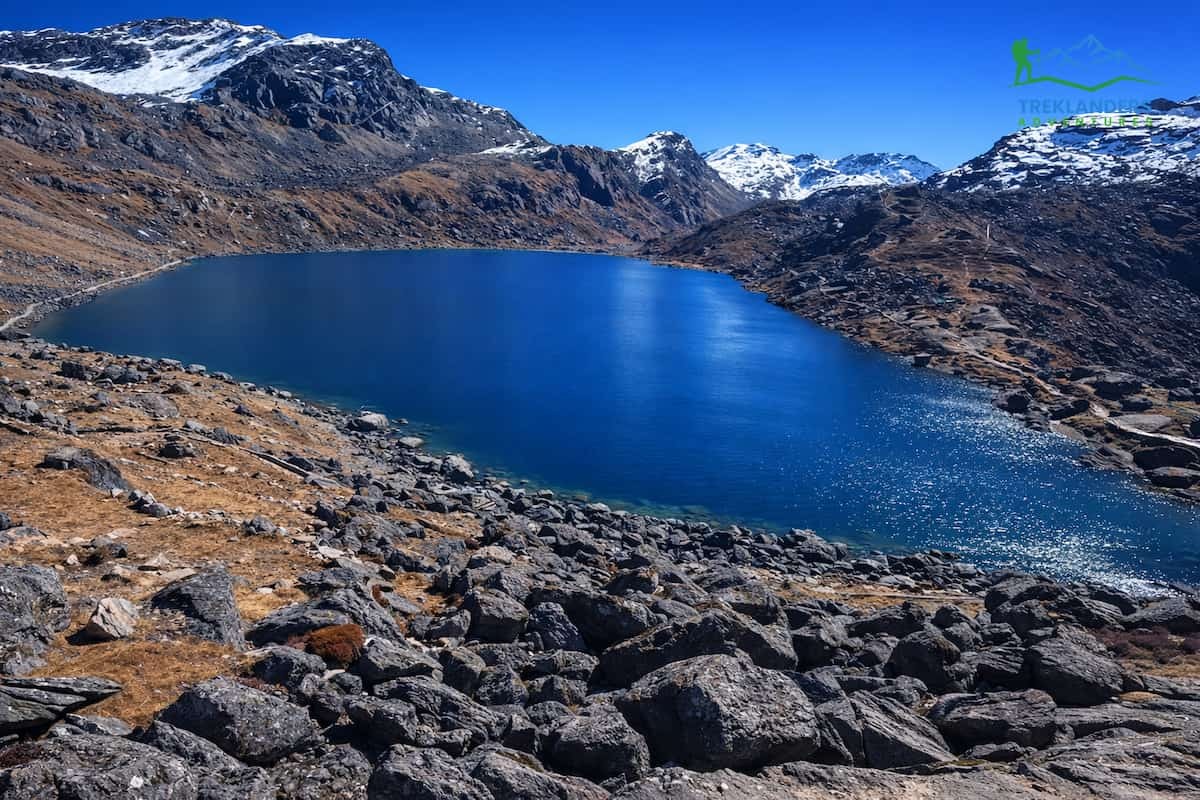
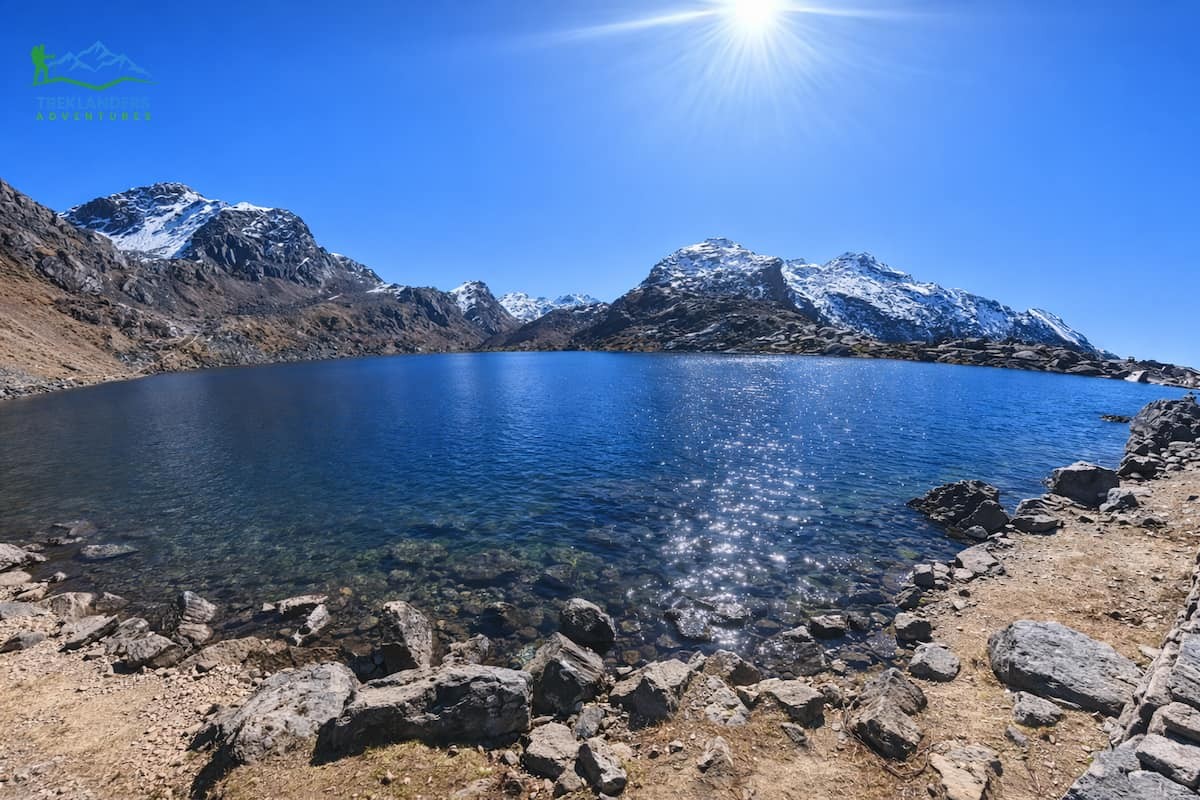
Beautiful Gosainkunda Lake
Duration: Around 5-7 days.
Highest point: 4,380 m at Gosainkunda; 4,610 m at Lauribina Pass if you choose to extend.
Starting point(s): Dhunche or Sundarijal.
Level of exertion: Moderate to challenging, depending on altitude.
Best season: October
Terrain and Landscape
Lower section: forests, terraced hills, villages
Mid-section: pine and rhododendron forests
Upper section: open alpine terrain, rocky paths, glacial lakes
The terrain changes fast. In a short time, you go from green hills to desolate high-altitude regions.
Why This Trek Is Different?
Short time, but see lots of the Himalayas.
No flights needed; you can get to the trek by road from Kathmandu
Holy lakes with very deep cultural significance.
There are great scenic viewpoints along the ridges.
Who Should Choose for This Trek?
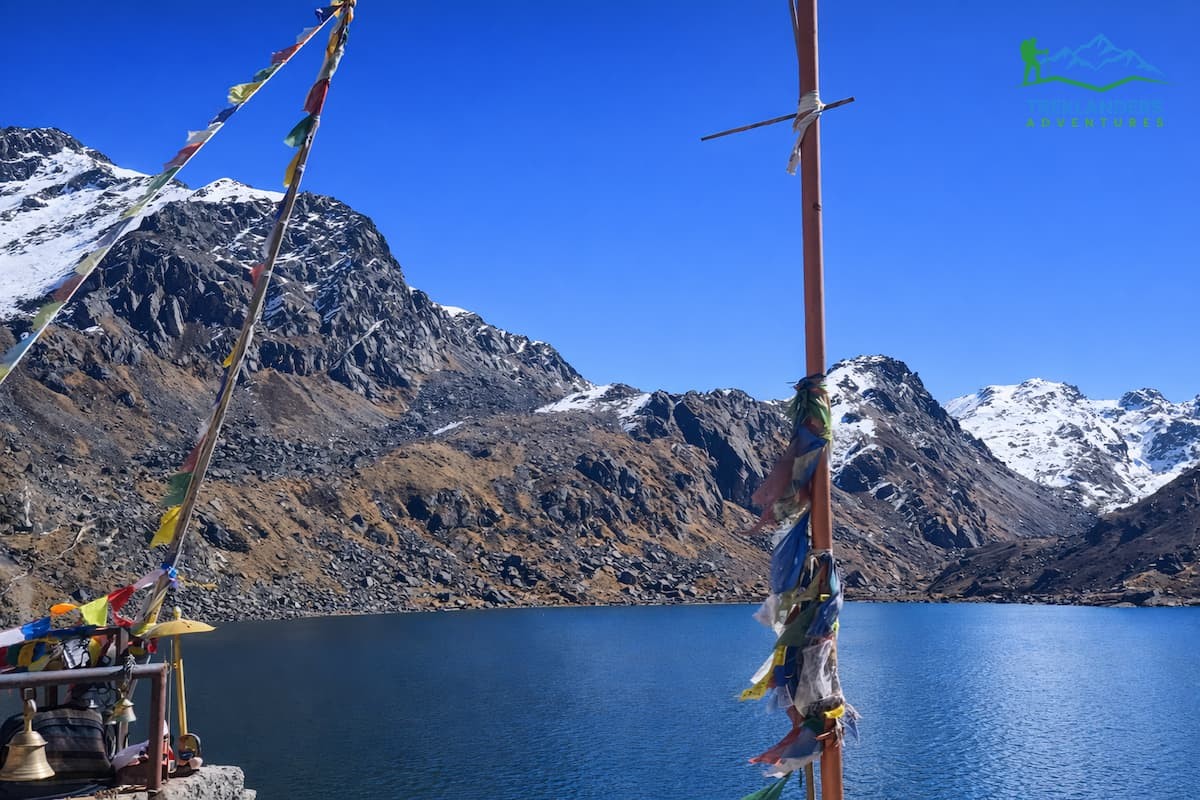
Holy Gosainkunda Lake
This trek offers a whole Himalayan vibe in a shorter period. It is exhilarating and challenging, yet it regales you with pristine vistas, isolated pathways, and a striking high-altitude lake as the final destination.
Why Trek Gosainkunda in Autumn
Preferably, October to November in autumn is the best time for the Gosainkunda trekking route as it provides the most dependable conditions. The weather generally becomes quite calm after the monsoon, while the sky clears up. The whole Langtang region, including inside the Langtang National Park, will have quite good visibility.
The major benefit is being able to confidently view the mountains. One gets a view of Langtang Lirung, Ganesh Himal and other neighboring peaks without any haze. The visibility in the morning is usually quite good. Clouds in the afternoon are few. This is very important when you are walking on ridgelines such as Lauribina, where vast landscapes make up the defining features of the experience.
One can notice a great improvement in the trail conditions. Dust and other pollutants are completely removed by the heavy monsoon rains. Finally, by October, the trails have been drying up. There will be fewer muddy parts that you have to negotiate, and also your chances of slipping will decrease. This can especially be very helpful when you perform the steep climbs, such as from Sing Gompa to Lauribina. Come November, the trails will be quite firm and stable.
Temperature stays within a manageable range.
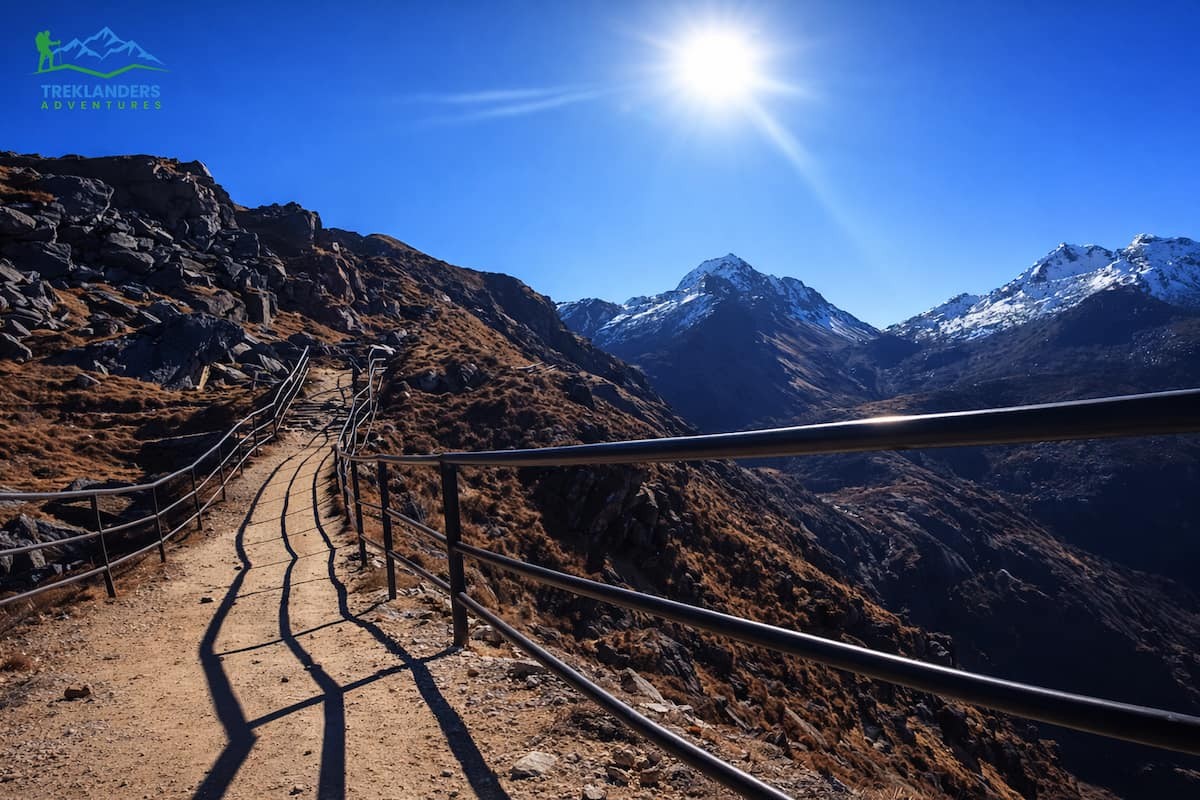
Trail along the Gosainkunda Lake Trek
October daytime: 10°C to 15°C at mid elevations
November daytime: 5°C to 12°C
Nights drop below freezing near Gosainkunda
Cold nights can be a bit challenging, yet the daytime hiking remains very enjoyable. In fact, you totally dodge heat waves and downpours. Finding the right balance is what keeps your body going at a steady pace and laughing at tiredness.
In fact, the air is a great thing to consider, too. The post-monsoon air is very fresh. You get higher oxygen levels at altitude. This is something that directly affects your endurance, especially when you are above 3,500 meters, where the oxygen is really thin.
Also, the logistics side of the journey is much more reliable in autumn. The roads leading to Dhunche are usually open. The chances of having your trip interrupted by landslides are much lower compared to monsoon months. You therefore get more predictable schedules, which is quite essential if time is short.
15 Day Langtang Gosaikunda Lake Helambu Trek | 15 days
The number of people is quite reasonable. In fact, October witnesses quite a few trekkers; however, the Gosainkunda trail is still a lot less crowded than the Everest or Annapurna routes. By November, the number of people declines even further. So, you get the chance for a walk and have better access to lodging.
The outdoor environment typically hits its highest point in early autumn. After the rains, the woods are lush with green. By the end of November, the scenery is dry and golden, but at the same time, there is a remarkable clarity. Both stages have quite distinct visual charms.
You also avoid major weather risks.
No heavy rain like monsoon
No frequent snowstorms like winter
Lower risk of leeches and insects
Autumn gives you stability, clarity, and safety. These factors directly improve trekking efficiency and overall experience. For a short, high-altitude trek like Gosainkunda, this season offers the best balance of conditions.
Best Time Within Autumn
Bhairav Kunda
Autumn is the season of your trek, from early October to late November. Each part of this window will show you different features of the Everest region, offering various choices for your trip. The ultimate decision depends on your personal preferences about the trade-offs between temperature, visibility, and trail conditions.
Early October is when the monsoon starts to give way to the next season. Since nature has received its abundant water during the rainy season, the earth down the trail in the lower parts can still become a little wet and slippery, mainly in the woods. On the other hand, the hills are looking beautiful and green, and the streams are well-fed. Though the air is still relatively hot, the temperature is pleasant for trekking during the day. Still, visibility is not perfect yet. While the morning views are rather clear, one can expect clouds to form later, hiding the mountains from view.
Mid to late October sees a great turnaround in the condition of Langtang National Park. These days are said to have the most durable weather of the whole time. The heavens remain spotless, making the views of the mountains clearly visible and striking. At this time, the path is totally dry, meaning it is safer and easier to walk on, especially when hiking up. During the day, the weather is still pleasant and only in the higher regions does the cold become noticeable at night. This time provides the most appropriate compromise between these three factors: the weather, the views, and the cold.
As the season progresses toward early and mid-November, visibility is at its peak. The air is dry and crisp, which not only helps to see the surrounding peaks but also makes them look more attractive. The clarity of the sky makes sunrises and sunsets seem even more beautiful and memorable. Meanwhile, the temperature takes quite a plunge. The nights in the Gosainkunda area can be below freezing, and morning frosts become a regular occurrence. However, if you keep moving, the daytime hiking conditions should be good even if it is cold.
Early winter conditions arrive with the end of November. The skies are still very clear, but it gets colder, especially at heights of over 4,000 meters. Snowfall near Lauribina Pass is a real possibility, and you may find that some lodges are shutting down for the winter by then. You also get a lot of quiet on the trails that accompany your feeling of being a lonely wanderer, but you do have to be really well prepared.
The period from mid-October to early November is the best time, practically. It offers clear skies, steady weather, and a comfortable range of temperatures, which is suitable for the majority of trekkers.
Permits
For the trek to Gosainkunda, you'll require two compulsory permits. These permits are mandatory for everyone trekking in the Langtang region. Officials will verify these permits at several locations on the trail, especially near Dhunche and the park gates.
Firstly, you will need the Langtang National Park Entry Permit. This permit is a requirement for entering and trekking inside Langtang National Park. Besides being a sanctuary for wildlife, forests, and alpine ecosystems, the park also benefits from your fees through ongoing conservation and trail upkeep efforts. Be sure to keep this permit with you at all times, as officials will ask for it at various checkpoints.
Secondly, you will need a TIMS card issued by the Trekking Agencies' Association of Nepal. TIMS is short for Trekkers' Information Management System. This system captures your trekking details mainly to help with safety tracking. Among other things, it allows emergency services to find trekkers quickly. Whether you are going alone or with a guide, this card is necessary; however, the way you obtain it might vary a bit.
Both permits are accessible at either Kathmandu or the trailhead in Dhunche. From Kathmandu, you can get your National Park Entry Permit by going to the Nepal Tourism Board and your TIMS Card at the TAAN office. The whole procedure is quite simple. Just fill out a form, attach a copy of your passport and submit passport-sized photos.
Ideally, you should acquire permits in Kathmandu before setting off on your trek. This will help you decrease waiting times at Dhunche, particularly during busy autumn weeks. Office hours in Kathmandu are fixed, so try to organize your visit accordingly.
Make photocopies of your permits & carry them with you on the trek. You will need 10-15 physical copies. Checkpoint arrival digital versions are generally not accepted across the country. A good idea is to put them in a waterproof bag so that they do not get wet or dirty.
Travel insurance is highly advisable, although it isn't a permit. The main reason is the exposure to high altitude and the remote location of the trekking routes. It is a wise decision to purchase a policy that covers trekking at altitudes over 4,000m and also emergency evacuation.
A permit check is very thorough. Without valid permits, you might be subject to fines or be sent back. It is highly recommended that you have all the arrangements in place before you start and keep your documents handy at all times.
Itinerary
Day 1: Arrival in Kathmandu and Transfer to Hotel
You arrive in Kathmandu. Airport staff and hotel representatives handle your transfer. After check-in, you rest and recover from travel. Use the evening to review your gear and confirm permits. Hydration starts here. You prepare your body for the higher altitude days ahead.
Day 2: Tour of Kathmandu Heritage Sites
You spend the day exploring cultural landmarks. Key sites include Swayambhunath and Pashupatinath Temple. This day helps you adjust gradually before heading into the mountains. You also finalize logistics such as transport, snacks, and cash. Early sleep supports the next day’s long drive.
Day 3: Drive to Dhunche, 1,950 m, 6 hours
You leave Kathmandu early and drive north toward Dhunche. The road follows winding hills and river valleys. Expect rough sections and slow progress in parts. You pass small settlements and terraced farms. Dhunche serves as the gateway to Langtang National Park. After arrival, you check permits and settle into a lodge. The air feels cooler and cleaner.
Day 4: Trek to Sing Gompa, 3,250 m, 6 hours
You begin trekking with a steady climb through forests. The trail passes oak, pine, and rhododendron zones. The ascent is continuous, so pacing matters. You gain significant altitude on this day. Sing Gompa, also known as Chandanbari, features a monastery and basic lodges. The area offers your first clear mountain views. You focus on slow movement and regular hydration to support acclimatisation.
Day 5: Trek to Gosainkunda, 4,380 m, 5 hours
Gosainkunda Lake
This is a critical day with strong altitude gain. The trail climbs above the tree line. Vegetation becomes sparse, and the terrain turns rocky. You pass Lauribina, a key viewpoint with wide Himalayan views. From there, the route continues upward toward Gosainkunda. The lake appears suddenly, surrounded by rugged peaks. You arrive by early afternoon to allow rest. Keep effort low to reduce altitude stress.
Day 6: Rest Day at Gosainkunda and Hike to Suryakunda, 4,610 m
You stay at Gosainkunda for acclimatization. Short hikes help your body adapt. A common option is a visit to nearby Suryakunda. The hike is gradual, but at high altitude, so you move slowly. The lake holds strong religious value, especially linked to Lord Shiva. You may see pilgrims performing rituals depending on the season. Spend the rest of the day resting, hydrating, and monitoring your condition.
Day 7: Trek Down to Sing Gompa, 4 hours
Lauribina- Gosaikunda lake Trek
You begin descent along the same trail. The drop in altitude brings relief in breathing and energy levels. Descending reduces the risk of altitude sickness. You retrace your steps past Lauribina and forest sections. The trail feels easier, but you still need to control your pace to avoid strain on your knees. Overnight stay at Sing Gompa.
Day 8: Trek to Dhunche, 1,950 m, 5 hours
You continue descending through forested terrain. The trail becomes greener and warmer as you lose altitude. You reach Dhunche by afternoon and check into a lodge. This marks the end of the trekking phase. You can take a hot shower and rest comfortably.
Day 9: Drive to Kathmandu and Transfer to Hotel
You return to Kathmandu by road. The journey follows the same mountain highway. Expect similar road conditions. On arrival, you transfer to your hotel. The evening is free. You can explore local markets or rest.
Day 10: Free Day in Kathmandu
This day acts as a buffer. Weather or road delays can affect mountain travel, so this day provides flexibility. If unused, you can explore more of Kathmandu, shop for souvenirs, or relax. It also allows recovery before your international flight.
Day 11: International Departure
You transfer to the airport for your departure. You leave Nepal with a completed high-altitude trek, having reached one of the most important alpine lakes in the region.
Difficulty and Fitness
Trail along the Gosainkunda Lake trek
The Gosainkunda Lake trek is considered moderate to challenging. The biggest challenge is not the technical terrain but the rapid altitude gains. Your body experiences stress as you reach above 4,000 meters within a few days.
The trail is simple to follow. You will be walking on clearly marked trails where you do not need ropes or climbing skills. But the climb is very steep and continuous, especially between Dhunche and Sing Gompa, and again, the last parts toward Lauribina. These parts require a steady effort and a good pace.
Altitude top challenge. Oxygen levels decrease as you go higher. You may experience shortness of breath, tiredness, or mild headaches. Even physically fit people can experience this. Above 3,500 meters, the risk is higher.
Walking hours per day are 4 to 6. The distance is not long, but the elevation gain makes each day physically difficult. The route to Gosainkunda has long uphill stretches with very few flat sections. Days when you are going down are easier on your breathing but harder on your knees.
Advanced trekking skills are not necessary, but you must be fit. If you can walk uphill for a few hours with a small backpack, you will be able to do this trek. Cardiovascular fitness is more important than muscle strength. Hiking, running, or cycling are good activities to get your body ready.
Strong legs are the key to being stable when you go on rough trails. It is a very good idea to do some stair exercises or walk on an incline before you start the journey. That way, not only will you be more fit to face the climbs, but you will also be better able to support your balance on rocky and uneven walking paths at a high altitude by working on your core strength.
Mental endurance is just as necessary as physical endurance. The higher you go, the colder and more exposed the environment will be. The facilities will also get more basic. You have to continue at the same pace and keep your focus over many days.
The level of difficulty is very much dependent on how well your body acclimatizes. One of the ways you can help your body to adapt is by taking a rest day at Gosainkunda. It is very dangerous to ignore altitude sickness symptoms; what could have been a nice little trek turns into a big risk. The right thing to do is to be aware of the early symptoms and then either rest or descend, depending on the situation.
The weather in the autumn season is very stable, so it becomes less of a challenge as far as the external conditions are concerned. Dry trails and clear weather will be the biggest factors helping you navigate easily. But then again, the cold nights and the early morning chill can also make things tricky.
This trek is doable with good planning, correct pace, and awareness of one's altitude exposure. The deciding factor is rather discipline than technical talent.
Accommodation and Food
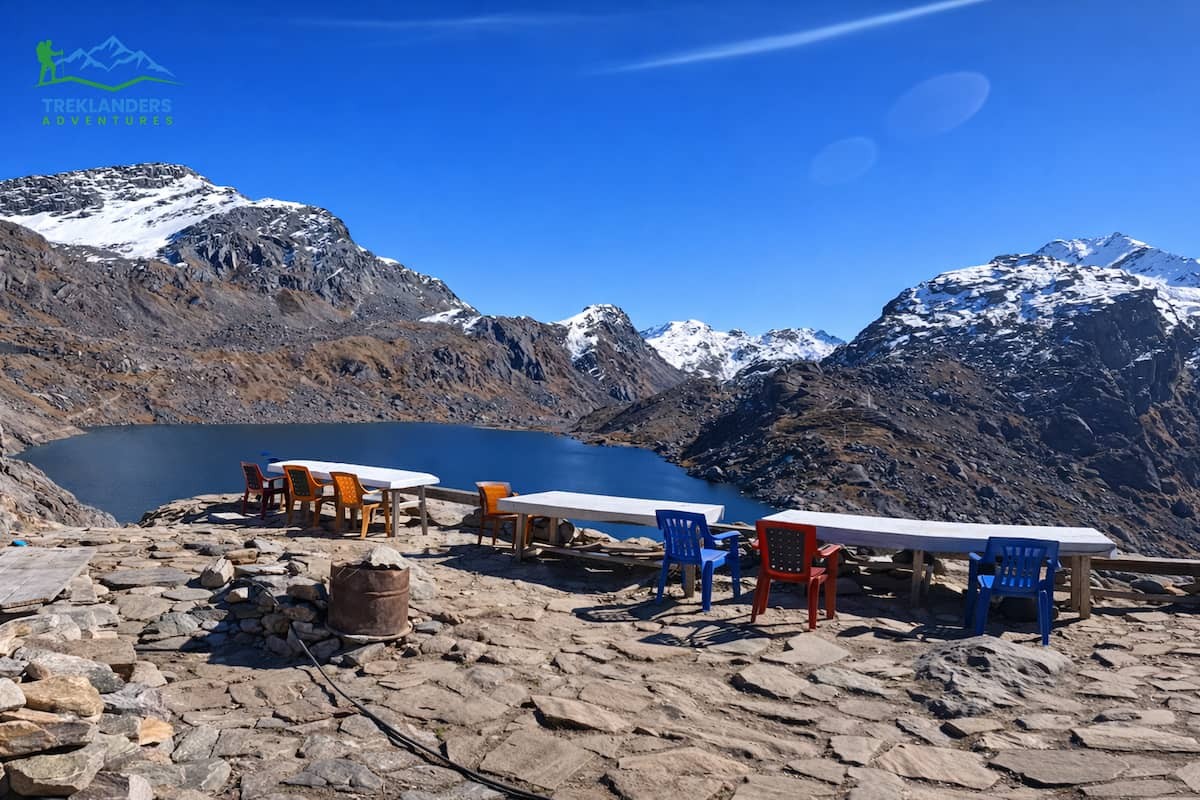
Accommodation (teahouse lodges) along the Gosainkunda Lake trek
The Gosainkunda Lake trek accommodations operate on the teahouse system. These are small teahouses run by local families located along the trek route in Langtang National Park. You don't have to carry your camping gear as rooms are designed to be quite basic and functional.
Typically, a room will have two single beds alongside a mattress, pillow, and blanket. Usually, there's no heating in the bedrooms, but the dining halls are equipped with a central stove that is the warmest spot in the evenings. As you go up, the amenities get simpler. Sing Gompa is where you find relatively comfortable lodging. On the contrary, lodges at Gosainkunda are quite scarce because of the location and severe weather.
Toilets are a matter of altitude changes. At lower altitudes, basic Western or squat toilets with running water are the norm. As you climb higher, you may come across very basic outdoor toilets and a shortage of water. You can get hot showers in the villages for a small extra charge. On the other hand, hot water is infrequent at high altitudes, and you may have to settle for a bucket wash.
14 Day Tamang Heritage with Langtang Valley Trek | 14 days
The food remains the same all along the trek. Menus are mainly focused on simple meals with high energy content suitable for trekking. Dal bhat, a meal consisting of rice, lentil soup, vegetables, and sometimes pickle, is the most popular dish. It offers well-rounded nutrition and is usually refillable, which makes it a very convenient option for a prolonged energy supply.
Besides this, there are noodles, fried rice, pasta, potatoes, soups, eggs, and pancakes. Usually, breakfast comprises porridge, eggs, Tibetan bread, or chapati. Tea, coffee, and hot lemon drinks are readily found everywhere. With the increase in altitude, there is a reduction in the variety of food, and the prices go up because of the difficulty in transport.
You should focus on eating hot and freshly prepared meals. Besides, you should stay away from raw food when in the mountains. The body needs water as a vital element, so you shouldn't stop drinking fluids frequently. Although bottled water can be found in the higher parts, it will cost you quite a bit. A more reasonable option is to either take boiled water with you or use purification tablets.
Electricity can be found in most lodges; however, it may only be available for a limited time. Paying extra to get your devices charged is quite a common thing. The Wi-Fi network exists in some places, but it is not only unreliable, but you won't be able to access it easily when you are near Gosainkunda.
During the autumn season, lodges do not accept reservations. October is a busier month in terms of the number of trekkers, so finding a room will be easier if you get there early. November is calmer, and therefore, you will have more options.
You need to be prepared for the minimum level of comfort rather than high class. The way the system is set up is to accommodate trekking, and not for relaxation. As long as you can adjust to living in simple conditions, the whole ordeal will be pleasant and without any major problems.
Health & Safety
Health and safety on the Gosainkunda trek depend on how well you manage altitude, hydration, and pace. The route reaches above 4,000 meters quickly, which increases the risk of Acute Mountain Sickness. This is the main concern.
You need to control your ascent. Walk at a steady pace and avoid sudden bursts of effort. Your body needs time to adjust to reduced oxygen levels. Common symptoms of altitude stress include headache, nausea, dizziness, and loss of appetite. If symptoms worsen, you must stop ascending. The safest response is to rest or descend to a lower altitude.
Hydration plays a direct role in prevention. You should drink at least 3 to 4 liters of water per day. Dehydration increases fatigue and worsens altitude symptoms. Use boiled water or purification tablets instead of relying only on bottled water. Hot fluids like soup and tea also help maintain body temperature.
Food intake matters. You need regular meals to maintain energy levels. Choose warm, cooked food. Avoid alcohol and smoking, as they reduce oxygen efficiency and slow acclimatization.
The weather in autumn remains stable, but temperatures drop at higher elevations. Nights at Gosainkunda often fall below freezing. You need proper layering, including a thermal base, insulated jacket, gloves, and hat. Cold exposure can lead to hypothermia if you are not prepared.
Although trail safety is mainly good, you still have to be vigilant. Certain parts of the trail are quite steep and rocky, especially the area extending upward to Sing Gompa. Proper hiking boots that offer a firm grip will make you less prone to slipping accidents. Poles for hiking additionally support you in keeping your balance during your upward and downward movements.
On this path, medical services are quite scarce. There are only a few small health facilities in the lower areas. However, if the situation is difficult, a patient may have to be taken out. A helicopter rescue is possible in the area, but it is influenced by the weather. This is why it is very important to have travel insurance that also covers high-altitude evacuation.
Do not forget your personal first aid kit. Besides general medicine, it is also good to carry drugs that help with headaches, digestive problems, and altitude sickness. You should also bring personal medicines in a sufficient quantity.
Internet access and phone communication are very limited at the highest levels. Mobile networks can be found in some areas along the trail, but they are very unreliable around Gosainkunda. Make sure someone knows about your plans before you leave for the trek.
If you keep a reasonable pace for yourself, stay well-hydrated, and pay attention to altitude sickness, you will be able to manage the risks. Most problems happen when people rush or overlook the first symptoms.
Conclusion
Gosainkunda Lake
The Gosainkunda Lake trek is a great way to experience the Himalayas in just a few days. Along the way, you get to see dense forests, wide meadows, and high-altitude rocky areas. Besides that, you also get to see the holy lakes and breathtaking mountains. Autumn, particularly from October to November, is the best time to do the trek weather-wise. Apart from the weather being more or less predictable, the trekkers also get to enjoy clear skies and go along firm trails, which make the trek safer and more enjoyable.
The route is a perfect blend of a physical challenge and cultural depth. While the daily walks are quite reasonable for well-conditioned trekkers, the high altitude requires you to pace yourself and make proper acclimatization. Accommodation in teahouses along the route gives you food, shelter, and the chance to meet locals without carrying a lot of equipment. The right permits, drinking enough water, and being aware of safety will help you enjoy your trip without worrying about running into problems.
You cannot miss hitting the highest point, Gosainkunda, at an altitude of 4,380 meters, as well as the side-trips to Suryakunda (4,610 meters) and Lauribina Pass. The spectacular scenery changes each day and, step by step, the journey takes new heights. Meeting with the monks of Sing Gompa and witnessing the locals' ways of life adds more flavor to the trip beyond mere physical exertion.
This trek is perfect for mountaineers who yearn for a high-altitude expedition in the Himalayas but don't want to endure the length or complexity of longer circuits. Road connectivity from Kathmandu significantly simplifies the logistics, and the stable weather conditions of autumn greatly reduce the risks related to weather and trail conditions. With the right preparations, you can savour beautiful mountain views, crystalline lakes, and the special spiritual ambience of the Langtang area in complete safety.
On the whole, Gosainkunda in the fall season offers a fine blend of thrill, nature's beauty, and Indian experience. It pays off well for those who plan thoroughly and pay homage to altitude through stunning vistas and a feeling of pride. The journey gives a vivid depiction of the grandeur of the Nepalese Himalaya and the profound importance of its sacred lakes.