
Langtang Valley Trek vs Annapurna Base Camp Trek: Detailed Comparison, Difficulty, Cost & Best Choice
6 Jan 2026
A quick comparison of the Langtang Valley Trek and Annapurna Base Camp Trek, covering difficulty, cost, and experience.

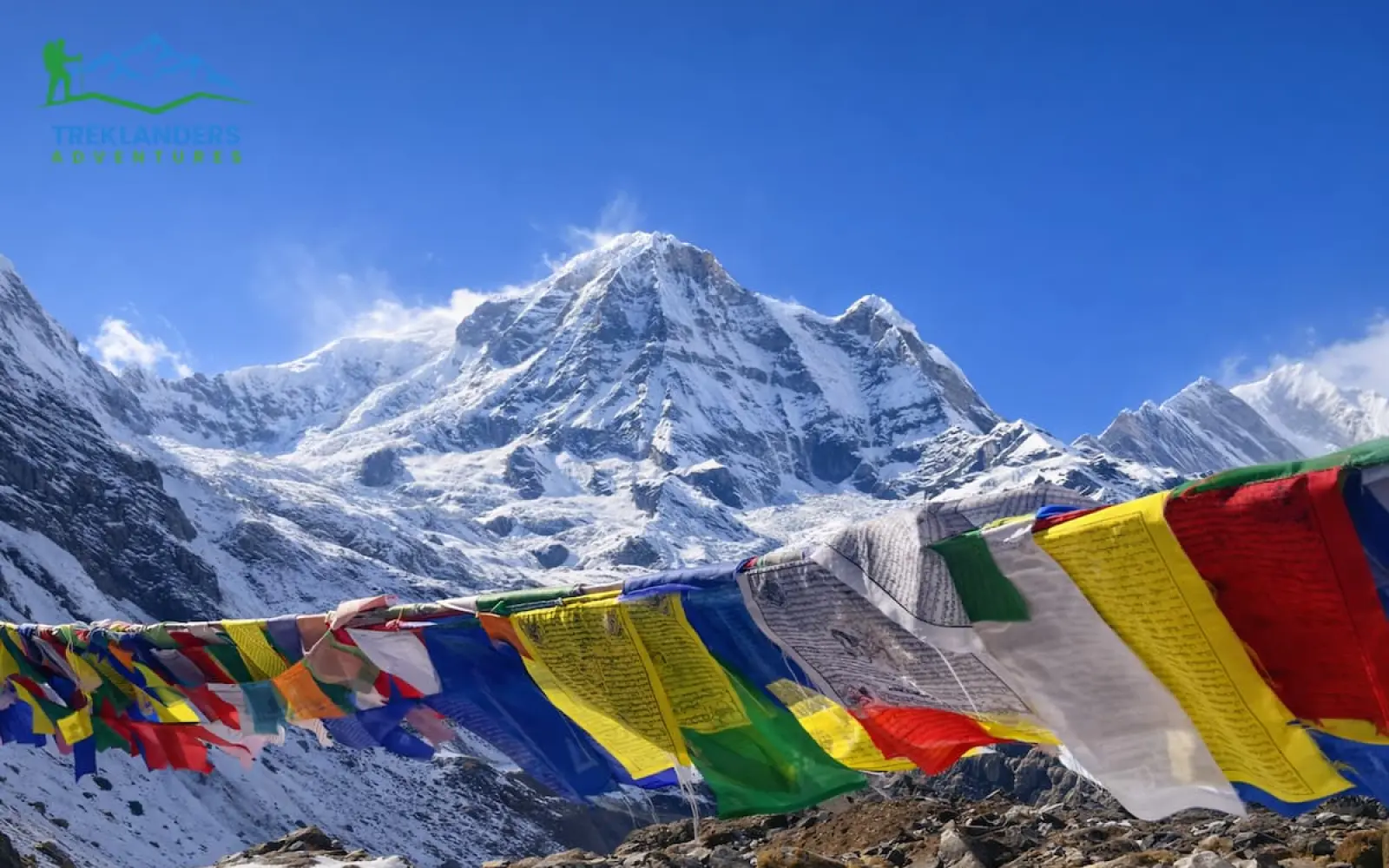
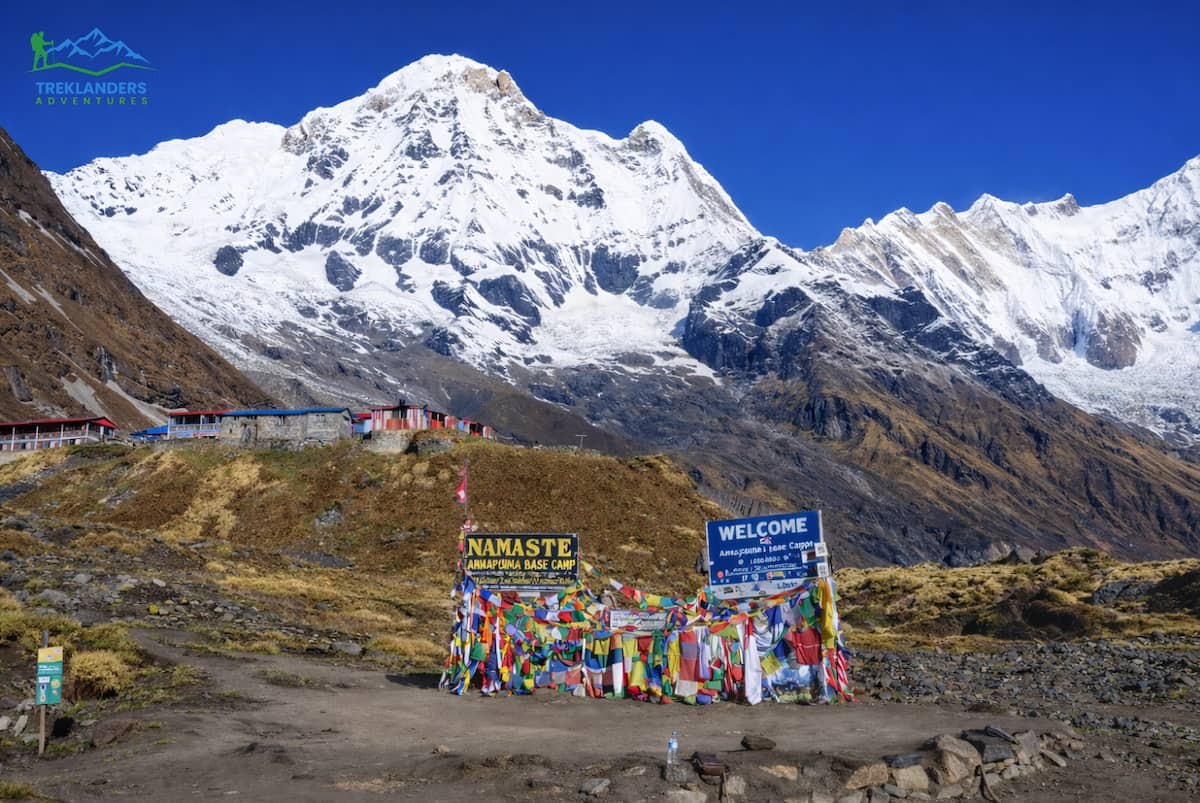
Annapurna Base Camp Trek (ABC) lies in Nepal's north-central part, within Annapurna Conservation Area - one of the Himalaya's most diverse protected regions. Beginning from Pokhara near the subtropical lowlands and following river valleys carved by the glacial waters of Modi Khola, a gradual ascent occurs as one progresses further up towards the Himalayan highlands, with permanent snow zones and alpine wilderness areas en route. This trek offers a direct geographical transition from farmlands and terraced fields directly into alpine wilderness zones en route.
As trekkers journey through villages such as Jhinu, Chhomrong, Bamboo, and Dovan on their trek through Nepal's Himalayas, the landscape shifts dramatically. At lower elevations, dense forests of rhododendron, bamboo, and oak make for a humid yet shady environment rich with biodiversity; as they progress higher up, alpine shrubs thin into alpine meadows and glacial valleys with towering peaks and hanging glaciers; finally, as trekkers approach Machhapuchhre Base Camp, steep rock walls and icy slopes dominate.
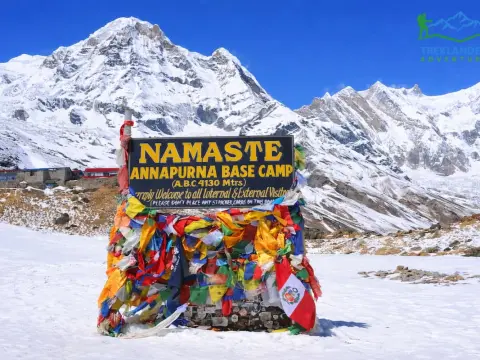
Annapurna Base Camp stands at 4,130 meters and sits in an expansive glacial basin that is completely engulfed by Annapurna I(8,091 m. / 26,545 ft.), Annapurna South(7,219 m. / 23,684 ft.), Hiunchuli(6,441 m. / 21,132 ft.), Machhapuchhre(6,993 m. / 22,943 ft.), and Gangapurna(7,455 m. / 24,457 ft.) mountains. This remarkable geographical setting, formed from ancient tectonic uplift and glacial erosion processes, is one of Nepal's most stunning high mountain landscapes - perfect evidence of Himalayan diversity where climate, terrain, and ecosystems change quickly over short horizontal distances.
Annapurna Base Camp Trek begins with an unforgettable drive from Pokhara toward Jhinu or Nayapul, the gateway to Annapurna Sanctuary. Once at Jhinu/Nayapul, trekkers follow stone steps up terraced farmlands and traditional Gurung villages until reaching Chhomrong, a major settlement perched above the Modi Khola valley. Here, they experience warm hills, cultivated landscapes, and distant mountain views as they gradually transition into high Himalayan environments.
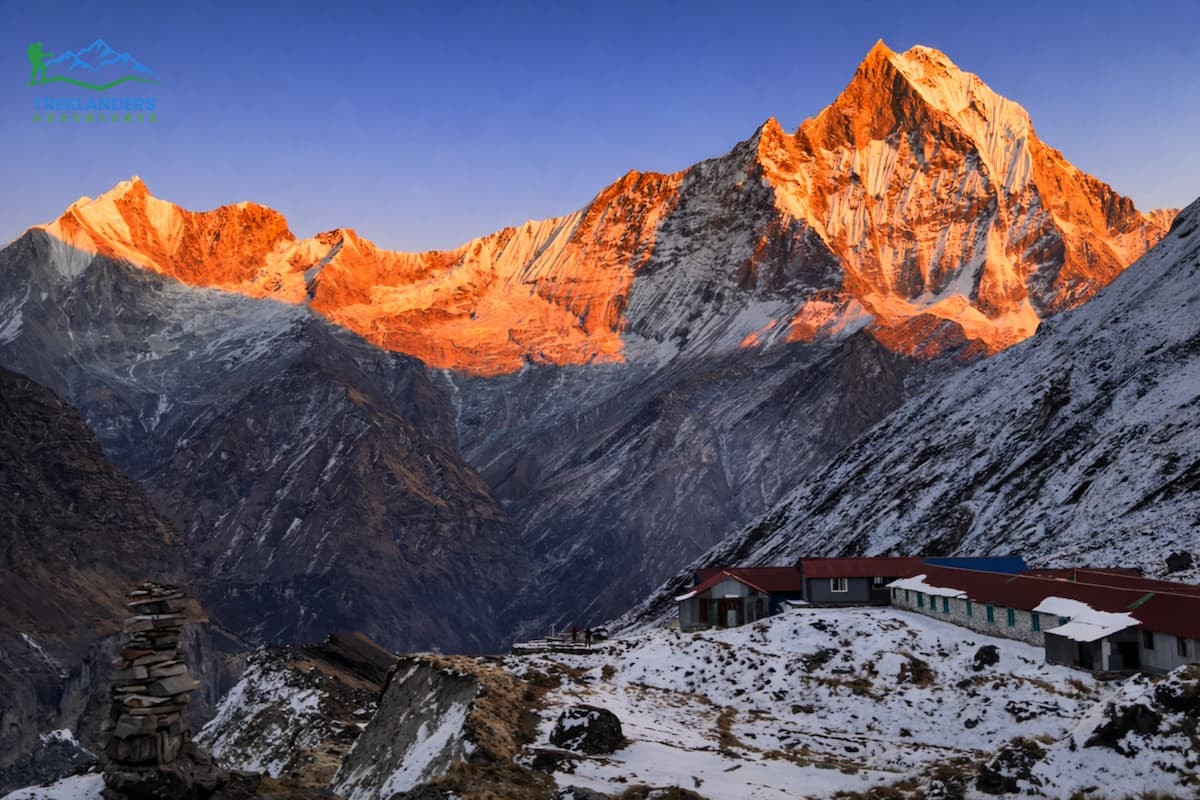
From Chhomrong, the trail descends steeply to a river before entering dense bamboo and rhododendron forests. After passing through Bamboo and Dovan, surroundings gradually grow cooler and quieter, featuring moss-covered trees, cascading streams, shaded forest corridors and cool shade trees dominated by cascades of water cascading over rocks, cascading streams, shaded forest corridors reminiscent of lush tropical forest corridors and gradually ascending towards Machhapuchhre Base Camp where terrain opens wide glacial valley beneath towering rock walls dominated by towering rock walls topped by towering rock walls and icy peaks - offering the first close encounter with Annapurna's core.
At Machhapuchhre Base Camp, the trek takes an exciting new turn as the trail passes to Annapurna Base Camp at 4,130 meters. Trekkers traverse an alpine basin encircled by Annapurna I, Annapurna South, Hiunchuli, Gangapurna, and Machhapuchhre peaks before arriving at Annapurna Base Camp for sunrise or sunset - it truly becomes like entering an amphitheater of snow-covered giants illuminated with stunning views.
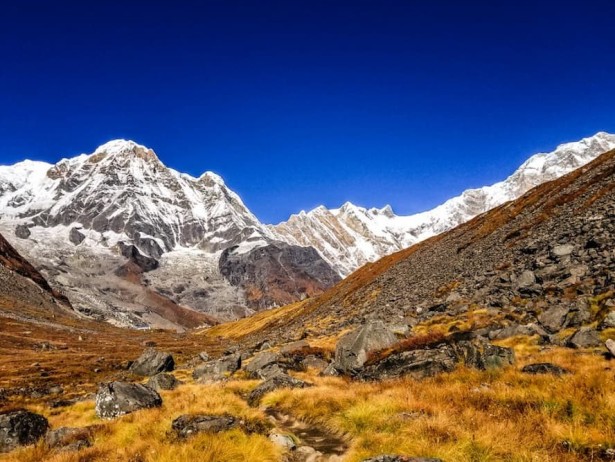
Once awestruck by the grandeur of the sanctuary, the return journey retraces the route downhill through Bamboo and Chhomrong, providing time to appreciate the varied landscapes as you move from alpine wilderness back into lush forest and village life. Your trek ends in Jhinu Danda, where natural hot springs offer a welcome respite before driving back to Pokhara and concluding this classic and deeply engaging Himalayan journey.
1. Natural amphitheater at Annapurna Base Camp
2. Close-up views of Annapurna I and Machhapuchhre
3. Diverse landscapes from jungle to glacier
4. Sunrise and sunset at 4,130 m
5. Walk through the Annapurna Sanctuary
6. Hot springs at Jhinu Danda
7. Rich Gurung culture and villages
8. Dramatic glacial valleys and icefalls
9. Rhododendron forests in spring
10. One of Nepal’s most classic and rewarding treks
Your journey to the Annapurna Base Camp begins with your arrival in Kathmandu, the cultural and historical heart of Nepal. As you land, the contrast between modern city life and ancient traditions is immediately apparent. After airport formalities, you are transferred to your hotel. The rest of the day is kept free to recover from travel fatigue. In the evening, you may take a short walk around Thamel, where colorful prayer flags, trekking shops, and traditional restaurants create a lively atmosphere. A short briefing is conducted to discuss the trek, safety measures, and final preparations.
After breakfast, you embark on a scenic drive to Pokhara, Nepal’s most beautiful lake city. The highway follows river valleys, terraced hillsides, and rural settlements, offering a glimpse into everyday Nepalese life. Passing through towns and farmland, the journey gradually descends toward the subtropical lowlands. Upon arrival in Pokhara, the relaxed ambiance of Phewa Lake and the distant sight of Annapurna peaks provide a refreshing contrast to Kathmandu. Overnight stay at a hotel near the lakeside.
The day starts with a drive from Pokhara to Jhinu Danda, passing through winding mountain roads and lush landscapes. From Jhinu, the trek begins with a gradual ascent through stone staircases and terraced farmland. The trail crosses suspension bridges and passes small settlements before climbing steeply to Chhomrong, a large Gurung village perched on a ridge. Chhomrong offers impressive views of Annapurna South and Machhapuchhre (Fishtail). This village marks the gateway to the Annapurna Sanctuary.
Leaving Chhomrong, the trail descends steeply to the Chhomrong Khola, followed by a steady uphill climb into dense bamboo and rhododendron forests. The air becomes cooler and more humid as the path enters a shaded forest corridor. Passing through Bamboo village, the surroundings grow quieter, with fewer settlements and more natural sounds of streams and wildlife. The trek continues gradually to Dovan, a small clearing surrounded by thick vegetation, where the night is spent in peaceful forest surroundings.
Today’s trail ascends steadily as the forest begins to thin and the landscape opens up. Passing through Himalayan Hotel and Deurali, trekkers notice dramatic changes in terrain, with steep rock walls and avalanche paths. As altitude increases, vegetation becomes sparse, and glacial streams appear more frequently. Reaching Machhapuchhre Base Camp is a memorable moment, as the valley widens and towering peaks dominate the skyline. The sacred Machhapuchhre stands directly ahead, creating a powerful and humbling experience.
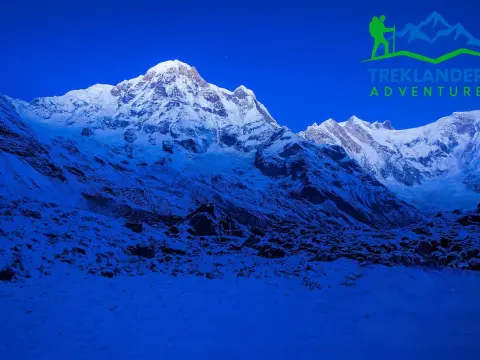
This is the most awaited day of the trek. The trail gently ascends across the glacial basin toward Annapurna Base Camp. Surrounded by Annapurna I, Annapurna South, Hiunchuli, Gangapurna, and Machhapuchhre, the route feels surreal. Reaching Annapurna Base Camp places you inside a natural amphitheater of ice and rock. The afternoon is spent resting, exploring the surroundings, and enjoying the dramatic mountain scenery. Sunset and sunrise here are among the most spectacular in the Himalayas.
After an early sunrise at Annapurna base camp, the descent begins. Retracing the trail downhill allows trekkers to notice landscapes missed on the ascent. The return journey feels easier as oxygen levels increase. Passing again through Machhapuchhre Base Camp, Deurali, and forested sections, the trail re-enters dense bamboo and rhododendron forests. The day ends at Bamboo, where warmer temperatures and lower altitude provide physical relief.
The trail continues downhill through forested paths, suspension bridges, and stone steps. After climbing back up to Chhomrong, the route descends toward Jhinu Danda. The highlight of the day is the natural hot springs near the river, where trekkers can relax tired muscles after days of walking. This therapeutic experience adds a unique reward to the journey. Overnight stay at Jhinu.
After breakfast, a scenic drive brings you back to Pokhara. The afternoon is free for relaxation, boating on Phewa Lake, or exploring the lakeside markets. With comfortable accommodation and modern facilities, Pokhara offers a well-deserved rest after completing the trek.
The return drive follows the same picturesque route along rivers and hills. Upon reaching Kathmandu, the evening is free for last-minute shopping or a farewell dinner. This final night allows time to reflect on the achievement and experiences of the trek.
Your Annapurna Base Camp adventure concludes with a transfer to the international airport for your onward journey. Depart with lasting memories of Himalayan landscapes, cultural encounters, and the sense of accomplishment gained from trekking to one of Nepal’s most iconic destinations.
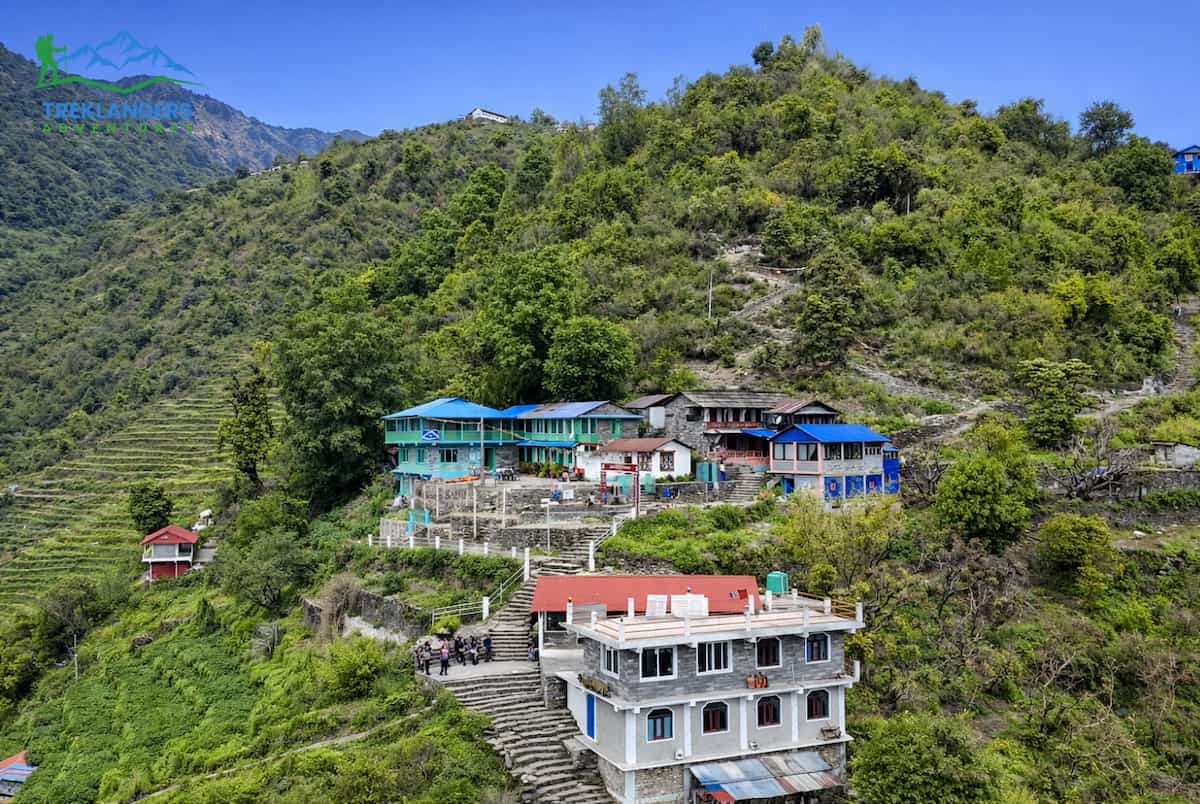
Chhomrong offers comfortable teahouses with spectacular mountain views, making it the final major settlement before entering Annapurna Sanctuary.
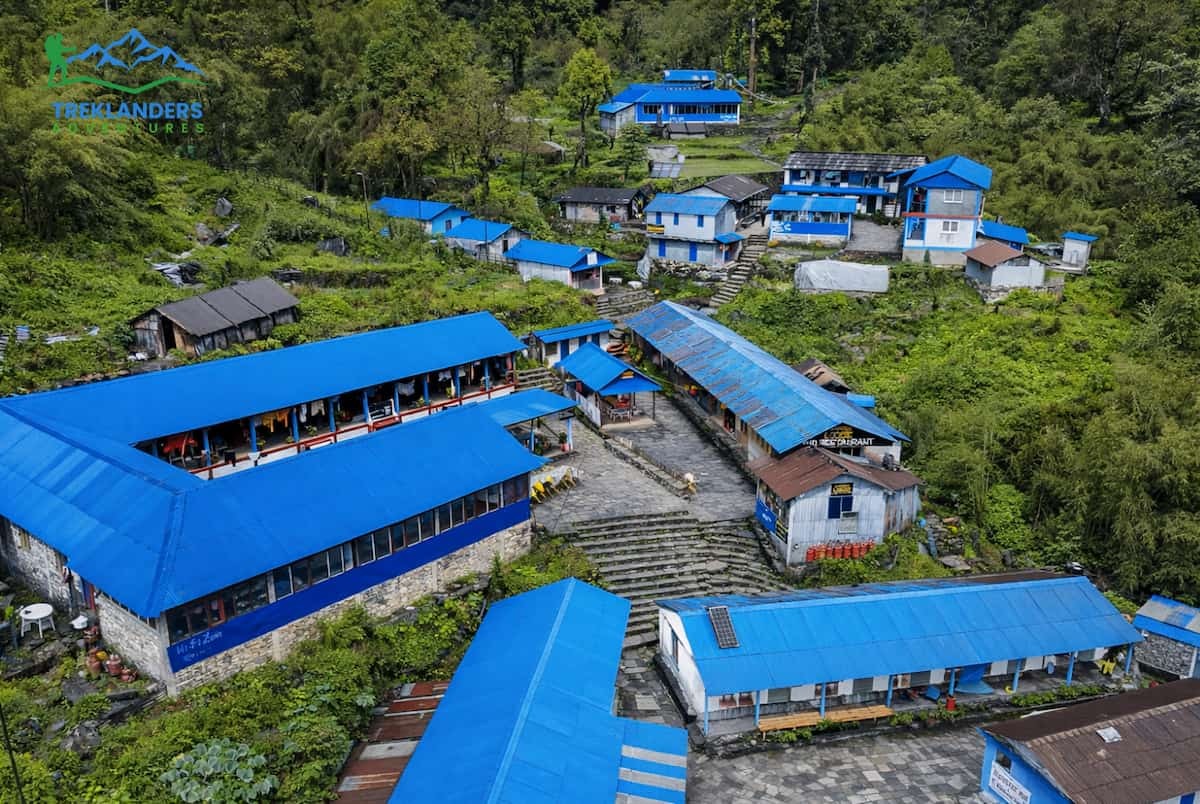
Day two begins with a steep descent to Chhomrong Khola, followed by an uphill trek through bamboo and rhododendron forests. As altitude increases, so too do alder trees become thicker, providing shade against direct sunlight piercing through. At Bamboo village, our route slowly winds toward Dovan, an idyllic clearing deep within the forest.
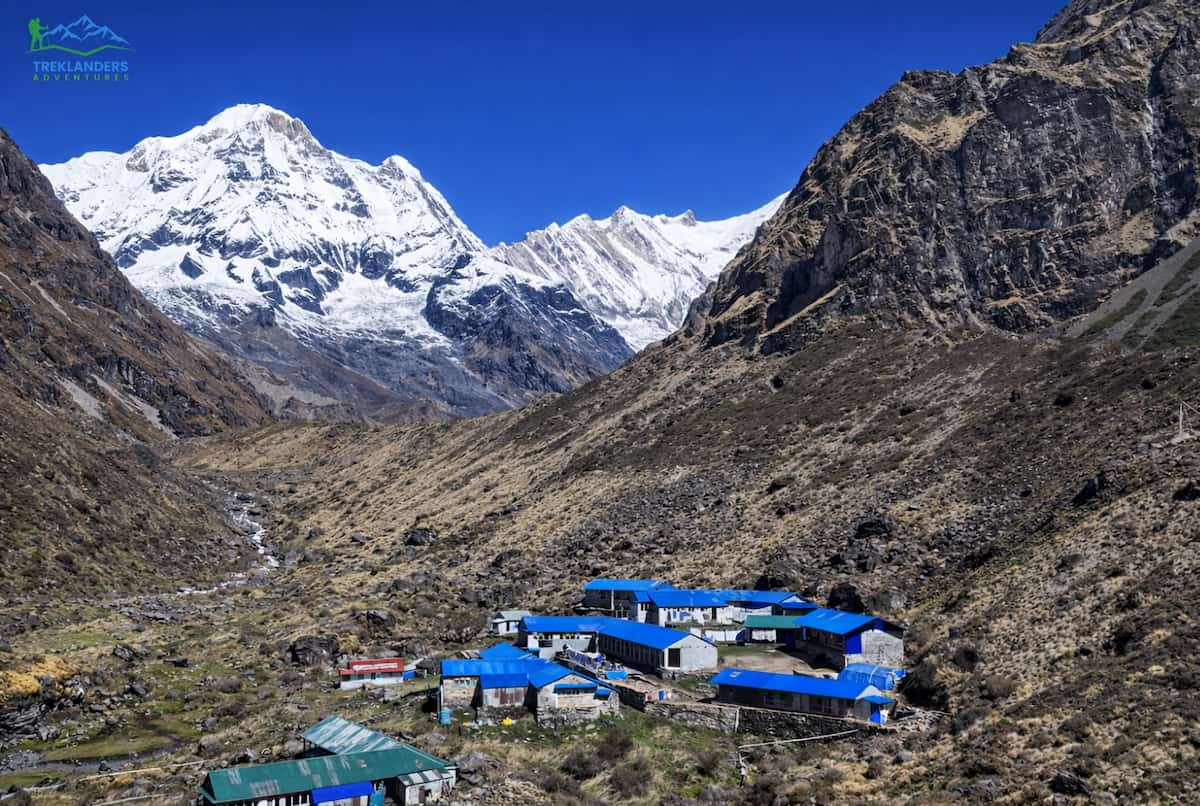
This is the day when the landscape starts to feel truly alpine. The trail climbs gradually past the Himalayan Hotel and Deurali, where vegetation becomes sparse, and the valley opens wide. Avalanche paths and glacial streams dominate the terrain. Machhapuchhre Base Camp lies in a broad glacial basin, directly beneath the sacred Fishtail peak.
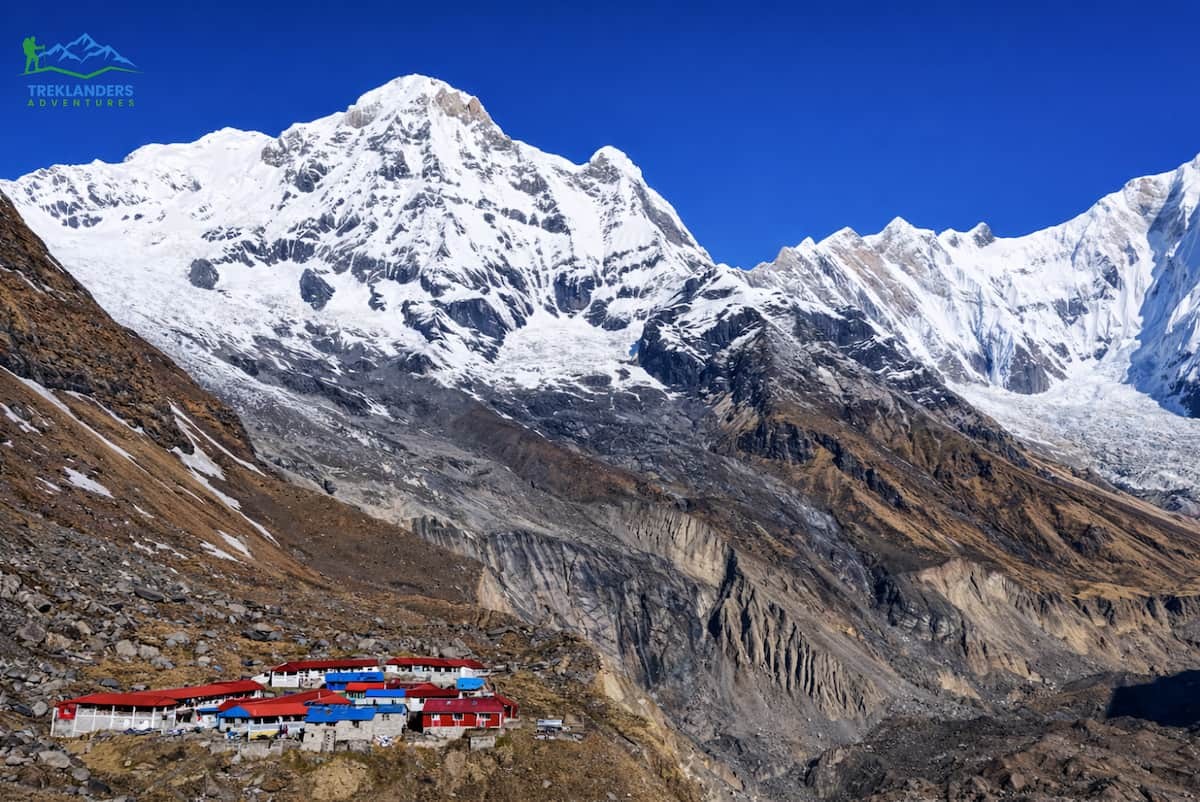
Today marks one of the most anticipated days on this trek. Starting out along a vast glacial basin, as you ascend gently across rolling grasslands towards Annapurna Sanctuary, towering peaks become ever-present until finally arriving at Annapurna Base Camp feels like entering a natural Himalayan amphitheater.
Starting Point: Machhapuchhre Base Camp (3,720 meters),
Ending Point: Annapurna Base Camp (4130 meters).
Trek Duration is 2-3 hours for this wide alpine trail with a gradual ascent up to 4,130 meters maximum elevation.
Best Moment of the Day
Sunrise and Sunset at Annapurna Base Camp were highlights of today.
ABC trek offers accommodation in basic lodges featuring dorm-style or twin rooms with thick blankets, warm dining halls with limited charging capabilities, and simple yet high-energy meals.

After an early sunrise, the descent begins. Walking downhill feels easier as oxygen levels increase. The trail retraces the route back through Machhapuchhre Base Camp, Deurali, and dense forests. The return offers a different perspective of the landscape.
The trail climbs briefly to Chhomrong before descending steeply to Jhinu Danda. The highlight of the day is the natural hot spring near the river, perfect for soothing tired muscles.
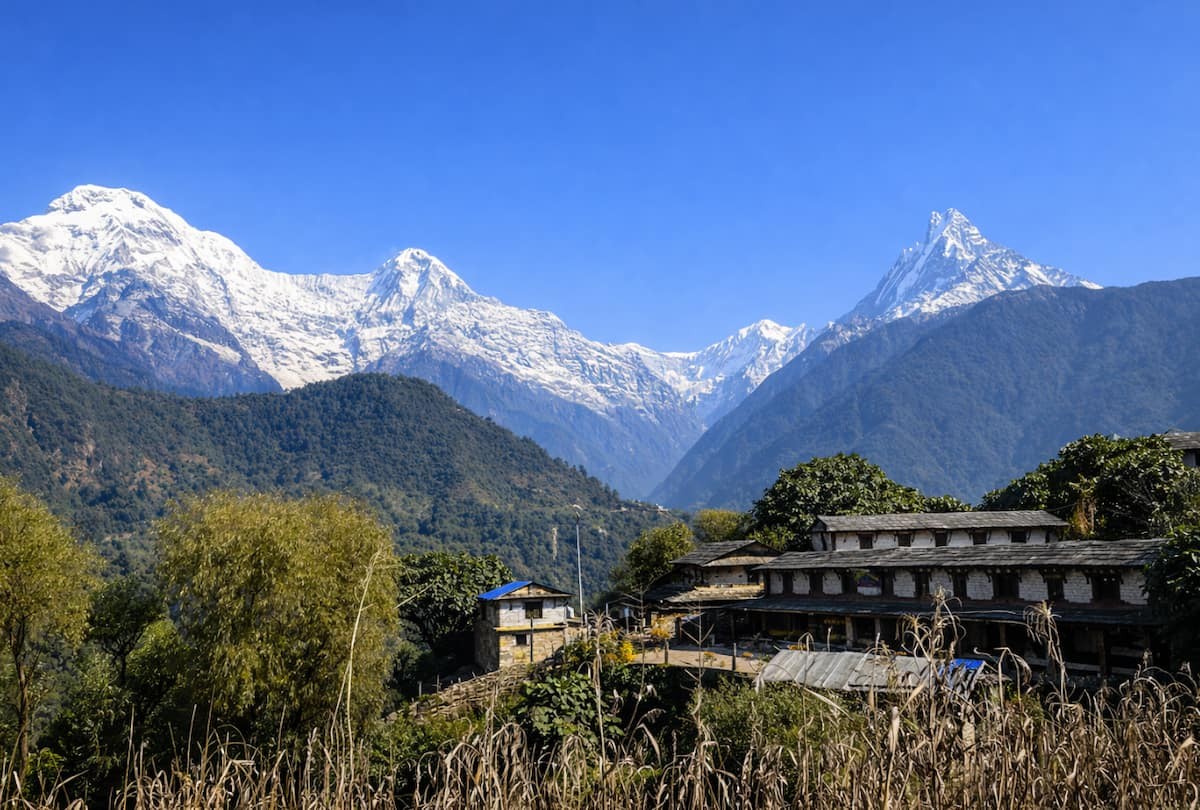
After breakfast at Jhinu Danda, the trail moves gradually uphill through terraced farmland and traditional villages. The path crosses suspension bridges and passes through forested sections before reaching Landruk, a classic Gurung settlement. From here, the trail continues toward Ghandruk, one of the largest and most culturally rich villages in the Annapurna region.
Ghandruk is well known for its stone houses, slate roofs, and wide courtyards. The village offers impressive views of Annapurna South, Hiunchuli, and Machhapuchhre. This day emphasizes cultural immersion rather than altitude gain, allowing the body to recover after high-altitude trekking.
The trek officially concludes on this day. The trail descends steadily from Ghandruk through forests and farmland to Nayapul. The route is well-maintained and frequently used, making it easier and faster than previous trekking days. From Nayapul, a private or shared vehicle transfers trekkers back to Pokhara.
Returning to Pokhara feels like re-entering modern life after days in the mountains. Hot showers, proper beds, and lakeside restaurants mark a clear contrast to the trekking environment.
This day is intentionally kept non-physical. After multiple days of trekking, the body requires rest. Pokhara provides the ideal environment for recovery with its calm lakeside atmosphere.
Activities include walking around Phewa Lake, visiting Davis Falls, Gupteshwor Cave, and the World Peace Pagoda. This day also allows time for laundry, equipment organization, and reflection on the trekking experience.
Travel back to Kathmandu is scheduled on this day. Travelers can either choose a scenic drive or a short domestic flight. The drive follows river valleys and hill roads, while the flight offers aerial views of the Himalayan range.
Upon arrival in Kathmandu, the evening is free for light exploration, shopping, or farewell dinners.
The final day marks the conclusion of the journey. Depending on flight schedules, travelers transfer to Tribhuvan International Airport for international departure. This day is kept flexible to accommodate unforeseen delays, which is standard practice in Himalayan itineraries.
Annapurna Base Camp is one of Nepal's most breathtaking mountain destinations, and a highlight of any trek, offering unparalleled 360-degree panoramic views of some of the highest peaks imaginable - Annapurna I, South, Hiunchuli, and Gangapurna are just a few among many more! Situated deep within Annapurna Sanctuary, it provides trekkers with unmatched mountain panoramas such as Annapurna South, Hiunchuli, and Gangapurna; set within its glacial basin, it gives trekkers an unsurpassed high altitude experience - sunrise/sunset experiences not often found elsewhere.
Machhapuchhre (Nepali for "Fish Tail") stands as one of Nepal's most iconic and revered mountains, rising sharply to 6,993 meters and dominating the skyline throughout any trek. Due to its religious significance and unclimbed status, Machhapuchhre remains unclimbed so as to preserve its pristine nature, and its perfectly symmetrical twin summit can be seen from various viewpoints around Machhapuchhre Base Camp, giving trekkers an extraordinary sense of scale and grandeur, becoming one of the most photographed Annapurna region peaks as well as a spiritual symbol of natural purity.
The Annapurna Sanctuary is an exquisite high-altitude glacial amphitheater encased by towering Himalayan peaks, creating an incredible sensory experience upon entry. Stepping through its valley gradually opens up to reveal massive ice walls, glaciers, and alpine terrain - it truly feels like entering another world as its valley gradually opens out, revealing massive ice walls, glaciers, and alpine terrain - with cultural and spiritual importance for local communities who consider this area sacred. Its unique geography creates a protected ecosystem within which weather, sound and light become intensified dramatically when walking through its protected ecosystem provides a powerful sense of isolation serenity and connection with nature's raw forces - walking through it offers powerful feelings of isolation serenity while connecting to nature's raw forces - walking through this natural enclosure provides powerful feelings of isolation serenity and connection with nature's raw forces while walking its natural enclosure offers powerful feelings of isolation serenity and connection with raw forces of nature.
Machhapuchhre Base Camp (MBC) is both an essential acclimatization stop and a major attraction on any trek to Machhapuchhre. Situated just below Fishtail Peak, MBC provides incredible panoramic views of surrounding glaciers and towering rock faces - the open valley setting allows trekkers to fully appreciate the magnitude of these mountains without obstruction. MBC serves as a transition point between forested landscapes and high alpine terrain; with its serene atmosphere, crisp mountain air, and proximity to snowfields, MBC provides restfulness while adapting to high altitude conditions.
The trek passes through traditional Gurung villages like Chhomrong and Ghandruk that add a cultural dimension to the experience. These settlements are known for stone houses, terraced farmland, strong community life, and centuries-old customs shaped by mountain living - visitors experience local hospitality, traditional food, and centuries-old customs such as prayer flags or village monasteries that illustrate how Himalayan communities coexist sustainably in harsh natural environments. Staying in these villages allows trekkers to observe daily rural life while understanding how Himalayan communities sustainably coexist with harsh natural environments.
One of the most stunning elements of an ABC trek is its variety of vegetation. Rhododendron forests dominate lower elevations in spring when their red, pink, and white blossoms cover entire hillsides. As one ascends the trail, bamboo forests become increasingly prevalent, creating cool shaded paths alongside rivers and waterfalls while providing birds and wildlife shelter. Their presence adds ecological depth and biodiversity. Gradually shifting from lush greenery to barren alpine terrain shows off Annapurna's vast environmental range.
Jhinu Danda's natural hot springs are an unmatched and much-valued attraction after days of trekking, offering warm, mineral-rich water believed to relax muscles and improve circulation. Situated near Modi Khola river, these pools of hot mineral springs can offer relaxation as they refresh muscles while increasing circulation - ideal after an exhilarating hike through forested hills and along flowing river sounds - creating both physical and mental rejuvenation for visitors returning to lower elevations and village life.
Trekkers exploring the upper sections of this trek - particularly Deurali, Machhapuchhre Base Camp, and Annapurna Base Camp - will come across breathtaking glaciers and icefalls, displaying evidence of powerful geological forces at work in shaping the Himalayas. As well as their dramatic presence, glaciers provide insight into climate-sensitive environments as well as conservation efforts, further highlighting this trek's incredible geographical diversity.
Sunrise and sunset during an ABC trek are daily highlights, particularly at Annapurna Base Camp and Machhapuchhre Base Camp. Early morning light slowly illuminates snow-covered peaks into shining golden walls of light before becoming orange, pink, and purple as the sun sets behind mountain ridges - providing ideal opportunities for photography or quiet reflection, allowing trekkers to experience the Himalayas at their most serene yet visually powerful.
Annapurna Base Camp trek is well known for its diverse and ever-evolving landscapes, taking trekkers through subtropical valleys, terraced farmland, dense forests, alpine meadows, glacial basins and high mountain deserts in one trip. Trekkers experiencing this trek enjoy experiencing subtropical valleys, terraced farmland, dense forests, alpine meadows, glacial basins and high mountain deserts - an adventure packed trip that appeals both nature lovers and adventure seekers alike - engaging both nature lovers and adventure seekers alike - providing variety while appreciating Nepal's geographic richness more deeply than ever before - very few treks worldwide provide such an experience within a relatively short duration.
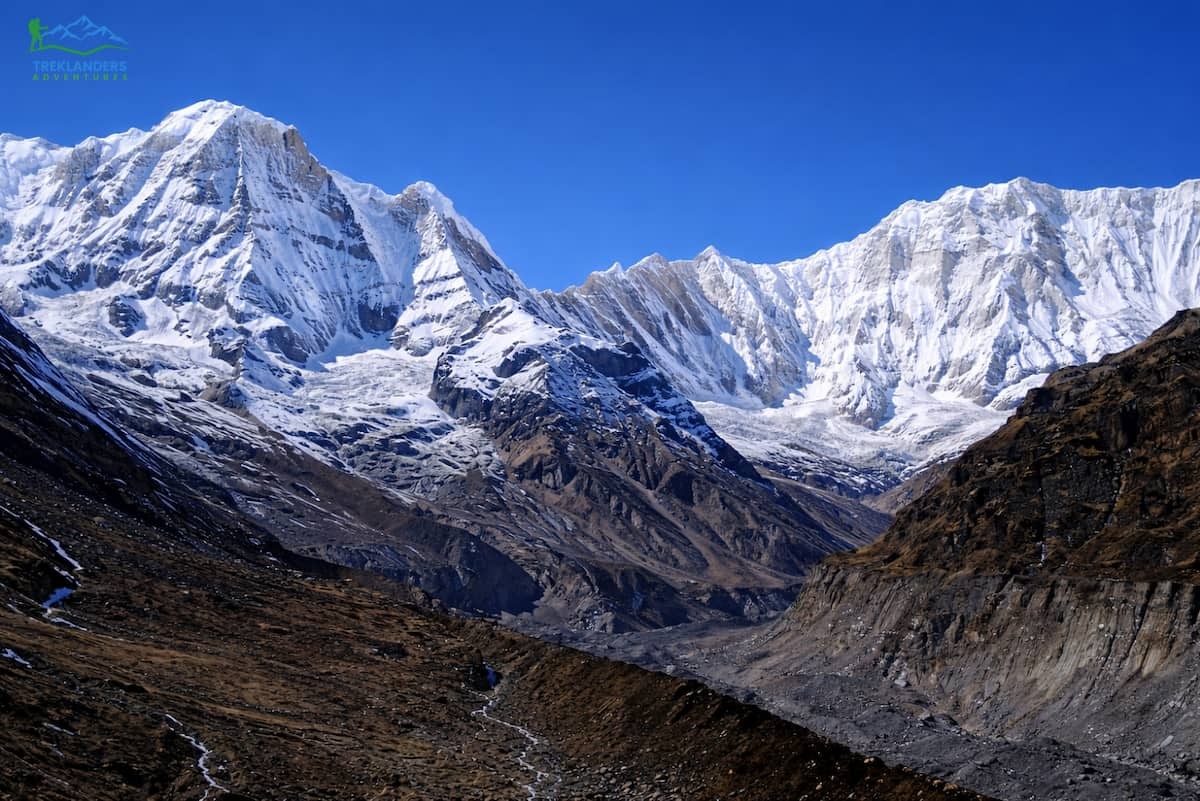
The Annapurna Base Camp (ABC) trekking adventure is a year-round opportunity, with experience ranging from good to bad depending on the seasons due to their weather, visibility, and trail conditions. Among all of these seasons, springs, that is, March to May, and autumn, which lasts from September to November, are considered the most appropriate, providing a stable climate along with beautiful mountain views.
Spring is one of the most popular seasons for the ABC Trek. At this time of the year, temperatures are fairly comfortable for trekking in the daytime, while nights are pleasantly cool at higher altitudes. One of the attractions of spring is the blooming of rhododendron forests on the lower and mid-hills, all draped gloriously in shades of red, pink, and white. The views of some of the major peaks, Annapurna I, Annapurna South, Machhapuchhre, and Hiunchuli, are still excellent at this time. There would still be snow in the higher elevations during this period, which adds beauty to the scenery and does not severely affect the trail. Thus, spring is perfect for trekkers who enjoy colorful landscapes, moderate weather, and lively mountain life.
Autumn is considered the best season for the Annapurna Base Camp Trek in general. The weather generally remains stable with slight chances of rainfall, continuing since the end of the monsoon, but sharply delivering views of the Himalayas. Daytime temperature is moderate, and trail conditions are dry and safe for the walks. Autumn also coincides with major festivals in Nepal: Dashain and Tihar, giving trekkers the opportunity to experience the local culture and traditions in mountain villages. Autumn is busy because of trekkers, thanks to its encouraging conditions.
Winter (December - February) is great as far as less crowd is concerned. Clear skies, great views of the mountains; however, at the same time, it does get quite cold, especially at night at Annapurna Base Camp, when temperatures can easily drop below freezing. Snowfall may block higher trails, requiring changes in the itinerary. Winter trekking is best suited for those who are truly experienced and are properly equipped to deal with the cold.
The least favorable season, monsoon, stirs the heart with serious showers, muddy trails, leeches lower down, and obscured visibility. Nevertheless, the plants would be flourishing in every verdant hue on this journey, rewarding the seeker of solitude and adventure.
In summary, spring and autumn are the most recommended seasons for a trip to Annapurna Base Camp because they balance the weather, scenery, and safety well.
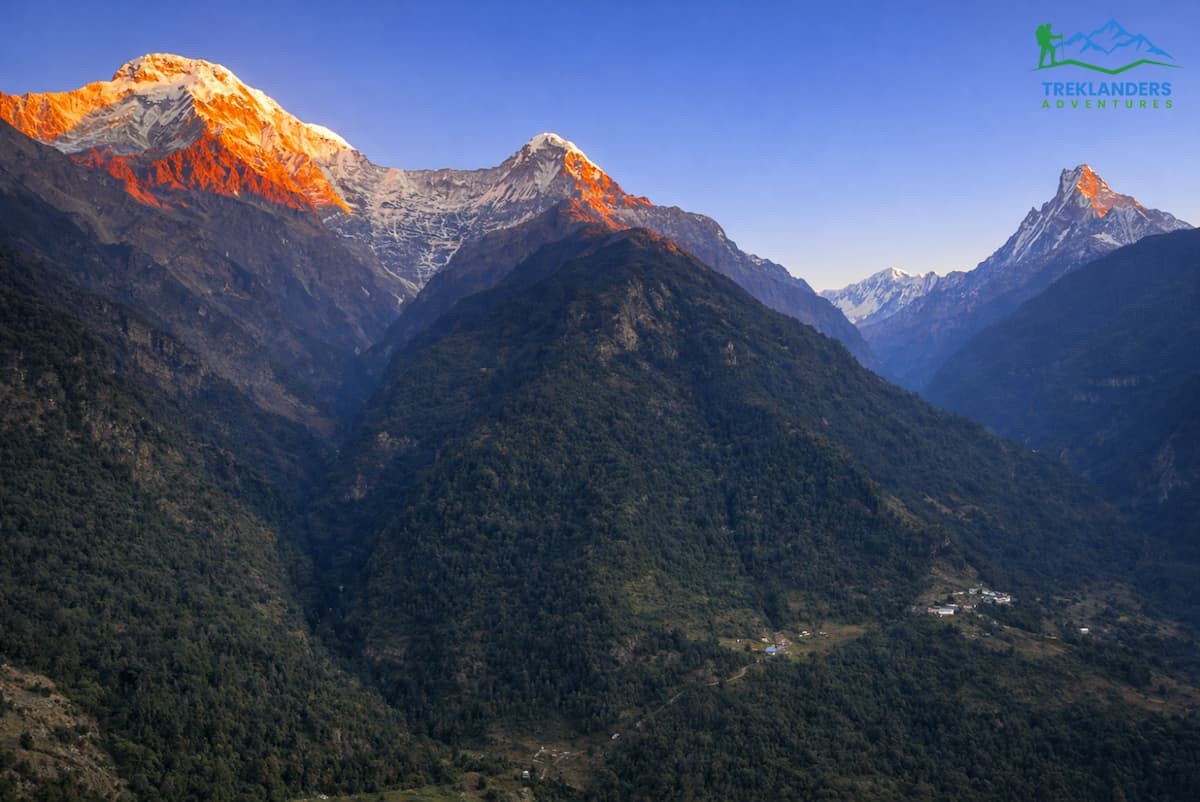
The Annapurna Base Camp (ABC) Trek is among Nepal's most satisfying and renowned trekking adventures, providing an excellent mix of stunning nature, local culture, and convenience. It is a perfect option for hikers who want a high-altitude Himalayan experience but are not ready for the extremes and technical difficulties of more challenging routes.
The extraordinary mountain scenery is undoubtedly one of the main reasons for doing the ABC Trek. The route goes right into the Annapurna Sanctuary, a giant natural theater encircled by snow, covered peaks reaching 7,000 to 8000 meters high, such as Annapurna I, Annapurna South, Hiunchuli, and Machhapuchhre. Not many treks in the world offer such intimate and uninterrupted views of the Himalayas. After climbing to Annapurna Base Camp at an altitude of 4,130 meters, the trekkers get to enjoy a magnificent 360-degree view, a view which, combined with the sense of accomplishment, can be truly overwhelming.
The plethora of landscape changes in a relatively short period is also a significant draw to the ABC Trek. Starting from the warm green subtropical valleys with terraced fields, the path gradually leads you through rhododendron and bamboo forests, alpine meadows, glacial rivers, and finally up to the snow-covered basin at high altitude. The ongoing change of environment makes the trek quite captivating and visually stimulating, which is an added bonus for both nature enthusiasts and photographers alike.
Moreover, the trek offers a rich cultural experience. Going through the villages of the traditional Gurung and Magar, like Ghandruk and Chhomrong, the trekkers are given an opportunity to meet locals, feel mountain hospitality, and see the lifestyle that is closely connected with the Himalayas. The outdoor elements of the trek that have been influenced by Buddhist culture, such as prayer flags, monasteries, and local traditions, not only give us a glimpse of the religious energy but also the historical, traditional, and cultural essence of the people living there.
ABC Trek is a practical and easily accessible journey from the point of view of travel logistics. It doesn't involve flights; require technical climbing skills, or specialized equipment. There are well-maintained teahouses along the way that offer lodging as well as food, so it is perfectly safe for the first, timers and quite comfortable for the experienced hikers as well. This 7-12-day trek fits easily into a limited travel schedule.
What is more, the ABC trek affords physical as well as mental gratification. With the steady elevation gain, the body adjusts well to the altitude, and the trek instills qualities such as determination, endurance, and a close connection with nature. On top of it, the feeling you get once you reach the base camp after several days of walking is simply amazing.
To wrap up, the Annapurna Base Camp Trek is unparalleled for the sheer beauty of its landscapes, the deeply cultural interactions it facilitates, its reasonably gentle level of challenge, and its desirability in terms of value. All these make it a prime trekking destination in the Himalayas.
The Annapurna Base Camp Trek is really a comprehensive Himalayan journey that quite naturally fuses scenic beauty, cultural heritage, and a sense of adventure that is quite accessible. You can enjoy a diverse set of landscapes within a short time frame as the trek passes through dense forests and quaint mountain villages, glacial valleys, and towering snow peaks. Its well-maintained paths, dependable teahouse accommodations, and the gradual increase in altitude have made it possible for a wide variety of trekkers to participate, even beginners with a decent level of fitness and seasoned hikers looking for a satisfying adventure.
In addition to the physical aspect, the trek offers you the chance to experience the cultures of the Gurung and Magar people and to feel totally at one with the Himalayan landscape. Being at Annapurna Base Camp, surrounded by the great peaks that circle it, is an overwhelming moment both in terms of accomplishment and gaining a new perspective. In summary, the ABC Trek is one of the most famous and satisfying trekking routes in Nepal, providing not only unforgettable experiences but also personal development and a deep reverence for the Himalayas.
A quick comparison of the Langtang Valley Trek and Annapurna Base Camp Trek, covering difficulty, cost, and experience.
Compare the Langtang Valley Trek and Manaslu Circuit Trek to find which Nepal trek is best for your time, fitness level, and trekking experience.
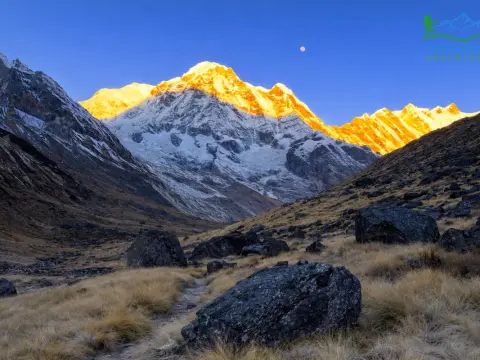
Essential facts about the Annapurna Base Camp Trek, covering altitude, difficulty, best time, and key tips to plan a safe & rewarding journey in Nepal



