[{"name":"Everest Base Camp Trek","duration":"16","image_url":"https:\/\/www.treklanders.com\/storage\/trip-galleries\/1\/thumb_419a755c003cc609f3030ee332965ebe.jpg","offer_price":1405,"url":"https:\/\/www.treklanders.com\/trips\/everest-base-camp-trek"},{"name":"Gokyo Valley Trekking","duration":"16","image_url":"https:\/\/www.treklanders.com\/storage\/trip-galleries\/2\/thumb_23ed0891a1c25539fd69a1bdd50f9a85.webp","offer_price":1205,"url":"https:\/\/www.treklanders.com\/trips\/gokyo-valley-trekking"},{"name":"Annapurna Circuit Trek","duration":"23","image_url":"https:\/\/www.treklanders.com\/storage\/trip-galleries\/3\/thumb_2a9a92ea23c62f41de27b37f5e3e8c17.webp","offer_price":1495,"url":"https:\/\/www.treklanders.com\/trips\/annapurna-circuit-trek"},{"name":"Everest Panorama Trek","duration":"12","image_url":"https:\/\/www.treklanders.com\/storage\/trip-galleries\/4\/thumb_35c9f677ea2e88b1ff11a9f43daa3ddb.jpg","offer_price":1100,"url":"https:\/\/www.treklanders.com\/trips\/everest-panorama-trek"},{"name":"Everest Base Camp Trekking from Jiri","duration":"22","image_url":"https:\/\/www.treklanders.com\/storage\/trip-galleries\/6\/thumb_14763592492417b294aa66bf0ebf4e64.webp","offer_price":1400,"url":"https:\/\/www.treklanders.com\/trips\/everest-base-camp-trekking-from-jiri"},{"name":"Everest Base Camp via Cho la Pass from Gokyo Valley Trekking","duration":"18","image_url":"https:\/\/www.treklanders.com\/storage\/trip-galleries\/7\/thumb_d4e470e98d4e9e2ab8e93e39b8b7d252.jpg","offer_price":1405,"url":"https:\/\/www.treklanders.com\/trips\/everest-base-camp-via-cho-la-pass-from-gokyo-valley-trekking"},{"name":"Everest Three Passes Trekking","duration":"22","image_url":"https:\/\/www.treklanders.com\/storage\/trip-galleries\/8\/thumb_b413b221e913171500bb3dfd5c08ceea.jpg","offer_price":1635,"url":"https:\/\/www.treklanders.com\/trips\/everest-three-passes-trekking"},{"name":"Annapurna Base Camp Trekking","duration":"14","image_url":"https:\/\/www.treklanders.com\/storage\/trip-galleries\/9\/thumb_2e71f2ffe116c659fa66b01c2d571b4e.webp","offer_price":845,"url":"https:\/\/www.treklanders.com\/trips\/annapurna-base-camp-trekking"},{"name":"Mardi Base Camp Trekking","duration":"14","image_url":"https:\/\/www.treklanders.com\/storage\/trip-galleries\/10\/thumb_d7b2d2dc638f6bbf2c31c167ac68029d.webp","offer_price":845,"url":"https:\/\/www.treklanders.com\/trips\/mardi-base-camp-trekking"},{"name":"Mohare Danda Trekking","duration":"12","image_url":"https:\/\/www.treklanders.com\/storage\/trip-galleries\/11\/thumb_a384c8d35d789d29b19991c1d675c910.webp","offer_price":755,"url":"https:\/\/www.treklanders.com\/trips\/mohare-danda-trekking"},{"name":"Khopra Ridge & Khair Lake Trekking","duration":"15","image_url":"https:\/\/www.treklanders.com\/storage\/trip-galleries\/12\/thumb_c0f50461ddc74acfb553ba85be00fab0.webp","offer_price":855,"url":"https:\/\/www.treklanders.com\/trips\/khopra-ridge-khair-lake-trekking"},{"name":"Upper Mustang Trekking","duration":"17","image_url":"https:\/\/www.treklanders.com\/storage\/trip-galleries\/13\/thumb_7aa4dfdb69186b0f224a303d80a25c95.jpg","offer_price":1715,"url":"https:\/\/www.treklanders.com\/trips\/upper-mustang-trekking"},{"name":"Langtang Valley Trek","duration":"12","image_url":"https:\/\/www.treklanders.com\/storage\/trip-galleries\/14\/thumb_8650b4b1a3c160cff75da65369398353.webp","offer_price":735,"url":"https:\/\/www.treklanders.com\/trips\/langtang-valley-trek"},{"name":"Gosainkunda Lake Trek","duration":"11","image_url":"https:\/\/www.treklanders.com\/storage\/trip-galleries\/15\/thumb_bfe94c14e760c48234e117021105be84.webp","offer_price":735,"url":"https:\/\/www.treklanders.com\/trips\/gosainkunda-lake-trek"},{"name":"Chisapani-Nagarkot to Dhulikhel Hiking","duration":"7","image_url":"https:\/\/www.treklanders.com\/storage\/trip-galleries\/16\/thumb_468defe9a4000ee3129cd7e6421ee105.webp","offer_price":565,"url":"https:\/\/www.treklanders.com\/trips\/chisapani-nagarkot-to-dhulikhel-hiking"},{"name":"Kanchenjunga Trek","duration":"23","image_url":"https:\/\/www.treklanders.com\/storage\/trip-galleries\/17\/thumb_51f43fa4203106cc49aaedc89d76e01d.jpg","offer_price":1725,"url":"https:\/\/www.treklanders.com\/trips\/kanchenjunga-trek"},{"name":"Helambu Trek","duration":"12","image_url":"https:\/\/www.treklanders.com\/storage\/trip-galleries\/18\/thumb_0fe8e3fa1299d2e43bf1fb5977875ce2.jpg","offer_price":685,"url":"https:\/\/www.treklanders.com\/trips\/helambu-trek"},{"name":"Upper Dolpo Trek","duration":"26","image_url":"https:\/\/www.treklanders.com\/storage\/trip-galleries\/19\/thumb_d6080d490e1db83b0a711e7304000864.jpg","offer_price":3005,"url":"https:\/\/www.treklanders.com\/trips\/upper-dolpo-trek"},{"name":"Manaslu Circuit Trek","duration":"18","image_url":"https:\/\/www.treklanders.com\/storage\/trip-galleries\/20\/thumb_1fdd224e849f4f328e73d2d12b3d282d.jpg","offer_price":1225,"url":"https:\/\/www.treklanders.com\/trips\/manaslu-circuit-trek"},{"name":"Tilicho Lake Base Camp Trek","duration":"19","image_url":"https:\/\/www.treklanders.com\/storage\/trip-galleries\/21\/thumb_eba8ac5e029e6543e0c17630ebd9e2fb.jpg","offer_price":1220,"url":"https:\/\/www.treklanders.com\/trips\/tilicho-lake-base-camp-trek"},{"name":"Nar-Phu Valley With Thorang-La Pass Trek","duration":"21","image_url":"https:\/\/www.treklanders.com\/storage\/trip-galleries\/22\/thumb_43597423a5a366fe9c8937fb30d2fe2a.jpg","offer_price":1315,"url":"https:\/\/www.treklanders.com\/trips\/nar-phu-valley-with-thorang-la-pass-trek"},{"name":"Nepal Round Trip of Kathmandu-Pokhara-Lumbini and Chitwan Tour","duration":"10","image_url":"https:\/\/www.treklanders.com\/storage\/trip-galleries\/23\/thumb_32497d170b2ab340b0a1b3310e91e784.webp","offer_price":845,"url":"https:\/\/www.treklanders.com\/trips\/nepal-round-trip-of-kathmandu-pokhara-lumbini-and-chitwan-tour"},{"name":"Nagarkot Day Hike","duration":"2","image_url":"https:\/\/www.treklanders.com\/storage\/trip-galleries\/24\/thumb_a5a654930fd8ba7852e41738105bacfc.webp","offer_price":105,"url":"https:\/\/www.treklanders.com\/trips\/nagarkot-day-hike"},{"name":"Nagarkot Sunrise Tour","duration":"1","image_url":"https:\/\/www.treklanders.com\/storage\/trip-galleries\/25\/thumb_17dc28a29cfa44381ad503f0a75ee84f.webp","offer_price":22,"url":"https:\/\/www.treklanders.com\/trips\/nagarkot-sunrise-tour"},{"name":"Namobuddha Day Tour with Shiva Statue","duration":"1","image_url":"https:\/\/www.treklanders.com\/storage\/trip-galleries\/26\/thumb_beeb34202f9077764aa08c67ef2867f9.webp","offer_price":45,"url":"https:\/\/www.treklanders.com\/trips\/namobuddha-day-tour-with-shiva-statue"},{"name":"Kathmandu Full Day Sightseeing Tour","duration":"1","image_url":"https:\/\/www.treklanders.com\/storage\/trip-galleries\/27\/thumb_d045fc0f1acee2cfa6b3c95f3c656d18.jpg","offer_price":30,"url":"https:\/\/www.treklanders.com\/trips\/kathmandu-full-day-sightseeing-tour"},{"name":"Patan and Bhaktapur Sightseeing Tour","duration":"1","image_url":"https:\/\/www.treklanders.com\/storage\/trip-galleries\/28\/thumb_750eacac3424b5dba686dd93656ab87c.jpg","offer_price":30,"url":"https:\/\/www.treklanders.com\/trips\/patan-and-bhaktapur-sightseeing-tour"},{"name":"Upper Mustang Heli Tour","duration":"1","image_url":"https:\/\/www.treklanders.com\/storage\/trip-galleries\/29\/thumb_0b785f69a15557f8660c805c76fda14e.webp","offer_price":1250,"url":"https:\/\/www.treklanders.com\/trips\/upper-mustang-heli-tour"},{"name":"Everest Heli Tour","duration":"1","image_url":"https:\/\/www.treklanders.com\/storage\/trip-galleries\/30\/thumb_dc45f2beb36a3699e0decf0de41a6f17.jpg","offer_price":1495,"url":"https:\/\/www.treklanders.com\/trips\/everest-heli-tour"},{"name":"Island Peak Trek & Climb","duration":"21","image_url":"https:\/\/www.treklanders.com\/storage\/trip-galleries\/31\/thumb_a0f3e3468c92a8e436045cf8b2fbf361.jpg","offer_price":2295,"url":"https:\/\/www.treklanders.com\/trips\/island-peak-trek-climb"},{"name":"Mera Peak Trek & Climb","duration":"18","image_url":"https:\/\/www.treklanders.com\/storage\/trip-galleries\/32\/thumb_3e8128a23c36f02fa38135475e811b9e.jpg","offer_price":2815,"url":"https:\/\/www.treklanders.com\/trips\/mera-peak-trek-climb"},{"name":"Chandragiri Cable Car Tour","duration":"1","image_url":"https:\/\/www.treklanders.com\/storage\/trip-galleries\/33\/thumb_faa70b716449eada6d7f1450335edbb3.jpg","offer_price":30,"url":"https:\/\/www.treklanders.com\/trips\/chandragiri-cable-car-tour"},{"name":"Everest Base Camp Trek and Returning via Heli","duration":"13","image_url":"https:\/\/www.treklanders.com\/storage\/trip-galleries\/34\/thumb_11190941866206e1d578db11986ebc73.webp","offer_price":2100,"url":"https:\/\/www.treklanders.com\/trips\/everest-base-camp-trek-and-returning-via-heli"},{"name":"Annapurna Semi Circuit Trek","duration":"15","image_url":"https:\/\/www.treklanders.com\/storage\/trip-galleries\/35\/thumb_30ddd8ba818cdcb52efd5eb0a017bcdb.jpg","offer_price":965,"url":"https:\/\/www.treklanders.com\/trips\/annapurna-semi-circuit-trek"},{"name":"Everest Base Camp Luxury Trek","duration":"14","image_url":"https:\/\/www.treklanders.com\/storage\/trip-galleries\/39\/thumb_6079aea3c5dd83e745a16fd6162270dc.jpg","offer_price":2685,"url":"https:\/\/www.treklanders.com\/trips\/everest-base-camp-luxury-trek"},{"name":"Mt. Kailash & Lake Manasarover Tour","duration":"15","image_url":"https:\/\/www.treklanders.com\/storage\/trip-galleries\/41\/thumb_cf3fededfd7dd2b40399af399e04f95a.jpg","offer_price":2205,"url":"https:\/\/www.treklanders.com\/trips\/mt-kailash-lake-manasarover-tour"},{"name":"Ghorepani Poonhill Trek","duration":"11","image_url":"https:\/\/www.treklanders.com\/storage\/trip-galleries\/43\/thumb_602d9a56976e1b836ba8adc69b8d09c5.webp","offer_price":720,"url":"https:\/\/www.treklanders.com\/trips\/ghorepani-poonhill-trek"},{"name":"11 Days Gokyo Valley Trekkking","duration":"11","image_url":"https:\/\/www.treklanders.com\/storage\/trip-galleries\/45\/thumb_ab552c3c91de392f94230a937b1c4801.jpg","offer_price":900,"url":"https:\/\/www.treklanders.com\/trips\/11-days-gokyo-valley-trekkking"},{"name":"9-Day Everest Base Camp Trekking with Helicopter Return","duration":"9","image_url":"https:\/\/www.treklanders.com\/storage\/trip-galleries\/46\/thumb_9a8ba2b582500cd86786be056902c31a.webp","offer_price":1990,"url":"https:\/\/www.treklanders.com\/trips\/9-day-everest-base-camp-trekking-with-helicopter-return"},{"name":"12-Day Everest Base Camp Trek","duration":"12","image_url":"https:\/\/www.treklanders.com\/storage\/trip-galleries\/47\/thumb_d12c9ef776c0b395ceea817fe05c5892.jpg","offer_price":1000,"url":"https:\/\/www.treklanders.com\/trips\/12-day-everest-base-camp-trek"},{"name":"8-Day Everest Panorama Trek","duration":"8","image_url":"https:\/\/www.treklanders.com\/storage\/trip-galleries\/49\/thumb_c81ae3a8ac757a317a9362e6872e2dcb.jpg","offer_price":850,"url":"https:\/\/www.treklanders.com\/trips\/8-day-everest-panorama-trek"},{"name":"7-Day Langtang Valley Trek","duration":"7","image_url":"https:\/\/www.treklanders.com\/storage\/trip-galleries\/50\/thumb_99c2904df5475ab028c9e3633ea95ef3.jpg","offer_price":420,"url":"https:\/\/www.treklanders.com\/trips\/7-day-langtang-valley-trek"},{"name":"4-Day Trekking Adventure near Kathmandu","duration":"4","image_url":"https:\/\/www.treklanders.com\/storage\/trip-galleries\/51\/thumb_594681060514dc57be1959236a6996d0.jpg","offer_price":275,"url":"https:\/\/www.treklanders.com\/trips\/4-day-trekking-adventure-near-kathmandu"},{"name":"4-Day Ghorepani Ponnhill Trek from Pokhara","duration":"4","image_url":"https:\/\/www.treklanders.com\/storage\/trip-galleries\/53\/thumb_eede04edac01f983d9af2c16f55d03e8.webp","offer_price":500,"url":"https:\/\/www.treklanders.com\/trips\/4-day-ghorepani-ponnhill-trek-from-pokhara"},{"name":"7-Day Annapurna Base Camp Trek from Pokhara","duration":"7","image_url":"https:\/\/www.treklanders.com\/storage\/trip-galleries\/55\/thumb_547e91c74088c491111ebe31a759cfbb.jpg","offer_price":420,"url":"https:\/\/www.treklanders.com\/trips\/7-day-annapurna-base-camp-trek-from-pokhara"},{"name":"13-Day Manaslu Circuit Trekking","duration":"13","image_url":"https:\/\/www.treklanders.com\/storage\/trip-galleries\/56\/thumb_aef1af4f0c4a2a9622d518ad5959542b.jpg","offer_price":1050,"url":"https:\/\/www.treklanders.com\/trips\/13-day-manaslu-circuit-trekking"},{"name":"5-Day Mardi Himal Trek from Pokhara","duration":"5","image_url":"https:\/\/www.treklanders.com\/storage\/trip-galleries\/57\/thumb_dcd598d556c14835f0a18169afafcbc6.webp","offer_price":420,"url":"https:\/\/www.treklanders.com\/trips\/5-day-mardi-himal-trek-from-pokhara"},{"name":"Nagarkot Sunrise Tour with Day Hike","duration":"1","image_url":"https:\/\/www.treklanders.com\/storage\/trip-galleries\/58\/thumb_7cdfa1f16719486da2a0718da45b1f2f.webp","offer_price":30,"url":"https:\/\/www.treklanders.com\/trips\/nagarkot-sunrise-tour-with-day-hike"},{"name":"Seven Unesco Heritage Sites Day Tour in Kathmandu","duration":"1","image_url":"https:\/\/www.treklanders.com\/storage\/trip-galleries\/59\/thumb_92aed7b9c67e76740000aab9313dced7.jpg","offer_price":40,"url":"https:\/\/www.treklanders.com\/trips\/seven-unesco-heritage-sites-day-tour-in-kathmandu"},{"name":"10-Day Ghorepani Poonhill with Annapurna Base Camp Trek","duration":"10","image_url":"https:\/\/www.treklanders.com\/storage\/trip-galleries\/60\/thumb_d4c2c089497950ccb5f8541d76e1269b.webp","offer_price":835,"url":"https:\/\/www.treklanders.com\/trips\/10-day-ghorepani-poonhill-with-annapurna-base-camp-trek"},{"name":"3-Day Chitwan Wildlife Tour","duration":"3","image_url":"https:\/\/www.treklanders.com\/storage\/trip-galleries\/61\/thumb_fc4de9cbf5bc83d67491b41df5725552.jpg","offer_price":150,"url":"https:\/\/www.treklanders.com\/trips\/3-day-chitwan-wildlife-tour"},{"name":"3-Day Pokhara Sightseeing Tour","duration":"3","image_url":"https:\/\/www.treklanders.com\/storage\/trip-galleries\/62\/thumb_a79a253f1a8bcbbf288eefc1d2f4038f.jpg","offer_price":230,"url":"https:\/\/www.treklanders.com\/trips\/3-day-pokhara-sightseeing-tour"},{"name":"7-Day Kathmandu Pokhara and Chitwan wildlifeTour","duration":"7","image_url":"https:\/\/www.treklanders.com\/storage\/trip-galleries\/63\/thumb_4f963fc141d7ef39e8a6a3c60317ae9b.jpg","offer_price":545,"url":"https:\/\/www.treklanders.com\/trips\/7-day-kathmandu-pokhara-and-chitwan-wildlifetour"},{"name":"Nagarjun Jamacho Day Hiking","duration":"1","image_url":"https:\/\/www.treklanders.com\/storage\/trip-galleries\/64\/thumb_85867eb85c60c8228e44f927341f67d1.jpg","offer_price":30,"url":"https:\/\/www.treklanders.com\/trips\/nagarjun-jamacho-day-hiking"},{"name":"Everest Mountain Flight from Kathmandu","duration":"1","image_url":"https:\/\/www.treklanders.com\/storage\/trip-galleries\/65\/thumb_1a66526d340ec175023842c38efd8a95.webp","offer_price":120,"url":"https:\/\/www.treklanders.com\/trips\/everest-mountain-flight-from-kathmandu"},{"name":"One Day Trishuli River Rafting Adventures","duration":"1","image_url":"https:\/\/www.treklanders.com\/storage\/trip-galleries\/66\/thumb_55ba0ea676c9c625f99f3d41bda224fb.jpg","offer_price":35,"url":"https:\/\/www.treklanders.com\/trips\/one-day-trishuli-river-rafting-adventures"},{"name":"13-Day Annapurna Circuit Trek","duration":"13","image_url":"https:\/\/www.treklanders.com\/storage\/trip-galleries\/67\/thumb_859e7a1fbb468a9252d365cab8379f10.jpg","offer_price":815,"url":"https:\/\/www.treklanders.com\/trips\/13-day-annapurna-circuit-trek"},{"name":"15-Day Tilicho Base Camp with Thorong-La Pass Trekking","duration":"15","image_url":"https:\/\/www.treklanders.com\/storage\/trip-galleries\/68\/thumb_56a5fd1506c9b9f1f83844353dc55edf.jpg","offer_price":920,"url":"https:\/\/www.treklanders.com\/trips\/15-day-tilicho-base-camp-with-thorong-la-pass-trekking"},{"name":"Cooking Class in Thamel-Full Course Meal","duration":"1","image_url":"https:\/\/www.treklanders.com\/storage\/trip-galleries\/69\/thumb_ed5cfbc0d94b624642d347c0776d36bb.webp","offer_price":30,"url":"https:\/\/www.treklanders.com\/trips\/cooking-class-in-thamel-full-course-meal"},{"name":"Cooking Class in Thamel-Full Course","duration":"3 Hours 30 Minutes","image_url":"https:\/\/www.treklanders.com\/img\/default.gif","offer_price":30,"url":"https:\/\/www.treklanders.com\/trips\/cooking-class-in-thamel-full-course"},{"name":"Cooking Class in Thamel-Full Course Meal","duration":"3 Hours 30 Minutes","image_url":"https:\/\/www.treklanders.com\/img\/default.gif","offer_price":30,"url":"https:\/\/www.treklanders.com\/trips\/cooking-class-in-thamel-full-course-meal"},{"name":"Momo Making Class in Thamel","duration":"1","image_url":"https:\/\/www.treklanders.com\/storage\/trip-galleries\/72\/thumb_a36e5ceca4d5c4cb0ecda367505b31d3.webp","offer_price":20,"url":"https:\/\/www.treklanders.com\/trips\/momo-making-class-in-thamel"},{"name":"8 Days Bhutan Tour from Kathmandu","duration":"8","image_url":"https:\/\/www.treklanders.com\/storage\/trip-galleries\/73\/thumb_df319d7d3ac21bcd9cf728cb1a70ea09.webp","offer_price":2275,"url":"https:\/\/www.treklanders.com\/trips\/8-days-bhutan-tour-from-kathmandu"},{"name":"10 Days Bhutan Tour with Druk path Trek","duration":"10","image_url":"https:\/\/www.treklanders.com\/storage\/trip-galleries\/74\/thumb_c7d4a4b89aceaf5d3aac313265729bb3.webp","offer_price":5715,"url":"https:\/\/www.treklanders.com\/trips\/10-days-bhutan-tour-with-druk-path-trek"},{"name":"9 -Day Langtang Valley Trek","duration":"9","image_url":"https:\/\/www.treklanders.com\/storage\/trip-galleries\/75\/thumb_65e69cec8917e39091c9e40ae06df3da.webp","offer_price":620,"url":"https:\/\/www.treklanders.com\/trips\/9--day-langtang-valley-trek"},{"name":"14 Day Everest Base Camp Trek","duration":"14","image_url":"https:\/\/www.treklanders.com\/storage\/trip-galleries\/76\/thumb_446e7f33a5f43896c9cdf470cd7be947.webp","offer_price":1175,"url":"https:\/\/www.treklanders.com\/trips\/14-day-everest-base-camp-trek"},{"name":"Lhasa Tour from Kathmandu: 10-Day Tibet Overland Journey via Gyirong","duration":"10","image_url":"https:\/\/www.treklanders.com\/img\/default.gif","offer_price":null,"url":"https:\/\/www.treklanders.com\/trips\/lhasa-tour-from-kathmandu-10-day-tibet-overland-journey-via-gyirong"},{"name":"13 Day Lhasa Tour from Kathmandu via Everest Base Camp","duration":"13","image_url":"https:\/\/www.treklanders.com\/storage\/trip-galleries\/78\/thumb_8a2bfb2abd99ba9ddc902b768e7b0759.webp","offer_price":2565,"url":"https:\/\/www.treklanders.com\/trips\/13-day-lhasa-tour-from-kathmandu-via-everest-base-camp"},{"name":"11 Day Annapurna Base Camp Trek","duration":"11","image_url":"https:\/\/www.treklanders.com\/storage\/trip-galleries\/79\/thumb_4e48a19c538c00cc8c36160ca97c5f21.webp","offer_price":720,"url":"https:\/\/www.treklanders.com\/trips\/11-day-annapurna-base-camp-trek"},{"name":"9 Day Mardi Himal Trek","duration":"9","image_url":"https:\/\/www.treklanders.com\/storage\/trip-galleries\/80\/thumb_8214945c5614ac9a84e5ca0b58b1f5a3.webp","offer_price":735,"url":"https:\/\/www.treklanders.com\/trips\/9-day-mardi-himal-trek"},{"name":"14 Day Manaslu Circuit Trek","duration":"14","image_url":"https:\/\/www.treklanders.com\/storage\/trip-galleries\/81\/thumb_b3ec98cd4036da5cb6e92250afa0d59e.webp","offer_price":1085,"url":"https:\/\/www.treklanders.com\/trips\/14-day-manaslu-circuit-trek"},{"name":"20 Day Manaslu Circuit with Tsum Valley Trek","duration":"20","image_url":"https:\/\/www.treklanders.com\/storage\/trip-galleries\/82\/thumb_b8c202cf8e16197517811d535f2a6795.webp","offer_price":1765,"url":"https:\/\/www.treklanders.com\/trips\/20-day-manaslu-circuit-with-tsum-valley-trek"},{"name":"15 Day Langtang Gosaikunda Lake Helambu Trek","duration":"15","image_url":"https:\/\/www.treklanders.com\/storage\/trip-galleries\/83\/thumb_a9c7bbb74f733cdc9a3469a448df7109.webp","offer_price":985,"url":"https:\/\/www.treklanders.com\/trips\/15-day-langtang-gosaikunda-lake-helambu-trek"},{"name":"14 Day Tamang Heritage with Langtang Valley Trek","duration":"14","image_url":"https:\/\/www.treklanders.com\/storage\/trip-galleries\/84\/thumb_57fe1b0ad2b7d0489273633b906d2f43.webp","offer_price":895,"url":"https:\/\/www.treklanders.com\/trips\/14-day-tamang-heritage-with-langtang-valley-trek"}]
Annapurna Circuit Trek Flora and Fauna: Complete Guide to Himalayan Biodiversity, Wildlife & Vegetation Zones
Annapurna Circuit Trek Flora and Fauna: Complete Guide to Himalayan Biodiversity, Wildlife & Vegetation Zones
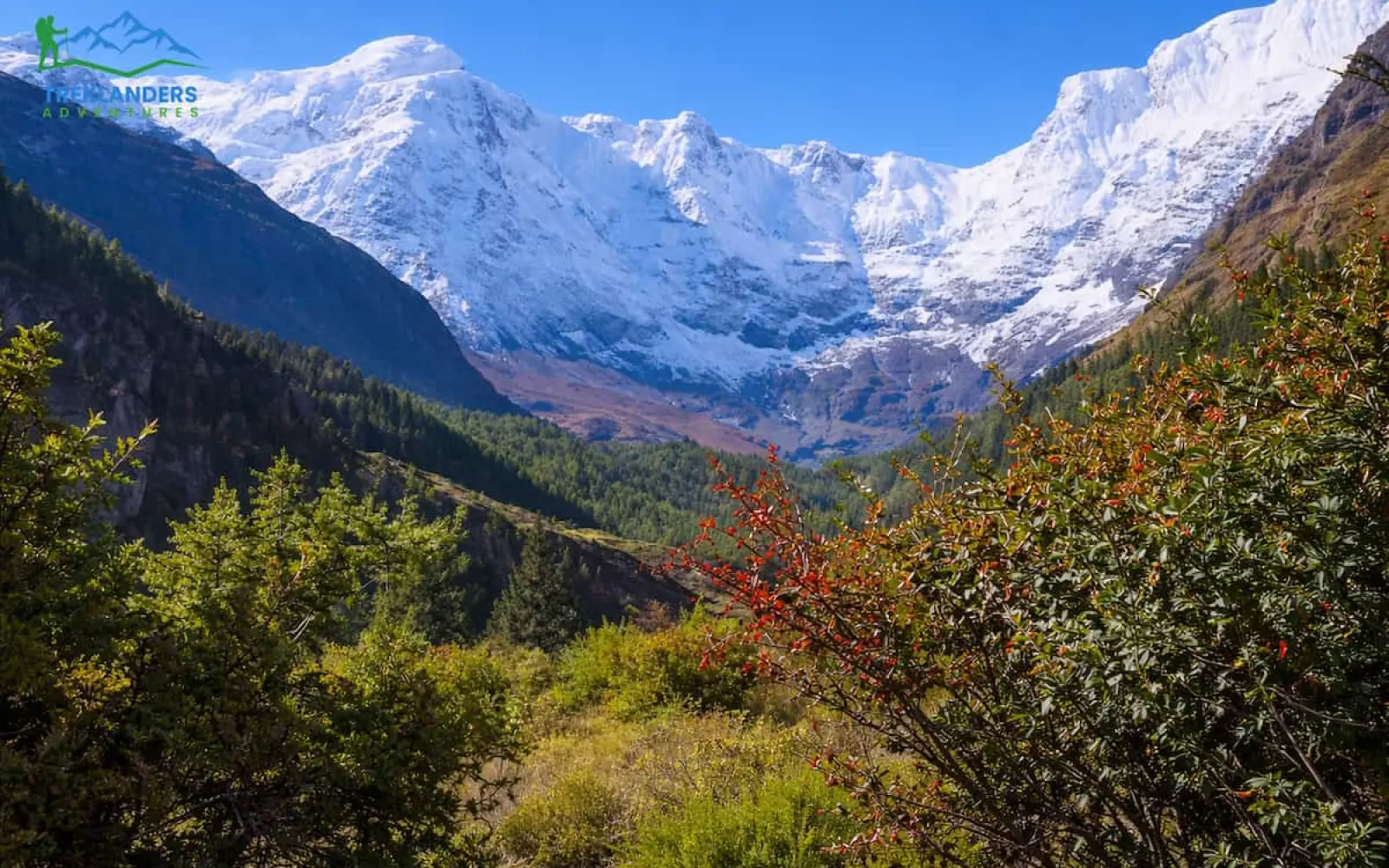
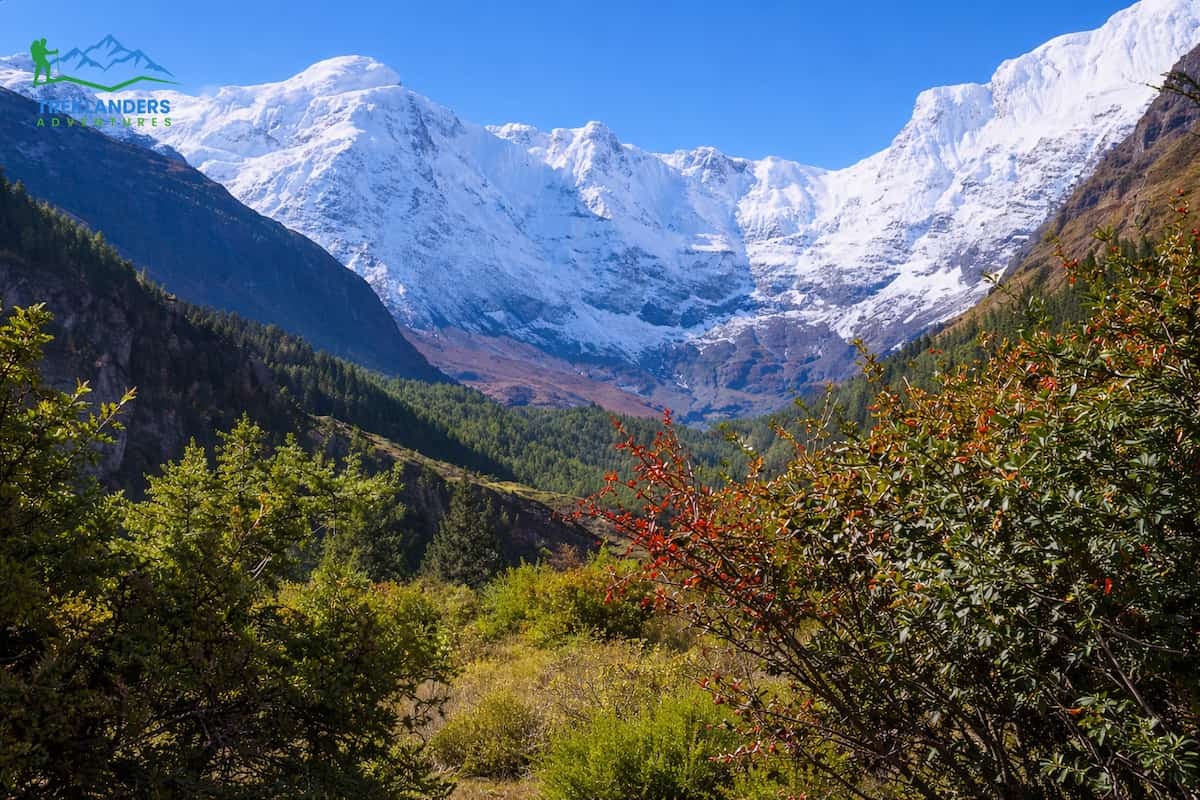
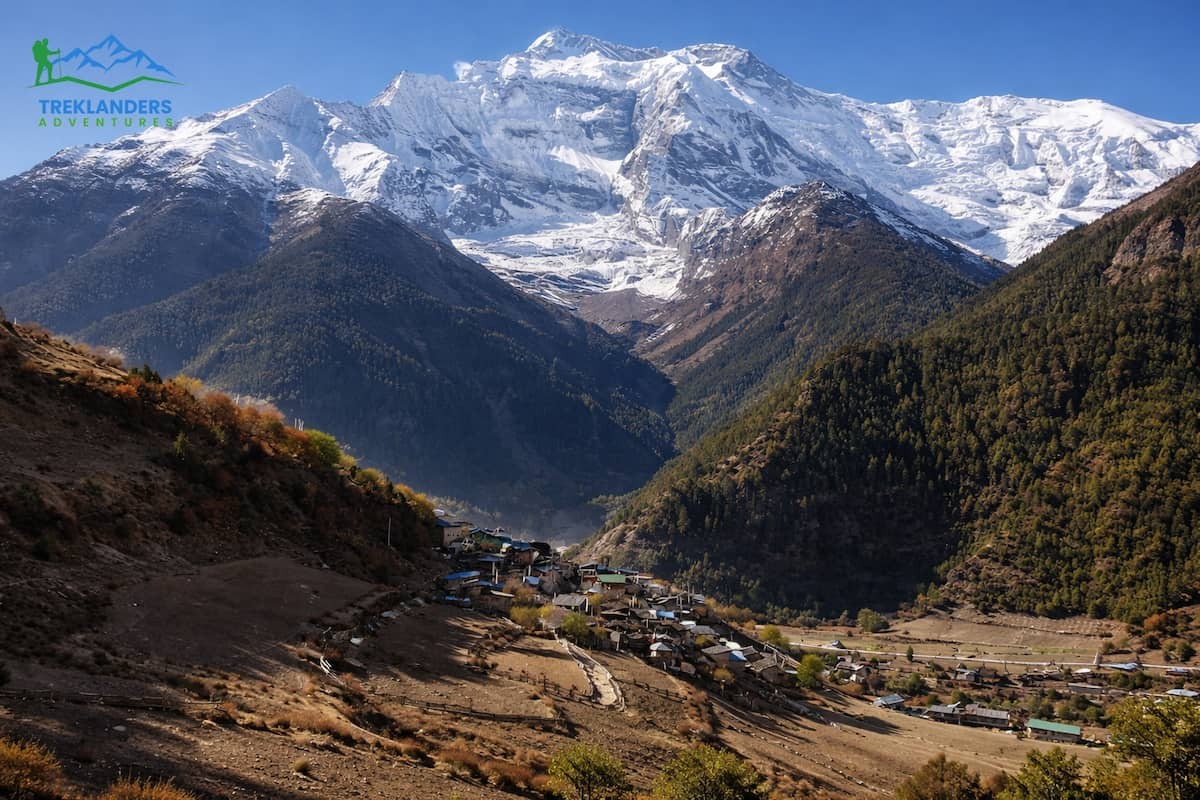
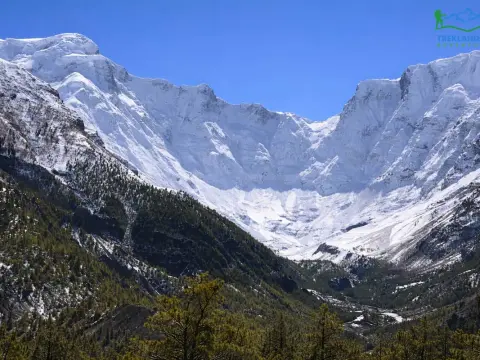
Stunning mountain scenery and lush forests during the Annapurna Circuit Trek.
The Annapurna Circuit Trek is among the top Himalayan treks, famous for stirring mountain views and a wide variety of animals and plants. The trip that goes around the Annapurna massif within the Annapurna Conservation Area (ACA) is the one that allows a trekker to see a great variety of climatic and ecological zones. Such a huge change in height from warm subtropical valleys to high alpine passes means that the conditions suitable for plant and animal life of different kinds are formed, and the Annapurna Circuit is an example of Himalayan biodiversity that is alive.
Besides the main circuit, the trek also offers lovely day trips to the high mountains, among which there are Gangapurna Lake near Manang and Tilicho Lake (4,919 m), the latter being one of the highest lakes on the planet. Visitors to these parts can see fragile alpine ecosystems, glaciers, and the unique plants that are able to survive in the harsh mountain environment.
The lower regions are where the journey starts, and here one can see the thick subtropical forests of sal, schima, bamboo, and chir pine. These forests grow very well in warm and moist conditions, and at the same time, they serve as habitats for wild animals and provide essential resources to the locals. When a trekker goes up, the kinds of plants also change gradually into the temperate forest trees of oak, maple, and bright rhododendron; the latter ones, in the spring, are full of blooms which make the hillsides red, pink, and white.
Beyond the tree line, the landscape changes into subalpine and alpine zones, where juniper shrubs, alpine grasses, mosses, and tough flowering plants can be seen enduring the cold and windy environment. Such plant communities play a significant role in stabilising the soil, regulating the water cycle, and providing shelter for the high-altitude fauna.
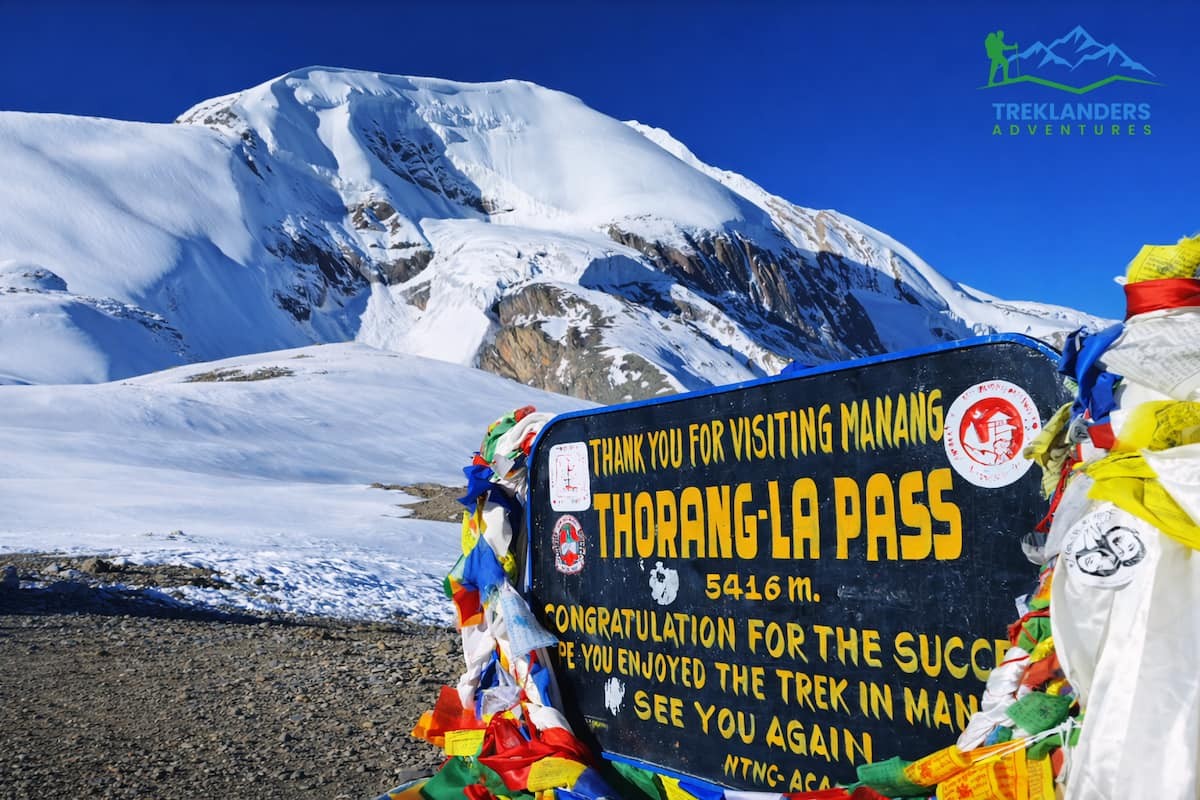
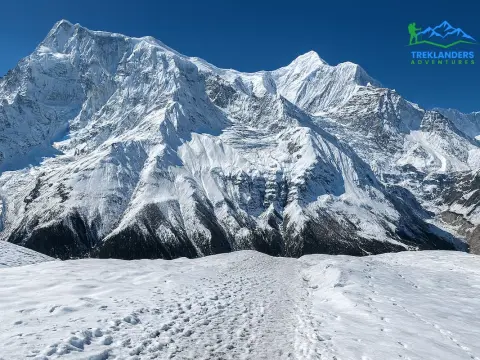
Thorong la pass- Annapurna Circuit Trek
The Annapurna Circuit offers abundant biodiversity in terms of wildlife as well. It is a natural habitat for rare and endangered animals such as the snow leopard, the Himalayan tahr, blue sheep, musk deer, and red panda. The avian population is a major attraction with more than 450 species of birds found here, including the dazzling Himalayan monal, eagles, vultures, and migratory birds.
Flora and fauna are interwoven with the lifestyles of the local Gurung, Thakali, and Manangi people. Plants serve as drugs, food, and fuel, and are also used in religious ceremonies, while animals feature in stories and spiritual beliefs. Through the support of the Annapurna Conservation Area Project (ACAP), conservation and eco-tourism are working hand in hand to preserve this extraordinary natural heritage, giving visitors to the Himalayas a more profound and spiritually fulfilling experience.
Common and Rare Wild Mammals Spotted on the Annapurna Circuit Trek
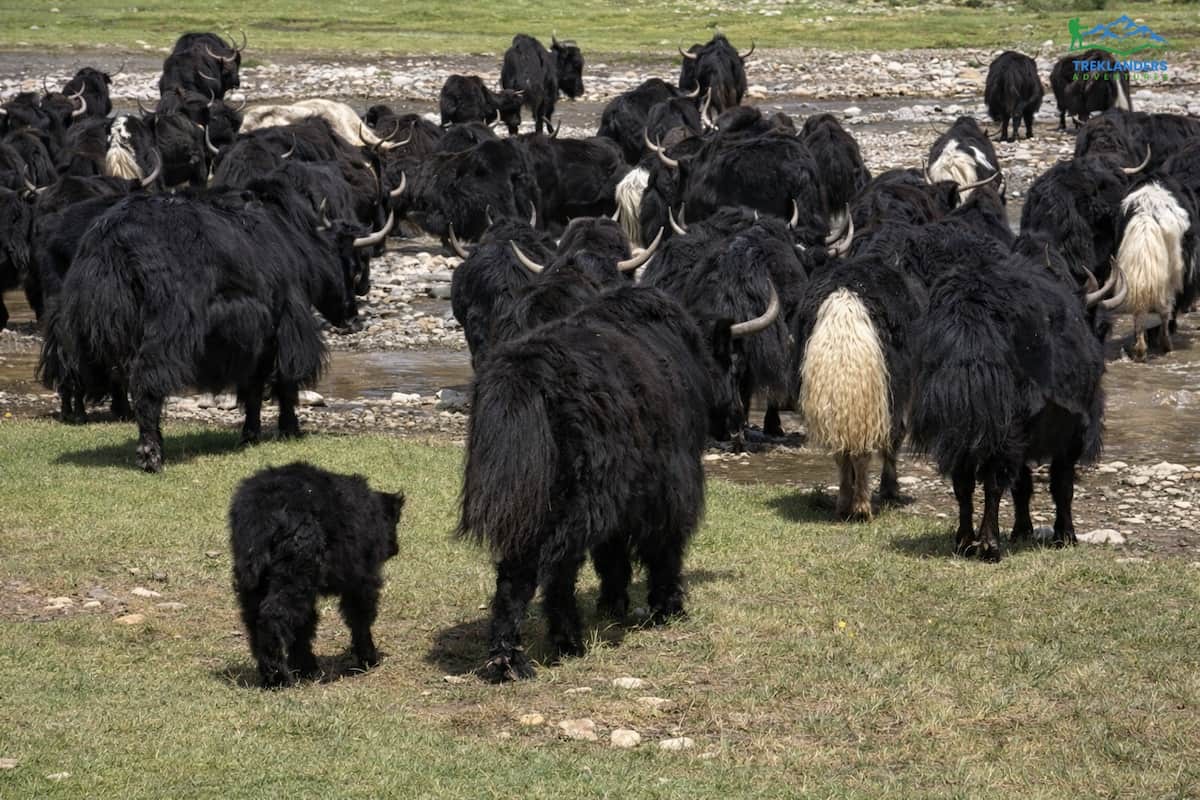
A herd of yaks drinking water.
The wild animals of the Annapurna Circuit trek provide an exhilarating and informative aspect of the journey in the Himalayas. The trek goes through the Annapurna Conservation Area, which is the largest protected area in Nepal and home to a diverse range of mammals. As the trek changes altitudes and landscapes, hikers can expect to see a variety of wild animals, some common and others rare.
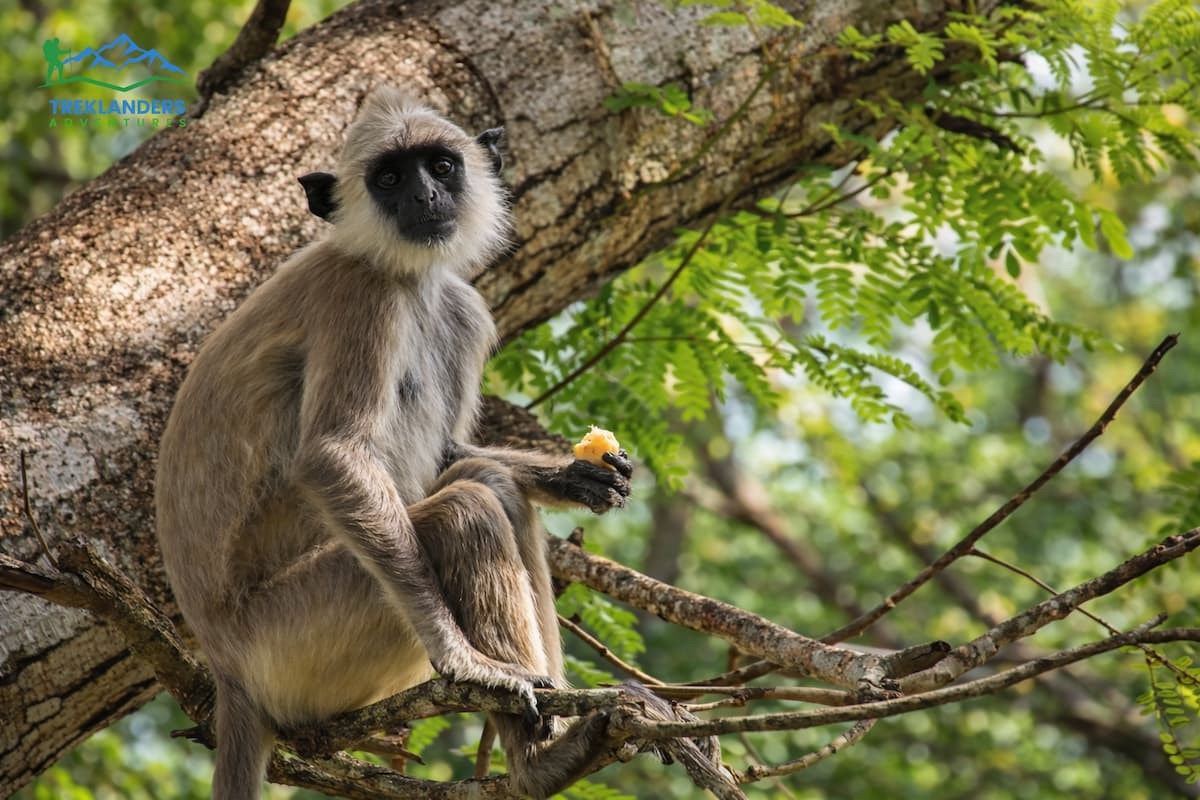
In the lower forested areas, especially in subtropical and temperate zones, common mammals are more frequently seen. These include rhesus macaques and grey langurs, often spotted in groups near forests and villages. Himalayan goral, a goat-like animal, can sometimes be seen on rocky slopes, while barking deer (muntjac) may be heard making sharp calls from dense forests. Smaller mammals such as porcupines, hares, and Himalayan squirrels are also part of this ecosystem, though they are mostly active early in the morning or at night.
Langur
When the path reaches subalpine and alpine areas, the flora and fauna are quite different. Himalayan tahr is commonly seen grazing on steep grassy slopes at higher elevations. Blue sheep (bharal) are another notable species, well-adapted to rocky terrain and cold climates. These species are the main prey of large carnivores and thus are essential to the balance of the ecosystem in the mountains.
15-Day Tilicho Base Camp with Thorong-La Pass Trekking | 15 days
In addition to the snow leopard, which is the most well-known, there are other rare and endangered species living in the Annapurna region. For example, the musk deer, which is recognized by its distinctive scent gland, and the red panda, which mainly stays in bamboo forests of quieter sections of the trail. There could be Himalayan black bears that live in forested areas, though to date, there have been only very few such incidents.
Your best shot at catching a glimpse of the untamed world in the Annapurna Circuit trek is during the dawn or dusk when animals are most naturally active. Spring and fall are not only great seasons weather-wise, but also when you'll find animals at their liveliest.
In a nutshell, encountering wild mammals on the Annapurna Circuit trek is a lovely experience that awakens one's admiration for the Himalayas as a mountain range as well as a thriving, verdant ecosystem.
Springtime Rhododendron Forests Along the Annapurna Circuit Route
The rhododendron forests on the Annapurna Circuit trek are arguably the most colourful and unforgettable landmarks of the journey; this is particularly true during the spring season (March to May). Being Nepal's national flower, the rhododendron is endowed with profound natural, as well as cultural significance. Moreover, the Annapurna Circuit provides some of the most spectacular views of these forests when they are in full bloom. In spring, not just the forest trails but the entire hillsides get dressed in red, pink, white, and purple shades. Consequently, this forms a delightful trekking experience that could be described as paradisiacal.
The rhododendron forests along the Annapurna Circuit are generally located at mid-elevations, i.e., between 2,000 and 3,500 meters. Such forests are often combined with oak, pine, and maple trees, thus forming thick and mature woodlands. The coolness, dampness of the ground, and the ditching of sunlight in this zone give perfect growth conditions to rhododendrons. If you were to walk with the trekkers inside these woods, you would see the petals lying on the ground so thick that they give the trail a carpet-like look, making every step as picturesque as the one before it.
In the Annapurna region, a number of rhododendron species exist, with Rhododendron arboreum being the most prevalent. This particular species has vibrant red flowers and can grow as high as a tree, whereas other kinds exhibit gentler shades like pink and white. These flowers provide food for bees, butterflies, and birds, thus helping the nature around there and making the biodiversity skyrocket during the spring.
The rhododendron forests in the Annapurna Circuit trek are not only a part of the flora of the region but also deeply tied to the local culture. The locals utilize rhododendron flowers in various ways, such as preparing traditional drinks, pickles, and herbal medicines. In several villages, the time when the flowers bloom is considered a sign of rejuvenation and the coming of warm days.
The spring season offers an excellent opportunity for a visit to these forests as the weather during this period is very pleasant, the paths are not obstructed, and the vegetation is at its most beautiful. With the backdrop of snow-covered mountains, fresh green valleys, and melodies of birds, the rhododendron woods bring in colour, scent, and vitality to Annapurna Circuit, thus making the trek an even more wonderful and satisfying experience.
Birdwatching Experiences Along the Annapurna Circuit Trekking Route
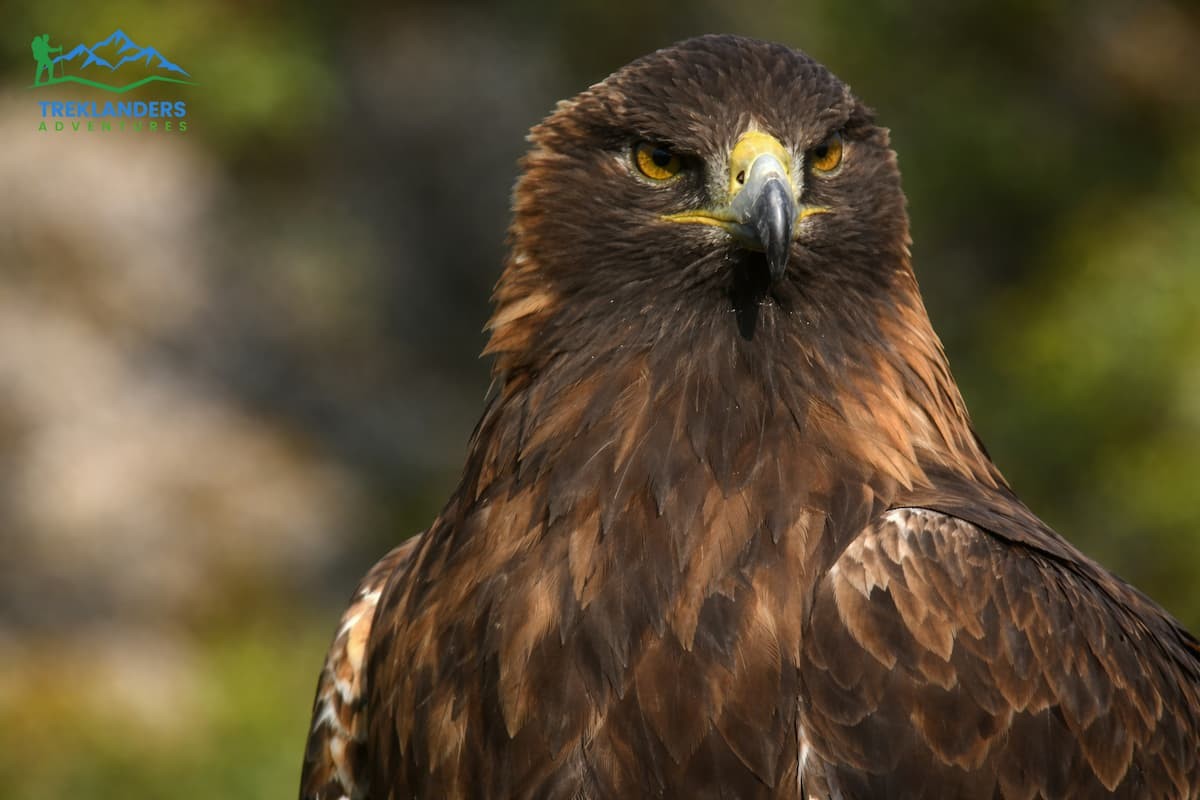
Himalayan vulture seen during the Annapurna Circuit Trek
Birdwatching on the Annapurna Circuit trek is a delightful and satisfying experience for both nature lovers and trekkers who like to watch animals in their natural habitat. The Annapurna Circuit is a part of the Annapurna Conservation Area, where there are more than 450 bird species. Because of the great variety of altitudes and habitats from the warm river valleys to the cold alpine lands the area is able to support a diverse and abundant bird population all year round.
In the lower and subtropical forests, climbers can often see a variety of common and beautiful birds around villages, rivers, and at the edges of the forests. Birds like bulbuls, barbets, drongos, cuckoos, and kingfishers are very often spotted and heard, especially in the early morning. These birds are lively and easy to spot, so this part of the trek is perfect for novice birdwatchers.
When the path goes up to where there are temperate forests of oak, pine, and rhododendron, the variety of birds is greater. This area has been identified as a habitat for Himalayan Forest birds such as the Himalayan monal, which is the national bird of Nepal, along with kalij pheasant, koklass pheasant, woodpeckers, flycatchers, and nuthatches. Springtime is the most exciting season because birds are laying eggs and calling to one another, thus the woods are filled with sound and movement.
When a person goes up to the higher elevations, beyond the tree line, birdwatching changes its character. One can commonly see large birds like Himalayan griffon vultures, golden eagles, lammergeiers, snow pigeons, and choughs that are flying over cliffs and open valleys. These birds stand out more against the clear sky and the rocky mountain landscapes.
The right time for birdwatching in the Annapurna Circuit trek is the two seasons of spring (March to May) and autumn (September to November). During the spring, the birds are laying eggs, and you can see the brightly colored birds, and in the autumn, you get clear views of the species that are migrating through the region.
On the whole, the birdwatching on the Annapurna Circuit brings a calm and learning aspect to the whole trekking experience. With a bit of patience and care, trekkers can delight in seeing the birds in their natural Himalayan environment while being surrounded by stunning mountain scenery.
Best Time of Year to Observe Flora and Fauna on the Annapurna Circuit Trek
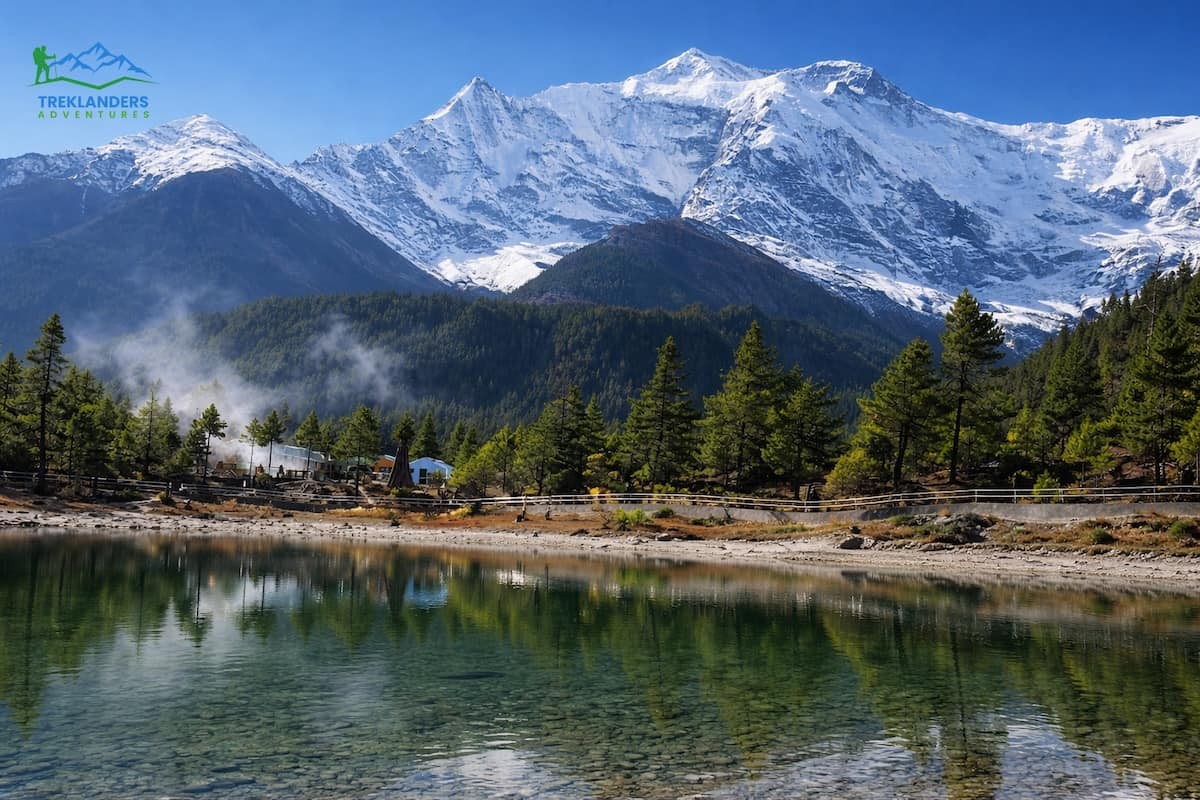
Green lake Manang
Deciding on the perfect season for flora and fauna along the Annapurna Circuit Trek allows trekkers to witness the area's plant and animal life at its peak. Since the Annapurna Circuit trail goes through several climate zones, the vegetation and animal life differ in each season. Although the trek is doable any time of the year, the nature experiences during the spring and autumn seasons are the most satisfying.
Spring (March to May) is the season when flora can be best enjoyed. The melting of snow and the warming of the temperature result in forests and hills being colourful again. The famous rhododendron forests cover mid-elevation trails with red, pink and white flowers. Wildflowers and medicinal plants also appear in alpine meadows. Wildlife also comes out of their winter shelters, and bird species are quite loud, many of them nesting and calling. Hence, spring is suitable for bird watching and plant viewing.
During autumn (September to November), fauna can also be well seen. The forests are dripping with freshness after the monsoon rains, and the air is crystal clear. Animals like Himalayan tahr, blue sheep, langurs and deer become more visible as they roam freely in search of food. The migratory birds pass through the Annapurna region at this time of year. Good weather and the mountains in clear view make it easier and more fun to spot wildlife.
The summer or monsoon season (June to August) sees the growth of plants at a very fast rate, leading to the forests becoming very dense and green. Rare plants, insects, and butterflies become numerous. Nevertheless, the heavy rain, slippery paths, and leeches cause problems in trekking and wildlife viewing. This season is more suitable for professional trekkers or those whose main interest is the plant life.
In winter (December to February), there are fewer flowers, but the trails are tranquil. Some animals come down to lower elevations, thus increasing the possibility of spotting wildlife in the forested areas. The cold weather and snow can obstruct access to the upper parts of the trek.
In brief, the peak of the leisurely nature experience in the Annapurna Circuit trek in terms of flora and fauna is spring, when there are colourful plants and birds and autumn, when wildlife is active, and the weather is clear.
Subtropical Forest Vegetation Found on the Lower Annapurna Circuit Trail
Subtropical forest flora along the Annapurna Circuit trekking trail mainly exists in its lower parts, typically between 800 and 1,500 meters in elevation. Here, the parts of the Annapurna Circuit have a warm and moist climate that is ideal for the development of dense forests and a diverse plant population. You can find this vegetation in the first few days of the trek, especially in the areas near the rivers, villages, and at the foot of the hills.
The Sal tree is one of the typical trees (Shorea robusta) in this region. Sal forests can be easily identified by the tall, straight trunks of the trees and the broad green leaves. Local people use sal wood, which is strong, for building houses and making furniture on a large scale. Together with sal, there are also other trees such as Schima (Schima wallichii) and Castanopsis that are growing abundantly, thus forming mixed forests that provide shade and help in preserving the soil.
Chir pine (Pinus roxburghii) is yet another significant tree species which is found on the drier slopes and ridges of the lowermost Annapurna Circuit trail section. Pinewood stands here are thus providing access to sunlight, and this, in turn, supports the growth of different types of grasses, shrubs, and wildflowers on the forest floor. The pleasant pine fragrance, as well as the openness of the forest, will be the nicest gifts for the hikers passing through this area.
The subtropical forests are also a storehouse of both useful and medicinal plants. Plants like Asuro (Justicia adhatoda) are known to be very effective in curing coughs and colds, and Tite Pati (Artemisia) is one of the plants used in folk medicine as well as in the performance of religious ceremonies. Bamboo, which grows along the streams and near the villages, is a very versatile material, being used for making baskets, fences, and different kinds of household utensils. Ferns, climbers, and creepers together create an extremely dense and verdant forest scenery.
On the whole, the Annapurna Circuit trek plants are subtropical forests that provide a green and cooling atmosphere for the beginning of the trek. These forests not only contribute to the wildlife, human living, and the general environment of the Annapurna region, but they are also a very significant and attractive element of the trek.
Understanding the Vegetation Zones Along the Annapurna Circuit Trek
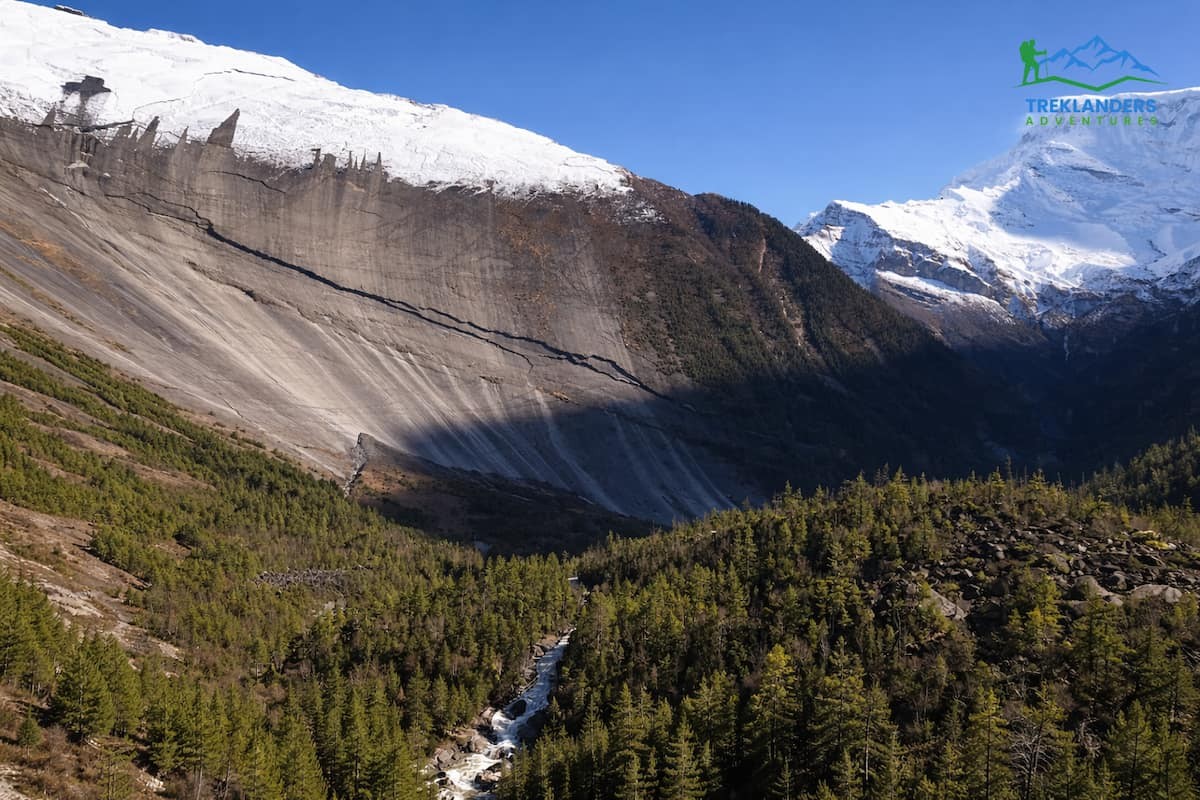
Paungda Danda Rock - Annapurna Circuit Trek
The Annapurna Circuit trip is essentially a natural way of experiencing different ecological zones of the Himalayas, as the trip's different vegetation zones become clearly visible with the extent of altitude gain of the trekkers.
Based on the huge differences in elevation, temperature, and rainfall, the Annapurna Circuit is capable of having plant life of a very diverse nature, starting from warm lowland forests to very cold alpine landscapes. These vegetation/elevation zones not only enhance the trekking experience visually but also emotionally.
The lowest vegetation zone is the subtropical vegetation zone and is located approximately between 800 and 1,500 meters. The weather in this area is warm and humid, which is perfect for dense forests. Some of the common plants are sal, schima, Castanopsis, bamboo, chir pine, ferns, and wild grasses. These forests are very lush and green, especially along the rivers and around the villages, and thus they supply local people with essentials like fuelwood, fodder, and medicinal plants.
The temperate vegetation zone comes next, and is considered a wrap for the most scenic parts of the Annapurna Circuit. This zone is a real getaway also because it is less crowded by people inside the same altitudinal section of the route. The tree species forming the canopy here are mainly rhododendron, oak, maple, and pine. The different-colored flowers of the rhododendron trees carpet the slopes with red, pink, and white colours in spring. Because of the lower temperature, the area is full of birds and is home to some small mammals.
Nar-Phu Valley With Thorang-La Pass Trek | 21 days
When trekking higher, climbers cross the subalpine zone lying between 3,000 and 4,000 meters. Due to lower temperatures and stronger winds, trees get shorter and more isolated. The main types of plants are juniper, dwarf rhododendron, birch, and alpine shrubs, whereas grassy meadows are used for seasonal grazing.
The terrain above 4,000 meters is the alpine vegetation zone. At this spot, plant life is only represented by tough grasses, mosses, lichens, and small flowering plants growing very low to the ground. Such plants endure extreme weather, very short growing periods, and freezing temperatures.
In fact, vegetation zones on the Annapurna Circuit trek tell the story of plant adaptation to altitude and climate. A trek through these changing zones is a great way for hikers to appreciate the biodiversity and the ecological significance of the Annapurna region.
Alpine Flowers and Traditional Medicinal Plants of the Annapurna Circuit Region
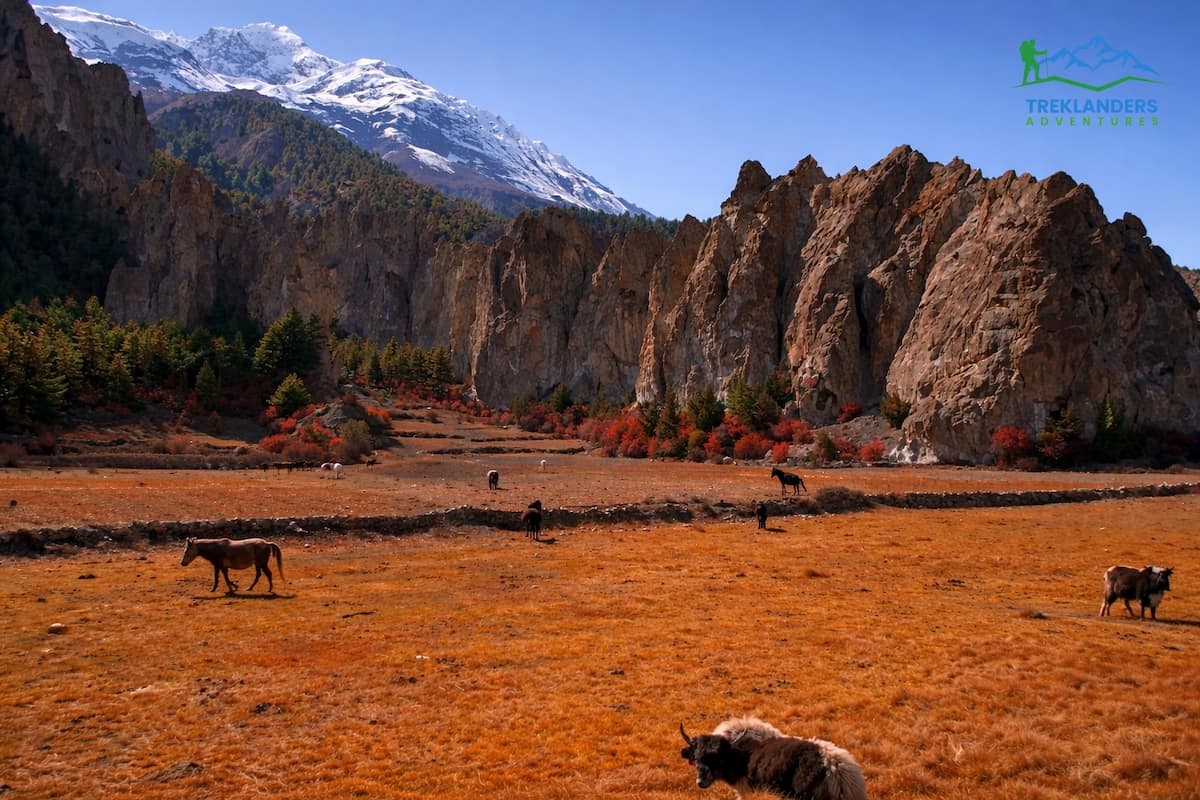
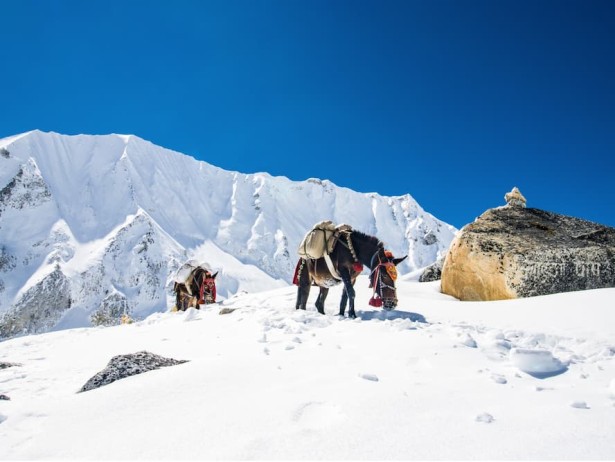
Beautiful landscape with a horse and a yak.
The medicinal plants along the Annapurna Circuit trek constitute a significant blend of the area's natural and cultural heritage. As trekkers ascend beyond the tree line into high-altitude zones, the scenery transforms into alpine meadows and bare slopes where a few tough flowers and medicinal plants are found. These plants are particularly designed to endure cold temperatures, strong winds, and short growing seasons; however, they have an important role in both nature and the local customs.
Above 3500 meters, alpine flowers start to show up, especially in late spring and summer. Typical alpine flowers are edelweiss, Himalayan blue poppy, gentians, primulas, and potentilla. These plants stay very close to the earth to shield themselves against severe weather, and also, they offer the rocky ground a nice splash of colour. In the flowering period, alpine meadows are inhabited by insects and butterflies that use the flowers for nectar.
Moreover, the Annapurna area is famed for its local medicinal herbs that have been the source of healing for the native people since time immemorial. Yarsagumba, a unique fungus that grows in high-altitude grassy areas, is one of the most famous medicinal plants of the region, and its medicinal uses are highly prized. Jatamansi (Nardostachys Jatamansi) is another plant that plays a major role in traditional medicine for anxiety, sleep disorders, and digestive issues. Moreover, Kutki (Neopicrorhiza scrophulariiflora) is widely recognized as a remedy for liver and stomach problems.
Besides that, other handy plants that can be spotted along the Annapurna Circuit are Rhododendron leaves that are frequently used in herbal medicines and Juniper, which is burnt during religious ceremonies to purify the environment. Most of these floras are delicately picked and only used in tiny portions, as overharvesting can lead to the destruction of the human-free alpine nature.
The medicinal plants of the Annapurna Circuit trek are an integral part of the local culture and traditional healing methods. The communities living there primarily depend on this precious heritage for their healthcare, especially in the remote areas where medical facilities are limited or even absent.
All in all, alpine flowers and medicinal plants not only embellish the scenery but also provide a cultural and ecological dimension to the Annapurna Circuit trek, thereby allowing travellers to gain a profound insight into the Himalayan natural world.
Traditional Use of Plants and Wildlife in Gurung, Thakali, and Manangi Communities
The traditional use of plants in the Annapurna Circuit region has always been a way of life, culture and even the belief of the local communities like Gurung, Thakali and Manangi. Since these communities are living in remote mountain areas, they have acquired profound knowledge of local plants and wildlife, which they have been using for food, medicine, rituals, and to make a living in a sustainable way over many generations.
Plants have been of paramount importance in the traditional medicine systems. For some common ailments, quite a few families depend on herbal remedies that can be made out of plants found in their local area. For example, Asuro is excellent for the treatment of coughs and colds. Tite Pati (Artemisia) is used for fever, wound healing and also for religious purification. Jatamansi has been proven to be most helpful in relieving stress and sleep problems. Kutki is one of the most popular herbal medicines used to cure stomach and liver ailments. In fact, such traditional plant wisdom is one of the great assets of the high mountain villages that have difficulty accessing modern health care facilities.
Another major way plants have been deeply rooted in the tradition is their relation to food and basic daily needs. Wild greens, herbs, and roots are gathered each season and used in local cuisines. Bamboo is the material of choice when it comes to making baskets, mats, fences, and household tools. Juniper wood and leaves, when burnt, release aromatic smoke which is used for a sacred purpose - to cleanse both homes and monasteries. Rhododendron flowers can be turned into a traditional beverage or a pickle - such usage is especially common in the springtime.
Besides that, wildlife is a big part of the culture. However, hunting is heavily regulated nowadays as per the conservation laws. It used to be that animals like blue sheep and Himalayan tahr were hunted for their meat, wool, and to make tools. Presently, people are treating wildlife with reverence, and as a result, animals are frequently featured in local myths, religious beliefs, and folklore, where they are seen as symbols of power, protection, or harmony with nature.
The Gurung, Thakali, and Manangi ethnic groups are the stewards of the idea of sustainable use of natural resources. The establishment of the Annapurna Conservation Area has only increased the locals' involvement in protecting the forests and wildlife while they continue their traditional lifestyle, but in a less harmful manner.
Basically, the traditional usage of medicinal and other useful plants in the Annapurna Circuit area shows the people's harmonious and respectful relationship with nature. Such vast cultural knowledge undoubtedly makes the hiking journey more fun and educational as it shows their lifestyle in the Himalayas as one in harmony with nature.
Endangered Wildlife Species Found in the Annapurna Conservation Area
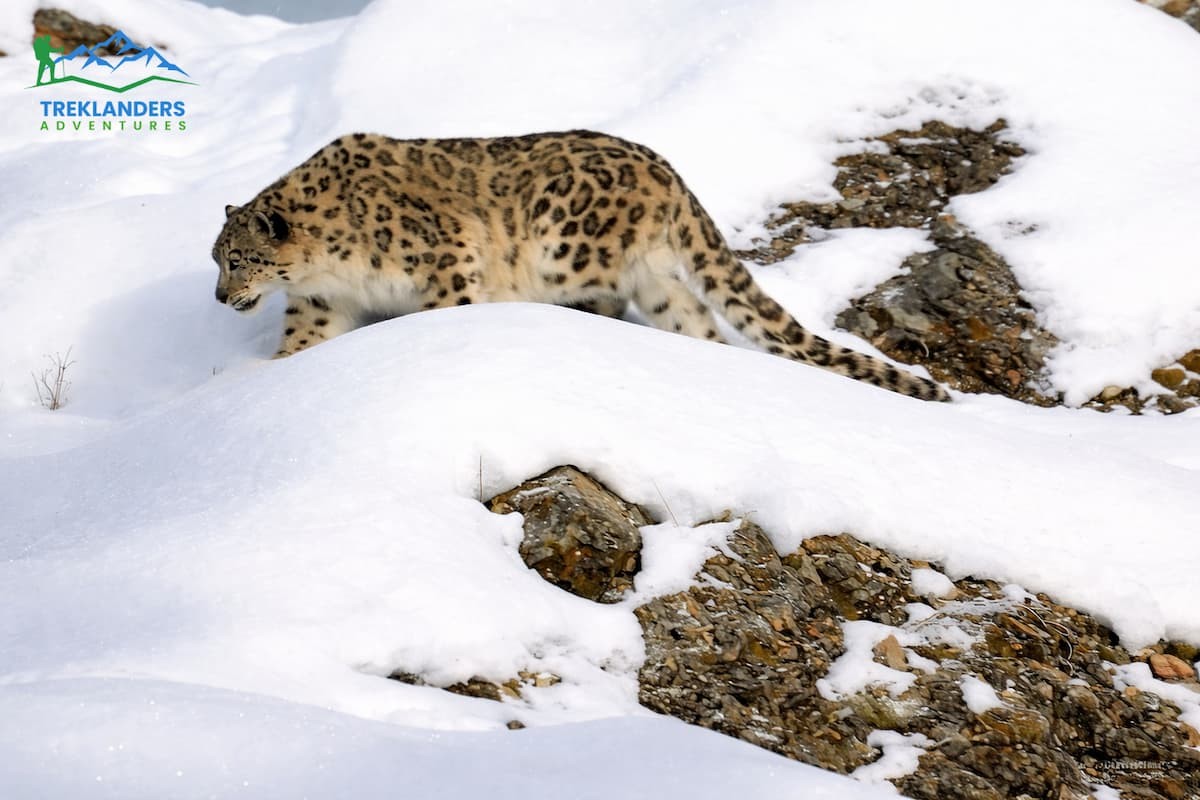
A snow leopard spotted during the Annapurna Circuit Trek
The endangered species on the Annapurna Circuit trek reveal the ecological significance of the Annapurna Conservation Area (ACA), which is the largest protected area of Nepal. The ACA supports a diverse range of altitudes and habitats, making it a refuge for various rare and endangered species of fauna. Since the wildlife is generally very secretive, animal sightings during the trek are not always guaranteed; however, the knowledge that such creatures inhabit the area significantly enriches the trekking adventure.
Among the various endangered species of animals in the Annapurna region, the snow leopard is arguably the most well-known. This remarkable feline prefers the high-altitude, rocky crevices above the tree line where it can remain hidden. It is only on very rare occasions that trekkers get to see a live snow leopard; however, one can still come across their footprints or, through talking with local villagers, get an idea of their secretive lives. Snow leopards are an essential part of the mountain ecosystem as they keep prey numbers in check.
Besides the snow leopard, the red panda is also a significant endangered species. Inhabiting straight-line dense bamboo forests up to mid and high elevations, red pandas are quiet, arboreal mammals whose survival depends entirely on the provision of sightly forest environments. Reduction of green cover to a huge extent, as well as deprivation of their primary source of nutrition, has put them on the brink of vulnerability; hence, their appearance tells a story of the continued conservation of forests along the Annapurna Circuit.
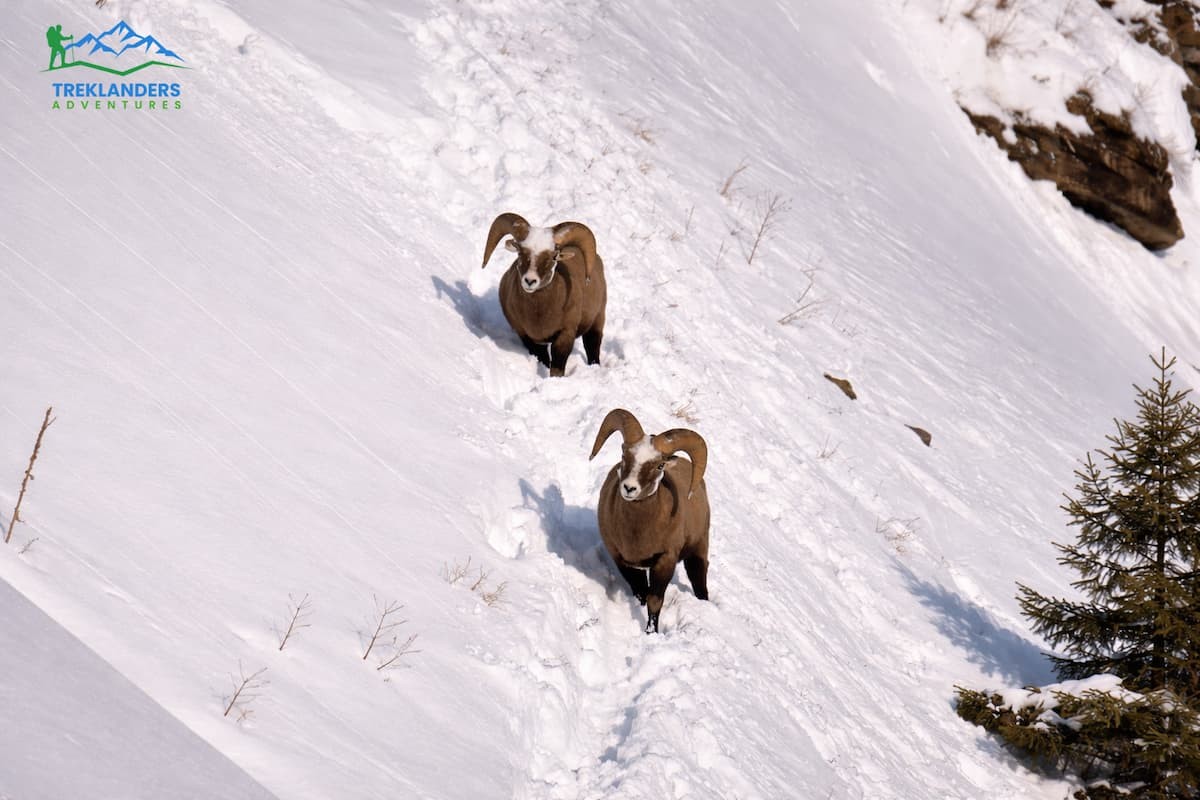
Himalayan Tahr – Annapurna Circuit Trek
Another great animal that is being threatened and is to be found in forested and subalpine areas is the musk deer. Males are distinguished by the musk gland, which has been very popular in the manufacture of traditional medicine. At one time, it was hunted illegally, and this reduced the population, but nowadays conservation is playing a big role in protecting this species.
Besides, there are also rare birds like the Himalayan monal and steppe eagle in the Annapurna Conservation Area that are endangered because of habitat loss and climate change. These birds are very crucial as they show the health of the environment.
Through the Annapurna Conservation Area Project (ACAP), one of the central aims is to protect the endangered species of the Annapurna Circuit trek. It is the role of local communities, guides, and trekkers to abide by the conservation regulations, refrain from disturbing the animals, and thus support sustainable tourism.
In general, the presence of endangered wildlife species in the Annapurna region is a constant reminder to trekkers of the fact that the Himalayas are not merely a beautiful landscape but also a vulnerable environment that requires care and protection for the sake of future generations.
Biodiversity Conservation and Protection Efforts in the Annapurna Conservation Area
Beautiful village and forest landscape with mountains along the Annapurna Circuit Trek.
The Annapurna Conservation Area biodiversity protection initiative is essential in safeguarding one of Nepal's most nature-rich regions. The Annapurna Conservation Area (ACA) is the biggest protected area of Nepal, containing a variety of ecosystems, rare animals, and thousands of plant species. Due to the growth of tourism and climate change effects, it is of great importance to have strong conservation and protection measures in place in order to preserve this delicate Himalayan environment.
The Annapurna Conservation Area Project (ACAP) is a pioneer in the conservation activities of the region. ACAP implements a community-based conservation model, which is quite unique among protected areas. In other words, the locals directly partake in the protection of forests, wildlife, and natural resources. Communities participate in forest management, livestock grazing regulation, and curbing illegal hunting, thereby securing sustainability from generation to generation.
In addition to these, a significant part of Annapurna Conservation Area biodiversity protection revolves around animal conservation. Besides the snow leopards, red pandas, musk deer, and Himalayan tahr are among the endangered animals that are protected by means of anti-poaching programs, habitat monitoring, and awareness campaigns. Efforts to maintain the continuity of habitats ensure that animals have the freedom to move securely between different spots, which is a vital factor for breeding and survival.
7-Day Annapurna Base Camp Trek from Pokhara | 7 days
Another major part of the efforts is forest conservation. ACAP encourages reforestation, proper firewood gathering and the use of alternative energy sources such as solar and improved cooking stoves. All these activities lessen the pressure on forests and thus contribute to protecting the plant species that are vital, e.g., medicinal and alpine plants.
Sustainable tourism in the Annapurna region is a very important point. Trekkers are informed about how to handle their waste, to respect wildlife and to behave responsibly in their trekking. Environmentally-friendly practices are followed by local lodges and teahouses to help reduce pollution and environmental damage.
Environmental education is also one of the components of biodiversity protection in the Annapurna Conservation Area. Schools and local groups are given lessons on conservation, climate change, and the importance of biodiversity, thereby raising awareness for the long-term.
All in all, the conservation and protection measures in the Annapurna Conservation Area are a good indication of how humanity and nature can be in harmony. Such efforts will help keep the region's exceptional biodiversity intact for the next generations of trekkers and local inhabitants.
Conclusion
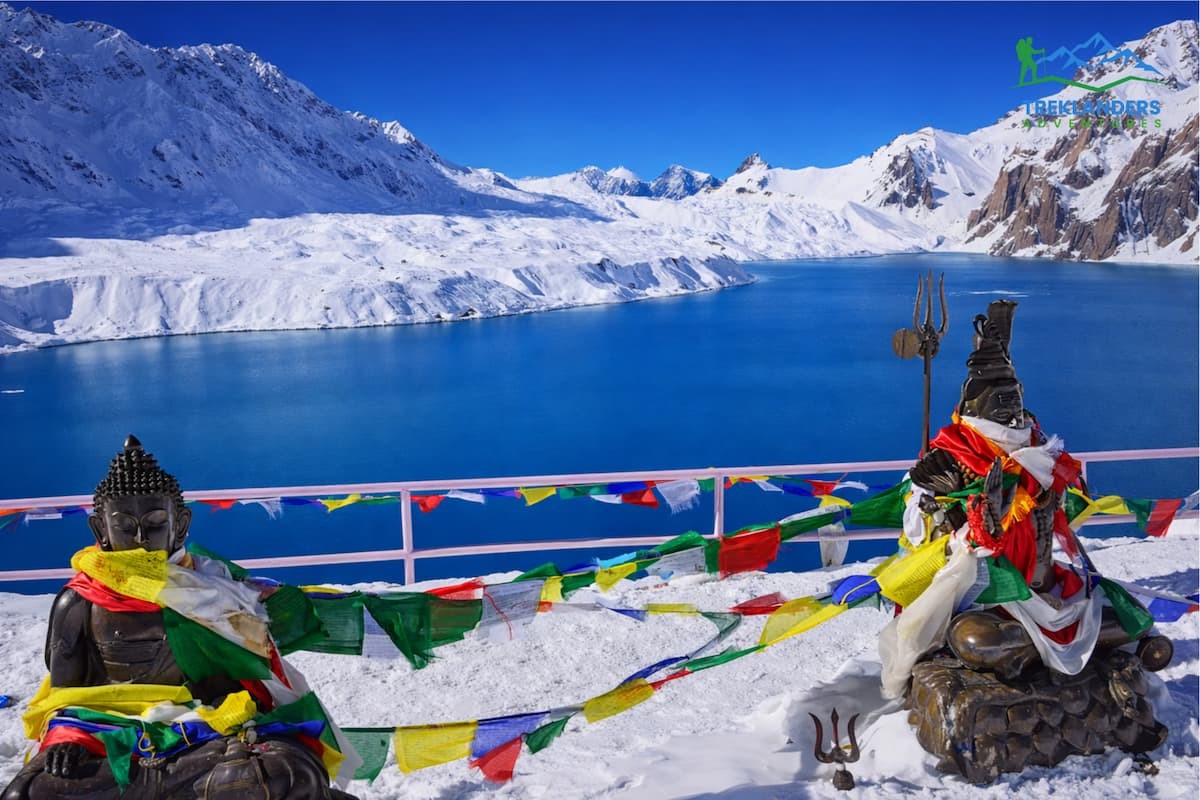
Tilicho Lake
The flora and fauna of the Annapurna Circuit Trek portray the Himalayas not as mere mountains and landscapes but as a living, breathing, vibrant ecosystem. The trek covers the entire spectrum of vegetation, starting from the dense, lush subtropical forests in the lower valleys and moving up through temperate, alpine, and finally to the rugged high-altitude terrains. Different plants and animals occupy each of these ecological zones and contribute to the natural harmony and beauty of this region.
Moreover, there are several awe-inspiring natural sights, such as Gangapurna Lake near Manang and the high-altitude Tilicho Lake, which is one of the highest lakes on the planet. These meltwater lakes are encircled by delicate alpine ecosystems, where tough grasses, mosses, and certain flowering plants have adapted to live in the extreme environment. They extend the ecological significance and the visual charm of the Annapurna Circuit journey.
Besides brightly colored rhododendron forests, the Annapurna Circuit features rare medicinal plants and hardy alpine flowers that are, in many instances, an integral part of the traditional knowledge of the local Gurung, Thakali, and Manangi communities. Himalayan tahr, blue sheep, musk deer, red panda, and the rare snow leopard are some of the wildlife species that underline the region's role as a refuge for endangered species. Birdwatching is yet another popular activity facilitated by the presence of hundreds of resident and migratory birds, which enliven the trekking routes with their songs.
Strong conservation efforts by the Annapurna Conservation Area Project (ACAP) have been the basis of protecting this rich biodiversity. Through a combination of community involvement, sustainable tourism, wildlife protection, and environmental education, the local people are provided with natural resources that are used responsibly and at the same time, the region is being preserved for future generations.
The plants and animals overall add to the Annapurna Circuit Trek experience. They assist the trekkers in understanding the close bond between nature, wildlife, and the culture of the locals, thus making the journey not only physically fulfilling but also environmentally and culturally worthwhile.