
Best Season for Mardi Himal Trek – Complete Weather & Travel Guide
31 Oct 2025
A trekker's dream, the Mardi Himal Trek is located in the heart of the Annapurna region with splendid views and an off-the-beaten-path experience.

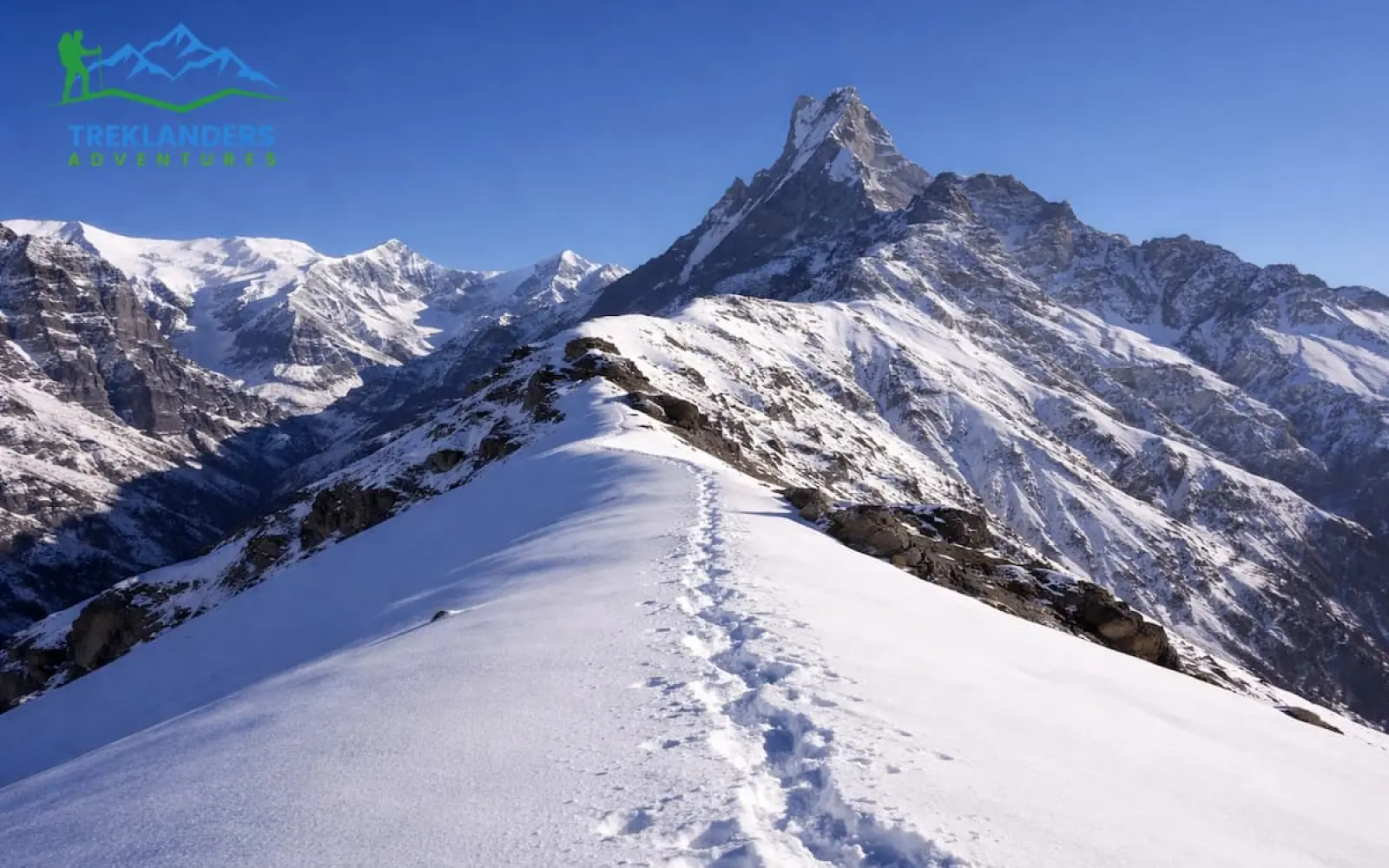
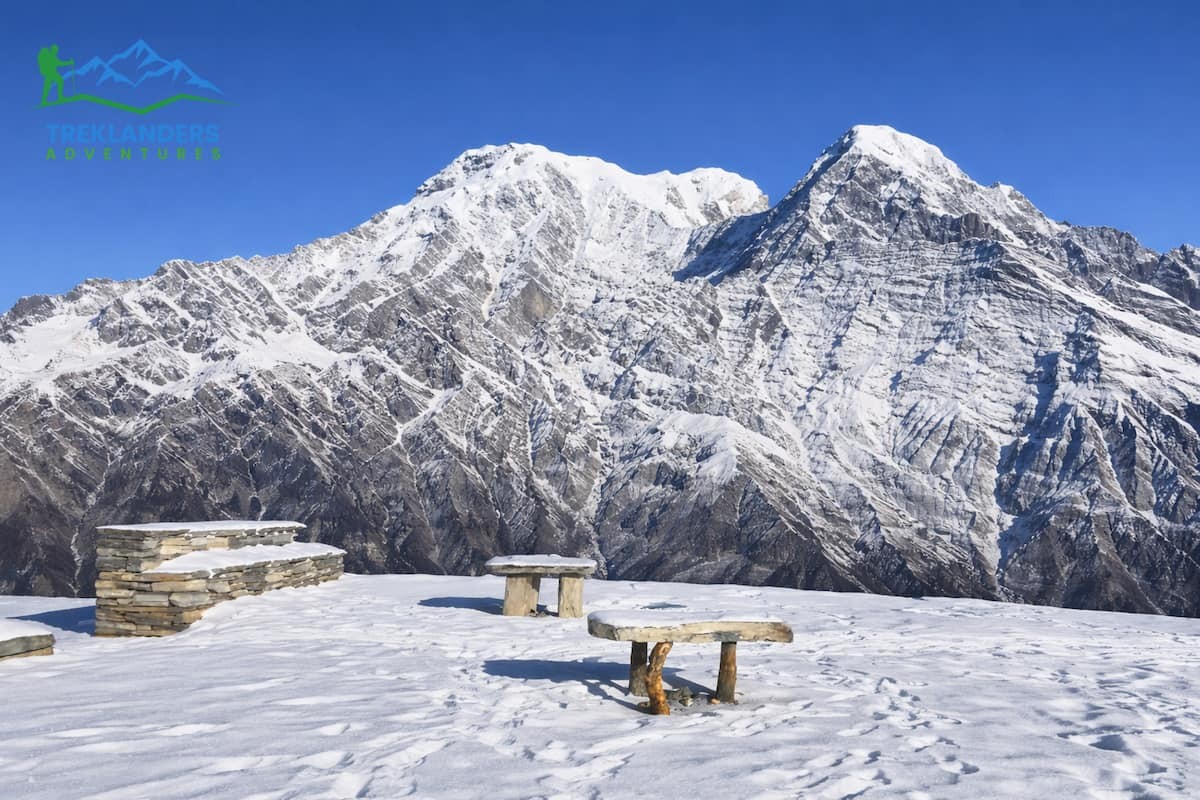
Mardi Himal Trek is one of the most beautiful trekking routes among shorter trekking routes in Nepal. The trek is gaining popularity due to its tranquil trails, dramatic mountain sceneries, and close views of the mighty Machhapuchhre (Fishtail). Located right in the Annapurna region, this trek depicts an excellent combination of forest walks, alpine landscapes, stunning ridgelines, and traditional Gurung villages. The Mardi Himal trek is much quieter than the popular Annapurna Base Camp or Poon Hill route, allowing trekkers to enjoy nature on a more intimate level. It usually begins from Kande or Dhampus and climbs gently through splendid rhododendron forests and mossy trees along hidden, magical-feeling trails, especially in spring, when the path is flanked by red and pink flowers.
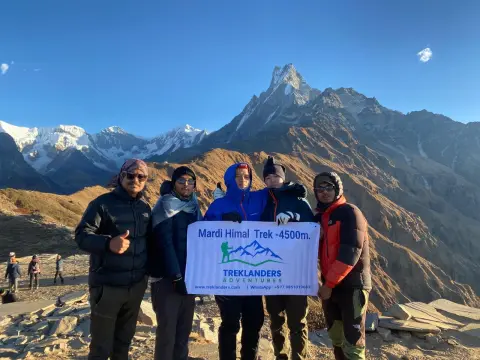
With an increase in altitude, forests give way to open pastures and panoramic lookout points. In the opposite direction, every little step changes the surrounding view: villages below disappear, while the snowy Himalayas ahead recline ever closer into clearer view. From Low Camp to Badal Danda, the path drapes along a scenic ridge that offers sweeping views of Annapurna South, Hiunchuli, and Machhapuchhre just right in front of your eyes: the higher you go, the more awe-inspiring the views become before you reach High Camp, positioned above the timberline, which is the portal into the ice and peak upper world. Early morning excursions to Mardi Himal Viewpoint reward trekkers with views of sunrises over some of the most spectacular mountain scenery in Nepal, as the first light brilliantly illuminates the peaks.
Adventurous trekkers may push to Mardi Base Camp for even closer glacier views. This short, relatively easy trek offers breathtaking scenery and fits busy schedules. Teahouse lodging and a 4-7 day itinerary allow for flexibility. With stunning peaks, friendly locals, and a rewarding summit, Mardi Himal Trek delivers natural beauty, tranquility, and the essence of trekking in Nepal.
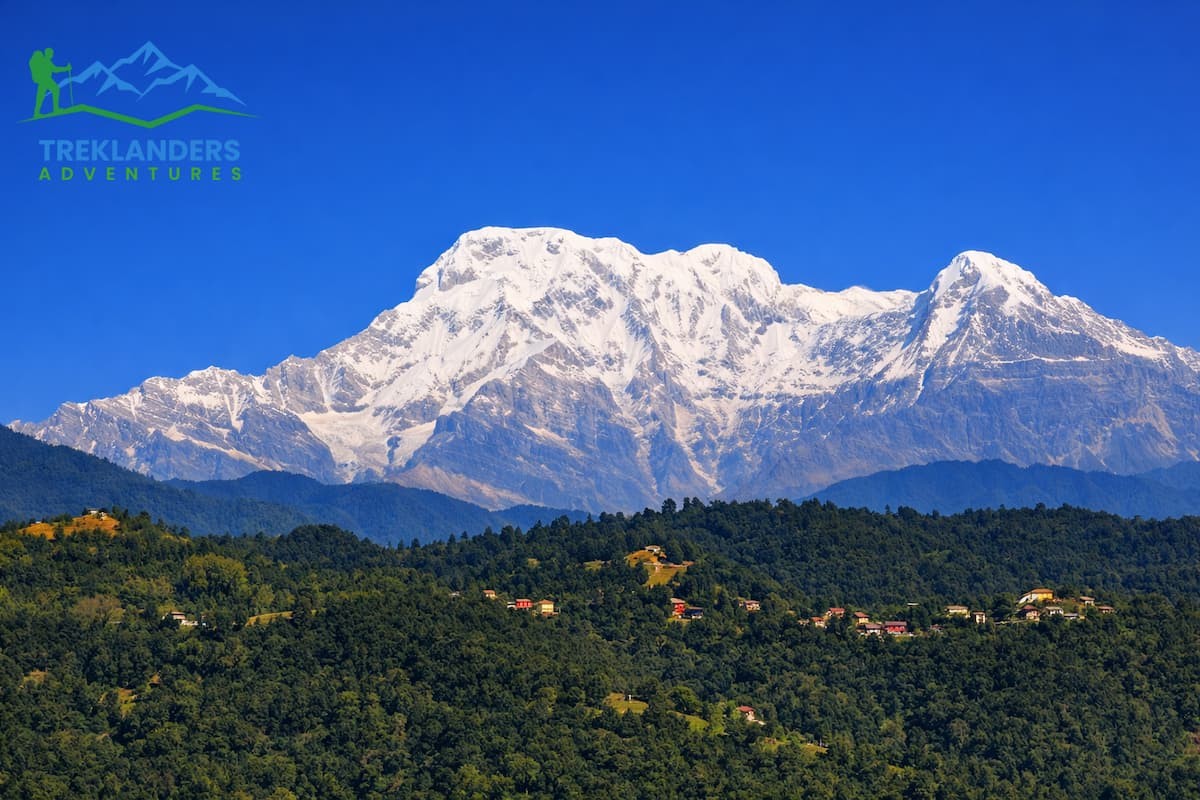
Kande is where most Mardi Himal trekkers begin their journey and is also the first natural viewpoint that introduces the rest of the trek. The viewpoint exposes the eye to the villages capes of Nepali traditional settlements, terraced farmlands, and rolling green hills, all layered into the distance. It might not be the most spectacular viewpoint in terms of mountain size, but it is an ideal stop to shoot pictures and get used to the altitude. Trekking people usually take a break here to have tea, get their backpacks ready, and set their walking speed.
Especially early morning views are amazing when the soft light colors the hills golden. The silhouettes of Annapurna peaks faraway look faint but still inviting, and they push the trekkers to the thrill of the adventure that waits. Kande Viewpoint is about the change from the world of humans to nature, so it is a significant Mardi Himal start and a nice little reminder of the beautiful countryside of Nepal.
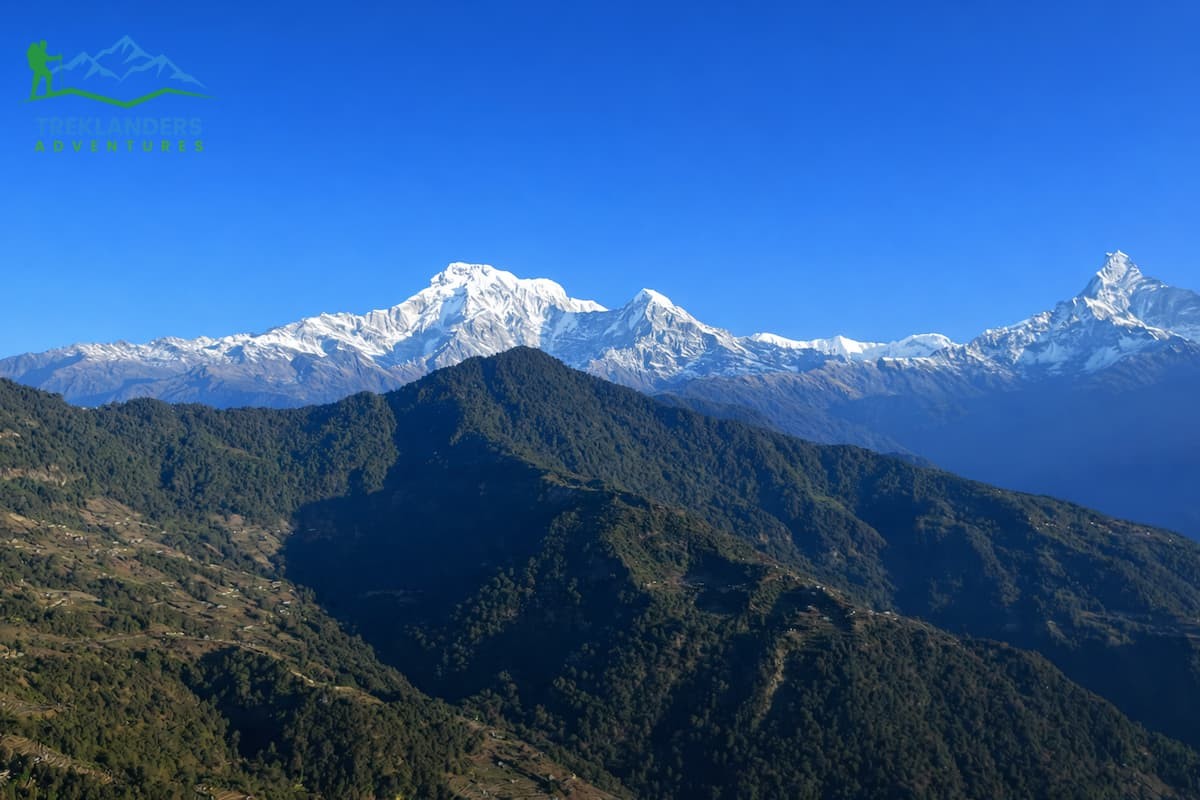
Australian Camp is one of the most beautiful early viewpoints on the trail and a frequently chosen overnight stop of trekkers aiming for a brilliant sunrise. The view here expands to show the towering Annapurna South, Hiunchuli, and Machhapuchhre (Fishtail) mountains, all standing like a perfectly aligned natural frame. The rising sun behind the peaks on clear days brings out intense orange and pink colors, which are perfect for photography. The viewpoint is located on a grassy hill where the atmosphere is very tranquil, so you can take a break, do some stretching, and have breakfast while looking at the view. Australian Camp, being easily reachable from Pokhara, is also a day-hike destination and a spot for families to get Himalayan vibes without long trekking days. It has some nice lodges and views of the open sky, so it's a great mix of beauty and convenience. Several trekkers have even ranked it as one of the best sunrise points in the lower Mardi region.
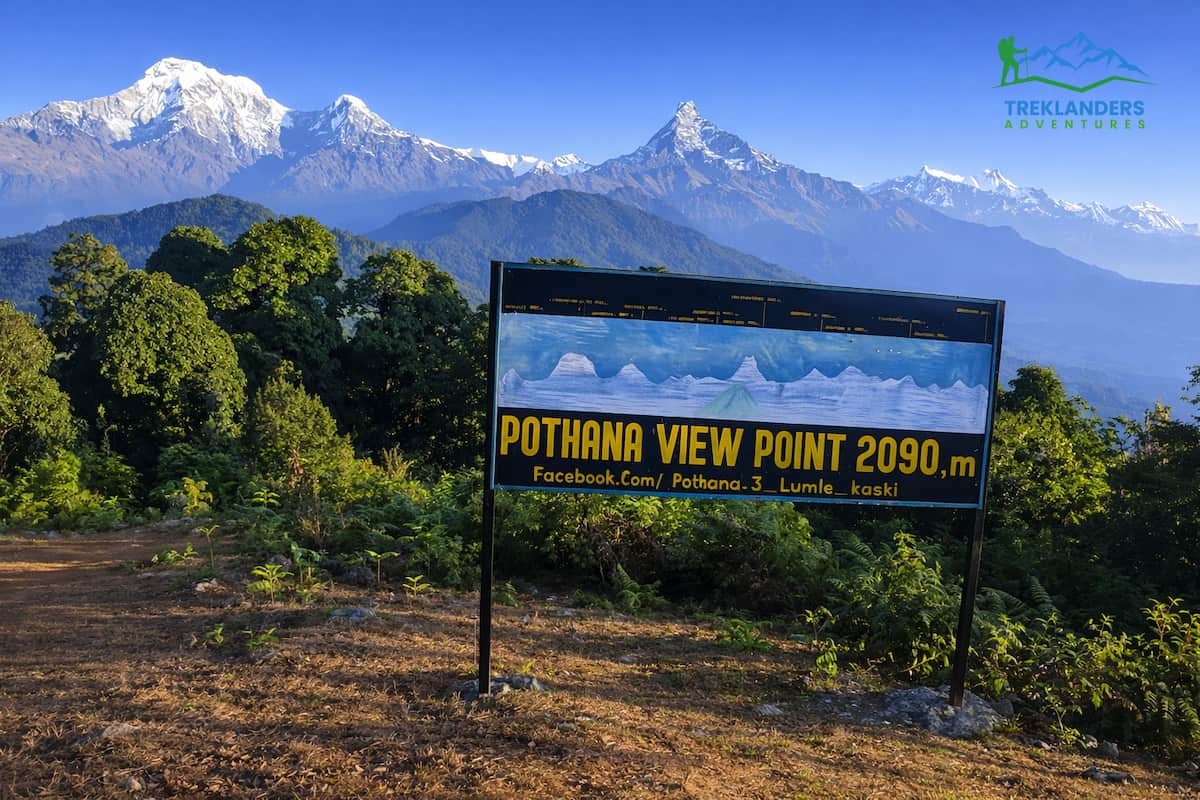
Pothana is a forest-edge village that provides a serene and refreshing atmosphere and also the first, near view of Machhapuchhre. The viewpoint is located at the junction of dense forests and open meadows, and hence, makes a lovely contrast for the photos.
On sunny days, the towering peak of Fishtail is seen to be more prominent and sharper compared to Kande and Australian Camp, thus giving the trekkers great excitement for the journey ahead. The place is luxuriantly green, and wildflowers and rhododendrons adorn the trail during the spring season.
Pothana is also a very good place to rest while having a cup of tea and for acclimatization. At night, the light from the few villages scattered below makes a charming sight. The tranquil surroundings here give you the opportunity to stop, breathe, and enjoy nature.
For most trekkers, Pothana Viewpoint is the first stage where the Himalayas get closer and more real.
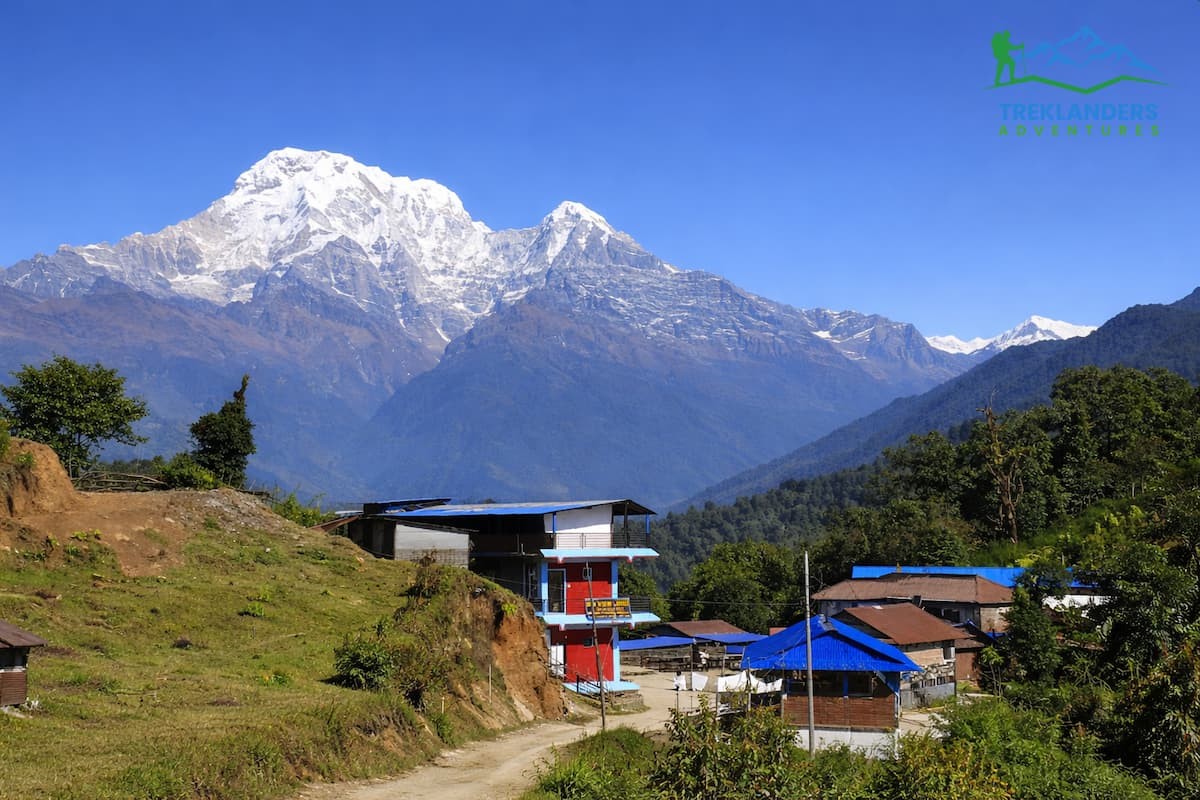
Pitam Deurali Viewpoint is the noteworthy transition along the ridge where the surroundings change quite dramatically and the trekkers get their first grand view of the Annapurna range. At this point, the forest canopy retreats and the horizon opens up, revealing multiple layers of mountains, valleys, and clouds lying below. The viewpoint is generally windy and cool, which makes the atmosphere quite refreshing after a climb of a few hours. It is also a junction connecting routes toward Annapurna Base Camp, which, therefore, makes it a strategic and scenic resting spot as well. With the sunlight breaking through the trees and the ridgeline going farther, Deurali is actually like a door to the higher adventures. Photographers can get deep valley shades along with wide-angle shots that show the change from dense forest to alpine scenery. Trekkers usually take a break here to enjoy the silence, look at the open views, and get mentally ready for the more dramatic mountain scenes that are waiting ahead on the Mardi trail.
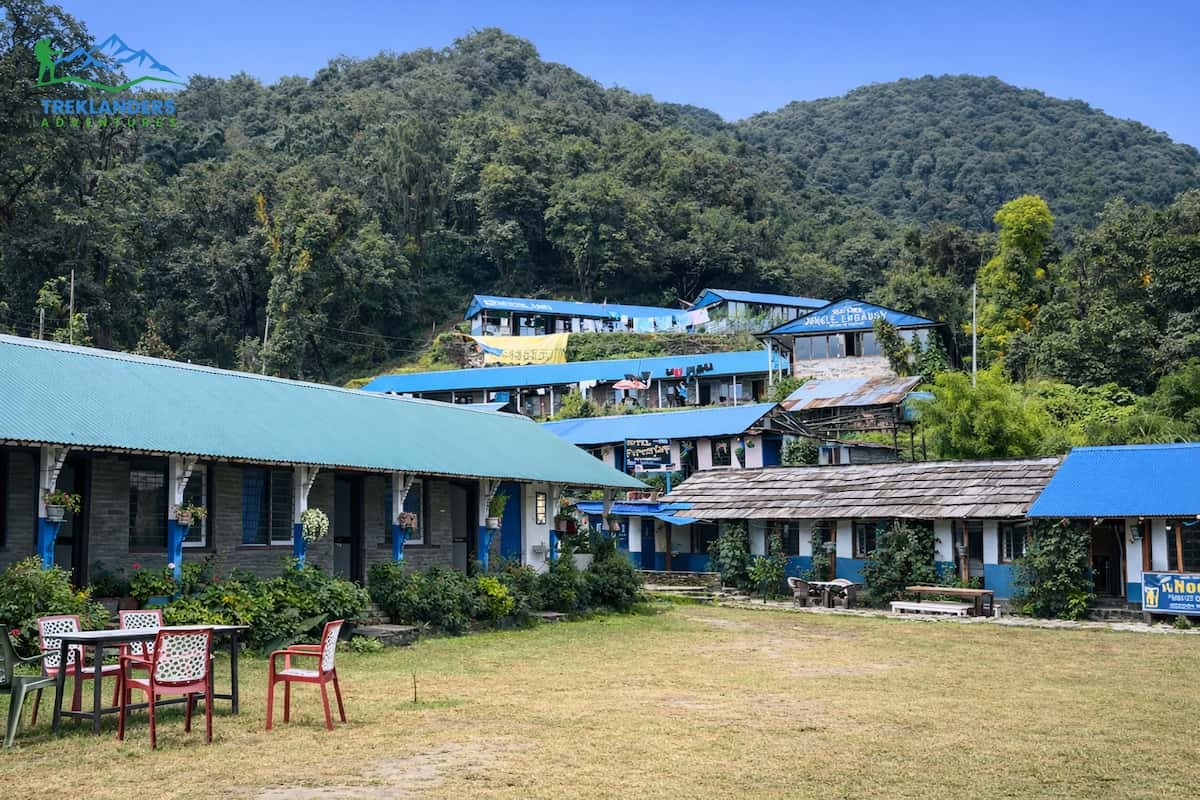
Forest Camp has some distant Himalayan views, but its charm is more because of its atmosphere than the horizon. Surrounded by dense rhododendron and oak forest, the viewpoint really calms the visitors. Mist is quite frequent between the trees, thus it creates a mystical atmosphere which is perfect for photography, particularly in the early morning or late afternoon.
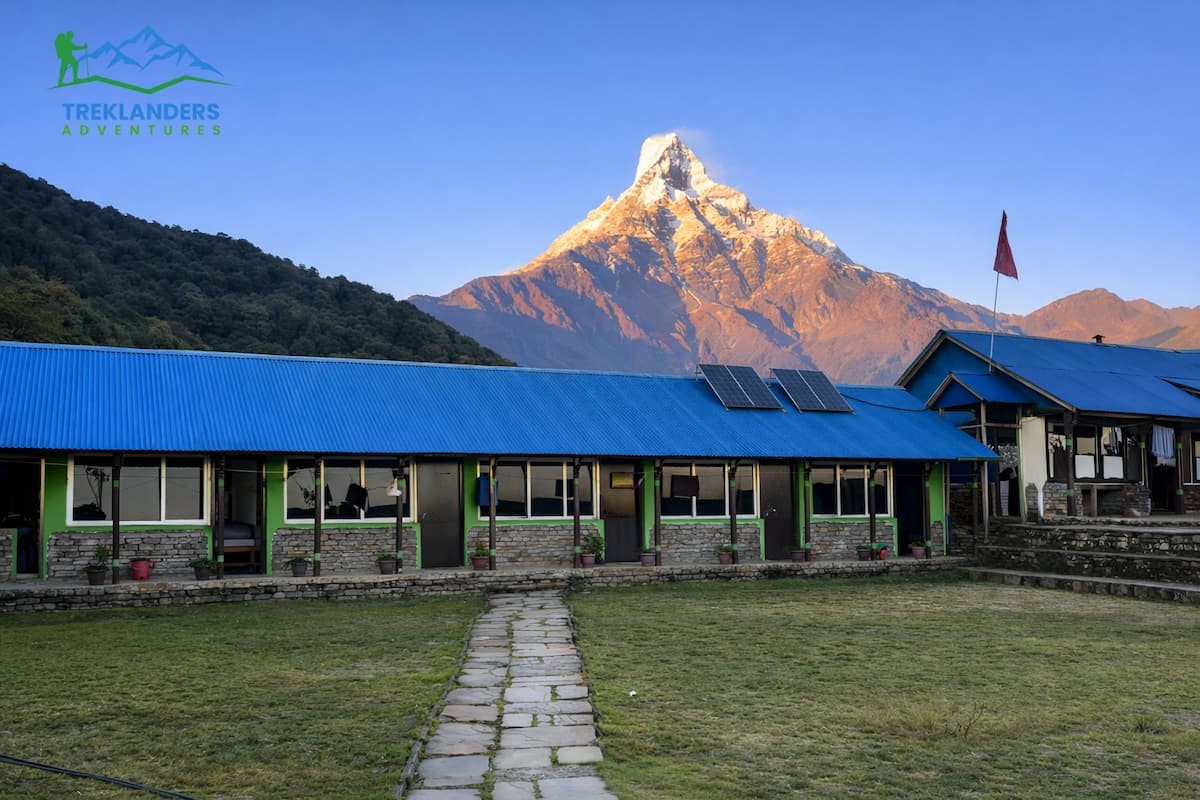
Low Camp is where the famous Machhapuchhre (Fishtail) first comes into view in a major way. To trekkers, the mountain appears almost ridiculously close, sharp, and towering all at once, making it probably the best photo opportunity of the whole lower section. The viewpoint is by the forest edge, so clouds frequently drift in and out, thereby adding some dramatic layers to the scene. Morning light here is particularly good for sunrise photography as the first sunbeams hit the snowy peak.
There are some lodges nearby, so it is a convenient place for an overnight stay with the option of having meals facing the mountain. During the night, the sky gets very clear, and you can see a lot of stars, which is great if you want to take long, exposure shots.
Low Camp is a moment of achievement that raises the trekkers' self-confidence, as it makes them realize that they are getting close to the high alpine zone. The experience of coming out of the forest into the open mountain air is really something that stays with you, as it is the first time you see the grander Himalayan vistas that are waiting for you ahead.
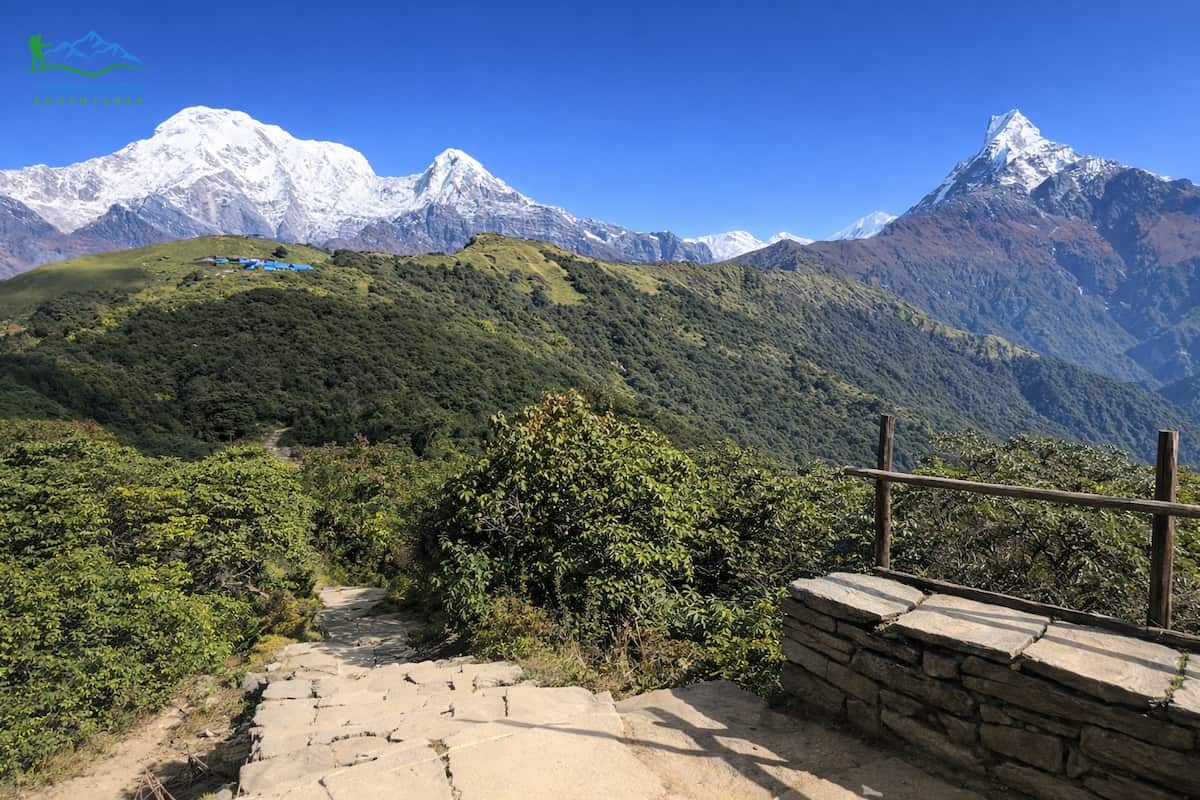
Badal Danda or Cloud Hill is arguably the most photogenic and one of the most unforgettable viewpoints on the Mardi Himal trek. Set on a very exposed ridge, the location gives stunning close-up shots of Machhapuchhre, Annapurna South, and Hiunchuli, as well as the green hills rolling away below. Clouds often cover the valley like a sea, allowing one to walk "above the sky". It is this surreal atmosphere that has made Badal Danda extremely popular among photographers and drone enthusiasts. With the rising and setting of the sun, the light turns the landscape to golden hues, making each frame even more beautiful. The viewpoint is also perfect for a short rest or a cup of tea with glorious views. The scenery from here is more alpine and snowy. Many trekkers recount that Badal Danda is the place where the Himalayas actually show their true face in all their majesty, hence it is a highlight that has to be captured on the route.
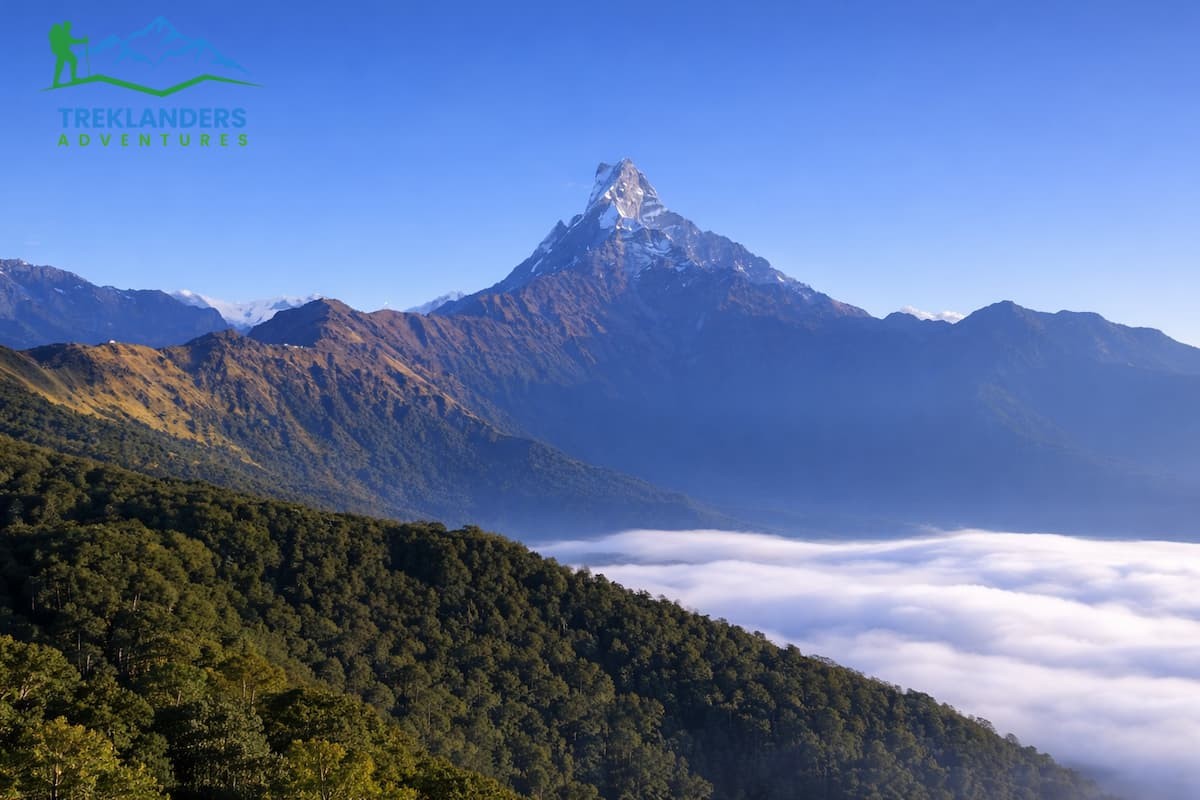
Rest Camp is situated deeper within the dense rhododendron and oak forest, offering a serene and peaceful setting away from the main trail hustle. Unlike the open alpine views of Rest Camp, this viewpoint provides filtered, close-up perspectives of the surrounding forest canopy and glimpses of the lower ridges. It's a place for quiet contemplation, stretching, and appreciating the sounds of nature and birdsong. The weather here is more stable than the high ridges, though mist and fog can create a mystical, atmospheric drama, especially in spring. The clear night skies above the tree line make it a good spot for quiet reflection. Compared to the busier Australian Camp or Forest Camp, Rest Camp has fewer trekkers, providing a calm and secluded experience. It serves as a natural transition point, allowing trekkers to break the long forest ascent and acclimatize before heading to the open views of Low and Rest Camps.
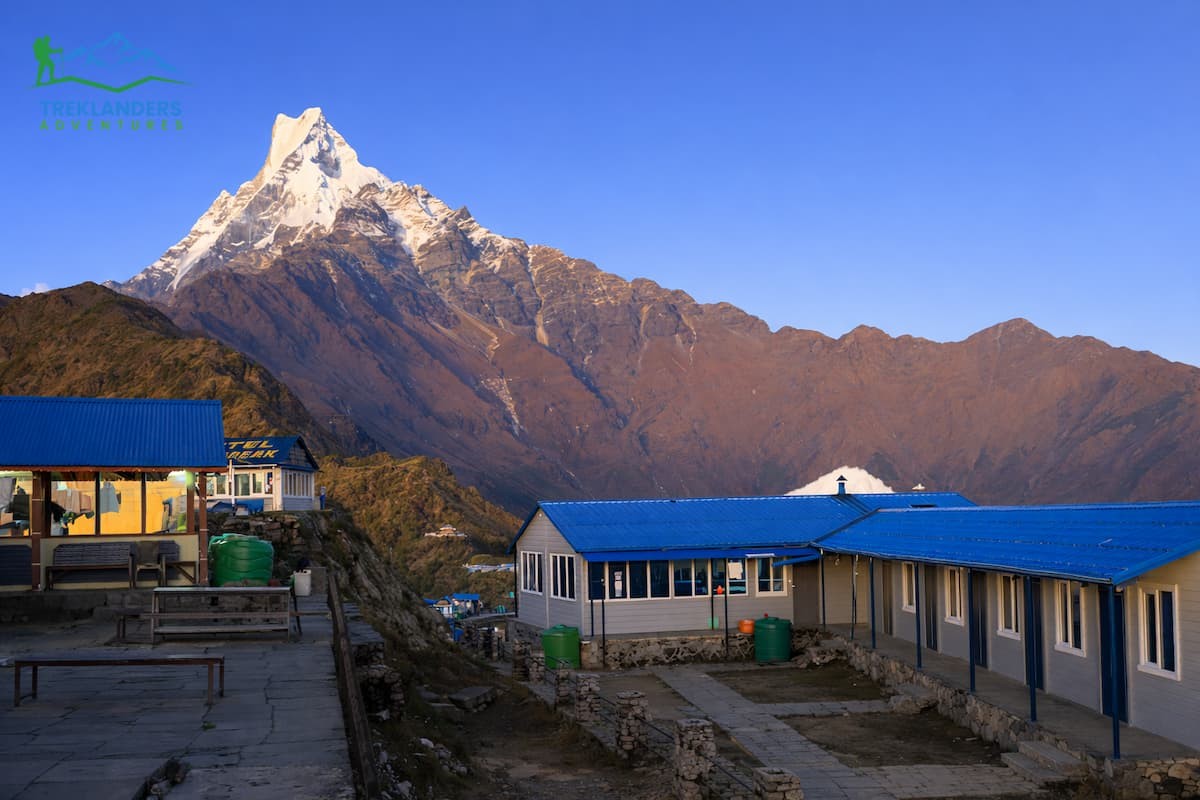
High Camp is definitely one of the most visually stunning places along the trek. It literally sits above the clouds and offers panoramic Himalayan views in all directions. From that vantage point, the mountains look so close that they almost seem touchable especially Machhapuchhre, which just soars into the sky like a gigantic ice pyramid. Annapurna South, Hiunchuli, Gangapurna, and faraway mountain ranges run side by side for miles and miles, forming an unreal kind of view that you only see in your dreams. Besides, High Camp is also where the majority of trekkers spend the night before going to Mardi View Point to watch the sunrise. Early morning colors on the mountains are out of this world as the peaks change color from blue to gold one after another.
In winter, heavy snow covers High Camp and makes the area look very pretty under the deep blue sky. At night, people trekking can see stars very clearly, the Milky Way, and the mountain peaks that are beautifully lit by the moon. This places pure charm and a high altitude location gives a very authentic Himalayan vibe. High Camp is the moment when trekkers get to see how close they have actually come to the core of the mountains.
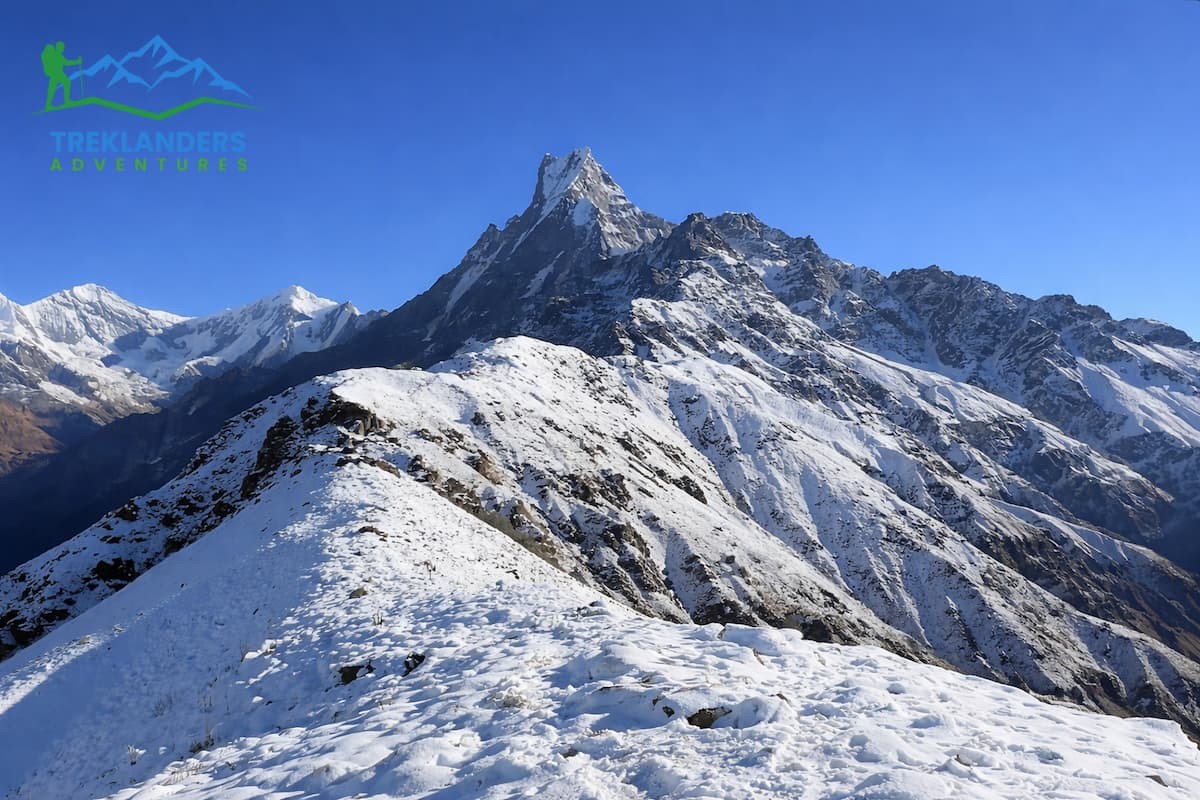
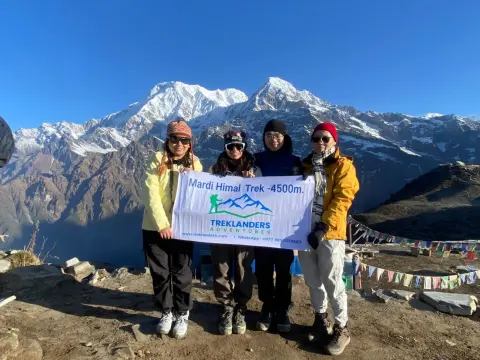
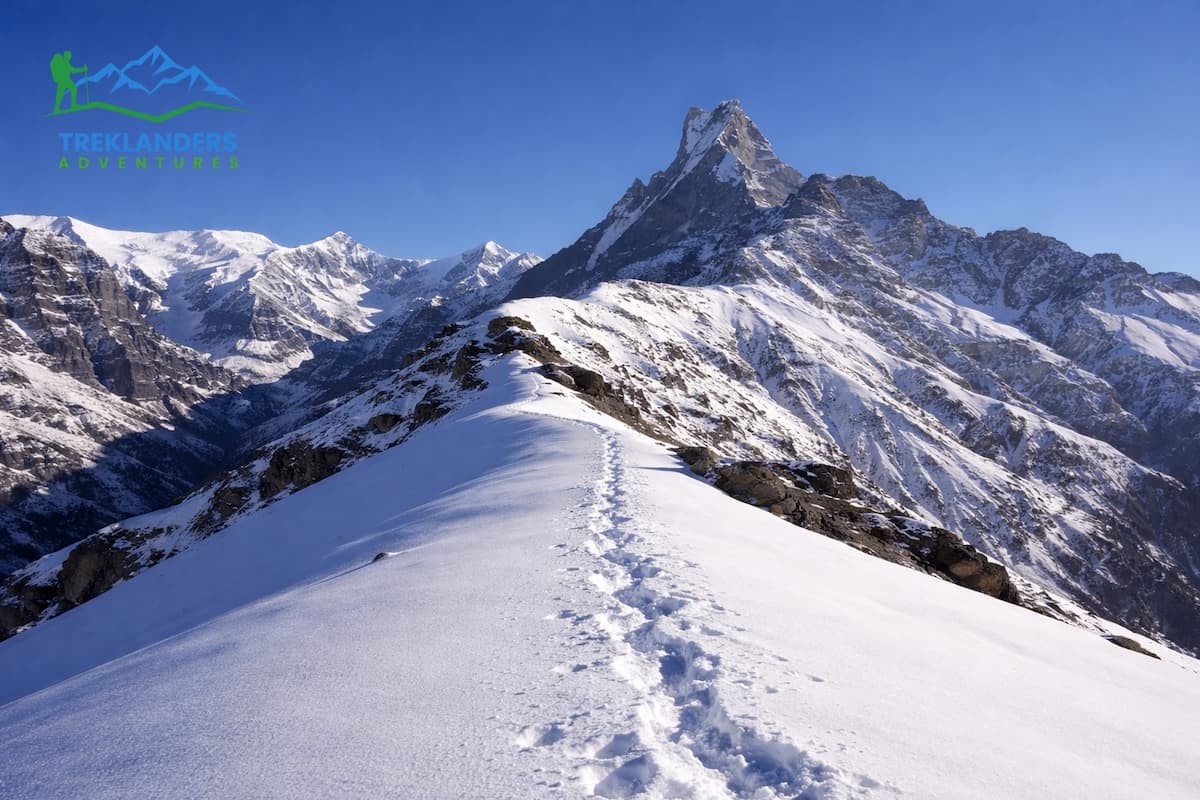
Mardi Himal View Point is the iconic highlight and the most rewarding viewpoint of the entire trek. The entire crew of trekkers, after an early morning hike from High Camp, reaches this ridge just before sunrise, where the whole Annapurna massif is set on fire by the first rays of the sun. The scenery is extremely close, and powerful Machhapuchhre stands in front like a living wall, while Annapurna South and Hiunchuli stretch beside it. The ridge drops sharply below, adding depth to photos and making the view mesmerizing. Snow on the trail in winter makes the viewpoint look like a scene from a fairy tale, and in autumn, the sky is so clear that it seems like you can see the whole world of the Himalayas. The wind is often strong, adding adventure to the atmosphere. Most trekkers spend time here capturing photos, flying drones, or just sitting silently to absorb the grandeur. Mardi Himal View Point is the perfect expression of the trek's soul raw, majestic, and unforgettable.
It is very simple to reach Kande Viewpoint, and the path is suitable for beginners, families, and even first-time trekkers. The trail starts right from the road and goes up gently through the village and the terraces of the mountains. No technical parts, no steep slopes, and no problems with altitude are at this stage. Comfortable walking shoes and normal fitness are enough. The weather is always mild, but if it rains, the steps will be slippery. It is a perfect warm-up walk before the real climb, so almost everyone can do it without any trekking experience.
The walk to Australian Camp is a bit more challenging than Kande, but still suitable for beginners. The route consists of continuous stone steps with a gradual uphill climb, which may cause shortness of breath and fatigue in those not used to trekking. The trail is, however, wide, safe, and well-marked. With short breaks, children and elderly people can also reach the destination comfortably. During the rainy season, the stones may be slippery, so trekking poles provide support. Basic fitness, hydration, and slow pacing will help you conquer this climb. The effort is rewarded with a beautiful sunrise viewpoint and panoramic mountain scenery.
The trail from Australian Camp to Pothana winds through pleasant forests and involves a steady climb with a few steps. It is within the capability of an average person. There is no need for any technical climbing, but the continuous ascent may slightly test one's endurance. During the monsoon, mud and leeches can make the trek difficult, so it is better to start early and wear proper shoes. The trek is beautiful and refreshing; thus, it is ideal for first-time trekkers. Taking short breaks at regular intervals will keep you comfortable. The altitude is still low, so there are no acclimatization issues at this stage.
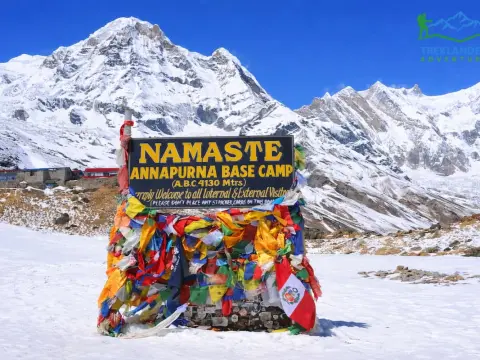
The gradient gets significantly steeper, and there are longer uphill stretches through forest trails to get to Deurali. It is not hard for regular hikers; however, beginners may feel that their legs become heavier. The path is still safe and non-technical, but stamina is needed. Drinking enough water, walking slowly, and taking short breaks will help you keep your energy. The weather can become misty or windy, which may cause low visibility. However, by maintaining a steady pace, most trekkers get to Deurali without a great deal of effort. This place also denotes the beginning of higher and more scenic ridges.
The trail to Forest Camp is moderately demanding as it involves long stretches of forest climbing with fewer open areas for resting. The humidity inside the forest may also increase the feeling of tiredness. The trail is suitable for beginners; however, some may find the continuous uphill tiring. Trekking poles help in reducing the pressure on the knees. During the monsoon, the trail becomes muddy and slippery, so caution is required. No technical skills are necessary, but fitness is an advantage. With slow pacing and hydration, reaching Forest Camp is possible and rewarding. This section is a stamina builder for the higher elevations ahead.
The ascent from Forest Camp to Low Camp is an unrelenting climb that goes uphill continuously. The path is fairly easy but quite long, so stamina is the key to success. The air is thin at this altitude, and the lung capacity may be reduced; a slow and steady pace is advisable. Those who are new to this type of trek can carry it out without problems, taking rests along the way. If there are clouds, it is possible that visibility will be low, but the trail is still safe. No technical gear is needed. Most of the time, after seeing for the first time the close view of Machhapuchhre, trekkers arrive exhausted but full of energy. With a minimum of fitness and some patience, it is possible to get to Low Camp.
The climb to Badal Danda becomes increasingly challenging with each step, the higher the altitude, and the more exposed. Wind and clouds play their part in making the trek a difficult one. The route is still non-technical, but the consistent uphill walking can wear out the stamina of the trekkers. They are advised to walk slowly, drink water, and take rest whenever needed. The weather changes quickly, especially during winter, and hence, warm layers are a must. Trekking poles can be of great help in the steep parts. Fit beginners with determination can still make it comfortably. The stunning sea, of, clouds view at the top is what makes the whole effort worthwhile.
The trek to Rest Camp is a gentle, gradual ascent primarily through dense forest, making it one of the easier sections of the Mardi Himal trek. The physical demand is moderate, ideal for most fitness levels. The main challenge lies in the continuous, uphill nature of the forest path rather than steepness or exposure. Altitude is rarely an issue at around 2,600 meters, so slow pacing is less critical than maintaining a steady rhythm. The trail is well-defined, safe, and sheltered from strong winds by the surrounding trees. In winter, snow is uncommon at this altitude, and the path remains straightforward year-round. Taking frequent short breaks among the trees, hydration, and appropriate light clothing will ensure a comfortable and enjoyable climb through the serene forest environment. The walk is manageable and serves as a pleasant introduction to the higher altitude challenges ahead.
High Camp is difficult mainly due to the altitude, steep climbs, and lower temperatures. In parts, the path becomes very narrow, and you have to be careful with your footing. Trekkers should move at a slow pace so as not to become short of breath or develop AMS symptoms. Proper acclimatization at Lower/Middle Camp is strongly advised. The weather can change rapidly, bringing snow or wind. Good physical condition, warm clothing, and trekking poles will make the trip safer. A beginner can get there if he is determined, but it will take him a steady effort. The amazing 360-degree mountain views from High Camp make the whole effort worthwhile.
The sunrise hike to Mardi View Point is steep and cold, particularly before dawn. The ridge trail is exposed, and breathing becomes heavier due to the altitude. It is rated moderate to challenging, thus only suitable for acclimatized trekkers who are willing to climb slowly. Snow or ice may be present in winter, thus increasing the difficulty of the trail and the requirement for careful footing. Trekking poles and headlamps are useful. Taking breaks regularly allows one to recover and keeps one from becoming exhausted. The climb is very hard, but with patience, it is doable for most trekkers. The beautiful sunrise calling makes it an experience to remember.
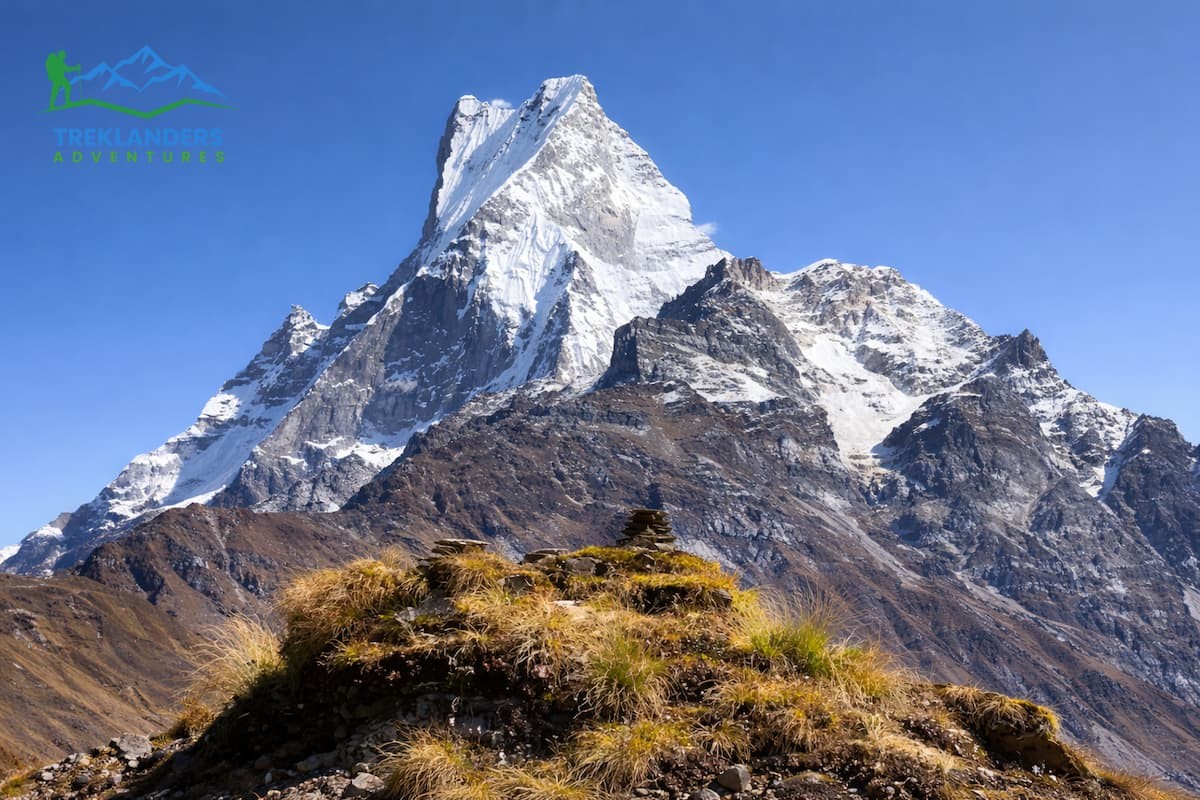
The best time to visit Kande Viewpoint is autumn (Sept–Nov) and spring (Mar–May) when the weather is clear and the trails are dry. Morning hours provide crisp mountain silhouettes, while evenings offer a warm village glow. Winter is also good with clear skies, but mornings can be cold. During the monsoon, rain may limit visibility, although greenery becomes lush. Ideal for day hikes or trek start photos before ascending into higher viewpoints.
The perfect time for Australian Camp is during sunrise in autumn and spring, when panoramic views of Annapurna South and Machhapuchhre are sharp and colorful. Clear post-monsoon skies deliver vivid mountain visibility. Winter is also good with colder but clear mornings, offering snow-capped scenery. Avoid mid-monsoon due to clouds, slippery steps, and limited views. Early morning light is best for photography, while evenings offer golden ridge landscapes.
Pothana is best visited in spring (Mar–Apr) for blooming rhododendron forests and fresh greenery. Autumn also offers clear skies and long-range views of Machhapuchhre. Mornings and late afternoons are ideal for photography. Winter remains clear but chilly; good for crisp mountain frames. Monsoon brings heavy clouds and leeches, so less favorable. For peaceful scenery combined with fresh forests, spring stands out as the most beautiful season.
Deurali shines in autumn and spring when the horizon opens clearly, revealing vast mountain lines. Early mornings are perfect for clear landscapes before afternoon clouds roll in. Spring offers blooming forest trails, making the walk colorful and refreshing. Winter gives crystal visibility but can be cold and windy. Monsoon reduces visibility, although forests look vibrant. Overall, Sept–Nov and Mar–May are ideal for photography and open ridge views.
Best visited in spring (Mar–May) for magical rhododendron bloom and misty rainforest moods. Autumn provides dry trails and pleasant temperatures with fewer clouds. Winter is clear but colder, especially mornings. Monsoon makes trails muddy and leech-prone; reducing comfort, but the forest looks lush. Since Forest Camp is nature-focused, spring and autumn deliver the most atmospheric trekking and photography experience.
Low Camp is most beautiful during autumn and spring sunrises, when Machhapuchhre stands sharp against the sky. Clear blue skies dominate November–December and March–April. Winter adds snow on peaks, making photos stunning, but temperatures drop significantly. Monsoon brings heavy clouds covering the view, so visibility fluctuates. The best daily time is early morning when the mountain first lights up with a golden color.
Badal Danda is famous for its sea of clouds, best seen during spring and autumn mornings. Clouds sit below ridge level, creating dramatic landscapes. October–November and March–April offer the clearest skies with mountain visibility. Winter delivers stunning snow scenes but colder winds. Afternoon clouds often rise, so sunrise hikes provide the most magical frames. Avoid the monsoon for limited visibility, but photos can still look mystical when clouds flow between ridges.
Rest Camp is best visited during the spring (March–May) to witness the surrounding forests in full bloom with vibrant rhododendrons. Autumn (September–November) is equally ideal, offering clear skies and the first distinct, close-up views of Mount Machhapuchhre (Fishtail) as the trail begins to emerge from the dense canopy.
Photography: Early mornings are the best for capturing crisp silhouettes of the Annapurna range before afternoon clouds often roll in.
Atmosphere: While winter (December–February) provides exceptional visibility, it is much colder; the monsoon (June–August) is lush and green but often brings heavy fog and leeches, making it the least favorable time for clear mountain views.
High Camp looks spectacular in autumn (Sept–Nov) for stable weather, open skies, and vivid snow-capped mountains. Spring (Mar–May) provides comfortable temperatures and blooming colors below. Winter offers dramatic snow landscapes but requires warm gear. The best time of day is sunrise or sunset, when golden light hits Annapurna and Machhapuchhre directly. Avoid the monsoon due to fog and rain, reducing ridge visibility and making the trail slippery.
The best time to reach Mardi View Point is sunrise during clear autumn or spring months. From Sept–Dec and Mar–May, visibility is superb, with glowing peaks and low clouds below. Winter creates magical snow scenes but demands caution. Start pre-dawn to witness the golden Himalayan light. Monsoon hides peaks with clouds, making views unpredictable. Overall, post-monsoon autumn is the most reliable season for breathtaking morning mountain photography.
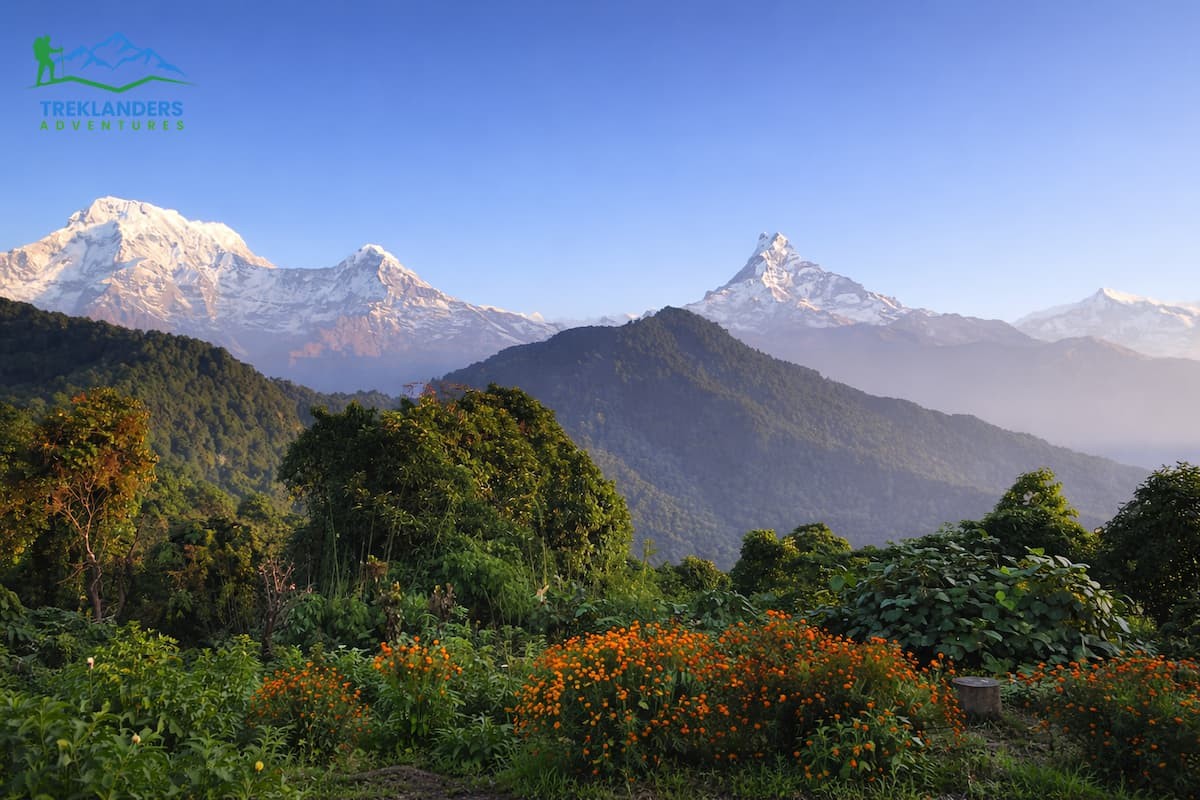
The journey begins with a scenic drive from Pokhara, passing through villages and green hills to reach Kande, the starting point of the trek. The trail immediately enters stone steps surrounded by forest and terraced fields. After around one hour of gradual ascent, you reach Australian Camp, one of the first major viewpoints with open views of Annapurna South & Machhapuchhre. Continue walking on a gentle forested path to Pothana, a peaceful village and perfect place for the first night.
Kande Viewpoint (1,770 m)
Australian Camp Viewpoint (2,060 m)
Pothana Viewpoint (1,970 m)
Overnight: Tea house lodge, Pothana
Meals: Lunch & Dinner
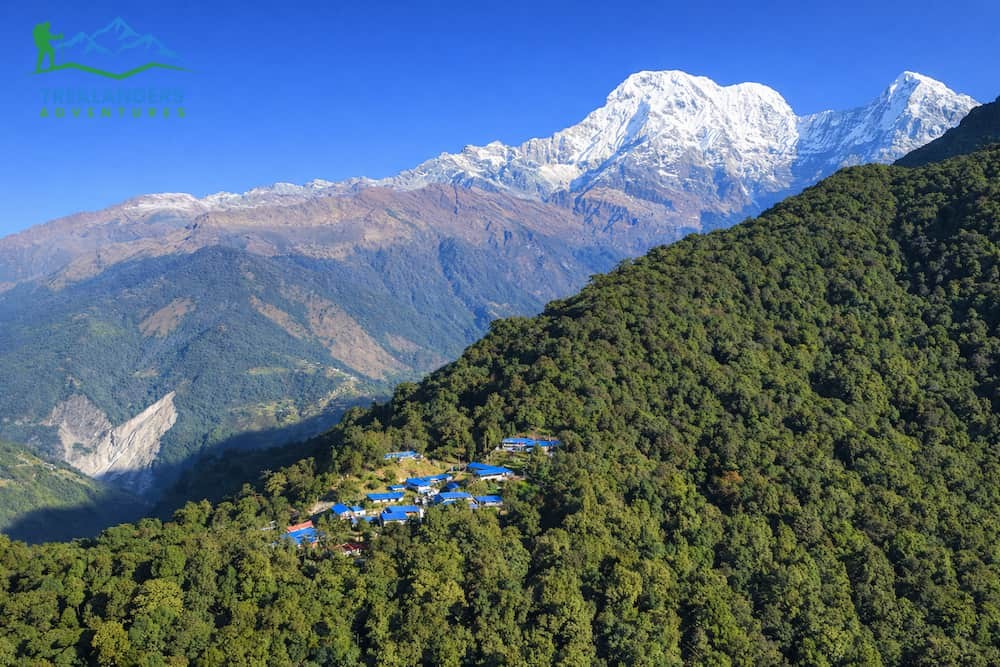
After breakfast, the trail climbs gradually to Deurali, a ridge viewpoint offering the first wide mountain panorama and the route gateway into the forest wilderness. From here, the trail leaves the main Annapurna Base Camp route and enters a dense rhododendron forest. The walk becomes quieter and atmospheric, with mossy trees, birdsong, and occasional filtered sunlight. After a long but beautiful forest climb, you reach Forest Camp, surrounded by lush nature.
Deurali Viewpoint (2,100–2,200 m)
Forest Camp Viewpoint (2,550 m)
Overnight: Tea house lodge, Forest Camp
Meals: Breakfast, Lunch & Dinner
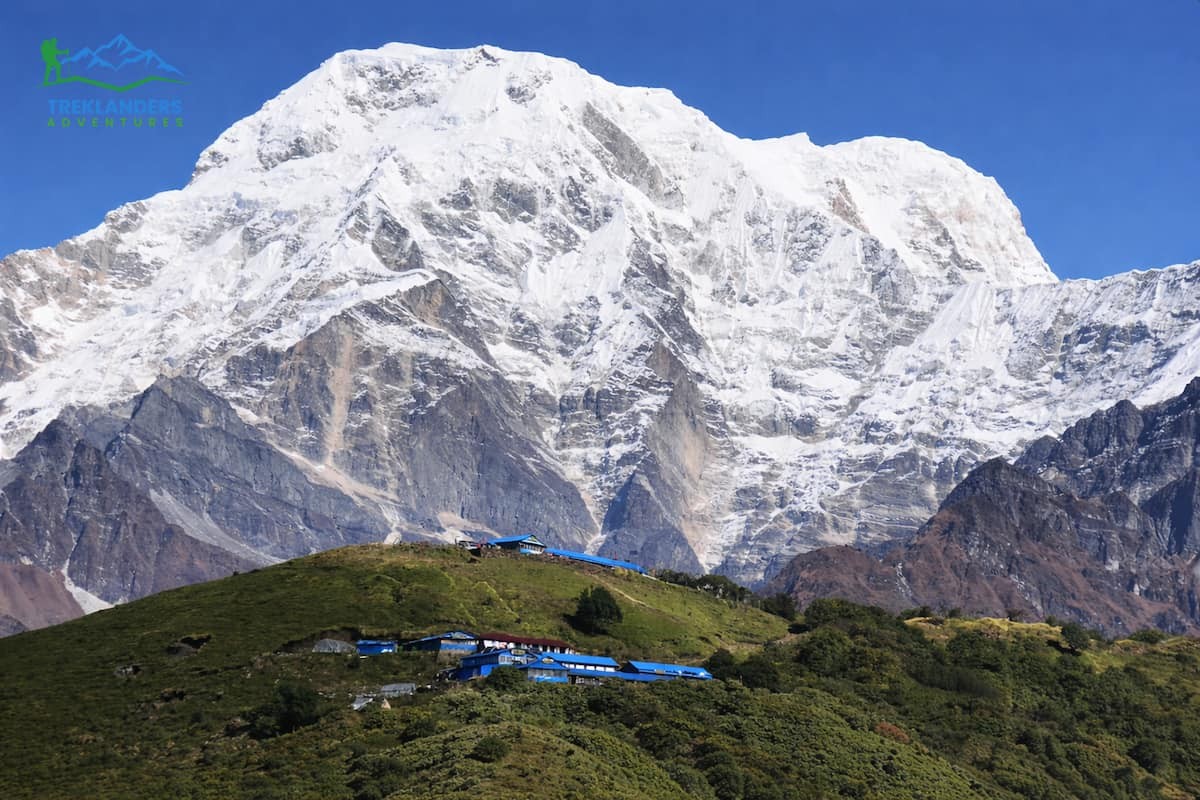
Today the forest gradually opens and views become grander. The trail climbs steadily to Low Camp, offering an impressive close-up glimpse of Machhapuchhre (Fishtail) for the first time. After a short break, continue uphill along a beautiful ridge to reach Badal Danda, literally meaning “Cloud Hill.” The view is extraordinary with clouds drifting below your feet and mountains rising just ahead.
Low Camp Viewpoint (2,970 m)
Badal Danda Viewpoint (3,210 m) – sea of clouds spot
Overnight: Tea house lodge, Badal Danda
Meals: Breakfast, Lunch & Dinner
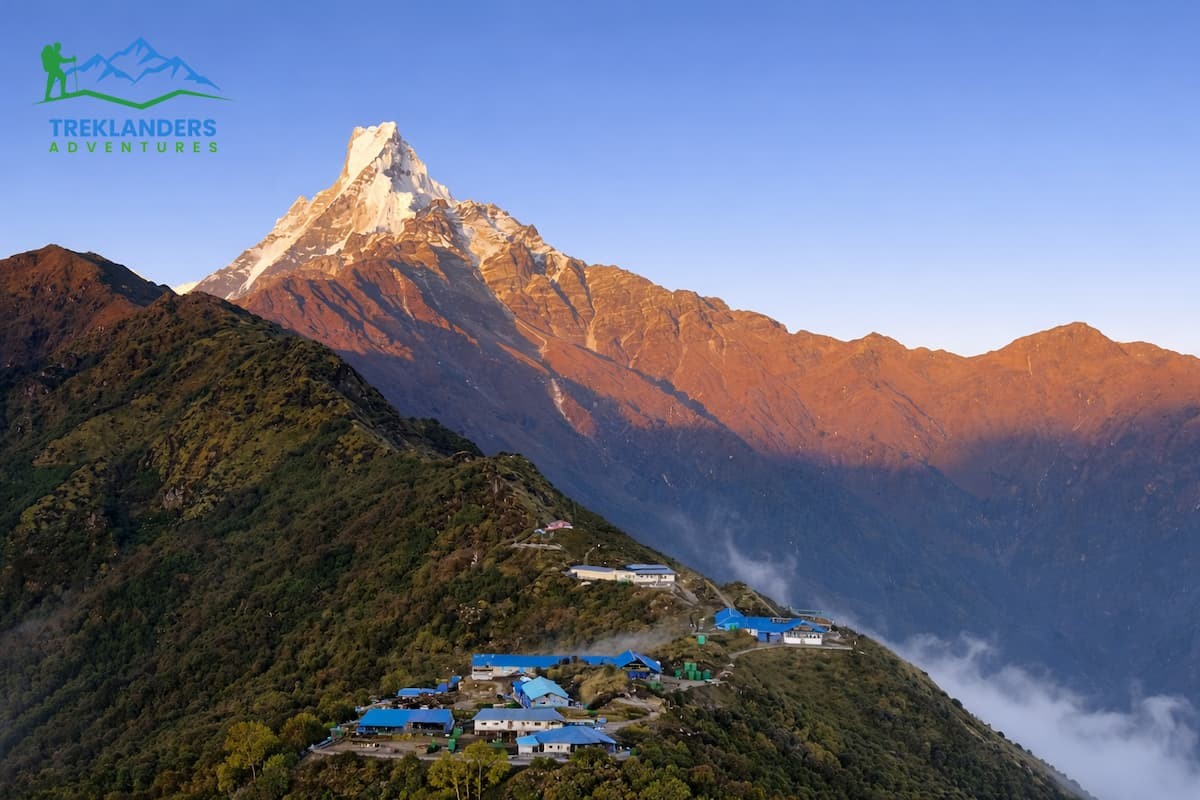
The trek now fully enters open alpine terrain, leaving the last of the tree line behind. The trail follows a spectacular and dramatic ridgeline throughout the morning, offering constant, unobstructed views of the Himalayas. As you ascend, Machhapuchhre and Annapurna South appear to grow larger and more imposing with every step. The final stretch involves a steady climb toward High Camp, which is widely considered one of the most beautiful overnight locations of the entire trek. The evening here is truly magical, featuring glowing sunset peaks and incredibly clear, starry skies.
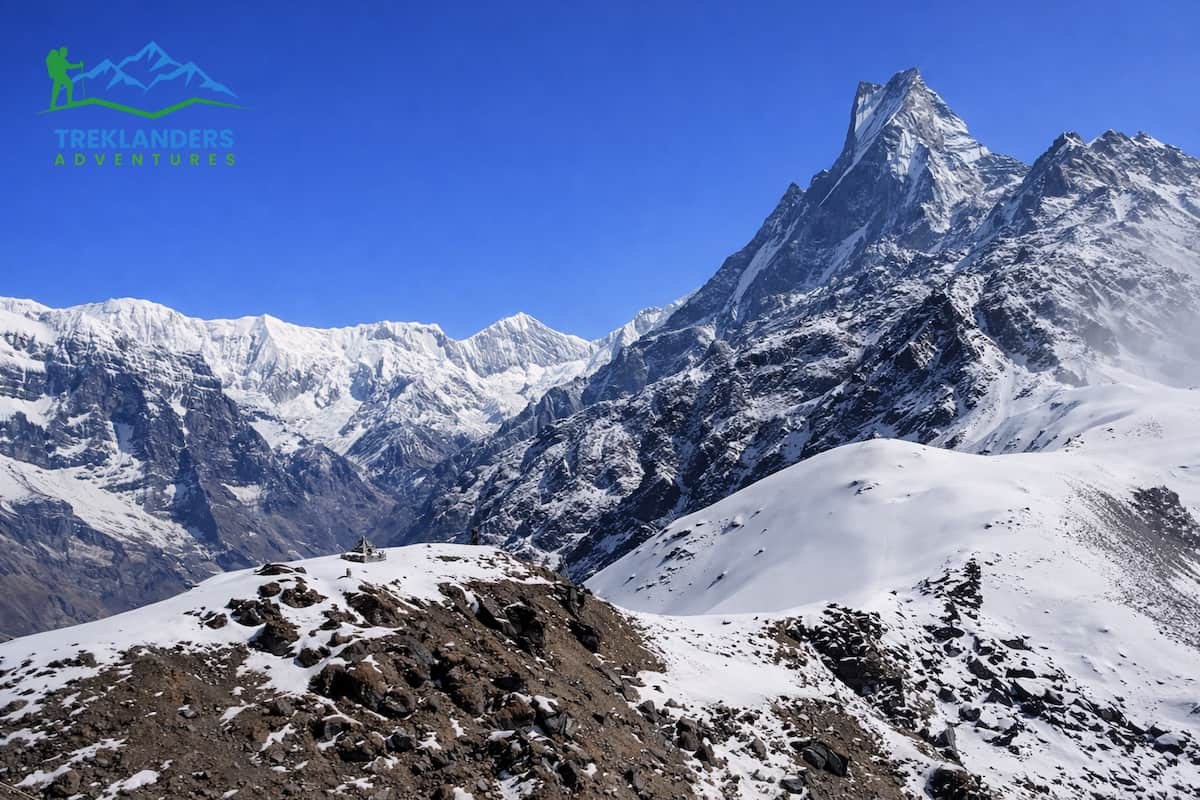
An early morning start with headlamps brings you to the most iconic part of the trek. The trail is steep but rewarding as the sun rises behind the peaks. Within 2–3 hours, reach Mardi Himal View Point, the best sunrise location with giant close-up views of Machhapuchhre & Annapurna range. Strong trekkers may continue further to Mardi Base Camp, a tougher extension but one of the most thrilling high-altitude ridges in Nepal. After exploration, descend back to High Camp or Badal Danda.
Mardi Himal View Point / Upper View Point (4,200–4,250 m)
Mardi Base Camp Viewpoint (4,500–4,600 m) – optional
Overnight: High Camp or Badal Danda
Meals: Breakfast, Lunch & Dinner
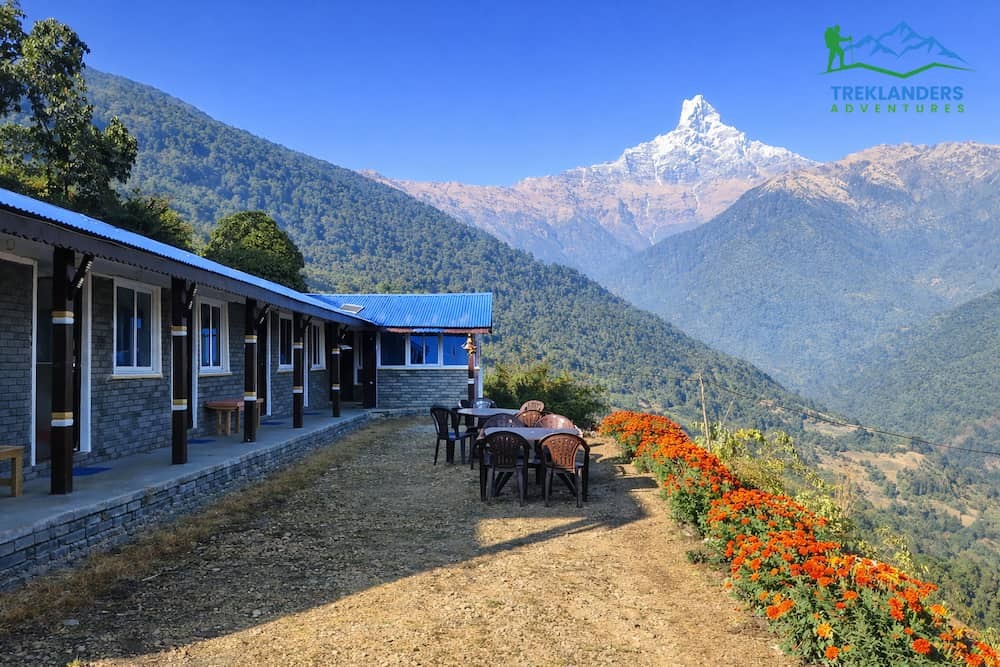
Today you descend through forests and traditional villages to Siding, an alternative route that avoids the same uphill path. It's a comfortable downhill walk crossing streams, small settlements, and beautiful terrace farmlands. From Siding, take a jeep back to Pokhara, marking the end of your scenic Mardi Himal adventure.
Meals: Breakfast & Lunch
Trip Ends in Pokhara.
The Mardi Himal Trek is deeply affected by altitude, which comes into play mostly after Badal Danda, Rest Camp, High Camp, and Mardi View Point/Base Camp. As the height increases, the trail is getting steeper, the air is getting thinner, and oxygen levels are dropping gradually. A person who rises too fast and is not used to high altitude may experience headache, shortness of breath, dizziness, loss of appetite, or fatigue. Despite the fact that Mardi Himal is a moderate, duration trek, it quickly goes up to the high Himalayan zones, so acclimatization is still very necessary both for comfort and safety. Spending a night at High Camp or Badal Danda before the summit climb allows the body to get used to the altitude. A trekker should also keep a slow pace, drink enough water, and not consume alcohol in order to get better acclimatization.
High Camp (3, 5803, 900 m, varying with the location of the lodge) is the elevation where altitude effects are felt quite noticeably for the first time by the trekkers. Breathing gets heavier, and the cold winds need energy, so walking steadily is more important than walking quickly.
The sunrise hike to Mardi Himal View Point (~4, 2004, 250 m) goes up steeply along very narrow ridges where trekkers should move slowly and stop frequently for deep breaths.
Trying Mardi Base Camp (~4,500m) is even more of an altitude challenge and should only be done if the body is strong and fully acclimatized.
Drinking enough, eating warm meals, sleeping properly, and keeping a slow pace are the main things that lessen the risk of high altitude sickness. Stop breathing hard; if you push hard, you can become injured or even die above 4,000 meters.
Though not very high, Badal Danda (3, 210 m) is necessary acclimatization points. Many trekkers experience minor fatigue or feel slight pressure during the ascent, particularly if they go up in a rush without taking breaks. Spending proper nights here before moving up allows the body to adjust comfortably. Walking slowly, breathing in a controlled manner, and keeping warm will prevent your body from losing energy. Day hikes around the ridge area (climb high, sleep low) are a great way to acclimatize yourself. If only slight altitude symptoms occur, the usual remedy is to rest, eat, and drink, which will help the body to become stable.
Altitude affects everyone differently. Even lower viewpoints such as Low Camp or Forest Camp may feel tiring for some trekkers due to humidity, long ascents, and reduced oxygen above 3,000 meters. Follow these principles for safe trekking:
Drink 3–4 liters of water daily
Avoid alcohol & smoking at high altitude
Walk slow & steady – never rush
Take short acclimatization breaks at lodges/viewpoints
Keep the body warm and well-nourished
Watch for headaches, nausea, and dizziness – early AMS signs
Diamox is sometimes used by trekkers as a temporary support for breathing at high altitudes, but a medical consultation is absolutely necessary beforehand. Poles for trekking lessen the load on the knees during both the uphill and the downhill parts of the walk, while layered clothing helps to regulate body temperature on exposed ridges.
By selecting a seasoned guide or a reliable agency like Treklanders Adventures, you will be able to ensure correct pacing, monitoring, and safe decision-making on the summit morning. Guides always take into account the weather, the condition of the client, and make the most appropriate calls on going ahead or turning back.
With good acclimatization and proper preparation, getting to Mardi View Point or even Base Camp is a lot more feasible and safe.
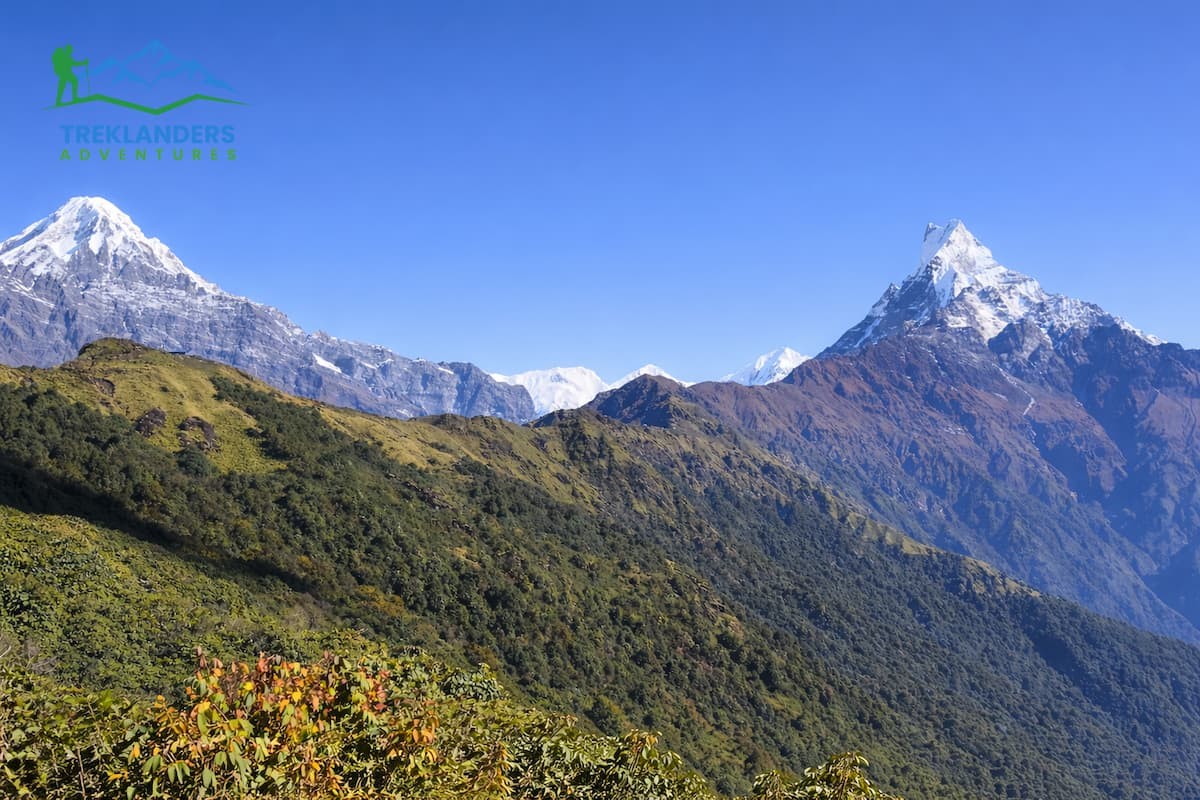
The weather along the Mardi Himal route changes quite a bit with altitude and season. Places like Kande, Australian Camp, Pothana, and Forest Camp are warmer and remain green, whereas Badal Danda, High Camp, and Mardi View Point/Base Camp get colder, have strong winds and the weather changes quickly. It is quite common that days commence with clear skies and stunning views of the Annapurna and Machhapuchhre range, but clouds also tend to come in around the ridges by the afternoon. In fact, sunrise views, photography, and summit hikes are generally better in the morning, especially after High Camp.
During autumn (Sept-Nov), clouds are scarce, and the weather is very stable; it is the most favorable season for mountain visibility. Spring (Mar-May) also has good weather with lower temperatures and rhododendron blossom along the trail; however, there are a few clouds that appear after midday. Winter (Dec-Feb) snows around High Camp and Mardi View Point, making the trek beautiful, but there are also cold nights and slippery paths. Monsoon (Jun-Aug) is characterized by mist and rain along the trail, resulting in slippery routes and very few mountain views. It is better to stay away unless you are a fan of lush greenery and fewer people.
Expect warm and sunny conditions in the lower parts during the day, but significantly cooler temperatures higher up. At High Camp and above, the winds can be strong, and the temperature drops quickly after sunset. Layered clothing, warm inner wear, gloves, and a windproof jacket become essential near the viewpoints. The weather changes fast in the Himalayas, so trekkers should always be prepared for sudden cloud cover, snowfall, or a drop in temperature. Careful planning, early summit starts, and flexible pacing will help to make the journey safer and more comfortable.
Reaching the Mardi Himal trailhead is quite easy, as Pokhara is the main entry point. The majority of trekkers travel by car from Pokhara to Kande, which takes about 45 minutes to 1 hour by a private vehicle or a local taxi. This is the most common starting point of the trek, thus making Australian Camp and Pothana easily accessible. Moreover, Dhampus is another alternative route and can be reached within a similar time. It is perfect for those who want to ascend a village gradually.
On the way back, hikers usually walk down to Siding Village, from where jeeps or local vehicles are available for a 23-hour drive back to Pokhara. This way, they do not have to go back to the uphill path and can enjoy the fresh air of the terraced fields and rural settlements. In addition, private jeeps are convenient, especially during the peak season or after a long day of trekking, while local sharing vehicles are a cheap option, but you may have to spend more time.
Travelers from Kathmandu to Pokhara have several options, including tourist buses, deluxe buses, micro-vans, flights, or private cars. Tourist buses will take 6 to 8 hours, depending on the road conditions, while the flight will take only 25 minutes and will provide amazing aerial views of the Himalayas. When you get to Pokhara, it is very easy, and you do not have to worry about how to reach the trailhead, as you can take a taxi, jeep, or pre-arranged transfer.
Transportation flexibility allows both short and extended itinerary variations, and agencies like Treklanders Adventures can arrange private transfers, two-way pickup-drop services, and on-ground logistics for a smooth travel experience. Overall, movement to and from the Mardi Himal trek is simple, accessible year-round, and suitable for all types of travelers.
The Mardi Himal Trek is an ideal short Himalayan adventure that provides spectacular views, serene trails, and a climb that is ultimately very rewarding with breathtaking viewpoints. The trek goes through dense forests and to the top of a ridge in the high Himalayas, so every day is a new experience with stunning views of Machhapuchhre and Annapurna right from the trail. If one is careful with the pace and acclimatization, it is possible to witness the sunrise at Mardi View Point and still have the option to go further to Base Camp. Mardi Himal, which is easy, beautiful, and unforgettable, is the perfect next-door neighbor for the next long-duration expedition.
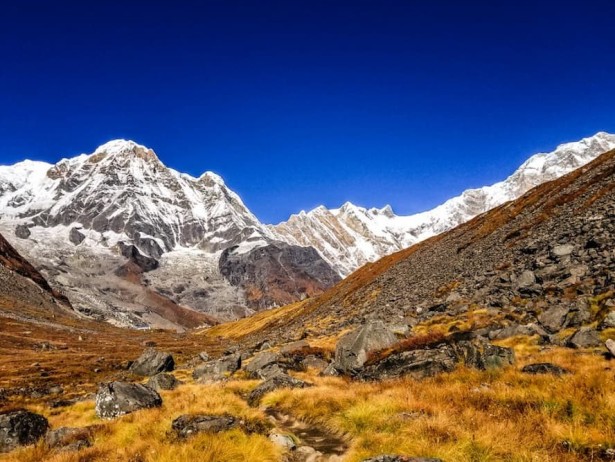
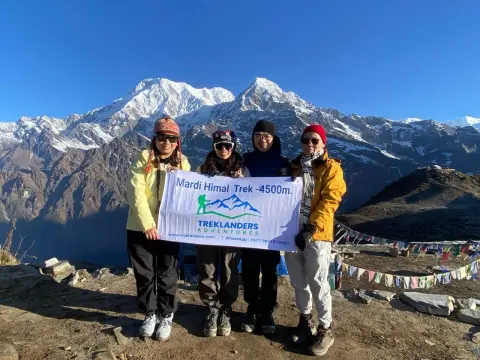
A trekker's dream, the Mardi Himal Trek is located in the heart of the Annapurna region with splendid views and an off-the-beaten-path experience.
A quick guide comparing Langtang Valley vs Mardi Himal Trek to help you choose the right Himalayan adventure.
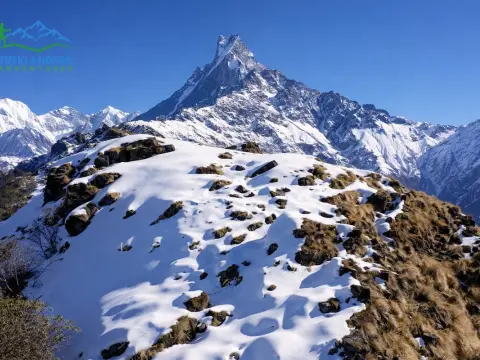
A short, scenic trek with close Himalayan views—this guide covers Mardi Himal day by day with key highlights and route details.



