
Langtang Valley vs Mardi Himal Trek – Which One Should You Choose? Full Comparison Guide
26 Dec 2025
A quick guide comparing Langtang Valley vs Mardi Himal Trek to help you choose the right Himalayan adventure.

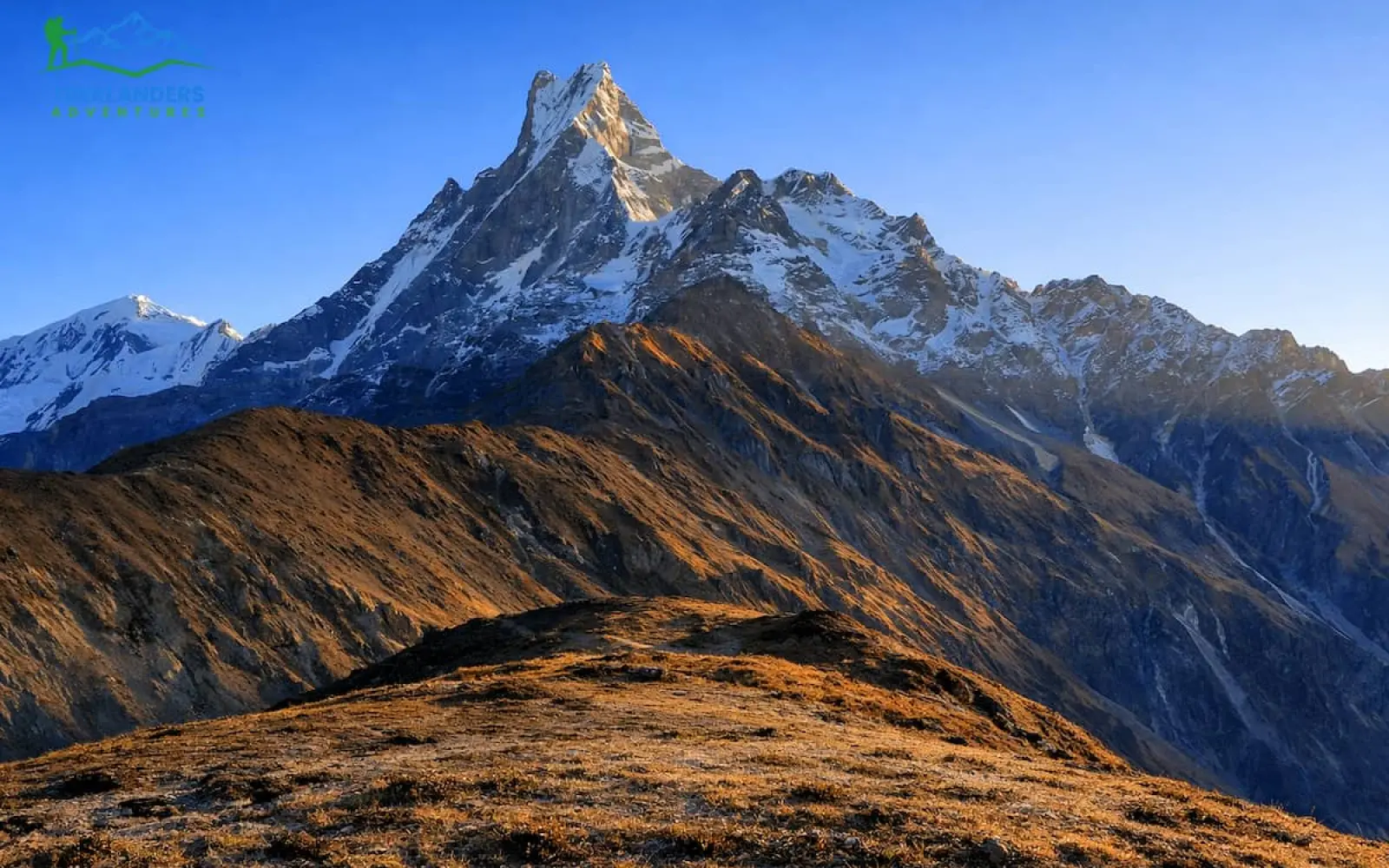
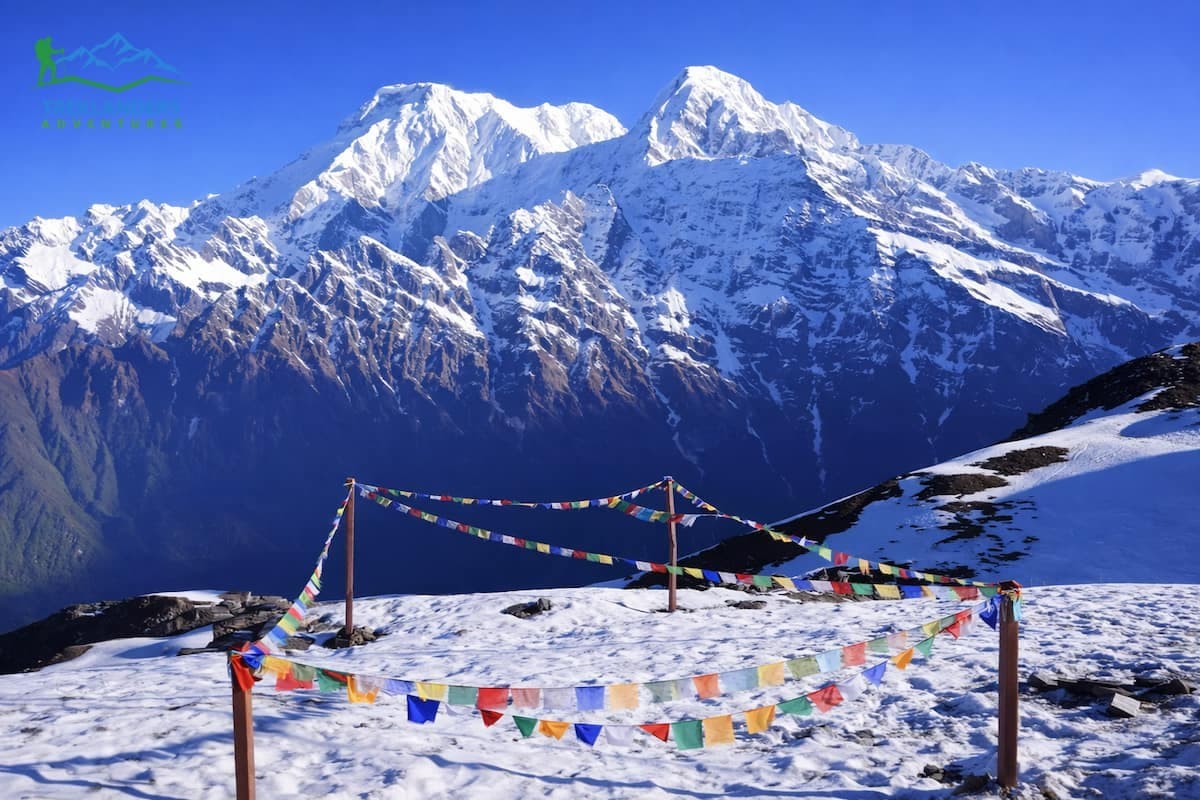
The Mardi Himal Trek is one of Nepal's most scenic and fast-growing trekking routes, offering breathtaking Himalayan views within a short and manageable journey. Located inside the Annapurna Conservation Area, this trek stands out as a perfect alternative to the popular Annapurna Base Camp route. In recent years, the Mardi Himal Trek route has become known for its quiet trails, diverse flora, native Gurung and Magar villages, and detailed views of Machhapuchhre (Fishtail), Annapurna South, Hiunchuli, and Mardi Himal Peak. Mardi is a relatively short trek of 4 to 6 days, which can be done comfortably, so it is a perfect choice for beginners, families, and travelers with a limited amount of time.
The trek passes through the Kande or Phedi area of Pokhara and gradually climbs through forests of rhododendrons before eventually reaching alpine meadows with views of the mountains. Tea houses on the way offer simple but good service, and therefore, trekkers get the chance to taste real local culture, eat homemade food, and see the lifestyle of the locals. The Mardi Himal Trek difficulty is considered moderate, suitable for anyone with basic physical fitness, yet challenging enough for experienced hikers. The trail is a perfect spot for sunrise and sunset from Viewpoint and High Camp, where you will be able to keep the memory of the golden light over the Annapurna range forever.
Spring (March-May) is the best time to do the Mardi Himal Trek when the rhododendrons are in full bloom, and autumn (September-November) is the best time to do it when the weather is clear and stable. Winter (December-February) offers snow, filled adventures and enchanting landscapes for those who like it cold, while the monsoon (June-August) rains bring greenness and clouds but the trails can be slippery.
The typical Mardi Himal Trek route goes from Pokhara to Kande, Forest Camp, Low Camp, High Camp, Viewpoint / Mardi Base Camp, and then descends to siding village. With its stunning views, reasonable length, and rich culture, Mardi Himal Trek has become the dream of the Himalayan-loving crowd of adventurers who want to experience the Himalayas without the hassle of a long expedition.
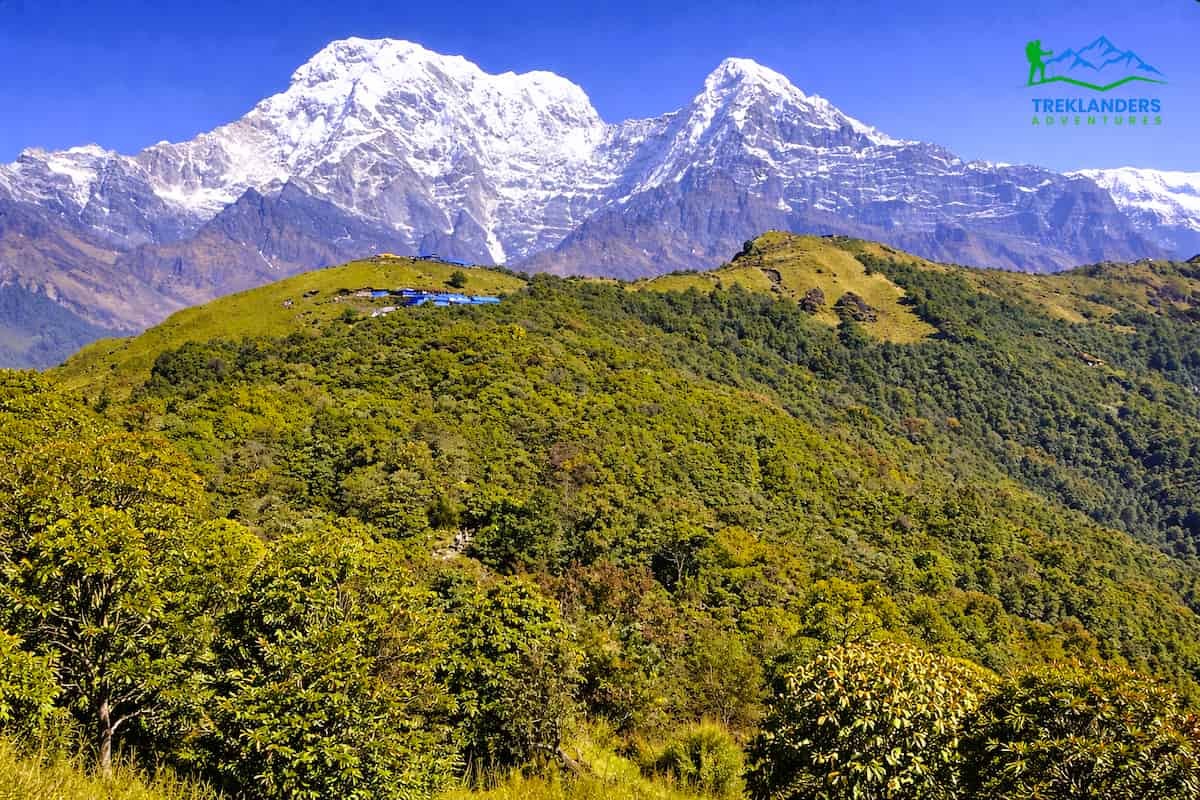
The entire Mardi Himal trekking trail is within the Annapurna Conservation Area Project (ACAP) boundaries. The ACAP was set up to protect Himalayan wildlife, vegetation, and local culture. Trekkers move from Kande or Phedi through forests of rhododendron and oak toward Forest Camp and Low Camp. Along this path, they see an ecosystem abundant in rhododendron, oak, and fir trees.
This conservation area is a habitat of rare birds like the Himalayan Monal, Danphe, and different kinds of pheasants, as well as animals such as musk deer, Himalayan thar, and even snow leopards that might be found in the farthest and most secluded sectors. Trek permits issued for Mardi are the main source of income for conservation works, waste management programs, and local eco-community development.
Due to ACAP's protection, the district is not only fresh, green, and clean but also less polluted than the trails that have been heavily commercialized. Trekkers get to be with nature and breathe the pure air from the unspoiled forests of the region, which also has a healthy and well-balanced biodiversity conserved for the coming generations.
Mardi Himal is not only a trekking route, but also a real Himalayan peak rising to 5,587m, lying directly opposite the much-worshipped view of Machhapuchhre or Fishtail Mountain in the picture postcard of Nepal. From High Camp, trekkers get an extremely close-up view of Fishtail-Moonlight glittering off the slopes at gorgeous golden and silver in dawn light. The close perspective is a strange and rare phenomenon without technical climbing madness. From the Viewpoint and Base Camp, the panoramas of Annapurna South, Hiunchuli, and Mardi peak appear even closer, which begs for some beautiful photos and is difficult to miss.
Mardi Himal is a comparatively new trail, having only been opened for commercial use in 2012. Prior to that, the path was only known to shepherds and a handful of climbers. Due to its recent development, the trek still has the atmosphere of an unspoiled and tranquil place that is not too commercial. There are some tea houses, but they are few and far between, which helps to keep the experience authentic and close to nature. Trekkers can find fresh trails, pristine forests, and a low number of other trekkers. It is perfect for those who want to experience the Himalayan Mountains without the crowds of the popular routes.
While Annapurna Base Camp takes around 7 to 12 days, Mardi reaches similar panoramic views in just 4 to 6 days. This saves time for travelers with short holidays, beginners, students, or families. Despite being short, the trek delivers huge rewards sunrise from High Camp, close views of Fishtail, peaceful ridge walks, and cultural village stays. Trekkers can choose either a fast itinerary or a slow, relaxed one, depending on fitness.
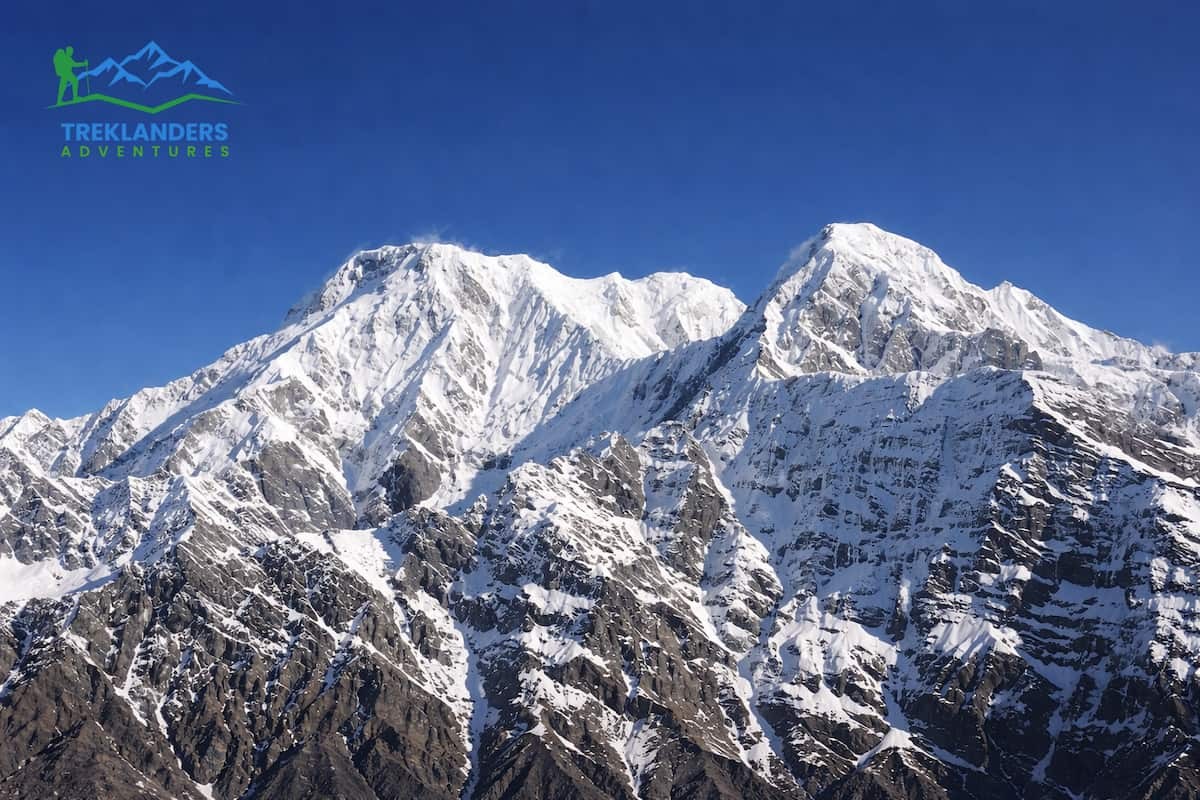
From Low Camp onwards, the mountains take over the view. Machhapuchhre looks like it is just next door, with Annapurna South and Hiunchuli nicely lining up beside it. The sunrises turn the peaks golden, while the sunsets add purple and pink colors. The ridge from High Camp to Base Camp is probably the most photographic Himalayan view in Nepal. Trekkers don't have to take long expeditions or have climbing skills to be so close to the mountains. Mardi literally brings the Himalayas to eye level. It is a dreamland for photographers and nature lovers.
The trail from Forest Camp to Low Camp goes through a beautiful rhododendron belt of Nepal. In spring (March-April), the forest becomes red and pink as rhododendrons bloom all over, making a fairytale atmosphere. Mist and sunlight coming through the flowers make the trail fantastic for photography. The forest is full of birds, squirrels, and sometimes rare animals like red pandas. During the monsoon, it is very green, and in autumn leaves turns golden. This seasonal change makes Mardi visually stunning at different times of the year.
Mardi Himal is a quiet trek even during the peak season, as it is still in the process of development. Therefore, the number of people on the trail is less than that of the Everest or Annapurna Base Camp trek. Trekkers can experience tranquil trails, silent sunrises, and easy room availability. The off-season months are even more peaceful with very few people. This allows a deeper connection with nature, better interaction with locals, and undisturbed photography. Many trekkers say that Mardi feels like "the old ABC" when trekking was raw and simple. It is perfect for travelers who prefer calm mountains to busy trails.
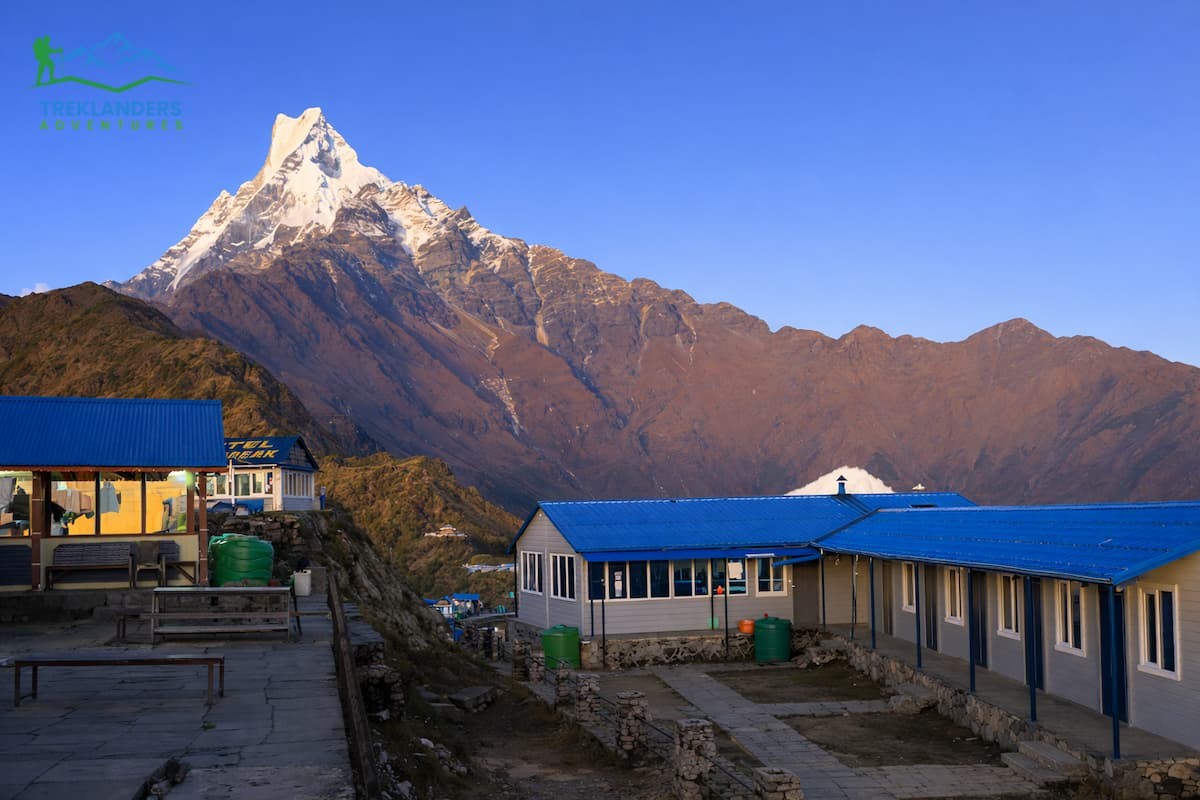
Night at Base Camp is not an option for the trekkers due to cold winds and the shortage of lodges. Therefore, High Camp at around 3,580m is the last night stop before the sunrise hike. Although the nights are cold, they are wonderful. Stars shine, prayer flags move with the wind, and Machhapuchhre looks very close. In the early morning, trekkers depart for Viewpoint/Base Camp to witness one of the best sunrises in Nepal. Consuming plenty of water and walking slowly are sure ways to prevent altitude sickness.
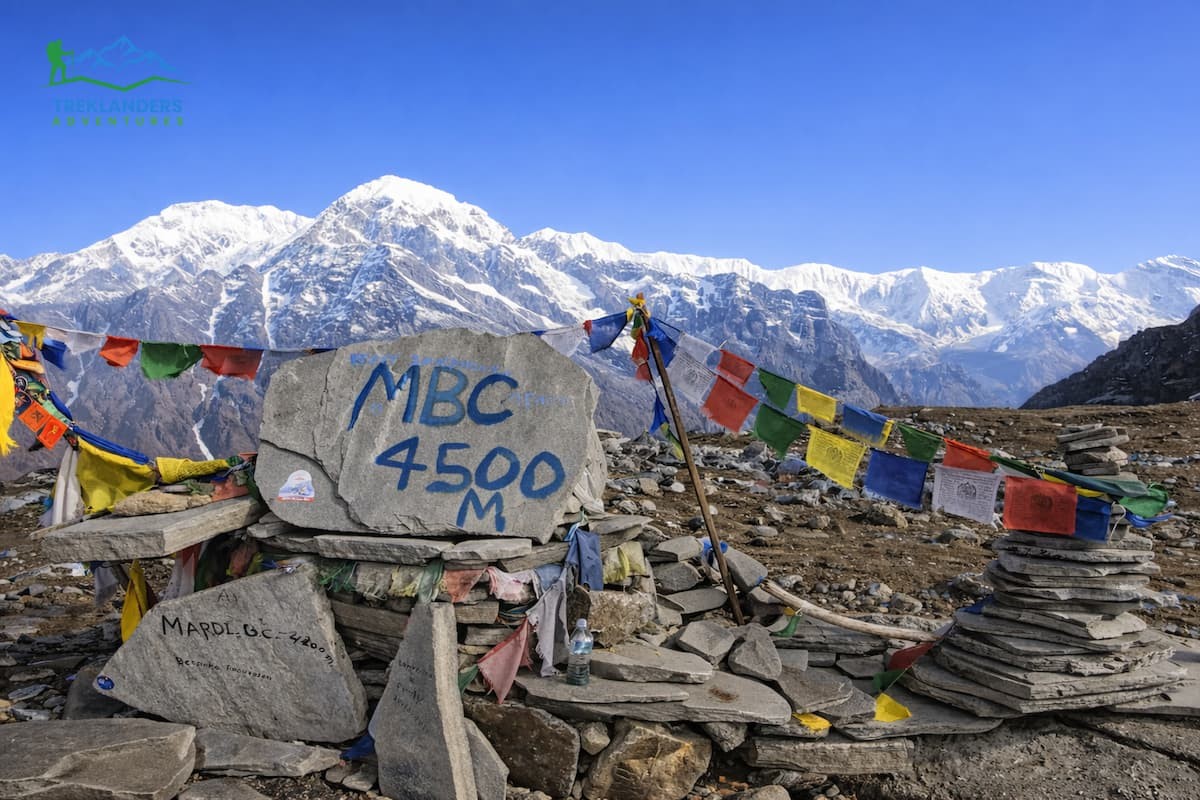
After 2-4 hours of climbing in the dark with headlamps, dawn typically breaks to reveal the entire Annapurna range turning golden. Viewpoint trekkers may also be allowed by the guide and weather to continue to Mardi Base Camp. Winds are stronger here and weather changes quickly, but the reward is immense panoramic Himalayan walls, deep valleys, and clouds floating below your feet. For many hikers, it is a moment of triumph.
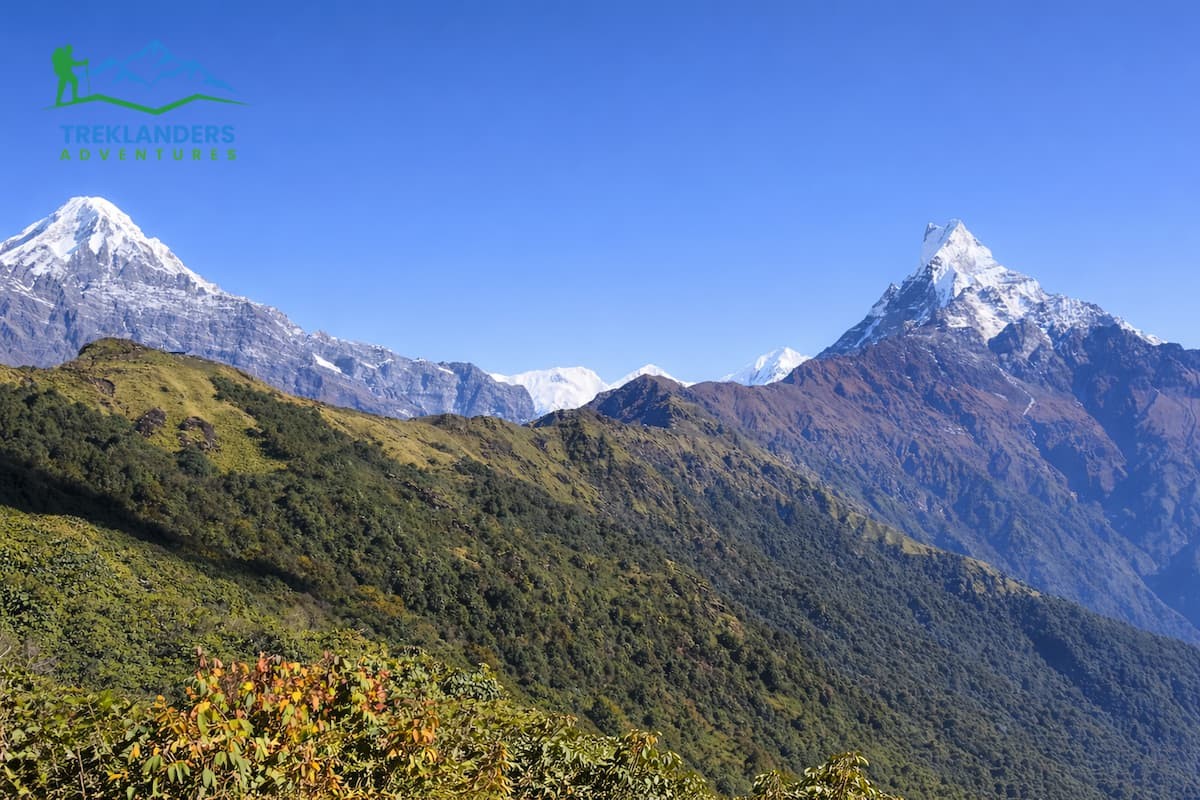
The Mardi Himal route offers three different environments in a short route: dense forests, open alpine meadows, and high rocky ridges. Starting amongst trees and waterfalls, trekkers suddenly find themselves in sky-open grasslands with mountain views. Close to Base Camp, the path becomes a dramatic ridge with snow peaks towering above. Experiencing the jungle, alpine, and Himalayan wilderness so quickly makes Mardi feel like multiple treks combined into one beautiful journey.
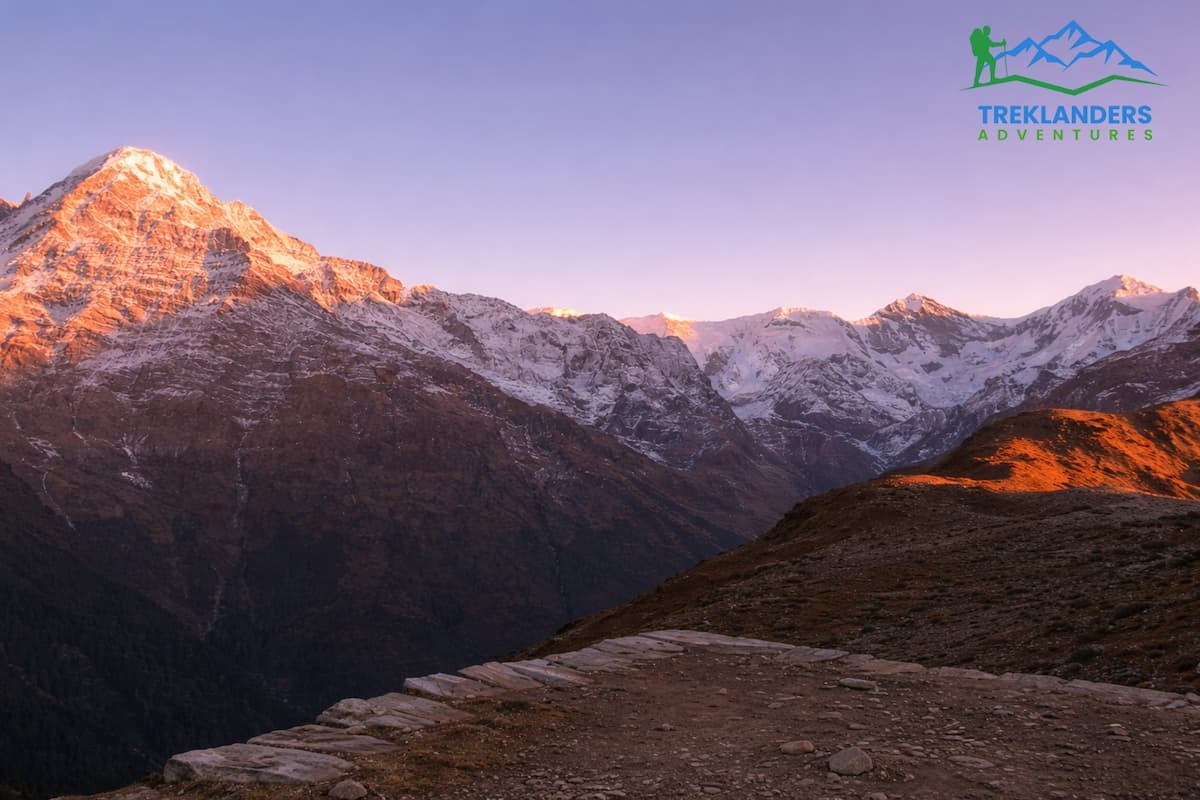
The sunrise from Mardi Viewpoint is often described as one of the most enchanting in Nepal. The whole Annapurna range slowly brightens with golden hues while the sky changes from a dark blue to vibrant orange. Machhapuchhre looks unreal, shining like a tower of gold. The early-morning hike might be cold and hard, but the view of the mountains and the quiet Himalayan nature from the top make it a very rewarding experience. A lot of people say that the feeling is very emotional and calm, which they consider the most unforgettable moment of the Mardi Himal Trek.
The majority of trekkers take the Kande route; however, there is a lovely alternative way through Dhampus and Pothana. This road goes along the beautifully decorated terraced fields, forest areas, and agricultural villages with traditional-style houses. Even before going to the high camp region, Dhampus gives magnificent Himalayan views, and so the photographers will find it the best route. The trail is a bit longer but more gradual and comfortable. In addition, it is the best choice for those who want to combine the culture with the mountains.
Mardi Himal Trek works well for a quick or a slow pace. One can technically do the trek in 4 days, while 5-6 days will provide a more comfortable plan, better acclimatization, and allow more photography time. This short duration makes it a top choice for travelers with limited holidays or weekends. Although it is a short trek, it has changing sceneries forests, meadows, villages, and ridges. It is essentially a complete Himalayan experience with no need for long expeditions.
The Mardi Himal Trek is generally gauged as moderately easy; hence, a new trekking group with basic fitness can undertake it. The path is clear, tea houses are available, and the daily walking distances are reasonable. Thus, beginners can get exposed to high altitude, snow views, and real Himalayan terrain without facing any extreme challenges. Also, it teaches the skills required and builds the confidence needed for later treks like ABC or EBC. Guides oftentimes say that Mardi is the best first Himalayan trek for adventure lovers.
Villages around Mardi Himal are mainly inhabited by the Gurung and Magar communities. Trekkers can see the traditional houses, the local lifestyle, and the hospitable atmosphere, and they can also enjoy home-cooked meals like Dal-Bhat, Tibetan bread, and Gurung soup. Locals wear special cultural dresses during festivals and perform folk dances with madal and traditional songs. Staying in the tea houses of the lower villages makes trekkers familiar with the rural Nepal beyond the mountains. The cultural interaction creates an emotional depth to the journey.
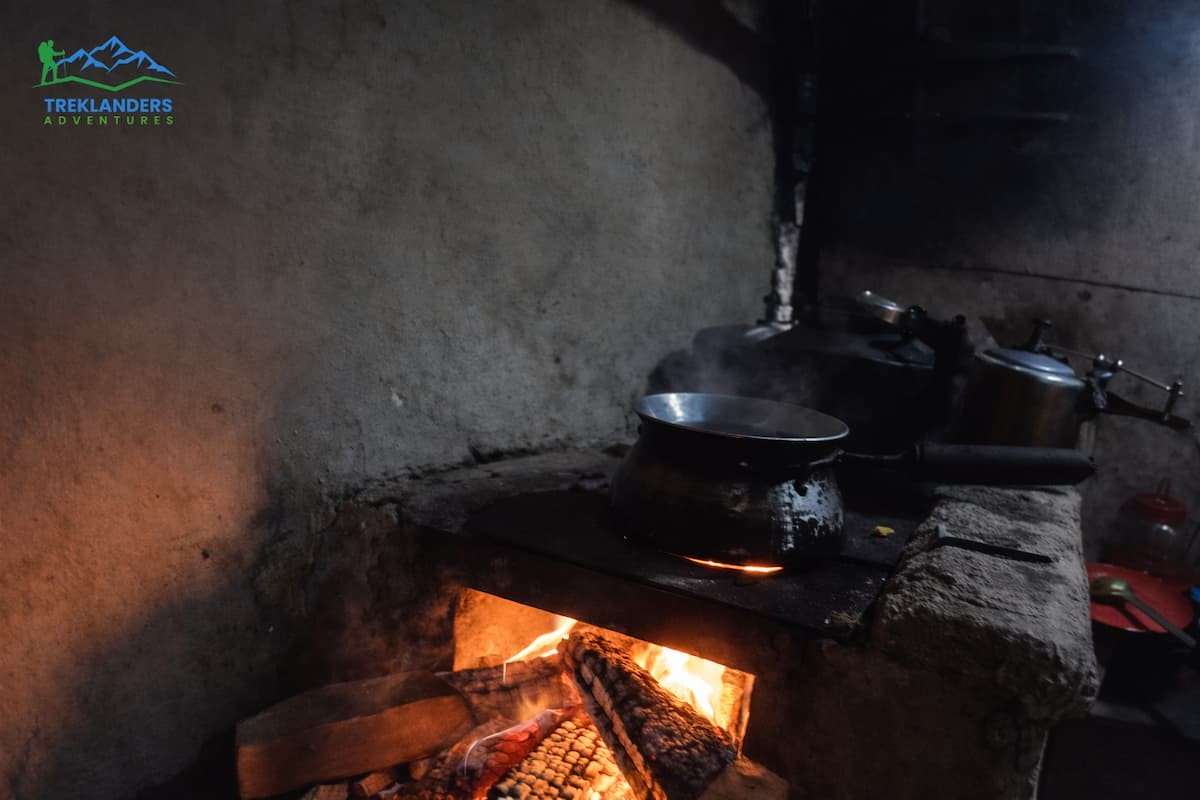
Wood-fire stoves are used for cooking and heating in most tea houses above Forest Camp, which helps in creating a cozy mountain atmosphere. Trekkers usually come together in the warm dining hall in the evening, drink hot tea, and share their experiences. The aroma of burning wood and the crackling sound of the fire give a traditional Himalayan vibe. Food is simple but comforting. Dal-Bhat, noodles, soups, pancakes, and potatoes are common. This rural experience is a big part of the Mardi Himal Trek's charm.
Mardi Himal Trail is located within the Annapurna Conservation Area, the source of the Himalayan fauna. Trekkers may see pheasants, Musk deer, Himalayan Thar, Langur monkeys, and colorful birds. With a bit of luck, red pandas might be spotted in the forest sections near Low Camp. At higher altitudes, yaks graze on alpine meadows. Wildlife encounters make the trek thrilling for nature lovers. Birds singing during the morning walks are an additional delight to the forest atmosphere.
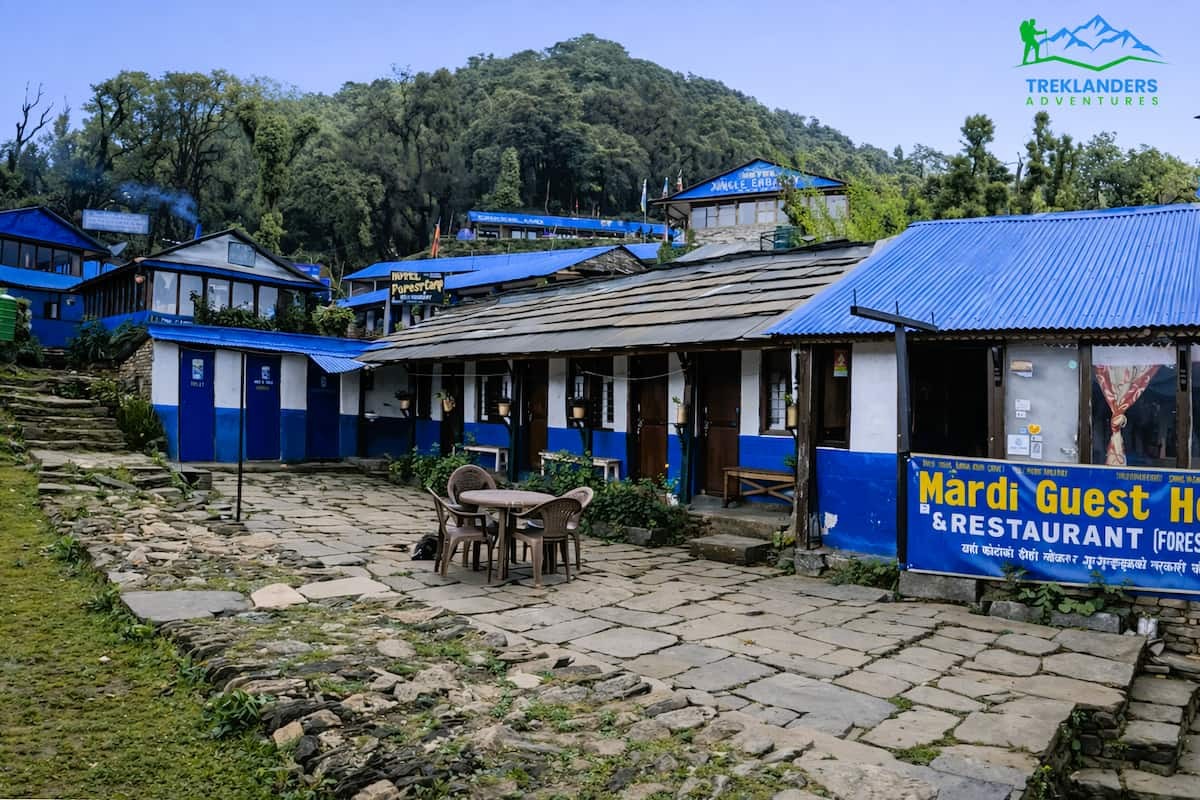
The Mardi Himal route is dotted with tea houses along the trail, so trekkers can go without tents or heavy camping gear. This makes the trek more comfortable and budget-friendly. The rooms are basic, generally twin-sharing, and come with warm blankets. The dining halls serve hot meals and drinks. Staying in tea houses helps the trekkers to meet people from different countries and enjoy the local hospitality. This lodge-based trekking style is great for all age groups.
Mardi Himal, with its low light pollution at High Camp, is an excellent place for night sky photography. On clear nights, one can see the stars that appear to be innumerable in the sky behind Machhapuchhre. Many photographers do long-exposure shoots of the Milky Way with the mountains covered with snow in the background. The night silence, cold air, and glowing mountains make one feel that they are in another world. Stargazing from outside the lodge is an experience that most of the trekkers will always remember.
The Mardi Himal Route has links with other trekking paths, which means that it is possible to go on longer treks. Hikers can decide to go further to Annapurna Base Camp or Khopra Ridge to experience the Himalayas more. This is how Mardi becomes a very flexible trek for both short and long trips. By combining the routes, one can get to lakes, remote valleys, and more villages for cultural immersion. It is perfect for those who want to see different types of landscapes in a single trip.
During June-August, Mardi Himal becomes green, wet, and lively. The forest parts are covered with moss, more water flows from the rivers and waterfalls, and fog drifts between the trees, making a mysterious vibe. Even though views of the mountains may be limited due to clouds, the monsoon makes the trail greener and more tranquil. A few trekkers come in this season, so the lodges are empty and quiet. It is a perfect time for those who love nature, rain, and misty forest photography. Yet, the trails may be slippery, and there will be leeches; good shoes and rain protection are necessary.
The last part of the journey from High Camp to Base Camp is a narrow and dramatic one, thus providing stunning ridge-top walking, which is a thrilling experience. On one side, there are deep valleys, and on the other, there are snow-covered peaks. Strong winds and open ground give the trekkers a thrilling Himalayan experience. Though the path is not hard, it is necessary to be careful with your steps, especially when there is snow or rain. The feeling of success and adventure is what you get when you reach the ridge viewpoint. This part of the trek will remain in your memory due to the high-altitude air, open sky, and mountains close by. Many people rank this ridge walk among the best parts of the Mardi Himal Trek.
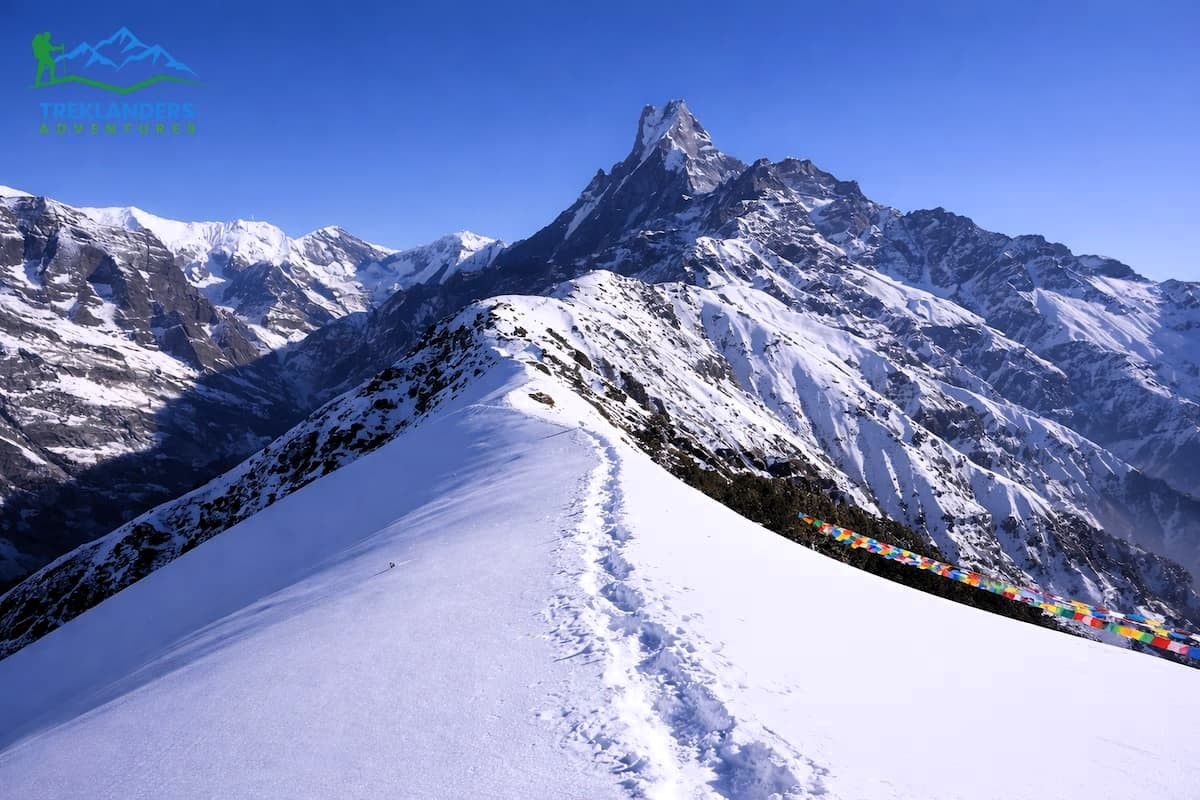
From December to February, Mardi Himal changes into a snowy wonderland. Snow covers the grasslands and ridges, making the scenery look surreal. The winter skies are clear and offer the sharp mountain views, which are perfect for photography. But, on the other hand, the temperature drops a lot, and the trails might be icy. So, extra warm clothing, crampons, and winter gear are a must. Winter trekking is a great choice for those who love snow adventures and are looking for a peaceful trail. A great number of trekkers testify that the winter Mardi feels like a walk in a Himalayan snow kingdom.
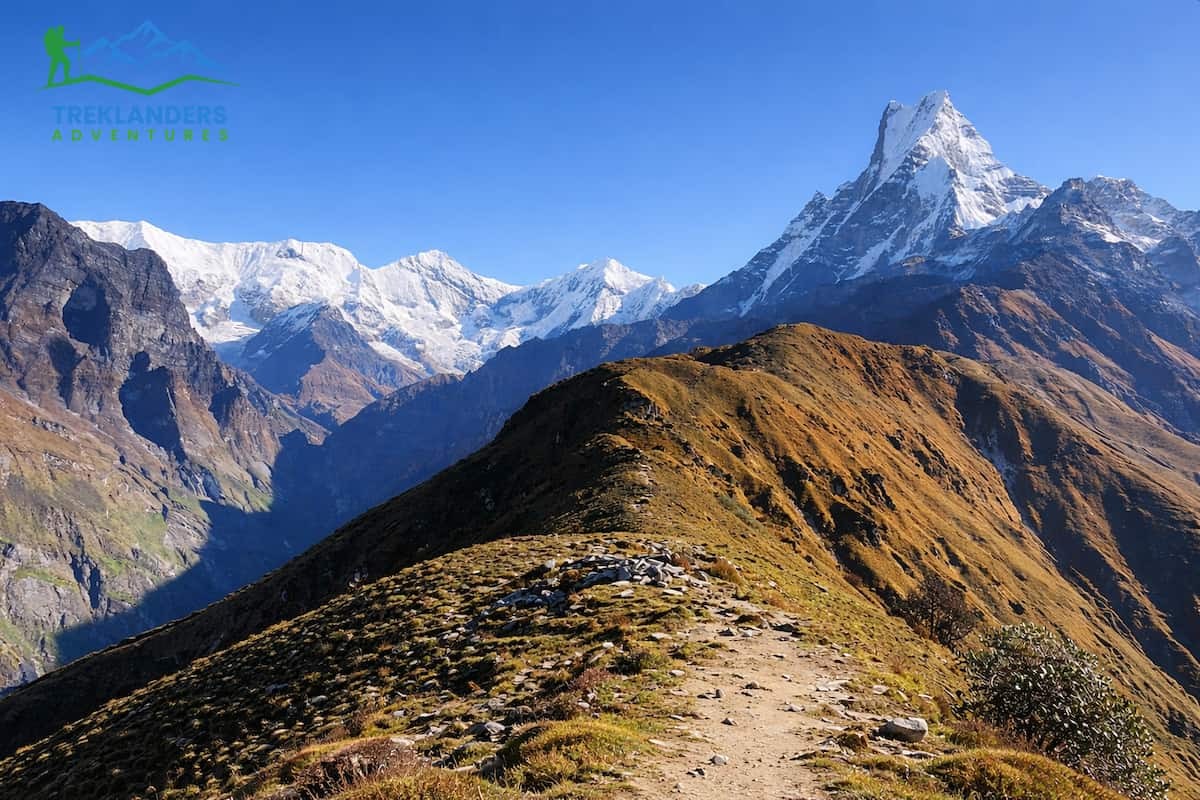
September-November is mostly referred to as the most stable and scenic season for the Mardi Himal Trek. The clear sky, mild temperature, and less rainfall give the best visibility of the Annapurna range. The forests are still colorful after the monsoon, and the trail gets busy with trekkers. The sunrises and sunsets are always breathtaking during this time as well. This season is also perfect for beginners as the trails are firm and the weather is predictable. Photographers who want crisp mountain shots would find autumn the perfect time.
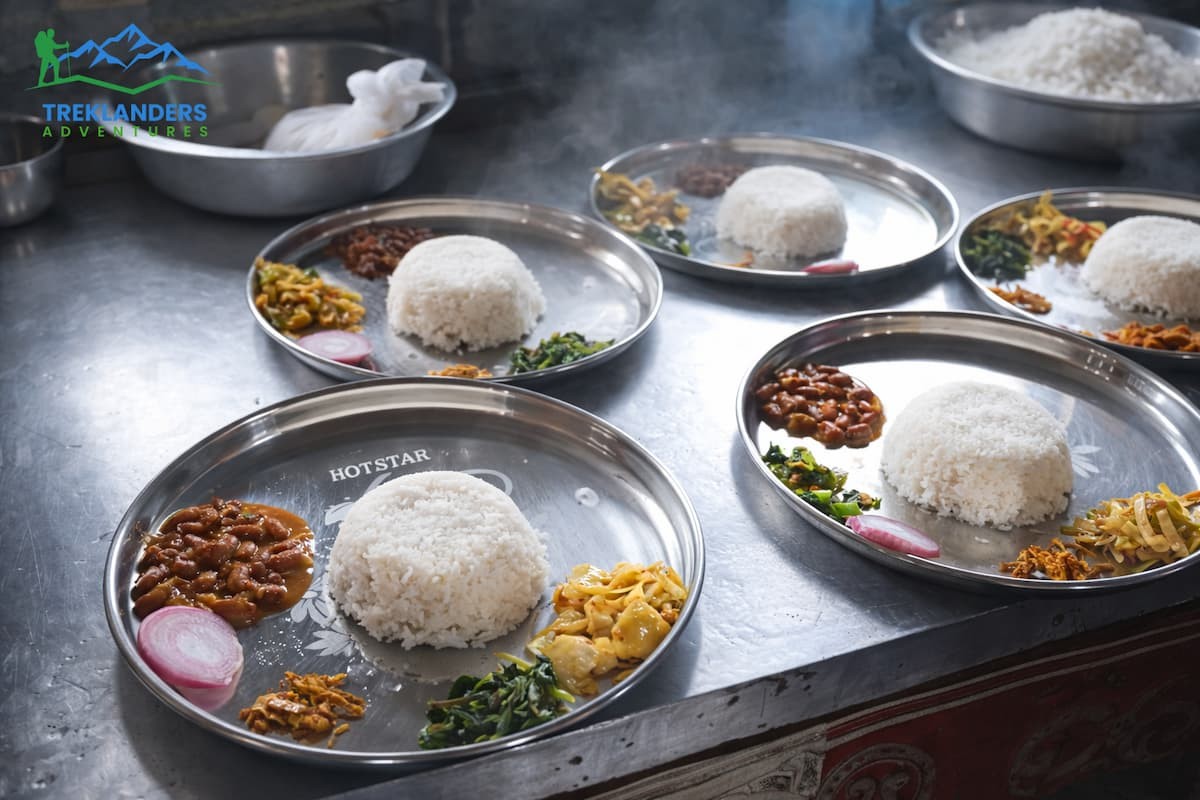
Food on the Mardi Himal Trek is basic yet nutritious. Popular meals include Dal-Bhat, noodles, pasta, fried rice, momo, pancakes, and soups. Dal-Bhat is best for trekking. Energy Unlimited refills keep trekkers fueled for hours. Higher up, ingredients become expensive due to manual transport, so menu variety reduces slightly. Hot drinks like ginger tea, lemon honey, hot chocolate, and garlic soup are favorites. Eating warm meals by the fire in tea houses creates a cozy mountain experience.
Trekkers need two permits for Mardi Himal: an Annapurna Conservation Area Permit (ACAP) and a TIM’s card. These are issued in Kathmandu or Pokhara. Permit fees support conservation, trail maintenance, and local communities. Carry permits at all times as checkpoints exist along the route. The process is simple, and no special climbing permit is needed since Mardi is a trekking route, not a technical climb. This makes the trek accessible and easy to plan.
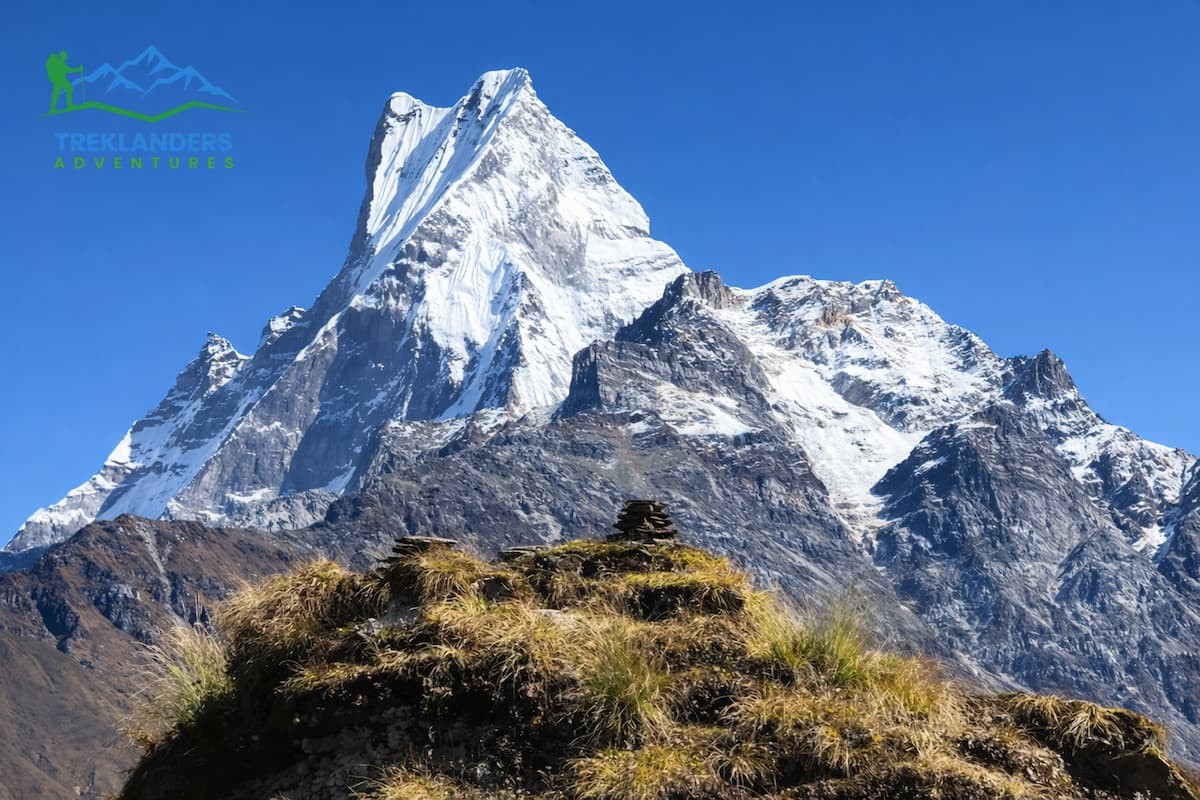
Machhapuchhre is a holy mountain that is said to be the home of Lord Shiva. Out of reverence, the Nepalese government has never issued any permits for its summit. Therefore, it is still one of the very few major peaks in the Himalayas that have not been climbed. Trekkers get incredibly close views of this holy peak from Mardi. The mountain's immaculate pyramid shape and its spiritual nature make the trek emotionally uplifting. Many trekkers are deeply moved by its presence.
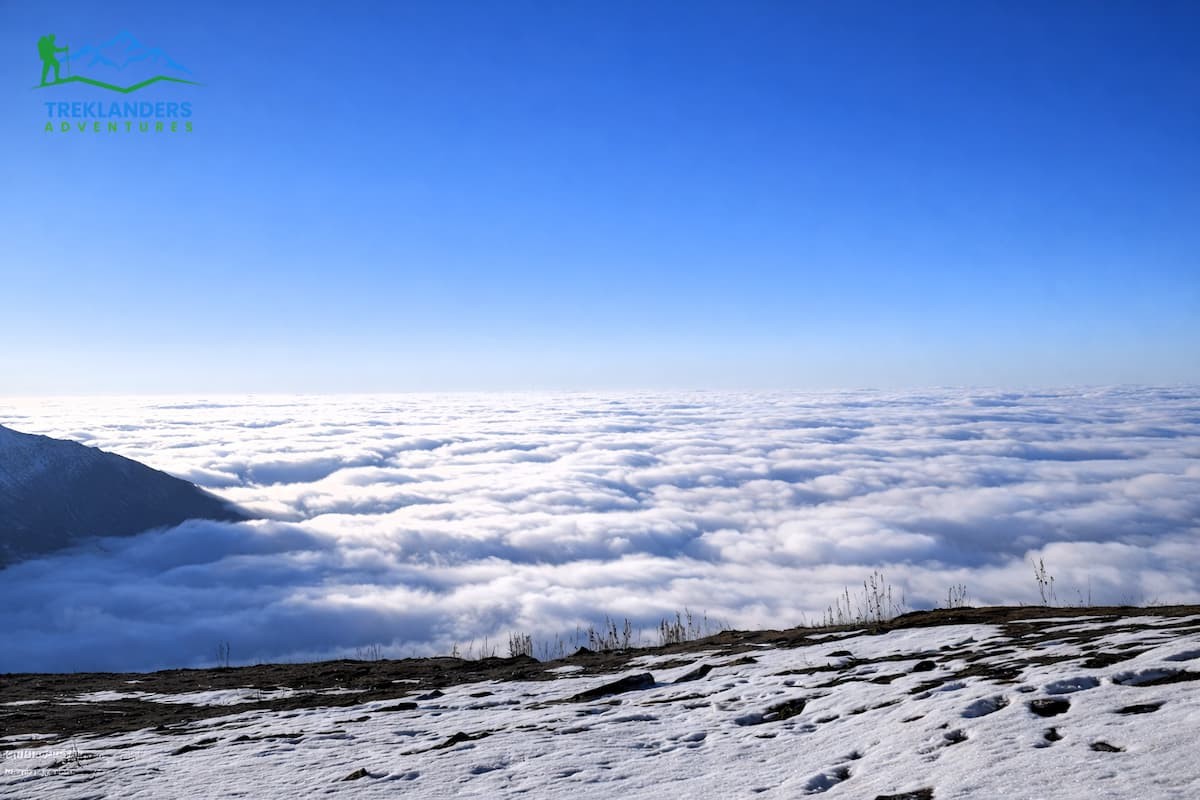
Usually, early mornings unveil a dreamlike sea of clouds below the ridge, which gives the feeling of walking above the sky to the trekkers. The sun rising view while clouds are hovering beneath the peaks is one of the most surreal experiences of Mardi. The photographers take pictures of the cloud waves, which are moving like ocean tides, and it looks very beautiful. These instances are mostly after very clear nights or after the monsoon season. It is like being at the most beautiful place in the sky.
Mardi Himal Trek gives you the same magnificent Himalayan views as the Everest and Annapurna regions, but costs less and takes less time. In less than a week, trekkers get to experience high altitude, snow-capped mountains, cultural villages, and scenic peaks. That is why Mardi is ideal for those who want to get the feel of a big Himalayan mountain without a long expedition. There are a lot of people who say that the view from Mardi is like a mini-ABC with far fewer people. It is one of the most rewarding short treks in Nepal.
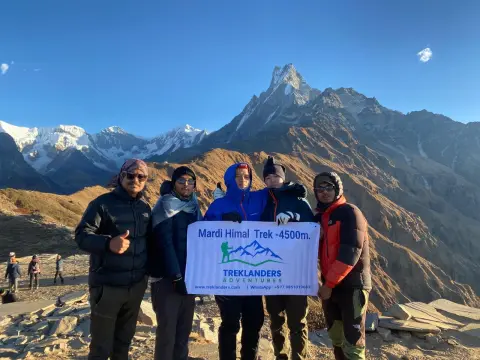
Prior to 2012, Mardi was not a route for tourists. Local herders used the upper grasslands for grazing their sheep and yaks. Only a few climbers used the trail secretly to reach the ridge.
After its official opening, the trek became well-known worldwide but still retains its unspoiled nature. Traveling the same old paths used for generations helps trekkers learn about the local history. Mardi is a trekking route where you can experience nature, culture, and adventure together.
It was not a separate trek route. People who did not know about Mardi Himal before 2012 would have felt confused to see this mountain listed as its own trek route. They would have thought that it is simply a ridge view point to one of the surrounding villages or the Annapurna Base Camp.
The locals knew the secret very well. None of them dared to share it for a long time.
Only a few herders and some mountaineers, who used the trail, spoke about it. In other words, people who found this trail could admire the view of Machhapuchhre up close. The pictures of High Camp and the beautiful ridgeline were so appealing that they went viral.
Thus, builders gradually constructed tea houses along the Mardi trail, which improved access to it. This is how Mardi evolved into an independent trekking route and is now one of the most sought, after short Himalayan treks in Nepal.
As hikers progress along the path, it ascends a slender ridge. They start feeling as though they are heading towards the renowned Machhapuchhre, also referred to as Fishtail Mountain. As the journey ascends from Forest Camp to High Camp, the landscape gradually unfolds, revealing a horizon on both sides.
In this area, the terrain appears to be ridge-like, allowing one to envision walking along the spine of the Himalayas. Ahead lies the southeast ridge of Machhapuchhre, providing a striking backdrop.
Adding to the allure of Mardi is the absence of obscured views, offering direct routes to legendary summits. This creates a continuous thrill, as the mountains seem to draw nearer and more majestic with each step taken.
Mardi's high elevation and open ridge terrain create changing cloud formations. These clouds roll, rise, disappear, and mix throughout the day. This environment serves as an ideal playground for drone enthusiasts, filmmakers, and time-lapse artists.
As clouds gradually rise from the valleys and vanish near High Camp, they create enchanting visuals. These captivating scenes are ideal for documenting trekking experiences. Even regular smart phones can take pictures of clouds, moving shadows, and the beautiful light at dawn and dusk. Many creators effortlessly craft beautiful videos using the Masi sky as their backdrop.
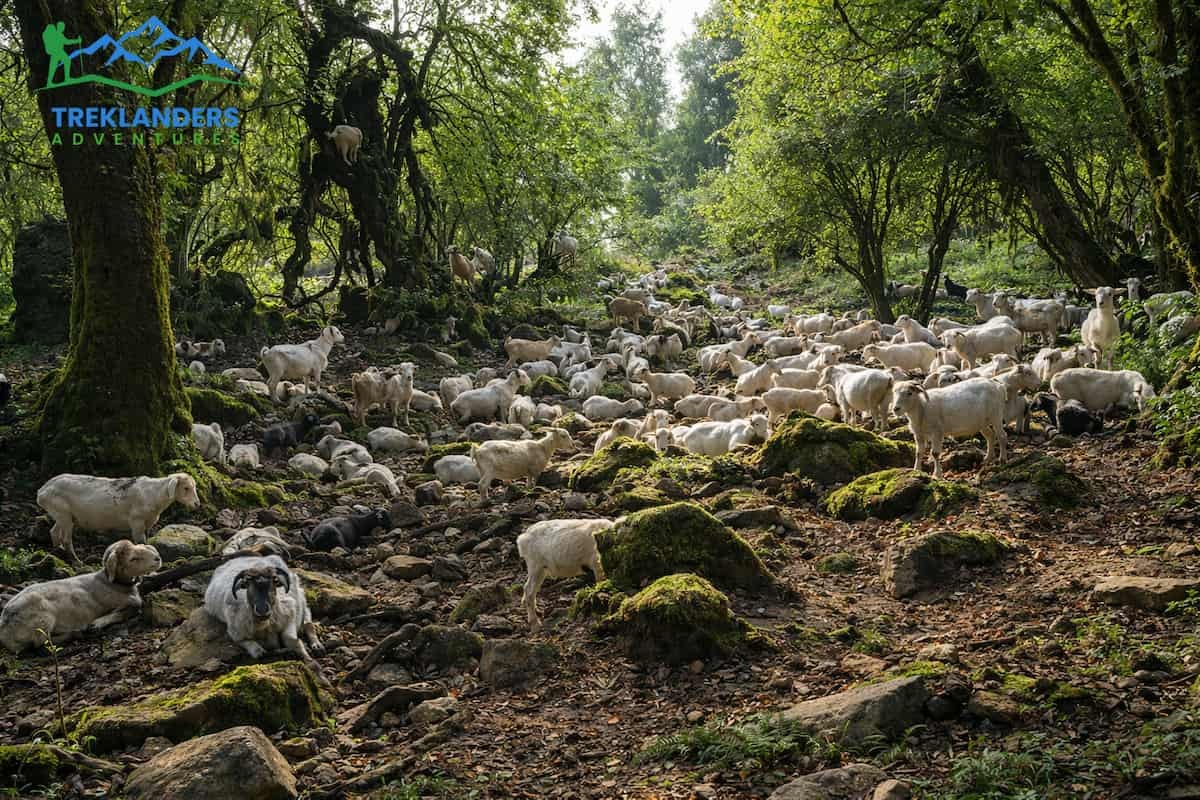
During the summer, the high pastures above Badal Danda come alive with fresh alpine grass. Local Gurung and Magar herders take their livestock sheep, goats, and yaks up to graze freely.
Trekkers sometimes see herders with bamboo baskets. They wear woolen clothes and have loyal dogs that protect the flocks. These pastures are untouched and thus provide a perfect Himalayan pastoral scene for the trekkers.
Sometimes trekkers may also get fresh yak cheese or butter tea if they ask for it. Watching these herders live simply in the remote highlands shows an ancient lifestyle. This way of life has lasted for ages and still exists alongside modern tourism.
At first, from Low Camp, Machhapuchhre is a snow-capped pyramid of the most perfect kind. The double summit of the mountain is clear only from High Camp and Viewpoint. The mountain looks like a trident or a fish tail. Mardi Himal's changing perspective is one of its most beautiful features.
As trekkers continue on the ridge, the mountain appears to be a living entity, changing its face with angles, shadows, and light. Its silver glow at sunrise turns to gold; at sunset, it becomes purple or fiery red. No two moments are alike; the mountain is endlessly photogenic.
Before tourism, villagers and traders were the only people to walk through these regions carrying goods, grains, or livestock. They built simple stone platforms called chautaris. These were resting places under trees. Travelers stopped there for a meal, prayer, or conversation.
Some of these chautaris remain along the Mardi trail, especially near Dhampus and Pothana. Many trekkers unknowingly take photos while sitting on them! They represent the history and community life of the villages.
They remind us that these mountains existed long before modern trekking. They hold many stories from the past. Moreover, they are the symbols of traditional Nepali hospitality-resting places made for everyone.
While November is generally associated with clear skies, Mardi sometimes experiences early snow bursts that cover the ridge in the middle of the night. Trekkers may sleep in grassy surroundings and find that the next morning has turned into a white wonderland.
Such snowfalls create enchanting views, but also bring colder winds, slippery trails, and the necessity of being careful. Tea houses put in extra firewood, and trekkers collect in warm dining halls, sharing stories over soup or tea.
Surprise snow turns into a memorable experience, especially for those who are seeing snow for the first time. It is like winter coming early in the Himalayas.
In cold seasons, several tea houses offer su-cha, which is butter tea made in the Tibetan way with yak butter, salt, and tea leaves. The beverage is hot, fatty, and revitalizing just right for high altitude, where dehydration and calorie consumption happen quicker. According to locals, butter tea not only keeps the body warm but also moisturizes the skin. Some trekkers may find the taste strange at the beginning, but most eventually come to like it. Drinking butter tea with your guides and locals is a cultural experience, and enjoying it by a wood stove is a very nice way to warm yourself on a cold night.
Low light pollution at High Camp and Viewpoint creates an incredible astrophotography environment. When skies are clear, long exposure photography reveals rotating star-trails circling around the Himalayan silhouette. Even the naked eyes see thousands of stars, a sight impossible in city regions. Photographers often stay up late capturing the Milky Way stretching above snow peaks. The sight is mesmerizing: mountains glowing under moonlight silence in the high Himalayas, and the universe seemingly within reach. Many trekkers call this night sky their favorite moment of the entire journey.
From Low Camp or sometimes Forest Camp on clear evenings, trekkers look down and see distant shimmering city lights. It creates a surreal contrast of wild, untouched mountains above and human civilization glowing beneath. The view reminds travelers how far they’ve climbed and how peaceful the highlands are compared to urban noise. Taking photographs of glittering Pokhara below and starry skies above becomes a magical dual-world moment. It's like watching life from a balcony above the world.
Guides raised in this region know plants that relieve altitude headaches, stomach discomfort, or fatigue. Rhododendron petals make refreshing tea, wild mint reduces dizziness, and certain leaves help with a sore throat. Herbal remedies are not replacements for medication, but add cultural richness to the trek. Sometimes guides pluck wild herbs during the walk, show trekkers how they smell, or offer healing leaf pastes like generations before. This knowledge reflects deep bonding with the land, wisdom passed down from ancestors.
The trail opens completely between High Camp and Viewpoint with drop-offs on both sides, giving trekkers the feeling of walking above valleys. Clouds drift below like waves while snowy peaks tower ahead. There’s no forest blocking the horizon, just endless sky. It feels like stepping on the edge of the world. This balcony-like ridge creates dramatic scale and perspective for photos of prayer flags fluttering, mountains blazing with morning light, and trekkers walking like silhouettes on top of the world.
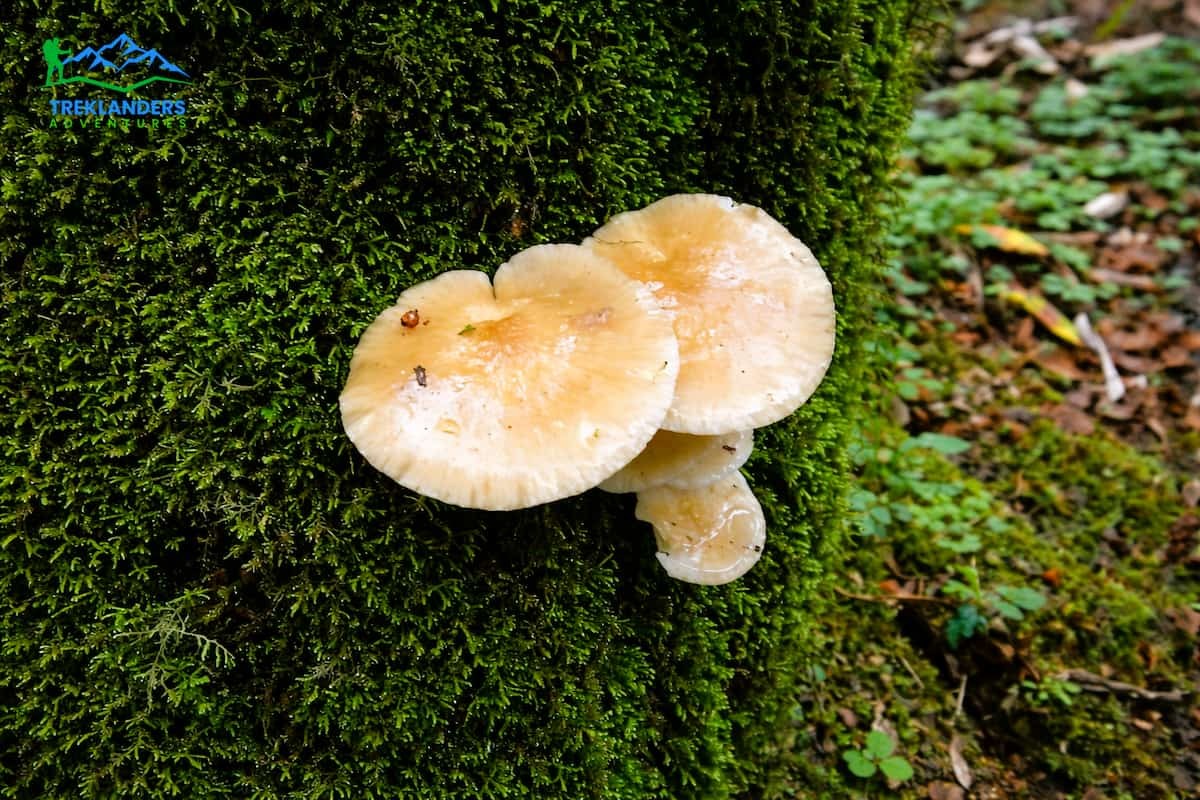
During the rainy season, moisture feeds moss patches that appear glossy, fresh, and sometimes faintly luminescent under low light. Mushrooms pop from tree trunks and forest floors in red, yellow, and white. Mist floating through rhododendron woods creates dreamy frames like scenes from fantasy films. Though trails get slippery and leeches appear, the monsoon offers a mystical, magical version of Mardi that few people ever witness.
The Mardi Himal Trek is undoubtedly one of the best short treks in Nepal. It offers an excellent combination of untouched nature, fascinating culture, and impressive Himalayan landscapes without the need for long holidays or high-altitude mountaineering skills. The amazing views of the sunrise over Machhapuchhre and Annapurna South come along with the walk through dense rhododendron forests, alpine ridges, and more. If you are a first-time trekker and you want to gain experience in the Himalayas, then this is the right trek for you. Mardi Himal Trek will, in this case, be the best choice. On the contrary, if you are a seasoned hiker and you are looking for an alternative to crowded routes, Mardi is a peaceful and rewarding experience filled with quiet trails, welcoming tea houses, and breathtaking mountain panoramas.
With flexible itineraries, accessible difficulty, tea, house accommodation, and the route reaching above 4,000m in a matter of days, Mardi Himal Trek is a rare Himalayan jewel short yet powerful in beauty, raw in nature, and unforgettable in memory. Walking through traditional villages, sharing warm meals beside a wood, fire stove, and standing above the clouds at sunrise are moments that stay with you forever.
If you dream of witnessing the Himalayas up close, capturing stunning photographs, and experiencing Nepal’s mountain lifestyle without intense travel demands, Mardi Himal Trek is the perfect choice. It is not merely a trek it’s an emotional journey into nature, culture, and the heart of the Annapurna region.
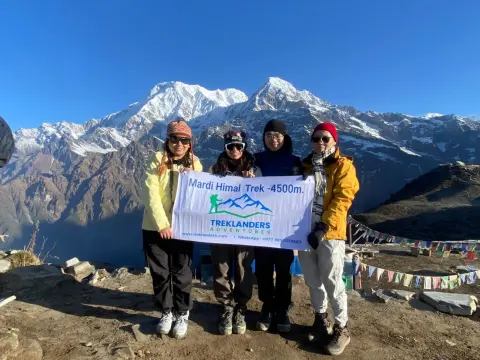
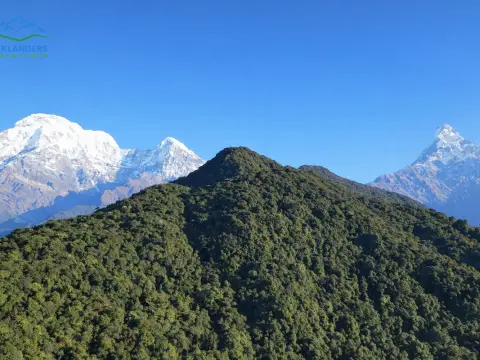
A quick guide comparing Langtang Valley vs Mardi Himal Trek to help you choose the right Himalayan adventure.
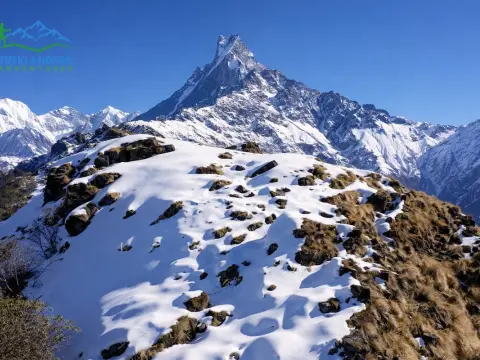
A short, scenic trek with close Himalayan views—this guide covers Mardi Himal day by day with key highlights and route details.
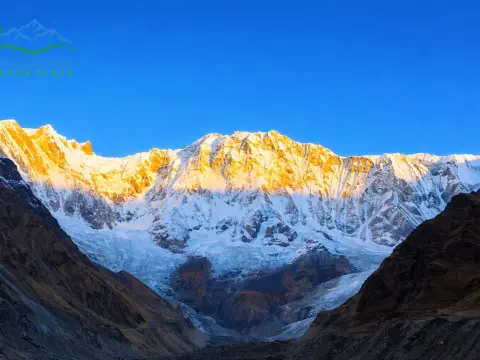
A quick comparison of the Langtang Valley Trek and Annapurna Base Camp Trek, covering difficulty, cost, and experience.



