[{"name":"Everest Base Camp Trek","duration":"16","image_url":"https:\/\/www.treklanders.com\/storage\/trip-galleries\/1\/thumb_419a755c003cc609f3030ee332965ebe.jpg","offer_price":1405,"url":"https:\/\/www.treklanders.com\/trips\/everest-base-camp-trek"},{"name":"Gokyo Valley Trekking","duration":"16","image_url":"https:\/\/www.treklanders.com\/storage\/trip-galleries\/2\/thumb_676d1021b574aeba4d19d3f2a0b04ed2.webp","offer_price":1205,"url":"https:\/\/www.treklanders.com\/trips\/gokyo-valley-trekking"},{"name":"Annapurna Circuit Trek","duration":"23","image_url":"https:\/\/www.treklanders.com\/storage\/trip-galleries\/3\/thumb_2a9a92ea23c62f41de27b37f5e3e8c17.webp","offer_price":1495,"url":"https:\/\/www.treklanders.com\/trips\/annapurna-circuit-trek"},{"name":"Everest Panorama Trek","duration":"12","image_url":"https:\/\/www.treklanders.com\/storage\/trip-galleries\/4\/thumb_35c9f677ea2e88b1ff11a9f43daa3ddb.jpg","offer_price":1100,"url":"https:\/\/www.treklanders.com\/trips\/everest-panorama-trek"},{"name":"Everest Base Camp Trekking from Jiri","duration":"22","image_url":"https:\/\/www.treklanders.com\/storage\/trip-galleries\/6\/thumb_14763592492417b294aa66bf0ebf4e64.webp","offer_price":1400,"url":"https:\/\/www.treklanders.com\/trips\/everest-base-camp-trekking-from-jiri"},{"name":"Everest Base Camp via Cho la Pass from Gokyo Valley Trekking","duration":"18","image_url":"https:\/\/www.treklanders.com\/storage\/trip-galleries\/7\/thumb_d4e470e98d4e9e2ab8e93e39b8b7d252.jpg","offer_price":1405,"url":"https:\/\/www.treklanders.com\/trips\/everest-base-camp-via-cho-la-pass-from-gokyo-valley-trekking"},{"name":"Everest Three Passes Trekking","duration":"22","image_url":"https:\/\/www.treklanders.com\/storage\/trip-galleries\/8\/thumb_b413b221e913171500bb3dfd5c08ceea.jpg","offer_price":1635,"url":"https:\/\/www.treklanders.com\/trips\/everest-three-passes-trekking"},{"name":"Annapurna Base Camp Trekking","duration":"14","image_url":"https:\/\/www.treklanders.com\/storage\/trip-galleries\/9\/thumb_2e71f2ffe116c659fa66b01c2d571b4e.webp","offer_price":845,"url":"https:\/\/www.treklanders.com\/trips\/annapurna-base-camp-trekking"},{"name":"Mardi Base Camp Trekking","duration":"14","image_url":"https:\/\/www.treklanders.com\/storage\/trip-galleries\/10\/thumb_d7b2d2dc638f6bbf2c31c167ac68029d.webp","offer_price":845,"url":"https:\/\/www.treklanders.com\/trips\/mardi-base-camp-trekking"},{"name":"Mohare Danda Trekking","duration":"12","image_url":"https:\/\/www.treklanders.com\/storage\/trip-galleries\/11\/thumb_a384c8d35d789d29b19991c1d675c910.webp","offer_price":755,"url":"https:\/\/www.treklanders.com\/trips\/mohare-danda-trekking"},{"name":"Khopra Ridge & Khair Lake Trekking","duration":"15","image_url":"https:\/\/www.treklanders.com\/storage\/trip-galleries\/12\/thumb_c0f50461ddc74acfb553ba85be00fab0.webp","offer_price":855,"url":"https:\/\/www.treklanders.com\/trips\/khopra-ridge-khair-lake-trekking"},{"name":"Upper Mustang Trekking","duration":"17","image_url":"https:\/\/www.treklanders.com\/storage\/trip-galleries\/13\/thumb_7aa4dfdb69186b0f224a303d80a25c95.jpg","offer_price":1715,"url":"https:\/\/www.treklanders.com\/trips\/upper-mustang-trekking"},{"name":"Langtang Valley Trek","duration":"12","image_url":"https:\/\/www.treklanders.com\/storage\/trip-galleries\/14\/thumb_8650b4b1a3c160cff75da65369398353.webp","offer_price":735,"url":"https:\/\/www.treklanders.com\/trips\/langtang-valley-trek"},{"name":"Gosainkunda Lake Trek","duration":"11","image_url":"https:\/\/www.treklanders.com\/storage\/trip-galleries\/15\/thumb_bfe94c14e760c48234e117021105be84.webp","offer_price":735,"url":"https:\/\/www.treklanders.com\/trips\/gosainkunda-lake-trek"},{"name":"Chisapani-Nagarkot to Dhulikhel Hiking","duration":"7","image_url":"https:\/\/www.treklanders.com\/storage\/trip-galleries\/16\/thumb_468defe9a4000ee3129cd7e6421ee105.webp","offer_price":565,"url":"https:\/\/www.treklanders.com\/trips\/chisapani-nagarkot-to-dhulikhel-hiking"},{"name":"Kanchenjunga Trek","duration":"23","image_url":"https:\/\/www.treklanders.com\/storage\/trip-galleries\/17\/thumb_51f43fa4203106cc49aaedc89d76e01d.jpg","offer_price":1725,"url":"https:\/\/www.treklanders.com\/trips\/kanchenjunga-trek"},{"name":"Helambu Trek","duration":"12","image_url":"https:\/\/www.treklanders.com\/storage\/trip-galleries\/18\/thumb_0fe8e3fa1299d2e43bf1fb5977875ce2.jpg","offer_price":685,"url":"https:\/\/www.treklanders.com\/trips\/helambu-trek"},{"name":"Upper Dolpo Trek","duration":"26","image_url":"https:\/\/www.treklanders.com\/storage\/trip-galleries\/19\/thumb_d6080d490e1db83b0a711e7304000864.jpg","offer_price":3005,"url":"https:\/\/www.treklanders.com\/trips\/upper-dolpo-trek"},{"name":"Manaslu Circuit Trek","duration":"18","image_url":"https:\/\/www.treklanders.com\/storage\/trip-galleries\/20\/thumb_1fdd224e849f4f328e73d2d12b3d282d.jpg","offer_price":1225,"url":"https:\/\/www.treklanders.com\/trips\/manaslu-circuit-trek"},{"name":"Tilicho Lake Base Camp Trek","duration":"19","image_url":"https:\/\/www.treklanders.com\/storage\/trip-galleries\/21\/thumb_eba8ac5e029e6543e0c17630ebd9e2fb.jpg","offer_price":1220,"url":"https:\/\/www.treklanders.com\/trips\/tilicho-lake-base-camp-trek"},{"name":"Nar-Phu Valley With Thorang-La Pass Trek","duration":"21","image_url":"https:\/\/www.treklanders.com\/storage\/trip-galleries\/22\/thumb_43597423a5a366fe9c8937fb30d2fe2a.jpg","offer_price":1315,"url":"https:\/\/www.treklanders.com\/trips\/nar-phu-valley-with-thorang-la-pass-trek"},{"name":"Nepal Round Trip of Kathmandu-Pokhara-Lumbini and Chitwan Tour","duration":"10","image_url":"https:\/\/www.treklanders.com\/storage\/trip-galleries\/23\/thumb_32497d170b2ab340b0a1b3310e91e784.webp","offer_price":845,"url":"https:\/\/www.treklanders.com\/trips\/nepal-round-trip-of-kathmandu-pokhara-lumbini-and-chitwan-tour"},{"name":"Nagarkot Day Hike","duration":"2","image_url":"https:\/\/www.treklanders.com\/storage\/trip-galleries\/24\/thumb_a5a654930fd8ba7852e41738105bacfc.webp","offer_price":105,"url":"https:\/\/www.treklanders.com\/trips\/nagarkot-day-hike"},{"name":"Nagarkot Sunrise Tour","duration":"1","image_url":"https:\/\/www.treklanders.com\/storage\/trip-galleries\/25\/thumb_17dc28a29cfa44381ad503f0a75ee84f.webp","offer_price":22,"url":"https:\/\/www.treklanders.com\/trips\/nagarkot-sunrise-tour"},{"name":"Namobuddha Day Tour with Shiva Statue","duration":"1","image_url":"https:\/\/www.treklanders.com\/storage\/trip-galleries\/26\/thumb_beeb34202f9077764aa08c67ef2867f9.webp","offer_price":45,"url":"https:\/\/www.treklanders.com\/trips\/namobuddha-day-tour-with-shiva-statue"},{"name":"Kathmandu Full Day Sightseeing Tour","duration":"1","image_url":"https:\/\/www.treklanders.com\/storage\/trip-galleries\/27\/thumb_d045fc0f1acee2cfa6b3c95f3c656d18.jpg","offer_price":30,"url":"https:\/\/www.treklanders.com\/trips\/kathmandu-full-day-sightseeing-tour"},{"name":"Patan and Bhaktapur Sightseeing Tour","duration":"1","image_url":"https:\/\/www.treklanders.com\/storage\/trip-galleries\/28\/thumb_750eacac3424b5dba686dd93656ab87c.jpg","offer_price":30,"url":"https:\/\/www.treklanders.com\/trips\/patan-and-bhaktapur-sightseeing-tour"},{"name":"Upper Mustang Heli Tour","duration":"1","image_url":"https:\/\/www.treklanders.com\/storage\/trip-galleries\/29\/thumb_0b785f69a15557f8660c805c76fda14e.webp","offer_price":1250,"url":"https:\/\/www.treklanders.com\/trips\/upper-mustang-heli-tour"},{"name":"Everest Heli Tour","duration":"1","image_url":"https:\/\/www.treklanders.com\/storage\/trip-galleries\/30\/thumb_dc45f2beb36a3699e0decf0de41a6f17.jpg","offer_price":1495,"url":"https:\/\/www.treklanders.com\/trips\/everest-heli-tour"},{"name":"Island Peak Trek & Climb","duration":"21","image_url":"https:\/\/www.treklanders.com\/storage\/trip-galleries\/31\/thumb_a0f3e3468c92a8e436045cf8b2fbf361.jpg","offer_price":2295,"url":"https:\/\/www.treklanders.com\/trips\/island-peak-trek-climb"},{"name":"Mera Peak Trek & Climb","duration":"18","image_url":"https:\/\/www.treklanders.com\/storage\/trip-galleries\/32\/thumb_3e8128a23c36f02fa38135475e811b9e.jpg","offer_price":2815,"url":"https:\/\/www.treklanders.com\/trips\/mera-peak-trek-climb"},{"name":"Chandragiri Cable Car Tour","duration":"1","image_url":"https:\/\/www.treklanders.com\/storage\/trip-galleries\/33\/thumb_faa70b716449eada6d7f1450335edbb3.jpg","offer_price":30,"url":"https:\/\/www.treklanders.com\/trips\/chandragiri-cable-car-tour"},{"name":"Everest Base Camp Trek and Returning via Heli","duration":"13","image_url":"https:\/\/www.treklanders.com\/storage\/trip-galleries\/34\/thumb_11190941866206e1d578db11986ebc73.webp","offer_price":2100,"url":"https:\/\/www.treklanders.com\/trips\/everest-base-camp-trek-and-returning-via-heli"},{"name":"Annapurna Semi Circuit Trek","duration":"15","image_url":"https:\/\/www.treklanders.com\/storage\/trip-galleries\/35\/thumb_30ddd8ba818cdcb52efd5eb0a017bcdb.jpg","offer_price":965,"url":"https:\/\/www.treklanders.com\/trips\/annapurna-semi-circuit-trek"},{"name":"Everest Base Camp Luxury Trek","duration":"14","image_url":"https:\/\/www.treklanders.com\/storage\/trip-galleries\/39\/thumb_6079aea3c5dd83e745a16fd6162270dc.jpg","offer_price":2685,"url":"https:\/\/www.treklanders.com\/trips\/everest-base-camp-luxury-trek"},{"name":"Mt. Kailash & Lake Manasarover Tour","duration":"15","image_url":"https:\/\/www.treklanders.com\/storage\/trip-galleries\/41\/thumb_cf3fededfd7dd2b40399af399e04f95a.jpg","offer_price":2205,"url":"https:\/\/www.treklanders.com\/trips\/mt-kailash-lake-manasarover-tour"},{"name":"Ghorepani Poonhill Trek","duration":"11","image_url":"https:\/\/www.treklanders.com\/storage\/trip-galleries\/43\/thumb_602d9a56976e1b836ba8adc69b8d09c5.webp","offer_price":720,"url":"https:\/\/www.treklanders.com\/trips\/ghorepani-poonhill-trek"},{"name":"11 Days Gokyo Valley Trekkking","duration":"11","image_url":"https:\/\/www.treklanders.com\/storage\/trip-galleries\/45\/thumb_ab552c3c91de392f94230a937b1c4801.jpg","offer_price":900,"url":"https:\/\/www.treklanders.com\/trips\/11-days-gokyo-valley-trekkking"},{"name":"9-Day Everest Base Camp Trekking with Helicopter Return","duration":"9","image_url":"https:\/\/www.treklanders.com\/storage\/trip-galleries\/46\/thumb_9a8ba2b582500cd86786be056902c31a.webp","offer_price":1990,"url":"https:\/\/www.treklanders.com\/trips\/9-day-everest-base-camp-trekking-with-helicopter-return"},{"name":"12-Day Everest Base Camp Trek","duration":"12","image_url":"https:\/\/www.treklanders.com\/storage\/trip-galleries\/47\/thumb_d12c9ef776c0b395ceea817fe05c5892.jpg","offer_price":1000,"url":"https:\/\/www.treklanders.com\/trips\/12-day-everest-base-camp-trek"},{"name":"8-Day Everest Panorama Trek","duration":"8","image_url":"https:\/\/www.treklanders.com\/storage\/trip-galleries\/49\/thumb_c81ae3a8ac757a317a9362e6872e2dcb.jpg","offer_price":850,"url":"https:\/\/www.treklanders.com\/trips\/8-day-everest-panorama-trek"},{"name":"7-Day Langtang Valley Trek","duration":"7","image_url":"https:\/\/www.treklanders.com\/storage\/trip-galleries\/50\/thumb_99c2904df5475ab028c9e3633ea95ef3.jpg","offer_price":420,"url":"https:\/\/www.treklanders.com\/trips\/7-day-langtang-valley-trek"},{"name":"4-Day Trekking Adventure near Kathmandu","duration":"4","image_url":"https:\/\/www.treklanders.com\/storage\/trip-galleries\/51\/thumb_594681060514dc57be1959236a6996d0.jpg","offer_price":275,"url":"https:\/\/www.treklanders.com\/trips\/4-day-trekking-adventure-near-kathmandu"},{"name":"4-Day Ghorepani Ponnhill Trek from Pokhara","duration":"4","image_url":"https:\/\/www.treklanders.com\/storage\/trip-galleries\/53\/thumb_eede04edac01f983d9af2c16f55d03e8.webp","offer_price":500,"url":"https:\/\/www.treklanders.com\/trips\/4-day-ghorepani-ponnhill-trek-from-pokhara"},{"name":"7-Day Annapurna Base Camp Trek from Pokhara","duration":"7","image_url":"https:\/\/www.treklanders.com\/storage\/trip-galleries\/55\/thumb_547e91c74088c491111ebe31a759cfbb.jpg","offer_price":420,"url":"https:\/\/www.treklanders.com\/trips\/7-day-annapurna-base-camp-trek-from-pokhara"},{"name":"13-Day Manaslu Circuit Trekking","duration":"13","image_url":"https:\/\/www.treklanders.com\/storage\/trip-galleries\/56\/thumb_aef1af4f0c4a2a9622d518ad5959542b.jpg","offer_price":1050,"url":"https:\/\/www.treklanders.com\/trips\/13-day-manaslu-circuit-trekking"},{"name":"5-Day Mardi Himal Trek from Pokhara","duration":"5","image_url":"https:\/\/www.treklanders.com\/storage\/trip-galleries\/57\/thumb_dcd598d556c14835f0a18169afafcbc6.webp","offer_price":420,"url":"https:\/\/www.treklanders.com\/trips\/5-day-mardi-himal-trek-from-pokhara"},{"name":"Nagarkot Sunrise Tour with Day Hike","duration":"1","image_url":"https:\/\/www.treklanders.com\/storage\/trip-galleries\/58\/thumb_7cdfa1f16719486da2a0718da45b1f2f.webp","offer_price":30,"url":"https:\/\/www.treklanders.com\/trips\/nagarkot-sunrise-tour-with-day-hike"},{"name":"Seven Unesco Heritage Sites Day Tour in Kathmandu","duration":"1","image_url":"https:\/\/www.treklanders.com\/storage\/trip-galleries\/59\/thumb_92aed7b9c67e76740000aab9313dced7.jpg","offer_price":40,"url":"https:\/\/www.treklanders.com\/trips\/seven-unesco-heritage-sites-day-tour-in-kathmandu"},{"name":"10-Day Ghorepani Poonhill with Annapurna Base Camp Trek","duration":"10","image_url":"https:\/\/www.treklanders.com\/storage\/trip-galleries\/60\/thumb_d4c2c089497950ccb5f8541d76e1269b.webp","offer_price":835,"url":"https:\/\/www.treklanders.com\/trips\/10-day-ghorepani-poonhill-with-annapurna-base-camp-trek"},{"name":"3-Day Chitwan Wildlife Tour","duration":"3","image_url":"https:\/\/www.treklanders.com\/storage\/trip-galleries\/61\/thumb_7963c9033b4ecfb5d29583fb0965d521.webp","offer_price":150,"url":"https:\/\/www.treklanders.com\/trips\/3-day-chitwan-wildlife-tour"},{"name":"3-Day Pokhara Sightseeing Tour","duration":"3","image_url":"https:\/\/www.treklanders.com\/storage\/trip-galleries\/62\/thumb_61542f3c38329bcce9d2771c96f265a4.jpg","offer_price":230,"url":"https:\/\/www.treklanders.com\/trips\/3-day-pokhara-sightseeing-tour"},{"name":"7-Day Kathmandu Pokhara and Chitwan wildlifeTour","duration":"7","image_url":"https:\/\/www.treklanders.com\/storage\/trip-galleries\/63\/thumb_803b98ae15f14366124ebb109a32f49d.webp","offer_price":545,"url":"https:\/\/www.treklanders.com\/trips\/7-day-kathmandu-pokhara-and-chitwan-wildlifetour"},{"name":"Nagarjun Jamacho Day Hiking","duration":"1","image_url":"https:\/\/www.treklanders.com\/storage\/trip-galleries\/64\/thumb_85867eb85c60c8228e44f927341f67d1.jpg","offer_price":30,"url":"https:\/\/www.treklanders.com\/trips\/nagarjun-jamacho-day-hiking"},{"name":"Everest Mountain Flight from Kathmandu","duration":"1","image_url":"https:\/\/www.treklanders.com\/storage\/trip-galleries\/65\/thumb_1a66526d340ec175023842c38efd8a95.webp","offer_price":120,"url":"https:\/\/www.treklanders.com\/trips\/everest-mountain-flight-from-kathmandu"},{"name":"One Day Trishuli River Rafting Adventures","duration":"1","image_url":"https:\/\/www.treklanders.com\/storage\/trip-galleries\/66\/thumb_55ba0ea676c9c625f99f3d41bda224fb.jpg","offer_price":35,"url":"https:\/\/www.treklanders.com\/trips\/one-day-trishuli-river-rafting-adventures"},{"name":"13-Day Annapurna Circuit Trek","duration":"13","image_url":"https:\/\/www.treklanders.com\/storage\/trip-galleries\/67\/thumb_859e7a1fbb468a9252d365cab8379f10.jpg","offer_price":815,"url":"https:\/\/www.treklanders.com\/trips\/13-day-annapurna-circuit-trek"},{"name":"15-Day Tilicho Base Camp with Thorong-La Pass Trekking","duration":"15","image_url":"https:\/\/www.treklanders.com\/storage\/trip-galleries\/68\/thumb_56a5fd1506c9b9f1f83844353dc55edf.jpg","offer_price":920,"url":"https:\/\/www.treklanders.com\/trips\/15-day-tilicho-base-camp-with-thorong-la-pass-trekking"},{"name":"Cooking Class in Thamel-Full Course Meal","duration":"1","image_url":"https:\/\/www.treklanders.com\/storage\/trip-galleries\/69\/thumb_ed5cfbc0d94b624642d347c0776d36bb.webp","offer_price":30,"url":"https:\/\/www.treklanders.com\/trips\/cooking-class-in-thamel-full-course-meal"},{"name":"Cooking Class in Thamel-Full Course","duration":"3 Hours 30 Minutes","image_url":"https:\/\/www.treklanders.com\/img\/default.gif","offer_price":30,"url":"https:\/\/www.treklanders.com\/trips\/cooking-class-in-thamel-full-course"},{"name":"Cooking Class in Thamel-Full Course Meal","duration":"3 Hours 30 Minutes","image_url":"https:\/\/www.treklanders.com\/img\/default.gif","offer_price":30,"url":"https:\/\/www.treklanders.com\/trips\/cooking-class-in-thamel-full-course-meal"},{"name":"Momo Making Class in Thamel","duration":"1","image_url":"https:\/\/www.treklanders.com\/storage\/trip-galleries\/72\/thumb_a36e5ceca4d5c4cb0ecda367505b31d3.webp","offer_price":20,"url":"https:\/\/www.treklanders.com\/trips\/momo-making-class-in-thamel"},{"name":"8 Days Bhutan Tour from Kathmandu","duration":"8","image_url":"https:\/\/www.treklanders.com\/storage\/trip-galleries\/73\/thumb_df319d7d3ac21bcd9cf728cb1a70ea09.webp","offer_price":2275,"url":"https:\/\/www.treklanders.com\/trips\/8-days-bhutan-tour-from-kathmandu"},{"name":"10 Days Bhutan Tour with Druk path Trek","duration":"10","image_url":"https:\/\/www.treklanders.com\/storage\/trip-galleries\/74\/thumb_c7d4a4b89aceaf5d3aac313265729bb3.webp","offer_price":5715,"url":"https:\/\/www.treklanders.com\/trips\/10-days-bhutan-tour-with-druk-path-trek"},{"name":"9 -Day Langtang Valley Trek","duration":"9","image_url":"https:\/\/www.treklanders.com\/storage\/trip-galleries\/75\/thumb_65e69cec8917e39091c9e40ae06df3da.webp","offer_price":620,"url":"https:\/\/www.treklanders.com\/trips\/9--day-langtang-valley-trek"},{"name":"14 Day Everest Base Camp Trek","duration":"14","image_url":"https:\/\/www.treklanders.com\/storage\/trip-galleries\/76\/thumb_446e7f33a5f43896c9cdf470cd7be947.webp","offer_price":1175,"url":"https:\/\/www.treklanders.com\/trips\/14-day-everest-base-camp-trek"},{"name":"Lhasa Tour from Kathmandu: 10-Day Tibet Overland Journey via Gyirong","duration":"10","image_url":"https:\/\/www.treklanders.com\/img\/default.gif","offer_price":null,"url":"https:\/\/www.treklanders.com\/trips\/lhasa-tour-from-kathmandu-10-day-tibet-overland-journey-via-gyirong"},{"name":"13 Day Lhasa Tour from Kathmandu via Everest Base Camp","duration":"13","image_url":"https:\/\/www.treklanders.com\/storage\/trip-galleries\/78\/thumb_8a2bfb2abd99ba9ddc902b768e7b0759.webp","offer_price":2565,"url":"https:\/\/www.treklanders.com\/trips\/13-day-lhasa-tour-from-kathmandu-via-everest-base-camp"},{"name":"11 Day Annapurna Base Camp Trek","duration":"11","image_url":"https:\/\/www.treklanders.com\/storage\/trip-galleries\/79\/thumb_4e48a19c538c00cc8c36160ca97c5f21.webp","offer_price":720,"url":"https:\/\/www.treklanders.com\/trips\/11-day-annapurna-base-camp-trek"},{"name":"9 Day Mardi Himal Trek","duration":"9","image_url":"https:\/\/www.treklanders.com\/storage\/trip-galleries\/80\/thumb_8214945c5614ac9a84e5ca0b58b1f5a3.webp","offer_price":735,"url":"https:\/\/www.treklanders.com\/trips\/9-day-mardi-himal-trek"},{"name":"14 Day Manaslu Circuit Trek","duration":"14","image_url":"https:\/\/www.treklanders.com\/storage\/trip-galleries\/81\/thumb_b3ec98cd4036da5cb6e92250afa0d59e.webp","offer_price":1085,"url":"https:\/\/www.treklanders.com\/trips\/14-day-manaslu-circuit-trek"},{"name":"20 Day Manaslu Circuit with Tsum Valley Trek","duration":"20","image_url":"https:\/\/www.treklanders.com\/storage\/trip-galleries\/82\/thumb_b8c202cf8e16197517811d535f2a6795.webp","offer_price":1765,"url":"https:\/\/www.treklanders.com\/trips\/20-day-manaslu-circuit-with-tsum-valley-trek"},{"name":"15 Day Langtang Gosaikunda Lake Helambu Trek","duration":"15","image_url":"https:\/\/www.treklanders.com\/storage\/trip-galleries\/83\/thumb_a9c7bbb74f733cdc9a3469a448df7109.webp","offer_price":985,"url":"https:\/\/www.treklanders.com\/trips\/15-day-langtang-gosaikunda-lake-helambu-trek"},{"name":"14 Day Tamang Heritage with Langtang Valley Trek","duration":"14","image_url":"https:\/\/www.treklanders.com\/storage\/trip-galleries\/84\/thumb_57fe1b0ad2b7d0489273633b906d2f43.webp","offer_price":895,"url":"https:\/\/www.treklanders.com\/trips\/14-day-tamang-heritage-with-langtang-valley-trek"},{"name":"6 Day Pikey Peak Trek","duration":"6","image_url":"https:\/\/www.treklanders.com\/storage\/trip-galleries\/85\/thumb_f69c5c05ac7a2100c9010f66292efc86.webp","offer_price":550,"url":"https:\/\/www.treklanders.com\/trips\/6-day-pikey-peak-trek"},{"name":"Everest Base Camp Trek with Lobuche East Peak Climbing Expedition","duration":"17","image_url":"https:\/\/www.treklanders.com\/storage\/trip-galleries\/86\/thumb_9e7f330ecdbd7f74fe6f16202d3fed28.webp","offer_price":2295,"url":"https:\/\/www.treklanders.com\/trips\/everest-base-camp-trek-with-lobuche-east-peak-climbing-expedition"}]
Langtang Valley Trek for Families: Is It Safe for Kids and What Age Is Too Young?
Langtang Valley Trek for Families: Is It Safe for Kids and What Age Is Too Young?
One of the most accessible Himalayan treks in Nepal is the Langtang Valley Trek. Located just 60 km north of Kathmandu, it is close to the capital and offers spectacular mountain views. Besides the beautiful scenery, the trek also passes through Tamang villages, rhododendron forests, and alpine valleys. No wonder many families consider this a great introduction to Himalayan trekking.
This article thoroughly addresses all these concerns with detailed and practical guidance. If you have a child aged 5 or even a teenager of 14, you will get to know what you can expect, what you have to be careful about, and most importantly, how you can do the trekking together as a family. The Langtang Valley Trek generally lasts from 7 to 12 days, depending on your chosen route and how you plan to acclimatize. The usual path begins at Syabrubesi (1,550 m) and continues up to Kyanjin Gompa (3,870 m), with some trekking enthusiasts who want a higher view adding Tserko Ri (4,984 m) or Kyanjin Ri (4,773 m) to their itinerary.
The path moves through thick woods, waterfalls, and small Tamang villages, while it occasionally showcases the views of the peaks such as Langtang Lirung (7,227 m) and Ganesh Himal. The Langtang National Park, where the trekking is taking place, has red pandas, langur monkeys, and Himalayan tahr.
Compared to Everest Base Camp or Annapurna Circuit, Langtang does not involve long domestic flights or complicated logistics. It is possible to get to the starting point of the trail by traveling by bus or jeep directly from Kathmandu. This makes it an accessible option for families that want a true Himalayan experience without the complications of longer trekking.
Most trekkers' highest point is Kyanjin Gompa at 3,870 m. Depending on the age of their children, some families go for the option of climbing Kyanjin Ri at 4,773 m. However, this can be considered as an addition and requires a full day.
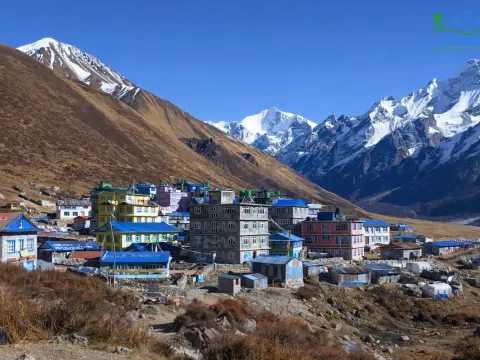
The trek was terribly affected by the 2015 earthquake that demolished the whole Langtang village. The path has been restored, and the locale has recuperated quite well. Your trek here nowadays not only grants you a beautiful experience but also aids the local communities that are still rebuilding their lives through tourism.
Key Facts
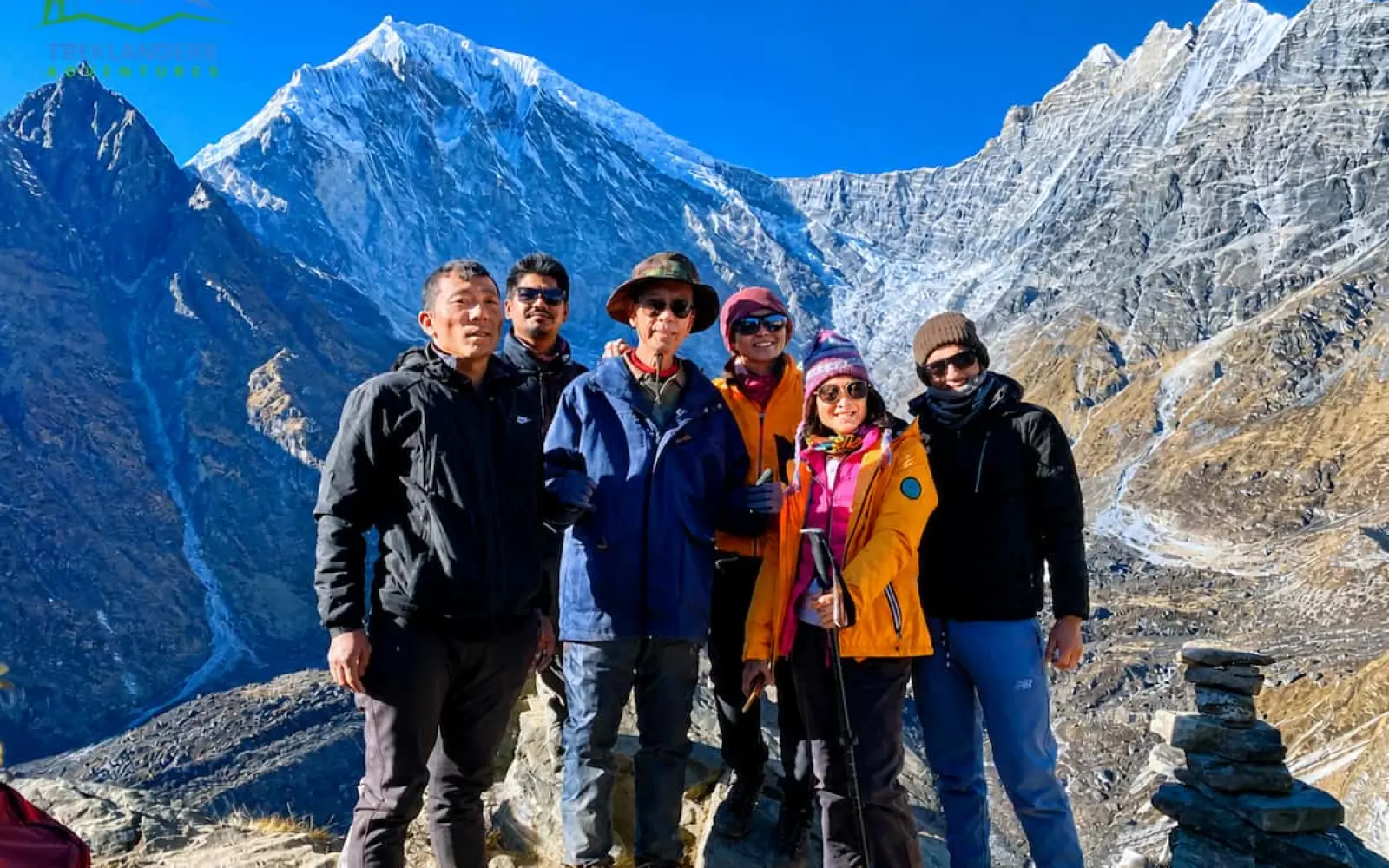
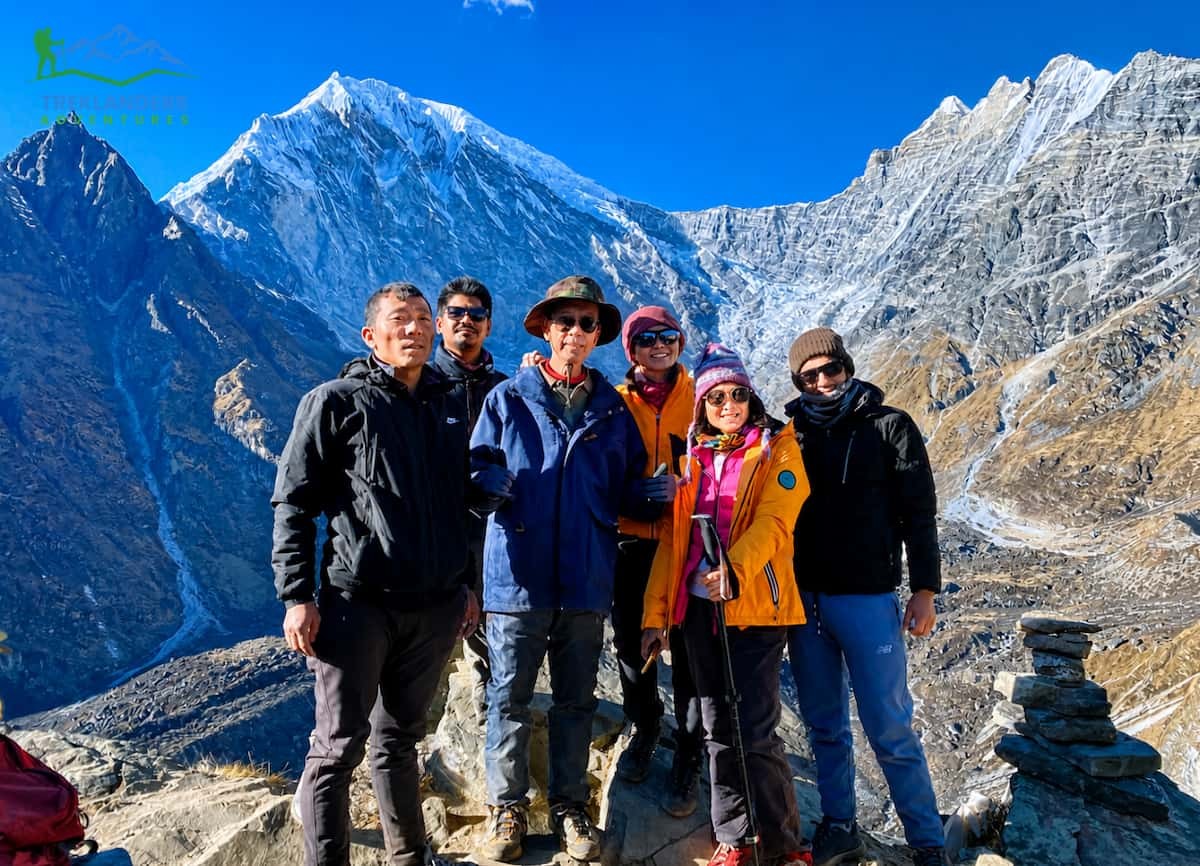
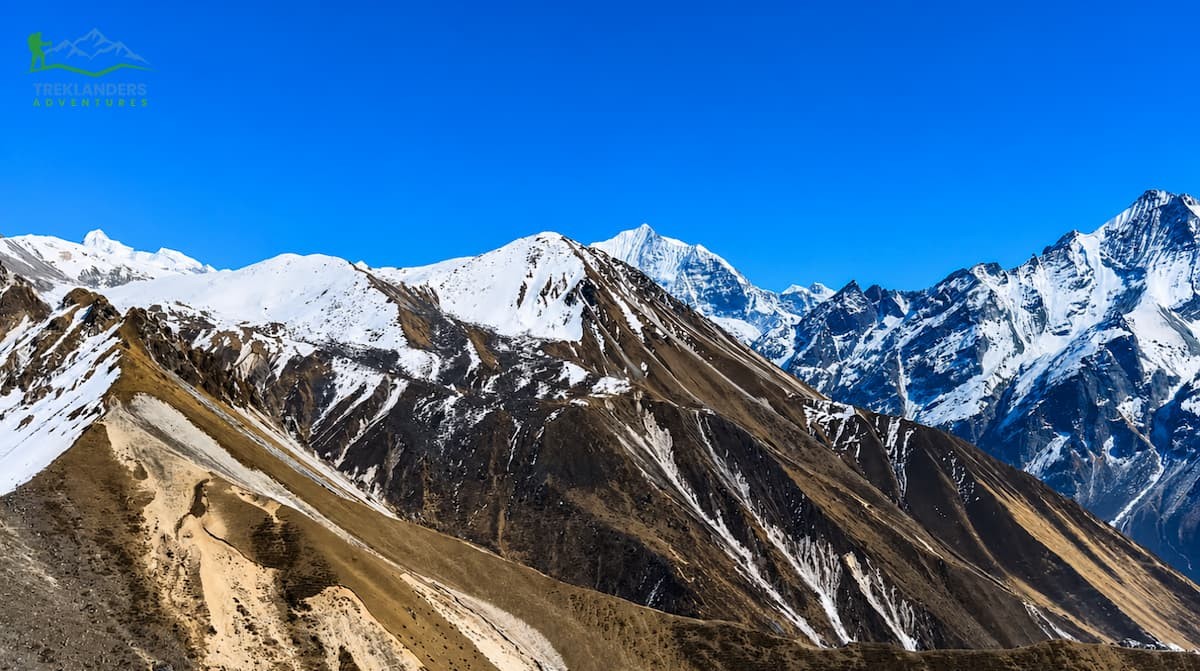
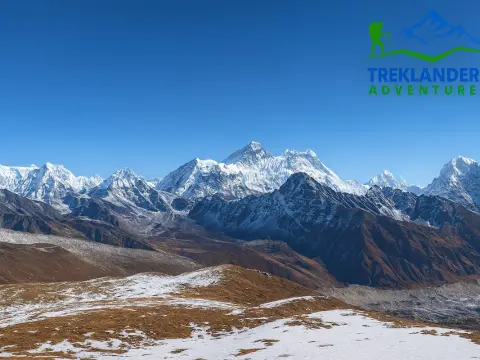
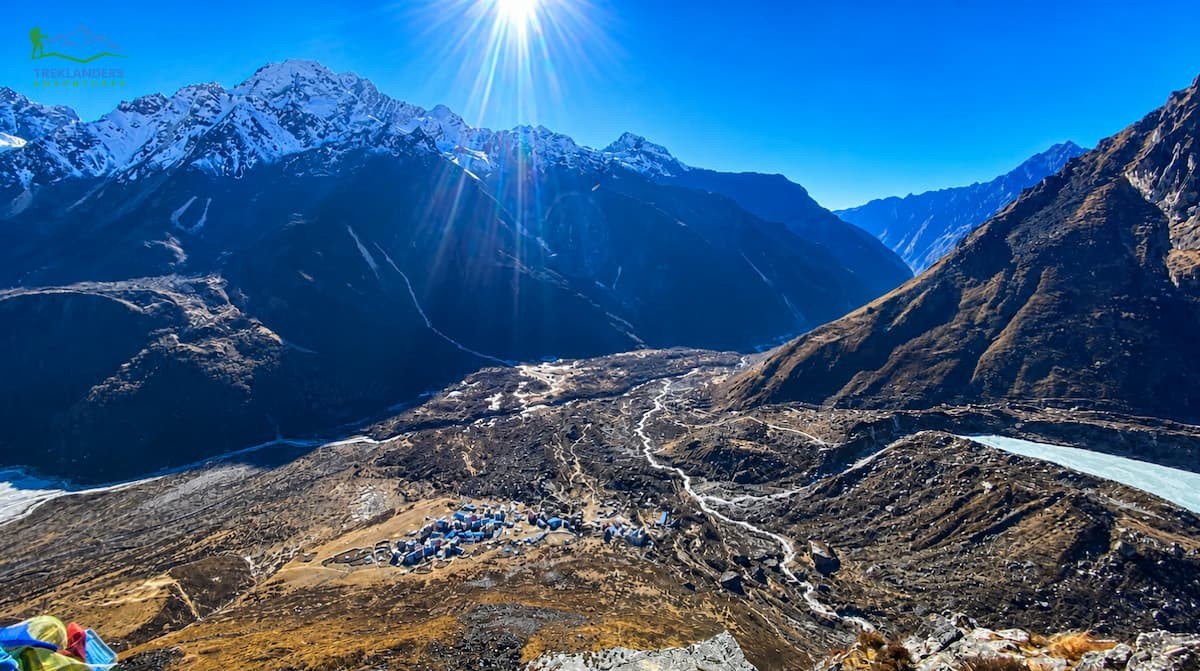
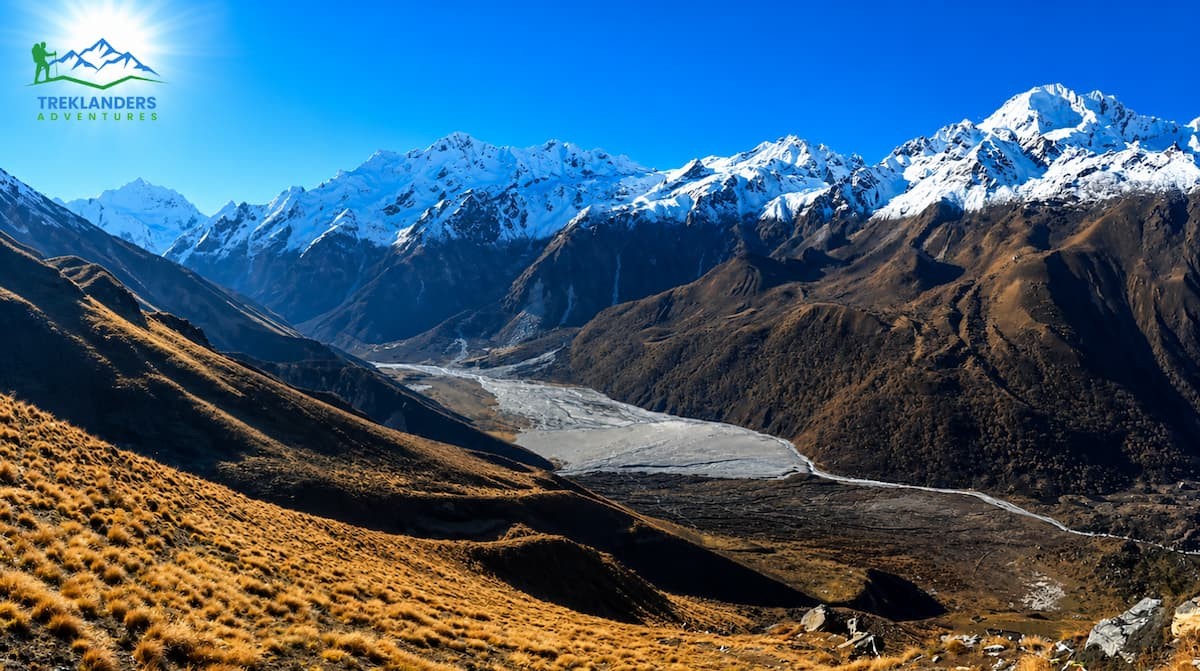
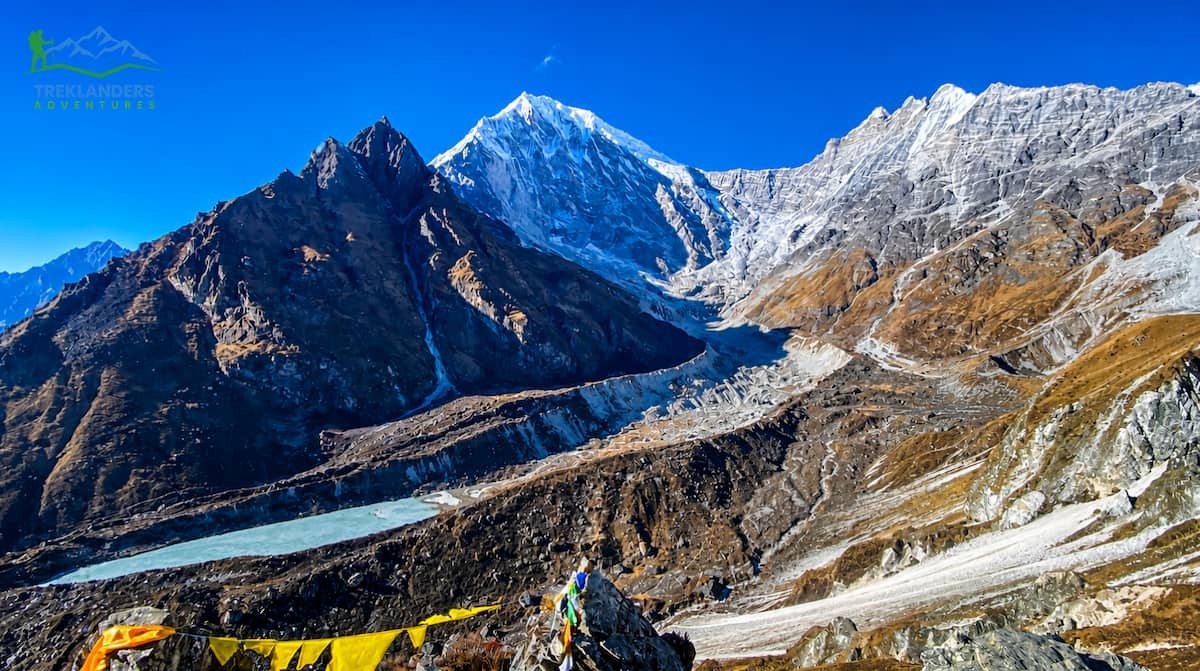
Breathtaking mountain scenery seen from the Kyanjin Ri viewpoint
Maximum altitude: 3,870 m (Kyanjin Gompa), optional 4,773 m (Kyanjin Ri)
Trek duration: 7 to 12 days
Distance from Kathmandu: ~60 km
Difficulty: Moderate
Best for families with children aged 8 and above (younger kids possible with planning)
What Age Is Appropriate for the Langtang Trek?
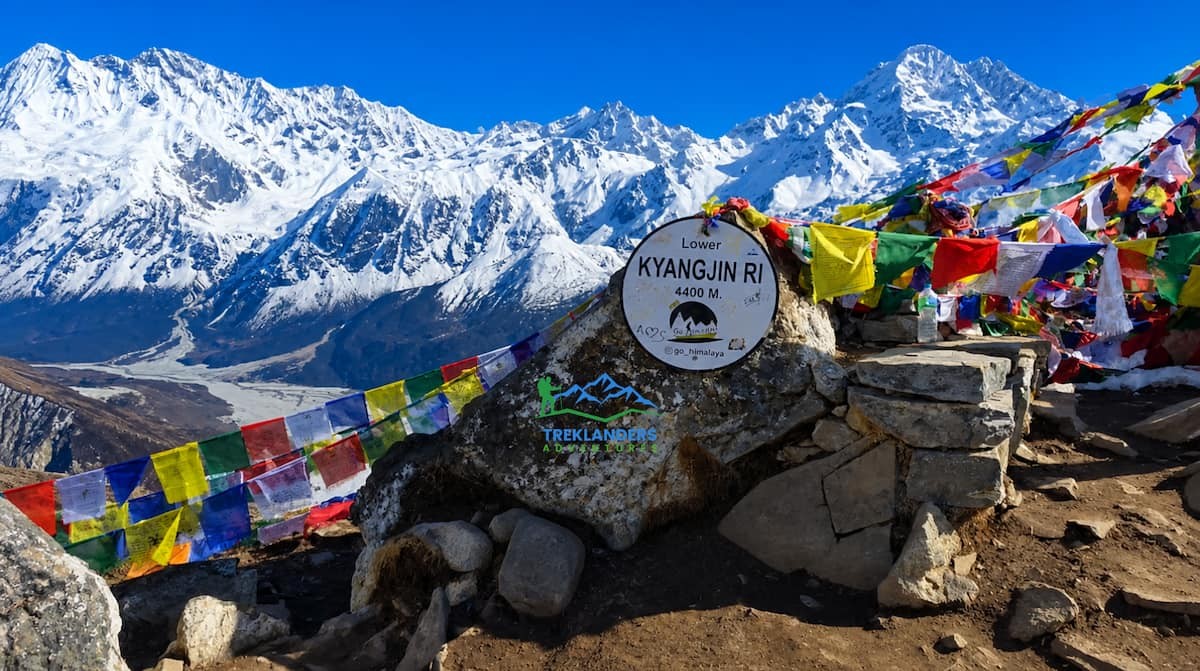
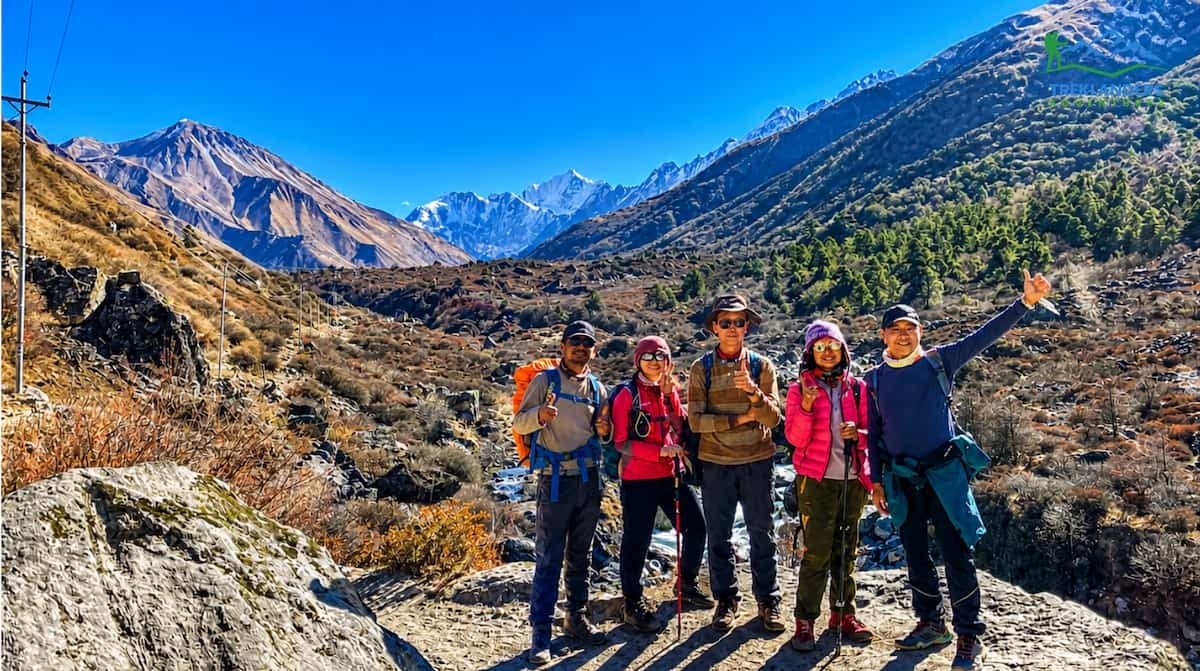
Hiking to Kyanjin Ri during the Langtang Valley Trek
One of the most widely asked questions by parents is when their children will be able to do the Langtang Valley Trek, and it is only fair to answer them directly.
The minimum recommended age for the Langtang Valley Trek is 8 years old. If the children are younger than that, they can still do the lower parts of the trail; however, doing the full trek to Kyanjin Gompa is not a good idea because it involves several days of uphill hiking at high altitude, which is not only physically very demanding but also very difficult physiologically for very young children.
Here is the age group-wise explanation Ages 5 to 7
Children of this age can do walking parts of the trail; however, they will need a lot of carrying for very long stretches. The trail up to Lama Hotel (2,470 m) can be done as a short, lower-altitude goal. The full trek to Kyanjin Gompa is not recommended without a porter carrier and a very conservatively paced day. The risk of altitude sickness becomes very high for children above 3,000 m in this age group.
Ages 8 to 11
At this age, Langtang will be completely doable. Children in this age group can walk for 4 to 6 hours a day with pauses. They will acclimatize pretty well if you carefully ascend by spending a night in Lama Hotel or Langtang village before going to Kyanjin Gompa. They will get tired, complain, and make you slow, but that is just part of the process.
Ages 12 to 15
Physically fit youngsters may very well manage the entire trekking route without any trouble. They can achieve the summit of Kyanjin Ri (4,773 m) if they prepare themselves in advance through regular hiking and cardiovascular exercises. This age group derives the greatest benefit from such experiences and usually recalls them throughout their lives.
Ages 16 and above
Their bodies should be treated as those of adults, physically. Motivation and preparation are the main concerns, not physical limitations. One big factor: the age of your child is far less significant than their fitness, temperament, and your family's trekking experience. After all, it takes a fit and adventurous 7-year-old with parents experienced in trekking to be better than a sedentary 12-year-old who is doing a multi-day hike for the first time.
Yes, Langtang Valley is indeed safe for children, if you make the right plans. It is a gentle trek, and there will be no technical climbing or glaciers, nor dangerous ridge walks exposed to the elements. Besides, the route is clearly marked, heavily trafficked, and has teahouses popping up at regular intervals where you can get a break, have a rest, or turn back if need be.
However, safety comes from both being well-prepared and making good on-the-spot decisions. The following are the main safety factors:
Altitude
The main risk when it comes to safety is mountain sickness, especially the sudden form of it known as acute mountain sickness (AMS). Children do not seem to be more at risk than adults for AMS, but they usually hardly manage to convey their sickness to the same extent as adults. That is why parents have to keep on looking for hidden symptoms. The topic will be broadly explained in the subsequent part.
Trail Conditions
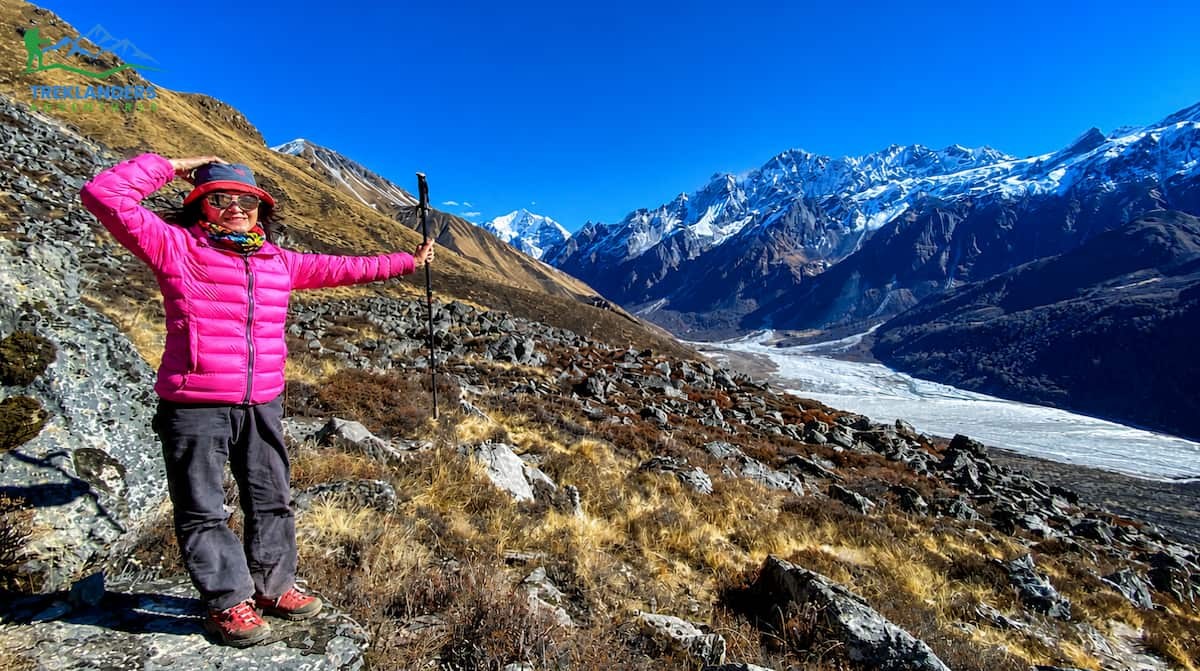
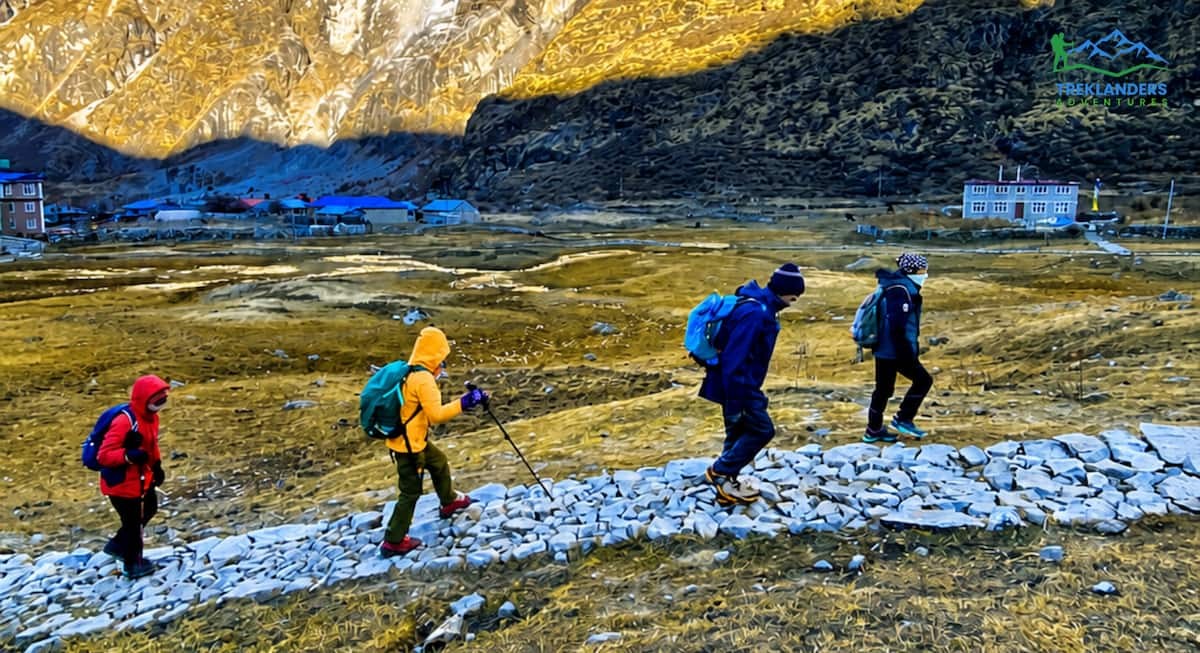
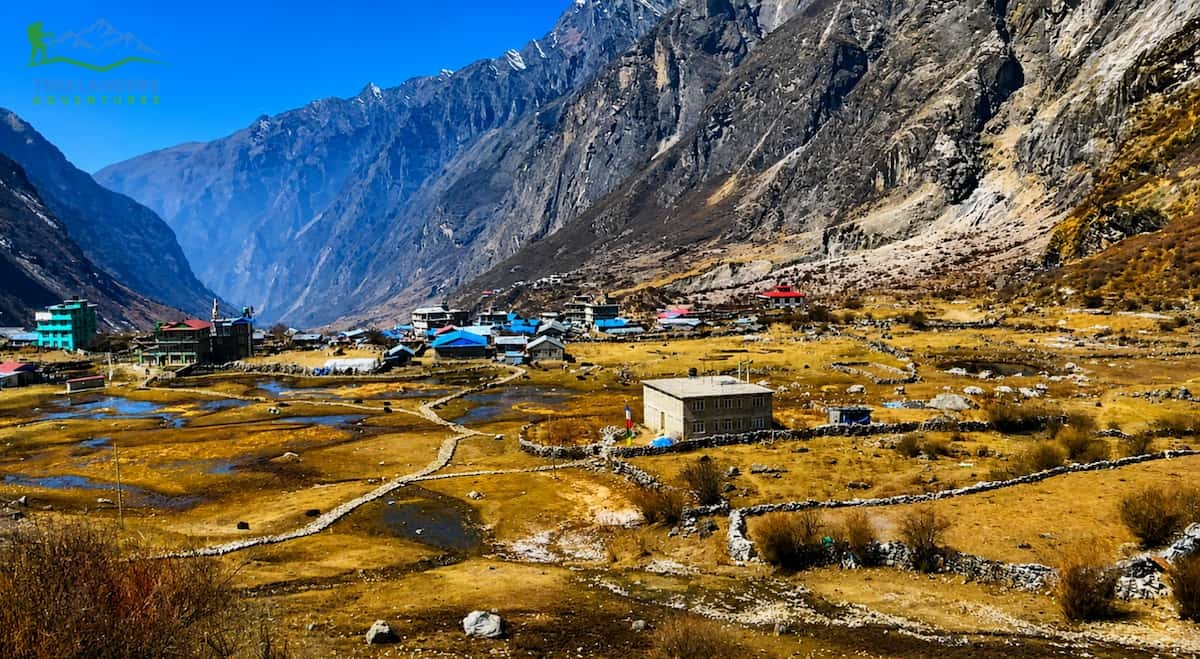
Trail along the Langtang Village
Some parts of the trail are quite challenging, with steep slopes and rocky ground. Downhill sticks would come in handy for kids to get their balance. Of course, you can't do without proper shoes. The pathway is not a kind of garden road, and even a bit of rain may result in slippery bits.
Weather
The weather can suddenly change in the Langtang Valley. For example, the temperature can be nice and warm in the morning, but by the afternoon, cold, wet conditions may prevail. Since children have a higher rate of heat loss from their bodies than adults, ensuring that they have several layers of clothes and waterproof garments is a must.
Wildlife
Among the wild animals found in the national park are the langur monkeys and the red pandas. While these animals are typically not dangerous, you should not be feeding them or trying to get close to them. Dogs in the villages may be territorial; do not let your children get near unfamiliar dogs.
Medical Access
The hospital that is closest to the area is in Kathmandu. There is only a small health post with limited supplies at Kyanjin Gompa. Travel insurance with a provision for helicopter evacuation is a must for any family trekking above 3,000 m.
Guides and Porters
Families with children are especially advised to hire a licensed guide. Besides helping in managing the pace of the walk, a good guide keeps an eye on the trail conditions, watches for altitude symptoms, and offers a safety net in case a child requires assistance.
Altitude and Altitude Sickness: The Biggest Risk for Kids
Altitude sickness is by far the most critical safety concern for families trekking in Langtang. A clear understanding of it can avert a serious situation.
How altitude affects children
It's a fact that children and adults get used to high altitudes in more or less the same way. However, there are a few things that are different. Small kids can hardly describe headaches, dizziness, or nausea. They may even fail to figure out that they are not well. So, it is a good thing if parents can notice any changes in their behavior, like the child becoming irritable in an unusual way, lack of appetite, getting very tired for no reason, or even being unwilling to walk. The Langtang trek ascends to 3,870 m at Kyanjin Gompa, where oxygen is roughly 60% compared to the level at sea level. For many people, including kids who keep fit, this is tolerable but only if the pace of ascent is slow.
Symptoms of AMS in children
A headache that does not go away after rest and hydration
Nausea or vomiting
Loss of appetite
Difficulty sleeping
Fatigue disproportionate to the day's activity
Irritability, crying, or behavioral changes without an obvious cause
Dizziness or loss of coordination
The golden rule: descend if you are not sure
If your kid has signs that can be AMS, come down right away, at least 500 m. Don't wait until the next morning. Don't wish the symptoms would disappear overnight at altitude. Descending is quicker than any drug.
Acclimatization schedule for families
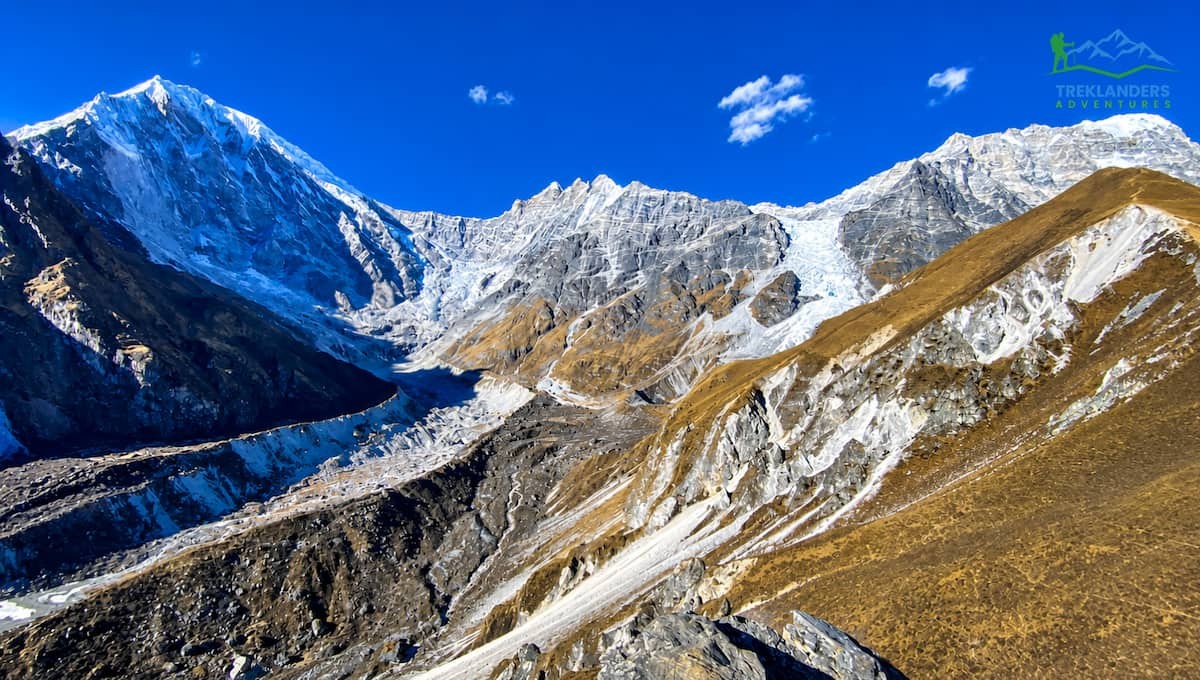
Stunning view of Langtang Lirung seen from the Kyanjin Ri viewpoint
A week's 7-day Langtang Valley Trek itinerary is likely to be too rapid at a pace for children. Therefore, families with children under 12 years should consider doing a trip that lasts 8 to 10 days, while:
Spending one more night at Lama Hotel (2,470 m) before going up to Langtang village (3,430 m)
Having a rest day or a very light walk at Langtang village before heading to Kyanjin Gompa (3,870 m)
Completely resting day at Kyanjin Gompa before engaging in any ascent(s) that may be undertaken optionally
Medications
Adults sometimes take Acetazolamide (Diamox) to prevent AMS. Using it in kids is not typical. It's only a very good option after asking a doctor who's familiar with altitude medicine. Don't give Diamox to kids without a doctor. Ibuprofen works for altitude headaches, and if used in the right dosage, it's safe for kids; you should have it with you on the hike.
Hydration
Children lose fluids faster than adults at high altitudes. Besides quenching their thirst, ensure your kid drinks 2 to 3 liters of water daily. To make the kids drink water who are resisting plain water, use electrolyte-flavored mixes.
15 Day Langtang Gosaikunda Lake Helambu Trek | 15 days
Understanding the trail's physical nature enables you to prepare your expectations right ahead of your trip. Walking distances and elevation gain per day: The itinerary normally has 5 to 8 hours of walking per day. If you are a family with kids, limit this to 4 to 6 hours plus some longer rest. Below is a sample of a family-paced itinerary for you to have an idea:
Day
Route
Distance
Elevation Gain
1
Syabrubesi to Lama Hotel
11 km
+920 m
2
Lama Hotel (rest or short walk)
Short
Minimal
3
Lama Hotel to Langtang Village
12 km
+960 m
4
Langtang Village to Kyanjin Gompa
7 km
+400 m
5
Rest day at Kyanjin Gompa
Optional hike
200-500 m
6
Kyanjin Gompa to Lama Hotel
19 km
-1,400 m
7
Lama Hotel to Syabrubesi
11 km
-920 m
Trail surface
Langtang Valley Trek
The trail is a combination of stone steps, dirt paths, rocky sections, and suspension bridges. Although the suspension bridges are totally safe, they could be somewhat scary to younger children. If you have a child, you should walk them across very slowly, one at a time, by holding their hands. The steepest part of the trail is the initial climb from Syabrubesi to Bamboo (1,970 m) on day one. After this section, the trail will be gentler until the ascent to Langtang village.
Carrying capacity for young children
If you bring a child who is less than 7, you should allow the budget for a porter who could carry them in a basket carrier (Doko) or bring a good child carrier pack. Do not try this without a dedicated person whose job is only to carry the child when needed.
Physical preparation at home
You should start training at least 8 weeks ahead of departure. These days, hikes with elevation gain, stair climbing, and cardiovascular exercise will do a great job in preparing your children for the trek and making it a lot more pleasurable for them. Physically prepared kids complain less and recover faster.
Best Time of Year to Trek Langtang with Kids
Kyanjin Valley- Langtang Valley Trek
Picking the right time for your trek is probably the biggest factor that will determine your experience.
Spring: March to May
During these months, it is an ideal time for a family holiday. The weather is not too hot, the rhododendrons' flowers are blooming everywhere, and mornings are mostly clear. You can expect some clouds and rain at times in May. Daytime temperatures in Kyanjin Gompa vary between 5 °C and 15 °C.
Autumn: October to November
This season is also excellent for trekking. The air after the monsoon is fresh and clean, making for some fantastic mountain views. The temperature is a bit colder than in spring, especially at Kyanjin Gompa, where it can get as cold as -5 °C at night in November. Extra layering for the kids is necessary for late October or November hikes.
Monsoon: June to September
It's not a good time to bring kids along. The continuous rain causes the path to become slippery, and besides the risk of falling, there can be landslides. There is also a problem with leeches in the lower parts of the trail. The teahouses in this area close sometimes.
Winter: December to February
It could work for trekking families with kids who are experienced travellers, but not the best with youngsters. The path from the Lama Hotel to Langtang village is likely to be covered with a lot of snow at altitudes higher than 2,500 m. The temperature at Kyanjin Gompa may fall to -15 °C during the night. Some teahouses shut down completely. You have to be aware that the risk of kids getting cold injuries is quite high.
Optimal windows for families
Late March to early May
Mid-October to mid-November
Book your trek during these windows, and you will have favorable conditions, reasonable crowds, and fully operational teahouses.
What to Pack for a Family Trek in Langtang?
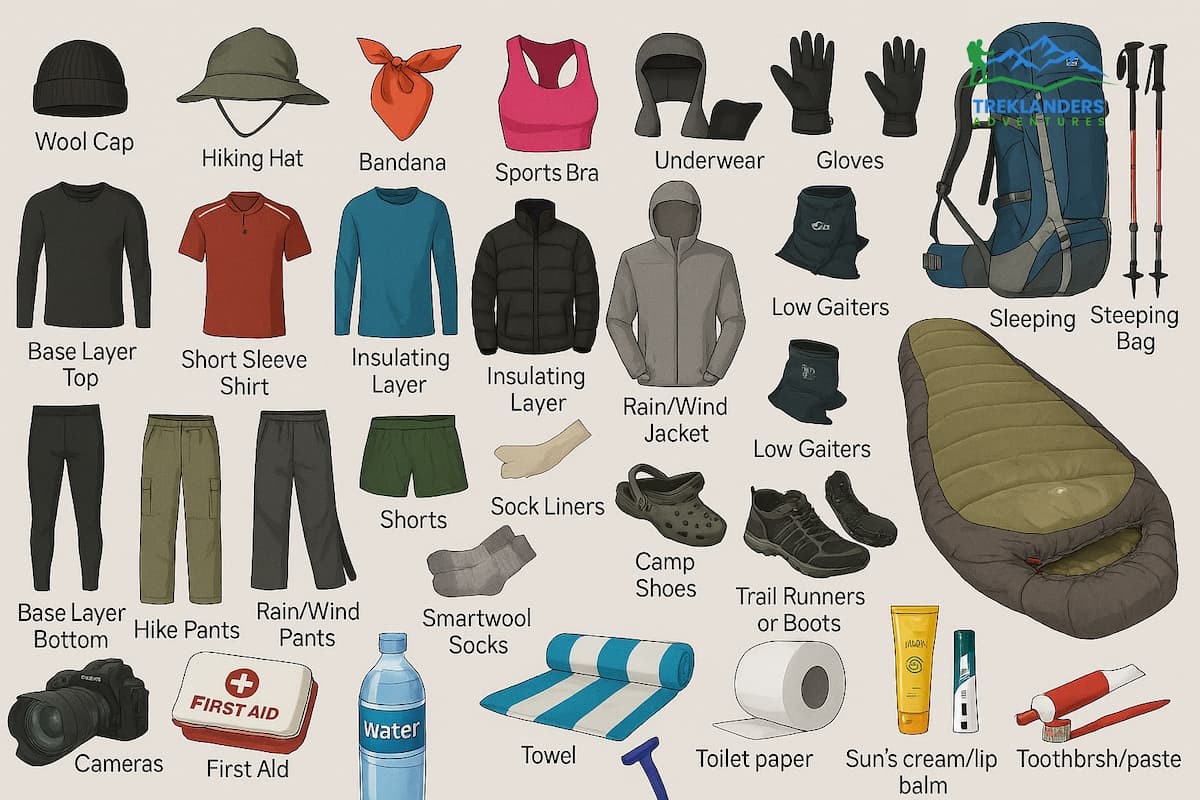
Packing list for langtang Valley Trek
Packing right will make the difference between having miserable kids or happy ones. Kids are less adaptable than adults and don’t handle being cold/uncomfortable very well.
Clothing
Pack layers, layers, layers!
Bottom Layer: Moisture-wicking shirt and leggings (merino wool or synthetic)
Middle Layer: Fleece jacket or down vest
Shell Layer: Waterproof rain jacket and rain pants
Warm hat, gloves, and neck gaiter above 3,000 m
Sun hat and UV-protection sunglasses for daytime use
2 to 3 pairs of trekking socks (preferably wool)
Trekking shoes or hiking boots with ankle support, broken in before your trip.
Lightweight sandals for teahouse nights
Thermal underwear top and leggings for cold nights at Kyanjin Gompa
Gear
Bring the following essentials, adapted for little ones:
Child-sized trekking poles (adjustable poles are great for this!)
Headlamp with extra batteries
Daypack (15 to 20 liters) for kids 8+ to carry their water and snacks
Hydration bladder or water bottles (1.5 liters minimum)
Sunscreen (SPF 50+) – Sun exposure at altitude is serious business
Lip balm with SPF
Kids Medicine Bag
Bring along a well-stocked first-aid kit. This should include:
Ibuprofen (children’s dosage) for headaches and/or fever
Antihistamine for allergic reactions
Oral rehydration salts
Plasters, antiseptic wipes, and blister kit
Diamox, if you plan to use it on your child (make sure to consult your doctor before bringing it)
Digital thermometer
Any medication your child takes regularly
Water purification tablets or SteriPen
Morale Boosters
Trekking days are mentally tough for kids. Provide:
Small journal or notebook
Downloaded books, podcasts, or audiobooks on your phone (there’s limited service on the trail)
Travel games for teahouse nights
Mini prize system (add a few special treats they can earn)
What NOT to bring
Heavy toys, multiple books, bulky electronics. If you’re wondering if you need to bring it on a multi-day hike, you don’t. Every ounce counts. Pack children’s weight total weight under 30% of their body weight.
Choosing the Right Itinerary for Families
Kyanjin Valley- Langtang Valley Trek
A sample family itinerary for Langtang Trek is shown below. Note that acclimatization, not speed, is the goal. Trekkers without children often fly by the standard itinerary of 7 days offered by most agents, but families with young kids simply cannot do it in that short of a time.
Day to Day Langtang Valley Trek Itinerary
DAY 1 Arrival in Kathmandu (1355m)
Arrive in Kathmandu and meet the transfer transport that will take you to your hotel. The transfer takes around 20-30 minutes. Relax in your hotel for the remainder of the day after travel. You can explore Thamel if time and energy permit. Check and repack your equipment, sort out permits. Drink lots of water and keep the evening light to prepare for the journey ahead.
Day 2 Kathmandu (1355m) to Syabrubesi (1470m)
Early morning departure from Kathmandu, you will drive to Syabrubesi via Dhunche. The vehicle winds its way uphill out of the Kathmandu Valley before traversing along the contour of several ridgelines high above terraced agriculture with stunning views of snowy mountain peaks. The drive will take around 6 hours, depending on road conditions. You arrive in Syabrubesi in the afternoon. Syabrubesi is a small riverside town and marks the official beginning of your trek. Please prepare for an early morning departure tomorrow.
Day 3 Syabrubesi (1470m) to Lama Hotel (2455m)
Today, you commence trekking along the banks of the Langtang River. Initially, the path weaves through shaded oak and rhododendron forests. There are several suspension bridges to cross. The trail climbs gradually throughout the day. Arriving at Lama Hotel after approximately 6 hours of sustained walking. You may feel the air getting cooler and thinner already. Pace yourself.
Day 4 Lama Hotel (2455m) to Langtang Village (3425m)
The trail climbs steeply through dense forest before opening out onto the grassy floor of the valley. You will begin to see snow-capped peaks clearly for the first time. Passing through tiny settlements and yak grazing grounds. After around 6 hours, you arrive in Langtang Village. The village was rebuilt after being destroyed by a disaster during the 2015 Earthquake. Keep warm and get a good night's sleep.
Day 5 Langtang Village (3425m) to Kyanjin Gompa (3870m)
Langtang Village
The trail switchbacks gradually uphill towards Kyanjin Gompa. After around 4 hours of steady uphill walking, you arrive at Kyanjin Gompa. The terrain opens out to wide open alpine slopes. You will begin to see glaciers in the valley below and towering rocky ridgelines. Once you arrive, you can spend time exploring the monastery. There is a small cheese factory nearby. Make sure you acclimatise properly here, as you are becoming higher now.
Day 6 Kyanjin Gompa (3870m) to Kyanjin Ri (4773m) and back
Kyanjin Ri- Langtang Valley Trek
Today you hike early in the morning to Kyanjin Ri for the incredible views. You summit Kyanjin Ri after around 3 hours of uphill hiking. Once at the summit, you can look out across Langtang Lirung and the surrounding peaks with incredible visibility. You make your way back down to the Lama Hotel. Walking back down to the Lama Hotel will take a long time, around 6 hours. More pressure on your knees here.
Day 7 Kyanjin Gompa (3870m) to Syabrubesi (1470m)
We trek down through the forest and gradually make our way back to Syabrubesi. This takes around 5 hours of walking. You will begin to feel like you can breathe more easily as you drop in altitude. Oxygen levels are increasing! You have now completed the trekking portion of the loop.
Day 8 Syabrubesi (1470m) to Kathmandu (1355m)
Today we'll drive you back to Kathmandu. It takes around 6 hours. Relax for the evening or explore the city if you wish.
Day 9 Kathmandu Airport Transfer
You transfer to the airport for your onward journey.
Food, Water, and Hygiene on the Trail
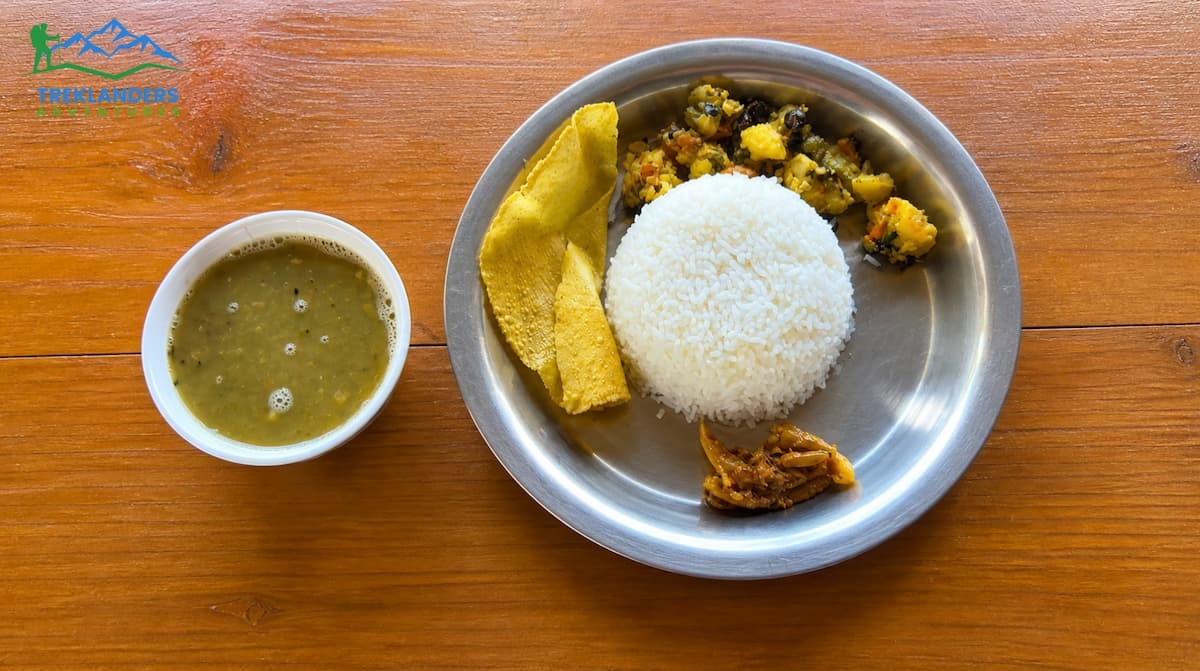
Dal Bhat served during the Langtang Valley Trek
Food/water/hygiene logistics are a little tricky with kids if you're going for more than a day. Luckily, the Langtang trail is extremely developed, and there are teahouses at every stop on the trail, so you won't be camping/having to cook your own meals. However, the food is limited, and you need to be careful with water.
Food on the trail
Teahouse menus typically include:
Dal bhat- lentil soup with rice, veggies and sometimes meat
Noodle soups
Plain pasta/pizza
Pancakes, porridge, eggs for breakfast
Tibetan bread, fried rice, and momo dumplings
Water safety
Do not drink tap water or unfiltered stream water anywhere on the trail. Use one of the following:
Water purification tablets (iodine or chlorine-based)
SteriPen UV purifier
Boiled water from teahouses (ask specifically for boiled water, not just filtered)
While bottled water can be bought at teahouses, its price rises significantly as one goes up the mountains (in Kyanjin Gompa, the price per bottle may increase up to NPR 300 to 500). One can save one's money as well as cut down on plastic waste by adopting the purification method.
Hygiene
Although most teahouses/tents have basic toilet facilities, their quality can be quite variable. Expect to find squat toilets at the majority of the stops. It is also common to find Western-style toilets only at the upscale lodges. Therefore, it is always a good idea to have a pocket pack of toilet paper and a bottle of hand sanitizer. You can also take some wet wipes that are very handy for quick cleaning when one cannot have a proper bath.
Regarding bathing, most teahouses offer hot showers for an additional charge. Typically, they are solar-heated; therefore, showers during the morning will generally be warmer than those in the evening. You may realistically plan on bathing every second day while trekking. It is important to teach children to wash their hands before every meal and after going to the toilet. This one habit alone will prevent most gastrointestinal problems while on the trail.
Gastrointestinal illness
For the most part, changing diets may upset children's stomachs. Always carry oral rehydration salts and anti-diarrheal medicines with you (ask a doctor for advice). If a child suffers from vomiting or diarrhoea for a long time and at an altitude, you should consider this situation with the utmost seriousness. Dehydration, when coupled with altitude, can be fatal.
14 Day Tamang Heritage with Langtang Valley Trek | 14 days
Permits, Guides, and Logistics for Family Trekkers
Permits and Entry Requirements
You will need to get two types of permits if you are going to the Langtang region. One of them is the Langtang National Park Entry Permit, which allows you to enter protected areas. The other one is the TIMS Card, which is a safety and tracking measure as it records your movement. You can get both of these from Kathmandu, either at the Nepal Tourism Board office in Bhrikuti Mandap or through a registered trekking agency.
Also, you can get the park permit at the Dhunche checkpoint, but having everything ready in Kathmandu is a good way to avoid travel day delays. Take along passport copies and some photos. Have permits handy throughout the trek as officials may ask to see them at various points. Kids under ten years do not require a TIMS card, but they still must have the park permit. Since rules and fees could be changed, it is better to verify the information with the Nepal Tourism Board or your agency before leaving.
Hiring a Guide
Guided Langtang Valley Trek
A certified guide not only makes a trip safer but also more enjoyable. This becomes especially important when the traveling party includes children. Although in many parts the path to Langtang is well marked, one still needs to make the right decisions in case of a change in the weather, landslides, or the effects of altitude. A guide is the one who decides the route, checks if there are any free rooms in the guest houses, and communicates with the teahouses. Keeping an eye on one's health is very important. A guide can detect the first symptoms of altitude sickness and slow down the walking speed. Furthermore, they are familiar with emergency evacuation and have connections with local support. Besides managing logistics, a guide can tell you about the culture, local customs, and nature. This helps in giving children a better understanding of the whole environment while keeping them interested in walking. Recruit your guide only through agencies that are members of the Trekking Agencies' Association of Nepal. This is not only a guarantee that the guides are well-trained but also that they observe safety standards.
Porters
Porters lessen the burden of carrying heavy equipment and help you maintain a constant pace. This is especially necessary for family groups. Every porter is responsible for carrying a heavy load, which means you only need to carry a small daypack with water, snacks, and other necessities. Sound ethics is important. Make sure your porter wears appropriate clothes and shoes and has a sleeping bag compatible with the season. Treating them ethically ensures their safety and dignity. Besides, it is in line with Nepal's porter welfare rules. Most trekking companies take care of porter arrangements and supplies, but you should check this before the trek.
Getting to the Trailhead
The Langtang Valley trek mainly originates from Syabrubesi. To get there from Kathmandu, one must travel on the serpentine roads through Nuwakot and Rasuwa valleys. Depending on the state of the roads and level of congestion, the duration of the journey may vary. Opting for a private jeep, on the other hand, gives you the benefit of convenience, besides comfort. You decide when you would like to leave and whether you want to make a stop during the trip, which is great when you have kids. Alternatively, you may choose to travel by public bus, which is available Monday to Sunday and charges less, but the downside is that they are quite cramped, and their timing cannot be relied upon very much. To get off to a great start, you could book your transportation through your hotel or travel agency one day in advance.
Travel Insurance
Getting travel insurance is a must if you want to hike in Langtang. Your insurance should definitely mention coverage for high-altitude trekking, along with the provision of emergency evacuation. Because the Langtang area is very remote and road accessibility is quite limited, the main option for seriously ill or injured people is a helicopter rescue. Go through your policy very carefully; check altitude limits, emergency procedures, and how you claim. While trekking, carry both digital and printed versions of your insurance documents. Inform your guide about the main points of your policy so that they are able to react promptly in case of necessity.
The Langtang Valley Trek is an excellent option for families to experience the Himalayan mountains together. It won't be a walk in the park, and there are some risks. However, if you get yourself well-prepared, follow a conservative acclimatization schedule, hire a good guide, and set realistic expectations, then even families with kids aged 8 and over can safely and successfully pull off this trek. Besides challenging yourselves physically, you will be deeply exposed to the local culture and surrounded by massive and magnificent natural settings - things that most family holidays rarely offer. Children who have done the Langtang trek come back transformed. They have accomplished something significant. They have learned about the lifestyles of mountain-dwelling people in Nepal. And most importantly, they have been "off the grid" for a few days and survived that experience.
For some families, it becomes their "trip of a lifetime" that they reminisce about till their very last days. Are you ready to begin your preparations?
Treklanders Adventures arranges guided family treks to Langtang Valley led by highly trained guides who have been licensed, providing tailored family itineraries.