[{"name":"Everest Base Camp Trek","duration":"16","image_url":"https:\/\/www.treklanders.com\/storage\/trip-galleries\/1\/thumb_419a755c003cc609f3030ee332965ebe.jpg","offer_price":1405,"url":"https:\/\/www.treklanders.com\/trips\/everest-base-camp-trek"},{"name":"Gokyo Valley Trekking","duration":"16","image_url":"https:\/\/www.treklanders.com\/storage\/trip-galleries\/2\/thumb_676d1021b574aeba4d19d3f2a0b04ed2.webp","offer_price":1205,"url":"https:\/\/www.treklanders.com\/trips\/gokyo-valley-trekking"},{"name":"Annapurna Circuit Trek","duration":"23","image_url":"https:\/\/www.treklanders.com\/storage\/trip-galleries\/3\/thumb_2a9a92ea23c62f41de27b37f5e3e8c17.webp","offer_price":1495,"url":"https:\/\/www.treklanders.com\/trips\/annapurna-circuit-trek"},{"name":"Everest Panorama Trek","duration":"12","image_url":"https:\/\/www.treklanders.com\/storage\/trip-galleries\/4\/thumb_35c9f677ea2e88b1ff11a9f43daa3ddb.jpg","offer_price":1100,"url":"https:\/\/www.treklanders.com\/trips\/everest-panorama-trek"},{"name":"Everest Base Camp Trekking from Jiri","duration":"22","image_url":"https:\/\/www.treklanders.com\/storage\/trip-galleries\/6\/thumb_14763592492417b294aa66bf0ebf4e64.webp","offer_price":1400,"url":"https:\/\/www.treklanders.com\/trips\/everest-base-camp-trekking-from-jiri"},{"name":"Everest Base Camp via Cho la Pass from Gokyo Valley Trekking","duration":"18","image_url":"https:\/\/www.treklanders.com\/storage\/trip-galleries\/7\/thumb_d4e470e98d4e9e2ab8e93e39b8b7d252.jpg","offer_price":1405,"url":"https:\/\/www.treklanders.com\/trips\/everest-base-camp-via-cho-la-pass-from-gokyo-valley-trekking"},{"name":"Everest Three Passes Trekking","duration":"22","image_url":"https:\/\/www.treklanders.com\/storage\/trip-galleries\/8\/thumb_b413b221e913171500bb3dfd5c08ceea.jpg","offer_price":1635,"url":"https:\/\/www.treklanders.com\/trips\/everest-three-passes-trekking"},{"name":"Annapurna Base Camp Trekking","duration":"14","image_url":"https:\/\/www.treklanders.com\/storage\/trip-galleries\/9\/thumb_2e71f2ffe116c659fa66b01c2d571b4e.webp","offer_price":845,"url":"https:\/\/www.treklanders.com\/trips\/annapurna-base-camp-trekking"},{"name":"Mardi Base Camp Trekking","duration":"14","image_url":"https:\/\/www.treklanders.com\/storage\/trip-galleries\/10\/thumb_d7b2d2dc638f6bbf2c31c167ac68029d.webp","offer_price":845,"url":"https:\/\/www.treklanders.com\/trips\/mardi-base-camp-trekking"},{"name":"Mohare Danda Trekking","duration":"12","image_url":"https:\/\/www.treklanders.com\/storage\/trip-galleries\/11\/thumb_a384c8d35d789d29b19991c1d675c910.webp","offer_price":755,"url":"https:\/\/www.treklanders.com\/trips\/mohare-danda-trekking"},{"name":"Khopra Ridge & Khair Lake Trekking","duration":"15","image_url":"https:\/\/www.treklanders.com\/storage\/trip-galleries\/12\/thumb_c0f50461ddc74acfb553ba85be00fab0.webp","offer_price":855,"url":"https:\/\/www.treklanders.com\/trips\/khopra-ridge-khair-lake-trekking"},{"name":"Upper Mustang Trekking","duration":"17","image_url":"https:\/\/www.treklanders.com\/storage\/trip-galleries\/13\/thumb_7aa4dfdb69186b0f224a303d80a25c95.jpg","offer_price":1715,"url":"https:\/\/www.treklanders.com\/trips\/upper-mustang-trekking"},{"name":"Langtang Valley Trek","duration":"12","image_url":"https:\/\/www.treklanders.com\/storage\/trip-galleries\/14\/thumb_8650b4b1a3c160cff75da65369398353.webp","offer_price":735,"url":"https:\/\/www.treklanders.com\/trips\/langtang-valley-trek"},{"name":"Gosainkunda Lake Trek","duration":"11","image_url":"https:\/\/www.treklanders.com\/storage\/trip-galleries\/15\/thumb_bfe94c14e760c48234e117021105be84.webp","offer_price":735,"url":"https:\/\/www.treklanders.com\/trips\/gosainkunda-lake-trek"},{"name":"Chisapani-Nagarkot to Dhulikhel Hiking","duration":"7","image_url":"https:\/\/www.treklanders.com\/storage\/trip-galleries\/16\/thumb_468defe9a4000ee3129cd7e6421ee105.webp","offer_price":565,"url":"https:\/\/www.treklanders.com\/trips\/chisapani-nagarkot-to-dhulikhel-hiking"},{"name":"Kanchenjunga Trek","duration":"23","image_url":"https:\/\/www.treklanders.com\/storage\/trip-galleries\/17\/thumb_51f43fa4203106cc49aaedc89d76e01d.jpg","offer_price":1725,"url":"https:\/\/www.treklanders.com\/trips\/kanchenjunga-trek"},{"name":"Helambu Trek","duration":"12","image_url":"https:\/\/www.treklanders.com\/storage\/trip-galleries\/18\/thumb_0fe8e3fa1299d2e43bf1fb5977875ce2.jpg","offer_price":685,"url":"https:\/\/www.treklanders.com\/trips\/helambu-trek"},{"name":"Upper Dolpo Trek","duration":"26","image_url":"https:\/\/www.treklanders.com\/storage\/trip-galleries\/19\/thumb_d6080d490e1db83b0a711e7304000864.jpg","offer_price":3005,"url":"https:\/\/www.treklanders.com\/trips\/upper-dolpo-trek"},{"name":"Manaslu Circuit Trek","duration":"18","image_url":"https:\/\/www.treklanders.com\/storage\/trip-galleries\/20\/thumb_1fdd224e849f4f328e73d2d12b3d282d.jpg","offer_price":1225,"url":"https:\/\/www.treklanders.com\/trips\/manaslu-circuit-trek"},{"name":"Tilicho Lake Base Camp Trek","duration":"19","image_url":"https:\/\/www.treklanders.com\/storage\/trip-galleries\/21\/thumb_eba8ac5e029e6543e0c17630ebd9e2fb.jpg","offer_price":1220,"url":"https:\/\/www.treklanders.com\/trips\/tilicho-lake-base-camp-trek"},{"name":"Nar-Phu Valley With Thorang-La Pass Trek","duration":"21","image_url":"https:\/\/www.treklanders.com\/storage\/trip-galleries\/22\/thumb_43597423a5a366fe9c8937fb30d2fe2a.jpg","offer_price":1315,"url":"https:\/\/www.treklanders.com\/trips\/nar-phu-valley-with-thorang-la-pass-trek"},{"name":"Nepal Round Trip of Kathmandu-Pokhara-Lumbini and Chitwan Tour","duration":"10","image_url":"https:\/\/www.treklanders.com\/storage\/trip-galleries\/23\/thumb_32497d170b2ab340b0a1b3310e91e784.webp","offer_price":845,"url":"https:\/\/www.treklanders.com\/trips\/nepal-round-trip-of-kathmandu-pokhara-lumbini-and-chitwan-tour"},{"name":"Nagarkot Day Hike","duration":"2","image_url":"https:\/\/www.treklanders.com\/storage\/trip-galleries\/24\/thumb_a5a654930fd8ba7852e41738105bacfc.webp","offer_price":105,"url":"https:\/\/www.treklanders.com\/trips\/nagarkot-day-hike"},{"name":"Nagarkot Sunrise Tour","duration":"1","image_url":"https:\/\/www.treklanders.com\/storage\/trip-galleries\/25\/thumb_17dc28a29cfa44381ad503f0a75ee84f.webp","offer_price":22,"url":"https:\/\/www.treklanders.com\/trips\/nagarkot-sunrise-tour"},{"name":"Namobuddha Day Tour with Shiva Statue","duration":"1","image_url":"https:\/\/www.treklanders.com\/storage\/trip-galleries\/26\/thumb_beeb34202f9077764aa08c67ef2867f9.webp","offer_price":45,"url":"https:\/\/www.treklanders.com\/trips\/namobuddha-day-tour-with-shiva-statue"},{"name":"Kathmandu Full Day Sightseeing Tour","duration":"1","image_url":"https:\/\/www.treklanders.com\/storage\/trip-galleries\/27\/thumb_d045fc0f1acee2cfa6b3c95f3c656d18.jpg","offer_price":30,"url":"https:\/\/www.treklanders.com\/trips\/kathmandu-full-day-sightseeing-tour"},{"name":"Patan and Bhaktapur Sightseeing Tour","duration":"1","image_url":"https:\/\/www.treklanders.com\/storage\/trip-galleries\/28\/thumb_750eacac3424b5dba686dd93656ab87c.jpg","offer_price":30,"url":"https:\/\/www.treklanders.com\/trips\/patan-and-bhaktapur-sightseeing-tour"},{"name":"Upper Mustang Heli Tour","duration":"1","image_url":"https:\/\/www.treklanders.com\/storage\/trip-galleries\/29\/thumb_0b785f69a15557f8660c805c76fda14e.webp","offer_price":1250,"url":"https:\/\/www.treklanders.com\/trips\/upper-mustang-heli-tour"},{"name":"Everest Heli Tour","duration":"1","image_url":"https:\/\/www.treklanders.com\/storage\/trip-galleries\/30\/thumb_dc45f2beb36a3699e0decf0de41a6f17.jpg","offer_price":1495,"url":"https:\/\/www.treklanders.com\/trips\/everest-heli-tour"},{"name":"Island Peak Trek & Climb","duration":"21","image_url":"https:\/\/www.treklanders.com\/storage\/trip-galleries\/31\/thumb_a0f3e3468c92a8e436045cf8b2fbf361.jpg","offer_price":2295,"url":"https:\/\/www.treklanders.com\/trips\/island-peak-trek-climb"},{"name":"Mera Peak Trek & Climb","duration":"18","image_url":"https:\/\/www.treklanders.com\/storage\/trip-galleries\/32\/thumb_3e8128a23c36f02fa38135475e811b9e.jpg","offer_price":2815,"url":"https:\/\/www.treklanders.com\/trips\/mera-peak-trek-climb"},{"name":"Chandragiri Cable Car Tour","duration":"1","image_url":"https:\/\/www.treklanders.com\/storage\/trip-galleries\/33\/thumb_faa70b716449eada6d7f1450335edbb3.jpg","offer_price":30,"url":"https:\/\/www.treklanders.com\/trips\/chandragiri-cable-car-tour"},{"name":"Everest Base Camp Trek and Returning via Heli","duration":"13","image_url":"https:\/\/www.treklanders.com\/storage\/trip-galleries\/34\/thumb_11190941866206e1d578db11986ebc73.webp","offer_price":2100,"url":"https:\/\/www.treklanders.com\/trips\/everest-base-camp-trek-and-returning-via-heli"},{"name":"Annapurna Semi Circuit Trek","duration":"15","image_url":"https:\/\/www.treklanders.com\/storage\/trip-galleries\/35\/thumb_30ddd8ba818cdcb52efd5eb0a017bcdb.jpg","offer_price":965,"url":"https:\/\/www.treklanders.com\/trips\/annapurna-semi-circuit-trek"},{"name":"Everest Base Camp Luxury Trek","duration":"14","image_url":"https:\/\/www.treklanders.com\/storage\/trip-galleries\/39\/thumb_6079aea3c5dd83e745a16fd6162270dc.jpg","offer_price":2685,"url":"https:\/\/www.treklanders.com\/trips\/everest-base-camp-luxury-trek"},{"name":"Mt. Kailash & Lake Manasarover Tour","duration":"15","image_url":"https:\/\/www.treklanders.com\/storage\/trip-galleries\/41\/thumb_cf3fededfd7dd2b40399af399e04f95a.jpg","offer_price":2205,"url":"https:\/\/www.treklanders.com\/trips\/mt-kailash-lake-manasarover-tour"},{"name":"Ghorepani Poonhill Trek","duration":"11","image_url":"https:\/\/www.treklanders.com\/storage\/trip-galleries\/43\/thumb_602d9a56976e1b836ba8adc69b8d09c5.webp","offer_price":720,"url":"https:\/\/www.treklanders.com\/trips\/ghorepani-poonhill-trek"},{"name":"11 Days Gokyo Valley Trekkking","duration":"11","image_url":"https:\/\/www.treklanders.com\/storage\/trip-galleries\/45\/thumb_ab552c3c91de392f94230a937b1c4801.jpg","offer_price":900,"url":"https:\/\/www.treklanders.com\/trips\/11-days-gokyo-valley-trekkking"},{"name":"9-Day Everest Base Camp Trekking with Helicopter Return","duration":"9","image_url":"https:\/\/www.treklanders.com\/storage\/trip-galleries\/46\/thumb_9a8ba2b582500cd86786be056902c31a.webp","offer_price":1990,"url":"https:\/\/www.treklanders.com\/trips\/9-day-everest-base-camp-trekking-with-helicopter-return"},{"name":"12-Day Everest Base Camp Trek","duration":"12","image_url":"https:\/\/www.treklanders.com\/storage\/trip-galleries\/47\/thumb_d12c9ef776c0b395ceea817fe05c5892.jpg","offer_price":1000,"url":"https:\/\/www.treklanders.com\/trips\/12-day-everest-base-camp-trek"},{"name":"8-Day Everest Panorama Trek","duration":"8","image_url":"https:\/\/www.treklanders.com\/storage\/trip-galleries\/49\/thumb_c81ae3a8ac757a317a9362e6872e2dcb.jpg","offer_price":850,"url":"https:\/\/www.treklanders.com\/trips\/8-day-everest-panorama-trek"},{"name":"7-Day Langtang Valley Trek","duration":"7","image_url":"https:\/\/www.treklanders.com\/storage\/trip-galleries\/50\/thumb_99c2904df5475ab028c9e3633ea95ef3.jpg","offer_price":420,"url":"https:\/\/www.treklanders.com\/trips\/7-day-langtang-valley-trek"},{"name":"4-Day Trekking Adventure near Kathmandu","duration":"4","image_url":"https:\/\/www.treklanders.com\/storage\/trip-galleries\/51\/thumb_594681060514dc57be1959236a6996d0.jpg","offer_price":275,"url":"https:\/\/www.treklanders.com\/trips\/4-day-trekking-adventure-near-kathmandu"},{"name":"4-Day Ghorepani Ponnhill Trek from Pokhara","duration":"4","image_url":"https:\/\/www.treklanders.com\/storage\/trip-galleries\/53\/thumb_eede04edac01f983d9af2c16f55d03e8.webp","offer_price":500,"url":"https:\/\/www.treklanders.com\/trips\/4-day-ghorepani-ponnhill-trek-from-pokhara"},{"name":"7-Day Annapurna Base Camp Trek from Pokhara","duration":"7","image_url":"https:\/\/www.treklanders.com\/storage\/trip-galleries\/55\/thumb_547e91c74088c491111ebe31a759cfbb.jpg","offer_price":420,"url":"https:\/\/www.treklanders.com\/trips\/7-day-annapurna-base-camp-trek-from-pokhara"},{"name":"13-Day Manaslu Circuit Trekking","duration":"13","image_url":"https:\/\/www.treklanders.com\/storage\/trip-galleries\/56\/thumb_aef1af4f0c4a2a9622d518ad5959542b.jpg","offer_price":1050,"url":"https:\/\/www.treklanders.com\/trips\/13-day-manaslu-circuit-trekking"},{"name":"5-Day Mardi Himal Trek from Pokhara","duration":"5","image_url":"https:\/\/www.treklanders.com\/storage\/trip-galleries\/57\/thumb_dcd598d556c14835f0a18169afafcbc6.webp","offer_price":420,"url":"https:\/\/www.treklanders.com\/trips\/5-day-mardi-himal-trek-from-pokhara"},{"name":"Nagarkot Sunrise Tour with Day Hike","duration":"1","image_url":"https:\/\/www.treklanders.com\/storage\/trip-galleries\/58\/thumb_7cdfa1f16719486da2a0718da45b1f2f.webp","offer_price":30,"url":"https:\/\/www.treklanders.com\/trips\/nagarkot-sunrise-tour-with-day-hike"},{"name":"Seven Unesco Heritage Sites Day Tour in Kathmandu","duration":"1","image_url":"https:\/\/www.treklanders.com\/storage\/trip-galleries\/59\/thumb_92aed7b9c67e76740000aab9313dced7.jpg","offer_price":40,"url":"https:\/\/www.treklanders.com\/trips\/seven-unesco-heritage-sites-day-tour-in-kathmandu"},{"name":"10-Day Ghorepani Poonhill with Annapurna Base Camp Trek","duration":"10","image_url":"https:\/\/www.treklanders.com\/storage\/trip-galleries\/60\/thumb_d4c2c089497950ccb5f8541d76e1269b.webp","offer_price":835,"url":"https:\/\/www.treklanders.com\/trips\/10-day-ghorepani-poonhill-with-annapurna-base-camp-trek"},{"name":"3-Day Chitwan Wildlife Tour","duration":"3","image_url":"https:\/\/www.treklanders.com\/storage\/trip-galleries\/61\/thumb_7963c9033b4ecfb5d29583fb0965d521.webp","offer_price":150,"url":"https:\/\/www.treklanders.com\/trips\/3-day-chitwan-wildlife-tour"},{"name":"3-Day Pokhara Sightseeing Tour","duration":"3","image_url":"https:\/\/www.treklanders.com\/storage\/trip-galleries\/62\/thumb_61542f3c38329bcce9d2771c96f265a4.jpg","offer_price":230,"url":"https:\/\/www.treklanders.com\/trips\/3-day-pokhara-sightseeing-tour"},{"name":"7-Day Kathmandu Pokhara and Chitwan wildlifeTour","duration":"7","image_url":"https:\/\/www.treklanders.com\/storage\/trip-galleries\/63\/thumb_803b98ae15f14366124ebb109a32f49d.webp","offer_price":545,"url":"https:\/\/www.treklanders.com\/trips\/7-day-kathmandu-pokhara-and-chitwan-wildlifetour"},{"name":"Nagarjun Jamacho Day Hiking","duration":"1","image_url":"https:\/\/www.treklanders.com\/storage\/trip-galleries\/64\/thumb_85867eb85c60c8228e44f927341f67d1.jpg","offer_price":30,"url":"https:\/\/www.treklanders.com\/trips\/nagarjun-jamacho-day-hiking"},{"name":"Everest Mountain Flight from Kathmandu","duration":"1","image_url":"https:\/\/www.treklanders.com\/storage\/trip-galleries\/65\/thumb_1a66526d340ec175023842c38efd8a95.webp","offer_price":120,"url":"https:\/\/www.treklanders.com\/trips\/everest-mountain-flight-from-kathmandu"},{"name":"One Day Trishuli River Rafting Adventures","duration":"1","image_url":"https:\/\/www.treklanders.com\/storage\/trip-galleries\/66\/thumb_55ba0ea676c9c625f99f3d41bda224fb.jpg","offer_price":35,"url":"https:\/\/www.treklanders.com\/trips\/one-day-trishuli-river-rafting-adventures"},{"name":"13-Day Annapurna Circuit Trek","duration":"13","image_url":"https:\/\/www.treklanders.com\/storage\/trip-galleries\/67\/thumb_859e7a1fbb468a9252d365cab8379f10.jpg","offer_price":815,"url":"https:\/\/www.treklanders.com\/trips\/13-day-annapurna-circuit-trek"},{"name":"15-Day Tilicho Base Camp with Thorong-La Pass Trekking","duration":"15","image_url":"https:\/\/www.treklanders.com\/storage\/trip-galleries\/68\/thumb_56a5fd1506c9b9f1f83844353dc55edf.jpg","offer_price":920,"url":"https:\/\/www.treklanders.com\/trips\/15-day-tilicho-base-camp-with-thorong-la-pass-trekking"},{"name":"Cooking Class in Thamel-Full Course Meal","duration":"1","image_url":"https:\/\/www.treklanders.com\/storage\/trip-galleries\/69\/thumb_ed5cfbc0d94b624642d347c0776d36bb.webp","offer_price":30,"url":"https:\/\/www.treklanders.com\/trips\/cooking-class-in-thamel-full-course-meal"},{"name":"Cooking Class in Thamel-Full Course","duration":"3 Hours 30 Minutes","image_url":"https:\/\/www.treklanders.com\/img\/default.gif","offer_price":30,"url":"https:\/\/www.treklanders.com\/trips\/cooking-class-in-thamel-full-course"},{"name":"Cooking Class in Thamel-Full Course Meal","duration":"3 Hours 30 Minutes","image_url":"https:\/\/www.treklanders.com\/img\/default.gif","offer_price":30,"url":"https:\/\/www.treklanders.com\/trips\/cooking-class-in-thamel-full-course-meal"},{"name":"Momo Making Class in Thamel","duration":"1","image_url":"https:\/\/www.treklanders.com\/storage\/trip-galleries\/72\/thumb_a36e5ceca4d5c4cb0ecda367505b31d3.webp","offer_price":20,"url":"https:\/\/www.treklanders.com\/trips\/momo-making-class-in-thamel"},{"name":"8 Days Bhutan Tour from Kathmandu","duration":"8","image_url":"https:\/\/www.treklanders.com\/storage\/trip-galleries\/73\/thumb_df319d7d3ac21bcd9cf728cb1a70ea09.webp","offer_price":2275,"url":"https:\/\/www.treklanders.com\/trips\/8-days-bhutan-tour-from-kathmandu"},{"name":"10 Days Bhutan Tour with Druk path Trek","duration":"10","image_url":"https:\/\/www.treklanders.com\/storage\/trip-galleries\/74\/thumb_c7d4a4b89aceaf5d3aac313265729bb3.webp","offer_price":5715,"url":"https:\/\/www.treklanders.com\/trips\/10-days-bhutan-tour-with-druk-path-trek"},{"name":"9 -Day Langtang Valley Trek","duration":"9","image_url":"https:\/\/www.treklanders.com\/storage\/trip-galleries\/75\/thumb_65e69cec8917e39091c9e40ae06df3da.webp","offer_price":620,"url":"https:\/\/www.treklanders.com\/trips\/9--day-langtang-valley-trek"},{"name":"14 Day Everest Base Camp Trek","duration":"14","image_url":"https:\/\/www.treklanders.com\/storage\/trip-galleries\/76\/thumb_446e7f33a5f43896c9cdf470cd7be947.webp","offer_price":1175,"url":"https:\/\/www.treklanders.com\/trips\/14-day-everest-base-camp-trek"},{"name":"Lhasa Tour from Kathmandu: 10-Day Tibet Overland Journey via Gyirong","duration":"10","image_url":"https:\/\/www.treklanders.com\/img\/default.gif","offer_price":null,"url":"https:\/\/www.treklanders.com\/trips\/lhasa-tour-from-kathmandu-10-day-tibet-overland-journey-via-gyirong"},{"name":"13 Day Lhasa Tour from Kathmandu via Everest Base Camp","duration":"13","image_url":"https:\/\/www.treklanders.com\/storage\/trip-galleries\/78\/thumb_8a2bfb2abd99ba9ddc902b768e7b0759.webp","offer_price":2565,"url":"https:\/\/www.treklanders.com\/trips\/13-day-lhasa-tour-from-kathmandu-via-everest-base-camp"},{"name":"11 Day Annapurna Base Camp Trek","duration":"11","image_url":"https:\/\/www.treklanders.com\/storage\/trip-galleries\/79\/thumb_4e48a19c538c00cc8c36160ca97c5f21.webp","offer_price":720,"url":"https:\/\/www.treklanders.com\/trips\/11-day-annapurna-base-camp-trek"},{"name":"9 Day Mardi Himal Trek","duration":"9","image_url":"https:\/\/www.treklanders.com\/storage\/trip-galleries\/80\/thumb_8214945c5614ac9a84e5ca0b58b1f5a3.webp","offer_price":735,"url":"https:\/\/www.treklanders.com\/trips\/9-day-mardi-himal-trek"},{"name":"14 Day Manaslu Circuit Trek","duration":"14","image_url":"https:\/\/www.treklanders.com\/storage\/trip-galleries\/81\/thumb_b3ec98cd4036da5cb6e92250afa0d59e.webp","offer_price":1085,"url":"https:\/\/www.treklanders.com\/trips\/14-day-manaslu-circuit-trek"},{"name":"20 Day Manaslu Circuit with Tsum Valley Trek","duration":"20","image_url":"https:\/\/www.treklanders.com\/storage\/trip-galleries\/82\/thumb_b8c202cf8e16197517811d535f2a6795.webp","offer_price":1765,"url":"https:\/\/www.treklanders.com\/trips\/20-day-manaslu-circuit-with-tsum-valley-trek"},{"name":"15 Day Langtang Gosaikunda Lake Helambu Trek","duration":"15","image_url":"https:\/\/www.treklanders.com\/storage\/trip-galleries\/83\/thumb_a9c7bbb74f733cdc9a3469a448df7109.webp","offer_price":985,"url":"https:\/\/www.treklanders.com\/trips\/15-day-langtang-gosaikunda-lake-helambu-trek"},{"name":"14 Day Tamang Heritage with Langtang Valley Trek","duration":"14","image_url":"https:\/\/www.treklanders.com\/storage\/trip-galleries\/84\/thumb_57fe1b0ad2b7d0489273633b906d2f43.webp","offer_price":895,"url":"https:\/\/www.treklanders.com\/trips\/14-day-tamang-heritage-with-langtang-valley-trek"},{"name":"6 Day Pikey Peak Trek","duration":"6","image_url":"https:\/\/www.treklanders.com\/storage\/trip-galleries\/85\/thumb_f69c5c05ac7a2100c9010f66292efc86.webp","offer_price":550,"url":"https:\/\/www.treklanders.com\/trips\/6-day-pikey-peak-trek"},{"name":"Everest Base Camp Trek with Lobuche East Peak Climbing Expedition","duration":"17","image_url":"https:\/\/www.treklanders.com\/storage\/trip-galleries\/86\/thumb_9e7f330ecdbd7f74fe6f16202d3fed28.webp","offer_price":2295,"url":"https:\/\/www.treklanders.com\/trips\/everest-base-camp-trek-with-lobuche-east-peak-climbing-expedition"}]
Gorak Shep Explained: The Last Village Before Everest Base Camp (Altitude, Location & Trek Guide)
Gorak Shep Explained: The Last Village Before Everest Base Camp (Altitude, Location & Trek Guide)
In the Himalayas, there is a spot where the trail pauses. The ground here turns into a blank canvas of an icy desert. The wind cries in pain; its breathless wails a testament to its once mighty presence. The air is but a whisper of what it once was. That Last stop is Gorak Shep before reaching Everest Base Camp. For every trekker who has ever wanted to be standing at the foot of the world's highest mountain, this is the last stop.
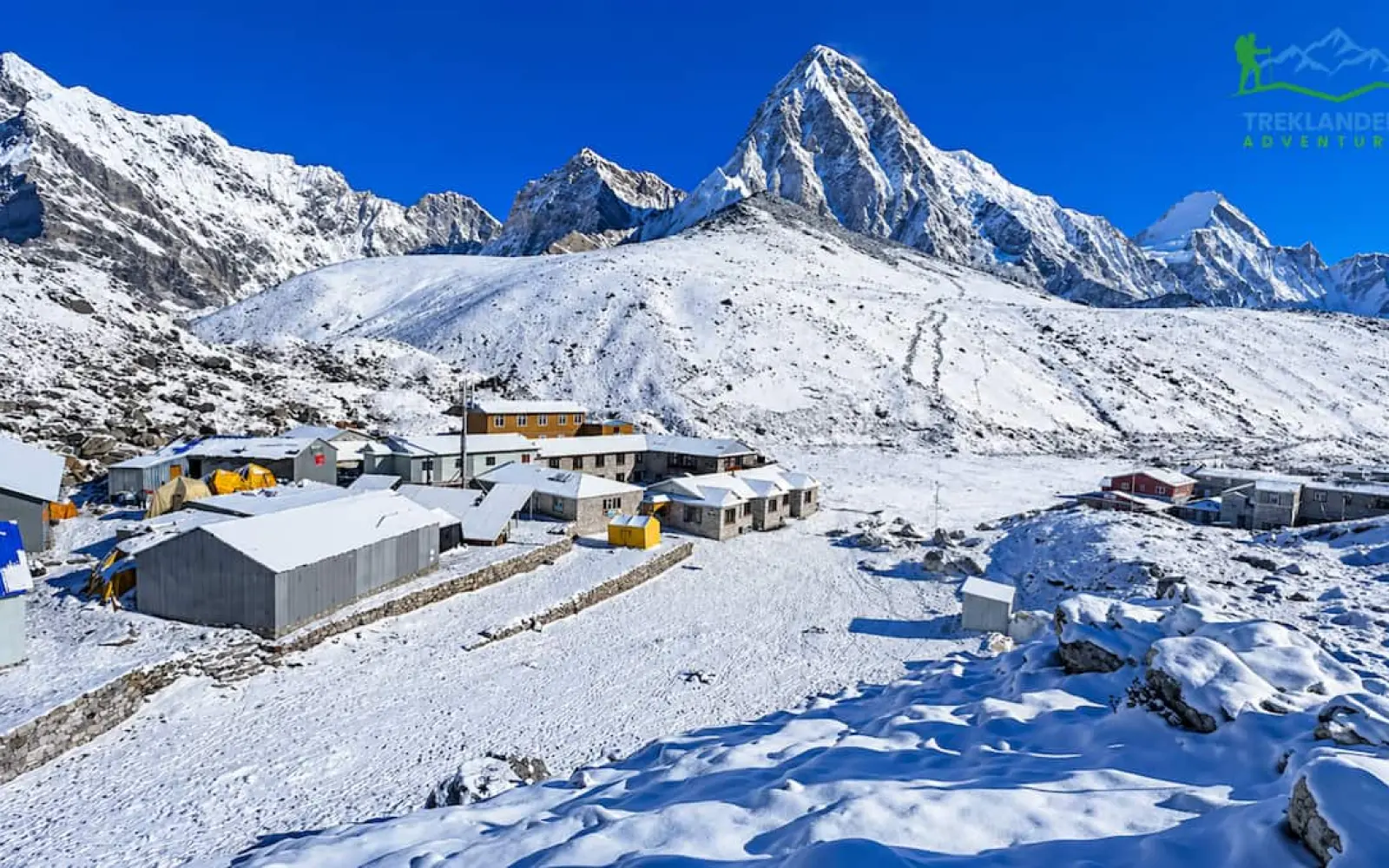
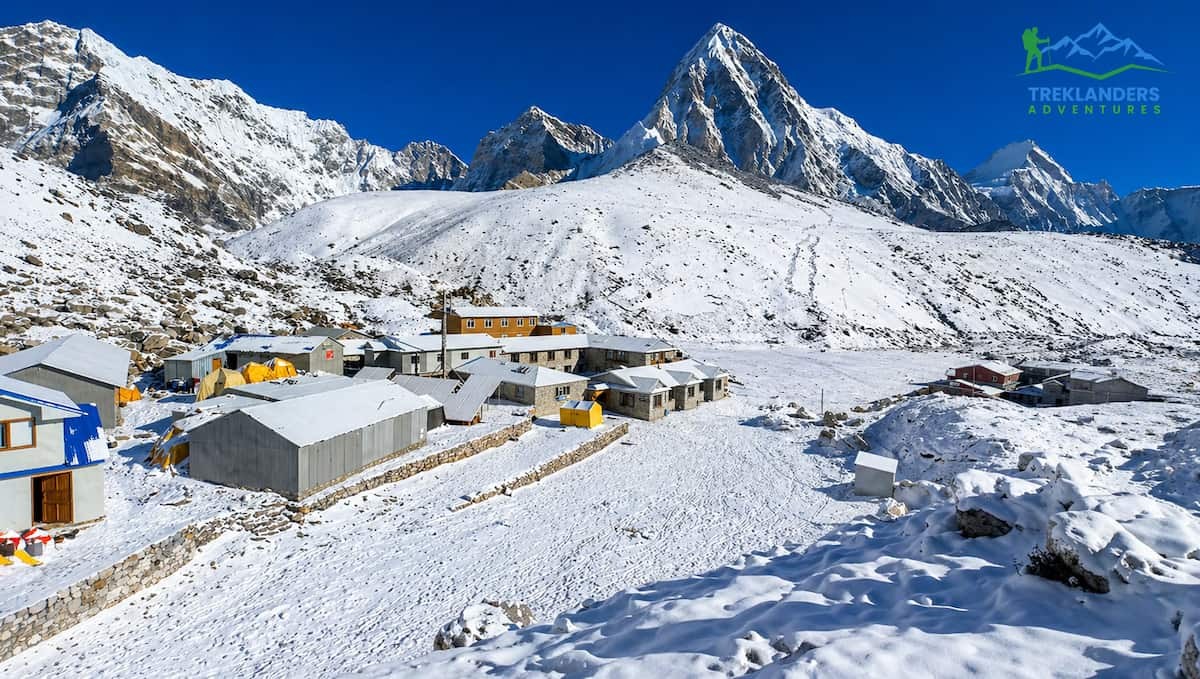
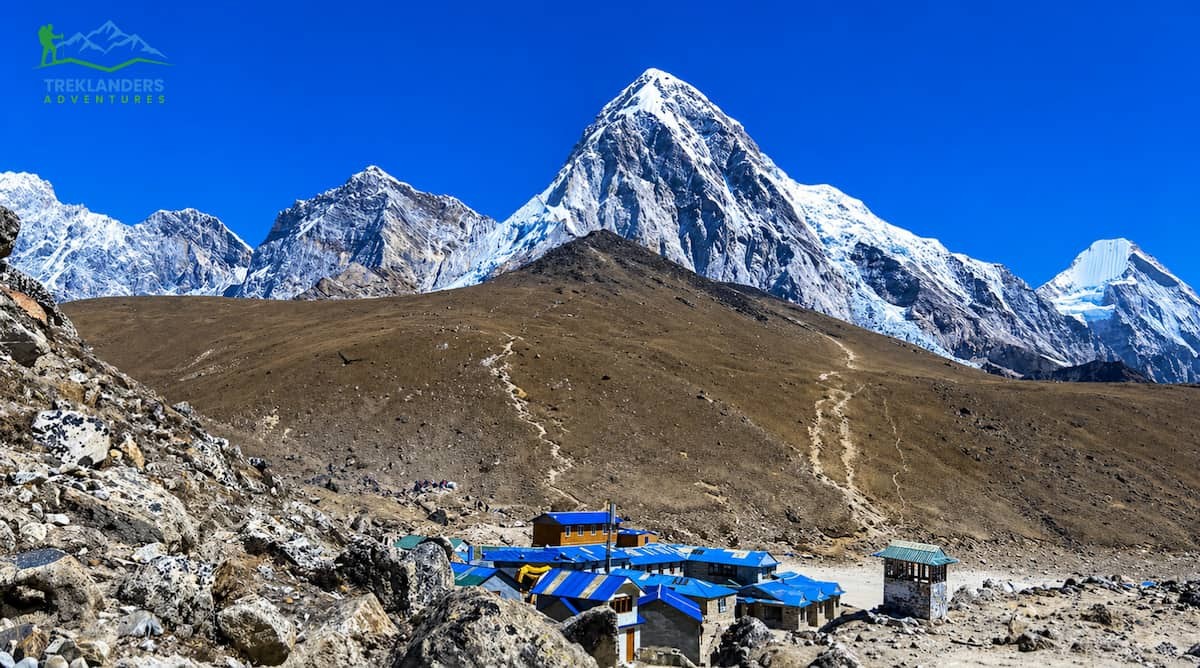
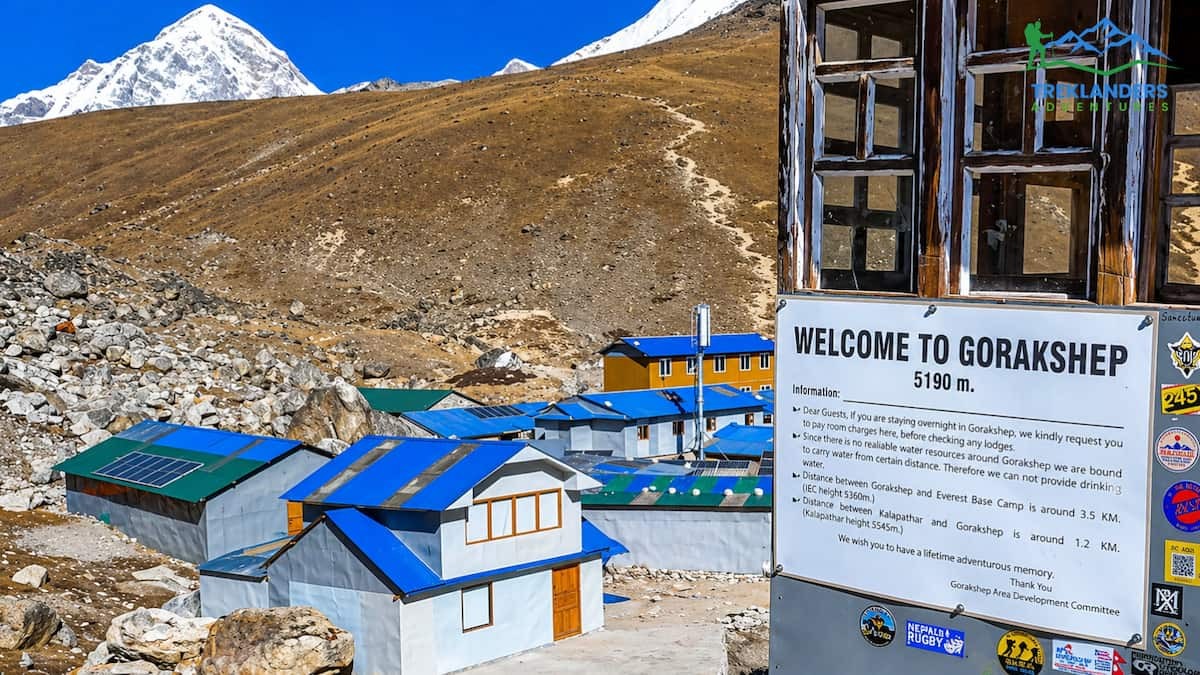
It is the highest inhabited settlement on the way to Everest Base Camp. Perched at 5,164 meters (16,942 ft) above sea level, it is not a village in the usual sense. Perhaps it is no more than a handful of Tibetan shacks and a concentrated outcrop of plastic tents. But this is unquestionably one of the most breathtaking points in the world.
No matter if this is your first foray into the high Himalayas and your eventual venture to Everest Base Camp, or whether you are a seasoned veteran on the thousands of other Nepalese, Tibetan or Indian treks and expeditions, knowing what you will come across in Gorakshep its terrain, history, altitude sickness factors and what it will be like there is priceless information in this one-stop guide by Treklanders.
Gorakshep – The Last Stop Before Reaching Everest Base Camp
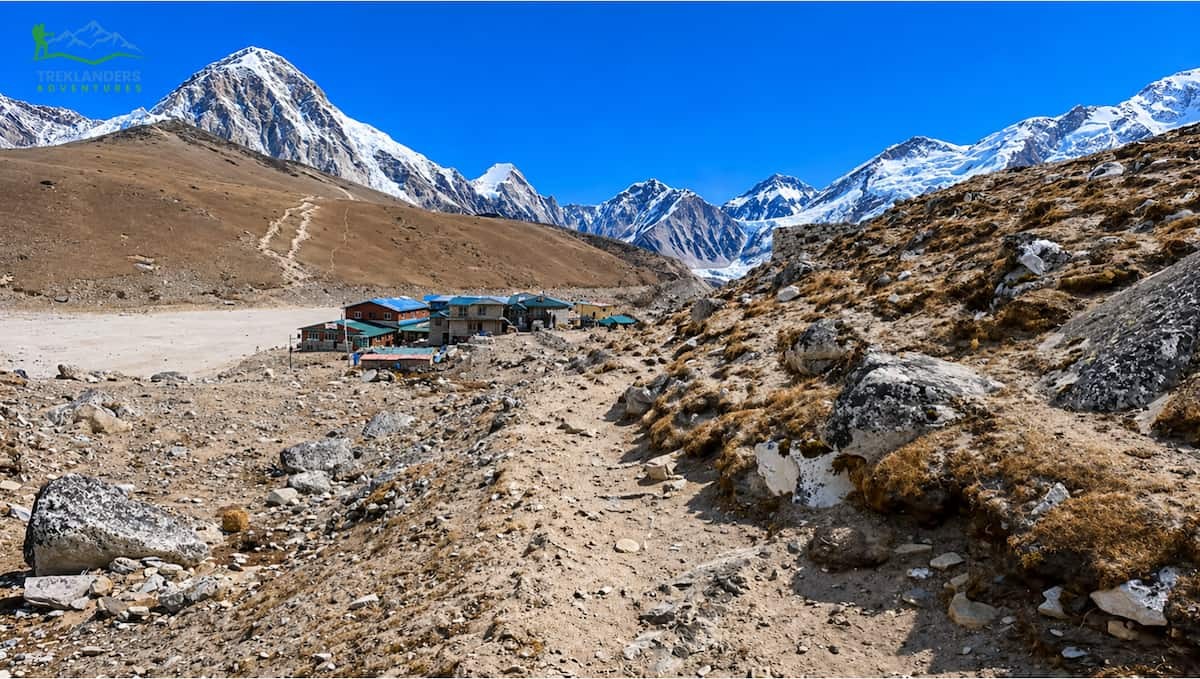
Gorakshep (sometimes rendered Gorak Shep) was a small seasonal settlement in the Solukhumbu District of northeastern Nepal, situated in the Sagarmatha National Park, a UNESCO World Heritage Site. With an elevation of 5,164m (16,942ft), it is the highest permanent settlement along the entire Everest Base Camp trail. Gorakshep is a name derived from the Tibetan language. Gork ("Gorak" or "Gorakh") is a common name for the Himalayan Chough, a black crow-like bird with a yellow beak and red feet, who are numerous in the area.
Shep means dead or died. Therefore, the application to this name in its basic form is "dead crows" or "where the crows die", which provides an element of penetration to an otherwise unforgiving and oxygen-sapped environment where even the strongest birds tire while living.
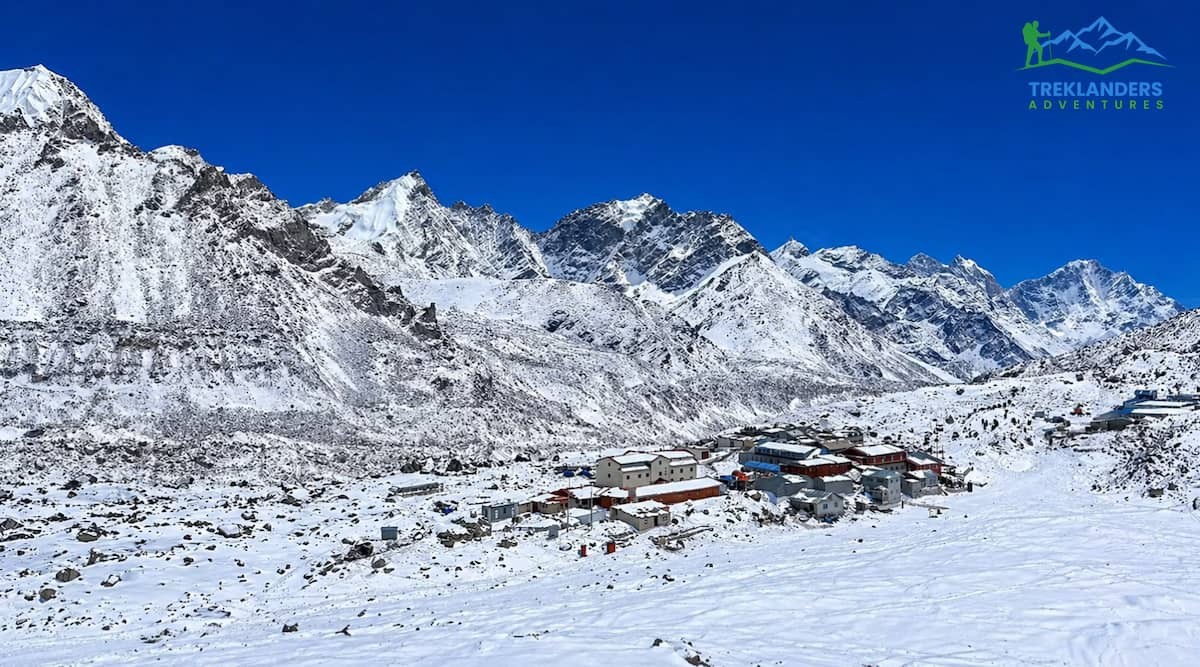
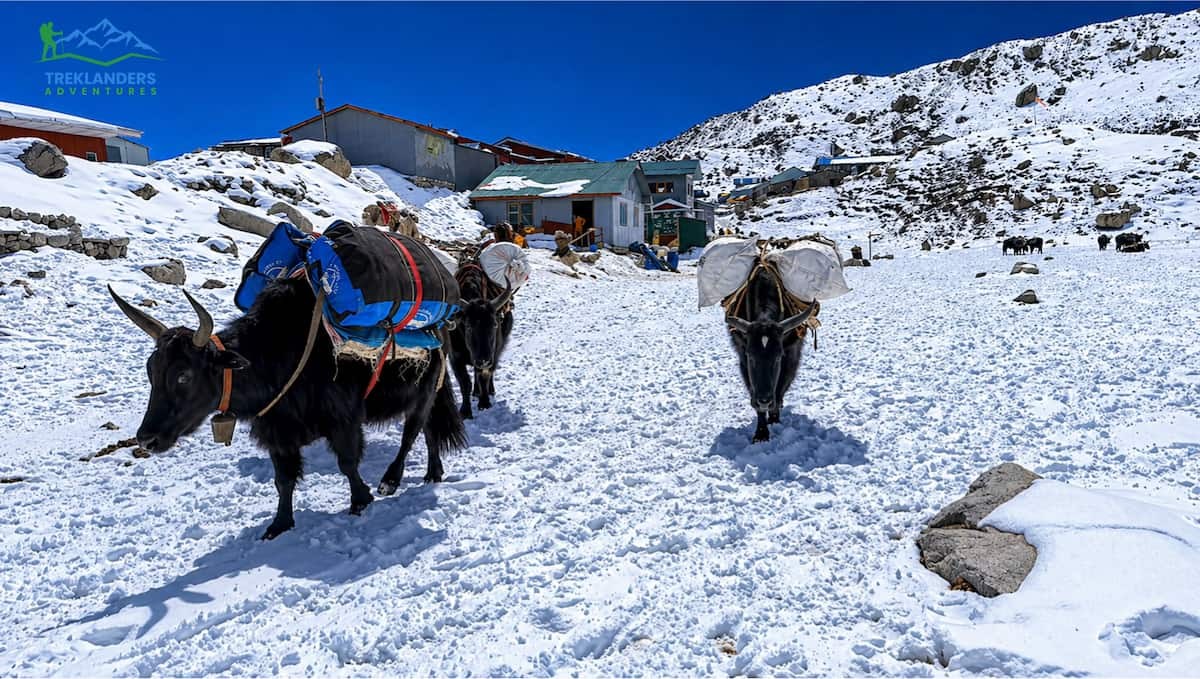
There are only a few teahouses and lodges which operate seasonally to cater for trekkers and are pre-booked during the high trekking seasons (spring, March to May, and autumn, September to November). Outside of these high seasons, Gorakshep is a forlorn, snow-covered ghost town.
Gorakshep serves as the base camp for two of the most iconic short treks in the Everest region:
The climb up to EBC (3.5 km one way)
Climbing Kala Patthar (5,643 m), the most sought-after viewpoint for a full Everest glimpse.
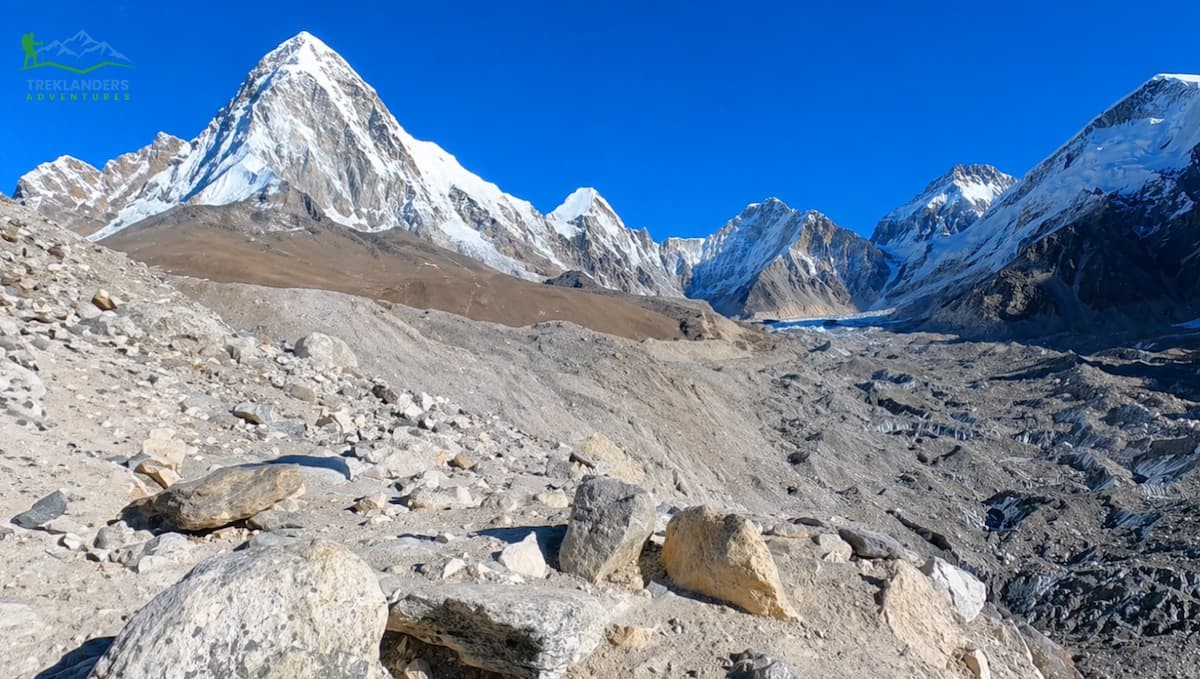
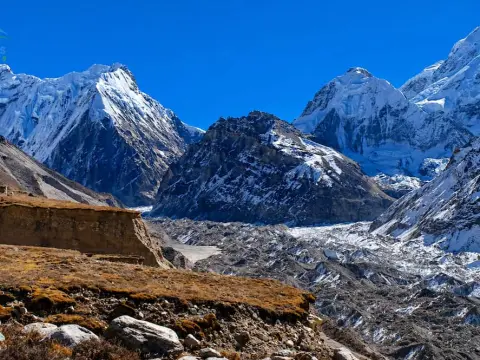
Gorakshep is located at the end of the Khumbu Valley, set between the Khumbu Glacier to the west and the rocky moraine ridges towering toward the summit of Kala Patthar to the east. The Khumbu Glacier, over 17 km from its starting point below Everest's south face to the valley floor below, is one of the highest and most extensive glaciers in the world.
Namche Bazaar (3,440 m): the gateway to the Khumbu
Tengboche (3,860 m)
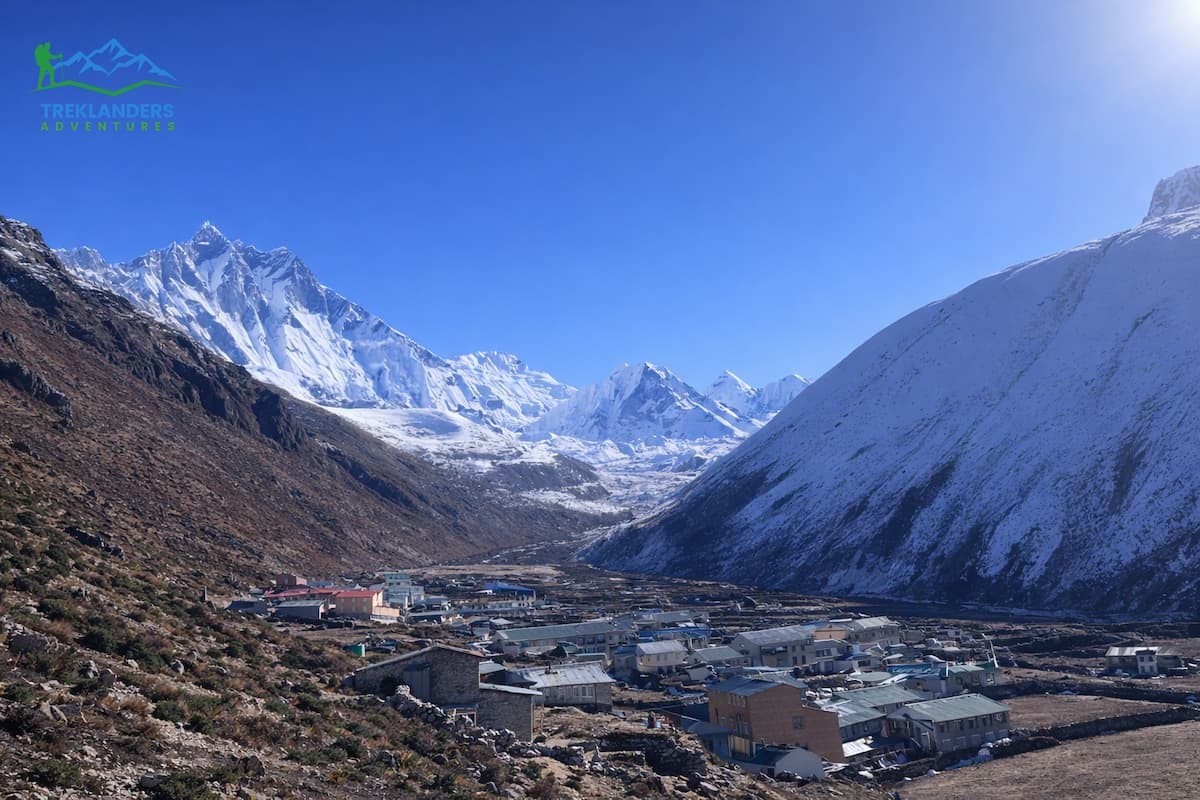
Dingboche (4,410 m)
Lobuche (4,940 m)
Gorakshep (5,164 m) ← The last stop
Everest Base Camp (5,364 m) ← Day hike from Gorakshep
Kala Patthar (5,643 m) ← Day hike/early morning ascent from Gorakshep
The distance from Lobuche, the mountain village south of Gorakshep, is about 8 km. The elevation gain is around 224 m, and the time required is around 3-4 hours, depending on your acclimatization and weather conditions.
Coordinates: 2759'02" N, 8649'47" E Gorakshep is entirely above the tree line. It is a stark and lonely lunar-like scene, grey moraine boulders, frozen ground, an occasional snail of snow, and the huge white bulk of Khumbu Glacier grinding onwards westwards in utter silence. There is almost no vegetation. The blue sky at this elevation is luminous and exotic.
The History of Gorakshep: From Everest Base Camp to Rest Stop
Tea House Lodges in Gorak Shep During the Everest Base Camp Trek
Before 1953, Gorakshep was simply an ice settlement. It was simply a dewatered glacial lake formed over 3000 years ago, and the flat sandy area in front of us is that dewatered lakebed, and in winter, it sometimes still freezes and collects water in a shallow pond.
The full-size basecamp was established higher up the glacier. With more expeditions to follow in the coming decades, the base camp moved over time to its present location at 5,364 meters, nearer the Khumbu Icefall, a perilous river of ice that climbers must cross to get to the higher camps on the south side of Everest.
During the 1980s and 1990s, Sherpa entrepreneurs built several seasonal teahouses along the EBC route. Nodes like Gorakshep, at such a brutal altitude, were essential. The first teahouses were basic stone walls, canvas roofs, and fires powered by yak dung. Now the Gorakshep teahouses are much more advanced, with solar paneling, insulated dining halls, charging facilities and (basic) private rooms. The expanding network of teahouse culture changed the EBC trek from a pure mountaineering expedition, needing full logistics support into an accessible, locally supported adventure, available to all well-developed and acclimatized trekkers on the planet. Gorakshep is the pinnacle of this evolution, the highest dereliction of Himalayan hospitality.
Gorakshep Altitude: What You Need to Know
Gorakshep- Everest Base Camp Route
The altitude of Gorakshep is 5,164 meters (16,942 feet). To put this in perspective:
Which is greater than any of the mountains in Europe, Africa, or North America.
The amount of oxygen present at this altitude is about 53% as much as is found at sea level.
At such a height, the human body is under constant physiological stress.
Understanding Altitude Sickness at Gorakshep
Gorakshep is a very real danger of Acute Mountain Sickness (AMS). Even trekkers who have followed a careful acclimatisation schedule may develop symptoms on arrival or during their stay here. Typical symptoms include
Headache: the most common symptom. Usually described as a tight band around the head
Nausea, loss of appetite: Digestion slows considerably at the altitude.
Fatigue and weakness: disproportionate fatigue with even short walks
Dizziness and disorientation: especially when standing up quickl
Sleep disturbance: many trekkers say they wake up several times during the night, gasping
More serious forms include High Altitude Pulmonary Edema (HAPE) and High-Altitude Cerebral Edema (HACE), both of which are medical emergencies requiring immediate descent.
Acclimatization Before Gorakshep
Dingboche Village- Acclimatization Before Gorakshep
Regular acclimatization pauses are planned along the Everest Base Camp route at Namche Bazaar, Dingboche, to establish consistent oxygen levels for the body and then the partial black out of the body from the outdoor environment. After such frequent ascents and descents, it takes roughly 10 to 12 days to get all the way to the 14 destinations of Gorakshep. This gradual elevation gain helps in decreasing your propensity to altitude diarrhoea, as well as increasing the likelihood of successfully making it to the summit.
Keep a few essential rules to maintain good health on the track. Adopt 'climb high, sleep low. When you arrive at Dingboche, it is common practice to ascend higher than 5000 meters, then descend again to sleep at a lower elevation.
This allows you to adapt more quickly to the altitude. Try to consume 3-4 liters of water every day. Lack of fluids makes you more tired and retard acclimatization. Walk slowly. Do not speed up. Walk at the pace of a gentle walk.
Moving quickly will raise your heart rate, increase the demand on your body and make you feel more tired and breathless, and walk less efficiently. Your local guides will frequently say "bistari bistari, " which means slow. It works. Do not take any alcohol or sleeping tablets during the trek. They slow down the rate of breathing and may increase altitude problems. Pay attention to how your body feels.
Don't ignore signs of headaches, nausea, or dizziness. If your condition begins to deteriorate, descend right away, as this is the only proven treatment. Diamox is sometimes taken by trekkers to aid acclimatisation. Do not use it without contacting a doctor. Guided trekking is safer with a licensed guide present. The guide can call the shots if he or she feels your condition warrants it.
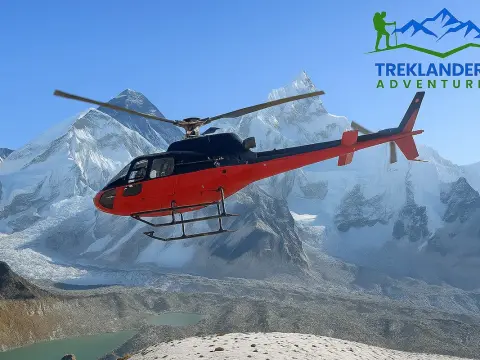
9-Day Everest Base Camp Trekking with Helicopter Return | 9 days
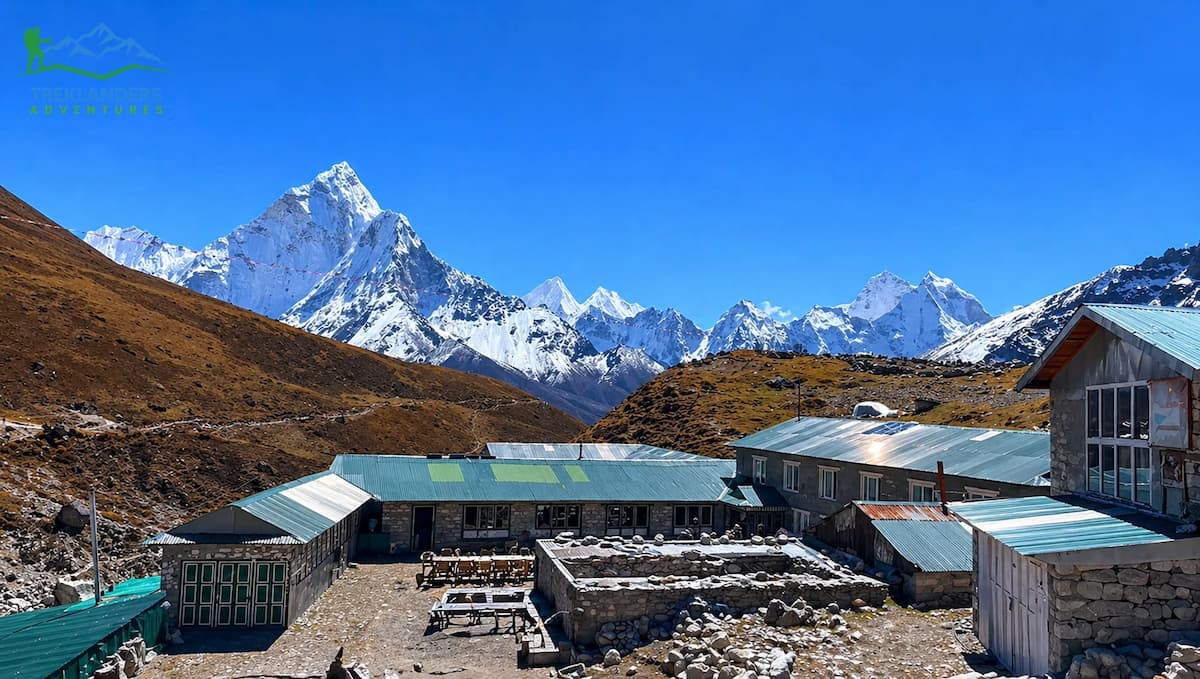
Gorakshep has a handful of teahouses and lodges, anywhere between 5 and 8 operating in the high season at a given time. Accommodation is basic by any standards of the world, and it is encouraging that it exists at all, given where it is.
Room Quality
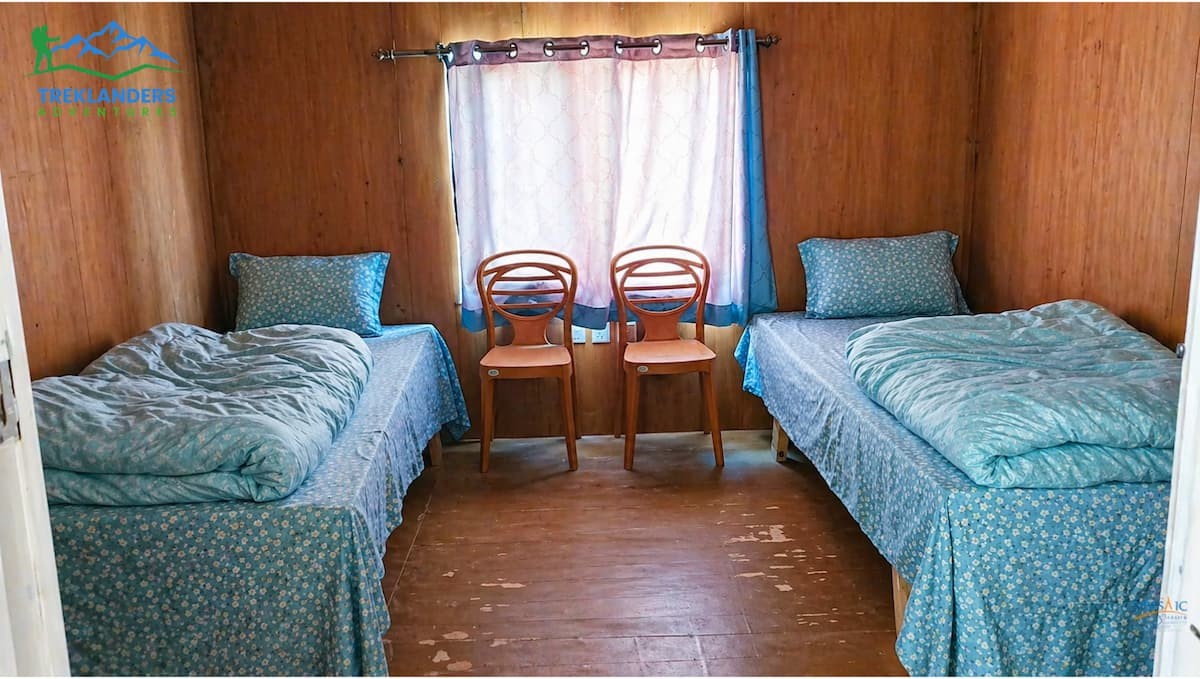
Accommodation (Rooms) in Gorak Shep During the Everest Base Camp Trek
Almost all rooms in Gorakshep are basic twin-share rooms, with a thin mattress, a pillow, and a simple blanket on the bed. Many rooms do not have any heating and relying on your sleeping bag (a good one (rated at least to - 10/ -15 degrees C) is vital). Walls are usually very thin, so you will hear your neighbors, the wind and the odd snore very clearly. Most lodges have private rooms, but these are scarce and usually booked up early. It is highly recommended to book in advance through your trekking agency during the high season of spring and autumn.
Some of the better-known lodges in Gorakshep include:
Pyramid International Laboratory & Observatory Guesthouse
Yak Hotel
Everest Base Camp Lodge
Facilities and Amenities
The teahouses along the EBC route are basic but comfortable. You are provided exactly what you need, not luxury. The dining hall forms the heart of each lodge. It is often the only heated room, heated by a stove burning yak dung or kerosene. Evenings are spent there. Trekkers meet and mingle while warming up with butter tea or hot chocolate. Temperatures fall quickly after darkness, so this space is important. The facilities are basic. Most of the lodges have outdoor shared pit toilets. You'll be squatting, so bring your own toilet paper and hand sanitizer (don't expect any to be provided). Hot showers can be had at a few places, but they are not easily accessible. Water heating can be irregular and is not cheap at higher altitudes. Extended time will cause fatigue and cold exposure. Most backpackers avoid using wet wipes instead. Electricity is available but not free. Lodges use solar power. You pay per device to charge around USD 2 to 5.5. You may find sockets in the dining hall and not in your room. Don't wait too long to charge your devices in the evening, as there is often a queue. Wi Fi is not reliable. It is available in some of the lodges but is very slow and often drops out, so don't rely on it for critical communication. A few lodges will stock up the minor altitude medications, but supplies are limited. Carry your own first aid kit and your required medications, so you are in control if you feel the symptoms.
The Gorakshep teahouses provide food that is very similar to that of other lodges along the Everest Base Camp trail. The quality of the food can actually deteriorate here for two very obvious reasons. The first is that ingredients are carried up by a porter or yak every day. The other is that cooking at 5,164m is very hard. Water boils at only 83 °C at this altitude, so pasta, rice and baked goods never quite get to perfection.
What's on the menu
Most teahouses offer the same core options:
Dal bhat (lentil soup with rice), the calorie-dense trekker staple
Pasta, noodle soups, and fried rice
Tibetan bread with jam or honey
Boiled potatoes
Porridge and eggs for breakfast
Hot drinks include milk tea, black tea, lemon tea, instant coffee, hot chocolate, and butter tea
One tip that matters
Logistic Supplies Are Transported by Yak from Gorak Shep to Everest Base Camp
Gorakshep is an expensive place to buy anything since all supplies are transported in. Logistic costs between USD 8 and 15, hot drinks between USD 2 and 5. Prepare yourself accordingly before the hard landings. A tip that counts 852. Altitude kills your appetite. You're not going to be hungry, but your body needs caloric intake to keep warm and functioning until you can get down. Make yourself eat at least 2 substantial full meals a day. Missing meals at this elevation can slow down your recovery and increase your risk of altitude sickness. Constantly eat. It will dictate your summit attempt.
Gorakshep to Everest Base Camp
Trail from Gorak Shep to Everest Base Camp
The journey from Gorakshep to Everest base camp (and vice versa) is a distance of 3.5 km. Usually, it takes trekkers 2 to 3 hours and 2 to 2.5 hours to walk back. The entire trip is about 5 to 6 hours. The trail itself isn't too steep, but it is steep. Starting from 5,164m in Gorakshep, you'll have gained only 200 meters when you arrive at EBC at 5,364m. Compared to the elevation, it will feel like a lot more.
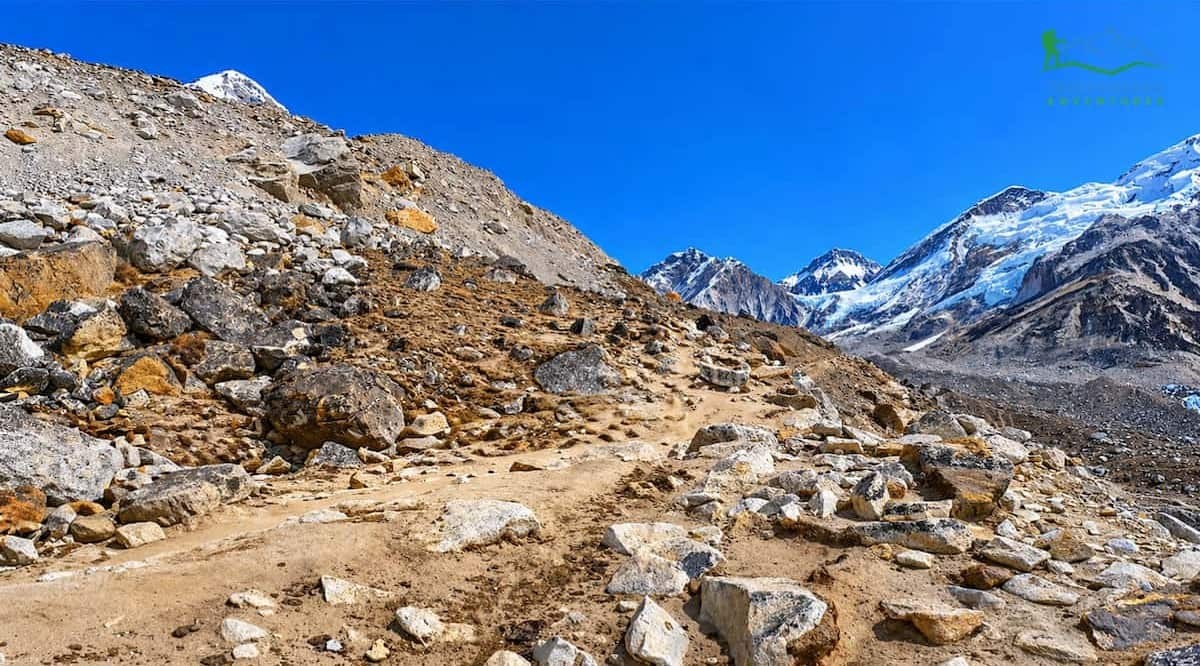
The route crosses the moraine of the Khumbu Glacier, and along it the terrain is rocky, loose and in the mornings, often icy. Springtime usually heralds frequent afternoon storms, so get away by 7 or 8 AM to arrive at EBC in the sunshine and get down again before the weather gets murderous. EBC itself is not visually stunning. In the climbing season (April-May), it is a makeshift city of expedition tents spanning across a rocky glacier.
Its brilliance has nothing to do with the scenery, but with context. You're standing at the foot of the world's highest mountain (8,8 48.86 m), directly where the very point of every summit attempt begins. On a clear day, directly above camp you'll see the upper ridges of Everest, Lhotse (8,516 m), Nupste (7,861 m), and the hanging seracs of the Khumbu Icefall, yet for most visitors the first thing that surprises them is the full extent of the Everest's summit, 'for you can't actually see the summit from Everest Base Camp, thanks to the south face'.
Everest Base Camp via Cho la Pass from Gokyo Valley Trekking | 18 days
Kala Patar is 5,643 m, situated about 3.5 4 km away from Gorakshep and rises 480 m from the village. Its name in Urdu means "Black Rock", after the rocky crag at its summit (this is a subsidiary of Pumori peak, 7,161 m). Most seasoned trekkers/ guides have the same view: "a good higher vantage point than Everest Base Camp".
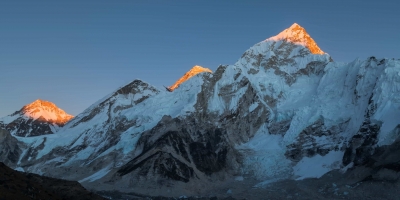
It's because of one word: views. From the top, you can take what many believe is the best up close perspective of Everest available to any mortal unmounted in this world the spectacle of her entire summit displayed in front of you, often behind a long cloud of gale swept white, with Lhotse (8 516 m), Nuptse (7 861 m), Pumori (7 161 m) and Changtse (7 583 m), shining in the background. And beneath you reach far on the Khumbu Glacier. Not steep; no technical skill or equipment.
Only a problem of altitude. Even fit trekkers find they are not rushing up the hill but are taking time to breathe. 2 to 3 hours from Gorakshep; 1 to 1.5 hours down.
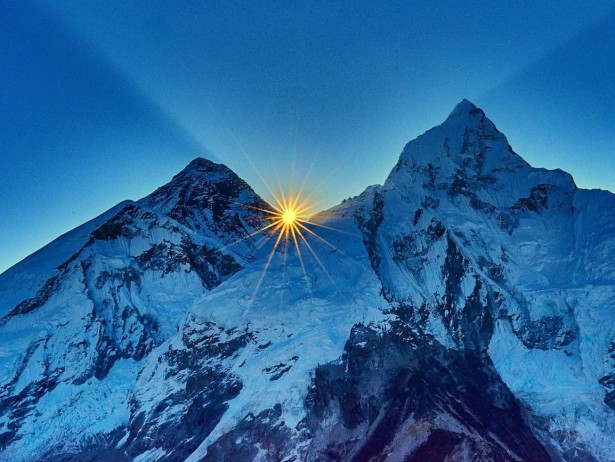
Photographers aim for the early sunrise. Setting out from Gorakshep at 4 or 4:30 in the morning with head torches, in defiantly sub-zero temperatures, means reaching the summit around sunrise. First, Everest is glowingly illuminated, before the rest of the valley stirs. For trekkers who have risen to this occasion, it has been, without exception, one of the most awe-inspiring sights they have ever seen.
Weather and Best Time to Visit
Gorakshep sits above 5,100 m, and its weather reflects that. Conditions shift fast. Sunshine can give way to snowfall within a few hours on any given day, in any season.
Spring (March to May) is the primary trekking and mountaineering season. Weather windows are relatively stable; daytime temperatures at Gorakshep range from -5°C to +5°C, and nights drop to -15°C or colder. April and May bring active expedition camps at EBC, which adds a layer of energy and spectacle to the experience. Rhododendrons bloom at lower elevations. Lodges in Gorakshep fill quickly; book well ahead.
Autumn (September to November) is the second major window, and October is widely considered the single best month for the Everest Base Camp trek. The monsoon clears the atmosphere, leaving exceptional visibility. The weather is stable, the skies are often cloudless, and the views reward the effort. Nights run cold, sometimes colder than spring. Crowds are slightly lower than peak spring, though October still draws large numbers.
Monsoon season (June to August) brings heavy rain, snowfall at altitude, poor visibility, and landslide risk on the lower trails. Gorakshep is largely inaccessible.
Winter (December to February) pushes nighttime temperatures down to -30°C. Most lodges close. Only experienced winter mountaineers attempted the route in those months.
Everest Base Camp Trek and Returning via Heli | 13 days
There is only one way to reach Gorakshep: on foot, via the classic Everest Base Camp trek. The Standard route
Day 1: Fly from Kathmandu to Lukla (2,860 m); 35-minute flight
Day 2: Trek Lukla to Phakding (2,652 m): 3–4 hours
Day 3: Trek Phakding to Namche Bazaar (3,440 m): 5–6 hours
Day 4: Acclimatization day in Namche Bazaar: day hike to Everest View Hotel
Day 5: Trek Namche to Tengboche (3,860 m): 5–6 hours
Day 6: Trek Tengboche to Dingboche (4,410 m): 5–6 hours
Day 7: Acclimatization day in Dingboche: day hike to 5,100 m
Day 8: Trek Dingboche to Lobuche (4,940 m): 5–6 hours
Day 9: Trek Lobuche to Gorakshep (5,164 m), afternoon hike to EBC: 7–8 hours
Day 10: Early morning Kala Patthar ascent, then begin descent
Total one-way duration: 9–10 days from Lukla to Gorakshep/EBC. Total round-trip duration (Kathmandu return): 12–16 days, including descent and buffer days. At Treklanders.com, we offer a range of Everest Base Camp trek packages from the standard 14-day itinerary to extended versions with additional acclimatization days and side treks. Every package includes experienced licensed guides, all permits, teahouse accommodation, and airport-to-airport logistics.
Essential Permits for the EBC Trek
You need to have two permits to travel legally to Gorakshep. The Sagarmatha National Park Entry Permit will be USD 20-30. Purchase it at the Monjo checkpoint, or ask your trekking agency to buy it in Nepal before you travel. Valid for entry into the entire upper Khumbu, the permit includes the national park fee of NPR 3,000 (or approximately USD 22) per traveller. However, you also must obtain the Khumbu Pasang Lhamu Rural Municipality Permit at a fee of NPR 2,000 (or approximately USD 15). This fee helps to fund local administration, infrastructure, and services in the Khumbu region.
Make sure you keep both permits on you at all times. You will be asked to present them at checkpoints, and you will not be allowed to trek without them. Permit fees are sure to change - always double-check current prices before you leave. If you book via a trekking group or agency, these licenses are usually obtained for you and will be part of the package. Do not think you do not need them.
Packing and Gear Essentials
Packing and Gear Essentials of Gorak Shep
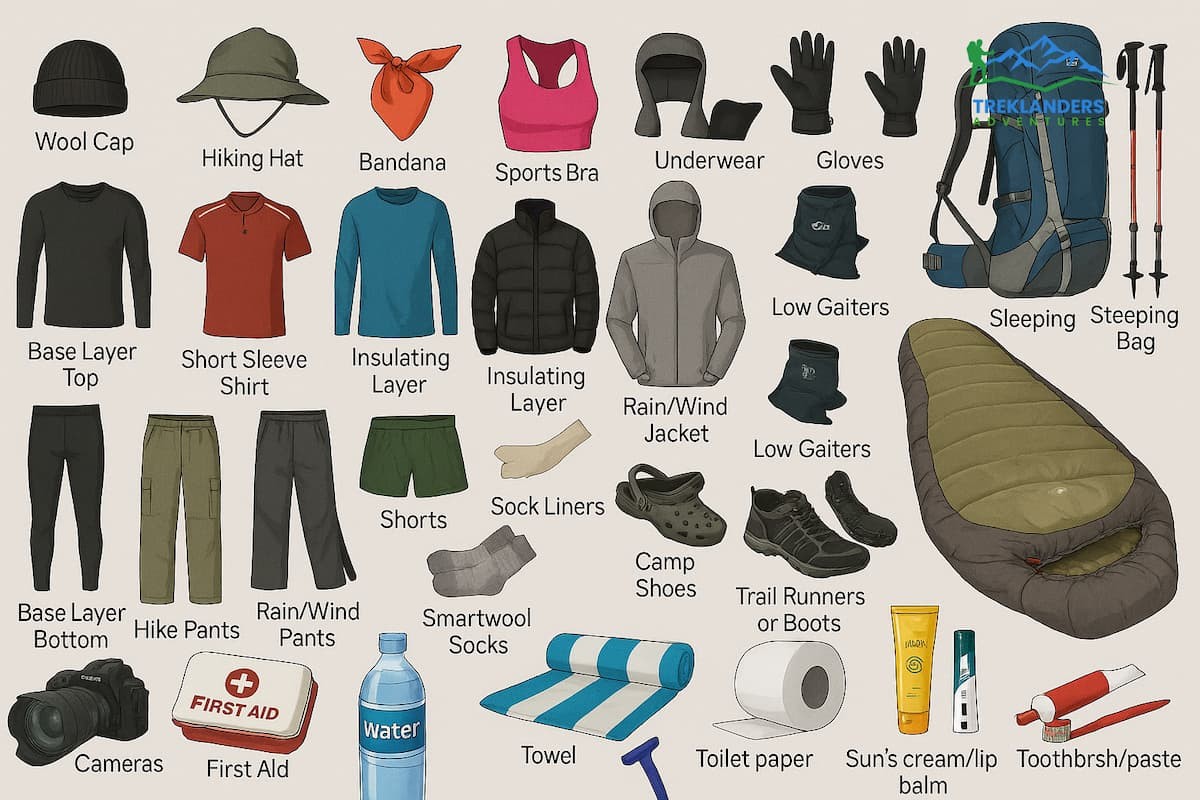
Gorakshep also requires building a system that will keep you warm. At altitude, if you aren't prepared, you are at serious risk. Ensure your clothes are piled in layers: moisture-wicking thermal undershirts, fleece or down mid layers, and a waterproof, windproof hardshell. Your down insulated jacket should have a rating of at least -10 degrees Celsius, but -20 would be better.
Pack a thermal hat, balaclava, and a set of two pairs of gloves; one pair of thin gloves to wear underneath another set of waterproof insulated gloves. Pack three to four sets of thermal socks, wool or synthetic, in between. Your boots need to be waterproof, ankle-supporting, and thoroughly broken-in before you arrive. It is no joke about developing blisters at 5,000 m.
Trekking poles will protect your knees from injury and are invaluable when walking the moraine. Sleeping bags to - 15C, -20C makes Gorakshep nights more comfortable. Always have a pulse oximeter handy to check your blood oxygen saturation. At altitude, healthful SpO2 readings range from 70-85 per cent. Anything below 70 per cent at rest is an ominous sign. Anything below 60 per cent must be treated as a matter of life and death. Carry a quality sunscreen (SPF50 or higher) and sunglasses to protect you from snow-blindness.
Sherpa Culture and Legacy
A trip to Gorakshep would be incomplete without knowing the people who sustain life here. Sherpas are an ethnic group of Solu-Khumbu living in and descending from the area of eastern Tibet. Their name itself means 'east people': 'Sher' is east, 'pa' is people. For centuries, they have lived and worked at an altitude that would be unendurable for someone raised at sea level.
This is not simply a matter of some sort of training, but a form of genetic preparation for an altitude of 5200 meters. And all the teahouses in Gorak Shep are operated and owned by Sherpas. The stocks within the teahouses are brought by Sherpa porters with their 30–40-kilogram loads in the traditional bamboo Doko while most trekkers are unable to move about without packs.
Every single sip of tea, every bite of food, every evening you spend sleeping in a lodge, it's all that, on the porters' behalf. Your guide relies on hundreds of generations of mountain legend each time they trek the mountain or interpret the forecast. That is responsible for trekking. It means choosing to stay in locally owned lodges. It means ensuring that your guides and porters are paid adequately. It means respecting the local people of Khumbu.
The EBC route takes a huge number of trekkers every year. Gorakshep sits at the end of that flow, and the pressure shows. What you do on the trail has a direct effect on what the next person finds when they arrive. Pack out everything you bring in. No plastic, no wrappers, nothing non-biodegradable gets left on the route. Use the toilet facilities at your lodge. Going into the open landscape, especially near water sources, causes real harm on this scale. Carry a reusable water bottle and refill it with boiled or purified water. Single-use plastic bottles are everywhere on this trail, and they should not be. The Khumbu Glacier runs directly alongside Gorakshep. It is shrinking. Scientists at the Pyramid International Laboratory, a research station just above the village, have tracked rising temperatures and glacial retreat in Khumbu for decades. The glacier that Edmund Hillary and Tenzing Norgay crossed in 1953 is a fraction of its former size. You can see the difference in old photographs. Gorakshep itself sits in a dry lakebed left behind by a glacier that no longer exists. The landscape here has always shifted, but the speed of change today is different. It is faster than anything in recorded history. Choosing to trek responsibly, packing out waste, skipping plastic bottles, and supporting lodges that invest in solar and proper waste systems adds up. This place depends on the people who visit it, making better choices than the ones who came before.
Conclusion
Gorakshep is not just another stopover. It is not just where you spend one last night before heading to Everest Base Camp or the springboard for Kala Patthar. Gork shep is a threshold, the place on earth where you have left normalcy so far behind that the very air you breathe is saying, 'You are here.'" When you arrive in Gorakshep, you find yourself in one of the most isolated, most elevated and most historic settlements on earth. You take steps in the wake of the 1953 mountaineering expedition that altered history, face your gaze over a glacier that has been in motion for thousands of years, and if you give yourself a moment to sit in the amazement, quiver before the incomprehensible awe of the Himalaya. That, in a nutshell, is what Gorakshep is. And this is exactly why trekkers from all over the world keep coming back.