[{"name":"Everest Base Camp Trek","duration":"16","image_url":"https:\/\/www.treklanders.com\/storage\/trip-galleries\/1\/thumb_419a755c003cc609f3030ee332965ebe.jpg","offer_price":1405,"url":"https:\/\/www.treklanders.com\/trips\/everest-base-camp-trek"},{"name":"Gokyo Valley Trekking","duration":"16","image_url":"https:\/\/www.treklanders.com\/storage\/trip-galleries\/2\/thumb_676d1021b574aeba4d19d3f2a0b04ed2.webp","offer_price":1205,"url":"https:\/\/www.treklanders.com\/trips\/gokyo-valley-trekking"},{"name":"Annapurna Circuit Trek","duration":"23","image_url":"https:\/\/www.treklanders.com\/storage\/trip-galleries\/3\/thumb_2a9a92ea23c62f41de27b37f5e3e8c17.webp","offer_price":1495,"url":"https:\/\/www.treklanders.com\/trips\/annapurna-circuit-trek"},{"name":"Everest Panorama Trek","duration":"12","image_url":"https:\/\/www.treklanders.com\/storage\/trip-galleries\/4\/thumb_35c9f677ea2e88b1ff11a9f43daa3ddb.jpg","offer_price":1100,"url":"https:\/\/www.treklanders.com\/trips\/everest-panorama-trek"},{"name":"Everest Base Camp Trekking from Jiri","duration":"22","image_url":"https:\/\/www.treklanders.com\/storage\/trip-galleries\/6\/thumb_14763592492417b294aa66bf0ebf4e64.webp","offer_price":1400,"url":"https:\/\/www.treklanders.com\/trips\/everest-base-camp-trekking-from-jiri"},{"name":"Everest Base Camp via Cho la Pass from Gokyo Valley Trekking","duration":"18","image_url":"https:\/\/www.treklanders.com\/storage\/trip-galleries\/7\/thumb_d4e470e98d4e9e2ab8e93e39b8b7d252.jpg","offer_price":1405,"url":"https:\/\/www.treklanders.com\/trips\/everest-base-camp-via-cho-la-pass-from-gokyo-valley-trekking"},{"name":"Everest Three Passes Trekking","duration":"22","image_url":"https:\/\/www.treklanders.com\/storage\/trip-galleries\/8\/thumb_b413b221e913171500bb3dfd5c08ceea.jpg","offer_price":1635,"url":"https:\/\/www.treklanders.com\/trips\/everest-three-passes-trekking"},{"name":"Annapurna Base Camp Trekking","duration":"14","image_url":"https:\/\/www.treklanders.com\/storage\/trip-galleries\/9\/thumb_2e71f2ffe116c659fa66b01c2d571b4e.webp","offer_price":845,"url":"https:\/\/www.treklanders.com\/trips\/annapurna-base-camp-trekking"},{"name":"Mardi Base Camp Trekking","duration":"14","image_url":"https:\/\/www.treklanders.com\/storage\/trip-galleries\/10\/thumb_d7b2d2dc638f6bbf2c31c167ac68029d.webp","offer_price":845,"url":"https:\/\/www.treklanders.com\/trips\/mardi-base-camp-trekking"},{"name":"Mohare Danda Trekking","duration":"12","image_url":"https:\/\/www.treklanders.com\/storage\/trip-galleries\/11\/thumb_a384c8d35d789d29b19991c1d675c910.webp","offer_price":755,"url":"https:\/\/www.treklanders.com\/trips\/mohare-danda-trekking"},{"name":"Khopra Ridge & Khair Lake Trekking","duration":"15","image_url":"https:\/\/www.treklanders.com\/storage\/trip-galleries\/12\/thumb_c0f50461ddc74acfb553ba85be00fab0.webp","offer_price":855,"url":"https:\/\/www.treklanders.com\/trips\/khopra-ridge-khair-lake-trekking"},{"name":"Upper Mustang Trekking","duration":"17","image_url":"https:\/\/www.treklanders.com\/storage\/trip-galleries\/13\/thumb_7aa4dfdb69186b0f224a303d80a25c95.jpg","offer_price":1715,"url":"https:\/\/www.treklanders.com\/trips\/upper-mustang-trekking"},{"name":"Langtang Valley Trek","duration":"12","image_url":"https:\/\/www.treklanders.com\/storage\/trip-galleries\/14\/thumb_8650b4b1a3c160cff75da65369398353.webp","offer_price":735,"url":"https:\/\/www.treklanders.com\/trips\/langtang-valley-trek"},{"name":"Gosainkunda Lake Trek","duration":"11","image_url":"https:\/\/www.treklanders.com\/storage\/trip-galleries\/15\/thumb_bfe94c14e760c48234e117021105be84.webp","offer_price":735,"url":"https:\/\/www.treklanders.com\/trips\/gosainkunda-lake-trek"},{"name":"Chisapani-Nagarkot to Dhulikhel Hiking","duration":"7","image_url":"https:\/\/www.treklanders.com\/storage\/trip-galleries\/16\/thumb_468defe9a4000ee3129cd7e6421ee105.webp","offer_price":565,"url":"https:\/\/www.treklanders.com\/trips\/chisapani-nagarkot-to-dhulikhel-hiking"},{"name":"Kanchenjunga Trek","duration":"23","image_url":"https:\/\/www.treklanders.com\/storage\/trip-galleries\/17\/thumb_51f43fa4203106cc49aaedc89d76e01d.jpg","offer_price":1725,"url":"https:\/\/www.treklanders.com\/trips\/kanchenjunga-trek"},{"name":"Helambu Trek","duration":"12","image_url":"https:\/\/www.treklanders.com\/storage\/trip-galleries\/18\/thumb_0fe8e3fa1299d2e43bf1fb5977875ce2.jpg","offer_price":685,"url":"https:\/\/www.treklanders.com\/trips\/helambu-trek"},{"name":"Upper Dolpo Trek","duration":"26","image_url":"https:\/\/www.treklanders.com\/storage\/trip-galleries\/19\/thumb_d6080d490e1db83b0a711e7304000864.jpg","offer_price":3005,"url":"https:\/\/www.treklanders.com\/trips\/upper-dolpo-trek"},{"name":"Manaslu Circuit Trek","duration":"18","image_url":"https:\/\/www.treklanders.com\/storage\/trip-galleries\/20\/thumb_1fdd224e849f4f328e73d2d12b3d282d.jpg","offer_price":1225,"url":"https:\/\/www.treklanders.com\/trips\/manaslu-circuit-trek"},{"name":"Tilicho Lake Base Camp Trek","duration":"19","image_url":"https:\/\/www.treklanders.com\/storage\/trip-galleries\/21\/thumb_eba8ac5e029e6543e0c17630ebd9e2fb.jpg","offer_price":1220,"url":"https:\/\/www.treklanders.com\/trips\/tilicho-lake-base-camp-trek"},{"name":"Nar-Phu Valley With Thorang-La Pass Trek","duration":"21","image_url":"https:\/\/www.treklanders.com\/storage\/trip-galleries\/22\/thumb_43597423a5a366fe9c8937fb30d2fe2a.jpg","offer_price":1315,"url":"https:\/\/www.treklanders.com\/trips\/nar-phu-valley-with-thorang-la-pass-trek"},{"name":"Nepal Round Trip of Kathmandu-Pokhara-Lumbini and Chitwan Tour","duration":"10","image_url":"https:\/\/www.treklanders.com\/storage\/trip-galleries\/23\/thumb_32497d170b2ab340b0a1b3310e91e784.webp","offer_price":845,"url":"https:\/\/www.treklanders.com\/trips\/nepal-round-trip-of-kathmandu-pokhara-lumbini-and-chitwan-tour"},{"name":"Nagarkot Day Hike","duration":"2","image_url":"https:\/\/www.treklanders.com\/storage\/trip-galleries\/24\/thumb_a5a654930fd8ba7852e41738105bacfc.webp","offer_price":105,"url":"https:\/\/www.treklanders.com\/trips\/nagarkot-day-hike"},{"name":"Nagarkot Sunrise Tour","duration":"1","image_url":"https:\/\/www.treklanders.com\/storage\/trip-galleries\/25\/thumb_17dc28a29cfa44381ad503f0a75ee84f.webp","offer_price":22,"url":"https:\/\/www.treklanders.com\/trips\/nagarkot-sunrise-tour"},{"name":"Namobuddha Day Tour with Shiva Statue","duration":"1","image_url":"https:\/\/www.treklanders.com\/storage\/trip-galleries\/26\/thumb_beeb34202f9077764aa08c67ef2867f9.webp","offer_price":45,"url":"https:\/\/www.treklanders.com\/trips\/namobuddha-day-tour-with-shiva-statue"},{"name":"Kathmandu Full Day Sightseeing Tour","duration":"1","image_url":"https:\/\/www.treklanders.com\/storage\/trip-galleries\/27\/thumb_d045fc0f1acee2cfa6b3c95f3c656d18.jpg","offer_price":30,"url":"https:\/\/www.treklanders.com\/trips\/kathmandu-full-day-sightseeing-tour"},{"name":"Patan and Bhaktapur Sightseeing Tour","duration":"1","image_url":"https:\/\/www.treklanders.com\/storage\/trip-galleries\/28\/thumb_750eacac3424b5dba686dd93656ab87c.jpg","offer_price":30,"url":"https:\/\/www.treklanders.com\/trips\/patan-and-bhaktapur-sightseeing-tour"},{"name":"Upper Mustang Heli Tour","duration":"1","image_url":"https:\/\/www.treklanders.com\/storage\/trip-galleries\/29\/thumb_0b785f69a15557f8660c805c76fda14e.webp","offer_price":1250,"url":"https:\/\/www.treklanders.com\/trips\/upper-mustang-heli-tour"},{"name":"Everest Heli Tour","duration":"1","image_url":"https:\/\/www.treklanders.com\/storage\/trip-galleries\/30\/thumb_dc45f2beb36a3699e0decf0de41a6f17.jpg","offer_price":1495,"url":"https:\/\/www.treklanders.com\/trips\/everest-heli-tour"},{"name":"Island Peak Trek & Climb","duration":"21","image_url":"https:\/\/www.treklanders.com\/storage\/trip-galleries\/31\/thumb_a0f3e3468c92a8e436045cf8b2fbf361.jpg","offer_price":2295,"url":"https:\/\/www.treklanders.com\/trips\/island-peak-trek-climb"},{"name":"Mera Peak Trek & Climb","duration":"18","image_url":"https:\/\/www.treklanders.com\/storage\/trip-galleries\/32\/thumb_3e8128a23c36f02fa38135475e811b9e.jpg","offer_price":2815,"url":"https:\/\/www.treklanders.com\/trips\/mera-peak-trek-climb"},{"name":"Chandragiri Cable Car Tour","duration":"1","image_url":"https:\/\/www.treklanders.com\/storage\/trip-galleries\/33\/thumb_faa70b716449eada6d7f1450335edbb3.jpg","offer_price":30,"url":"https:\/\/www.treklanders.com\/trips\/chandragiri-cable-car-tour"},{"name":"Everest Base Camp Trek and Returning via Heli","duration":"13","image_url":"https:\/\/www.treklanders.com\/storage\/trip-galleries\/34\/thumb_11190941866206e1d578db11986ebc73.webp","offer_price":2100,"url":"https:\/\/www.treklanders.com\/trips\/everest-base-camp-trek-and-returning-via-heli"},{"name":"Annapurna Semi Circuit Trek","duration":"15","image_url":"https:\/\/www.treklanders.com\/storage\/trip-galleries\/35\/thumb_30ddd8ba818cdcb52efd5eb0a017bcdb.jpg","offer_price":965,"url":"https:\/\/www.treklanders.com\/trips\/annapurna-semi-circuit-trek"},{"name":"Everest Base Camp Luxury Trek","duration":"14","image_url":"https:\/\/www.treklanders.com\/storage\/trip-galleries\/39\/thumb_6079aea3c5dd83e745a16fd6162270dc.jpg","offer_price":2685,"url":"https:\/\/www.treklanders.com\/trips\/everest-base-camp-luxury-trek"},{"name":"Mt. Kailash & Lake Manasarover Tour","duration":"15","image_url":"https:\/\/www.treklanders.com\/storage\/trip-galleries\/41\/thumb_cf3fededfd7dd2b40399af399e04f95a.jpg","offer_price":2205,"url":"https:\/\/www.treklanders.com\/trips\/mt-kailash-lake-manasarover-tour"},{"name":"Ghorepani Poonhill Trek","duration":"11","image_url":"https:\/\/www.treklanders.com\/storage\/trip-galleries\/43\/thumb_602d9a56976e1b836ba8adc69b8d09c5.webp","offer_price":720,"url":"https:\/\/www.treklanders.com\/trips\/ghorepani-poonhill-trek"},{"name":"11 Days Gokyo Valley Trekkking","duration":"11","image_url":"https:\/\/www.treklanders.com\/storage\/trip-galleries\/45\/thumb_ab552c3c91de392f94230a937b1c4801.jpg","offer_price":900,"url":"https:\/\/www.treklanders.com\/trips\/11-days-gokyo-valley-trekkking"},{"name":"9-Day Everest Base Camp Trekking with Helicopter Return","duration":"9","image_url":"https:\/\/www.treklanders.com\/storage\/trip-galleries\/46\/thumb_9a8ba2b582500cd86786be056902c31a.webp","offer_price":1990,"url":"https:\/\/www.treklanders.com\/trips\/9-day-everest-base-camp-trekking-with-helicopter-return"},{"name":"12-Day Everest Base Camp Trek","duration":"12","image_url":"https:\/\/www.treklanders.com\/storage\/trip-galleries\/47\/thumb_d12c9ef776c0b395ceea817fe05c5892.jpg","offer_price":1000,"url":"https:\/\/www.treklanders.com\/trips\/12-day-everest-base-camp-trek"},{"name":"8-Day Everest Panorama Trek","duration":"8","image_url":"https:\/\/www.treklanders.com\/storage\/trip-galleries\/49\/thumb_c81ae3a8ac757a317a9362e6872e2dcb.jpg","offer_price":850,"url":"https:\/\/www.treklanders.com\/trips\/8-day-everest-panorama-trek"},{"name":"7-Day Langtang Valley Trek","duration":"7","image_url":"https:\/\/www.treklanders.com\/storage\/trip-galleries\/50\/thumb_99c2904df5475ab028c9e3633ea95ef3.jpg","offer_price":420,"url":"https:\/\/www.treklanders.com\/trips\/7-day-langtang-valley-trek"},{"name":"4-Day Trekking Adventure near Kathmandu","duration":"4","image_url":"https:\/\/www.treklanders.com\/storage\/trip-galleries\/51\/thumb_594681060514dc57be1959236a6996d0.jpg","offer_price":275,"url":"https:\/\/www.treklanders.com\/trips\/4-day-trekking-adventure-near-kathmandu"},{"name":"4-Day Ghorepani Ponnhill Trek from Pokhara","duration":"4","image_url":"https:\/\/www.treklanders.com\/storage\/trip-galleries\/53\/thumb_eede04edac01f983d9af2c16f55d03e8.webp","offer_price":500,"url":"https:\/\/www.treklanders.com\/trips\/4-day-ghorepani-ponnhill-trek-from-pokhara"},{"name":"7-Day Annapurna Base Camp Trek from Pokhara","duration":"7","image_url":"https:\/\/www.treklanders.com\/storage\/trip-galleries\/55\/thumb_547e91c74088c491111ebe31a759cfbb.jpg","offer_price":420,"url":"https:\/\/www.treklanders.com\/trips\/7-day-annapurna-base-camp-trek-from-pokhara"},{"name":"13-Day Manaslu Circuit Trekking","duration":"13","image_url":"https:\/\/www.treklanders.com\/storage\/trip-galleries\/56\/thumb_aef1af4f0c4a2a9622d518ad5959542b.jpg","offer_price":1050,"url":"https:\/\/www.treklanders.com\/trips\/13-day-manaslu-circuit-trekking"},{"name":"5-Day Mardi Himal Trek from Pokhara","duration":"5","image_url":"https:\/\/www.treklanders.com\/storage\/trip-galleries\/57\/thumb_dcd598d556c14835f0a18169afafcbc6.webp","offer_price":420,"url":"https:\/\/www.treklanders.com\/trips\/5-day-mardi-himal-trek-from-pokhara"},{"name":"Nagarkot Sunrise Tour with Day Hike","duration":"1","image_url":"https:\/\/www.treklanders.com\/storage\/trip-galleries\/58\/thumb_7cdfa1f16719486da2a0718da45b1f2f.webp","offer_price":30,"url":"https:\/\/www.treklanders.com\/trips\/nagarkot-sunrise-tour-with-day-hike"},{"name":"Seven Unesco Heritage Sites Day Tour in Kathmandu","duration":"1","image_url":"https:\/\/www.treklanders.com\/storage\/trip-galleries\/59\/thumb_92aed7b9c67e76740000aab9313dced7.jpg","offer_price":40,"url":"https:\/\/www.treklanders.com\/trips\/seven-unesco-heritage-sites-day-tour-in-kathmandu"},{"name":"10-Day Ghorepani Poonhill with Annapurna Base Camp Trek","duration":"10","image_url":"https:\/\/www.treklanders.com\/storage\/trip-galleries\/60\/thumb_d4c2c089497950ccb5f8541d76e1269b.webp","offer_price":835,"url":"https:\/\/www.treklanders.com\/trips\/10-day-ghorepani-poonhill-with-annapurna-base-camp-trek"},{"name":"3-Day Chitwan Wildlife Tour","duration":"3","image_url":"https:\/\/www.treklanders.com\/storage\/trip-galleries\/61\/thumb_7963c9033b4ecfb5d29583fb0965d521.webp","offer_price":150,"url":"https:\/\/www.treklanders.com\/trips\/3-day-chitwan-wildlife-tour"},{"name":"3-Day Pokhara Sightseeing Tour","duration":"3","image_url":"https:\/\/www.treklanders.com\/storage\/trip-galleries\/62\/thumb_61542f3c38329bcce9d2771c96f265a4.jpg","offer_price":230,"url":"https:\/\/www.treklanders.com\/trips\/3-day-pokhara-sightseeing-tour"},{"name":"7-Day Kathmandu Pokhara and Chitwan wildlifeTour","duration":"7","image_url":"https:\/\/www.treklanders.com\/storage\/trip-galleries\/63\/thumb_803b98ae15f14366124ebb109a32f49d.webp","offer_price":545,"url":"https:\/\/www.treklanders.com\/trips\/7-day-kathmandu-pokhara-and-chitwan-wildlifetour"},{"name":"Nagarjun Jamacho Day Hiking","duration":"1","image_url":"https:\/\/www.treklanders.com\/storage\/trip-galleries\/64\/thumb_85867eb85c60c8228e44f927341f67d1.jpg","offer_price":30,"url":"https:\/\/www.treklanders.com\/trips\/nagarjun-jamacho-day-hiking"},{"name":"Everest Mountain Flight from Kathmandu","duration":"1","image_url":"https:\/\/www.treklanders.com\/storage\/trip-galleries\/65\/thumb_1a66526d340ec175023842c38efd8a95.webp","offer_price":120,"url":"https:\/\/www.treklanders.com\/trips\/everest-mountain-flight-from-kathmandu"},{"name":"One Day Trishuli River Rafting Adventures","duration":"1","image_url":"https:\/\/www.treklanders.com\/storage\/trip-galleries\/66\/thumb_55ba0ea676c9c625f99f3d41bda224fb.jpg","offer_price":35,"url":"https:\/\/www.treklanders.com\/trips\/one-day-trishuli-river-rafting-adventures"},{"name":"13-Day Annapurna Circuit Trek","duration":"13","image_url":"https:\/\/www.treklanders.com\/storage\/trip-galleries\/67\/thumb_859e7a1fbb468a9252d365cab8379f10.jpg","offer_price":815,"url":"https:\/\/www.treklanders.com\/trips\/13-day-annapurna-circuit-trek"},{"name":"15-Day Tilicho Base Camp with Thorong-La Pass Trekking","duration":"15","image_url":"https:\/\/www.treklanders.com\/storage\/trip-galleries\/68\/thumb_56a5fd1506c9b9f1f83844353dc55edf.jpg","offer_price":920,"url":"https:\/\/www.treklanders.com\/trips\/15-day-tilicho-base-camp-with-thorong-la-pass-trekking"},{"name":"Cooking Class in Thamel-Full Course Meal","duration":"1","image_url":"https:\/\/www.treklanders.com\/storage\/trip-galleries\/69\/thumb_ed5cfbc0d94b624642d347c0776d36bb.webp","offer_price":30,"url":"https:\/\/www.treklanders.com\/trips\/cooking-class-in-thamel-full-course-meal"},{"name":"Cooking Class in Thamel-Full Course","duration":"3 Hours 30 Minutes","image_url":"https:\/\/www.treklanders.com\/img\/default.gif","offer_price":30,"url":"https:\/\/www.treklanders.com\/trips\/cooking-class-in-thamel-full-course"},{"name":"Cooking Class in Thamel-Full Course Meal","duration":"3 Hours 30 Minutes","image_url":"https:\/\/www.treklanders.com\/img\/default.gif","offer_price":30,"url":"https:\/\/www.treklanders.com\/trips\/cooking-class-in-thamel-full-course-meal"},{"name":"Momo Making Class in Thamel","duration":"1","image_url":"https:\/\/www.treklanders.com\/storage\/trip-galleries\/72\/thumb_a36e5ceca4d5c4cb0ecda367505b31d3.webp","offer_price":20,"url":"https:\/\/www.treklanders.com\/trips\/momo-making-class-in-thamel"},{"name":"8 Days Bhutan Tour from Kathmandu","duration":"8","image_url":"https:\/\/www.treklanders.com\/storage\/trip-galleries\/73\/thumb_df319d7d3ac21bcd9cf728cb1a70ea09.webp","offer_price":2275,"url":"https:\/\/www.treklanders.com\/trips\/8-days-bhutan-tour-from-kathmandu"},{"name":"10 Days Bhutan Tour with Druk path Trek","duration":"10","image_url":"https:\/\/www.treklanders.com\/storage\/trip-galleries\/74\/thumb_c7d4a4b89aceaf5d3aac313265729bb3.webp","offer_price":5715,"url":"https:\/\/www.treklanders.com\/trips\/10-days-bhutan-tour-with-druk-path-trek"},{"name":"9 -Day Langtang Valley Trek","duration":"9","image_url":"https:\/\/www.treklanders.com\/storage\/trip-galleries\/75\/thumb_65e69cec8917e39091c9e40ae06df3da.webp","offer_price":620,"url":"https:\/\/www.treklanders.com\/trips\/9--day-langtang-valley-trek"},{"name":"14 Day Everest Base Camp Trek","duration":"14","image_url":"https:\/\/www.treklanders.com\/storage\/trip-galleries\/76\/thumb_446e7f33a5f43896c9cdf470cd7be947.webp","offer_price":1175,"url":"https:\/\/www.treklanders.com\/trips\/14-day-everest-base-camp-trek"},{"name":"Lhasa Tour from Kathmandu: 10-Day Tibet Overland Journey via Gyirong","duration":"10","image_url":"https:\/\/www.treklanders.com\/img\/default.gif","offer_price":null,"url":"https:\/\/www.treklanders.com\/trips\/lhasa-tour-from-kathmandu-10-day-tibet-overland-journey-via-gyirong"},{"name":"13 Day Lhasa Tour from Kathmandu via Everest Base Camp","duration":"13","image_url":"https:\/\/www.treklanders.com\/storage\/trip-galleries\/78\/thumb_8a2bfb2abd99ba9ddc902b768e7b0759.webp","offer_price":2565,"url":"https:\/\/www.treklanders.com\/trips\/13-day-lhasa-tour-from-kathmandu-via-everest-base-camp"},{"name":"11 Day Annapurna Base Camp Trek","duration":"11","image_url":"https:\/\/www.treklanders.com\/storage\/trip-galleries\/79\/thumb_4e48a19c538c00cc8c36160ca97c5f21.webp","offer_price":720,"url":"https:\/\/www.treklanders.com\/trips\/11-day-annapurna-base-camp-trek"},{"name":"9 Day Mardi Himal Trek","duration":"9","image_url":"https:\/\/www.treklanders.com\/storage\/trip-galleries\/80\/thumb_8214945c5614ac9a84e5ca0b58b1f5a3.webp","offer_price":735,"url":"https:\/\/www.treklanders.com\/trips\/9-day-mardi-himal-trek"},{"name":"14 Day Manaslu Circuit Trek","duration":"14","image_url":"https:\/\/www.treklanders.com\/storage\/trip-galleries\/81\/thumb_b3ec98cd4036da5cb6e92250afa0d59e.webp","offer_price":1085,"url":"https:\/\/www.treklanders.com\/trips\/14-day-manaslu-circuit-trek"},{"name":"20 Day Manaslu Circuit with Tsum Valley Trek","duration":"20","image_url":"https:\/\/www.treklanders.com\/storage\/trip-galleries\/82\/thumb_b8c202cf8e16197517811d535f2a6795.webp","offer_price":1765,"url":"https:\/\/www.treklanders.com\/trips\/20-day-manaslu-circuit-with-tsum-valley-trek"},{"name":"15 Day Langtang Gosaikunda Lake Helambu Trek","duration":"15","image_url":"https:\/\/www.treklanders.com\/storage\/trip-galleries\/83\/thumb_a9c7bbb74f733cdc9a3469a448df7109.webp","offer_price":985,"url":"https:\/\/www.treklanders.com\/trips\/15-day-langtang-gosaikunda-lake-helambu-trek"},{"name":"14 Day Tamang Heritage with Langtang Valley Trek","duration":"14","image_url":"https:\/\/www.treklanders.com\/storage\/trip-galleries\/84\/thumb_57fe1b0ad2b7d0489273633b906d2f43.webp","offer_price":895,"url":"https:\/\/www.treklanders.com\/trips\/14-day-tamang-heritage-with-langtang-valley-trek"},{"name":"6 Day Pikey Peak Trek","duration":"6","image_url":"https:\/\/www.treklanders.com\/storage\/trip-galleries\/85\/thumb_f69c5c05ac7a2100c9010f66292efc86.webp","offer_price":550,"url":"https:\/\/www.treklanders.com\/trips\/6-day-pikey-peak-trek"},{"name":"Everest Base Camp Trek with Lobuche East Peak Climbing Expedition","duration":"17","image_url":"https:\/\/www.treklanders.com\/storage\/trip-galleries\/86\/thumb_9e7f330ecdbd7f74fe6f16202d3fed28.webp","offer_price":2295,"url":"https:\/\/www.treklanders.com\/trips\/everest-base-camp-trek-with-lobuche-east-peak-climbing-expedition"}]
Langtang vs Everest Base Camp Trek: Which is Better for You? Cost, Difficulty, Itinerary & Full Comparison Guide
Langtang vs Everest Base Camp Trek: Which is Better for You? Cost, Difficulty, Itinerary & Full Comparison Guide
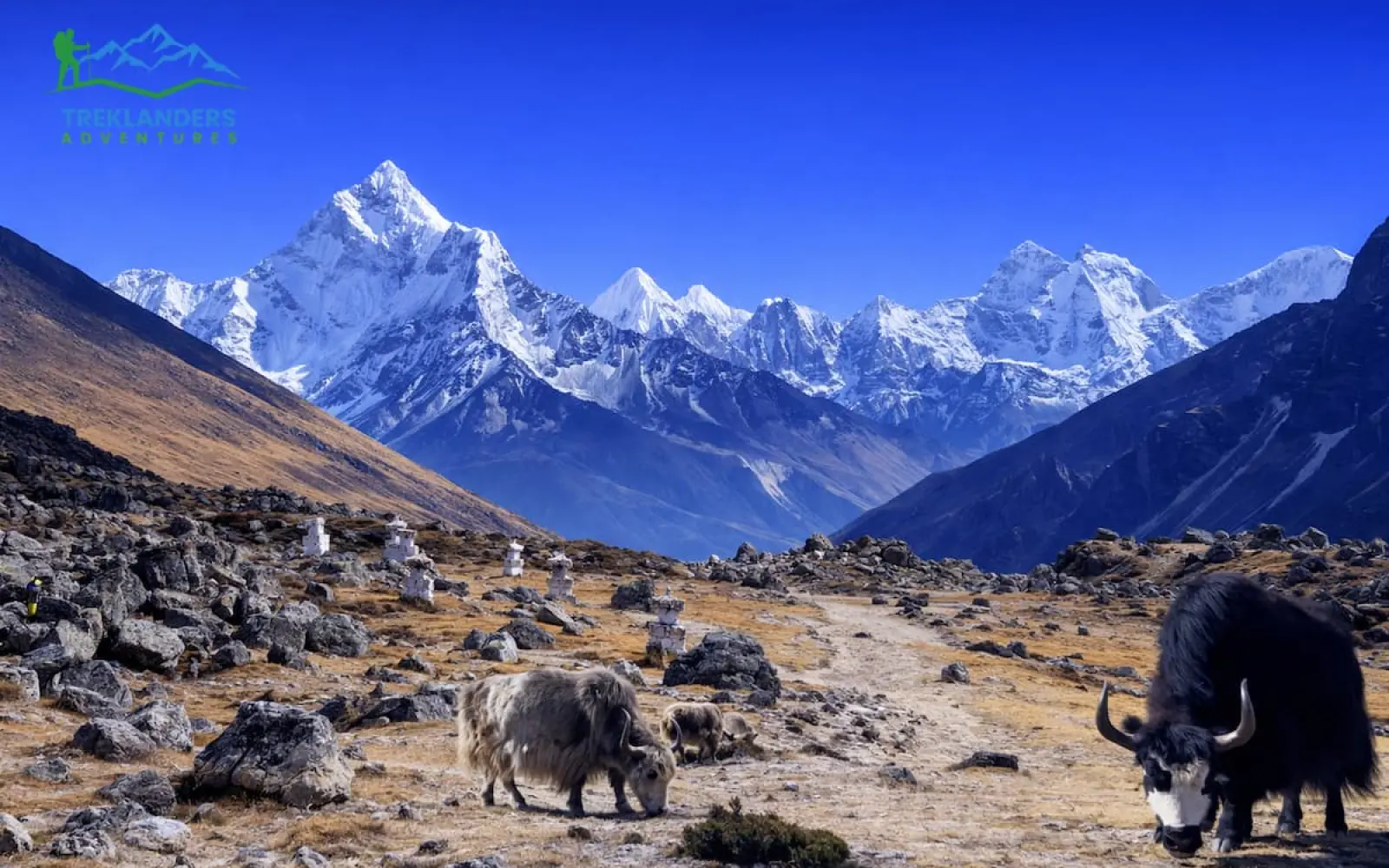
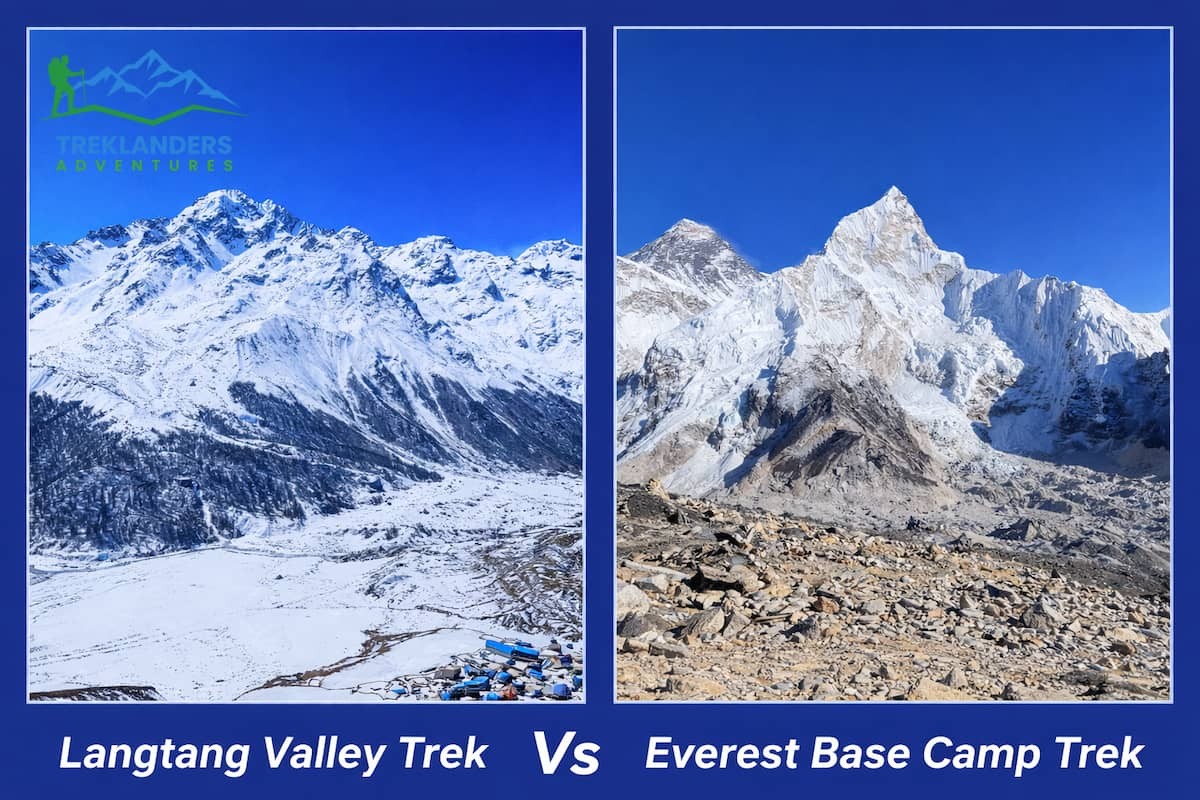
Trekking enthusiasts generally compare the pros and cons of the Langtang Valley Trek and the Everest Base Camp Trek in terms of experience, scenery, difficulty, costs, and cultural richness when deciding between the two. Both are the most well-known of Himalayan adventures, yet they offer different tastes of the Nepali mountain world. The Langtang Valley trek is graded as a moderate trek, offering stunning alpine landscapes, yak pastures, and breathtaking views of Langtang Lirung, Dorje Lakpa, and the surrounding peaks. It is more famous as a shorter trek with fewer tourists compared to Everest, making it ideal for beginners or those wanting a calm Himalayan experience. The trekking trail passes through Tamang and Tibetan-influenced villages, rhododendron forests, and glacial valleys, rich in culture and nature, giving an experience that is fulfilling even for those who do not want to spend long on the trail. On normal count, someone can complete Langtang within 7-10 days, with easier gains in altitude, reducing risks.
The Everest Base Camp Trek (EBC) is a dream for many adventurers who wish to walk in the footsteps of legendary climbers to the world's highest mountain, Mount Everest (8,848.86 m). This trek is tougher and longer and quite physically demanding, generally lasting around 12-14 days. Beginning with the exhilarating flight to Lukla, it now traverses the Sherpa settlements with suspension bridges and Buddhist monasteries before stepping into the world-famous Everest Base Camp at 5,364 m. The views beyond words of Everest, Lhotse, Nuptse, and Ama Dablam make this adventure a lifetime experience. EBC is more commercial, busier, and is considered pricier in terms of flight charges, permits, and high-altitude logistics.
If you want a quiet, inexpensive trek brimming with culture and scenic valleys, Langtang is the way to go. But if you dream of standing under Everest, getting Sherpa culture involved, and testing your limits, Everest Base Camp is number one. Both trails offer an adventure ending with a rewarding view of the Himalayas- the choice lies in time, fitness level, and personal preference.
Scenic Flight to Lukla – Thrilling Mountain landing experience,
Panoramic Himalayan Giants – Everest, Lhotse, Ama Dablam, Nuptse views.
Challenging High-Altitude Adventure – A rewarding goal for passionate trekkers,
Teahouse Network & Trekking Culture – Well-developed trail with global trekkers everywhere,
Langtang vs. Everest Trek – Quick Comparison
Langtang vs. Everest Trek – Quick Comparison
Feature
Langtang Valley Trek
Everest Base Camp Trek
Duration
7–10 days
12–14 days
Max Altitude
~5,033 m (Tserko Ri)
5,364 m (EBC) / 5,643 m (Kala Patthar)
Difficulty Level
Moderate
Challenging
Best For
Beginners, short holidays, nature lovers
Experienced trekkers, bucket-list adventure
Crowd Level
Less crowded
Busy/popular route
Cost
Budget-friendly
Higher cost due to flights/logistics
Permit Needed
TIMS + Langtang NP Permit
TIMS + Sagarmatha NP Permit + Khumbu Fees
Scenery Type
Forests, yak pastures, glacial valleys
High alpine terrain, massive peaks
Culture
Tamang/Tibetan Influence
Sherpa Buddhist Culture
Access
Road drive from Kathmandu
Fly to Lukla required
Main Highlight
Tserko Ri, Kyanjin Gompa
Everest Base Camp & Kala Patthar
Trek Location & Accessibility
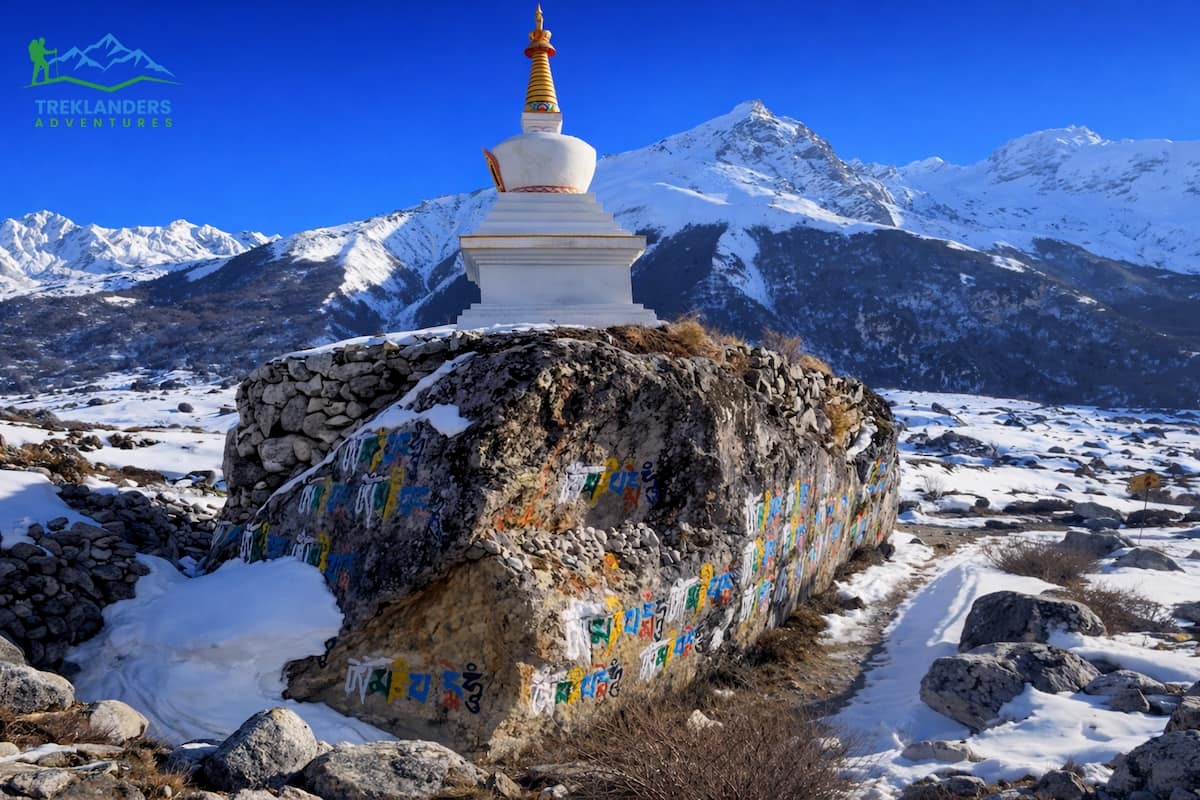
Stupa in Kyanjin Valley during the Langtang Valley Trek
The Langtang Valley Trek is located north of Kathmandu near the border with Tibet and is, therefore, one of the most easily accessible trekking areas in Nepal. It is different from the majority of the high-altitude routes as Langtang does not necessitate domestic flights. Trekkers, thus, can get to Syabrubesi the point where the trek starts by a 6-7 hour breathtaking drive from Kathmandu. Being accessible by road which makes Langtang a comfortable choice for travelers, who want to stay away from the inconvenience of flight schedules, weather delays, or additional expenses.
The trail slowly goes up through thick forests, delightful villages, and riverbanks along the Langtang Khola, to the final point where it is possible to see vast alpine meadows and glaciers, filled with landscapes. Due to the fact that it is easily accessible and is in close proximity, Langtang is a frequently exercised option by those having a shorter timeframe or with a last-minute trekking plan.
On the contrary, the Everest Base Camp (EBC) Trek is set on the eastern side of Nepal in the Khumbu region, one of the most isolated parts of the entire Himalayas. Normally, this journey is coupled with a short yet exciting flight for around thirty to thirty-five minutes from Kathmandu or Ramechhap to Lukla, one of the most famous mountain airstrips in the world. Such a flight adds to the entry itself, with terrific Himalayan views right at the start. Unfortunately, flight services can be disrupted from time to time in the Everest region due to its weather conditions. Once you land at Lukla, you begin hiking north along some very well-established trekking routes of Sherpa towns, suspension bridges, and river valleys before gradually entering the high altitude landscape towards Everest Base Camp.
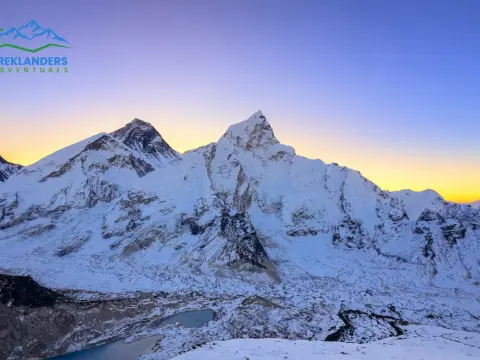
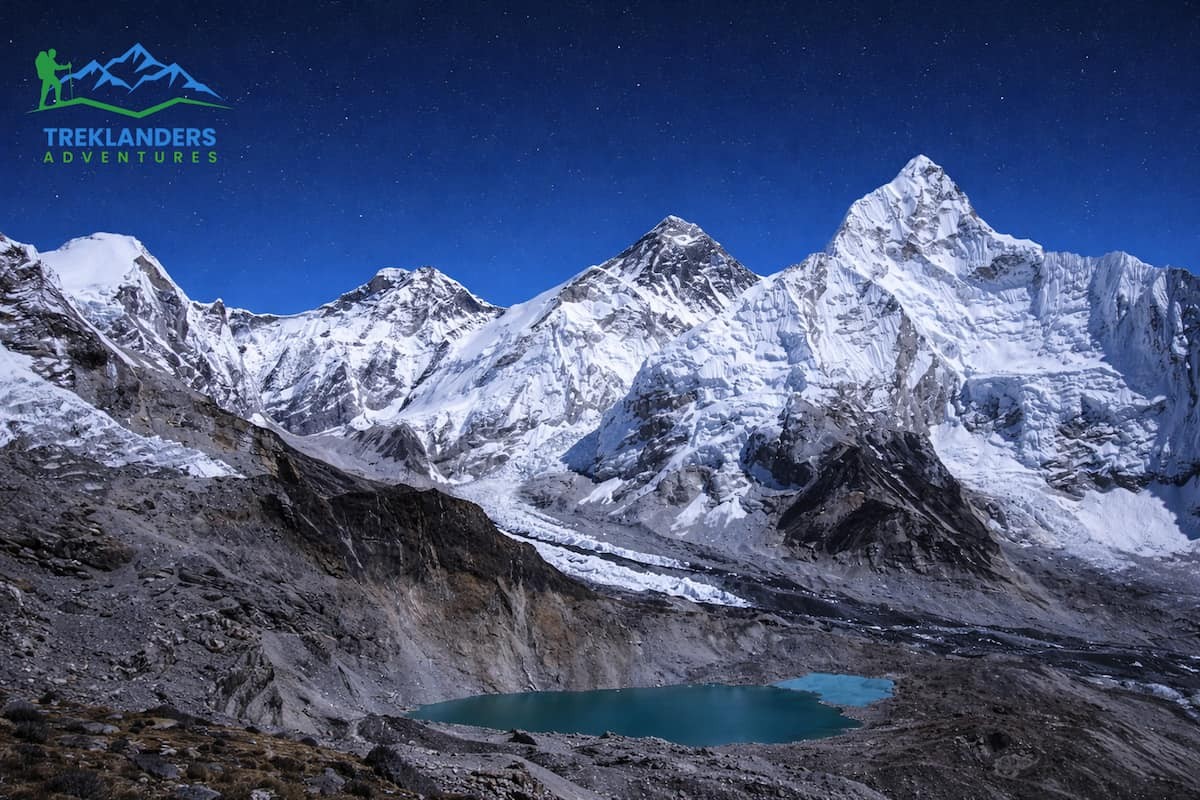
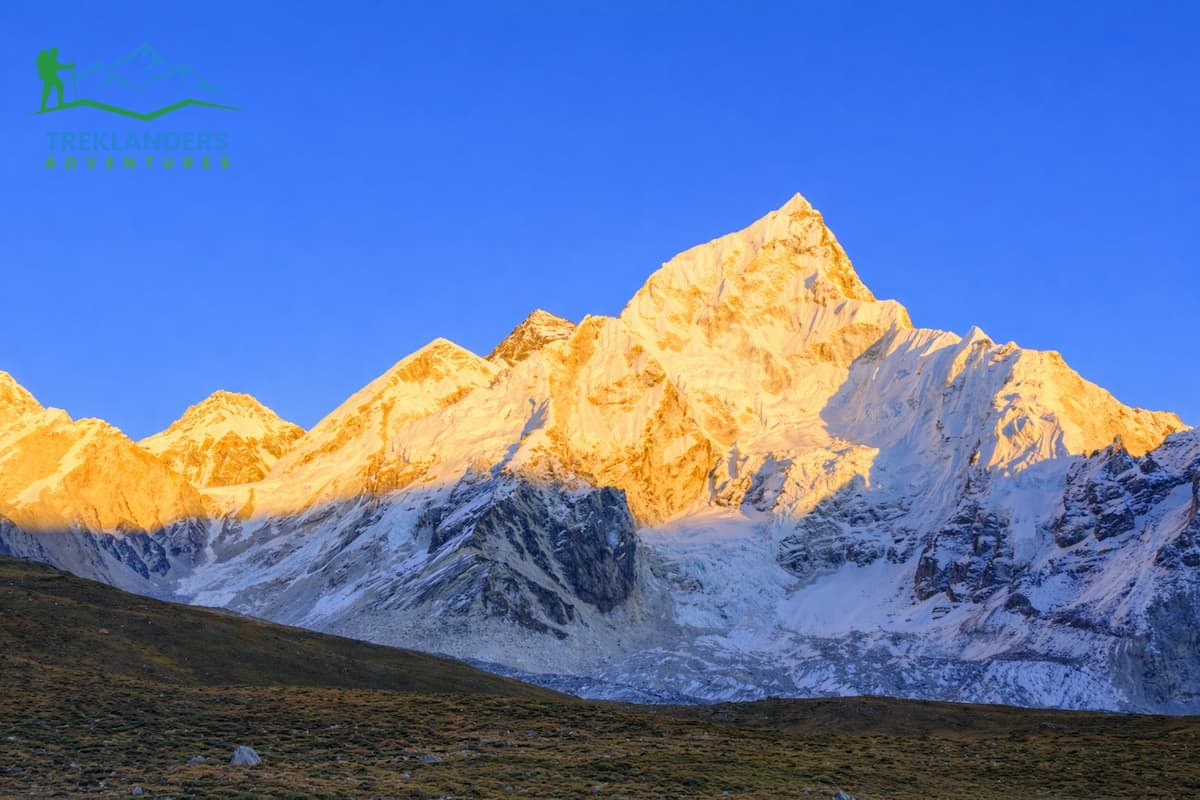
Stunning Everest view from Kala Patthar
While Langtang offers simplicity and road-based access, EBC demands more planning and relies on air travel, making it more remote but also more adventurous. Depending on your preference, convenience and quick access, or thrill and mountain exposure, both routes provide unique trekking experiences in Nepal.
Scenery & Mountain Views Comparison
Stunning mountain views from Kyanjin Ri viewpoint
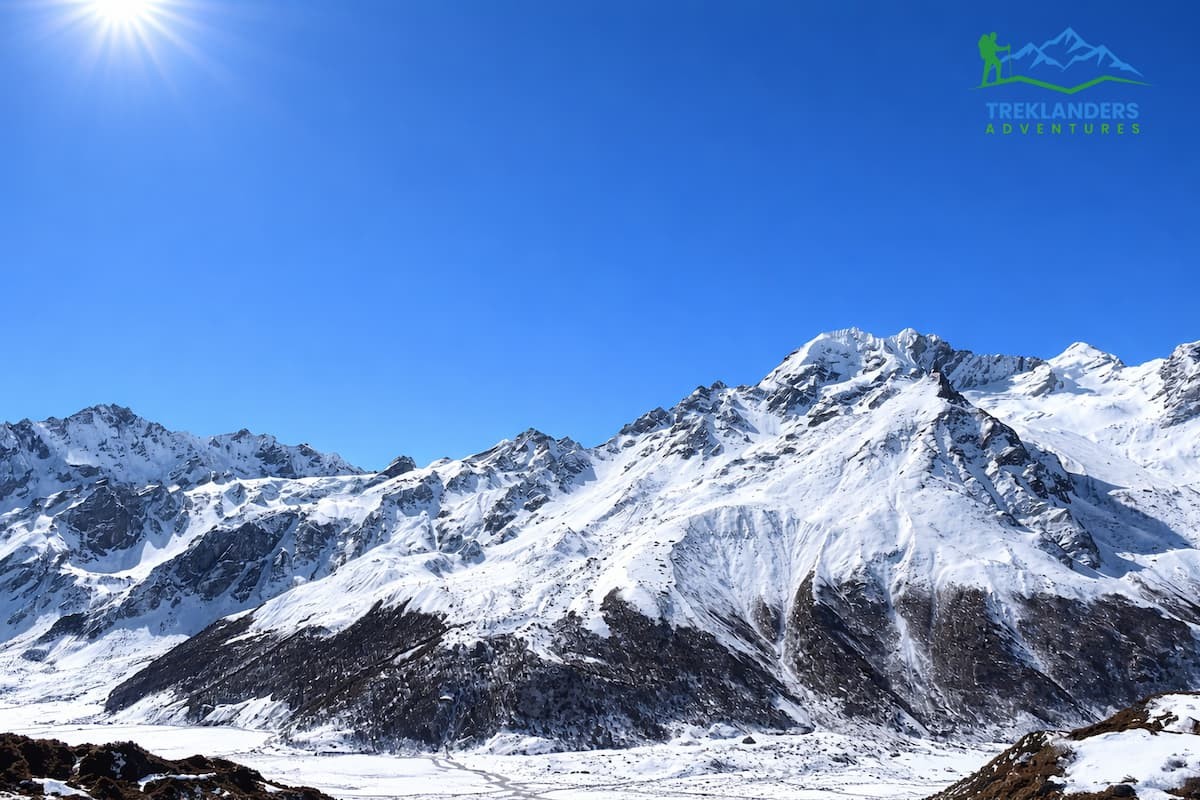
Both Langtang Valley and Everest Base Camp are stunning Himalayan mountain vista destinations. Still, the different types of landscapes, the size of the mountains, and the overall visual experience vary a lot. Langtang Valley Trek is a paradise for nature lovers and photographers with the fantastic Himalayan landscape of the lush forests, rivers, yak pastures, and broad glacial valleys. The trek starts through the dense rhododendron and pine forests and then gradually brightens with the high meadows offering a panoramic view of Langtang Lirung, Dorje Lakpa, Yala Peak, and the snow-covered mountains around. The best viewpoint , Tserko Ri, provides a magnificent sunrise view with the golden peaks shining over the valley landscape, which spreads out for miles. The scenery is very beautiful and is presented to you in a very intimate way, with mountains rising up right in front of you, so it's a dream for nature lovers and photographers.
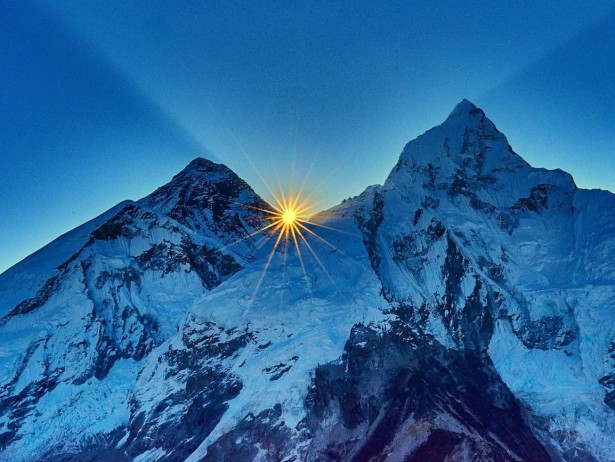
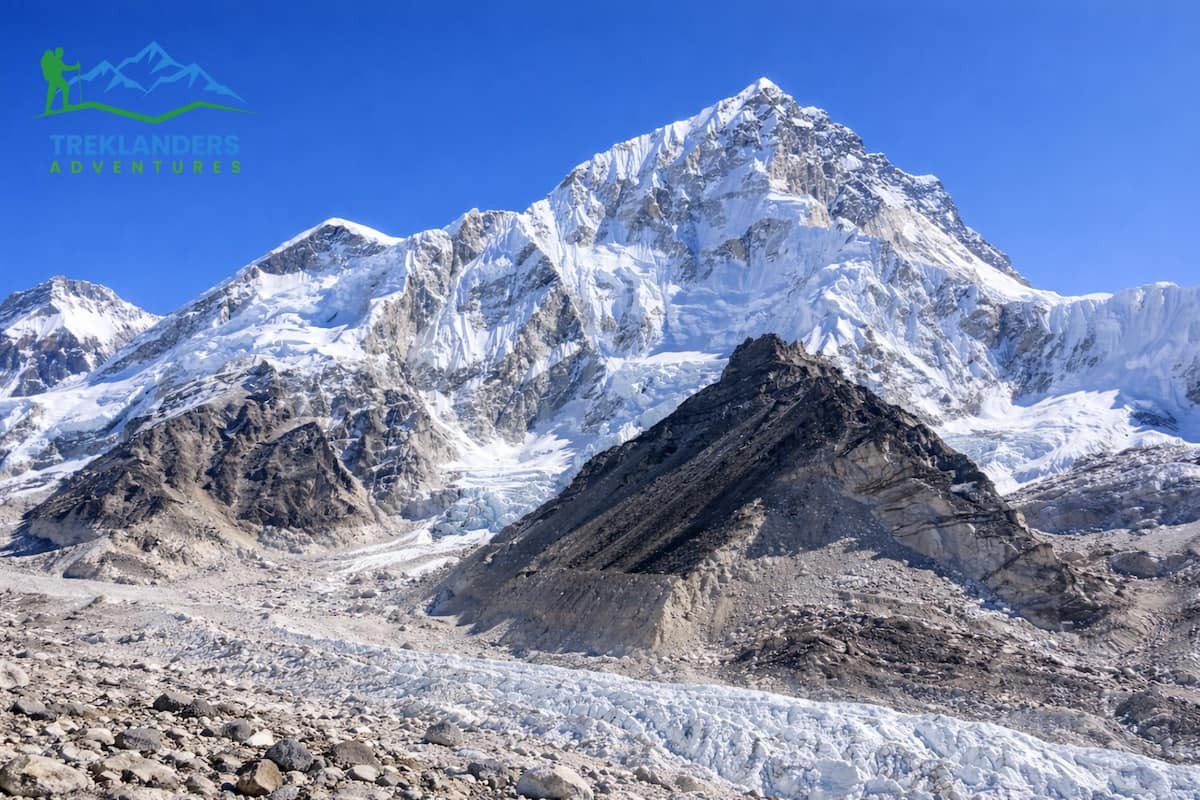
Everest Base Camp Trek is mostly about snow-capped mountains, deep ravines, and mighty Himalayan giants. As climbers ascend, the forest disappears, and the terrain turns rugged, icy, and amazingly huge. The sights become better with each mile, eventually unveiling such famous mountains as Everest, Lhotse, Ama Dablam, Nuptse, Makalu, and many others. The famous viewpoints Kala Patthar and Everest Base Camp offer incomparable magnificence. Often, it is an overwhelming feeling to be under the highest mountain in the world. The size is huge, strong, and impressive, thus giving a real expedition atmosphere.
Fantastic views on the way to Kala Patthar during the Everest Base Camp Trek
To put it simply: Langtang is calm, green, and has lovely close views of nature, whereas Everest is full of drama, very high, and awe-inspiring on a global scale.
Difficulty Level & Fitness Requirement
The Langtang Valley Trek is regarded as an easy trek, suited for a beginner with elementary skills and a positive attitude towards trekking. The trails are characterized by gradual ascents along forest paths, with a few steep sections, especially near Kyanjin Gompa and up to Tserko Ri (optional). In general, most trekkers with walking habits or light exercise experience can undertake Langtang comfortably. Training for a few weeks preceding the trip: simple cardio workouts, stair climbing, or perhaps mellow hiking trips will make your journey a lot smoother. Lower than Everest, hence fairly moderate possibilities with altitude sickness, but acclimatization, hydration, and good pace are still important.
On the contrary, the Everest Base Camp Trek is quite demanding in terms of physical stamina and preparation. The trekkers count a very high altitude, from 5,364 m at EBC to 5,545 m from the summit of Kala Patthar, with very little oxygen harboring them, making this trek even more physically vigorous. The average itinerary consists of a longer duration of walking, where several of these days include consistently higher elevations. Hence, trekkers have to ensure past hiking experiences or proper fitness, as well as calories stored, to carry on for multiple days of continuous walking. Training should begin about 4-6 weeks in advance, focusing on cardio fitness, building your stamina, strength in your legs, and breathing workouts. Rest days are essential for acclimatization because altitude, in particular, brings risks on this route.
In short, Langtang would suit beginners and casual trekkers, whereas Everest Base Camp would be slightly tougher to take on. Both can be achieved with preparation, but Everest requires even more fitness, mental resilience, and much more knowledge of acclimatization.
Altitude & Acclimatization
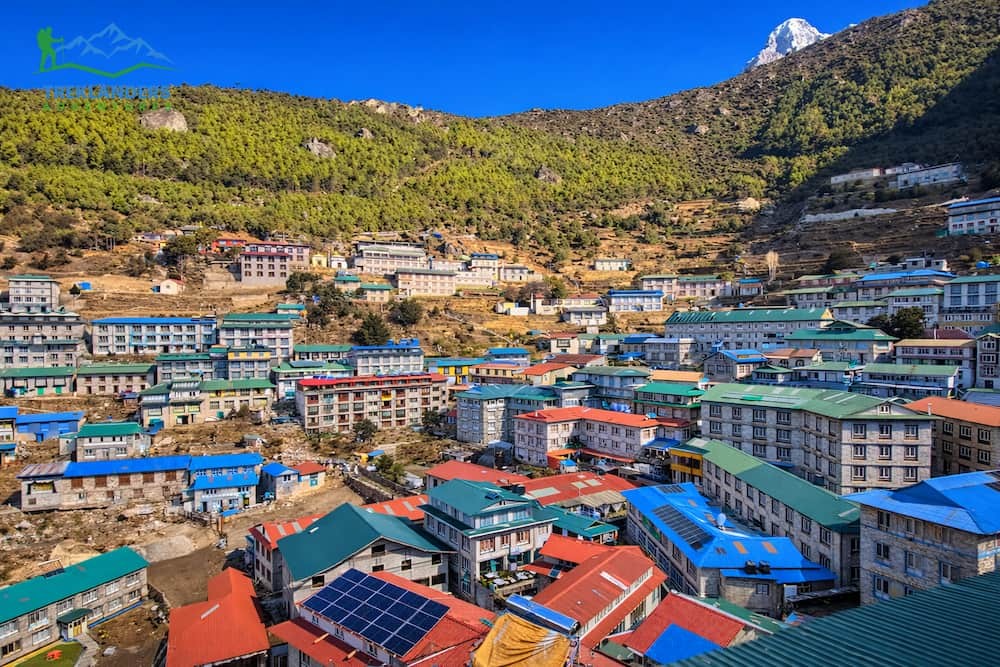
Namche Bazar- Everest Base Camp Trek
Altitude plays a significant role in Himalayan trekking, and understanding how elevation gain impacts the body is crucial for a safe and enjoyable journey. When comparing the Langtang Valley Trek and the Everest Base Camp Trek, both involve trekking above 4,000 meters, but the rate of ascent, acclimatization opportunities, and altitude risks differ considerably.
Highest Points of Each Trek
Beautiful early morning view from Kala Patthar during the Everest Base Camp Trek
The highest point on the Langtang Valley Trek is Tserko Ri (4,984 m / 16,352 ft), reached as a side trip from Kyanjin Gompa (3,870 m). Most overnight stops remain below the highest viewpoint, giving the body gradual time to adapt before ascending further. The elevation gain is progressive, making altitude adjustment smoother for trekkers. In contrast, the Everest Base Camp Trek reaches 5,364 m (17,598 ft) at Base Camp, with an additional climb to Kala Patthar at 5,545 m (18,192 ft) for sunrise views. This makes Everest significantly higher in elevation, with more days spent in the thin-air zone above 4,000 m.
Risk of Altitude Sickness
Due to its gradual valley ascent, Langtang poses a moderate altitude risk when trekkers maintain a steady pace, stay hydrated, and allow their bodies to adapt naturally. Acute Mountain Sickness (AMS) is less frequent here compared to Everest, though it can occur if rushed. However, the Everest route involves more rapid elevation gain over a longer duration, increasing exposure to thin air. As hikers progress toward Namche, Dingboche, Lobuche, and Gorakshep, oxygen levels drop significantly, making altitude sickness a common challenge. Proper pace and acclimatization are mandatory.
Acclimatization Days
Most Langtang itineraries include one acclimatization day at Kyanjin Gompa, with optional hikes to Kyanjin Ri or Tserko Ri, allowing trekkers to climb high and sleep low, an ideal adaptation method. The Everest Base Camp Trek, however, requires at least two acclimatization days, usually at Namche Bazaar and Dingboche, due to its much higher elevations and steeper altitude profile. Without these rest days, altitude issues can quickly escalate.
Which Trek Is Better for Altitude-Sensitive Trekkers?
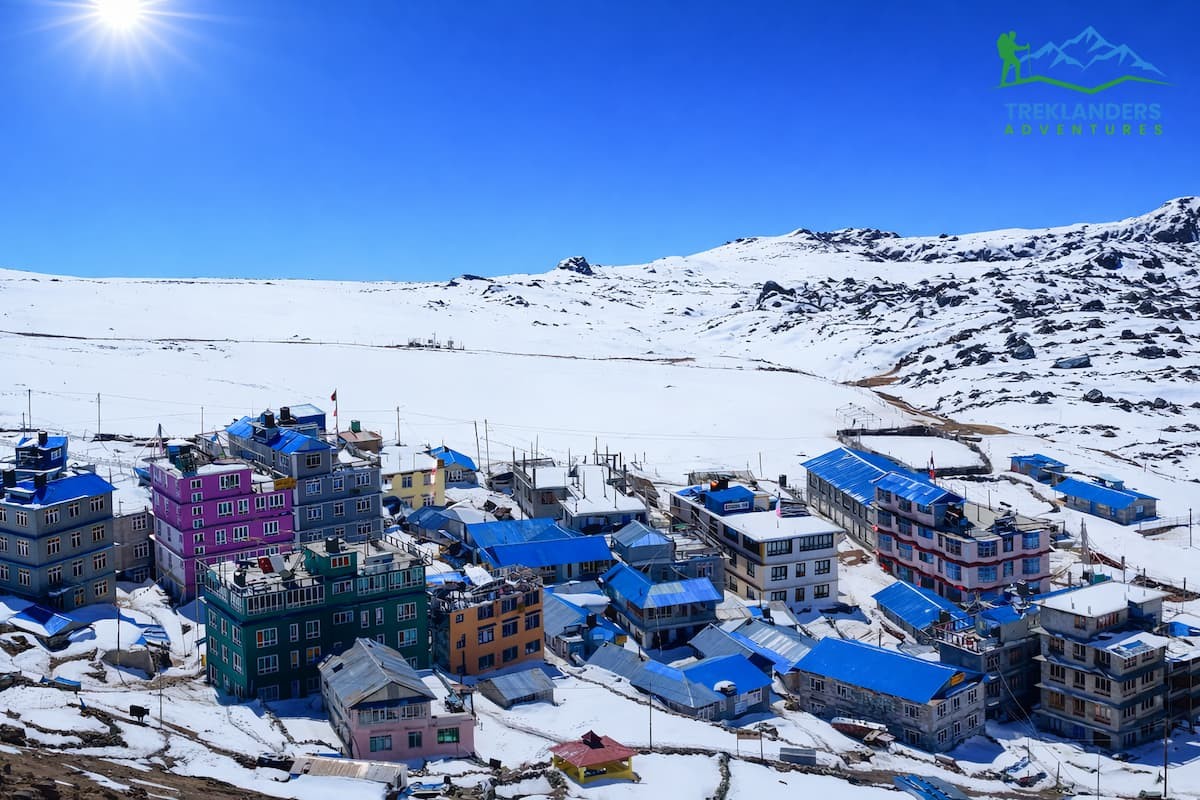
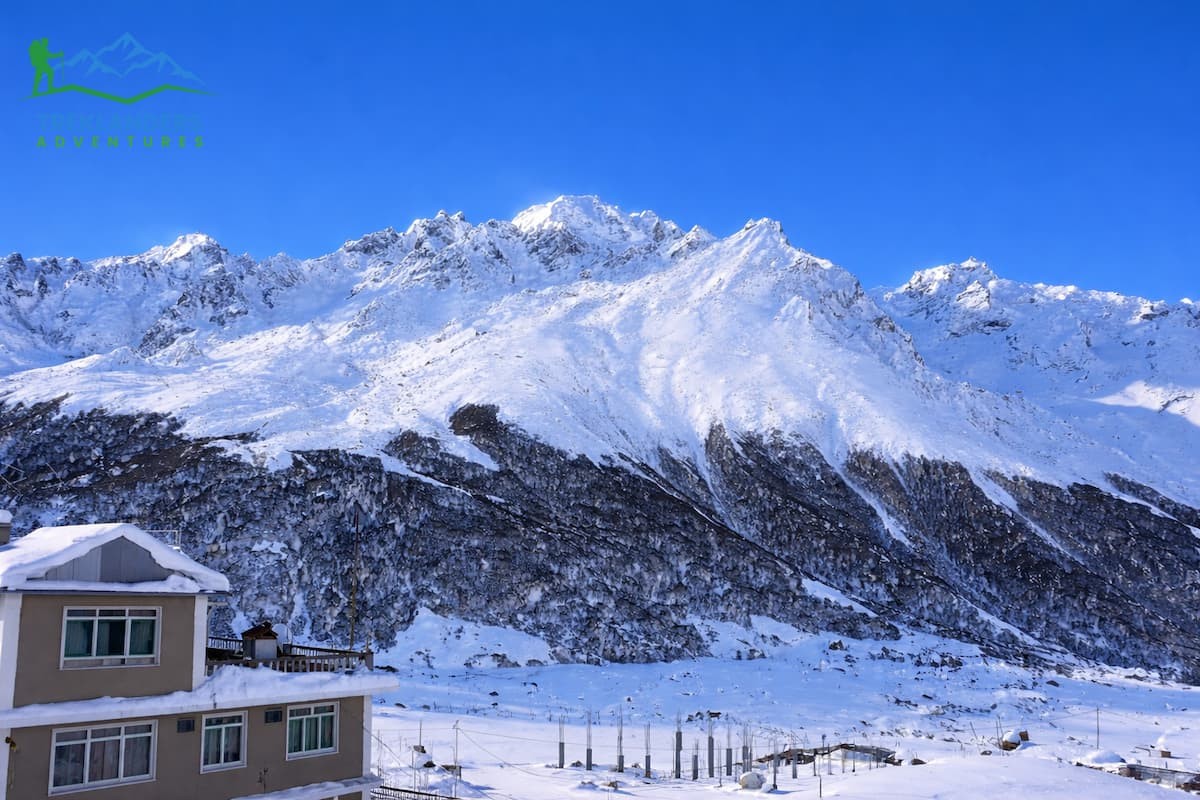
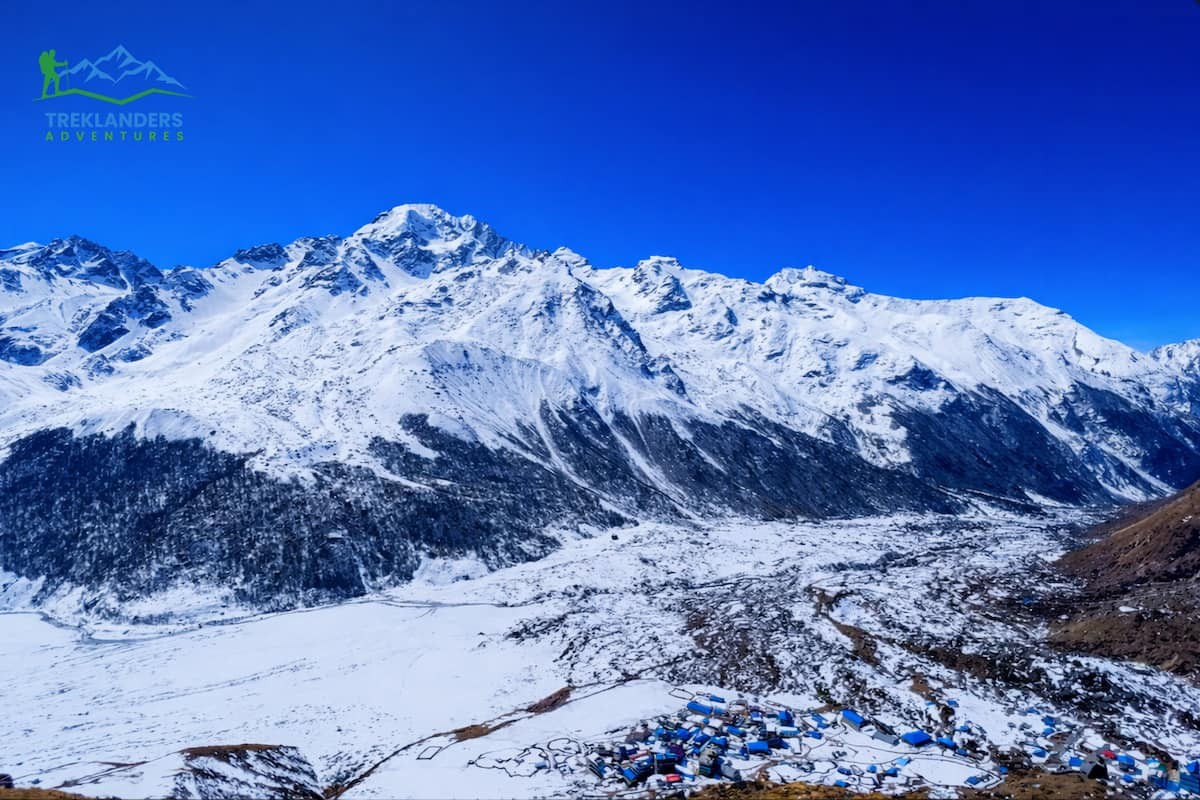
Beautiful mountain views from Kyanjin Valley during winter – Langtang Valley Trek
For first-timers or altitude-sensitive trekkers, Langtang is generally safer due to its smoother ascent, lower maximum sleeping altitudes, and shorter exposure to extreme heights. Everest is achievable but demands stronger fitness, slower pacing, and strict acclimatization discipline.
In summary, Langtang offers a gentler altitude progression, whereas Everest requires more caution and acclimatization planning, though both are safe when guided well and approached with awareness.
Culture, Villages & Local Experience
Culture greatly influences a trek, giving it depth and making it a part of living heritage. While both the Langtang and Everest routes reflect Himalayan traditions, each differs markedly in terms of community, village atmosphere, and cultural interactions. This contrast can be better understood by examining their cultural backgrounds and the local people.
Cultural Background and Local People
The Langtang Valley Trek is a journey through the cultural heritage of the Tamang people, a population with strong Tibetan influences living in the valley. Their lives revolve around agriculture, yak herding, and traditional highland customs. The houses are adorned with prayer flags, Mani walls, and spinning prayer wheels, which reflect their spiritual traditions. As you trek, you will find the local people very hospitable. They will frequently invite you into their homes, which offer the warm, welcoming atmosphere typical of mountain dwellings. On the other hand, the Everest Base Camp Trek brings trekkers to the Sherpa culture. It is one of the most famous cultures in the world because of the history of mountaineering and the ability to live at high altitudes of the Sherpa people. The Sherpa community is very connected with Tibetan Buddhism, and this is evident in the monasteries, chortens, and spiritual practices that are hundreds of years old.
Village Experience along the Trails
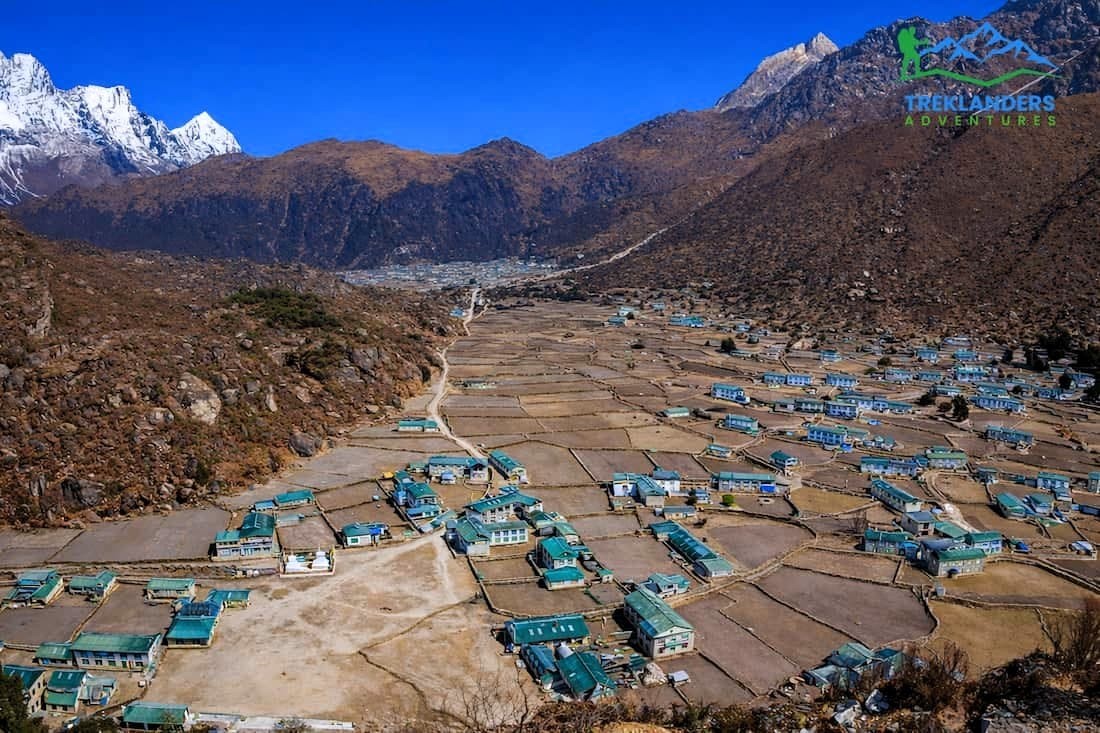
Khumjung Village- Everest Base Camp Trek
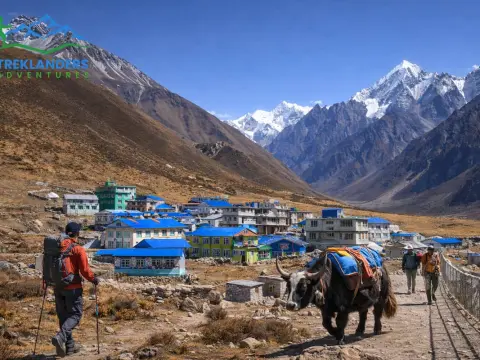
The trek to Langtang runs through these small, peaceful hamlets: Syabrubesi, Lama Hotel, Langtang Village, and Kyanjin Gompa. More intimate, less commercial, these houses speak personal stories through the voices of the visitors who sit with them at home, share yak cheese, and narrate guests' experiences in the region. These were the enduring emotional marks left by the 2015 earthquake, making meaningful support through tourism for families regaining lodges and communities. On the other hand, the Everest route has much bigger, more developed settlements such as Namche Bazaar, Tengboche, Dingboche, Lobuche, and so on. Namche is a very dynamic commercial center where trekkers are spoiled with shops for installation equipment, bakeries, cafes, museums, and cultural centers. It also presents another spiritual peak by way of the Tengboche Monastery, since, with monks chanting and panoramic views of Ama Dablam, it creates a kind of transcendence.
Festivals, Traditions, and Real Experience
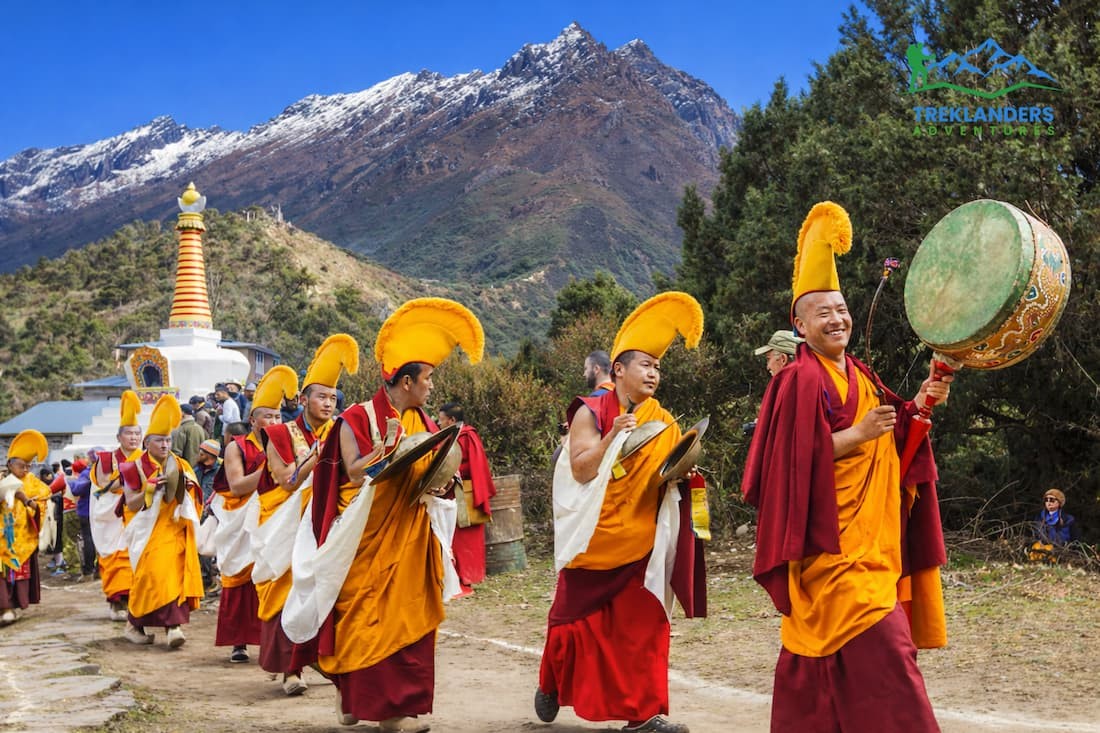
Mani Rimdu Festival at Tengboche Monastery during the Everest Base Camp Trek
Langtang is all about pure and charming rural life, where trekkers come to experience the culture in isolation from busy encounters in mellow-paced villages. You could see yak caravans passing, taste local butter tea, or even visit the Kyanjin cheese factory. Whereas in the Everest region, tourism infrastructure leans more on well-organized facilities, yet is still potent in its deep identity with cultural life through prayer ceremonies, Dumji and Mani Rimdu festivities, and sacred monasteries.
Which One Offers a More Authentic Cultural Feel?
In terms of intimate village interactions and traditional lifestyle exposure, Langtang is probably the best avenue to closer cultural ties. But if you want something that combines culture and history with developed infrastructures that still have a spiritual heritage; Everest would give you a grand Sherpa cultural experience. Both enrich the journey, just in different rhythms of Himalayan life.
Best Season & Weather Comparison
Choosing the right season plays an essential role in the success of both Langtang Valley and Everest Base Camp treks. While both fall under classic Himalayan weather patterns, the conditions, climate stability, and seasonal advantages differ slightly based on geography and altitude.
Peak Seasons for Both Treks
Sunset view of Everest, Lhotse, and other mountains seen from Kala Patthar
Both the Langtang Valley Trek and the Everest Base Camp Trek are best enjoyed during Spring (March–May) and Autumn (September–November). These months offer stable weather, clear skies, comfortable temperatures, and excellent mountain visibility. Spring brings blooming rhododendrons in Langtang and warmer days in Everest, making the trails vibrant and lively. In autumn, post-monsoon clarity sharpens the mountain views dramatically, making sunrise from Tserko Ri or Kala Patthar unforgettable. Autumn also has cooler nights but fewer weather disturbances, ideal for photography and long trekking days.
Weather Variation & Temperature Differences
Langtang sits slightly lower in altitude compared to Everest, so temperatures are generally milder, especially during nights. Summer days remain comfortable with moderate warmth, while early mornings in higher camps can be cold. The Everest region, being higher and more exposed, experiences colder temperatures, stronger winds, and deeper winter conditions, especially above 4,500 meters. Night temperatures around Gorakshep, Lobuche, and Dingboche often fall well below freezing in the shoulder seasons.
Winter Season
Beautiful scenery from Kyanjin Ri during winter – Langtang Valley Trek
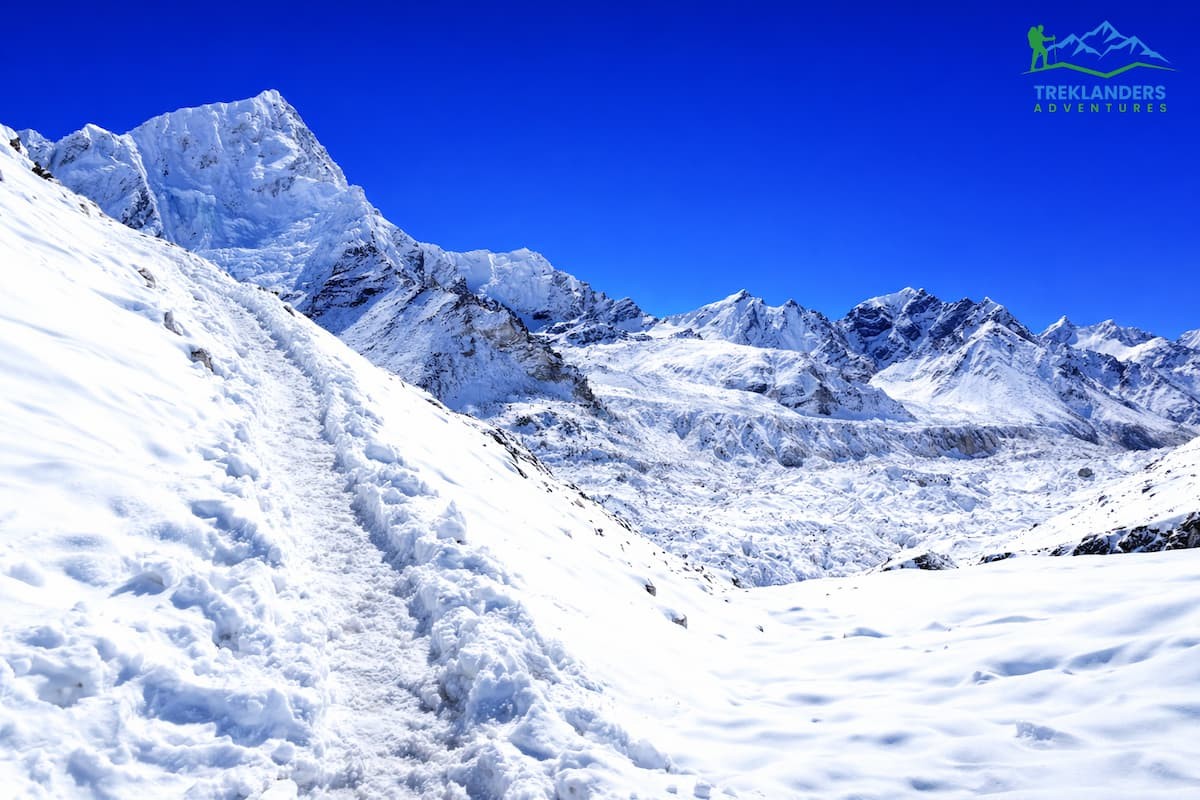
Winter (December–February) is doable in Langtang with proper gear, offering quiet trails and snow-filled landscapes. However, the Everest region becomes much more challenging during winter due to heavy snowfall, icy trails, and extreme cold, making it better suited for experienced trekkers.
Monsoon & Off-Season Consideration
The monsoon period (June–August) brings clouds, rain, and leeches in lower Langtang forests, often limiting long-range views. Trails remain green and peaceful but slippery. Everest trails also receive rainfall, but the upper Khumbu tends to be drier; still, cloud cover reduces visibility, and flights to Lukla may face frequent delays. Off-season trekking requires flexibility and weather awareness.
Which Trek Has Better Weather Conditions?
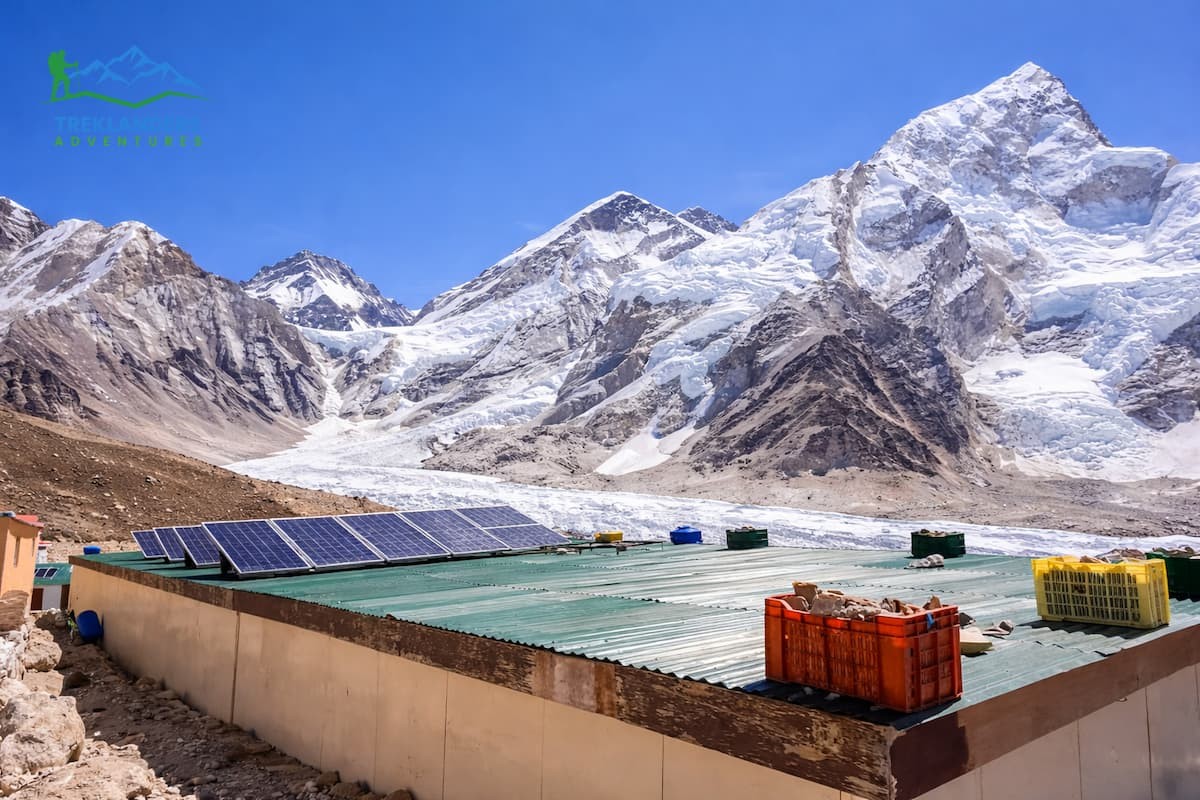
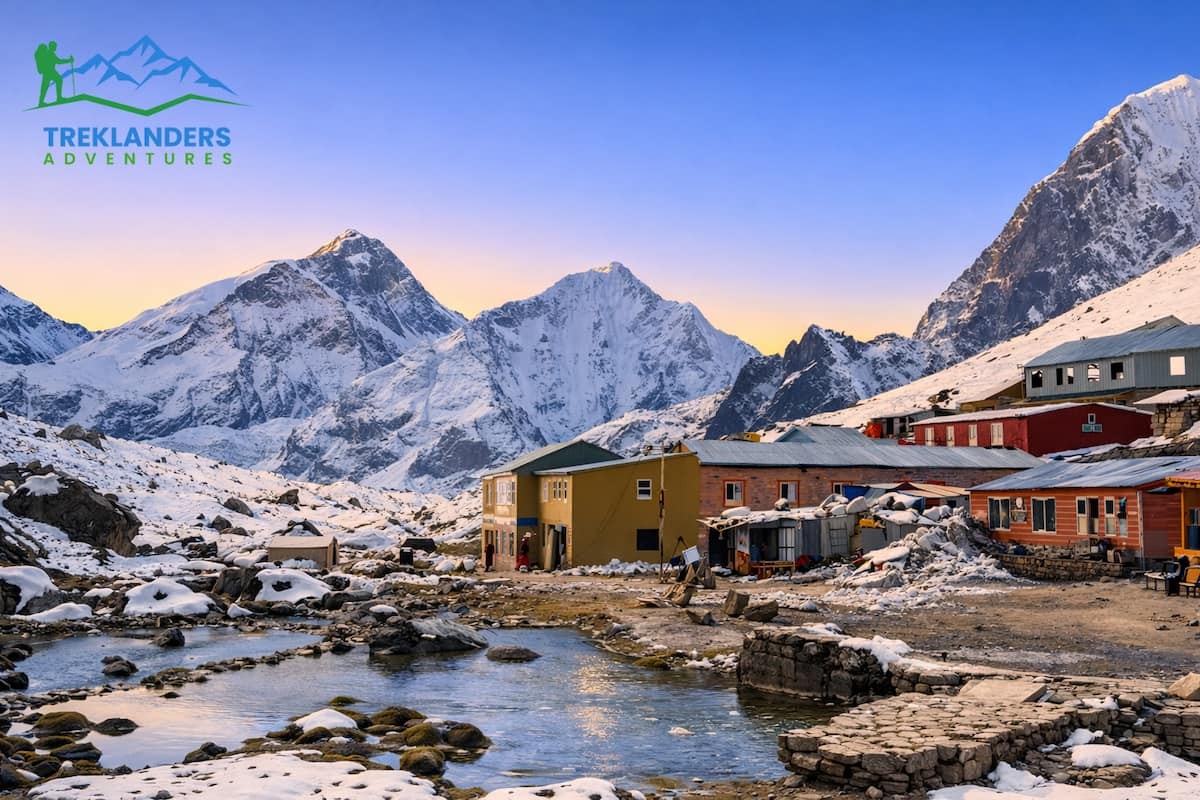
Guesthouses during the Everest Base Camp Trek with stunning mountain views in the background
Permits for trekking in Nepal depend on the respective region, and knowledge about these requirements can avoid prospective entanglements on your journey. The Langtang Valley Trek is in Langtang National Park's jurisdiction, and therefore, trekkers will acquire the Langtang National Park Entry Permit along with TIMS registration. These permits may easily be obtained in Kathmandu or at the park entry point. The process is more flexible for either independent trekkers or those joining an agency. The costs will remain fixed and common, thereby making planning better.
In comparison, the Everest Base Camp Trek requires a slightly different set of permits. Instead of a national park only, trekkers must secure the Sagarmatha National Park Entry Permit as well as the Khumbu Pasang Lhamu Rural Municipality Fee, which replaces the traditional TIMS requirement for most EBC routes. The permits are checked at various points along the trail and can be acquired either in Kathmandu, at the Monjo gate, or at Khumbu offices. While the process is simple, the total permit cost is higher for Everest because of regional management and infrastructure.
9-Day Everest Base Camp Trekking with Helicopter Return | 9 days
While both Langtang and Everest can be trekked independently, licensed guides enrich, inform, and enhance the safety level of the experience. In Langtang, a guide can provide value through cultural interpretation and local connections and can make better decisions concerning acclimatization and weather. While the trails are often crowded, they are more remote and thus a source of comfort with professional support. The Everest trek is more crowded and well-marked, whereas altitude and mileage make this journey well worth having a guide to pace out and provide safety. Hiring a porter is totally optional, but it is strongly recommended on both of those routes for your enjoyment, lightening the load and freeing more energy for some of those higher-altitude stretches.
Accommodation & Food
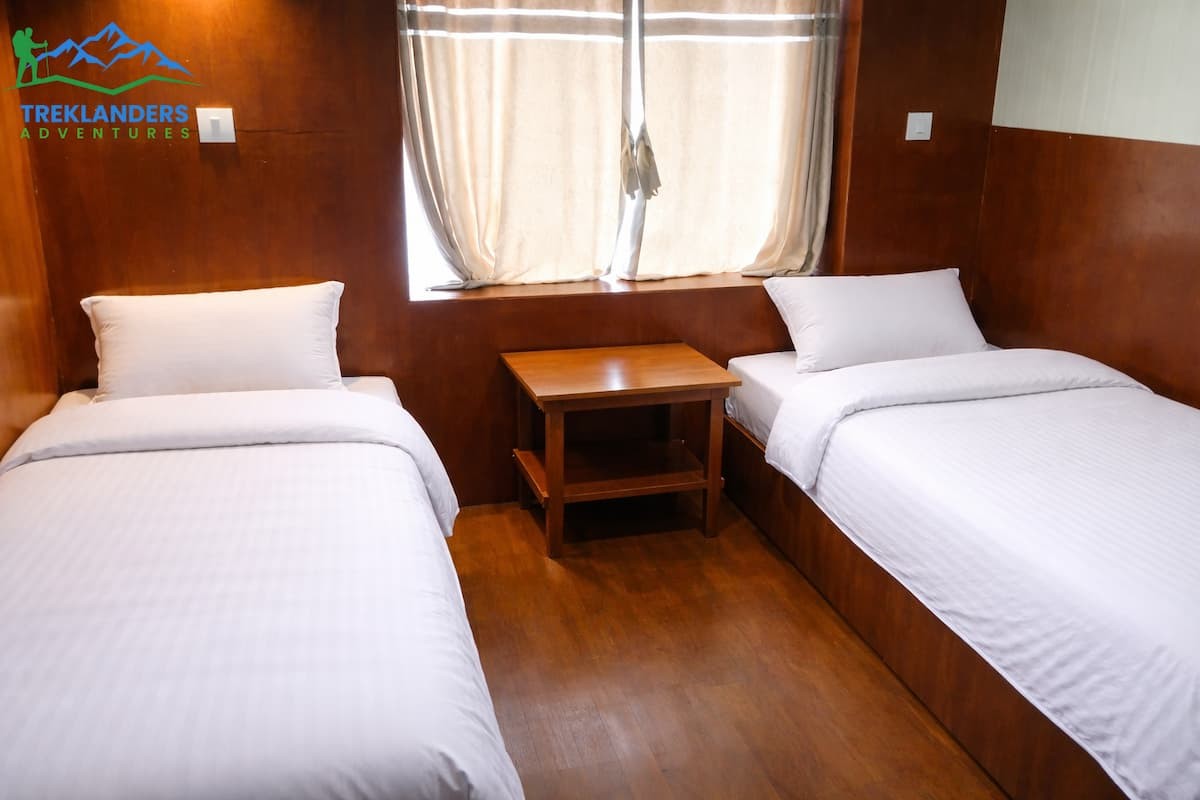
Accommodation (room) during the Everest Base Camp Trek
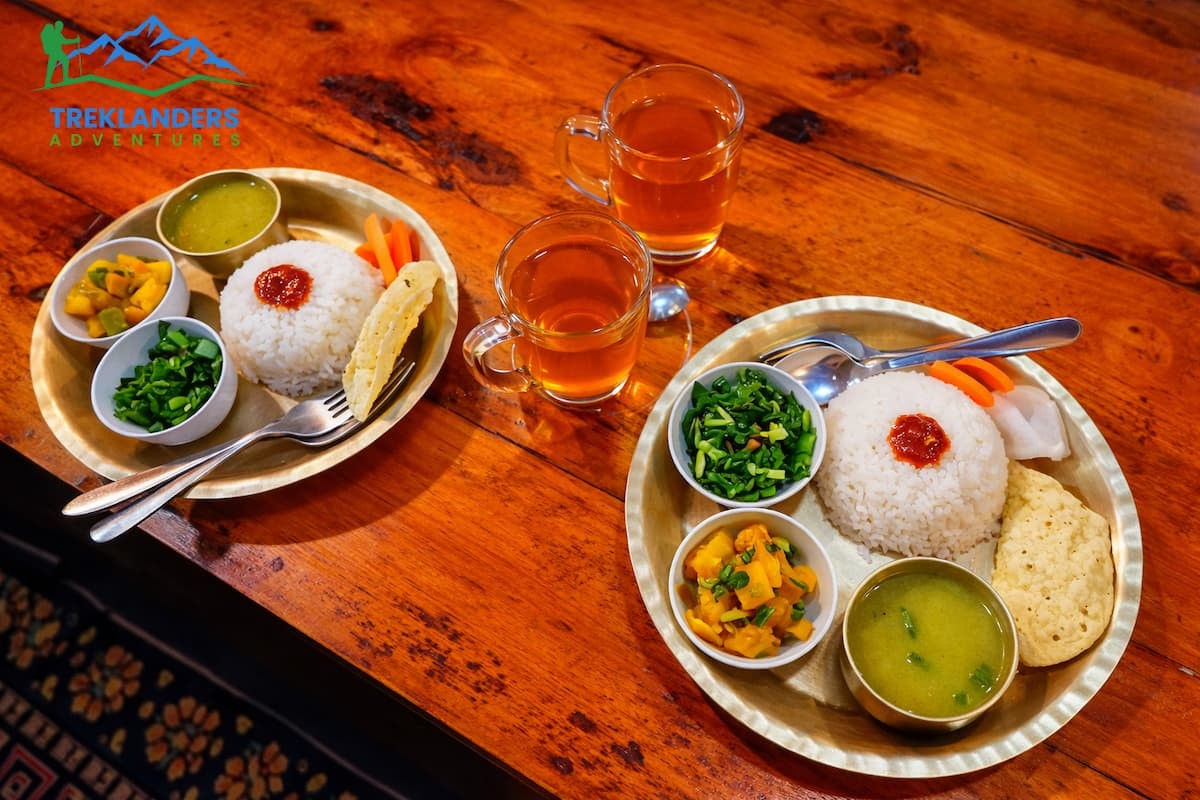
Tea house accommodation is the norm on both treks. In Langtang, teahouses become simpler as you move higher, a reflection of the valley’s remoteness and the effort required to supply goods. Meals are substantial: dal bhat, noodles, potatoes, soups, and sustain long days quite well.
Meals (food and drinks) during the Everest Base Camp Trek
Everest has an extended array of menu choices, especially in the lower villages, where cafes and bakeries ease the trek. However, food prices rise steadily with altitude, as everything above Namche is carried in by porters or yaks.
Overall Understanding
Everest involves further local fees and higher logistical costs, while the Langtang permit system is slightly simpler and more economical. Both permits are easy to manage, especially through a trekking agency, and neither trek is difficult if one prepares in advance.
Choose Langtang Valley if you want a quieter, budget-friendly trek with easier access, cultural immersion, and scenic landscapes without extreme altitude demands. It suits beginners, short vacations, and trekkers seeking a peaceful Himalayan experience. Choose Everest Base Camp if your dream is to stand beneath the world’s highest peak, experience Sherpa culture, and enjoy one of the most iconic mountain journeys on earth. It requires higher fitness, a bigger budget, and more acclimatization, but rewards you with a once-in-a-lifetime adventure. In short: Langtang for simplicity and serenity, Everest for challenge and glory.
Conclusion
Choosing between the Langtang Valley Trek and the Everest Base Camp Trek ultimately boils down to the type of Himalayan experience you want to have. Both journeys are fabulous in their own ways; both offer high mountains, unique cultures, and lasting memories from trekking. However, they differ in scale, accessibility, cost, and intensity, which makes each ideal for a certain type of trekker.
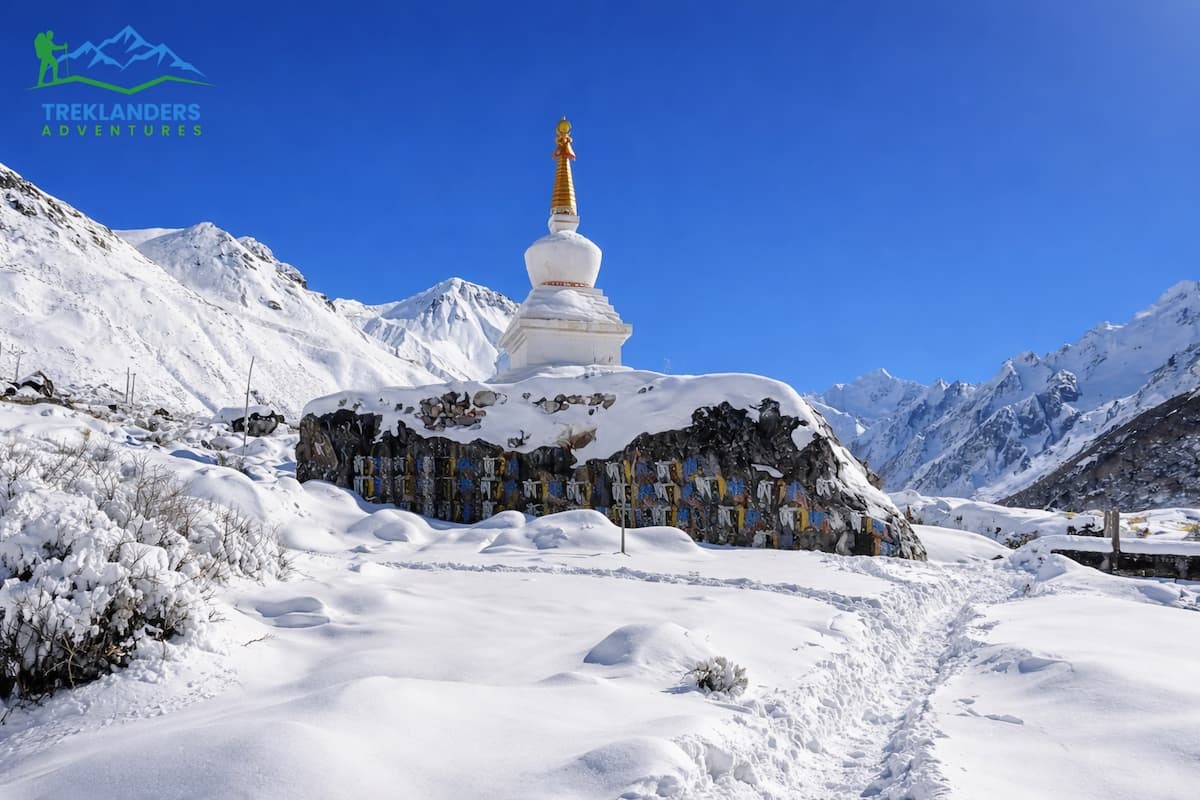
Beautiful Stupa View at Kyanjin Gompa in Winter – Langtang Valley Trek
For most people, Langtang is an emotional experience with the mountains-their trails are intimate with forests, riverbanks, yak pastures, and open glacial valleys suddenly unfolding as the trail climbs higher. Villages are small and personal, hospitality feels warm and genuine, and cultural exposure with Tamang and Tibetan influence remains a highlight. Close to Kathmandu, inexpensive, and well-suited for first-timers, Langtang is great for people who have very limited time as well. Even Tserko Ri, the highest viewpoint in Langtang, is challenging yet manageable for most people doing the trek at a comfortable travel pace. Langtang would be such a hit for travelers in search of serenity, landscapes, and great interaction with local life.
Everest Base Camp is not simply said to be a trek; many people consider it a dream itself. Here, in the place where Everest expeditions start, feeling quite deep, almost spiritual. The trails become longer, steeper, again here everywhere above 4000 meters in the second half. The sense of achievement one should at least feel at Base Camp or Kala Patthar has no value. Sherpa culture graces this journey with monasteries, prayer flags, and traditions built with years of mountain living. The cost is higher, and fitness requirements are tougher; however, rewards are monumental. Epic Himalayan walls, thrilling aviation, and one of the world's most iconic adventure routes are what define this trek.
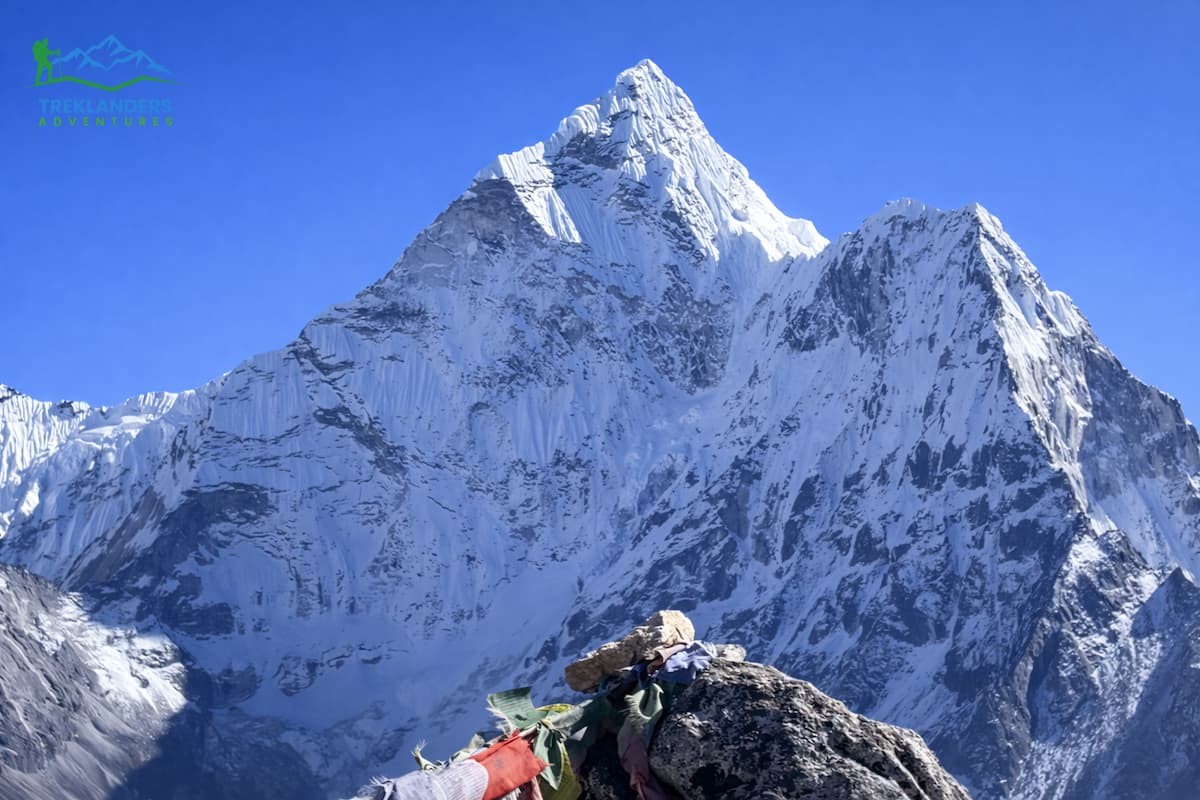
Stunning view of Mount Ama Dablam during the Everest Base Camp Trek
In fact, Langtang is the best for beginner nature lovers or trekkers who search for peace and cultural depth. Everest fits the adventurer looking for challenge, altitude, and world-class milestone experience. Both treks shine differently; you listen softly through valleys and culture for one, while the other roars through peaks and ambition. It is a beauty that transcends both words and cameras.