Manaslu Circuit Trek vs Everest Base Camp Trek: Which Is Better for You?
10 Apr 2026
Compare the Manaslu Circuit and Everest Base Camp treks—difficulty, altitude, crowds, and experience—to choose the best Nepal trek for you.


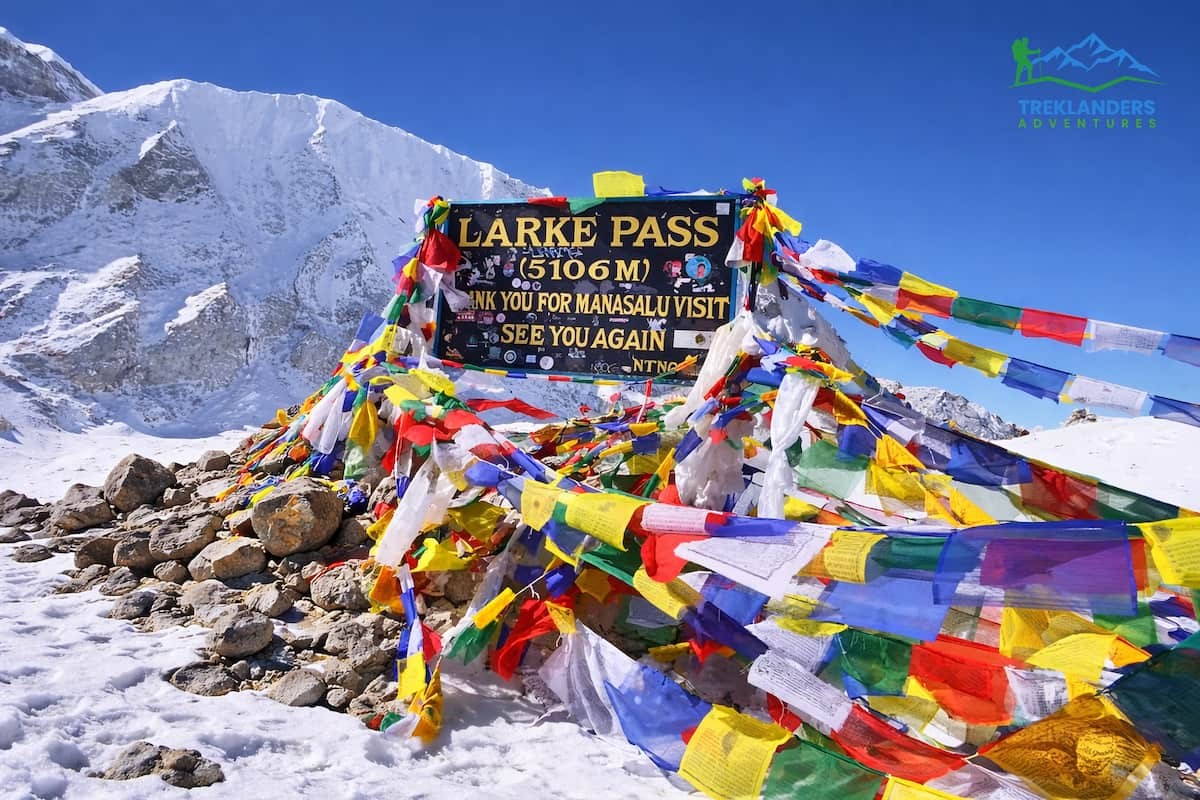
Are you thinking of hiking over Larkya La Pass on the Manaslu Circuit Trek? Then you have come to the right place.
The alarm rings at 3 AM. It is absolutely dark outside, very cold, and your whole body is telling you to stay in the warmth of your sleeping bag. But you get up, put on your boots, and step outside into the frozen Himalayan night. Your headlamp illuminates the darkness as you take your first steps toward one of the most stunning high-altitude crossings in Nepal. As dawn gradually arrives, the sky changes from black to a purple hue and then to an orange colour.
Around you, massive snow-covered peaks unveil themselves one after another, Manaslu, Himlung Cheo Himal, like silent giants standing and watching your every step. The wind is stronger as you are going higher, colorful prayer flags get into a wild, joyful dance against the pale morning sky. Your lungs are burning. Your legs are aching. But still, nothing can prepare you for the feeling of standing at the top of Larkya La Pass. That brief moment at 5,106 meters above sea level? It will never leave your memory.
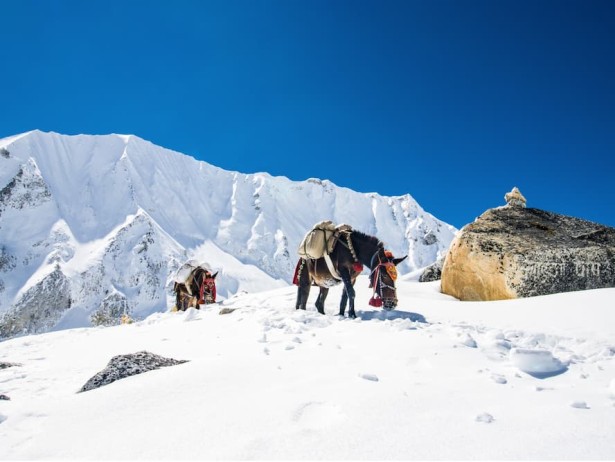
Larkya La Pass is the highest and most difficult point of the Manaslu Circuit Trek in Nepal. Located at 5,106 meters (16,751 feet), this is the highlight of the whole journey - the one part that every trekker mentions before, during, and long after their trip.
To cross Larkya La Pass, you are going to encounter steep icy tracks, thin mountain air, and changing Himalayan weather. On the other hand, it is also an opportunity to see and appreciate some of the most beautiful mountain landscapes on earth. Whether you are a novice high-altitude trekker or a seasoned Himalayan walker, this comprehensive Larkya La Pass crossing guide is for you.
This article will tell you everything - the best time to cross Larkya La Pass, how hard it is, necessary permits, the daily itinerary, packing list, altitude sickness tips, and the whole cost breakdown. Once you have studied this guide, you will be fully informed as to what awaits your Larkya La Pass crossing - and you will be well-prepared to embark on one of Nepal's grandest trekking adventures.
So, without further ado, let's get started.
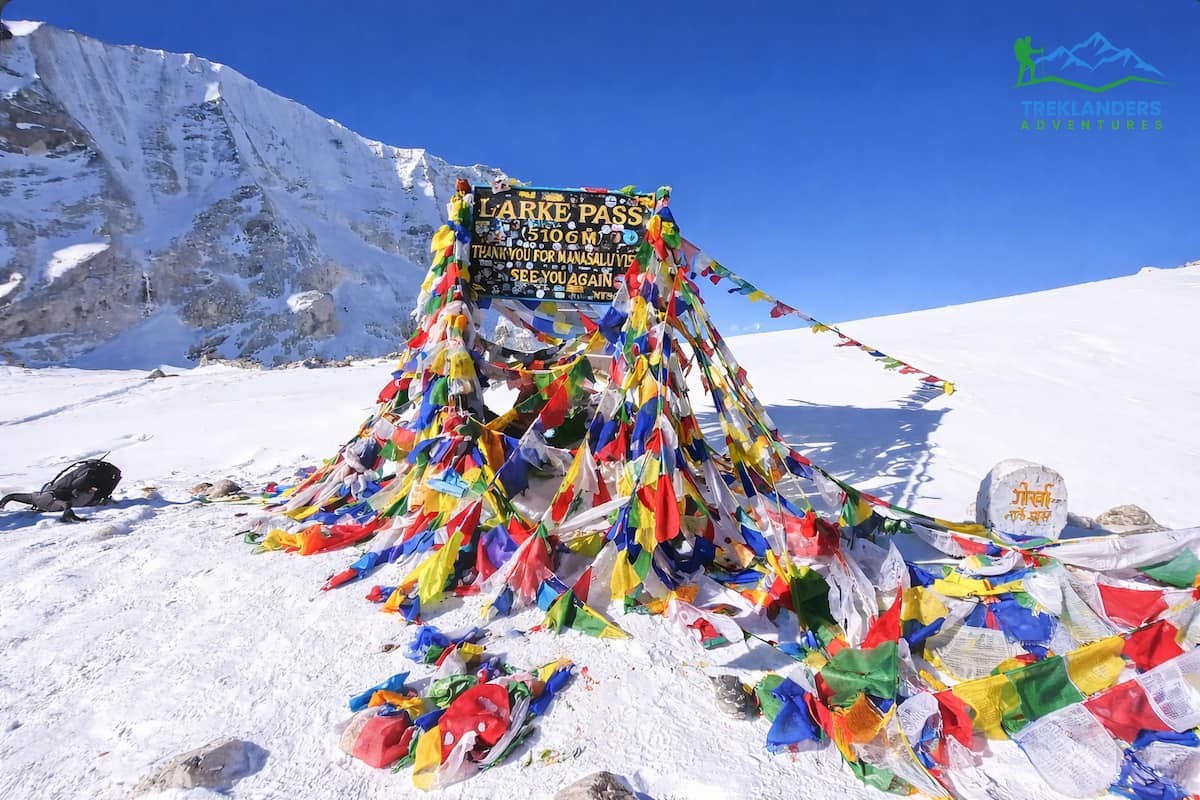
Before we get into the full details, here is a quick overview of everything you need to know about Larkya La Pass at a glance.
| Detail | Info |
| Elevation | 5,106m / 16,751 ft. |
| Trek Circuit | Manaslu Circuit Trek, Nepal |
| Difficulty | Moderate |
| Best Season | Oct–Nov / Mar–May |
| Crossing Time | 8–10 Hours |
| Start Point | Dharmasala (4,460m) |
| End Point | Bimthang (3,590m) |
| Total Distance | Approx. 24 km (summit day) |
| Temperature | -10°C to -20°C at the top |
| Region | Gorkha District, Nepal |
| Permits Required | MCAP + RAP + TIMS |
| Max Elevation Gain | ~700m from Dharmasala |
Scattered around the Himalayas, there are lots of high-altitude passes. So why should a trip to Larkya La Pass be at the top of your trekking bucket list? How does it stand out among all the others?
The reason is straightforward - it is one of a kind.
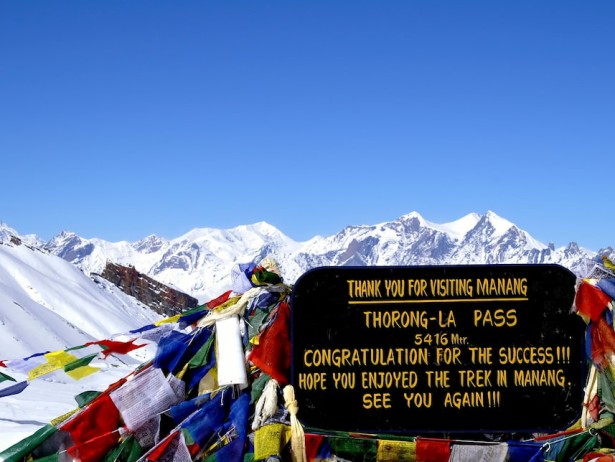
Most trekkers who have done both Thorong La Pass on the Annapurna Circuit and Larkya La Pass on the Manaslu Circuit will agree that Larkya La is a lot wilder, more remote, and far more rewarding. Sure, Thorong La is spectacular, but it has become a bit too busy and commercialized in recent years. Larkya La, by contrast, still retains that elusive vibe of the raw, untouched Himalayan adventure. You won't be walking in a crowd here. You will be walking in silence, surrounded by some of the most incredible mountain scenery on earth.
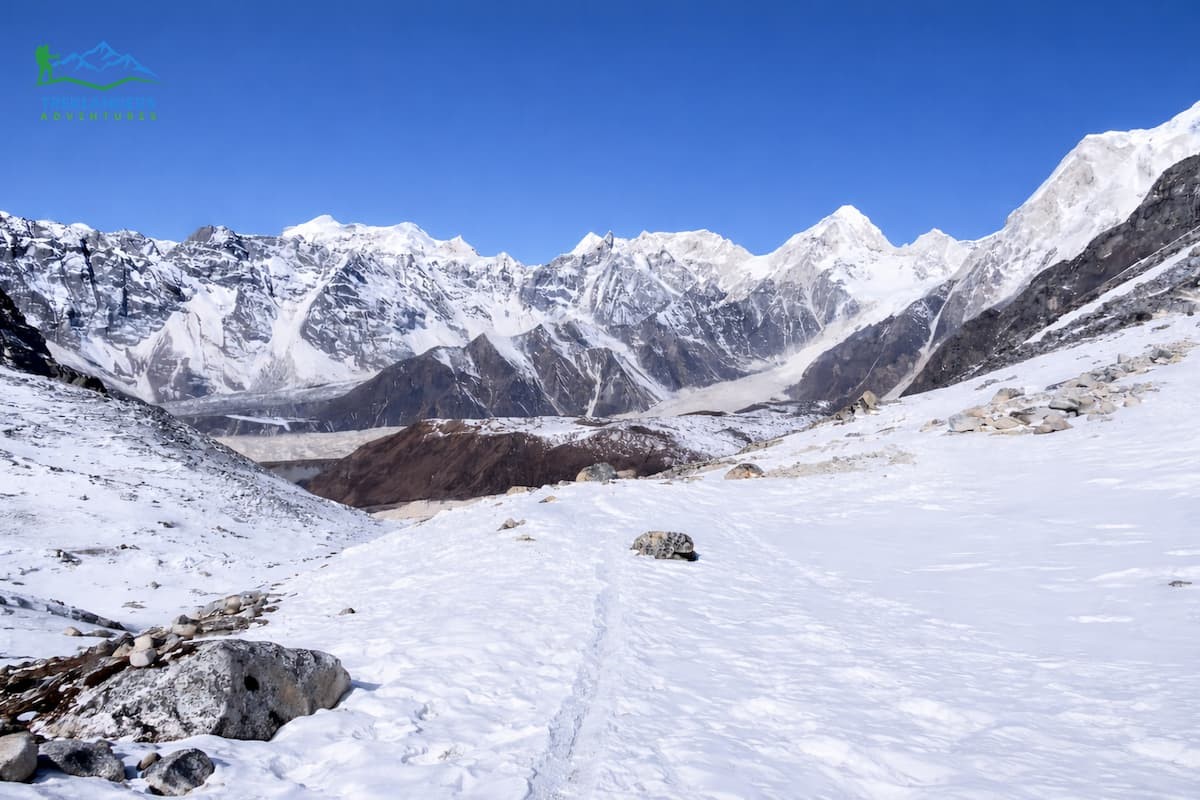
Right from the moment you leave Dharmasala very early in the morning till the moment you reach Bimthang, the beautiful green valley, every step of the Larkya La crossing is a visual feast. You will walk alongside glacial moraines, see frozen lakes and their reflections in the early sun, and vast snowfields that seem to go on forever in all directions. Then, as you near the summit, the massive, breathtaking sight of Mount Manaslu (8,163m), the world's eighth-highest peak, unfurls before you like a painting. Such a view will make you forget that you are cold and tired.
In a world where popular trekking routes are getting more and more crowded year by year, Larkya La Pass is one of those places that still keeps the essence of the rare luxury - genuine solitude. Manaslu Circuit Trek is still one of Nepal's least crowded major treks, so you can be at the top of the 5,160-meter Himalayan pass and imagine that the entire mountain range is yours. It is that feeling which makes all the early mornings, the steep climbs, and the moments of doubt worth it.
The fact of the matter - Larkya La Pass is tough. It is a very long, physically tough, and at the same time mentally difficult crossing. However, that is the very reason why getting to the top is so amazing and powerful. When you put your feet down at the summit and take in the view of the endless mountain peaks of the Himalayas, you will experience a feeling of fulfilment and pride, which is very difficult to describe in words. It is a kind of experience which will show you the reason why you really decided to trek.
People don't pass through Larkya La and forget about it. They remember it for years, they tell every trekking friend that the pass is worth it, and they actually wish to go back. Because walking through Larkya La Pass is not only a physical feat, it's a personal voyage that challenges your boundaries, rewards your effort, and exposes you to the raw and magnificent nature of the Himalayas, which very few life experiences can match. If you want a trek that actually gives you a significant experience... Then the Larkya La Pass is the one for you.
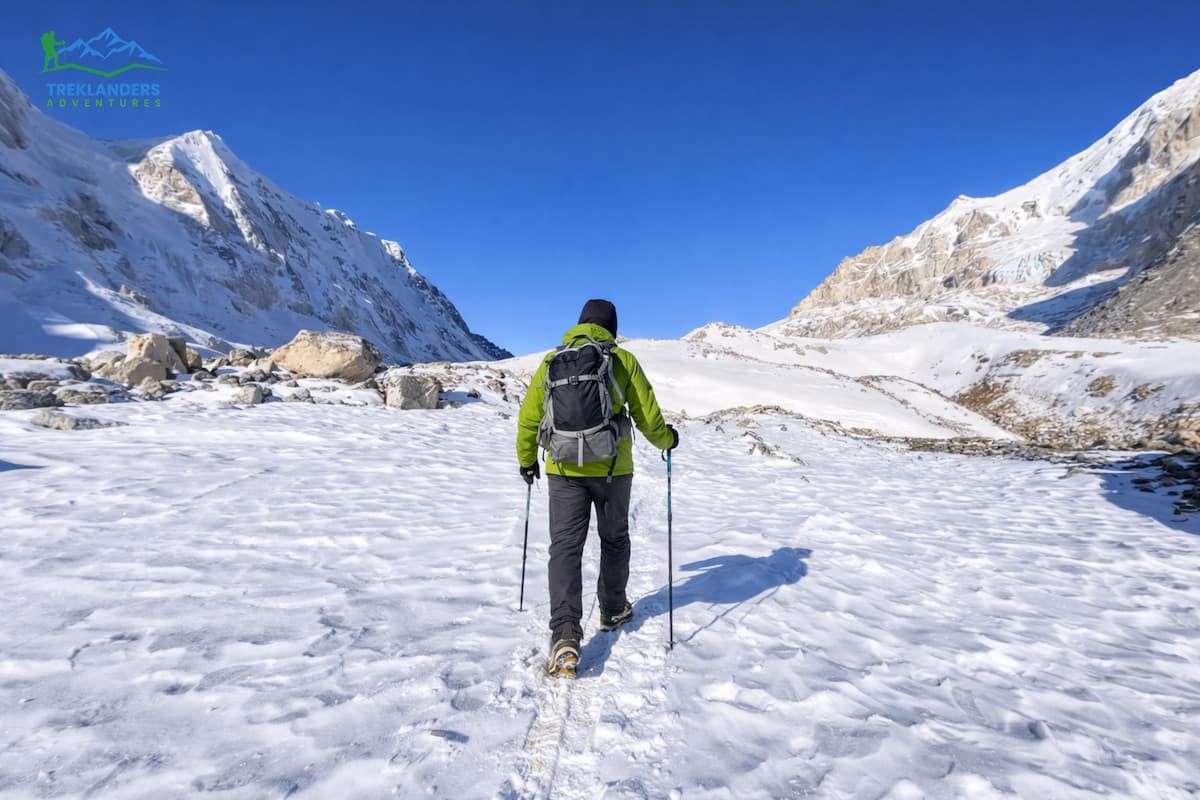
Picking the correct day to cross Larkya La Pass could be the deciding factor between having an exciting and safe trip versus a terrible one. Being 5,106 meters above sea level, the weather is always unpredictable, extreme, and changing at a rapid pace. Therefore, deciding on the right time to undertake the trek and also the time to avoid it is one of the key aspects of your Manaslu Circuit Trek planning.
There are two ideal windows to cross Larkya La Pass.
Autumn, from October to November, is widely considered the absolute best time. The monsoon rains have cleared, the skies are crisp and blue, visibility is outstanding, and the mountain views are jaw-dropping. Temperatures are cold but manageable, and trail conditions are at their safest. October is the single best month of the entire year; the skies are clearest, the air is fresh, and the views of Mount Manaslu are simply extraordinary. November is equally good, though temperatures begin to drop noticeably toward the end of the month.
Spring, from March to May, is the second-best window. As winter loosens its grip on the mountains, the trails come back to life. Rhododendron forests bloom in brilliant reds and pinks along the lower sections of the route, and the higher passes begin to open up again. May is particularly excellent, with temperatures slightly warmer than autumn, and snow on the pass is generally stable and safe to cross.
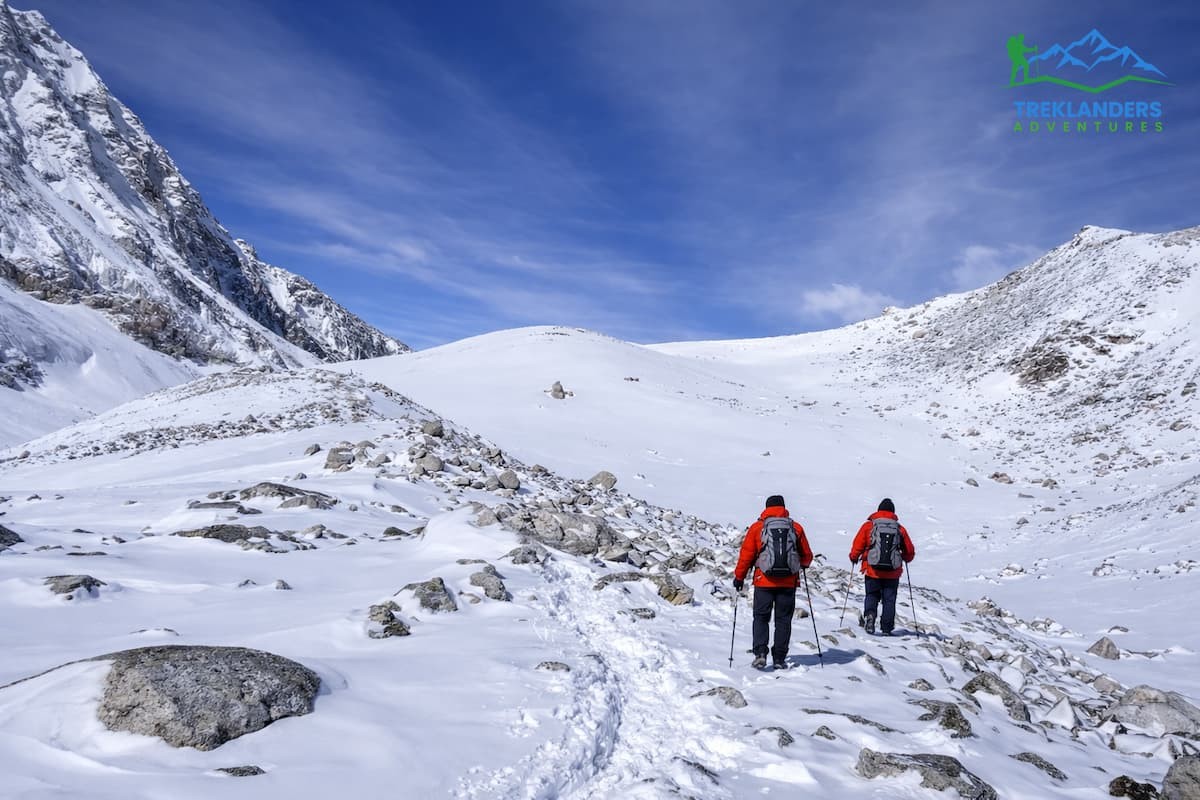
At the beginning of the year, the months of January and February are the toughest months on the Manaslu Circuit Trek. The temperature at the pass can go down to -20 °C or even lower; heavy snowfall often blocks the trail, and many tea houses along the upper route are shut down completely. These months are definitely not suitable for most of the trekkers.
With the arrival of March, spring begins. The situation starts to get better, and some expert trekkers even start the circuit during this month, although there is still a lot of snow in the higher parts. In April, the change in weather is quite remarkable. Not only is the weather more stable, but the lower valleys are also becoming very warm, and the time when the famous rhododendrons are in full bloom is here. May is the peak of the spring season, characterized by good weather days, open trails, and great visibility at the pass.
With June comes the monsoon, and the conditions start to change, but not for the better. By July and August, the full monsoon season is here, bringing heavy rains daily, slippery trails, river crossings that are difficult due to being swollen, and a very high risk of landslides along the route.
Monsoon gradually loosens its grip in September, but the conditions are still unstable and unpredictable, therefore not favorable for a high-altitude crossing.
October is the month when all sorts of things transform, actually. Not only does the monsoon disappear, but the air turns fresh, the sky gets a dark shade of blue, and the whole Himalayan scenery looks like it has been freshly washed. This is the best time for trekking, and it is well justified. The condition remains great in November as well, but wise trekkers manage to finish their route before mid-November, as it is when the temperature drastically drops at higher places. As for December, it is the time when cold is more and more accompanied by snowfall, which makes the passage dangerous as well as unpleasant.
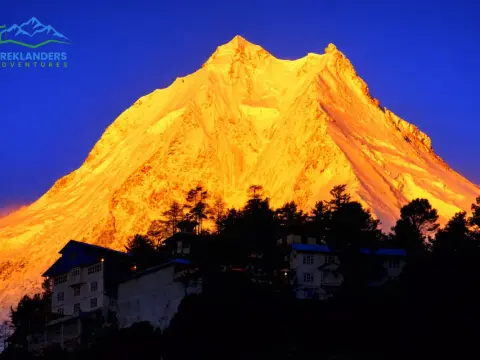
Monsoon season, June to September, is the period you shouldn't go across Larkya La Pass at all. As a heavy downpour will lead the pathways to be dangerously slippery, unexpected and unsafe river crossings, and along the Manaslu Circuit Trek, the risk of landslides will rise sharply. Besides, a cloud cover will destroy visibility totally, so you will end up doing a very hard high-altitude crossing without any of the beautiful views that actually make it worth it. The monsoon season is a time of peril that you shouldn't take.
In winter, Larkya La Pass can be extremely cold and harsh. At the peak temperature may drop to -20 °C and -30 °C, and heavy snowfall can close the pass for days or even weeks. Tea houses in the higher regions of the Manaslu Circuit are actually closed for these three months, so accommodation and food will be very hard to find. If you aren't an extremely skilled mountaineer with proper winter equipment and training for cold weather, then you shouldn't want to cross Larkya La Pass in winter.
The weather at 5,106 meters is subject to sudden changes, sometimes even without any signs. A bright blue sky in the morning may become a heavy snowstorm by early afternoon. This is precisely why the majority of the seasoned guides will advise you to start the Larkya La crossing at the earliest hours, 3 AM to 4 AM. The plan is to reach the summit and start the long descent to Bimthang well before the weather changes in the afternoon. Do not forget to check the Weather forecast the night before your crossing, and listen very carefully to your guide. If weather conditions are uncertain, you should never hesitate to postpone your crossing for a day.
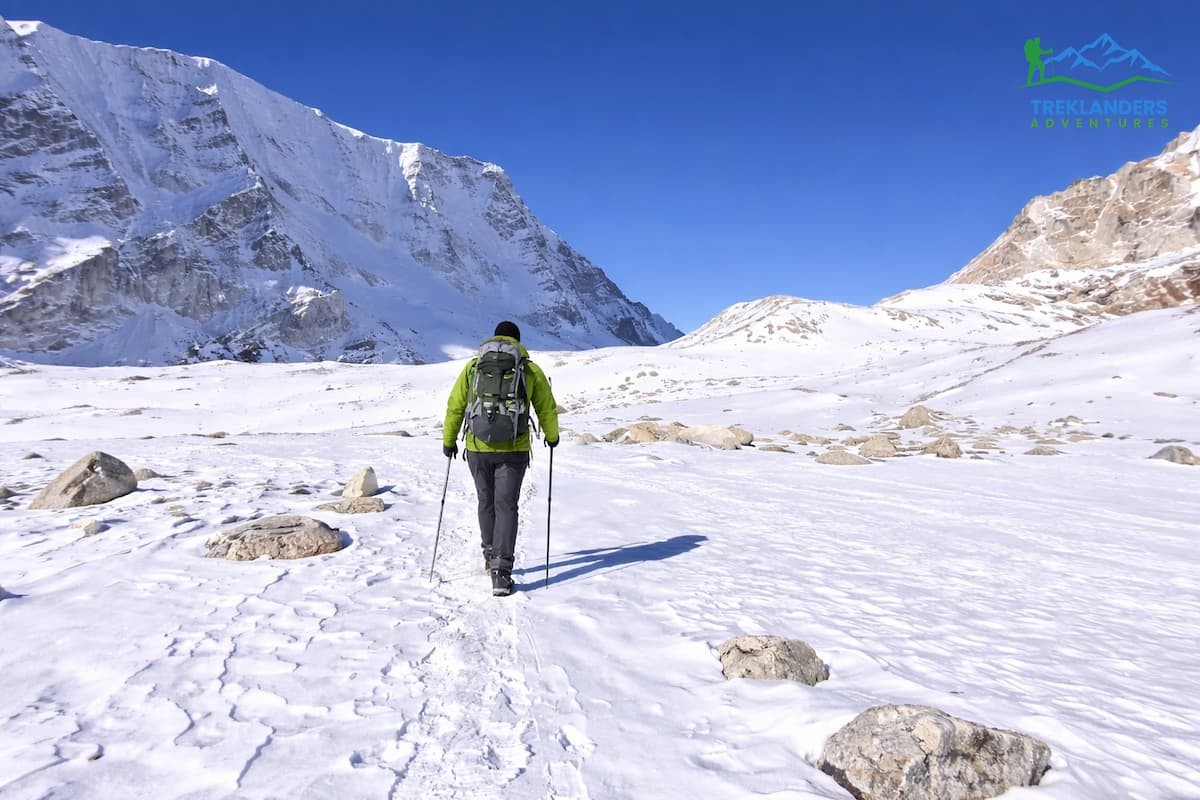
Frankly, Larkya La Pass is moderate to hard. Not just a little "inconveniencing", the work of a mountain hiker sort of challenge. It is physically very demanding and quite draining mentally, to be honest. If going through the mountains gently is what you have in mind, then no, you are not to do this trek. On the other hand, if you plan to train the right way and also be aware of mountain conditions and changes, then yes, it is definitely possible for you to conquer the pass.
On the summit day, you will walk for 8 to 10 hours covering about 24 kilometers gaining nearly 700 meters of elevation and finishing off with a long descent by your knees into Bimthang. All this will be done by you, starting at 3 AM in freezing conditions, on treacherously steep icy trails, with much less oxygen than your body is used to. Your legs will burn, your lungs will work harder than ever, and your mind will be tested just as much as your body. This is the honest reality of crossing Larkya La Pass.
At 5,106 meters, there is only about half the oxygen in the air compared to sea level. Even the fittest trekkers can be affected by headaches, nausea, dizziness, and sleep difficulties. Here, good acclimatization is everything. Do not ever rush the days before the crossing, drink plenty of water, and always tell your guide truthfully how you feel. If early symptoms at this altitude are ignored, the situation can very quickly become life-threatening.
The Larkya La Pass trek is a challenging one, and not everyone is suitable for it. If you have a heart or lung condition, have suffered from a severe altitude sickness in the past or have never been on a trekking trip before, then you should probably stay away from attempting this trek without proper medical clearance and guidance.
You need to start your exercise routine at least three months in advance for trekking. You should train your body to take long uphill hikes carrying a weighted backpack, get your heart pumping through activities like running and cycling, and finally make your legs stronger through workouts. The more you prepare your body before you get to Nepal, the more you will be able to savour this phenomenal crossing with each step.
You cannot embark on the Manaslu Circuit Trek until you have sorted out one thing for sure - your permits. Many other trekking routes in Nepal only require a single permit at the most, but here, the Manaslu Circuit Trek needs you to obtain a couple of permits. Not having even one of them may lead to hefty fines or you being denied to continue the trail. This is all you need to know.
The Manaslu Conservation Area Permit is the main requirement and quite often the first one to be acquired while planning your start of the Manaslu Circuit. This permit allows you to officially enter the Manaslu Conservation Area, which substantially includes the entire circuit and even crossing Larkya La Pass. Apart from providing us with the means of exploring the beautiful eyes of nature, the permit directly contributes to protecting and conserving the fragile Himalayan environment.
The Restricted Area Permit is one's most critical and most strictly checked document while on the Manaslu Circuit Trek. Since the Manaslu area shares the sensitive border with Tibet, the Nepali government recognizes it as a restricted zone, which means that independent trekking is not allowed here. To get this permit, you must trek with a registered licensed guide. Also, this permit has to be acquired via a registered trekking agency in Nepal and obtaining it independently is out of the question.
The Trekkers Information Management System (TIMS) card has become a necessity for all trekkers in Nepal, and the Manaslu Circuit is no different. It is just a trekker registration system that aids the local authorities in tracking who is on the trails, which is really helpful from a safety point of view.
All three permits can be arranged through a registered trekking agency in Kathmandu, which is the most convenient and reliable option for most trekkers. You can also obtain the MCAP and TIM’s card directly from the Nepal Tourism Board (NTB) office in Kathmandu or the Trekking Agencies Association of Nepal (TAAN). However, the Restricted Area Permit must always be processed through a registered agency; it cannot be obtained independently under any circumstances.
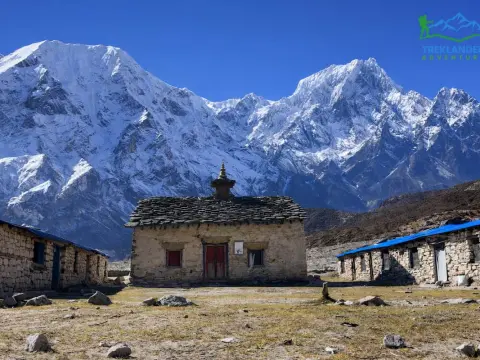
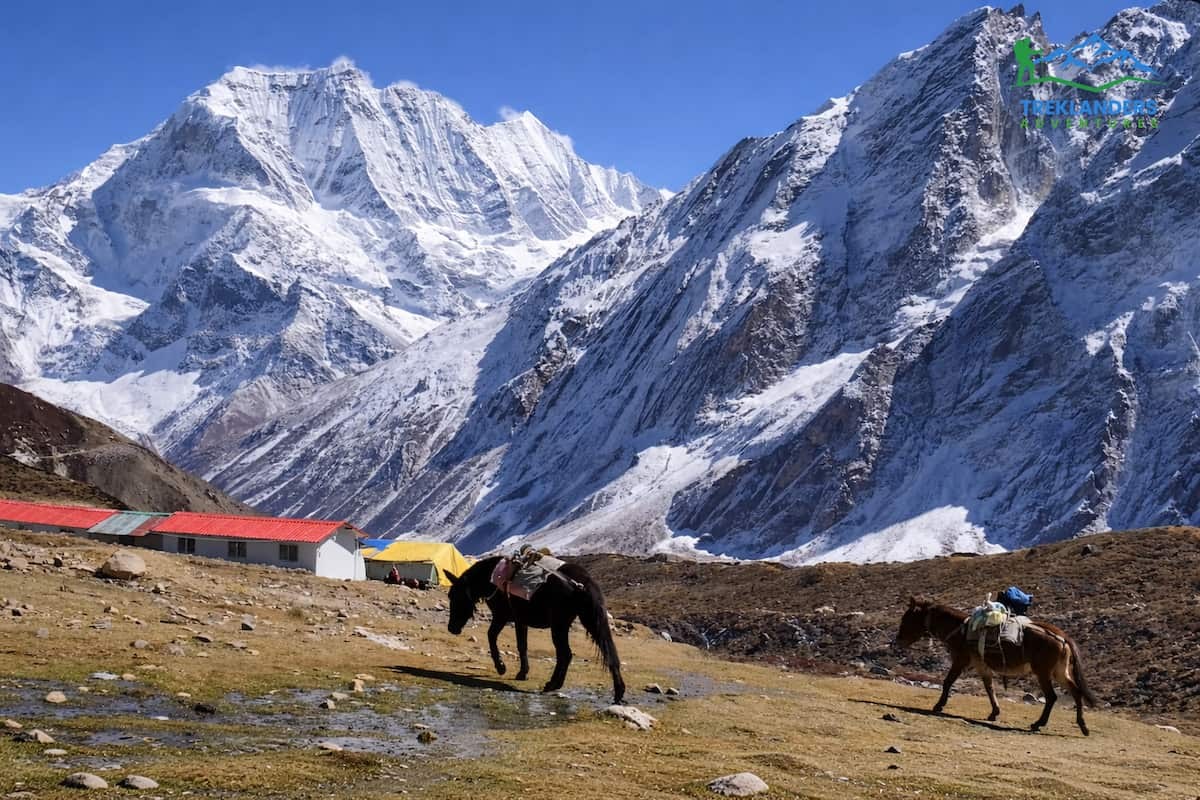
You wake before the sound of the alarm goes off. The lodge at Dharmasala (4,460m) is quiet, deep in the cold darkness of the high Himalaya. The air outside is sharp and thin. Most trekkers begin crossing the mountain between 3 AM and 4 AM because the afternoon is when the weather in the mountains frequently changes. Headlamps turn on one after another, and the long day towards Larkya La Pass (5,106 m) commences. The path slowly ascends above Dharmasala over the frozen earth and rocky moraine.
Every step taken at this altitude is a struggle since the air here has far less oxygen than at lower altitudes, so the pace is kept slow and steady. In the dark, you will only see the small light from your headlamp and the boots of the trekker in front of you. Gradually, the eastern sky gets lighter. The beautiful Himalayan peaks, which surround the valley, are unveiled by the purple and orange colours spreading across the horizon. After this continuation of the path up in the direction of a large glacial basin, snow-covered areas are typical along the route, especially if it is spring or autumn when snow is most likely.
It seems the pass is not reachable after the long, last ascent, but every step of the way, the scenery is breathtakingly beautiful. Prayer flags fluttering in the wind come into view. This sight informs us that the summit of Larkya La Pass is near.
Standing at the summit is an experience that never goes away. Bright prayer flags flutter at the pass, while the scenic panorama stretches unfurled in all directions. You will encounter colossal peaks like Manaslu, Himlung Himal, and Cheo Himal towering over an endless carpet of glaciers and snowfields. Mostly, trekkers just take a moment to stand here because the wind is quite strong and the temperatures can drop to well below freezing. They take pictures in a flash, but the feeling of accomplishment remains with them.
The path is just half done. From the pass, the path goes downhill for a long time to Bimthang (3,590m). The descent first runs through snowy slopes and glacial valleys and then gradually enters greener areas. With less altitude, you can breathe more easily, and the environment shifts from a harsh alpine setting to broad grassy valleys.
After a day of 8 to 10 hours of trekking, the tiny town of Bimthang finally comes into view. Nestled by the mountains and patches of open meadows, it almost seems like a prize after one of the most difficult days on the Manaslu Circuit Trek. Many trekkers end their day having hot food, feeling that they have crossed one of the most stunning high passes in Nepal.
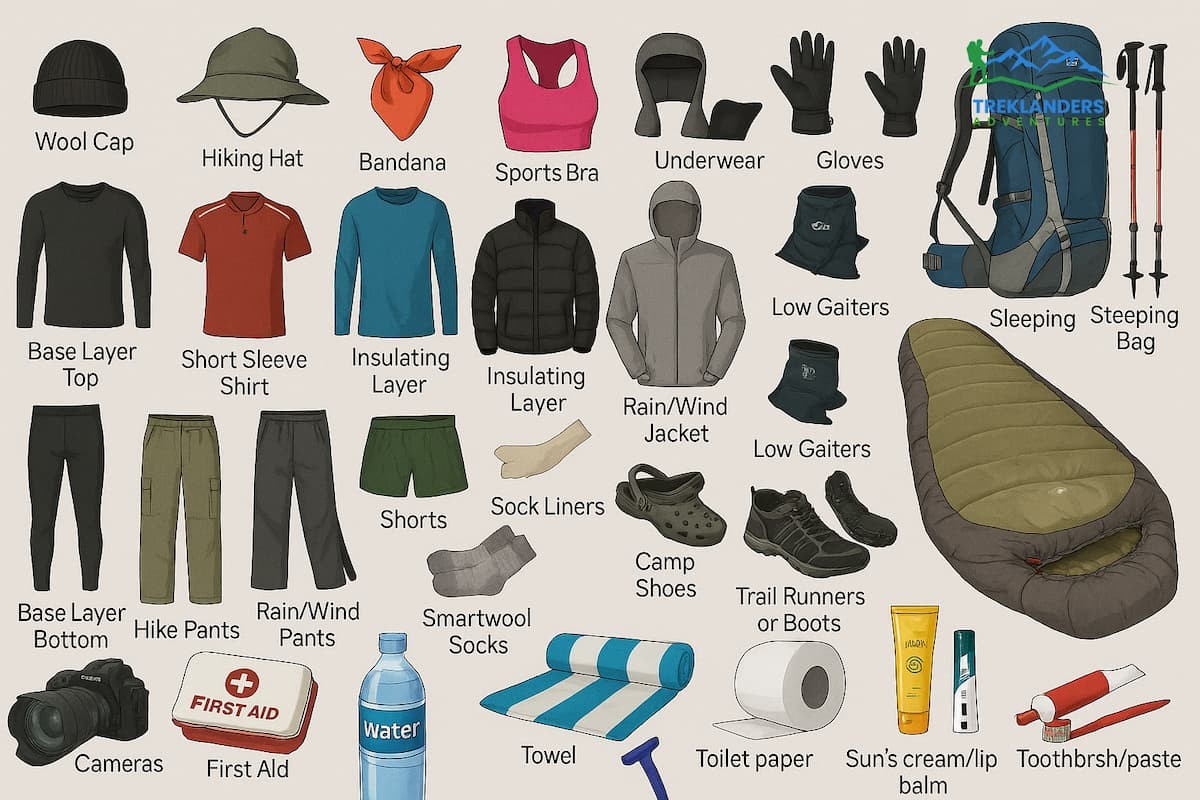
Crossing Larkya La Pass requires careful packing. The pass stands at 5,106 meters, where temperatures can drop well below freezing, and strong winds are common. Trekkers usually leave Dharmasala very early in the morning, often around 3 or 4 AM, so you must prepare for cold, dark, and demanding conditions. Packing the right clothing, gear, medical items, and documents will make the crossing safer and more comfortable.
Clothing is the most important part of your packing list. Layering helps your body adjust to changing temperatures throughout the day. Start with thermal base layers made of merino wool or synthetic fabric. These keep your body warm and dry while walking.
Add a mid-layer, such as a fleece jacket or a light insulated jacket, to trap heat. A thick down jacket is essential for summit breaks and very cold mornings. You should also carry a waterproof and windproof outer shell jacket and pants to protect yourself from snow and strong winds.
Other important clothing items include warm trekking pants, wool or synthetic socks, liner gloves, insulated gloves, a warm hat, and a neck gaiter. Sunglasses with UV protection are also necessary because sunlight reflecting off snow can be very strong. Many trekkers also bring gaiters to keep snow and small rocks out of their boots.
Besides that, trekking gear is very important when crossing the pass. Trekking poles help you keep your balance and take some of the pressure off your knees, especially when you are going down a long way to Bimthang. Besides that, you need a headlamp because you start the trek before sunrise. Also, it is a good idea to have spare batteries in case it is cold. You don't need a really big backpack; thirty to forty liters are usually enough to carry your extra clothes, water, and snacks. Sometimes, especially in spring or after a fresh snowfall, crampons or micro spikes can be very helpful for climbing on the icy parts of the trail. It is a long day of walking, so sunscreen, lip balm, and energy snacks are your friends.
If you are going up high, you must be prepared medically. A small first aid kit is a good idea to have at hand for treating blisters, bandaging wounds, and carrying around analgesics. Some trekkers also bring along altitude medication such as acetazolamide that can help reduce symptoms of Acute Mountain Sickness. Of course, you should carry your own medicines as well as electrolyte powder to help supply your body with liquid and energy.
Last but not least, travelers should keep handy important papers that will be checked at various points along the journey. The permits for Manaslu Circuit Trek include the Manaslu Conservation Area Permit, Restricted Area Permit, and TIMS Card. Besides taking your passport and travel insurance with you, it is advisable to keep them in a waterproof pouch inside your backpack, as they will be checked several times on the way.
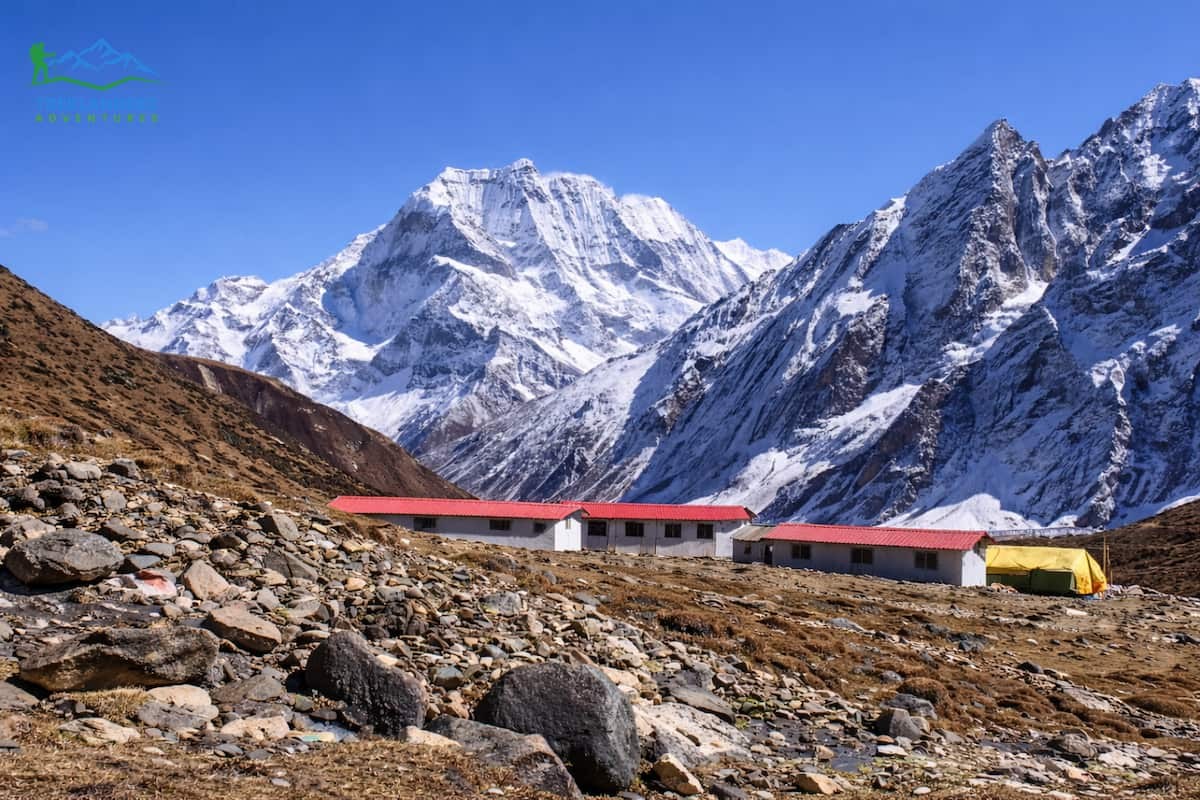
Accommodation and food are significant factors when thinking about crossing Larkya La Pass. As the pass opening time is quite early and the journey through the pass is time-consuming, itinerants generally spend the night at Dharmasala and then head to Bimthang after the pass. Getting to know the spots is a good way to mentally prepare for the trip. Dharmasala, also known as Larkya Phedi, is the last stopping point before the pass during the Manaslu Circuit Trek. The lodging at this place is far less fancy than in the villages at the lower elevations. Only a few basic tea houses provide accommodation for the trekkers.
Most of the rooms feature twin beds, wooden walls, and very little in terms of other amenities. Besides that, since Dharmasala is located at an altitude of around 4,460 meters, the temperature can get quite cold at night. There might be some heating, but it is very limited, so most trekkers end up wearing warm layers and sleeping in a sleeping bag. These tea houses regularly get fully booked during the peak trekking seasons in autumn and spring. Guides usually arrange the rooms in the early afternoon so that they have a place to stay.
Having dinner at Dharmasala is a big deal, as the following day is the longest and toughest walking day of the trek. As a result, it is a common occurrence for trekkers to opt for warm and energy-laden food. The most usual dish is dal bhat, comprising rice, lentil soup, vegetables, and sometimes potatoes. Besides being a good source of energy, this food is also quite digestible at high altitudes.
Other choices are usually fried rice noodles, pasta, soup, and Tibetan bread. Having a hot cup of tea or ginger tea acts as a great way to stay warm and hydrated before the early morning start.
Breakfast. On the morning of the crossing, breakfast is usually served at a very early hour, often before the first ray of light. Simple foods are the most suitable at high altitudes. Many trekkers have porridge, Tibetan bread, pancakes, or boiled eggs with tea or coffee. A light but nutritious meal is the best way to give your body the energy it needs to keep moving while at the same time not making you feel heavy during the climb. Trekkers carry with them snacks like chocolate, energy bars or nuts for the long walk to the pass.
Finally, the long day of walking ends with Bimthang, which seems like a reward. This village is located at an altitude of about 3,590 m and has several nice tea houses. Facilities here are better than in Dharmasala. Trekkers can have a hot meal such as dal bhat, noodles soup, potatoes, or even apple pie in some lodges. After the Larkya La Pass crossing, Bimthang offers a hot meal, a warm room, and a bed to rest after a hard day trek the perfect recipe for a day well spent.
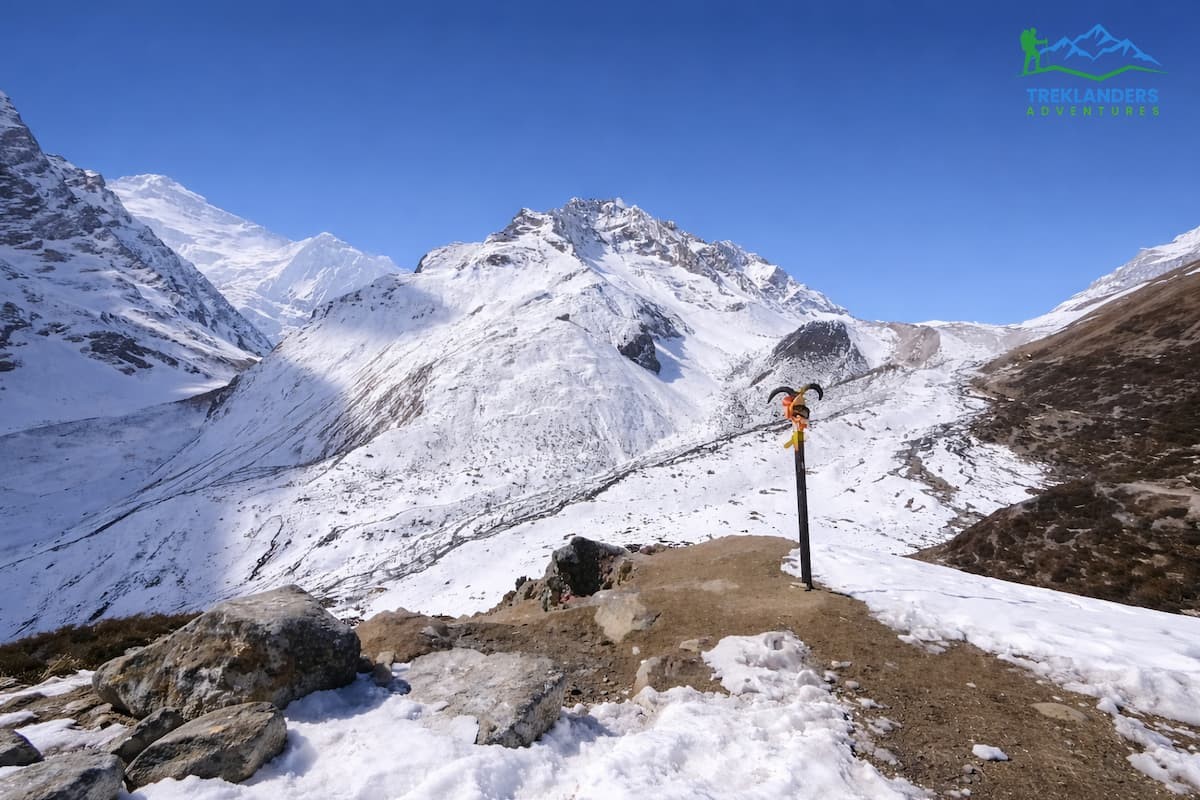
Safety is very important when crossing Larkya La Pass. The pass stands at 5,106 meters. At this altitude, the air contains much less oxygen. Even strong and experienced trekkers can face problems if they climb too quickly. Good acclimatization and careful attention to symptoms help reduce risk.
Proper acclimatization should begin several days before reaching the pass. Trekkers normally gain altitude gradually along the Manaslu Circuit Trek. Many itineraries include an acclimatization day at Samagaun around 3,530 meters. During this day, trekkers take a short hike to a higher point and return to sleep at the same altitude. This method helps the body adjust to thinner air. After Samagaun, the route continues slowly through Samdo and then to Dharmasala. Spending a night at each of these villages allows your body to adapt before attempting the pass.
Trekkers must understand the signs of Acute Mountain Sickness. Early symptoms usually include headache, dizziness, nausea, fatigue, and loss of appetite. Some people also feel short of breath while resting or have trouble sleeping. These signs mean your body is struggling with the altitude. Ignoring them can lead to more serious conditions, such as severe breathing problems or loss of coordination.
Be very honest with yourself about the symptoms. If the headache becomes severe, if you have a confused feeling, if you vomit several times, or if you find it difficult to walk, you should stop your climb. Don't continue to the pass expecting symptoms to disappear. The right thing to do is to descend to a lower altitude without delay. It may be a bit disappointing to turn back, but that is what saves your life. No mountain pass is worth putting the risk of altitude sickness. Emergency support can be found on the Manaslu route, although it's a bit limited due to the remoteness of the area.
In cases of extreme situations, the guides can organize helicopter evacuation from villages like Samagaun, Samdo, or Bimthang, provided weather conditions permit. -Trekkers are advised to take travel insurance that includes high altitude rescue. -It is convenient to have on hand emergency contact numbers of your trekking agency and guide. -Notify your guide without delay if you have any symptoms so that appropriate and safe actions can be taken.
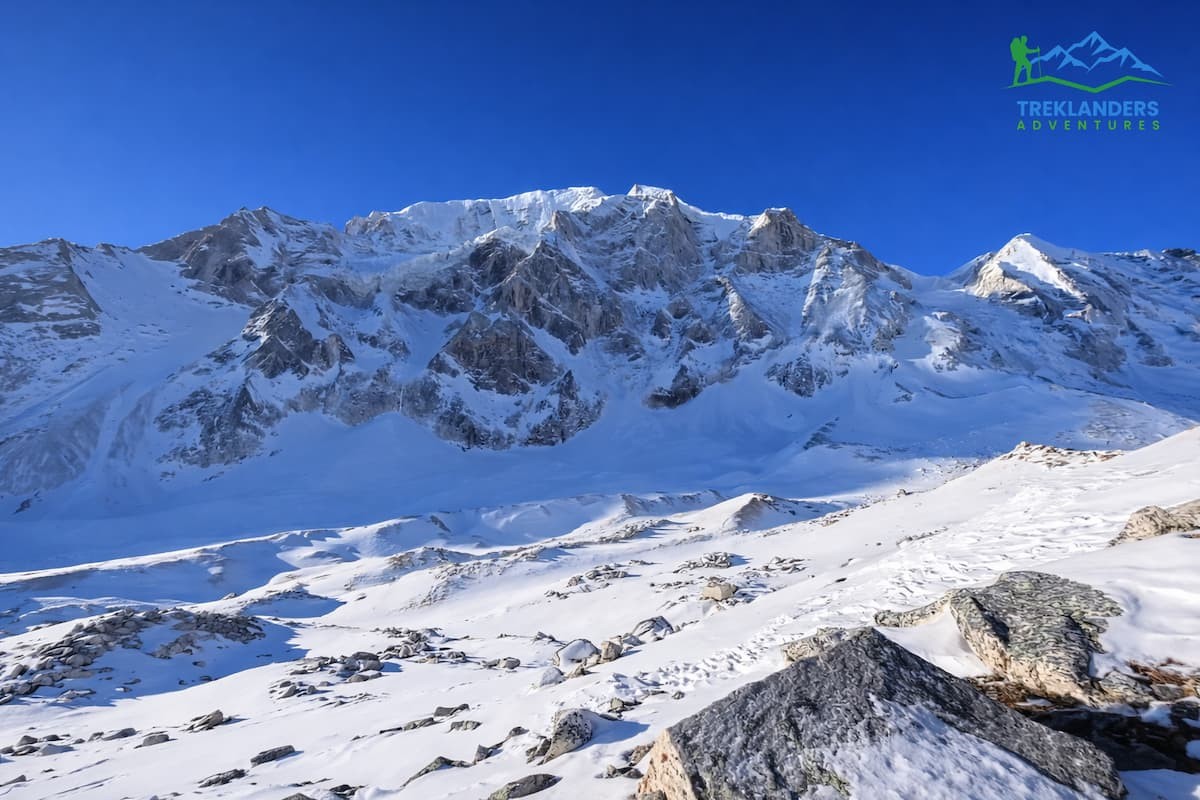
Climbing the Larkya La Pass is the most unforgettable episode of the Manaslu Circuit Trek. At an altitude of 5,106 meters, this lofty mountain pass is a real challenge, testing not only your physical power but also your mental fortitude and readiness. The lengthy ascent from Dharmasala, the biting wind at the summit, and the expansive views of the Himalayas together give the trekkers an everlasting impression.
One has to make arrangements ahead of time to get to the pass safely. It is the trekker who has to decide on the right time of the year, get themselves in shape, and keep the necessary time for accommodation. Bringing along warm clothes, dependable trekking equipment, and necessary medical kits contributes to making the crossing more secure and comfortable. Additionally, a good sleep at Dharmasala and the consumption of a hearty breakfast before the day's first light can be considered as great contributors in getting your body ready for the hours ahead.
When up at the lofty heights, safety is invariably paramount. Knowing the symptoms of Acute Mountain Sickness and heeding your body's signals are of utmost importance. If the symptoms get more severe, the safest course of action is to go down to a lower altitude. Having knowledgeable guides, suitable insurance, and practicing responsible trekking habits can greatly assist in risk management.
Yet, after surmounting the hardships, standing on the top of the Larkya La Pass brings a sense of deep joy. Multicolored prayer flags flutter at the top of the pass, while the encircling peaks set the backdrop for one of the most breathtaking mountain vistas in Nepal. Post the arduous descent, the lush valley of Bimthang beckons with its warmth, delicious food, and the feeling of having achieved one's goal.
For many trekkers, this crossing becomes the highlight of their Himalayan journey. With proper preparation, patience, and respect for the mountains, the Larkya La Pass crossing offers one of the most powerful trekking experiences in Nepal.
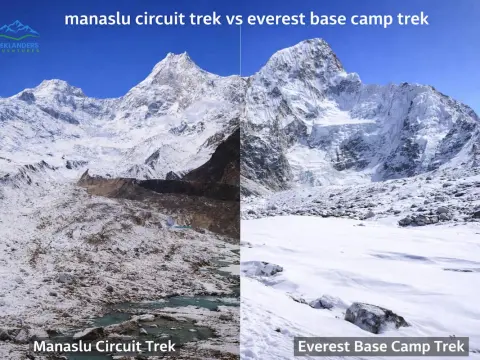
Compare the Manaslu Circuit and Everest Base Camp treks—difficulty, altitude, crowds, and experience—to choose the best Nepal trek for you.
Explore the Langtang Valley Trek—Nepal’s best short Himalayan trek with stunning views, rich culture, and fewer crowds near Kathmandu.
Lobuche (4,940m) is the last major stop before Everest Base Camp, with glacier views, high altitude, and essential tips before reaching Gorak Shep.



