[{"name":"Everest Base Camp Trek","duration":"16","image_url":"https:\/\/www.treklanders.com\/storage\/trip-galleries\/1\/thumb_419a755c003cc609f3030ee332965ebe.jpg","offer_price":1405,"url":"https:\/\/www.treklanders.com\/trips\/everest-base-camp-trek"},{"name":"Gokyo Valley Trekking","duration":"16","image_url":"https:\/\/www.treklanders.com\/storage\/trip-galleries\/2\/thumb_676d1021b574aeba4d19d3f2a0b04ed2.webp","offer_price":1205,"url":"https:\/\/www.treklanders.com\/trips\/gokyo-valley-trekking"},{"name":"Annapurna Circuit Trek","duration":"23","image_url":"https:\/\/www.treklanders.com\/storage\/trip-galleries\/3\/thumb_2a9a92ea23c62f41de27b37f5e3e8c17.webp","offer_price":1495,"url":"https:\/\/www.treklanders.com\/trips\/annapurna-circuit-trek"},{"name":"Everest Panorama Trek","duration":"12","image_url":"https:\/\/www.treklanders.com\/storage\/trip-galleries\/4\/thumb_35c9f677ea2e88b1ff11a9f43daa3ddb.jpg","offer_price":1100,"url":"https:\/\/www.treklanders.com\/trips\/everest-panorama-trek"},{"name":"Everest Base Camp Trekking from Jiri","duration":"22","image_url":"https:\/\/www.treklanders.com\/storage\/trip-galleries\/6\/thumb_14763592492417b294aa66bf0ebf4e64.webp","offer_price":1400,"url":"https:\/\/www.treklanders.com\/trips\/everest-base-camp-trekking-from-jiri"},{"name":"Everest Base Camp via Cho la Pass from Gokyo Valley Trekking","duration":"18","image_url":"https:\/\/www.treklanders.com\/storage\/trip-galleries\/7\/thumb_d4e470e98d4e9e2ab8e93e39b8b7d252.jpg","offer_price":1405,"url":"https:\/\/www.treklanders.com\/trips\/everest-base-camp-via-cho-la-pass-from-gokyo-valley-trekking"},{"name":"Everest Three Passes Trekking","duration":"22","image_url":"https:\/\/www.treklanders.com\/storage\/trip-galleries\/8\/thumb_b413b221e913171500bb3dfd5c08ceea.jpg","offer_price":1635,"url":"https:\/\/www.treklanders.com\/trips\/everest-three-passes-trekking"},{"name":"Annapurna Base Camp Trekking","duration":"14","image_url":"https:\/\/www.treklanders.com\/storage\/trip-galleries\/9\/thumb_2e71f2ffe116c659fa66b01c2d571b4e.webp","offer_price":845,"url":"https:\/\/www.treklanders.com\/trips\/annapurna-base-camp-trekking"},{"name":"Mardi Base Camp Trekking","duration":"14","image_url":"https:\/\/www.treklanders.com\/storage\/trip-galleries\/10\/thumb_d7b2d2dc638f6bbf2c31c167ac68029d.webp","offer_price":845,"url":"https:\/\/www.treklanders.com\/trips\/mardi-base-camp-trekking"},{"name":"Mohare Danda Trekking","duration":"12","image_url":"https:\/\/www.treklanders.com\/storage\/trip-galleries\/11\/thumb_a384c8d35d789d29b19991c1d675c910.webp","offer_price":755,"url":"https:\/\/www.treklanders.com\/trips\/mohare-danda-trekking"},{"name":"Khopra Ridge & Khair Lake Trekking","duration":"15","image_url":"https:\/\/www.treklanders.com\/storage\/trip-galleries\/12\/thumb_c0f50461ddc74acfb553ba85be00fab0.webp","offer_price":855,"url":"https:\/\/www.treklanders.com\/trips\/khopra-ridge-khair-lake-trekking"},{"name":"Upper Mustang Trekking","duration":"17","image_url":"https:\/\/www.treklanders.com\/storage\/trip-galleries\/13\/thumb_7aa4dfdb69186b0f224a303d80a25c95.jpg","offer_price":1715,"url":"https:\/\/www.treklanders.com\/trips\/upper-mustang-trekking"},{"name":"Langtang Valley Trek","duration":"12","image_url":"https:\/\/www.treklanders.com\/storage\/trip-galleries\/14\/thumb_8650b4b1a3c160cff75da65369398353.webp","offer_price":735,"url":"https:\/\/www.treklanders.com\/trips\/langtang-valley-trek"},{"name":"Gosainkunda Lake Trek","duration":"11","image_url":"https:\/\/www.treklanders.com\/storage\/trip-galleries\/15\/thumb_bfe94c14e760c48234e117021105be84.webp","offer_price":735,"url":"https:\/\/www.treklanders.com\/trips\/gosainkunda-lake-trek"},{"name":"Chisapani-Nagarkot to Dhulikhel Hiking","duration":"7","image_url":"https:\/\/www.treklanders.com\/storage\/trip-galleries\/16\/thumb_468defe9a4000ee3129cd7e6421ee105.webp","offer_price":565,"url":"https:\/\/www.treklanders.com\/trips\/chisapani-nagarkot-to-dhulikhel-hiking"},{"name":"Kanchenjunga Trek","duration":"23","image_url":"https:\/\/www.treklanders.com\/storage\/trip-galleries\/17\/thumb_51f43fa4203106cc49aaedc89d76e01d.jpg","offer_price":1725,"url":"https:\/\/www.treklanders.com\/trips\/kanchenjunga-trek"},{"name":"Helambu Trek","duration":"12","image_url":"https:\/\/www.treklanders.com\/storage\/trip-galleries\/18\/thumb_0fe8e3fa1299d2e43bf1fb5977875ce2.jpg","offer_price":685,"url":"https:\/\/www.treklanders.com\/trips\/helambu-trek"},{"name":"Upper Dolpo Trek","duration":"26","image_url":"https:\/\/www.treklanders.com\/storage\/trip-galleries\/19\/thumb_d6080d490e1db83b0a711e7304000864.jpg","offer_price":3005,"url":"https:\/\/www.treklanders.com\/trips\/upper-dolpo-trek"},{"name":"Manaslu Circuit Trek","duration":"18","image_url":"https:\/\/www.treklanders.com\/storage\/trip-galleries\/20\/thumb_1fdd224e849f4f328e73d2d12b3d282d.jpg","offer_price":1225,"url":"https:\/\/www.treklanders.com\/trips\/manaslu-circuit-trek"},{"name":"Tilicho Lake Base Camp Trek","duration":"19","image_url":"https:\/\/www.treklanders.com\/storage\/trip-galleries\/21\/thumb_eba8ac5e029e6543e0c17630ebd9e2fb.jpg","offer_price":1220,"url":"https:\/\/www.treklanders.com\/trips\/tilicho-lake-base-camp-trek"},{"name":"Nar-Phu Valley With Thorang-La Pass Trek","duration":"21","image_url":"https:\/\/www.treklanders.com\/storage\/trip-galleries\/22\/thumb_43597423a5a366fe9c8937fb30d2fe2a.jpg","offer_price":1315,"url":"https:\/\/www.treklanders.com\/trips\/nar-phu-valley-with-thorang-la-pass-trek"},{"name":"Nepal Round Trip of Kathmandu-Pokhara-Lumbini and Chitwan Tour","duration":"10","image_url":"https:\/\/www.treklanders.com\/storage\/trip-galleries\/23\/thumb_32497d170b2ab340b0a1b3310e91e784.webp","offer_price":845,"url":"https:\/\/www.treklanders.com\/trips\/nepal-round-trip-of-kathmandu-pokhara-lumbini-and-chitwan-tour"},{"name":"Nagarkot Day Hike","duration":"2","image_url":"https:\/\/www.treklanders.com\/storage\/trip-galleries\/24\/thumb_a5a654930fd8ba7852e41738105bacfc.webp","offer_price":105,"url":"https:\/\/www.treklanders.com\/trips\/nagarkot-day-hike"},{"name":"Nagarkot Sunrise Tour","duration":"1","image_url":"https:\/\/www.treklanders.com\/storage\/trip-galleries\/25\/thumb_17dc28a29cfa44381ad503f0a75ee84f.webp","offer_price":22,"url":"https:\/\/www.treklanders.com\/trips\/nagarkot-sunrise-tour"},{"name":"Namobuddha Day Tour with Shiva Statue","duration":"1","image_url":"https:\/\/www.treklanders.com\/storage\/trip-galleries\/26\/thumb_beeb34202f9077764aa08c67ef2867f9.webp","offer_price":45,"url":"https:\/\/www.treklanders.com\/trips\/namobuddha-day-tour-with-shiva-statue"},{"name":"Kathmandu Full Day Sightseeing Tour","duration":"1","image_url":"https:\/\/www.treklanders.com\/storage\/trip-galleries\/27\/thumb_d045fc0f1acee2cfa6b3c95f3c656d18.jpg","offer_price":30,"url":"https:\/\/www.treklanders.com\/trips\/kathmandu-full-day-sightseeing-tour"},{"name":"Patan and Bhaktapur Sightseeing Tour","duration":"1","image_url":"https:\/\/www.treklanders.com\/storage\/trip-galleries\/28\/thumb_750eacac3424b5dba686dd93656ab87c.jpg","offer_price":30,"url":"https:\/\/www.treklanders.com\/trips\/patan-and-bhaktapur-sightseeing-tour"},{"name":"Upper Mustang Heli Tour","duration":"1","image_url":"https:\/\/www.treklanders.com\/storage\/trip-galleries\/29\/thumb_0b785f69a15557f8660c805c76fda14e.webp","offer_price":1250,"url":"https:\/\/www.treklanders.com\/trips\/upper-mustang-heli-tour"},{"name":"Everest Heli Tour","duration":"1","image_url":"https:\/\/www.treklanders.com\/storage\/trip-galleries\/30\/thumb_dc45f2beb36a3699e0decf0de41a6f17.jpg","offer_price":1495,"url":"https:\/\/www.treklanders.com\/trips\/everest-heli-tour"},{"name":"Island Peak Trek & Climb","duration":"21","image_url":"https:\/\/www.treklanders.com\/storage\/trip-galleries\/31\/thumb_a0f3e3468c92a8e436045cf8b2fbf361.jpg","offer_price":2295,"url":"https:\/\/www.treklanders.com\/trips\/island-peak-trek-climb"},{"name":"Mera Peak Trek & Climb","duration":"18","image_url":"https:\/\/www.treklanders.com\/storage\/trip-galleries\/32\/thumb_3e8128a23c36f02fa38135475e811b9e.jpg","offer_price":2815,"url":"https:\/\/www.treklanders.com\/trips\/mera-peak-trek-climb"},{"name":"Chandragiri Cable Car Tour","duration":"1","image_url":"https:\/\/www.treklanders.com\/storage\/trip-galleries\/33\/thumb_faa70b716449eada6d7f1450335edbb3.jpg","offer_price":30,"url":"https:\/\/www.treklanders.com\/trips\/chandragiri-cable-car-tour"},{"name":"Everest Base Camp Trek and Returning via Heli","duration":"13","image_url":"https:\/\/www.treklanders.com\/storage\/trip-galleries\/34\/thumb_11190941866206e1d578db11986ebc73.webp","offer_price":2100,"url":"https:\/\/www.treklanders.com\/trips\/everest-base-camp-trek-and-returning-via-heli"},{"name":"Annapurna Semi Circuit Trek","duration":"15","image_url":"https:\/\/www.treklanders.com\/storage\/trip-galleries\/35\/thumb_30ddd8ba818cdcb52efd5eb0a017bcdb.jpg","offer_price":965,"url":"https:\/\/www.treklanders.com\/trips\/annapurna-semi-circuit-trek"},{"name":"Everest Base Camp Luxury Trek","duration":"14","image_url":"https:\/\/www.treklanders.com\/storage\/trip-galleries\/39\/thumb_6079aea3c5dd83e745a16fd6162270dc.jpg","offer_price":2685,"url":"https:\/\/www.treklanders.com\/trips\/everest-base-camp-luxury-trek"},{"name":"Mt. Kailash & Lake Manasarover Tour","duration":"15","image_url":"https:\/\/www.treklanders.com\/storage\/trip-galleries\/41\/thumb_cf3fededfd7dd2b40399af399e04f95a.jpg","offer_price":2205,"url":"https:\/\/www.treklanders.com\/trips\/mt-kailash-lake-manasarover-tour"},{"name":"Ghorepani Poonhill Trek","duration":"11","image_url":"https:\/\/www.treklanders.com\/storage\/trip-galleries\/43\/thumb_602d9a56976e1b836ba8adc69b8d09c5.webp","offer_price":720,"url":"https:\/\/www.treklanders.com\/trips\/ghorepani-poonhill-trek"},{"name":"11 Days Gokyo Valley Trekkking","duration":"11","image_url":"https:\/\/www.treklanders.com\/storage\/trip-galleries\/45\/thumb_ab552c3c91de392f94230a937b1c4801.jpg","offer_price":900,"url":"https:\/\/www.treklanders.com\/trips\/11-days-gokyo-valley-trekkking"},{"name":"9-Day Everest Base Camp Trekking with Helicopter Return","duration":"9","image_url":"https:\/\/www.treklanders.com\/storage\/trip-galleries\/46\/thumb_9a8ba2b582500cd86786be056902c31a.webp","offer_price":1990,"url":"https:\/\/www.treklanders.com\/trips\/9-day-everest-base-camp-trekking-with-helicopter-return"},{"name":"12-Day Everest Base Camp Trek","duration":"12","image_url":"https:\/\/www.treklanders.com\/storage\/trip-galleries\/47\/thumb_d12c9ef776c0b395ceea817fe05c5892.jpg","offer_price":1000,"url":"https:\/\/www.treklanders.com\/trips\/12-day-everest-base-camp-trek"},{"name":"8-Day Everest Panorama Trek","duration":"8","image_url":"https:\/\/www.treklanders.com\/storage\/trip-galleries\/49\/thumb_c81ae3a8ac757a317a9362e6872e2dcb.jpg","offer_price":850,"url":"https:\/\/www.treklanders.com\/trips\/8-day-everest-panorama-trek"},{"name":"7-Day Langtang Valley Trek","duration":"7","image_url":"https:\/\/www.treklanders.com\/storage\/trip-galleries\/50\/thumb_99c2904df5475ab028c9e3633ea95ef3.jpg","offer_price":420,"url":"https:\/\/www.treklanders.com\/trips\/7-day-langtang-valley-trek"},{"name":"4-Day Trekking Adventure near Kathmandu","duration":"4","image_url":"https:\/\/www.treklanders.com\/storage\/trip-galleries\/51\/thumb_594681060514dc57be1959236a6996d0.jpg","offer_price":275,"url":"https:\/\/www.treklanders.com\/trips\/4-day-trekking-adventure-near-kathmandu"},{"name":"4-Day Ghorepani Ponnhill Trek from Pokhara","duration":"4","image_url":"https:\/\/www.treklanders.com\/storage\/trip-galleries\/53\/thumb_eede04edac01f983d9af2c16f55d03e8.webp","offer_price":500,"url":"https:\/\/www.treklanders.com\/trips\/4-day-ghorepani-ponnhill-trek-from-pokhara"},{"name":"7-Day Annapurna Base Camp Trek from Pokhara","duration":"7","image_url":"https:\/\/www.treklanders.com\/storage\/trip-galleries\/55\/thumb_547e91c74088c491111ebe31a759cfbb.jpg","offer_price":420,"url":"https:\/\/www.treklanders.com\/trips\/7-day-annapurna-base-camp-trek-from-pokhara"},{"name":"13-Day Manaslu Circuit Trekking","duration":"13","image_url":"https:\/\/www.treklanders.com\/storage\/trip-galleries\/56\/thumb_aef1af4f0c4a2a9622d518ad5959542b.jpg","offer_price":1050,"url":"https:\/\/www.treklanders.com\/trips\/13-day-manaslu-circuit-trekking"},{"name":"5-Day Mardi Himal Trek from Pokhara","duration":"5","image_url":"https:\/\/www.treklanders.com\/storage\/trip-galleries\/57\/thumb_dcd598d556c14835f0a18169afafcbc6.webp","offer_price":420,"url":"https:\/\/www.treklanders.com\/trips\/5-day-mardi-himal-trek-from-pokhara"},{"name":"Nagarkot Sunrise Tour with Day Hike","duration":"1","image_url":"https:\/\/www.treklanders.com\/storage\/trip-galleries\/58\/thumb_7cdfa1f16719486da2a0718da45b1f2f.webp","offer_price":30,"url":"https:\/\/www.treklanders.com\/trips\/nagarkot-sunrise-tour-with-day-hike"},{"name":"Seven Unesco Heritage Sites Day Tour in Kathmandu","duration":"1","image_url":"https:\/\/www.treklanders.com\/storage\/trip-galleries\/59\/thumb_92aed7b9c67e76740000aab9313dced7.jpg","offer_price":40,"url":"https:\/\/www.treklanders.com\/trips\/seven-unesco-heritage-sites-day-tour-in-kathmandu"},{"name":"10-Day Ghorepani Poonhill with Annapurna Base Camp Trek","duration":"10","image_url":"https:\/\/www.treklanders.com\/storage\/trip-galleries\/60\/thumb_d4c2c089497950ccb5f8541d76e1269b.webp","offer_price":835,"url":"https:\/\/www.treklanders.com\/trips\/10-day-ghorepani-poonhill-with-annapurna-base-camp-trek"},{"name":"3-Day Chitwan Wildlife Tour","duration":"3","image_url":"https:\/\/www.treklanders.com\/storage\/trip-galleries\/61\/thumb_fc4de9cbf5bc83d67491b41df5725552.jpg","offer_price":150,"url":"https:\/\/www.treklanders.com\/trips\/3-day-chitwan-wildlife-tour"},{"name":"3-Day Pokhara Sightseeing Tour","duration":"3","image_url":"https:\/\/www.treklanders.com\/storage\/trip-galleries\/62\/thumb_a79a253f1a8bcbbf288eefc1d2f4038f.jpg","offer_price":230,"url":"https:\/\/www.treklanders.com\/trips\/3-day-pokhara-sightseeing-tour"},{"name":"7-Day Kathmandu Pokhara and Chitwan wildlifeTour","duration":"7","image_url":"https:\/\/www.treklanders.com\/storage\/trip-galleries\/63\/thumb_4f963fc141d7ef39e8a6a3c60317ae9b.jpg","offer_price":545,"url":"https:\/\/www.treklanders.com\/trips\/7-day-kathmandu-pokhara-and-chitwan-wildlifetour"},{"name":"Nagarjun Jamacho Day Hiking","duration":"1","image_url":"https:\/\/www.treklanders.com\/storage\/trip-galleries\/64\/thumb_85867eb85c60c8228e44f927341f67d1.jpg","offer_price":30,"url":"https:\/\/www.treklanders.com\/trips\/nagarjun-jamacho-day-hiking"},{"name":"Everest Mountain Flight from Kathmandu","duration":"1","image_url":"https:\/\/www.treklanders.com\/storage\/trip-galleries\/65\/thumb_1a66526d340ec175023842c38efd8a95.webp","offer_price":120,"url":"https:\/\/www.treklanders.com\/trips\/everest-mountain-flight-from-kathmandu"},{"name":"One Day Trishuli River Rafting Adventures","duration":"1","image_url":"https:\/\/www.treklanders.com\/storage\/trip-galleries\/66\/thumb_55ba0ea676c9c625f99f3d41bda224fb.jpg","offer_price":35,"url":"https:\/\/www.treklanders.com\/trips\/one-day-trishuli-river-rafting-adventures"},{"name":"13-Day Annapurna Circuit Trek","duration":"13","image_url":"https:\/\/www.treklanders.com\/storage\/trip-galleries\/67\/thumb_859e7a1fbb468a9252d365cab8379f10.jpg","offer_price":815,"url":"https:\/\/www.treklanders.com\/trips\/13-day-annapurna-circuit-trek"},{"name":"15-Day Tilicho Base Camp with Thorong-La Pass Trekking","duration":"15","image_url":"https:\/\/www.treklanders.com\/storage\/trip-galleries\/68\/thumb_56a5fd1506c9b9f1f83844353dc55edf.jpg","offer_price":920,"url":"https:\/\/www.treklanders.com\/trips\/15-day-tilicho-base-camp-with-thorong-la-pass-trekking"},{"name":"Cooking Class in Thamel-Full Course Meal","duration":"1","image_url":"https:\/\/www.treklanders.com\/storage\/trip-galleries\/69\/thumb_ed5cfbc0d94b624642d347c0776d36bb.webp","offer_price":30,"url":"https:\/\/www.treklanders.com\/trips\/cooking-class-in-thamel-full-course-meal"},{"name":"Cooking Class in Thamel-Full Course","duration":"3 Hours 30 Minutes","image_url":"https:\/\/www.treklanders.com\/img\/default.gif","offer_price":30,"url":"https:\/\/www.treklanders.com\/trips\/cooking-class-in-thamel-full-course"},{"name":"Cooking Class in Thamel-Full Course Meal","duration":"3 Hours 30 Minutes","image_url":"https:\/\/www.treklanders.com\/img\/default.gif","offer_price":30,"url":"https:\/\/www.treklanders.com\/trips\/cooking-class-in-thamel-full-course-meal"},{"name":"Momo Making Class in Thamel","duration":"1","image_url":"https:\/\/www.treklanders.com\/storage\/trip-galleries\/72\/thumb_a36e5ceca4d5c4cb0ecda367505b31d3.webp","offer_price":20,"url":"https:\/\/www.treklanders.com\/trips\/momo-making-class-in-thamel"},{"name":"8 Days Bhutan Tour from Kathmandu","duration":"8","image_url":"https:\/\/www.treklanders.com\/storage\/trip-galleries\/73\/thumb_df319d7d3ac21bcd9cf728cb1a70ea09.webp","offer_price":2275,"url":"https:\/\/www.treklanders.com\/trips\/8-days-bhutan-tour-from-kathmandu"},{"name":"10 Days Bhutan Tour with Druk path Trek","duration":"10","image_url":"https:\/\/www.treklanders.com\/storage\/trip-galleries\/74\/thumb_c7d4a4b89aceaf5d3aac313265729bb3.webp","offer_price":5715,"url":"https:\/\/www.treklanders.com\/trips\/10-days-bhutan-tour-with-druk-path-trek"},{"name":"9 -Day Langtang Valley Trek","duration":"9","image_url":"https:\/\/www.treklanders.com\/storage\/trip-galleries\/75\/thumb_65e69cec8917e39091c9e40ae06df3da.webp","offer_price":620,"url":"https:\/\/www.treklanders.com\/trips\/9--day-langtang-valley-trek"},{"name":"14 Day Everest Base Camp Trek","duration":"14","image_url":"https:\/\/www.treklanders.com\/storage\/trip-galleries\/76\/thumb_446e7f33a5f43896c9cdf470cd7be947.webp","offer_price":1175,"url":"https:\/\/www.treklanders.com\/trips\/14-day-everest-base-camp-trek"},{"name":"Lhasa Tour from Kathmandu: 10-Day Tibet Overland Journey via Gyirong","duration":"10","image_url":"https:\/\/www.treklanders.com\/img\/default.gif","offer_price":null,"url":"https:\/\/www.treklanders.com\/trips\/lhasa-tour-from-kathmandu-10-day-tibet-overland-journey-via-gyirong"},{"name":"13 Day Lhasa Tour from Kathmandu via Everest Base Camp","duration":"13","image_url":"https:\/\/www.treklanders.com\/storage\/trip-galleries\/78\/thumb_8a2bfb2abd99ba9ddc902b768e7b0759.webp","offer_price":2565,"url":"https:\/\/www.treklanders.com\/trips\/13-day-lhasa-tour-from-kathmandu-via-everest-base-camp"},{"name":"11 Day Annapurna Base Camp Trek","duration":"11","image_url":"https:\/\/www.treklanders.com\/storage\/trip-galleries\/79\/thumb_4e48a19c538c00cc8c36160ca97c5f21.webp","offer_price":720,"url":"https:\/\/www.treklanders.com\/trips\/11-day-annapurna-base-camp-trek"},{"name":"9 Day Mardi Himal Trek","duration":"9","image_url":"https:\/\/www.treklanders.com\/storage\/trip-galleries\/80\/thumb_8214945c5614ac9a84e5ca0b58b1f5a3.webp","offer_price":735,"url":"https:\/\/www.treklanders.com\/trips\/9-day-mardi-himal-trek"},{"name":"14 Day Manaslu Circuit Trek","duration":"14","image_url":"https:\/\/www.treklanders.com\/storage\/trip-galleries\/81\/thumb_b3ec98cd4036da5cb6e92250afa0d59e.webp","offer_price":1085,"url":"https:\/\/www.treklanders.com\/trips\/14-day-manaslu-circuit-trek"},{"name":"20 Day Manaslu Circuit with Tsum Valley Trek","duration":"20","image_url":"https:\/\/www.treklanders.com\/storage\/trip-galleries\/82\/thumb_b8c202cf8e16197517811d535f2a6795.webp","offer_price":1765,"url":"https:\/\/www.treklanders.com\/trips\/20-day-manaslu-circuit-with-tsum-valley-trek"},{"name":"15 Day Langtang Gosaikunda Lake Helambu Trek","duration":"15","image_url":"https:\/\/www.treklanders.com\/storage\/trip-galleries\/83\/thumb_a9c7bbb74f733cdc9a3469a448df7109.webp","offer_price":985,"url":"https:\/\/www.treklanders.com\/trips\/15-day-langtang-gosaikunda-lake-helambu-trek"},{"name":"14 Day Tamang Heritage with Langtang Valley Trek","duration":"14","image_url":"https:\/\/www.treklanders.com\/storage\/trip-galleries\/84\/thumb_57fe1b0ad2b7d0489273633b906d2f43.webp","offer_price":895,"url":"https:\/\/www.treklanders.com\/trips\/14-day-tamang-heritage-with-langtang-valley-trek"},{"name":"6 Day Pikey Peak Trek","duration":"6","image_url":"https:\/\/www.treklanders.com\/storage\/trip-galleries\/85\/thumb_f69c5c05ac7a2100c9010f66292efc86.webp","offer_price":550,"url":"https:\/\/www.treklanders.com\/trips\/6-day-pikey-peak-trek"},{"name":"Everest Base Camp Trek with Lobuche East Peak Climbing Expedition","duration":"17","image_url":"https:\/\/www.treklanders.com\/storage\/trip-galleries\/86\/thumb_9e7f330ecdbd7f74fe6f16202d3fed28.webp","offer_price":2295,"url":"https:\/\/www.treklanders.com\/trips\/everest-base-camp-trek-with-lobuche-east-peak-climbing-expedition"}]
Lobuche Village Guide: Altitude, Teahouses and the Last Major Stop Before Everest Base Camp
Lobuche Village Guide: Altitude, Teahouses and the Last Major Stop Before Everest Base Camp
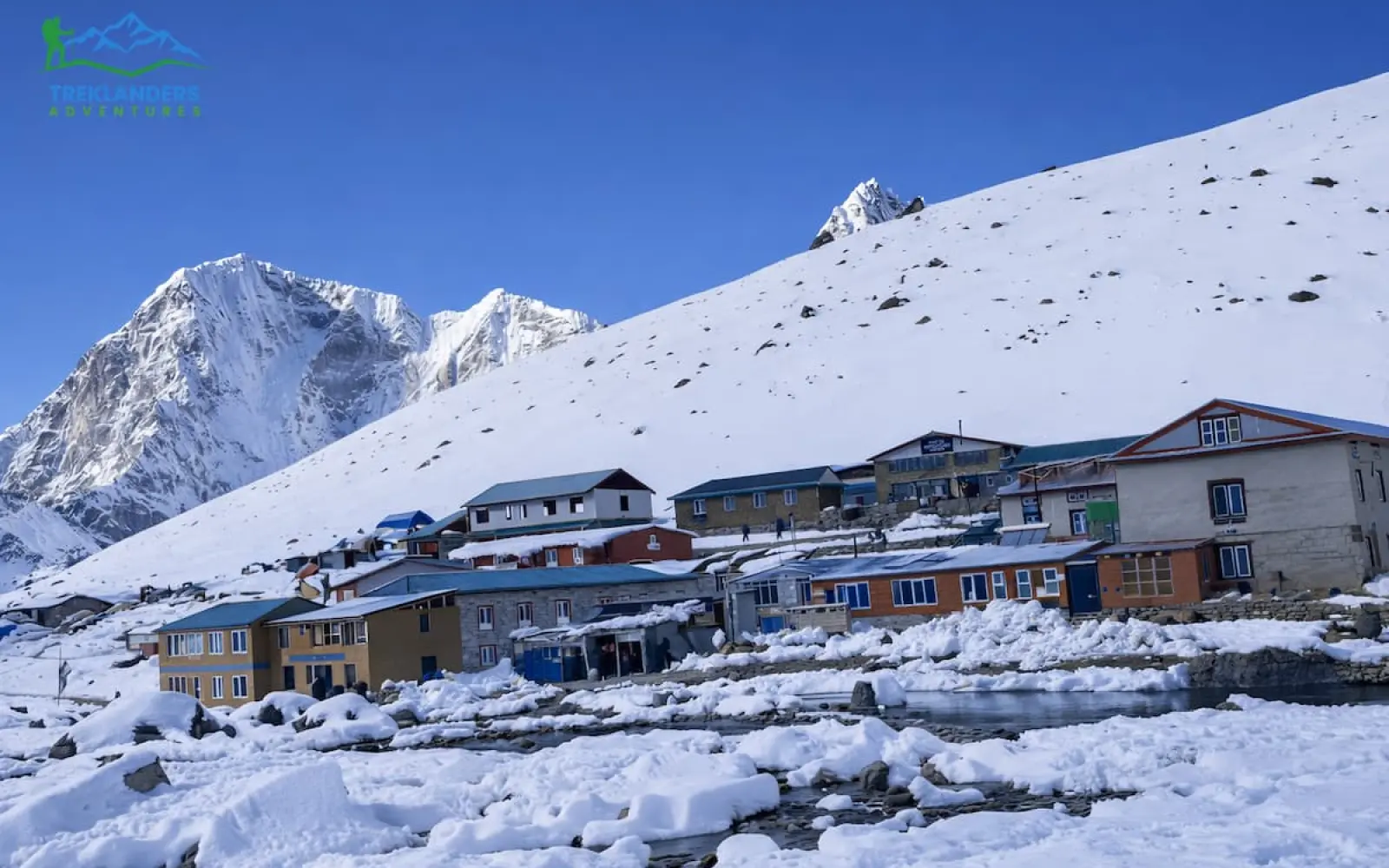
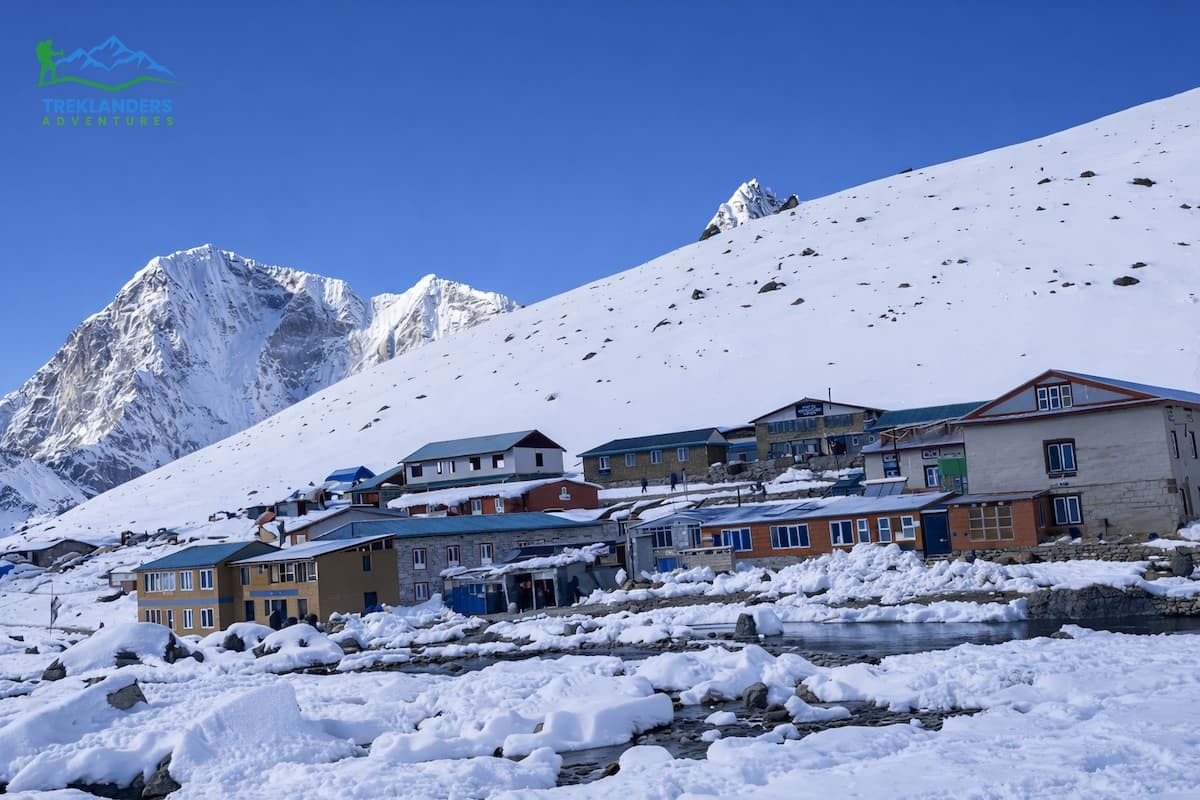
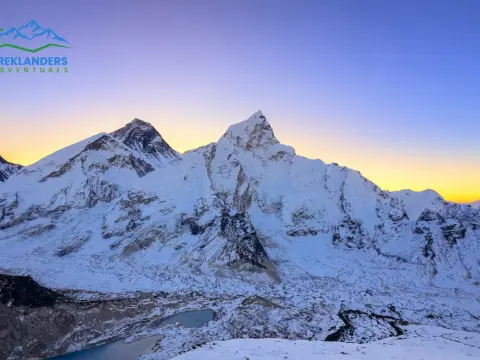
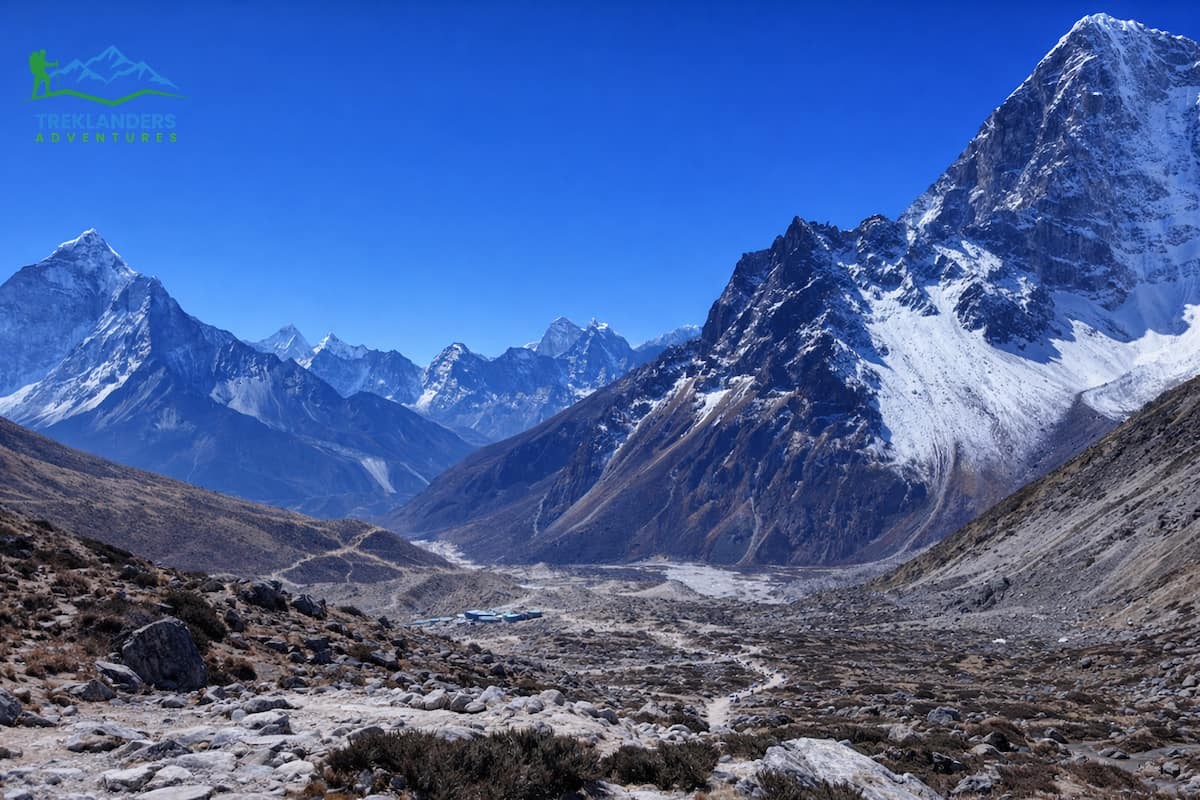
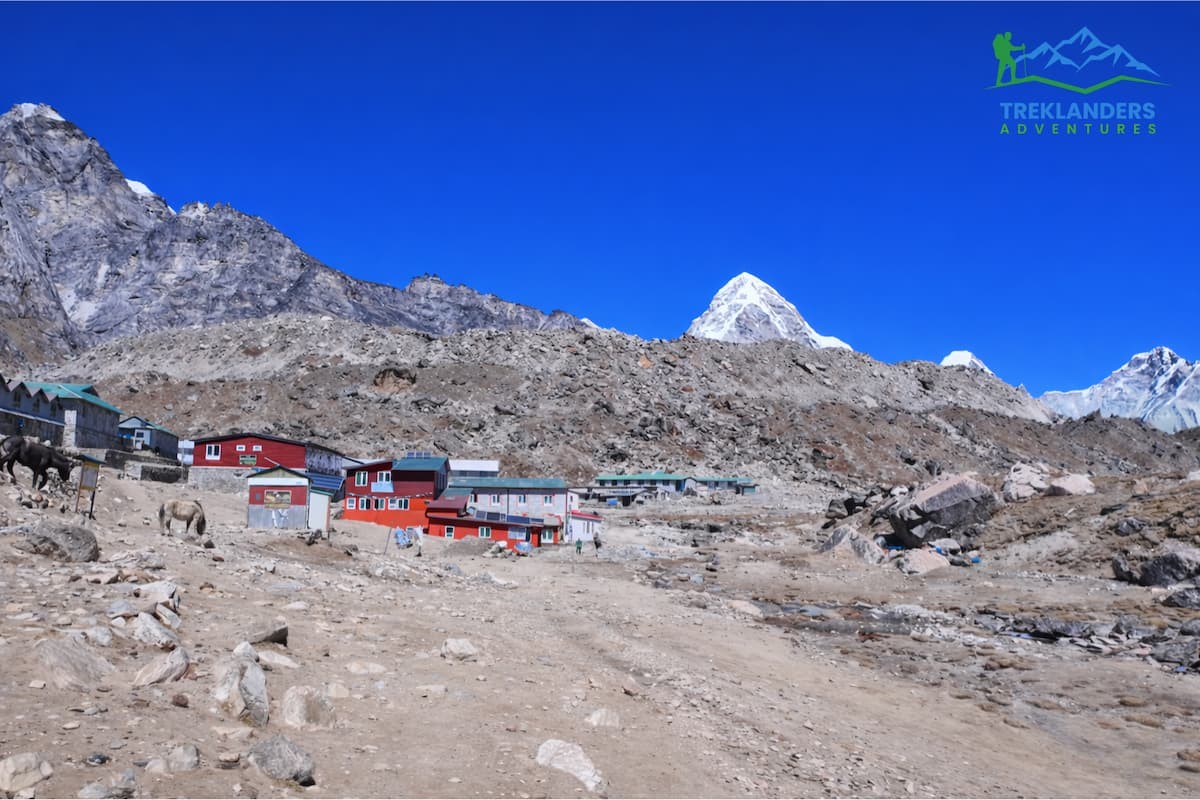
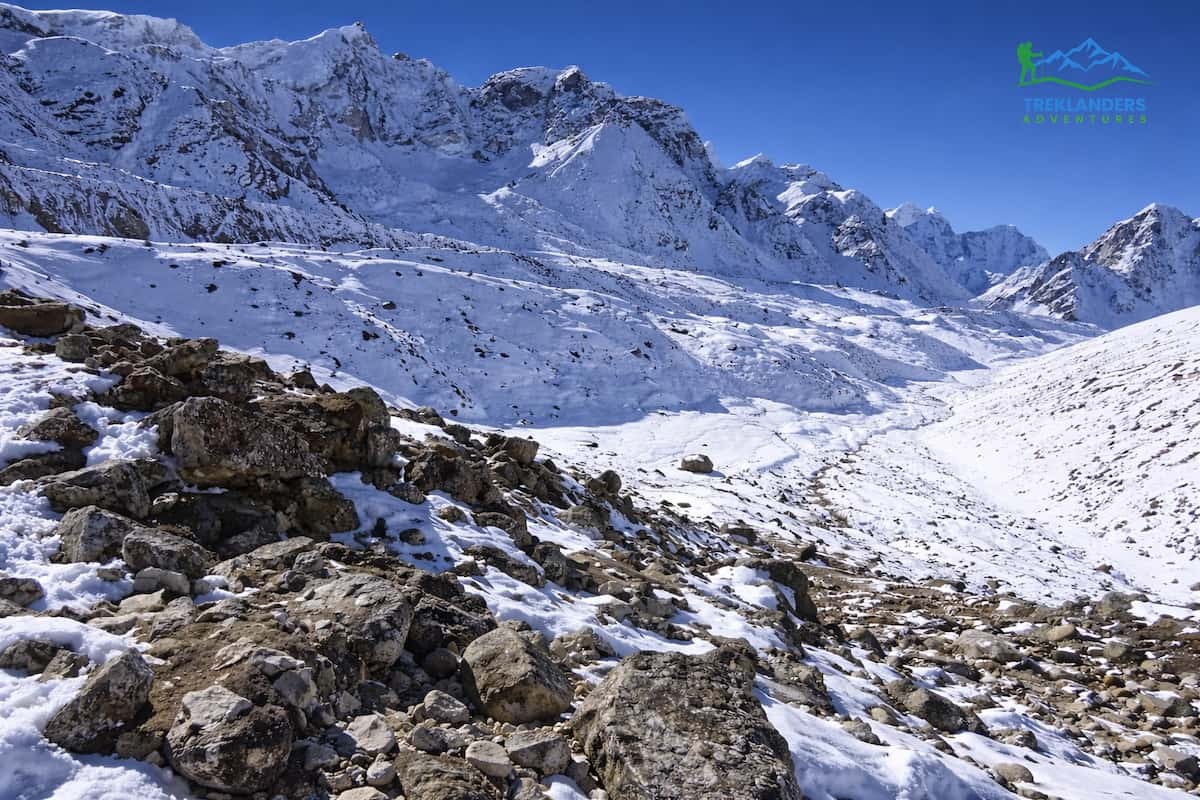
The village is located in a broad valley encircled by towering Himalayan peaks. Mountains covered with snow can be seen on all sides. Trekkers get spectacular views of Nuptse, Pumori, and other towering peaks. The scenery appears to be extremely cold and rocky. Considering the high altitude, there is very little vegetation.
Lobuche is a must-visit for those undertaking the famous Everest Base Camp Trek. The hike from Dingboche to Lobuche can take a few hours. The path goes through open valleys and glacial terrain. Hikers also see the memorial site at Thukla Pass, where climbers who lost their lives on Mount Everest are remembered.
Despite its small size, Lobuche has a number of teahouses and lodges. Such places typically offer simple rooms, hot meals, and a comfortable spot for relaxation. Trekkers commonly consume mainly dal bhat, noodles, soup and tea. Although the amenities are basic, they are essential as fewer choices are available at higher altitudes.
Due to the high altitude, Lobuche is quite a difficult place for a lot of trekkers. The air is thinner and contains less oxygen. People normally move slowly and drink a lot of water to prevent altitude sickness. Stopping at Lobuche is one way to help the body get used to the change before going even higher. The next destination after Lobuche is generally Gorak Shep. From there, trekkers still walk to Everest Base Camp.
In spite of the difficult conditions, Lobuche gives a different kind of experience. Nearby glaciers, steep hills, and peaks covered with snow form a very spectacular Himalayan scenery. The village seems to be very far away and quiet. At night, the temperature is very low, especially during winter when it can fall below freezing.
For many, coming to Lobuche is a thrilling moment. They know that they are almost at their destination. The well-known Everest Base Camp is just a little way from there. Because of its position and significance on the path, Lobuche is still one of the most noteworthy places on the trek to Everest Base Camp.
Where is Lobuche Located in the Everest Region?
Stunning Lobuche Village in the High Himalayas
Lobuche is a tiny settlement located in the Khumbu area of northeastern Nepal. It is situated within Sagarmatha National Park, which is the same protected area that features Mount Everest and several other high Himalayan peaks. Trekkers find their way to Lobuche as part of the popular Everest Base Camp Trek. At an elevation of roughly 4,940 meters above sea level, the village is located at a very high altitude, which makes it one of the highest overnight stops on the Everest Base Camp route. The settlement is set in an expansive valley enclosed by rocky hills, glaciers, and massive mountains.
Upon crossing this pass, trekkers continue for about one hour and then reach Lobuche. The village is situated near the large Khumbu Glacier, which descends from the slopes of Mount Everest. The glacier is responsible for shaping the physical environment surrounding Lobuche. Due to the extreme altitude, plants cannot thrive, and therefore, the area appears to be rocky and barren. Lobuche is positioned at a perfect midpoint between two major stopping points on the Everest Base Camp trekking route. On the southern side is Dingboche, known as a popular acclimatization spot for trekkers who often spend an extra day or two here. On the northern side is Gorak Shep.
Continuing a short distance north of Gorak Shep leads to the ultimate goal - the Everest Base Camp. Lobuche is located in a rather isolated area, but it is nevertheless a vital link on the trekking route. Besides serving as a shelter spot by providing basic lodge facilities, food and rest, Lobuche also acts as a stopover for trekking adventurers. With the next destination being at an even higher elevation, lots of people pause here to recharge and get themselves physically ready for the last leg of the itinerary.
Besides all these, Lobuche's location allows for some amazing mountain views. Among the Himalayan giants visible from here are Nuptse and Pumori. The expansive valley, views of glaciers, and the overall dramatic mountain scenery make Lobuche one of the most unforgettable spots on the Everest Base Camp trekking route.
Altitude and Geography of Lobuche Village
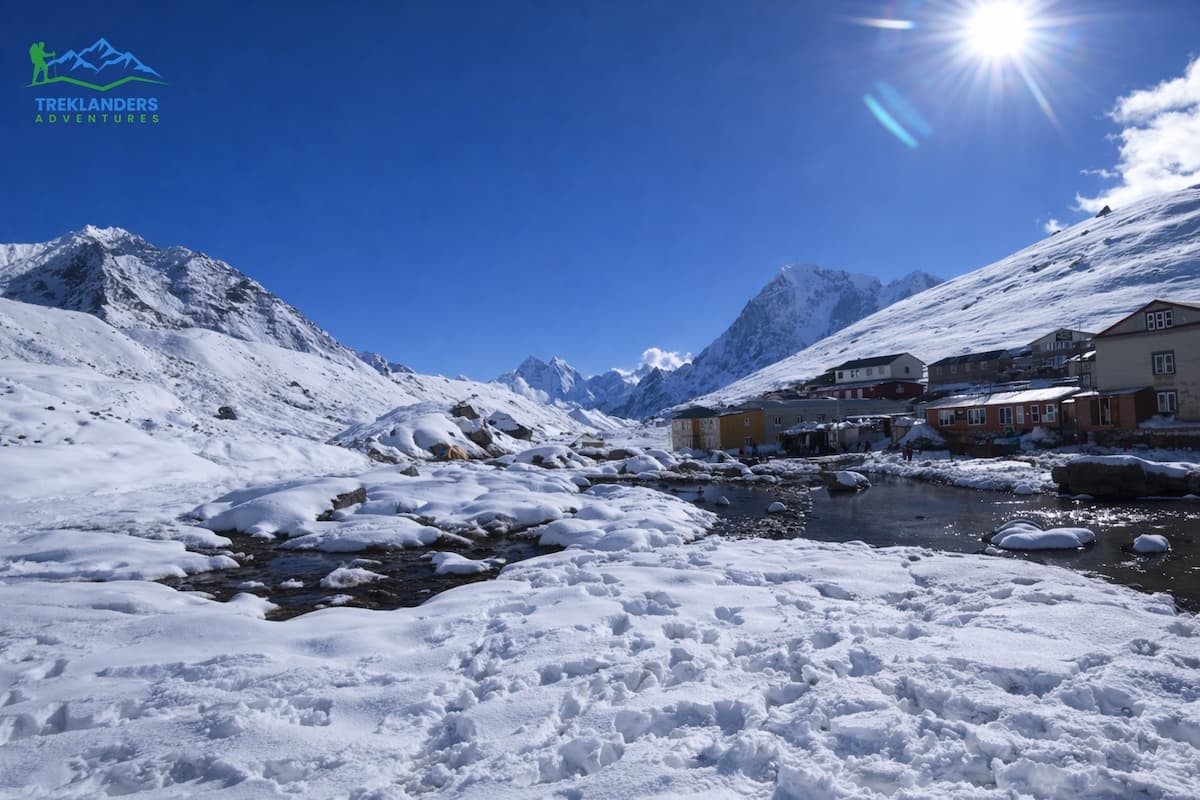
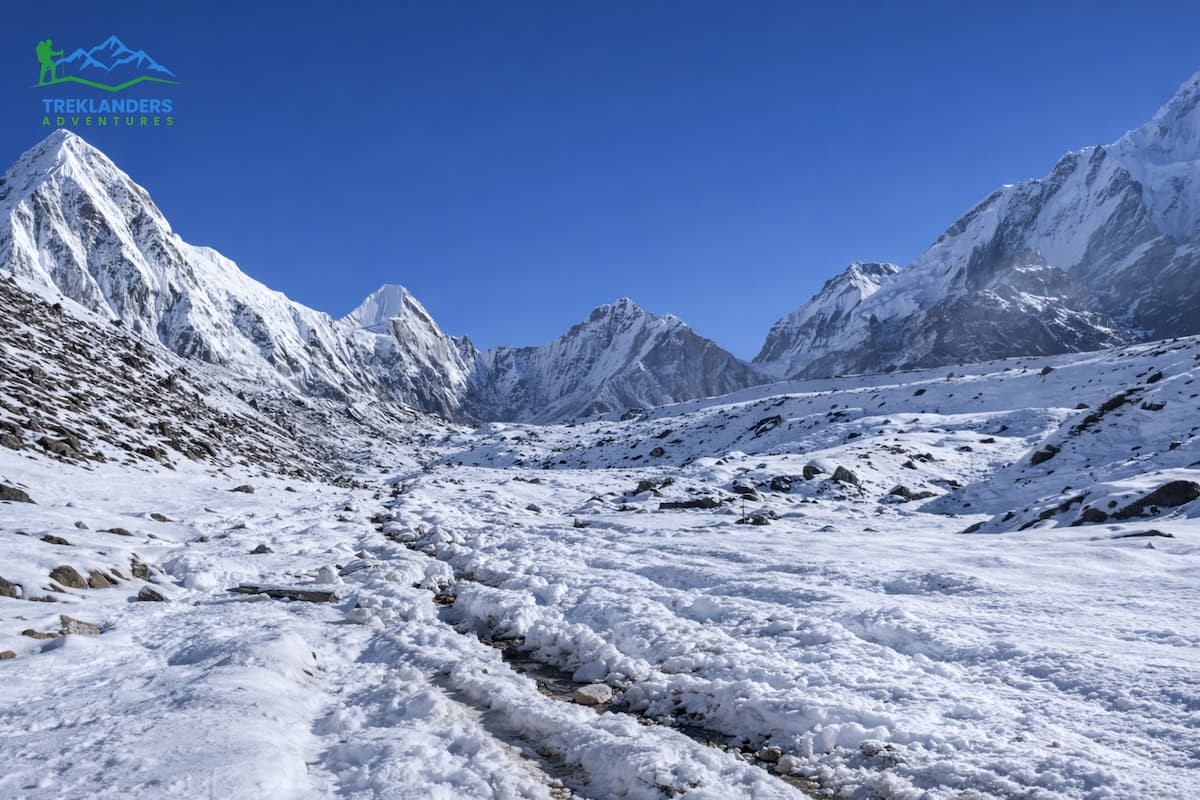
Lobuche Village in winter
Lobuche is a village located high up in Nepal's Khumbu region. It is situated at roughly 4,940 meters above sea level. This elevation makes it one of the highest overnight places on the very popular Everest Base Camp Trek.
At this level of altitude, the air is going to be thinner. The amount of oxygen is going to be lower compared to the villages at the lower levels. Many trekkers notice that they feel the symptoms of high altitude once they have reached Lobuche. For this reason, people generally move at a slow pace and allow themselves some time to rest after getting there.
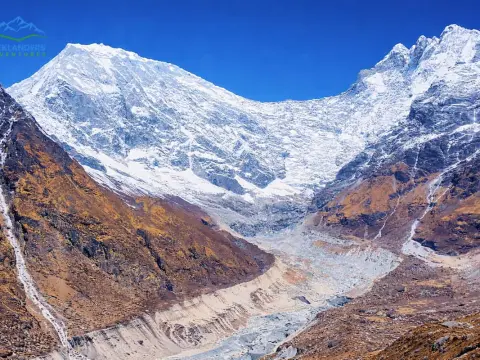
The environment of the area surrounding Lobuche is mainly determined by glaciers, mountains and rock-filled valleys. The village is located next to the vast Khumbu Glacier. This glacier is the one which comes down from the Mount Everest slopes. The glacier, over a long period of time, has sculpted this rough and rugged landscape that we see today.
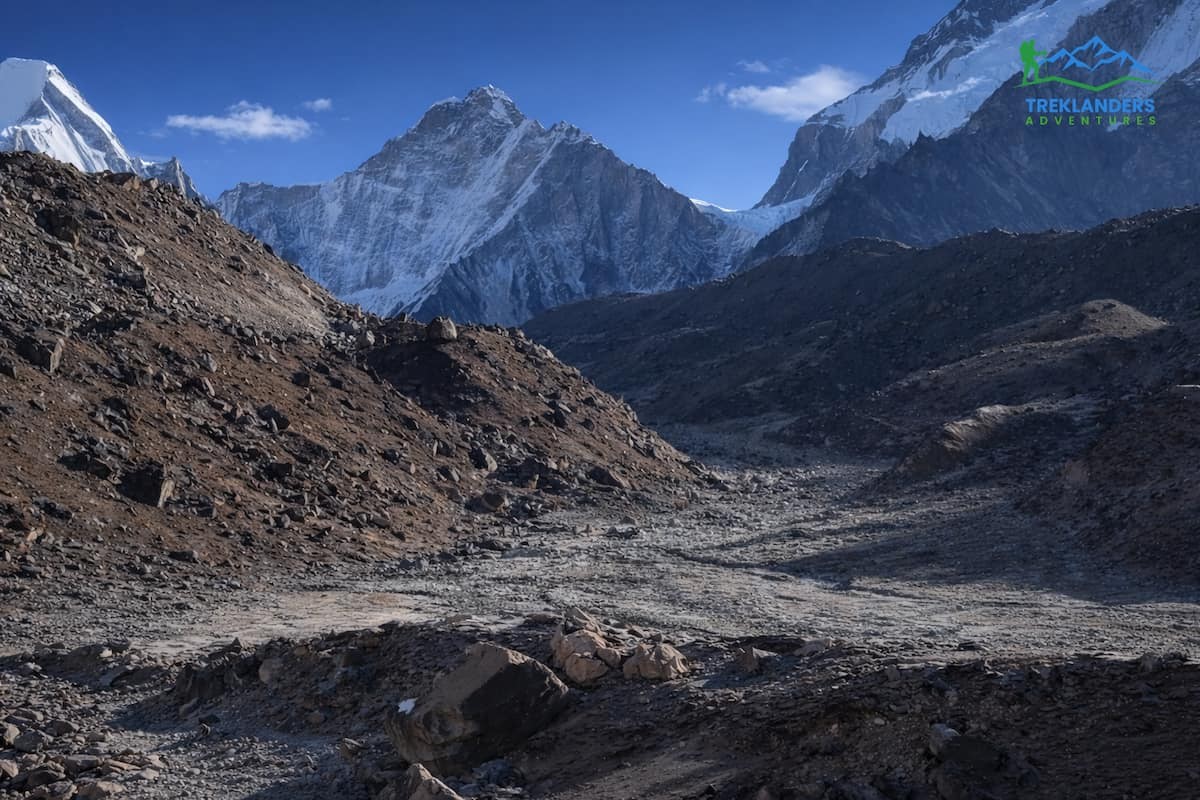
What the land looks like around Lobuche is a stark contrast to the lower parts of the Khumbu valley. Green forests and cultivated lands vanish as the trekker's ascend. Instead, the locality becomes more barren and rocky. Large rocks, glacial remnants, and dusty footpaths mostly cover the terrain. Only a few tiny alpine plants manage to survive in this tough environment.
Lobuche is set in a very open valley that is surrounded on all sides by towering Himalayan peaks. The mountains provide a very striking and dramatic natural backdrop. From the village, trekkers will be able to spot a number of famous peaks such as Nuptse and Pumori. These towering snow-clad mountains soar high above the valley and completely overshadow the skyline.
The region also features a number of small frozen streams as well as glacial moraines. Moraines refer to heaps of rock debris which have been dumped by moving glaciers. These glacial remnants indicate how glaciers gradually and persistently carve out the landscape. Hikers are frequently seen following these uneven glacial ridges as they make their way from one village to another in the Everest area.
The significant altitude also has an impact on the weather in Lobuche. In fact, temperatures stay on the cold side almost all year round. Even during the hiking season, temperatures at night often fall below zero. The wind may blow fiercely through the valley, mainly during the afternoons. Lobuche, due to being located at a very high altitude and having a very rough terrain, still remains a small village with only a few buildings. Along the trekking trail, are just a handful of teahouses and guesthouses that provide visitors with accommodation. Despite the tough living conditions, the place still offers magnificent views of the Himalayas and a great window into the dominating natural forces that have shaped the Everest region.
Distance and Trekking Route from Dingboche to Lobuche
Stunning Mountain Views from Lobuche Village
The trek from Dingboche to Lobuche is a very significant segment of the Everest Base Camp Trek. Most people who do the trek will come this way after spending one or two nights in Dingboche for acclimatization. The walk is a good way to help the body get used to higher altitudes.
The distance from Dingboche to Lobuche is approximately 8 to 9 kilometers. Most trekkers manage the journey in about 5 to 6 hours. The time it takes to walk depends on the speed one walks, the weather, and how well one's body adjusts to the altitude.
The trail starts with a gentle climb out of Dingboche village. Walkers are on a large path that takes them through an open valley. The area looks dry and rocky. There are hardly any trees since the altitude is quite high already. Trekkers can enjoy great mountain views during the journey.
Approximately two hours of walking, trekkers hit upon a small village called Thukla. Most people make it their lunch spot or a short break. The teahouses serve simple meals, tea, and water. This stop gives a chance to the trekkers to gear up for the steep climb awaiting them.
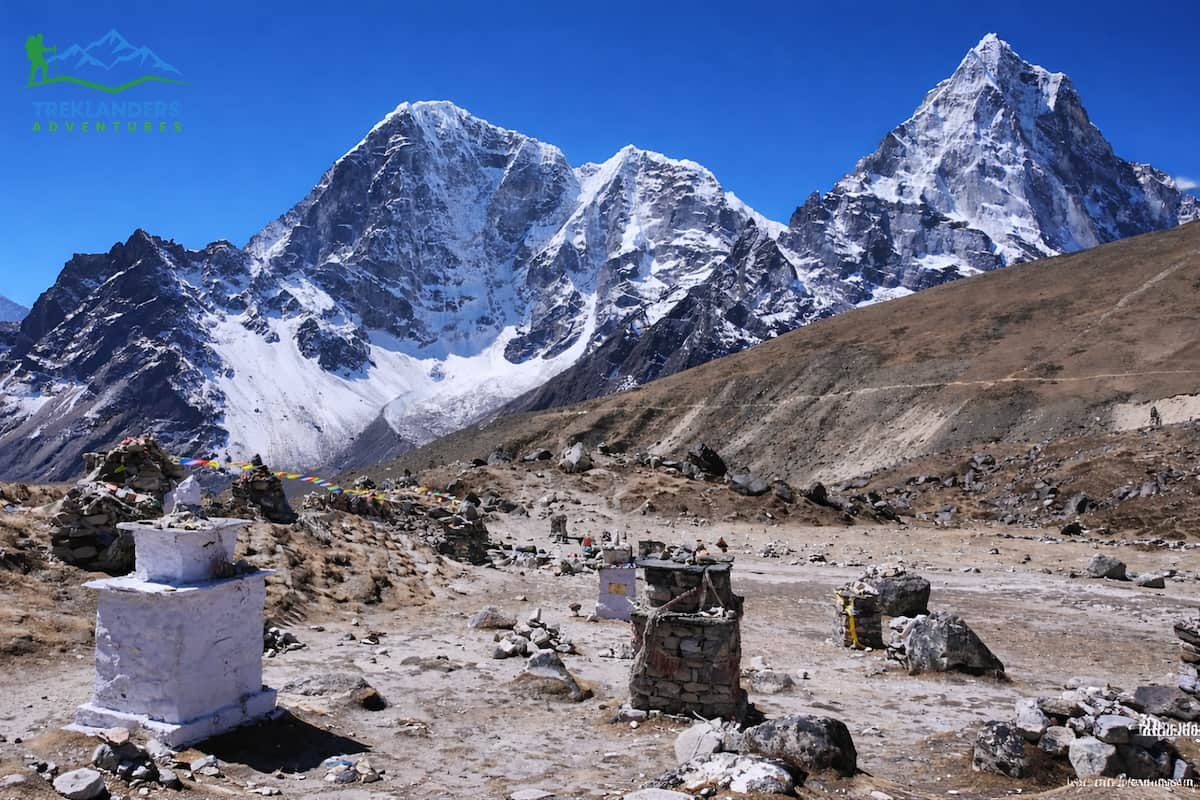
From Thukla, the trail leads upward on a steep ascent to Thukla Pass. It is a very short section, but difficult due to the altitude. Trekkers pace their steps and take rests multiple times. At the hilltop, a lot of stone memorials decorate the trail. Memorials commemorate climbers and Sherpa’s who have lost their lives on the mountains near the most famous one, Mount Everest.
Once hikers have gone through the memorial area, the trail is less steep. It runs along a broad glacier valley bordering the Khumbu Glacier. There is a mix of rocks, glacial debris, and dusty trails on the ground. Snow-capped peaks towering over the valley present breathtaking views. The last part of the trek is simply a gradual walk on the valley floor. One can get to Lobuche village within one to two hours from Thukla Pass. Along the way, a couple of stone lodges are the first indications of the settlement.
Though this route is not long, the high altitude turns it into a tougher one. Most trekkers get very exhausted by the time they reach Lobuche. Stopping there for a while will make it easier for the body to face the upcoming challenge of the trek all the way up to Gorak Shep, and then, the Everest Base Camp.
Thukla Pass Memorial and Its Historical Importance
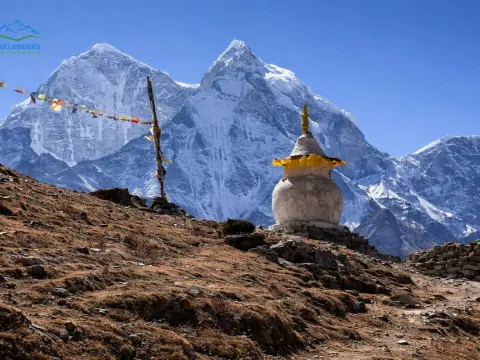
Thukla Pass Memorial place
Thukla Pass is regarded as an emotional and meaningful landmark on the Everest Base Camp Trek. The pass is located between Dingboche and Lobuche. To reach Thukla, trekkers must first climb steeply from the tiny village of Thukla.
The memorial site is at an elevation of approximately 4,830 meters. At the summit, hikers come across several tombstones scattered over the rocky terrain. These memorials commemorate mountaineers and Sherpa’s who died on their mountain expeditions in the Everest area.
Every memorial is special in its own way. Some are just simple piles of stones with prayer flags tied around them. Others resemble small chortens made of carved stones and plaques. A lot of the monuments bear the names and photographs of climbers who died on Mount Everest and other neighboring peaks.
The memorial to Scott Fischer, who perished during the 1996 Mount Everest Disaster, is probably one of the most popular ones. His monument is located at the site among many others. The place is also a tribute to the Sherpa climbers who supported the expeditions but met their deaths in the mountains.
The setting of the memorial helps to produce an extremely moving mood. Cheerful prayer flags flutter in the strong breeze. Snow-capped mountain peaks are visible in the background, including Nuptse and other high peaks of the Khumbu region. The peaceful surroundings are an invitation for trekkers to stop and engage in self-reflection.
For some trekkers, the stop at Thukla Pass is the highlight of the trip. The memorial serves as a wake-up call to the dangers climbers and guides deal with in the high Himalayas. At the same time, it reflects the great admiration and reverence that the local people and the mountaineers have for those who lost their lives in the mountains.
Having visited the memorial site, the trekkers go on to Lobuche. The path is getting less steep and leads along a large glacier valley close to the Khumbu Glacier.
Thukla Pass is not basically a physical moment on the path. It is also a site of memory and honor. The stone memorials are permanent representations of the bravery, dreaming, and giving up of climbers that went to the world's highest mountains.
Accommodation and Teahouse Facilities in Lobuche
Teahouse Facilities in Lobuche
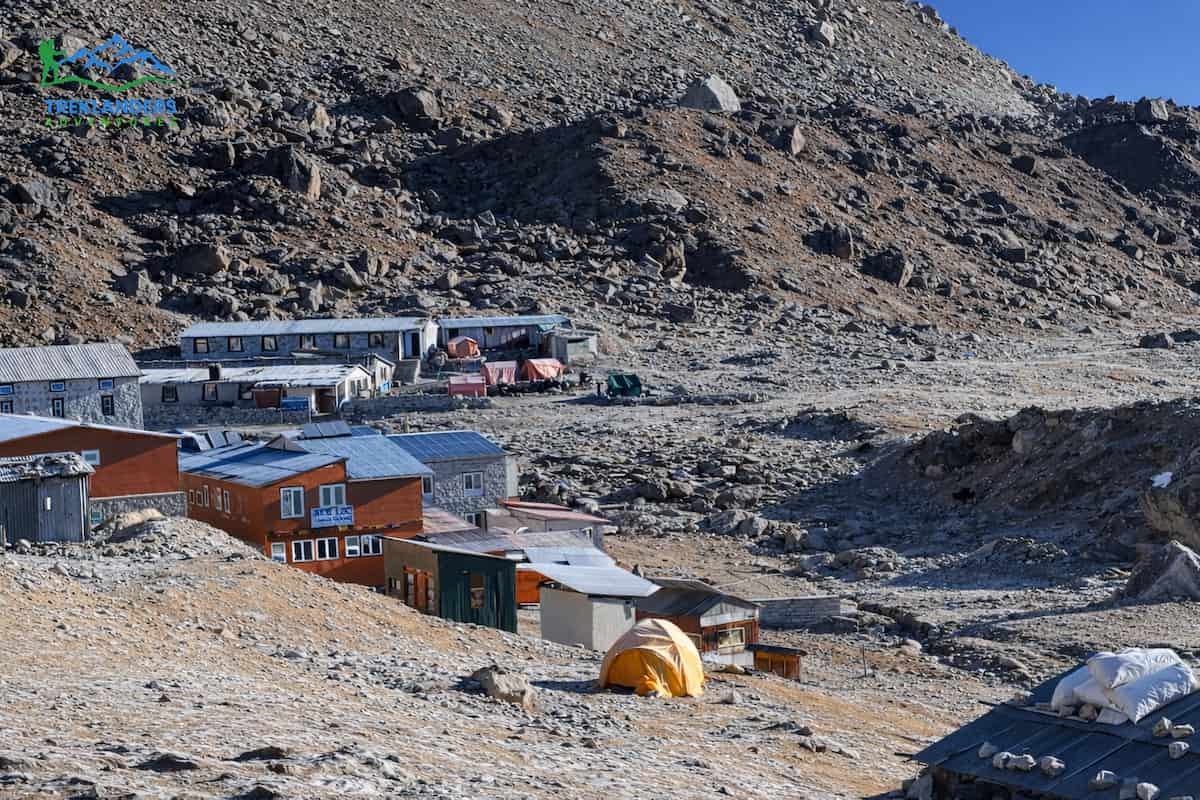
Lobuche is just a tiny village along the way to Everest Base Camp. Although it is quite far away from everything, the village does have a few teahouses and lodges where hikers can spend the night. They are the locations to stop and rest before heading further up to places like Gorak Shep.
Lobuche's architecture mainly consists of simple stone lodges that have been made to withstand a cold mountain environment. The walls are pretty thick, so the rooms stay warm even when it's freezing outside at night. Sometimes, the roofs are made of metal sheets, which serve as the main protection against snowfall and strong winds. Due to the high altitude and lack of good transport routes, the standard of the facilities is quite low.
Accommodation in Lobuche is usually a small room, but it's adequately fitted for hikers. Typically, two single beds, each with a pillow and blanket, make up the room. Besides wooden walls, the rooms merely have some insulation. However, temperatures at night can drop drastically, so it is common for trekkers to have a warm sleeping bag handy.
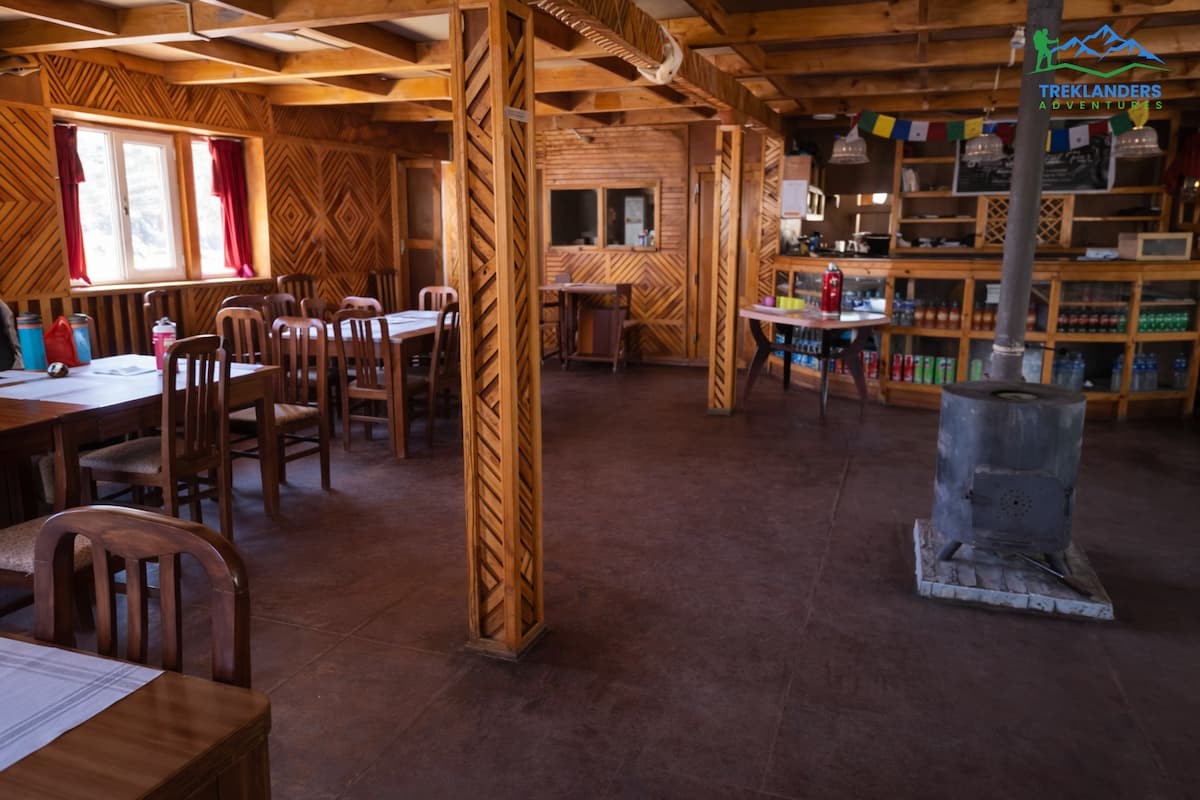
The dining area is the heart of any lodge where residents socialise. Almost every teahouse is equipped with a spacious dining room that contains tables and benches. You will usually see a stove placed in the middle of the room. During the evenings, the staff heats the stove using either dried yak dung or wood. After a day's walk on the trail, hikers sit around the stove to have their meals, drink tea, and get warm.
Dining Area at Lobuche Guesthouses
Food choices in Lobuche remain pretty basic but satisfying. Trekkers have the option to order staple foods like dal bhat, fried rice noodles, soup, potatoes, and pancakes. Hot beverages such as tea, coffee, and hot lemon are also served. Since the supplies have to be transported by yaks or porters, the food prices at this altitude go up.
Some teahouses provide extra facilities for trekkers. These facilities could include charging of electronic gadgets, Wi-Fi connection, and limited hot showers. However, since the electricity is mainly based on solar power, charging could be at an extra cost. Also, the internet connection can be rather slow due to the remote mountain setting.
Lobuche lodging assumes a critical function in the Everest Base Camp Trek. The settlement offers trekkers a spot to unwind and renew their strength before ascending to the higher altitudes. Most trekkers, after their night in Lobuche, move on the following day to Gorak Shep and finally Everest Base Camp.
While the amenities are still rudimentary, the friendly reception from the lodge owners and the spectacular Mountain View make the stay in Lobuche an unforgettable segment of the Everest trekking adventures.
Food and Basic Services Available for Trekkers
Dal Bhat Meal Served at Lobuche Lodges
Lobuche is one of the final villages before reaching the Everest Base Camp. Being located here, the teahouses in Lobuche supply essential food and other services to the trekkers. These amenities allow the travelers to relax, have food, and get ready for the last phase of a trek.
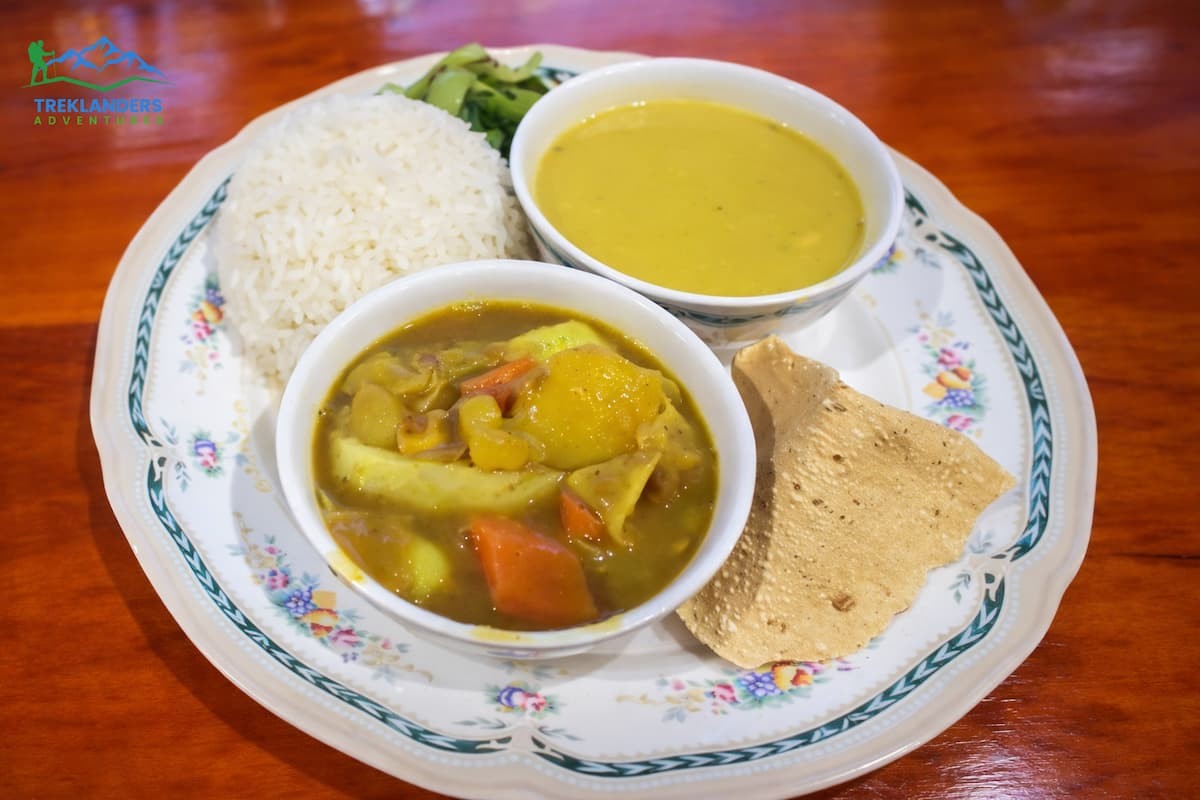
Lobuche's cuisine is plain but healthy. Mainly, the meals are similar to those in other villages located along the Everest Base Camp Trek route. The most frequently consumed dish is dal bhat. This consists of rice, lentil soup, vegetables, and occasionally pickles. Dal bhat is a very popular meal since it is good for providing energy, and one can get refills in most lodges.
Besides dal bhat, trekkers are free to pick other dishes from the lodge's menu. Fried rice noodles, pasta, potatoes, pancakes, eggs, and vegetable soup are typical dishes. Such foods are quite simple to make and yield a sufficient amount of energy for long trekking days. Occasionally, the lodges sell simple snacks such as biscuits or chocolate.
Hot beverages are very much needed at such a height. Trekkers usually have black tea, milk tea, ginger tea, or hot lemon. Besides, a lot of lodges offer coffee and hot chocolate as well. Hot drinks keep trekkers both hydrated and warm despite the exposure to cold mountainous weather.
Everest Base Camp Trek and Returning via Heli | 13 days
Since Lobuche is at a very high altitude, it's impossible to grow food there. That means that all food, including fresh vegetables, fruits, and meat, has to be brought up from villages located at lower altitudes. Yaks and porters are the main modes of transport for goods along the trail. Consequently, the cost of living in Lobuche is more than in the lower areas like Namche Bazaar or Dingboche.
Apart from serving food, teahouses also cater to the basic needs of trekkers. A majority of the lodges come with the provision of safe drinking water. Travel enthusiasts have an option to either purchase sealed bottles of water or get their bottles refilled with hot water. The use of boiling water is quite popular as it helps in reducing the use of plastic.
Another way of renewing devices like phones and cameras is by charging them in some lodges. Most of the time, power comes from solar panels, so people get charged for using the electricity even for a very short time to charge their devices. Supply of power might be very limited at times, especially when the weather is not very bright.
In some teahouses, you can get Wi-Fi or mobile network access, though you should not expect a very fast connection. A handful of the lodges also offer hot showers, but due to the cold surroundings, hot water may be in short supply. All the above-mentioned meals and services make Lobuche a necessary stop during the trek to the Everest Base Camp. The simplicity of such accommodations gives trekkers the required rest and comfort to help them gear up for their next leg of the journey to Gorak Shep and the ultimate destination.
Acclimatization and Altitude Challenges at Lobuche
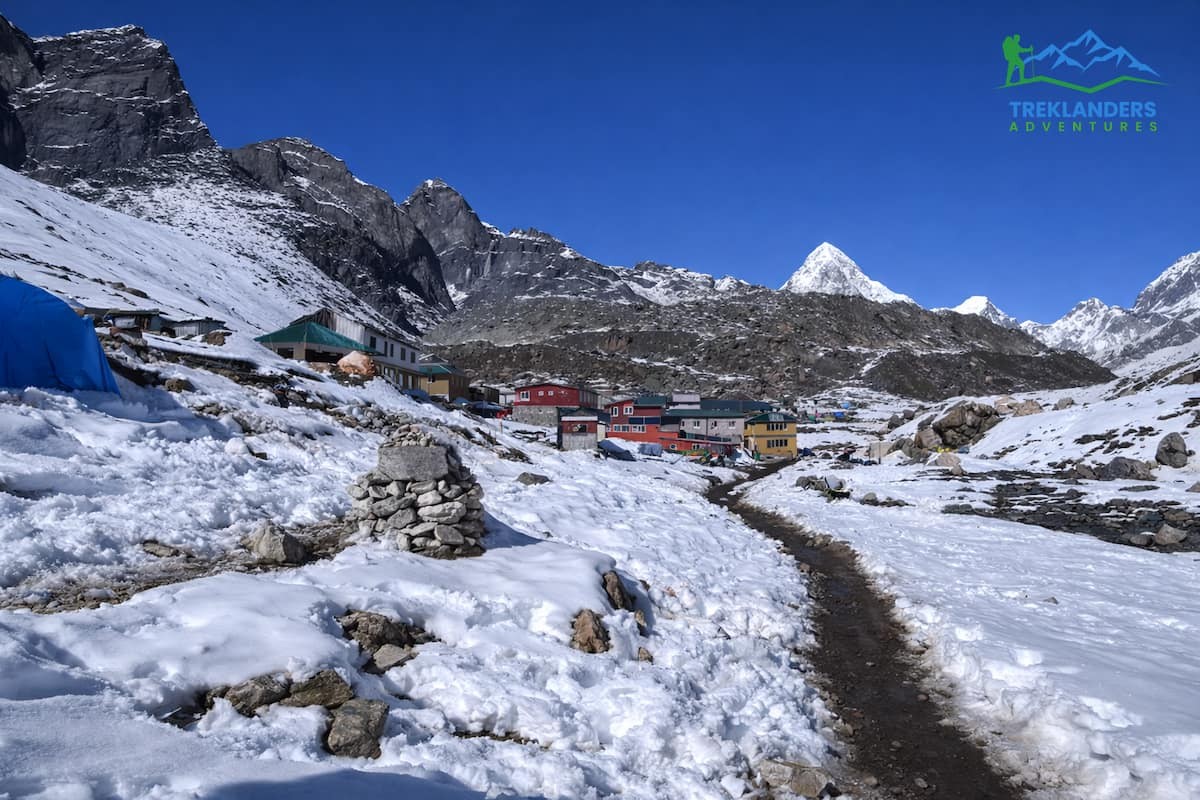
Trail Along the Everest Base Camp Route from Lobuche
Lobuche sits at about 4,940 meters above sea level in the Khumbu region of Nepal. At this height, the air contains much less oxygen than at lower elevations. Because of this, trekkers often feel the effects of altitude when they arrive in the village.
Many people reach Lobuche while following the famous Everest Base Camp Trek. Before arriving here, trekkers usually spend time in villages such as Namche Bazaar and Dingboche for acclimatization. These rest days help the body slowly adjust to increasing altitude.
Despite these preparations, Lobuche still presents challenges. The thin air can cause symptoms such as headache, tiredness, dizziness, and shortness of breath. Some trekkers may also lose their appetite or have difficulty sleeping. These symptoms are common signs of Acute Mountain Sickness.
The key to staying safe at Lobuche is proper acclimatization. Trekkers should walk slowly during the trek from Dingboche to Lobuche. A steady pace helps the body adjust to the reduced oxygen levels. Drinking plenty of water is also important because dehydration can increase altitude problems.
9-Day Everest Base Camp Trekking with Helicopter Return | 9 days
Eating regular meals helps maintain energy during the trek. Even if appetite decreases, trekkers should try to eat simple foods such as rice, soup, or potatoes. Warm drinks such as tea or hot lemon also help keep the body hydrated.
Another important rule is to listen to the body. If symptoms of altitude sickness become severe, resting or descending to a lower village is necessary. Safety always comes first during high-altitude trekking.
Lobuche itself is not usually used as a long acclimatization stop. Most trekkers spend only one night here before moving higher. The next destination is often Gorak Shep, which sits even higher in the valley.
The environment around Lobuche also adds to the challenge. Cold temperatures, strong winds, and dry air can make trekking more difficult. However, careful pacing, proper hydration, and good rest help most trekkers adapt successfully.
Reaching Lobuche is an important milestone on the journey toward Everest Base Camp. Trekkers who manage the altitude carefully can continue safely toward the final destination while enjoying the dramatic landscapes of the high Himalayas.
Mountain Views around Lobuche Village
Mountain Views around Lobuche Village
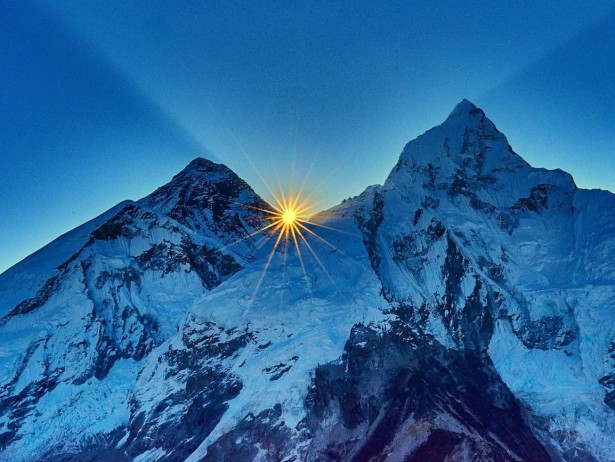
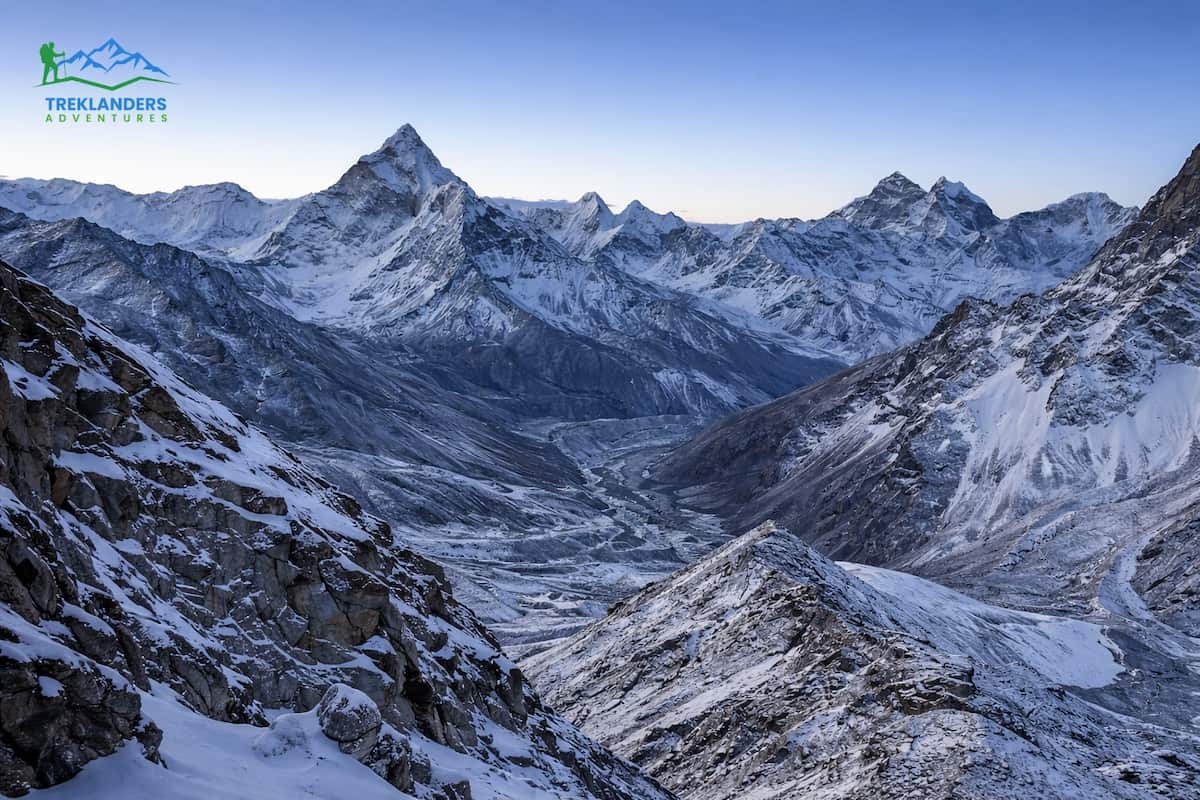
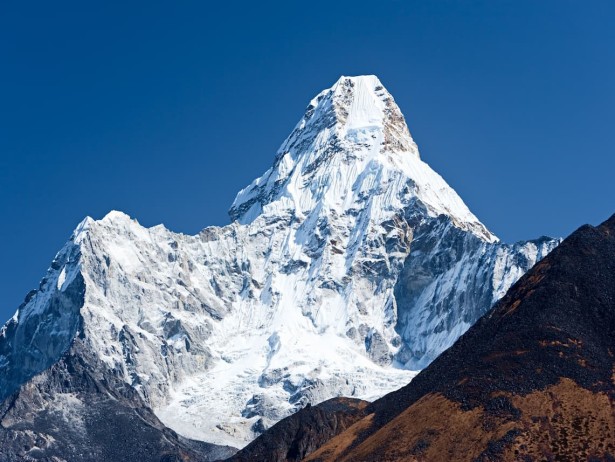
Lobuche lies in the Khumbu region of Nepal, perched at about 4,940 meters (16,207 feet) above sea level. The village presents a spectacular mountain panorama that is among the best in the world for the Everest Base Camp trek. Trekkers entering Lobuche do so amidst breathtakingly pristine alpine views as well as not-so-gentle valleys carved by glaciers and rocks. Looking towards the north, trekkers can see the majestic Mount Everest. The star of the show in the Himalayan range, the summit stands vertically above the valley with heavy snow cover for most of the year.
The actual summit of Everest is not strictly within the line of sight of the village due to other peaks blocking the view; however, the giant mountain's physical presence overshadows the entire skyline at the same time! It is quite an awe-inspiring moment upon which the viewer realizes just how close they are to the world's tallest peak. To the west of Lobuche is the Nuptse massif, and its imposing slopes and sharp pinnacles are easily recognizable features of the Everest region.
Trekking parties often break off their march to take pictures and contemplate the interplay of snow, rock, and sunlit shadows. Yet, the view of Pumori is to be had in Lobuche as well, and it is equally the envy of many. The white ridges and rough contours of Pumori do stand out well against the dark colour of the rocky ground underneath. Besides being a magnet for climbers, Pumori is also a favorite subject for photographers since its form is quite distinct and it lies on the trail leading to the Everest Base Camp.
Everest Base Camp via Cho la Pass from Gokyo Valley Trekking | 18 days
The village also has a view of the Khumbu Glacier. This glacier goes down the valley and forms a beautiful natural road through the mountains. Those who hike the area can witness the moving ice, large cracks in the glacier, and the formations of moraine that are the most remarkable features of the surrounding nature of Lobuche.
Besides, the village is a spot from which trekkers can enjoy great sights of the small peaks and ridges that are the valley's walls. These huge mountains, together with the floor of the valley, which is broad, are enormously steep mountains on each side, isolating a sense of wilderness. Lobuche feels remote and peaceful.
The rigid peaks get fantastic colorings from the sun at rising and setting. The first light of the day changes the mountains to shades of pink and orange; meanwhile, the light of the evening creates long shadows across the valleys. Even from the teahouses, trekkers can savour these picturesque views without the need to go out of the village.
In fact, Lobuche brings a perfect viewpoint to watch some of the world-famous and spectacular peaks of the Himalayas. The mix of very high mountains, glaciers, and wild nature turns this village into one of the most beautiful stations on the Everest Base Camp trek.
Weather Conditions and Best Time to Stay in Lobuche
Lobuche Village
Lobuche is a small village at an altitude of around 4,940 meters found in the Khumbu region of Nepal. Extreme weather is the norm for the village due to the high altitude of the area. Temperatures are cold most of the time, and weather conditions can change very quickly.
In winter (December to February), night temperatures in Lobuche regularly go below -15 degrees Celsius. Besides that, due to snowfall and strong winds, the air feels colder. Walking becomes harder because of the icy and slippery trekking paths. Moreover, due to limited capacity, many teahouses are closed during this period, so fewer people are visiting in winter.
Spring (March-May) is one of the nicest times to be in Lobuche. The weather is usually clear and dry. Temperatures at the time can reach from --5 °C to 10 °C, while at night the temperature is still cold. The sky is mostly clear, giving very good views of Everest and other mountains. Also, in spring, the rhododendron forests flower at lower altitudes, providing colourful scenery for the trek.
Autumn (late September-November) is yet another excellent time. At this time of the year, the monsoon has already left, bringing clear skies and stable weather. Day temperatures are somewhat higher than those in spring. Mountain views are crisp, and trails are mostly dry, with little snow or ice. Also, this season is the one that sees the most visitors, as it features clear weather and good visibility.
Summer, from June to early September, is the monsoon season. Heavy rain and occasional snow at high altitudes can make trails slippery and dangerous. Besides, the clouds almost always hide the mountains, and at the same time, there is more risk of landslides and floods down the valley. There are going to be wet conditions and no visibility for trekking during the monsoon.
The wind is one of the main things to consider while staying at Lobuche. Even when the weather is nice in spring or fall, there are still some afternoons when the wind is so strong that it probably gets chilly up high. To avoid the strong winds, it is best to start the hike very early after the wind has calmed down.
The peak seasons to stay in Lobuche are spring and autumn. These time periods have clear skies, temperatures that are not too hot or too cold, and safer trails. Besides being appropriately dressed and having warm sleeping bags, one should also always be ready for sudden changes in the weather. The timing of your visit to Lobuche will enable you to enjoy magnificent mountain views, get a rest from the altitude, and get ready for the onward journey to Gorak Shep and Everest Base Camp.
Trek from Lobuche to Gorak Shep and Everest Base Camp
Trek from Lobuche to Gorak Shep and Everest Base Camp
The first part of the trail is a nice, gentle walk starting from Lobuche. The route takes you through a rocky valley close to the Khumbu Glacier. The ground is quite level, but it consists of stones and glacial debris. Trekkers should walk slowly and have some rest time to get used to the thin air.
It normally takes about two to three hours before the trekkers get to Gorak Shep, a tiny settlement at an altitude of around 5,164 meters. Gorak Shep consists of a few simple lodges and teahouses where one can find lodging, food, and hot drinks. Many Trekkers have lunch here and rest since it is their last chance to acclimatize before making their way to Everest Base Camp. From the village, one can see beautiful views of the peaks, such as Kala Patthar and the many glaciers that are nearby.
The trek from Gorak Shep to the Everest Base Camp takes about 2-3 hours on foot. The route runs along the side of the Khumbu Glacier, and the surface becomes rocky and uneven in some parts. Depending on the time of the year, there may be some snow patches. Trekkers generally make their start quite early in the morning so as to avoid the strong winds and at the same time get the chance to witness clear sights of Mount Everest and the other Himalayan peaks.
Everest Base Camp is not a village but rather a temporary campsite used by climbers staging their ascent. At an altitude of 5,364 meters, the area is bleak, cold, and windswept. Besides the tents put up by climbing expeditions during the season, there are no permanent structures. From the camp, visitors can witness the Khumbu Icefall, which is notorious for being one of the most perilous segments on the way to Everest's summit.
Following their stay at Everest Base Camp, trekkers normally proceed to Gorak Shep for a night's rest. This gives the body time to recuperate before the journey is continued downhill to Lobuche, Dingboche, and the lower villages.
Leaving Lobuche for Gorak Shep and Everest Base Camp is the last leg of the journey and is a fairly short one. However, it is most definitely the most challenging as far as altitude goes. Temperatures are also very cold, while the terrain is quite rough. It is therefore imperative that trekkers pace themselves, drink enough water, and be well-prepared. The payoff, however, is magnificent Himalayan views along with the deep sense of accomplishment that comes with standing at the very foot of the Earth's highest mountain.
Conclusion
Everest Base Camp Trek in winter
Lobuche is undoubtedly one of the major stops that you will encounter during the Everest Base Camp Trek. Its elevated location, rough terrain, and closeness to the Khumbu Glacier make it an essential spot for acclimatization as well as rest. Trekkers get a chance to stay in very basic teahouses, be served warm food and take advantage of minimal facilities that enable them to get ready for higher altitudes.
Furthermore, the settlement itself presents gorgeous Himalayan scenes of Nuptse, Pumori, and the glaciers in the vicinity. A visit to Thukla Pass, which is close by, creates a deep experience as it is a memorial to the climbers who died in the mountains. Getting to Lobuche represents a physical as well as a psychological peak. At this point, trekkers know that they are really only a stone's throw away from Gorak Shep and Everest Base Camp. Proper acclimatization, careful pacing, and preparation for cold and windy conditions are essential.
In the final analysis, Lobuche supplies an extraordinary mixture of hardship, relaxation, and stunning landscapes. A stop here allows trekkers to regain their strength, take in the magnificent Himalayan scenery, and proceed onward without any danger to the ultimate objective of reaching Everest Base Camp.