[{"name":"Everest Base Camp Trek","duration":"16","image_url":"https:\/\/www.treklanders.com\/storage\/trip-galleries\/1\/thumb_419a755c003cc609f3030ee332965ebe.jpg","offer_price":1405,"url":"https:\/\/www.treklanders.com\/trips\/everest-base-camp-trek"},{"name":"Gokyo Valley Trekking","duration":"16","image_url":"https:\/\/www.treklanders.com\/storage\/trip-galleries\/2\/thumb_676d1021b574aeba4d19d3f2a0b04ed2.webp","offer_price":1205,"url":"https:\/\/www.treklanders.com\/trips\/gokyo-valley-trekking"},{"name":"Annapurna Circuit Trek","duration":"23","image_url":"https:\/\/www.treklanders.com\/storage\/trip-galleries\/3\/thumb_2a9a92ea23c62f41de27b37f5e3e8c17.webp","offer_price":1495,"url":"https:\/\/www.treklanders.com\/trips\/annapurna-circuit-trek"},{"name":"Everest Panorama Trek","duration":"12","image_url":"https:\/\/www.treklanders.com\/storage\/trip-galleries\/4\/thumb_35c9f677ea2e88b1ff11a9f43daa3ddb.jpg","offer_price":1100,"url":"https:\/\/www.treklanders.com\/trips\/everest-panorama-trek"},{"name":"Everest Base Camp Trekking from Jiri","duration":"22","image_url":"https:\/\/www.treklanders.com\/storage\/trip-galleries\/6\/thumb_14763592492417b294aa66bf0ebf4e64.webp","offer_price":1400,"url":"https:\/\/www.treklanders.com\/trips\/everest-base-camp-trekking-from-jiri"},{"name":"Everest Base Camp via Cho la Pass from Gokyo Valley Trekking","duration":"18","image_url":"https:\/\/www.treklanders.com\/storage\/trip-galleries\/7\/thumb_d4e470e98d4e9e2ab8e93e39b8b7d252.jpg","offer_price":1405,"url":"https:\/\/www.treklanders.com\/trips\/everest-base-camp-via-cho-la-pass-from-gokyo-valley-trekking"},{"name":"Everest Three Passes Trekking","duration":"22","image_url":"https:\/\/www.treklanders.com\/storage\/trip-galleries\/8\/thumb_b413b221e913171500bb3dfd5c08ceea.jpg","offer_price":1635,"url":"https:\/\/www.treklanders.com\/trips\/everest-three-passes-trekking"},{"name":"Annapurna Base Camp Trekking","duration":"14","image_url":"https:\/\/www.treklanders.com\/storage\/trip-galleries\/9\/thumb_2e71f2ffe116c659fa66b01c2d571b4e.webp","offer_price":845,"url":"https:\/\/www.treklanders.com\/trips\/annapurna-base-camp-trekking"},{"name":"Mardi Base Camp Trekking","duration":"14","image_url":"https:\/\/www.treklanders.com\/storage\/trip-galleries\/10\/thumb_d7b2d2dc638f6bbf2c31c167ac68029d.webp","offer_price":845,"url":"https:\/\/www.treklanders.com\/trips\/mardi-base-camp-trekking"},{"name":"Mohare Danda Trekking","duration":"12","image_url":"https:\/\/www.treklanders.com\/storage\/trip-galleries\/11\/thumb_a384c8d35d789d29b19991c1d675c910.webp","offer_price":755,"url":"https:\/\/www.treklanders.com\/trips\/mohare-danda-trekking"},{"name":"Khopra Ridge & Khair Lake Trekking","duration":"15","image_url":"https:\/\/www.treklanders.com\/storage\/trip-galleries\/12\/thumb_c0f50461ddc74acfb553ba85be00fab0.webp","offer_price":855,"url":"https:\/\/www.treklanders.com\/trips\/khopra-ridge-khair-lake-trekking"},{"name":"Upper Mustang Trekking","duration":"17","image_url":"https:\/\/www.treklanders.com\/storage\/trip-galleries\/13\/thumb_7aa4dfdb69186b0f224a303d80a25c95.jpg","offer_price":1715,"url":"https:\/\/www.treklanders.com\/trips\/upper-mustang-trekking"},{"name":"Langtang Valley Trek","duration":"12","image_url":"https:\/\/www.treklanders.com\/storage\/trip-galleries\/14\/thumb_8650b4b1a3c160cff75da65369398353.webp","offer_price":735,"url":"https:\/\/www.treklanders.com\/trips\/langtang-valley-trek"},{"name":"Gosainkunda Lake Trek","duration":"11","image_url":"https:\/\/www.treklanders.com\/storage\/trip-galleries\/15\/thumb_bfe94c14e760c48234e117021105be84.webp","offer_price":735,"url":"https:\/\/www.treklanders.com\/trips\/gosainkunda-lake-trek"},{"name":"Chisapani-Nagarkot to Dhulikhel Hiking","duration":"7","image_url":"https:\/\/www.treklanders.com\/storage\/trip-galleries\/16\/thumb_468defe9a4000ee3129cd7e6421ee105.webp","offer_price":565,"url":"https:\/\/www.treklanders.com\/trips\/chisapani-nagarkot-to-dhulikhel-hiking"},{"name":"Kanchenjunga Trek","duration":"23","image_url":"https:\/\/www.treklanders.com\/storage\/trip-galleries\/17\/thumb_51f43fa4203106cc49aaedc89d76e01d.jpg","offer_price":1725,"url":"https:\/\/www.treklanders.com\/trips\/kanchenjunga-trek"},{"name":"Helambu Trek","duration":"12","image_url":"https:\/\/www.treklanders.com\/storage\/trip-galleries\/18\/thumb_0fe8e3fa1299d2e43bf1fb5977875ce2.jpg","offer_price":685,"url":"https:\/\/www.treklanders.com\/trips\/helambu-trek"},{"name":"Upper Dolpo Trek","duration":"26","image_url":"https:\/\/www.treklanders.com\/storage\/trip-galleries\/19\/thumb_d6080d490e1db83b0a711e7304000864.jpg","offer_price":3005,"url":"https:\/\/www.treklanders.com\/trips\/upper-dolpo-trek"},{"name":"Manaslu Circuit Trek","duration":"18","image_url":"https:\/\/www.treklanders.com\/storage\/trip-galleries\/20\/thumb_1fdd224e849f4f328e73d2d12b3d282d.jpg","offer_price":1225,"url":"https:\/\/www.treklanders.com\/trips\/manaslu-circuit-trek"},{"name":"Tilicho Lake Base Camp Trek","duration":"19","image_url":"https:\/\/www.treklanders.com\/storage\/trip-galleries\/21\/thumb_eba8ac5e029e6543e0c17630ebd9e2fb.jpg","offer_price":1220,"url":"https:\/\/www.treklanders.com\/trips\/tilicho-lake-base-camp-trek"},{"name":"Nar-Phu Valley With Thorang-La Pass Trek","duration":"21","image_url":"https:\/\/www.treklanders.com\/storage\/trip-galleries\/22\/thumb_43597423a5a366fe9c8937fb30d2fe2a.jpg","offer_price":1315,"url":"https:\/\/www.treklanders.com\/trips\/nar-phu-valley-with-thorang-la-pass-trek"},{"name":"Nepal Round Trip of Kathmandu-Pokhara-Lumbini and Chitwan Tour","duration":"10","image_url":"https:\/\/www.treklanders.com\/storage\/trip-galleries\/23\/thumb_32497d170b2ab340b0a1b3310e91e784.webp","offer_price":845,"url":"https:\/\/www.treklanders.com\/trips\/nepal-round-trip-of-kathmandu-pokhara-lumbini-and-chitwan-tour"},{"name":"Nagarkot Day Hike","duration":"2","image_url":"https:\/\/www.treklanders.com\/storage\/trip-galleries\/24\/thumb_a5a654930fd8ba7852e41738105bacfc.webp","offer_price":105,"url":"https:\/\/www.treklanders.com\/trips\/nagarkot-day-hike"},{"name":"Nagarkot Sunrise Tour","duration":"1","image_url":"https:\/\/www.treklanders.com\/storage\/trip-galleries\/25\/thumb_17dc28a29cfa44381ad503f0a75ee84f.webp","offer_price":22,"url":"https:\/\/www.treklanders.com\/trips\/nagarkot-sunrise-tour"},{"name":"Namobuddha Day Tour with Shiva Statue","duration":"1","image_url":"https:\/\/www.treklanders.com\/storage\/trip-galleries\/26\/thumb_beeb34202f9077764aa08c67ef2867f9.webp","offer_price":45,"url":"https:\/\/www.treklanders.com\/trips\/namobuddha-day-tour-with-shiva-statue"},{"name":"Kathmandu Full Day Sightseeing Tour","duration":"1","image_url":"https:\/\/www.treklanders.com\/storage\/trip-galleries\/27\/thumb_d045fc0f1acee2cfa6b3c95f3c656d18.jpg","offer_price":30,"url":"https:\/\/www.treklanders.com\/trips\/kathmandu-full-day-sightseeing-tour"},{"name":"Patan and Bhaktapur Sightseeing Tour","duration":"1","image_url":"https:\/\/www.treklanders.com\/storage\/trip-galleries\/28\/thumb_750eacac3424b5dba686dd93656ab87c.jpg","offer_price":30,"url":"https:\/\/www.treklanders.com\/trips\/patan-and-bhaktapur-sightseeing-tour"},{"name":"Upper Mustang Heli Tour","duration":"1","image_url":"https:\/\/www.treklanders.com\/storage\/trip-galleries\/29\/thumb_0b785f69a15557f8660c805c76fda14e.webp","offer_price":1250,"url":"https:\/\/www.treklanders.com\/trips\/upper-mustang-heli-tour"},{"name":"Everest Heli Tour","duration":"1","image_url":"https:\/\/www.treklanders.com\/storage\/trip-galleries\/30\/thumb_dc45f2beb36a3699e0decf0de41a6f17.jpg","offer_price":1495,"url":"https:\/\/www.treklanders.com\/trips\/everest-heli-tour"},{"name":"Island Peak Trek & Climb","duration":"21","image_url":"https:\/\/www.treklanders.com\/storage\/trip-galleries\/31\/thumb_a0f3e3468c92a8e436045cf8b2fbf361.jpg","offer_price":2295,"url":"https:\/\/www.treklanders.com\/trips\/island-peak-trek-climb"},{"name":"Mera Peak Trek & Climb","duration":"18","image_url":"https:\/\/www.treklanders.com\/storage\/trip-galleries\/32\/thumb_3e8128a23c36f02fa38135475e811b9e.jpg","offer_price":2815,"url":"https:\/\/www.treklanders.com\/trips\/mera-peak-trek-climb"},{"name":"Chandragiri Cable Car Tour","duration":"1","image_url":"https:\/\/www.treklanders.com\/storage\/trip-galleries\/33\/thumb_faa70b716449eada6d7f1450335edbb3.jpg","offer_price":30,"url":"https:\/\/www.treklanders.com\/trips\/chandragiri-cable-car-tour"},{"name":"Everest Base Camp Trek and Returning via Heli","duration":"13","image_url":"https:\/\/www.treklanders.com\/storage\/trip-galleries\/34\/thumb_11190941866206e1d578db11986ebc73.webp","offer_price":2100,"url":"https:\/\/www.treklanders.com\/trips\/everest-base-camp-trek-and-returning-via-heli"},{"name":"Annapurna Semi Circuit Trek","duration":"15","image_url":"https:\/\/www.treklanders.com\/storage\/trip-galleries\/35\/thumb_30ddd8ba818cdcb52efd5eb0a017bcdb.jpg","offer_price":965,"url":"https:\/\/www.treklanders.com\/trips\/annapurna-semi-circuit-trek"},{"name":"Everest Base Camp Luxury Trek","duration":"14","image_url":"https:\/\/www.treklanders.com\/storage\/trip-galleries\/39\/thumb_6079aea3c5dd83e745a16fd6162270dc.jpg","offer_price":2685,"url":"https:\/\/www.treklanders.com\/trips\/everest-base-camp-luxury-trek"},{"name":"Mt. Kailash & Lake Manasarover Tour","duration":"15","image_url":"https:\/\/www.treklanders.com\/storage\/trip-galleries\/41\/thumb_cf3fededfd7dd2b40399af399e04f95a.jpg","offer_price":2205,"url":"https:\/\/www.treklanders.com\/trips\/mt-kailash-lake-manasarover-tour"},{"name":"Ghorepani Poonhill Trek","duration":"11","image_url":"https:\/\/www.treklanders.com\/storage\/trip-galleries\/43\/thumb_602d9a56976e1b836ba8adc69b8d09c5.webp","offer_price":720,"url":"https:\/\/www.treklanders.com\/trips\/ghorepani-poonhill-trek"},{"name":"11 Days Gokyo Valley Trekkking","duration":"11","image_url":"https:\/\/www.treklanders.com\/storage\/trip-galleries\/45\/thumb_ab552c3c91de392f94230a937b1c4801.jpg","offer_price":900,"url":"https:\/\/www.treklanders.com\/trips\/11-days-gokyo-valley-trekkking"},{"name":"9-Day Everest Base Camp Trekking with Helicopter Return","duration":"9","image_url":"https:\/\/www.treklanders.com\/storage\/trip-galleries\/46\/thumb_9a8ba2b582500cd86786be056902c31a.webp","offer_price":1990,"url":"https:\/\/www.treklanders.com\/trips\/9-day-everest-base-camp-trekking-with-helicopter-return"},{"name":"12-Day Everest Base Camp Trek","duration":"12","image_url":"https:\/\/www.treklanders.com\/storage\/trip-galleries\/47\/thumb_d12c9ef776c0b395ceea817fe05c5892.jpg","offer_price":1000,"url":"https:\/\/www.treklanders.com\/trips\/12-day-everest-base-camp-trek"},{"name":"8-Day Everest Panorama Trek","duration":"8","image_url":"https:\/\/www.treklanders.com\/storage\/trip-galleries\/49\/thumb_c81ae3a8ac757a317a9362e6872e2dcb.jpg","offer_price":850,"url":"https:\/\/www.treklanders.com\/trips\/8-day-everest-panorama-trek"},{"name":"7-Day Langtang Valley Trek","duration":"7","image_url":"https:\/\/www.treklanders.com\/storage\/trip-galleries\/50\/thumb_99c2904df5475ab028c9e3633ea95ef3.jpg","offer_price":420,"url":"https:\/\/www.treklanders.com\/trips\/7-day-langtang-valley-trek"},{"name":"4-Day Trekking Adventure near Kathmandu","duration":"4","image_url":"https:\/\/www.treklanders.com\/storage\/trip-galleries\/51\/thumb_594681060514dc57be1959236a6996d0.jpg","offer_price":275,"url":"https:\/\/www.treklanders.com\/trips\/4-day-trekking-adventure-near-kathmandu"},{"name":"4-Day Ghorepani Ponnhill Trek from Pokhara","duration":"4","image_url":"https:\/\/www.treklanders.com\/storage\/trip-galleries\/53\/thumb_eede04edac01f983d9af2c16f55d03e8.webp","offer_price":500,"url":"https:\/\/www.treklanders.com\/trips\/4-day-ghorepani-ponnhill-trek-from-pokhara"},{"name":"7-Day Annapurna Base Camp Trek from Pokhara","duration":"7","image_url":"https:\/\/www.treklanders.com\/storage\/trip-galleries\/55\/thumb_547e91c74088c491111ebe31a759cfbb.jpg","offer_price":420,"url":"https:\/\/www.treklanders.com\/trips\/7-day-annapurna-base-camp-trek-from-pokhara"},{"name":"13-Day Manaslu Circuit Trekking","duration":"13","image_url":"https:\/\/www.treklanders.com\/storage\/trip-galleries\/56\/thumb_aef1af4f0c4a2a9622d518ad5959542b.jpg","offer_price":1050,"url":"https:\/\/www.treklanders.com\/trips\/13-day-manaslu-circuit-trekking"},{"name":"5-Day Mardi Himal Trek from Pokhara","duration":"5","image_url":"https:\/\/www.treklanders.com\/storage\/trip-galleries\/57\/thumb_dcd598d556c14835f0a18169afafcbc6.webp","offer_price":420,"url":"https:\/\/www.treklanders.com\/trips\/5-day-mardi-himal-trek-from-pokhara"},{"name":"Nagarkot Sunrise Tour with Day Hike","duration":"1","image_url":"https:\/\/www.treklanders.com\/storage\/trip-galleries\/58\/thumb_7cdfa1f16719486da2a0718da45b1f2f.webp","offer_price":30,"url":"https:\/\/www.treklanders.com\/trips\/nagarkot-sunrise-tour-with-day-hike"},{"name":"Seven Unesco Heritage Sites Day Tour in Kathmandu","duration":"1","image_url":"https:\/\/www.treklanders.com\/storage\/trip-galleries\/59\/thumb_92aed7b9c67e76740000aab9313dced7.jpg","offer_price":40,"url":"https:\/\/www.treklanders.com\/trips\/seven-unesco-heritage-sites-day-tour-in-kathmandu"},{"name":"10-Day Ghorepani Poonhill with Annapurna Base Camp Trek","duration":"10","image_url":"https:\/\/www.treklanders.com\/storage\/trip-galleries\/60\/thumb_d4c2c089497950ccb5f8541d76e1269b.webp","offer_price":835,"url":"https:\/\/www.treklanders.com\/trips\/10-day-ghorepani-poonhill-with-annapurna-base-camp-trek"},{"name":"3-Day Chitwan Wildlife Tour","duration":"3","image_url":"https:\/\/www.treklanders.com\/storage\/trip-galleries\/61\/thumb_7963c9033b4ecfb5d29583fb0965d521.webp","offer_price":150,"url":"https:\/\/www.treklanders.com\/trips\/3-day-chitwan-wildlife-tour"},{"name":"3-Day Pokhara Sightseeing Tour","duration":"3","image_url":"https:\/\/www.treklanders.com\/storage\/trip-galleries\/62\/thumb_61542f3c38329bcce9d2771c96f265a4.jpg","offer_price":230,"url":"https:\/\/www.treklanders.com\/trips\/3-day-pokhara-sightseeing-tour"},{"name":"7-Day Kathmandu Pokhara and Chitwan wildlifeTour","duration":"7","image_url":"https:\/\/www.treklanders.com\/storage\/trip-galleries\/63\/thumb_803b98ae15f14366124ebb109a32f49d.webp","offer_price":545,"url":"https:\/\/www.treklanders.com\/trips\/7-day-kathmandu-pokhara-and-chitwan-wildlifetour"},{"name":"Nagarjun Jamacho Day Hiking","duration":"1","image_url":"https:\/\/www.treklanders.com\/storage\/trip-galleries\/64\/thumb_85867eb85c60c8228e44f927341f67d1.jpg","offer_price":30,"url":"https:\/\/www.treklanders.com\/trips\/nagarjun-jamacho-day-hiking"},{"name":"Everest Mountain Flight from Kathmandu","duration":"1","image_url":"https:\/\/www.treklanders.com\/storage\/trip-galleries\/65\/thumb_1a66526d340ec175023842c38efd8a95.webp","offer_price":120,"url":"https:\/\/www.treklanders.com\/trips\/everest-mountain-flight-from-kathmandu"},{"name":"One Day Trishuli River Rafting Adventures","duration":"1","image_url":"https:\/\/www.treklanders.com\/storage\/trip-galleries\/66\/thumb_55ba0ea676c9c625f99f3d41bda224fb.jpg","offer_price":35,"url":"https:\/\/www.treklanders.com\/trips\/one-day-trishuli-river-rafting-adventures"},{"name":"13-Day Annapurna Circuit Trek","duration":"13","image_url":"https:\/\/www.treklanders.com\/storage\/trip-galleries\/67\/thumb_859e7a1fbb468a9252d365cab8379f10.jpg","offer_price":815,"url":"https:\/\/www.treklanders.com\/trips\/13-day-annapurna-circuit-trek"},{"name":"15-Day Tilicho Base Camp with Thorong-La Pass Trekking","duration":"15","image_url":"https:\/\/www.treklanders.com\/storage\/trip-galleries\/68\/thumb_56a5fd1506c9b9f1f83844353dc55edf.jpg","offer_price":920,"url":"https:\/\/www.treklanders.com\/trips\/15-day-tilicho-base-camp-with-thorong-la-pass-trekking"},{"name":"Cooking Class in Thamel-Full Course Meal","duration":"1","image_url":"https:\/\/www.treklanders.com\/storage\/trip-galleries\/69\/thumb_ed5cfbc0d94b624642d347c0776d36bb.webp","offer_price":30,"url":"https:\/\/www.treklanders.com\/trips\/cooking-class-in-thamel-full-course-meal"},{"name":"Cooking Class in Thamel-Full Course","duration":"3 Hours 30 Minutes","image_url":"https:\/\/www.treklanders.com\/img\/default.gif","offer_price":30,"url":"https:\/\/www.treklanders.com\/trips\/cooking-class-in-thamel-full-course"},{"name":"Cooking Class in Thamel-Full Course Meal","duration":"3 Hours 30 Minutes","image_url":"https:\/\/www.treklanders.com\/img\/default.gif","offer_price":30,"url":"https:\/\/www.treklanders.com\/trips\/cooking-class-in-thamel-full-course-meal"},{"name":"Momo Making Class in Thamel","duration":"1","image_url":"https:\/\/www.treklanders.com\/storage\/trip-galleries\/72\/thumb_a36e5ceca4d5c4cb0ecda367505b31d3.webp","offer_price":20,"url":"https:\/\/www.treklanders.com\/trips\/momo-making-class-in-thamel"},{"name":"8 Days Bhutan Tour from Kathmandu","duration":"8","image_url":"https:\/\/www.treklanders.com\/storage\/trip-galleries\/73\/thumb_df319d7d3ac21bcd9cf728cb1a70ea09.webp","offer_price":2275,"url":"https:\/\/www.treklanders.com\/trips\/8-days-bhutan-tour-from-kathmandu"},{"name":"10 Days Bhutan Tour with Druk path Trek","duration":"10","image_url":"https:\/\/www.treklanders.com\/storage\/trip-galleries\/74\/thumb_c7d4a4b89aceaf5d3aac313265729bb3.webp","offer_price":5715,"url":"https:\/\/www.treklanders.com\/trips\/10-days-bhutan-tour-with-druk-path-trek"},{"name":"9 -Day Langtang Valley Trek","duration":"9","image_url":"https:\/\/www.treklanders.com\/storage\/trip-galleries\/75\/thumb_65e69cec8917e39091c9e40ae06df3da.webp","offer_price":620,"url":"https:\/\/www.treklanders.com\/trips\/9--day-langtang-valley-trek"},{"name":"14 Day Everest Base Camp Trek","duration":"14","image_url":"https:\/\/www.treklanders.com\/storage\/trip-galleries\/76\/thumb_446e7f33a5f43896c9cdf470cd7be947.webp","offer_price":1175,"url":"https:\/\/www.treklanders.com\/trips\/14-day-everest-base-camp-trek"},{"name":"Lhasa Tour from Kathmandu: 10-Day Tibet Overland Journey via Gyirong","duration":"10","image_url":"https:\/\/www.treklanders.com\/img\/default.gif","offer_price":null,"url":"https:\/\/www.treklanders.com\/trips\/lhasa-tour-from-kathmandu-10-day-tibet-overland-journey-via-gyirong"},{"name":"13 Day Lhasa Tour from Kathmandu via Everest Base Camp","duration":"13","image_url":"https:\/\/www.treklanders.com\/storage\/trip-galleries\/78\/thumb_8a2bfb2abd99ba9ddc902b768e7b0759.webp","offer_price":2565,"url":"https:\/\/www.treklanders.com\/trips\/13-day-lhasa-tour-from-kathmandu-via-everest-base-camp"},{"name":"11 Day Annapurna Base Camp Trek","duration":"11","image_url":"https:\/\/www.treklanders.com\/storage\/trip-galleries\/79\/thumb_4e48a19c538c00cc8c36160ca97c5f21.webp","offer_price":720,"url":"https:\/\/www.treklanders.com\/trips\/11-day-annapurna-base-camp-trek"},{"name":"9 Day Mardi Himal Trek","duration":"9","image_url":"https:\/\/www.treklanders.com\/storage\/trip-galleries\/80\/thumb_8214945c5614ac9a84e5ca0b58b1f5a3.webp","offer_price":735,"url":"https:\/\/www.treklanders.com\/trips\/9-day-mardi-himal-trek"},{"name":"14 Day Manaslu Circuit Trek","duration":"14","image_url":"https:\/\/www.treklanders.com\/storage\/trip-galleries\/81\/thumb_b3ec98cd4036da5cb6e92250afa0d59e.webp","offer_price":1085,"url":"https:\/\/www.treklanders.com\/trips\/14-day-manaslu-circuit-trek"},{"name":"20 Day Manaslu Circuit with Tsum Valley Trek","duration":"20","image_url":"https:\/\/www.treklanders.com\/storage\/trip-galleries\/82\/thumb_b8c202cf8e16197517811d535f2a6795.webp","offer_price":1765,"url":"https:\/\/www.treklanders.com\/trips\/20-day-manaslu-circuit-with-tsum-valley-trek"},{"name":"15 Day Langtang Gosaikunda Lake Helambu Trek","duration":"15","image_url":"https:\/\/www.treklanders.com\/storage\/trip-galleries\/83\/thumb_a9c7bbb74f733cdc9a3469a448df7109.webp","offer_price":985,"url":"https:\/\/www.treklanders.com\/trips\/15-day-langtang-gosaikunda-lake-helambu-trek"},{"name":"14 Day Tamang Heritage with Langtang Valley Trek","duration":"14","image_url":"https:\/\/www.treklanders.com\/storage\/trip-galleries\/84\/thumb_57fe1b0ad2b7d0489273633b906d2f43.webp","offer_price":895,"url":"https:\/\/www.treklanders.com\/trips\/14-day-tamang-heritage-with-langtang-valley-trek"},{"name":"6 Day Pikey Peak Trek","duration":"6","image_url":"https:\/\/www.treklanders.com\/storage\/trip-galleries\/85\/thumb_f69c5c05ac7a2100c9010f66292efc86.webp","offer_price":550,"url":"https:\/\/www.treklanders.com\/trips\/6-day-pikey-peak-trek"},{"name":"Everest Base Camp Trek with Lobuche East Peak Climbing Expedition","duration":"17","image_url":"https:\/\/www.treklanders.com\/storage\/trip-galleries\/86\/thumb_9e7f330ecdbd7f74fe6f16202d3fed28.webp","offer_price":2295,"url":"https:\/\/www.treklanders.com\/trips\/everest-base-camp-trek-with-lobuche-east-peak-climbing-expedition"}]
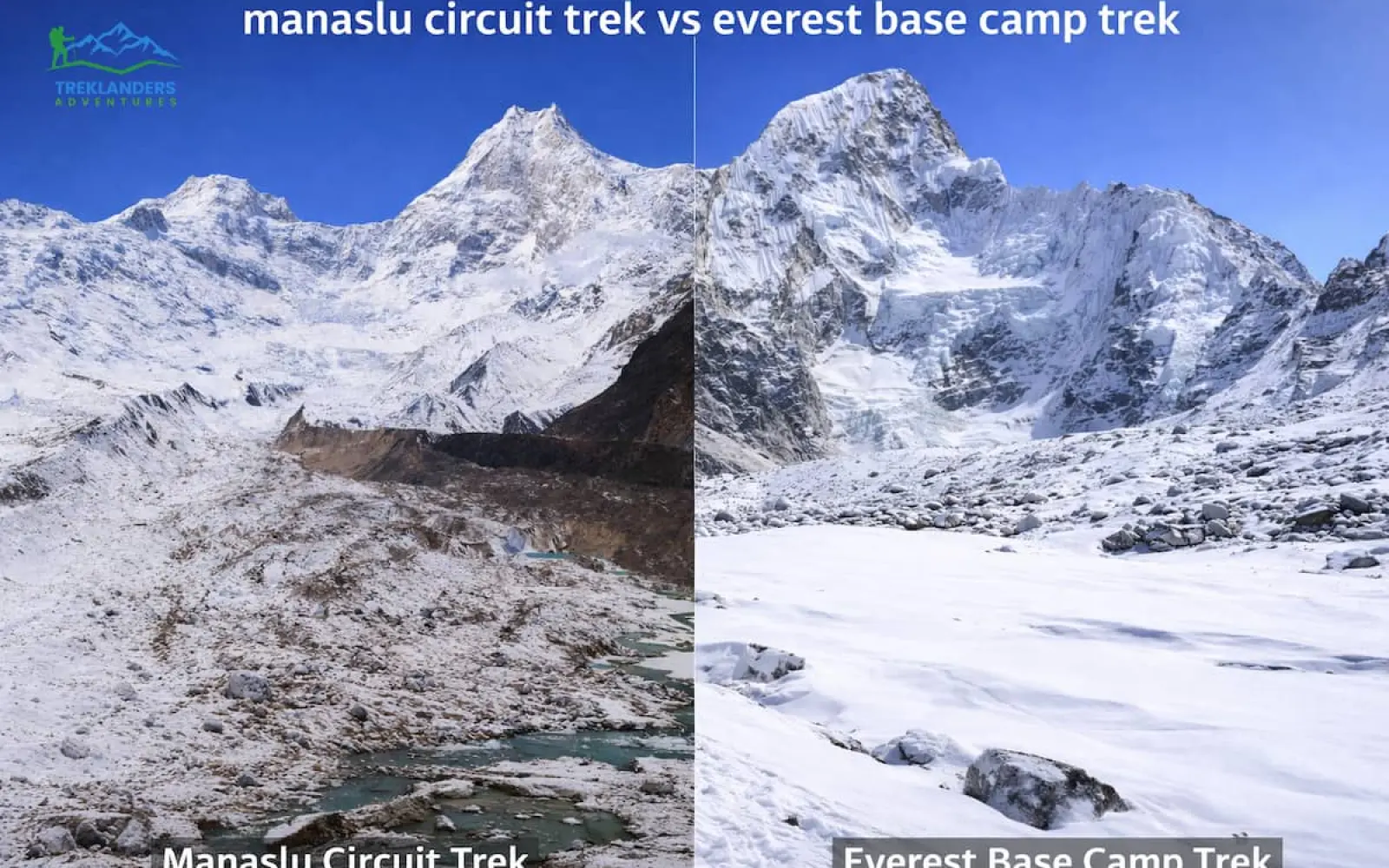
Manaslu Circuit Trek vs Everest Base Camp Trek: Which Is Better for You?
Manaslu Circuit Trek vs Everest Base Camp Trek: Which Is Better for You?
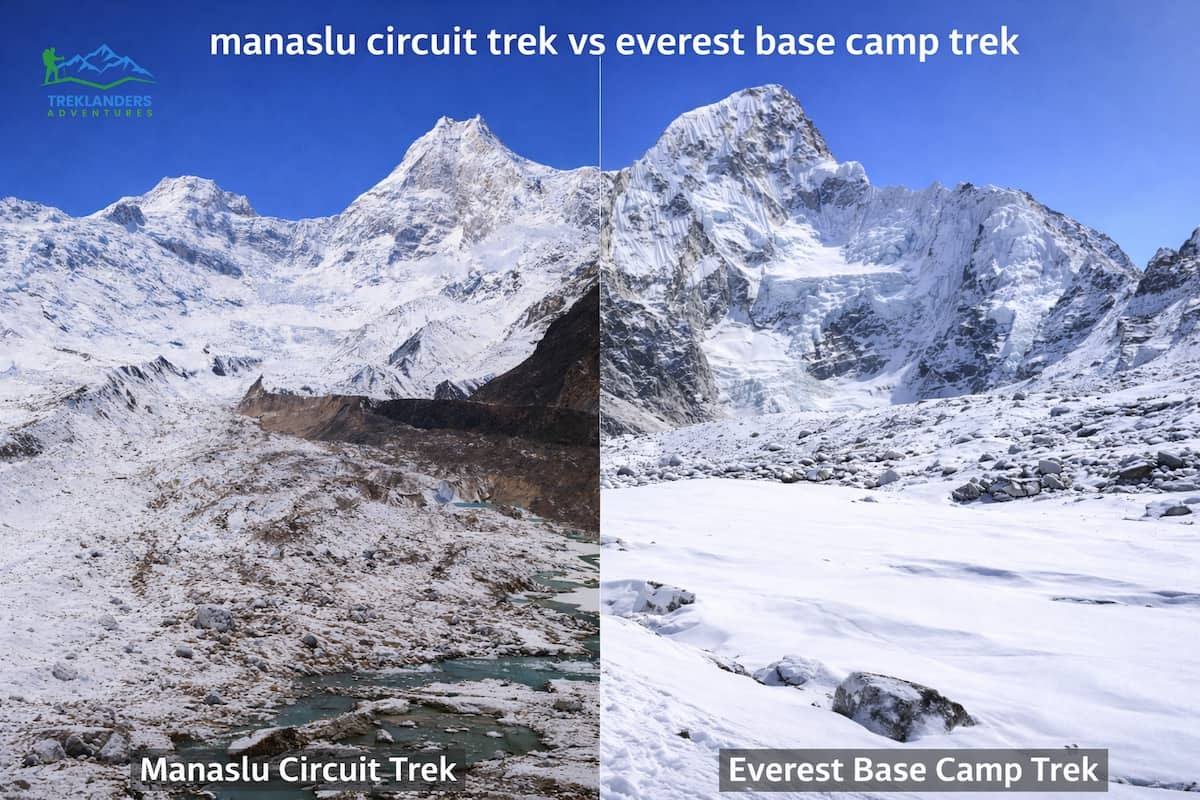
The Manaslu Circuit Trek moves around Mount Manaslu, passing remote villages and dense forests. EBC trails go through Namche Bazaar and Tengboche Monastery - famous spots with easy access. People still flock to Everest Base Camp every year because it's visible from so many points. That view changes everything when you stand on the ridge near Cho Oyu.
Everest Base Camp has reliable teahouses and clear paths for comfort. Travellers can rest at night and eat hot meals without stress. The base camp path is well-marked and familiar to most trekkers. Still, spring and autumn bring huge crowds that make silence hard to come by. You'll feel pressure from other hikers trying to reach the summit before sunset.
Larkya La Pass sits above 5,100 meters - a steep climb with thin air. Crossing it tests endurance more than anything else. The Manaslu Circuit doesn't have fancy shops or regular service stops. Few people travel this route during peak months. This peace isn't just quiet, it feels real, untouched by noise or schedules. You walk alone sometimes, not knowing if someone else will see you until days later.
Manaslu is often seen as harder, though at least in theory, that might not hold up under real-world conditions. The trail stretches farther, climbs higher, and stays off the beaten path. There's a pause here: you'll need permits and usually a local guide it makes logistics messy.
Everest Base Camp buzzes with people; daily, dozens of trekkers move through the same spots. Lodges snap up fast. The thing is, Manaslu doesn't see much traffic. You could walk six hours straight without spotting another soul.
You're deciding based on how you want to feel. For steady company and clean paths? Go to Everest Base Camp. Want solitude and steep climbs in a wilder place? Try Manaslu Circuit Trek instead.
Quick Comparison Table
Manaslu Circuit Trek vs Everest Base Camp Trek
Feature
Manaslu Circuit Trek
Everest Base Camp Trek
Difficulty
Harder, longer days, remote terrain
Moderate to hard, well-paced trail
Max Altitude
5,160 m at Larkya La Pass
5,364 m at Everest Base Camp
Crowd Level
Low, quiet trails
High, busy in peak season
Trail Condition
Less developed, rugged
Well-marked and maintained
Accommodation
Basic teahouses
Wide range of teahouses and lodges
Permits
Restricted area, guide required
Easier permits, no guide required
Accessibility
Long drive from Kathmandu
Flight to Lukla from Kathmandu
Scenery
Remote villages, diverse landscapes
Iconic Himalayan views, famous peaks
Best For
Adventure, solitude
First-time high-altitude trekkers
Overall Experience
Quiet, raw, less commercial
Social, popular, well-supported
Difficulty: Which Trek Is Harder
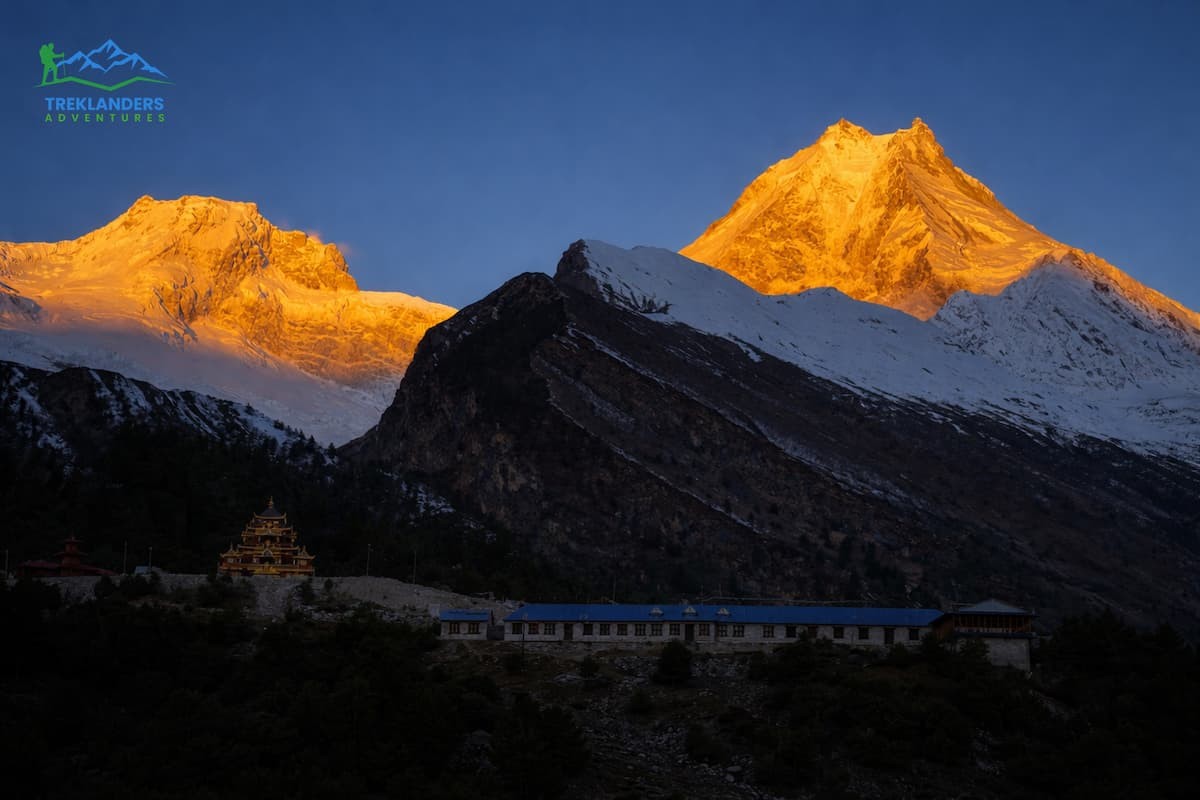
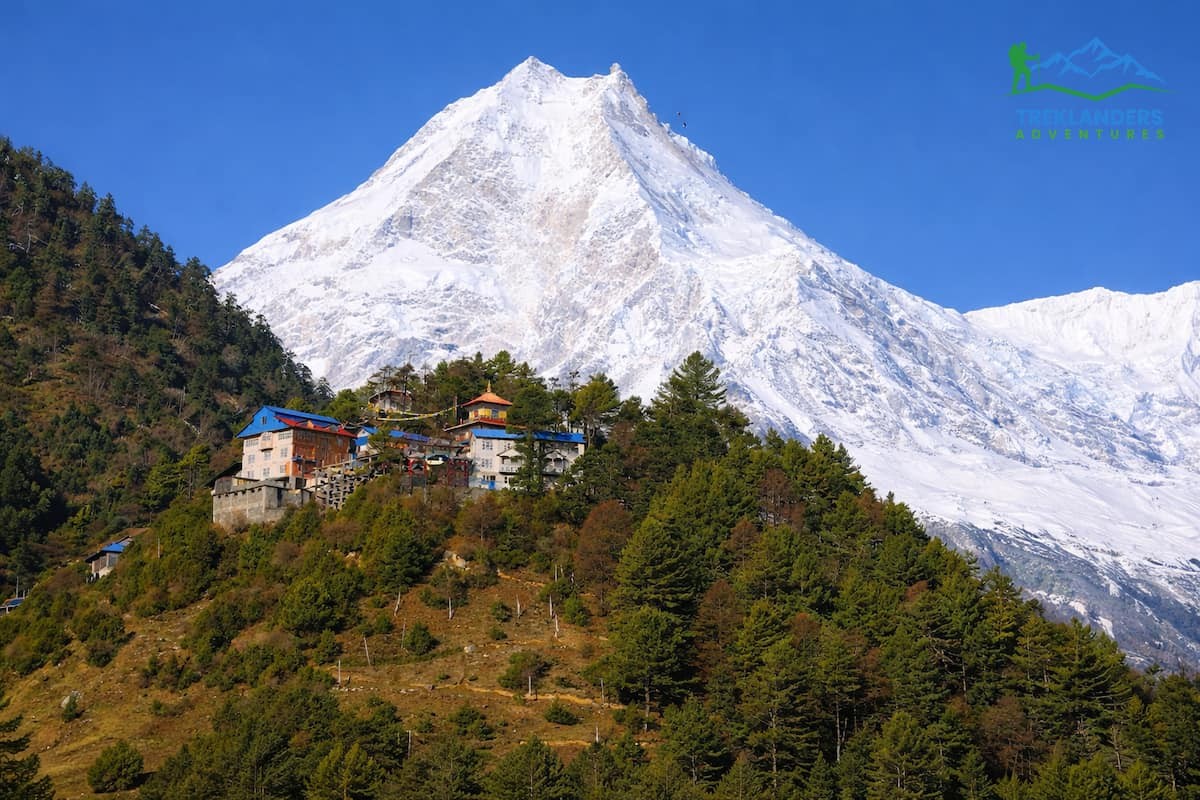
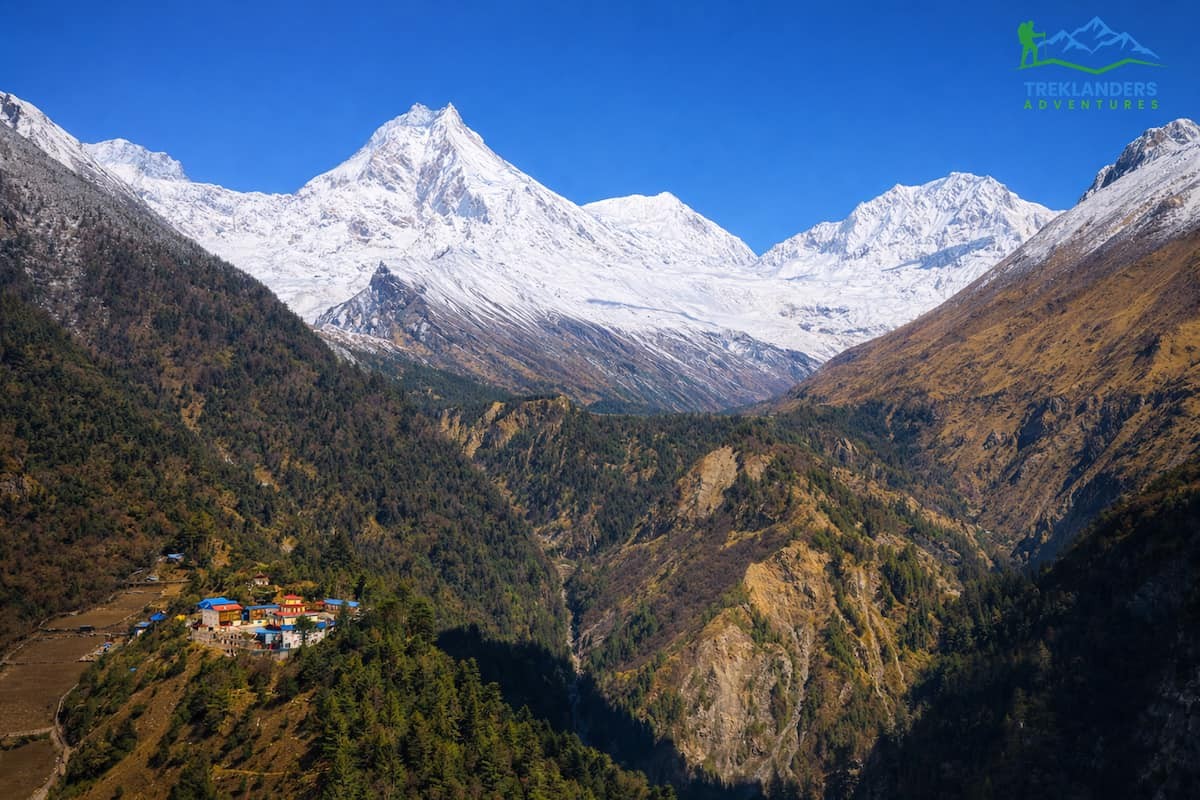
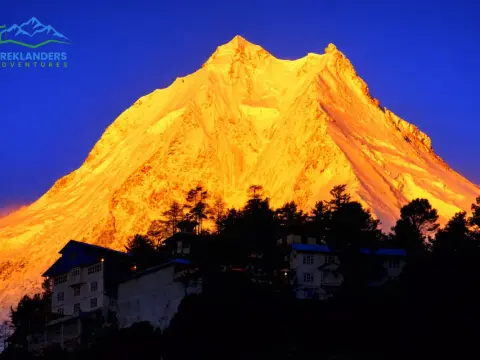
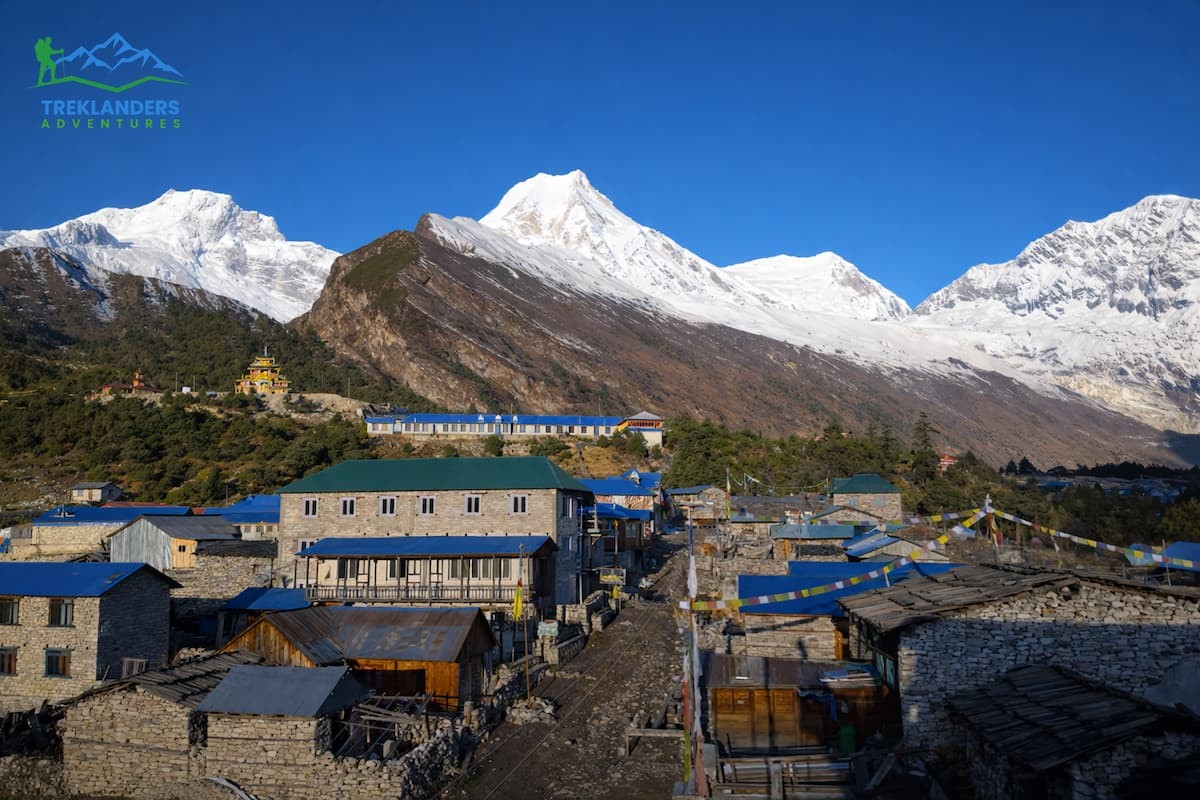
Mt. Manaslu seen from Lho Gaun during the Manaslu Circuit Trek
When individuals compare the Manaslu Circuit Trek to the Everest Base Camp Trek, both routes require a high level of cardiovascular capacity and psychological concentration - but the Manaslu route presents a greater challenge for most people who walk those trails.
There is a primary difference in the surface of the ground and the distance from infrastructure. On the Manaslu Circuit Trek, travellers move over rocks that are not flat for many consecutive days. In certain areas, the path is narrow with drops on one side. By crossing slopes where stones often fall, trekkers encounter hazards. With long bridges made of wire, the route remains in a natural state. You must observe your surroundings and control your speed. To provide a comparison, the Everest Base Camp route has a stable structure. On this path, the ground is broad. As you climb steep slopes, the direction remains obvious.
In both locations, the height above sea level is a significant factor. For the Everest Base Camp trek, the peak height is 5,364 meters. At the Larkya La Pass on the Manaslu route, the height is approximately 5,160 meters. If the figures are nearly equal, the physical sensation is not the same. On the Everest trek, the process of the body adapting to low oxygen follows a specific plan. When you stay for multiple nights in Namche Bazaar, your physiology changes. Due to the less steady climb on the Manaslu Circuit, the body adapts with more difficulty. In remote zones, the number of buildings for shelter is low - this creates a state where the body experiences high levels of strain.
And the number of hours spent walking each day changes the difficulty level. On the Manaslu Circuit route, the time spent moving is frequently more extensive. It is common to walk for 8 hours on surfaces that require significant effort. Between the small settlements, the physical gap is large. To contrast this, the Everest Base Camp walking schedule is more consistent. You walk for 6 hours with frequent opportunities to pause. Because there are many places to sit, recovery is easier.
By looking at the administrative requirements, there is another level of complexity. For the Manaslu Circuit Trek, the government classifies the area as restricted.
Crowds: How Different Are the Two Trails
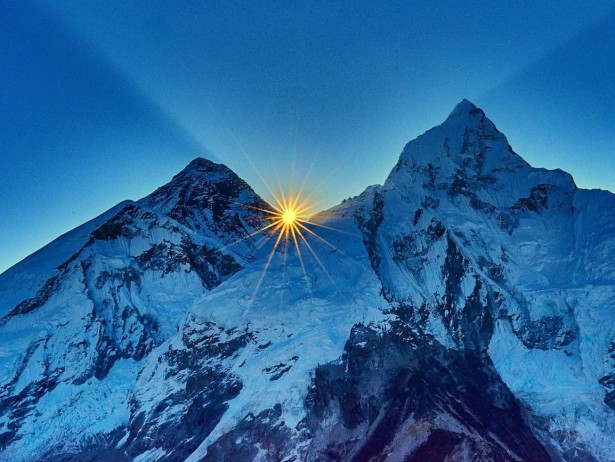
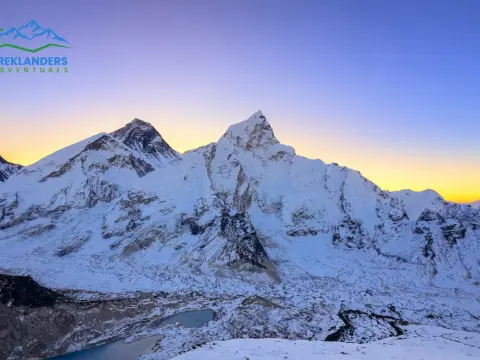
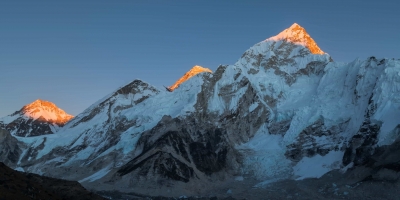
Fantastic view of the Everest mountain range
The Manaslu Circuit Trek starts with silence. Not a single sound breaks the morning stillness. You move through valleys untouched by foot traffic.
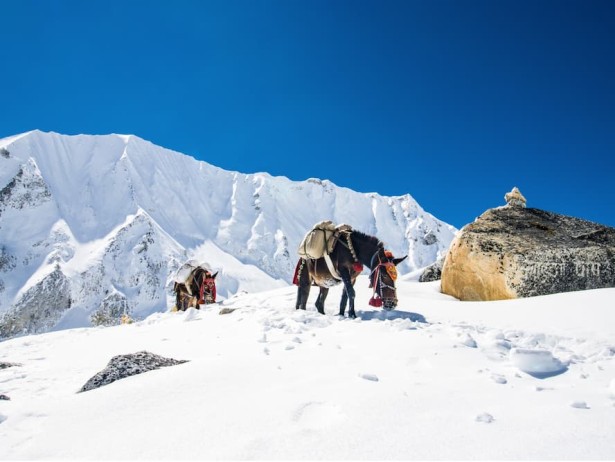
Everest Base Camp thrives on numbers. Spring and fall bring over five thousand trekkers daily. Namche Bazaar swells into chaos. Lukla becomes a rush zone where cars and people collide. Porters carry loads as guides shout orders. Mules follow behind, their bells clanging in rhythm.
Teahouses there open early but close fast during peak days. Late arrivals find rooms already booked. Dinners happen loudly, laughter spills outside. People come from India, Germany, Japan, the USA, the UK, and Australia - colours blend into one messy mosaic. Conversation flows freely, but noise rises after dark.
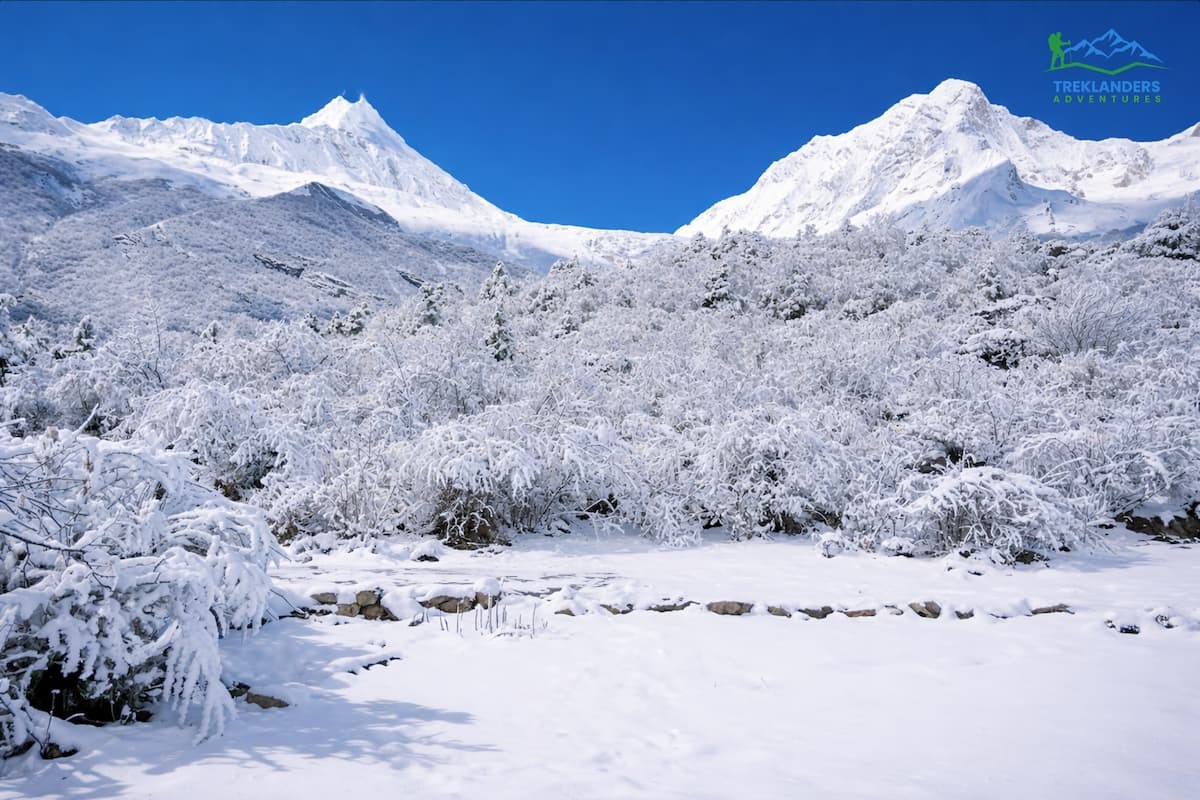
Manaslu Circuit Trek in winter
Manaslu Circuit Trek moves differently. It breathes slowly. Trails stretch empty for miles before another person appears. Villages stay small, unbothered by tourists. Rooms are modest and quiet. You don't hear footsteps until they're near you, then you know you've found peace.
Access and regulation explain the difference. Manaslu's restrictions mean that only a few people go in, and they must follow strict rules; special permits and guides are required. The trail tends to stay quiet, more isolated than anywhere else. You don't see crowds. Just the wind through trees and distant villages. That makes it feel wilder, rawer.
Everest Base Camp Trek flips that dynamic. It opens wide - easy to get there with Lukla. Most trekkers show up every day. You're surrounded by others going ahead together. Lines stretch across passes, shared goals keeping things lively.
You probably want company if you value daily talk and energy. But if solitude appeals more, mainly during morning hikes where silence hangs thick, Manaslu Circuit Trek wins out. Fewer people travel there. More peace settles in after dusk.
Scenery and Landscape
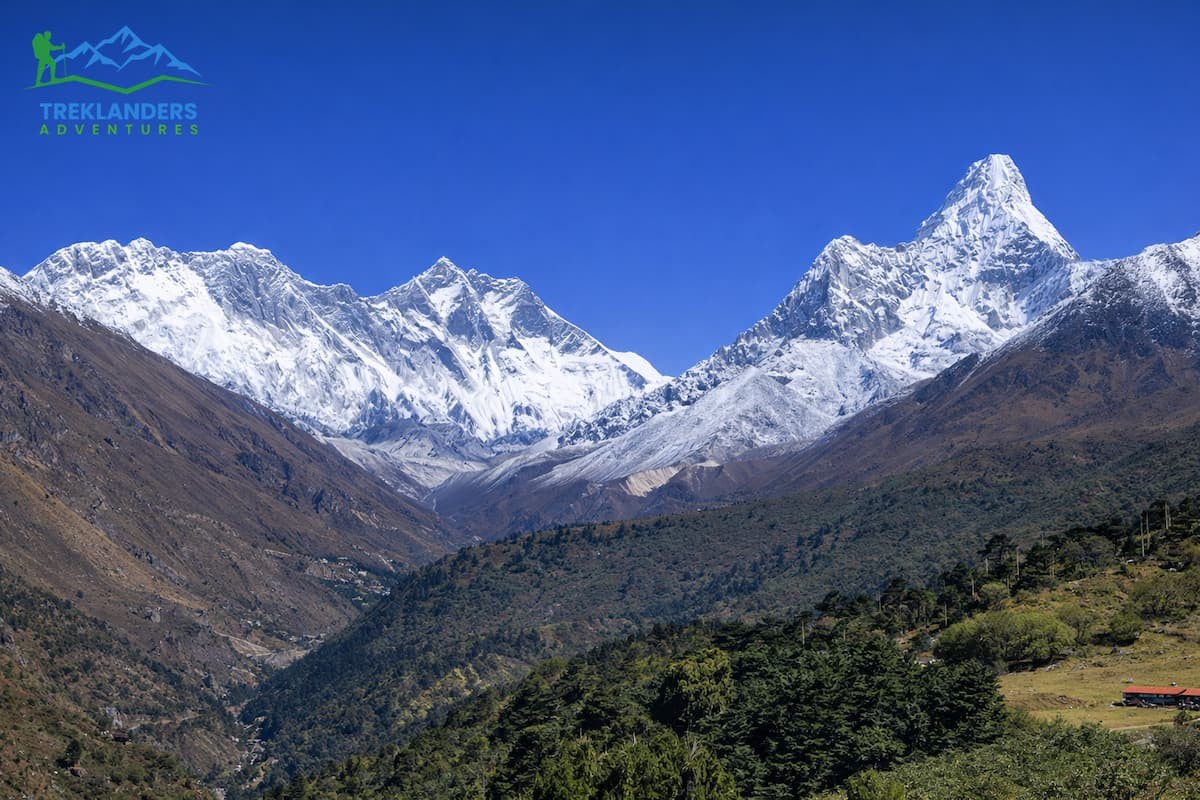
Panoramic view of the Everest range seen from Tengboche during the Everest Base Camp trek
If you're chasing alpine grandeur, the Everest Base Camp Trek route delivers fast. You jump into open highlands almost immediately. Pine woods give way to vast valleys after Sagarmatha National Park. Namche Bazaar hides in natural bowl shapes, backed by towering peaks. Higher up, trees fade. Stones take over. It's raw, exposed terrain.
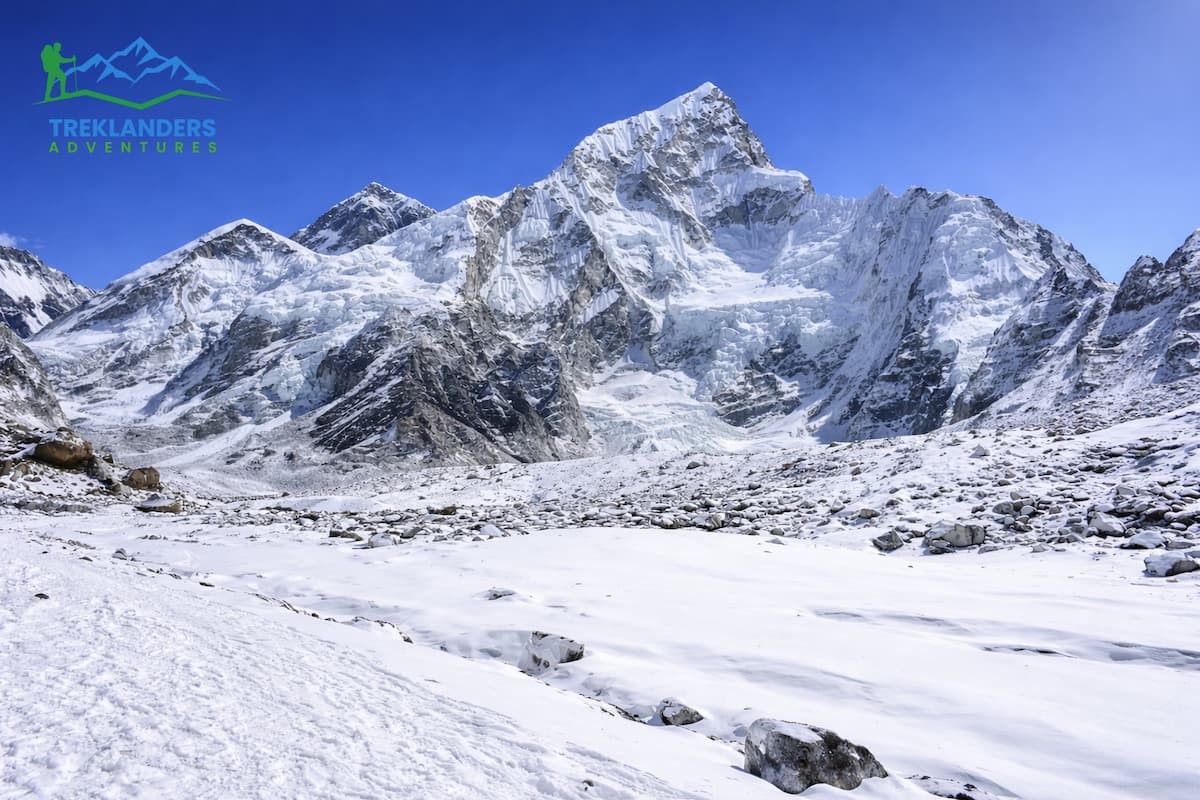
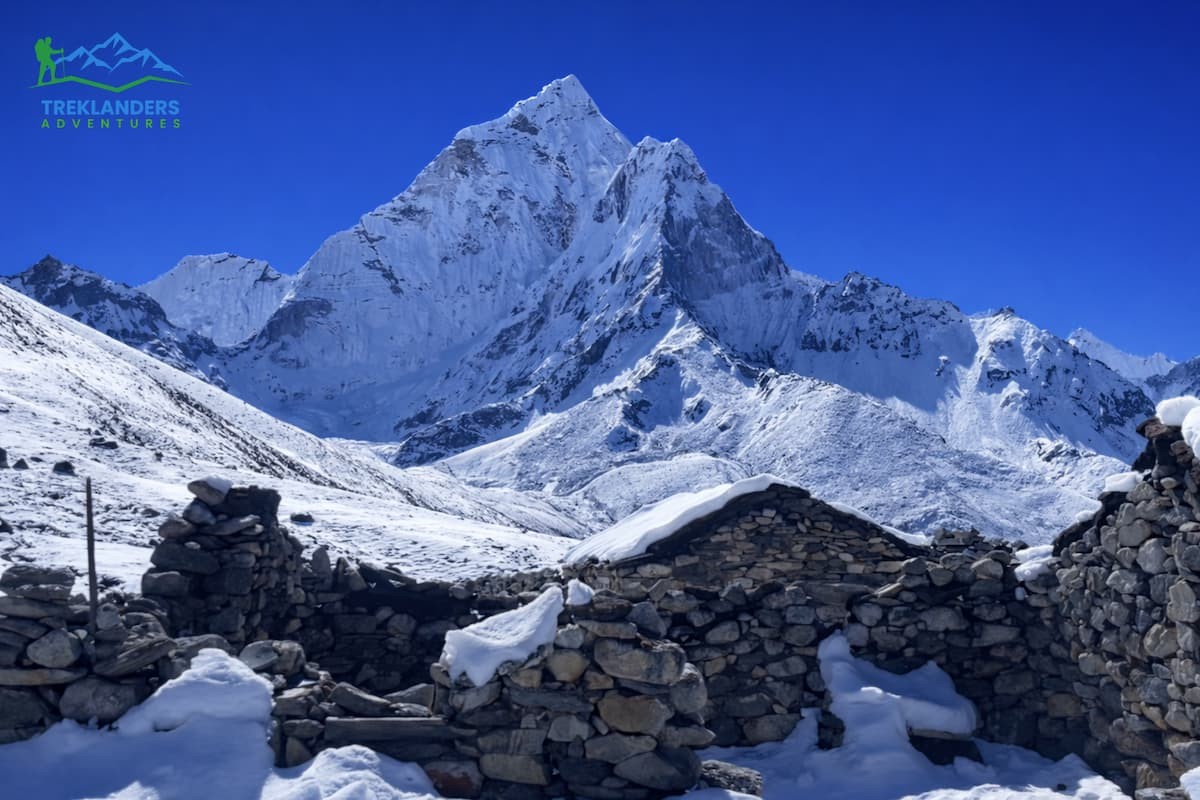
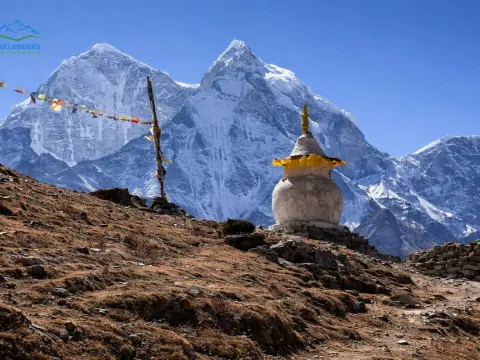
Standing at Tengboche Monastery, Ama Dablam stands tall, often photographed for a reason. Glaciers stretch across ridges near base camp. Ice and rock shape the path. You walk right beside the Khumbu Glacier, with Everest, Lhotse, and Nuptse rising sharply behind. Views don't shift much - they stay bold and predictable.
Manaslu starts slow with green hills and farmland rolling down slopes. The Budhi Gandaki River cuts through tight passes. Forests grow thick early on. Waterfalls splash along shaded banks. Bamboo sways gently where the air is warm and moist. That contrast hits hard when compared to Everest's sharp edges.
Stunning view of Mt. Manaslu during the Manaslu Circuit Trek
At high elevations, forests vanish. Alpine meadows take over. Tibetan traditions linger in scattered homes. Mount Manaslu appears quietly, not sharply like Everest. It builds up - slowly, deliberately.
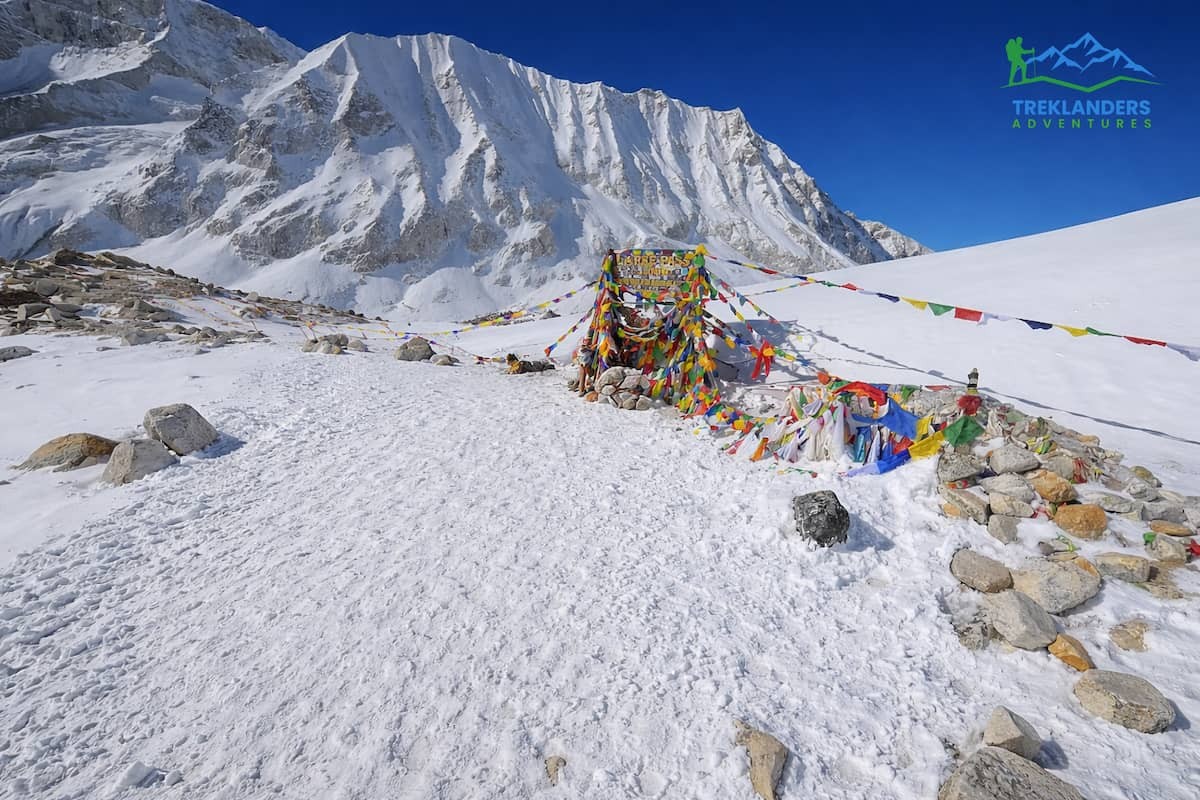
Crossing Larkya La Pass feels wild. Snow caps stretch far across the valley. Glaciers hang beneath steep ridges. The trail runs open, empty of signs or wires. Only wind moves through rock and stone.
Distance here's not measured by distance - it is felt in silence. Few roads cut through valleys now. No loud engines or tourists mark the path. In contrast, Everest Base Camp trails hum with life, with huts and noise.
You can't miss Everest's peak if you stand near its base. But Manaslu Circuit Trek shows itself piece by piece - one slope, one turn at a time. That makes the journey richer than any single view ever could be.
Culture
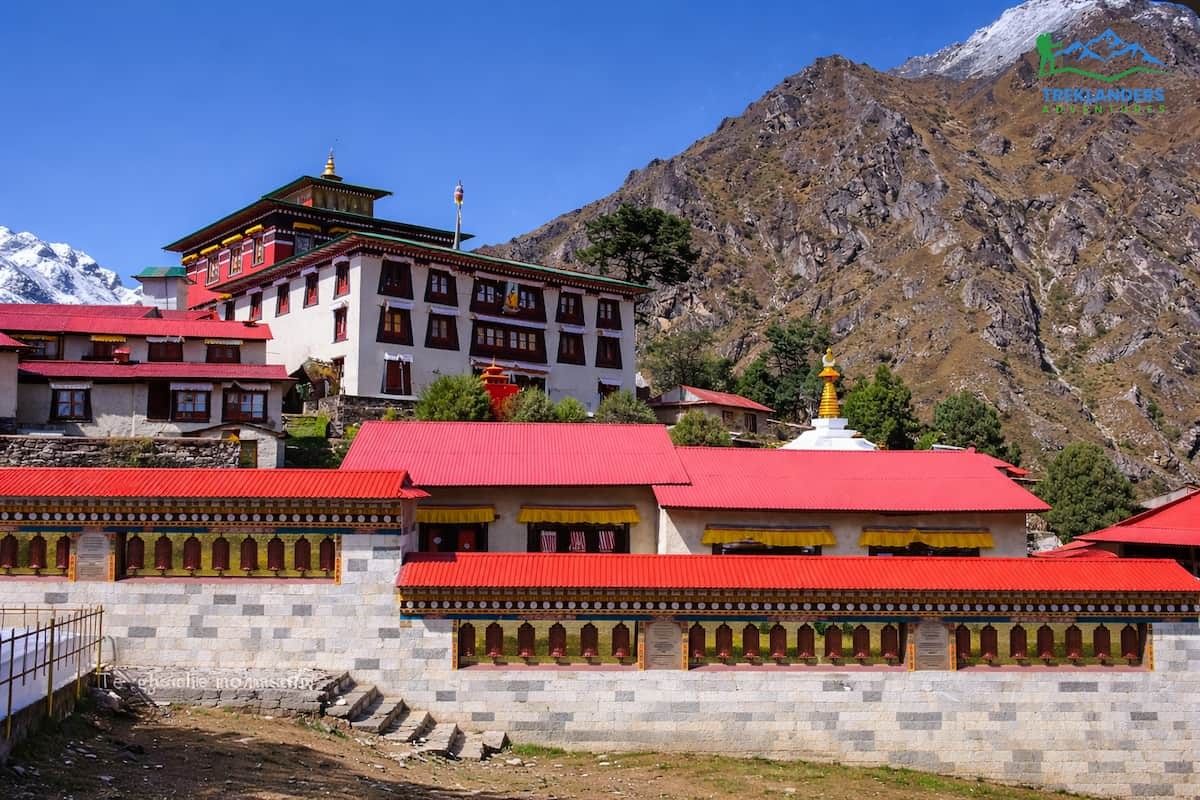
Tengboche Monastery- Everest Base Camp Trek
Culture doesn't just show up - it breathes in every step on the Everest Base Camp Trek and the Manaslu Circuit Trek. You feel it in the village layout, how people greet strangers, and what stays unchanged after years of tourists passing through. There's a quiet difference in rhythm between the two paths.
On Everest, Sherpas run things. Their families have climbed these slopes for generations. Namche Bazaar isn't just a town. It pulses with activity, bakeries open early, gear shops stack tents, and internet cafes buzz with travellers. You see tradition side-by-side with modern trade. That mix? It didn't happen overnight.
Buddhism lives loud here. Mani walls stretch across ridgelines, chortens glow under sunbeams, and prayer flags flutter in gusts. At Tengboche Monastery, monks chant during morning rites and welcome guests with warm smiles. Some speak English easily. You can ask about rituals, watch offerings go into stone cups, and walk among prayer wheels without being told you're not supposed to touch them.
You get exposed to real life - but it's changed over time. Hotels now serve hot tea instead of yak butter soup because visitors prefer it. Food menus list options they'll accept. Lodging keeps the price steady, so trekkers don't drop out halfway.
In Manaslu, silence speaks louder than noise. Villages stay tucked away, fewer cars, no signs saying "Welcome." Architecture holds onto old styles: stone houses with sloping roofs, alleys that wind tight like fingers around rock faces. Clothing remains bold reds and deep indigos.
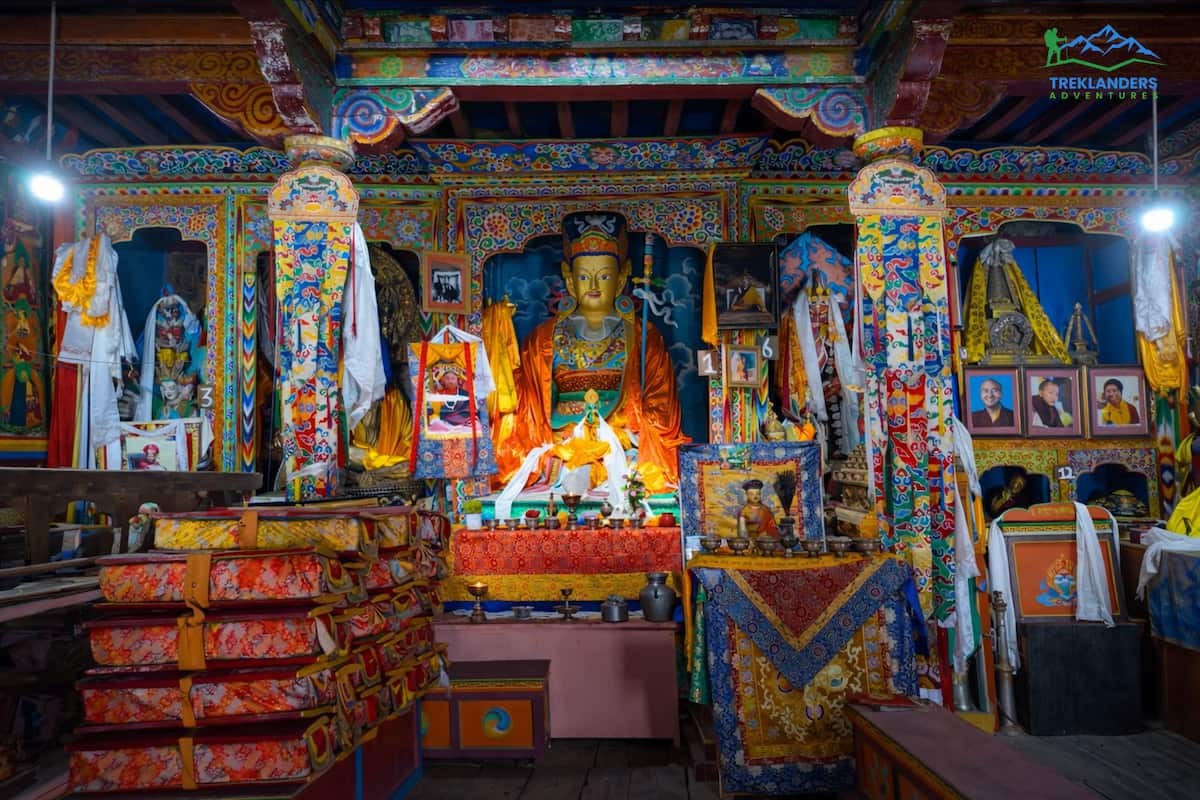
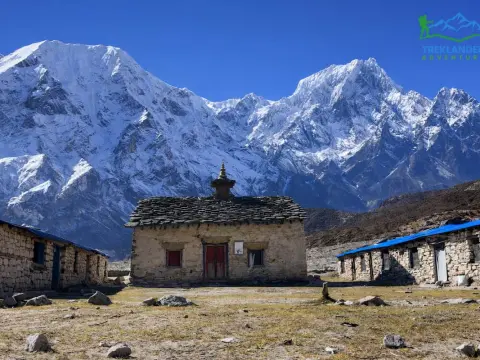
Buddhist monastery during the Manaslu Circuit Trek
The monasteries in Manaslu don't draw crowds like those on Everest. They're smaller, tucked into valleys, with fewer tourists passing through. People go there quietly - watching prayers at dawn, seeing monks walk barefoot across stone paths. It's not about being seen; it's about living with routine.
Most locals don't speak English well. You'll need a guide to explain what a ritual means. A handshake might mean nothing unless the guide helps translate gestures and sounds. That gap makes conversation slow - but it also keeps things honest, untouched by travel agencies.
You can't just wander into Manaslu Circuit Trek alone. A permit is required. You must hike with a licensed team, following strict routes through mountain passes. These rules keep the valley safe for residents and stop outside interests from pushing culture aside.
Festivals still happen in both places. On Everest Base Camp, they coincide with high season peaks - people come to celebrate during snow-free months. In Manaslu, events are rooted in village life: masked dances, offerings to spirits. Joining one demands timing and care.
The Everest Base Camp route lets you talk easily to porters or shopkeepers - quick chats over tea count as a connection. But if you seek real silence, deeper roots in ancient beliefs, the Manaslu path offers stillness with meaning.
Accommodation and Facilities
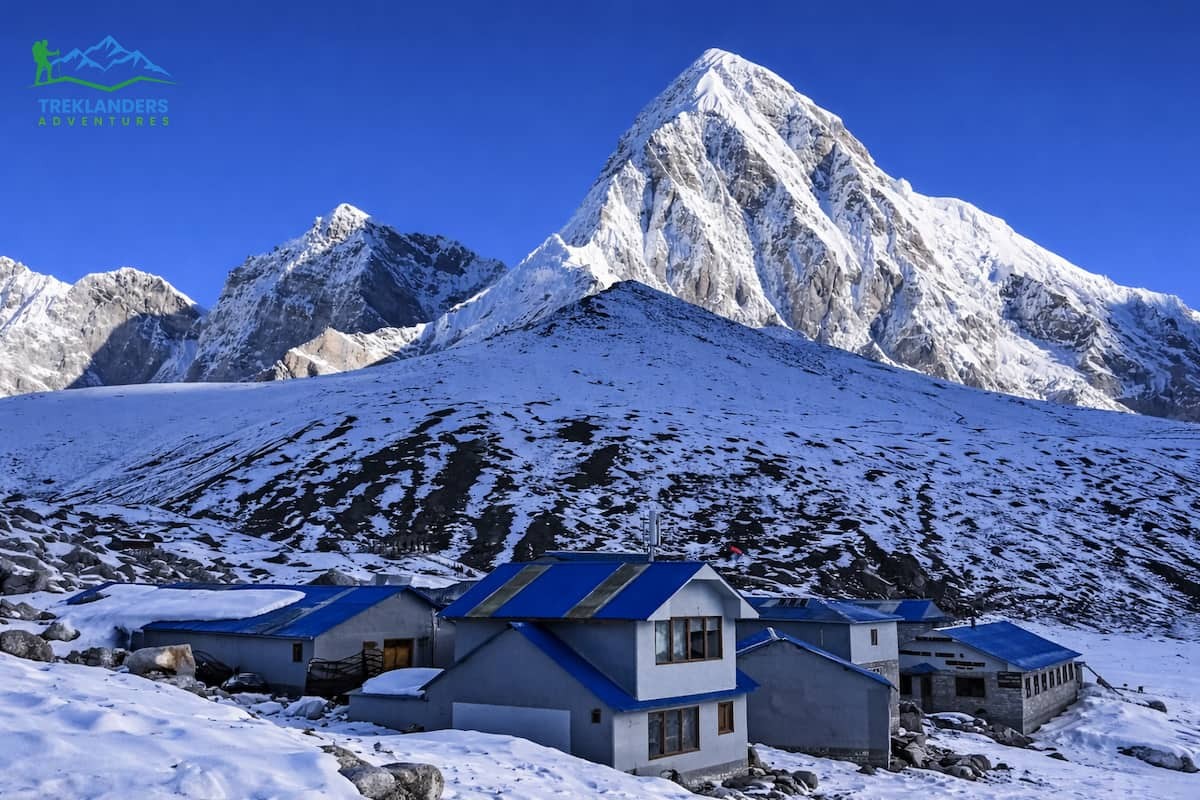
Accommodation at Gorakshep – Everest Base Camp Trek
One thing stands out right away - places to stay and what they offer are nothing alike on the Everest Base Camp Trek versus the Manaslu Circuit Trek. Comfort shifts dramatically depending on which path you take. Planning changes, too, shaped by where you sleep and eat each day. Even how your hours unfold depends heavily on these setups.
Travellers along the Everest Base Camp trail stay in many different teahouses and guest spots. Places such as Namche Bazaar and Lukla come with strong services nearby. Twin beds fill most rooms - simple yet cozy - with extra covers provided; private toilets show up now and then. As elevation climbs, lodging strips down a bit, though it never fails when needed.
Breakfast, lunch, and dinner choices stretch far beyond basics. Dal bhat sits beside noodles, while pasta shows up next to steaming bowls of soup. Bakeries sneak into the mountains too, offering sweet bites where you least expect them. Fresh coffee wakes some mornings, paired with cakes or warm showers if luck leans your way.
Power outlets wait quietly in rooms, ready to revive dead phones. Internet flickers through Wi-Fi signals, stronger near windows than walls. Phone service climbs peaks but fades between ridges. Pay a little more for these comforts - they rarely come free. Walking feels less demanding thanks to what's been built. Carrying less becomes possible because help shows up now and then where you walk.
Help comes fast if someone gets sick. First aid stations sit at busy spots along the route. When things turn serious, a helicopter can whisk them out without delay. High places bring risks - having exits ready makes a difference.
Accommodation at Shyala – Manaslu Circuit Trek
The Manaslu Circuit Trek has a few key things. Facilities stay small and basic. Teahouses show up, but they're cramped and underdeveloped. Rooms offer wooden beds with thin blankets. Heat comes only from weak stoves. Dining relies on one fire source in cold spots. In far-off zones, choices vanish fast - planning your route is non-negotiable.
Dal bhat dominates daily eating. Noodles and soup round out the menu. Options shrink above 4,000 meters. What's available depends on trucks passing through. You can't count on fresh ingredients. Meals shift when supply changes. Adjusting times keeps you safe.
Power fails often. Charging devices go dead regularly. The Internet shows up rarely. No signal means no emails or calls. Still, silence helps focus the mind. A backup power bank stays key.
Healthcare services are struggling to keep up with the growing need for them. Demand is outpacing the available resources and capacity in the system. Fewer clinics exist nearby. Evacuation takes days if an emergency hits. Guides help track danger zones and prepare routes ahead.
Would you prefer comfort and food variety? Then pick Everest Base Camp Trek instead. But if you embrace simplicity, isolation, and minimal access to modern services, Manaslu offers something real - a quiet trail where life moves slowly and quietly without noise or luxury.
For the Everest Base Camp trek, the permit system is simple. You need two main permits. The first is the Sagarmatha National Park entry permit, which allows access to Sagarmatha National Park. The second is the Khumbu Pasang Lhamu Rural Municipality permit. In some cases, trekkers also carry a TIMS card, though it is not always required now.
You can obtain these permits in Kathmandu or at entry points along the trail. The process is quick. You do not need to book far in advance. You can trek independently without a guide. This gives you full control over your itinerary. You can adjust your pace, choose your stops, and travel solo if you have experience.
Access to the Everest region is also straightforward. Most trekkers take a flight from Kathmandu to Lukla Airport. This short flight reduces travel time and brings you directly to the trailhead. There are also overland alternatives, but flights remain the most common option.
Arguably, Manaslu's rules feel heavier than Everest's. The area is off-limits without a permit. It takes a registered trekker to get one. You can't apply yourself. Guides are required, and groups must stay two or more. The trail links into Annapurna after Larkya La, so both permits are needed. That means extra paperwork and fees.
Costs go up in peak seasons. You carry all docs at every checkpoint. Planning happens months ahead through agencies - no last-minute changes. The drive from Kathmandu is long and bumpy, mostly on mountain roads. It stretches travel hours past flying to Lukla.
If you want freedom, go to Everest Base Camp trek instead. There, solo trips work, and permits don't lock you down tightly.
Manaslu offers quiet paths and fewer crowds if you're ready for strict limits. Rules keep access low and help protect nature. That balance isn't easy, but some trekkers prefer it over open trails.
Best Season for Both Treks
Close view of Mt. Ama Dablam seen during the Everest Base Camp Trek
Autumn (September to November) is the best overall season for both treks. Skies are clear after the monsoon. Mountain views are sharp and consistent. Temperatures are stable, and rainfall is low. Trails are dry and safer. This is the most popular time for the Everest region, so expect heavy crowds. On the Manaslu Circuit, you still get good conditions but with fewer trekkers. Crossing Larkya La Pass is more reliable in this season.
Spring (March to May) is the second-best season. The weather is warmer, especially at lower elevations. Forests bloom with rhododendrons, which add colour to the landscape. Visibility is good in the mornings, though haze can build in the afternoons. The Everest Base Camp trail becomes busy again during this time. Manaslu remains quieter but sees more trekkers than in other seasons. Snow at higher passes can still be present, but crossings are usually manageable. The best season for the Everest Base Camp Trek and the Manaslu Circuit Trek depends on weather, visibility, and trail conditions. Both treks follow similar seasonal patterns, but Manaslu is more sensitive to weather changes due to its remoteness.
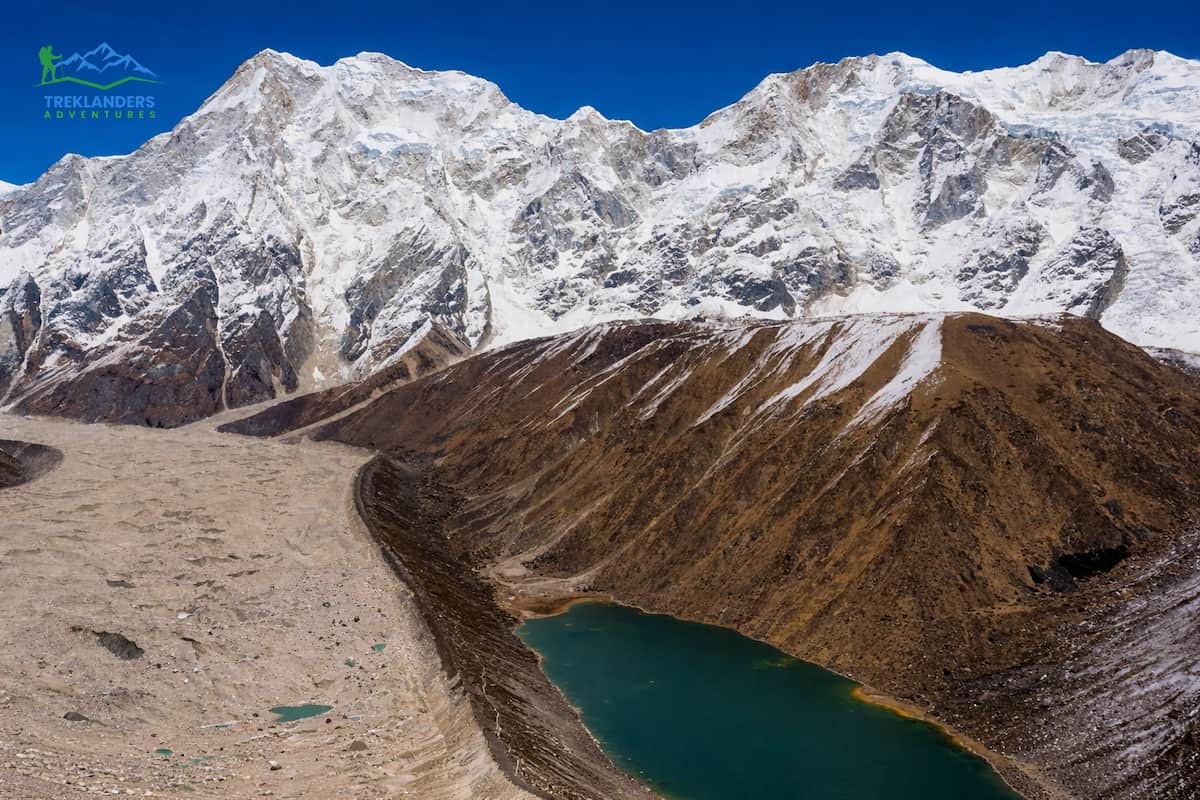
Ponkar Lake – Manaslu Circuit Trek
Winter runs from December to February. It's chilly, and snow falls hard. Nights plunge below zero. Trekking stays open at Everest Base Camp, fewer people, clearer skies when the weather holds. But Manaslu gets rougher compared to Everest Base Camp. Snow covers Larkya La Pass. Trails get cut off. Remote teahouses shut down early. Some areas go silent during this time.
Monsoon stretches from June through August. Rain soaks the lower paths. Ground turns slick and dangerous to walk on, and clouds cover peaks. Lukla flights are delayed regularly. Landslides crash down in the low zones of Manaslu. Leeches hang around wet spots. Rivers swell up fast. Routes lose stability.
Autumn hits with steady skies and calm winds. This season gives good views and safe travel. Spring offers warm days and flowers blossoming along the trails. Winter and monsoon demand serious planning and extra caution, mostly where Manaslu is concerned.
This trek to Everest Base Camp starts tough but rewards persistence. It pushes your legs and breath constantly for over five to seven hours daily.
In the Everest Trek, you must walk on solid trails, get rest stops, and stay in teahouses. But hills come fast; some days, you climb up and down 3,000 feet without pause. Can you really handle that? A good cardio routine with stairs or incline walks makes a difference. Lungs adapt better when trained before going high.
The Manaslu Circuit Trek goes further. Trails twist through forests, cliffs, and open valleys. One pass cross 5,160 meters, no shortcuts there. You carry supplies for days, climb over boulders, and jump across rivers. Your legs need iron strength, and your core must hold steady on wet rocks.
Hiking at elevation helps more than any supplement. Training uphill with a heavy pack teaches real terrain pressure. Stair drills mimic altitude stress faster than flat ground ever could. Running intervals simulate how quickly you might hit a sharp rise mid-hike. Real movement builds the kind of resilience no book can give. Some people skip this - they pay for it later in pain or fatigue.
Mental readiness doesn't just happen; it builds. Manaslu's silence stretches you thin. The trail eats at your mind if you're not ready. Focus stays sharp when your thoughts don't wander. Pacing yourself keeps energy steady, not drained.
Stuff the pack before you go. Walk in boots every day, no shortcuts. Test the load on real hills. Same dirt, same bumps, same effort. That's how muscles learn to carry.
The thing is, Everest Base Camp still fits most folks with regular fitness. Manaslu? You'll push past limits. Strength matters more than comfort. Training hard, moving daily, hiking rocky ground - that's what gets you there safely and without burnout.
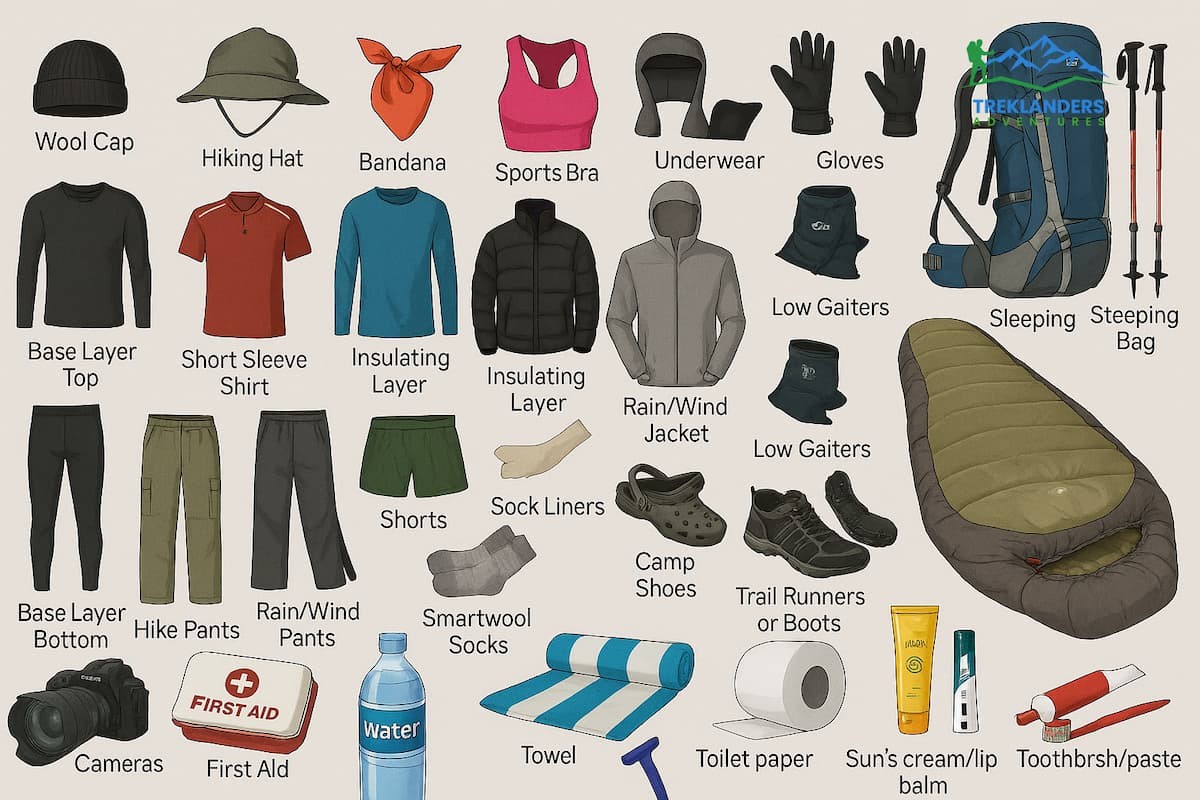
Packing: What You Need on Manaslu vs Everest Base Camp
Packing list for Manaslu Circuit Trek and Everest Base Camp Trek
Both treks require solid trekking gear, but Manaslu demands more self-sufficiency.
Clothing System (Both Trekking)
Use a three-layer system throughout.
Base layer. Merino wool or synthetic. Manages sweat and keeps you dry. No cotton.
Mid-layer. Fleece jacket for trail warmth, down jacket for evenings and high altitude.
Outer shell. Waterproof and windproof Gore-Tex or equivalent.
Autumn daytime temperatures range from 10 to 20°C at lower elevations. Nights at high altitudes drop to minus 10°C. Pack lightweight base layers for warm days and a warm down jacket for evenings.
Sleeping Bag
At 4,460 meters, nights hit -15 to -20 °C in peak season. Your bag is the only thing keeping you warm after Samagaun. Rent one in Kathmandu if you don't bring your own. Check the quality and rating before agreeing. A high-performance down bag with a windproof shell works best. Some trekkers report losing warmth when the fabric breaks down after three days of exposure.
Footwear
Wear boots for at least two weeks before hitting trailheads. New shoes lead to blisters within hours of stepping into terrain. Try them with the actual socks you'll wear each day. This helps spot pressure points early and avoid pain later.
Water Purification
Manaslu has fewer safe water stops than the EBC or Annapurna routes. Always carry tablets, a SteriPen, or a filter bottle instead of relying on taps. Bottled water costs up to $3 per liter and can't be recycled here. Plastic waste adds pollution every time it's dumped in villages.
Medical Kit
Diamox prevents altitude sickness - but only if taken under medical advice before departure. Include ibuprofen, paracetamol, blister plasters, rehydration salts, anti-diarrheal medicine, and antiseptic wipes. A digital pulse oximeter tracks oxygen levels daily above 3,500 meters during climbs. A 20,000 mAh power bank stays charged longer than any other device, and without it, your GPS dies mid-trip when teahouses stop offering charging options.
Cash
No ATMs operate along the trek route once you leave Kathmandu. Teahouses won't accept credit cards at all. Pack enough Nepali rupees to cover meals, tea purchases, and emergency costs for the full journey upfront.
Which Trek Is Right for You
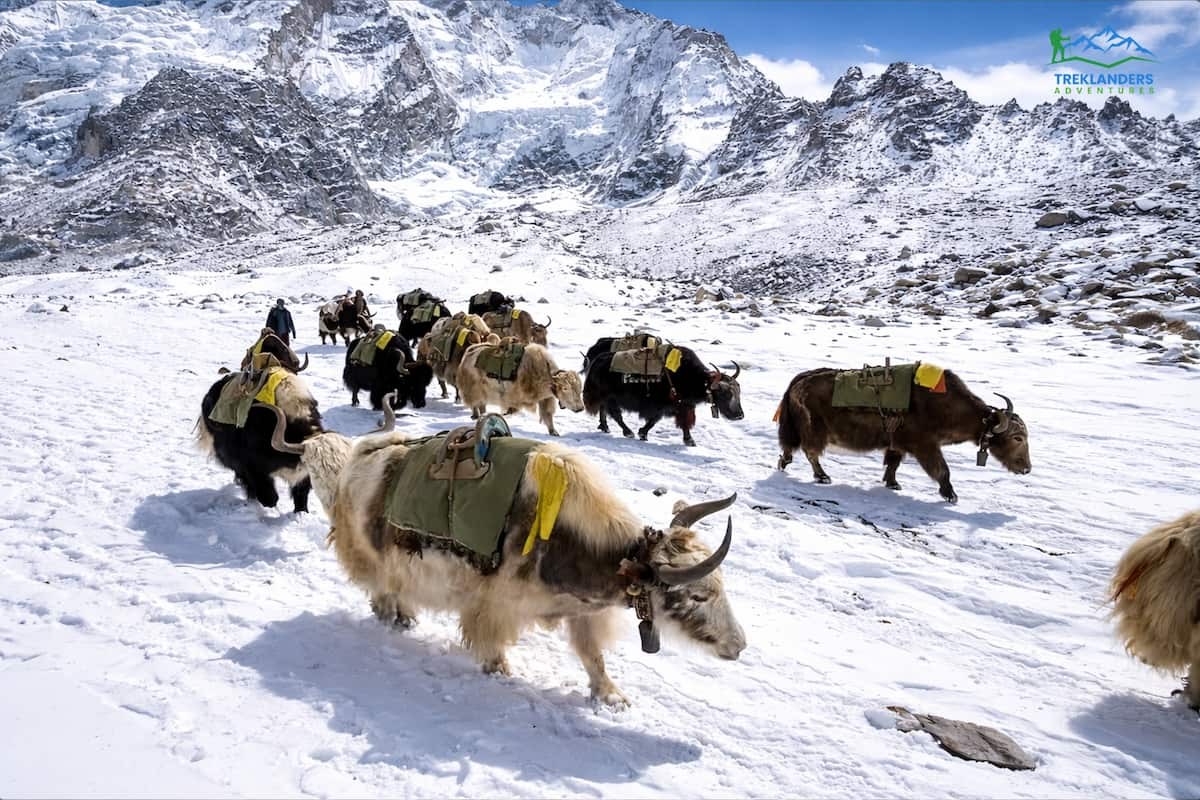
Yak along the Everest Base Camp Trek
Travelling needs decision-making. Between EBC and Manaslu, your preference shapes the journey.
Everest Base Camp Trek tends to work best for beginners. It's organized with clear paths and consistent lodging. Meals vary - local and international fare is available. Phones often stay connected. Help comes when needed. People from many countries join you. That makes the trip lively and social. If you favor stunning mountain vistas, real cultural moments, and ease, EBC delivers a stable option. Summer months bring lots of people, but that also means more chances to bond with others. The route stays predictable despite the heat.
Manaslu pulls harder on experienced travellers. It stretches further with fewer signs and less gear. Each day takes longer than average, pushing stamina to its limit. Crossing Larkya La needs slow climbing and time to adjust at altitude. Villages appear quietly without noise or crowds. Tibetan traditions stand strong here, untouched by tourism pressure. Basic shelters serve the needs, and meals are simple and sparse. Signal access fades fast after certain points. A permit isn't just paperwork; it calls for a guide and set procedures. For those craving silence and raw authenticity over comfort, this path may feel right.
20 Day Manaslu Circuit with Tsum Valley Trek | 20 days
Your body shape and how you move affect what path feels right. If you've got steady fitness and don't mind routine schedules, EBC works better, fewer risks, less strain. But if you're tough-minded, used to silence, and can handle days without contact, Manaslu gives real edge at least in theory.
The season matters too. Beginners with short stays? EBC cuts travel time using Lukla, and landing there means hitting the trail faster. Those chasing endurance go through Manaslu's winding route - long drives, steep climbs - and feel the mountain breathe over days.
You need to ask yourself: Do you want easy shots shared online and friends around? Or quiet moments deep in village life after hard walks? Both show the Everest ranges glowing under the sun or storm. You pick based on whether calm is more important than pushing forward alone.
Conclusion
Larke Pass- Manaslu Circuit Trek
But Manaslu isn't some fantasy trail; it's real dirt, high passes, and actual mountain silence. Everest Base Camp feels safer for beginners. Paths are marked, tents dot the slopes, and help is always close by. Manaslu pulls in seasoned walkers who crave isolation and hard climbs. The route runs through places not seen much since tourists started flocking to the region. Thing is, you've got to carry extra gear - longer days, less sleep, more elevation gains than EBC ever does. You'll need training that stretches over eight to twelve weeks. Treklanders leads both treks with local guides who know the land, handle permits fast, and build schedules smartly so your body adjusts without crashing. Reach out now to book your 2026 trip.