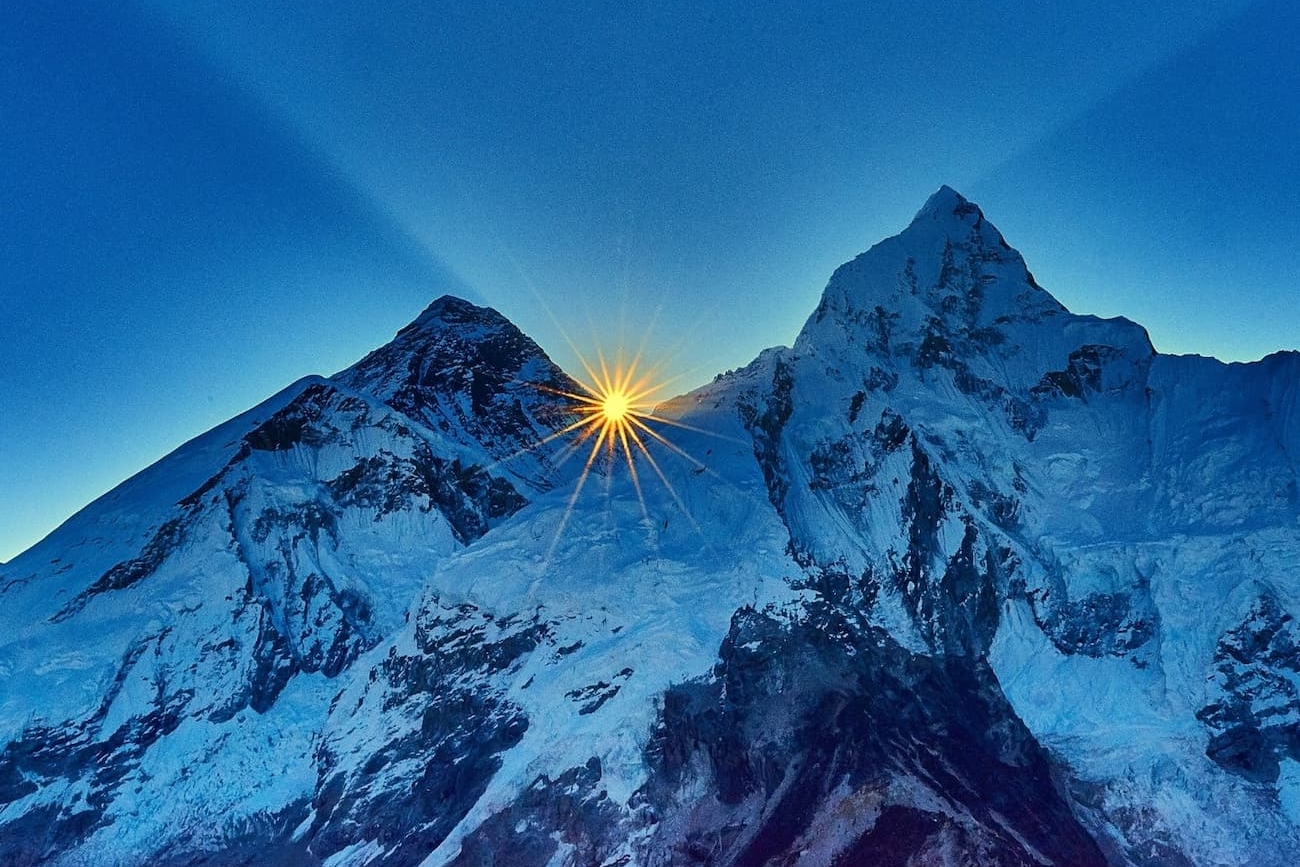
The 12-Day Everest Base Camp Trek is a walking adventure from Kathmandu to the base camp of the world's highest mountain and back. It takes 11 nights, with 2 acclimatisation days specifically meant to help your body adjust to the changes in altitude before you move to higher elevations. This travel plan is perfect for those who wish to make the most of the Everest Base Camp experience while getting back in a relatively short time.
You will begin your journey with a 35-minute flight from Kathmandu to Lukla, a small town known as the gateway to the Khumbu region. Trekkers, after leaving Lukla, will follow the route along the Dudh Koshi River passing through various Sherpa villages, enter Sagarmatha National Park, and finally climb to Namche Bazaar, the biggest trade hub of the Khumbu. Two nights in Namche will give you enough time to get used to the altitude. From Namche, you will be passing through Rhododendron and Pine Forests to reach the beautiful Tengboche Monastery. Later on, you will be ascending to the open and high country around Dingboche.
Spend the second acclimatization day in Dingboche to get ready for the final trek to Lobuche, Gorak Shep, and then to Everest Base Camp. Early next day, you will have to make an effort to Kala Patthar (5643 meters) for the best nearby views of Everest, which you will get during the whole trek. After this, the route will take you back through Pheriche and Pangboche to Namche Bazaar, from where you will walk to Lukla and board a plane to Kathmandu.
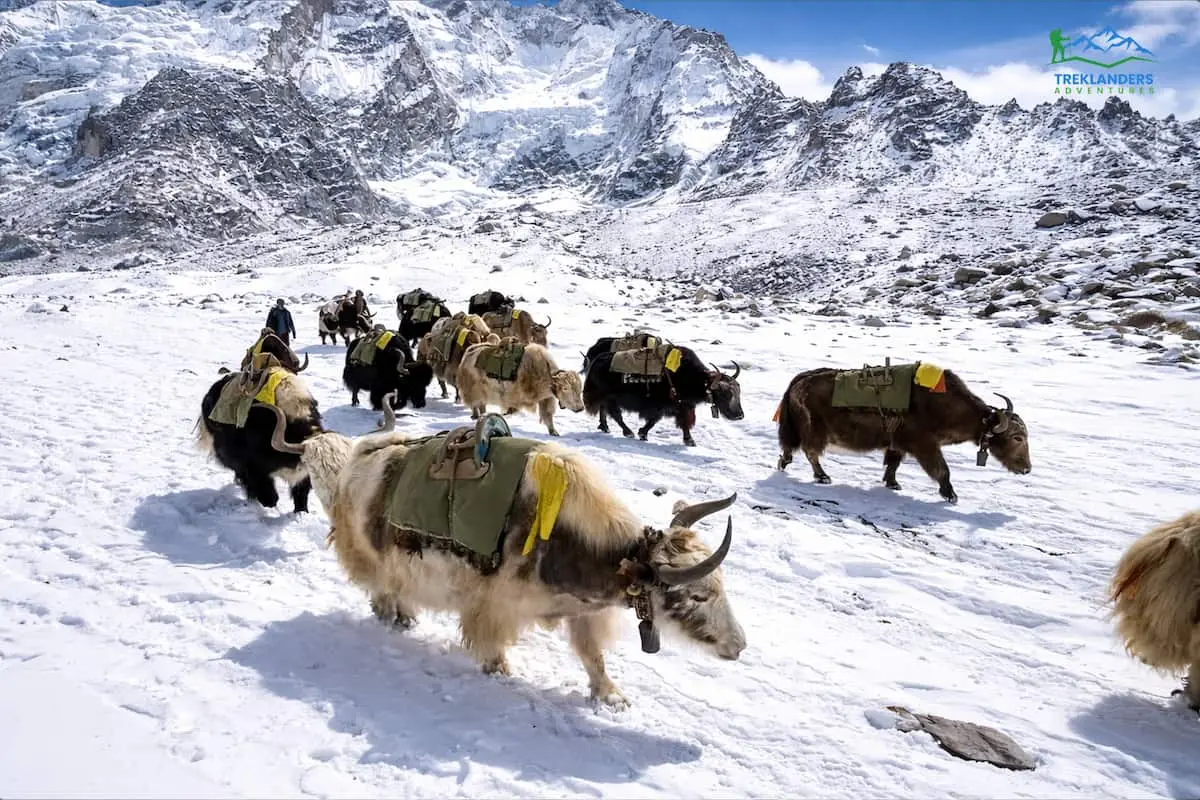
Treklanders Adventures conducts this trek with professional, government-licensed guides and porters trained for the route. Throughout the journey, there are tea house lodges for overnight stays. Each trekking group is assigned one porter for every two trekkers, meaning you only need to carry a daypack. Your guide is responsible for the permits, accommodation, and daily pacing, so you get to enjoy the walk and the stunning scenery around you.
Even when you have limited time but still want to visit Everest Base Camp and see the sun on Everest from Kala Patthar, this itinerary will allow you to be there in 12 days, including the important rest days that help you acclimate to the altitude.
You must have two permits for this route: the Sagarmatha National Park entry permit, which is Monjo's location for checking, and the Khumbu Pasang Lhamu Rural Municipality entry permit, both checked at the same place. Treklanders Adventures organizes those two permits for you before the trek, so besides your passport and a few passport-size photos, you do not need to carry any other paperwork.
Day 01: Fly to Lukla 2,860 m and trek to Phakding 2,610 m-04 hrs.
Day 02: Trek to Namche Bazaar 3,440 m-06 hrs.
Day 03: Rest day in Namche Bazaar for acclimatization with short hike.
Day 04: Trek to Tengboche Monastery 3,867 m-05 hrs.
Day 05: Trek to Dingboche 4,410 m -05 hrs.
Day 06: At Dingboche rest day for acclimatization and short hike.
Day 07: Trek to Lobuche 4,928 m -05 hrs.
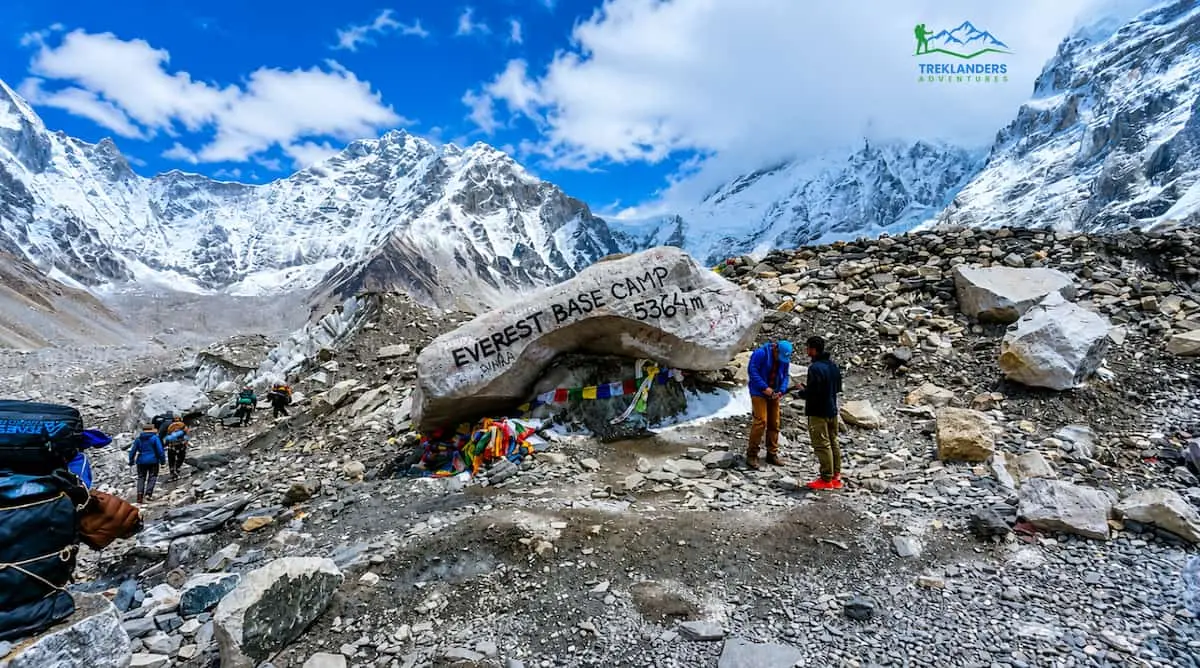
Day 08: Trek to Everest base camp 5,364 m via Gorakshep 5,180 m-06 hrs.
Day 09: Climb to Kalapathar 5,630 m and trek to Pangboche 3,900m-06 hrs.
Day 10: Trek to Namche Bazaar via Tengboche-06 hrs.
Day 11: Trek to Lukla and transfer to a lodge-06 hrs.
Day 12: Fly to Kathmandu and transfer to hotel.
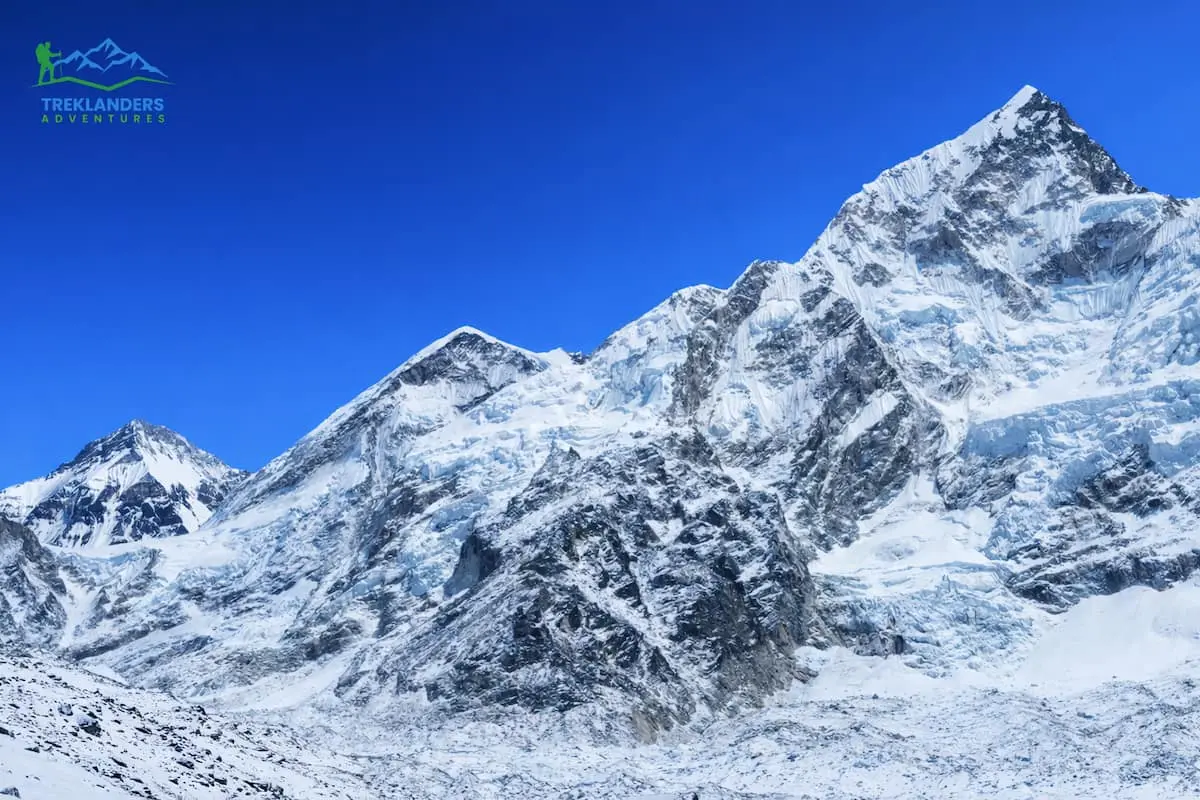
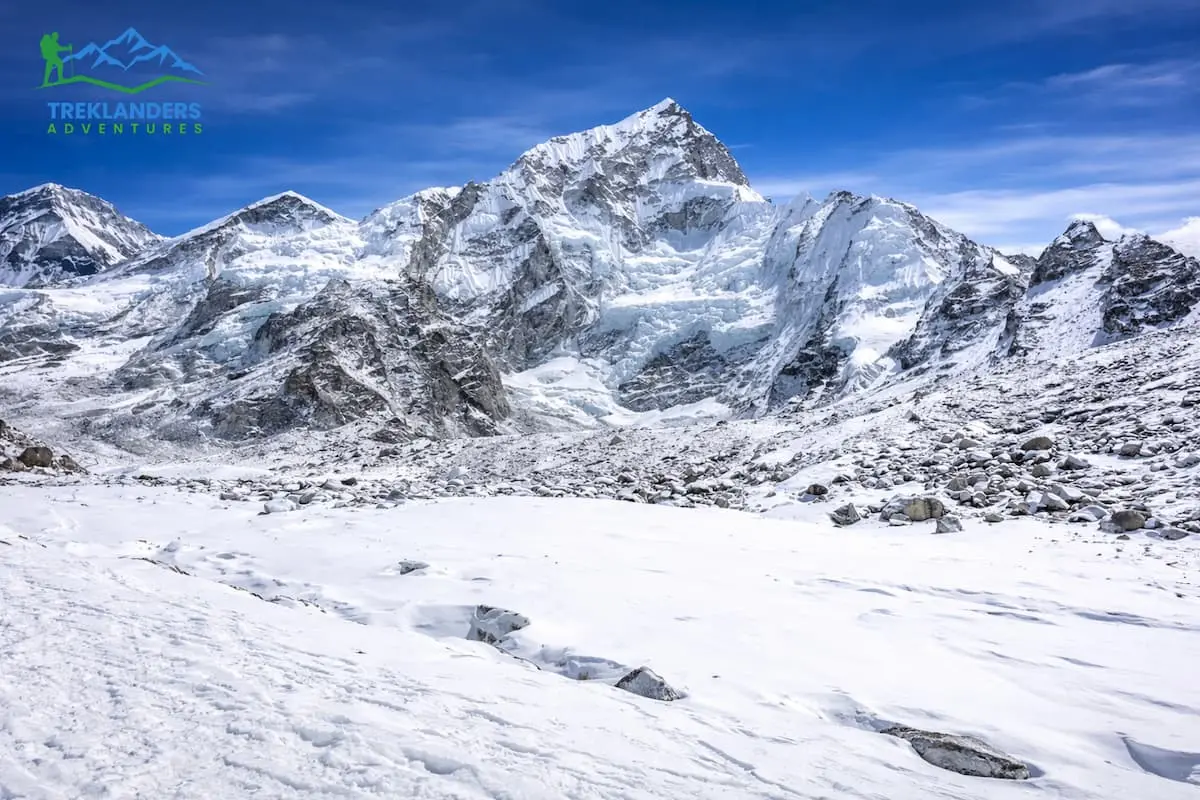
Mount Everest is 8,848 meters tall, the highest point on Earth. This trek won't get you to the top of the mountain, but it will get you very close to its base. At Everest Base Camp, you are standing on the Khumbu Glacier and right in front of you is the Khumbu Icefall, where huge blocks of ice keep tumbling from the Western Cwm between Everest, Lhotse, and Nuptse. The Icefall is considered one of the riskiest areas of the main Everest climbing route; however, from base camp, you are viewing it safely after a short and flat walk.You might also watch climbers' expeditions tents at base camp during the spring climbing season as they are gearing up for their summit climbs.
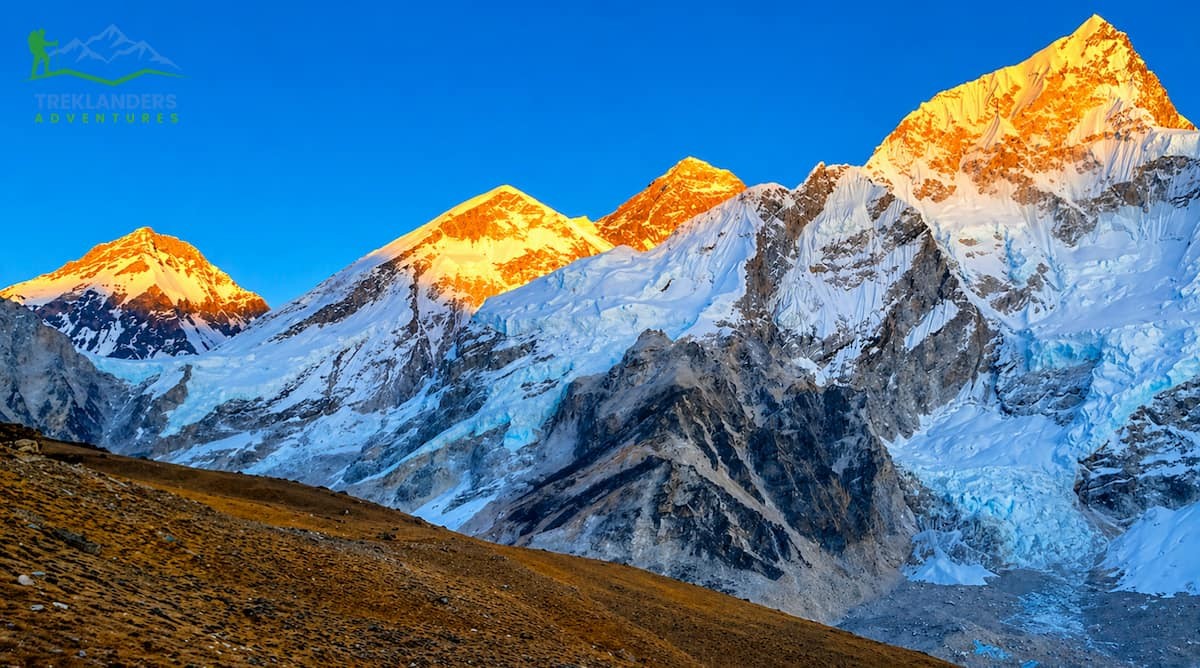
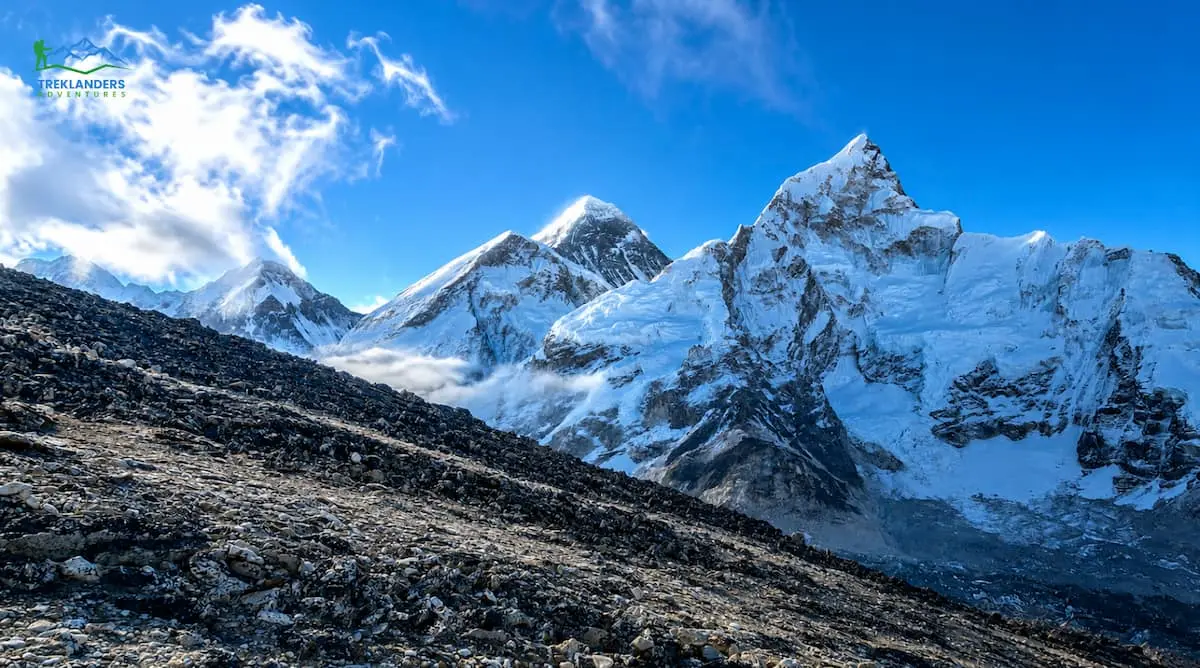
Kala Patthar translates to "black rock" in Nepali; the name comes from the dark rock composing the summit ridge. It is located above Gorak Shep at 5,643 meters, and from here, you get the most spectacular uninterrupted view of Everest's summit throughout the entire trek. There is a valley near the base camp, and the peak of Everest cannot be seen from there as Nuptse is on the way. Kala Patthar is the solution to this difficulty. It is common for trekkers to ascend it before dawn and be there for the moment when Everest, Nuptse, and Pumori get their first rays of sunlight. Additionally, from the summit, you have an extensive view over the Khumbu Glacier and the path you have just trekked, along with Changtse and the Tibetan peaks beyond the border to the north.
On the second day, your journey takes you through Sagarmatha National Park near Monjo. Ever since 1976, the park has been safeguarding this section of the Khumbu, and in 1979, it was recognized as a UNESCO World Heritage Site. Sagarmatha is the Nepali name of Mount Everest, and Sherpas refer to the mountain as Chomolungma, which in Tibetan translates to "Mother Goddess of the World." While wandering along the park trail, forested areas comprising rhododendron, fir, and birch can be witnessed. Himalayan tahrs are likely to be spotted on the crags over the path, and the Impeyan pheasant, Nepal's national bird, can be seen in the lower forest areas. This park largely coincides with your trek from Monjo to Everest Base Camp and constitutes a neighborhood to several other peaks exceeding 6,000 meters that will be visible from the trail.
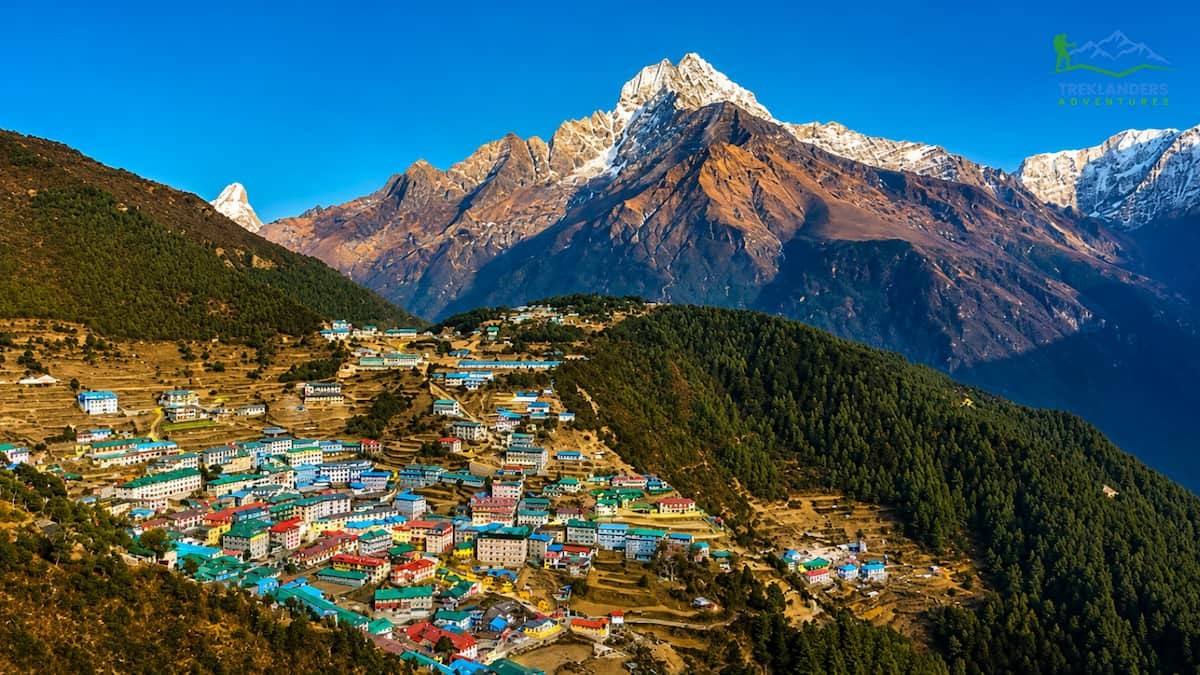
Namche Bazaar is located at 3, 440 meters and acts as the commercial hub of the Khumbu region. The name originates from the Saturday market that has existed here for a long time, attracting traders from the whole region as well as from the Tibetan border. You stay in this town for two nights, and the itinerary includes a free day for acclimatization. In addition to bakeries, gear shops, and money exchanges, Namche boasts a vibrant market street that zigzags uphill in tiers. Sherwi Khangba Museum, which is situated a little above the town, presents exhibits on Sherpa culture, chronicles historic Everest expeditions, and highlights the local flora and fauna of Sagarmatha National Park. A brief walk to the Everest View Hotel affords you your first glimpse of Everest, Lhotse, and Ama Dablam from afar, and a coffee break on the hotel terrace is an excellent way to wind down before the descent.
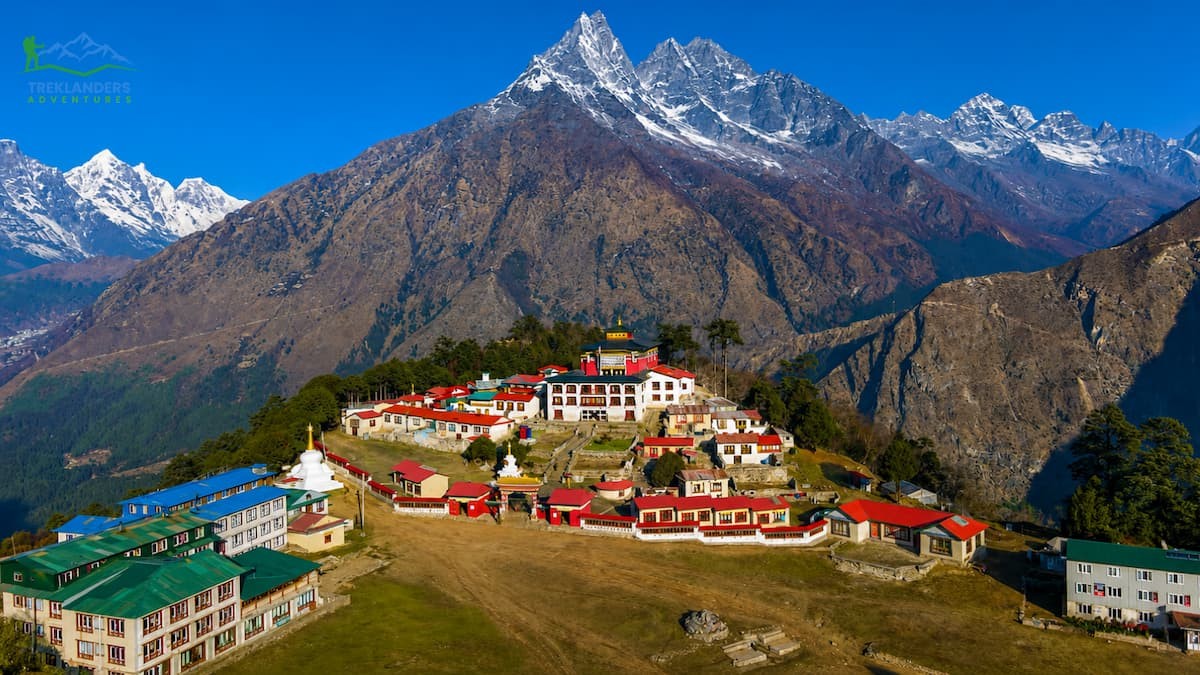
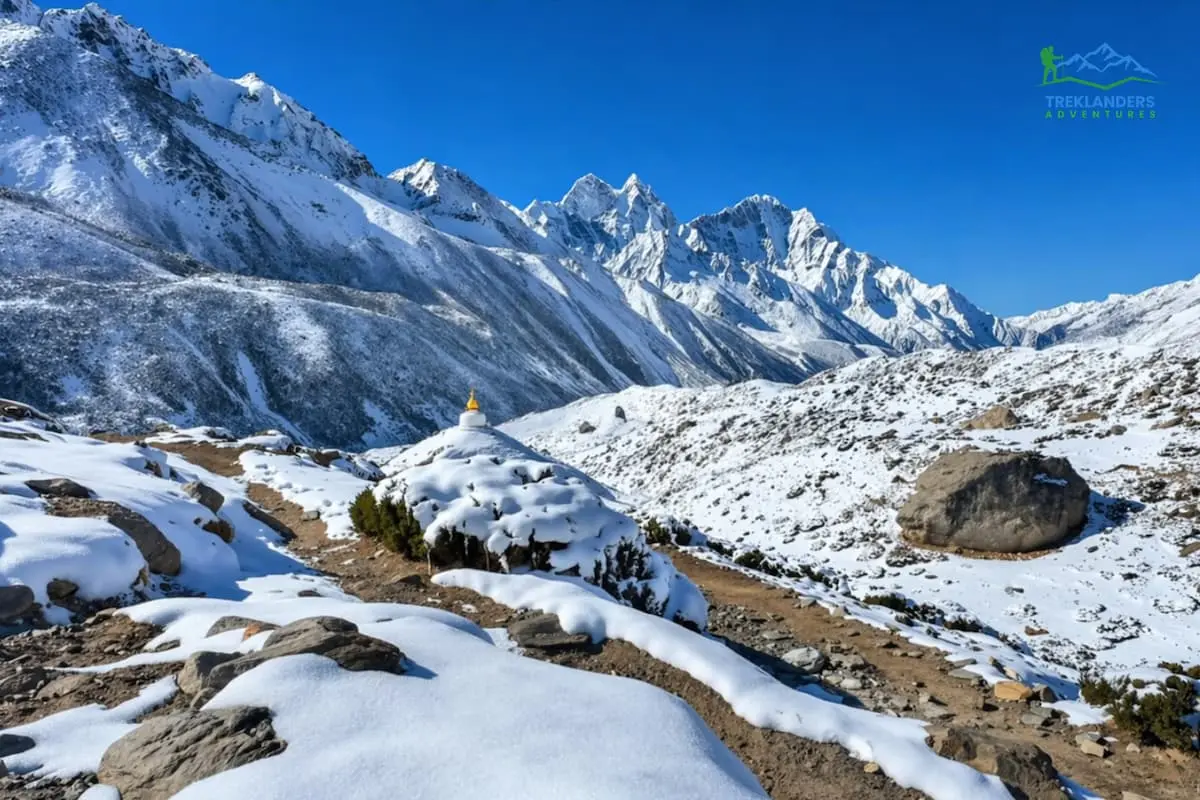
Tengboche Monastery sits on a ridge at 3,867 meters, with Everest, Lhotse, and Ama Dablam visible from its courtyard on a clear day. The current building dates from 1993, after the original 1916 structure was destroyed by fire, with an earlier rebuild also damaged by an earthquake in 1934. It remains the largest Buddhist monastery in the Khumbu and the spiritual center for Sherpa communities throughout the region. The Mani Rimdu festival, held here each autumn, draws monks and villagers for several days of masked dances and ceremonies. If your visit lines up with the monks' daily prayer session, your guide can arrange for you to sit in.
Since different seasons lead to variations in the trail conditions, the views, and the degree of the lodges crowding, the season you pick is a matter of choice. Anyway, you should carry warm clothes at any time of the year. At night, the temperature at altitudes over 4,000 meters remains below freezing throughout the year, even in spring and autumn. For Everest base camp trek, can venture around all seasons of the year except the wet monsoon and summer times. The right favorable and the best seasons are spring and autumn/fall.
Spring (March to May): At lower altitudes, the daytime temperatures are at a comfortable level, but nights remain cold at altitudes above 4,000 meters. Along the trail from Lukla to Namche, you can see rhododendron forests blooming in red, pink, and white colors. This is also the time of the main Everest climbing season, so you may see expeditions going to or returning from the base camp.
Autumn (September to November): This is the peak period on the trail. The monsoon has washed the air, so on most days, the air is clear, and you can enjoy stunning mountain views from Namche onwards. During the day, the temperature at the lower elevations is quite comfortable, whereas after dark, it becomes very cold above Dingboche. Besides that, autumn is the time of Dashain and Tihar, Nepal's biggest festivals, so locally you may also witness the festivities while going from one village to another.
Winter (December to February): During this time, the trails are surprisingly quiet, with far fewer trekkers than in spring or autumn. Days are often clear and sunny, but nighttime temperatures regularly drop below freezing at Namche, and they are much colder at Gorak Shep and Lobuche. Some of the lodges above Dingboche either reduce their services or shut down in the coldest weeks, so it's a good idea to check with your guide about availability if you plan on booking a winter trip.
Interested people can enjoy the Everest base camp trek during the winter time of the Christmas and New Year holidays despite the cold. Most days are fine with sunshine and get dark sooner due to winter and limited hours of sunlight. But freezing temperatures in the morning, late afternoon, and nighttime, but enjoyable walks encountering fewer groups of trekkers.
Monsoon (June to August): Torrential rain is the major factor affecting the lower trail from Lukla to Namche, including the risk of leeches in the forest sections. Mountain views are mostly obscured due to cloud cover. Very few trekkers decide this season for Everest Base Camp; Still, the trail remains open, and the lodges are still operating.
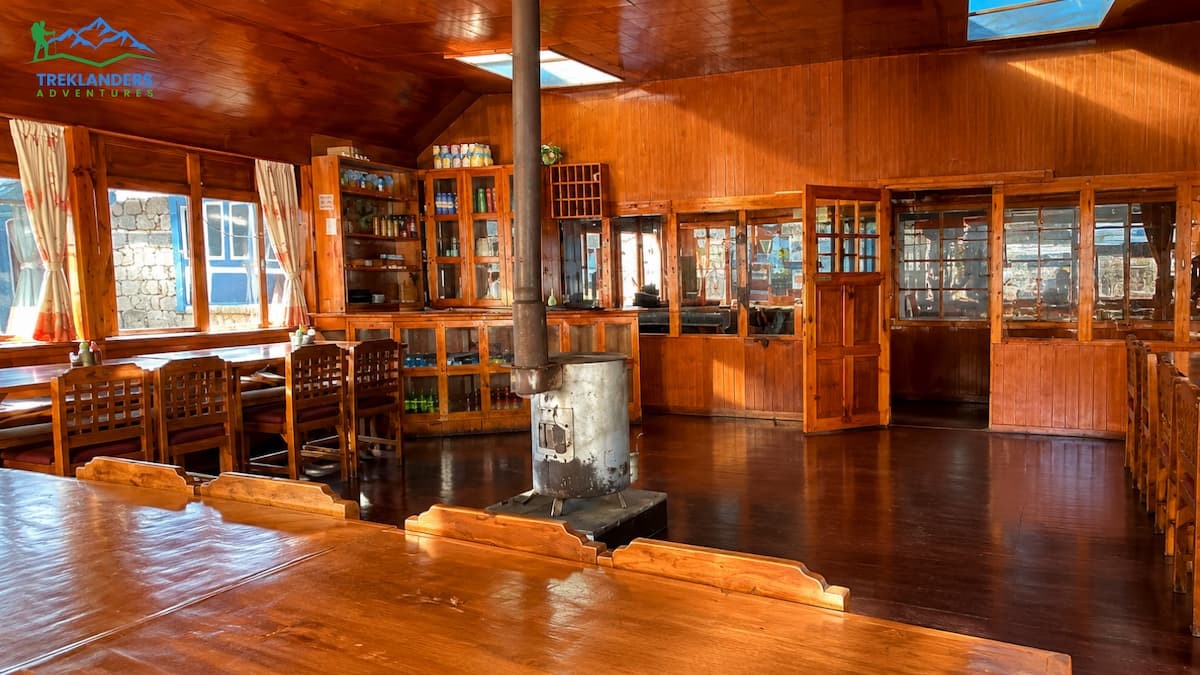
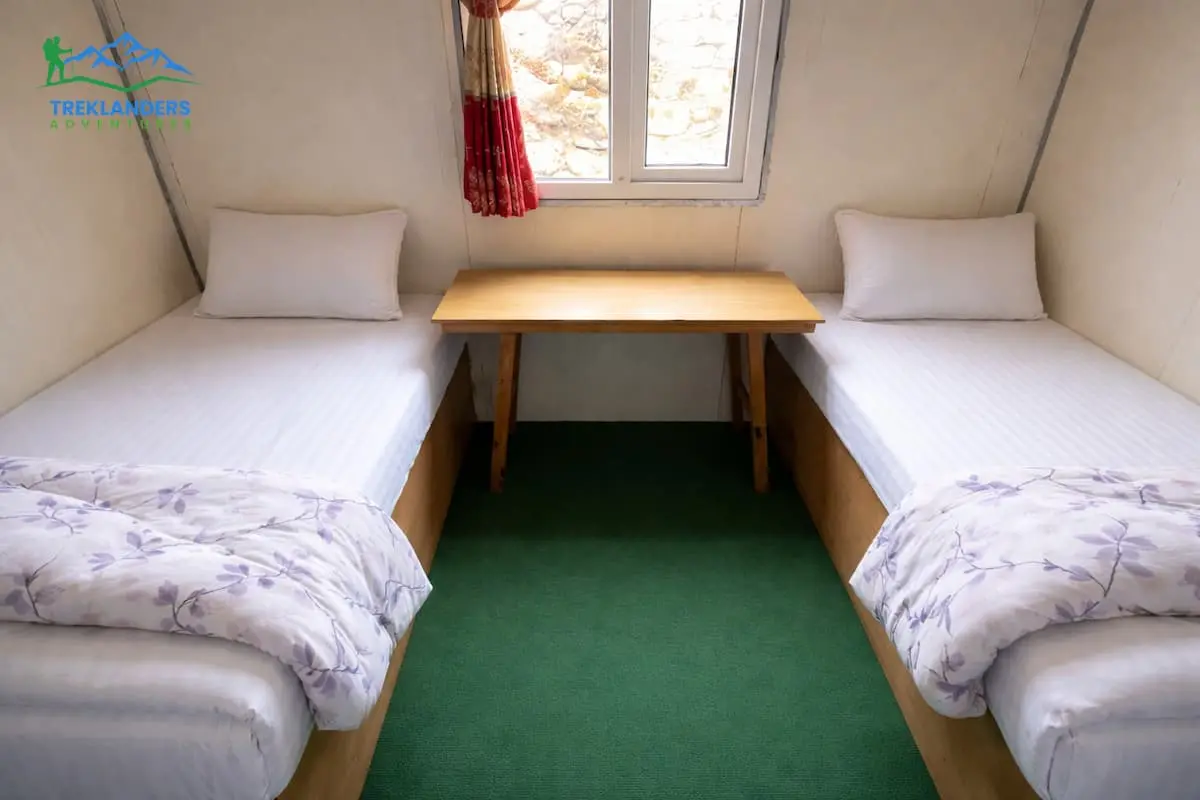
You will stay at the tea house lodges every night during the trek. Rooms are typically twin share with shared bathrooms at most stops. In Phakding, Namche, and Tengboche, some lodges have rooms with attached bathrooms. Above Dingboche, you will only find shared facilities, and hot showers are generally an extra charge due to the cost of heating water at altitude.
Dining rooms serve as the social hub of each lodge and are usually heated by a central stove that uses wood, dung, or kerosene, depending on the altitude. The menus are pretty much the same throughout the trek: porridge, eggs, pancakes, and Tibetan bread for breakfast, and dal bhat, noodle soups, fried rice, and momo for lunch and dinner. Besides the local dishes, many lodges also serve pizza, pasta, and other Western dishes; however, choices slowly become limited as you climb higher.
You can get drinking water at each lodge, either boiled or treated. There is bottled water being sold along the route, but it becomes more expensive with an increase in height. Additionally, discarded plastic bottles are becoming a major issue in Khumbu. Bring a reusable bottle and water purification tablets or a filter and refill with boiled or treated water at your lodge each morning.
For charging phones and cameras, electricity is available at most lodges, usually sourced from solar panels or micro-hydro systems; below Namche, some even charge a small fee per device. A lot of lodges offer Wi-Fi, but as you climb higher, the speed diminishes, and the connection becomes less reliable, and it could be that there is no signal at all above Lobuche. Make sure you bring a power bank, so you are not entirely dependent on lodge power every night and keep batteries in an inner pocket at night because cold temperatures drain their power very fast.
Sherpa people have been living in the Khumbu region of the Himalayas for many generations, practicing Tibetan Buddhism. Evidence of this culture is evident in every village along this route: mani walls with prayer carvings, prayer wheels at the entrances of villages, and chortens indicating important spots along the trail.
Tengboche Monastery stands as the primary religious venue here. However, you will also find smaller monasteries and gompas scattered in a few villages along the trail. A local rule is that when passing by mani walls and chortens, one should keep on the left side, in a clockwise direction, reflecting the Buddhist tradition.
Namche Bazaar and Khumjung are locations where schools and health centers have been established with the assistance of international mountaineering groups. This is an after-effect of early Everest expeditions, and quite a few climbers who came back were willing to give back to the communities that had supported them to the summit.
Sherpa refers to an ethnic group and is also their native language, closely related to Tibetan. Nepali is the lingua franca and is spoken throughout the Khumbu. To start a conversation, "Namaste" is a very handy word that will work anywhere along the trek. Also, interaction with the lodge owners and workers will be very easy, as most of them have enough English skills to talk about bookings, menus, etc. Try learning some Nepali or Sherpa phrases to make your contact with people more rewarding.
This trek is considered moderate to challenging. You will be walking for 5 to 7 hours most days on the trails that include steep stone steps, rocky moraine, and gradual forest paths. However, the main challenge is altitude rather than technical terrain. No ropes, crampons, or the need for climbing skills.
Firstly, start training at least 8 to 12 weeks before your trip. Improve your cardio by doing hill walking, stair climbing, or cycling for 30 to 45 minutes, 4 to 5 days a week. Then introduce leg-strength work such as squats, lunges and step-ups 2 to 3 times a week. In the final weeks leading up to the trip, do at least 4 to 6 practice hikes wearing the daypack you intend to use during the trek. Make sure that some of these hikes have steep climbs and descents.
Altitude sickness is unpredictable and can affect anyone, even the fittest of trekkers. The rest days at Namche Bazaar and Dingboche in this schedule are meant to help you acclimatize to the altitude and reduce the risk of illness. Also, your guide will be assessing your condition throughout the trek. Maintain a steady walking pace, keep yourself well hydrated, and immediately inform your guide if you start to experience headaches, nausea, or fatigue.
If you have a heart, lung, or severe joint condition, you should see your doctor before making a reservation. Most trekkers aged between 12 and 65 years old, with a reasonable level of fitness, and having undergone a few months of preparation, will be able to complete this trek successfully.
Pack in layers rather than a few heavy items. A moisture-wicking base layer, a fleece or light down mid-layer, and a windproof and waterproof outer shell cover most conditions on this route. Add a warm hat, gloves, and a heavier down jacket for the days above Lobuche, where temperatures drop well below freezing at night and during early morning climbs. A good pair of broken-in trekking boots matters more than almost any other piece of gear, so wear yours on several practice hikes before you arrive in Nepal.
Flights between Kathmandu and Lukla depend on weather and air traffic. During the busiest months of spring and autumn, flights may be rerouted through Manthali Airport in Ramechhap, around 130 kilometers from Kathmandu by road. If this happens, you may need an early morning drive to Manthali, taking 3 to 4 hours, to catch your flight to Lukla.
In cases of bad weather, flights can be delayed or cancelled on short notice, sometimes for several days in a row during the worst weather. Build a buffer day into your travel plans, if possible, especially before an international flight home. If conditions require a helicopter transfer between Lukla and Kathmandu due to flight cancellations, this comes at an additional cost.
Make sure your travel insurance covers high-altitude trekking up to at least 6,000 meters and includes emergency helicopter evacuation. Standard travel insurance policies often exclude trekking above a set altitude, so check the fine print before you buy. Carry a printed or digital copy of your policy with the emergency contact number and share a copy with your guide before you start the trek.
Treklanders Adventures operates this trekking program with guides who have been licensed by the government and are very familiar with the Khumbu area. Also, they have been trained in altitude health risks and emergency first aid. In fact, each trekking party is accompanied by a porter ratio of 1:2, which means only your daypack will be your load.
As per the responsible tourism policy in Nepal, guides and porters of Treklanders Adventures are entitled to receive fair wages, good food, decent accommodation, and reasonable insurance cover for the entire duration of the journey. Your trekking guide is the one who makes arrangements for permits, accommodations at lodges, and manages the day-to-day activities while on the trek. Besides, your guide always carries a first aid kit for the group.
Depending on the number of trekkers, the group size on this trek can vary from individual to large group. And irrespective of the number of trekkers, the itinerary remains unchanged: the same trekking route, the same two acclimatization days, and the same safety-oriented daily pace at high altitudes. In fact, a lot of our trekkers, after their first trip with us, come back to explore other routes in the Annapurna, Langtang, or Manaslu areas, often mentioning the support of the guiding team as the main factor for their decision.
If a 12-day itinerary is not suitable or convenient for you, we also have longer and varied options for this route, including a helicopter return from Everest base camp. Contact our trekking team for the version of this trek that suits you.
Trekkers joining for Everest Base Camp or any other adventures around high Khumbu. The flight to Lukla or vice-versa from Kathmandu, could get diverted to another airport at Manthali Town, Ramechap. Due to busy air traffic at Kathmandu airport during high seasons of spring March to May. Including the autumn/fall of September to November, if the flight gets diverted to Manthali small airport in Ramechap. Which is approx. 154 km driving distance of 3-4 hours from Kathmandu to Manthali Town and vice-versa. In this situation we might have to stay overnight in the local hotel at Manthali. For an early morning flight to Lukla, the other options are driving to Manthali, Ramechap early morning by 2-3 pm. To reach on time to catch the flight to Lukla.
In this case, extra cost will incur, As well as for using Helicopter service, if needed with bad weather condition for flights to and from Lukla, Kathmandu.


Today a pleasant walk for first half, en route to Namche Bazaar after a good breakfast. The trail follows on gradual down with short climb and crossing bridges to reach Monjo Village. Then enter Sagarmatha National Park, listed in the World Heritage Sites as one of the highest park. Enriched with exotic flora/fauna and famous world’s highest peaks, the walk then leads across the bridge above Dudh Koshi River. Reaching a small settlement at Jorsalle for lunch stop, afternoon walk on the river bank. Covered in dense trees of rhododendron and pines as the trail heads up to cross a high bridge. From the bridge, an undulating climb of few hours to Namche Bazaar for two overnights.

An extra day on this lovely spot in Namche Bazaar, the hub of Khumbu villagers.Where once a week a Saturday market held, hence the name as Namche Bazaar, a great place for rest day. Enjoy a short hike to support acclimatization before heading higher terrains, a nice walk on top of Namche Bazaar. For grand vista of Everest, Lhotse and beautiful Ama Dablam with an arrays of peaks. Visit the interesting museum treasures good information of the Khumbu region with local culture, flora, fauna and mountaineering history.
The other best hike is to Everest View Hotel of few hours climb above Namche Bazaar. The first luxury hotels around Khumbu and Everest areas, listed in Guinness World Record as the highest hotels. From the hotel views of Mt. Everestand Ama Dablam, located on a serene forested surrounding.
Rest of the afternoon after lunch, explore the Namche Bazaar lined with shops, stores and fancy restaurants, café, bakeries.

After a pleasant overnight stops in Namche Bazaar, morning walks follows on a scenic gradual trail. Overlooking, great views of Everest and arrays of snow-capped peaks, as walk heads down to a small place. At Phunki Tenga for lunch stop, amidst beautiful rhododendron and pine woods. Afternoon a slow climb for few hours to Tengboche and its colorful Monastery, check into a nice lodge.At Tengboche enjoy tour of the monastery interiors, of great cultural and religious interest with vibrant arts and paintings. Tengboche located on a picturesque spot surrounded by series of snow peaks with Mt. Everest, amidst lovely forest.

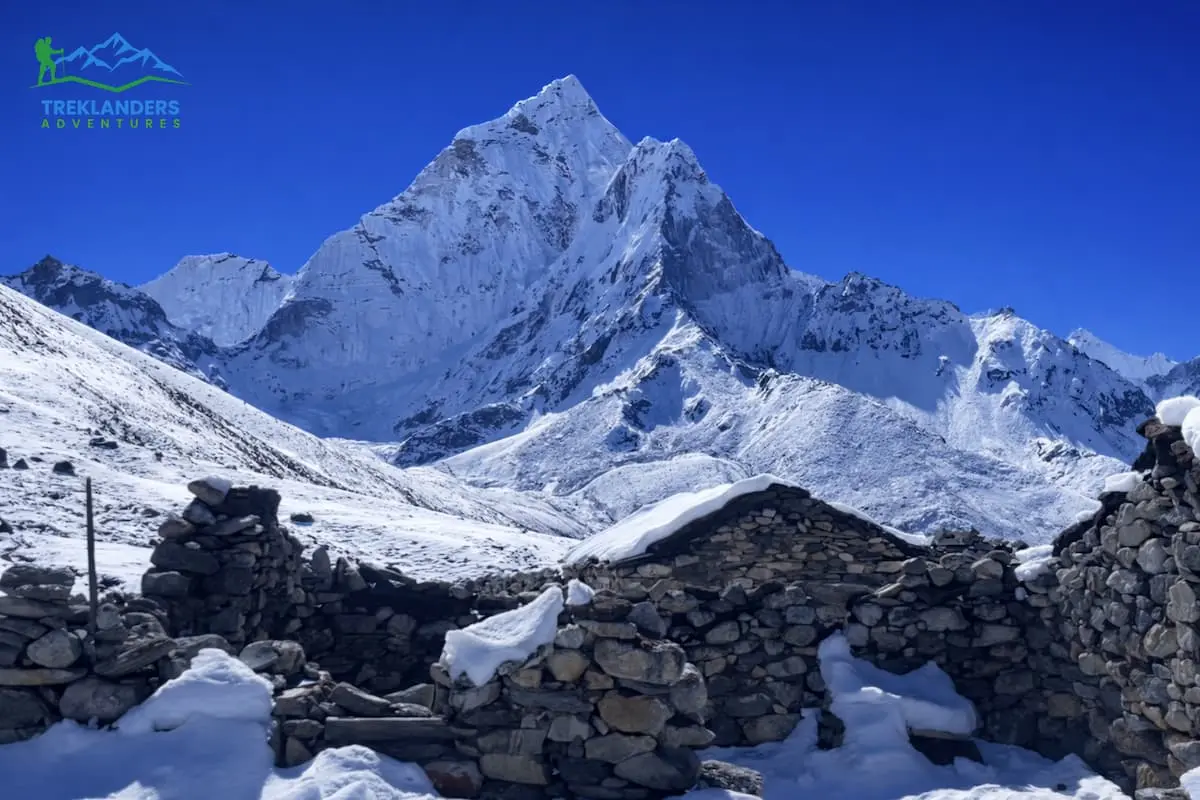
Enjoy the morning panorama of the majestic Himalayan peaks, and walk down to cross a bridge. Leaving the forest behind, the walk leads uphill to Pangboche Village, the last permanent human settlement. From Pangboche a gentle climb to Somare for lunch break, with close views of staggering Ama Dablam.
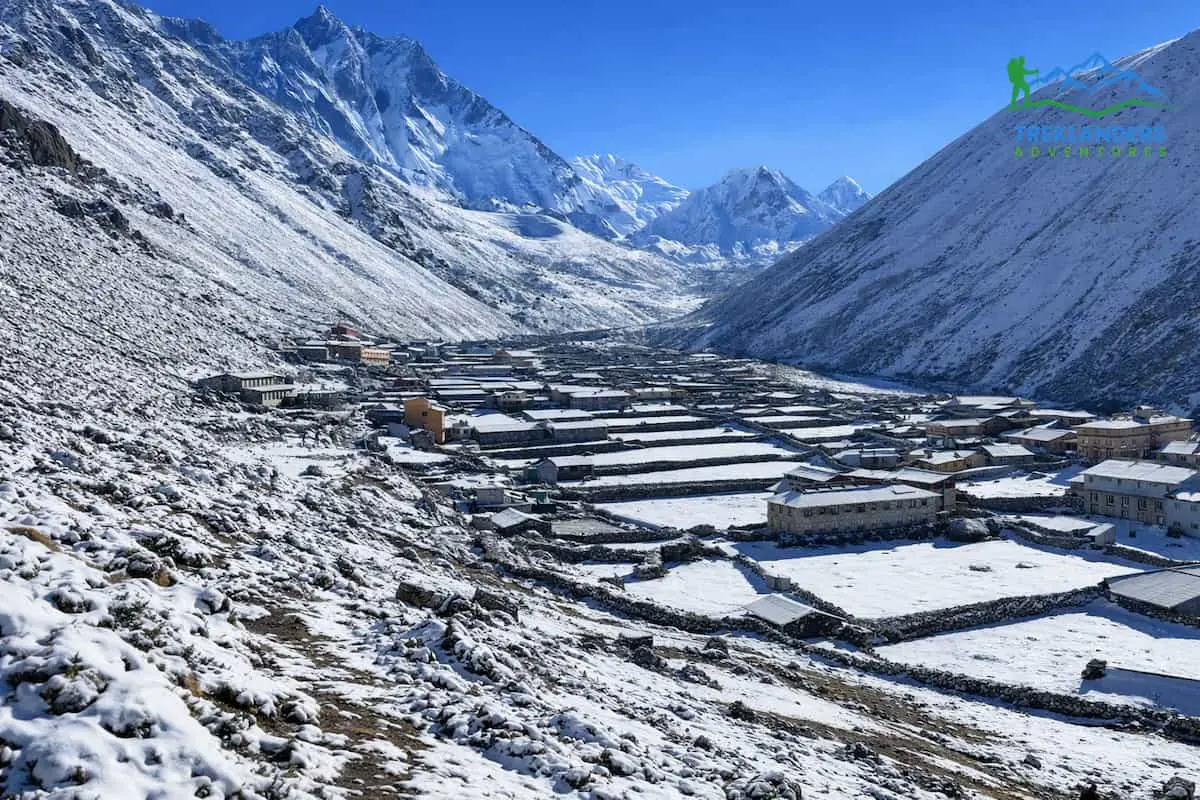
After lunch, on an open exposed trail to Dingboche as walk leads down to a stream. Then head for the climb of an hour enter the beautiful Imjatse Valley, where Dingboche a large settlement situated. At the bottom of towering north face of Ama Dablam with views of Island Peak, towards east of a valley.
At Dingboche enjoy the comfort of a nice lodge accommodation and marvel the beautiful surrounding scenery.

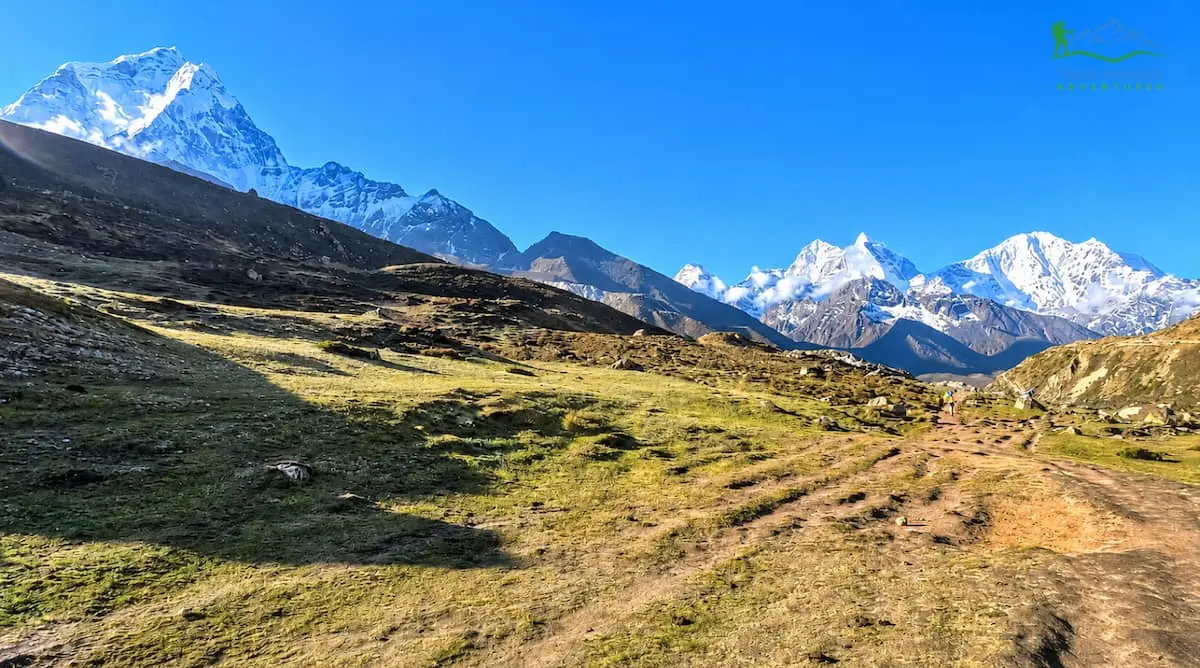
Another rest day in Dingboche for acclimatization and short excursion to Nakarjung high ridge top. Enjoy the fantastic views of surrounding giant peakswith Ama Dablam and Island Peak. As far as Mt. Makalu towards east direction,after a refreshing morning hike, rest of the day at leisure.

From Dingboche, slowly our adventure gets closer towards our destination, the morning walk leads to short steep climb. From the top and above Imjatse Valley and Dingboche, a pleasant walk on gradual uphill to Thugla.
A small place, situated on the mid-way of Dingboche and Pheriche routes to Everest base camp. At Thugla for lunch stop, afternoon a steep climb of lessthan an hour to a high ridge. The walk gets better on gradual ups as the altitude gains, making the trek slower. After a good walk of few hours reaching Lobuche for overnight stop, before reaching Everest Base Camp.

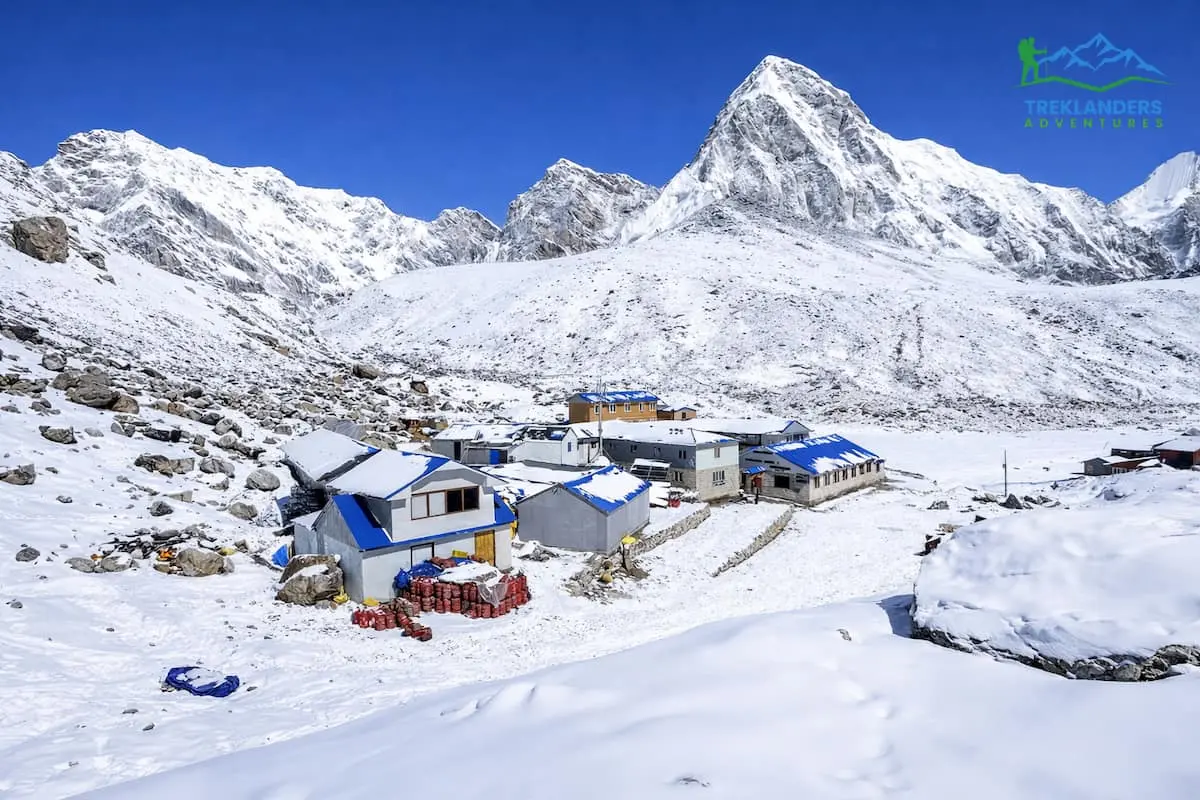
Start the morning early as possible, carrying packed lunch for the long day to Everest Base Camp. The walk starts on a nice pleasant trail, and then climb up toreach around rocky areas above Khumbu glacier. The walk continues with short descent to Gorakshep, a small settlement with few good lodges.
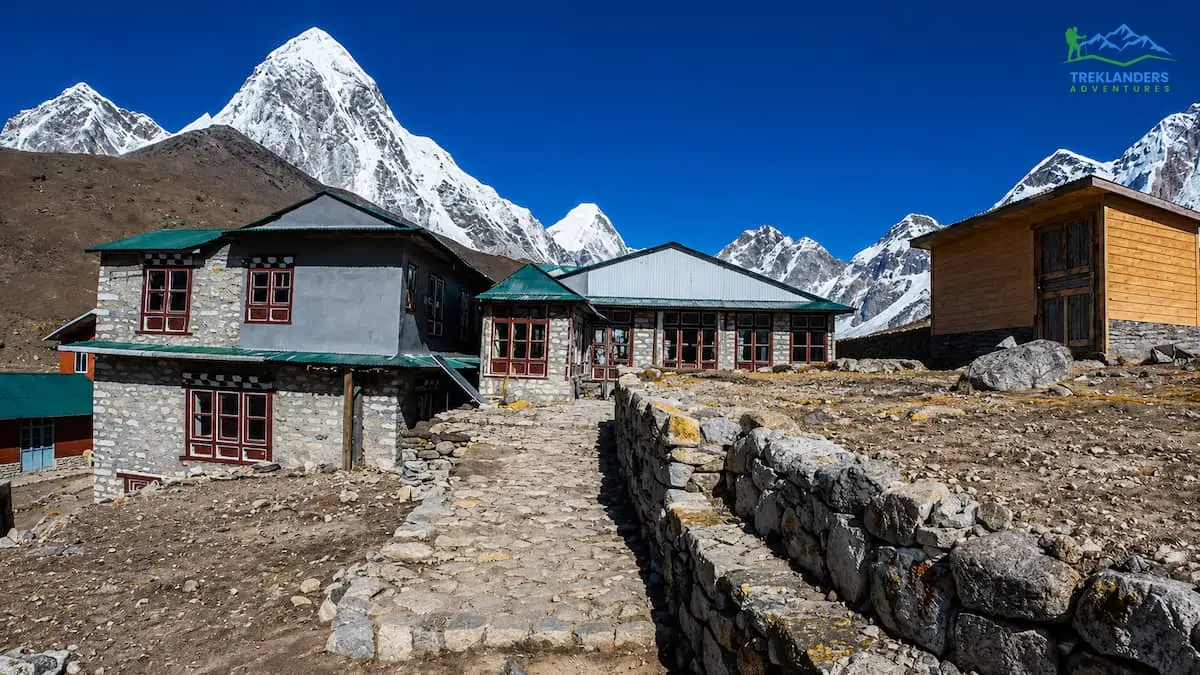
Located on a wide glacial sandy field beneath towering Mt. Pumori and Kalapathar black rocky hill. After a short refreshing stop, then head towards our final destination to Everest Base Camp.
The trail leads on winding gradual path in between rocks and glaciers, then reaching at Everest Base Camp. Stand beneath the towering mighty Mt. Everest amidst, remorseless fields of ice, snow, rocks and glaciers. Enjoy the dramatic scenery similar to arctic zone landscapes enclosed by giant Lhotse, Nuptse and Pumori peaks. After an exciting and wonderful experience at Everest Base Camp, return to Gorakshep for overnight halt.

Another early morning adventure, start the cold morning heading to a steep climb to the top of Kalapathar high ridge. A popular and famous spot for closest views of Mt. Everest at a mere distance. Stand in front of towering face of Mt. Pumori with range of high snow mountains that surrounds the top.
After a magnificent views of glorious mountain scenery, from the highest point of the adventure. Descend to Gorakshep for breakfast and start the returnjourney to Lobuche and down to Thugla. From here on an alternate route down to Pheriche Valley and at lovely settlement of Pheriche for lunch stop.
Afternoon walk of short distance, with down and ups to a high ridge and then long downhill to Pangboche Village. Enjoy the homely cozy comfort in a nice lodge with grand views of Mt. Ama Dablam.
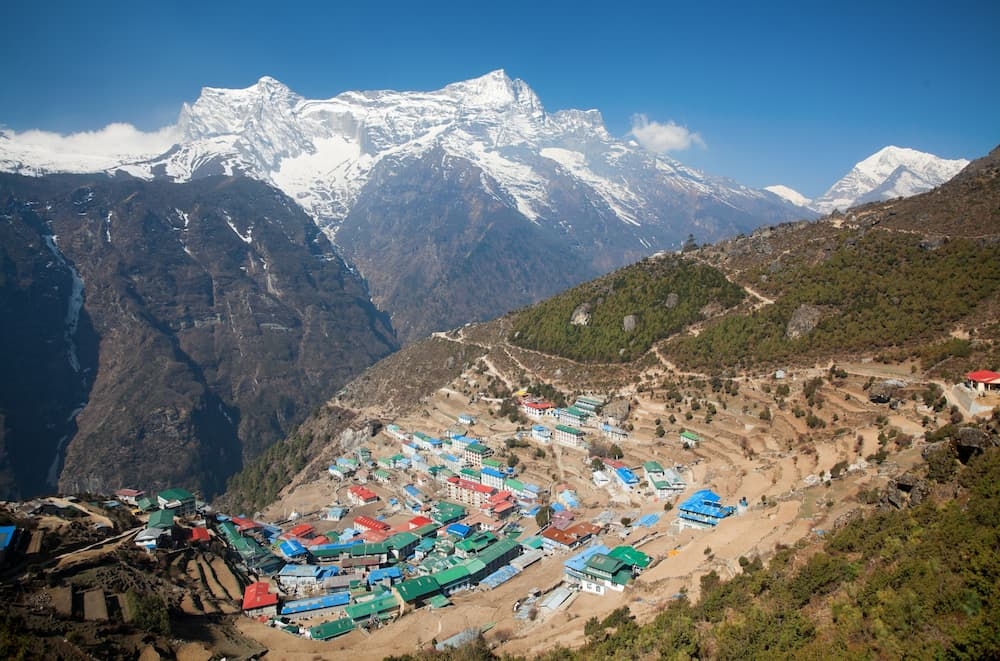
Morning with grand views of Ama Dablam, head downhill to the bridge, and then climb to Tengboche Monastery. Reaching back into greenery and tree lines, enjoy the views down to Phunki Tenga. Then with slow uphill past few settlements to reach at a pleasant winding trail to Namche Bazaar for overnight stop.
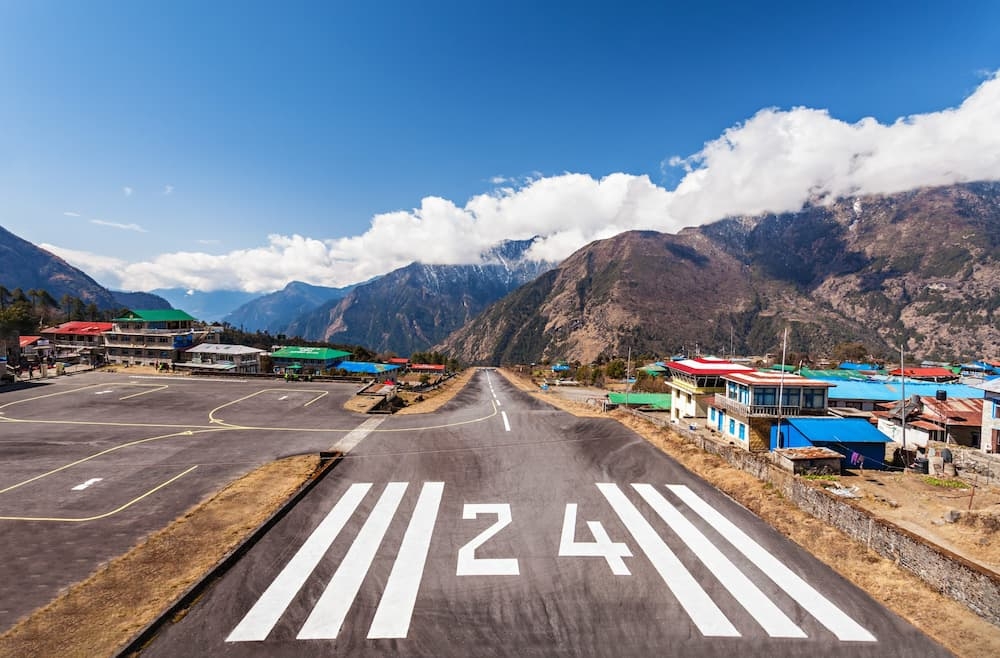
A long day to Lukla, enjoy the last trek of the adventure, heading down to Dudh Koshi River Valley. The walk gets pleasant on gradual path to Jorsalle with short ups to national park and Monjo Village. The trail follows across the bridge to Phakding for lunch and then on winding gentle path.
Enjoy the last climb to Lukla, reaching Lukla by late afternoon and for last Overnight, around Khumbu and Everest region.

Morning transfer to Lukla Tenzing & Hillary Airport, as time for flight to Kathmandu. Get on abroad in the small plane for short scenic flight to Kathmandu. On arrival transfer back to your respective hotels, rest of the day at leisure for individual activities.
My 12-day Everest Base Camp Trek with Treklanders Adventures was one of the best experiences of my life. Owner Ram managed everything perfectly; Guide Hari took care of me like family; and our porter Lakpa Sherpa carried the loads with a smile every day. Highly recommended to anyone dreaming of Everest!
I’m extremely thankful that I chose Treklanders Adventures for my Himalayan trek. Their experienced guides, well-planned itinerary, and constant support made the journey smooth and enjoyable. I never felt rushed or unsafe, and every detail was handled professionally. An excellent company I would gladly choose again.

Trekking to Everest Base Camp with Treklanders Adventures was a life-changing experience. The guides were experienced, safety was always prioritized, and the itinerary was perfectly planned. From accommodation to acclimatization, everything was handled professionally, allowing us to fully enjoy the Himalayas.

Treklanders Adventures made my Everest Base Camp trek unforgettable. Professional guides, perfect planning, and great care throughout the journey. I felt safe, supported, and inspired every day. 10/10 experience!

As a first-time trekker, Treklanders Adventures made Everest Base Camp feel safe, well-organized, and unforgettable. Professional guides, great pacing, and excellent support throughout.

Trekking to Everest Base Camp with Treklanders Adventures was a dream come true for our family. From the very start, our guide Anurag made us feel safe, supported, and motivated. His warm hospitality, deep knowledge, and patience with every family member turned a challenging trek into an unforgettable adventure. The accommodations, meals, and overall planning were perfect, making the journey smooth and enjoyable. Thanks to Anurag and the team, our family now cherishes memories that will last a lifetime. Truly a 10/10 experience!

I’ve trekked in Nepal before, but Treklanders Adventures stands out for its organization and local expertise. The Everest Base Camp trek was well-paced, scenic, and professionally guided.

Looking back on my trek, I’m truly thankful that I chose Treklanders Adventures. The team’s professionalism, local knowledge, and genuine care for trekkers made a huge difference. They didn’t just guide us through the mountains—they made the entire experience meaningful and memorable.

While trekking from Lobuche to Everest Base Camp, I experienced dizziness from the altitude. The guide from Treklanders Adventures was incredibly caring, patient, and supportive throughout the trip. They monitored my condition, encouraged me at every step, and adjusted the pace when needed. Thanks to their professionalism, I completed the trek smoothly and had one of the best experiences of my life.
I am from the United States, and this was my first high-altitude trek. I had no previous experience, but I never felt any serious altitude sickness during the Everest Base Camp trek. The guide and porter from Treklanders Adventures were excellent—very supportive, friendly, and professional. They shared a wealth of information about local culture, history, and places along the way. Everything felt smooth and well-managed. An amazing experience.
Exploring the Everest region was an incredible journey, passing through iconic places like Namche Bazaar, Tengboche, Dingboche, and Lobuche. The well-established teahouse network along the trail made each day comfortable and enjoyable. Treklanders Adventures managed the itinerary, accommodation, and daily walks perfectly. Thanks to their experienced guides and smooth planning, the trek felt safe, organized, and truly unforgettable.
Purpose: Keep sweat off the skin and maintain warmth.
Purpose: Trap body heat in cold air at altitude.
Tip: Keep electronics in inner pockets at night to prevent freezing.
The EBC trek is undoubtedly one of the most famous and marvelous trekking adventures across the globe. It is basically a hike to the base of Mount Everest (8,848.86 m) by foot which means it goes along stunning and picturesque paths of the Khumbu region with the fantastic view of Everest, Lhotse, Nuptse, and Ama Dablam. Along with that, it is an immersion into the Sherpa lifestyle, visiting the Buddhist monasteries, and experiencing the breath-taking landscapes of the Sagarmatha National Park.
The Everest Base Camp Trail is a once-in-a-lifetime experience that includes both the stunning nature of the Himalayas and the warm and friendly typical Sherpa way of life. Along the way, you will see the stunning mountains of the world, make a stop at historic places such as the Tengboche Monastery, and be able to say that you saw the biggest mountain on the planet up close. The venture is a great physical challenge and a source of spiritual motivation at the same time as it offers unlimited scenic views and an unbeatable cultural immersion.
Normally, the EBC trek is done in 12 to 14 days. The exact time varies depending on the route taken and the acclimatization schedule. The standard route is done by plane from Kathmandu to Lukla. From there, the trek goes through Phakding, Namche Bazaar, Tengboche, Dingboche, Lobuche, and Gorakshep until it reaches the base camp (5,364 m). Almost all trekkers also go to Kala Patthar (5,545 m), which offers the most spectacular sunrise view of Mount Everest.
Pick a trekking company that is officially registered with the Nepal Tourism Board (NTB) and is a member of the Trekking Agencies' Association of Nepal (TAAN). Make sure the guides are certified by the government, have insurance, and are skilled. You can check the realness of the sources by reading the clients' reviews on TripAdvisor or Google Reviews. Do not fall for extremely cheap offers; instead, choose professional agencies like Treklanders Adventures that commit to safety, giving the porter a fair level of service, and responsible tourism.
Almost all agencies facilitating the trek present a range of options for payment: wire transfers (SWIFT), card payments through the internet (Visa, MasterCard), or cash payments on arrival in Nepal.
Simply go to www.treklanders.com, find the Everest Base Camp trip page and complete the booking form with your personal details, date of your trip, and payment method. A confirmation will trigger the delivery of the detailed itineraries, permits, and guide information. You can also reach out to Treklanders Adventures directly through WhatsApp at +977 9851019683 or via email at info@treklanders.com.
The total walking distance from and to Everest Base Camp is roughly 130 kilometers (80 miles). The trip time is normally 12–14 days, covering around 10–15 kilometers per day depending on the terrain, altitude, and pace. The journey is from Lukla (2,860 m) to Everest Base Camp (5,364 m) via Namche Bazaar, Tengboche, Dingboche, and Lobuche. The distance can be considered as moderate, however, the altitude and trail conditions make it a tough and rewarding trek for the mountaineers.
In fact, the best EBC trek seasons are spring and autumn that are March–May and September–November respectively. These are the times when weather is quite stable and clear sky is observed for maximum visibility.
Spring (March–May):
Nature sings along the trail during this time to trek in the Khumbu region. Days are moderate in temperature and bright with clear blue skies, while nights are cool but comfortable. Ridge after ridge of rhododendrons brighten the trail with red, pink and white blossoms. There is also the Everest climbing season while trekking in the Khumbu, so climbers and trekkers frequently going in the same direction may meet on the way — thus, the journey becomes more motivating.
Autumn (September–November):
This is the main trekking season in Nepal when most tourists come to hike in the country. After monsoons the air is very pure and without any dust, thus amazing mountain views and pleasant temperatures during the day can be expected. Indeed, these are the best times for trekking and also great for experiencing local cultures and traditions as well since Dashain and Tihar festivals are celebrated during these months.
Winter (December–February):
Yes, one can trek during the cold season and it is better to expect freezing temperatures at night especially at a higher elevation. There are only a few people and the trails are deserted, so perfect if you want to be alone and enjoy spectacular winter views. The problem is that some high passes or areas around Gorakshep may be closed off due to snow.
Summer (June–August):
With the arrival of the monsoon, Nepal can expect heavy rain, dull weather, and also leeches in the lower regions. Most trekkers would not take this route, however, it is still doable for those who are not bothered by the rain and would like to see nature at its best and trails less crowded.
The ascent is from Lukla (2,860 m) to EBC (5,364 m) and Kala Patthar (5,545 m) with the increase in height done gradually. Over 90% of the lodges on the trek are within the 3,000–4,400 m range. Trekkers must prepare themselves for altitude-related problems and must also allow sufficient time for acclimatization.
It is not a condition to have experience before the EBC trek, but one has to be physically fit and well prepared. The EBC walk is a task of moderate to severe difficulty, where one has to walk 5–7 hours daily on steep paths. If properly trained, it is possible for any person with good stamina to make it to the end.
Indeed, a great number of first-time trekkers manage to finish EBC. The main thing is to go at a slow pace, drink plenty of water and have your acclimatization days at Namche Bazaar (3,440 m) and Dingboche (4,410 m). The employment of a skilled guide is the best course of action.
In fact, any person who has good physical condition is determined, and loves adventure can trek to Everest Base Camp. Being a professional athlete or an experienced mountaineer is not necessary — just being healthy, prepared, and mentally strong is enough. The trek is considered as moderate to challenging, involving daily walks of 5–7 hours on different terrains and altitudes up to 5,364 meters (17,598 ft). If the trekkers take proper acclimatization, keep a steady pace, and are guided by a team like Treklanders Adventures which is experienced, they can be of any age (usually between 12 and 65 years) and still make it to the destination.
If you live an active lifestyle, are fond of hiking, and are willing to do some basic physical training 3–4 months prior your trip, then you will be able to take this amazing adventure. On the other hand, people with certain medical conditions should such as heart, lung, or severe knee problems and need to consult their doctor before going for high-altitude trekking. To sum up, if you are physically fit, motivated, and ready to experience mountain trails of Nepal, then the Everest Base Camp trek is your perfect match offering not only a challenging hike but also stunning views of the Himalayas.
Facilities
Facilities provided by Treklanders Adventures: The Everest Base Camp Trek is a journey of a life time rather than a simple walk - it is a dream adventure that takes you to the center of the Himalayas. The view, the culture, and the thrill of the adventure are what you get when you go to the base camp of the highest mountain in the world which is at an altitude of 5,364 meters.
By Treklanders Adventures, you can make your trip to be comfortable, reliable, and memorable. Our professional teams guide you through the best of the Nepali trekking culture with the help of the licensed and experienced porters and friendly staff while we take care of all the logistics.
Begin your training 3–4 months before setting out on the Everest Base Camp journey. Physically getting ready for the trek should not be seen as an optional task — it is, in fact, the main factor that determines whether you will have a successful and pleasant trek.
Cardio Training for EBC Trek: To make your body cardio fit, go for trotting on the hills, climbing stairs, cycling, or rowing for 4–5 days a week to a duration of 30–45 minutes. The aim here is to make your heart and lungs stronger so that it will be easier for you to breathe in the thin mountain air.
Leg Strength for Everest Base Camp Trekking: Concentrate on leg exercises that include squats, lunges, step-ups, and calf raises 2–3 times per week. Gain the habit of going uphill with a 15–20 kg loaded-backpack to enhance power and breathing - in this way, your legs that will most likely be the ones to work on the trail will be sufficiently trained.
Altitude Simulation Training: Use HIIT (High-Intensity Interval Training) along with some sprints, burpees, or mountain climbers once or twice a week in which the body adapts to very low oxygen conditions just like in altitudes.
Core Strength for EBC Trek: Work hard on your core with planks, side planks, and dead bugs 3–4 times weekly for 15 minutes. A solid core not only helps the correct posture and keeps the balance, but also makes the individual less tired during long trekking days.
Backpack Training: Before your trip, do a minimum of 4 and maximum of 6 practice hikes using the same 8–12 kg backpack you plan to bring on your trip. Make the walk more challenging for your shoulders and back by including different terrain such as hills and descents that you will be facing on a real trail.
Sample Weekly EBC Training Schedule
Recovery and Nutrition: Try to sleep at least 7 hours but no more than 9 hours every night. Have more protein-packed meals, drink lots of water, and take your rest days seriously — recovery is also a part of the training.
Pre-Trek Health Check: Get a medical clearance by visiting your doctor before the trip. Talk about altitude problems as well as any other health conditions that you already have so that you can be absolutely sure that you are ready for high-altitude trekking.
Layered packing will allow you to deal with varying mountain weather. Make sure you have thermal base layers, a fleece jacket, a warm down jacket, a waterproof/windproof outer shell, a hat, gloves, and woolen socks included in your clothing set.
Optimal is a comfortable and supportive backpack of 40–50 liters capacity. A padded hip belt and adjustable straps will allow for better weight distribution, so choose one which has them.
Absolutely not — trekking poles, though, are very useful if you want to use them. They aid in walking steadiness, lessen knee strain, and provide support during steep climbs and descents.
Get a pair of strong, waterproof hiking boots with good ankle support. Make sure to wear them a few times before your trip so as not to get blisters and to be able to walk comfortably on the trail.
Don’t forget to take with you along the way sunglasses, sunscreen, headwear, headlamp or flashlight, first-aid kit, personal medications, toiletries, camera, and a small daypack for essentials.
Do not burden yourself with heavy or useless things such as jewelry, large sums of money, and expensive electronics. Keep your equipment light and handy the key to success in the Himalayas is being simple.
Some of the most reliable international airlines flying to Tribhuvan International Airport (KTM) in Kathmandu are Qatar Airways, Emirates, Turkish Airlines, Etihad Airways, Air India, and Thai Airways. These airlines offer regular flights and good service connections from major cities worldwide.
Trekkers must have two major permits if they want to go legally into the Everest region and Sagarmatha National Park.
These permits are necessary for all trekkers, even those traveling with a guide and porter.
If you are doing the trek with a company such as Treklanders Adventures, you will have both permits arranged for you beforehand. In the case of an independent trek, you can pick them up at:
The permit prices are only in Nepalese Rupees and the permits are non-refundable.
April 2023 onward, the TIMS (Trekkers’ Information Management System) card is not mandatory for the Everest region. The Khumbu Municipality Permit has taken its place.
permits cover those paths. However, if your route leads you to different areas, such as Jiri or Salleri, then you may have to pay local entry fees.
Yes. Treklanders Adventures is your one-stop shop for all the permits you require during your trekking trip. There will be no need for you to stand in line or do paperwork — everything will be done before your trekking starts.
Absolutely, a travel insurance policy is a must for the trek to the Everest Base Camp. High-altitude trekking is inherently risky and may result in the development of conditions like altitude sickness; there can also be the occurrence of accidents or even flight delays. Thus, the availability of a reassuring insurance plan guarantees that any medical treatments or emergency evacuations (including a rescue via helicopter) will be paid for by the insurance company.
The typical price is between USD 50 and 150 for 14 days. Your age, country of residence and coverage limit will affect the final price of the policy. Think of it as a minor investment compared to the price of the evacuation that can be over 10,000 USD.
Make sure that your plan explicitly includes high-altitude trekking that goes up to 6000 meters. Most regular travel policies frequently have clauses that exclude high-altitude trekking, so checking with the insurance provider is a must before your trip.
If you are looking for a complete and considerate insurance plan, then you should get it from your home country rather than Nepal. This is because the insurance offered locally may lack comprehensive coverage for international evacuation or may not be applicable for the high-altitude regions.
Definitely, most of the trekking agencies, which Treklanders Adventures is among, will ask for a copy of your insurance to be presented before the commencement of the trek. It guarantees that if the need for emergency support should arise, the help will not be far away and can be arranged in no time.
If a person doesn't have any insurance, he or she will have to cover all the costs out of his/her own pocket when an unfortunate incident happens. For example, the expenses for rescuing a person via helicopter or providing hospital care are known to be very high. Not to mention that if you happened to be trekking without insurance, then you are taking a great risk and it is a bad idea which is highly discouraged indeed.
Accommodation along the EBC trail is mainly in teahouses and lodges, which are simple yet cozy guesthouses run by local Sherpa families. Rooms typically include two single beds, a small table, and warm blankets. Bathrooms are mostly shared, with either squat or western-style toilets depending on the lodge.
Comfort levels vary depending on altitude and location. In lower villages like Phakding and Namche Bazaar, lodges offer comfortable beds, Wi-Fi, and even hot showers. Higher up, especially in Lobuche or Gorakshep, facilities become more basic due to remoteness — but all are clean, safe, and provide essential warmth and hospitality.
If you’re trekking with a licensed agency like Treklanders Adventures, all accommodations are pre-arranged. Independent trekkers can usually find rooms on arrival, though advance booking is recommended during peak seasons (March–May and September–November) when lodges fill up quickly.
Room rates range between NPR 500–3,000 (USD 4–25) per night. Many teahouses offer free or discounted stays if you eat meals at their restaurant. As altitude increases, prices rise slightly due to higher transportation costs.
Yes, most lodges provide hot bucket showers or solar-heated showers for a small fee (around NPR 300–600). In higher villages, where water may freeze overnight, hot showers might not be available daily.
Yes, Wi-Fi is available in most lodges via Everest Link or Airlink networks. The cost ranges from NPR 200–600 per session depending on altitude. Internet speed is slower at higher elevations but sufficient for messaging and light browsing.
Teahouses serve freshly prepared Nepali and Western-style meals. Popular items include Dal Bhat (rice and lentils), noodles, soups, pancakes, eggs, potatoes, and tea or coffee. Meals are simple, nutritious, and ideal for high-altitude energy requirements.
Yes, it’s highly recommended to bring your own warm sleeping bag (rated -10°C to -20°C). Though teahouses provide blankets, temperatures drop significantly at night, especially above 4,000 m.
Most lodges have twin private rooms, while shared dormitories are rare. In busy seasons, trekkers might share rooms if the lodge is full. Treklanders Adventures always tries to ensure private twin rooms for comfort and privacy whenever possible.
The Kathmandu–Lukla flight is one of the most scenic and thrilling short flights in the world. It lasts about 30 minutes and offers stunning aerial views of the Himalayas before landing at Tenzing–Hillary Airport (2,860 m) — one of the highest airports on earth.
Yes, advance booking is highly recommended, especially during peak trekking seasons (March–May and September–November) when flights are often fully booked.
Arrive at the domestic terminal at least 1.5–2 hours before your scheduled departure. Check-in may take extra time due to weather-related delays or luggage restrictions on mountain flights.
Most airlines allow 10 kg of checked luggage and 5 kg of hand carry per passenger. Excess baggage may incur additional fees, so pack light and keep essentials in your daypack.
Flight delays and cancellations are common due to changing weather conditions in the Himalayas. Trekkers are advised to keep 1–2 buffer days in their itinerary and remain flexible. Your trekking agency will help rearrange flights or accommodation if delays occur.
Yes. During busy seasons or poor weather, you can drive from Kathmandu to Manthali (Ramechhap) and take a short 20-minute flight to Lukla. This route is now frequently used to manage air traffic from Kathmandu.
The drive from Kathmandu to Manthali takes around 4–5 hours, passing through scenic countryside and hillside villages. The road can be winding but offers a glimpse of Nepal’s rural beauty.
Yes, helicopter flights are available for those who prefer a faster and more comfortable journey. Helicopters operate from both Kathmandu and Manthali, depending on weather and demand.
Helicopters offer flexible schedules, private travel, and breathtaking aerial views of the Himalayas. They also operate in conditions when small planes might be grounded, saving time and avoiding long waits.
The main drawback is the cost, which can be five to six times higher than a regular flight. Availability may also be limited during peak trekking seasons.
Yes. You can drive to Salleri or Jiri and start trekking from there. This overland route adds 3–4 extra days to your journey but provides a less crowded and culturally rich experience through traditional Sherpa and Rai villages before joining the main EBC trail near Phakding.
By Treklanders Adventures, you can make your trip to be comfortable, reliable, and memorable. Our professional teams guide you through the best of the Nepali trekking culture with the help of the licensed and experienced porters and friendly staff while we take care of all the logistics.
Mobile network coverage is available for the most part of the trek. For instance, there are cell phone signals in lower regions like Lukla, Phakding, Namche Bazaar, and Tengboche. NCELL and Nepal Telecom are the main providers. Both offer prepaid SIM cards which can be bought in Kathmandu prior to your trek. But the signal strength might be low or there might be no signal at all in the upper areas such as Lobuche and Gorakshep.
Wi-Fi is accessible in all tea houses and lodges. Additionally, many establishments use the Everest Link or Airlink systems, which allow the installation of the internet to be done up to Everest Base Camp. The fee varies from NPR 200–600 (USD 2–5) per session, depending on the place and the altitude. By the time you reach higher points, the connection speed is lower.
Staying in contact through Wi-Fi calling apps like WhatsApp, Viber, or Messenger is possible. You can have more connectivity in the lower regions if you buy a local SIM card with a data package. The Treklanders Adventures guides carry phones for emergency communication and will always be with you during the trek.
Charging tea houses are available but only by paying an additional fee (NPR 100–400 per device). Most of the energy is solar-originated, so charging can be limited at high altitudes or on overcast days. For the sake of comfort, bring a power bank (10,000–20,000 mAh) or a solar charger.
Definitely. An NCELL or Nepal Telecom SIM card can be purchased at the airport or in Kathmandu. All you need is a valid passport and a photo of your passport. If data is included, the package is cheap and works perfectly for almost all parts of the trek which are below 4,500 m.
Satellite phone is the only option for communication that some luxurious lodges and the rescue team use in the area without a mobile signal. In case of coordinated helicopter rescues or the need for medical help, Treklanders Adventures guides have reliable communication methods to share the information quickly.
In the Everest region, international roaming is definitely not a must and, in most cases, the charges for it are quite high. The best thing to do is to get a local SIM card or use the Everest Link Wi-Fi for making calls and sending messages.
When there is Wi-Fi, you can use WhatsApp or Viber to get in touch with Treklanders Adventures at +977 9851019683. Your guide also keeps in touch with the Treklanders office on a daily basis, letting them know your whereabouts and safety condition.
Freshly prepared meals will be served to you throughout the trek at local teahouses and lodges. The menu not only includes traditional Nepali dishes but also western favorites to keep you energized. Some of the most common dishes are Dal Bhat (rice, lentil soup, and vegetables), noodles, soups, fried rice, pasta, momos (dumplings), pancakes, and eggs.
Yes. Treklanders Adventures provides meals on a full-board basis (breakfast, lunch, and dinner) during the trek. The meals are planned to provide the right amount of carbohydrates, proteins, and hydration to give the energy which is very necessary at high altitudes. Along with meals, tea or coffee is also served.
Yes, certainly. The teahouses in which Treklanders Adventures sends you are very hygienic and they are very cautious about this. To ensure safety, meals are freshly made from the ingredients, and drinking water is either boiled or purified. We advise trekkers to refrain from eating raw salads or any uncooked foods at high altitudes.
Dal Bhat especially is very popular — it is healthy, filling, and oftentimes unlimited refills are offered in teahouses.
Definitely! Vegetarian and vegan meals are open to all the trekkers during the trek. Just tell Treklanders Adventures about your trip and our team will ensure that your dietary preferences are followed. We can also provide gluten-free and dairy-free meals if you send us a request.
At lower altitudes (Lukla, Namche, Tengboche) meat is available, but it is better not to consume it at a higher place because it is without refrigeration that it must be carried. Thus, many of the trekkers who are going above 3,500 meters select vegetarian meals for the sake of freshness and safety.
Tea, coffee, hot chocolate, and bottled or boiled water are always available. Some villages can offer you soft drinks and energy drinks but with the rise in altitude, so goes the price. It is not advisable to consume alcohol during the trek as it can slow down the process of acclimatization.
Yes, you can definitely bring your own energy bars, nuts, chocolates, or trail mix. Between meals, they provide a quick energy boost and are quite usable during long hiking days.
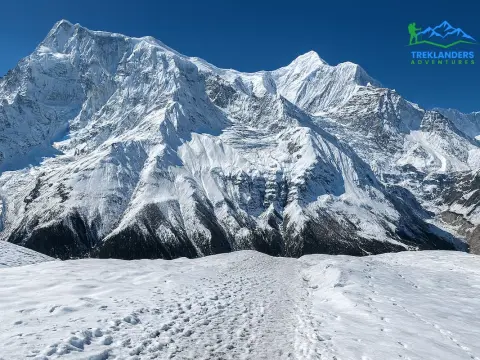
| No of people | Price per person |
|---|---|
| 1 - 1 | $2,505 |
| 2 - 3 | $1,905 |
| 4 - 8 | $1,615 |
| 9 - 30 | $1,495 |
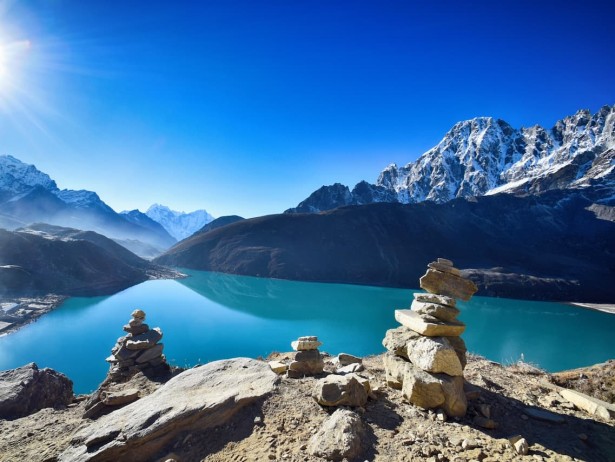
| No of people | Price per person |
|---|---|
| 1 - 1 | $1,300 |
| 2 - 3 | $1,200 |
| 4 - 8 | $1,000 |
| 9 - 20 | $900 |

| No of people | Price per person |
|---|---|
| 1 - 1 | $3,500 |
| 2 - 3 | $2,800 |
| 4 - 8 | $2,300 |
| 9 - 20 | $1,990 |