Lobuche East Peak is one of the most desirable trekking peaks in the Himalayas, measuring 6,119 meters, and is located right behind Everest. Situated in the famous Khumbu region of Nepal, this peak, which is technically not very difficult yet quite challenging, attracts mountaineers from all over the world who want to experience the excitement of altitude climbing without the extreme commitment of an expedition peak.
Your trip will start in the capital city, Kathmandu, where you can get your permits through the Nepal Mountaineering Association. After a lovely flight to Lukla, climbers will proceed along the well-known Everest Base Camp trekking route through the Sherpa people's traditional heartland, which is regarded as the heart of Sherpa Culture. The trek will pass through the famous villages of Namche Bazaar, Tengboche, Dingboche, and Lobuche before the climbers arrive at a high camp near the mountain.
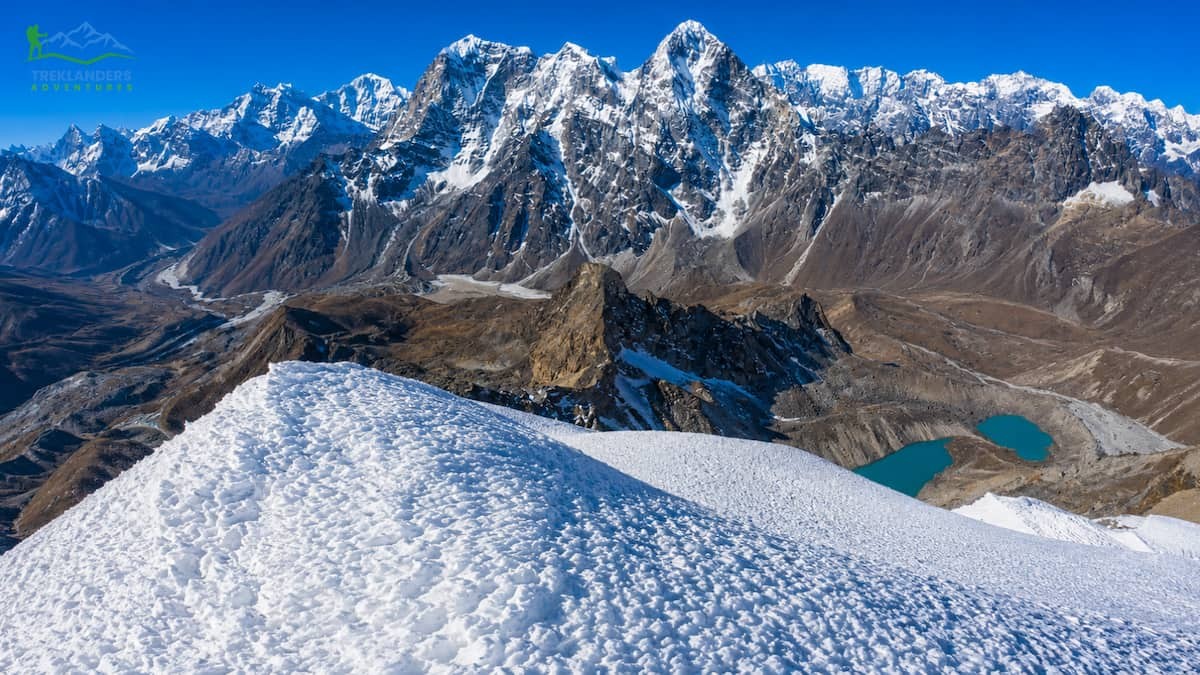
Acclimatisation is built carefully into the schedule, with break days at Namche (3,440m) and Dingboche (4,360m) giving the body a chance to get used to the altitude before the climb. The technical part features glacier walks, fixed rope sections, and an OD-gimon ridge walk to the summit, awarding climbers with a great view of Makalu, Lhotse, Nuptse, and Pumori, just like a Himalayan painting.
The entire length of the trip is from 17 to 20 days, including travel, acclimatisation, and the summit push from High Camp at approximately 5,600 meters. Based on the Nepal Mountaineering Association, the peak is Grade B and the best times to climb are pre-monsoon season (March-May) or post-monsoon season (October-November). Having a licensed guide is obligatory, and the must-have technical equipment comprises crampons, an ice axe, and a harness. With sufficient preparation, Lobuche East Peak will be a very enriching first Himalayan summit, a true landmark on a mountaineer's journey.
The ideal time you should plan a trip to Lobuche East Peak if you want to climb is spring, between March and May, and autumn, and late September to November. These are the months when we get the safest weather, stable mountain conditions, and the best views of the Himalayas.
Climbing season is mainly in the spring. The temperature rises after winter, and the trekking paths in the Everest region run through beautiful rhododendron forests, green hills, and lively village teahouses. Morning skies are generally free of clouds, which greatly enhances visibility for trekking and summit climbs. People who climb are also happy about it. There are longer daylight hours, and weather changes are easier to predict. Snow conditions on the mountain are usually steady, so the main climbing season is from April to early May.
Autumn is a great season for climbing the Lobuche East Peak. Once the monsoons are over, the air is clean and fresh with no dust, giving quite incredible mountain landscapes. Besides, the weather stays dry, and there are hardly any muddy spots on the paths. Actually, October is the widely selected month as the best one in autumn for climbing, as the temperature is not too hot during the day and the likelihood of snow and storms is still low.
Winter climbing is also a possibility, but it needs more effort and persistence as the temperatures are really low and the winds are also very strong. Besides, there may be heavy snowfall that can hamper summit success. The monsoon season from June to August is usually avoided as rain clouds, slippery trails and poor visibility create very difficult conditions for trekking and climbing.
For most trekkers and climbers, April, May, October, and early November offer the best balance of weather, safety, mountain visibility, and overall climbing experience on Lobuche East Peak.
Since Lobuche East Peak is located in the Everest region of Nepal, multiple permits are obligatory to embark on the climb. The concerned authorities make it compulsory for foreign trekkers and climbers to have these permits. Without the necessary papers, you are not allowed to access the region or lead to the summit.
Among other permits, the Lobuche East Peak Climbing Permit from Nepal Mountaineering Association is the most significant one. The price of the permit varies with the season of the climb. Lodging a request for a lodge permit in spring involves higher costs since the fall river of lodges is active. On the contrary, a lodge permit in autumn will be slightly less, whereas summer and winter seasons will be the cheapest.
In addition, hikers require the Sagarmatha National Park Entry Permit as the way follows the path through Sagarmatha National Park. This national park is the dwelling place of Mount Everest and other popular trekking routes. Proceeds from the permit are directed towards conservation efforts as well as the maintenance of trails and the protection of the environment inside the park area.
One of the other necessary documents is the Khumbu Pasang Lhamu Rural Municipality Permit. This local permit has replaced the old TIMS card system in the Everest region. It is checked at the entry points along the trekking route and also helps to fund local tourism development and infrastructure projects.
Generally, most climbers get these permits through trekking companies in Kathmandu before embarking on their expedition. Agencies normally manage the paperwork, logistics, and permit collection, which makes preparing for international travellers a lot easier. Solo climbers might find it hard if they try to get peak climbing permits on their own, as climbing regulations in Nepal stipulate that one must be coordinated with authorized operators.
Permit prices are subject to change slightly every year, but climbers should also plan guide fees, accommodation, transportation and climbing gear besides the permit expenses. It is best to carry printed copies of permits on the trek because officials regularly check documents at various checkpoints in the Everest region.
By acquiring all the necessary permits beforehand, one can have a legally safe and well-organized Lobuche East Peak climbing experience while also contributing to conservation and local communities in the Khumbu region.
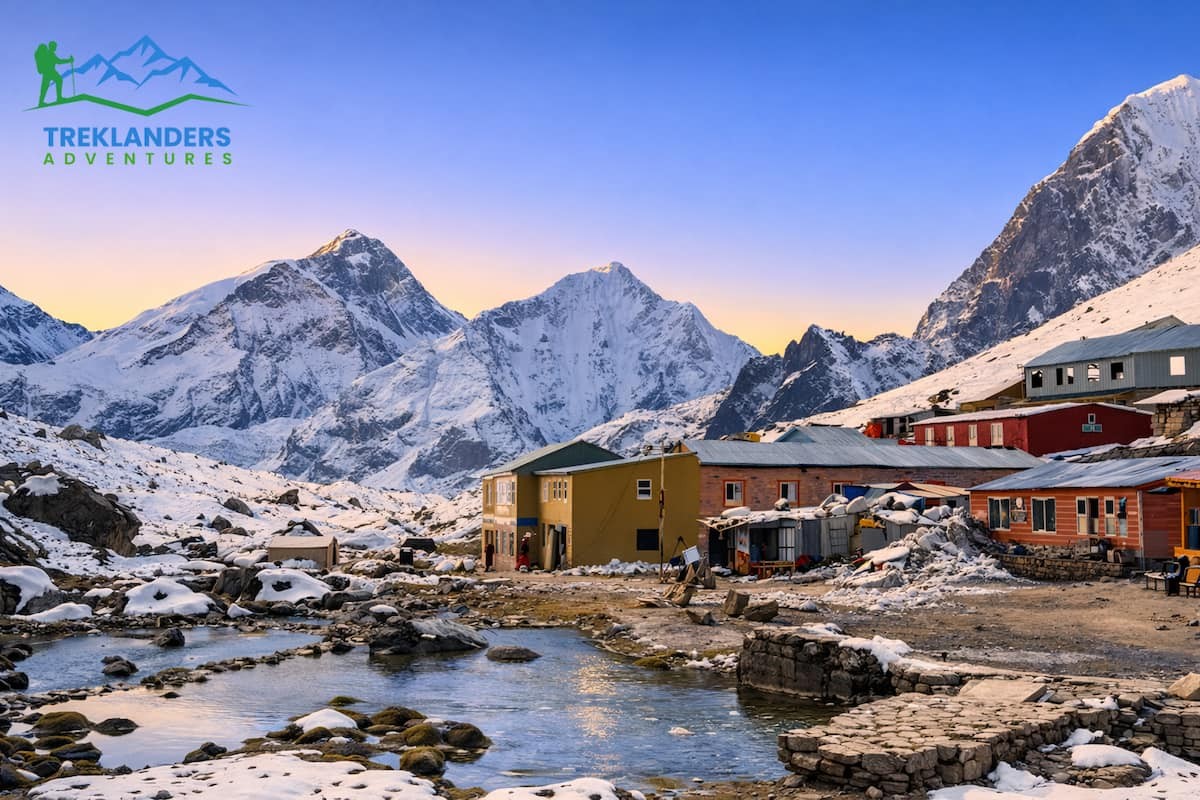
Accommodation during the Lobuche East Peak climb varies from basic teahouses on the trekking trail to simple tented camps at higher elevations on the mountain. Most climbers initially stay in traditional lodges in villages along the Everest route. These teahouses provide an essential place for rest, food, and acclimatization before the ascent to higher elevations.
In the lower villages, you will find rooms that are generally better equipped with beds, blankets, pillows, and some even have twin beds. There is also a dining space shared by the guests that is heated by stoves. Still, as you go higher in the mountains, the accommodation gets rudimentary. The rooms get smaller, the temperature drops, and the facilities are limited as it is very difficult to transport supplies into the mountains. Throughout the trek, shared toilets and dining areas are the standard.
Before the summit, climbers usually spend the night in well-known villages like Phakding, Namche Bazaar, Tengboche, Dingboche, and Lobuche. These villages have many trekking lodges that accommodate climbers from all over the world during the main climbing seasons. Dining halls in these lodges are often the social hubs where trekkers come together for meals, to plan their routes, and to get weather updates.
Near Lobuche East Base Camp, you will normally find that the type of accommodation changes from teahouses to tented camping. The expedition team and guides will usually put up your sleeping, kitchen, and dining tents for climbers intending to make the summit push. By camping higher up, the teams can get a head start on their climb early in the morning, which is usually when the weather is more stable.
For this expedition, you should think of lodging as being of a functional nature rather than being luxurious. At the higher altitudes, electricity, hot showers, internet facilities, and charging may not be available all the time. You should bring a warm sleeping bag as a necessity because at night the temperatures can fall quite drastically near the mountainside.
Even though the conditions are quite basic, the warm reception given by the local lodge owners and the spectacular mountain environment make the whole Lobuche East Peak climbing experience very memorable.
During the seasons when trekking is at its peak, lodges along the trail can get crowded with trekkers and climbers, mostly in the areas of Namche Bazaar and Dingboche. Getting a booking through a climbing company means that you will have your accommodation guaranteed in advance, and you will also be less likely to face any problems with the arrangements during busy times. Making an early reservation also gives the group more flexibility in sticking to their schedule if there are any changes in the conditions.
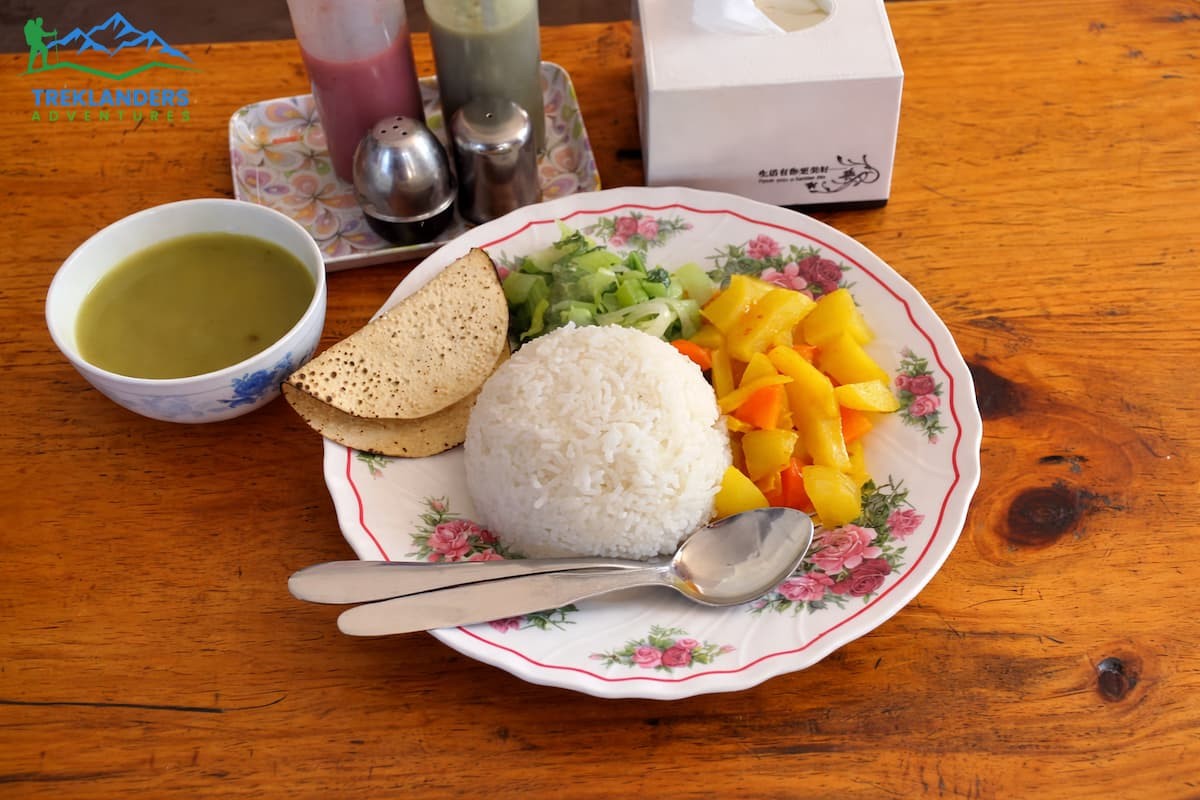
Food and drinking water during the Lobuche East Peak climbing are simple, nourishing, and designed to support trekkers at high altitude. Most meals are served in teahouses along the Everest trekking route, while higher camps rely on prepared expedition food and hot drinks provided by guides and support staff.
Dal bhat is the most common meal during the trek. This traditional Nepali dish includes rice, lentil soup, vegetables, and sometimes curry or potatoes. Many climbers prefer it because it provides steady energy and is usually served in large portions. Other common foods available in teahouses include noodles, fried rice, pasta, soups, eggs, pancakes, bread, porridge, and momos. Menus are often surprisingly varied in lower villages, although food choices become more limited as elevation increases.
Breakfast usually includes porridge, Tibetan bread, toast, eggs, tea, or coffee. Lunch and dinner focus on warm, carbohydrate-rich meals that help maintain energy levels during long trekking days. Fresh fruits and vegetables are available in some villages, but availability decreases at higher altitudes due to transportation difficulties.
Hydration is vital while climbing Lobuche East Peak because, at higher altitudes, the body gets dehydrated more quickly. So, trekkers are always advised to drink a lot of water during the entire trek to help the body get used to the high altitude and, at the same time, reduce the risk of getting altitude sickness. Most climbers bring water bottles that can be used many times or hydration systems with them during the trip.
Usually, drinking water is obtained from teahouses, taps, or natural mountain sources. It is forbidden to directly consume bare water. Lodges provide boiled water, which is by far the safest option, to the customers. A lot of trekkers also rely on water purification tablets, filters, or ultraviolet purification devices for their safety.
People usually drink hot beverages like black tea, ginger tea, lemon tea, and garlic soup at high altitudes as these drinks not only warm the body but also give a comforting feeling during cold conditions. It is generally advised not to consume alcohol during the climb as it can cause dehydration and hinder the process of getting used to the altitude.
Eating to maintain a proper balance and taking in a sufficient amount of safe water are going to be your best tools for keeping up your strength, helping your body recover, and successfully getting used to the altitude during the time you will be climbing Lobuche East Peak in the Everest region.
Health and safety considerations are an important topic to discuss during Lobuche East Peak Climbing because you will be conducting yourself at high elevations, exposed to cold temperatures and challenging trekking conditions. With the proper knowledge, preparation, gradual acclimatization and smart decision making, your chances of having a safe and successful summit attempt increase greatly.
Altitude Sickness: Probably the biggest concern for most climbers visiting the Everest Region is altitude sickness. As you gain altitude, there is less available oxygen. Even healthy climbers can be affected by the thin air as they ascend higher into the mountains. Symptoms of altitude sickness include headache, nausea, dizziness, fatigue, and shortness of breath. If left untreated, altitude sickness can lead to life-threatening issues like High Altitude Pulmonary Edema (HAPE) and High Altitude Cerebral Edema (HACE). To prevent altitude sickness, climbers should ascend slowly, incorporate acclimatization days into their climb, drink plenty of fluids, and, most importantly, let their guide know if they are experiencing any symptoms or if symptoms are getting worse.
Fitness level: Trekking to Lobuche East Peak is not only about gaining elevation but also hiking long days, steep ascents and descents, traversing glaciers, and mastering your footing with crampons while using your ice axe for support. Doing plenty of pre-expedition hiking, exercising to improve leg strength, and cardio will help you tremendously on the days you trek through the Khumbu Region.
Weather: As with any mountain climb, poor visibility due to inclement weather can create hazardous conditions while climbing. Most summit days are scheduled early in the morning due to the fact that weather patterns are typically more favorable. Paying attention to your guide’s instructions is crucial when climbing in poor weather conditions and knowing when to turn around.
Guides: Having knowledgeable climbing and support staff not only makes for a safer overall expedition but also allows your team to climb at higher efficiencies. Your team of guides will watch your acclimatization process, lead you through technical terrain and know how to respond to most situations should something go wrong. Most commercial climbing groups will have basic first aid supplies, some form of communication device and an emergency evacuation plan.
Hygiene: Staying clean and aware of your surroundings will help you avoid many stomach illnesses and infections. Drink purified water, eat well-cooked meals, wash your hands often, and take necessary medications for common travel-related illnesses.
It is highly advisable to get travel insurance that includes coverage for high altitude evacuation if you plan on climbing Lobuche East Peak. In critical health cases, helicopter evacuations might be required since the availability of advanced medical facilities in the Everest region is quite limited.
The combination of thorough preparation, correct acclimatization, the guidance of a knowledgeable leader, and personal accountability will lead to a lot safer as well as more enjoyable Lobuche East Peak climbing experience.
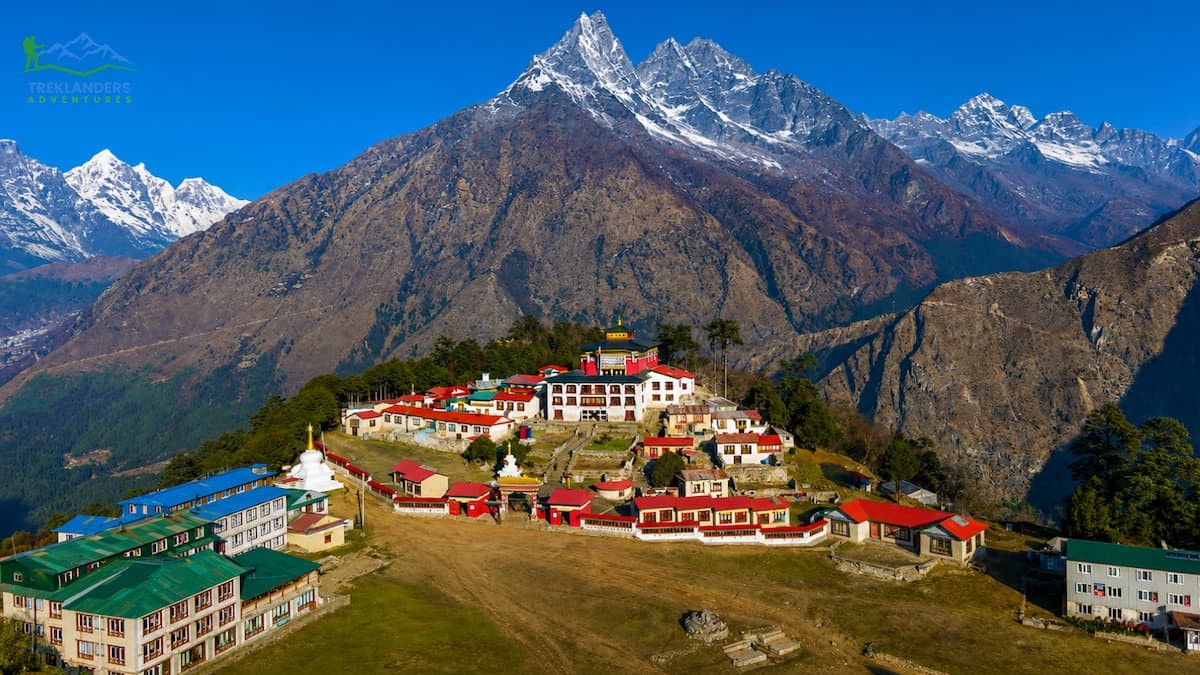
The culture of the Everest region around Lobuche East Peak is heavily influenced by the Sherpa tradition, religion, and culture. The Sherpa originated in the Himalaya of Nepal, where they have developed a unique culture that has been intertwined with mountain culture, Buddhism, and the environment for hundreds of years.
Almost all of the people who live in the Khumbu practice Tibetan Buddhism. Ancient monastery buildings, prayer wheels, mani walls, chortens, and large colourful prayer flags line the trekking trail. The mountains are considered sacred by many of the people who live here. It is expected that climbers will show respect by being mindful of religious structures and sensitive to local traditions during the trek.
One of the larger and more significant cultural aspects of the Everest region is the monastery at Tengboche. Most climbers and trekkers make a trip to this monastery at some point during their expedition to watch Buddhist prayer ceremonies, receive blessings, and feel the energy of the Himalayas. Many expedition teams ask for a traditional blessing before their summit push and inquire about safe travel and good weather.
Hospitality, cooperation with neighboring families, and knowledge of the mountains are essential parts of Sherpa culture. Most teahouses, lodges, and trekking operations are family-owned and operated along the Everest Trekking Route. Guests are treated with respect, and many families take time to teach you about their culture, cuisine, language, and day-to-day living in the Himalaya.
During your climb of Lobuche East Peak, there are certain things you should do to show respect for local culture. Trekking around Buddhist structures such as stupas and mani stones should be done clockwise. Try not to touch ritual objects unless you are asked to do so as part of a ceremony. When entering a monastery, wear clothing that covers your shoulders and legs. Loud noises and inappropriate behavior near sacred sites are disrespectful.
Celebrating Buddhist traditions and festivals is another large part of Sherpa culture. Festivals typically consist of masked dance rituals, prayers, music, and locals visiting the local monastery. Festivals help reinforce the bonds between neighbors and keep ancient traditions alive.
The cultural experience of Lobuche East Peak climbing is often as memorable as the mountain itself. Interactions with Sherpa communities, visits to monasteries, and exposure to Himalayan Buddhist traditions give climbers a deeper understanding of life in the Everest region beyond the physical challenge of the climb itself.
Highest, Most accessible, Incredible Views, Ideal Intro to Himalayan Climbing
Reasons to climb Lobuche East Peak:
If you are looking for one of the finest climbing adventures in Nepal as a trekker who wants to experience Himalayan mountaineering, but isn’t interested in doing an extremely technical expedition, then Lobuche East Peak might be for you. There’s adventure, trekking, mountain views and classic alpine climbing all combined into one trip in the Everest region.
Proximity to some of the world’s most renowned Himalayan destinations. The trail to Lobuche East takes you through incredible Sherpa villages, suspension bridges, forests, glaciers and high mountain scenery before reaching the standard climbing route. Most itineraries also take you through Everest Base Camp and Kala Patthar. Climbing Lobuche East allows you to visit some of these destinations that you may otherwise not have the chance to visit.
Views from the summit of surrounding Himalayan giants like Mount Everest, Lhotse, Nuptse, Ama Dablam and Pumori are unparalleled on most trekking peaks. You won’t find many places where you can enjoy such dramatic scenery with a true mountaineering experience. Climbing to the summit at sunrise is something many consider to be the best part of climbing in Nepal.
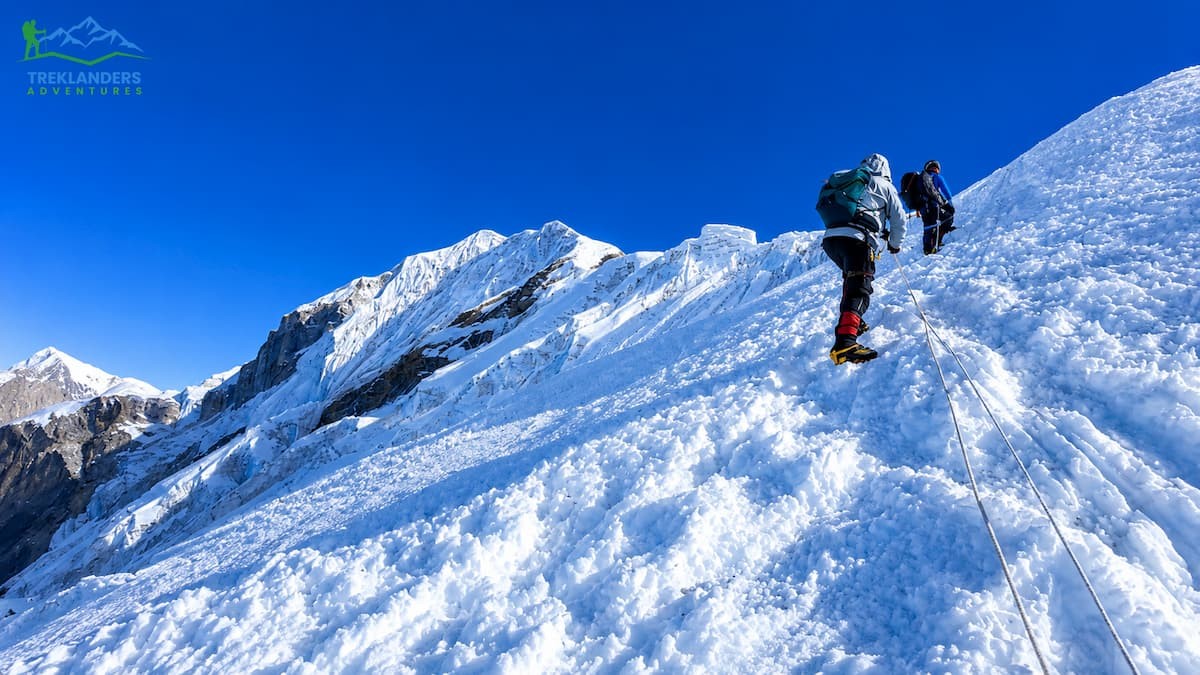
It’s also one of the best choices for adventurous trekkers who want to do more than just hiking on standard trekking tours. Sure, prior climbing experience will help, but many people tackle this expedition with just a basic knowledge of mountaineering and are able to complete the climb under the direction of capable climbing leaders. It’s a great way to learn and practice essential alpine mountaineering techniques like using crampons, fixed ropes, harnesses, and ice axes without being over your head.
Experience an incredible culture. Climb with Sherpas, visit Buddhist monasteries and learn about mountain culture in Khumbu.
It takes significantly less time and planning than a bigger Himalayan mountain, and the logistics and level of fitness required to complete the climb are very realistic. All this makes Lobuche East Peak one of the most rewarding peak climbs for trekkers looking for challenges, mountains and a true Himalayan climbing experience.
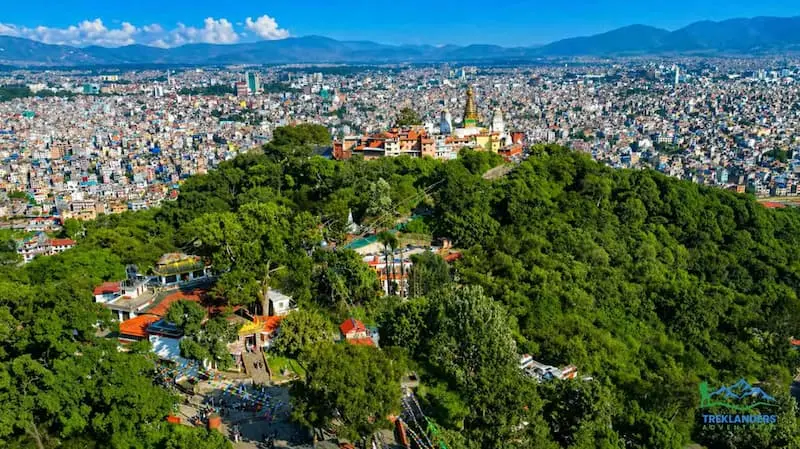


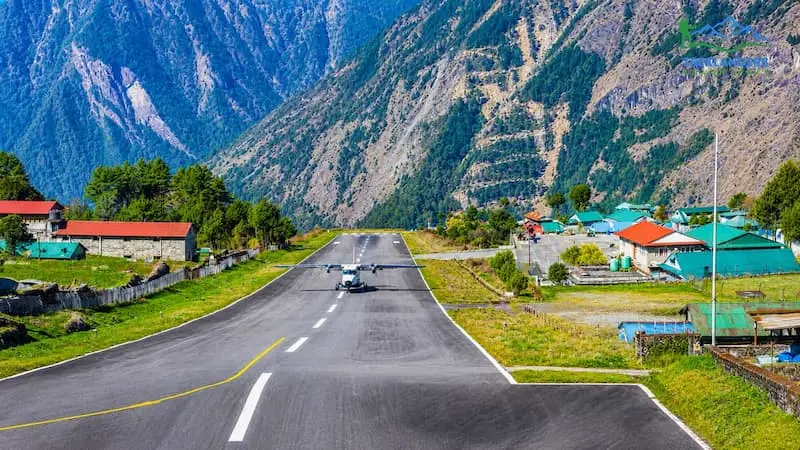
The first thing in the morning is to reach the domestic terminal for the flight to Lukla. This forty-minute flight is one of the most scenic short-haul air routes in the world, as the plane weaves its way through cloud-covered mountain crests right before landing on the steep runway of Tenzing-Hillary Airport. From Lukla, the trek officially starts. The path heads down gradually, following the Dudh Koshi River, and together with several wooden bridges and suspension bridges, the crossing takes you through the scenery of pine forests, prayer flags, and tiny Sherpa villages. The trek of three or four hours to Phakding at 2,610 meters is quite gentle and is meant to acquaint your body with the mountain terrain without placing any serious altitude stress on the first day.

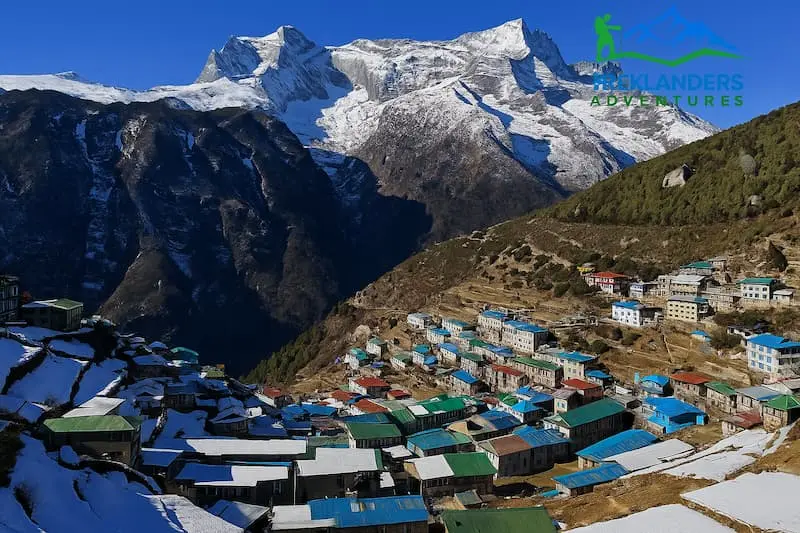
Today's five-to-six-hour hike is one of the most celebrated stages on any Everest approach. The trail passes through the village of Monjo, where the Sagarmatha National Park checkpoint marks your entry into a UNESCO World Heritage Landscape. Shortly after, the Hillary Suspension Bridge swings high above the roaring gorge of the Dudh Koshi before the trail climbs steeply through dense rhododendron and pine forest to Namche Bazaar at 3,440 meters. The commercial capital of the Khumbu is a lively, welcoming town with teahouses, bakeries, gear shops, and on a clear afternoon, your first framed view of Everest rising above the ridgeline to the north.
Acclimatisation days are among the most important elements of any high-altitude expedition. Rather than resting entirely, you take an active hike to a higher elevation and return to sleep at a lower elevation, a process that stimulates your body to produce additional red blood cells and improves oxygen-carrying capacity. Today's destination is the Hotel Everest View at 3,880 metres, from which Ama Dablam, Thamserku, Lhotse, and the distant summit of Everest are all visible in a single panorama. From there, the route loops through Khumjung village, home to the Khumjung School built by Sir Edmund Hillary and a monastery that houses the famous yeti scalp. The afternoon is reserved for rest, hydration, and good food.
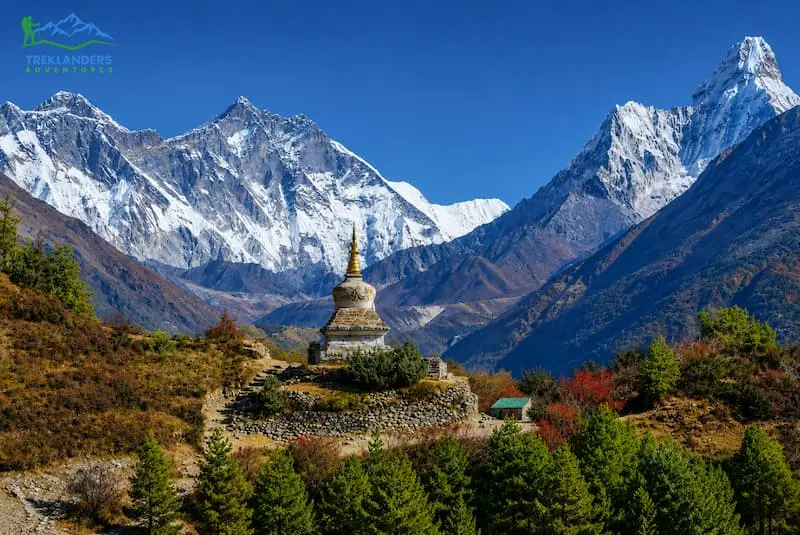
After a five-hour hike, you will pass through Kyangjuma and eventually make a steep descent down to Phunki Thenga, a riverside lunch stop where the Dudh Koshi river can be heard rushing. The trail from here goes up quite steeply through a mixed forest before reaching Tengboche situated at 3,874 metre height level, one of the most photogenic places in Himalayas. The Tengboche Monastery is built on a natural ledge surrounded by mountains, with Ama Dablam being the most visible peak in the sky while Everest and Nuptse are to the north. Seeing the evening prayer inside the monastery in case your arrival is scheduled that time, is something many trekkers call it as whole journey's quiet highlight.
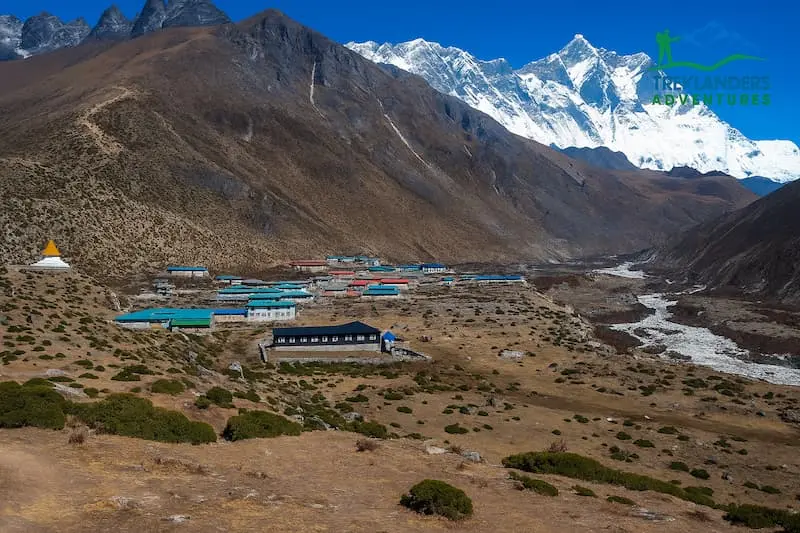
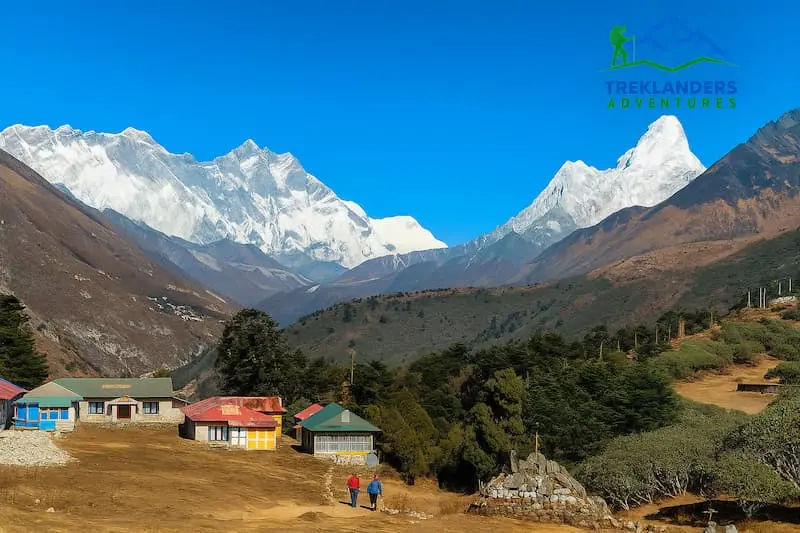
Getting down to the last batch of rhododendron wood, the route of five hours laid on the Imja Khola valley follows eastward via the long-standing village of Pangboche, whose lower monastery is regarded as one of the oldest in the Khumbu. Upon reaching above the tree line, the scenery changes drastically - massive peaks surrounding the wide, open valley areas of rock and scrub. Dingboche at 4,410 meters is an agricultural-based community where the fields are surrounded by stone walls and still grow potatoes and barley at this height.
The air here is much thinner than anything you have ever experienced. It is common for an appetite to go down and for sleep to be more restless than usual when one is gaining altitude.
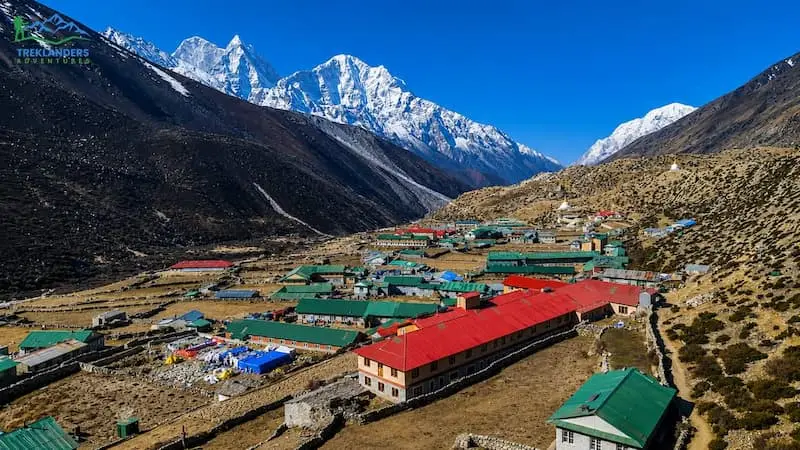
One of the very best ways to gain oxygen at altitude is through exercise and exposure; Because of this, the second and final acclimatisation day will be a four-hour morning stroll to Nagarjuna Hill at 5,100 meters, the top-most point to which your body would have been exposed so far. The panoramic views from the summit of this rounded hill are stunning: Makalu, the fourth-highest mountain in the world, dominates the horizon to the east while Lhotse's south face is right in front of you. Besides being an incredible hike, this is a significant sports test too. How your legs, lungs, and head perform at 5,100 meters will help your guides to understand better if you are physically, technically, and mentally ready for the challenging summit days ahead. Resting in the afternoon is suggested.
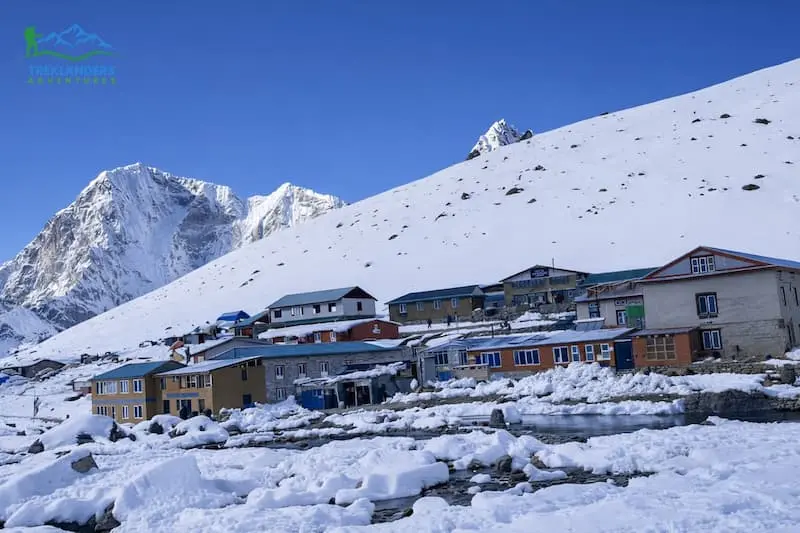
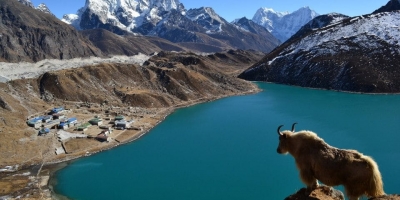
Walking for about five hours today transports you from the farmed realm of Dingboche to the icy environment of upper Khumbu. On the way, you will go through Pheriche, where a high-altitude medical clinic run by volunteer doctors is established during the trekking season. The path ascends to the Thukla Pass. At this point, a collection of stone chortens and memorial cairns honors the mountaineers who have died on the peaks of the Khumbu, a very moving and significant detour. After crossing the pass, the way runs along the Khumbu Glacier's lateral moraine leading to the cluster of lodges at Lobuche, which is at 4,930 meters on the brink of the ice.
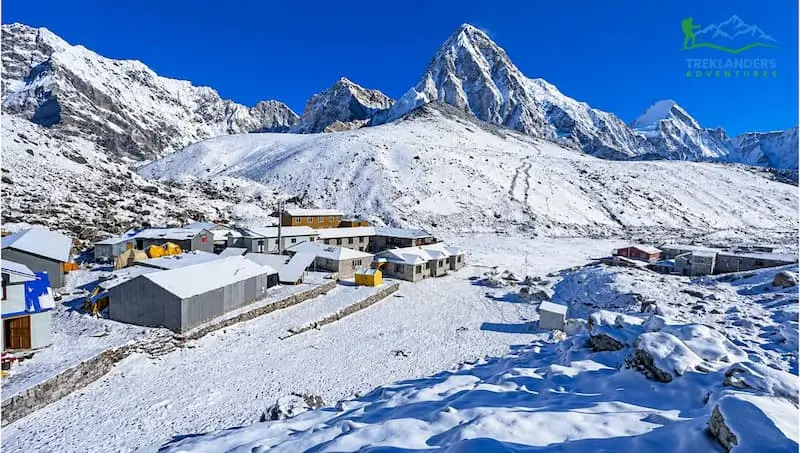
It is a three-hour trek in the morning that, after crossing the Khumbu Glacier moraine, leads you to Gorakshep, the last and the highest permanently settled point on the way to Everest. Once you are checked in, have had lunch, and have had some rest, you go on the four-hour round trip to Everest Base Camp at 5,364 meters. The path goes through the intricate network of glacial debris and ice ridges before reaching a wide, rocky plateau, which is the main camp for Everest expeditions every spring. To be here is to be the scale of the surrounding - the Khumbu Icefall straight above, the enclosing walls of Nuptse and the West Shoulder - is something you cannot find anywhere else along the trail.
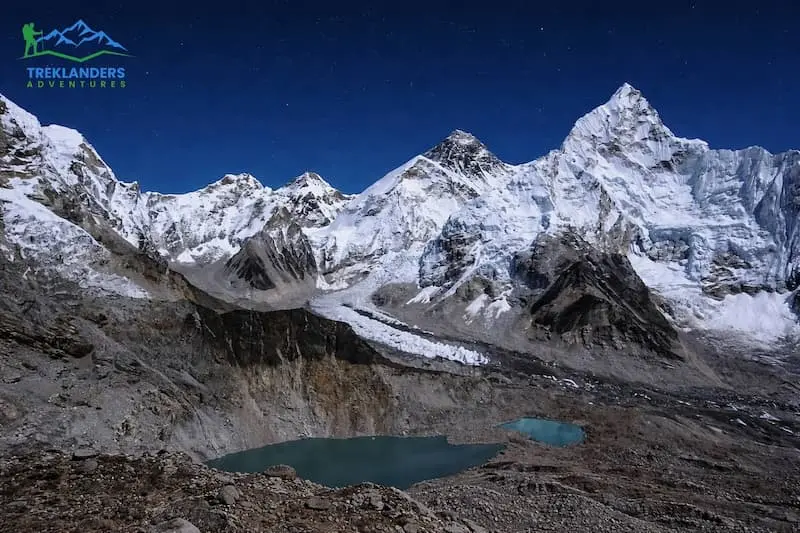
You wake up quite early, start the climb to Kala Patthar with the steep for two hours in the darkness. The peak at 5,545 meters offers a view of the sunrise over the south face of Everest, which is said by many to be the best high-altitude viewpoint in the world that one can access without technical climbing equipment, the slow lighting of gold and rose over the highest parts of the Earth. Going down to Gorakshep again for breakfast, the five-hour walk to Lobuche Base Camp at 4,940 meters starts, burdened with the memory of the sunrise and the excitement of the technical climb that still lies ahead.
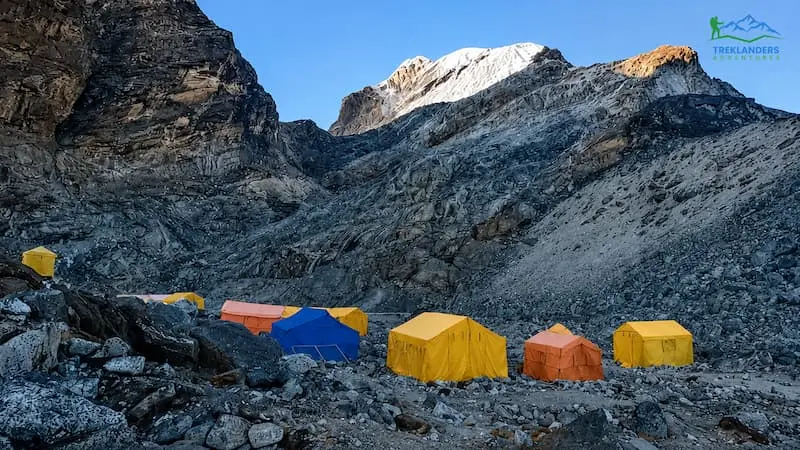
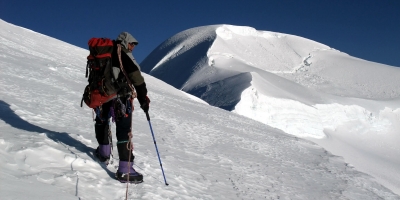
Today, your trek shifts to climb mode. After a four-hour hike through the rocky moraine and the lower part of Lobuche Glacier, you will reach High Camp at 5,400m. This is a typical alpine environment: cold, open, and quite challenging. Your guide team checks your gear thoroughly - making sure your crampons fit properly, adjusting your harnesses, showing you how to hold your ice axe and how to arrest it - and then they will take you to the glacier for a pre-climb session. The main point here is to get used to the technical aspects and to gain some confidence. You will likely be so tired that you will go to bed right after dinner. Though you shouldn't be surprised if your sleep gets interrupted at this altitude, there is no need to worry about it.
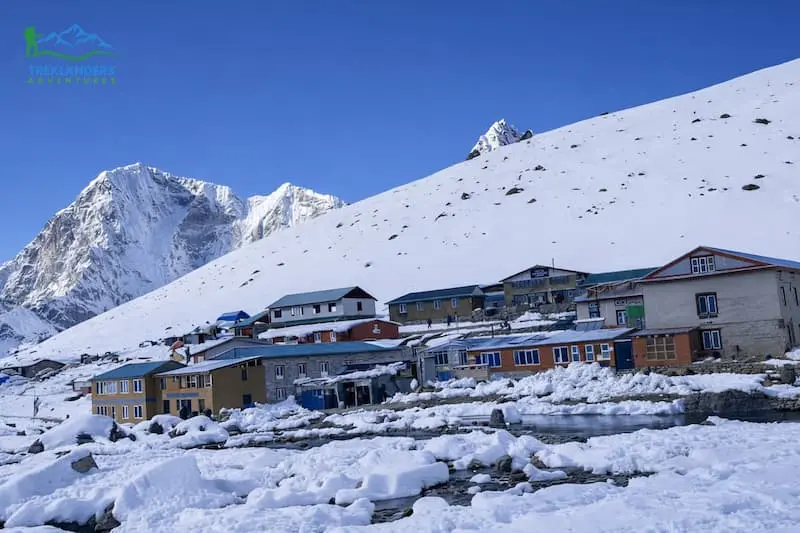
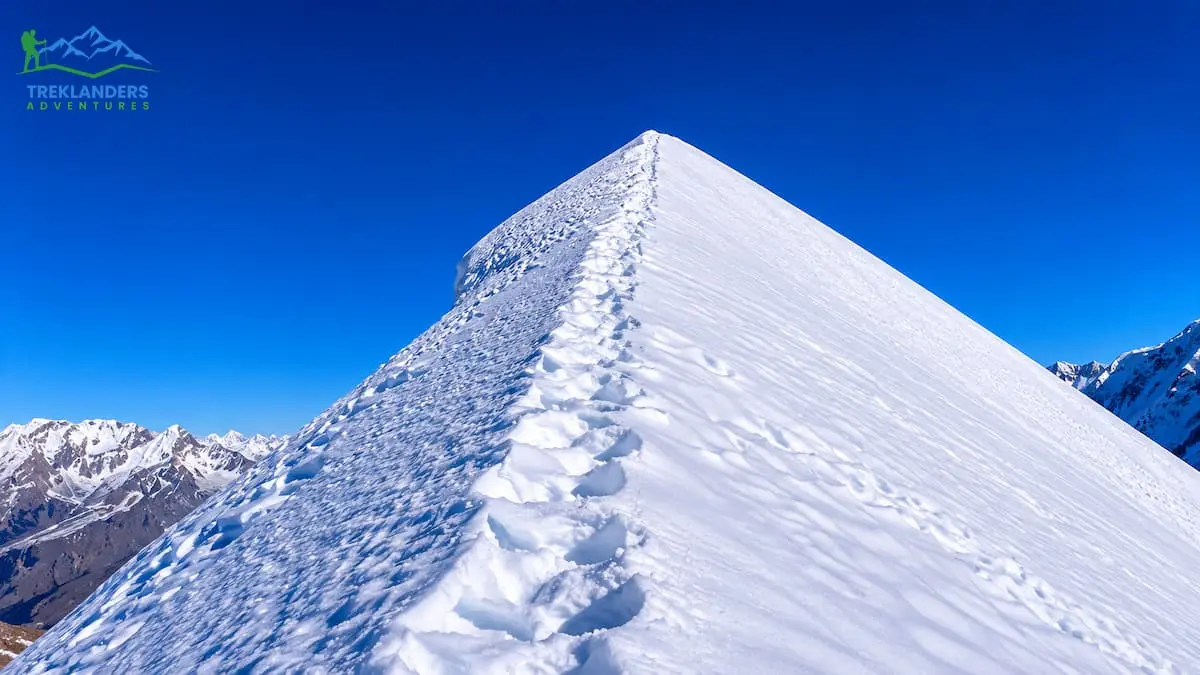
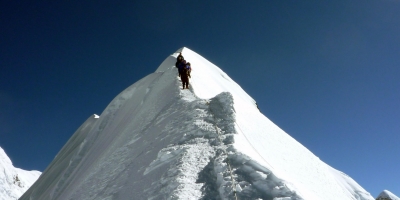
Starting time is 12 a.m. The crampons are sinking into the icy snow as the group rises silently, going along the path where the ropes are set through the difficult parts of the route above the camp. The time it takes to reach the top is five or six hours; during this time, you will need your mental focus to be sharp, your breathing under control, and your trust in the rhythm created by your guides during the last eleven days to be complete. Just before reaching the summit, the final ridge gets very narrow, but it still leads to the top at 6,119 m, where you are surrounded by the breathtaking view of the Himalayas from all sides. Everest, Lhotse, Nuptse, Pumori, and Makalu can all be seen at once. Following photography and a few moments of solitude at the highest point of the expedition, you set off on the way down to Lobuche Base Camp at 4,940m.
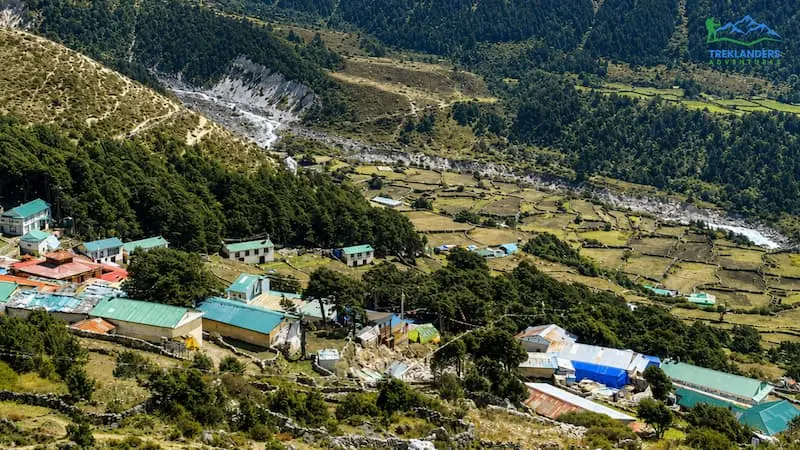
With the summit completed, the mountains begin returning their altitude to you. A five-to-six-hour descent retraces the main Everest trail south through Pheriche and down into the increasingly warm and oxygen-rich air of the mid-valley. Pangboche at 3,930 meters is notably warmer than anything experienced in the past five days. Appetites return strongly. Conversation flows easily. The physical relief of descending below 4,000 meters after days at extreme altitude is one of the most quietly satisfying experiences this journey offers.
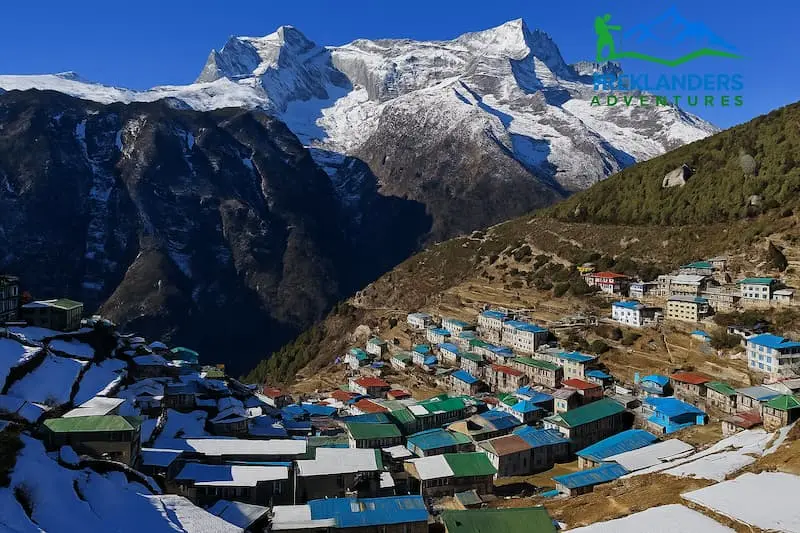
Six hours of walking through juniper and birch forest, across the familiar suspension bridges of the Dudh Koshi, and past the monastery ridge of Tengboche brings you back to Namche Bazaar. The town that felt like a milestone on the way up now feels like a comfortable old acquaintance on the way back. A warm shower, a bakery coffee, and a reliable phone signal after many days of limited connectivity are among the small luxuries that feel genuinely extraordinary after a high-altitude summit expedition.
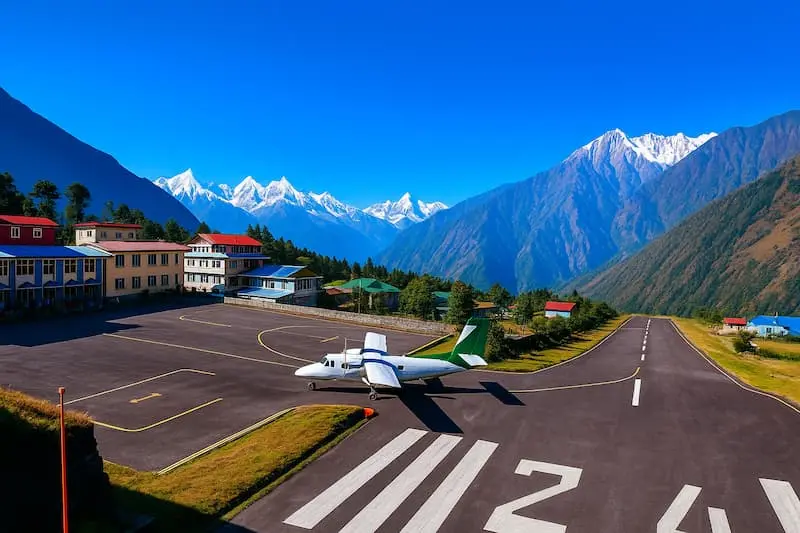
After seven hours, our trek down the valley is a slow goodbye to Khumbu. Each part of the trail is now laden with a new memory: the bridge at Phakding, the checkpoint at Monjo, the walk through the last forest, and then the final 45 minutes upward to Lukla. The hotels also serve celebration dinners and provide a relaxed, hearty bond between a team that has survived and accomplished something together.
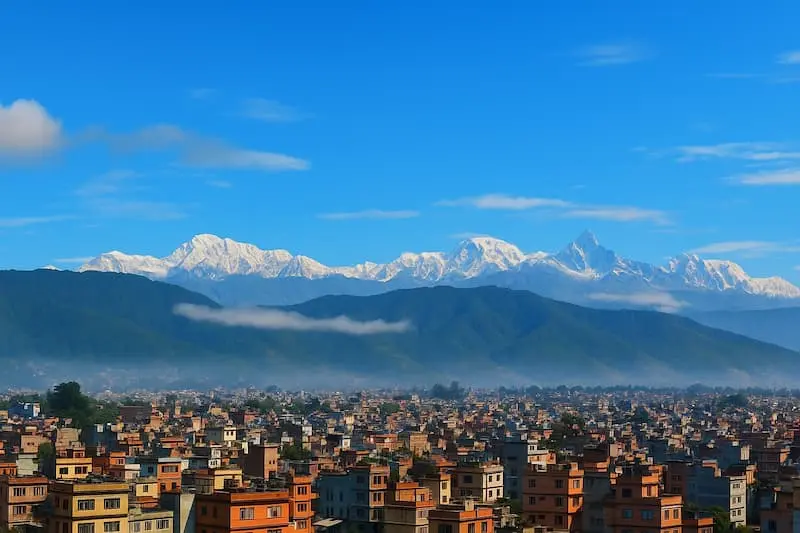
The early morning flight will take you back to Kathmandu by flying over the foothills of the mountains. You have the afternoon free to buy souvenirs at Thamel, the place where you can easily find handwoven Sherpa wool, Thangka paintings, prayer flags, and locally made expedition keepsakes. The farewell dinner in the evening, hosted by Treklanders, will be a great time for the team to remind themselves that they have made seventeen days of extraordinary effort and have witnessed equally extraordinary landscapes.
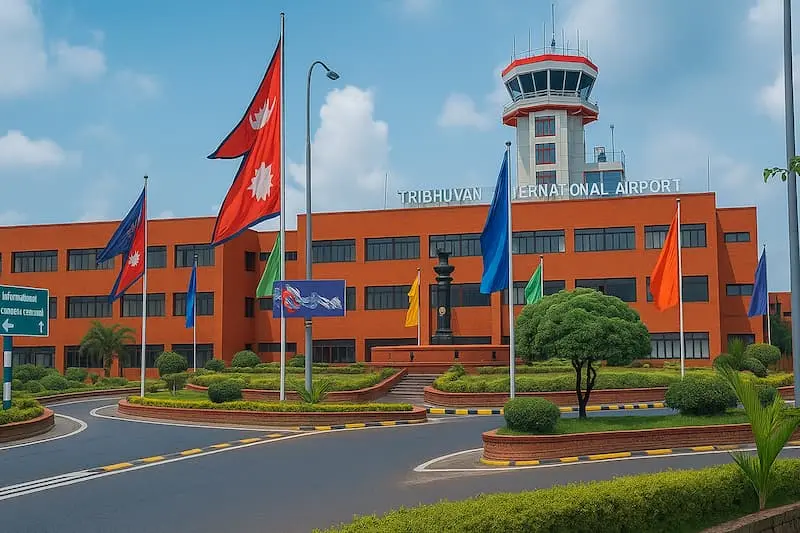
After a Treklander takes you to Tribhuvan International Airport, you will board your plane to return home. The mountains are no longer with you, but such a high-altitude expedition on this scale is something that leaves an imprint and a shift in one's outlook, which, per those who've done it, ranks among the most significant episodes in their lives.
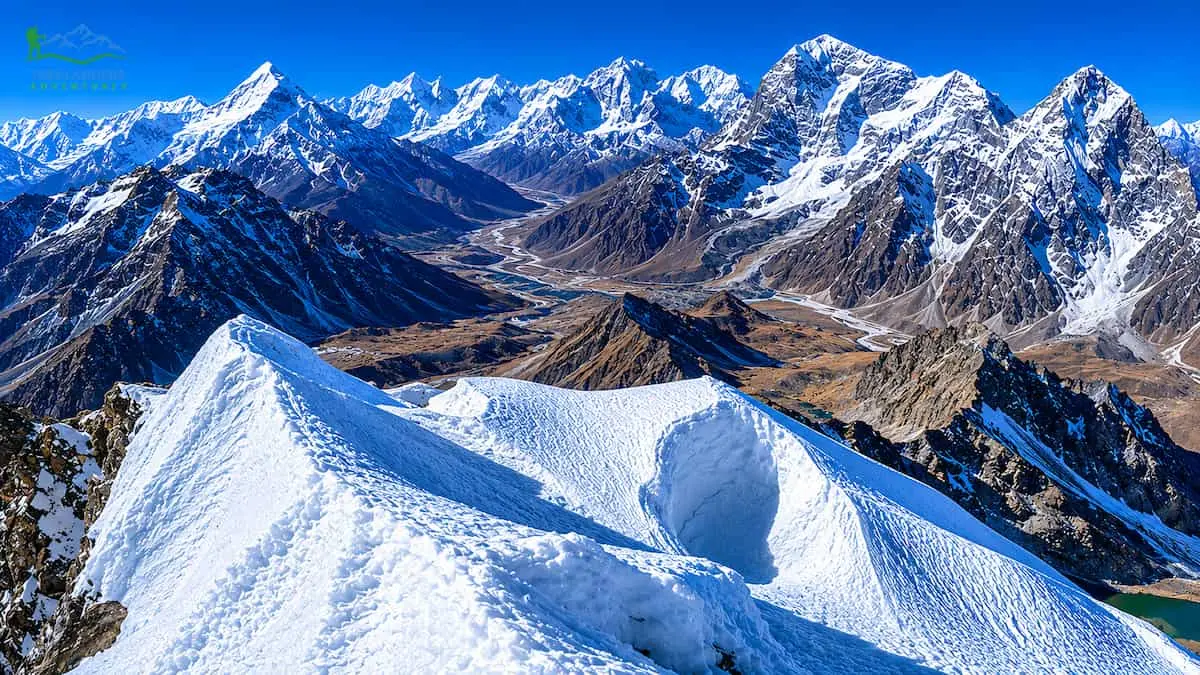
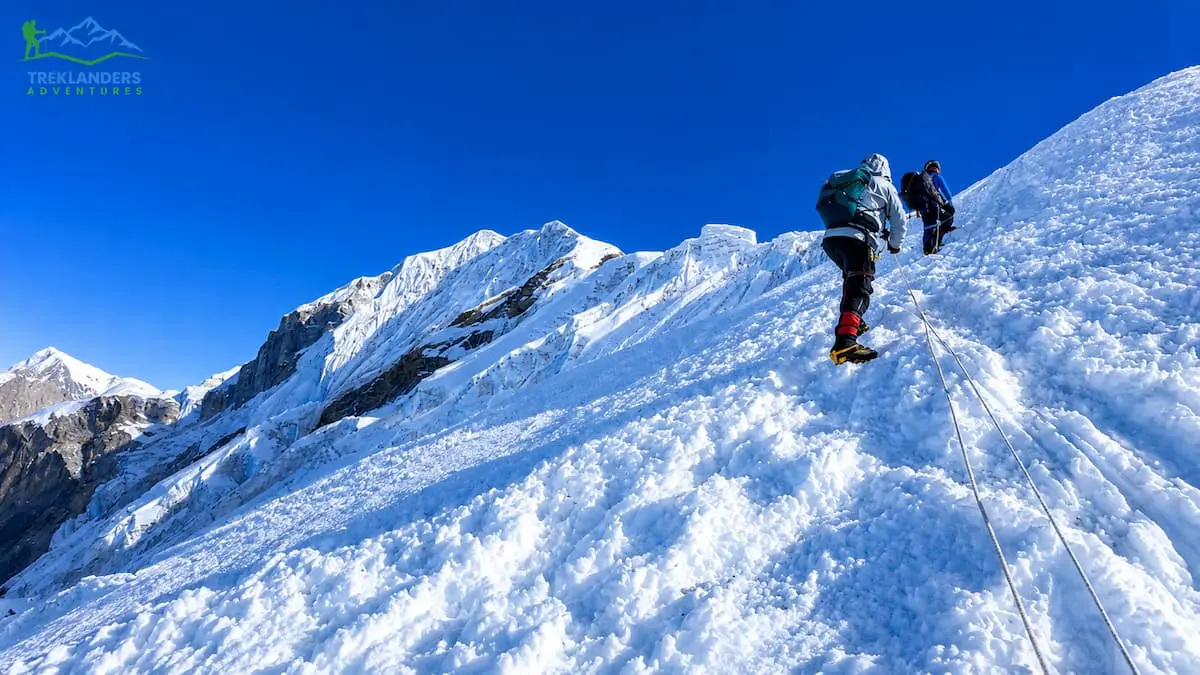
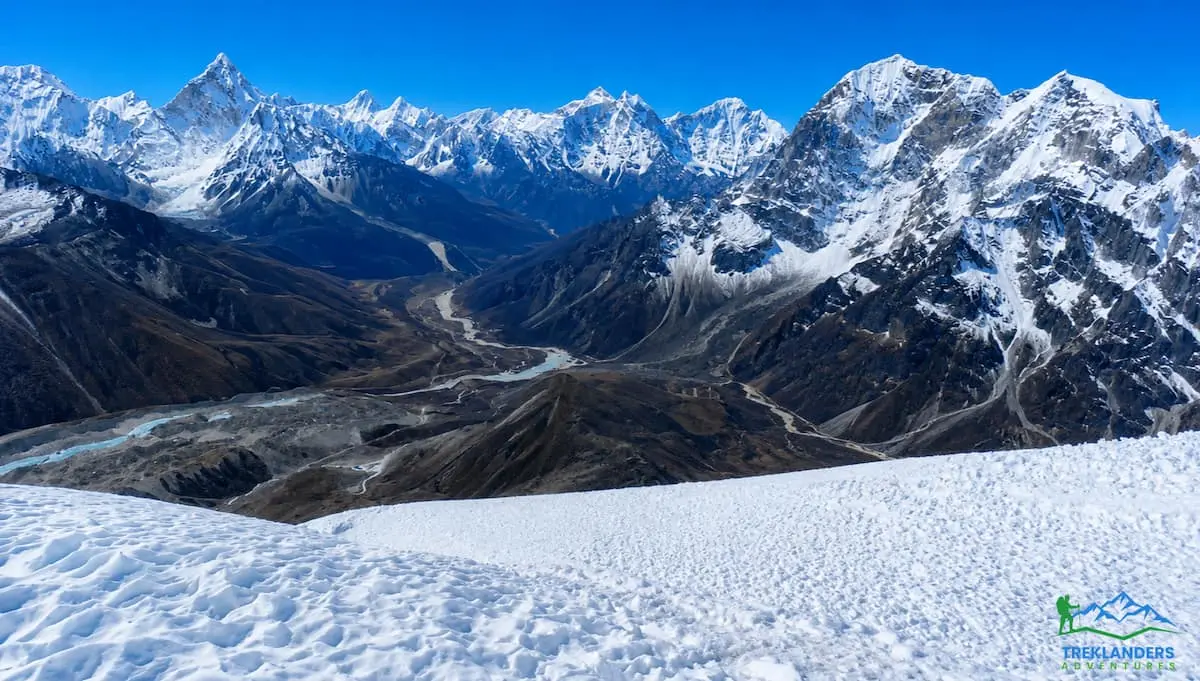
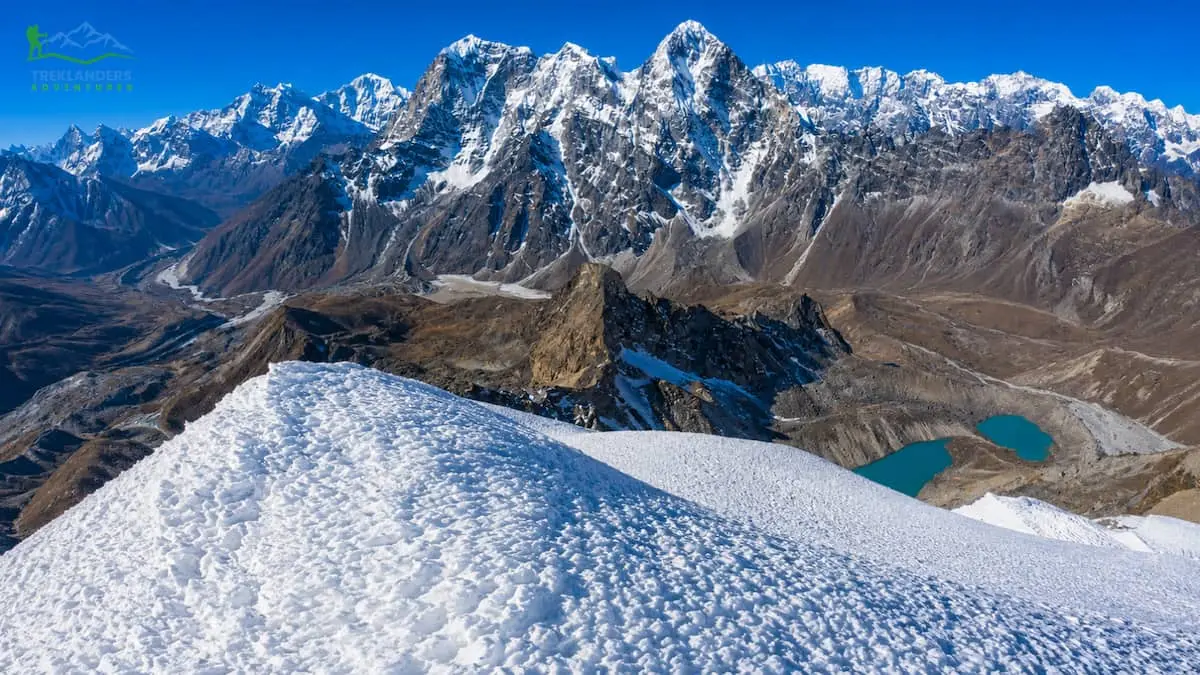
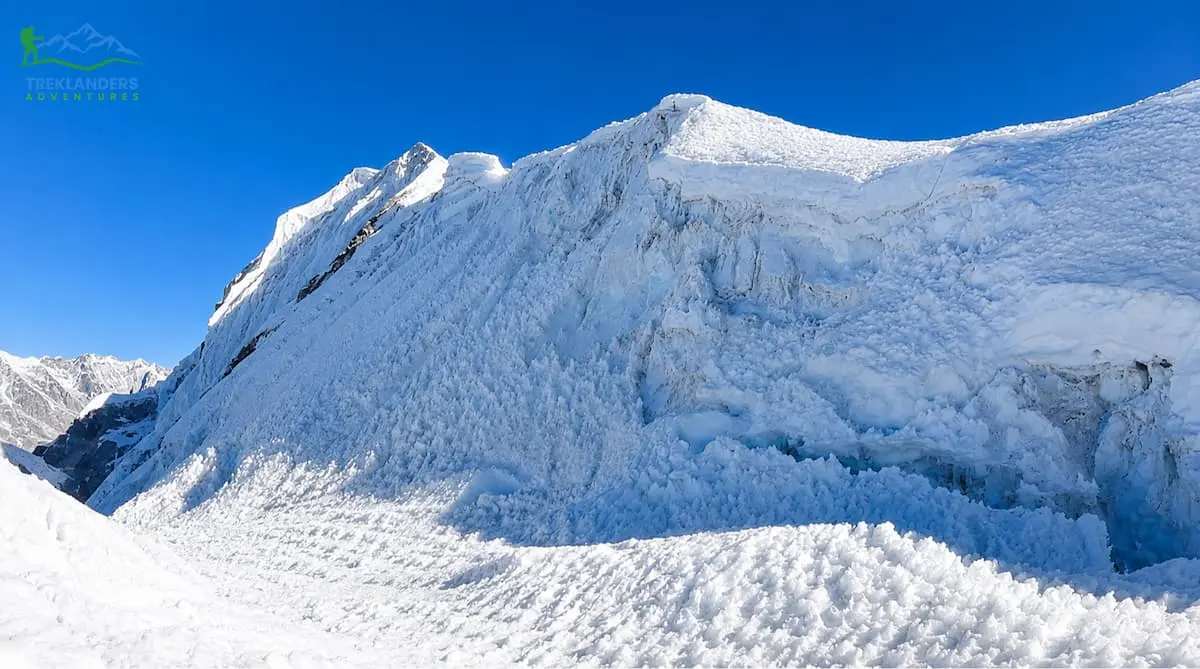
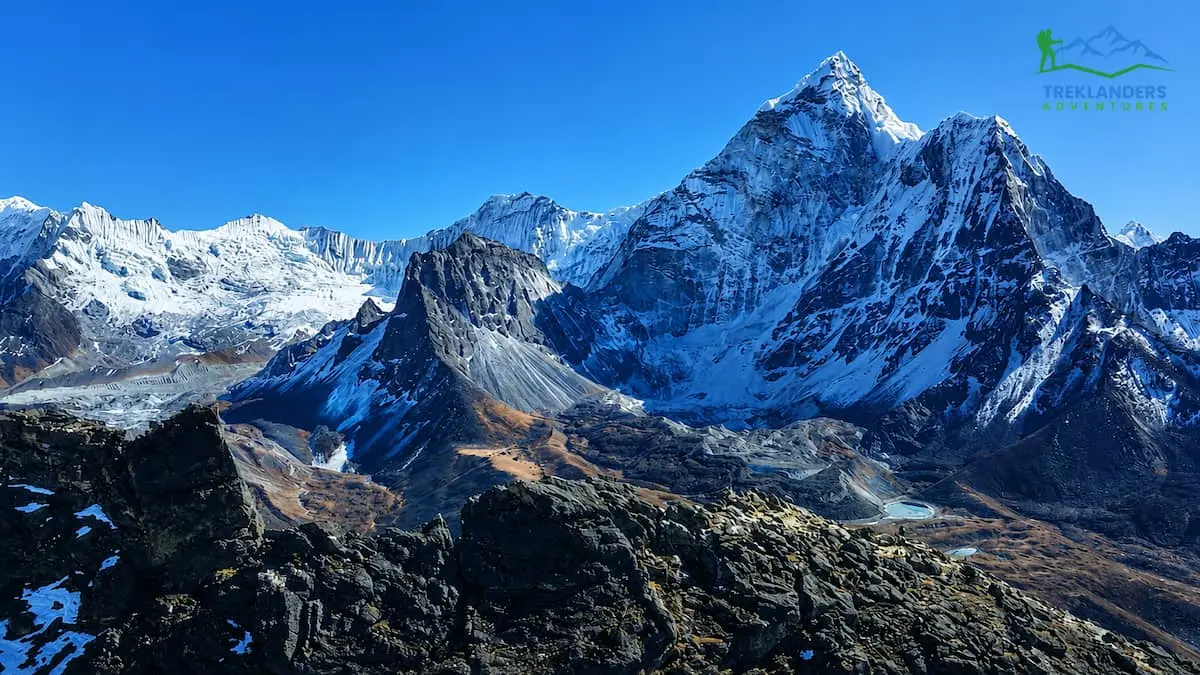
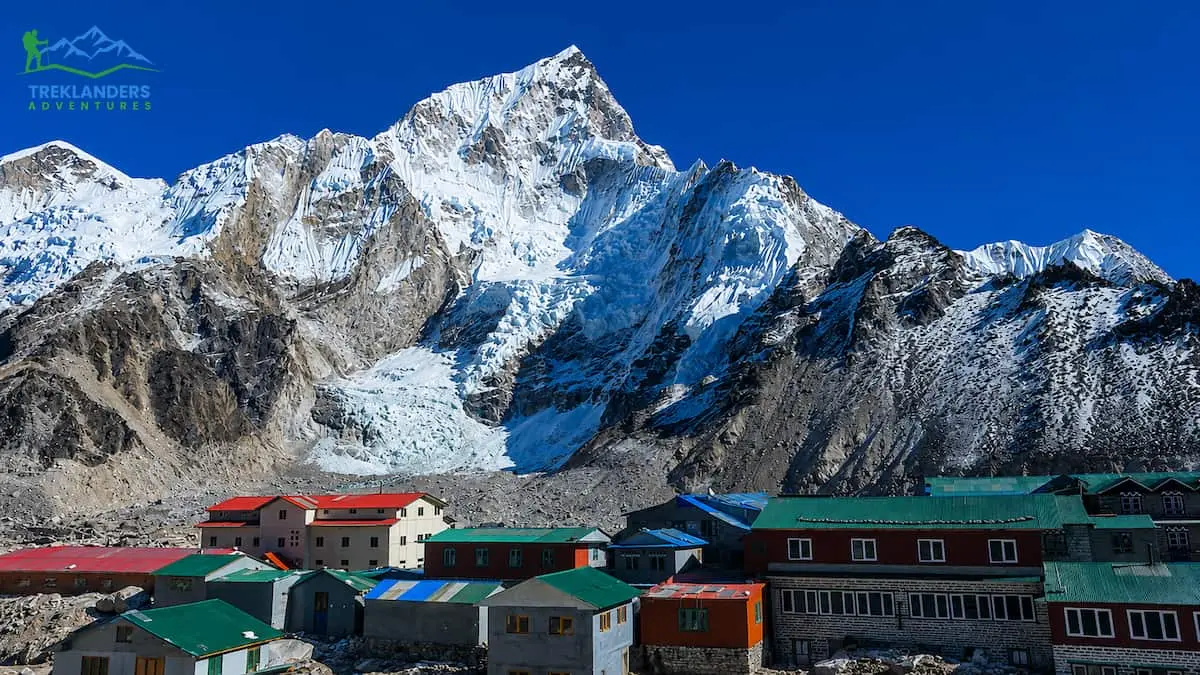
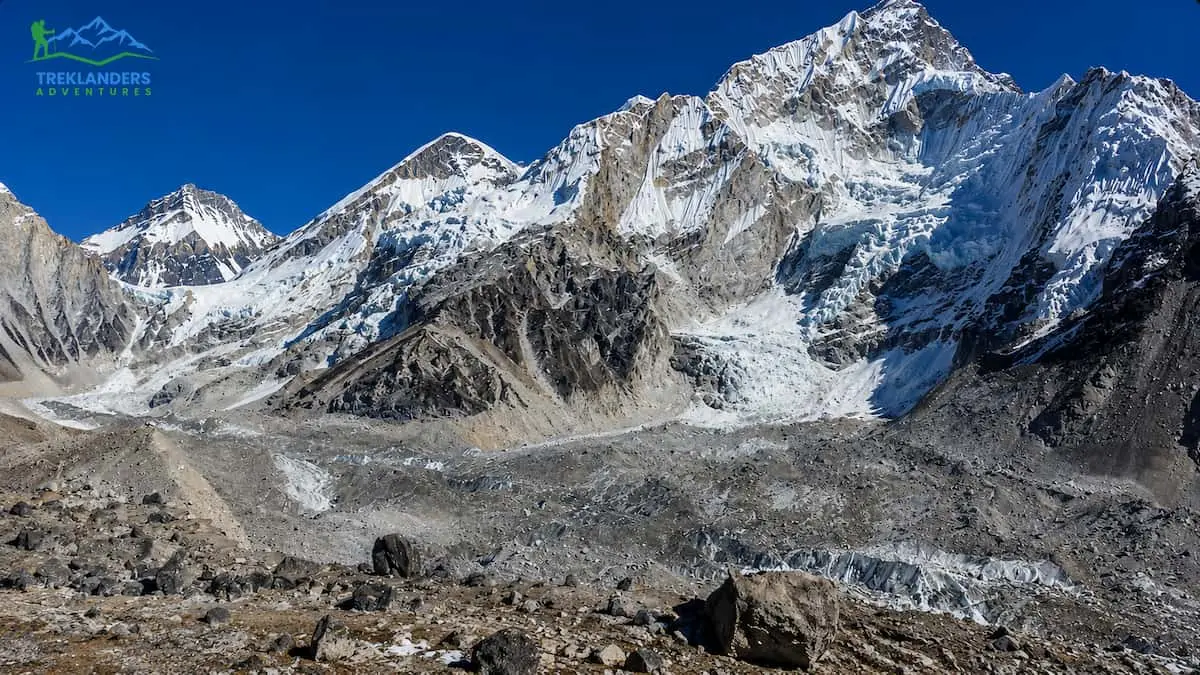
My Everest Base Camp Trek with Lobuche East Peak Climbing Expedition through Treklanders Adventures was honestly one of the most challenging and rewarding experiences of my life. From the moment I arrived in Kathmandu until the final day of the expedition, everything was organized professionally and smoothly. The journey to Everest Base Camp was already incredible on its own. Walking through famous Sherpa villages like Namche Bazaar, Tengboche, Dingboche, and Gorakshep felt surreal. Every day brought stunning mountain views, beautiful monasteries, suspension bridges, glaciers, and unforgettable Himalayan landscapes. Reaching Everest Base Camp at 5,364 meters was a dream come true. But the real adventure began with the Lobuche East Peak climbing section. The climb was physically demanding, especially at high altitude, but the support from the Treklanders team made all the difference. Our climbing guide was experienced, patient, and highly focused on safety. Before the summit push, they carefully explained the use of climbing gear, fixed ropes, crampons, and ice axes, which gave me confidence even as a beginner climber. The summit day was tough, cold, and exhausting, but standing on top of Lobuche East Peak and seeing Everest, Lhotse, Nuptse, Ama Dablam, and countless Himalayan giants surrounding us was absolutely unforgettable. It felt like a once-in-a-lifetime achievement. What impressed me most about Treklanders Adventures was their personal care and attention throughout the expedition. The guides constantly checked our health, pace, hydration, and acclimatization. The porters were hardworking and friendly, and the entire team treated us like family rather than just clients. The teahouses, food arrangements, transportation, and overall logistics were very well managed. Even during difficult weather conditions and high-altitude challenges, the team remained calm, flexible, and supportive. I highly recommend this Everest Base Camp Trek with Lobuche East Peak Climbing Expedition to anyone looking for a true Himalayan adventure that combines trekking and mountaineering. It is challenging, but with the right team, it becomes an unforgettable experience. Huge thanks to Ram Kumar Adhikari and the entire Treklanders Adventures team for making this dream expedition possible. I would absolutely trek and climb with them again in Nepal.
Purpose: Keep sweat off the skin and maintain warmth.
Purpose: Trap body heat in cold air at altitude.
Tip: Keep electronics in inner pockets at night to prevent freezing.
Lobuche East Peak stands at 6,119 meters and is located in the Khumbu region of Nepal, immediately behind Everest. It is a trekking peak based on the Nepal Mountaineering Association and has a Grade B rating. Most people consider it among the easiest 6,000m summits to reach worldwide.
This peak is mainly popular with climbers who want a real high altitude climbing experience but aren't ready for a full-fledged expedition peak. Also, its location in the Everest area means the trek to the peak itself is very beautiful and probably one of the best trekking routes in the world.
It is situated within the boundaries of Sagarmatha National Park, located in the Everest region of northeastern Nepal. It is along the western ridge of the Khumbu Valley and near the well-known Lobuche village at 4,940 meters.
One of the mountain's sides is the Khumbu Glacier, and from there are visible direct sights of Everest, Lhotse, Nuptse, Makalu, and Pumori. The summit location is chosen in such a way that one can see one of the most extensive Himalayan views available from a trekking peak.
Lobuche East is the best option for rigorous trekkers who are also very keen on mountaineering. Technical climbing experience is not necessary. Still, you must be in good physical condition as the climb involves long trekking days, steep ascents, and glacier travel with crampons and an ice axe.
Climbers who have done high-altitude treks like Everest Base Camp or Annapurna Circuit, and who have a high level of cardiovascular fitness, can be good candidates for this expedition. Besides physical fitness, having a strong drive, being patient during acclimatization, and being willing to listen to your guide are equally important.
It offers a real summit over 6,000 meters combined with a well-worked trekking route at a level of technical challenge that most people can handle, and spectacular scenery. The trek goes along the same path as Everest Base Camp, allowing you to see famous Sherpa villages and get a taste of the local culture on the way to mountaineering. The view from the top shows Everest, Lhotse, Nuptse, Pumori, and Makalu all together - something you hardly find at this altitude without a full expedition. The organizational aspects are very efficient, the path is quite easy to follow, and the provided infrastructure in the form of teahouses and professional guides is dependable throughout the season.
You have two main opportunities for climbing: spring, from March to May, and autumn, from late September to November. In fact, the weather remains consistent, the sky is clear, and the snow conditions are safe on the mountain during these two seasons. Also, people consider April and October to be the best months of the year, which is a good reason for you to plan your Lobuche East climbing trip then.
Actually, these are times when you can enjoy the best combination of visibility, temperature, and rates of reaching the summit. Apart from these times, the conditions for climbing may become quite difficult, and the weather may be quite unpredictable.
Spring offers several great advantages for the weather, like increasing temperatures, an increase in the number of hours of sunlight, and the emergence of stable weather patterns. Lower down on the trail, you'll come across rhododendron forests, which bloom beautifully from March to April. During these months, morning skies are clear most of the time. This makes it a whole lot easier and safer to get to the summit.
April is when the mountain summit sees the best snow conditions, and it is the best month for making a trip to the summit. Most climbers choose to make their trips here in April and May. And more trekkers on the trail mean that teahouses are well stocked and staffed, which also makes things more comfortable for you.
After the monsoon ends in late September, the air becomes very fresh, and the mountain views are quite spectacular. The path quickly dries, and October is generally believed to be the most popular month of the year for going up Lobuche East.
During the day, the temperature is comfortable, and one cannot expect heavy snowfalls or thunderstorms until after mid-November. Many seasoned trekkers choose autumn because of the excellent visibility and also because the trails are less crowded than in spring.
While it is possible to climb in winter, it is going to be very difficult. Extreme low temperatures will be a factor, plus the intensifying high-altitude winds and large amounts of snow, potentially blocking the summit routes and reducing the chances of success. Only those climbers who have done a high-altitude winter climb before should consider this season.
Generally, many guided climbs do not have winter departures for this peak. Climbing in winter means extra cold-weather equipment and a much higher rate of summit failures than in the main seasons.
The monsoon period is from June to August. During this period, heavy rain and clouds will prevent the view of the mountains for a long time, paths will get dirty and slippery, and at the lower elevation, one will see leeches. On the mountain, fresh snow and low visibility will make it harder to find the correct route and lead to complications on the day of the summit.
Almost everyone, including the mountaineers and the guided operators, totally avoids this time. A few seasoned trekkers go to the Everest region either at the end of June or in September when the monsoon is weakening, but mountain climbing will still be very risky.
The whole time from arriving in Kathmandu to finally leaving stretches over 17 days. Two nights in Kathmandu, the trek approach, some days for the acclimatization, summit push, and the return trek to Lukla are included in this period.
The actual mountaineering period is 15 nights and 16 days from departure to return. A few tour operators provide slightly longer packages of 18 to 20 days for those groups that like a slower ascent profile or want to have rest days at some key locations.
First, you get a flight from Kathmandu to Lukla, and then you start trekking on the classic Everest Base Camp trail. Along the way, you go through Phakding, Namche Bazaar, Tengboche, Dingboche, and Lobuche before arriving at base camp. After that, you ascend to High Camp at a height of roughly 5,400 to 5,600 meters.
You set off for the summit at dawn, following the fixed ropes over the glacier and the narrow ridge to the 6,119m peak. The technical parts involving the fixed ropes are done by your guide team a few days before the summit.
Absolutely, most of the itineraries feature a trip to Everest Base Camp at 5,364 meters on Day 9 and a pre-dawn climb to Kala Patthar at 5,545 meters on Day 10.
Both are done before the technical climbing phase starts, giving your body extra time at altitude before the summit push. Kala Patthar is considered by most as the best vantage point of Everest without needing any technical gear and is an unforgettable experience for most climbers during the approach.
There are two acclimatization days built into the itinerary. The initial one will be spent in Namche Bazaar at 3,440 meters, where you go up to Hotel Everest View at 3,880 meters. The other one will be in Dingboche at 4,410 meters, where you are going to walk Nagarjuna Hill at 5,100 meters.
Both these days are aligned with the climb-high-sleep-low principle, the most effective method of altitude adaptation. Your guide keeps track of your reaction at different altitudes and can even switch the plan if you require more rest.
High Camp is located at about 5,400 to 5,600 meters on the Lobuche East mountain. You get there the night before the summit attempt, which also gives you the time-technical briefing and gear check by your guide team. You will spend the night at High Camp, and then at midnight or in the very early morning hours when weather conditions are most stable, you will start the summit push. One night is the standard duration at the High Camp. The camp is good enough for being up there for a short time only, with sleeping tents and a small kitchen tent set up by the support team.
You need to have a reasonably good level of fitness to attempt this mountain. Doing five to seven hours of walking each day on steep and rough terrain will not feel like torture to you. It is better if you start doing some cardio-type activities like hiking, running, cycling, stair climbing, etc., and at the same time do some strength training exercises, in particular for your legs. If you have done a multi-day hike in your own country with a daypack and it has not been too difficult for you, then you are at a good level of fitness to start training. Doing loaded hill training will be more of a physical challenge for both your legs and your lungs than gym sessions on the flat.
Crampons that fit your boots, an ice axe, a harness, a helmet, ascenders, locking carabiners, and a belay device are the minimum technical equipment you must have with you. The technical parts of the route will have fixed ropes set up by your guide team. You will find the personal technical equipment details in your pre-expedition information. You should have tried and fitted the gear before you left. Do not rely on finding technical gear in Kathmandu at the last minute. Shops in Thamel sell and rent gear, but they do have issues with availability and sizing at the peak of the season.
You will need a base layer that draws moisture away from the skin, a mid-layer fleece or down jacket, a waterproof and windproof outer shell, and a heavy down suit or very warm insulated jacket for High Camp and summit day. Besides thermal underwear, trekking trousers, waterproof trousers, a warm hat, a balaclava, a sun hat, glacier glasses with side shields, and insulated summit gloves with liner gloves are your other must-have items. You will be wearing insulated mountaineering boots, which are compatible with your crampons. The down booties that are used for sleeping at High Camp provide a lot of comfort, mainly when the temperature is 20 degrees below zero or even colder.
Prior technical mountaineering experience is helpful but it is not a strict requirement for guided expeditions.
Quite a few climbers make Lobuche East their first roped peak under the guidance of an experienced Sherpa leader.
You receive a technical skills session at High Camp which includes crampon use, ice axe technique, and fixed-rope procedures. If you come equipped with a basic knowledge of these skills through a local mountaineering or alpine skills course, it will boost your confidence and shorten your learning time at high altitude.
The more you practice before going, the more you can concentrate on the climb rather than the equipment.
Bring your passport which should be valid for at least six months, your Nepal visa, travel insurance documents with emergency evacuation coverage, and printed copies of all climbing permits are obtained. Your trekking company will get the Lobuche East Peak Climbing Permit from the NMA, the Sagarmatha National Park Entry Permit, and the Khumbu Pasang Lhamu Rural Municipality Permit for you.
Have printed permit copies with you at all times because officials check documents at different checkpoints along the route. Digital copies stored on your phone are a handy backup but checkpoint officials do not always accept them.
Between Lukla and Lobuche, your accommodation will mainly be teahouses, which are locally run guesthouses managed by Sherpa families. The rooms at lower elevations are fairly nice, furnished with twin beds, blankets, and pillows. Rooms still progressively get smaller and more basic as you go up in altitude.
Shared toilets and dining areas are the norm throughout the trek. When you get away from the teahouse villages, you will start tented camping at High Camp on the mountain itself with a sleeping tent, a kitchen tent, and a dining tent all set up by your expedition team.
Most teahouses have a stove in the central dining area that is used to heat the space during meal times and Evenings. Rooms for sleeping are normally unheated. At higher elevations, mostly above 4,000 meters, the temperature in rooms at night can fall well below zero. To sleep comfortably at these heights, you will need to bring a warm sleeping bag rated to at least minus 15 degrees Celsius. Given that the teahouse blankets alone are hardly sufficient. Changing into dry base layers before bed, with a sleeping bag liner, will provide you with extra warmth.
Absolutely, in particular if you are coming during the peak seasons of spring and autumn. Teahouse villages like Namche Bazaar and Dingboche are popular spots and get fully booked very quickly during the peak periods.
Booking your climbing through a company will ensure that the accommodation is booked for you ahead of time as part of your package. This will eliminate any doubt and allow your team to stick to the scheduled plan without being affected by fully occupied lodges. During the shoulder months, there is a greater chance of getting accommodation on a walk-in basis, but for group expeditions, booking is still a safer option.
Most teahouses provide shared toilet facilities, a dining hall with a menu, and limited device charging, usually for an extra fee per device. Hot showers are available at some lodges at lower elevations such as Namche Bazaar and Tengboche, often at an additional cost. Above Dingboche, showers become rare and the electricity supply becomes less reliable. Wi-Fi is available at some teahouses but it becomes inconsistent and slow at higher elevations. Bring a power bank for charging devices on the upper section of the trek where reliable electricity cannot be guaranteed.
Teahouse menus in the Everest region are actually quite diverse, mostly at the lower altitudes. Dal bhat, the typical Nepali meal of rice, lentil soup, and vegetables, is the staple and most efficient food for walking long hours. Besides, you will find noodles, fried rice, pasta soups, eggs toast pancakes, porridge, and momos on nearly all menus.
Higher up, food options get more limited and less fancy due to both supply chains and the natural loss of appetite at altitude. Remember to eat regularly even if you are not feeling hungry as your body needs the extra energy to acclimatize and heal.
The meals offered in the major teahouses along the Everest trail are, in general, very safe. Prefer freshly prepared, steaming food and refrain from eating raw vegetables and salads in higher places where water and sanitation might not be dependable. Keep to thoroughly cooked food, and if your stomach is vulnerable, prepare yourself with some travel medicines for nausea and digestive problems. Your guides will know and recommend well-respected teahouses.
They will always exclude the lodges infamous for poor food hygiene thanks to their guide network and instead direct you toward better ones.
Never drink water straight from the tap or stream without treating it first. Tea houses sell boiled water which is the safest and cheapest option per liter. Besides that, many backpackers bring water purifying tablets, a water filter, or a UV purifier like a SteriPen to be completely sure of their water source. Drinking enough water is very important at altitude.
Have three to four liters every day on average.
The symptoms of altitude sickness greatly reduce physical capacity on longer trekking days.
Yes. Alcohol often means altitude sickness because first it harms your body’s ability to acclimatize and second, it depletes your fluids through dehydration. Both of these effects of alcohol are factors in the onset of altitude sickness. You should stay away from alcohol not only during the trek but in particular at altitudes over 3,000 meters.
When climbing, staying warm does not necessarily mean drinking hot liquids with alcohol. On the contrary, hot drinks such as ginger tea, lemon tea, black tea, or even garlic soup are the best choices for higher altitudes.
If you go witIn the Last one, are you aware that most Sherpa guides and experienced trekkers believe that garlic soup helps one to acclimatize? What’s more, the soup can be found everywhere at teahouses at an altitude. Reserve. Any drinks for when you celebrate in Kathmandu after the expedition is over.
Besides meat, vegetarian ingredients are the easiest to get at most places along the trail to Everest, and with proper notice, most teahouses will also be able to cater to your other dietary needs.
But if you are vegan, your choices will be quite limited at high altitudes where dairy, eggs, and honey are the usual ingredients added to the few plant-based dishes available, and gluten-free needs are the hardest to get regularly at the remote teahouses.
Let your trekking company know about any dietary restrictions before the start so your guide team can make a plan and talk to the teahouse owners along the way.
It’s always a good idea to have some personal snacks on hand for specific dietary needs.
Yes. For those planning to climb Lobuche East, Nepal’s climbing regulations require the use of a licensed guide. Such guides are arranged through authorized trekking or climbing operators. You cannot obtain a peak climbing permit as a solo climber without support from an agency.
Your lead guide will be someone with a government license and professional experience, usually a Sherpa with extensive high-altitude climbing seasons and formal mountaineering training. This measure ensures your safety and guarantees that all commercial climbs on the peak follow proper control and emergency procedures.
Your guide manages daily expedition logistics, monitors your acclimatization, teaches technical skills at High Camp, guides you across the glacier on summit day, and makes crucial safety decisions, such as turning back if the weather is poor. In addition to carrying a basic first-aid kit, guides always have means to contact support teams and the base camp. Their ability to detect early signs of altitude sickness is a vital safety factor. Moreover, a skilled guide is key in setting the pace and boosting team morale through the most challenging sections of the route.
The standard ratio is one porter for every two trekkers. Typically, porters carry your main duffel bags and camp equipment up to the start of tented camping. During trekking days, you carry a daypack with your essentials. At High Camp, Sherpa guides assist with technical equipment and provide support. The maximum load a porter can carry is limited to protect their welfare, and ethical operators follow standards for fair wages and insurance for all staff. Before booking, ensure your operator is a member of a recognized trekking organization, which offers assurance of ethical employment practices.
Yes. Tipping is customary and plays an important role in the income of guides and porters in Nepal, where formal wages in the trekking industry are complemented by tips from international clients. Tipping is not included in your package price. Many trekkers tip their lead guide the equivalent of one to two days of trekking per week of the expedition, with proportional amounts for porters and assistant guides. Your trekking company can advise on appropriate locally accepted tipping amounts, and tips are best given directly in cash at the end of the expedition.
Altitude sickness, or Acute Mountain Sickness (AMS), is a condition resulting from insufficient oxygen supply to the body at a high altitude. The symptoms are mainly headache nausea dizziness, tiredness, and a feeling of breathlessness. When staying unattended or if movement down the mountain is not made promptly, AMS can escalate to High Altitude Pulmonary Edema (HAPE) where lungs get filled with fluid, or High Altitude Cerebral Edema (HACE) which involves brain swelling and is very dangerous. Both are fatal conditions. The only definite remedy when there are serious symptoms is an immediate downward movement.
The main thing is to change your height slowly and not ignore acclimatization days in your travel plan. Besides, take in three to four liters of water daily. Avoid alcohol and sleeping pills as they can reduce your breathing rate during sleep. Even when your appetite is down, make sure you eat enough calories.
If any symptoms show up, notify your guide right away. Several climbers use acetazolamide as a prophylactic drug but it is a prescription medicine and you should talk with your doctor before the trip about side effects which include increased urination and tingling in the extremities. Besides, it cannot replace good acclimatization.
Let your guide know as soon as possible. You must not try to continue with worse symptoms such as severe headache, loss of coordination, confusion, or difficulty breathing. In fact, the only cure for serious altitude sickness is going down. Your guide will discuss with other members and will decide to bring you down if necessary.
Besides, your safety is the priority for them and summit plans will not be considered ahead of your safety. Helicopter evacuation can be organized if walking down is not safe or fast enough. You may be put into a portable altitude chamber, also known as a Gamow bag, through your operator and it can make you feel better while you are being evacuated.
First of all, don’t forget to see your doctor at least six to eight weeks ahead of your departure. Some commonly suggested vaccinations for Nepal are hepatitis A, hepatitis B typhoid tetanus, and rabies. Your physician might also recommend you take a vaccine in case you are going to be in the lower regions at a time of the year when the risk of Japanese encephalitis is high. Make sure your basic vaccines such as measles mumps rubella, and influenza are up to date.
Malaria prophylaxis is generally not required in the vicinity of the high-altitude Everest region But talk to your doctor about your travel plan as there may be some risk in the lower transit areas.
Besides carrying antibacterial hand gel, use it before you eat and after you use the toilet. You should only drink purified or boiled water. Hot, freshly cooked food is always the best option. In case there is a person with a gastrointestinal problem among the trekkers, then you must avoid sharing water bottles or cutlery. If there is running water at the teahouses, take the opportunity to wash your hands frequently. This will be the very best way to prevent stomach problems on the trek.
Getting a stomach problem at altitude is much worse than at sea level and it may even cause you to end the expedition. From day one, you have to treat hygiene as seriously as possible.
Medical facilities in the Everest region are limited compared to urban centers. A high-altitude medical clinic staffed by volunteer doctors during the trekking season is located at Pheriche at 4,280 meters. Basic health posts exist in some villages along the route. For serious emergencies, helicopter evacuation to Kathmandu is the primary option. Kathmandu has well-equipped private hospitals with specific experience in treating
Altitude-related conditions and trauma from mountain expeditions. Response and quality of care in the capital are reliable for serious medical situations.
Travel insurance is not legally mandatory but it is essential for any Lobuche East expedition.
Medical treatment, particularly helicopter evacuation, is extremely costly without insurance coverage and can reach tens of thousands of dollars for a single emergency evacuation. Your policy must explicitly include high-altitude evacuation above 6,000 meters and emergency medical repatriation. Standard travel insurance policies often exclude altitudes above 4,000 or 5,000 meters, so read your policy carefully and upgrade your coverage if the altitude limit is below the elevation of your climb.
Helicopter evacuations in the Everest region are coordinated through your guide team or trekking company, who contacts rescue services in Kathmandu. Your insurance company is contacted simultaneously to authorize the evacuation and cover the cost. Response times depend on weather conditions and helicopter availability. In most cases, evacuations to Kathmandu can be arranged within a few hours if the weather permits a flight. This is one of the primary reasons why comprehensive insurance with evacuation coverage
is non-negotiable for this expedition. Do not begin the trek without confirmed insurance documentation.
Yes. Your guide team carries a group first aid kit, but you should maintain your own personal kit covering blister treatment, pain relief, anti-diarrheal medication, rehydration salts, antihistamine, antiseptic wipes, and any personal prescription medications. If your doctor has prescribed altitude sickness medication such as acetazolamide or dexamethasone for emergency use, bring it with clear instructions on dosage.
Share your full medical history and any known allergies with your guide before the expedition begins. This allows the team to respond appropriately if you become unwell and cannot communicate clearly due to altitude effects.
For difficulty, Lobuche East is generally seen as a moderate-level trekking peak in Nepal. The level of technicality is quite higher than non-technical treks like the Everest Base Camp route, but it’s still less challenging technically than full expedition peaks or Island Peak at the highest technical grade. It is ranked by the Nepal Mountaineering Association as Grade B. The technical parts are glacier walking, fixed-rope climbing, and a tight summit ridge, but these can be handled properly with the help of experienced guides, the right equipment, and good fitness. Altitude is the main issue rather than the difficulty level of the route itself.
At the top, Lobuche East takes you to use crampons on glacier ice, climb by fixed ropes on steep snow and ice slopes, and cross a narrow summit ridge at 6,000 meters where wind exposure and thin air make it even harder. The climbing usually starts at midnight or early morning, so physically and mentally this is a tough time when the body is still recovering from the effort of the previous day. The combination of extreme cold altitude technical terrain, and darkness during the first hours of the summit push makes it the most difficult part of the whole expedition by a wide margin
On summit day, the time for most groups is usually between 10 and 14 hours for the round-trip from High Camp. From High Camp to the summit will be 5 to 6 hours. It will take 4 to 5 hours to get back to base camp.
Then you will continue to trek down to a lower elevation where you will sleep at a safer altitude. The day starts at midnight and finishes in the late afternoon, so it will be very physically and mentally exhausting. You need to pace yourself gradually during the ascent. Several climbers exert too much effort during the first two hours and then have major struggles with the final ridge section.
Summit success rates vary by season and team fitness, but Lobuche East has a high completion rate among trekking peaks when participants are properly guided and adequately acclimatized. Most operators
Report success rates above 80 percent for fit, well-prepared participants in favorable weather. The main reasons climbers do not reach the summit are altitude sickness, adverse weather conditions, or insufficient
Preparation rather than the inherent technical difficulty of the route. A realistic approach to your own fitness level and honest communication with your guide are the factors most within your control.
Lukla at 2,800 meters is the lowest trekking point after arriving by flight from Kathmandu. The approach trek briefly descends to Phakding at 2,610 meters on Day 2 before climbing steadily for the rest of the expedition. Kathmandu at 1,400 meters is the lowest point of the overall trip. On the return, you descend
progressively from base camp back to Lukla across two to three days, which most trekkers find considerably easier physiologically than the ascent. The sense of thickening air and returning appetite as you lose altitude is one of the most immediately noticeable and satisfying sensations of the return journey.
| No of people | Price per person |
|---|---|
| 1 - 1 | $2,435 |
| 2 - 3 | $1,875 |
| 4 - 8 | $1,745 |
| 9 - 30 | $1,635 |
| No of people | Price per person |
|---|---|
| 1 - 1 | $2,815 |
| 2 - 4 | $2,475 |
| 5 - 10 | $2,295 |
| No of people | Price per person |
|---|---|
| 1 - 1 | $2,715 |
| 2 - 4 | $2,265 |
| 5 - 10 | $1,995 |