
A Complete Guide to Annapurna Base Camp Trek
1 Mar 2023
A quick overview of everything you need to know about the Annapurna Base Camp Trek, from route and cost to preparation and best seasons.



The Annapurna Base Camp (ABC) Trek is a top-ranked and highly rewarding trekking adventure in Nepal. The trek goes beyond the conventional and offers an unbeatable mix of stunning mountain scenery, changing landscapes, and vibrant local culture. It is the most remarkable hike in the grand Annapurna Sanctuary where for the first time, the world’s 10th highest peak, Mount Annapurna I (8,091 m), can be literally viewed from right above you. There were fewer words to describe a trek filled to the brim with the wonders of nature and genuine Himalayan experiences than this one.
The hike to Annapurna Base Camp is a visual feast as it goes through the traditional and exotic villages of the Gurung and Magar ethnic groups, rhododendron forests, and waterfalls. One can barely miss the terraced fields among these mountains and also the breathtaking views of snow-covered peaks such as Machhapuchhre (Fishtail), Hiunchuli, and Annapurna South. Everywhere you walk, you meet Nepalese ancestors and their cultural wealth and at the same time breathe in the fresh air of the most stunning mountain ranges, it’s a paradox that makes the trek truly unforgettable.
Compared with other expeditions in the high Himalayas, the Annapurna Base Camp Trek is said to be of moderate difficulty and is open to both novices and seasoned trekkers. Your route climbs slowly which keeps your body functioning at high altitudes in a comfortable zone. Supported by quiet tea houses, well-marked trails, and hospitable locals, this trek takes care of your safety and comfort while you experience the Himalayas.
In case you are looking for the attributes of tranquility wrapped in nature, a sojourn into the culture or a heart-pounding mountain experience, the Annapurna Base Camp Trek would be your perfect pick. There are spectacular sunrises seen from the Annapurna Massif among many other serene moments waiting for you at the Camp, in fact, those are memories that will always last. Experience the Nepali Himalayas with this classic and soul-stirring trekking journey.

It is necessary to choose the correct season if you want a safe and comfortable trekking experience. You may do the Annapurna base camp trek any time of the year but March to May and September to November are the two best times since you will get clear skies, nice temperatures and splendid mountain views.
In order to trek in the Annapurna region both safely and legally, every trekker must have two official permits. Apart from this, the permits are necessary to facilitate the protection of the environment and local communities, as well as recording the trek for safety purposes.

First time at Kathmandu-Nepal international airport, the staff and guide will welcome you with a traditional greeting. After the short drive to your hotel located in the center of Kathmandu city, check into your comfortable rooms. After a refreshing break from the jet-lag, meet at the hotel lobby and at the meeting room for the trek briefing conducted by our guide or leader. You will be briefed about the hotel, lodges during the trek with complete details of trekking trails, food, and accommodation during the trek. Besides, the d’s and don’ts of the welcome group dinner in an authentic Nepali restaurant will be provided along with the local cultural program and Nepali meals.
After the breakfast, let us be ready for the long and exciting journey overland to the beautiful Pokhara, a well-known tourist city in Nepal. The drive is along the main highway following the Trisuli River, a very popular river for rafting. At Mugling Bazaar, you turn west and enjoy the view of Manaslu and Annapurna Himalayas. Upon arriving in Pokhara city, there is a transfer into a nice hotel by the calm Phewa Lake side. Where all the good hotels, restaurants and shops are located,
After the breakfast, the interesting drive for a few hours takes you beyond the Pokhara city and the valley outskirt. During the drive, you can view the Annapurna range of peaks along with the magnificent Machhapuchhre Himal the famous Fish Tail. Which dominates the Pokhara valley? The drive is on the Pokhara-Baglung, Beni highway through Nayapul town, and then follows the Modi River past scenic Bhirethati village, the end of the drive at a small farm village of Syali. From here the walk is started with a climb that parts the low warm farm area of paddy fields. The uphill walk goes through several farm settlements to Kimche village, and then a slow climb up to a large village of Ghandruk. A place on the top of the hill with a view of the Annapurna Himalayas, and surrounding lovely country landscapes,
At Ghandruk, stay at a nice mountain lodge and time is available to visit the Gurung village, the main hill tribes of southern Annapurna region.
Watch the morning fabulous view of the snow-capped peaks of Annapurna Himalayas, and then proceed on the trail to Annapurna base camp. A brief climb on top of Ghandruk village, then on a gradual winding path for a short time, and then an hour climb to Kimrong ridge. A small settlement with a few Tea-Houses and shops, after a short break, the on downhill to Kimrong valley for lunch in a nice small lodge restaurants. In the afternoon, depart the beautiful Kimrong river valley with a steep climb of a few hours and then reach a level winding path. Continue walking on the stone-paved trail all the way to
At morning from Chomrong, the walk goes down to Chomrong River, and after crossing over a bridge, it is steep on stone steps to Sinuwa Danda. A small place with a few nice lodges and shops, having a refreshing rest, continue walking through a dense forest of rhododendron and pine trees to reach a small area of Khuldighar. The trail from Khuldighar goes down a short way to Bamboo, a nice settlements with several simple good lodges. Located on a forest clearing amidst thick bamboo thickets, above Modi River, it is a possible stop for lunch. In the afternoon walking leads to a slow climb into the forest until a small settlement with a few smaller lodges at Dovan is reached. Located above the raging Modi River gorge, enjoy the overnight stop in one of its nice simple lodge, guest-houses.
Slowly our adventure gets nearer to our main highlights and destination to Annapurna Sanctuary and the base camp. Morning from Dovan, heeding slowly with a steep climb through a forested path to a Himalaya Hotel, near a large Hinko Cave, From here, it is downhill close to the Modi River and then a short climb to a nice small plateau at Deurali. A temporary settlement with a number of nice lodges and restaurants for a lunch stop, located underneath Annapurna South and Huin-Chuli peaks. In the afternoon, following the river upstream with a steep climb through a small bamboo groove and then ending the climb at Machhapuchhre Base Camp for an overnight stop. MBC is a short term station underneath the towering North Face of Machhapuchhre Himal, the Fish-Tail peak with views of Annapurna-I and A-South at close distance. Move in a nice lodge, with time to marvel the lovely views of the surrounding giant peaks.
After having a good breakfast At MBC, a short day walk of a few hours to Annapurna base camp, morning a short climb. Then enter the most scenic plateau where Annapurna Sanctuary is located, enclosed by an array of peaks. The walk follows to the slow gradual ups reaching the entrance gate of Annapurna Base Camp. A brief climb to where all lodges and guest houses are situated underneath the massif Annapurna-I and Vara Shikar / Annapurna Fang peaks.
In the morning, be sure to see the stunning view of the peak towering high the Annapurna range. The Gangapurna Himal and Tent Peak / Tharpu Chuli are also visible from here. Return journey long walk downhill after MBC to Deurali, and then with short ups and downs back into tall tree lines to Bamboo for overnight stop, After wonderful time around the Annapurna Sanctuary and base camp, spruce up yourself in a nice lodge.
After a comfortable night stay in Bamboo with the sound of the river, a short climb and then on a winding trail to Sinuwa Danda. From here down to Chomrong River with steep climb .on stone steps to Chomrong village for lunch break. In the afternoon short walk down to Jhinu village for last overnight around the hills of Annapurna Himalayas. At Jhinu, take the refreshing dip and have a warm bath at the natural hot-spring, which is very close to the lodge at Jhinu.
After breakfast, walk across the bridge and then get on a road head for the exciting drive back to beautiful Pokhara for lunch and overnight stop. Spend your afternoon by walking along the lake, which is facing the great views of Annapurna and Manaslu Himal range. Pokhara has a variety of short Adventure Sports activities to offer, such as Para Gliding, Bungee Jumping, Zip Line and Ultra-Light flight etc.
Leaving the Pokhara hotel in the morning, the group can either drive in a private vehicle or a regular Tourist Bus can be taken, depending on the size of the group, The scenic and interesting overland journey to Kathmandu on the same exciting highway. After hours of driving, you will be getting back to your hotel in Kathmandu. The rest of the day is free for your own activities.
After a good and mesmerizing time in Nepal, around the Himalayas with Annapurna Base Camp Trek. It's time to say goodbye, so our staff will take you to the international airport for your flight homeward bound or to the next port of call.

About 6–8 weeks prior to your trek, you should start light cardio and endurance training. Doing some hiking, jogging, and stair climbing will help you increase your stamina. Also, make sure to strengthen your legs and core as they will be heavily used in long uphill walks.
Wear a good pair of trekking boots, dress in warm layers and take a waterproof jacket, gloves, and a sleeping bag with you. Remember, in addition to these, you will also need things like sunscreen, sunglasses, trekking poles, water purification tablets, and a first aid kit.
You should anticipate the changing weather and be prepared for the high-altitude environment. Keep drinking water, do not overexert yourself and take the advice of your guide. A positive attitude and taking acclimatization breaks are what will ultimately lead to your success on the trek.

Have dazzling views of the peaks of Annapurna I (8,091 m), Machhapuchhre (Fishtail), Hiunchuli, and Annapurna South from the start till the end of your journey.
Stay in the Gurung and Magar villages and enjoy the hospitable reception of the people who live in the traditional way, have Buddhist monasteries, and eat local cuisine.
Walk through the rhododendron forest of the Annapurna Sanctuary, which is decorated with terraces, bamboo groves, and glacial valleys.
See the sun coming out over the mountain ranges of the Himalayas — a truly magical moment of the trek.
The right decision for a beginner or a seasoned trekker — doable, secure, and beautiful.
Encounter various animals and vibrant birds that live in the Annapurna Conservation Area.
The Annapurna Base Camp Trek is generally referred to as a moderately challenging one, especially. Newbie’s with decent fitness levels can go for it. The routs are mostly inclined ones, stairs made of stones, and parts of the way may be steep, but are not of a technical nature thus no climbing experience is necessary.
Annapurna Base Camp Trek typical itinerary is done in 7–12 days, the time period and route are factors that determine the duration of the trek (Nayapul or Ghandruk are often starting points). Several trekkers along with Poon Hill path choose to traverse their way at once for a better view of Nature.
Ideal periods for trekking in the ABC region are during spring (late March to May) and fall (September to the end of November). To a great extent the weather during these days generally remains calm which is perfect for seeing distant peaks as the air gets cleansed of smokes and clouds as well.
Certainly, along with a permit for the Annapurna Conservation Area (ACAP) you additionally require the Trekkers Information management System (TIMS) card. Both can be bought at the gateways i.e., Kathmandu and Pokhara.
Most of the time people stay at tea houses or inns, which are relatively small but are managed by local families. The rooms are usually basic in standard yet they do offer meals, Wi-Fi as well as hot showers to those interested for small additional costs.
Of course you can walk without hiring anyone to show you the way, however I suggest that a licensed guide be hired in order to take care of your safety, for help in navigating, and to have some cultural knowledge- especially in case of off-season and if this is your first trek.
For instance, in the deep of winter the temperature could be below -10°C (14°F) at night. When it comes to spring as well as fall the temperature during daylight is appropriate (10°C–20°C), however, at night it is cold. Therefore, dressing in layers is very important.
Among the necessary things, warm clothes; a raincoat; trekking shoes; gloves; a cap; sunglasses; a sleeping bag; and a water bottle which can be refilled should all be there in one's bag. At the same time, one cannot afford to forget such indispensable things as sunscreen, a first-aid kit, and trail food.
The Annapurna Base Camp Trek is definitely a journey of a lifetime where nature’s beauty, traditional culture, and friendly local people are perfectly mixed. It has moderate trails, varied landscapes, and a spectacular Himalayan sunrise, so it is an ideal trek for any skill level. If you are looking for adventure, tranquility, or a stronger bond with nature, the Annapurna Base Camp Trek in Nepal is the one that will imprint your memory forever.
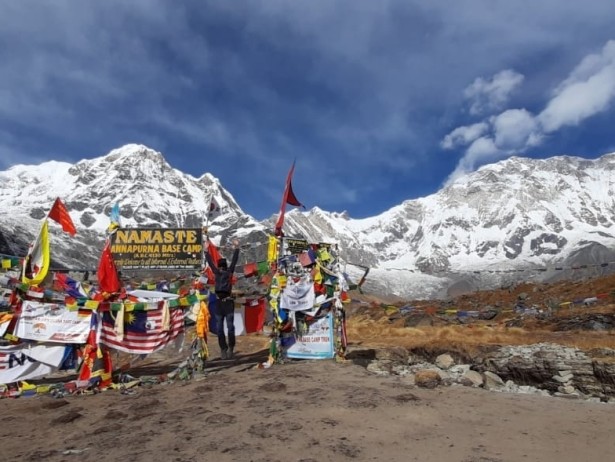
A quick overview of everything you need to know about the Annapurna Base Camp Trek, from route and cost to preparation and best seasons.
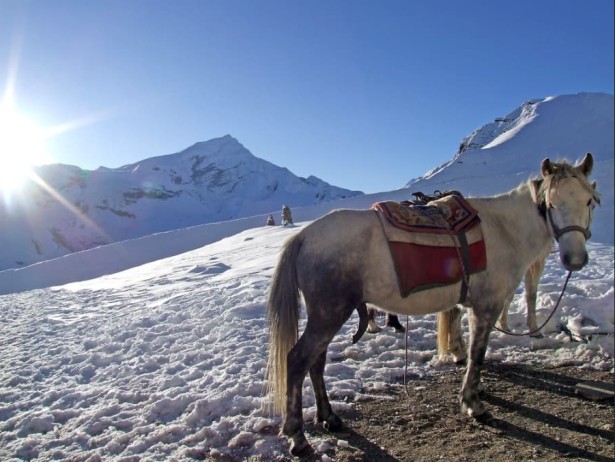
A 6-day Annapurna Circuit trek offering stunning mountain views, diverse landscapes, and a taste of this classic Himalayan adventure.
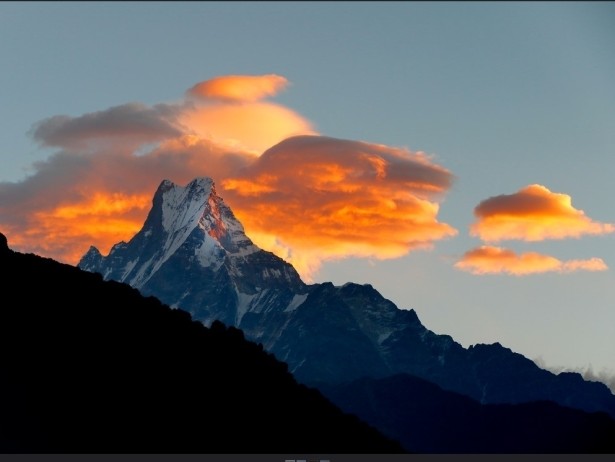
A quick overview of the 7-day Annapurna Base Camp Trek, highlighting the route, mountain views, and the exciting Himalayan adventure.



