[{"name":"Everest Base Camp Trek","duration":"16","image_url":"https:\/\/www.treklanders.com\/storage\/trip-galleries\/1\/thumb_419a755c003cc609f3030ee332965ebe.jpg","offer_price":1405,"url":"https:\/\/www.treklanders.com\/trips\/everest-base-camp-trek"},{"name":"Gokyo Valley Trekking","duration":"16","image_url":"https:\/\/www.treklanders.com\/storage\/trip-galleries\/2\/thumb_676d1021b574aeba4d19d3f2a0b04ed2.webp","offer_price":1205,"url":"https:\/\/www.treklanders.com\/trips\/gokyo-valley-trekking"},{"name":"Annapurna Circuit Trek","duration":"23","image_url":"https:\/\/www.treklanders.com\/storage\/trip-galleries\/3\/thumb_2a9a92ea23c62f41de27b37f5e3e8c17.webp","offer_price":1495,"url":"https:\/\/www.treklanders.com\/trips\/annapurna-circuit-trek"},{"name":"Everest Panorama Trek","duration":"12","image_url":"https:\/\/www.treklanders.com\/storage\/trip-galleries\/4\/thumb_35c9f677ea2e88b1ff11a9f43daa3ddb.jpg","offer_price":1100,"url":"https:\/\/www.treklanders.com\/trips\/everest-panorama-trek"},{"name":"Everest Base Camp Trekking from Jiri","duration":"22","image_url":"https:\/\/www.treklanders.com\/storage\/trip-galleries\/6\/thumb_14763592492417b294aa66bf0ebf4e64.webp","offer_price":1400,"url":"https:\/\/www.treklanders.com\/trips\/everest-base-camp-trekking-from-jiri"},{"name":"Everest Base Camp via Cho la Pass from Gokyo Valley Trekking","duration":"18","image_url":"https:\/\/www.treklanders.com\/storage\/trip-galleries\/7\/thumb_d4e470e98d4e9e2ab8e93e39b8b7d252.jpg","offer_price":1405,"url":"https:\/\/www.treklanders.com\/trips\/everest-base-camp-via-cho-la-pass-from-gokyo-valley-trekking"},{"name":"Everest Three Passes Trekking","duration":"22","image_url":"https:\/\/www.treklanders.com\/storage\/trip-galleries\/8\/thumb_b413b221e913171500bb3dfd5c08ceea.jpg","offer_price":1635,"url":"https:\/\/www.treklanders.com\/trips\/everest-three-passes-trekking"},{"name":"Annapurna Base Camp Trekking","duration":"14","image_url":"https:\/\/www.treklanders.com\/storage\/trip-galleries\/9\/thumb_2e71f2ffe116c659fa66b01c2d571b4e.webp","offer_price":845,"url":"https:\/\/www.treklanders.com\/trips\/annapurna-base-camp-trekking"},{"name":"Mardi Base Camp Trekking","duration":"14","image_url":"https:\/\/www.treklanders.com\/storage\/trip-galleries\/10\/thumb_d7b2d2dc638f6bbf2c31c167ac68029d.webp","offer_price":845,"url":"https:\/\/www.treklanders.com\/trips\/mardi-base-camp-trekking"},{"name":"Mohare Danda Trekking","duration":"12","image_url":"https:\/\/www.treklanders.com\/storage\/trip-galleries\/11\/thumb_a384c8d35d789d29b19991c1d675c910.webp","offer_price":755,"url":"https:\/\/www.treklanders.com\/trips\/mohare-danda-trekking"},{"name":"Khopra Ridge & Khair Lake Trekking","duration":"15","image_url":"https:\/\/www.treklanders.com\/storage\/trip-galleries\/12\/thumb_c0f50461ddc74acfb553ba85be00fab0.webp","offer_price":855,"url":"https:\/\/www.treklanders.com\/trips\/khopra-ridge-khair-lake-trekking"},{"name":"Upper Mustang Trekking","duration":"17","image_url":"https:\/\/www.treklanders.com\/storage\/trip-galleries\/13\/thumb_7aa4dfdb69186b0f224a303d80a25c95.jpg","offer_price":1715,"url":"https:\/\/www.treklanders.com\/trips\/upper-mustang-trekking"},{"name":"Langtang Valley Trek","duration":"12","image_url":"https:\/\/www.treklanders.com\/storage\/trip-galleries\/14\/thumb_8650b4b1a3c160cff75da65369398353.webp","offer_price":735,"url":"https:\/\/www.treklanders.com\/trips\/langtang-valley-trek"},{"name":"Gosainkunda Lake Trek","duration":"11","image_url":"https:\/\/www.treklanders.com\/storage\/trip-galleries\/15\/thumb_bfe94c14e760c48234e117021105be84.webp","offer_price":735,"url":"https:\/\/www.treklanders.com\/trips\/gosainkunda-lake-trek"},{"name":"Chisapani-Nagarkot to Dhulikhel Hiking","duration":"7","image_url":"https:\/\/www.treklanders.com\/storage\/trip-galleries\/16\/thumb_468defe9a4000ee3129cd7e6421ee105.webp","offer_price":565,"url":"https:\/\/www.treklanders.com\/trips\/chisapani-nagarkot-to-dhulikhel-hiking"},{"name":"Kanchenjunga Trek","duration":"23","image_url":"https:\/\/www.treklanders.com\/storage\/trip-galleries\/17\/thumb_51f43fa4203106cc49aaedc89d76e01d.jpg","offer_price":1725,"url":"https:\/\/www.treklanders.com\/trips\/kanchenjunga-trek"},{"name":"Helambu Trek","duration":"12","image_url":"https:\/\/www.treklanders.com\/storage\/trip-galleries\/18\/thumb_0fe8e3fa1299d2e43bf1fb5977875ce2.jpg","offer_price":685,"url":"https:\/\/www.treklanders.com\/trips\/helambu-trek"},{"name":"Upper Dolpo Trek","duration":"26","image_url":"https:\/\/www.treklanders.com\/storage\/trip-galleries\/19\/thumb_d6080d490e1db83b0a711e7304000864.jpg","offer_price":3005,"url":"https:\/\/www.treklanders.com\/trips\/upper-dolpo-trek"},{"name":"Manaslu Circuit Trek","duration":"18","image_url":"https:\/\/www.treklanders.com\/storage\/trip-galleries\/20\/thumb_1fdd224e849f4f328e73d2d12b3d282d.jpg","offer_price":1225,"url":"https:\/\/www.treklanders.com\/trips\/manaslu-circuit-trek"},{"name":"Tilicho Lake Base Camp Trek","duration":"19","image_url":"https:\/\/www.treklanders.com\/storage\/trip-galleries\/21\/thumb_eba8ac5e029e6543e0c17630ebd9e2fb.jpg","offer_price":1220,"url":"https:\/\/www.treklanders.com\/trips\/tilicho-lake-base-camp-trek"},{"name":"Nar-Phu Valley With Thorang-La Pass Trek","duration":"21","image_url":"https:\/\/www.treklanders.com\/storage\/trip-galleries\/22\/thumb_43597423a5a366fe9c8937fb30d2fe2a.jpg","offer_price":1315,"url":"https:\/\/www.treklanders.com\/trips\/nar-phu-valley-with-thorang-la-pass-trek"},{"name":"Nepal Round Trip of Kathmandu-Pokhara-Lumbini and Chitwan Tour","duration":"10","image_url":"https:\/\/www.treklanders.com\/storage\/trip-galleries\/23\/thumb_32497d170b2ab340b0a1b3310e91e784.webp","offer_price":845,"url":"https:\/\/www.treklanders.com\/trips\/nepal-round-trip-of-kathmandu-pokhara-lumbini-and-chitwan-tour"},{"name":"Nagarkot Day Hike","duration":"2","image_url":"https:\/\/www.treklanders.com\/storage\/trip-galleries\/24\/thumb_a5a654930fd8ba7852e41738105bacfc.webp","offer_price":105,"url":"https:\/\/www.treklanders.com\/trips\/nagarkot-day-hike"},{"name":"Nagarkot Sunrise Tour","duration":"1","image_url":"https:\/\/www.treklanders.com\/storage\/trip-galleries\/25\/thumb_17dc28a29cfa44381ad503f0a75ee84f.webp","offer_price":22,"url":"https:\/\/www.treklanders.com\/trips\/nagarkot-sunrise-tour"},{"name":"Namobuddha Day Tour with Shiva Statue","duration":"1","image_url":"https:\/\/www.treklanders.com\/storage\/trip-galleries\/26\/thumb_beeb34202f9077764aa08c67ef2867f9.webp","offer_price":45,"url":"https:\/\/www.treklanders.com\/trips\/namobuddha-day-tour-with-shiva-statue"},{"name":"Kathmandu Full Day Sightseeing Tour","duration":"1","image_url":"https:\/\/www.treklanders.com\/storage\/trip-galleries\/27\/thumb_d045fc0f1acee2cfa6b3c95f3c656d18.jpg","offer_price":30,"url":"https:\/\/www.treklanders.com\/trips\/kathmandu-full-day-sightseeing-tour"},{"name":"Patan and Bhaktapur Sightseeing Tour","duration":"1","image_url":"https:\/\/www.treklanders.com\/storage\/trip-galleries\/28\/thumb_750eacac3424b5dba686dd93656ab87c.jpg","offer_price":30,"url":"https:\/\/www.treklanders.com\/trips\/patan-and-bhaktapur-sightseeing-tour"},{"name":"Upper Mustang Heli Tour","duration":"1","image_url":"https:\/\/www.treklanders.com\/storage\/trip-galleries\/29\/thumb_0b785f69a15557f8660c805c76fda14e.webp","offer_price":1250,"url":"https:\/\/www.treklanders.com\/trips\/upper-mustang-heli-tour"},{"name":"Everest Heli Tour","duration":"1","image_url":"https:\/\/www.treklanders.com\/storage\/trip-galleries\/30\/thumb_dc45f2beb36a3699e0decf0de41a6f17.jpg","offer_price":1495,"url":"https:\/\/www.treklanders.com\/trips\/everest-heli-tour"},{"name":"Island Peak Trek & Climb","duration":"21","image_url":"https:\/\/www.treklanders.com\/storage\/trip-galleries\/31\/thumb_a0f3e3468c92a8e436045cf8b2fbf361.jpg","offer_price":2295,"url":"https:\/\/www.treklanders.com\/trips\/island-peak-trek-climb"},{"name":"Mera Peak Trek & Climb","duration":"18","image_url":"https:\/\/www.treklanders.com\/storage\/trip-galleries\/32\/thumb_3e8128a23c36f02fa38135475e811b9e.jpg","offer_price":2815,"url":"https:\/\/www.treklanders.com\/trips\/mera-peak-trek-climb"},{"name":"Chandragiri Cable Car Tour","duration":"1","image_url":"https:\/\/www.treklanders.com\/storage\/trip-galleries\/33\/thumb_faa70b716449eada6d7f1450335edbb3.jpg","offer_price":30,"url":"https:\/\/www.treklanders.com\/trips\/chandragiri-cable-car-tour"},{"name":"Everest Base Camp Trek and Returning via Heli","duration":"13","image_url":"https:\/\/www.treklanders.com\/storage\/trip-galleries\/34\/thumb_11190941866206e1d578db11986ebc73.webp","offer_price":2100,"url":"https:\/\/www.treklanders.com\/trips\/everest-base-camp-trek-and-returning-via-heli"},{"name":"Annapurna Semi Circuit Trek","duration":"15","image_url":"https:\/\/www.treklanders.com\/storage\/trip-galleries\/35\/thumb_30ddd8ba818cdcb52efd5eb0a017bcdb.jpg","offer_price":965,"url":"https:\/\/www.treklanders.com\/trips\/annapurna-semi-circuit-trek"},{"name":"Everest Base Camp Luxury Trek","duration":"14","image_url":"https:\/\/www.treklanders.com\/storage\/trip-galleries\/39\/thumb_6079aea3c5dd83e745a16fd6162270dc.jpg","offer_price":2685,"url":"https:\/\/www.treklanders.com\/trips\/everest-base-camp-luxury-trek"},{"name":"Mt. Kailash & Lake Manasarover Tour","duration":"15","image_url":"https:\/\/www.treklanders.com\/storage\/trip-galleries\/41\/thumb_cf3fededfd7dd2b40399af399e04f95a.jpg","offer_price":2205,"url":"https:\/\/www.treklanders.com\/trips\/mt-kailash-lake-manasarover-tour"},{"name":"Ghorepani Poonhill Trek","duration":"11","image_url":"https:\/\/www.treklanders.com\/storage\/trip-galleries\/43\/thumb_602d9a56976e1b836ba8adc69b8d09c5.webp","offer_price":720,"url":"https:\/\/www.treklanders.com\/trips\/ghorepani-poonhill-trek"},{"name":"11 Days Gokyo Valley Trekkking","duration":"11","image_url":"https:\/\/www.treklanders.com\/storage\/trip-galleries\/45\/thumb_ab552c3c91de392f94230a937b1c4801.jpg","offer_price":900,"url":"https:\/\/www.treklanders.com\/trips\/11-days-gokyo-valley-trekkking"},{"name":"9-Day Everest Base Camp Trekking with Helicopter Return","duration":"9","image_url":"https:\/\/www.treklanders.com\/storage\/trip-galleries\/46\/thumb_9a8ba2b582500cd86786be056902c31a.webp","offer_price":1990,"url":"https:\/\/www.treklanders.com\/trips\/9-day-everest-base-camp-trekking-with-helicopter-return"},{"name":"12-Day Everest Base Camp Trek","duration":"12","image_url":"https:\/\/www.treklanders.com\/storage\/trip-galleries\/47\/thumb_d12c9ef776c0b395ceea817fe05c5892.jpg","offer_price":1000,"url":"https:\/\/www.treklanders.com\/trips\/12-day-everest-base-camp-trek"},{"name":"8-Day Everest Panorama Trek","duration":"8","image_url":"https:\/\/www.treklanders.com\/storage\/trip-galleries\/49\/thumb_c81ae3a8ac757a317a9362e6872e2dcb.jpg","offer_price":850,"url":"https:\/\/www.treklanders.com\/trips\/8-day-everest-panorama-trek"},{"name":"7-Day Langtang Valley Trek","duration":"7","image_url":"https:\/\/www.treklanders.com\/storage\/trip-galleries\/50\/thumb_99c2904df5475ab028c9e3633ea95ef3.jpg","offer_price":420,"url":"https:\/\/www.treklanders.com\/trips\/7-day-langtang-valley-trek"},{"name":"4-Day Trekking Adventure near Kathmandu","duration":"4","image_url":"https:\/\/www.treklanders.com\/storage\/trip-galleries\/51\/thumb_594681060514dc57be1959236a6996d0.jpg","offer_price":275,"url":"https:\/\/www.treklanders.com\/trips\/4-day-trekking-adventure-near-kathmandu"},{"name":"4-Day Ghorepani Ponnhill Trek from Pokhara","duration":"4","image_url":"https:\/\/www.treklanders.com\/storage\/trip-galleries\/53\/thumb_eede04edac01f983d9af2c16f55d03e8.webp","offer_price":500,"url":"https:\/\/www.treklanders.com\/trips\/4-day-ghorepani-ponnhill-trek-from-pokhara"},{"name":"7-Day Annapurna Base Camp Trek from Pokhara","duration":"7","image_url":"https:\/\/www.treklanders.com\/storage\/trip-galleries\/55\/thumb_547e91c74088c491111ebe31a759cfbb.jpg","offer_price":420,"url":"https:\/\/www.treklanders.com\/trips\/7-day-annapurna-base-camp-trek-from-pokhara"},{"name":"13-Day Manaslu Circuit Trekking","duration":"13","image_url":"https:\/\/www.treklanders.com\/storage\/trip-galleries\/56\/thumb_aef1af4f0c4a2a9622d518ad5959542b.jpg","offer_price":1050,"url":"https:\/\/www.treklanders.com\/trips\/13-day-manaslu-circuit-trekking"},{"name":"5-Day Mardi Himal Trek from Pokhara","duration":"5","image_url":"https:\/\/www.treklanders.com\/storage\/trip-galleries\/57\/thumb_dcd598d556c14835f0a18169afafcbc6.webp","offer_price":420,"url":"https:\/\/www.treklanders.com\/trips\/5-day-mardi-himal-trek-from-pokhara"},{"name":"Nagarkot Sunrise Tour with Day Hike","duration":"1","image_url":"https:\/\/www.treklanders.com\/storage\/trip-galleries\/58\/thumb_7cdfa1f16719486da2a0718da45b1f2f.webp","offer_price":30,"url":"https:\/\/www.treklanders.com\/trips\/nagarkot-sunrise-tour-with-day-hike"},{"name":"Seven Unesco Heritage Sites Day Tour in Kathmandu","duration":"1","image_url":"https:\/\/www.treklanders.com\/storage\/trip-galleries\/59\/thumb_92aed7b9c67e76740000aab9313dced7.jpg","offer_price":40,"url":"https:\/\/www.treklanders.com\/trips\/seven-unesco-heritage-sites-day-tour-in-kathmandu"},{"name":"10-Day Ghorepani Poonhill with Annapurna Base Camp Trek","duration":"10","image_url":"https:\/\/www.treklanders.com\/storage\/trip-galleries\/60\/thumb_d4c2c089497950ccb5f8541d76e1269b.webp","offer_price":835,"url":"https:\/\/www.treklanders.com\/trips\/10-day-ghorepani-poonhill-with-annapurna-base-camp-trek"},{"name":"3-Day Chitwan Wildlife Tour","duration":"3","image_url":"https:\/\/www.treklanders.com\/storage\/trip-galleries\/61\/thumb_7963c9033b4ecfb5d29583fb0965d521.webp","offer_price":150,"url":"https:\/\/www.treklanders.com\/trips\/3-day-chitwan-wildlife-tour"},{"name":"3-Day Pokhara Sightseeing Tour","duration":"3","image_url":"https:\/\/www.treklanders.com\/storage\/trip-galleries\/62\/thumb_61542f3c38329bcce9d2771c96f265a4.jpg","offer_price":230,"url":"https:\/\/www.treklanders.com\/trips\/3-day-pokhara-sightseeing-tour"},{"name":"7-Day Kathmandu Pokhara and Chitwan wildlifeTour","duration":"7","image_url":"https:\/\/www.treklanders.com\/storage\/trip-galleries\/63\/thumb_803b98ae15f14366124ebb109a32f49d.webp","offer_price":545,"url":"https:\/\/www.treklanders.com\/trips\/7-day-kathmandu-pokhara-and-chitwan-wildlifetour"},{"name":"Nagarjun Jamacho Day Hiking","duration":"1","image_url":"https:\/\/www.treklanders.com\/storage\/trip-galleries\/64\/thumb_85867eb85c60c8228e44f927341f67d1.jpg","offer_price":30,"url":"https:\/\/www.treklanders.com\/trips\/nagarjun-jamacho-day-hiking"},{"name":"Everest Mountain Flight from Kathmandu","duration":"1","image_url":"https:\/\/www.treklanders.com\/storage\/trip-galleries\/65\/thumb_1a66526d340ec175023842c38efd8a95.webp","offer_price":120,"url":"https:\/\/www.treklanders.com\/trips\/everest-mountain-flight-from-kathmandu"},{"name":"One Day Trishuli River Rafting Adventures","duration":"1","image_url":"https:\/\/www.treklanders.com\/storage\/trip-galleries\/66\/thumb_55ba0ea676c9c625f99f3d41bda224fb.jpg","offer_price":35,"url":"https:\/\/www.treklanders.com\/trips\/one-day-trishuli-river-rafting-adventures"},{"name":"13-Day Annapurna Circuit Trek","duration":"13","image_url":"https:\/\/www.treklanders.com\/storage\/trip-galleries\/67\/thumb_859e7a1fbb468a9252d365cab8379f10.jpg","offer_price":815,"url":"https:\/\/www.treklanders.com\/trips\/13-day-annapurna-circuit-trek"},{"name":"15-Day Tilicho Base Camp with Thorong-La Pass Trekking","duration":"15","image_url":"https:\/\/www.treklanders.com\/storage\/trip-galleries\/68\/thumb_56a5fd1506c9b9f1f83844353dc55edf.jpg","offer_price":920,"url":"https:\/\/www.treklanders.com\/trips\/15-day-tilicho-base-camp-with-thorong-la-pass-trekking"},{"name":"Cooking Class in Thamel-Full Course Meal","duration":"1","image_url":"https:\/\/www.treklanders.com\/storage\/trip-galleries\/69\/thumb_ed5cfbc0d94b624642d347c0776d36bb.webp","offer_price":30,"url":"https:\/\/www.treklanders.com\/trips\/cooking-class-in-thamel-full-course-meal"},{"name":"Cooking Class in Thamel-Full Course","duration":"3 Hours 30 Minutes","image_url":"https:\/\/www.treklanders.com\/img\/default.gif","offer_price":30,"url":"https:\/\/www.treklanders.com\/trips\/cooking-class-in-thamel-full-course"},{"name":"Cooking Class in Thamel-Full Course Meal","duration":"3 Hours 30 Minutes","image_url":"https:\/\/www.treklanders.com\/img\/default.gif","offer_price":30,"url":"https:\/\/www.treklanders.com\/trips\/cooking-class-in-thamel-full-course-meal"},{"name":"Momo Making Class in Thamel","duration":"1","image_url":"https:\/\/www.treklanders.com\/storage\/trip-galleries\/72\/thumb_a36e5ceca4d5c4cb0ecda367505b31d3.webp","offer_price":20,"url":"https:\/\/www.treklanders.com\/trips\/momo-making-class-in-thamel"},{"name":"8 Days Bhutan Tour from Kathmandu","duration":"8","image_url":"https:\/\/www.treklanders.com\/storage\/trip-galleries\/73\/thumb_df319d7d3ac21bcd9cf728cb1a70ea09.webp","offer_price":2275,"url":"https:\/\/www.treklanders.com\/trips\/8-days-bhutan-tour-from-kathmandu"},{"name":"10 Days Bhutan Tour with Druk path Trek","duration":"10","image_url":"https:\/\/www.treklanders.com\/storage\/trip-galleries\/74\/thumb_c7d4a4b89aceaf5d3aac313265729bb3.webp","offer_price":5715,"url":"https:\/\/www.treklanders.com\/trips\/10-days-bhutan-tour-with-druk-path-trek"},{"name":"9 -Day Langtang Valley Trek","duration":"9","image_url":"https:\/\/www.treklanders.com\/storage\/trip-galleries\/75\/thumb_65e69cec8917e39091c9e40ae06df3da.webp","offer_price":620,"url":"https:\/\/www.treklanders.com\/trips\/9--day-langtang-valley-trek"},{"name":"14 Day Everest Base Camp Trek","duration":"14","image_url":"https:\/\/www.treklanders.com\/storage\/trip-galleries\/76\/thumb_446e7f33a5f43896c9cdf470cd7be947.webp","offer_price":1175,"url":"https:\/\/www.treklanders.com\/trips\/14-day-everest-base-camp-trek"},{"name":"Lhasa Tour from Kathmandu: 10-Day Tibet Overland Journey via Gyirong","duration":"10","image_url":"https:\/\/www.treklanders.com\/img\/default.gif","offer_price":null,"url":"https:\/\/www.treklanders.com\/trips\/lhasa-tour-from-kathmandu-10-day-tibet-overland-journey-via-gyirong"},{"name":"13 Day Lhasa Tour from Kathmandu via Everest Base Camp","duration":"13","image_url":"https:\/\/www.treklanders.com\/storage\/trip-galleries\/78\/thumb_8a2bfb2abd99ba9ddc902b768e7b0759.webp","offer_price":2565,"url":"https:\/\/www.treklanders.com\/trips\/13-day-lhasa-tour-from-kathmandu-via-everest-base-camp"},{"name":"11 Day Annapurna Base Camp Trek","duration":"11","image_url":"https:\/\/www.treklanders.com\/storage\/trip-galleries\/79\/thumb_4e48a19c538c00cc8c36160ca97c5f21.webp","offer_price":720,"url":"https:\/\/www.treklanders.com\/trips\/11-day-annapurna-base-camp-trek"},{"name":"9 Day Mardi Himal Trek","duration":"9","image_url":"https:\/\/www.treklanders.com\/storage\/trip-galleries\/80\/thumb_8214945c5614ac9a84e5ca0b58b1f5a3.webp","offer_price":735,"url":"https:\/\/www.treklanders.com\/trips\/9-day-mardi-himal-trek"},{"name":"14 Day Manaslu Circuit Trek","duration":"14","image_url":"https:\/\/www.treklanders.com\/storage\/trip-galleries\/81\/thumb_b3ec98cd4036da5cb6e92250afa0d59e.webp","offer_price":1085,"url":"https:\/\/www.treklanders.com\/trips\/14-day-manaslu-circuit-trek"},{"name":"20 Day Manaslu Circuit with Tsum Valley Trek","duration":"20","image_url":"https:\/\/www.treklanders.com\/storage\/trip-galleries\/82\/thumb_b8c202cf8e16197517811d535f2a6795.webp","offer_price":1765,"url":"https:\/\/www.treklanders.com\/trips\/20-day-manaslu-circuit-with-tsum-valley-trek"},{"name":"15 Day Langtang Gosaikunda Lake Helambu Trek","duration":"15","image_url":"https:\/\/www.treklanders.com\/storage\/trip-galleries\/83\/thumb_a9c7bbb74f733cdc9a3469a448df7109.webp","offer_price":985,"url":"https:\/\/www.treklanders.com\/trips\/15-day-langtang-gosaikunda-lake-helambu-trek"},{"name":"14 Day Tamang Heritage with Langtang Valley Trek","duration":"14","image_url":"https:\/\/www.treklanders.com\/storage\/trip-galleries\/84\/thumb_57fe1b0ad2b7d0489273633b906d2f43.webp","offer_price":895,"url":"https:\/\/www.treklanders.com\/trips\/14-day-tamang-heritage-with-langtang-valley-trek"},{"name":"6 Day Pikey Peak Trek","duration":"6","image_url":"https:\/\/www.treklanders.com\/storage\/trip-galleries\/85\/thumb_f69c5c05ac7a2100c9010f66292efc86.webp","offer_price":550,"url":"https:\/\/www.treklanders.com\/trips\/6-day-pikey-peak-trek"},{"name":"Everest Base Camp Trek with Lobuche East Peak Climbing Expedition","duration":"17","image_url":"https:\/\/www.treklanders.com\/storage\/trip-galleries\/86\/thumb_9e7f330ecdbd7f74fe6f16202d3fed28.webp","offer_price":2295,"url":"https:\/\/www.treklanders.com\/trips\/everest-base-camp-trek-with-lobuche-east-peak-climbing-expedition"}]
Annapurna Circuit vs Annapurna Base Camp Trek: Which Is Better for You? (Complete Comparison Guide on Difficulty, Cost, Itinerary & Scenery)
Annapurna Circuit vs Annapurna Base Camp Trek: Which Is Better for You? (Complete Comparison Guide on Difficulty, Cost, Itinerary & Scenery)
The ultimate comparison between Annapurna Circuit vs Annapurna Base Camp
Annapurna Circuit Trek vs Annapurna Base Camp Trek
So, which trek is right for you: the Annapurna Circuit or the Annapurna Base Camp? If you're heading to Nepal, you'll find this is the most popular question in the book. While both treks are located within the Annapurna Conservation Area and both provide awe-inspiring views of the Himalayas, both can be completed without any technical mountaineering ability, and both allow you to get those trekking shoes on and get walking in Nepal, they are quite simply very different in length, difficulty, scenery and experience and what you'll gain from them. This guide explores all the points you might want to consider so that you can decide which trek best suits your fitness level, time frame, and travel style.
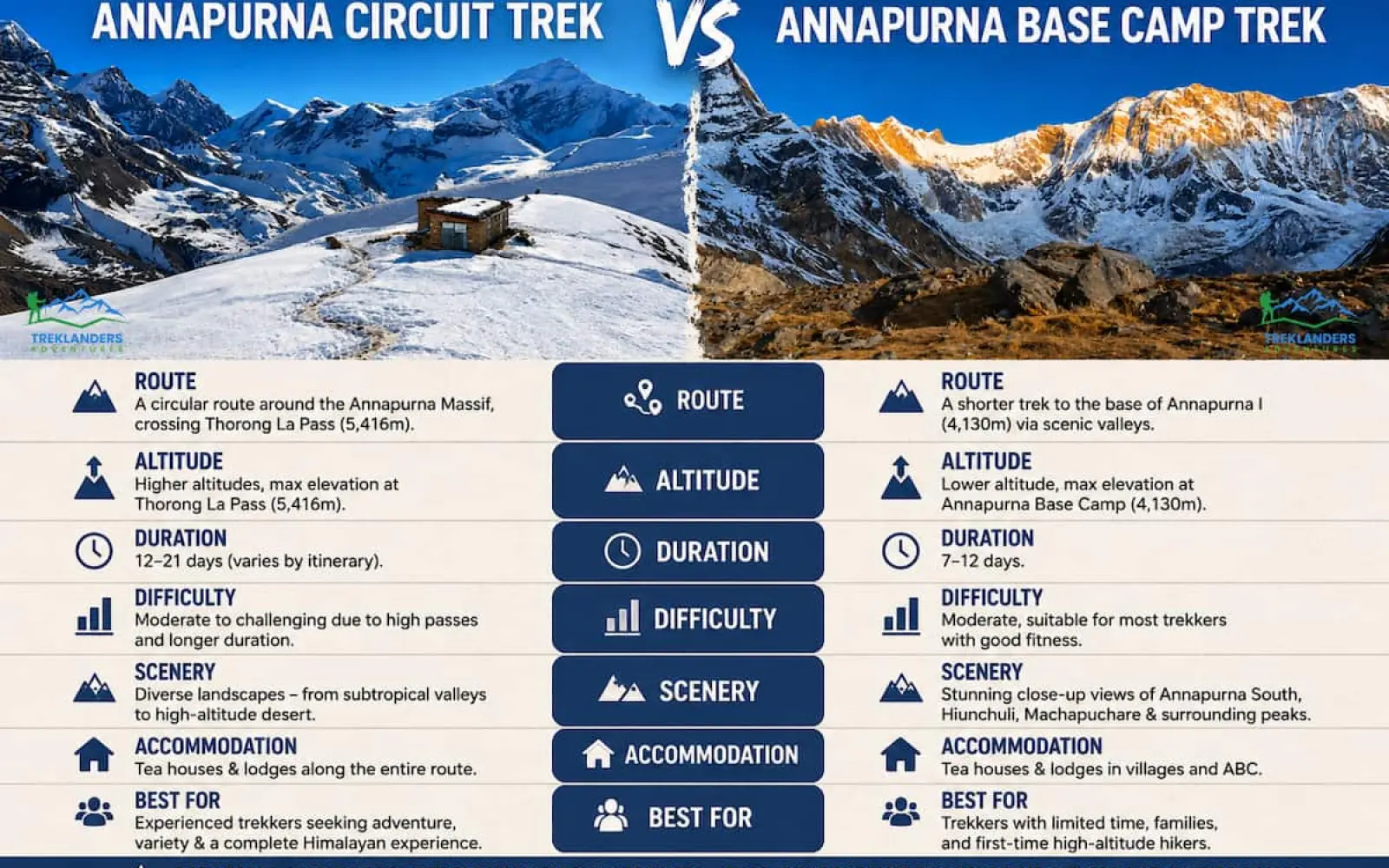
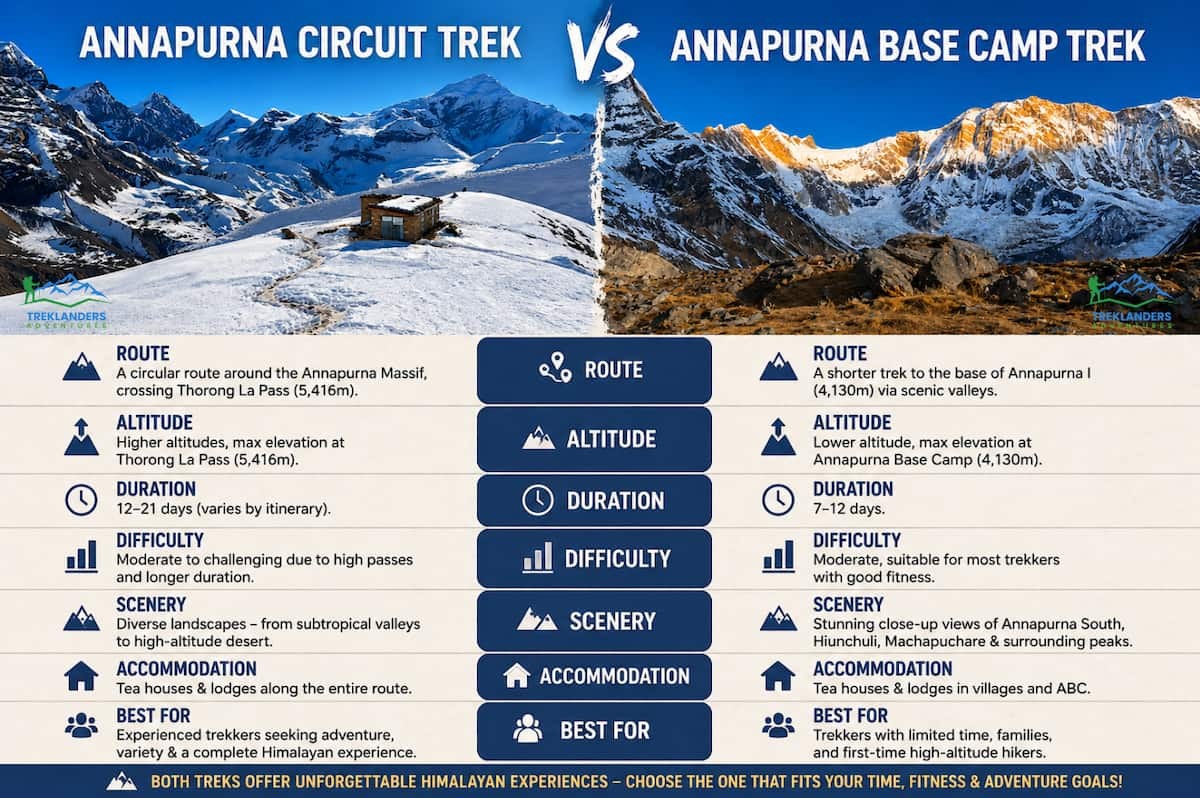
Overview: At a Glance Comparison
Factor
⛰ Annapurna Circuit (AC)
🏔 Annapurna Base Camp (ABC)
Duration
14–21 days (classic); 7–14 days (shortened)
7–12 days
Distance
~160–230 km depending on route
~115 km round-trip
Max Elevation
5,416 m — Thorong La Pass
4,130 m — Annapurna Base Camp
Difficulty
Strenuous
Moderate
Terrain Variety
Subtropical forests → high alpine desert
Rhododendron forest → glacial moraine
Scenery Highlights
Thorong La, Tilicho Lake, Manang, Mustang border
360° amphitheatre of 7,000 m+ peaks at camp
Required Permits
ACAP + TIMS
ACAP + TIMS
Permit Cost
NPR 3,000 + NPR 2,000 (≈ $38 USD)
NPR 3,000 + NPR 2,000 (≈ $38 USD)
Best Seasons
Oct–Nov · Mar–May
Oct–Nov · Mar–May
Teahouse Standard
Basic to mid-range; limited above Manang
Good standard throughout; warm at Doban
Crowd Level
Moderate (lower since highway built)
High (especially at MBC & ABC)
Best For
Adventurers seeking cultural + altitude variety
First-timers & photographers wanting iconic peaks
Altitude Sickness Risk
Higher — crosses 5,416 m
Lower — max 4,130 m
Difficulty: Which Trek is Harder?
This is the question on everyone’s mind when planning their trek, and the answer is straightforward: yes, the Annapurna Circuit trek is more difficult than the Annapurna Base Camp trek. However, it’s just as important to understand why as it is to know the answer itself.
Annapurna Circuit: Strenuous
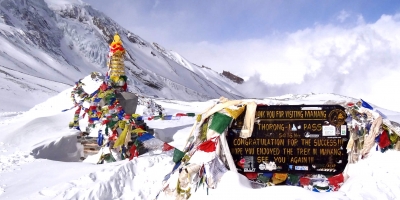
Thorong La Pass- Annapurna Circuit Trek
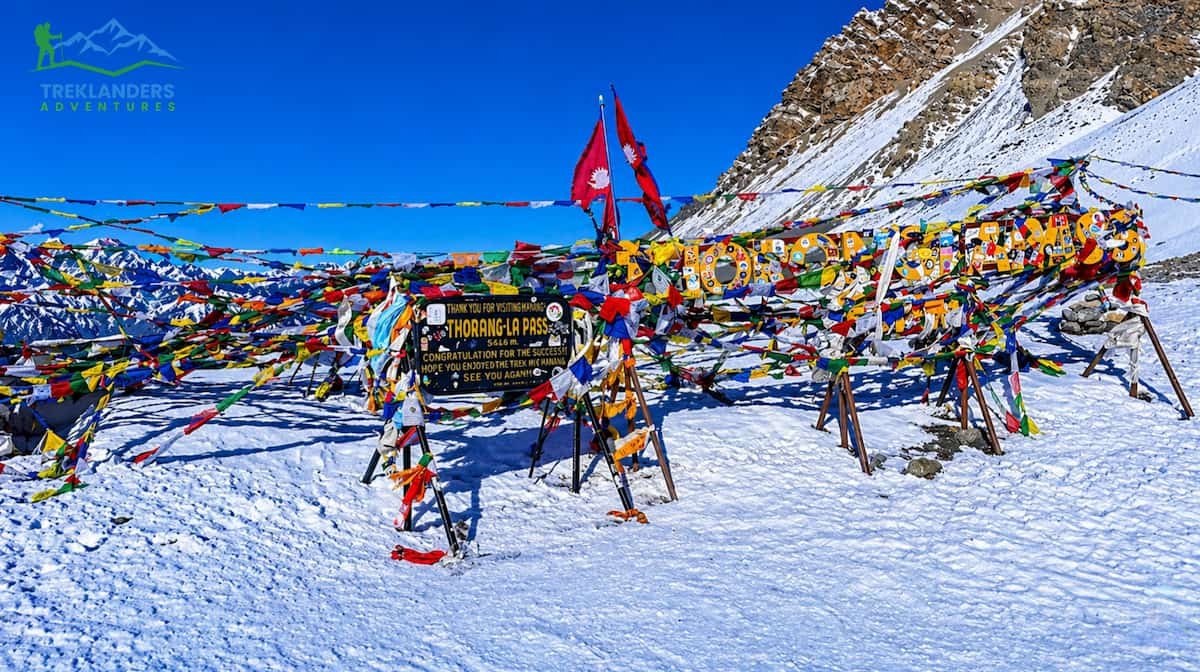
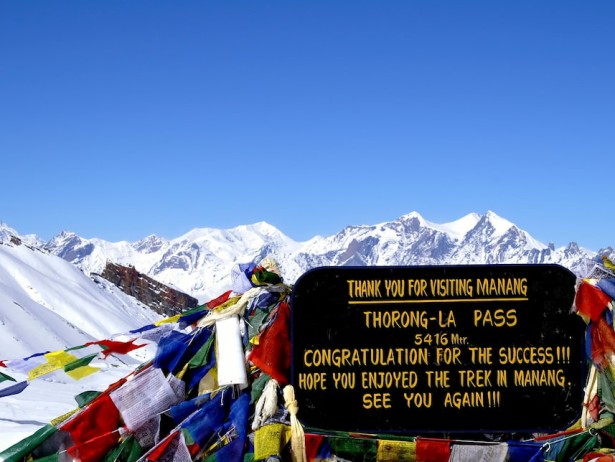
The Annapurna Circuit’s biggest challenge is Thorong La Pass at 5,416 meters, the highest point of any “classic” teahouse trek in Nepal. To get over Thorong La, you must start before dawn (usually between 3:30 and 4:00 AM from High Camp) to avoid afternoon winds, and you gain over 1,000 meters of altitude in one morning from High Camp to the summit. The trail down the other side into Muktinath is steep and grinds your knees. Many seasoned trekkers list the Thorong La crossing day as one of their most difficult in the mountains. Even after you descend from Thorong La, it’s simply how long you’re walking. The “classic” full Circuit means about 14–21 days of continuous walking, often for 5–8 hours each day. While no individual day is “technical” (you don’t need ropes, crampons, etc.), its that relentless effort spent at high altitude that sets this trek apart from most others. Be aware that daily ascent and descent on this trail are no joke, especially the downhill in the first part of the trek through the Marsyangdi River valley, which will have your knees screaming long before you hit the pass. Altitude sickness is also very real. Spending several nights above 3,500 m and acclimatizing in Manang (3,519 m) before the pass means your body is struggling to function in lower oxygen conditions for several days straight. Headaches, nausea and lack of sleep are normal; serious cases of Acute Mountain Sickness (AMS) force trekkers to turn around from Manang every year.
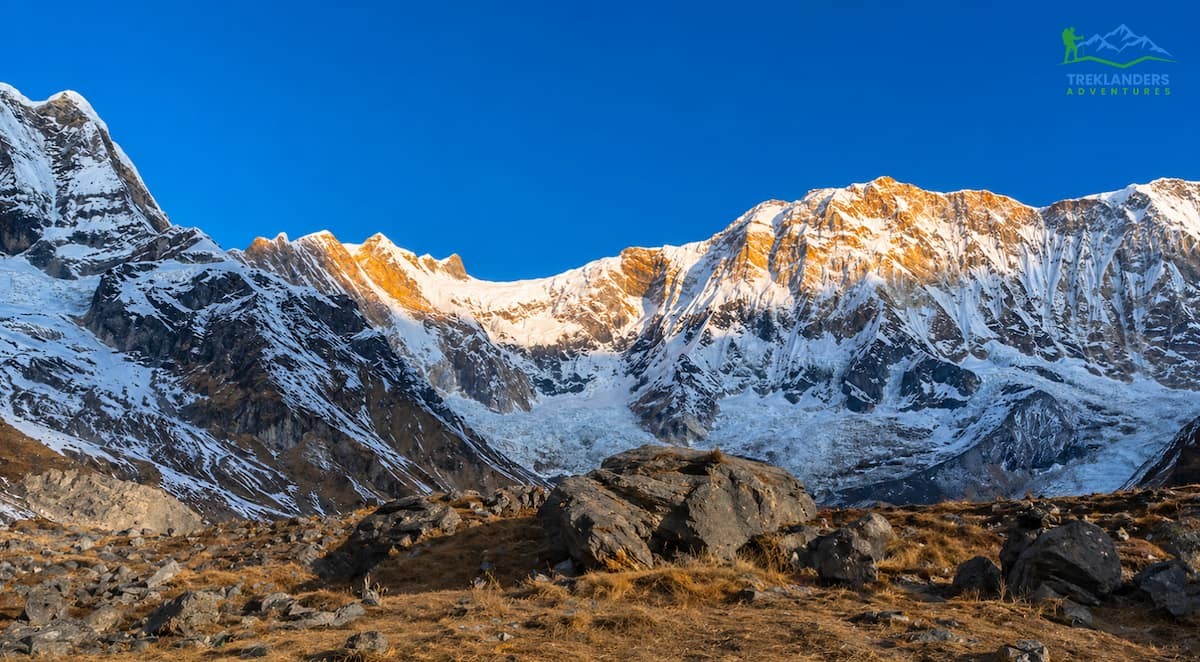
Beautiful sunrise over Annapurna I seen from Annapurna Base Camp.
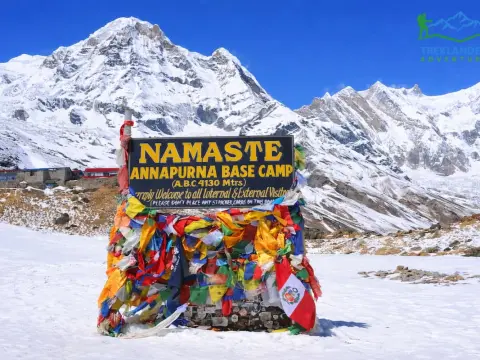
Annapurna Base Camp Trek is comfortably doable for fit walkers with no previous high-altitude trekking experience. The highest point you reach is ABC itself at 4,130 m, nowhere near the height where you will commonly experience severe AMS. You’ll typically walk 4–7 hours each day, and the trail is well-marked and populated with teahouses the entire way. Having said that, take it seriously. This is still high altitude. There is a lot of uphill from Chhomrong (2,170 m) onwards, and the weather can turn suddenly. Just because you aren’t climbing a high mountain pass doesn’t mean dangers don’t exist. The stretch from Deurali to Annapurna Base Camp runs through an active avalanche zone; your guides and teahouse owners will monitor the situation daily and can close sections of the route should recent snowfall make them dangerous. Winter overnight temperatures at base camp can reach jaw-dropping cold. Likewise, your knees will hate you on the long descent from Annapurna Base Camp down to Jhinu Danda.
7-Day Annapurna Base Camp Trek from Pokhara | 7 days
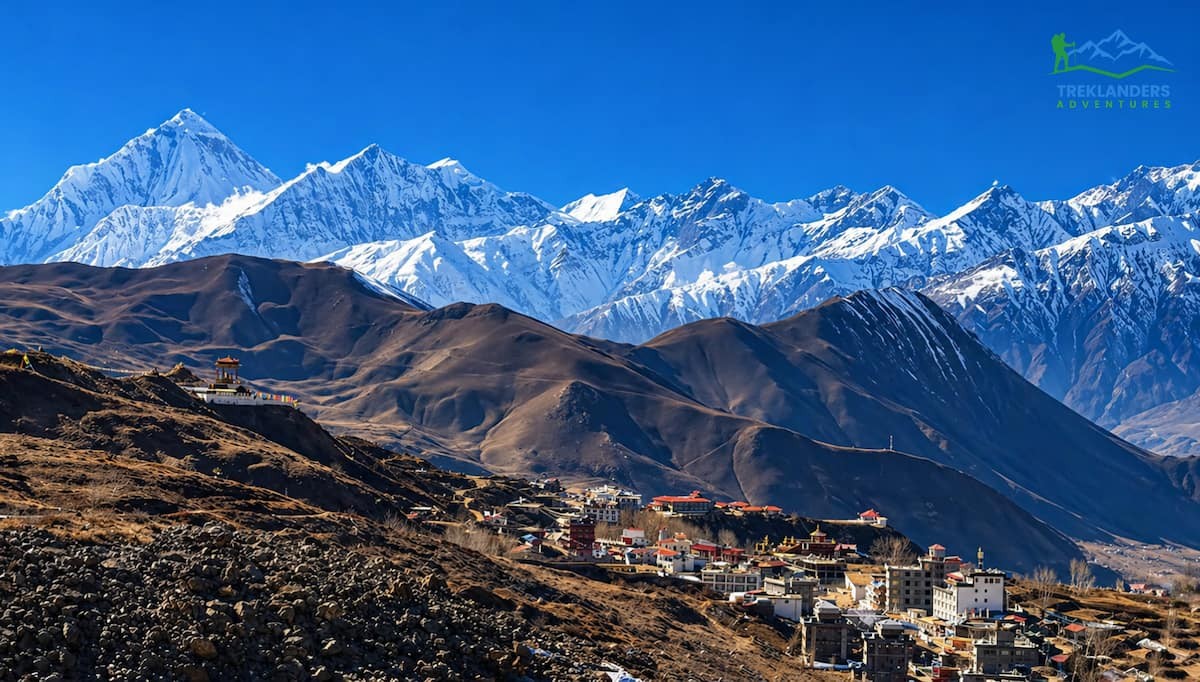
Stunning views of the mountains and Muktinath Bazaar during the Annapurna Circuit Trek.
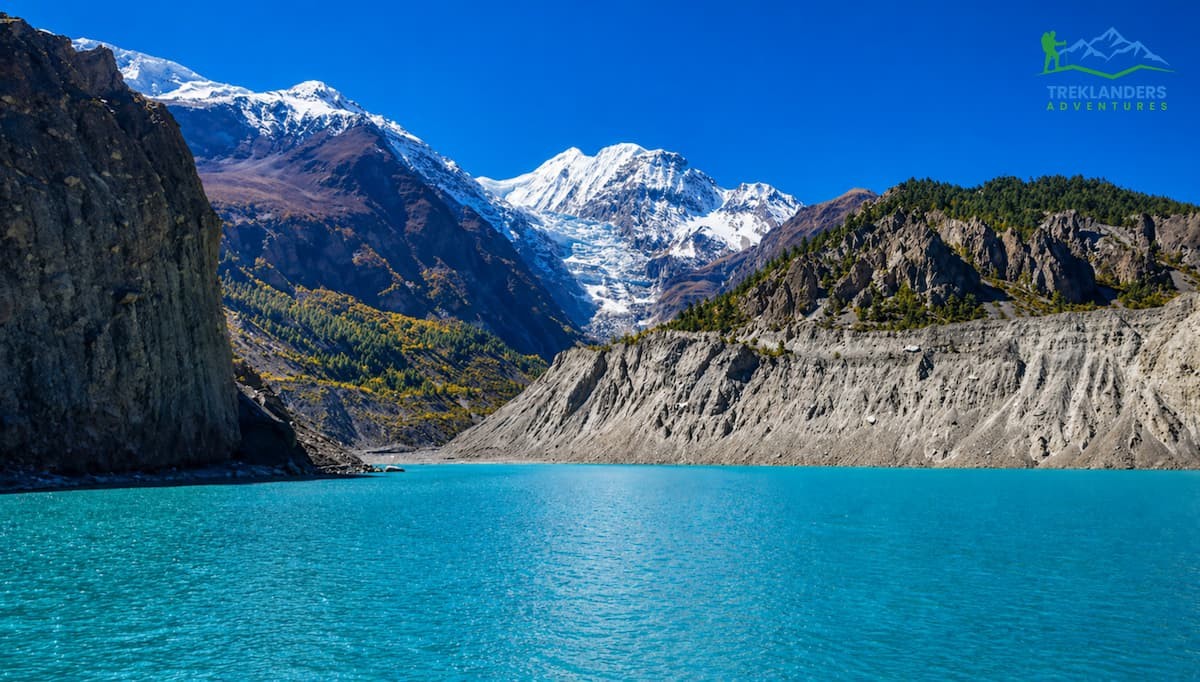
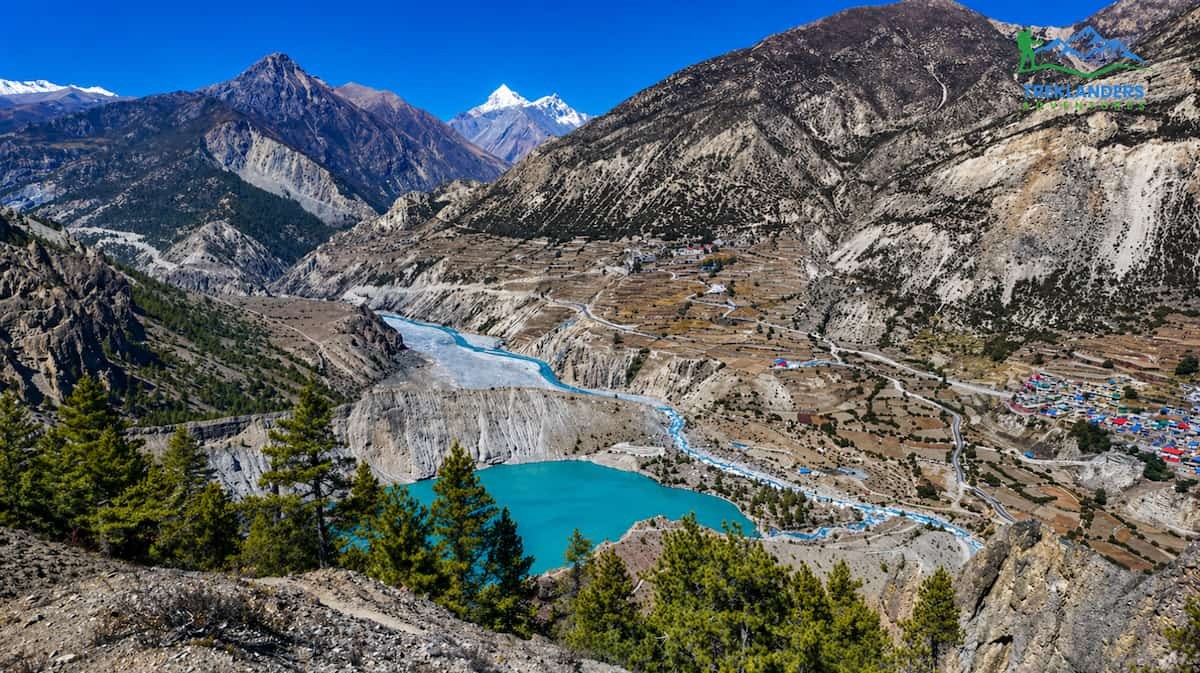
Walkable contrasts make the circuit unique. You trek through subtropical lowlands around Besisahar, where roadside vistas boast terraced rice paddies, thick rhododendron forests, oak jungles, and rustic Gurung villages. But within 2 days of walking, you emerge onto the wind-scoured surfaces of the high-altitude desert in Manang Valley, a landscape far more Tibetan than Nepali. It’s the kind of place where you suddenly wonder if you’ve crossed a continental divide. Some of my favorite views along the Annapurna Circuit include Tilicho Lake (4,919 m) in the Manang Valley, turquoise blue in colour and one of the highest lakes in the world (don’t miss the optional side trek! ), the knife-edge ridge of the Pisang Peak viewpoint, and traditional Manang with its medieval-looking fortress of Tibetan-style flat-roofed buildings. After Thorong La, trekkers are rewarded with the vibrant spiritual atmosphere of Muktinath, a sacred pilgrimage site, as well as colourful Marpha village with its apple orchards and distinctly different feel. There’s also the unique pleasure of taking in the Annapurna massif bit by bit over many days on the Annapurna Circuit, rather than all at once. Depending on your exact itinerary, you’ll wake up every few days to new angles on Annapurna II and Annapurna III and IV; Gangapurna’s magnificent hanging glacier; and Pisang Peak, that strikingly shaped pyramid of a mountain. You won’t have to search for photo opportunities; they’ll find you.
15-Day Tilicho Base Camp with Thorong-La Pass Trekking | 15 days
The Annapurna Base Camp Trek: The Amphitheatre Moment
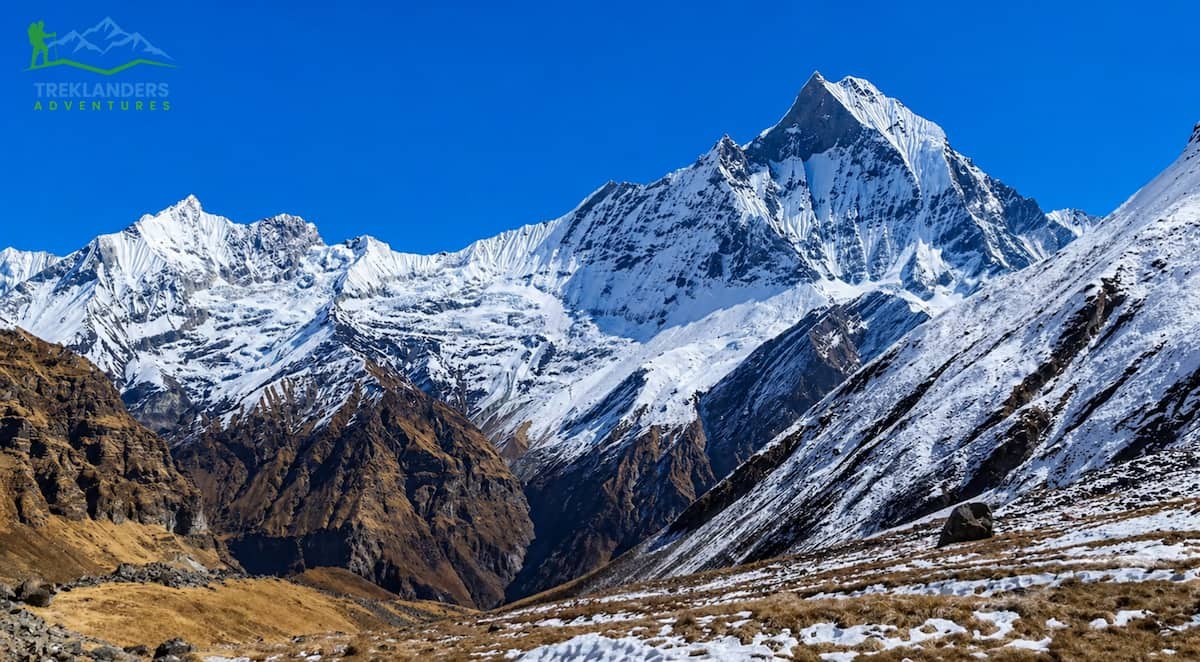
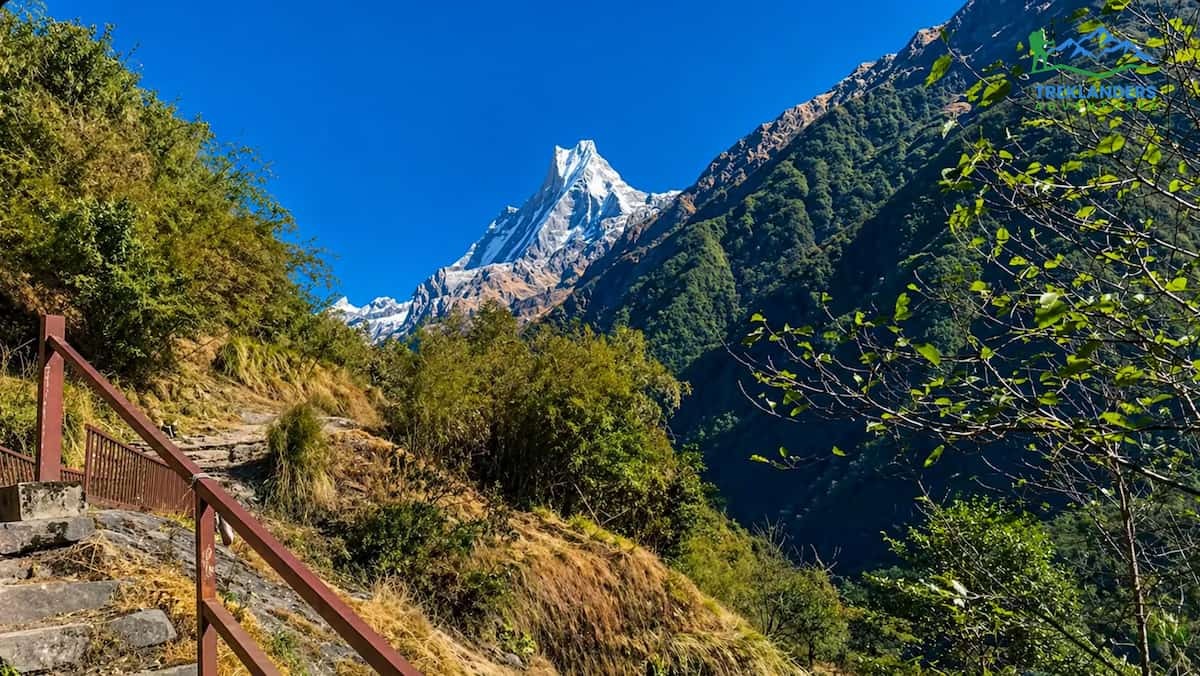
Stunning view of Mount Machhapuchhre seen during the Annapurna Base Camp Trek.
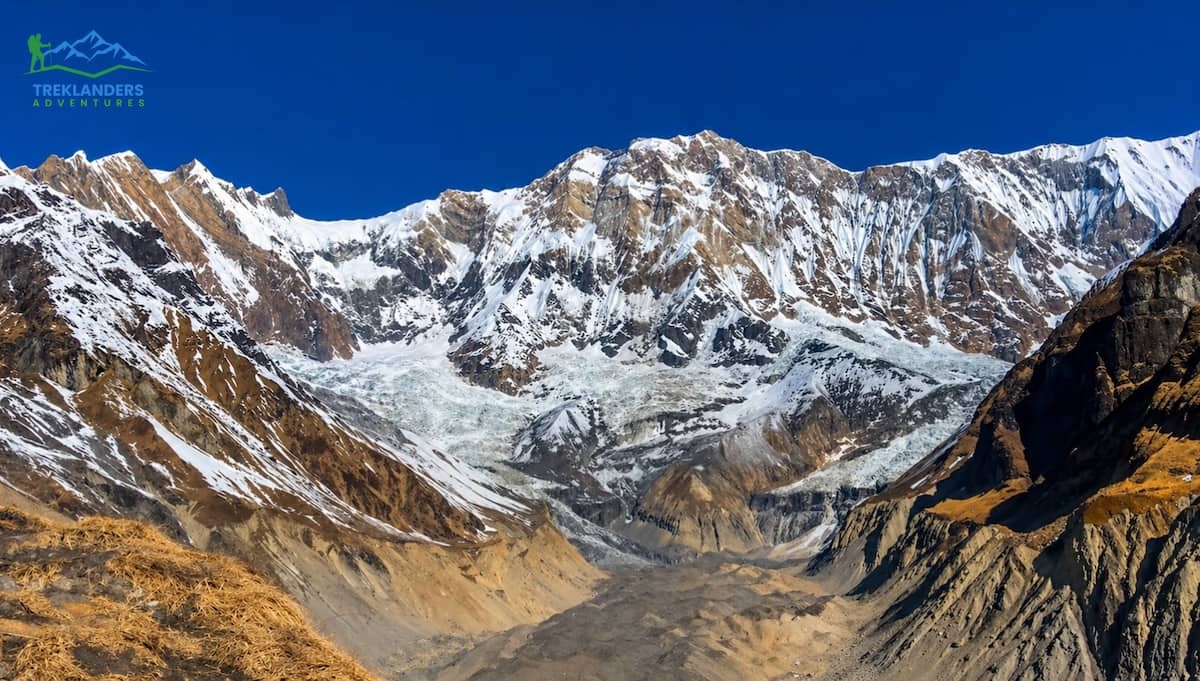
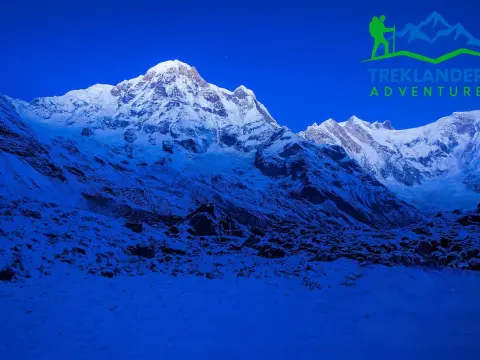
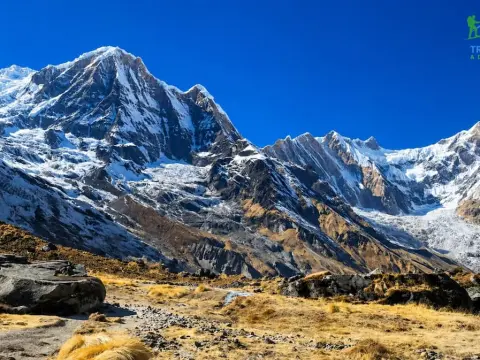
ABC, by contrast, affords a more narrow-focused yet no less memorable climax to the tale. For most of its lower elevations through Modi Khola gorge, by the Jhinu Danda hot springs, through rhododendron forest above Chhomrong, the scenery is quite lovely, but like what you’d find on other lower-altitude Nepal treks. It’s only when you enter the upper sanctuary that things kick into high gear. Climbing from Machhapuchhre Base Camp (MBC) to ABC just as dawn breaks is a cinematic experience you’ll never forget. Golden light spills across the peaks that tower above your lodgings: Annapurna I (8,091 m) and Annapurna South (7,219 m); Machhapuchhre (6,993 m) or “Fishtail”, that distinctive peak that ironically no one is allowed to climb; plus Hiunchuli, Gangapurna and Glacier Dome. All of a sudden, you find yourself in the middle of a 360-degree amphitheatre of giants. You really can’t wrap your head around it before you get there. And no matter how many pictures you’ve seen, it’s magic to experience in person. If the Circuit gives you a journey, Annapurna Base Camp Trek gives you a destination. The trek itself is rewarding; the base camp is the prize. Standing atop Annapurna Base Camp, you feel like you’ve been transported to another world. Raw. Cold. Perfect.
The fall after-monsoon season is considered the best trekking season for both Annapurna Base Camp Trek and Annapurna Circuit Trek. The skies are clear after months of rain; visibility is spectacular, trails have just been washed clean, and temperatures are crisp but not too cold. Rhododendron forests are still green, and high mountain views are the crispest. October is particularly busy with trekkers' rooms in teahouses booking quickly during peak weeks.
Spring: March through May (BEST, PARTICULARLY FOR ABC)
Spring is the second-highest season for both treks and is particularly beautiful on the Annapurna Base Camp route. Brilliant rhododendron forests bloom above Chhomrong in a swath of pink and red from late March into April. For many, this is the most beautiful time to trek to Annapurna Base Camp. Spring is great for the Circuit as well, but late-season weather is more inconsistent into May, when Thorong La may shutter with little notice due to pre-monsoon storms. March and early April are ideal.
Stunning view of Mount Annapurna I seen during the Annapurna Base Camp Trek.
Winter: December to February (Cold but Viable for ABC)
ABC itself can be done in winter, provided you are prepared and experienced indeed. Many people opt to trek during this period precisely because there are fewer people on the trails, and snow-capped mountains are dramatic. Temperatures at base camp can reach −15°C (5°F) or lower. There is also increased avalanche danger between MBC and ABC following snowfalls. Taking on the Annapurna Circuit Trek in winter is another matter entirely. Thorong La frequently closes throughout this season due to snow and ice build-up, thus making a full Annapurna circuit almost impossible without crampons/high altitude experience.
Monsoon: June to September (Best avoided)
The monsoon, unfortunately, sees daily rainfalls of heavy proportions, adds leeches to the lower trails, reduces visibility and creates a very real risk of landslides blocking the trail. Avoided by most trekking aficionados. The exception: the Mustang section of the Annapurna Circuit (beyond Thorong La) lies in a rain-shadow zone and can be walked year-round, It also connects to the Upper Mustang Trek, which requires a separate Restricted Area Permit and a significantly higher budget.
You arrive in the capital of Nepal, a congested valley city that is fringed by temples, grumbling motor horns and on sunny days, mountains. Your guide representative collects you from the airport, and your guide/porter team takes you to your hotel. After registering, you relax for the rest of the day or take a short stroll into Thamel, the trekking hub, for gear shops, coffee, and currency exchange. In the evening, you have a briefing about the trek, the route, safety, etc. You gather your kit and get your permit documents sorted.
Day 2: Drive from Kathmandu to Pokhara at 860 m (2,822 ft) (6-7 hours)
Depart early and travel north on the Prithvi Highway along rivers and terraced hillsides. The route winds through villages and roadside markets. You'll encounter bends in the road and varying conditions. Stops are made to take meals and have breaks. By afternoon, Pankara is reached, a lakeside town with the Annapurna Range as a backdrop. You check into your hotel close to Phewa Lake and ready yourself for the trek.
Day 3: Drive to Jhinu(1,700m/5,577ft) and trek to Chhomrong at (2,170m/7,119ft): Duration: 6 hours.
A short drive will take you to Jhinu. From there, the trek starts. The trail heads uphill, passing through forests and stone steps. You cross suspension bridges and walk past small villages. The climb to Chhomrong is steep. Chhomrong is located on a ridge with excellent views of Machhapuchhre. In a teahouse, you acclimate.
Day 4: Trek to Dovan (2,505 m / 8,219 ft.) via Bamboo (2,310 m / 7,579 ft.); about 6 hours.
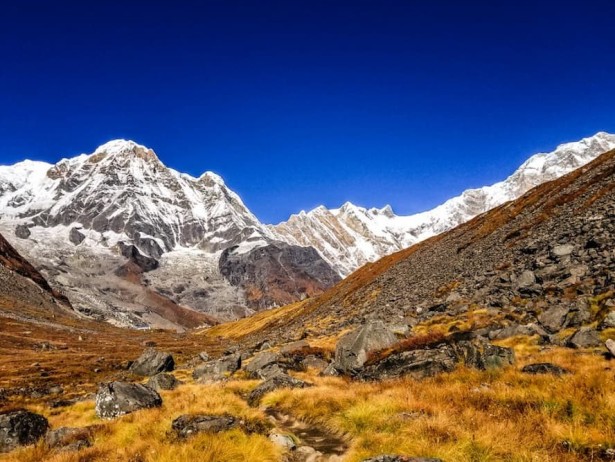
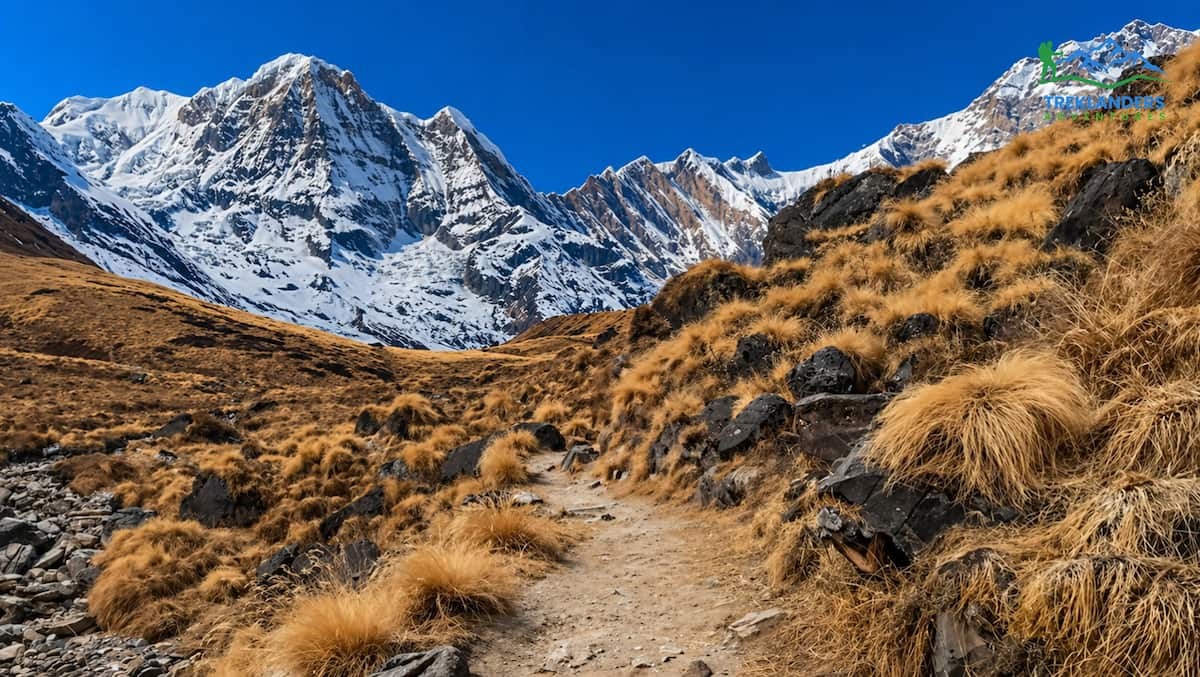
Annapurna Base Camp Trek trail
You descend to the Chhomrong Khola and then climb back up through dense bamboo forest. The trail narrows and follows the river valley. Bamboo village offers a rest stop. From there, you continue to Dovan. The environment becomes cooler and more shaded. You maintain a steady pace to support acclimatization.
Day 5: Trek to Machhapuchare Base Camp at 3,700 m (12,139 ft.); about 6 hours.
You move higher into alpine terrain. The forest thins and gives way to open slopes. You pass Deurali and enter a glacial valley. The trail becomes more exposed with rockfall areas, so you walk carefully. By afternoon, you reach Machhapuchare Base Camp. The views open up to snow peaks and glacier fields.
Day 6: Trek from Machhapuchare Base Camp to Annapurna Base Camp at 4,130 m (13,550 ft); duration: about 3 hours.
Trail from Machhapuchare Base Camp to Annapurna Base Camp
This is a short but important day. The trail rises gradually into a wide basin surrounded by peaks. You reach Annapurna Base Camp by late morning. The area forms a natural amphitheatre with close views of Annapurna I and the surrounding summits. You spend the afternoon exploring and resting. Cold temperatures are common.
Day 7: Descend from Annapurna Base Camp to Bamboo at (2,310 m./ 7,579 ft.); duration: ~6 hours.
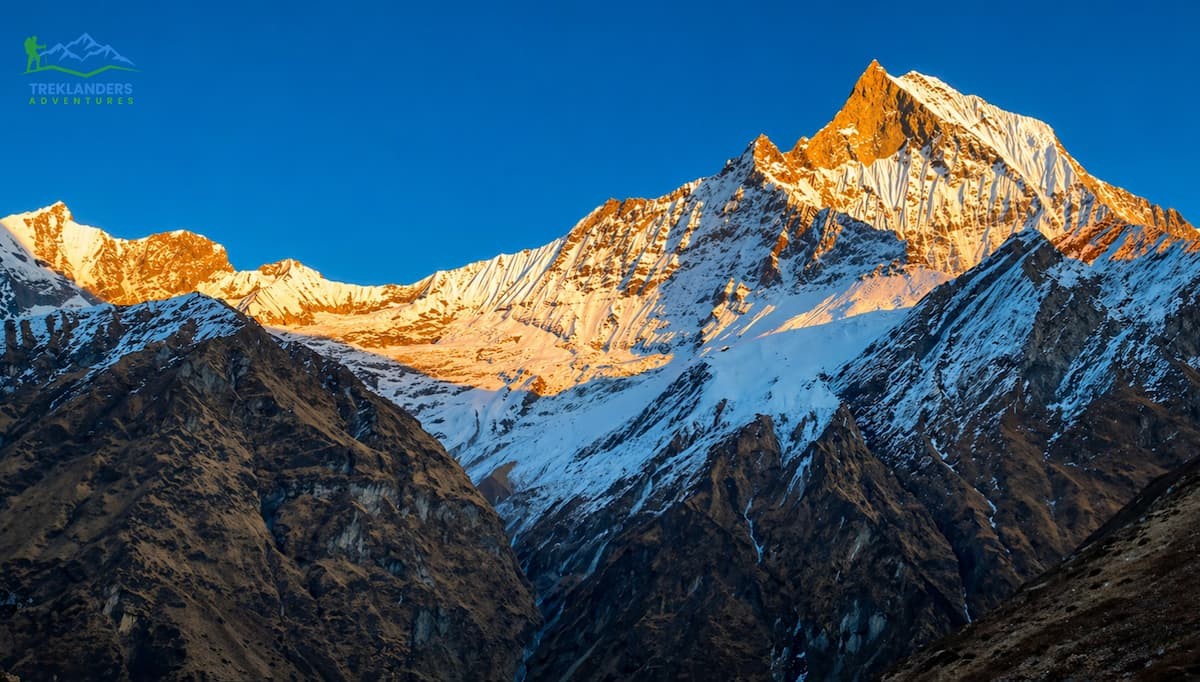
Beautiful sunrise over Mount Machhapuchhre during the Annapurna Base Camp Trek.
After enjoying the sunrise views at base camp, begin descending along the same route through Machhapuchhre Base Camp and Dovan. Retracing the trail allows you to experience the changing landscapes from a new perspective, gradually re-entering forested terrain. The day ends at Bamboo, surrounded once again by lush greenery and the sounds of the river.
Day 8: Trek from Bamboo to Jhinu Danda at (1,780 m./ 5,840 ft.); duration: ~6 hours.
Continue trekking downhill through forests and villages, crossing suspension bridges and terraced fields. The trail leads to Jhinu Danda, a popular resting spot famous for its natural hot springs. In the afternoon, you may visit the hot springs beside the river, offering a relaxing and refreshing end to the trekking journey.
Day 9: Drive from Jhinu to Pokhara at 860 m (2,822 ft); duration: ~3 hours.
Walk from the Jhinu area to the road head, enjoying the final moments on the trail through local villages and farmland. From there, drive back to Pokhara, where you can enjoy a comfortable hotel stay, celebrate the completion of the trek, and relax by the lakeside.
Day 10: Drive from Pokhara to Kathmandu at 1,365 m (4,478 ft.); duration: 6–7 hours.
Depart Pokhara and drive back to Kathmandu, passing familiar landscapes of rivers and countryside. Upon arrival, you have free time for last-minute shopping, sightseeing, or enjoying a farewell dinner with your trekking companions.
Note:- You can also fly to Kathmandu from Pokhara (25-minute flight), but you will need to pay extra.
Day 11: International departure for homeward bounds.
After an enjoyable and most mesmerizing time in Nepal, around the Himalayas with the Annapurna Base Camp Trek. As the time for departure approaches, our staff will transfer you to the international airport for your flight homeward bound or to the next port of call.
10-Day Ghorepani Poonhill with Annapurna Base Camp Trek | 10 days
You arrive in the capital of Nepal, a congested valley city that is fringed by temples, grumbling motor horns and on sunny days, mountains. Your guide representative collects you from the airport, and your guide/porter team takes you to your hotel. After registering, you relax for the rest of the day or take a short stroll into Thamel, the trekking hub, for gear shops, coffee, and currency exchange. In the evening, you have a briefing about the trek, the route, safety, etc. You gather your kit and get your permit documents sorted.
Day 2: Drive to Bhesishar Town 760 m around Lamjung district-05 hrs.
Start the wonderful adventure, Annapurna Circuit, with an exciting overland journey, heading beyond Kathmandu Valley. Following the main country highway, which connects all of Nepal from east to west. The drive leads to mid-hills around a warmer climate towards the Midwest, reaching Bhesishar, the headquarters town of Lamjung district. On arrival, transfer into a nice, simple hotel or lodge, having time to browse around the interesting Bhesishar town.
Day 3: Drive to Dharapani village 1,860 m-04 hrs.
The morning after a good breakfast, another interesting drive to reach the starting point of the trek from Dharapani. The drive follows the Marsyangdi River for some time through Khudi and Bulbule villages to reach Syange.
From here, the drive climbs on a winding, hilly road to Jagat Village, above the Marsyangdi River. Then the drive heads to slow up to Chamje and towards a wide river valley at Tal-Besi Village. The entrance to Manang district, from here a short drive brings you to the cooler area at Dharapani Village. Located in a wide river gorge en route to the Manaslu Circuit and Annapurna Circuit Trekking. At Dharapani, enjoy the comfort of a nice mountain lodge for an overnight, with the sound of the Marsyangdi River flowing.
Day 4: Trek to Chame 2,710 m-05 hrs.
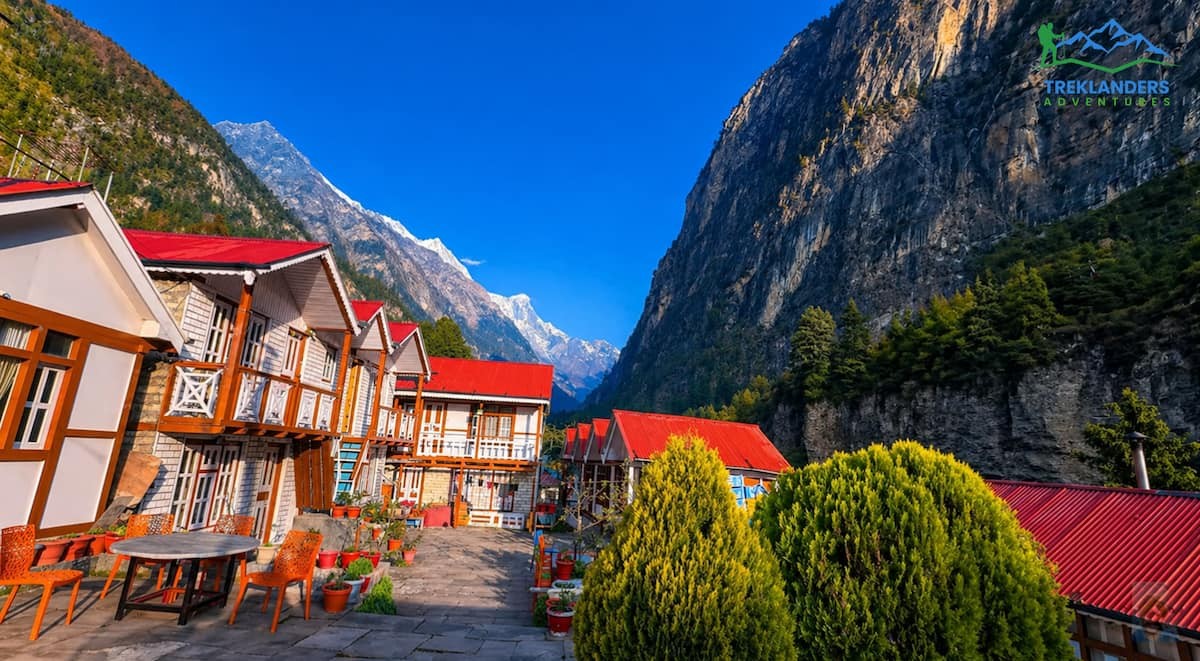
Guesthouses along the Annapurna Circuit Trek.
Start the first day walk to Chame, the headquarters town of the Manang area, on a pleasant morning to begin with. Following the wide trail through a nice cool forest of rhododendrons and pine trees to Bagarchap village. Views of Annapurna peak towards the west, as the walk leads to another nice area of Danaque. Village with an apple orchard, from here a steep climb to Timang. A large Gurung Village with stunning views of the Manaslu Himalayan range and Lamjung Himal. An ideal spot for a lunch break, and a gentle walk down to the river towards Kodo Village. From here on, gradual ups, for an hour to Chame for an overnight stop in a nice lodge. The town is situated amidst lovely forest surroundings with views of Lamjung Himal. Enjoy the leisurely afternoon exploring Chame Town.
Day 5: Trek to Pisang 3,120 m-05 hrs.
From Pisang, the walk follows the river through the densely forested trail to the small village of Brathang. As adventure continues, crossing a bridge with a climb to a high ridge at Dukure Pokhari with a few small lodges. Enjoy the lunch stop with grand views of towering Pisang Peak, afternoon an easy walk downhill to Pisang Village. Pisang Village is located on a windswept dry valley with blue pine trees, beneath the giant Pisang Peak. Stay overnight in a nice, simple lodge with rooms with a view of the surrounding peaks.
Day 6: Trek to Manang 3,540 m- 04 hours.
Today’s walk leads to the heart of Manang Valley at the main Manang village, an interesting and scenic walk. A short day of trekking, from Pisang Village, climb on the gradual path within lovely trees of blue pines and rhododendrons.
The walk then leads to Manang Village for two overnight stops in the comfort of good lodge accommodation. It also serves a good food menu of great varieties to enjoy for dinner. The rest of the afternoon, explore the interesting Manang Village of impressive traditional Tibetan-style houses. Facing views of Gangapurna, Annapurna II and III with Chulu peaks.
Day 7: At Manang, Rest Day for acclimatisation and a short hike.
Acclimatisation and a short hike near Manang Village
Enjoy a rest day free from the daily routine of packing. Manang offers several short and long hiking trails. The best is to walk down to the river and climb to a viewpoint. Provide a close look at Gangapurna Himal Ice Fall and glaciers with Manang's small turquoise-coloured lake. As well grand vista of Annapurna II and III with Chulu and Pisang Peaks towards the North. After a great scenic hike, return for lunch, and the rest of the afternoon at leisure, marvelling at the beautiful scenery.
Day 8: Trek to Yak Kharka 4,110 m-04 hrs.
From Manang, another short day walk to Yak Kharka, situated en route to Thorang-La Pass. The walk follows with gradual ups on a winding trail towards drier terrains. As the trek continues with grand views of Chulu West, Gangapurna and Tilicho Peaks. Then, ending the morning walk, reaching a wide Valley, where Yak Kharka is located, with several nice lodges. Arriving for lunch and an overnight halt, the rest of the day we enjoy a short hike with tremendous views of snow peaks.
Day 9: Trek to High Camp 4,900 m-04 hrs.
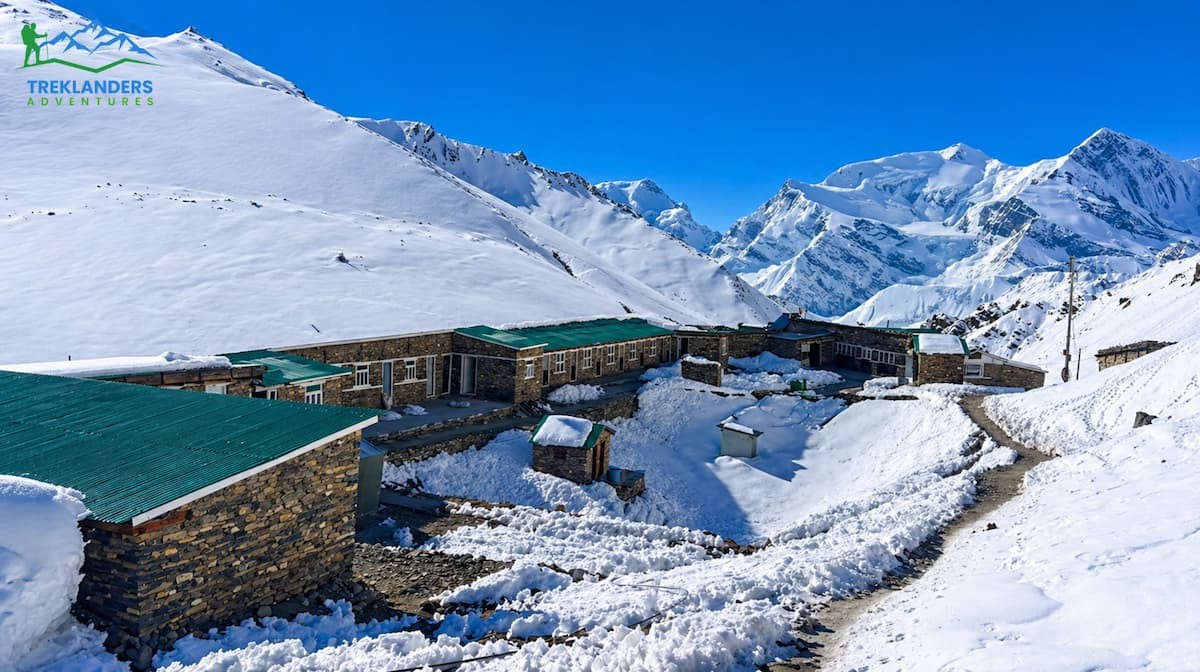
High Camp - Annapurna Circuit Trek
Another short morning walk to Thorang High Camp, but the gain in altitude makes the pace slower. Heading towards the end of Manang Valley, around dry country, the walk then heads down to a stream. Then, with a short steep up, the walk continues on a gentle path reaching Thorang Phedi.
The bottom of the pass, a place with few simple good lodges, has a refreshing stop. A steep, slow climb of less than an hour to reach High Camp for lunch and an overnight stop. Enjoy the sheer mountain's dramatic wilderness, and have a good rest, for the next morning-long climb to Thorang-La Pass.
Day 10: Trek to Muktinath 3, 800 m via Thorang la pass 5,416 m-07 hrs.
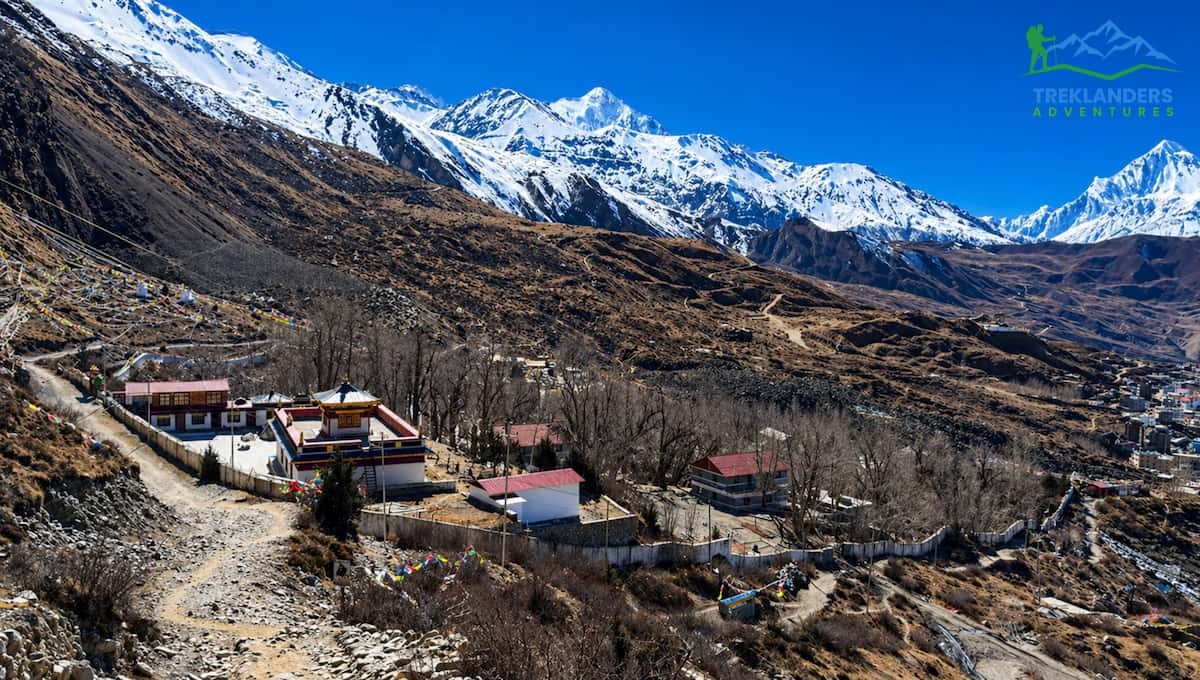
Muktinath Temple
An early morning starts to reach high Thorang-La Pass before the sun hits, with the cold chill factor. The walk starts heading on a gradual path for a start, and then winds up reaching a small glacial pond. Then the climb gets steeper, as you step on top of Thorang-La Pass, feeling quite exhausted.
Having a rest and feeling glad, overcoming the hardest sections of the adventure, and standing on the highest point. Enjoy the spectacular panorama of the surrounding giant snow peaks of Damodar, Dhaulagiri, and Chulu peaks. Includes most of the Annapurna range of peaks, and as far as Manaslu Himal, after a glorious morning. Thorang-La forms the boundary of Manang and Mustang districts, from the top, a long descent to the bottom. Then the walk gets better on a gradual path to the Muktinath holy site, and further down to the village. Where the good hotels and lodges are located at Rani Pawa, the name of the village. Situated close to the temple premises of Muktinath on the motorable roadhead, enjoy the comfort of nice, good lodge accommodation.
Day 11: Drive to Tatopani 1,200 m-04 hrs.
Morning, having time to visit the Muktinath Temple holy complex and its historical 108 water spouts. A sacred and important pilgrimage site for the Hindus, the temple is dedicated to Lord Vishnu. The word Muktinath means to liberate and be free from the sins and the birth cycle. After an interesting tour of Muktinath, and getting blessed by the priest. From enjoying the drive to Tatopani Village, the journey follows down to the Kaligandaki River Valley. Reaching the large town of Jomsom, the headquarters of the Mustang district, the drive continues heading further down. The drive leads past the lovely Marpha and Tukuche Villages, famous for apple orchards and products. Along with superb views of Nilgiri’s and Dhaulagiri peaks, it then reaches back into a forest of pines and rhododendron trees.
The road leads to the nice village of Kalapani and Lete with a wonderful panorama of the surrounding Snow Mountains. Then drive through the world's deepest gorge, the Kaligandaki River, between the giant peaks of Annapurna and Dhaulagiri. After a scenic and exciting drive, reaching the lower warmer farm country of paddy fields at Tatopani. A nice and large village with a natural hot spring, as the name suggests, for this lovely village, at Tatopani, in the comfort of nice, good hotels and lodges with views of Nilgiri’s South Peak.
Day 12: Trek to Ghorepani 2,880 m-06 hrs.
From Tatopani, our trek continues, heading across the bridge and then leaving the Kaligandaki River. As the climb starts reaching Ghara farm village and then gradually up to Sikha and Chitre Villages. After good hours of walking through lovely farm villages, and then a steep climb to Ghorepani. A scenic spot amidst a beautiful forest of rhododendrons transforms into a nice lodge. After a good walk from Tatopani of more than 6 hours of climbing.
Day 13: Hike to Poon Hill 3,210 m, trek to Ulleri village 2,050 m, and drive to Pokhara 860 m-06 hrs.
An early morning hike for an hour to the famous Poon Hill at 3,210 m high for stunning sunrise views. As well as a panorama of 380° wide views of the world’s three highest peaks, Dhaulagiri, Manaslu, and Annapurna Himal. Includes arrays of snow peaks with majestic Machhapuchare, the famed fish-tail peak. After a refreshing morning, walk back to Ghorepani for breakfast. Enjoy the last day of trekking to reach scenic Pokhara city from Ulleri Village. The walk follows through the enchanting woods of pines and rhododendron trees on a gradual path. Downhill leads to a large village at Ulleri for an exciting drive around the lower warmer areas. A scenic drive on a winding road with a few ups and then down towards Pokhara Valley and the city. On reaching the hotel in Pokhara, located close to serene Phewa Lake, enjoy the comfort of a nice hotel.
Day 14: Drive to Kathmandu and transfer to the hotel.
Morning, leaving the hotel in Pokhara, drive in a private vehicle or on a regular Tourist Bus, as per the size of the group. The scenic and interesting overland journey to Kathmandu on the same exciting highway. After hours of driving, reach your hotel in Kathmandu, rest of the day at leisure.
Note:- You can also fly to Kathmandu from Pokhara (25-minute flight), but you will need to pay extra.
Day 15: International departure for homeward bounds.
After an enjoyable and most mesmerizing time in Nepal, around the Himalayas with the Annapurna Circuit Trek. As the time for departure approaches, our staff will transfer you to the international airport for your flight homeward bound or to the next port of call.
Most hikers on the Annapurna Circuit Trek begin at Besisahar, accessible by a 5–7-hour tourist bus or shared jeep journey from Kathmandu, or a shorter journey from Pokhara. Several hikers now catch a jeep from Besisahar to Dharapani or Chame to avoid the lower section of the valley affected by the road (a large part of this is not a proper trail but a dilapidated jeep track). This reduces the route to 12-14 days without sacrificing its more impressive sections. For the Annapurna Base Camp trek, begin with Pokhara.
A taxi up to Nayapul, 1 hrs. (bargain or book a FIXED PRICE through the hotel). A local bus to Phedi or Nayapul. From Kande (Australia Camp) or Ghandruk is an even shorter plan (however, Ghorepani and Poon Hill are strongly encouraged to, if you have a reasonable time!).
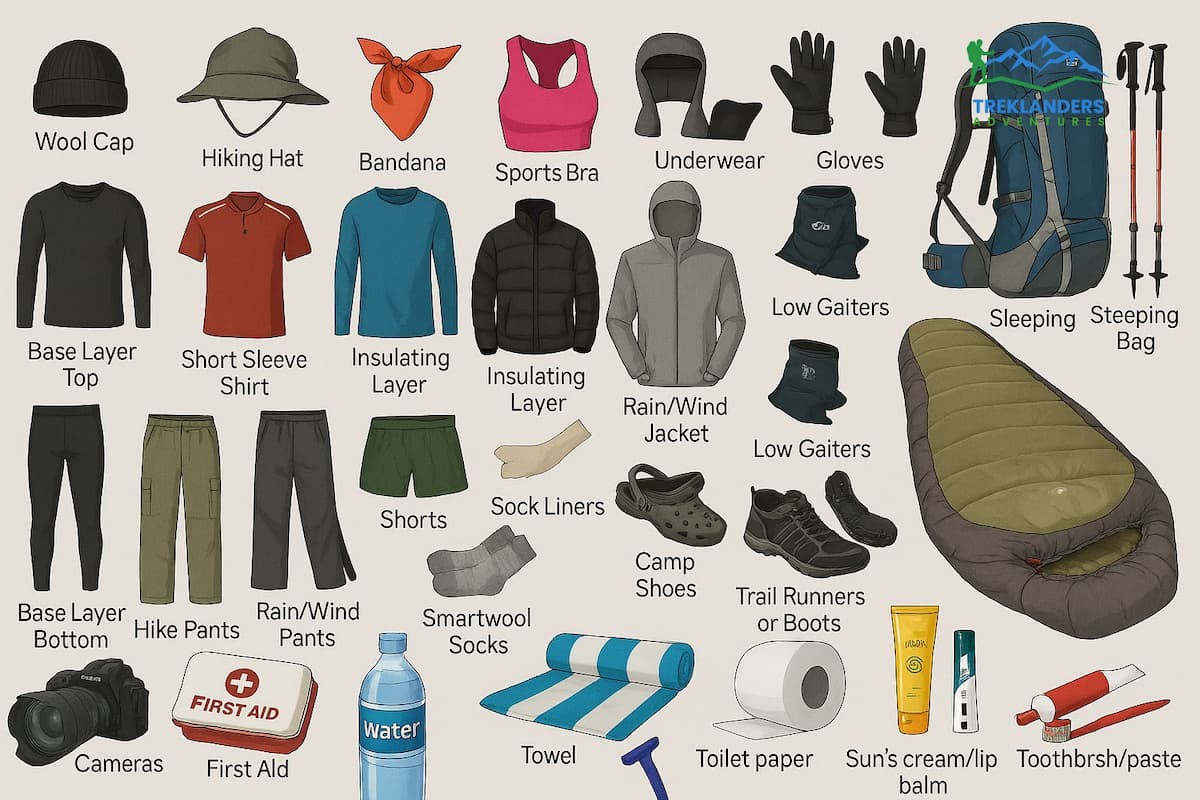
Essential Gear for Both Treks
Essential Gear for Annapurna Circuit Trek and Annapurna Base Camp Trek
Circuit-Specific Gear
Down jacket rated to at least –10°C (essential above Manang)
Warm sleeping bag liner (or full bag if teahouse bags feel inadequate)
Trekking poles: critical for the Thorong La descent
Headlamp with fresh batteries (for 3 AM Thorong La start)
Diamox (acetazolamide): consult a doctor before departure
Gaiter or gaiters if going in winter/early spring
ABC-Specific Gear
Waterproof jacket and trousers (rain & mist common in the lower gorge)
Warm mid-layer for cold base camp nights
Trekking poles: useful on steep staircase sections
Micro spikes or crampons for trekking in winter/early spring
Headlamp for sunrise walks from MBC to ABC.
Insulated water bottle (water freezes at high camp in winter)
Nar-Phu Valley With Thorang-La Pass Trek | 21 days
Annapurna Circuit Trek — Trail crossing Thorong La Pass.
No one trek is "better" than another. The ultimate choice is up to you in terms of time, fitness, and what you wish to gain from experience. Both of these routes are located in the Annapurna valley, but each offers a radically different experience in terms of length, difficulty, and atmosphere.
Opt for the Annapurna Circuit if you want a 14-21-day trek and are prepared to walk constantly at altitude. It's the trek to take if you like your treks varied, as you go through sub-tropical forests, terraced farms, alpine valleys and bleak desert plains. You'll meet Gurung, Thakali and Tibetan cultures. The final thrill is crossing Thorong La, at 5416m (17, 769ft). Long, arduous but not impossible, provided you have acclimatized early. It's a feat of endurance that culminates in a Himalayan traverse that feels like one journey from top to bottom.
Pick Annapurna Base Camp Trek if you have 7-12 days or are not acclimatized to high altitude. It is the most straightforward and expedient route. It still takes you into a beautiful area, but the emphasis is entirely on achievement, bringing you to the amphitheatre of peaks at the base of the mountains. You trudge through forested regions of rhododendron, river valleys and ethnic villages before entering a magnificent glacial basin, ringed by Annapurna I, Machapuchare and Hiunchuli.