[{"name":"Everest Base Camp Trek","duration":"16","image_url":"https:\/\/www.treklanders.com\/storage\/trip-galleries\/1\/thumb_419a755c003cc609f3030ee332965ebe.jpg","offer_price":1405,"url":"https:\/\/www.treklanders.com\/trips\/everest-base-camp-trek"},{"name":"Gokyo Valley Trekking","duration":"16","image_url":"https:\/\/www.treklanders.com\/storage\/trip-galleries\/2\/thumb_676d1021b574aeba4d19d3f2a0b04ed2.webp","offer_price":1205,"url":"https:\/\/www.treklanders.com\/trips\/gokyo-valley-trekking"},{"name":"Annapurna Circuit Trek","duration":"23","image_url":"https:\/\/www.treklanders.com\/storage\/trip-galleries\/3\/thumb_2a9a92ea23c62f41de27b37f5e3e8c17.webp","offer_price":1495,"url":"https:\/\/www.treklanders.com\/trips\/annapurna-circuit-trek"},{"name":"Everest Panorama Trek","duration":"12","image_url":"https:\/\/www.treklanders.com\/storage\/trip-galleries\/4\/thumb_35c9f677ea2e88b1ff11a9f43daa3ddb.jpg","offer_price":1100,"url":"https:\/\/www.treklanders.com\/trips\/everest-panorama-trek"},{"name":"Everest Base Camp Trekking from Jiri","duration":"22","image_url":"https:\/\/www.treklanders.com\/storage\/trip-galleries\/6\/thumb_14763592492417b294aa66bf0ebf4e64.webp","offer_price":1400,"url":"https:\/\/www.treklanders.com\/trips\/everest-base-camp-trekking-from-jiri"},{"name":"Everest Base Camp via Cho la Pass from Gokyo Valley Trekking","duration":"18","image_url":"https:\/\/www.treklanders.com\/storage\/trip-galleries\/7\/thumb_d4e470e98d4e9e2ab8e93e39b8b7d252.jpg","offer_price":1405,"url":"https:\/\/www.treklanders.com\/trips\/everest-base-camp-via-cho-la-pass-from-gokyo-valley-trekking"},{"name":"Everest Three Passes Trekking","duration":"22","image_url":"https:\/\/www.treklanders.com\/storage\/trip-galleries\/8\/thumb_b413b221e913171500bb3dfd5c08ceea.jpg","offer_price":1635,"url":"https:\/\/www.treklanders.com\/trips\/everest-three-passes-trekking"},{"name":"Annapurna Base Camp Trekking","duration":"14","image_url":"https:\/\/www.treklanders.com\/storage\/trip-galleries\/9\/thumb_2e71f2ffe116c659fa66b01c2d571b4e.webp","offer_price":845,"url":"https:\/\/www.treklanders.com\/trips\/annapurna-base-camp-trekking"},{"name":"Mardi Base Camp Trekking","duration":"14","image_url":"https:\/\/www.treklanders.com\/storage\/trip-galleries\/10\/thumb_d7b2d2dc638f6bbf2c31c167ac68029d.webp","offer_price":845,"url":"https:\/\/www.treklanders.com\/trips\/mardi-base-camp-trekking"},{"name":"Mohare Danda Trekking","duration":"12","image_url":"https:\/\/www.treklanders.com\/storage\/trip-galleries\/11\/thumb_a384c8d35d789d29b19991c1d675c910.webp","offer_price":755,"url":"https:\/\/www.treklanders.com\/trips\/mohare-danda-trekking"},{"name":"Khopra Ridge & Khair Lake Trekking","duration":"15","image_url":"https:\/\/www.treklanders.com\/storage\/trip-galleries\/12\/thumb_c0f50461ddc74acfb553ba85be00fab0.webp","offer_price":855,"url":"https:\/\/www.treklanders.com\/trips\/khopra-ridge-khair-lake-trekking"},{"name":"Upper Mustang Trekking","duration":"17","image_url":"https:\/\/www.treklanders.com\/storage\/trip-galleries\/13\/thumb_7aa4dfdb69186b0f224a303d80a25c95.jpg","offer_price":1715,"url":"https:\/\/www.treklanders.com\/trips\/upper-mustang-trekking"},{"name":"Langtang Valley Trek","duration":"12","image_url":"https:\/\/www.treklanders.com\/storage\/trip-galleries\/14\/thumb_8650b4b1a3c160cff75da65369398353.webp","offer_price":735,"url":"https:\/\/www.treklanders.com\/trips\/langtang-valley-trek"},{"name":"Gosainkunda Lake Trek","duration":"11","image_url":"https:\/\/www.treklanders.com\/storage\/trip-galleries\/15\/thumb_bfe94c14e760c48234e117021105be84.webp","offer_price":735,"url":"https:\/\/www.treklanders.com\/trips\/gosainkunda-lake-trek"},{"name":"Chisapani-Nagarkot to Dhulikhel Hiking","duration":"7","image_url":"https:\/\/www.treklanders.com\/storage\/trip-galleries\/16\/thumb_468defe9a4000ee3129cd7e6421ee105.webp","offer_price":565,"url":"https:\/\/www.treklanders.com\/trips\/chisapani-nagarkot-to-dhulikhel-hiking"},{"name":"Kanchenjunga Trek","duration":"23","image_url":"https:\/\/www.treklanders.com\/storage\/trip-galleries\/17\/thumb_51f43fa4203106cc49aaedc89d76e01d.jpg","offer_price":1725,"url":"https:\/\/www.treklanders.com\/trips\/kanchenjunga-trek"},{"name":"Helambu Trek","duration":"12","image_url":"https:\/\/www.treklanders.com\/storage\/trip-galleries\/18\/thumb_0fe8e3fa1299d2e43bf1fb5977875ce2.jpg","offer_price":685,"url":"https:\/\/www.treklanders.com\/trips\/helambu-trek"},{"name":"Upper Dolpo Trek","duration":"26","image_url":"https:\/\/www.treklanders.com\/storage\/trip-galleries\/19\/thumb_d6080d490e1db83b0a711e7304000864.jpg","offer_price":3005,"url":"https:\/\/www.treklanders.com\/trips\/upper-dolpo-trek"},{"name":"Manaslu Circuit Trek","duration":"18","image_url":"https:\/\/www.treklanders.com\/storage\/trip-galleries\/20\/thumb_1fdd224e849f4f328e73d2d12b3d282d.jpg","offer_price":1225,"url":"https:\/\/www.treklanders.com\/trips\/manaslu-circuit-trek"},{"name":"Tilicho Lake Base Camp Trek","duration":"19","image_url":"https:\/\/www.treklanders.com\/storage\/trip-galleries\/21\/thumb_eba8ac5e029e6543e0c17630ebd9e2fb.jpg","offer_price":1220,"url":"https:\/\/www.treklanders.com\/trips\/tilicho-lake-base-camp-trek"},{"name":"Nar-Phu Valley With Thorang-La Pass Trek","duration":"21","image_url":"https:\/\/www.treklanders.com\/storage\/trip-galleries\/22\/thumb_43597423a5a366fe9c8937fb30d2fe2a.jpg","offer_price":1315,"url":"https:\/\/www.treklanders.com\/trips\/nar-phu-valley-with-thorang-la-pass-trek"},{"name":"Nepal Round Trip of Kathmandu-Pokhara-Lumbini and Chitwan Tour","duration":"10","image_url":"https:\/\/www.treklanders.com\/storage\/trip-galleries\/23\/thumb_32497d170b2ab340b0a1b3310e91e784.webp","offer_price":845,"url":"https:\/\/www.treklanders.com\/trips\/nepal-round-trip-of-kathmandu-pokhara-lumbini-and-chitwan-tour"},{"name":"Nagarkot Day Hike","duration":"2","image_url":"https:\/\/www.treklanders.com\/storage\/trip-galleries\/24\/thumb_a5a654930fd8ba7852e41738105bacfc.webp","offer_price":105,"url":"https:\/\/www.treklanders.com\/trips\/nagarkot-day-hike"},{"name":"Nagarkot Sunrise Tour","duration":"1","image_url":"https:\/\/www.treklanders.com\/storage\/trip-galleries\/25\/thumb_17dc28a29cfa44381ad503f0a75ee84f.webp","offer_price":22,"url":"https:\/\/www.treklanders.com\/trips\/nagarkot-sunrise-tour"},{"name":"Namobuddha Day Tour with Shiva Statue","duration":"1","image_url":"https:\/\/www.treklanders.com\/storage\/trip-galleries\/26\/thumb_beeb34202f9077764aa08c67ef2867f9.webp","offer_price":45,"url":"https:\/\/www.treklanders.com\/trips\/namobuddha-day-tour-with-shiva-statue"},{"name":"Kathmandu Full Day Sightseeing Tour","duration":"1","image_url":"https:\/\/www.treklanders.com\/storage\/trip-galleries\/27\/thumb_d045fc0f1acee2cfa6b3c95f3c656d18.jpg","offer_price":30,"url":"https:\/\/www.treklanders.com\/trips\/kathmandu-full-day-sightseeing-tour"},{"name":"Patan and Bhaktapur Sightseeing Tour","duration":"1","image_url":"https:\/\/www.treklanders.com\/storage\/trip-galleries\/28\/thumb_750eacac3424b5dba686dd93656ab87c.jpg","offer_price":30,"url":"https:\/\/www.treklanders.com\/trips\/patan-and-bhaktapur-sightseeing-tour"},{"name":"Upper Mustang Heli Tour","duration":"1","image_url":"https:\/\/www.treklanders.com\/storage\/trip-galleries\/29\/thumb_0b785f69a15557f8660c805c76fda14e.webp","offer_price":1250,"url":"https:\/\/www.treklanders.com\/trips\/upper-mustang-heli-tour"},{"name":"Everest Heli Tour","duration":"1","image_url":"https:\/\/www.treklanders.com\/storage\/trip-galleries\/30\/thumb_dc45f2beb36a3699e0decf0de41a6f17.jpg","offer_price":1495,"url":"https:\/\/www.treklanders.com\/trips\/everest-heli-tour"},{"name":"Island Peak Trek & Climb","duration":"21","image_url":"https:\/\/www.treklanders.com\/storage\/trip-galleries\/31\/thumb_a0f3e3468c92a8e436045cf8b2fbf361.jpg","offer_price":2295,"url":"https:\/\/www.treklanders.com\/trips\/island-peak-trek-climb"},{"name":"Mera Peak Trek & Climb","duration":"18","image_url":"https:\/\/www.treklanders.com\/storage\/trip-galleries\/32\/thumb_3e8128a23c36f02fa38135475e811b9e.jpg","offer_price":2815,"url":"https:\/\/www.treklanders.com\/trips\/mera-peak-trek-climb"},{"name":"Chandragiri Cable Car Tour","duration":"1","image_url":"https:\/\/www.treklanders.com\/storage\/trip-galleries\/33\/thumb_faa70b716449eada6d7f1450335edbb3.jpg","offer_price":30,"url":"https:\/\/www.treklanders.com\/trips\/chandragiri-cable-car-tour"},{"name":"Everest Base Camp Trek and Returning via Heli","duration":"13","image_url":"https:\/\/www.treklanders.com\/storage\/trip-galleries\/34\/thumb_11190941866206e1d578db11986ebc73.webp","offer_price":2100,"url":"https:\/\/www.treklanders.com\/trips\/everest-base-camp-trek-and-returning-via-heli"},{"name":"Annapurna Semi Circuit Trek","duration":"15","image_url":"https:\/\/www.treklanders.com\/storage\/trip-galleries\/35\/thumb_30ddd8ba818cdcb52efd5eb0a017bcdb.jpg","offer_price":965,"url":"https:\/\/www.treklanders.com\/trips\/annapurna-semi-circuit-trek"},{"name":"Everest Base Camp Luxury Trek","duration":"14","image_url":"https:\/\/www.treklanders.com\/storage\/trip-galleries\/39\/thumb_6079aea3c5dd83e745a16fd6162270dc.jpg","offer_price":2685,"url":"https:\/\/www.treklanders.com\/trips\/everest-base-camp-luxury-trek"},{"name":"Mt. Kailash & Lake Manasarover Tour","duration":"15","image_url":"https:\/\/www.treklanders.com\/storage\/trip-galleries\/41\/thumb_cf3fededfd7dd2b40399af399e04f95a.jpg","offer_price":2205,"url":"https:\/\/www.treklanders.com\/trips\/mt-kailash-lake-manasarover-tour"},{"name":"Ghorepani Poonhill Trek","duration":"11","image_url":"https:\/\/www.treklanders.com\/storage\/trip-galleries\/43\/thumb_602d9a56976e1b836ba8adc69b8d09c5.webp","offer_price":720,"url":"https:\/\/www.treklanders.com\/trips\/ghorepani-poonhill-trek"},{"name":"11 Days Gokyo Valley Trekkking","duration":"11","image_url":"https:\/\/www.treklanders.com\/storage\/trip-galleries\/45\/thumb_ab552c3c91de392f94230a937b1c4801.jpg","offer_price":900,"url":"https:\/\/www.treklanders.com\/trips\/11-days-gokyo-valley-trekkking"},{"name":"9-Day Everest Base Camp Trekking with Helicopter Return","duration":"9","image_url":"https:\/\/www.treklanders.com\/storage\/trip-galleries\/46\/thumb_9a8ba2b582500cd86786be056902c31a.webp","offer_price":1990,"url":"https:\/\/www.treklanders.com\/trips\/9-day-everest-base-camp-trekking-with-helicopter-return"},{"name":"12-Day Everest Base Camp Trek","duration":"12","image_url":"https:\/\/www.treklanders.com\/storage\/trip-galleries\/47\/thumb_d12c9ef776c0b395ceea817fe05c5892.jpg","offer_price":1000,"url":"https:\/\/www.treklanders.com\/trips\/12-day-everest-base-camp-trek"},{"name":"8-Day Everest Panorama Trek","duration":"8","image_url":"https:\/\/www.treklanders.com\/storage\/trip-galleries\/49\/thumb_c81ae3a8ac757a317a9362e6872e2dcb.jpg","offer_price":850,"url":"https:\/\/www.treklanders.com\/trips\/8-day-everest-panorama-trek"},{"name":"7-Day Langtang Valley Trek","duration":"7","image_url":"https:\/\/www.treklanders.com\/storage\/trip-galleries\/50\/thumb_99c2904df5475ab028c9e3633ea95ef3.jpg","offer_price":420,"url":"https:\/\/www.treklanders.com\/trips\/7-day-langtang-valley-trek"},{"name":"4-Day Trekking Adventure near Kathmandu","duration":"4","image_url":"https:\/\/www.treklanders.com\/storage\/trip-galleries\/51\/thumb_594681060514dc57be1959236a6996d0.jpg","offer_price":275,"url":"https:\/\/www.treklanders.com\/trips\/4-day-trekking-adventure-near-kathmandu"},{"name":"4-Day Ghorepani Ponnhill Trek from Pokhara","duration":"4","image_url":"https:\/\/www.treklanders.com\/storage\/trip-galleries\/53\/thumb_eede04edac01f983d9af2c16f55d03e8.webp","offer_price":500,"url":"https:\/\/www.treklanders.com\/trips\/4-day-ghorepani-ponnhill-trek-from-pokhara"},{"name":"7-Day Annapurna Base Camp Trek from Pokhara","duration":"7","image_url":"https:\/\/www.treklanders.com\/storage\/trip-galleries\/55\/thumb_547e91c74088c491111ebe31a759cfbb.jpg","offer_price":420,"url":"https:\/\/www.treklanders.com\/trips\/7-day-annapurna-base-camp-trek-from-pokhara"},{"name":"13-Day Manaslu Circuit Trekking","duration":"13","image_url":"https:\/\/www.treklanders.com\/storage\/trip-galleries\/56\/thumb_aef1af4f0c4a2a9622d518ad5959542b.jpg","offer_price":1050,"url":"https:\/\/www.treklanders.com\/trips\/13-day-manaslu-circuit-trekking"},{"name":"5-Day Mardi Himal Trek from Pokhara","duration":"5","image_url":"https:\/\/www.treklanders.com\/storage\/trip-galleries\/57\/thumb_dcd598d556c14835f0a18169afafcbc6.webp","offer_price":420,"url":"https:\/\/www.treklanders.com\/trips\/5-day-mardi-himal-trek-from-pokhara"},{"name":"Nagarkot Sunrise Tour with Day Hike","duration":"1","image_url":"https:\/\/www.treklanders.com\/storage\/trip-galleries\/58\/thumb_7cdfa1f16719486da2a0718da45b1f2f.webp","offer_price":30,"url":"https:\/\/www.treklanders.com\/trips\/nagarkot-sunrise-tour-with-day-hike"},{"name":"Seven Unesco Heritage Sites Day Tour in Kathmandu","duration":"1","image_url":"https:\/\/www.treklanders.com\/storage\/trip-galleries\/59\/thumb_92aed7b9c67e76740000aab9313dced7.jpg","offer_price":40,"url":"https:\/\/www.treklanders.com\/trips\/seven-unesco-heritage-sites-day-tour-in-kathmandu"},{"name":"10-Day Ghorepani Poonhill with Annapurna Base Camp Trek","duration":"10","image_url":"https:\/\/www.treklanders.com\/storage\/trip-galleries\/60\/thumb_d4c2c089497950ccb5f8541d76e1269b.webp","offer_price":835,"url":"https:\/\/www.treklanders.com\/trips\/10-day-ghorepani-poonhill-with-annapurna-base-camp-trek"},{"name":"3-Day Chitwan Wildlife Tour","duration":"3","image_url":"https:\/\/www.treklanders.com\/storage\/trip-galleries\/61\/thumb_7963c9033b4ecfb5d29583fb0965d521.webp","offer_price":150,"url":"https:\/\/www.treklanders.com\/trips\/3-day-chitwan-wildlife-tour"},{"name":"3-Day Pokhara Sightseeing Tour","duration":"3","image_url":"https:\/\/www.treklanders.com\/storage\/trip-galleries\/62\/thumb_61542f3c38329bcce9d2771c96f265a4.jpg","offer_price":230,"url":"https:\/\/www.treklanders.com\/trips\/3-day-pokhara-sightseeing-tour"},{"name":"7-Day Kathmandu Pokhara and Chitwan wildlifeTour","duration":"7","image_url":"https:\/\/www.treklanders.com\/storage\/trip-galleries\/63\/thumb_803b98ae15f14366124ebb109a32f49d.webp","offer_price":545,"url":"https:\/\/www.treklanders.com\/trips\/7-day-kathmandu-pokhara-and-chitwan-wildlifetour"},{"name":"Nagarjun Jamacho Day Hiking","duration":"1","image_url":"https:\/\/www.treklanders.com\/storage\/trip-galleries\/64\/thumb_85867eb85c60c8228e44f927341f67d1.jpg","offer_price":30,"url":"https:\/\/www.treklanders.com\/trips\/nagarjun-jamacho-day-hiking"},{"name":"Everest Mountain Flight from Kathmandu","duration":"1","image_url":"https:\/\/www.treklanders.com\/storage\/trip-galleries\/65\/thumb_1a66526d340ec175023842c38efd8a95.webp","offer_price":120,"url":"https:\/\/www.treklanders.com\/trips\/everest-mountain-flight-from-kathmandu"},{"name":"One Day Trishuli River Rafting Adventures","duration":"1","image_url":"https:\/\/www.treklanders.com\/storage\/trip-galleries\/66\/thumb_55ba0ea676c9c625f99f3d41bda224fb.jpg","offer_price":35,"url":"https:\/\/www.treklanders.com\/trips\/one-day-trishuli-river-rafting-adventures"},{"name":"13-Day Annapurna Circuit Trek","duration":"13","image_url":"https:\/\/www.treklanders.com\/storage\/trip-galleries\/67\/thumb_859e7a1fbb468a9252d365cab8379f10.jpg","offer_price":815,"url":"https:\/\/www.treklanders.com\/trips\/13-day-annapurna-circuit-trek"},{"name":"15-Day Tilicho Base Camp with Thorong-La Pass Trekking","duration":"15","image_url":"https:\/\/www.treklanders.com\/storage\/trip-galleries\/68\/thumb_56a5fd1506c9b9f1f83844353dc55edf.jpg","offer_price":920,"url":"https:\/\/www.treklanders.com\/trips\/15-day-tilicho-base-camp-with-thorong-la-pass-trekking"},{"name":"Cooking Class in Thamel-Full Course Meal","duration":"1","image_url":"https:\/\/www.treklanders.com\/storage\/trip-galleries\/69\/thumb_ed5cfbc0d94b624642d347c0776d36bb.webp","offer_price":30,"url":"https:\/\/www.treklanders.com\/trips\/cooking-class-in-thamel-full-course-meal"},{"name":"Cooking Class in Thamel-Full Course","duration":"3 Hours 30 Minutes","image_url":"https:\/\/www.treklanders.com\/img\/default.gif","offer_price":30,"url":"https:\/\/www.treklanders.com\/trips\/cooking-class-in-thamel-full-course"},{"name":"Cooking Class in Thamel-Full Course Meal","duration":"3 Hours 30 Minutes","image_url":"https:\/\/www.treklanders.com\/img\/default.gif","offer_price":30,"url":"https:\/\/www.treklanders.com\/trips\/cooking-class-in-thamel-full-course-meal"},{"name":"Momo Making Class in Thamel","duration":"1","image_url":"https:\/\/www.treklanders.com\/storage\/trip-galleries\/72\/thumb_a36e5ceca4d5c4cb0ecda367505b31d3.webp","offer_price":20,"url":"https:\/\/www.treklanders.com\/trips\/momo-making-class-in-thamel"},{"name":"8 Days Bhutan Tour from Kathmandu","duration":"8","image_url":"https:\/\/www.treklanders.com\/storage\/trip-galleries\/73\/thumb_df319d7d3ac21bcd9cf728cb1a70ea09.webp","offer_price":2275,"url":"https:\/\/www.treklanders.com\/trips\/8-days-bhutan-tour-from-kathmandu"},{"name":"10 Days Bhutan Tour with Druk path Trek","duration":"10","image_url":"https:\/\/www.treklanders.com\/storage\/trip-galleries\/74\/thumb_c7d4a4b89aceaf5d3aac313265729bb3.webp","offer_price":5715,"url":"https:\/\/www.treklanders.com\/trips\/10-days-bhutan-tour-with-druk-path-trek"},{"name":"9 -Day Langtang Valley Trek","duration":"9","image_url":"https:\/\/www.treklanders.com\/storage\/trip-galleries\/75\/thumb_65e69cec8917e39091c9e40ae06df3da.webp","offer_price":620,"url":"https:\/\/www.treklanders.com\/trips\/9--day-langtang-valley-trek"},{"name":"14 Day Everest Base Camp Trek","duration":"14","image_url":"https:\/\/www.treklanders.com\/storage\/trip-galleries\/76\/thumb_446e7f33a5f43896c9cdf470cd7be947.webp","offer_price":1175,"url":"https:\/\/www.treklanders.com\/trips\/14-day-everest-base-camp-trek"},{"name":"Lhasa Tour from Kathmandu: 10-Day Tibet Overland Journey via Gyirong","duration":"10","image_url":"https:\/\/www.treklanders.com\/img\/default.gif","offer_price":null,"url":"https:\/\/www.treklanders.com\/trips\/lhasa-tour-from-kathmandu-10-day-tibet-overland-journey-via-gyirong"},{"name":"13 Day Lhasa Tour from Kathmandu via Everest Base Camp","duration":"13","image_url":"https:\/\/www.treklanders.com\/storage\/trip-galleries\/78\/thumb_8a2bfb2abd99ba9ddc902b768e7b0759.webp","offer_price":2565,"url":"https:\/\/www.treklanders.com\/trips\/13-day-lhasa-tour-from-kathmandu-via-everest-base-camp"},{"name":"11 Day Annapurna Base Camp Trek","duration":"11","image_url":"https:\/\/www.treklanders.com\/storage\/trip-galleries\/79\/thumb_4e48a19c538c00cc8c36160ca97c5f21.webp","offer_price":720,"url":"https:\/\/www.treklanders.com\/trips\/11-day-annapurna-base-camp-trek"},{"name":"9 Day Mardi Himal Trek","duration":"9","image_url":"https:\/\/www.treklanders.com\/storage\/trip-galleries\/80\/thumb_8214945c5614ac9a84e5ca0b58b1f5a3.webp","offer_price":735,"url":"https:\/\/www.treklanders.com\/trips\/9-day-mardi-himal-trek"},{"name":"14 Day Manaslu Circuit Trek","duration":"14","image_url":"https:\/\/www.treklanders.com\/storage\/trip-galleries\/81\/thumb_b3ec98cd4036da5cb6e92250afa0d59e.webp","offer_price":1085,"url":"https:\/\/www.treklanders.com\/trips\/14-day-manaslu-circuit-trek"},{"name":"20 Day Manaslu Circuit with Tsum Valley Trek","duration":"20","image_url":"https:\/\/www.treklanders.com\/storage\/trip-galleries\/82\/thumb_b8c202cf8e16197517811d535f2a6795.webp","offer_price":1765,"url":"https:\/\/www.treklanders.com\/trips\/20-day-manaslu-circuit-with-tsum-valley-trek"},{"name":"15 Day Langtang Gosaikunda Lake Helambu Trek","duration":"15","image_url":"https:\/\/www.treklanders.com\/storage\/trip-galleries\/83\/thumb_a9c7bbb74f733cdc9a3469a448df7109.webp","offer_price":985,"url":"https:\/\/www.treklanders.com\/trips\/15-day-langtang-gosaikunda-lake-helambu-trek"},{"name":"14 Day Tamang Heritage with Langtang Valley Trek","duration":"14","image_url":"https:\/\/www.treklanders.com\/storage\/trip-galleries\/84\/thumb_57fe1b0ad2b7d0489273633b906d2f43.webp","offer_price":895,"url":"https:\/\/www.treklanders.com\/trips\/14-day-tamang-heritage-with-langtang-valley-trek"},{"name":"6 Day Pikey Peak Trek","duration":"6","image_url":"https:\/\/www.treklanders.com\/storage\/trip-galleries\/85\/thumb_f69c5c05ac7a2100c9010f66292efc86.webp","offer_price":550,"url":"https:\/\/www.treklanders.com\/trips\/6-day-pikey-peak-trek"},{"name":"Everest Base Camp Trek with Lobuche East Peak Climbing Expedition","duration":"17","image_url":"https:\/\/www.treklanders.com\/storage\/trip-galleries\/86\/thumb_9e7f330ecdbd7f74fe6f16202d3fed28.webp","offer_price":2295,"url":"https:\/\/www.treklanders.com\/trips\/everest-base-camp-trek-with-lobuche-east-peak-climbing-expedition"}]
Best Treks Near Kathmandu, Nepal: Easy Day Hikes to Multi-Day Himalayan Adventures
Best Treks Near Kathmandu, Nepal: Easy Day Hikes to Multi-Day Himalayan Adventures
Best Treks Near Kathmandu, Nepal:- Beginner friendly
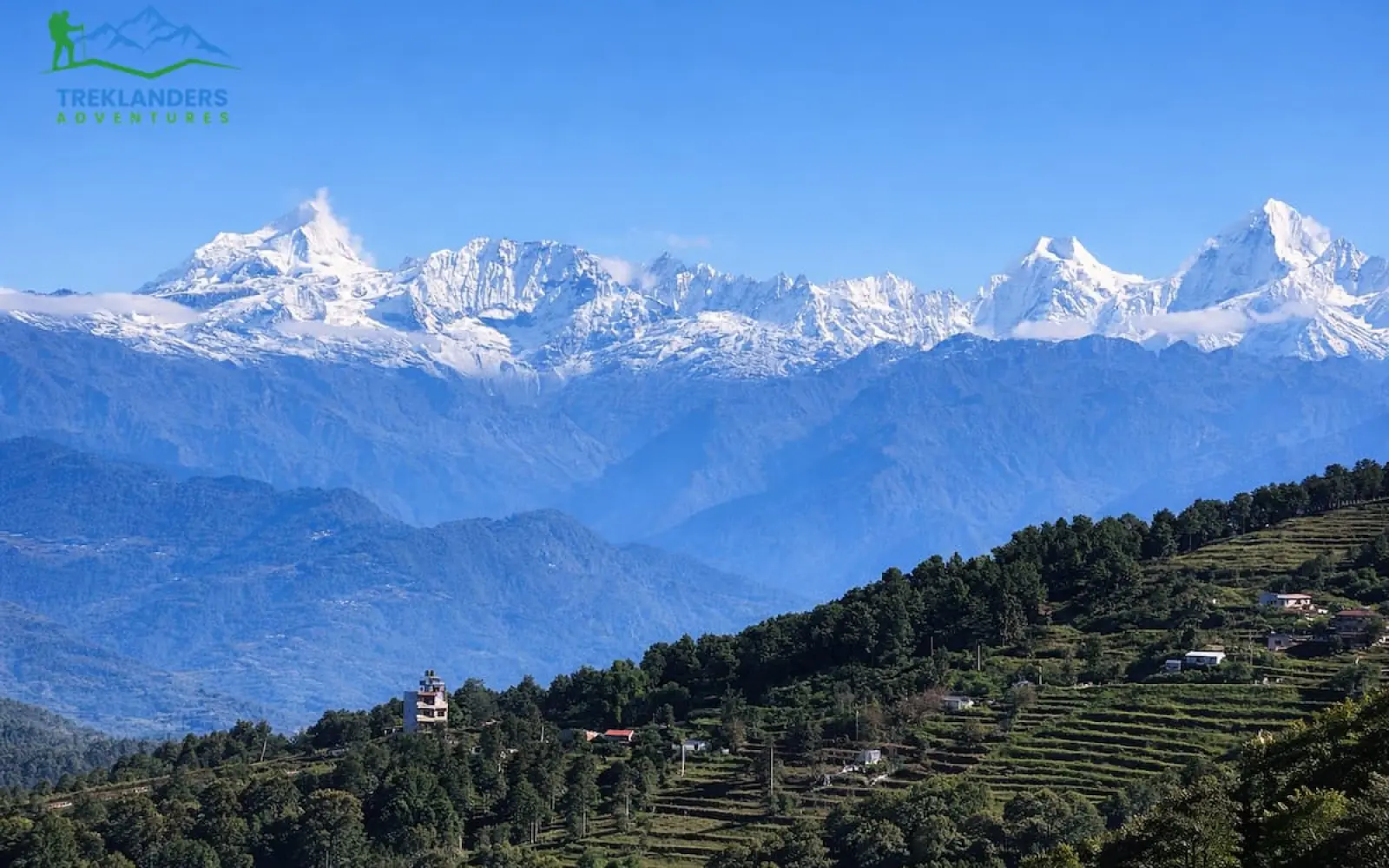
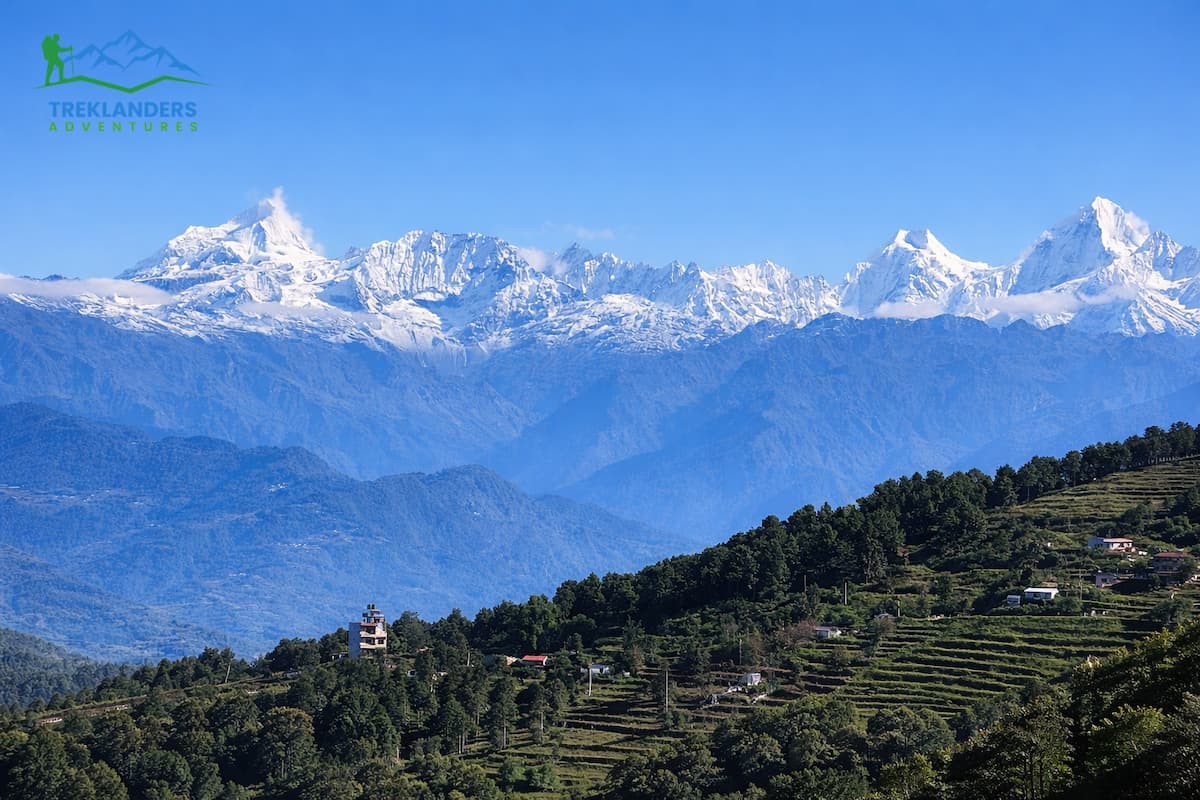
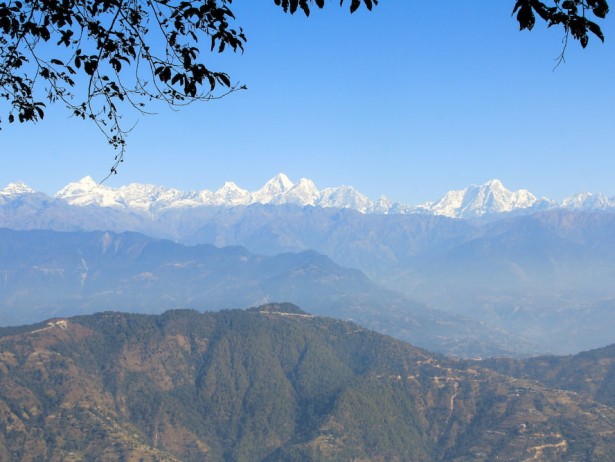
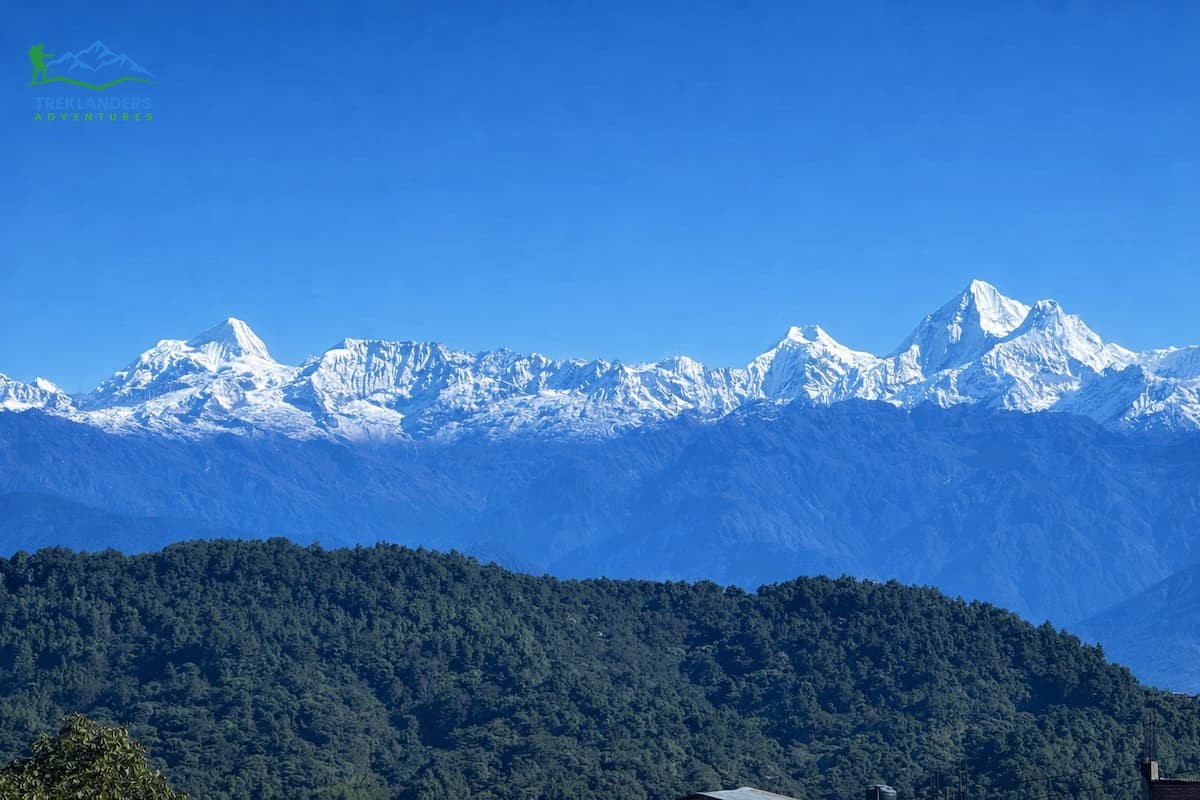
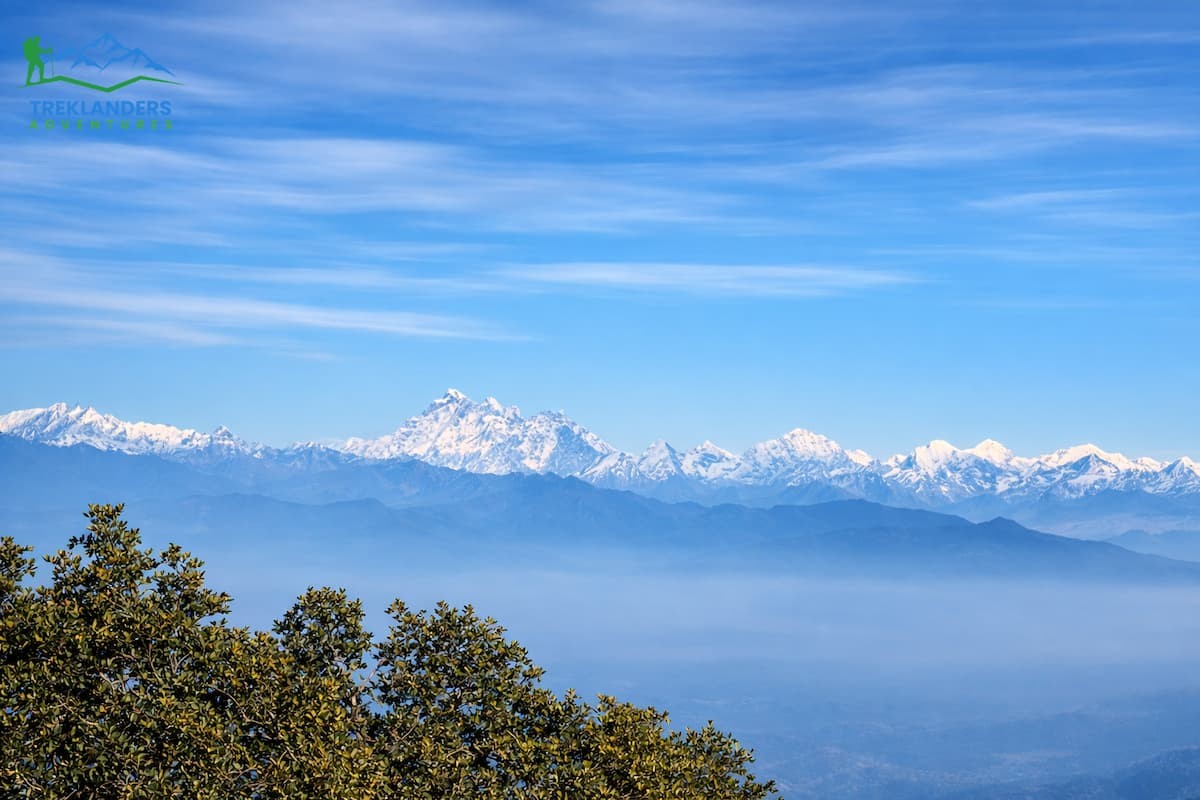
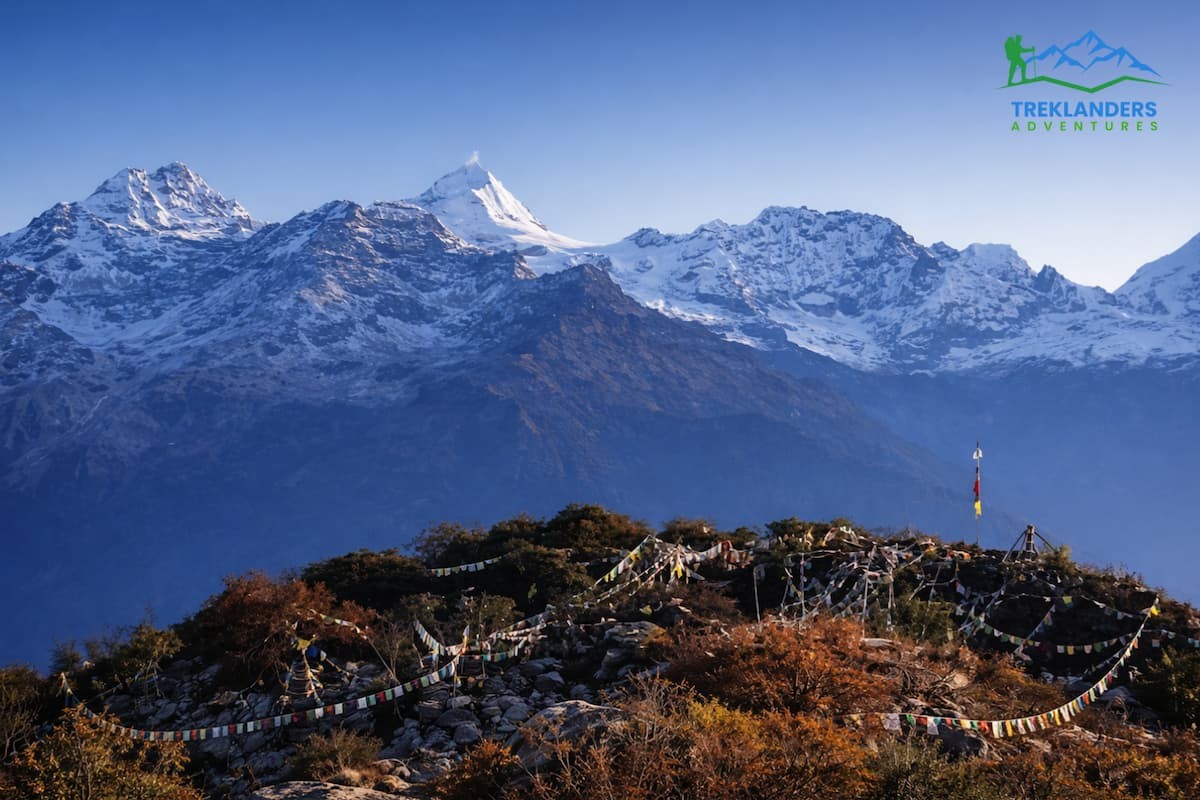
Stunning mountain views during the Nagarkot day hike
Getting Started: Is Trekking Near Kathmandu Right for You?
1. Who These Treks Suit?
These trekking options are ideal for absolute beginners looking for a slow and controlled introduction to hiking. Since you will be staying near Kathmandu most of the time, the logistics will be light, and you can quickly return after your outing. The trails in Nagarkot, Shivapuri Nagarjun National Park, and Phulchowki Hill are not only clearly marked but also heavily trafficked by both locals and tourists.
If you have very little breathing room in your schedule, this is what wins you over. Most routes only require a few hours to 2 days. You get to evaluate your level of fitness without having to sign up for a physically demanding adventure. This sort of activity fits well, even for students, office workers, and people travelling on a short deadline.
What's more, you don't have to know the intricacies of map reading and understand topography on a professional level. The paths are locally known and routinely equipped with signboards, plus along the route, you'll run into other trail users. On popular going-about-the-route points, there are tea houses and small shops available, so alleviating your load becomes possible.
Another point in favor of these treks is that they provide you with a less intense, steadier increase in altitude. The choices available almost always hover at elevations under 3,000 meters, thereby lessening the chance of altitude-related issues. In fact, it takes you away from worrying about the harmful effects of altitude so that you can only concentrate on developing endurance and a feeling of direction.
Besides trekking for fun and the sheer love of doing it, if you are someone who wants to be physically prepared for the longer treks in the Himalayas, then these treks may do very well for you. Along the way, learn how to pace yourself, keep yourself well hydrated and develop basic trekking habits. These treks serve as little mini-experiences to give you a feel for the longer ones like Langtang Valley or Gosainkunda Lake.
2. Best Time to Go
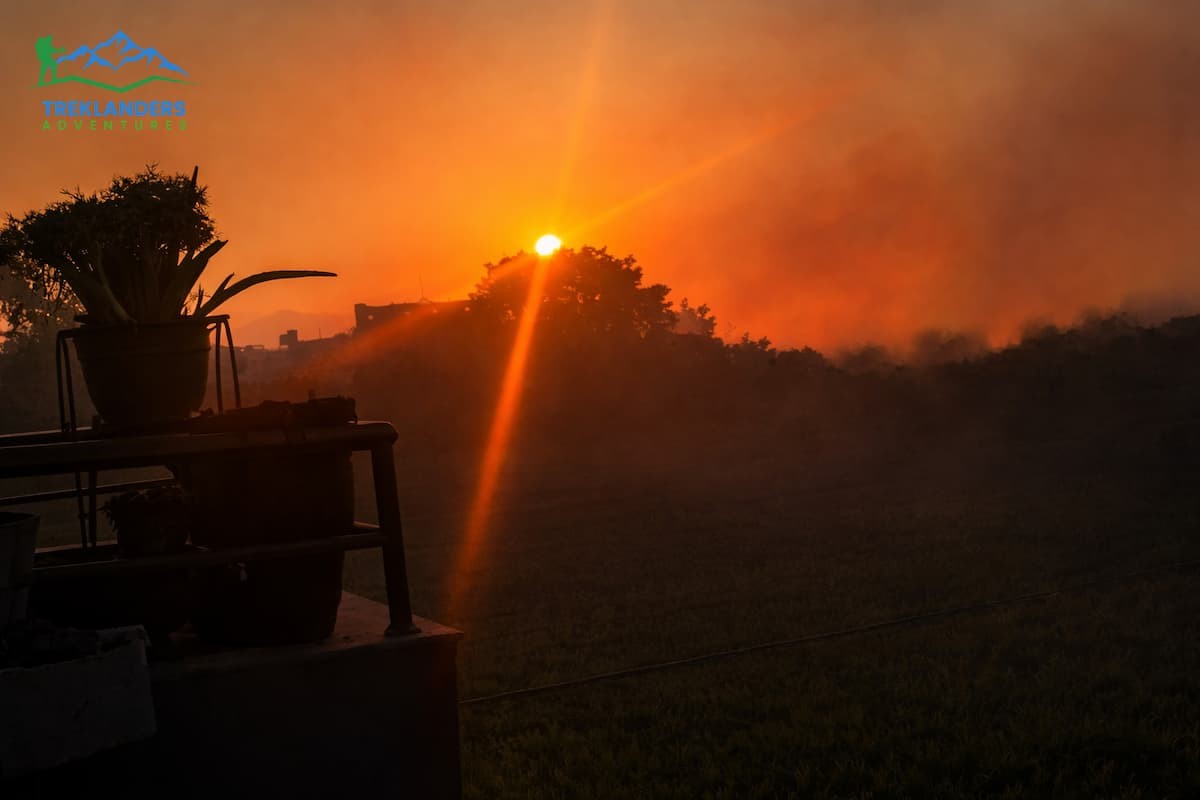
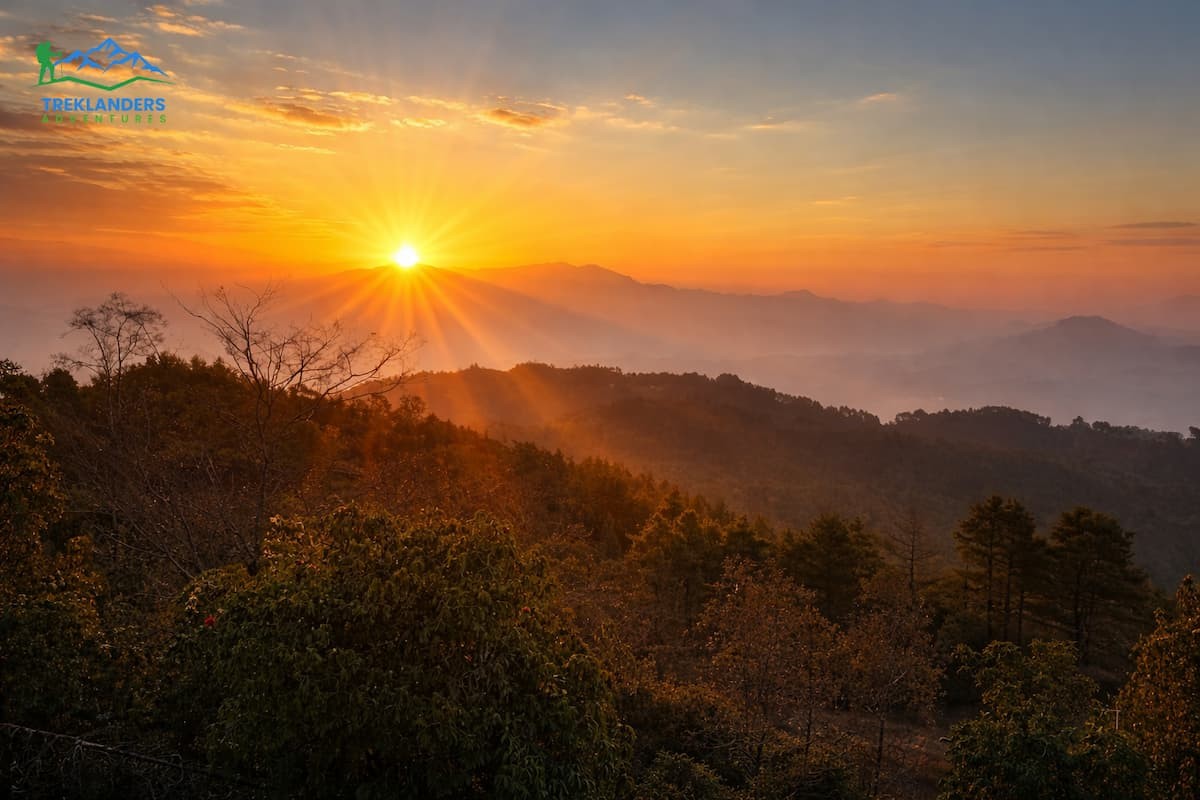
Sunrise during the Champadevi hike
You get the best conditions in spring and autumn. Spring runs from March to May. Temperatures stay moderate, usually 10 to 25 degrees Celsius during the day, mostly in the afternoons. Forest trails near Phulchowki Hill bloom with rhododendrons, which improves visibility and the trail experience.
Autumn stretches from September to November. This is the most stable season. Skies stay clear, so you get strong Himalayan views from Nagarkot and Dhulikhel. Day temperatures range from 12 to 20 degrees Celsius, with cool mornings and evenings - the weather doesn't shift much.
Winter, from December to February, still works. Colder mornings come in at 0 to 5 degrees Celsius. Trails remain open because snowfall is rare at these elevations. Visibility can be excellent, but warm layers are necessary.
Monsoon runs from June to August. Heavy rain falls constantly. Trails turn muddy and slippery - walking becomes risky. Leeches show up in forest areas like Shivapuri Nagarjun National Park. Clouds block mountain views entirely.
Plan your trek early in the morning. You avoid heat, reduce crowd exposure, and get clearer views - this makes a real difference.
You don't need to be super-fit, but a good level of basic endurance is necessary. If you haven't exercised regularly for a long time, start with just walking or maybe light jogging 3 to 4 times a week. Walking or jogging for 30 to 60 minutes one day should definitely be enough for you in the beginning. The main thing is to be regular rather than tough with yourself.
Help yourself get ready for the trek by training your legs. Bodyweight exercises like squats, lunges, and step-ups are just as good as these types of exercises that require the use of weights, besides being more natural for the trail. Doing 2 to 3 sets of 10 to 15 repetitions would be adequate. Including stairs in your routine wherever possible is a great way of making yourself strong enough for the uphill sections of the trek near Shivapuri Peak.
Improve your cardiovascular system. Walking uphill for 1 to 2 hours at least without breaks would be a good target for you to work up to. Start carrying a small backpack of 3 to 5 kilograms so you can get a feel of what real trekking is like. Concentrate on your pace. Walking at a speed which leaves you just a little breathless, one where you can easily hold a conversation, is perfect. This way, you won't get tired so easily. Taking breaks for around 5 minutes every 30 to 45 minutes is the right thing to do.
Hydration is very important. Train yourself to drink water regularly during your exercise sessions. Take smaller but more frequent sips when you are actually on the trail. Footwear testing should be one more thing you do before the trek. Before heading out, wear your shoes during training as a way to prevent and/or get rid of blisters. As a result, you will reduce the risks and have a much more pleasant time hiking the routes like Nagarkot and Phulchowki Hill.
Half Day to Full Day Hike
Quick Escapes: Best Day Hikes from Kathmandu
1. Nagarkot Sunrise Hike
Breathtaking sunrise view from Nagarkot
The hike to Nagarkot is considered by many to be one of the easiest and most satisfying day trips from Kathmandu. In order to witness the sunrise, you usually leave early, often before dawn and reach the viewpoint in time. The path is quite short and not very steep, thus even beginners will find it suitable. When the weather is clear, you are rewarded with wide views of the Himalayas. You will be able to spot major peaks such as Langtang and even Everest far away. The main show is the sunrise, however. As the light slowly illuminates the mountains, you get nice contrasts, and everything is very clear.
The journey can be traced most of the time to Sankhu or involves a short drive followed by a walk. Paths go through small villages, terraced farms and pine forests. You will get a good mixture of both nature and local living within a few hours. Depending on your route, it can take anywhere between 3 and 5 hours in total.
Along the way, there are tea houses for when you want to have breakfast after sunrise. Light gear is what you should take with you. Due to the cold in the morning, a jacket is a must. This walk is the most beautiful and enjoyable during autumn and spring when the skies are clear. It is a good decision if you want to get a quick glimpse of the Himalayas without having to spend several days trekking.
2. Nagarjun Jamacho Hike
Beautiful Kathmandu Valley with mountain views in the background, seen from Jamacho Hill
Nagarjun Jamacho lies within the Shivapuri Nagarjun National Park, which is located just 8 km northwest of Thamel. It is considered one of the most accessible forest treks from Kathmandu; however, most visitors decide to overlook it and choose longer routes. The path begins at the park gate in Balaju. After that, a consistent uphill walk through thick sal and pine forest will lead you to the Jamacho stupa at an altitude of 2,096 m. The climb is approximately 6 km one way and takes about 3 to 4 hours, depending on your speed.
There is a lot of dense forest, and it is very quiet. You pass rhododendron trees, ferns, and moss-covered rocks. It is quite common to see some wild animals here. There are leopards, langur monkeys, and more than 300 types of birds living in the park. This trail is regarded as one of the best spots near the valley by birdwatchers. At the peak, a small Buddhist stupa indicates the summit. If it is a clear day, you will have a visit to the Kathmandu Valley below and the Mountain range in the north, including Ganesh Himal and Langtang Lirung.
The descent will be along the same path and will take approximately 2 hours. The entire round trip is 12 km with 700m elevation gain. Typically, at a moderate pace, most trekkers finish it in 5 to 6 hours. Bring water and food with you as the park does not have teahouses on the trail. Set off early to be ahead of the afternoon heat. The best time to see the clearest sky and have the most comfortable conditions is between October and April.
3. Champadevi Loop Hike
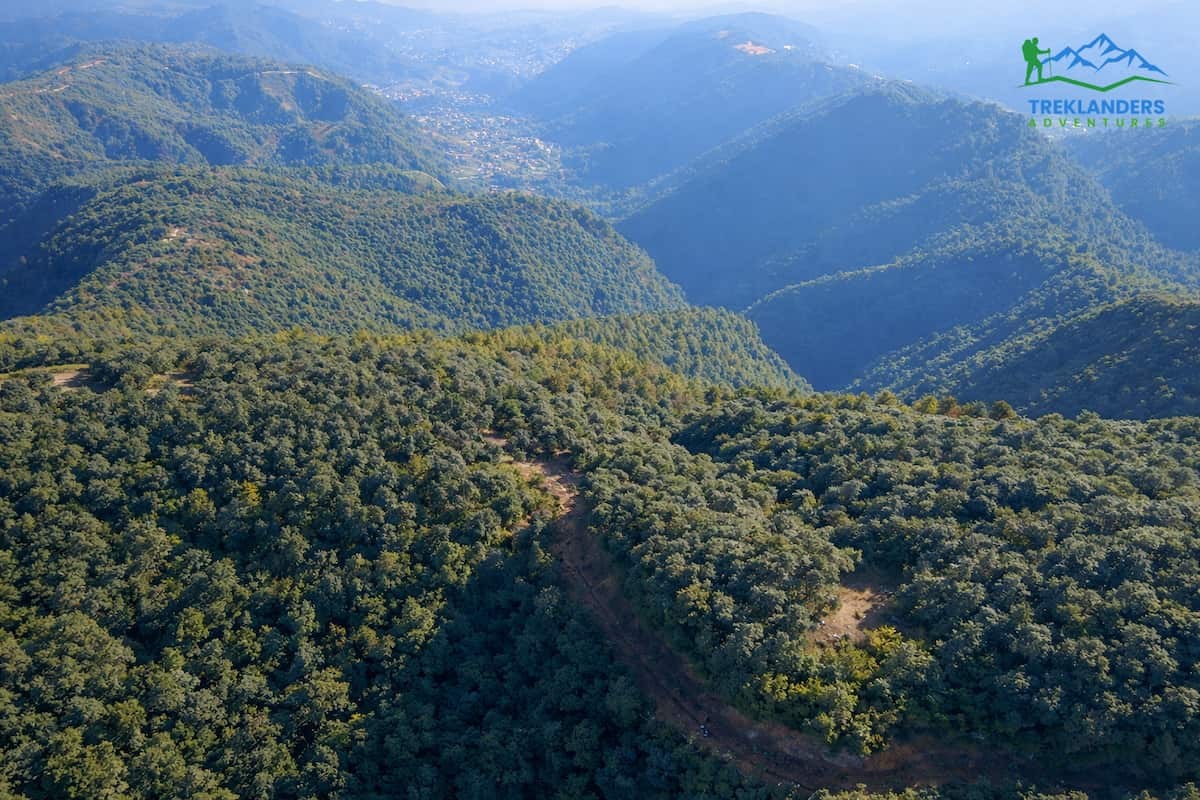
Lush forest scenery along the Champadevi hike
The Champadevi loop is a hiking trail that combines forest trekking with awesome views of the valley. It is located in the southwest of Kathmandu and can be reached by a one-hour drive. The total distance of the hike is about 7.5 km and can be completed in 4-5 hours. The trail leading up to the hill is steep in some places and not recommended for beginners.
The highest point is at the summit, where the Temple of Goddess Champadevi is situated at around 2285 m. From the top, you can see the whole Kathmandu Valley and the mountain ranges of the Himalayas on a clear day. The summit area is also a holy place and has lots of prayer flags and small temples.
The loop is a walking circuit, so you can descend using a different trail to avoid retracing your steps. Completing the whole loop will take 5 to 6 hours. The hike is graded as medium and requires some stamina, as there are uphill stretches. Bring bottled water as shops are scarce along the route. The best time to go is spring or autumn, when the weather is stable, and the views are clear. It is great for those wanting a somewhat more strenuous day hike that is not too far from the city.
4. Phulchowki Forest Trail Hike
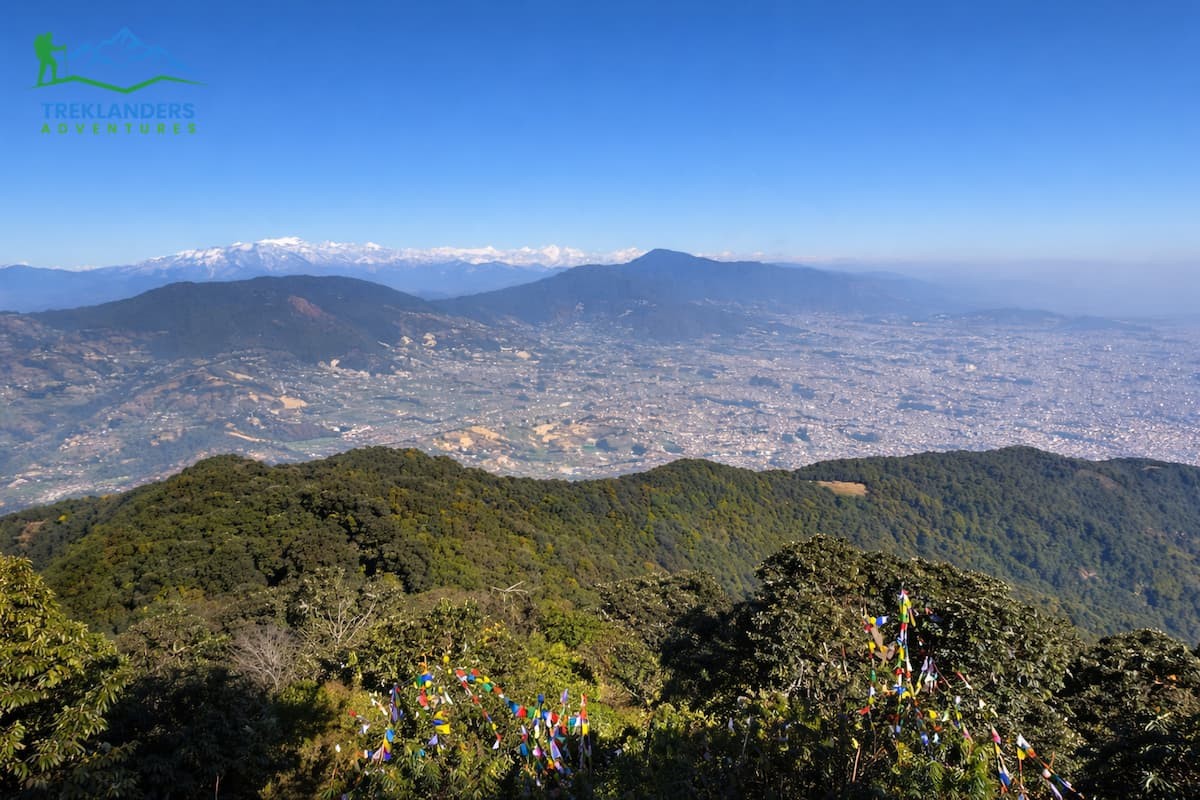
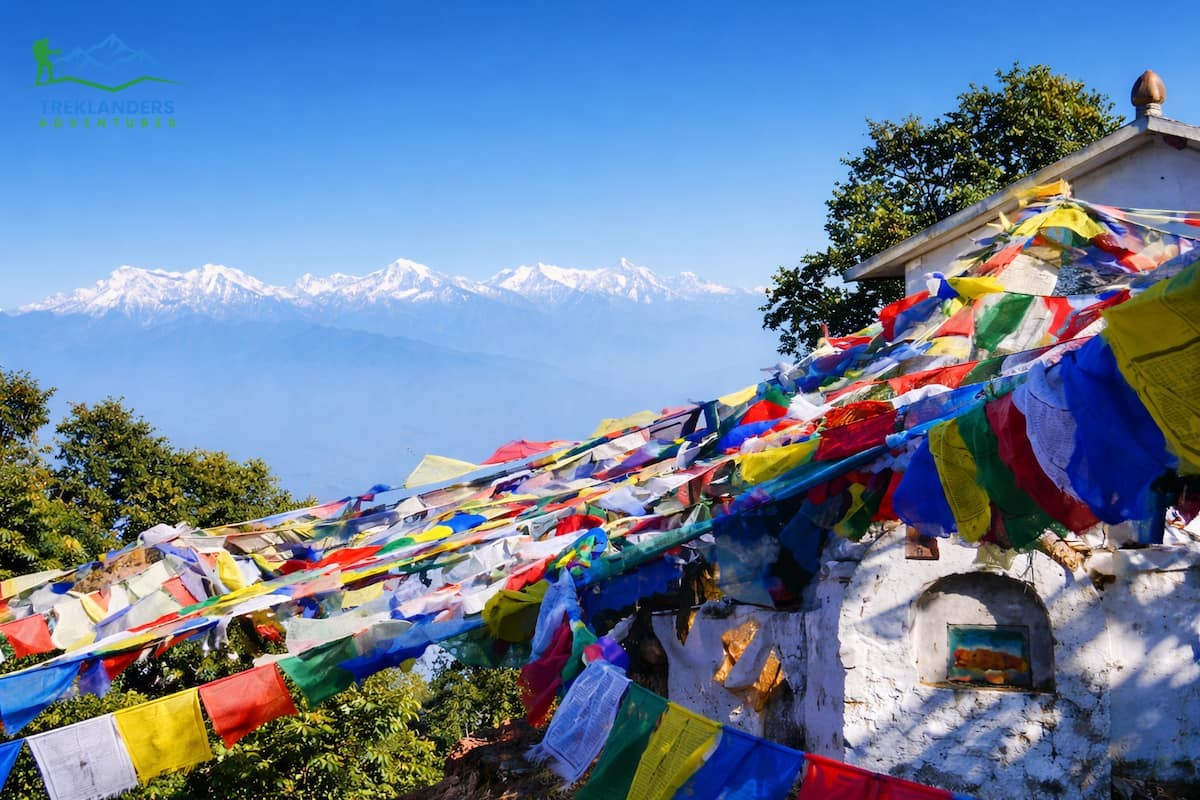
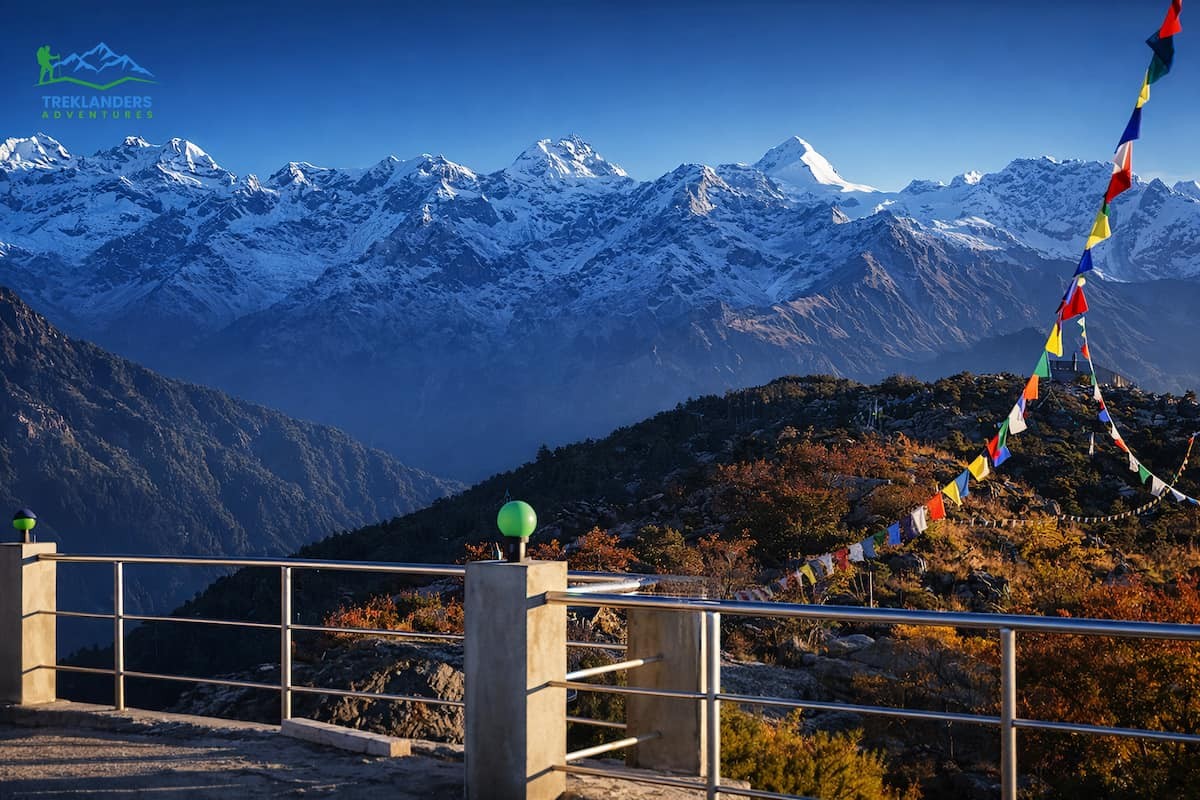
Stunning mountain views with prayer flags along the Phulchowki Forest Trail hike
The trail to Phulchowki Hill reaches 2,782 meters, the highest point in the Kathmandu Valley. So, it offers a quiet, nature-focused hike with little human presence. At least in theory, it's a peaceful escape from city noise. You begin at Godavari, roughly one hour from Kathmandu. The path winds through thick forest cover, home to birds, butterflies, and seasonal blooms. There's no signage; you follow the trail by landmarks and natural cues.
The climb stretches over four to five hours on a dirt road that's easy to follow. The ascent never stops; you have to maintain a steady pace or risk fatigue. The slope is gradual, yet relentless. At the top, the Himalayan ranges stretch out beneath you, wide and distant. A small shrine stands there as a marker of arrival. The view is clear when the weather allows.
It's better than Nagarkot or Shivapuri if you want fewer people around. Spring sees rhododendron blooms, and autumn brings crisp air and clear mountain lines for viewing. Bring food and water - supplies are scarce along the way. Good footwear is key because the descent can jar your knees. You won't find rest stops or first aid. This hike builds stamina and exposes you directly to forested terrain without much variation.
5. Shivapuri Peak Hike
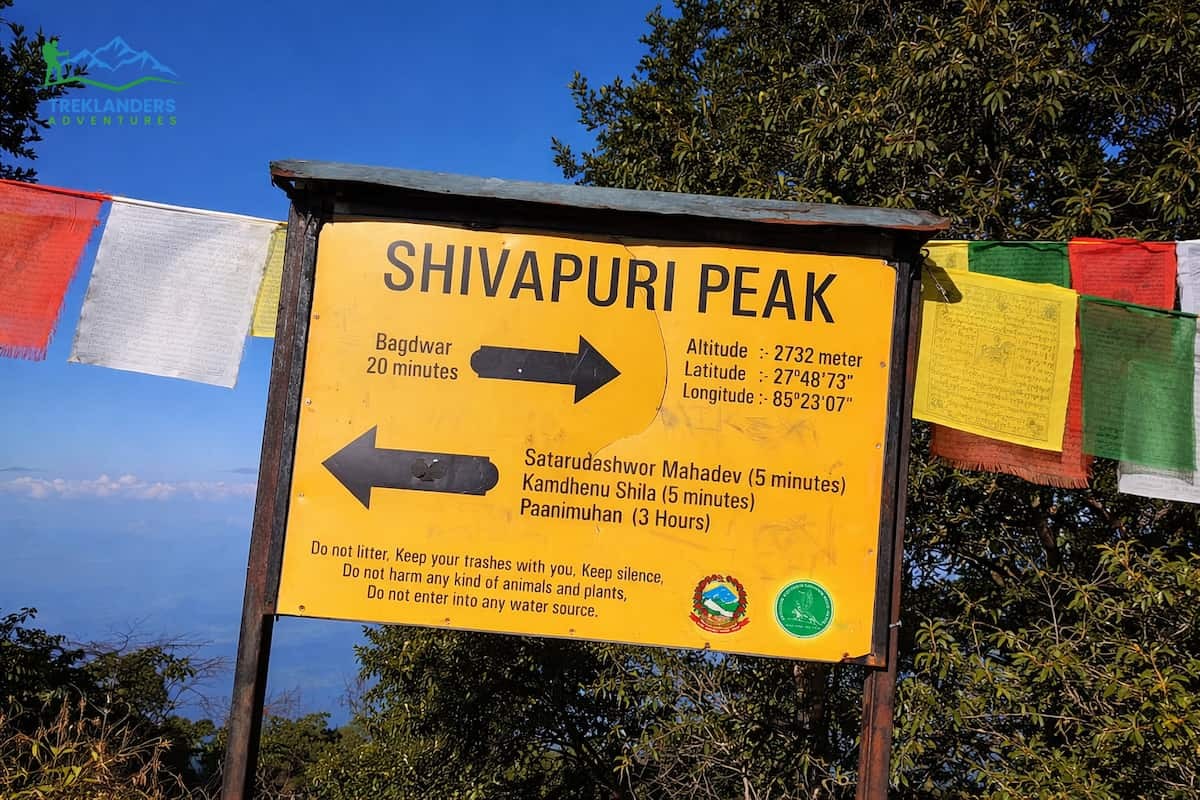
Shivapuri Peak
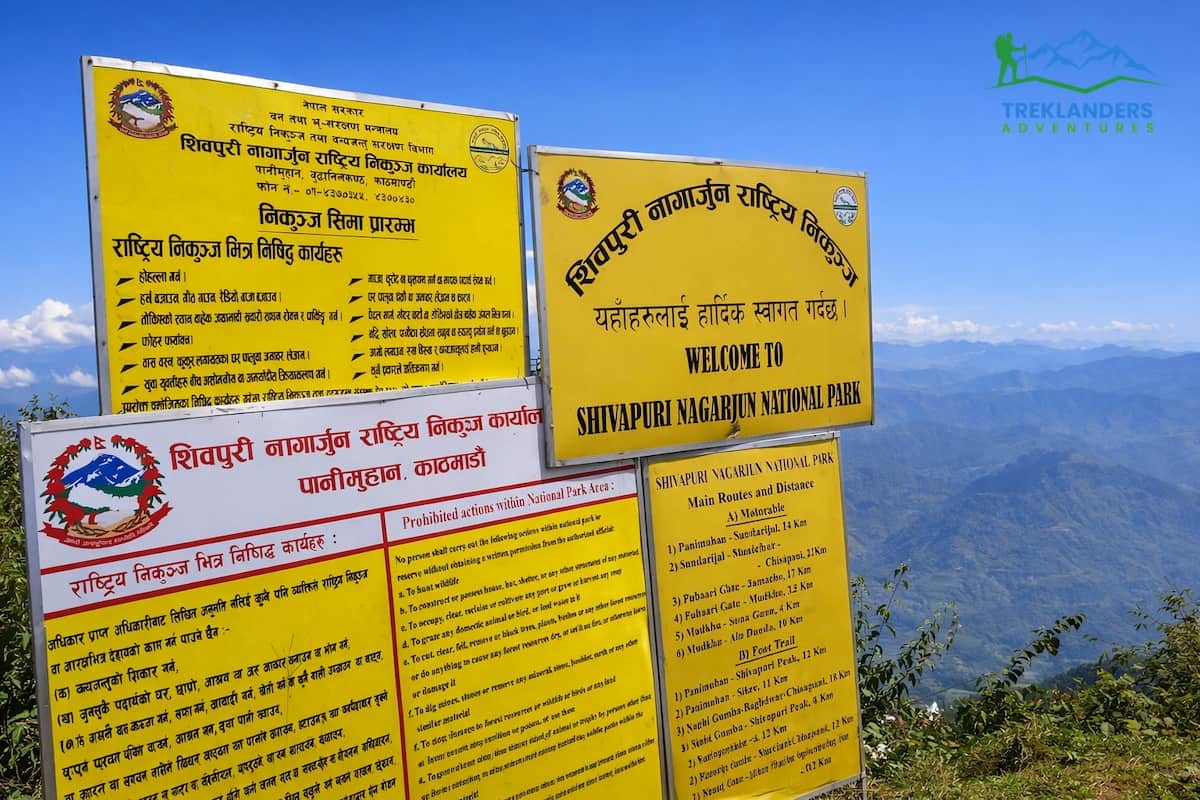
The Shivapuri Peak hike is a well-organized and fulfilling ascent within the Shivapuri Nagarjun National Park. It offers a mixture of forest, steps, and great overlooks. Your starting point will be Budhanilkantha. You will need a park permit for entry, which you can buy at the gate. Initially, the trail is a gentle walk through the forest, after which it changes to steep stone steps.
It usually takes about 3 - 4 hours to get to the top. You have to work quite hard as you gain elevation. The summit is roughly 2,732 meters. On reaching the top, you will see a monastery and an observation deck. From here, you can see the Kathmandu Valley and the hills around it. If the sky is clear, you can glimpse the Himalayan peaks far away. The place is very clean and well-kept thanks to the park rules. A round trip will be less than a full day's outing, about 6 - 7 hours. There are only a few places where you can get water, so make sure you have enough.
Animals such as monkeys and birds are often seen. If you are looking for a structured hike that is not far from the city, this suits you. Besides, the help you get in building endurance is one of the benefits of the hike to the peak. Make sure you go very early in the morning. That way, you will not be bothered by other people, and you will get the best view of the whole city.
6. Dhulikhel Panorama Hike
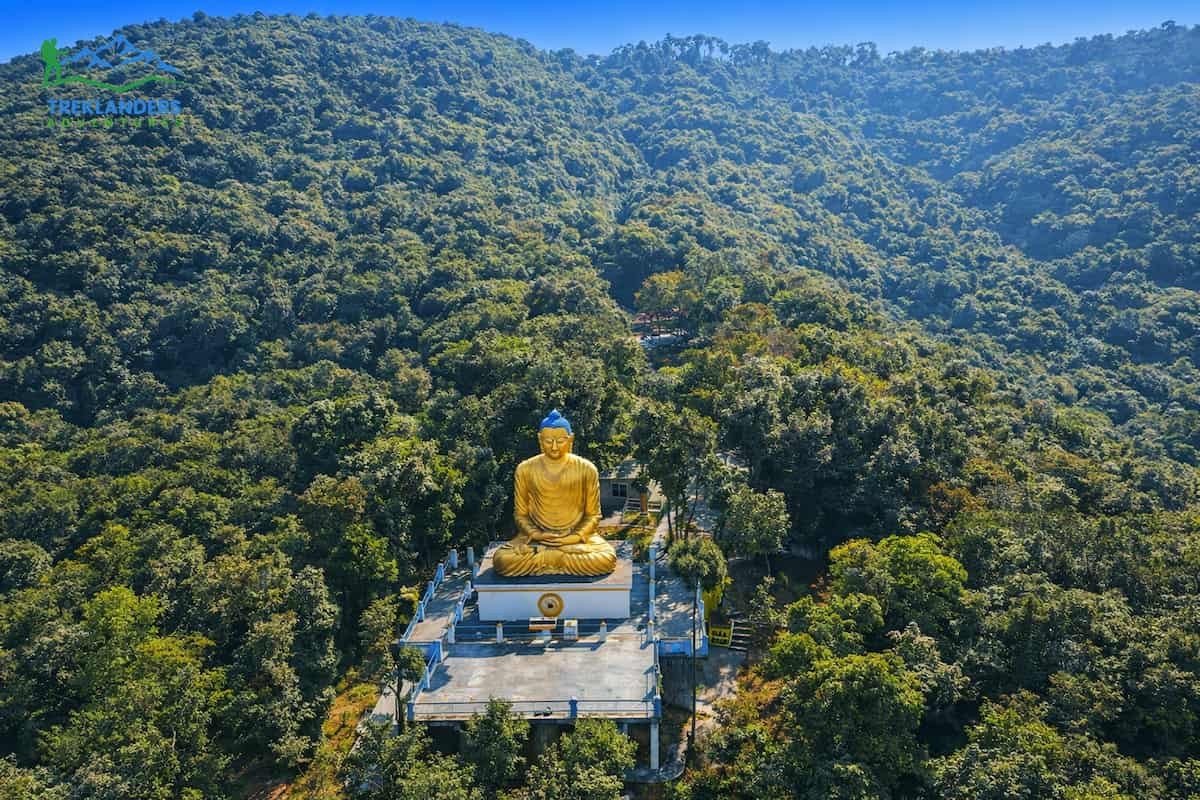
Serene Buddha statue in Dhulikhel with panoramic surroundings
The trekking path around Dhulikhel provides some of the best panoramic views in the Kathmandu area. It is located approximately 30 km east of the capital and can be conveniently reached by car.
Starting from Dhulikhel itself is one option; however, you can also select other trails from the surrounding area leading directly to viewpoints such as Kali Temple. Paths are adaptable so that you can shorten or lengthen your journey as you wish.
The hike ought to last for 3-5 hours. Along the way, you will see traditional village settlements, farmlands, and a few forested areas. Hence, you will be surrounded by a combination of cultural and natural landscapes.
The major attraction is the magnificent view of the Himalayas. On a clear day when the mountains are most visible at sunrise and sunset, you can see a long range of peaks, including Langtang and Dorje Lakpa. The terrain is fairly simple. You will encounter mostly gentle ascents and descents without any technically challenging sections. Therefore, it can be considered a good match for beginners with decent physical condition.
Along the pathways, there are a few small shops and tea stalls. That means you won't have to load yourself down with heavy provisions. This hike works well if you want a relaxed day with strong mountain views and cultural exposure.
2 to 5 days Trek near Kathmandu
Short Overnight Treks Worth Every Step:
1. Chisapani Nagarkot Trek
Stunning mountain scenery during the Chisapani–Nagarkot trek
The walk from Chisapani to Nagarkot is a very popular short trek route around Kathmandu. Typically, a 2 to 3-day journey, it features a combination of green forest, rural lifestyle, and Himalayan scenery. Your Himalayan adventure starts from Sundarijal, where you enter the lush Shivapuri Nagarjun National Park.
The path from there is a steady incline through shady forest and stone stairs up to Chisapani. This part lasts for about 4 to 5 hours. From Chisapani, you get great views of the snow-capped peaks and a few home-like lodges for your night's stay. Day two, you head towards the Nagarkot area, a changing landscape leading you from villages to ridge walking. Around 5 to 6 hours is the walking time. Unlike day hikes, you get to see less crowded nature trails.
Nagarkot is famous for its sunrise views. If you want a longer trekking route, you could also consider going to Dhulikhel after Nagarkot. This trek is also a good option for beginners who would like to have a structured multi-day trip. Since elevations are moderate, the risk of altitude sickness is less. Just make sure that you carry light gear and bring along only the necessary supplies. The trekking path is clearly marked, and there are plenty of tea houses along the trail where you can eat and rest.
2. Sundarijal Circuit Trek
Shivapuri Nagarjun National Park
The Sundarijal loop is a versatile 2 to 4-day trekking itinerary within the Shivapuri Nagarjun National Park. It is perfect if you are looking for a forest-centric trekking adventure near the city.
Your starting point is Sundarijal, which is roughly a one-hour drive from Kathmandu. The trail goes along water pipelines, stone steps, and through dense forest. The first part up to Chisapani is the hardest because of continuous uphill climbing.
You have the option to design your own route after reaching Chisapani. For example, you can go to Nagarkot or Helambu or come back through other park trails. This feature of the trek allows you to make the trek shorter or longer according to your time and fitness level.
The area is a habitat of diverse flora and fauna. Along the trek, you will walk through forested areas with birds, small animals, and waterfalls from time to time. The air is fresh and cool because the sun cannot penetrate the tree canopy.
One should be physically fit enough for this trek since the walking time is between 4 and 6 hours on most days. There are lodges in Chisapani and the neighboring hamlets. Water, snacks, and a light sleeping gear are what you need to pack. Park entry requires permits. Besides being a close-to-Kathmandu training trek for longer routes, this circuit helps you improve your endurance.
3. Kakani Ridge Trail Trek
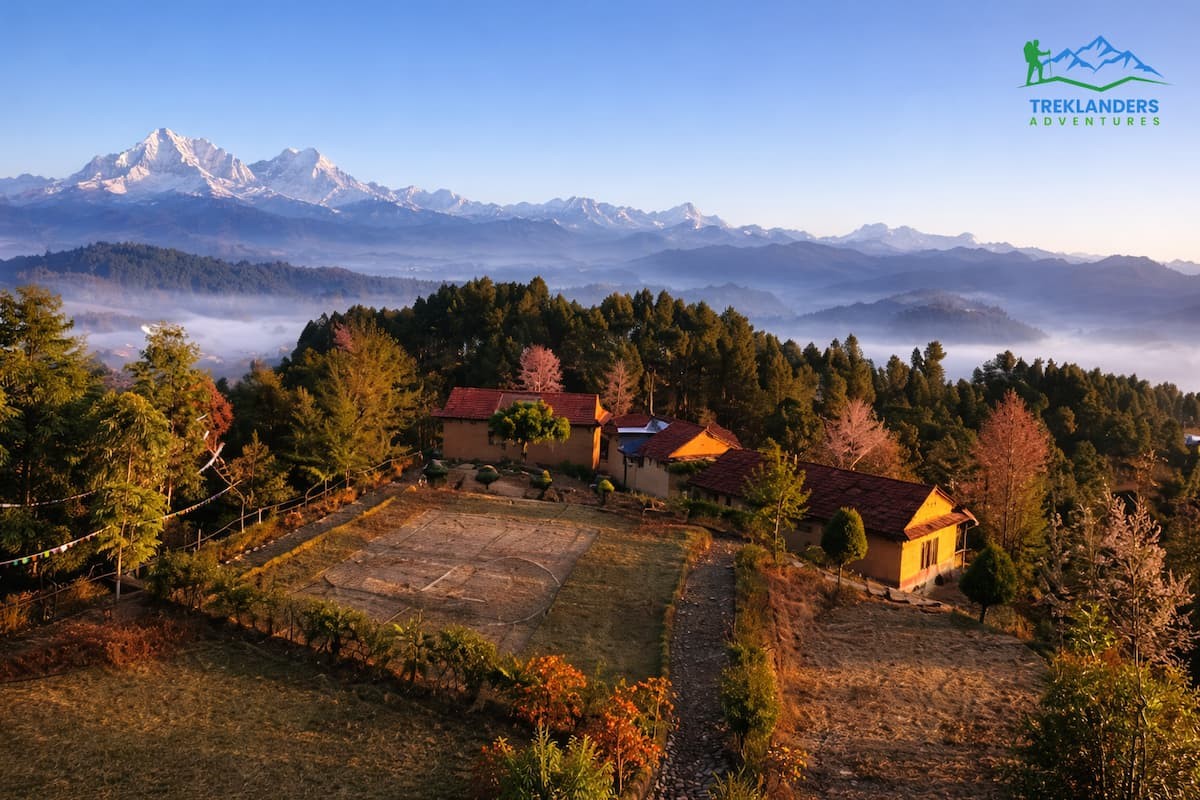
Panoramic mountain views along the Kakani Ridge Trail trek
The Kakani ridge trail is a quiet 2 to 3-day trek northwest of Kathmandu. It is less crowded compared to the Nagarkot or Shivapuri routes. You reach Kakani by a short drive from Kathmandu. The trek follows ridgelines with consistent views of the Himalayas. Peaks like Ganesh Himal and Langtang are visible on clear days.
The trail moves through forests, farmland, and small settlements. You experience a mix of natural and rural landscapes. Walking time ranges from 4 to 5 hours per day. The terrain is moderate, with gradual ascents and descents. This makes it suitable for beginners who have basic fitness. The ridge route avoids steep climbs, which helps maintain steady pacing.
Accommodation is available in local lodges and homestays. Food options are simple but sufficient. This trek works well if you want a peaceful environment. You avoid heavy tourist traffic and get open views throughout the route. Autumn provides the best visibility. Spring adds greenery and mild weather. You should carry essentials like water, snacks, and a light jacket. The route is straightforward but less marked than popular trails.
4. Balthali Village Trek
Beautiful mountain views from Balthali Village.
Trekking to Balthali involves a 2 to 4-day cultural and scenic route located southeast of Kathmandu. It highlights the aspects of village life, terraced farming and peaceful landscapes. Typically, you start hiking from Panauti or Khopasi. The path goes through traditional villages, farmland and forest areas. The walking time is about 4 to 5 hours per day.
Balthali is located on a flat area surrounded by hills and rivers. The place features wide views and a peaceful atmosphere. You experience the strength of rural life as the tourist footfall is less than in other trekking areas. The landscape is easy to moderate. There are some small ups and downs, but no difficult parts. This makes it ideal for beginner and casual trekkers.
You can find lodging in hotels and community homestays. Meals are prepared with local ingredients that enhance the enjoyment of the trip. The trek can be lengthened to include Namo Buddha, a popular Buddhist site, if you want more culture. This trek suits those who want a slow pace and cultural immersion. The seasons of spring and autumn provide the best weather, with clear skies and comfortable temperatures.
7 to 14 days Trek near Kathmandu
Classic Multi-Day Treks from the Valley:
1. Langtang Valley Trek
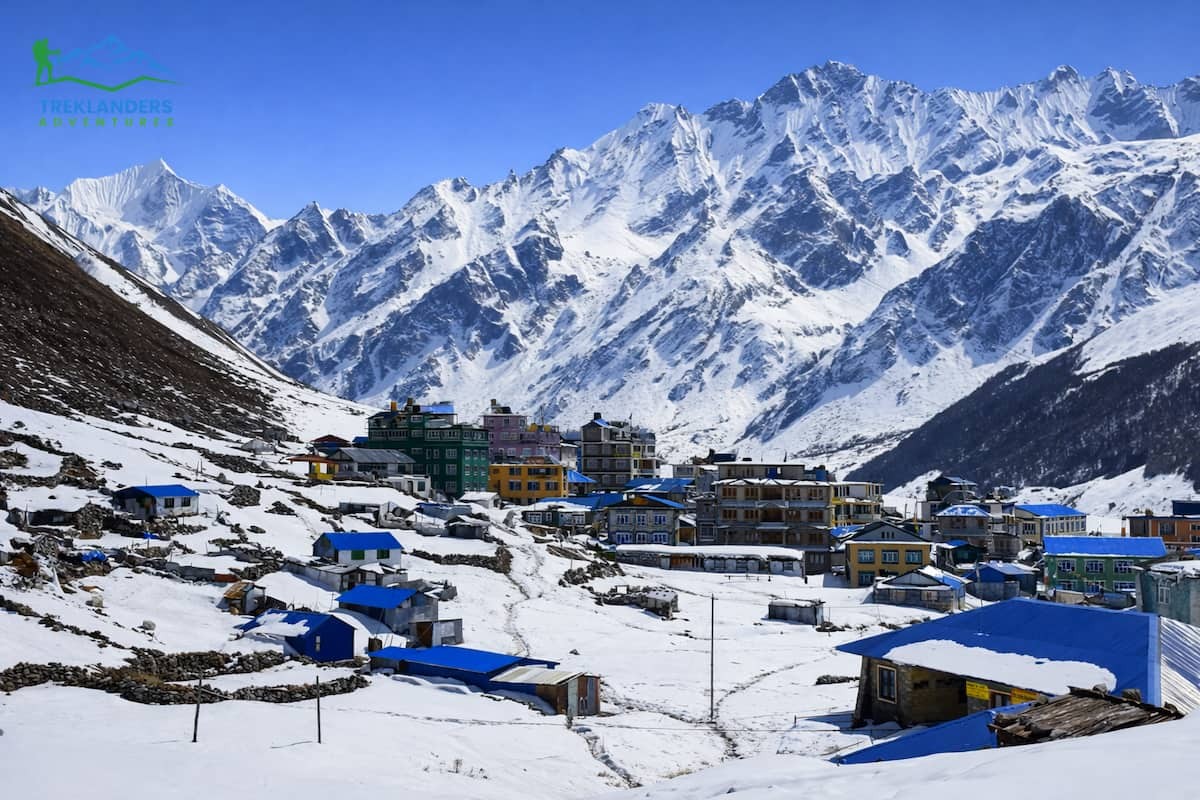
Kyanjin Gompa- Langtang Valley Trek
Langtang Valley Trek is one of the nearest Himalayan treks from Kathmandu by distance. Normally, it takes about 7 to 10 days to complete and provides you with magnificent mountain views without travelling for a very long time. First, you will travel by car to Syabrubesi. The pathway traces the Langtang River through forests and tiny villages. You come across Lama Hotel, Langtang village and finally arrive at Kyanjin Gompa, which is approximately 3,870 meters above sea level.
Along the way, you will see Langtang Lirung and other peaks very closely. Furthermore, you have the option to take side trips to Kyanjin Ri or Tserko Ri, which are at higher altitudes and will provide you with better viewpoints. Besides giving you better views, these hikes will also help you get used to the altitude. The level of difficulty of the terrain varies from moderate to challenging. Every day you will walk for 5 to 7 hours approximately. Altitude gain is slow, but you still need to regulate your pace and hydration.
Tea houses can be found all along the trail. Apart from being basic, food and lodging are dependable. The most comfortable seasons are spring and autumn. Winter may be doable, but much colder. You are likely to enjoy this trek if you are looking for a well-rounded Himalayan experience, including mountaineering, culture, and a reasonable duration.
2. Gosainkunda Lake Trek
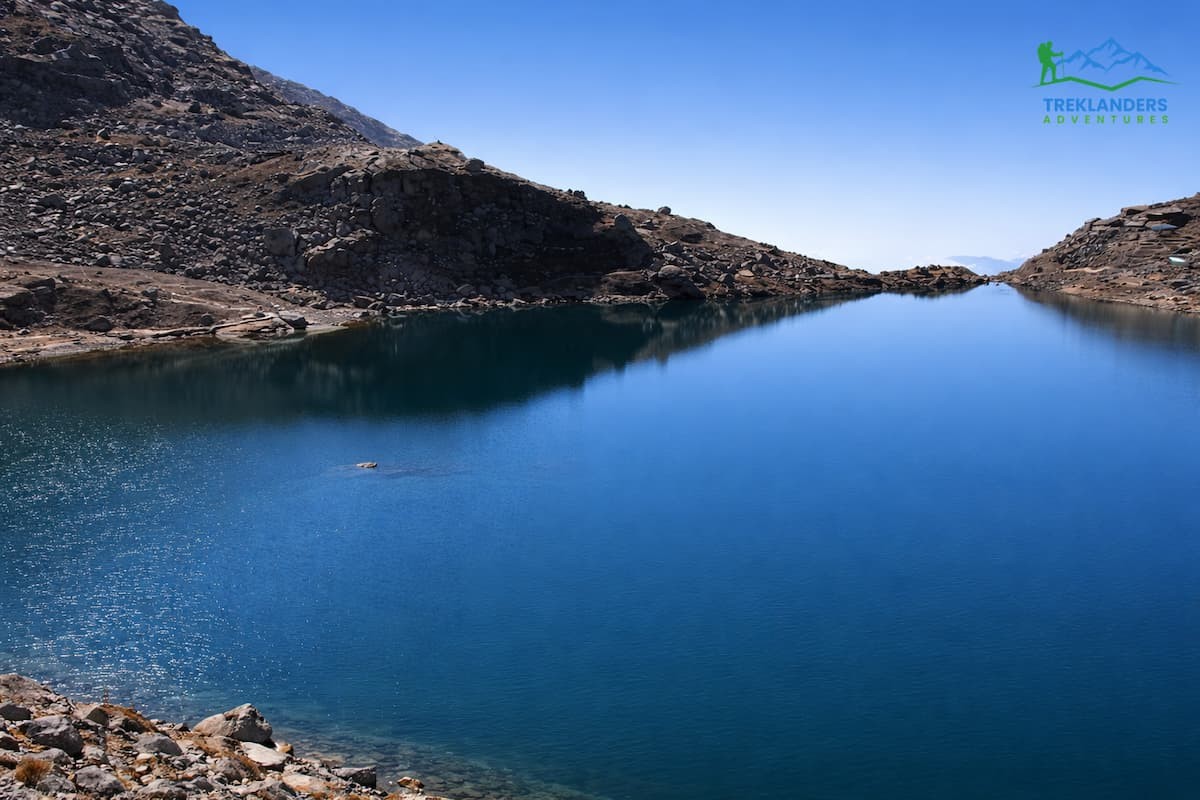
Gosainkunda Lake
The trek to Gosainkunda Lake is a high-altitude journey that takes around 7 to 9 days. It combines mountain views with religious significance. You start from Dhunche or Sundarijal, depending on your route. The trail climbs through the forest to Sing Gompa and Lauribina. From there, you reach Gosainkunda at about 4,380 meters.
The lake is sacred in Hindu belief. During Janai Purnima, many pilgrims visit the area. The setting includes alpine terrain, rocky paths, and open views. This trek is more demanding than Langtang Trek due to the altitude. You must acclimatize properly. Daily walking time ranges from 5 to 7 hours.
Weather changes quickly at higher elevations. You should prepare for cold temperatures and wind. Tea houses are available but become basic at higher points. Spring and autumn offer stable conditions. Winter brings snow, which can block passes. This trek suits you if you want both physical challenge and cultural depth. It also works well when combined with Helambu for a longer route.
3. Helambu Trek
Beautiful mountain views during the Helambu trek
The Helambu Trek is a 7 to 10-day trek which is widely recognized for its cultural aspects and moderate altitude. It is located north of Kathmandu and also has good connections with other trekking routes.
Usually, the journey begins at Sundarijal or Melamchi Bazaar. The path goes through different villages like Kutumsang, Tharepati and Tarkeghyang. Along the way, you get to know the Hyolmo culture, visit monasteries and see traditional settlements.
Most of the time, your elevation is under 3,700 meters. Because of this, you are less exposed to altitude sickness than on higher treks. The landscape consists of forest trails, ridges and agricultural areas.
Time spent walking each day is approximately 5 to 6 hours. The speed is even, with ups and downs being quite gentle. Besides, you will see the Langtang and Jugal Himal mountain ranges. The views will be a combination of the mountains and the countryside.
There are tea houses in nearly all the villages. The food served is basic but reliable. If you are a cultural person and at the same time you do not want a difficult trek, then the Helambu Trek is the right choice for you. Also, if you dislike altitude stress, this is the right trek for you. The ideal times to do the trek are spring and autumn. Monsoon is possible, but the trails become wet, and visibility is reduced due to the clouds.
4. Tamang Heritage Trek
Thuman- Tamang Heritage
The Tamang Heritage Trail is a 7 to 10-day trekking itinerary that mainly emphasizes culture and community experience. It is located in the vicinity of the Langtang region.
The trek begins at Syabrubesi, and you subsequently pass through the villages of Gatlang, Tatopani, and Thuman, among others. The route is essentially a showcase of Tamang culture, which has been deeply influenced by Tibetan traditions. The landscape consists of terraced fields, forests, and ridges. Walking time daily ranges from 5 to 6 hours. The altitude is quite moderate, most of the time being below 3,200 meters.
14 Day Tamang Heritage with Langtang Valley Trek | 14 days
One of the highlights of the trail is Tatopani, where you have the opportunity to unwind in natural hot springs. This facilitates recovery during the trek. You will be accommodated in homestays and local lodges. This is a great way to get first-hand experience of the local lifestyle, food, and customs.
Besides the mountain views of the Langtang and Ganesh Himal ranges, the route is much less frequented than the major trekking trails. This trek is perfect for you if you desire a cultural immersion more than the high-altitude challenge. It is also very effective in promoting community-based tourism. Spring and autumn seasons are usually marked by stable weather. A winter trek is possible, but the temperature will be colder.
Preparation Before You Go Trekking
Permits, Gear, and Staying Safe on the Trail
1. Permits You Need
Most trekking routes around Kathmandu now require a permit of some kind. The most widely used permit is the TIMS (Trekkers' Information Management System) card that is provided by the Nepal Tourism Board. The card is basically a way to track trekkers for security reasons.
However, if the route crosses into a protected area, you will need to buy an additional park permit. For instance, if you intend to trek in Shivapuri Nagarjun National Park, then you have to purchase an entry ticket. Similarly, Langtang and Gosainkunda trekking routes are inside the boundaries of Langtang National Park, so here again, you can only proceed with a park permit.
You can easily obtain all types of permits in Kathmandu before setting out on your trek. Don't forget to keep a few copies of your passport and photographs. The cost of permits varies according to the area and nationality of the trekkers.
Make sure you know the requirements well ahead of time. Regulations are subject to change. Certain locations may even prohibit solo trekking, and the presence of a guide would be compulsory in such cases.
Have your permits handy throughout the trekking period. You are bound to encounter several checkpoints where officials will require you to show your documents.
Those without permits will most likely be subjected to fines or refused entry entirely. So, to be on the safe side, include this part of the plan early so as not to face any delays.
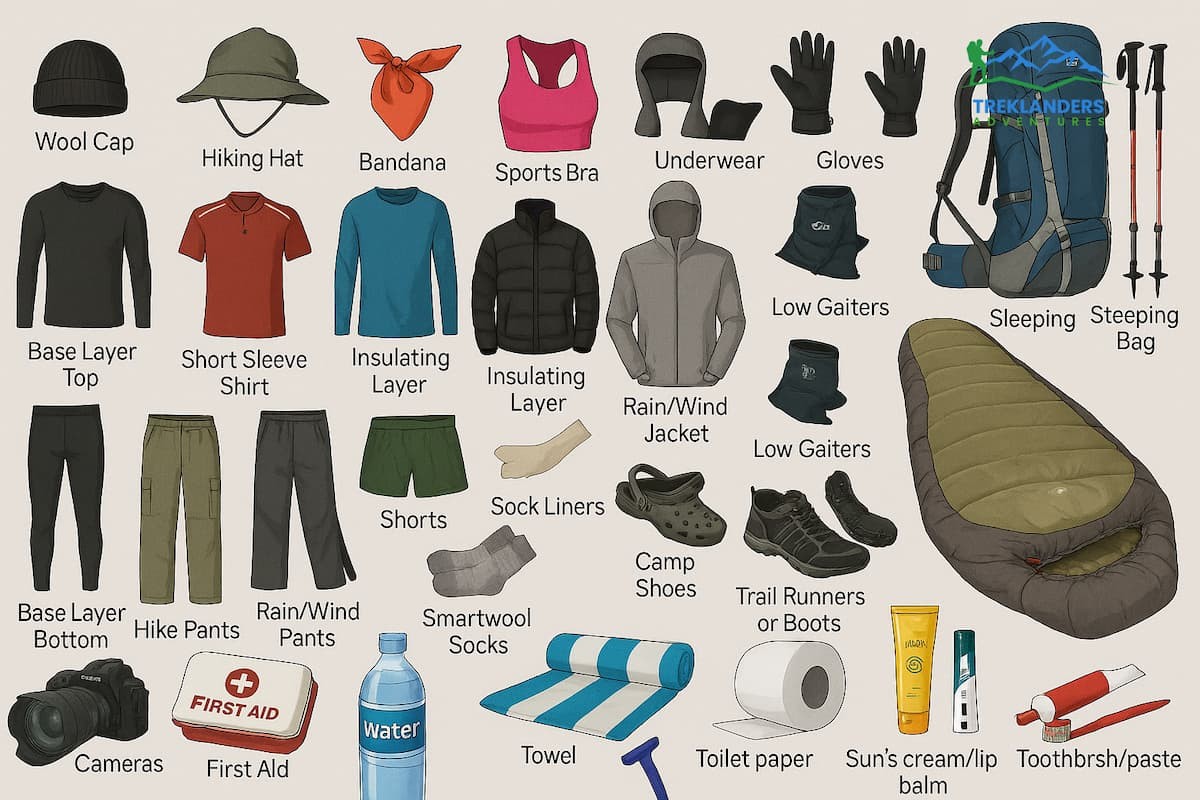
2. Essential Gear List
Essential Gear List for Hiking
You need a focused gear setup. Keep weight low and pack only essentials. Start with clothing. Use layered items. Carry a moisture-wicking base layer, an insulating mid-layer, and a waterproof jacket. Good trekking shoes are critical for grip and comfort.
Pack a small backpack, around 20 to 30 liters for short treks. Include a reusable water bottle or hydration system. Add water purification tablets if you plan longer routes. Carry basic safety items. These include a headlamp, sunscreen, sunglasses, and a hat. Weather changes fast in the hills.
Include a first aid kit with bandages, pain relief, and blister care. Snacks like energy bars help maintain energy. A trekking pole reduces strain on the knees during descent. Test all gear before your trek. Avoid new shoes on the trail. This reduces injury risk and improves comfort.
3. Altitude Sickness Signs
Altitude sickness can set in when you go above 2,500 meters, which is something that many treks around Kathmandu will take you to. The initial symptoms of altitude sickness are headache, dizziness, tiredness, nausea and loss of appetite. Besides that, you might find it hard to sleep. Usually, these signs come out within a few hours after you gain elevation.
If you take no notice of them, they may develop into life-threatening conditions characterized by vomiting, confusion, lack of coordination, or shortness of breath. You should take measures immediately. Going higher should be stopped at the very moment when symptoms show up, and you should give your body some time to get used to the change. Keep drinking water regularly and stay away from alcohol since dehydration raises the risk.
Keep a slow and even pace and allow some rest days on the way to Gosainkunda Lake, for example. If the symptoms are still there or getting worse, you should get down without a doubt. Going down is the single most effective remedy. Being well-informed and acting quickly will help you avoid problems and have a safe trek.
15 Day Langtang Gosaikunda Lake Helambu Trek | 15 days
You should prepare emergency contacts before setting off on your trek. It is advisable to save key numbers in your phone and also have a physical copy as a backup. For official support, you can reach out to the Nepal Tourism Board, which offers assistance during emergencies.
Major trekking areas have helicopter rescue services that can be used in cases of serious injury or altitude sickness emergencies. Having travel insurance will be beneficial to cover evacuation costs. Police posts and local authorities are found in various trekking areas and can provide on-the-spot help when necessary.
Make sure you tell someone reliable about your route and the date you expect to come back so that they can take action if you don't follow the schedule. Besides a fully charged phone, carrying a power bank is a good idea, as network coverage in remote areas is a bit of a hit-and-miss. The key to a speedy response lies in being prepared, so keeping all contact information at hand and not hesitating to take action in case of a problem is essential.
Conclusion
Beautiful mountain views during the Helambu trek
Kathmandu is the gateway to trekking at all levels. You can take easy day hikes and then go for the challenging multi-day Himalayan routes with very little travelling. This situates Kathmandu amongst the most convenient places for trekking in Nepal. You will find options that align with your available time and exercise level. Simple hikes like Nagarkot or Shivapuri Nagarjun National Park are good to gain self-belief. Multi-day trekking, like Langtang Valley and Gosainkunda Lake, will challenge your endurance and will also give you great exposure to the mountain environment.
What you bring into your trek influences your experience. Select the best time of the year, condition your body, and have the right equipment with you. Also, familiarize yourself with the effects of altitude and have a plan in case of accidents. Following these guidelines will not only lessen the chances of giving you trouble but also help make your time enjoyable. When it comes to trekking, you do not have to travel far to find really worthwhile routes.
The trekking paths surrounding Kathmandu offer beautiful scenery, a rich cultural experience, and the possibility to fit your trek duration as you wish. Begin with small hiking routes, keep a steady pace, and eventually go for the longer ones with confidence after a while.