Dingboche Travel Guide (4,410m): Acclimatization, Routes & Everest Base Camp Trek Guide
30 Mar 2026
Discover Dingboche (4,410m), the key acclimatization stop on the Everest Base Camp trek. Learn routes, altitude tips, and what to expect.

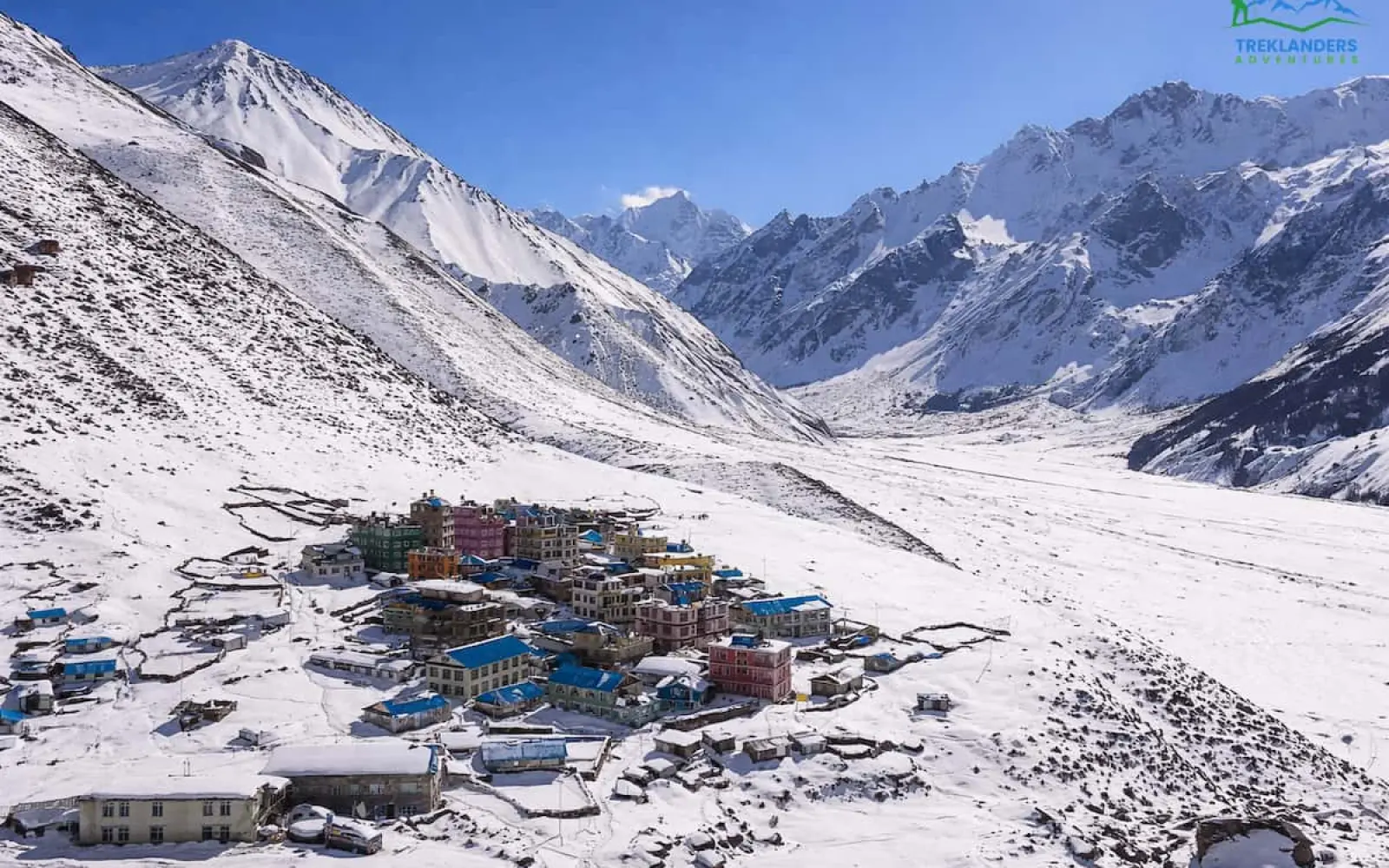
The Langtang Valley offers two distinctly different trekking experiences in autumn and winter. Which one you choose hinges largely on whether you want comfort or solitude, clear trails or raw mountain conditions. Both seasons display the same mountain landscape, but you change the way you experience it. Autumn, which is from late September to November, is the most stable trekking season in Nepal. After the monsoon, the air is fresh and purified. Also, you usually get excellent mountain views.
You can see, in great detail, the peaks of Langtang Lirung, for example. The forests below Lama Hotel get their autumn colours. Besides, the trails are still dry and solid. Snow and ice are not at all a concern while walking. Besides that, teahouses are in full swing, and the variety of food choices is greater. Besides, you also get to meet people from different countries. This season would be perfect for you if you are after a safe trek with less risk and better logistics.
Winter, which is from December to February, drastically changes the valley. Snow blankets the trail beyond Ghoda Tabela. Kyanjin Gompa seems lonely and quiet. Nighttime temperatures go down dramatically and can drop as low as 10 °C or even more. Even though it is sunny most of the days, the cold is steady. So, you will definitely need the right equipment and training. Since very few trekkers decide on this time, the path seems unpopulated. You hardly come across other people while walking. Due to low demand, some teahouses may be shut. Also, water might freeze. However, the mountain views are still great, and at times even better than in autumn. The snow, in fact, beautifies and accentuates the whole area.

If you are looking for comfort, social interaction, and predictable weather, autumn is a better choice. However, if silence, few people, and a tougher natural setting are what you like, then winter is the season that suits you.
The only three factors that should determine your decision are:
your tolerance to cold,
Your level of experience in trekking, and
Your willingness to sacrifice some level of comfort when it comes to facilities.
Winter trekking through the Langtang Valley is not impossible by any means, but it requires more physical exertion and alertness.
Both seasons offer great scenery and opportunities to interact with the local culture. What distinguishes one from the other is the extent of challenge you are ready to take in exchange for a quiet and more immersive experience.
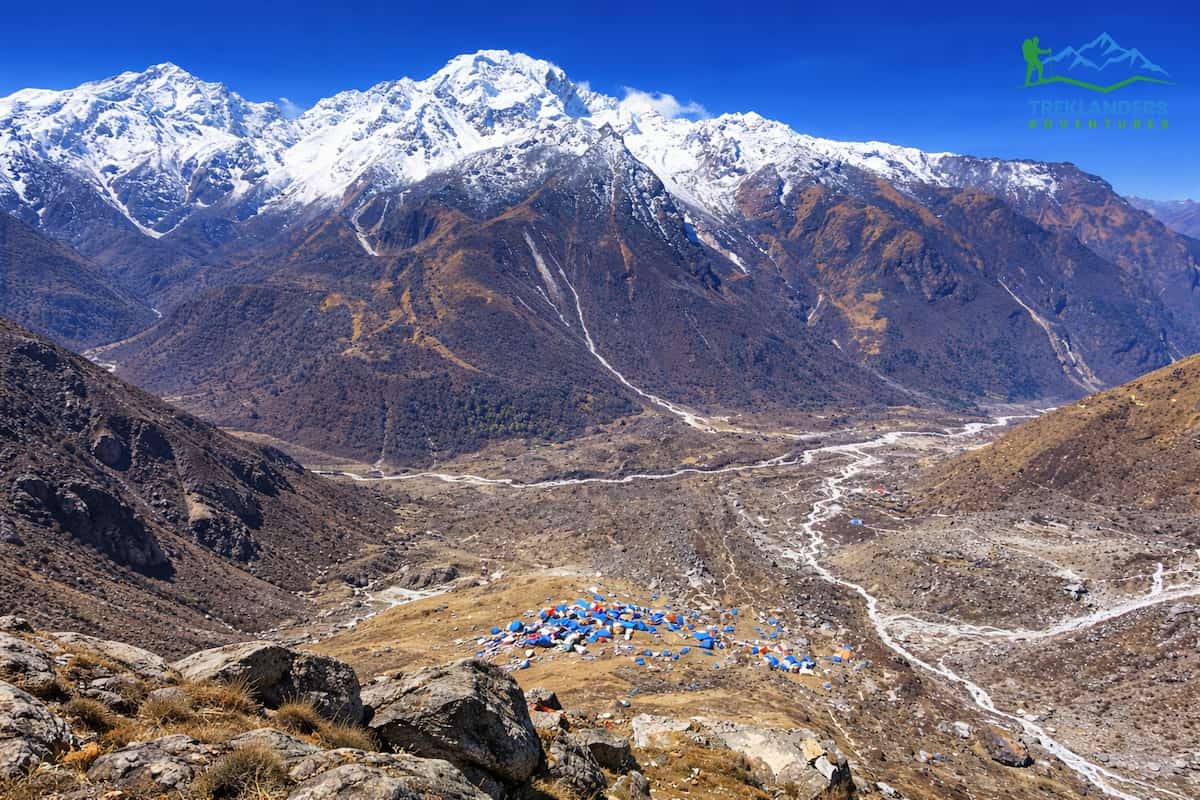
Langtang Valley is one of the trekking areas from Kathmandu. To reach the starting point of the trail at Syabrubesi, you have to drive for 6 to 7 hours. Hence, the valley is considered one of the most accessible high-altitude trekking destinations in Nepal.
The valley is situated within Langtang National Park. It offers a combination of mountain scenery, forests, and local Tamang culture in a short trekking route. Unlike the mountain region of Everest treks, you do not require flights to reach the trek. The logistics remain simple, and the cost is kept low.
A trek in Langtang Valley will mainly require 7 to 10 days. The usual path traces the Langtang Khola river. In the course of your trek, you will come across thick forests of oak, bamboo, and rhododendron. On this trip, you might have an opportunity to spot animals such as red panda and Himalayan tahr, although the chances of seeing them are quite slim.
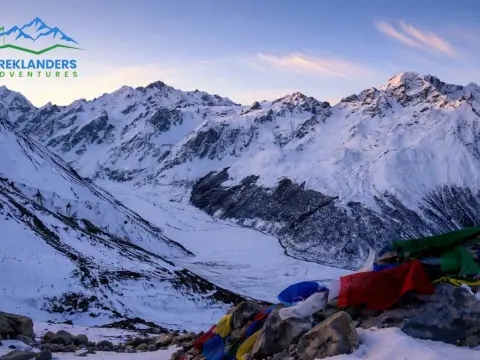
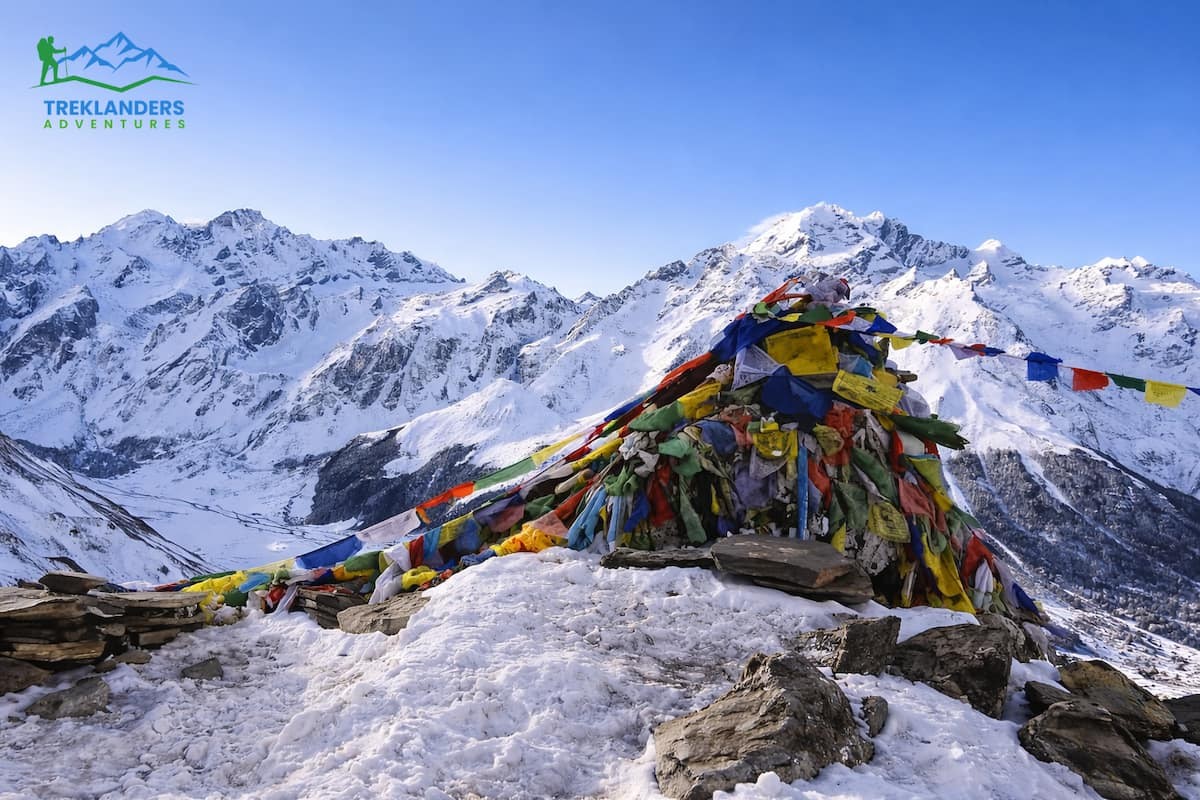
A significant attraction is Kyanjin Gompa, which is at an altitude of around 3,870 meters. This is the last inhabited place and the main base for your further adventure. From Kyanjin Gompa, you can go up to Kyanjin Ri or Tserko Ri for panoramic views of the mountains.
Langtang Lirung is the highest mountain and stands at a height of 7,227 meters. It looms straight up from the valley, thereby giving a mountain that is not only very close by but also very imposing. In stark contrast to other regions, the peaks here seem much nearer and more tightly compressed.
Accommodation is arranged in teahouses, basically small and cozy lodges managed by local families. You can expect basic rooms, hot meals, and a resting area. Toward the higher elevation, especially the area of Kyanjin Gompa, the facilities become better.
Langtang Valley is ideal if you desire a brief hike with splendid landscapes and cultural richness. It has a nice blend of nature, altitude, and accessibility that does not come with a tough challenge.
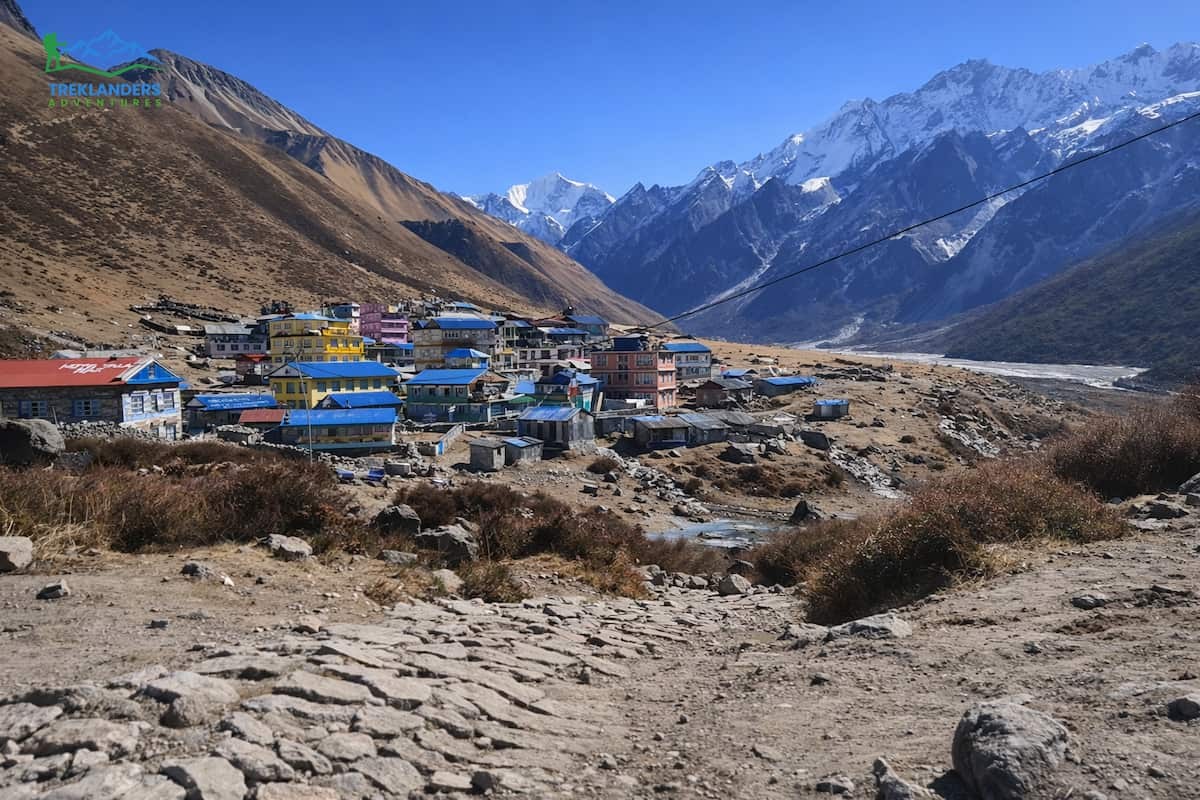
The most dependable season to do trekking in Langtang Valley is undoubtedly autumn. September to November is the time when the weather stays stable and unchanged. As the monsoon finishes around early September, the air turns clean and dry. As a result, you could count on blue skies and very long hours of sunlight. The level of visibility is excellent throughout the trek. Mountain views continue to be almost perfect from the lower forest area up to Kyanjin Gompa. Besides, the peaks such as Langtang Lirung are almost clear every day during October, especially.
In autumn, the ground is still wet from the recent rains, but you can rest assured to find clean and dry places here and there. In fact, twisting your ankle due to slipping on a muddy path is almost impossible. As for the rivers, they are not expected to be dangerous. The chance of experiencing landslides drops significantly compared to the monsoon months. This means that at the same time you keep a reasonable speed, you put less effort. It is a double win because you also minimize the chance of having a delay.
It is equally worth mentioning that autumn sees a surge in trekking activity in Langtang. Even though you will encounter other trekkers day in and day out, especially in the stretch between Lama Hotel and Kyanjin Gompa, the trail will be lively but definitely not as packed as the major Everest routes. Since the teahouses are fully functioning at this time of the year, you enjoy a wider range of tasty dishes along with more reliable service and easy room availability. But during peak weeks of October, even famous places might get their rooms taken by early evening. Waking up earlier lets you lock down your lodging.
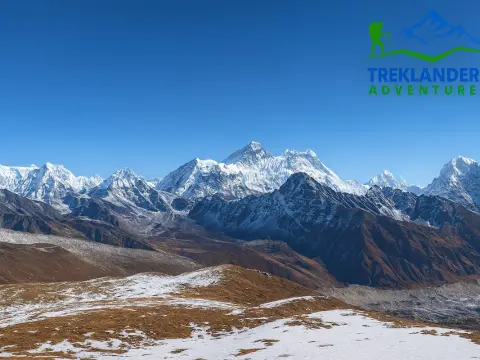
Autumn is a very vibrant time for outdoor activities. Some forest areas highlight the colour change of leaves to yellow and red hues. Although it is rare that you see wildlife, their activity is definitely more after the monsoon. Local communities are more interactive as they become active. Besides, the Kyanjin Gompa area offers great hiking possibilities to Kyanjin Ri or Tserko Ri for off-trail hikes on clear visibility days. Moreover, you can visit glaciers and local cheese factories without weather disturbances.
Among seasons, autumn has a lot to offer. You can enjoy great weather, unobstructed mountain views, secure hiking paths, and fully-featured trekking facilities. These elements will not only facilitate your planning but also minimize your risk exposure. Therefore, this time of the year is appropriate for newbie trekkers as well as for those looking for a hassle-free adventure.
However, there are some negative aspects. During October, the number of tourists is at its maximum. This means that hotels and restaurants may slightly hike their rates due to high demand. In addition, if you look for solitude, the social vibe here may not be very appealing to you. Nevertheless, by and large, autumn is the most well-balanced and productive season for accomplishing the Langtang Valley trek.
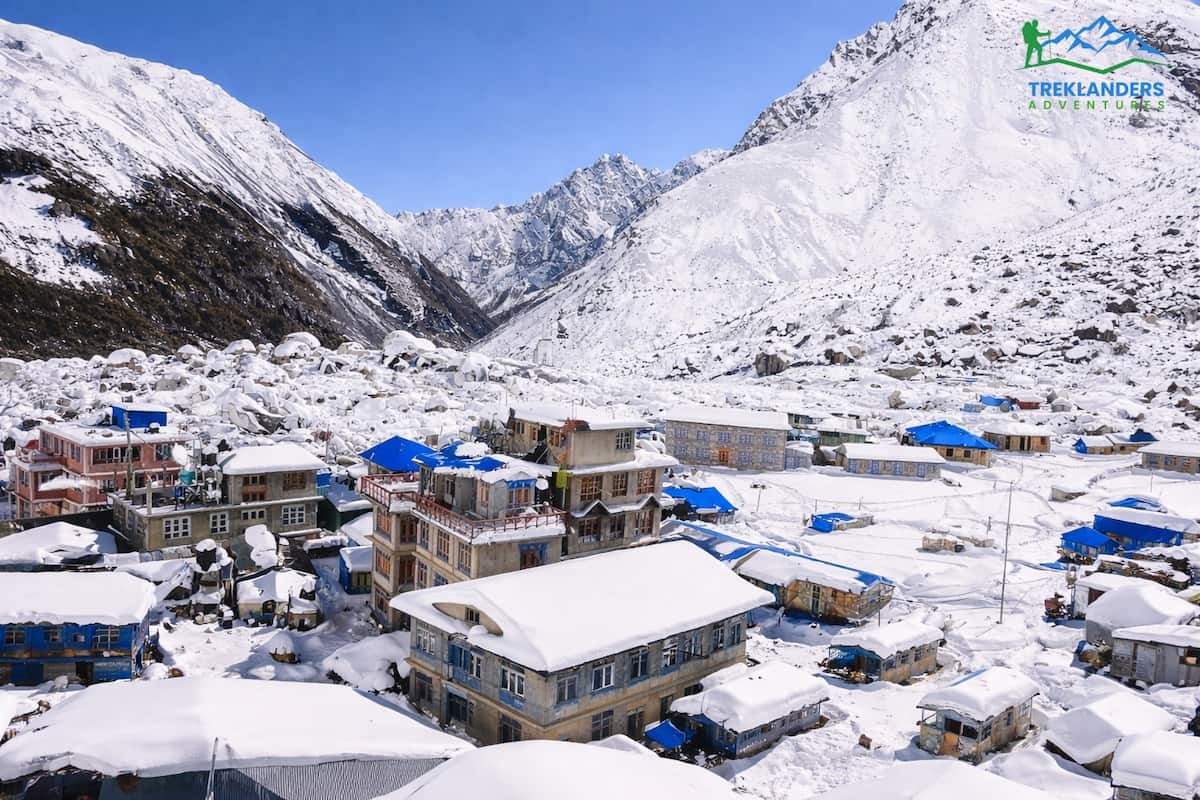
Winter trekking in Langtang Valley is a great option if you are looking for a challenging and less crowded trekking experience. Temperatures drop drastically from December to February, particularly at high altitudes. Although daytime temperatures are quite bearable in the lowermost regions, lying between 5 °C and 10 °C, they drop to below freezing once you go above 3,000 meters. Temperature during the night in Kyanjin Gompa, after dinner, plunges to a level of -10 °C to -15 °C. The cold does not relent even when the sun is out, so adequate warming layers are a must.
Winter radically transforms the condition of the paths. Dry and stable are the lower parts, just like last autumn. Snow starts to make its presence known once you get past Ghoda Tabela. The Langtang Village to Kyanjin Gompa section is most likely to be snow-laden. Trails become obscure after fresh snow. Ice can make things worse in the cold spots, so there is a possibility of falling, getting you painful bruises. Micro spikes might be needed to get a better hold. Severe snowfalls can make the routes impassable for some time, but such cases are definitely not the norm for the whole season.
This is the time when the crowd is at its lowest level in the whole year. Get ready to walk for hours without bumping into anybody else. This leads to a powerful feeling of solitude. There is a limited number of operational teahouses at major locations, but most of them are running at reduced capacity. A few lodges have shut down completely due to a lack of customer inflow. Food supply and other services become quite basic. So, you are to make a detailed plan of your stay and to be certain about the availability during your trekking days.
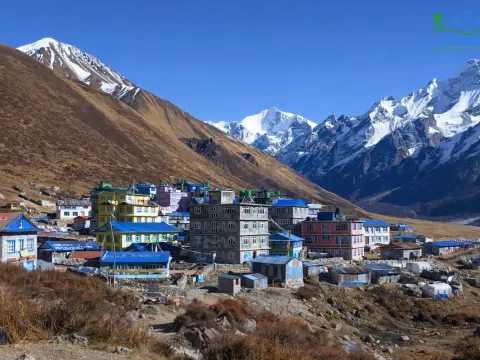
Winter still gives you clear skies and strong visibility. Actually, mountain views look sharper than in autumn in many cases because the air is dry. For example, a peak like Langtang Lirung contrasts sharply against deep blue skies. The snow changes the valley into a high-contrast landscape. Frozen rivers, snow-covered forests and quiet villages depict a whole new visual experience.
At Kyanjin Gompa, short hikes to Kyanjin Ri are doable if the weather is good. These places offer great Himalayan panoramas without the crowd. Winter has lots of clear pros. You will have solitude, uninterrupted views, and an even raw mountain environment. Furthermore, the trekking experience becomes more personal and less commercial. On the other hand, difficulties do exist. Preparation is needed for the cold, limited facilities, and the snow-covered trails, which means that you have to carry proper gear, manage time carefully, and stay flexible with your plan.
You will be suitable for winter trekking if you have previous experience and you can handle the cold. It is definitely not a walk in the park. But what you get is an isolated and contemplative Himalayan experience.
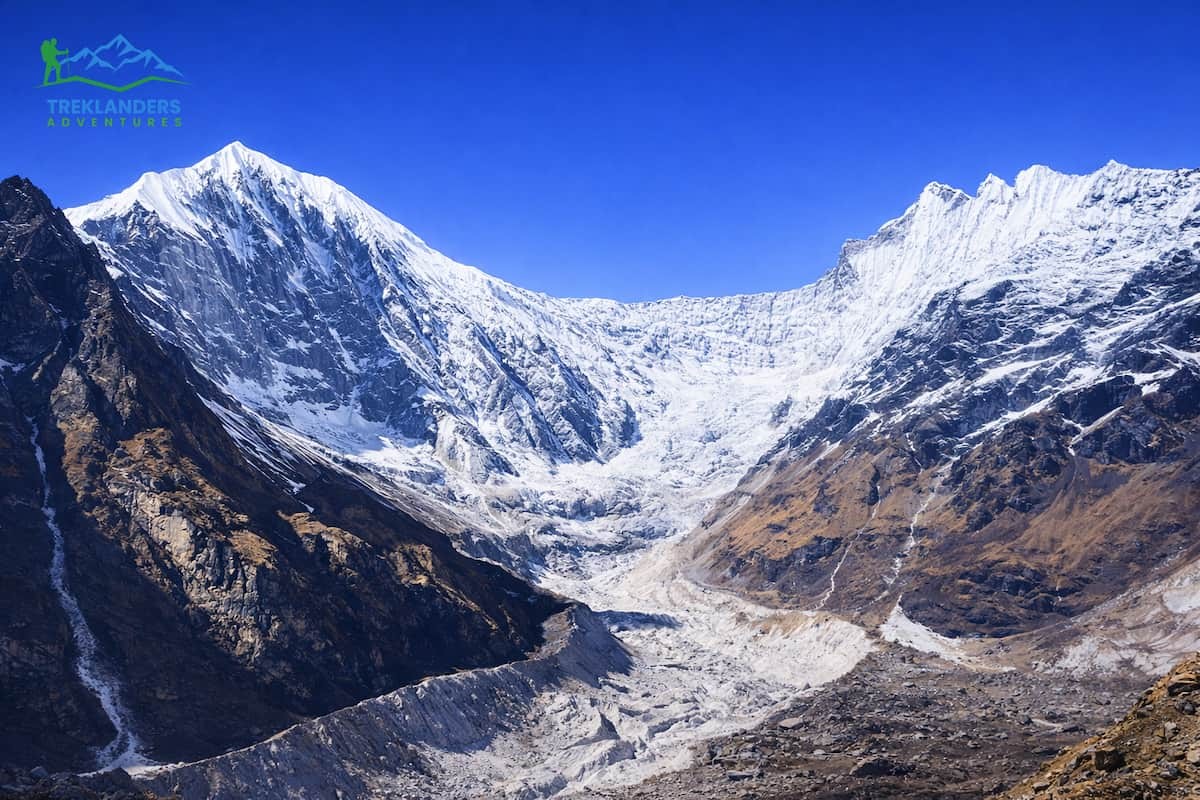
Autumn offers the most even trekking conditions in Langtang. From September to November, the weather remains calm with clear skies and dry air. Visibility is high all the time, so the sharp mountain views are with you all the way. For example, October is the month in which you almost get a glimpse of Langtang Lirung peak every day.
The trails are pretty much in excellent shape. After the monsoon, the paths are dry and firm. You do not come across snow or ice, which is a great bonus, making walking not only easier but safer as well. Therefore, up to this point, if you wanted to, you could have kept going without any physical difficulties. Crossings of rivers and forests are still feasible without problems. Autumn is by far the most crowded time. It is quite normal that you will come across some other trekkers now and then. Teahouses run at full capacity, meaning that they can offer a wider variety of food and serve you more regularly. On average, finding accommodation should not be an issue, but during the very busy weeks, the situation definitely changes.
Basically, this season appeals to you if you are after comfort, the weather of which can be forecasted, and a decent trekking experience without problems. The main downside is the presence of crowds and slightly increased competition for rooms and food.
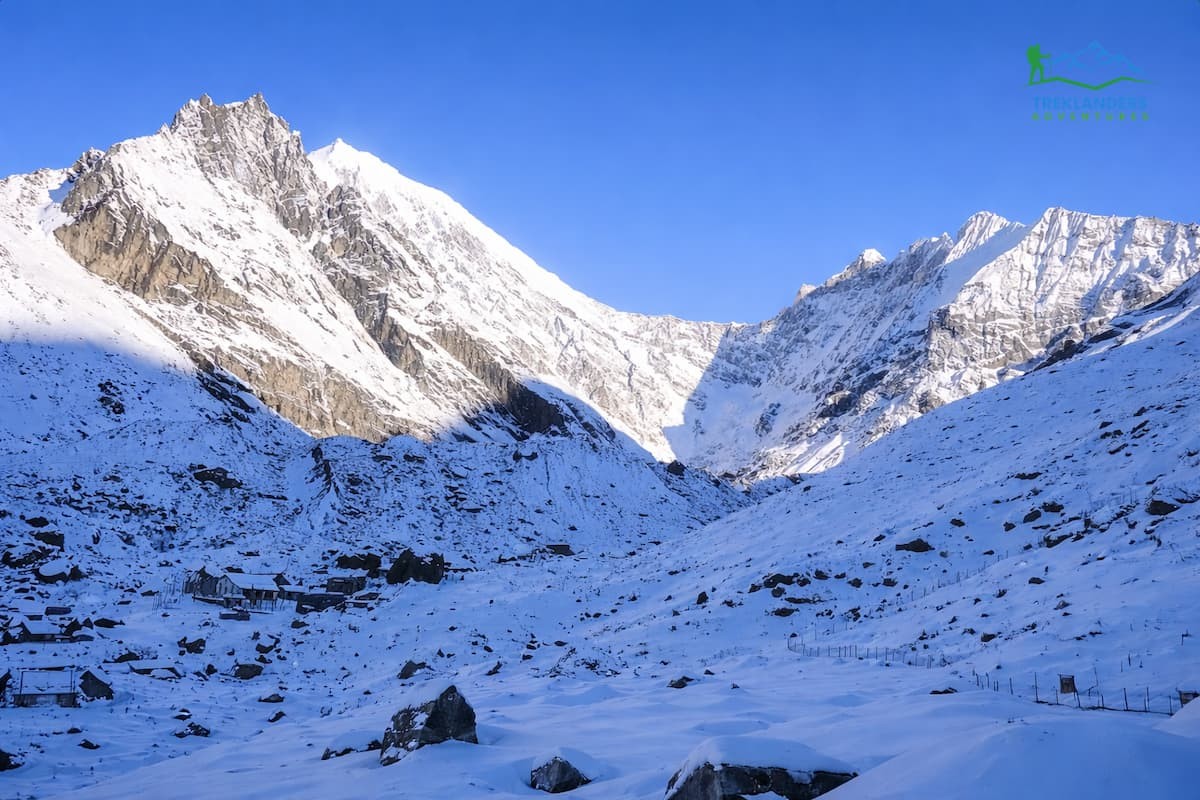
Winter forms a tougher environment for outdoor activities. Especially above 3,000 meters, temperatures plunge considerably from December to February. You can still go trekking during the day if you are in the sun, but it gets really cold at night. In fact, temperatures at Kyanjin Gompa often go lower than -10 °C.
Snow results in alteration of the trail conditions. The sections at lower altitudes hardly change, but the ones at higher altitudes get covered with snow and patches of ice. It is difficult to see the way after a snowfall. To remain safe, you might have to bring micro spikes along.
Besides, there will be a significant reduction in the crowd levels. At most times, you will be walking along a quiet trail with very few fellow trekkers. This will be conducive to a more concentrated and isolated trekking experience. On the downside, some teahouses will be closed, and thus services will be limited. There won't be many food options, and you will have to do more planning.
Winter is known for its clear skies and sharp mountain views. The white snow greatly enhances the landscape by adding strong contrast, which makes the scenery even more captivating. This is the perfect time for those who like quietness and are willing to be exposed to cold conditions. However, the major limitations are extremely cold temperatures, scarce facilities, and a higher degree of physical exertion.
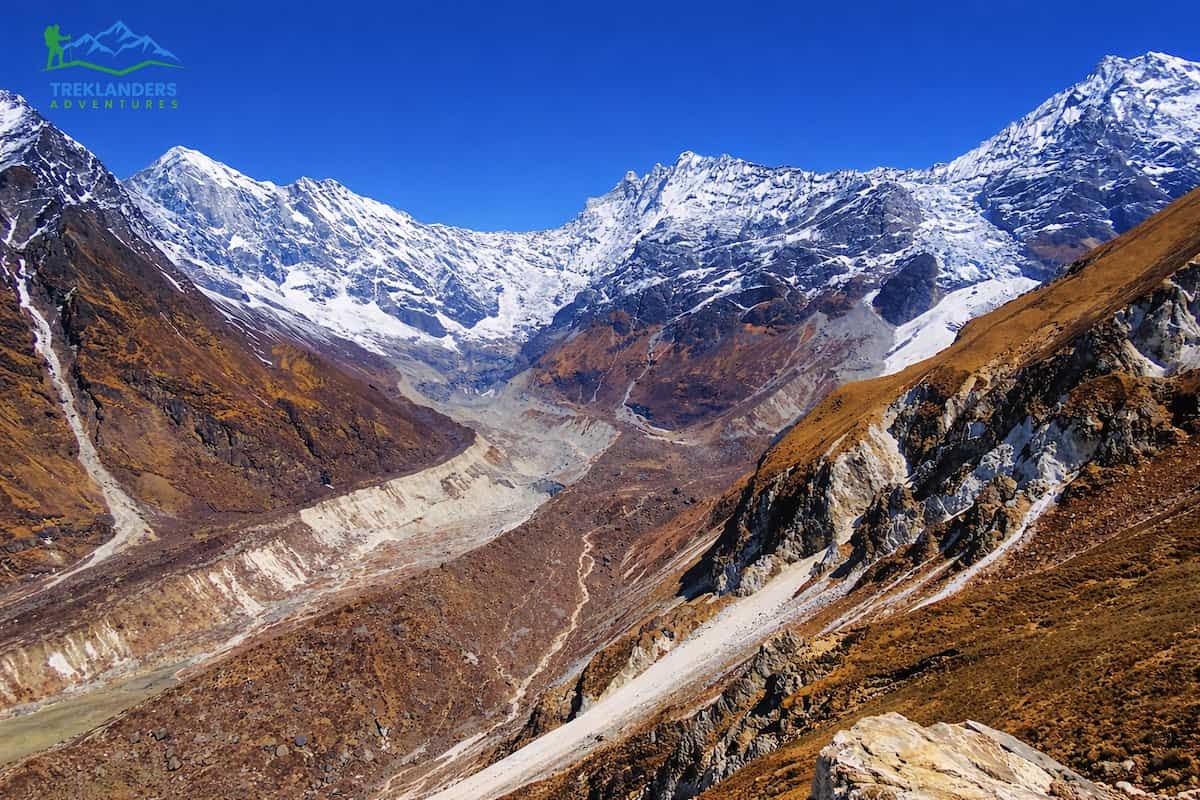
Many types of trekkers find autumn to be the perfect time to explore Langtang Valley. If you want stable conditions, stunning views of mountains, and the least amount of risk, then this is your season. When the weather is stable, uncertainty is reduced, so it is easier to plan, and everything will go smoothly.
Autumn is a good choice for people who have never been to Nepal before. You will not have to face snow, heavy rain, or extreme cold. Paths are dry and easy to find. Walking and admiring the scenery will be your main activities rather than coping with difficult weather conditions. If you are inexperienced with high-altitude trekking, an autumn trip can be a less overwhelming introduction to it.
For those people who do not have much time for trekking, autumn would be a perfect season. Weather changes or blocked trails may be the reasons for delays, but you are unlikely to come across such situations. Transport to Syabrubesi operates regularly. Your daily progress will be consistent, which makes it possible for you to finish the trek within a set schedule. This is a great thing if you have a very tight travel plan.
Autumn is also a good option if you want to treat yourself to some comfort. Teahouses are fully operational on the entire route. Besides, you will be able to get a better choice in cuisine, more rooms available, and services that remain the same. This will definitely help you to have a stress-free trek. You do not have to bring extra clothing for harsh cold weather, so your backpack will be lighter.

Besides, this season works for those who like to go hiking alone the most. Having other hikers around on the trail can make the trek safer. If you get into a difficult situation, you will be able to find help without any problem. Also, meeting other people will make the trek more enjoyable. You can arrange routes, share information, and find accommodation together with other trekkers.
Photographers are almost always winners amid fall conditions. Apart from clear skies and clean air, visibly raising the level of style, they help you get sharp scenic shots of things like Langtang Lirung. The colored leaves are an extra bonus that photographers will surely love.
If you care a lot about reliability and efficiency, you can obviously count on Autumn to lend you a hand. It will not only diminish your physically and logistically challenging tasks but also provide the operating environment you can rely on. On the other hand, autumn may not be your thing if you want to completely get away from people. The trail gets quite crowded, especially in October. However, most would say that autumn is still the most reasonable option for the vast majority of trekkers since it offers an excellent combination of safety, accessibility, and superb mountain views.
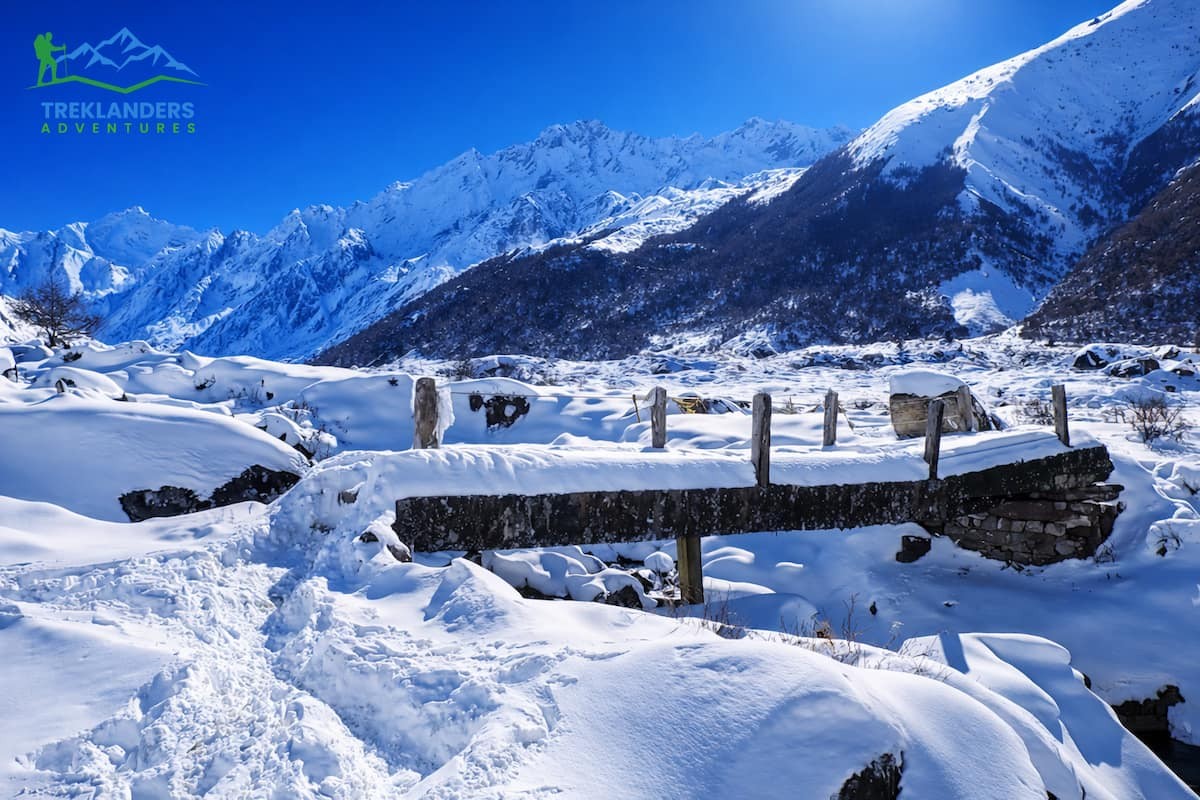
Winter trekking in Langtang Valley is appealing to a very specific type of trekker. You should plan your visit for this season if you are comfortable with the idea of dealing with cold weather, if you can adapt to a situation where facilities are quite limited, and if you can move around confidently in an environment where you are not highly supported.
Winter is a season that primarily appeals to experienced trekkers. If you are one of those who have already experienced a few high-altitude treks, the winter conditions will not bother you that much. Snowy trails, slippery sections, and very cold temperatures necessitate better decision-making and appropriate pacing. Besides, you need to have a good understanding of altitude, layering systems, and basic risk management.
The winter season remains a highly attractive option for outdoor people who prefer solitude. Madly after November, crowd levels go down drastically. Walking for very long distances without spotting other trekkers is possible. Even a village like Kyanjin Gompa would feel so quiet and deserted. So, you get to concentrate 100% on the surroundings without any distractions. Hence, if you are a person who loves silence and space, then the winter season will be true to you in that sense.
For another thing, this season perfectly matches the desires of trekkers who are looking for a rawer mountain experience. When it snows, the landscape gets transformed entirely. Langtang Lirung and other peaks look very sharp against a clear blue sky. Frozen rivers and snow-covered trees form a background that is high in contrasting colours. If you are someone who likes dramatic landscapes and, at the same time, doesn't mind being physically uncomfortable, winter will be the one that has the most visual impact for you.
Photographers who are after very specific conditions would do well to dedicate themselves to winter. The light becomes cleaner, and the shadows add a three-dimensional aspect to the whole landscape. It is also possible to get images that you wouldn't be able to get in autumn. Mornings and evenings offer great contrasts as the sun's rays come at low angles.
Winter, on the other hand, is a good fit for trekkers who are willing to keep their schedules open. Several lodges are likely to be closed, and there won't be many food choices. You will have to carefully plan each day's stop and be ready to change your plans when necessary. It will also be essential to have heavier clothing and the basic equipment.
That said, winter is definitely not for newcomers or for those who want a comfortable experience. The presence of extreme cold, lowered availability of services, and greater physical exertion will contribute to an increased level of overall difficulty. Without proper preparation, this could turn into a very stressful situation.
You would be the right fit for winter if being alone, having very good mountain views, and tackling a challenging trekking environment is what you really want. Though it is a time-consuming process, it will give you a less crowded and more focused Himalayan experience.
The essential permits for trekking in Langtang Valley and the fundamental arrangements are minimal. It is a straightforward method, but you have to set everything up before the trek.
Two major permits are necessary. The first one is the Langtang National Park entry permit. This will enable you to enter the Langtang National Park, where the whole trek is located. Second, you will need a TIMS card, which will be given to you by the Nepal Tourism Board or your trekking agency. The documents will be inspected at the checkpoints on the way, so you'd better keep them handy.
The trek typically begins in Syabrubesi, which you can get to from Kathmandu by road. The vehicle journey will take approximately 6 to 7 hours, depending on the road conditions. Public buses are the cheapest means of transport, but they may be overcrowded and slow. Private jeeps are more expensive, but they are very comfortable and save time.
The main focus of the accommodation is the teahouses. Those are small rest houses managed by local families. The rooms are very basic, usually with two single beds and the most basic blankets. The dining halls serve meals and provide warmth. During the peak autumn season, teahouses become fully booked very quickly, so getting there early will give you a better chance of finding a room. Other than that, during winter, fewer lodges are operational and therefore you will have to plan your overnight stops more carefully.
Food is fairly regular along the trail. You can get dal bhat, noodles, soups, fried rice, and simple snacks. Prices rise as you go up because of the difficulty of transport. Drinking water is available in the teahouses, but to lower your expenses and help the environment, you should bring purification tablets or a water filter. Electricity and charging facilities can be found in most villages, usually for a small fee. Mobile network coverage is available in lower regions, but gets very weak or totally unavailable higher up. It is wise to tell someone your route before you set off.
You do not have to take a guide to Langtang, but having one surely enhances safety and convenience, particularly in winter or if you are a beginner. Porters are a great aid in carrying your heavy load, thereby making trekking quite comfortable. Preparing well will greatly enhance your experience. Cash is a must because there are no ATMs along the trail. Seasonal packing, including proper layering for the cold and rain protection, is a must. Equipped with the necessary permits and a well-thought-out plan, Langtang is still one of the easiest and most accessible Himalayan treks.
Picking between autumn and winter as the trekking season in Langtang Valley will largely depend on what you value more. Both seasons boast magnificent mountain views and offer a fulfilling trekking experience. However, your comfort level and the degree of challenge will vary.
Generally, autumn is the most sensible option by far. The weather stays pretty much to the point, the skies remain telltale blue, and you don't have to worry about finding your way. There are fewer chances of getting hurt by snow, ice, or severe temperatures. Teahouses are in full swing, so that you can rely on your meals and places to stay every day. This adds to making your trekking experience quite easier and more enjoyable. If what you want is a stress-free time with only minor difficulties, autumn is your golden chance. It is perfect for newcomers, solo hikers, and those with a fixed schedule.
On the other hand, winter offers you more of a physical and mental test, along with solitude as the main feature. It gets colder, and you face more problems. Snow covers various trails above the halfway mark, and there wouldn't be many lodges open. You will have to consider better equipment, more detailed planning, and higher awareness. Yet, winter locks out the masses and crowds. You have a peaceful pathway and intimacy with nature. So, if being alone is what you prefer and a cold challenge does not prevent you, winter will grant you a compelling and focused experience.
Ultimately, your choice must hinge on these three aspects. One, your familiarity with trekking. Safer conditions in autumn make it more suitable for beginners. Two, how much discomfort you can take without complaints. Winter is all about good layering and mental strength. Three, the kind of trekking experience you expect. If socializing and easy trekking are your thing, go for autumn. If silence and intensity are more of your thing, winter will be your best pick.
No incredible season, just different results. Autumn minimizes effort and risk. Winter, on the other hand, increases both but gives an essentially empty environment. The majority of hikers go for autumn as it is a good compromise in terms of safety, comfort and great visibility. However, if you are well-prepared and willing to accept the limitations, winter could still be a good option.
One of the things that Langtang Valley doesn't change with seasons is its value. The mountains, culture, and scenery are very much alive anytime. What changes depending on the season are your willingness to interact with nature and your experience in the region. Your step, thereby, determines what kind of memory you bring back from the hike.
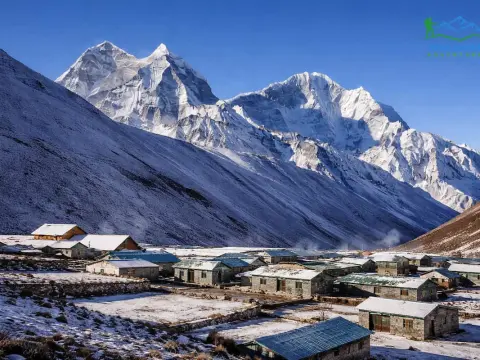
Discover Dingboche (4,410m), the key acclimatization stop on the Everest Base Camp trek. Learn routes, altitude tips, and what to expect.

Explore the Gosainkunda Trek in autumn—clear skies, sacred lakes, and stunning Himalayan views with a short, high-altitude adventure near Kathmandu.

A short day hike from Kyanjin Gompa to Langtang Lirung Glacier with stunning views and a rewarding high-altitude experience.



