
10 Best Things to Do During the Mohare Danda Trek in Nepal’s Annapurna Region
17 Mar 2026
Explore the Mohare Danda Trek with stunning Himalayan sunrise views, rhododendron forests, and peaceful trails in Nepal’s Annapurna region.



Khopra Ridge trek is a quiet and scenic trekking route located in the Annapurna region. It is situated far away from the busy trails of Ghorepani and Poon Hill. Therefore, if you desire a peaceful experience, this is the perfect place to choose. The trail crosses dense forests, terraced farmlands, and small villages. When you ascend, the landscape reveals wide ridgelines with unobstructed mountain views. From Khopra Danda, you can easily see peaks like Dhaulagiri and Annapurna South. A side trip to Khair Lake is an addition that takes the trek to a remote and spiritual level.
Autumn, particularly October and November, is the best time for this route. Once the monsoon is over, the air becomes very clean and fresh. The dust and haze vanish, and so, visibility improves significantly. You get the most beautiful views of the Himalayas almost every day. The temperature during the daytime remains rather comfortable, on average between 10 °C and 20 °C at the lower elevations.
Nights are colder, particularly at the high points, but not so that you cannot handle them if you wear the right clothes. There is very little rainfall, which means the trails stay dry and firm. That lowers the chances of accidents or delays due to weather. Usually, the skies are clear, which is good for taking photos and enjoying long-distance views.
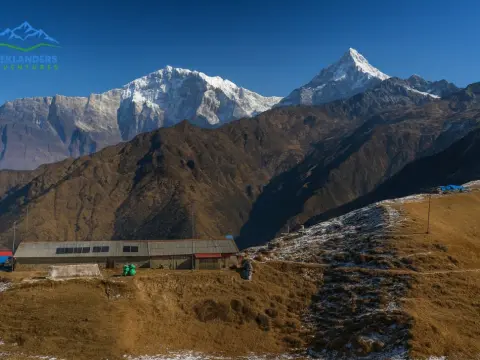
Dashain and Tihar are big festivals celebrated during this season. People in the villages along the trekking route come out and make the surroundings vibrant. You get to see the local ways, the decorations and the celebrations. It really makes your trek more valuable culturally.
If you ask me, the Khopra Ridge hike is a pretty versatile option that can cater to different types of trekkers. For example, even a rookie could get through it with a little bit of preparation and proper pacing. You would have to be able to walk between 5 and 7 hours a day on hilly terrain. On the other hand, the trek would also be a nice choice for those who are quite used to trekking and yet would like to avoid the popular but hence crowded routes. If you enjoy nature, mountain views, and less crowded trails, then this trek is a very good choice for you in autumn.

Autumn, particularly October and November, provides the most reliable weather for trekking in the Annapurna region. The monsoon is over by late September. The air gets clean and dry, which enhances visibility along the entire trail. Distant summits are clearly visible without any haze. For most of the day, the sky remains blue, allowing you to schedule your walks and viewpoints confidently. Stable weather is one of the main benefits.
Temperatures during the day are usually moderate and range from 10 °C to 20 °C at low altitudes. Khopra Ridge and other high areas are considerably cooler, especially in the morning and at night. The temperature may fall near the freezing point at night, but the weather remains largely forecast able. The amount of precipitation in these months is very small. Going on the footpaths will be easier, and the chances of slipping and other delays will also be lower. You will be too much with the weather, and the less time you will be walking and admiring the views.
The mountains are perfectly visible in autumn. From the ridge, the major Himalayan peaks are visible in wide and unobstructed vistas. The gigantic snow-covered face of Dhaulagiri is the most attention-grabbing. Annapurna South from the higher points looks so close and well-defined. Nilgiri contributes to the difference with its extended ridge line. The sunrises and sunsets are spectacular when viewed against the mountains, with the sunlight and colors being very intense. This moment is very favorable for taking pictures and for making lengthy stops to admire the views.
Crowd levels are another compelling reason to opt for this trek. Popular routes such as the Annapurna Circuit and Poon Hill draw very large numbers of trekkers in autumn. The lodges can fill up fast, and the trails become crowded. Khopra Ridge stays quiet because it is less known and a bit away from the main routes. You stroll through calm forests and villages without a constant stream of people. Finding a place to sleep is generally easier, and everything just seems more laid-back.
This mix of good weather, spectacular mountain views, and low crowds makes Khopra Ridge one of the best autumn treks in Nepal in terms of both time and satisfying experience.

The weather during autumn at Khopra Ridge is typically calm and predictable. Both October and November have clear sky days, although there are some changes in the conditions.
At the beginning of October, Khopra is warm and humid, particularly at the low points. Monsoon clouds disappear, and the weather is nice. Later in the month, the sky is mostly clear. Temp at day at low levels is 15 °C to 22 °C. At mid-levels expect 10 °C to 18 °C. Night is still comfortable.
November is the driest, coolest month. The air is sharper, and visibility is at its peak. Mountain views are usually crystal clear throughout the day. On the other hand, temperatures fall compared to October. At low levels during the daytime, it is 12 °C to 18 °C. At mid-levels, 8 °C to 15 °C. Nights are cold, especially over 3000 m, often below freezing. The tracks are dry, and rain is hardly ever there.

Located at an elevation of 3,660 meters, Khopra Danda is colder and more exposed. In October, the temperature in the daytime ranges from a minimum of 5 °C to a maximum of 12 °C, but during the night the temperature can drop to zero and even a little bit below. In November, the temperature during the day is often in the range of 2 °C to 10 °C. However, at nighttime it can drop to 5 °C or even lower, with frost being quite common in the early morning. There may also be strong winds, especially in the exposed ridge sections.
You will see clear skies early in the day, which are excellent for viewing the mountains. Clouds may develop a little bit in the afternoon; however, they very rarely completely block the view. It is very important to put on the right layers. Bring a warm jacket, gloves, and a hat as you go higher. This is how you will manage your comfort level as the temperature changes throughout the day.
You, arrive at Tribhuvan International Airport. A representative meets you and transfers you to your hotel. You check in, rest, and recover from travel. Use the evening for a short walk in Thamel. Review your gear and confirm trek details.
You drive along the Prithvi Highway. The route follows rivers and hills. You reach Pokhara by afternoon. You can walk along Phewa Lake and prepare for the trek.
You take a short drive to Tikhedhunga. The trek begins with stone steps and forest trails. The climb to Ulleri is steady and demanding. You pass small villages and terraced fields.
You walk through rhododendron forests. The trail ascends gradually. Ghorepani is a popular stop with wide views.

You start early for sunrise. You get clear views of Dhaulagiri and Annapurna South. After the hike, you descend toward Sauta through forests. The trail becomes quieter after leaving the main route.

You continue through dense forest and remote paths. The route climbs gradually. You may see wildlife like the Himalayan tahr. Chistibung is a small settlement with basic lodges.
You climb above the tree line. The landscape opens into alpine terrain. From the ridge, you get close views of Nilgiri and the surrounding peaks. The trail is short but steep.

This is the hardest day. You walk on a high-altitude trail with thin air. Khair Lake is a sacred alpine lake. You spend some time there and return to Khopra Ridge. Proper pacing is important.
You descend along ridges and forests. The trail offers continuous mountain views. Dobato is a quiet stop with limited lodges.
You pass Tadapani and descend to Ghandruk. This is a large Gurung village. You can explore local culture and traditional houses.
You take a short downhill walk to Kimchee. From there, you drive back to Pokhara. You can relax, enjoy good food, and rest.
You return to Kathmandu by road. The evening is free for shopping or rest.
You transfer to the airport for your international flight. The trek ends here.
You will need two primary permits for the Khopra Ridge trek. These are the Annapurna Conservation Area Permit and the TIMS Card. Both are obligatory, and your permits will be checked at several points on the trek. The Annapurna Conservation Area Permit is what allows you to be and move within the protected Annapurna Conservation Area. The operation is to protect the forests, wildlife, and local people. This is one that you should always have with you. Besides, there will be checkpoints along the way that will be checking for this.
It can be secured in Kathmandu or Pokhara via the tourism office or a registered trekking agency. It's a simple procedure: a passport copy and a passport-sized photo will be required. The TIMS Card is a way of monitoring trekkers for safety and management purposes. It logs your location and emergency contact info, in case things go wrong. With this system, rescue operations can be launched with efficiency.
It can be issued at the same locations as the ACAP permit. Generally speaking, if you go on a guided tour or through an agency, your guides will handle all the permit arrangements for you. The procedure is no different. You just complete a form, present your documents, and in most cases, get your permits that very day. It is wise to get the permits sorted a day before you leave for your trek.
Besides, carrying both digital and printed copies is a good idea for a backup.
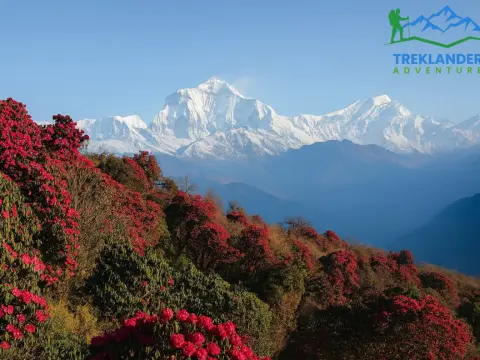
When it comes to the budget, it is wise to forecast expenses related to permits, transport, accommodation, food, and guide or porter services. Transport comes with the road drive from Kathmandu to Pokhara, and the jeep rides locally to the trailheads. Accommodation during the trek is primarily in the tea houses, where the rooms are very basic but still serve the purpose. The cost of food increases with altitude largely because of the difficulty in transporting the supplies.
By hiring a guide, for instance, you get not only help with navigating but also the benefit of his having knowledge of the locals and the area. A porter is someone who carries the main load of your gear that significantly by doing so results in you having lower fatigue. Your daily expenses become a matter of your own choice on the quality of meals, hot showers, charging, and snacks, etc. Besides, you should have some provision for a situation that is permanent, etc. Proper budgeting is the first step to having a comfortable and stress-free trek.
A clear layering system is essential for packing the Khopra Ridge trek in autumn because the temperature changes with altitude and time of day. You will have to adjust to changing conditions quickly while moving.
The base layer will be your first line of defense. It is most effective if you wear moisture-wicking t-shirts or thermal tops. When walking long distances, these keep your skin dry. Make your mid-layer a layer that can insulate you. A fleece or light down jacket makes heat sealing. Your shell layer needs to be windproof and water-resistant. Most of the time, the weather will be dry, but strong winds prevail at the higher elevations like Khopra Danda.
Your lower body should be equipped with trekking pants that are flexible and quick-drying. Thermal leggings come in handy for cold early mornings and nights. A warm down jacket is a must-have in the evening wardrobe. Temperatures can plummet below freezing at elevations above 3,000 meters. A hat, gloves, and a neck buff are indispensable for providing warmth. Sunglasses are a good idea to shield the eyes from the powerful sunlight found at high altitudes.
When it comes to footwear, go for supportive trekking boots with a strong grip. The terrain will be a mixture of stone steps, dirt paths, and the grassy side slopes. Make sure you break in your boots before the trip in order to avoid blisters. Bring along a couple of pairs of warm socks and some lightweight ones for everyday use.
You should also pack energy snacks like nuts or bars. Tea houses provide meals, but snacks help during long days. Keep your total load manageable. A lighter pack improves your walking efficiency and reduces fatigue.

Teahouses are the kind of accommodation you get on the Khopra Ridge trek. Usually, these are small guesthouses operated by local families. By October and November, the majority of teahouses are open and running at their full capacity. This is the main trekking season; however, Khopra Ridge attracts fewer trekkers in comparison to routes like Poon Hill. Generally, you can still get a room without waiting too long, but it is wise to get there in the early afternoon.
Rooms are basic. You'll probably get two single beds each with a mattress, a pillow, and a blanket. Since the walls are thin, the rooms are not well-insulated. It can be very cold at night, particularly at the higher stops like Khopra Danda and Chistibung. Bringing a warm sleeping bag is one way to increase comfort. In most places, bathrooms are shared. Attached bathrooms would be a feature of the lower elevations, but higher elevations should expect the most basic facilities. For a hot shower in some lodges, be ready to pay extra. Often, such showers are gas or solar-heated.

The dining rooms are the heart of a teahouse. There are stoves in these areas, which make the room warm in the evening. This is where you eat, relax, and meet other trekkers. Food is always cooked fresh, but it is also quite limited, depending on the location. Dal bhat is the most popular dish. It normally consists of rice, lentil soup, vegetables, and sometimes pickles. It is very satisfying, and usually, you get refills free of charge.
There are also items such as noodles, fried rice, pasta, pancakes, eggs, and soups. Generally, breakfast consists of porridge, toast, eggs, and tea or coffee. When you go up higher, food becomes less diverse, and making it takes more time. Items are brought by porters or animals, which limits what is available.
Water for drinking is at the teahouses. You can get boiled water or fill up your bottles and disinfect the water yourself. Have some purification tablets or a water filter with you for extra safety.
On the whole, you can count on simple but dependable facilities. Meals consist of straightforward, warm, and energetic dishes. Lodging is humble but just right for resting and regaining strength during the walking tour.

The Khopra Ridge trek and the Poon Hill route are located in the same region; however, they vary in elevation and the overall trekking experience.
Elevation is the second major difference. Poon Hill is located at 3,210meters. Most trekkers use it only as a viewpoint, and they return the same day. On the other hand, the Khopra Ridge is located higher. Khopra Danda has a height of about 3,660 to 3,870 meters, depending on the exact point. Being at a higher altitude, you get a more intimate and extensive view of the Himalayas. Dhaulagiri and Annapurna South look bigger and more thoroughly detailed from Khopra Ridge.
The height difference also changes the feel of trekking. Poon Hill is shorter and less difficult. You can do it in a few days with moderate effort. Khopra Ridge takes more days and requires better stamina. You cover longer distances and spend more time above 3,000 meters. This brings the physical challenge but also the prize in the form of spectacular views and solitude.

Another important factor is the crowd level. Poon Hill is one of the busiest trekking routes in Nepal. During October and November, large numbers of trekkers gather for the sunrise hike. The trail between Ghorepani and Poon Hill often feels crowded, especially in the early morning. Lodges in Ghorepani can fill quickly, and dining areas become busy.
Khopra Ridge is a location that offers a totally different experience. When the main trail is abandoned near Ghorepani, the number of trekkers is drastically reduced. Routes to Chistibung or Khopra remain quite isolated even in the peak season. You are passing through wooded areas and walking on ridgelines where there are barely any other people around. The teahouses are smaller, and there are fewer people there. This results in a peaceful atmosphere where you can take some rest and enjoy the view without any noise or crowd.
Besides, you will feel a much stronger remoteness on Khopra Ridge. The track seems less commercialized. The villages are smaller, and the facilities are very basic. This is what attracts those hikers who are looking for a peaceful and natural type of experience.
In short, if you want a short and easy walk with quick access, Poon Hill is a good option. However, if you want a higher elevation, fewer crowds, and a route that will immerse you more in the environment, then Khopra Ridge is the right choice.

Arriving at Khopra Danda is definitely the main event of the trek. This ridge is perched at an altitude much higher than most of the valleys around it, so it gives you panoramic, uninterrupted views of the Himalayas. As soon as you open your eyes in the morning, you realize the enormity of the landscape and the serenity of the environment.
Nothing compares to the sunrise, though, if you ask me. You have to get up before the sun to be able to relish the first sunrays of the day falling on the peaks of Dhaulagiri, Annapurna South, and Nilgiri. The mountains are lit up with shades of tangerine and rose. The clouds nestled in the valleys produce a magnificent play of light and shadow. The atmosphere is invigorating, and in October and November, the sky is often free of clouds. Since very few trekkers are awake at this time, you'll have the sunrise almost entirely to yourself. The only sound that breaks the silence of the moment is the whisper of the wind or the chirping of the birds.

After the sunrise, most of the trekkers make up their minds to add the time to the itinerary for Khair Lake to their trekking time. The lake is situated at a height of about 4,660 meters, and locals consider it to be a holy site. The trek is exhausting as walking at such a high-altitude with a rocky trail makes it very difficult. On arriving at the water body, its tranquility catches your eye. At times, the worshippers carry on their performance of small rituals while small pieces of flowers and fruits that are left on the surface of the water can be seen. There is a temple next to the lake, which further strengthens the spiritual aspect of the walk. One can either choose to keep oneself engaged by watching or just remain quiet.
The solitary nature of Khopra Danda is really what makes it special. Unlike Poon Hill or the main Annapurna Circuit, hardly anyone manages to get this ridge trip in a day. You get the feeling of being totally off the grid while at the same time being in tune with Mother Earth. The wind, the clouds below, and the huge snow-covered peaks all around you set a scene that is at once contemplative and soothing. You can keep moving along the ridge, stop at the viewing points, and just enjoy the peace that surrounds you.
Sleep and food on the ridge are pretty rudimentary. The teahouses can only offer you a hot cup and some simple fare; however, it is the focus of the day on continuous outdoor experience and the silent surroundings. Short rest times are enough to let you fully immerse yourself in the place. This mix of panoramic scenes, a visit to a holy lake, and quiet solitude makes a day at Khopra Danda an unforgettable and quite exceptional one. It is a starkly different experience from that of the crowded trekking spots in this region.

Autumn is the most popular trekking season for the Khopra Ridge trek. While conditions are generally stable, trekkers often make errors that affect comfort and safety. Understanding these mistakes helps you prepare better.
One common mistake is underestimating the cold in November. Temperatures drop significantly at higher elevations. Early mornings and nights can fall below freezing at Khopra Danda and Khair Lake. Even daytime conditions can feel chilly with wind exposure. Trekkers sometimes carry only light jackets or base layers, assuming autumn is warm. Without proper insulation, you risk hypothermia or discomfort during rest periods. Warm layers, gloves, a hat, and a sleeping bag rated for sub-zero temperatures are essential.
Skipping acclimatization days is another frequent error. Khopra Ridge reaches over 3,800 meters, and the side trip to Khair Lake climbs above 4,600 meters. Rapid ascent increases the risk of altitude sickness. Trekkers eager to finish the route often push too quickly. Ignoring acclimatization can cause headaches, nausea, dizziness, and fatigue. Planning gradual elevation gain and resting in villages like Ghorepani, Chistibung, or Dobato allows the body to adjust. Even one extra acclimatization day can make the trek safer and more enjoyable.
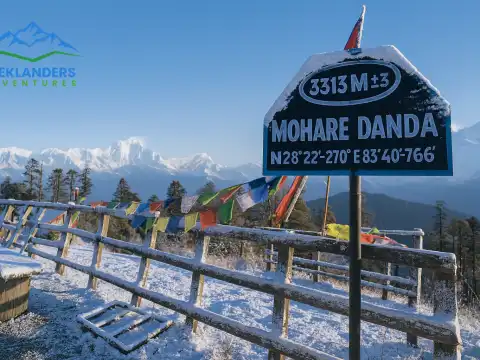
A third common mistake is ignoring the teahouse booking, especially in the peak of October. October is the month which sees the maximum number of trekkers rolled out in the Annapurna region. Poon Hill and Ghorepani are the two main places which lure hikers with their charms, and the lodges are jam-packed in the blink of an eye. Although Khopra Ridge is a more serene place in terms of visitor volume, first-comers attend tea houses and snag the best rooms. Trekkers who are late in arriving may have to put up with limited availability, shared rooms, or even the absence of hot showers. Booking beforehand through agencies or booking a room at the previous location can result in a more pleasant stay.
Other minor mistakes include carrying heavy backpacks unnecessarily, underestimating walking times, or ignoring weather variations. Even in autumn, clouds can form in the afternoon. Trekkers should be prepared with water, snacks, and extra layers. By dodging these blunders in the first place, you'll have a safer and more enjoyable time. Having the right gear, trekking pace, and smart accommodation planning can be the deciding factor between a trekking ordeal and a memorable journey. Autumn brings blue skies, warm days, and breathtaking scenery, but one needs to be well-prepared in order to completely enjoy the Khopra Ridge trek.

The Khopra Ridge trek stands alone as a fantastic alternative to the usual Annapurna routes. It combines spectacular mountain views, untouched villages, and quiet hiking paths, which make it especially beautiful in the fall. The best months are probably October and November. The post-monsoon days are very clear, the paths are dry, and the air is quite fresh, which not only helps trekkers to get a great view of the Dhaulagiri, Annapurna South, and Nilgiri peaks but also really adds to the atmosphere. The sunrises experienced from Khopra Danda are one of a kind, with the light playing on the snowy mountaintops, generating moments that are hardly matched even on the more crowded routes.
This trek is quite flexible and can be adapted to different kinds of trekkers. Newcomers, with even a minimum fitness level, can accomplish the entire path by taking it slowly and mixing in some acclimatisation days here and there with the rest of their itinerary. On the other hand, seasoned hikers are something that can definitely be found along the trail, as well as in the higher elevations, from where one can enjoy prolonged vistas of nature and thus can have a more natural and spiritual experience.
Apart from the wildly popular and more heavily trafficked treks such as the Poon Hill route, Khopra Ridge presents the opportunity for peace, quiet, and freedom to walk at one's own rhythm.
Besides, the teahouses are quainter and less geared up for tourists, which gives one the feeling of really being a part of the local culture and daily life. In fact, villages like Ghorepani, Chistibung, and Ghandruk are some of the places in which you can get to know the locals, try the traditional cuisine, and also experience the vibrant festivals of Dashain and Tihar.
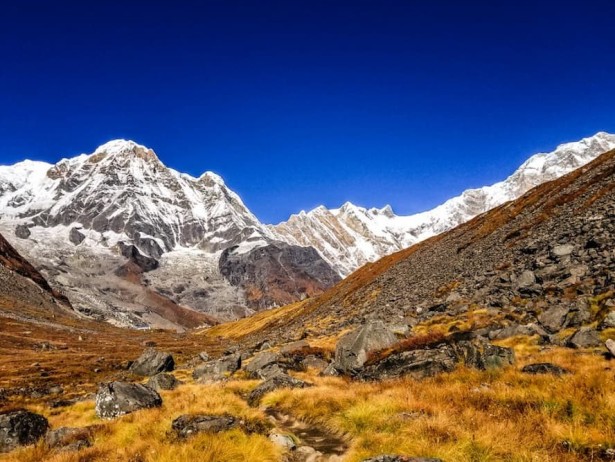
Preparation is the key to a safe and thrilling trekking experience. Properly layering your clothing will safeguard you from the varying temperatures of different altitude levels. Accessories like trekking poles, a warm sleeping bag, a water purifier, and a good pair of boots will keep you comfortable and safe. You must get your permits, the ACAP and TIMS cards, well in advance, as they are mandatory. Knowing about the most common mistakes -like cold in the month of November is not that mild, forgetting to acclimatize, and not booking the teahouses on time in peak season- will definitely help you stay away from unnecessary worries. With the help of a well-made itinerary, you will be able to strike a good balance between walking, relaxation and sightseeing.
A day spent at Khopra Danda captures the essence of what makes the trek so unique. The ridge offers you the most spectacular views, great silence, and even the chance to see Khair Lake, a holy, isolated place. Being in such a high-altitude environment only deepens the feeling of accomplishment that Himalayan trekking brings.
Besides its scenic splendor, the Khopra Ridge trek in the fall also offers an insight into the local culture, a physical workout, and a less crowded place that is perfect for both adventure and quietness, which is why it would be a good choice for those who want something different from the usual Annapurna trekking experience. Thoughtful planning, respect for the local people and culture, along with a good knowledge of altitude and weather conditions, are factors that will help make your trek a safe, worthwhile, and highly memorable one.

Explore the Mohare Danda Trek with stunning Himalayan sunrise views, rhododendron forests, and peaceful trails in Nepal’s Annapurna region.

Discover the Gokyo Valley Trek and explore the stunning Gokyo Lakes, Gokyo Ri sunrise views, and Everest panoramas in Nepal’s Everest Region.

Explore the best things to do on the Annapurna Base Camp Trek, featuring key places, stunning views, and authentic Himalayan experiences.



