[{"name":"Everest Base Camp Trek","duration":"16","image_url":"https:\/\/www.treklanders.com\/storage\/trip-galleries\/1\/thumb_419a755c003cc609f3030ee332965ebe.jpg","offer_price":1405,"url":"https:\/\/www.treklanders.com\/trips\/everest-base-camp-trek"},{"name":"Gokyo Valley Trekking","duration":"16","image_url":"https:\/\/www.treklanders.com\/storage\/trip-galleries\/2\/thumb_676d1021b574aeba4d19d3f2a0b04ed2.webp","offer_price":1205,"url":"https:\/\/www.treklanders.com\/trips\/gokyo-valley-trekking"},{"name":"Annapurna Circuit Trek","duration":"23","image_url":"https:\/\/www.treklanders.com\/storage\/trip-galleries\/3\/thumb_2a9a92ea23c62f41de27b37f5e3e8c17.webp","offer_price":1495,"url":"https:\/\/www.treklanders.com\/trips\/annapurna-circuit-trek"},{"name":"Everest Panorama Trek","duration":"12","image_url":"https:\/\/www.treklanders.com\/storage\/trip-galleries\/4\/thumb_35c9f677ea2e88b1ff11a9f43daa3ddb.jpg","offer_price":1100,"url":"https:\/\/www.treklanders.com\/trips\/everest-panorama-trek"},{"name":"Everest Base Camp Trekking from Jiri","duration":"22","image_url":"https:\/\/www.treklanders.com\/storage\/trip-galleries\/6\/thumb_14763592492417b294aa66bf0ebf4e64.webp","offer_price":1400,"url":"https:\/\/www.treklanders.com\/trips\/everest-base-camp-trekking-from-jiri"},{"name":"Everest Base Camp via Cho la Pass from Gokyo Valley Trekking","duration":"18","image_url":"https:\/\/www.treklanders.com\/storage\/trip-galleries\/7\/thumb_d4e470e98d4e9e2ab8e93e39b8b7d252.jpg","offer_price":1405,"url":"https:\/\/www.treklanders.com\/trips\/everest-base-camp-via-cho-la-pass-from-gokyo-valley-trekking"},{"name":"Everest Three Passes Trekking","duration":"22","image_url":"https:\/\/www.treklanders.com\/storage\/trip-galleries\/8\/thumb_b413b221e913171500bb3dfd5c08ceea.jpg","offer_price":1635,"url":"https:\/\/www.treklanders.com\/trips\/everest-three-passes-trekking"},{"name":"Annapurna Base Camp Trekking","duration":"14","image_url":"https:\/\/www.treklanders.com\/storage\/trip-galleries\/9\/thumb_2e71f2ffe116c659fa66b01c2d571b4e.webp","offer_price":845,"url":"https:\/\/www.treklanders.com\/trips\/annapurna-base-camp-trekking"},{"name":"Mardi Base Camp Trekking","duration":"14","image_url":"https:\/\/www.treklanders.com\/storage\/trip-galleries\/10\/thumb_d7b2d2dc638f6bbf2c31c167ac68029d.webp","offer_price":845,"url":"https:\/\/www.treklanders.com\/trips\/mardi-base-camp-trekking"},{"name":"Mohare Danda Trekking","duration":"12","image_url":"https:\/\/www.treklanders.com\/storage\/trip-galleries\/11\/thumb_a384c8d35d789d29b19991c1d675c910.webp","offer_price":755,"url":"https:\/\/www.treklanders.com\/trips\/mohare-danda-trekking"},{"name":"Khopra Ridge & Khair Lake Trekking","duration":"15","image_url":"https:\/\/www.treklanders.com\/storage\/trip-galleries\/12\/thumb_c0f50461ddc74acfb553ba85be00fab0.webp","offer_price":855,"url":"https:\/\/www.treklanders.com\/trips\/khopra-ridge-khair-lake-trekking"},{"name":"Upper Mustang Trekking","duration":"17","image_url":"https:\/\/www.treklanders.com\/storage\/trip-galleries\/13\/thumb_7aa4dfdb69186b0f224a303d80a25c95.jpg","offer_price":1715,"url":"https:\/\/www.treklanders.com\/trips\/upper-mustang-trekking"},{"name":"Langtang Valley Trek","duration":"12","image_url":"https:\/\/www.treklanders.com\/storage\/trip-galleries\/14\/thumb_8650b4b1a3c160cff75da65369398353.webp","offer_price":735,"url":"https:\/\/www.treklanders.com\/trips\/langtang-valley-trek"},{"name":"Gosainkunda Lake Trek","duration":"11","image_url":"https:\/\/www.treklanders.com\/storage\/trip-galleries\/15\/thumb_bfe94c14e760c48234e117021105be84.webp","offer_price":735,"url":"https:\/\/www.treklanders.com\/trips\/gosainkunda-lake-trek"},{"name":"Chisapani-Nagarkot to Dhulikhel Hiking","duration":"7","image_url":"https:\/\/www.treklanders.com\/storage\/trip-galleries\/16\/thumb_468defe9a4000ee3129cd7e6421ee105.webp","offer_price":565,"url":"https:\/\/www.treklanders.com\/trips\/chisapani-nagarkot-to-dhulikhel-hiking"},{"name":"Kanchenjunga Trek","duration":"23","image_url":"https:\/\/www.treklanders.com\/storage\/trip-galleries\/17\/thumb_51f43fa4203106cc49aaedc89d76e01d.jpg","offer_price":1725,"url":"https:\/\/www.treklanders.com\/trips\/kanchenjunga-trek"},{"name":"Helambu Trek","duration":"12","image_url":"https:\/\/www.treklanders.com\/storage\/trip-galleries\/18\/thumb_0fe8e3fa1299d2e43bf1fb5977875ce2.jpg","offer_price":685,"url":"https:\/\/www.treklanders.com\/trips\/helambu-trek"},{"name":"Upper Dolpo Trek","duration":"26","image_url":"https:\/\/www.treklanders.com\/storage\/trip-galleries\/19\/thumb_d6080d490e1db83b0a711e7304000864.jpg","offer_price":3005,"url":"https:\/\/www.treklanders.com\/trips\/upper-dolpo-trek"},{"name":"Manaslu Circuit Trek","duration":"18","image_url":"https:\/\/www.treklanders.com\/storage\/trip-galleries\/20\/thumb_1fdd224e849f4f328e73d2d12b3d282d.jpg","offer_price":1225,"url":"https:\/\/www.treklanders.com\/trips\/manaslu-circuit-trek"},{"name":"Tilicho Lake Base Camp Trek","duration":"19","image_url":"https:\/\/www.treklanders.com\/storage\/trip-galleries\/21\/thumb_eba8ac5e029e6543e0c17630ebd9e2fb.jpg","offer_price":1220,"url":"https:\/\/www.treklanders.com\/trips\/tilicho-lake-base-camp-trek"},{"name":"Nar-Phu Valley With Thorang-La Pass Trek","duration":"21","image_url":"https:\/\/www.treklanders.com\/storage\/trip-galleries\/22\/thumb_43597423a5a366fe9c8937fb30d2fe2a.jpg","offer_price":1315,"url":"https:\/\/www.treklanders.com\/trips\/nar-phu-valley-with-thorang-la-pass-trek"},{"name":"Nepal Round Trip of Kathmandu-Pokhara-Lumbini and Chitwan Tour","duration":"10","image_url":"https:\/\/www.treklanders.com\/storage\/trip-galleries\/23\/thumb_32497d170b2ab340b0a1b3310e91e784.webp","offer_price":845,"url":"https:\/\/www.treklanders.com\/trips\/nepal-round-trip-of-kathmandu-pokhara-lumbini-and-chitwan-tour"},{"name":"Nagarkot Day Hike","duration":"2","image_url":"https:\/\/www.treklanders.com\/storage\/trip-galleries\/24\/thumb_a5a654930fd8ba7852e41738105bacfc.webp","offer_price":105,"url":"https:\/\/www.treklanders.com\/trips\/nagarkot-day-hike"},{"name":"Nagarkot Sunrise Tour","duration":"1","image_url":"https:\/\/www.treklanders.com\/storage\/trip-galleries\/25\/thumb_17dc28a29cfa44381ad503f0a75ee84f.webp","offer_price":22,"url":"https:\/\/www.treklanders.com\/trips\/nagarkot-sunrise-tour"},{"name":"Namobuddha Day Tour with Shiva Statue","duration":"1","image_url":"https:\/\/www.treklanders.com\/storage\/trip-galleries\/26\/thumb_beeb34202f9077764aa08c67ef2867f9.webp","offer_price":45,"url":"https:\/\/www.treklanders.com\/trips\/namobuddha-day-tour-with-shiva-statue"},{"name":"Kathmandu Full Day Sightseeing Tour","duration":"1","image_url":"https:\/\/www.treklanders.com\/storage\/trip-galleries\/27\/thumb_d045fc0f1acee2cfa6b3c95f3c656d18.jpg","offer_price":30,"url":"https:\/\/www.treklanders.com\/trips\/kathmandu-full-day-sightseeing-tour"},{"name":"Patan and Bhaktapur Sightseeing Tour","duration":"1","image_url":"https:\/\/www.treklanders.com\/storage\/trip-galleries\/28\/thumb_750eacac3424b5dba686dd93656ab87c.jpg","offer_price":30,"url":"https:\/\/www.treklanders.com\/trips\/patan-and-bhaktapur-sightseeing-tour"},{"name":"Upper Mustang Heli Tour","duration":"1","image_url":"https:\/\/www.treklanders.com\/storage\/trip-galleries\/29\/thumb_0b785f69a15557f8660c805c76fda14e.webp","offer_price":1250,"url":"https:\/\/www.treklanders.com\/trips\/upper-mustang-heli-tour"},{"name":"Everest Heli Tour","duration":"1","image_url":"https:\/\/www.treklanders.com\/storage\/trip-galleries\/30\/thumb_dc45f2beb36a3699e0decf0de41a6f17.jpg","offer_price":1495,"url":"https:\/\/www.treklanders.com\/trips\/everest-heli-tour"},{"name":"Island Peak Trek & Climb","duration":"21","image_url":"https:\/\/www.treklanders.com\/storage\/trip-galleries\/31\/thumb_a0f3e3468c92a8e436045cf8b2fbf361.jpg","offer_price":2295,"url":"https:\/\/www.treklanders.com\/trips\/island-peak-trek-climb"},{"name":"Mera Peak Trek & Climb","duration":"18","image_url":"https:\/\/www.treklanders.com\/storage\/trip-galleries\/32\/thumb_3e8128a23c36f02fa38135475e811b9e.jpg","offer_price":2815,"url":"https:\/\/www.treklanders.com\/trips\/mera-peak-trek-climb"},{"name":"Chandragiri Cable Car Tour","duration":"1","image_url":"https:\/\/www.treklanders.com\/storage\/trip-galleries\/33\/thumb_faa70b716449eada6d7f1450335edbb3.jpg","offer_price":30,"url":"https:\/\/www.treklanders.com\/trips\/chandragiri-cable-car-tour"},{"name":"Everest Base Camp Trek and Returning via Heli","duration":"13","image_url":"https:\/\/www.treklanders.com\/storage\/trip-galleries\/34\/thumb_11190941866206e1d578db11986ebc73.webp","offer_price":2100,"url":"https:\/\/www.treklanders.com\/trips\/everest-base-camp-trek-and-returning-via-heli"},{"name":"Annapurna Semi Circuit Trek","duration":"15","image_url":"https:\/\/www.treklanders.com\/storage\/trip-galleries\/35\/thumb_30ddd8ba818cdcb52efd5eb0a017bcdb.jpg","offer_price":965,"url":"https:\/\/www.treklanders.com\/trips\/annapurna-semi-circuit-trek"},{"name":"Everest Base Camp Luxury Trek","duration":"14","image_url":"https:\/\/www.treklanders.com\/storage\/trip-galleries\/39\/thumb_6079aea3c5dd83e745a16fd6162270dc.jpg","offer_price":2685,"url":"https:\/\/www.treklanders.com\/trips\/everest-base-camp-luxury-trek"},{"name":"Mt. Kailash & Lake Manasarover Tour","duration":"15","image_url":"https:\/\/www.treklanders.com\/storage\/trip-galleries\/41\/thumb_cf3fededfd7dd2b40399af399e04f95a.jpg","offer_price":2205,"url":"https:\/\/www.treklanders.com\/trips\/mt-kailash-lake-manasarover-tour"},{"name":"Ghorepani Poonhill Trek","duration":"11","image_url":"https:\/\/www.treklanders.com\/storage\/trip-galleries\/43\/thumb_602d9a56976e1b836ba8adc69b8d09c5.webp","offer_price":720,"url":"https:\/\/www.treklanders.com\/trips\/ghorepani-poonhill-trek"},{"name":"11 Days Gokyo Valley Trekkking","duration":"11","image_url":"https:\/\/www.treklanders.com\/storage\/trip-galleries\/45\/thumb_ab552c3c91de392f94230a937b1c4801.jpg","offer_price":900,"url":"https:\/\/www.treklanders.com\/trips\/11-days-gokyo-valley-trekkking"},{"name":"9-Day Everest Base Camp Trekking with Helicopter Return","duration":"9","image_url":"https:\/\/www.treklanders.com\/storage\/trip-galleries\/46\/thumb_9a8ba2b582500cd86786be056902c31a.webp","offer_price":1990,"url":"https:\/\/www.treklanders.com\/trips\/9-day-everest-base-camp-trekking-with-helicopter-return"},{"name":"12-Day Everest Base Camp Trek","duration":"12","image_url":"https:\/\/www.treklanders.com\/storage\/trip-galleries\/47\/thumb_d12c9ef776c0b395ceea817fe05c5892.jpg","offer_price":1000,"url":"https:\/\/www.treklanders.com\/trips\/12-day-everest-base-camp-trek"},{"name":"8-Day Everest Panorama Trek","duration":"8","image_url":"https:\/\/www.treklanders.com\/storage\/trip-galleries\/49\/thumb_c81ae3a8ac757a317a9362e6872e2dcb.jpg","offer_price":850,"url":"https:\/\/www.treklanders.com\/trips\/8-day-everest-panorama-trek"},{"name":"7-Day Langtang Valley Trek","duration":"7","image_url":"https:\/\/www.treklanders.com\/storage\/trip-galleries\/50\/thumb_99c2904df5475ab028c9e3633ea95ef3.jpg","offer_price":420,"url":"https:\/\/www.treklanders.com\/trips\/7-day-langtang-valley-trek"},{"name":"4-Day Trekking Adventure near Kathmandu","duration":"4","image_url":"https:\/\/www.treklanders.com\/storage\/trip-galleries\/51\/thumb_594681060514dc57be1959236a6996d0.jpg","offer_price":275,"url":"https:\/\/www.treklanders.com\/trips\/4-day-trekking-adventure-near-kathmandu"},{"name":"4-Day Ghorepani Ponnhill Trek from Pokhara","duration":"4","image_url":"https:\/\/www.treklanders.com\/storage\/trip-galleries\/53\/thumb_eede04edac01f983d9af2c16f55d03e8.webp","offer_price":500,"url":"https:\/\/www.treklanders.com\/trips\/4-day-ghorepani-ponnhill-trek-from-pokhara"},{"name":"7-Day Annapurna Base Camp Trek from Pokhara","duration":"7","image_url":"https:\/\/www.treklanders.com\/storage\/trip-galleries\/55\/thumb_547e91c74088c491111ebe31a759cfbb.jpg","offer_price":420,"url":"https:\/\/www.treklanders.com\/trips\/7-day-annapurna-base-camp-trek-from-pokhara"},{"name":"13-Day Manaslu Circuit Trekking","duration":"13","image_url":"https:\/\/www.treklanders.com\/storage\/trip-galleries\/56\/thumb_aef1af4f0c4a2a9622d518ad5959542b.jpg","offer_price":1050,"url":"https:\/\/www.treklanders.com\/trips\/13-day-manaslu-circuit-trekking"},{"name":"5-Day Mardi Himal Trek from Pokhara","duration":"5","image_url":"https:\/\/www.treklanders.com\/storage\/trip-galleries\/57\/thumb_dcd598d556c14835f0a18169afafcbc6.webp","offer_price":420,"url":"https:\/\/www.treklanders.com\/trips\/5-day-mardi-himal-trek-from-pokhara"},{"name":"Nagarkot Sunrise Tour with Day Hike","duration":"1","image_url":"https:\/\/www.treklanders.com\/storage\/trip-galleries\/58\/thumb_7cdfa1f16719486da2a0718da45b1f2f.webp","offer_price":30,"url":"https:\/\/www.treklanders.com\/trips\/nagarkot-sunrise-tour-with-day-hike"},{"name":"Seven Unesco Heritage Sites Day Tour in Kathmandu","duration":"1","image_url":"https:\/\/www.treklanders.com\/storage\/trip-galleries\/59\/thumb_92aed7b9c67e76740000aab9313dced7.jpg","offer_price":40,"url":"https:\/\/www.treklanders.com\/trips\/seven-unesco-heritage-sites-day-tour-in-kathmandu"},{"name":"10-Day Ghorepani Poonhill with Annapurna Base Camp Trek","duration":"10","image_url":"https:\/\/www.treklanders.com\/storage\/trip-galleries\/60\/thumb_d4c2c089497950ccb5f8541d76e1269b.webp","offer_price":835,"url":"https:\/\/www.treklanders.com\/trips\/10-day-ghorepani-poonhill-with-annapurna-base-camp-trek"},{"name":"3-Day Chitwan Wildlife Tour","duration":"3","image_url":"https:\/\/www.treklanders.com\/storage\/trip-galleries\/61\/thumb_7963c9033b4ecfb5d29583fb0965d521.webp","offer_price":150,"url":"https:\/\/www.treklanders.com\/trips\/3-day-chitwan-wildlife-tour"},{"name":"3-Day Pokhara Sightseeing Tour","duration":"3","image_url":"https:\/\/www.treklanders.com\/storage\/trip-galleries\/62\/thumb_61542f3c38329bcce9d2771c96f265a4.jpg","offer_price":230,"url":"https:\/\/www.treklanders.com\/trips\/3-day-pokhara-sightseeing-tour"},{"name":"7-Day Kathmandu Pokhara and Chitwan wildlifeTour","duration":"7","image_url":"https:\/\/www.treklanders.com\/storage\/trip-galleries\/63\/thumb_803b98ae15f14366124ebb109a32f49d.webp","offer_price":545,"url":"https:\/\/www.treklanders.com\/trips\/7-day-kathmandu-pokhara-and-chitwan-wildlifetour"},{"name":"Nagarjun Jamacho Day Hiking","duration":"1","image_url":"https:\/\/www.treklanders.com\/storage\/trip-galleries\/64\/thumb_85867eb85c60c8228e44f927341f67d1.jpg","offer_price":30,"url":"https:\/\/www.treklanders.com\/trips\/nagarjun-jamacho-day-hiking"},{"name":"Everest Mountain Flight from Kathmandu","duration":"1","image_url":"https:\/\/www.treklanders.com\/storage\/trip-galleries\/65\/thumb_1a66526d340ec175023842c38efd8a95.webp","offer_price":120,"url":"https:\/\/www.treklanders.com\/trips\/everest-mountain-flight-from-kathmandu"},{"name":"One Day Trishuli River Rafting Adventures","duration":"1","image_url":"https:\/\/www.treklanders.com\/storage\/trip-galleries\/66\/thumb_55ba0ea676c9c625f99f3d41bda224fb.jpg","offer_price":35,"url":"https:\/\/www.treklanders.com\/trips\/one-day-trishuli-river-rafting-adventures"},{"name":"13-Day Annapurna Circuit Trek","duration":"13","image_url":"https:\/\/www.treklanders.com\/storage\/trip-galleries\/67\/thumb_859e7a1fbb468a9252d365cab8379f10.jpg","offer_price":815,"url":"https:\/\/www.treklanders.com\/trips\/13-day-annapurna-circuit-trek"},{"name":"15-Day Tilicho Base Camp with Thorong-La Pass Trekking","duration":"15","image_url":"https:\/\/www.treklanders.com\/storage\/trip-galleries\/68\/thumb_56a5fd1506c9b9f1f83844353dc55edf.jpg","offer_price":920,"url":"https:\/\/www.treklanders.com\/trips\/15-day-tilicho-base-camp-with-thorong-la-pass-trekking"},{"name":"Cooking Class in Thamel-Full Course Meal","duration":"1","image_url":"https:\/\/www.treklanders.com\/storage\/trip-galleries\/69\/thumb_ed5cfbc0d94b624642d347c0776d36bb.webp","offer_price":30,"url":"https:\/\/www.treklanders.com\/trips\/cooking-class-in-thamel-full-course-meal"},{"name":"Cooking Class in Thamel-Full Course","duration":"3 Hours 30 Minutes","image_url":"https:\/\/www.treklanders.com\/img\/default.gif","offer_price":30,"url":"https:\/\/www.treklanders.com\/trips\/cooking-class-in-thamel-full-course"},{"name":"Cooking Class in Thamel-Full Course Meal","duration":"3 Hours 30 Minutes","image_url":"https:\/\/www.treklanders.com\/img\/default.gif","offer_price":30,"url":"https:\/\/www.treklanders.com\/trips\/cooking-class-in-thamel-full-course-meal"},{"name":"Momo Making Class in Thamel","duration":"1","image_url":"https:\/\/www.treklanders.com\/storage\/trip-galleries\/72\/thumb_a36e5ceca4d5c4cb0ecda367505b31d3.webp","offer_price":20,"url":"https:\/\/www.treklanders.com\/trips\/momo-making-class-in-thamel"},{"name":"8 Days Bhutan Tour from Kathmandu","duration":"8","image_url":"https:\/\/www.treklanders.com\/storage\/trip-galleries\/73\/thumb_df319d7d3ac21bcd9cf728cb1a70ea09.webp","offer_price":2275,"url":"https:\/\/www.treklanders.com\/trips\/8-days-bhutan-tour-from-kathmandu"},{"name":"10 Days Bhutan Tour with Druk path Trek","duration":"10","image_url":"https:\/\/www.treklanders.com\/storage\/trip-galleries\/74\/thumb_c7d4a4b89aceaf5d3aac313265729bb3.webp","offer_price":5715,"url":"https:\/\/www.treklanders.com\/trips\/10-days-bhutan-tour-with-druk-path-trek"},{"name":"9 -Day Langtang Valley Trek","duration":"9","image_url":"https:\/\/www.treklanders.com\/storage\/trip-galleries\/75\/thumb_65e69cec8917e39091c9e40ae06df3da.webp","offer_price":620,"url":"https:\/\/www.treklanders.com\/trips\/9--day-langtang-valley-trek"},{"name":"14 Day Everest Base Camp Trek","duration":"14","image_url":"https:\/\/www.treklanders.com\/storage\/trip-galleries\/76\/thumb_446e7f33a5f43896c9cdf470cd7be947.webp","offer_price":1175,"url":"https:\/\/www.treklanders.com\/trips\/14-day-everest-base-camp-trek"},{"name":"Lhasa Tour from Kathmandu: 10-Day Tibet Overland Journey via Gyirong","duration":"10","image_url":"https:\/\/www.treklanders.com\/img\/default.gif","offer_price":null,"url":"https:\/\/www.treklanders.com\/trips\/lhasa-tour-from-kathmandu-10-day-tibet-overland-journey-via-gyirong"},{"name":"13 Day Lhasa Tour from Kathmandu via Everest Base Camp","duration":"13","image_url":"https:\/\/www.treklanders.com\/storage\/trip-galleries\/78\/thumb_8a2bfb2abd99ba9ddc902b768e7b0759.webp","offer_price":2565,"url":"https:\/\/www.treklanders.com\/trips\/13-day-lhasa-tour-from-kathmandu-via-everest-base-camp"},{"name":"11 Day Annapurna Base Camp Trek","duration":"11","image_url":"https:\/\/www.treklanders.com\/storage\/trip-galleries\/79\/thumb_4e48a19c538c00cc8c36160ca97c5f21.webp","offer_price":720,"url":"https:\/\/www.treklanders.com\/trips\/11-day-annapurna-base-camp-trek"},{"name":"9 Day Mardi Himal Trek","duration":"9","image_url":"https:\/\/www.treklanders.com\/storage\/trip-galleries\/80\/thumb_8214945c5614ac9a84e5ca0b58b1f5a3.webp","offer_price":735,"url":"https:\/\/www.treklanders.com\/trips\/9-day-mardi-himal-trek"},{"name":"14 Day Manaslu Circuit Trek","duration":"14","image_url":"https:\/\/www.treklanders.com\/storage\/trip-galleries\/81\/thumb_b3ec98cd4036da5cb6e92250afa0d59e.webp","offer_price":1085,"url":"https:\/\/www.treklanders.com\/trips\/14-day-manaslu-circuit-trek"},{"name":"20 Day Manaslu Circuit with Tsum Valley Trek","duration":"20","image_url":"https:\/\/www.treklanders.com\/storage\/trip-galleries\/82\/thumb_b8c202cf8e16197517811d535f2a6795.webp","offer_price":1765,"url":"https:\/\/www.treklanders.com\/trips\/20-day-manaslu-circuit-with-tsum-valley-trek"},{"name":"15 Day Langtang Gosaikunda Lake Helambu Trek","duration":"15","image_url":"https:\/\/www.treklanders.com\/storage\/trip-galleries\/83\/thumb_a9c7bbb74f733cdc9a3469a448df7109.webp","offer_price":985,"url":"https:\/\/www.treklanders.com\/trips\/15-day-langtang-gosaikunda-lake-helambu-trek"},{"name":"14 Day Tamang Heritage with Langtang Valley Trek","duration":"14","image_url":"https:\/\/www.treklanders.com\/storage\/trip-galleries\/84\/thumb_57fe1b0ad2b7d0489273633b906d2f43.webp","offer_price":895,"url":"https:\/\/www.treklanders.com\/trips\/14-day-tamang-heritage-with-langtang-valley-trek"},{"name":"6 Day Pikey Peak Trek","duration":"6","image_url":"https:\/\/www.treklanders.com\/storage\/trip-galleries\/85\/thumb_f69c5c05ac7a2100c9010f66292efc86.webp","offer_price":550,"url":"https:\/\/www.treklanders.com\/trips\/6-day-pikey-peak-trek"},{"name":"Everest Base Camp Trek with Lobuche East Peak Climbing Expedition","duration":"17","image_url":"https:\/\/www.treklanders.com\/storage\/trip-galleries\/86\/thumb_9e7f330ecdbd7f74fe6f16202d3fed28.webp","offer_price":2295,"url":"https:\/\/www.treklanders.com\/trips\/everest-base-camp-trek-with-lobuche-east-peak-climbing-expedition"}]
Annapurna Base Camp Trek: Top Things to Do, Key Places & Unmissable Highlights
Annapurna Base Camp Trek: Top Things to Do, Key Places & Unmissable Highlights
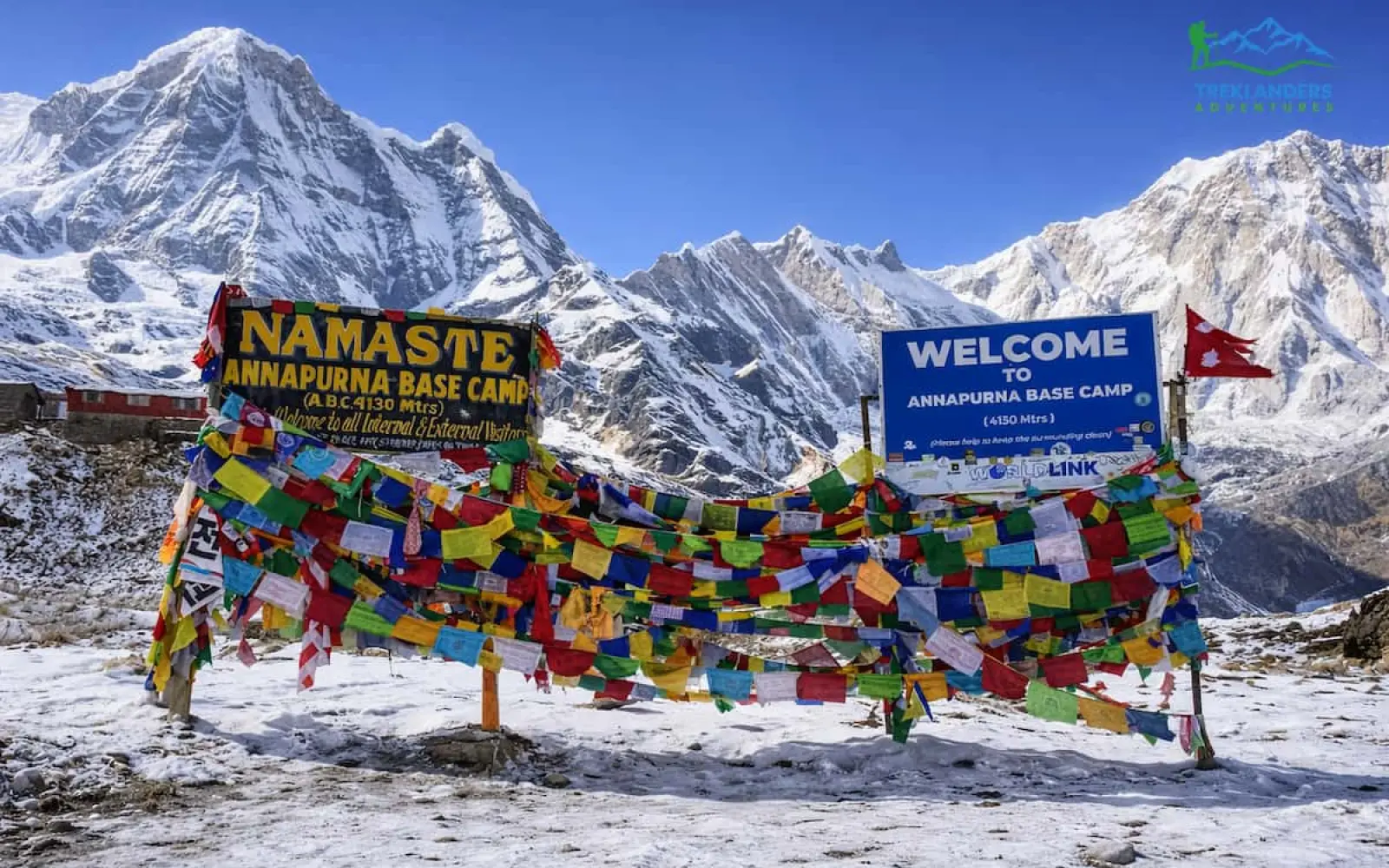
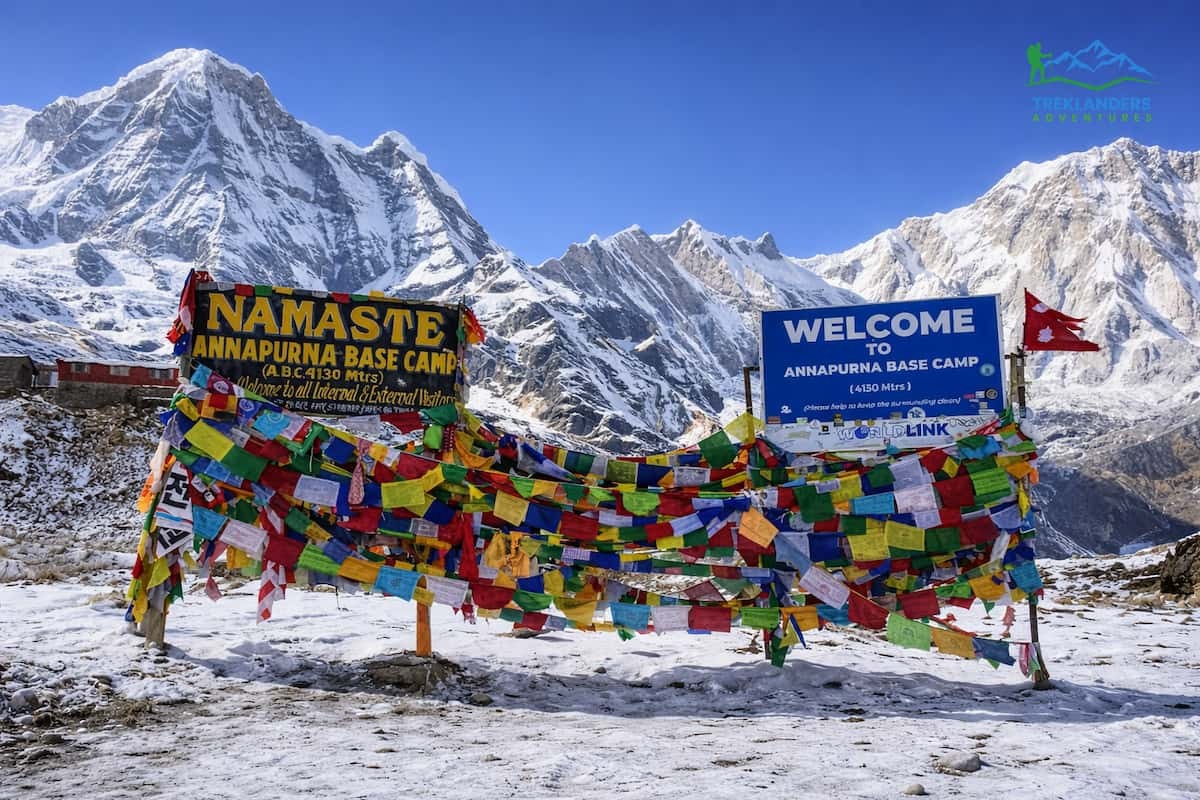
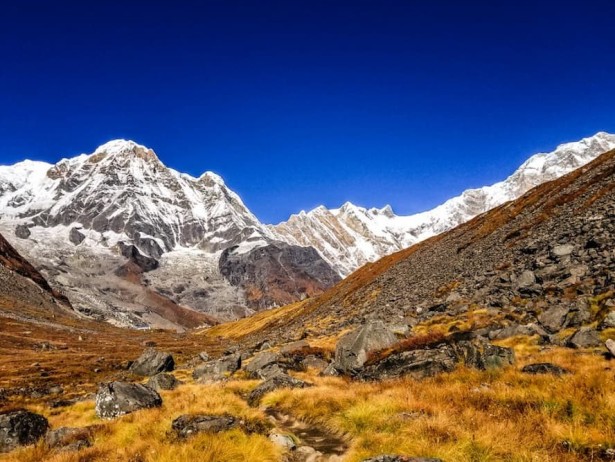
The trek to Annapurna Base Camp is, without doubt, one of the most phenomenal trekking experiences in Nepal. Annapurna Base Camp, situated at a high altitude of 4,130 meters, is an iconic point located in the midst of the Annapurna Sanctuary area, with the majestic Himalayan peaks of Annapurna I, Machhapuchhre, and Hiunchuli towering around. However, the trek is not only about reaching the base camp; it's about exposing yourself to various sceneries, cultures, and unforgettable mountain views.
The Annapurna Base Camp trek starts from Pokhara, a bustling city. The path first winds through lush rhododendron forests, stepped farmlands, and traditional Gurung and Magar villages. Along the way, trekkers experience generous hospitality, savor local cuisine, and gain deep cultural insight—making the journey profoundly rewarding, not just a destination. The route gradually ascends through highlights like Chhomrong, Bamboo, and Deurali, each with unique charm and striking scenery.
Admiring the changing sceneries from subtropical forests to alpine landscapes that you gradually reach higher and higher into the mountains is an integral part of the trek that cannot be missed. You can enjoy getting into shape at the natural hot springs of Jhinu Danda, and the sunrise views over the Annapurna range make for some of those beautiful, magical moments that will be etched in your memory. The area, in fact, forms a part of the Annapurna Conservation Area Project, which ensures the preservation of the area's rich biodiversity and natural beauty.
This complete trekker’s guide to Annapurna Base Camp is designed to help you explore the best things to do along the route. Whether you are a beginner looking for your first Himalayan adventure or an experienced trekker seeking breathtaking scenery, the Annapurna Base Camp trek offers something for everyone. From cultural encounters and scenic viewpoints to natural wonders and personal achievements, every step of this journey is filled with discovery.
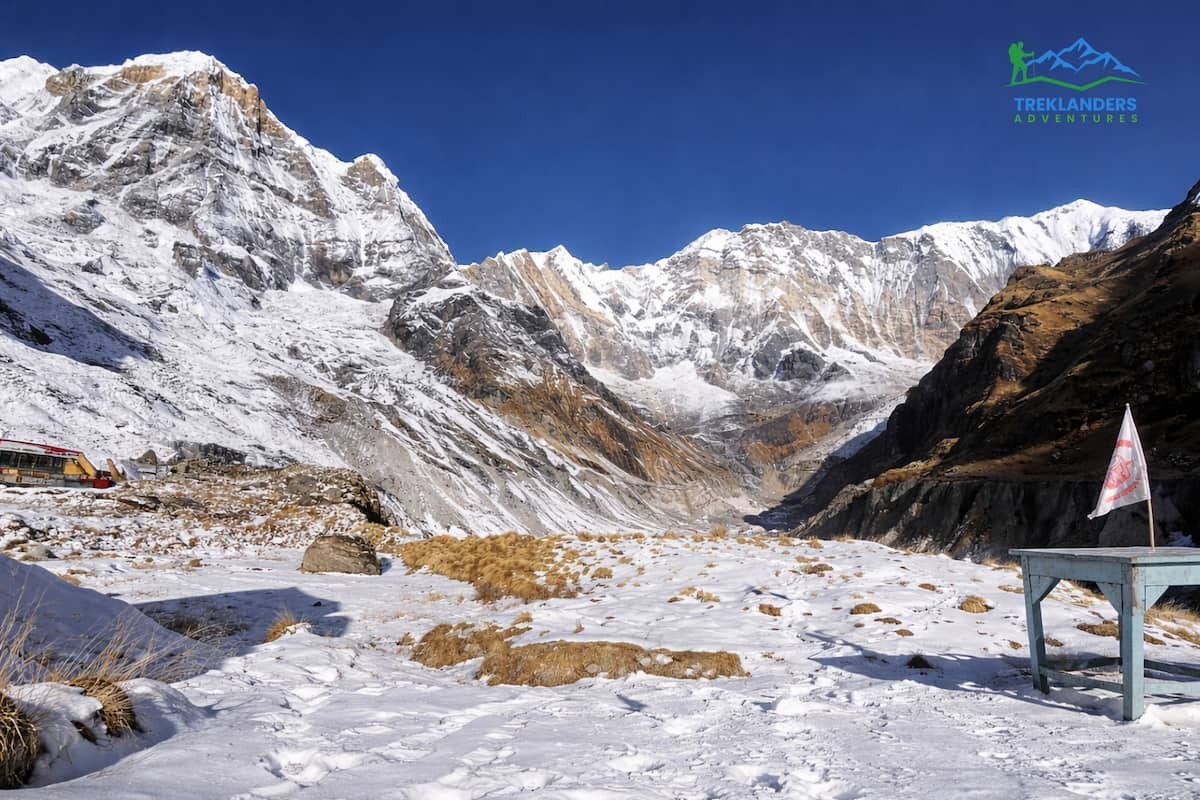
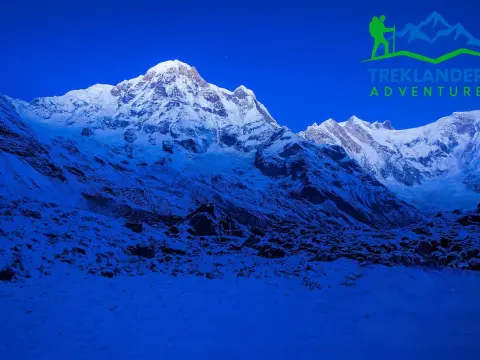
Breathtaking views of Annapurna South and Annapurna I from Annapurna Base Camp
The journey to Annapurna Base Camp is not just a mere journey of the body. It is a full immersion that brings you into contact with nature, culture, and yourself. The general perception is that it is merely a matter of reaching a high-altitude place by foot, but the truth goes far beyond that.
Firstly, the trek provides a deep cultural exposure. The residential areas along the way are mostly inhabited by Gurung and Magar ethnic groups who adhere to a simple and traditional lifestyle. You will be accommodated in local tea houses, served meals made from fresh produce, and introduced to their culture. Such face-to-face contacts enable you to get a true picture of the lifestyle of people living in the mountain regions of Nepal.
Secondly, the scenic beauty unfolds in different forms as you progress each day. Initially, the trail takes you through the green forests and rice paddies, then bamboo groves, and finally to the areas with snow-capped mountains. Your path will be encircled by monumental peaks such as Annapurna I and Machhapuchhre as you approach the base camp. The scenery is not only aesthetically pleasing but also induces a feeling of insignificance and, at the same time, peacefulness in you.
7-Day Annapurna Base Camp Trek from Pokhara | 7 days
Moreover, accomplishing the task itself is a huge factor. The altitude of 4,130 meters is quite a challenge. You will have to walk for a number of days, combat tiredness, and get used to the thinning air at high altitude. The moment you set foot at the base camp, a sense of pride will be yours. It is a source of assurance and psychological power.
The trek also allows you to step away from the world for a while. The internet is barely available, and there are hardly any distractions. You are mostly walking, thinking, and living in the moment. This break from the traditional life pattern refreshes your mind and lowers stress levels.
You also get to enjoy the basics of life. Having a cup of hot tea after a long walk, witnessing sunrise over the mountains, or simply lying on the grass near a river seems extraordinary. Such little things are etched in your memory even after the trek is over.
Actually, the Annapurna Base Camp is hardly just about getting to a point. It is about the expedition, the people you encounter, and the self-discoveries you make. That is the main reason it turns into a lifetime memory rather than a mere trek.
Top things to do during Annapurna Base Camp Trek
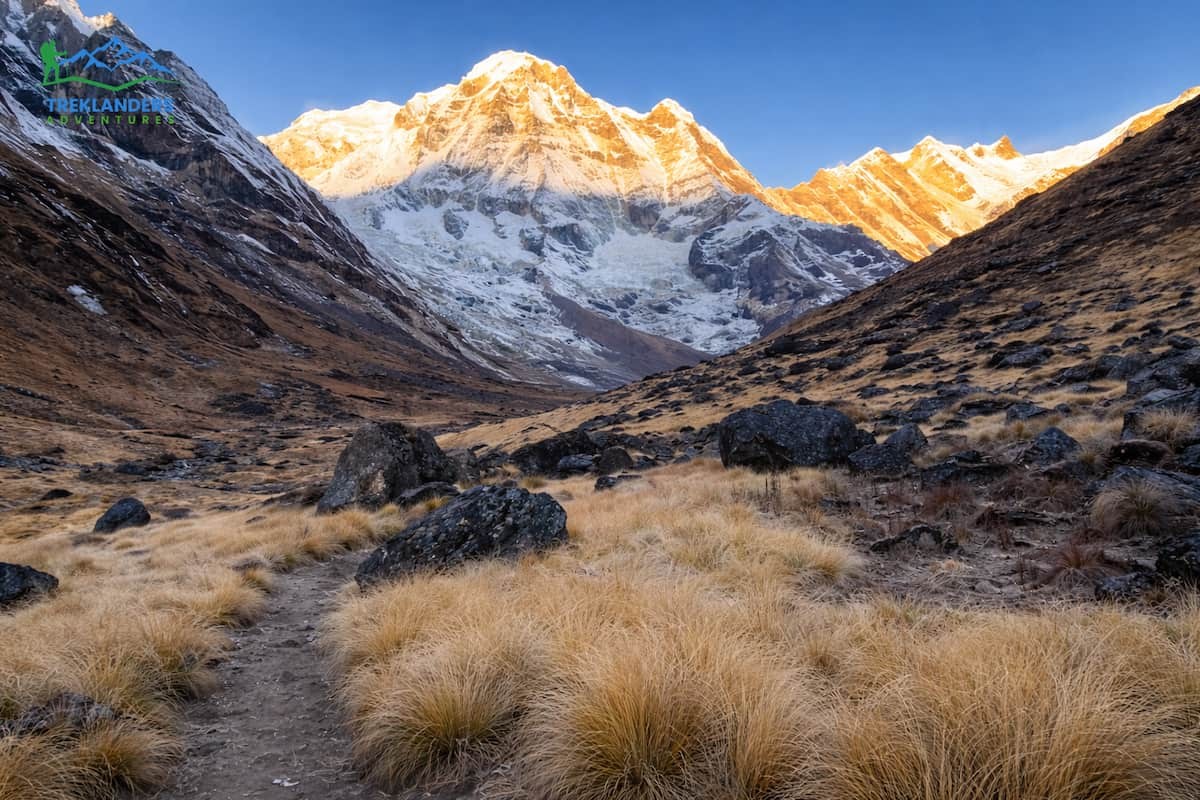
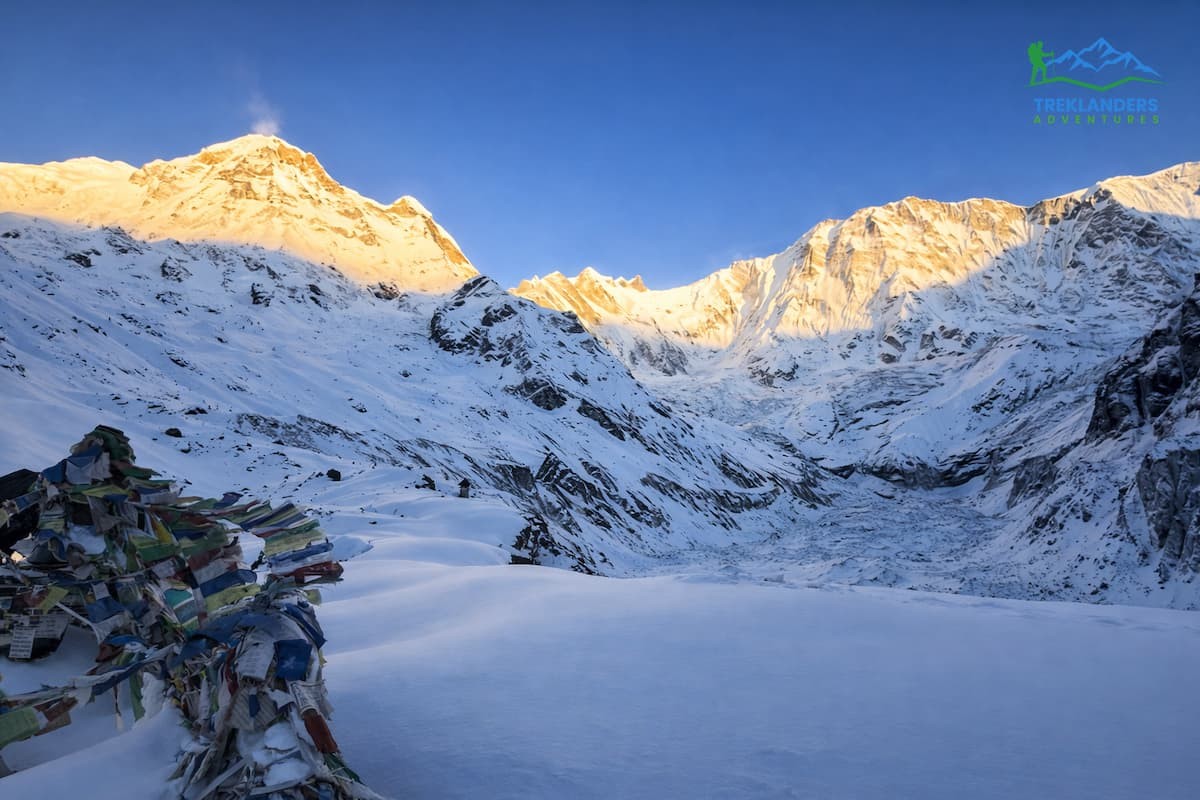
Sunrise viewing at Annapurna South
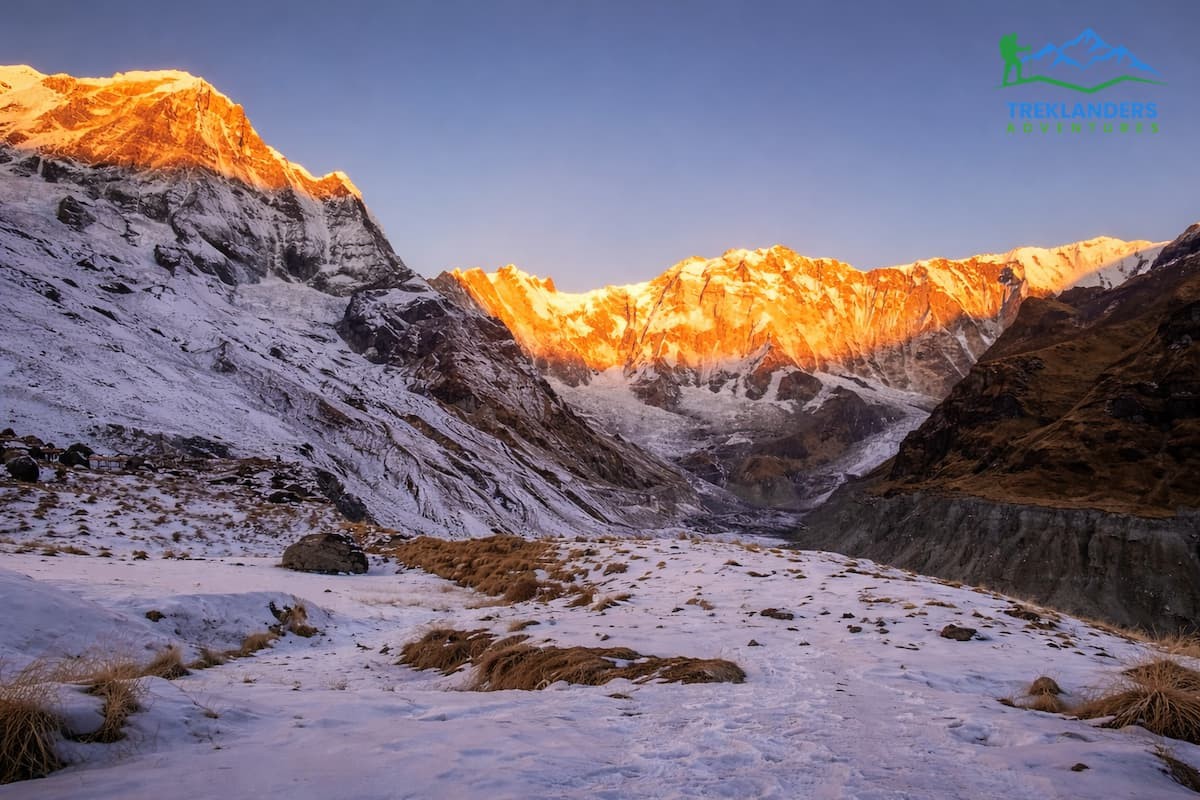
Breathtaking sunrise views over Annapurna South
Watching the sunrise at Annapurna Base Camp is a major highlight and a very special moment of the whole trek. Out of the several peaks visible from here, the sight of Annapurna South illuminated by the rising sun makes the trek an absolutely remarkable memory.
Normally, you have to get up very early, even before daybreak, when the sky is still pitch dark, and the temperature is extremely low. As you exit your lodge, you are presented with an extensive view surrounded by snow-laden mountains. Gradually, the faint glow of the sun starts to emerge from behind the mountain tops. Slowly, the mountains transition in color from dark grey to light orange and golden hues.
When the sun rays reach Annapurna South, the whole mountain lights up in a beautiful manner. This natural spectacle of light hardly lasts a few minutes, but it definitely feels like a fairytale. The blue sky, pure mountain air, and the quietude of the surroundings make the instant even more serene. Besides the main attraction, you also get to see other peaks like Annapurna I and Machhapuchhre from the Annapurna base camp.
The rising sun view is further enhanced by these beautiful mountains that serve as a perfect background. Most trekkers capture the moments with their cameras, but the true essence of the scene is best appreciated with one's own eyes.
Seeing the view is only a part of the experience. It also evokes a sense of serenity and joy. After a few days of trekking, such a tranquil and majestic scene upon waking undoubtedly justifies your efforts. This is also an ideal moment to think deeply and savor the time without any interruptions.
To make the most of it, you need to wear comfortable warm clothes and don't forget gloves for the cold mornings at high altitude. It is better to get up 20 to 30 minutes before sunrise in order to witness the changing colors.
A sunrise at Annapurna South offers a lot more than just a scenic view. It is, in fact, a calm & intense encounter, imprinting itself on your memory for a long time after your trek is finished.
Photography spots (Machhapuchhre, glaciers)
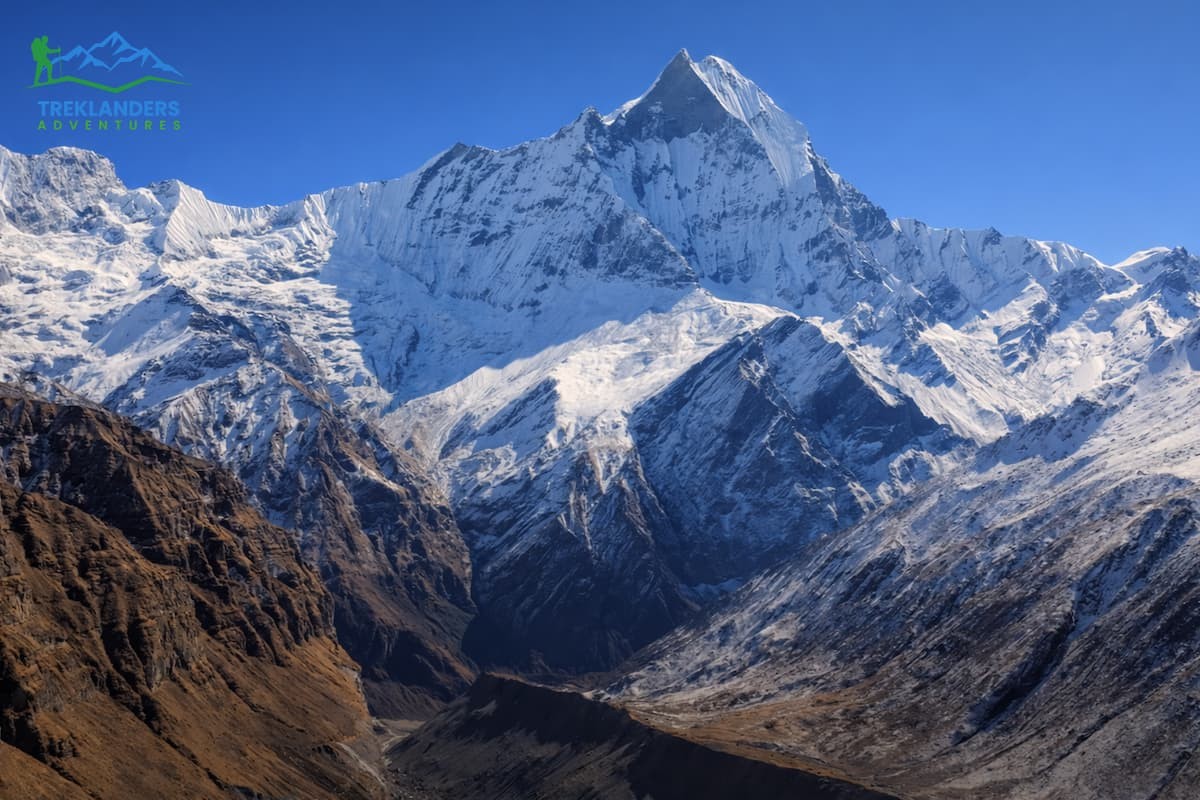
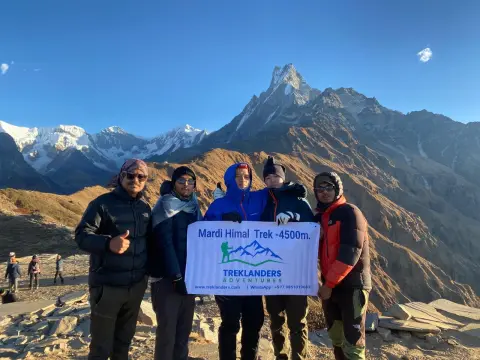
Machhapuchhre (Fishtail Mountain) seen on the Annapurna Base Camp Trek
One of the best moments to take photos of Annapurna Base Camp is during the photography. The site has mountain vistas, different terrains, and the changing light that can make the photos come out very beautifully. Machhapuchhre and glaciers are the top two walking photo subjects.
Machhapuchhre or Fishtail Mountain is among the most photographed peaks in the country. Its two summits, which are sharp and arranged in such a way that they look like a fishtail, are the main reason why this mountain doesn't look like others. The best moment to take photos of Fishtail Mountain is when the sun rises or sets. In the early hours, the light colors it a soft gold, while the evening creates an orange and pink glow that is deeper. When it is reflected on its snowy surface, the light adds depth to your pictures.
10-Day Ghorepani Poonhill with Annapurna Base Camp Trek | 10 days
In addition, Machhapuchhre Base Camp is also a good location. It is possible to see the mountain better and closer from here. As well as having the sky, mountains, and trail in your photos, the vast area allows you to take wide-angle shots. Also, it being less crowded than Annapurna Base Camp helps you in taking clean and peaceful photos.
Photographs of the glaciers surrounding Annapurna Base Camp will depict a totally different subject matter. These cold landscapes reflect the unspoiled grandeur of the Himalayas. It is possible to shoot ice cracks, water from melting ice, and the combination of snow and rock. Such kinds of details will make your photographs more appealing and distinctive.
Wide angle landscapes shots are perfect for this field. You might want to add people, paths, or cabins inside your picture to demonstrate the size of the mountains. This makes your images appear more genuine and impactful. Picking up the surrounding light is crucial, hence avoid taking pictures at noon when the sunlight is very intense.
The weather in the mountains is very changeable, so you can get different moods for a photo session. One can get inspiration for dramatic pictures from changing weather; gorgeous scenes can be created by blue sky, clouds, or even light snow.
Taking pictures at Annapurna Base Camp is more than just snapping photos. It is an art of knowing how to take a piece of memory that reveals both the essence of the Himalayas and the unadulterated beauty of the mountains.
Hot springs at Jhinu Danda
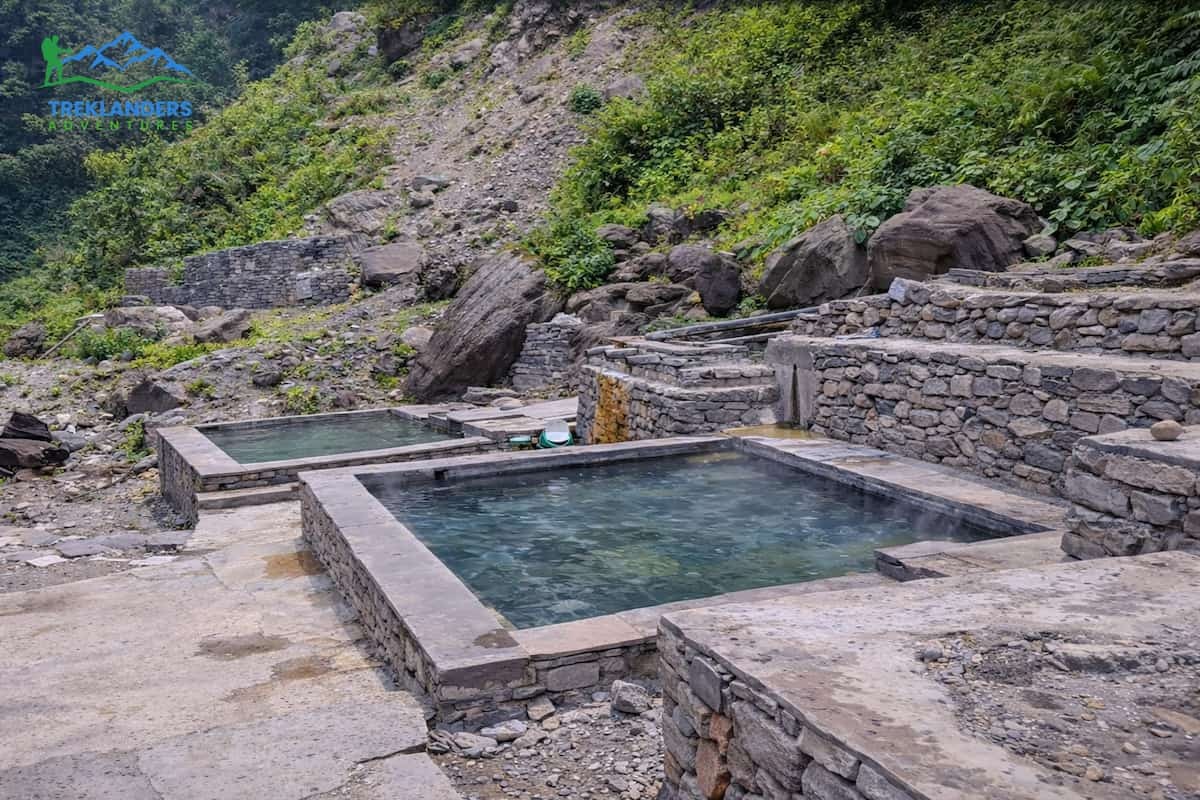
Hot springs at Jhinu Danda
The naturally heated springs located at Jhinu Danda are counted among the most refreshing features of the Annapurna Base Camp trek. After weeks of walking on the difficult trails, your body will have had enough. A trip to these hot springs will give you an excellent chance to unwind and recuperate.
They are approximately a 15-20 minute downhill walk from Jhinu Danda village, near the banks of the Modi Khola River. The trail is very well marked and easy to follow, but you will need to be careful while walking, particularly when returning uphill after your bath. The springs are natural, and the warm water is obtained from underground sources.
There are several stone pools for you to sit down and absorb the warmth of the water. The temperature is quite pleasant, especially in the cold of the mountains. Being in the hot water is one of the methods of relaxing muscle tension, relieving body aches, and encouraging blood circulation. Numerous trekkers refer to it as a natural therapy session after spending long days trekking.
Moreover, the location enhances the whole experience. You are surrounded by the green hills, the forest, and the sound of the river that keeps flowing. This serene atmosphere assists in making you feel relaxed and rejuvenated. It is a simple yet strong moment in the course of the trek.
The most suitable time to enjoy the hot springs' benefits is in the late afternoon, just after your arrival at Jhinu Danda, as that would allow you to unwind properly before dinner. Morning time can be considered if you want a quieter and more serene environment.
Besides a towel, a set of clothes is a must for you to bring. The changing rooms provided are very basic. A simple place to change is provided, but it is best to keep your valuables secure and not overexpose yourself to extremely hot water.
Jhinu Danda hot springs are beyond just bathing places. They offer you a moment of escape from the exertion of the trek and refresh both your body and soul. This is definitely one of those small but unforgettable moments that add to an already enjoyable experience at Annapurna Base Camp.
Cultural visit to Chhomrong village
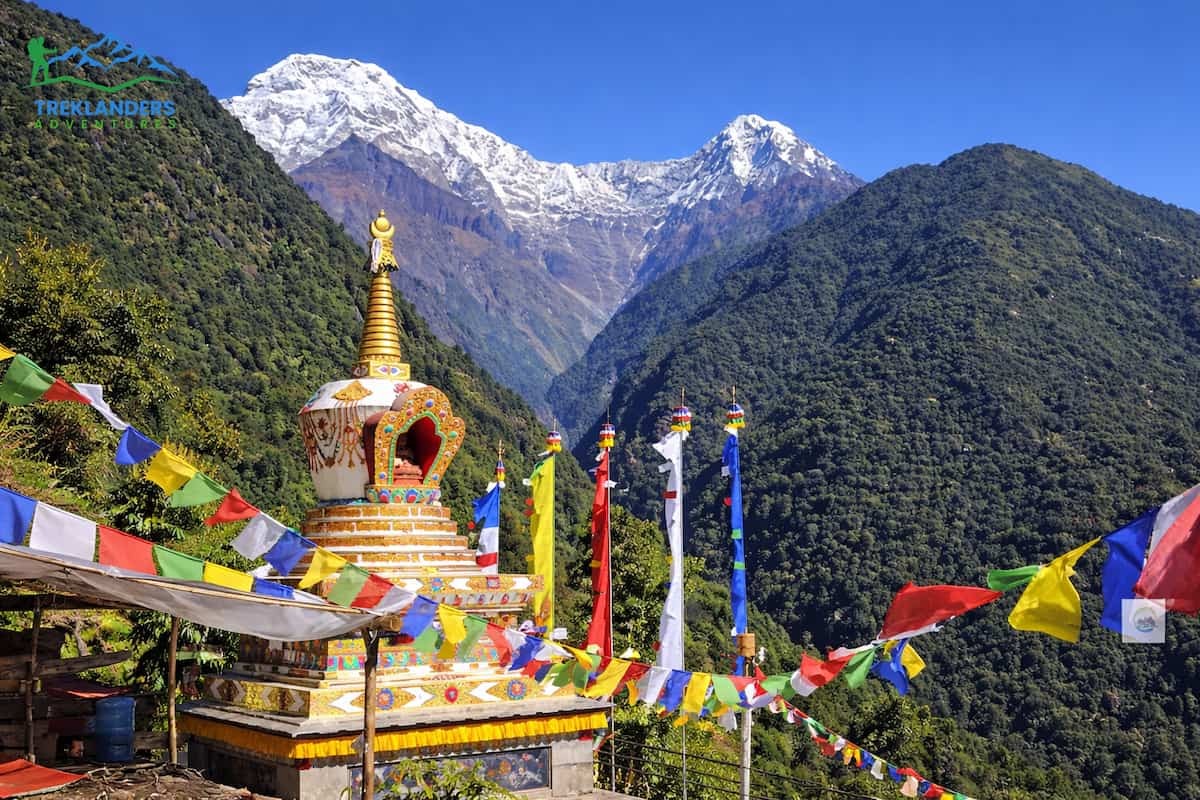
Chhomrong village
Going on a cultural visit to Chhomrong is a great way to add authenticity to your Annapurna Base Camp trek. Visiting this mountain village, which is situated at an important part of the trail and is also the one that gives you the most expansive view of Annapurna South and Machhapuchhre. However, besides its stunning views, it also allows you to get a very intimate view of the lifestyle of the locals who live in those regions of the mountains.
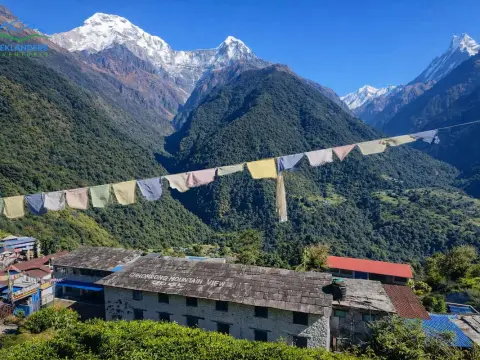
Since Chhomrong is predominantly inhabited by the Gurung community, the manifestation of their rich culture through their daily life, dwellings, and traditions is quite evident. You will be strolling along the stone lanes flanked by the old-style wooden and stone houses. You'll also look at the terraced farmlands where the local people cultivate rice, millet, and different kinds of vegetables.
The twin pillars supporting their livelihood are agriculture and trekking tourism. By lodging in a tea house, you gain a more intimate knowledge of this experience. These guesthouses are run by village members who not only provide basic accommodation facilities but also treat guests in a most gracious manner. For instance, locals serve you with a meal called dal bhat that comprises rice, lentil soup, and vegetables. The food here is not only tasty but also quite nutritious. Furthermore, joining the local individuals and fellow trekkers in the dining area is bound to give you a sense of camaraderie and make you feel quite at home.
4-Day Ghorepani Ponnhill Trek from Pokhara | 4 days
Little things that tell the culture of a place are all around you when you are in the village. For example, multi-colored prayer flags are seen fluttering in the breeze, and small temples or shrines that are found almost everywhere are believed to be the places where people worship or pay their respects to the divine. Thus, all these show the very soul of spiritual life in Nepal. If you make an effort to have a conversation with the locals, you will be introduced to their way of life, celebrations, and the ups and downs of living in a remote mountain top area.
A brief walk in the Chhomrong neighborhood will let you experience more of the village's soul. You will encounter schools, farms, and resting places where villagers socialize. Life is paced at a much slower rate, and the vibe is quite calm and centered. It's a great setting to step aside, watch, and interact.
Chhomrong is a significant point on the route leading into the heart of Annapurna Sanctuary. Hikers generally take a break here to gear up for their next segment. The co-existence of heritage, natural beauty, and local people renders the settlement a mere trail stop to be transformed into a trip highlight.
Journeying to Chhomrong unmasks the trek's human elements to you. It opens the door to a deeper and more connected experience in your travels.
Acclimatization walk above base camp
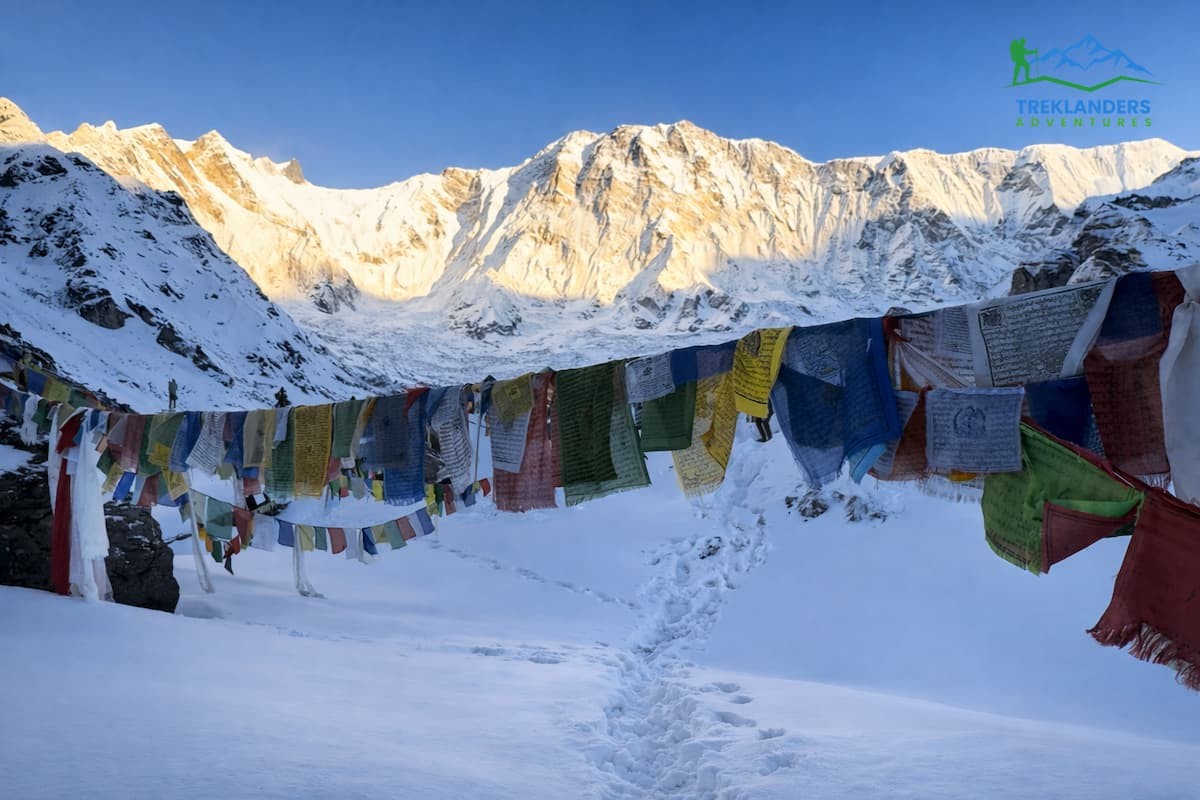
Sunrise views of the Annapurna range from Annapurna Base Camp
A walk to acclimatize yourself above Annapurna Base Camp is one of the simplest yet significant activities in your trekking schedule. Your body needs time to acclimatize to the lower oxygen level at an elevation of 4,130 meters. Only a quick walk to a higher spot and return will assist your body in getting accustomed well. In fact, this walk is generally arranged when you have just arrived at the base camp or very early the following day.
You keep your pace at the lowest possible level and decide to add only a bit more vertical distance above the camp. Often, towards small ridges or viewpoints within the Annapurna Sanctuary. The objective is not to cover a great distance or a high speed, but to allow your body to briefly get exposed to a higher altitude. While you are above the base camp, you promptly get extensive views of the neighboring peaks such as Annapurna I, Annapurna South, and Machhapuchhre. The scenery appears to be more spread out, and you have snow, ice, and rocky terrains surrounding you. These serene places are the least dotted with people, thus providing a tranquil spot for soaking in the mountains.
Moreover, a little trek like this one lowers the chances of you getting altitude sickness. If you implement the principle of climb high, sleep low, your body will have an easier time getting used to the changes. Just getting 100 to 200 meters more elevation during the walk may help. You must remember to put one foot in front of the other, rest when you need to, and drink water to keep yourself hydrated.
The experience is not only physical, but it is also mental. Walking in silence at high altitude, surrounded by massive peaks, gives you time to think and feel calm. Breathing clean air and enjoying panoramic views naturally lead to a deep feeling of communion with nature.
Since temperatures can fall rapidly, particularly early in the morning and late in the evening, it is advisable to dress in warm layers. Besides, suitable footwear and sunglasses are indispensable if you encounter snow and bright light.
An acclimatisation walk above Annapurna Base Camp may appear minimal, but it is a safety and experience factor that should not be underestimated. It allows your body time to get used to the surroundings, your comfort levels rise, and your enjoyment of the Himalayan scenery becomes a pleasure rather than a chore.
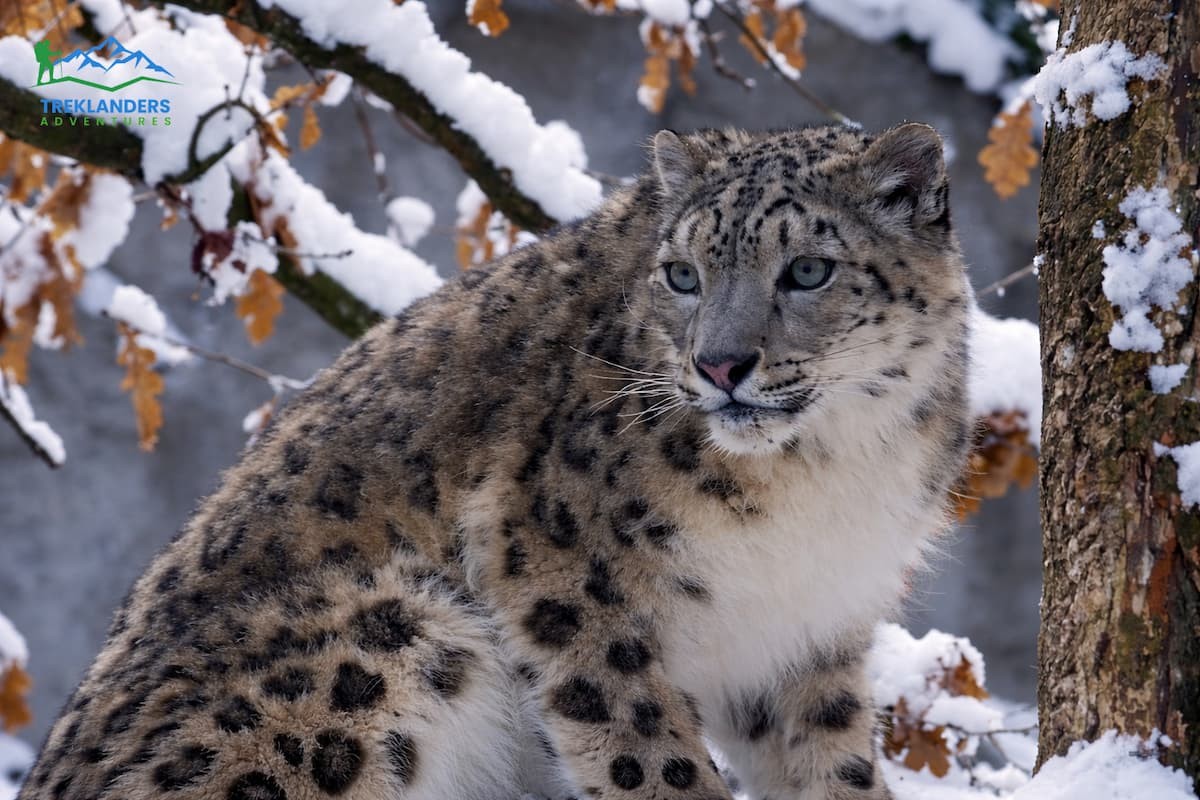
Wildlife spotting (snow leopard region)
Snow Leopard
Wildlife spotting around Annapurna Base Camp adds an exciting and unique layer to your trek. This region is a part of a protected area supporting a wide range of Himalayan wildlife. Sightings are never guaranteed, but the very possibility makes the journey more interesting. Besides the iconic mountains and fantastic views, the Annapurna region is known as a habitat for some rare animals, allowing people to witness them in their natural environment. One of them is the Snow Leopard.
This beautiful animal is very shy and lives in high, remote areas. It is hardly possible to see one in the wild, but knowing you are walking in its territory gives a thrill. Most of the time, these animals are spotted at higher altitudes several kilometers away from crowded trails.
Most probably, you will see Himalayan Tahr, which are wild goats living on mountain slopes. They often stay in herds and are quite visible when they are active during early morning or late afternoon. In lower forest areas, you may observe some langur monkeys, particularly around bamboo and rhododendron forests. The region also has a diverse variety of birds to offer to observation enthusiasts.
Occasionally, you can see them with bright colors like the Himalayan monal, which is the national bird of Nepal, among other species inhabiting trees. The sound of birds cruising around gives the feeling of tranquility to your hike progressing through the vicinity.
The best way to increase your chances of spotting wildlife is to walk quietly and stay alert. Avoid making loud noises, and keep your eyes on ridges, cliffs, and forest edges. Early morning is usually the best time, as animals are more active and the trails are less crowded.
You should also respect wildlife and keep a safe distance. Do not try to approach or feed animals. Using binoculars or a zoom camera helps you observe them without disturbing their natural behavior.
Even if you do not spot a snow leopard, the walk through its habitat will still be a memorable experience. The pristine environment, fresh air, and natural silence will connect you more deeply to nature.
Stunning winter views of the Annapurna range on the Annapurna Base Camp Trek
Finding the best season to visit Annapurna Base Camp will really be determined by what kind of activities you want to enjoy. Each season has some unique charm and features, so if you base your hiking schedule on this, you will be able to wander at your own pace and enjoy the things that interest you the most.
During spring (March to May), the weather is nice and stable, and the skies are mostly clear. This season is great for landscape photography, especially for capturing Machhapuchhre and other nearby peaks. The forests of rhododendrons are in full bloom, giving splashes of color to your shots. Wildlife encounters can also be more frequent as many species become active with the return of warm temperatures.
Autumn (September to November) is Nepal's peak trekking period. The weather is generally dry, and you can see very far into the distance. This happened to be the season when the marvelous scenes of sunrise over certain peaks of the Annapurna massif were captured. The blue skies that prevail at this time hardly ever fail to turn any viewpoint into a breathtaking experience. Cultural excursions to places like Chhomrong are also a good idea, as the locals are very lively after the summer monsoons, and you might find them more willing to share their stories, culture, and life with you.
Winter (December to February) can be a good time to go if you want a quiet and intimate experience with nature. There are fewer people on the trails, and snow-covered mountains make a very impressive sight. If you are one of those who prefer to keep clicking, then you should surely do it after dressing for the cold because you are going to get some really nice shots. Nevertheless, the winter snowfalls can be heavy, and at times the higher parts of the trekking trails become impassable, and locks are often closed. The sunrise views remain spectacular, though, but you should be prepared to suffer extreme cold at this time of the day.
Monsoon season (June to August) is generally considered the worst time for trekking. Besides the trails becoming slippery due to heavy downpours, the risk of landslides also goes up significantly. Besides, the mountain views are mostly covered with clouds; this makes both photography and witnessing the sunrise quite a problem. On the other hand, the scenery really turns out to be green and lush. Lower areas and cultural sightseeing can still be quite enjoyable, but high-altitude works are quite limited.
Depending on what you plan to do, the timing of the year will also be very important. For example, if you are keen on sunrise, then it is autumn and spring that are best because the skies tend to be clearer then. Hot springs at Jhinu Danda are accessible at any time of the year, but one might say that getting a soak after a trek is even more pleasant during the chilly months. Needless to say, acclimatisation walks and glacier views are quite safe when the weather is stable, for instance, in spring and autumn.
One of the important factors in deciding your trek time is safety. Besides, you will have clearer views and a greater chance of a pleasant overall experience.
Practical tips for your ABC visit
Annapurna Base camp Trek in Winter
1. Prepare physically
The trek involves long walks and steep climbs. Regular walking, jogging, or stair climbing before your trip helps your body adjust. Carrying a light daypack during practice hikes can prepare your muscles.
2. Pack wisely
Bring layered clothing for cold mornings and warm afternoons. Include waterproof jackets, gloves, hats, and sturdy trekking shoes. Sunglasses and sunscreen are essential due to the strong sunlight at high altitudes. Keep a small first-aid kit and personal medication.
3. Stay hydrated and eat well
Drink plenty of water during the trek to prevent dehydration. Eat regular meals at tea houses. Simple foods like dal bhat, noodles, and soups give energy. Carry snacks like nuts or energy bars for long stretches.
4. Respect local culture
Villages like Chhomrong are home to Gurung and Magar communities. Be polite, ask before taking photos, and follow local customs. Tea house owners and villagers are friendly, so treat them with respect.
5. Acclimatize properly
Altitude sickness is a risk above 3,000 meters. Take acclimatisation walks, rest when needed, and avoid ascending too fast. Recognize symptoms like headache, nausea, or dizziness and take action immediately.
6. Don't just rely on the trail markings
Trails can sometimes be quite confusing, even if you follow the signs. Tracks on a map or local guides will not only keep you safe and prevent you from making unnecessary detours but also offer interesting cultural and natural insights.
7. Take care of your gadgets
At high-altitude lodges, the possibilities for charging are quite limited.
8. Be environmentally conscious
Take away all your garbage, give up single-use plastic products, and be mindful that the wildlife is not disturbed. Responsible tourism is one of the pillars of the Annapurna Conservation Area.
9. Have a habit of getting up pretty early
You will be able to enjoy the more refreshing temperatures, and the mountain views will be clearer if you start walking in the morning. Furthermore, with an early start, you will comfortably be able to reach the viewpoints and the campsites.
Taking this sensible advice will make your journey to Annapurna Base Camp not only safer and smoother but also most memorable. With the right preparation, you can concentrate on the mountains, culture, and the one-of-a-kind Himalayan experience.
Conclusion
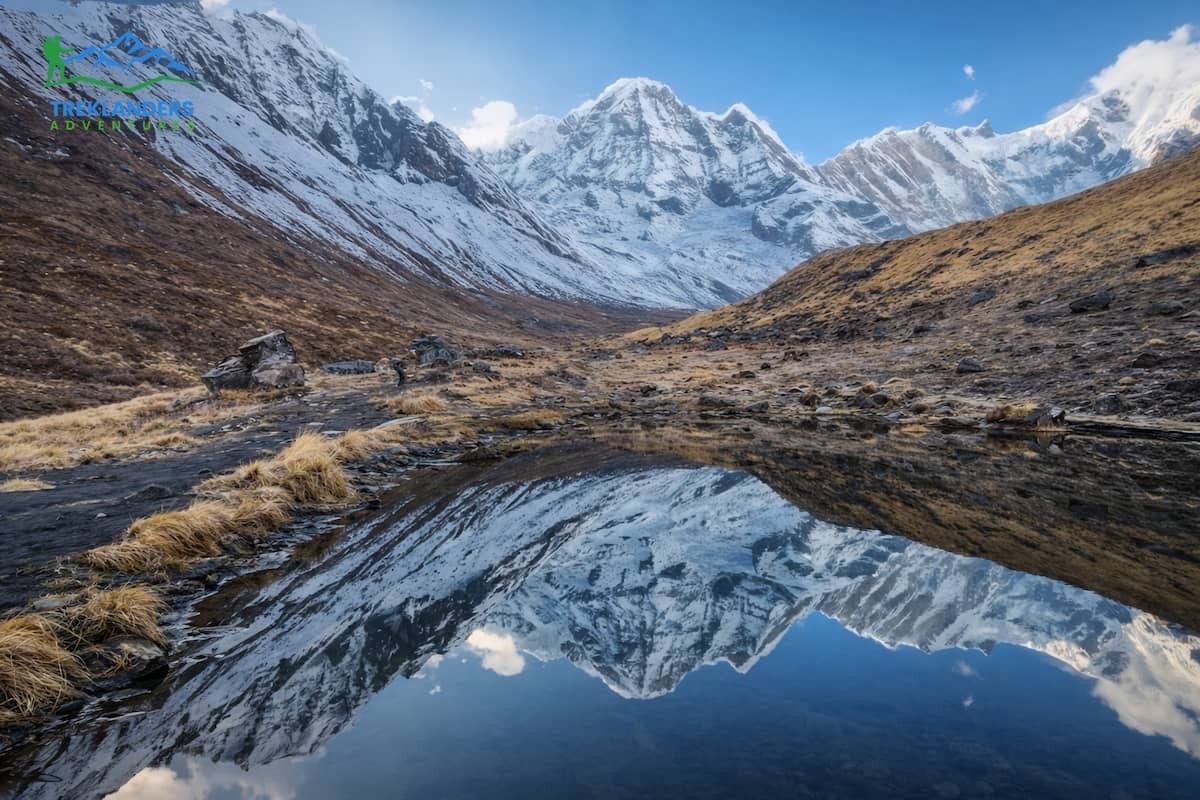
Breathtaking reflection of Annapurna South in crystal-clear water
The Annapurna Base Camp trek is not just a stroll through the Himalayas. It perfectly blends the elements of natural beauty, culture, adventure, and self- development into one incredible trip. Starting from Pokhara, the journey to the base camp itself is full of surprises. Along the way, trekkers come across dense forests, terraces, green fields, and flowing rivers, and after that, alpine landscapes and majestic peaks. Such a mix of scenery makes the trip not only thrilling but also extremely beautiful to look at.
Making it to Annapurna Base Camp is a proud moment. Traveling long distances in high altitude conditions challenges your physical abilities. Besides, it allows you to ponder and be thankful for your journey. The sunrise scenes above the peaks, such as Annapurna South and Machhapuchhre, present you with very special moments that are almost impossible to forget after the trek. Besides, the glaciers and mountain views also create excellent photo opportunities and allow you to keep the memory of the Himalayas' grandeur.
The addition of cultural experiences further enriches the trek. Exploring places like Chhomrong offers you a glimpse of the life, cuisine, and warm welcome by the Gurung and Magar communities. Engaging in local tea house stays, sharing meals, and watching the daily life helps you connect with the people living in these mountains. This type of interaction turns the trek from a mere sightseeing into a meaningful learning experience.
Activities such as enjoying hot springs at Jhinu Danda, acclimatization, and general physical challenge are well-balanced by activities like visiting local hot springs at Jhinu Danda and walking or wildlife spotting. Besides providing us with rest and recovery, they help us find new, fresh energy to walk in challenging mountains. As a whole, these activities are also safe and enjoyable.
You plan your trek by looking for the best seasons, taking the right gear, and referring to the tips that you will find on the web. That way, you will be able to guarantee that your journey is safe and that nothing will stop or limit you. Altitude should be your concern as well. You need to be cultured and not only know the best ways to acclimatize yourself but also to respect locals who are extremely friendly, as well as being environmentally friendly, which will make for a responsible and rewarding trip.
In the end, the Annapurna Base Camp trek is not just an experience but a memory that you carry with you forever. Physically, it pushes your limits; mentally, it gives you fresh ideas; spiritually, it brings you closer to nature and culture. Every moment, every scene, every step, and every face you come to know can be etched in your heart and become part of your story. This is a Himalayan adventure that you will never forget, a complete set of remarkable experiences and memories.