
Annapurna Base Camp Trek: Autumn vs Winter – Which Season Is Best for You?
4 Apr 2026
Autumn vs winter for Annapurna Base Camp Trek—compare weather, safety, and experience to choose the best season in Nepal.

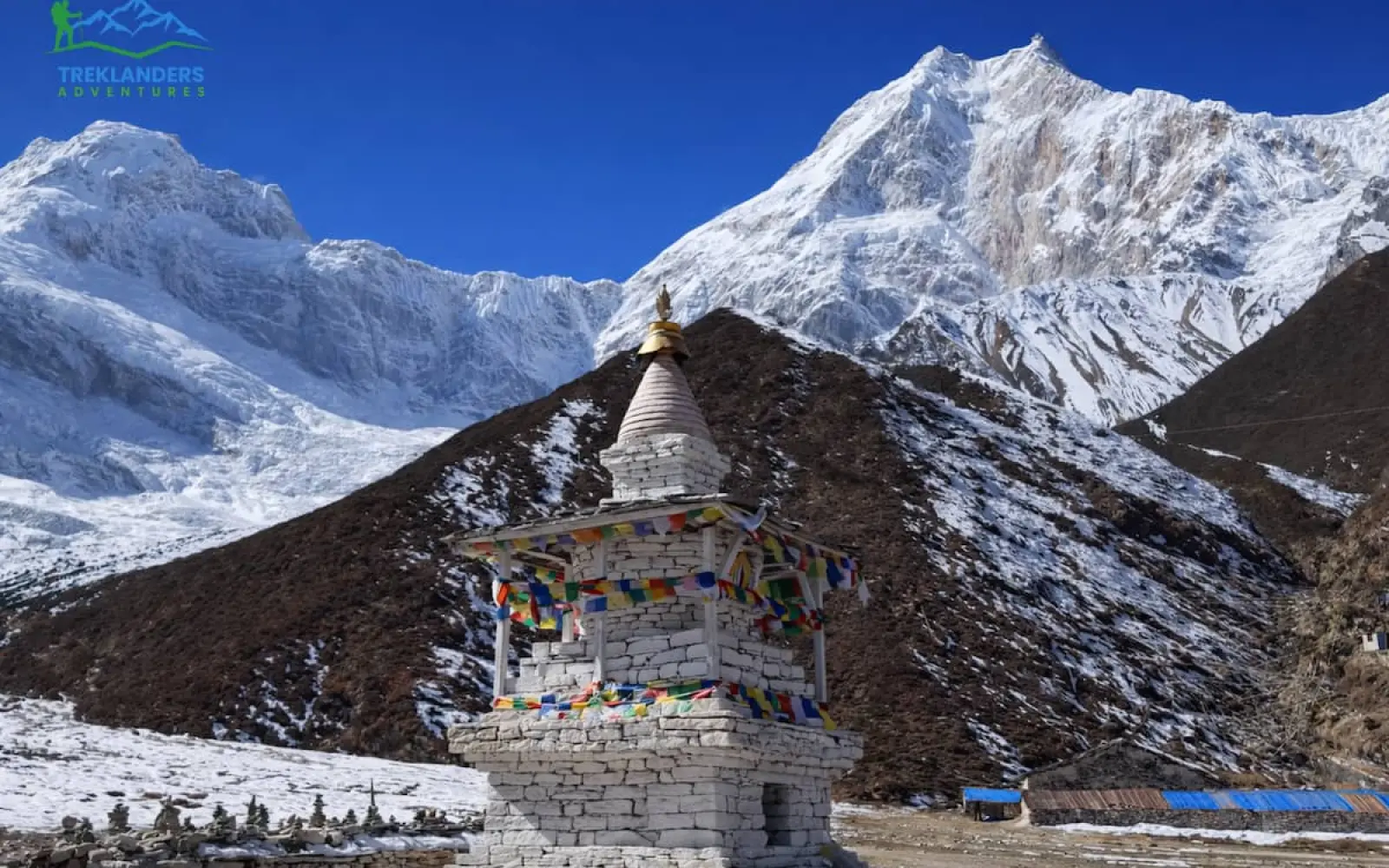
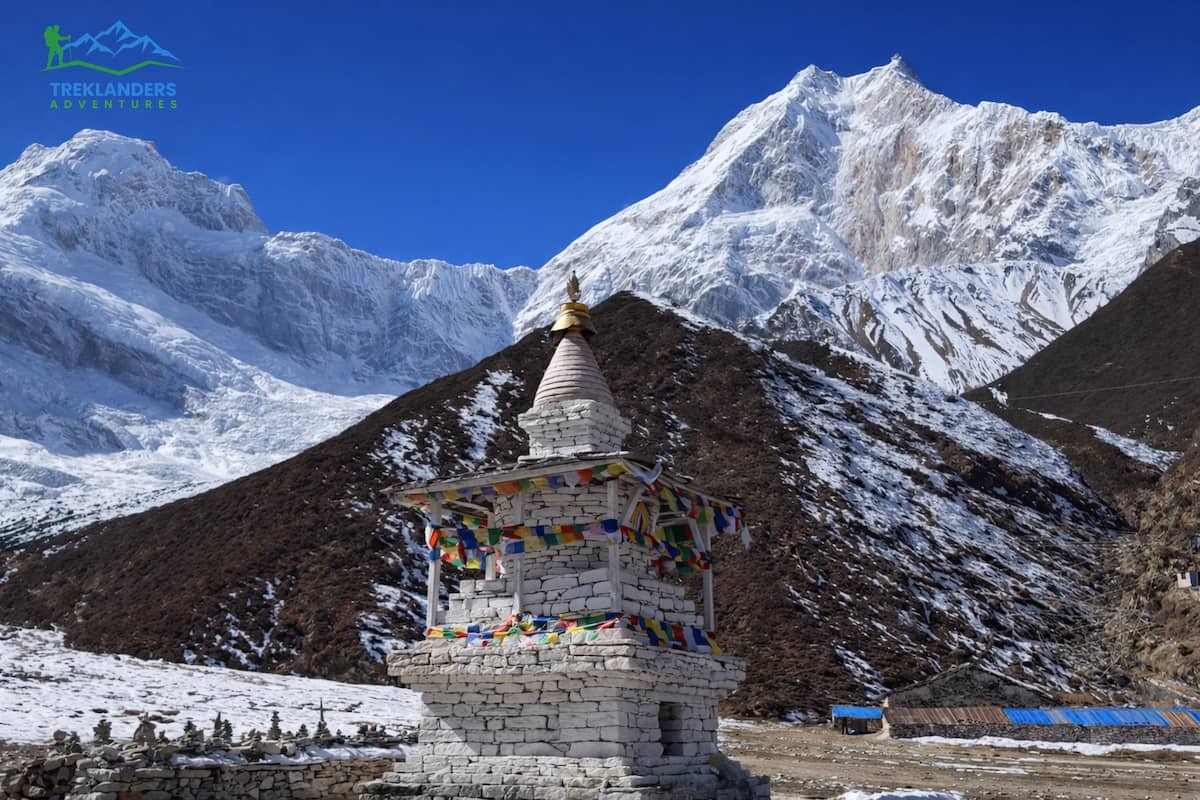
The Manaslu Circuit Trek is a secluded hike in the Himalayas of western Nepal. It loops around Mount Manaslu, the 8,163-meter-high peak. The pathway follows the Budhi Gandaki River, and the high Larkya La Pass, at 5,106 meters, is crossed.
Your journey begins in low-altitude villages decorated with rice terraces. After that, you continue through forests, narrow gorges, and alpine terrain. The scenery changes rapidly. You steadily ascend, which also serves to acclimatize you.
The trek also has ample opportunities for cultural immersion. You come across villages with Gurung culture and Tibetan influences like Samagaun and Samdo. You will be able to admire the monasteries, prayer flags, and traditional stone houses. This trek is less popular than the Everest Base Camp or Annapurna Circuit routes. You enjoy a quieter path and more wilderness.
The entire circuit lasts 14 to 18 days. It is physically demanding and requires at least basic trekking experience. A special restricted-area permit must be obtained, and it is compulsory to have a licensed guide while trekking. You make this trek for solitude, untamed nature, and genuine mountain life.
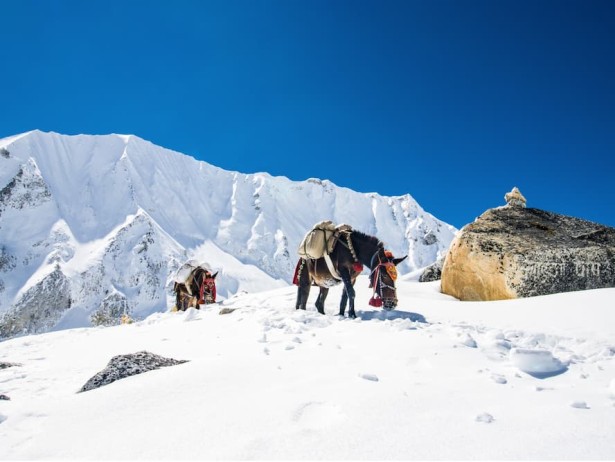
Generally, it can take anywhere from 12 to 18 days to finish the Manaslu Circuit Trek. Your speed, need for acclimatisation, and different route options will all determine how long you take. Most typical plans consider a day-long drive from Kathmandu to Soti Khola or MachhaKhola as the start. After that, you can expect to be trekking in the Manaslu area for about 10 to 12 days.
In general, trekkers opt for one acclimatisation day minimum at Samagaun to help their bodies cope with the elevation. This is crucial as you are preparing for the Larkya La Pass at 5,106 meters, the highest point of the trek. The pass day itself is lengthy and quite challenging, and it is one of the main factors affecting the overall duration of the trip.
There is no denial that the trek can be compressed to about 12 to 13 days at an aggressive speed; however, the resulting higher physical strain and the greater risk of altitude sickness are not worth it. The majority of trekkers would be better served with a more extended itinerary of 15 to 17 days. This way, you can ascend slowly, get sufficient rest, and have a more secure journey.
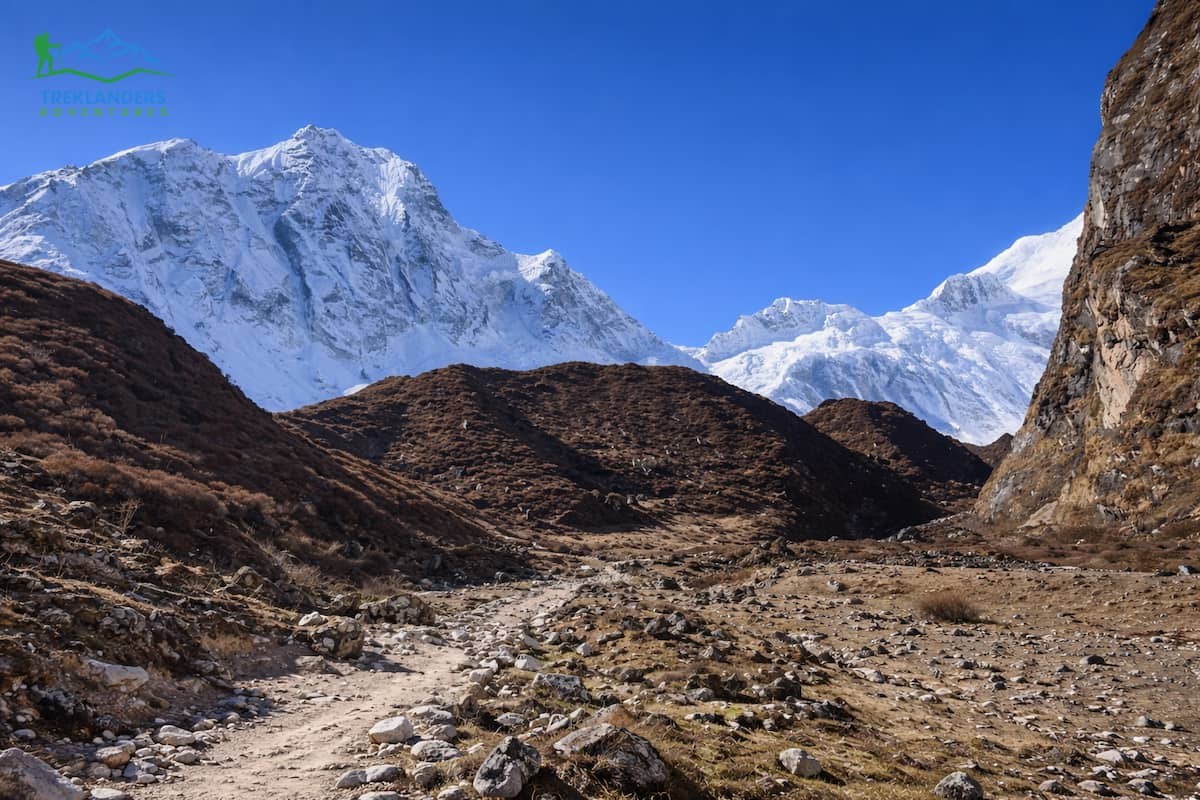
Starting strong means tackling tough terrain early. Rough trails stretch far across isolated regions. Crossing Larkya La Pass comes midway, sitting high at 5,106 meters. Each day brings between five and eight hours of steady movement. Seventeen days might hold the full journey, sometimes fewer. Steep climbs mix with uneven stone underfoot. Beginners find little room here for comfort. Long stretches test both body and patience. High elevations shape much of what lies ahead. Altitude hits hardest here. Moving upward fast pushes your body hard - that is when mountain sickness can start.
Time spent adjusting matters a lot. Because the path stays far from towns, help takes longer to arrive if problems happen. Footing gets tougher here compared to well-known routes such as Everest Base Camp or the Annapurna trail. When you're close to the pass, the weather jumps in with sudden shifts, making things harder without warning. Fitness matters most here - anyone used to tough climbs might find it doable.
Hiking several hours across rough ground needs to feel normal by now. Months of steady prep, two or three at minimum, ought to already be part of your routine when the trip begins. A first taste of thin air helps when tackling steep trails later. When training feels routine, confidence grows alongside stamina on paths like Manaslu. Though rugged underfoot, the journey rewards steady pacing and clear thinking.
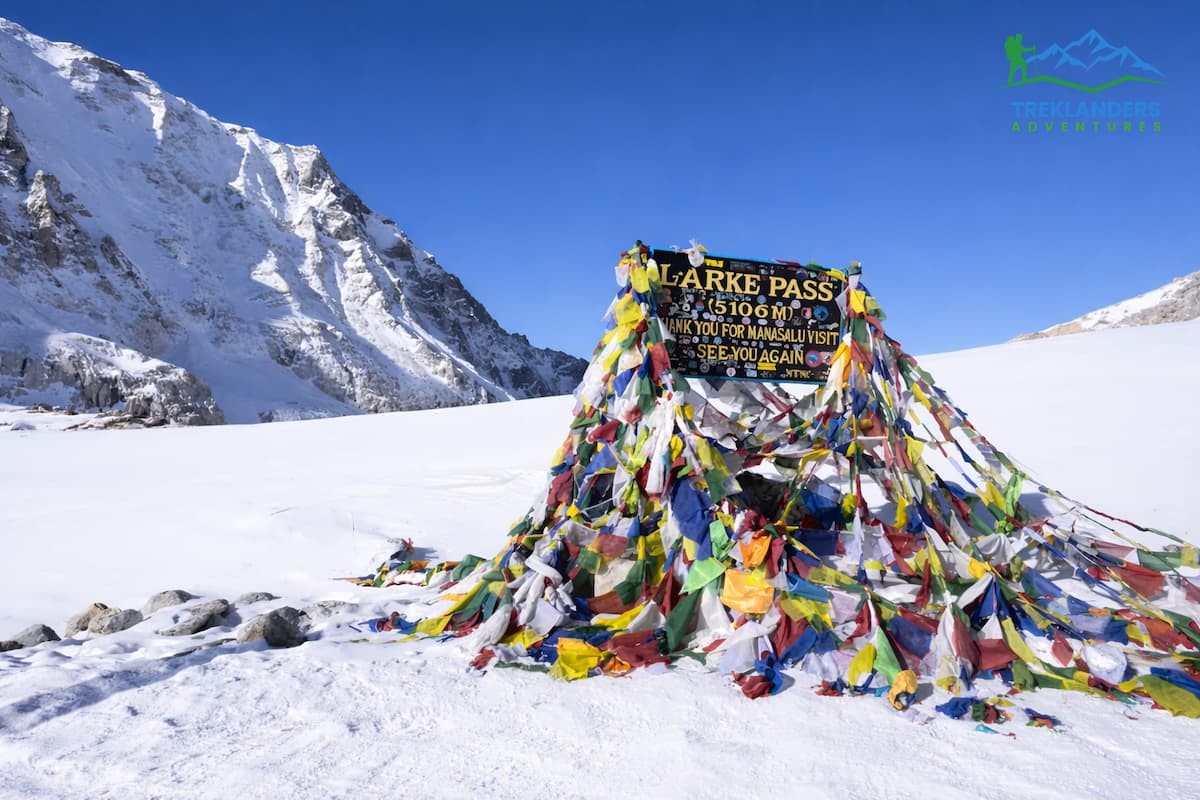
The highest point reached during the Manaslu Circuit Trek is the Larkya La Pass at 5,106 meters (16,752 feet). This is the pass you will cross on the hardest day of the whole trek, usually around day 13 or 14 of the traditional schedule. Generally, the Larkya La Pass crossing starts very early in the morning, before dawn, around 3 to 4 AM. You will walk in cold, dark conditions for a long time before reaching the summit.
The descent from the pass is very steep and long, so it is a complete day of tough trekking, often 8 to 10 hours in total. At 5,106 meters, the air is very thin. Your breathing becomes more difficult, your body runs out of energy faster, and there is a real risk of getting altitude sickness. You should be well acclimatized before going for the pass crossing. Most travel plans involve a rest day in Samdo or Dharmasala that is used only for acclimatisation. The scenery at the pass is magnificent.
You get to see Manaslu (8,163m), Himlung Himal, Cheo Himal, and several other peaks that surround you. The Larkya La Pass crossing is the physical and emotional highlight of the Manaslu trek. Getting to the pass after several days of continuous climbing makes it one of the most satisfying moments on the trail.
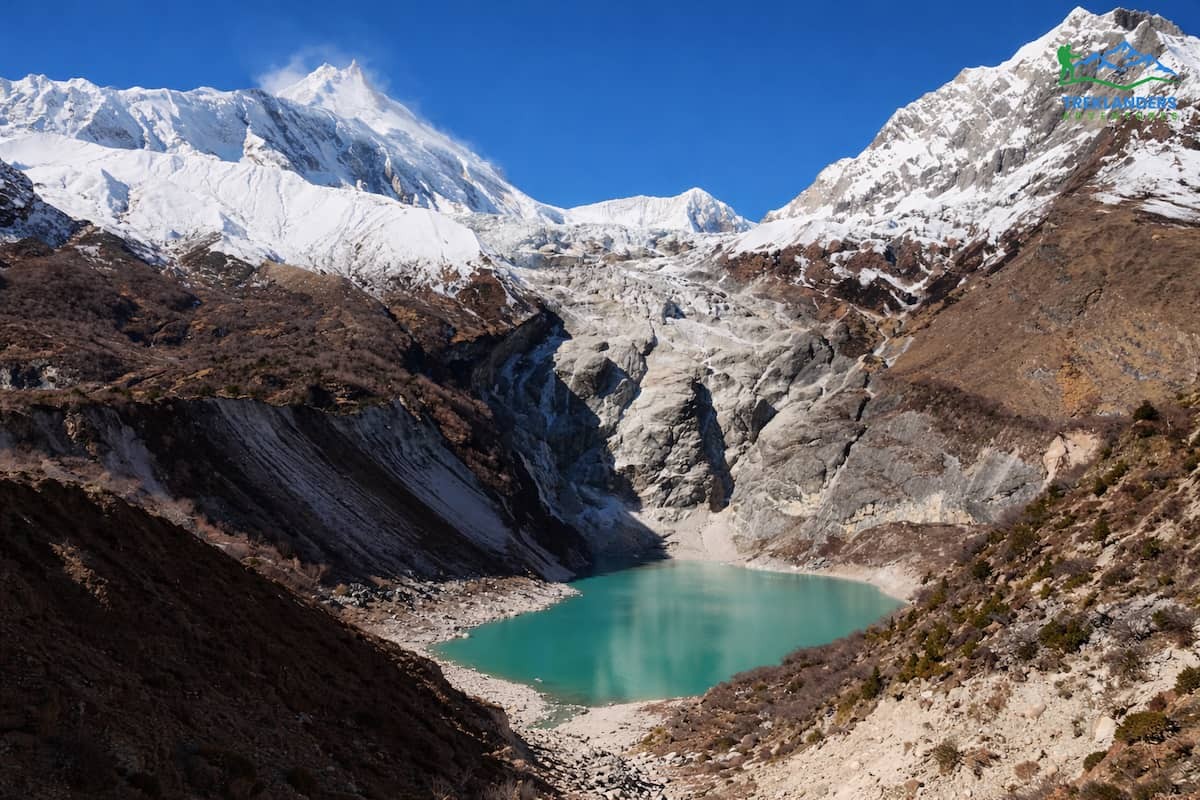
You have to decide what kind of trekking experience you want. Both treks are excellent, but they give you quite different vibes. The Manaslu Circuit Trek is far from the beaten path, very natural, and less touristy. You are travelling through restricted areas where there are fewer trekkers, traditional Tibetan-influenced villages, and the trails seem untouched. The feeling of being cut off from the world is very strong. It's common to have no contact with large groups for several days, which makes the experience more personal and deeper. The Annapurna Circuit is more reachable, better developed, and easier for an independent trekker to organize.
The teahouses are of a higher standard, the paths are well-marked, and the facilities are stronger. It is the right choice for trekkers who want a high-altitude experience but do not want to deal with the logistics of an area that is by permit only and requires a guide. Manaslu Circuit is more difficult to arrange, costs more because of the permits, and a licensed guide is legally required. Annapurna Circuit provides more choice and liberty.
Firstly, if you are after peace, nature in its raw state, and a genuine adventure in a place hardly anyone has been to, then Manaslu is the one. Secondly, if you want comfort, better facilities, and easier planning, then Annapurna is the one. Most trekker veterans who have been on both treks place Manaslu as the one that holds the memory best, simply because it is the more difficult and remote one.
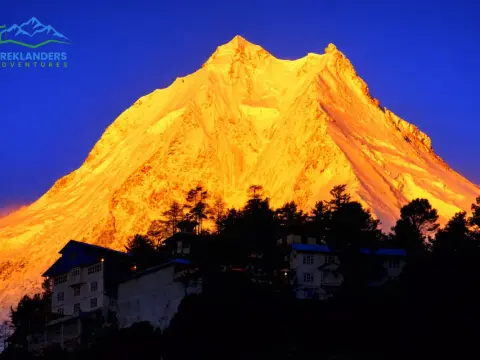
To do the Manaslu Circuit trek, you need to obtain three different types of permits. Each permit is compulsory and will be verified at multiple checkpoints during the trek. The first one is the Manaslu Restricted Area Permit (RAP). It is the primary permit for this area since Manaslu is a restricted area, and entry is not allowed without this permit. The authorities will be very strict in checking this permit at every entry point and along the trail.
The second permit is the Manaslu Conservation Area Permit (MCAP). This is for supporting the conservation activities of the area. You need this permit even if you take any of the alternatives within the Manaslu area. The third permit is the Annapurna Conservation Area Permit (ACAP). The reason you need this permit is that the trek follows a path that enters the Annapurna Conservation Area after going over the Larkya La Pass toward Dharapani.
You can get all three permits in Kathmandu through a registered trekking agency. It is not possible to acquire them on your own at the starting point of the trail. Under the laws of Nepal, you are required to have a licensed guide with you for this restricted area; therefore, your agency will take care of the permit part as a component of their service. Always have paper copies of all permits with you. If you lose them on the trail, there will be difficulties when you are at the checkpoints.
All three permits for the Manaslu Circuit Trek can be obtained in Kathmandu. This city is the most dependable and suggested place to get your permits arranged before starting the trek. The Manaslu Restricted Area Permit (RAP) is issued by the Department of Immigration in Kathmandu. Nevertheless, since Nepalese legislation mandates you to be accompanied by a licensed guide while trekking in this restricted area, your authorized trekking agency will get this permit for you.
Manaslu Conservation Area Permit (MCAP) and the Annapurna Conservation Area Permit (ACAP) are issued by the Nepal Tourism Board office in Kathmandu. Your trekking agency will take care of these for you as part of their service. You cannot get these permits on your own, either at the trailhead or at any checkpoint along the route. The punishment for trying to enter the restricted area without the proper permits is a fine and being sent back.
By providing your trekking agency with your passport copy, passport-sized photos, and your travel insurance details well in advance of your departure date, you can make sure your permits are processed without any delay. If you book last minute, agencies in Kathmandu can process permits within one to two working days. Make a plan for peak seasons like October and April when the demand will be higher, and the processing may take longer.
No, you are not allowed to do the Manaslu Circuit Trek without a licensed guide. Nepalese law compels foreign trekkers to hire a licensed guide in the Manaslu restricted area. This is not just a suggestion or a recommendation; it is a legal requirement. Authorities strictly implement the rule. If you are caught trekking without a guide, you will be fined and removed from the restricted area immediately. Besides, your permits will not be valid if there is no guide associated with your group.
Also, it is mandatory to obtain a minimum group size of two trekkers for the Manaslu Restricted Area Permit. Solo trekkers have to either join a group or hire a second trekker to meet the requirement. A few agencies may also unite solo trekkers for this purpose. Besides a legal obligation, one may consider a guide in the Manaslu Circuit for practical reasons. The path in the remote terrain is only sparsely marked, the weather is often unpredictable, and rescue facilities are limited.
Your guide is licensed, possesses the knowledge of the route, speaks the local language, and can act quickly in case of an emergency. Hiring a porter is optional but highly recommended. The path is long and the physical effort considerable. Carrying a heavy pack while crossing Larkya La Pass at 5,106 meters in height can add substantial physical strain to an already difficult day.
Yes, the Manaslu Circuit Trek is located in a government-designated restricted area. The main purpose of this restriction by the Nepal government was to conserve the region's delicate ecosystem, preserve the distinct Tibetan-influenced culture and control the number of trekkers entering the area annually. The restricted zone starts at Jagat, a village in the Gorkha district. At this point, all trekkers are required to have a valid Manaslu Restricted Area Permit (RAP).
These permits are checked at various checkpoints along the trail, so it is necessary to carry them at all times. This restriction also means that independent trekking here is not allowed. By law, a licensed guide is compulsory, and to obtain the permit, a minimum group size of two trekkers is required. These regulations apply to all foreign nationals without exception. In fact, being a restricted area is one of the biggest plus points of the trek. It restricts the number of trekkers on the trail, thereby keeping the route uncrowded, the villages authentic, and the environment still quite pristine.
You get a version of the Himalayas that is quite different from the more commercialized trekking routes in Nepal. If you have been trekking freely on open routes like the Annapurna Circuit, the permit and guide requirements of the Manaslu region will change how you plan and budget for the trek.
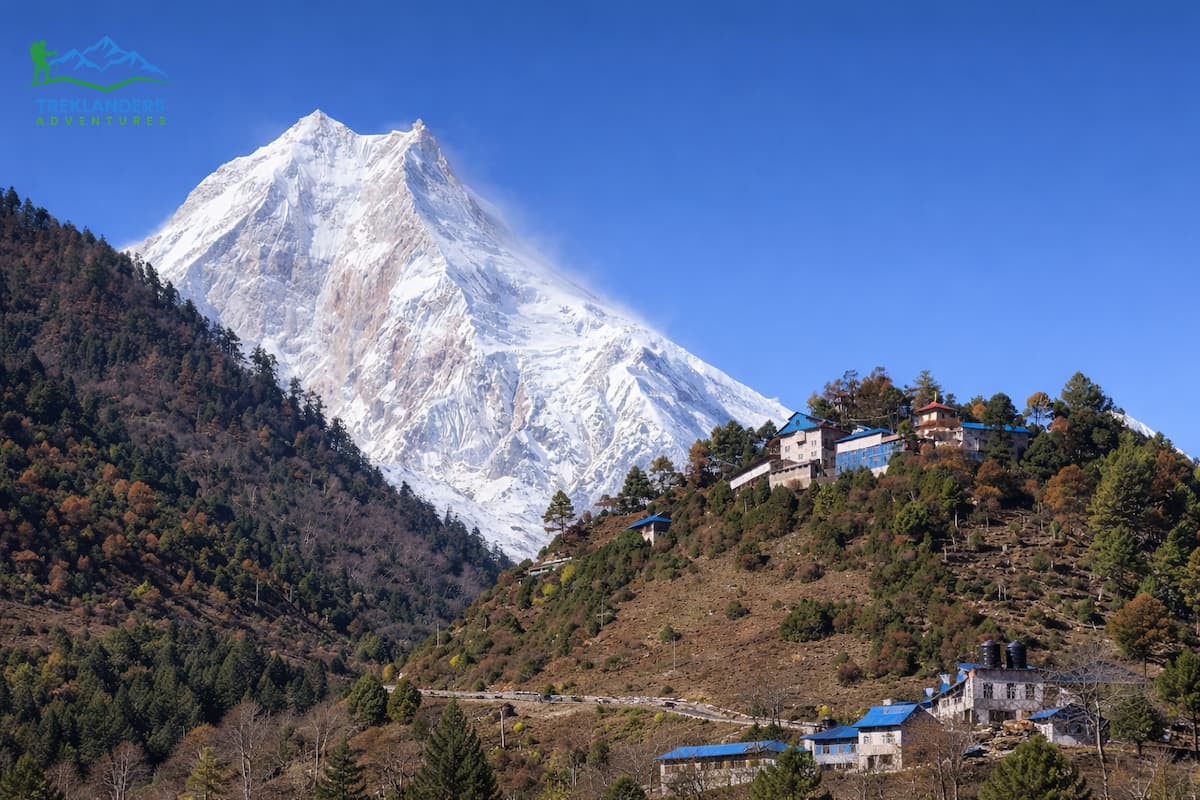
The best time to do the Manaslu Circuit Trek is during spring (March to May) and autumn (September to November). These two seasons offer the most stable weather, clearest skies, and safest conditions for crossing the Larkya La Pass.
Autumn is the most popular season. September and October bring dry weather, excellent visibility, and moderate temperatures on the trail. The mountains are clear of monsoon clouds, making this the best time for views. November is still good, but it gets colder, especially at higher elevations.
Spring is the second-best option. March and April offer warming temperatures, blooming rhododendron forests, and stable trail conditions. May is manageable but brings increasing cloud cover as the pre-monsoon builds.
Monsoon season runs from June to August. Heavy rainfall makes trails slippery, landslides are common, and leeches are a constant issue on the lower sections. Visibility is poor, and the Larkya La Pass crossing becomes significantly more dangerous. Most experienced trekkers avoid this period.
Winter trekking from December to February is possible but challenging. Temperatures drop severely at high altitude, and the Larkya La Pass can be blocked by snow. Only well-equipped and experienced trekkers should attempt it during these months.
For most trekkers, October is the single best month on the Manaslu Circuit.
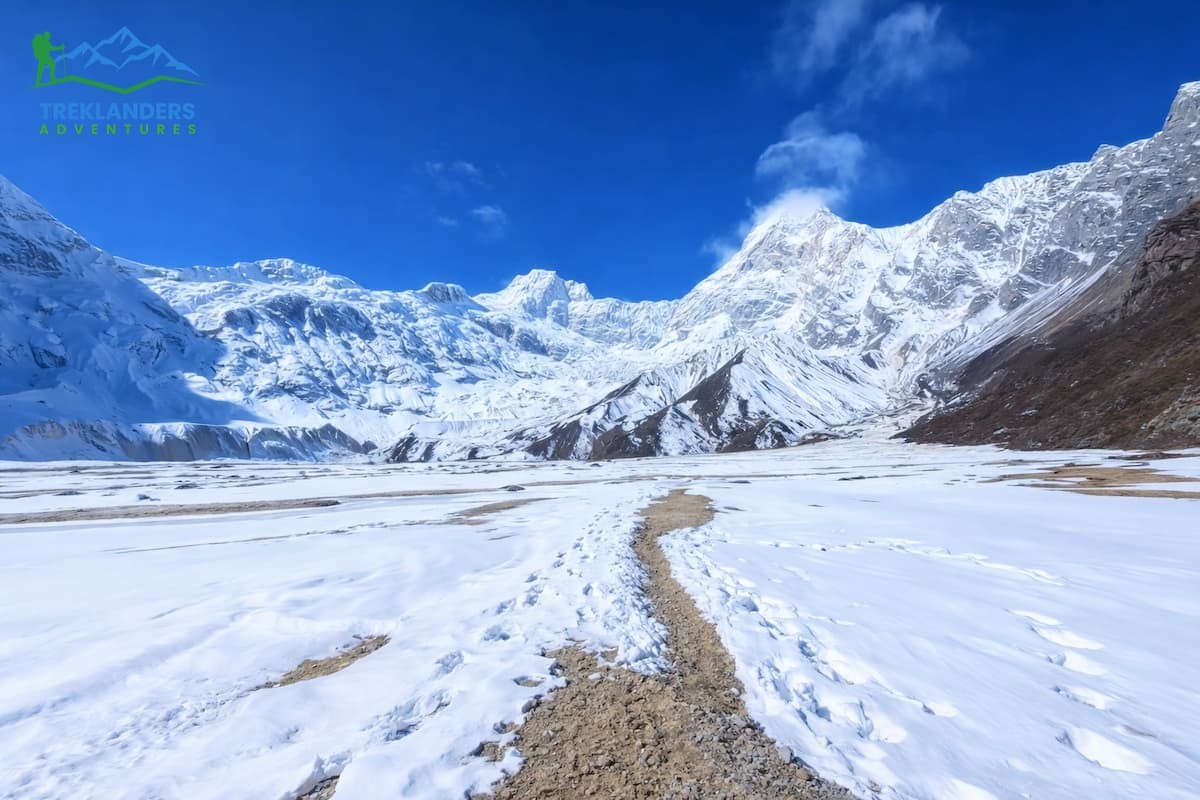
It is possible to trek the Manaslu Circuit in winter, though it is very intensive and physically demanding. Winter time at the Manaslu Circuit means December, January and February. At the highest points, especially near the Larkya La Pass at 5,106 meters, the temperatures plummet and might be way below zero. The pass can be completely covered with snow, making the crossing risky or impossible without proper gear and experience.
Furthermore, most of the teahouses at higher altitudes are shut during the deepest winter months, which drastically reduces your options for food and accommodation. Therefore, you will have to make a very careful plan of your itinerary based on the schools of thought and remaining open. If you could only look at the good things, winter implies total isolation on the trail.
You will hardly meet other hikers, the sky is clearer than usual, and the mountain views are magnificent. Only those hikers who are very experienced and equipped, who are at ease with extreme cold and unpredictable high-altitude conditions, should consider winter trekking on the Manaslu Circuit.
The weather along the Manaslu Circuit Trek changes with the seasons and elevations. In autumn (September to November), you'll find it to be mostly dry and clear with cool weather. At lower elevations during the day, temperatures are around 15 °C to 20 °C. When you get to places like the Larkya La Pass, temperatures can go below freezing at night. In spring (March to May), it is warmer at lower elevations but still quite cold at the higher ones. More clouds appear as May progresses, which is when the pre-monsoon season starts. Monsoon (June to August), on the other hand, brings a lot of rainfall. The paths become slippery, landslides are common, and the visibility is greatly reduced.
In winter (December to February), the whole trail becomes very cold. Above 4,000 meters, it is quite common for temperatures to be as low as 10 °C or even less during the nights. Snow is present quite often in the upper sections. Whatever the season you have chosen, the weather in the Himalayas is always a bit of a gamble. Conditions can turn around quite quickly, especially around the Larkya La Pass. It is a very good idea to always have with you several pieces of clothing and a waterproof one.
[trip;20-day-manaslu-circuit-with-tsum-valley-trek]
In reality, the Manaslu Circuit Trek is considered to be one of the most challenging treks in the world. That means you need to have a good too high level of physical fitness to do it. This is certainly not a walking holiday where you can be casual about things. It's 177 km in total over 14 to 18 days, paced at 5 to 8 hours per day on steep, uneven terrains at higher altitudes. Most definitely, you come with good cardiovascular endurance. Your heart and lungs have to do extra work as the altitude increases, so boosting your aerobic fitness is a must before departure. Activities such as running, cycling, swimming, or hiking regularly for at least 2 to 3 months before your trek will give you a very good starting point. Strengthening your legs is as important as building endurance.
Too much going down on long trails over rocks can lead to severe knee and thigh pains. Therefore, hiking uphill and downhill, stair climbing, and strength training for your legs should be added to your schedule. Having prior trekking experience at altitude is highly advisable. If you have already done treks like Everest Base Camp, Annapurna Base Camp, or the Annapurna Circuit, you understand quite realistically the physical and mental demands of multi-day high-altitude trekking.
On the other hand, beginners with no trekking background should not even consider the Manaslu Circuit as their first trek. It is better to start with a shorter and lower altitude trekking route to find out how your body reacts to altitude and long walking days before deciding to go on this one. Merely being fit, however, cannot assure a safe trek. Acclimatisation, hydration, and pacing come as much as changes in the way you interact with the trail.
Altitude sickness is a serious risk on the Manaslu Circuit Trek. The trek reaches 5,106 meters at the Larkya La Pass, and your body needs time to adjust to the reduced oxygen at high altitude. Prevention starts before you even reach the trailhead.
The most important rule is to ascend slowly. Follow the golden principle of high-altitude trekking: climb high, sleep low. Do not gain more than 300 to 500 meters of sleeping altitude per day above 3,000 meters. Your itinerary should include acclimatization days at Samagaun and Samdo before you attempt the Larkya La Pass crossing.
Stay hydrated throughout the trek. Drink 3 to 4 liters of water daily. Avoid alcohol and sleeping pills, as both suppress breathing and worsen acclimatization.
Consult your doctor about Diamox (acetazolamide) before departure. Many trekkers use it as a preventive measure at altitude. It helps your body acclimatize faster, but it is not a substitute for proper ascent planning.
Know the symptoms of acute mountain sickness (AMS). Headache, nausea, dizziness, fatigue, and loss of appetite are early warning signs. If symptoms appear, do not ascend further. Rest, hydrate, and descend if symptoms worsen.
Never ignore AMS symptoms. Continuing to ascend with AMS can lead to life-threatening conditions like High Altitude Pulmonary Edema (HAPE) or High-Altitude Cerebral Edema (HACE). Descending quickly is always the right decision when symptoms escalate.
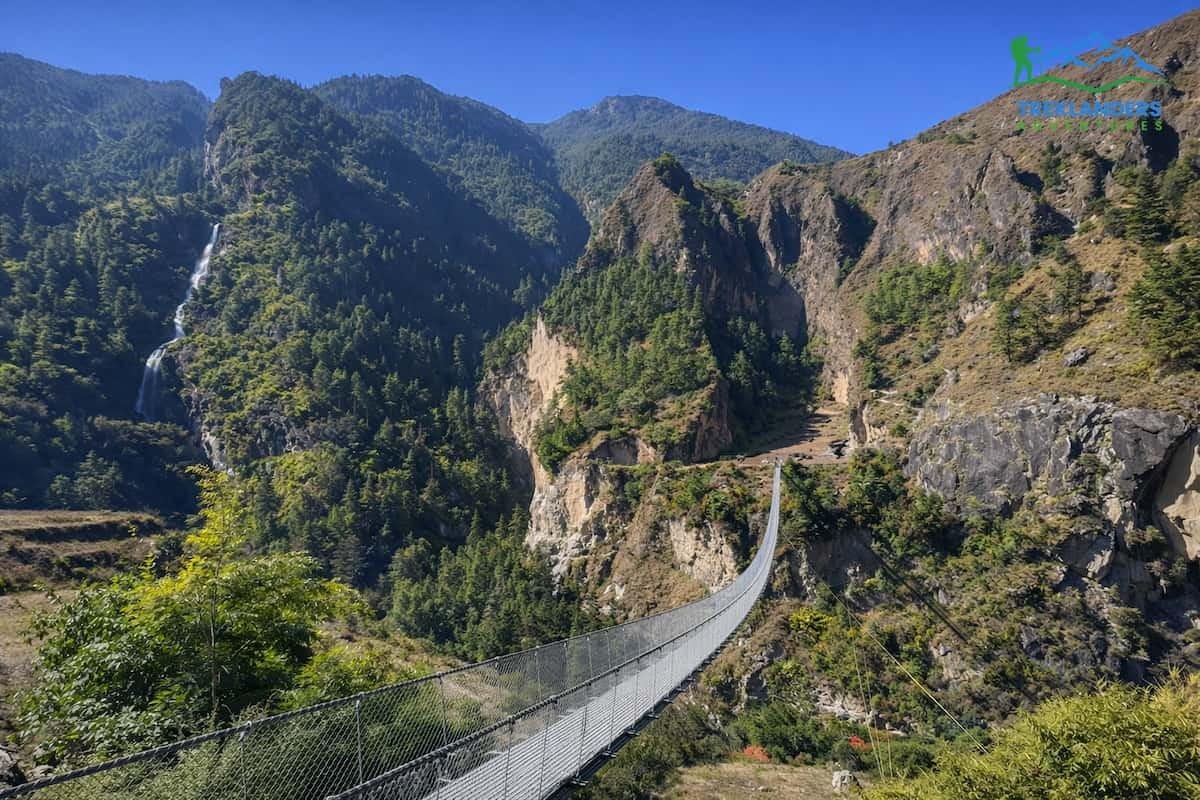
The Manaslu Circuit Trek, by no means, suits a beginner's capabilities. It is a difficult, high-altitude trail that requires you to have trekking experience, good physical condition, and be very familiar with the dangers that come with altitude sickness. The route is 177 km long and takes 14 to 18 days. Along the way, the highest point you will reach is at the Larkya La Pass at 5,106 meters.
The isolation of the region, the long hours of walking, and the lack of quick access for rescue make it an unsuitable trek for someone who has little or no experience in trekking. Beginners who do this trek without training may not only endanger themselves but also their guides. Due to the altitude sickness that could occur in a very remote and restricted area, the outcomes could be fatal.
If you are a beginner in trekking, then you should start with the shorter and lower altitude tracks like the Annapurna Base Camp Trek or Langtang Valley Trek. After gaining your experience and fitness over one or two seasons, you can go for the Manaslu Circuit.
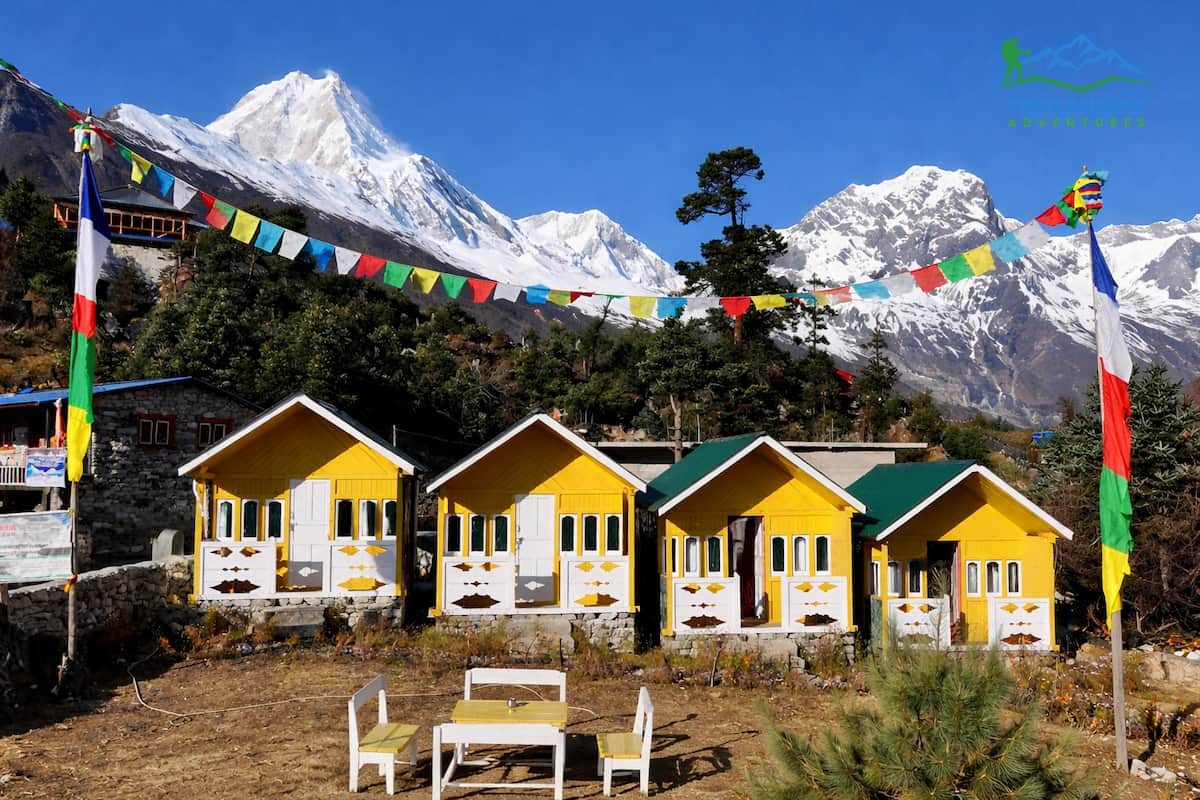
Teahouses on the Manaslu Circuit Trek are quite simple. You cannot really expect the level of comfort you get on popular routes like the Annapurna Circuit or the Everest Base Camp trail. Teahouses at lower elevations offer a fair level of comfort. You can have a private room with a bed, blanket, and access to the shared bathroom.
A hot shower can be availed at an additional charge. As you climb higher, the facilities become more basic. The rooms get smaller, the walls thinner, and heating is generally only through the stove in the communal dining area. Above 3,500 meters, attached bathrooms are a rarity. The hot water supply becomes unreliable.
Close to Larkya La Pass, in places like Dharmasala, the level of comfort is very low. It will basically be dormitory-type rooms with very few facilities. Make sure to bring a very good sleeping bag which can withstand up to minus 10 degrees Celsius. The blankets that teahouses provide at high altitudes are hardly ever enough to keep you warm on very cold nights.
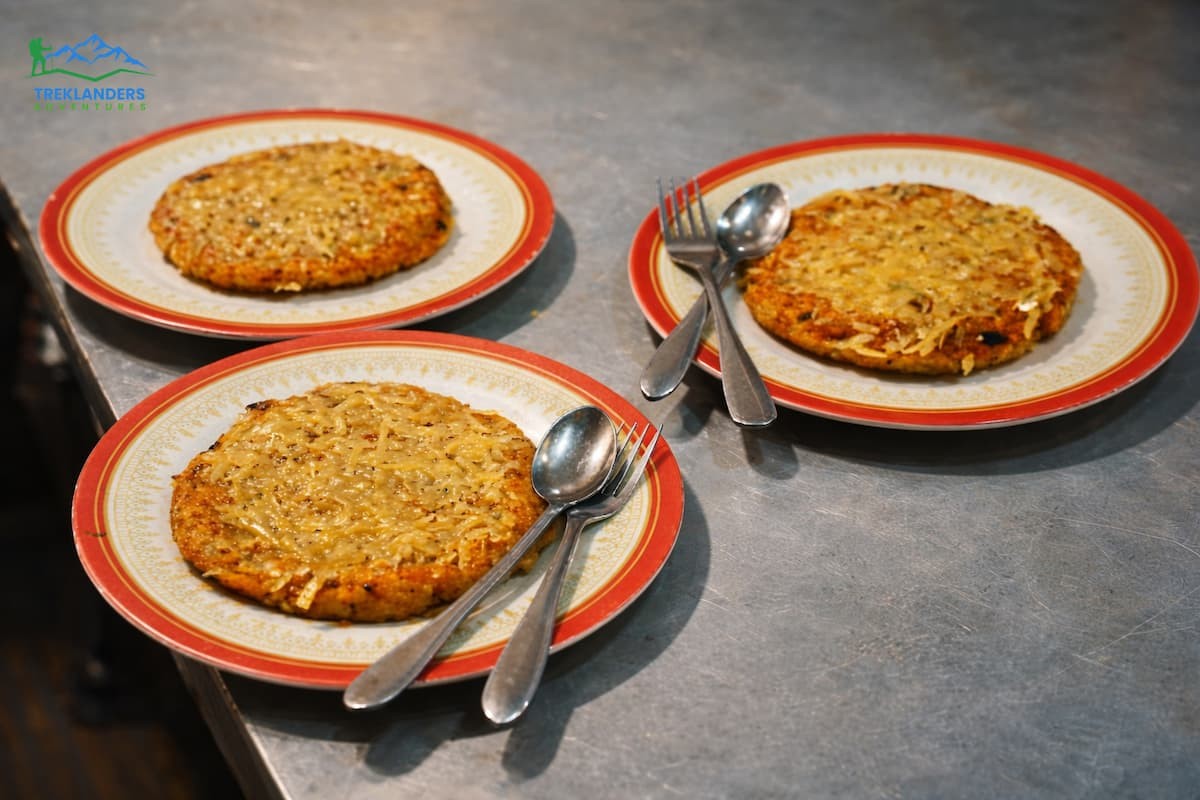
Food on the Manaslu Circuit Trek is straightforward, comforting, and revolves around the carbohydrate-rich dishes that provide energy for the long walking days. Dal Bhat is the usual meal along the trail. It is made of rice, lentil soup, vegetables, and pickles. Most teahouses even allow you to have unlimited refills, so it is the most economical and energy-efficient meal on the menu.
Some other popular choices are noodle soup, pasta, fried rice, porridge, pancakes, eggs, and Tibetan bread. At higher elevations where it is more difficult to source fresh ingredients, you can still find soup and noodle dishes quite easily. The variety of food will undoubtedly decrease as you go higher in altitude.
Above 4,000 meters, menus become limited, and prices increase due to the cost of transporting supplies to remote teahouses. Bring along energy bars, nuts, and dry snacks from Kathmandu or Dharapani. These snacks will be helpful for you during the long walking days and the Larkya La Pass crossing, where there are no food stops.
Packing the right gear is critical on the Manaslu Circuit Trek. The remote terrain and extreme conditions near the Larkya La Pass leave no room for poor preparation.
Clothing is your priority. Pack moisture-wicking base layers, insulating mid layers, a heavyweight down jacket, a waterproof outer shell, trekking pants, and thermal underlayers for cold nights. Warm gloves, a wool hat, and a buff are essential above 4,000 meters.
For footwear, wear sturdy waterproof trekking boots with ankle support. Break them in before the trek. Carry trekking poles; they reduce strain on your knees significantly on long descents.
Your sleeping bag should be rated to at least -10 °C. Teahouse blankets are insufficient at high altitude.
Other essentials include a headlamp with spare batteries, sunscreen, sunglasses, a water purification method, a first aid kit, and a portable charger.
Keep your pack under 10 kg if trekking without a porter.
Definitely, travel insurance is not an option on the Manaslu Circuit Trek. In fact, it should be one of the major things you plan before going. Manaslu Circuit Trek goes through a remote, restricted area with hardly any medical facilities. So, if you are seriously injured or suffer from severe altitude sickness, a helicopter evacuation is probably the only option available for a rescue.
A single helicopter rescue from a high altitude may cost you from $3000 to $8000 or even more. In case you don't have insurance, you will have to pay the whole amount out of your pocket. Your insurance policy should specifically state coverage of high-altitude trekking above 5000 meters and helicopter evacuation.
A lot of standard travel insurance policies do not cover high-altitude activities, so you should be very careful and check the details before you buy one. The trekking agency you work with and the local authorities might want to see proof of your insurance before they will allow you to get a permit or to do the trek. So, get your insurance before you leave your country. If you buy it after arrival in Nepal, it is troublesome if you ever need to make a claim.
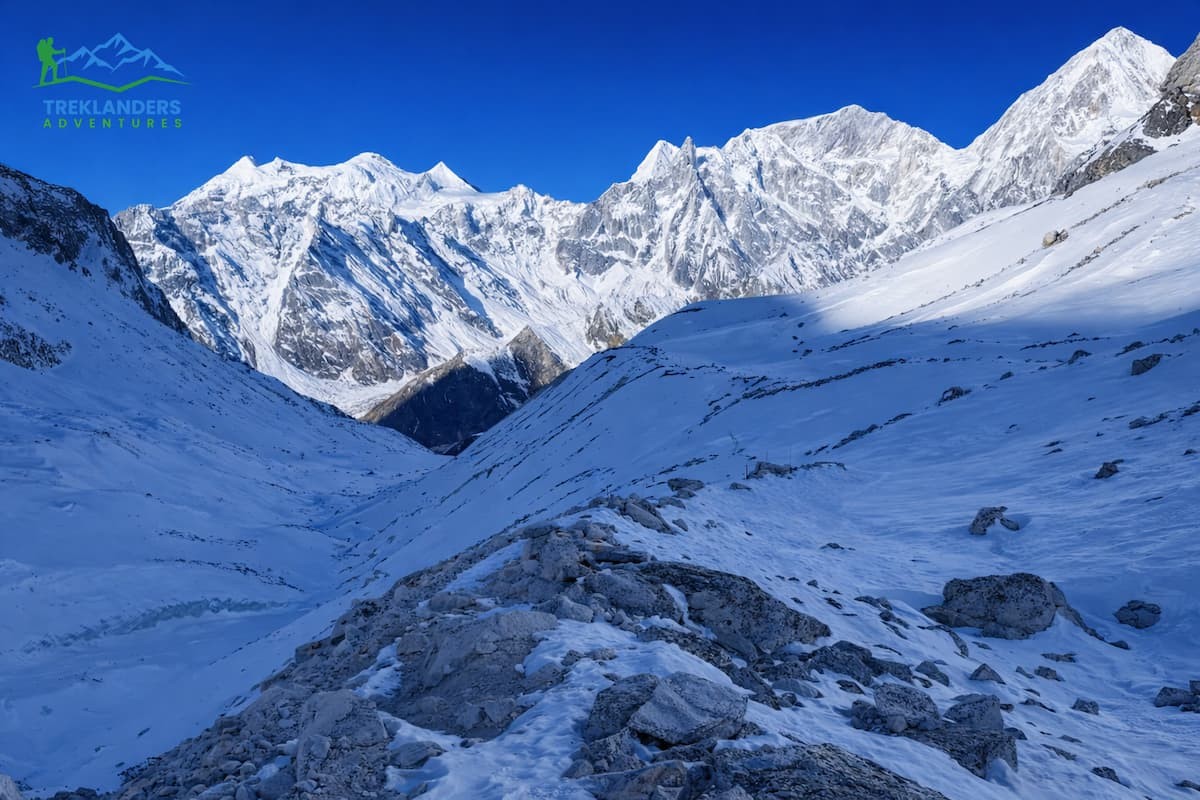
The Manaslu Circuit Trek is one of the truly great high-altitude experiences in Nepal. It requires serious preparation, the right permits, a licensed guide, and good physical fitness. But for those who are willing to work, it offers something that the more crowded paths cannot: unspoiled Himalayan wilderness, authentic mountain villages, and a sense of accomplishment that will stay with you even after returning home.
This guide answers the most important questions you need to know before going. It will help you to plan your permits, prepare your fitness, pack your gear, and set realistic expectations for what lies ahead on the trail. If you are ready to start planning your Manaslu Circuit Trek, reach out to our team. We are handling permits, licensed guides, itinerary planning, and logistics so that you can fully concentrate on the trek itself.
Autumn vs winter for Annapurna Base Camp Trek—compare weather, safety, and experience to choose the best season in Nepal.
Autumn and winter on the Manaslu Circuit differ greatly—compare conditions to choose the best season.
Planning the Everest Base Camp trek? This complete guide answers the most important questions about altitude, distance, difficulty, permits and safety



