Langtang Valley Trek in Autumn vs Winter: Which Season Is Best for Your Adventure?
2 Apr 2026
Autumn vs winter in Langtang Valley: compare weather, trails, and crowds to choose your best trekking season.

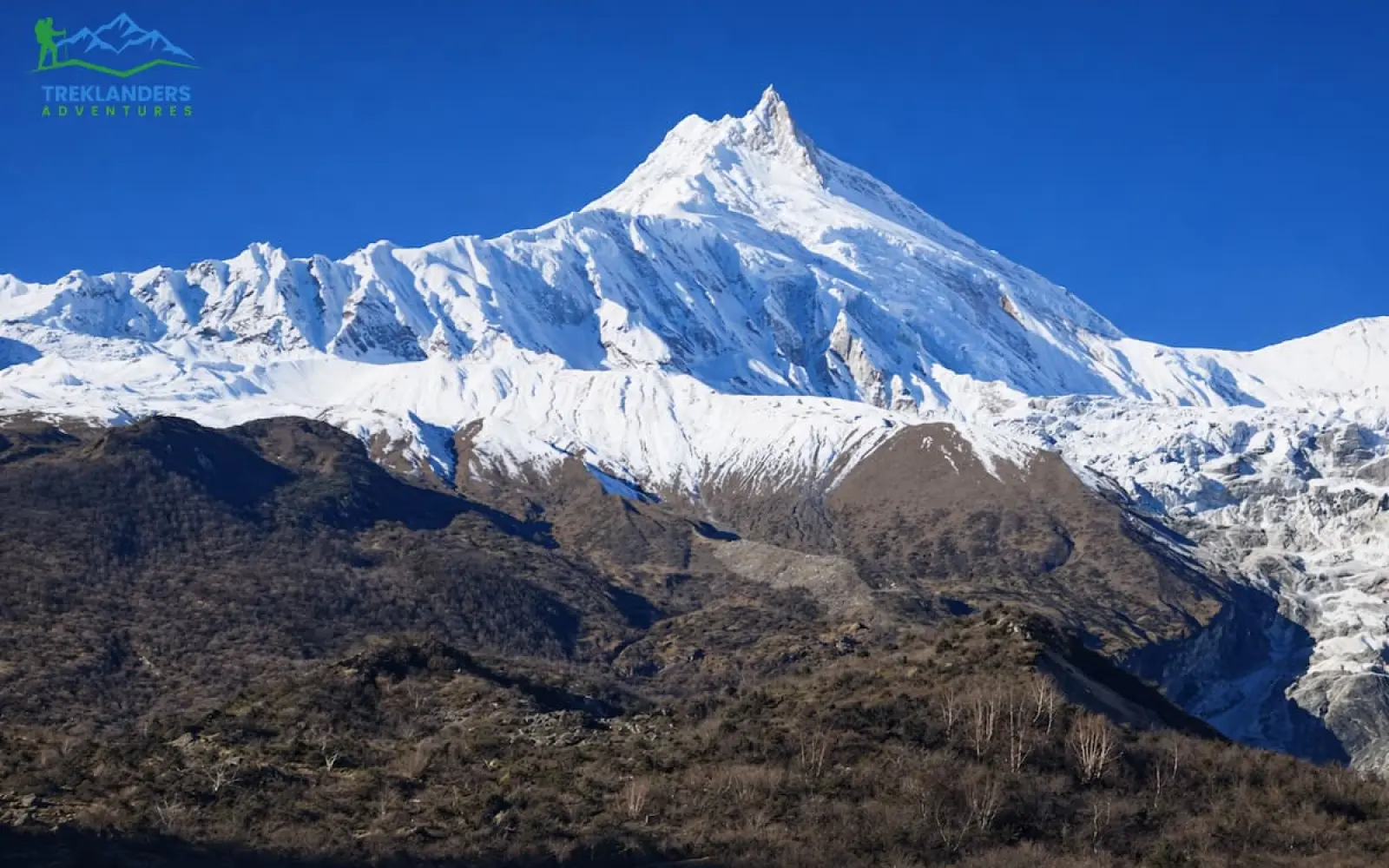
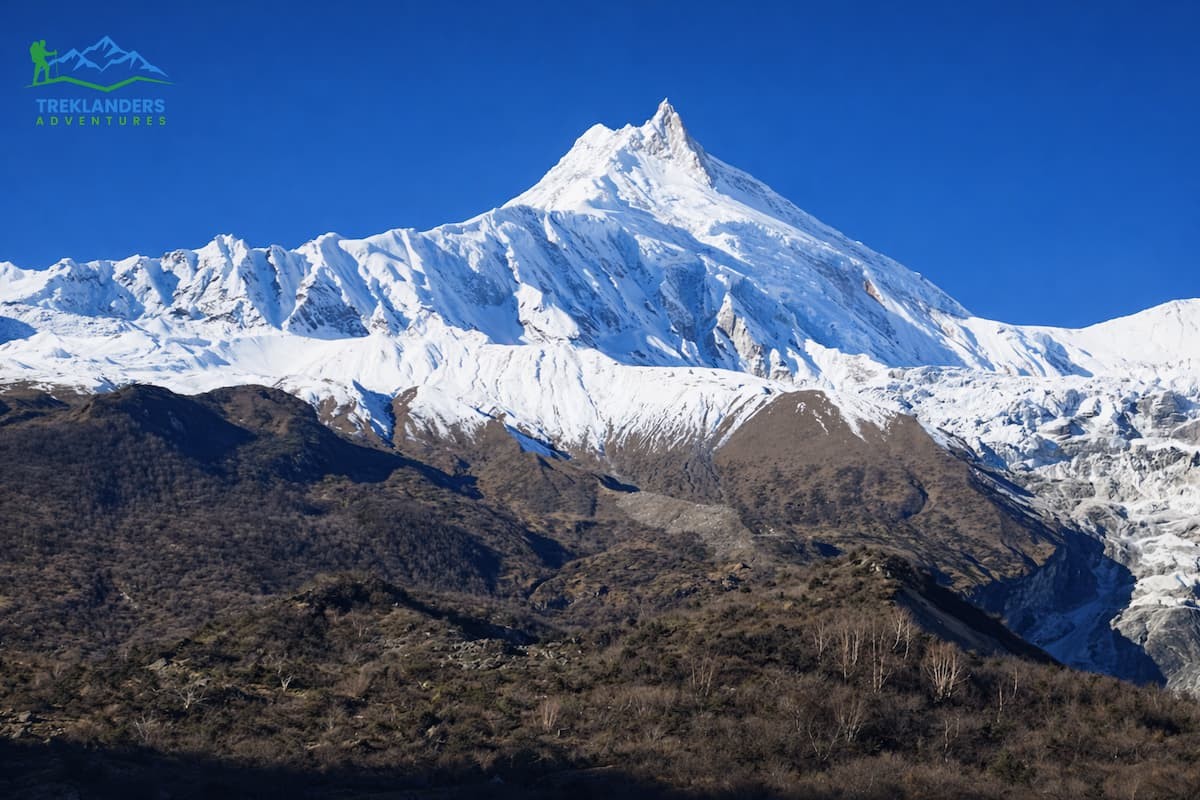
As you leave a teahouse in Samagaun, you are greeted by a cold wind on your face. The mountains look so majestic and clear. The pathway in front of you is pointing to Larkya La Pass, the highest point on the Manaslu Circuit.
But now, imagine having two different mornings.
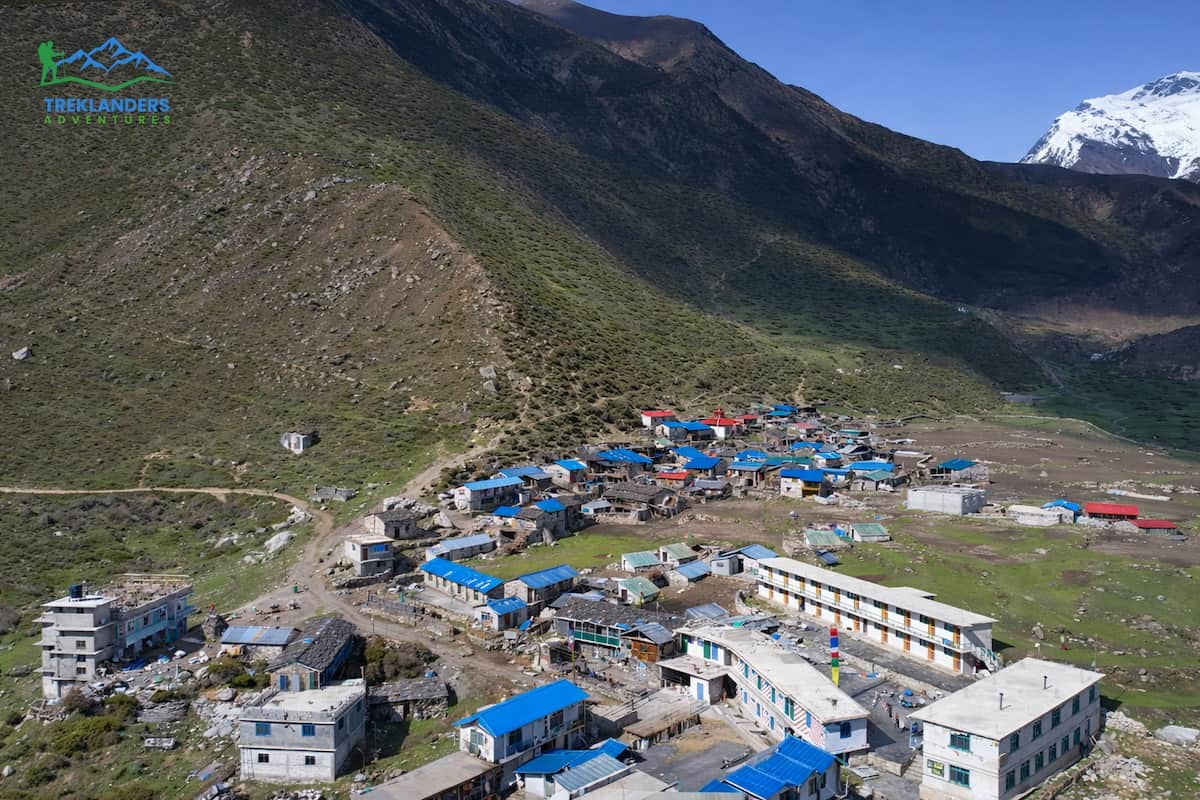
In October, the sky is a very deep blue. After breakfast, you go for a walk without wearing heavy clothes. The path is not wet. You notice other hikers walking slowly. The light air blows thin streams of incense smoke. The sun is shining on the Mount Manaslu peaks. Your guide looks at the weather forecast. It will be good all day. You are thinking of going through the pass tomorrow without any worries.
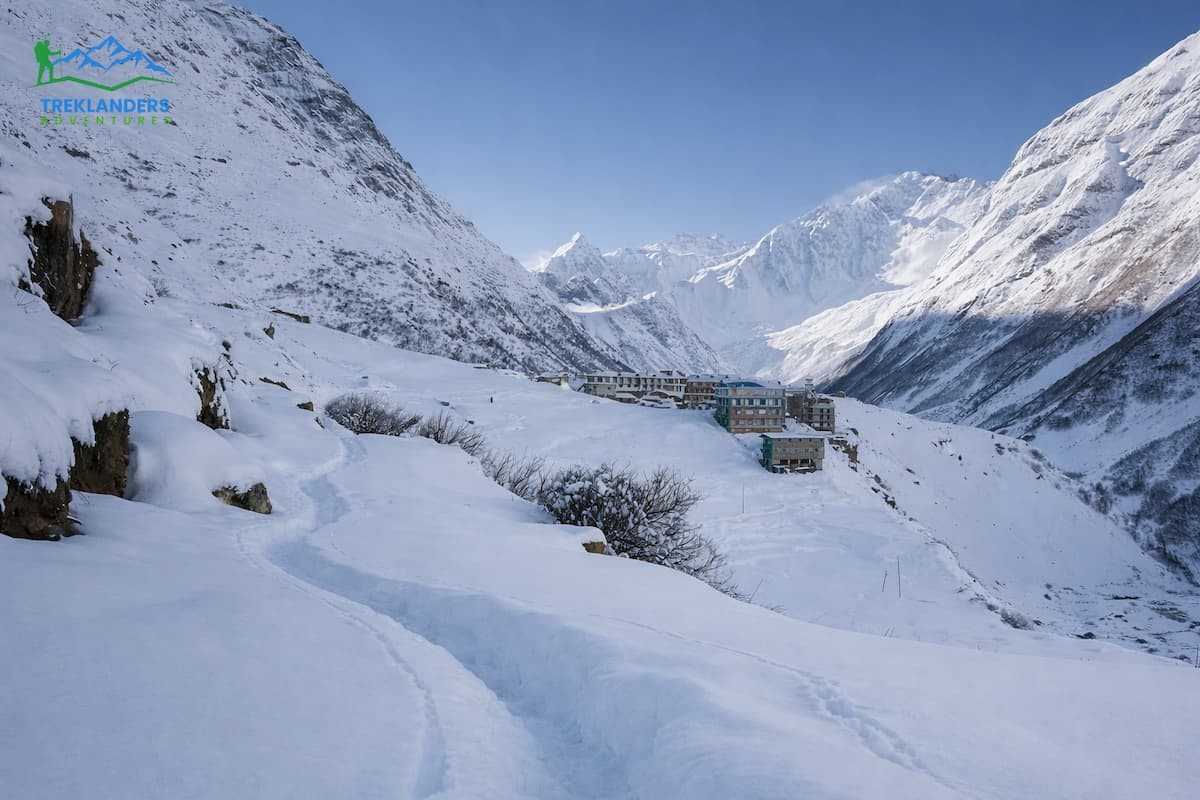
Switch to January now.
Still, you enter the same teahouse. It is much colder. Snow blankets the earth. The path is barely visible. Yesterday's footprints are partly covered with snow. You move more slowly. Each step has to be thought twice. The scenery looks quite harsh. Clouds rush by. Your guide is looking up the hill. Avalanches have become likely because of the snow that fell last night.
The itinerary is altered. It may not be feasible to cross the Larkya La Pass today.
This is the main point that separates autumn and winter on this route.
In autumn, your progress is quite predictable. Weather conditions remain almost unchanged for several days. Paths are still clearly seen. Tea houses are open fully. You are mainly thinking about how far you are going, how high you are climbing, and your speed.
In winter, it is a lack of certainty that motivates your every move. One night, a snowfall can make some parts impassable. Besides, the temperature often goes down even to the extreme level of minus 15 °C at the top camping grounds. Also, the water supply might be frozen. Normally, very easy things may take up a lot of your time. Your main concern will be safety, timing, and survival.
The same path presents two very distinct experiences.
Autumn allows you passage. Winter challenges your boundaries.
Which one you pick is a matter of what matters most to you. Steady advancement or complete solitude. Pleasant hiking environment or a daring, exhilarating endeavor that comes with a bit of risk.
All the rest of this comparison stems from this instant beyond the teahouse.
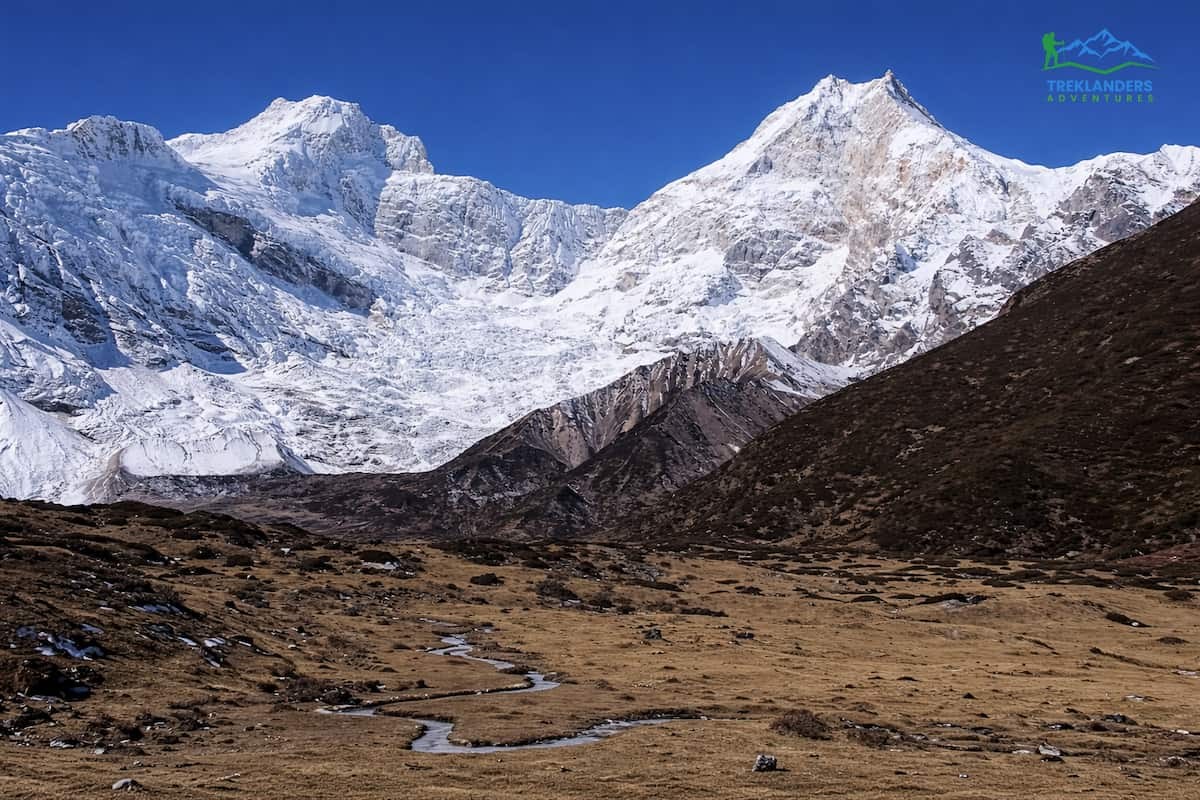
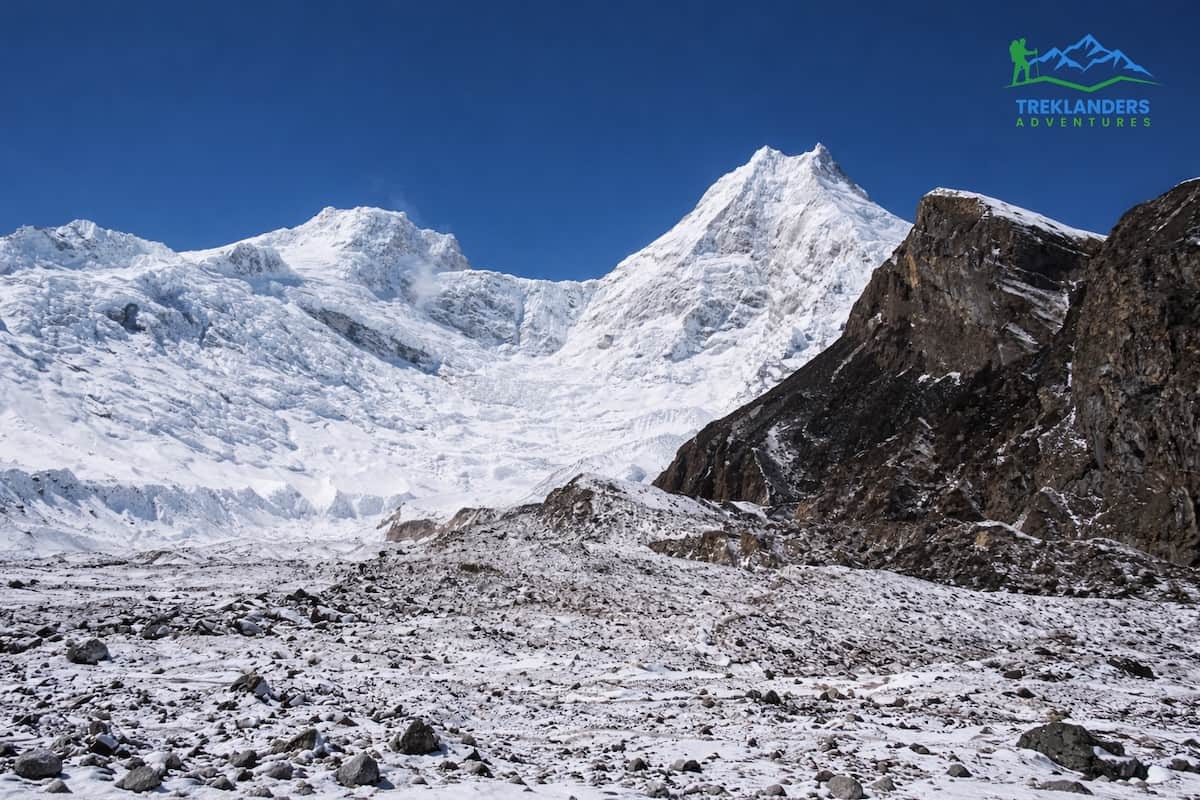
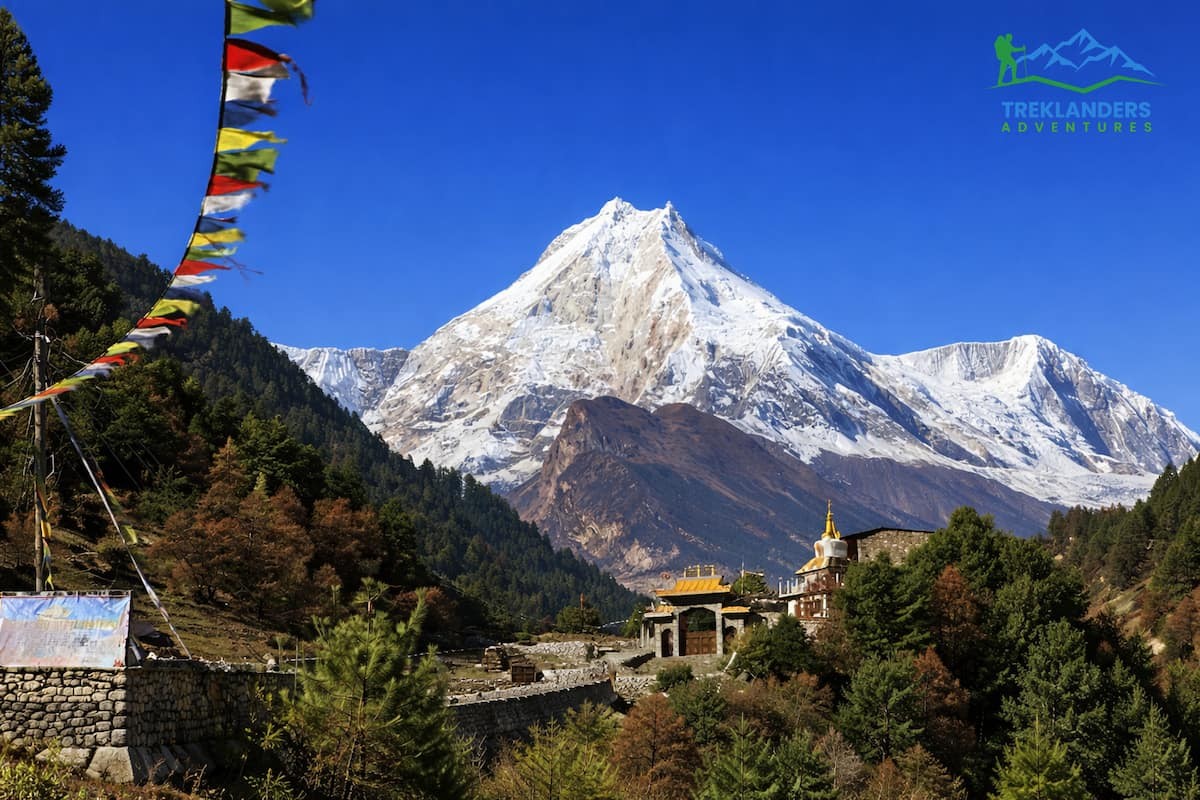
Among the seasons, autumn gives the most stable weather window for trekking on the Manaslu Circuit. September starts as a period of change. At the beginning of the month, after the monsoon season, some parts of the trail are still wet, and the greenery looks very fresh and dense. By mid- to late-September, the weather is getting clearer, and you will have fewer issues.
October is the month when you can count on almost 100% on clear skies. The atmosphere will feel dry most of the time, and the views remain very sharp throughout the day, so your trek over Larkya La Pass will not be interrupted by sudden fog. November will not break this clear weather that has been set in place; it only gets progressively colder, especially with the altitude, so prepare for cold mornings and nights.
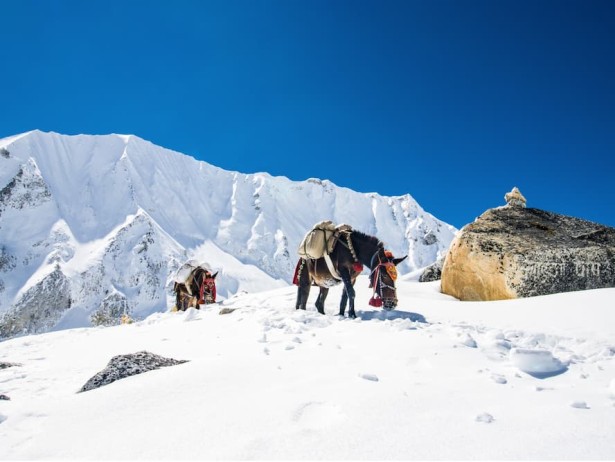
A walking day follows a certain regular pattern. Mornings are fresh and clear, and give you uninterrupted views of giants like Mount Manaslu. As the day goes by, clouds begin to gather, especially at the beginning of autumn, and in the afternoons, the visibility is a bit compromised. This has set a familiar routine of moving up early and planning to get your stopover before the clouds become a problem. After the monsoon, the state of the hiking paths gets better.
The ground level parts are full of life, with the streams running water and the deep forests around providing shade. When you move up the way to Samagaun, you will see the change from the forests to the dry alpine area. Around October, trails are mostly firm and easy to walk on; rivers can be crossed safely on stable bridges; and there are only very few landslides.
You will see a change in the landscape as you go up the mountain: you'll first be in the green valleys, then go through the mixed forests, and finally, you'll be in the high-altitude barren zones with the wide-open views. The changing scenery makes the trek very interesting without any serious weather problems.
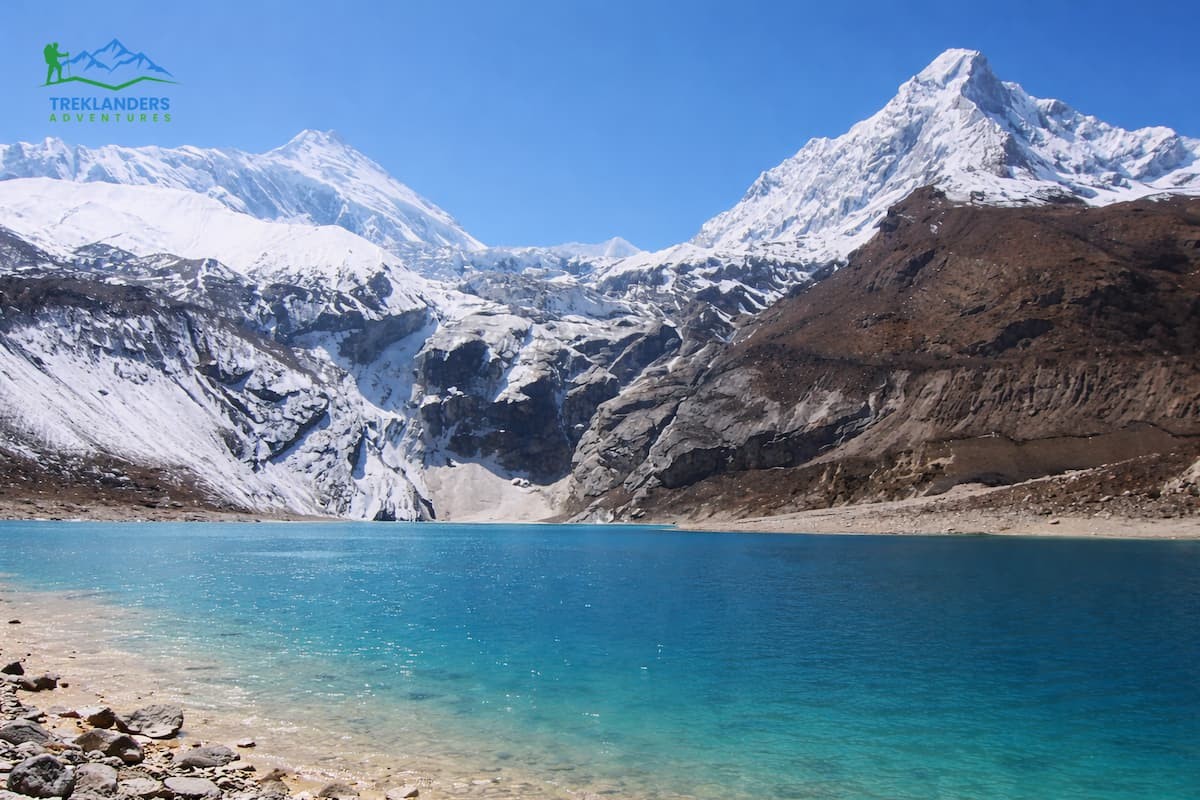
The crowds gradually build up as the season advances. September end feels pretty light. October is when the traffic hits its maximum with a steady stream of trekkers. Early November is still lively, but the number of people starts to drop toward the end of the month. However, the area still does not feel as crowded as the more commercial trekking routes.
During the autumn season, teahouses are run at their maximum capacity. Due to uninterrupted supply chains, the variety of food also gets better, and the service works smoothly. Rooms tend to get booked very fast during the busy weeks, so it's a good idea to plan your arrival time wisely and get there early.
Acclimatisation is a lot easier in the cool temperatures of autumn. Having moderate conditions in the daytime lessens the physical exertion, so you can keep going at a steady pace. The usual spots for acclimatisation around Samagaun are still quite good, and the water is available without freezing.
This time of year, coincides with the big festivals of Dashain and Tihar. The villages are very lively and full of culture during that time. Occasionally, there will be a teahouse that will have only some staff running the show for a short time, but generally, the services continue well without any major changes.
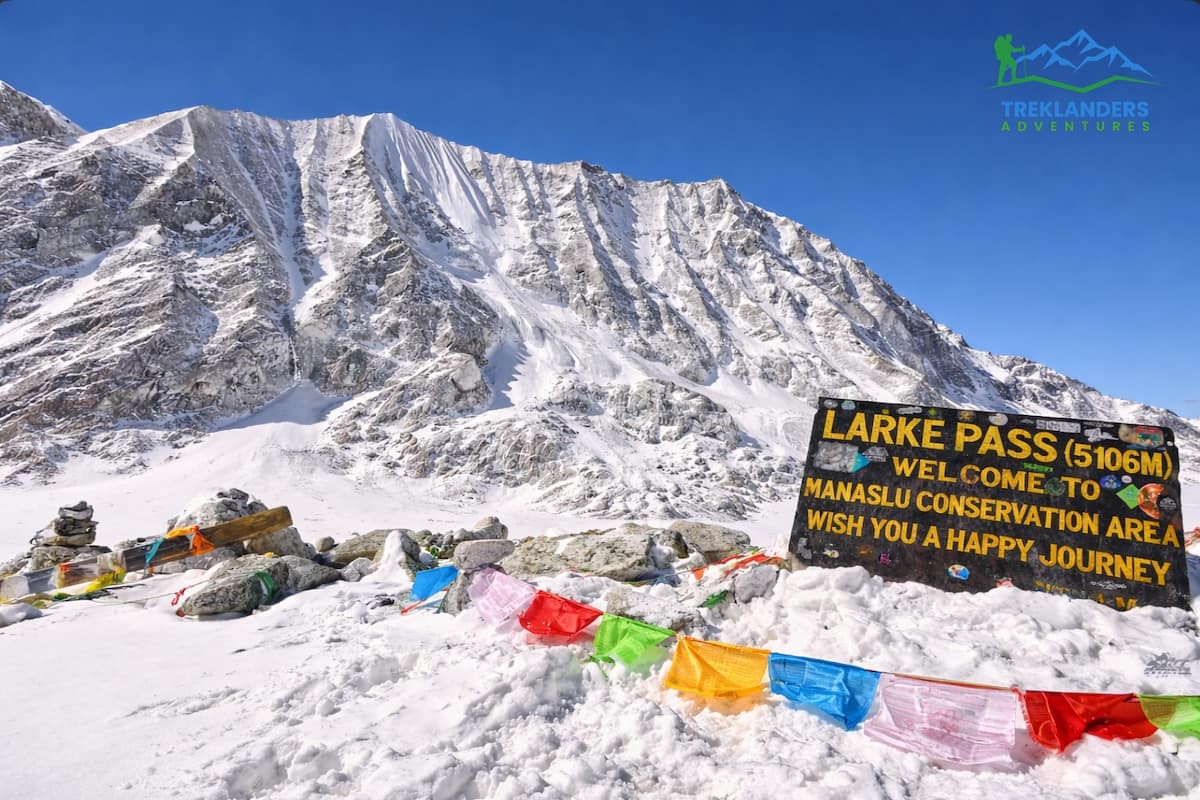
Winter turns the Manaslu Circuit into a very dangerous and very isolated place where people go, conditions change quickly, and consequently, the decisions become extremely important. The season corresponds to December, January, and February, and every month, the temperature drops a bit more, and the amount of snow gets bigger and bigger. The weather in December is still quite normal. At the beginning of the month, the trails are only partially closed, and snow basically does not cover the ground below the areas where one stays at the highest elevation during the day. Then, during the second half of December, the temperature drops drastically, mainly around the Larkya La Pass area.
In January, you face the peak of the season's severity. Even during the day, the temperature at higher altitudes is so cold that it is not possible to thaw completely. At nighttime, it can go as low as -20 °C (or even less). February presents a little start of a change in the weather, but snow is still very present, and cold mornings are part of your trekking life. At every major point, the decline in temperature takes on a new level of intensity. The villages located at the bottom of the valley will be quite cold, but the temperature during the day is quite bearable.
The higher you go, the colder it becomes - a great example being the Dharamsala area, where you will especially notice the bite of the cold. Doing the simplest things, like taking off your gloves or getting a glass of water, will make you want to get warm again. Windy weather will make you cold even more, especially when you are near the pass.
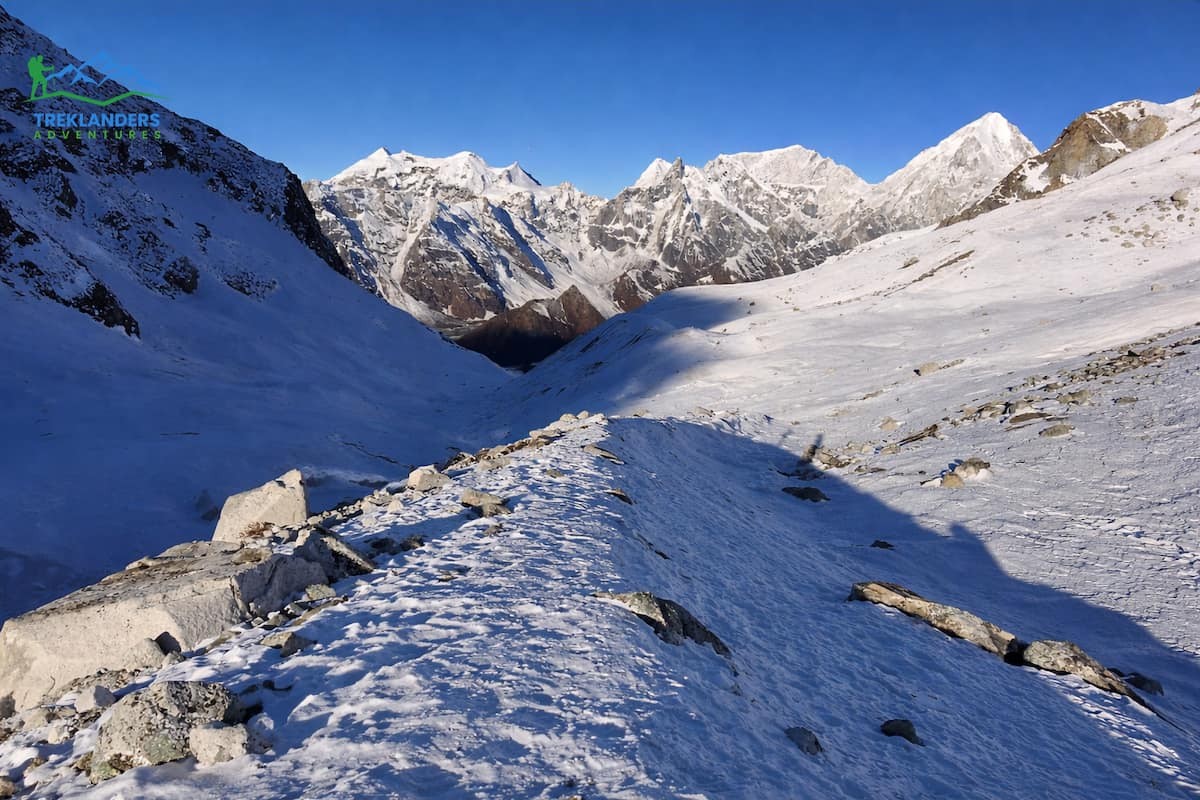
How much snow has fallen is a very important aspect once you are above the Dharamsala level? The part of the trail going to Larkya La Pass is most of the time covered with hard, heavy snow. During periods of heavy snowfall, not only does the path become very confusing, but it might even be impossible to pass. The pass could be so difficult that you might have to force your way through it or even abandon the attempt if conditions get worse.
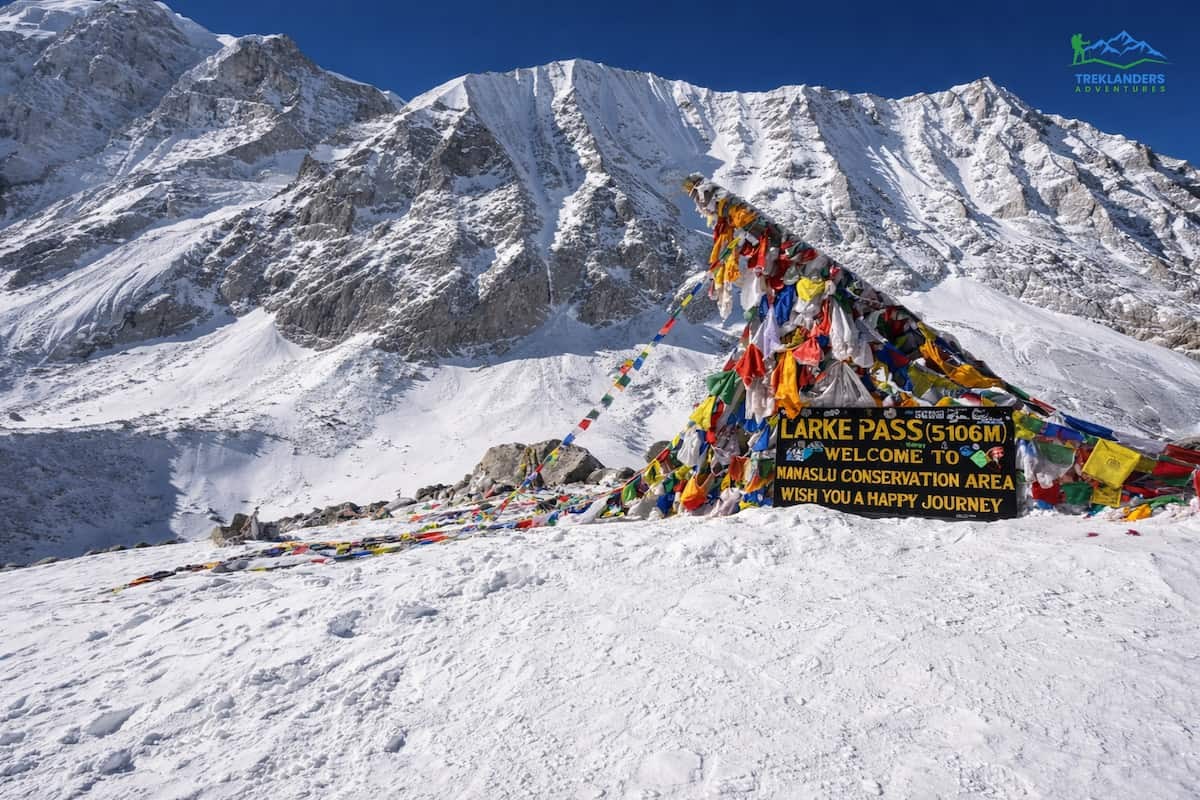
Teahouse availability drops dramatically. A lot of the high-altitude lodges shut down for the season because of low demand and supply problems. The teahouses that remain open have very limited food and heating options. You need to make a very detailed plan for every stop and check once again if the teahouse is really open before you go there.
Water supply is yet another difficulty. Water pipes get frozen during the night, and the streams may be covered with ice. You will have to increase the proportion of boiled water (usually sold at the teahouses), which means you will have to pay more and become more dependent on the teahouses being open.
The number of daylight hours diminishes in winter. You will have fewer effective trekking hours per day. Starting late doubles the risk, especially when walking through exposed sections. You need to start the day early and get to the camp before the temperature drops drastically in the afternoon.
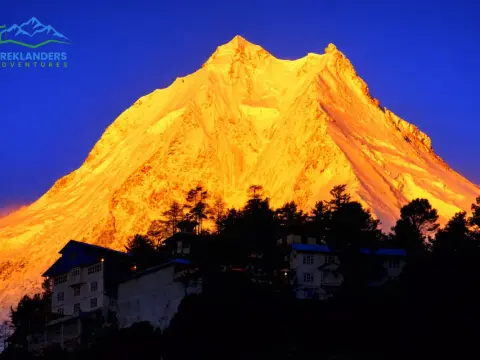
You will be physically more demanding than in autumn. You will be spending a lot of extra energy while walking through the snow. Cold air will make breathing difficult and thus slow down your pace. In addition to the extra insulation and equipment, you will be carrying more weight.
Similarly, mental stress will go up. The trail becomes deserted. It is possible that you may not see other trekkers for several hours. Weather variability means that you have to change your plans frequently. Therefore, you must remain concentrated, patient, and be willing to change your plans instantly.
The character of the Manaslu Circuit changes drastically with elevation. Each zone has a different response to the autumn and winter conditions. That is why it then becomes essential to know those changes to better plan the speed, equipment, and risk after you.
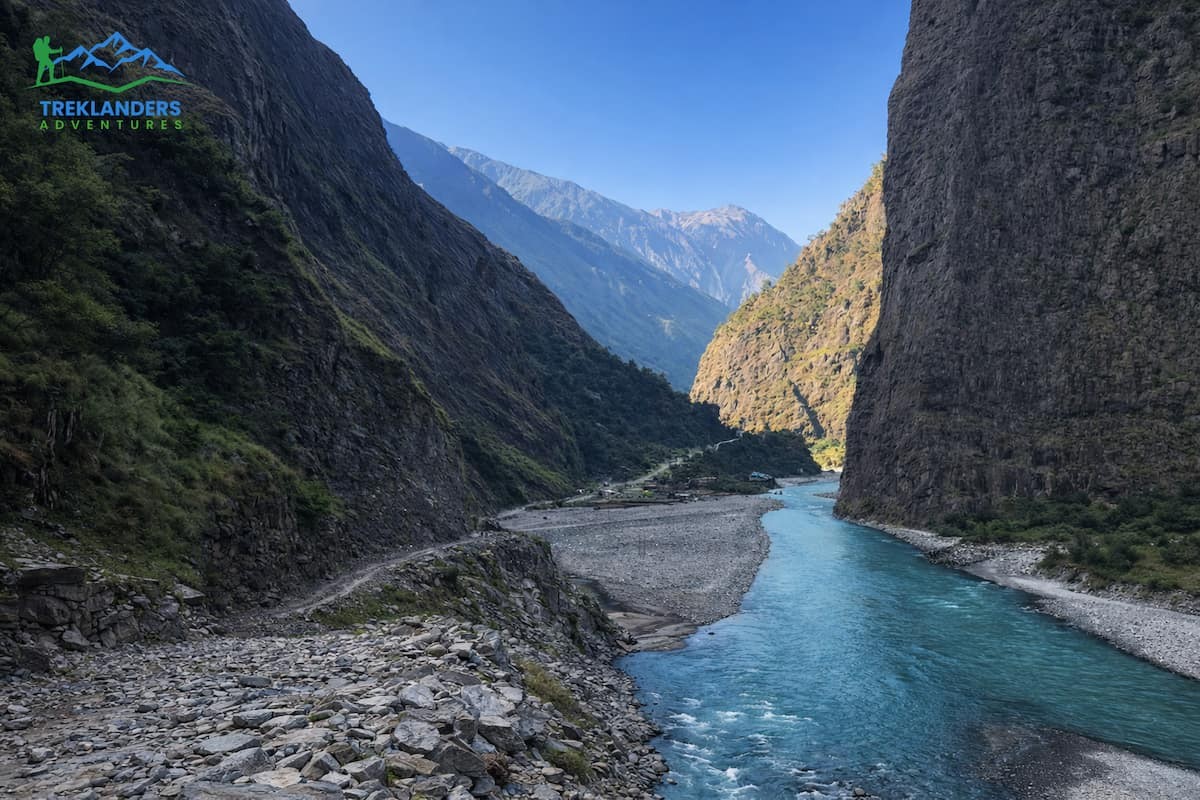
Autumn, the first lower zone, from Soti Khola to Deng, you travel through gorgeous river valleys and dense forests between 700m and 1,800m. In autumn, it is a perfect balance between warm air and humid atmosphere, especially in the first half of September.
The paths can be wet and slippery just after the rainy season, and you may still encounter leeches under the cover of the forest. With the onset of October, the earth dries up, and the experience of walking becomes more pleasant.
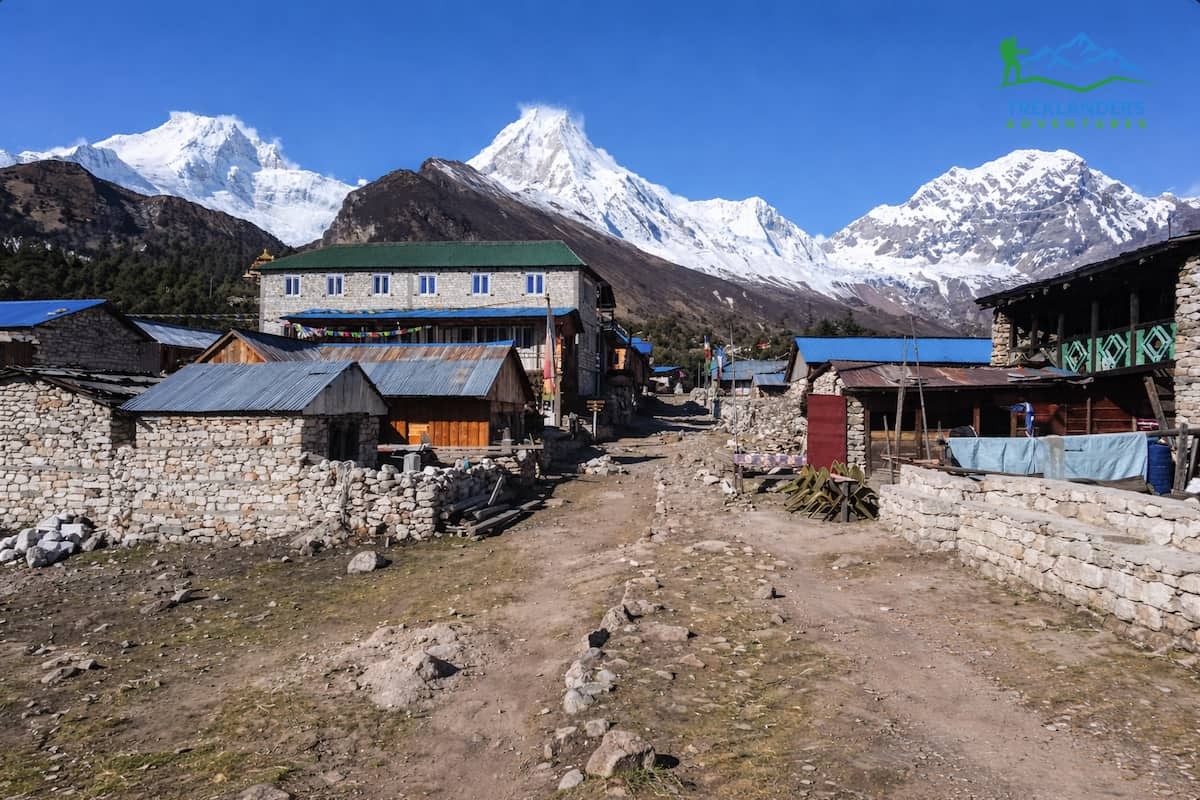
Autumn, the Middle part, from Deng to Samagaun, the elevation is between 1,800 and 3,500 meters, and the environmental change is clearly visible. In the Fall, trekking this part could be regarded as optimal and balanced, as nature is in a harmonious colour scheme and the path remains solid and very walkable. When temperatures are falling, the cold is not too harsh, and people can continue moving without difficulties.
During the Winter, temperatures at night can be very low, often below zero. In the morning, frost can be found on teahouses. Above 3,000 meters, the presence of small snow patches on the trails in the shade has been noticed. Usually, they are not even blocking the passages, but you have to be very careful with your steps in the early hours.
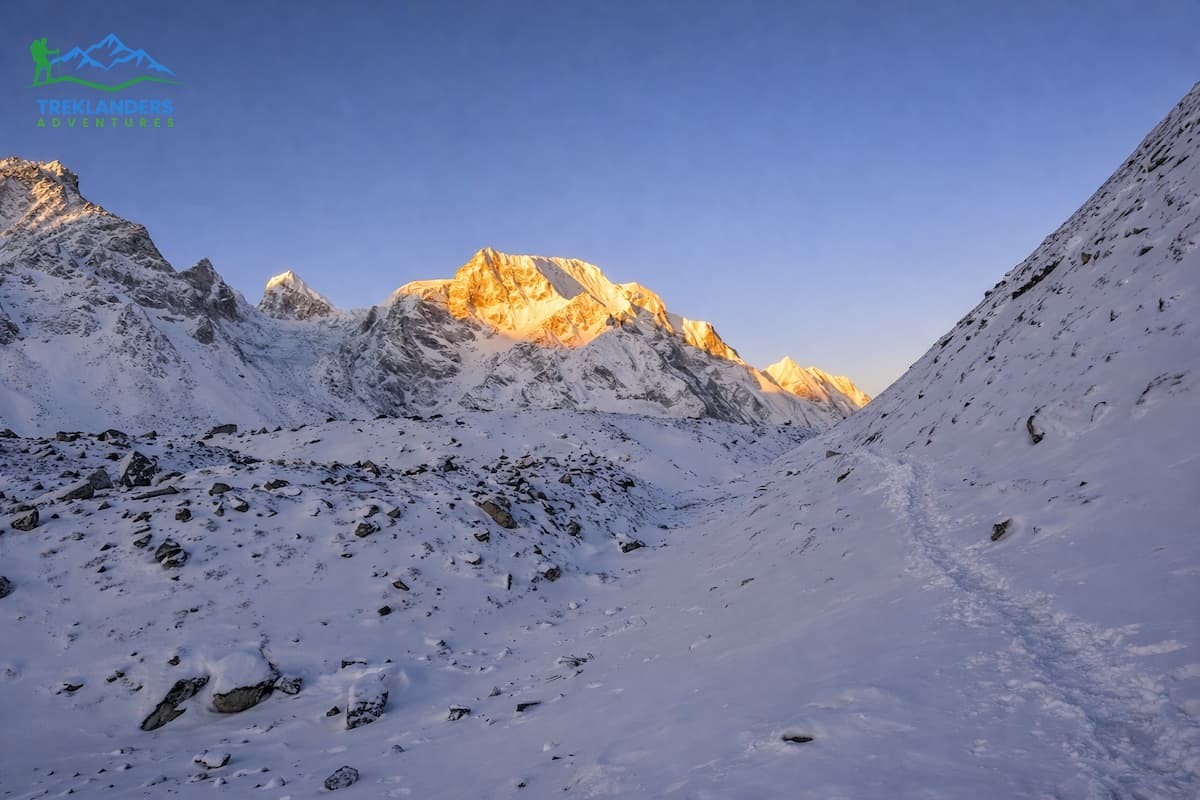
Autumn, the high-altitude section from Samagaun to Larkya La Pass, which rises to 5 106m, forms the most challenging part of the walk. In autumn, this part still stays open and is easy to get to. Paths are clear, and the snow is only on the high ridges. Even though the night gets really cold, doing the crossing during the day is still good if you are well-timed. With stable weather and low technical difficulty, it is quite doable to go via the pass itself.
Winter, on the contrary, turns this very part into the greatest difficulty. Above 3,500 meters, snow covers the ground deeply, mostly around Dharamsala and the path leading to the pass. Snow can bury the trails so that they are almost invisible, and going the right way becomes quite a problem. Ice might form in some spots, which can cause one to slip. Besides, the strong wind and very cold temperature make the climb more difficult. At the time of heavy snowfall, it might be the case that the Larkya La Pass cannot be crossed at all, which would mean having to either wait or go back.
Trekking the Manaslu Circuit is all about strictly following the rules for getting permits. Since this is a restricted area, the same rules apply in both the autumn and winter seasons.
The main permit here is the Manaslu Restricted Area Permit. You can't get one yourself. A trekking company whose license is valid should be the one to get this permit for you. The permit prices are different for each season. Autumn, which is from September to November, is the time when the fee is the highest because that's also the peak season and the weather conditions are best. Winter, which is from December to February, is the time when the price is the lowest due to the decrease in traffic. In both seasons, the procedure is identical. You provide your passport details, travel dates, and itinerary through the agency before gaining entry into the restricted zone.
To complete the circuit, you will need the Annapurna Conservation Area Permit as well. This is because after crossing Larkya La Pass, the trail leads to the Annapurna region, so no matter the season, this permit is essential. You can obtain it in Kathmandu or Pokhara, and it is valid for the whole trekking period.
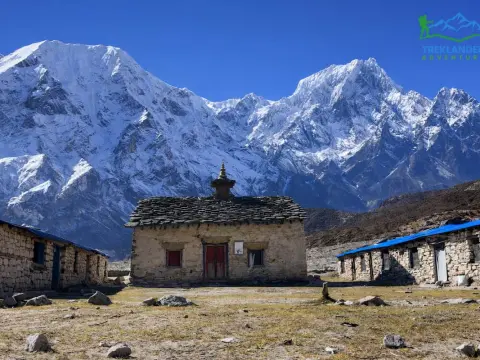
The group policy is the same throughout the year. At least two people have to be in the group while trekking. Solo trekking is prohibited in the restricted section. Besides this, a guide with a license is a must. The guide has to be a government-registered person and connected to the agency that is handling your permits. The change of seasons from autumn to winter does not affect these rules.
Permit availability changes slightly depending on demand, not on regulation. In autumn, since officials are busy with many applications, you should get your permits early. In winter, fewer people want permits, so it is possible to get one faster, and the authorities are more flexible. On the other hand, your trip may get delayed by the weather.
At the checkpoints, the officials will ask for your permits. Among the main control points are Jagat and the upper areas around Samagaun. At each checkpoint, your permits, passport, and guide will be examined. You must always have the paper copies of your documents, as the digital versions will not be accepted in the isolated areas.
Although you generally need a TIMS card to trek in Nepal, this does not hold for the Manaslu restricted area. Instead, one must get a permit for the controlled area, which is a permit system rather than a card. This regulation is the same for both seasons.
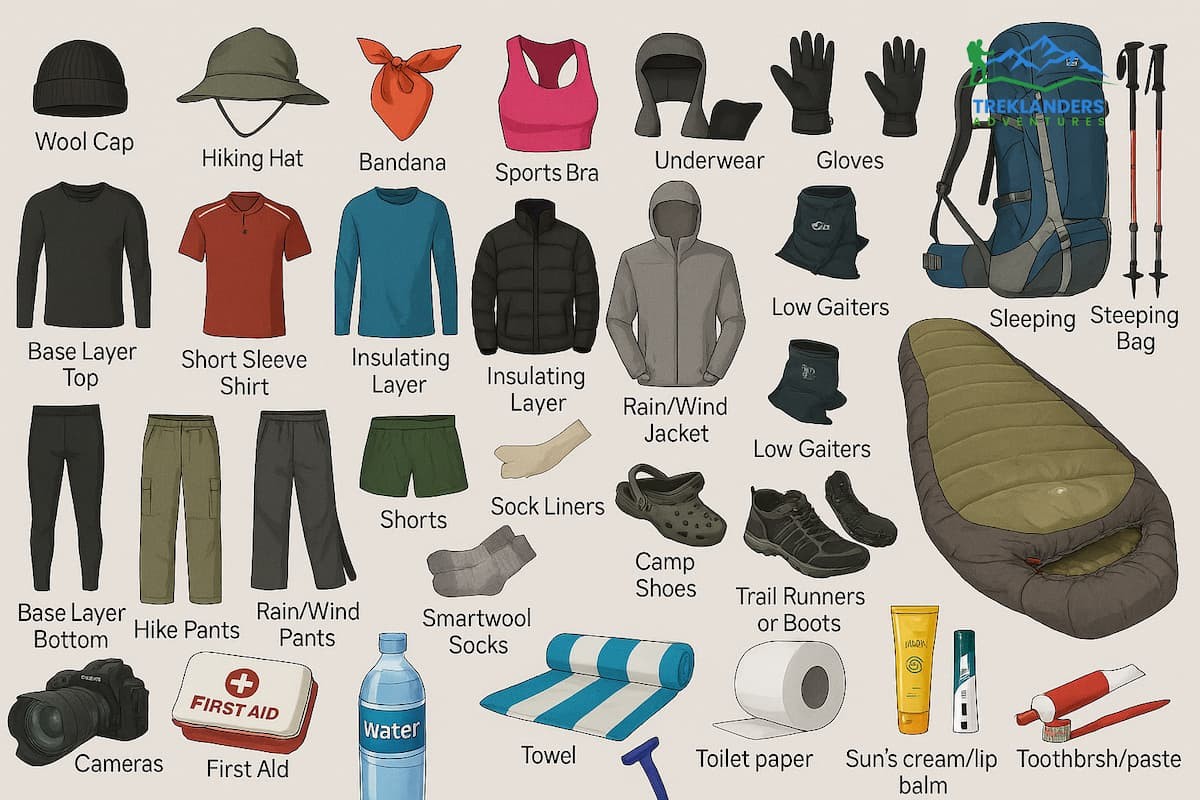
Planning gear is a major difference between autumn and winter on the Manaslu Circuit, as temperature, snow, and trail conditions change quite a bit. Autumn needs to be adaptable, while winter needs full protection and technical gear.
For autumn, a system of layers is the best way. The cold is usually felt in the mornings, especially when the altitude is over 3,500 meters, but after that, the temperature rises quite a bit. Base layers, an insulating mid-layer, and a light waterproof shell cover the needs of typical days. From September, rain gear is a must, as showers occur sporadically even after the monsoon. Most ordinary trekking boots with good ankle support are adequate for the trails, and a sleeping bag capable of -10 °C is comfortable for the altitude without being too heavy or bulky. Trekking poles are very useful for river crossings and uneven ground. One of the advantages of focusing on weight when packing is that it leads to more efficient movement; moving lighter makes it possible to go longer distances without losing flexibility.
Winter demands a much stronger plan. A four-season sleeping bag, which can handle temperatures as low as -20 °C, is a must-have for the high camps and freezing nights close to Larkya La Pass. Besides that, insulated and waterproof mountaineering boots are what you are going to need for the snowy and icy parts; they are often worn along with gaiters. Crampons, as well as trekking poles with snow baskets, will be needed for the technical parts and icy trails. Extremities can get frostbite if not properly protected, so hand warmers, a balaclava, and heavy gloves are necessary. Moreover, freezing of water sources and longer cooking times mean that extra fuel canisters are required. While preparing for winter, the focus is more on being safe than being quick, which leads to an increase in the overall weight of the equipment, but all the items are indispensable.
You can rent some gear in Kathmandu, like trekking poles, crampons, and certain types of boots. However, if you want an insulated sleeping bag or a four-season jacket, it is better to bring them along from home so that you can be sure of their reliability and proper fit. Those trekking in autumn can get by with rented items more often than not, but those going on the winter expedition should have all the crucial gear with them.
In general, autumn gear is more focused on flexibility, moderate warmth, and lighter loads, whereas winter gear is all about maximum insulation, technical protection, and being ready for extremely harsh conditions. The requirements of a particular season are a reflection of the environment, risk level, and challenges of the trail, and they are there to ensure the safety and comfort of the trekker.
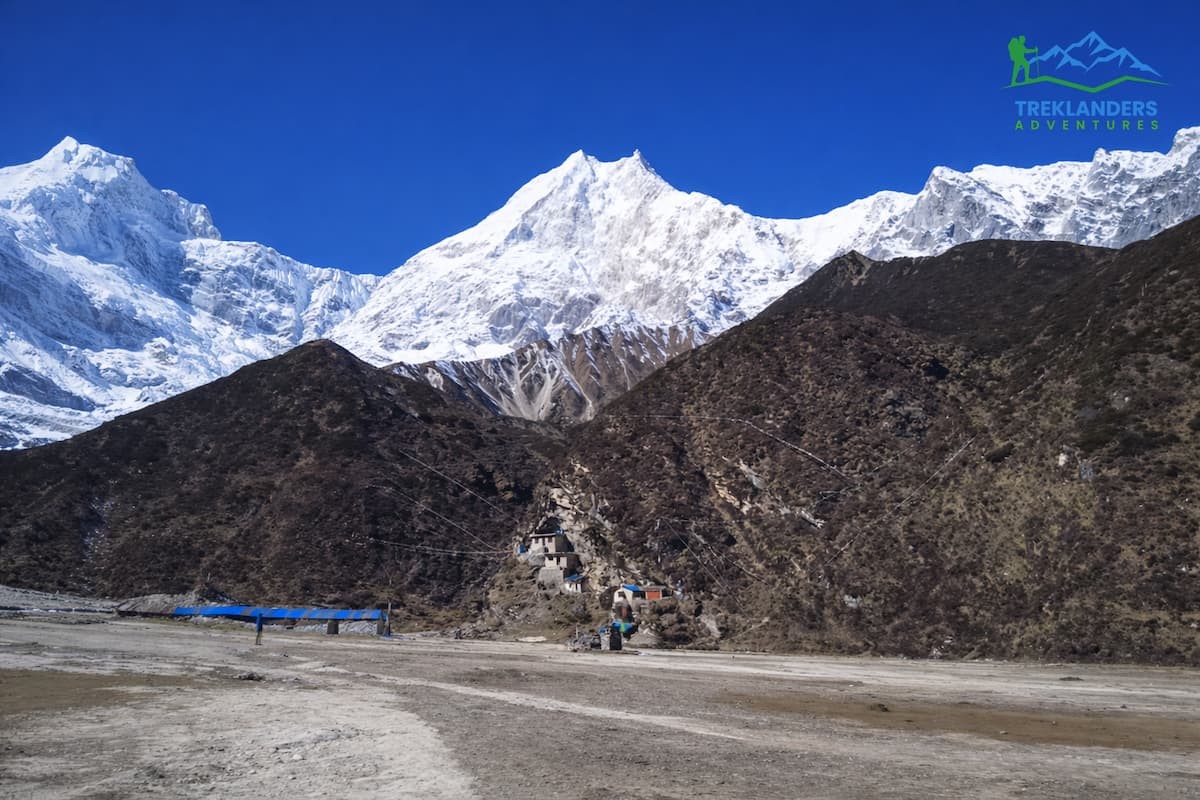
Manaslu Circuit acclimatization needs can differ quite a bit from one season to another, depending on factors such as temperature, trail conditions, and pace of movement, which influence body reaction to altitude changes. In the fall, average temperatures and firm trails may help hikers reach a sustained sugar level. The rest day planned at Samagaun, at an elevation of around 3,500 meters, is generally enough for a person to physically accommodate themselves to the thinner air. Besides that, a man continues feeling less tired, suffering less from headaches and other symptoms that can occur due to mild altitude exposure. Besides that, a person is also able to do short day hikes to high places to pre-acclimatize themselves.
The scene turns upside down with the arrival of winter. Besides changing other things, the temperature also affects the body. When the air is cold, the body uses more energy, and heavy clothing hides the first symptoms of altitude sickness. Besides that, if progress is slowed down by snow or early frost affects sleep, then a longer rest period at Samagaun is necessary.
Besides that, cold weather causes a reduction in thirst, which makes it necessary to get to a minimum level of hydration. Water obtained by melting ice from teahouses or carried supplies must be used for drinking purposes in a non-intermittent manner so as to ensure that the fluid balance is maintained properly and the risk of experiencing altitude complications is reduced.
Because of the cold temperatures in winter topex refers to days when the human body knows a lowered oxygen level as those that are more actively contributing to the risk level of sickness because blood receives less oxygen at low setpoints and slower circulation an additional factor of risk is that the cold dulls early warning signs, so symptoms like headaches, nausea, and fatigue might be recognized later the wearing of a balaclava or a mask can hide small facial changes, so hikers should carefully monitor their overall condition and energy level.
Identifying symptoms at the onset is essential. During winter, mountain climbers have to measure breathing, pulse, and level of consciousness very often. Presence of disorientation, throwing up again and again, or difficulty in breathing points to a situation that needs immediate intervention. It is best to be aware of the emergency descent routes from major points like Samagaun, Dharamsala, or even the way to Larkya La Pass. These paths can be used to get down quickly to lower levels where the air has more oxygen, and the temperature is more comfortable, even if going through snow or ice might slow one down.
Overall, acclimatization methods during autumn depend on walking at a steady speed and having moderate rests, while winter, on the other hand, requires more focus on ailments caused by cold, keeping oneself adequately hydrated, and the early detection of symptoms in order to ensure safety at high altitudes.
Safety on the Manaslu Circuit depends heavily on the season and altitude. Autumn offers generally stable conditions, but certain risks remain. Post-monsoon trails in September can be slippery, with occasional landslides in the lower and middle sections. Popular bottlenecks such as river crossings and teahouse clusters can become congested during peak weeks, increasing the chance of minor injuries and slow progress. Trekkers should remain vigilant, maintain spacing on narrow paths, and monitor weather reports to avoid unstable slopes.
Winter introduces far greater hazards. Heavy snow can block trails, making Larkya La Pass impassable. Frostbite and hypothermia become real threats at high altitude, particularly above 4,000 meters. Isolation is pronounced, with fewer trekkers and closed teahouses, which increases the consequences of injury or sudden weather change. Solo trekking is extremely risky due to these factors, as assistance may be hours or days away.
Rescue and evacuation differ by season. In autumn, trails remain accessible, and teahouses are open, allowing guides and porters to assist in emergencies. Helicopter evacuation is generally available within hours, depending on the weather. In winter, rescue windows narrow. Snow and high winds can delay helicopters for 24–48 hours, and road access to lower checkpoints may be blocked. Comprehensive travel insurance with helicopter evacuation coverage is essential year-round but critical in winter.
Communication is very limited. Mobile phone signals are quite patchy; this is mainly the case when one is above Samagaun. Using satellite devices is the most reliable way of communicating one's position in case of an emergency. It is not a bad idea to have one with you both in summer and winter seasons, especially if you plan a winter expedition. Besides that, trekkers should have with them all emergency contacts, such as those for the trekking agency, local police, and ACAP officials. Also, it is important to check with the rescue team about the protocols before going on the trip.
In short, with autumn, the risks are quite low and manageable if one plans properly and is always aware of the trail condition. However, in winter, the dangers become really serious, and equipment and skills should also be up to the task to avoid or reduce the risk of isolation. Keeping an eye on the situation all the time, wearing the right gear, having a means of communication that you can depend on, and strictly following one's guide requirements are the major things that ensure safety at all points of the Manaslu Circuit Trek.
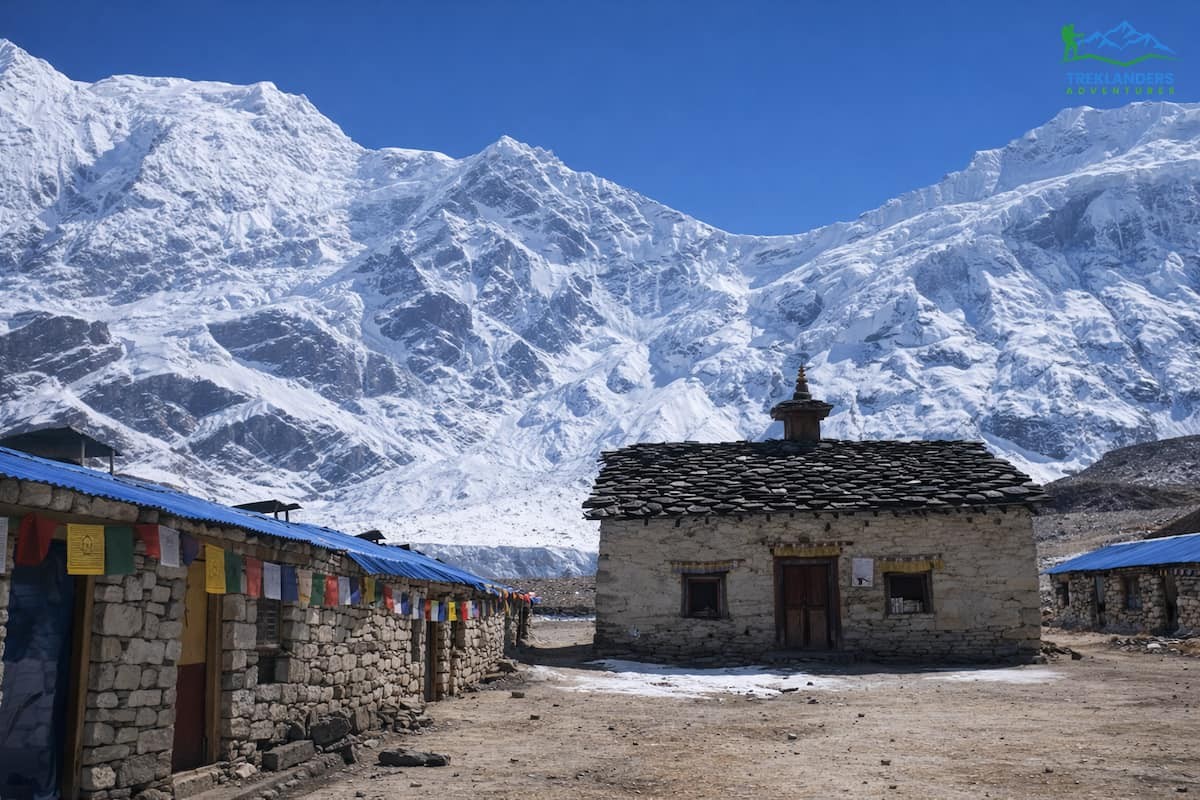
Autumn and winter on the Manaslu Circuit Trek offer vastly different experiences shaped by weather, trail conditions, and logistics. Autumn provides clear skies, stable trails, and manageable temperatures, making it ideal for steady progress, reliable acclimatization, and cultural immersion during local festivals. Trails are firm, teahouses operate fully, and emergency services remain accessible. Peak weeks bring more trekkers, but congestion is limited compared to other Himalayan routes.
Winter presents a more extreme environment. Snow and ice dominate high-altitude sections, temperatures drop sharply, and trail closures become possible. The physical and mental demands rise as trekkers face frostbite, hypothermia, and extended isolation. Rescue and evacuation options are limited, and teahouse availability shrinks, increasing reliance on careful planning and personal preparedness. Winter trekking requires technical gear, extra fuel, and a disciplined approach to pacing and acclimatization.
Choosing between seasons depends on your priorities. Autumn suits trekkers seeking reliable conditions, scenic landscapes, and cultural encounters with minimal risk. Winter attracts those prepared for adventure in isolation, extreme cold, and variable snow conditions, with the willingness to manage higher risk and heavier gear. Both seasons require strict adherence to permit regulations, guided trekking, and safety protocols.
Ultimately, success on the Manaslu Circuit comes from preparation, awareness of seasonal challenges, and respect for the environment. Autumn ensures comfort and scenic clarity, while winter tests endurance and decision-making under harsh conditions. Planning around the specific demands of each season maximizes safety, enjoyment, and the chance to experience one of Nepal’s most remarkable trekking circuits.

Autumn vs winter in Langtang Valley: compare weather, trails, and crowds to choose your best trekking season.
Discover the best beginner-friendly treks near Kathmandu, from easy day hikes to multi-day Himalayan adventures with essential tips and routes.
Autumn vs winter for Annapurna Base Camp Trek—compare weather, safety, and experience to choose the best season in Nepal.



