[{"name":"Everest Base Camp Trek","duration":"16","image_url":"https:\/\/www.treklanders.com\/storage\/trip-galleries\/1\/thumb_419a755c003cc609f3030ee332965ebe.jpg","offer_price":1405,"url":"https:\/\/www.treklanders.com\/trips\/everest-base-camp-trek"},{"name":"Gokyo Valley Trekking","duration":"16","image_url":"https:\/\/www.treklanders.com\/storage\/trip-galleries\/2\/thumb_676d1021b574aeba4d19d3f2a0b04ed2.webp","offer_price":1205,"url":"https:\/\/www.treklanders.com\/trips\/gokyo-valley-trekking"},{"name":"Annapurna Circuit Trek","duration":"23","image_url":"https:\/\/www.treklanders.com\/storage\/trip-galleries\/3\/thumb_2a9a92ea23c62f41de27b37f5e3e8c17.webp","offer_price":1495,"url":"https:\/\/www.treklanders.com\/trips\/annapurna-circuit-trek"},{"name":"Everest Panorama Trek","duration":"12","image_url":"https:\/\/www.treklanders.com\/storage\/trip-galleries\/4\/thumb_35c9f677ea2e88b1ff11a9f43daa3ddb.jpg","offer_price":1100,"url":"https:\/\/www.treklanders.com\/trips\/everest-panorama-trek"},{"name":"Everest Base Camp Trekking from Jiri","duration":"22","image_url":"https:\/\/www.treklanders.com\/storage\/trip-galleries\/6\/thumb_14763592492417b294aa66bf0ebf4e64.webp","offer_price":1400,"url":"https:\/\/www.treklanders.com\/trips\/everest-base-camp-trekking-from-jiri"},{"name":"Everest Base Camp via Cho la Pass from Gokyo Valley Trekking","duration":"18","image_url":"https:\/\/www.treklanders.com\/storage\/trip-galleries\/7\/thumb_d4e470e98d4e9e2ab8e93e39b8b7d252.jpg","offer_price":1405,"url":"https:\/\/www.treklanders.com\/trips\/everest-base-camp-via-cho-la-pass-from-gokyo-valley-trekking"},{"name":"Everest Three Passes Trekking","duration":"22","image_url":"https:\/\/www.treklanders.com\/storage\/trip-galleries\/8\/thumb_b413b221e913171500bb3dfd5c08ceea.jpg","offer_price":1635,"url":"https:\/\/www.treklanders.com\/trips\/everest-three-passes-trekking"},{"name":"Annapurna Base Camp Trekking","duration":"14","image_url":"https:\/\/www.treklanders.com\/storage\/trip-galleries\/9\/thumb_2e71f2ffe116c659fa66b01c2d571b4e.webp","offer_price":845,"url":"https:\/\/www.treklanders.com\/trips\/annapurna-base-camp-trekking"},{"name":"Mardi Base Camp Trekking","duration":"14","image_url":"https:\/\/www.treklanders.com\/storage\/trip-galleries\/10\/thumb_d7b2d2dc638f6bbf2c31c167ac68029d.webp","offer_price":845,"url":"https:\/\/www.treklanders.com\/trips\/mardi-base-camp-trekking"},{"name":"Mohare Danda Trekking","duration":"12","image_url":"https:\/\/www.treklanders.com\/storage\/trip-galleries\/11\/thumb_a384c8d35d789d29b19991c1d675c910.webp","offer_price":755,"url":"https:\/\/www.treklanders.com\/trips\/mohare-danda-trekking"},{"name":"Khopra Ridge & Khair Lake Trekking","duration":"15","image_url":"https:\/\/www.treklanders.com\/storage\/trip-galleries\/12\/thumb_c0f50461ddc74acfb553ba85be00fab0.webp","offer_price":855,"url":"https:\/\/www.treklanders.com\/trips\/khopra-ridge-khair-lake-trekking"},{"name":"Upper Mustang Trekking","duration":"17","image_url":"https:\/\/www.treklanders.com\/storage\/trip-galleries\/13\/thumb_7aa4dfdb69186b0f224a303d80a25c95.jpg","offer_price":1715,"url":"https:\/\/www.treklanders.com\/trips\/upper-mustang-trekking"},{"name":"Langtang Valley Trek","duration":"12","image_url":"https:\/\/www.treklanders.com\/storage\/trip-galleries\/14\/thumb_8650b4b1a3c160cff75da65369398353.webp","offer_price":735,"url":"https:\/\/www.treklanders.com\/trips\/langtang-valley-trek"},{"name":"Gosainkunda Lake Trek","duration":"11","image_url":"https:\/\/www.treklanders.com\/storage\/trip-galleries\/15\/thumb_bfe94c14e760c48234e117021105be84.webp","offer_price":735,"url":"https:\/\/www.treklanders.com\/trips\/gosainkunda-lake-trek"},{"name":"Chisapani-Nagarkot to Dhulikhel Hiking","duration":"7","image_url":"https:\/\/www.treklanders.com\/storage\/trip-galleries\/16\/thumb_468defe9a4000ee3129cd7e6421ee105.webp","offer_price":565,"url":"https:\/\/www.treklanders.com\/trips\/chisapani-nagarkot-to-dhulikhel-hiking"},{"name":"Kanchenjunga Trek","duration":"23","image_url":"https:\/\/www.treklanders.com\/storage\/trip-galleries\/17\/thumb_51f43fa4203106cc49aaedc89d76e01d.jpg","offer_price":1725,"url":"https:\/\/www.treklanders.com\/trips\/kanchenjunga-trek"},{"name":"Helambu Trek","duration":"12","image_url":"https:\/\/www.treklanders.com\/storage\/trip-galleries\/18\/thumb_0fe8e3fa1299d2e43bf1fb5977875ce2.jpg","offer_price":685,"url":"https:\/\/www.treklanders.com\/trips\/helambu-trek"},{"name":"Upper Dolpo Trek","duration":"26","image_url":"https:\/\/www.treklanders.com\/storage\/trip-galleries\/19\/thumb_d6080d490e1db83b0a711e7304000864.jpg","offer_price":3005,"url":"https:\/\/www.treklanders.com\/trips\/upper-dolpo-trek"},{"name":"Manaslu Circuit Trek","duration":"18","image_url":"https:\/\/www.treklanders.com\/storage\/trip-galleries\/20\/thumb_1fdd224e849f4f328e73d2d12b3d282d.jpg","offer_price":1225,"url":"https:\/\/www.treklanders.com\/trips\/manaslu-circuit-trek"},{"name":"Tilicho Lake Base Camp Trek","duration":"19","image_url":"https:\/\/www.treklanders.com\/storage\/trip-galleries\/21\/thumb_eba8ac5e029e6543e0c17630ebd9e2fb.jpg","offer_price":1220,"url":"https:\/\/www.treklanders.com\/trips\/tilicho-lake-base-camp-trek"},{"name":"Nar-Phu Valley With Thorang-La Pass Trek","duration":"21","image_url":"https:\/\/www.treklanders.com\/storage\/trip-galleries\/22\/thumb_43597423a5a366fe9c8937fb30d2fe2a.jpg","offer_price":1315,"url":"https:\/\/www.treklanders.com\/trips\/nar-phu-valley-with-thorang-la-pass-trek"},{"name":"Nepal Round Trip of Kathmandu-Pokhara-Lumbini and Chitwan Tour","duration":"10","image_url":"https:\/\/www.treklanders.com\/storage\/trip-galleries\/23\/thumb_32497d170b2ab340b0a1b3310e91e784.webp","offer_price":845,"url":"https:\/\/www.treklanders.com\/trips\/nepal-round-trip-of-kathmandu-pokhara-lumbini-and-chitwan-tour"},{"name":"Nagarkot Day Hike","duration":"2","image_url":"https:\/\/www.treklanders.com\/storage\/trip-galleries\/24\/thumb_a5a654930fd8ba7852e41738105bacfc.webp","offer_price":105,"url":"https:\/\/www.treklanders.com\/trips\/nagarkot-day-hike"},{"name":"Nagarkot Sunrise Tour","duration":"1","image_url":"https:\/\/www.treklanders.com\/storage\/trip-galleries\/25\/thumb_17dc28a29cfa44381ad503f0a75ee84f.webp","offer_price":22,"url":"https:\/\/www.treklanders.com\/trips\/nagarkot-sunrise-tour"},{"name":"Namobuddha Day Tour with Shiva Statue","duration":"1","image_url":"https:\/\/www.treklanders.com\/storage\/trip-galleries\/26\/thumb_beeb34202f9077764aa08c67ef2867f9.webp","offer_price":45,"url":"https:\/\/www.treklanders.com\/trips\/namobuddha-day-tour-with-shiva-statue"},{"name":"Kathmandu Full Day Sightseeing Tour","duration":"1","image_url":"https:\/\/www.treklanders.com\/storage\/trip-galleries\/27\/thumb_d045fc0f1acee2cfa6b3c95f3c656d18.jpg","offer_price":30,"url":"https:\/\/www.treklanders.com\/trips\/kathmandu-full-day-sightseeing-tour"},{"name":"Patan and Bhaktapur Sightseeing Tour","duration":"1","image_url":"https:\/\/www.treklanders.com\/storage\/trip-galleries\/28\/thumb_750eacac3424b5dba686dd93656ab87c.jpg","offer_price":30,"url":"https:\/\/www.treklanders.com\/trips\/patan-and-bhaktapur-sightseeing-tour"},{"name":"Upper Mustang Heli Tour","duration":"1","image_url":"https:\/\/www.treklanders.com\/storage\/trip-galleries\/29\/thumb_0b785f69a15557f8660c805c76fda14e.webp","offer_price":1250,"url":"https:\/\/www.treklanders.com\/trips\/upper-mustang-heli-tour"},{"name":"Everest Heli Tour","duration":"1","image_url":"https:\/\/www.treklanders.com\/storage\/trip-galleries\/30\/thumb_dc45f2beb36a3699e0decf0de41a6f17.jpg","offer_price":1495,"url":"https:\/\/www.treklanders.com\/trips\/everest-heli-tour"},{"name":"Island Peak Trek & Climb","duration":"21","image_url":"https:\/\/www.treklanders.com\/storage\/trip-galleries\/31\/thumb_a0f3e3468c92a8e436045cf8b2fbf361.jpg","offer_price":2295,"url":"https:\/\/www.treklanders.com\/trips\/island-peak-trek-climb"},{"name":"Mera Peak Trek & Climb","duration":"18","image_url":"https:\/\/www.treklanders.com\/storage\/trip-galleries\/32\/thumb_3e8128a23c36f02fa38135475e811b9e.jpg","offer_price":2815,"url":"https:\/\/www.treklanders.com\/trips\/mera-peak-trek-climb"},{"name":"Chandragiri Cable Car Tour","duration":"1","image_url":"https:\/\/www.treklanders.com\/storage\/trip-galleries\/33\/thumb_faa70b716449eada6d7f1450335edbb3.jpg","offer_price":30,"url":"https:\/\/www.treklanders.com\/trips\/chandragiri-cable-car-tour"},{"name":"Everest Base Camp Trek and Returning via Heli","duration":"13","image_url":"https:\/\/www.treklanders.com\/storage\/trip-galleries\/34\/thumb_11190941866206e1d578db11986ebc73.webp","offer_price":2100,"url":"https:\/\/www.treklanders.com\/trips\/everest-base-camp-trek-and-returning-via-heli"},{"name":"Annapurna Semi Circuit Trek","duration":"15","image_url":"https:\/\/www.treklanders.com\/storage\/trip-galleries\/35\/thumb_30ddd8ba818cdcb52efd5eb0a017bcdb.jpg","offer_price":965,"url":"https:\/\/www.treklanders.com\/trips\/annapurna-semi-circuit-trek"},{"name":"Everest Base Camp Luxury Trek","duration":"14","image_url":"https:\/\/www.treklanders.com\/storage\/trip-galleries\/39\/thumb_6079aea3c5dd83e745a16fd6162270dc.jpg","offer_price":2685,"url":"https:\/\/www.treklanders.com\/trips\/everest-base-camp-luxury-trek"},{"name":"Mt. Kailash & Lake Manasarover Tour","duration":"15","image_url":"https:\/\/www.treklanders.com\/storage\/trip-galleries\/41\/thumb_cf3fededfd7dd2b40399af399e04f95a.jpg","offer_price":2205,"url":"https:\/\/www.treklanders.com\/trips\/mt-kailash-lake-manasarover-tour"},{"name":"Ghorepani Poonhill Trek","duration":"11","image_url":"https:\/\/www.treklanders.com\/storage\/trip-galleries\/43\/thumb_602d9a56976e1b836ba8adc69b8d09c5.webp","offer_price":720,"url":"https:\/\/www.treklanders.com\/trips\/ghorepani-poonhill-trek"},{"name":"11 Days Gokyo Valley Trekkking","duration":"11","image_url":"https:\/\/www.treklanders.com\/storage\/trip-galleries\/45\/thumb_ab552c3c91de392f94230a937b1c4801.jpg","offer_price":900,"url":"https:\/\/www.treklanders.com\/trips\/11-days-gokyo-valley-trekkking"},{"name":"9-Day Everest Base Camp Trekking with Helicopter Return","duration":"9","image_url":"https:\/\/www.treklanders.com\/storage\/trip-galleries\/46\/thumb_9a8ba2b582500cd86786be056902c31a.webp","offer_price":1990,"url":"https:\/\/www.treklanders.com\/trips\/9-day-everest-base-camp-trekking-with-helicopter-return"},{"name":"12-Day Everest Base Camp Trek","duration":"12","image_url":"https:\/\/www.treklanders.com\/storage\/trip-galleries\/47\/thumb_d12c9ef776c0b395ceea817fe05c5892.jpg","offer_price":1000,"url":"https:\/\/www.treklanders.com\/trips\/12-day-everest-base-camp-trek"},{"name":"8-Day Everest Panorama Trek","duration":"8","image_url":"https:\/\/www.treklanders.com\/storage\/trip-galleries\/49\/thumb_c81ae3a8ac757a317a9362e6872e2dcb.jpg","offer_price":850,"url":"https:\/\/www.treklanders.com\/trips\/8-day-everest-panorama-trek"},{"name":"7-Day Langtang Valley Trek","duration":"7","image_url":"https:\/\/www.treklanders.com\/storage\/trip-galleries\/50\/thumb_99c2904df5475ab028c9e3633ea95ef3.jpg","offer_price":420,"url":"https:\/\/www.treklanders.com\/trips\/7-day-langtang-valley-trek"},{"name":"4-Day Trekking Adventure near Kathmandu","duration":"4","image_url":"https:\/\/www.treklanders.com\/storage\/trip-galleries\/51\/thumb_594681060514dc57be1959236a6996d0.jpg","offer_price":275,"url":"https:\/\/www.treklanders.com\/trips\/4-day-trekking-adventure-near-kathmandu"},{"name":"4-Day Ghorepani Ponnhill Trek from Pokhara","duration":"4","image_url":"https:\/\/www.treklanders.com\/storage\/trip-galleries\/53\/thumb_eede04edac01f983d9af2c16f55d03e8.webp","offer_price":500,"url":"https:\/\/www.treklanders.com\/trips\/4-day-ghorepani-ponnhill-trek-from-pokhara"},{"name":"7-Day Annapurna Base Camp Trek from Pokhara","duration":"7","image_url":"https:\/\/www.treklanders.com\/storage\/trip-galleries\/55\/thumb_547e91c74088c491111ebe31a759cfbb.jpg","offer_price":420,"url":"https:\/\/www.treklanders.com\/trips\/7-day-annapurna-base-camp-trek-from-pokhara"},{"name":"13-Day Manaslu Circuit Trekking","duration":"13","image_url":"https:\/\/www.treklanders.com\/storage\/trip-galleries\/56\/thumb_aef1af4f0c4a2a9622d518ad5959542b.jpg","offer_price":1050,"url":"https:\/\/www.treklanders.com\/trips\/13-day-manaslu-circuit-trekking"},{"name":"5-Day Mardi Himal Trek from Pokhara","duration":"5","image_url":"https:\/\/www.treklanders.com\/storage\/trip-galleries\/57\/thumb_dcd598d556c14835f0a18169afafcbc6.webp","offer_price":420,"url":"https:\/\/www.treklanders.com\/trips\/5-day-mardi-himal-trek-from-pokhara"},{"name":"Nagarkot Sunrise Tour with Day Hike","duration":"1","image_url":"https:\/\/www.treklanders.com\/storage\/trip-galleries\/58\/thumb_7cdfa1f16719486da2a0718da45b1f2f.webp","offer_price":30,"url":"https:\/\/www.treklanders.com\/trips\/nagarkot-sunrise-tour-with-day-hike"},{"name":"Seven Unesco Heritage Sites Day Tour in Kathmandu","duration":"1","image_url":"https:\/\/www.treklanders.com\/storage\/trip-galleries\/59\/thumb_92aed7b9c67e76740000aab9313dced7.jpg","offer_price":40,"url":"https:\/\/www.treklanders.com\/trips\/seven-unesco-heritage-sites-day-tour-in-kathmandu"},{"name":"10-Day Ghorepani Poonhill with Annapurna Base Camp Trek","duration":"10","image_url":"https:\/\/www.treklanders.com\/storage\/trip-galleries\/60\/thumb_d4c2c089497950ccb5f8541d76e1269b.webp","offer_price":835,"url":"https:\/\/www.treklanders.com\/trips\/10-day-ghorepani-poonhill-with-annapurna-base-camp-trek"},{"name":"3-Day Chitwan Wildlife Tour","duration":"3","image_url":"https:\/\/www.treklanders.com\/storage\/trip-galleries\/61\/thumb_7963c9033b4ecfb5d29583fb0965d521.webp","offer_price":150,"url":"https:\/\/www.treklanders.com\/trips\/3-day-chitwan-wildlife-tour"},{"name":"3-Day Pokhara Sightseeing Tour","duration":"3","image_url":"https:\/\/www.treklanders.com\/storage\/trip-galleries\/62\/thumb_61542f3c38329bcce9d2771c96f265a4.jpg","offer_price":230,"url":"https:\/\/www.treklanders.com\/trips\/3-day-pokhara-sightseeing-tour"},{"name":"7-Day Kathmandu Pokhara and Chitwan wildlifeTour","duration":"7","image_url":"https:\/\/www.treklanders.com\/storage\/trip-galleries\/63\/thumb_803b98ae15f14366124ebb109a32f49d.webp","offer_price":545,"url":"https:\/\/www.treklanders.com\/trips\/7-day-kathmandu-pokhara-and-chitwan-wildlifetour"},{"name":"Nagarjun Jamacho Day Hiking","duration":"1","image_url":"https:\/\/www.treklanders.com\/storage\/trip-galleries\/64\/thumb_85867eb85c60c8228e44f927341f67d1.jpg","offer_price":30,"url":"https:\/\/www.treklanders.com\/trips\/nagarjun-jamacho-day-hiking"},{"name":"Everest Mountain Flight from Kathmandu","duration":"1","image_url":"https:\/\/www.treklanders.com\/storage\/trip-galleries\/65\/thumb_1a66526d340ec175023842c38efd8a95.webp","offer_price":120,"url":"https:\/\/www.treklanders.com\/trips\/everest-mountain-flight-from-kathmandu"},{"name":"One Day Trishuli River Rafting Adventures","duration":"1","image_url":"https:\/\/www.treklanders.com\/storage\/trip-galleries\/66\/thumb_55ba0ea676c9c625f99f3d41bda224fb.jpg","offer_price":35,"url":"https:\/\/www.treklanders.com\/trips\/one-day-trishuli-river-rafting-adventures"},{"name":"13-Day Annapurna Circuit Trek","duration":"13","image_url":"https:\/\/www.treklanders.com\/storage\/trip-galleries\/67\/thumb_859e7a1fbb468a9252d365cab8379f10.jpg","offer_price":815,"url":"https:\/\/www.treklanders.com\/trips\/13-day-annapurna-circuit-trek"},{"name":"15-Day Tilicho Base Camp with Thorong-La Pass Trekking","duration":"15","image_url":"https:\/\/www.treklanders.com\/storage\/trip-galleries\/68\/thumb_56a5fd1506c9b9f1f83844353dc55edf.jpg","offer_price":920,"url":"https:\/\/www.treklanders.com\/trips\/15-day-tilicho-base-camp-with-thorong-la-pass-trekking"},{"name":"Cooking Class in Thamel-Full Course Meal","duration":"1","image_url":"https:\/\/www.treklanders.com\/storage\/trip-galleries\/69\/thumb_ed5cfbc0d94b624642d347c0776d36bb.webp","offer_price":30,"url":"https:\/\/www.treklanders.com\/trips\/cooking-class-in-thamel-full-course-meal"},{"name":"Cooking Class in Thamel-Full Course","duration":"3 Hours 30 Minutes","image_url":"https:\/\/www.treklanders.com\/img\/default.gif","offer_price":30,"url":"https:\/\/www.treklanders.com\/trips\/cooking-class-in-thamel-full-course"},{"name":"Cooking Class in Thamel-Full Course Meal","duration":"3 Hours 30 Minutes","image_url":"https:\/\/www.treklanders.com\/img\/default.gif","offer_price":30,"url":"https:\/\/www.treklanders.com\/trips\/cooking-class-in-thamel-full-course-meal"},{"name":"Momo Making Class in Thamel","duration":"1","image_url":"https:\/\/www.treklanders.com\/storage\/trip-galleries\/72\/thumb_a36e5ceca4d5c4cb0ecda367505b31d3.webp","offer_price":20,"url":"https:\/\/www.treklanders.com\/trips\/momo-making-class-in-thamel"},{"name":"8 Days Bhutan Tour from Kathmandu","duration":"8","image_url":"https:\/\/www.treklanders.com\/storage\/trip-galleries\/73\/thumb_df319d7d3ac21bcd9cf728cb1a70ea09.webp","offer_price":2275,"url":"https:\/\/www.treklanders.com\/trips\/8-days-bhutan-tour-from-kathmandu"},{"name":"10 Days Bhutan Tour with Druk path Trek","duration":"10","image_url":"https:\/\/www.treklanders.com\/storage\/trip-galleries\/74\/thumb_c7d4a4b89aceaf5d3aac313265729bb3.webp","offer_price":5715,"url":"https:\/\/www.treklanders.com\/trips\/10-days-bhutan-tour-with-druk-path-trek"},{"name":"9 -Day Langtang Valley Trek","duration":"9","image_url":"https:\/\/www.treklanders.com\/storage\/trip-galleries\/75\/thumb_65e69cec8917e39091c9e40ae06df3da.webp","offer_price":620,"url":"https:\/\/www.treklanders.com\/trips\/9--day-langtang-valley-trek"},{"name":"14 Day Everest Base Camp Trek","duration":"14","image_url":"https:\/\/www.treklanders.com\/storage\/trip-galleries\/76\/thumb_446e7f33a5f43896c9cdf470cd7be947.webp","offer_price":1175,"url":"https:\/\/www.treklanders.com\/trips\/14-day-everest-base-camp-trek"},{"name":"Lhasa Tour from Kathmandu: 10-Day Tibet Overland Journey via Gyirong","duration":"10","image_url":"https:\/\/www.treklanders.com\/img\/default.gif","offer_price":null,"url":"https:\/\/www.treklanders.com\/trips\/lhasa-tour-from-kathmandu-10-day-tibet-overland-journey-via-gyirong"},{"name":"13 Day Lhasa Tour from Kathmandu via Everest Base Camp","duration":"13","image_url":"https:\/\/www.treklanders.com\/storage\/trip-galleries\/78\/thumb_8a2bfb2abd99ba9ddc902b768e7b0759.webp","offer_price":2565,"url":"https:\/\/www.treklanders.com\/trips\/13-day-lhasa-tour-from-kathmandu-via-everest-base-camp"},{"name":"11 Day Annapurna Base Camp Trek","duration":"11","image_url":"https:\/\/www.treklanders.com\/storage\/trip-galleries\/79\/thumb_4e48a19c538c00cc8c36160ca97c5f21.webp","offer_price":720,"url":"https:\/\/www.treklanders.com\/trips\/11-day-annapurna-base-camp-trek"},{"name":"9 Day Mardi Himal Trek","duration":"9","image_url":"https:\/\/www.treklanders.com\/storage\/trip-galleries\/80\/thumb_8214945c5614ac9a84e5ca0b58b1f5a3.webp","offer_price":735,"url":"https:\/\/www.treklanders.com\/trips\/9-day-mardi-himal-trek"},{"name":"14 Day Manaslu Circuit Trek","duration":"14","image_url":"https:\/\/www.treklanders.com\/storage\/trip-galleries\/81\/thumb_b3ec98cd4036da5cb6e92250afa0d59e.webp","offer_price":1085,"url":"https:\/\/www.treklanders.com\/trips\/14-day-manaslu-circuit-trek"},{"name":"20 Day Manaslu Circuit with Tsum Valley Trek","duration":"20","image_url":"https:\/\/www.treklanders.com\/storage\/trip-galleries\/82\/thumb_b8c202cf8e16197517811d535f2a6795.webp","offer_price":1765,"url":"https:\/\/www.treklanders.com\/trips\/20-day-manaslu-circuit-with-tsum-valley-trek"},{"name":"15 Day Langtang Gosaikunda Lake Helambu Trek","duration":"15","image_url":"https:\/\/www.treklanders.com\/storage\/trip-galleries\/83\/thumb_a9c7bbb74f733cdc9a3469a448df7109.webp","offer_price":985,"url":"https:\/\/www.treklanders.com\/trips\/15-day-langtang-gosaikunda-lake-helambu-trek"},{"name":"14 Day Tamang Heritage with Langtang Valley Trek","duration":"14","image_url":"https:\/\/www.treklanders.com\/storage\/trip-galleries\/84\/thumb_57fe1b0ad2b7d0489273633b906d2f43.webp","offer_price":895,"url":"https:\/\/www.treklanders.com\/trips\/14-day-tamang-heritage-with-langtang-valley-trek"},{"name":"6 Day Pikey Peak Trek","duration":"6","image_url":"https:\/\/www.treklanders.com\/storage\/trip-galleries\/85\/thumb_f69c5c05ac7a2100c9010f66292efc86.webp","offer_price":550,"url":"https:\/\/www.treklanders.com\/trips\/6-day-pikey-peak-trek"},{"name":"Everest Base Camp Trek with Lobuche East Peak Climbing Expedition","duration":"17","image_url":"https:\/\/www.treklanders.com\/storage\/trip-galleries\/86\/thumb_9e7f330ecdbd7f74fe6f16202d3fed28.webp","offer_price":2295,"url":"https:\/\/www.treklanders.com\/trips\/everest-base-camp-trek-with-lobuche-east-peak-climbing-expedition"}]
Sherpa Culture in Nepal: What Every Trekker Must Know Before Visiting the Khumbu (Everest) Region
Sherpa Culture in Nepal: What Every Trekker Must Know Before Visiting the Khumbu (Everest) Region
The Sherpa are an ethnic group from the high Himalayan region of Nepal. Globally, they are recognized not only for their physical strength and endurance but also for their profound understanding of the mountain environment. Although their history dates back approximately 500 years, it is documented that their forefathers, after migrating from eastern Tibet to Nepal, crossed high mountain passes and then settled in the Solu and Khumbu regions, choosing places that most closely resembled the environment of their former home.
The nomenclature "Sherpa" is derived from the Tibetan language. "Shar" denotes east, and "pa" stands for people. The term thus serves as an identifier of their original status as inhabitants of eastern Tibet. However, throughout the years, they fashioned a unique persona while maintaining numerous Tibetan cultural elements.
The majority of Sherpas reside in the Khumbu region, located in proximity to Mount Everest. Some of the prominent villages are Namche Bazaar, Khumjung, and Pangboche. These villages are situated at high elevations, most of them being above 3,000 meters. Elements defining life here include severe cold, harsh landscapes, and scarcity of resources. Sherpas have long been used to this environment. Their physiology is such that they can thrive at high altitudes due to their body's excellent oxygen utilization and outstanding endurance.
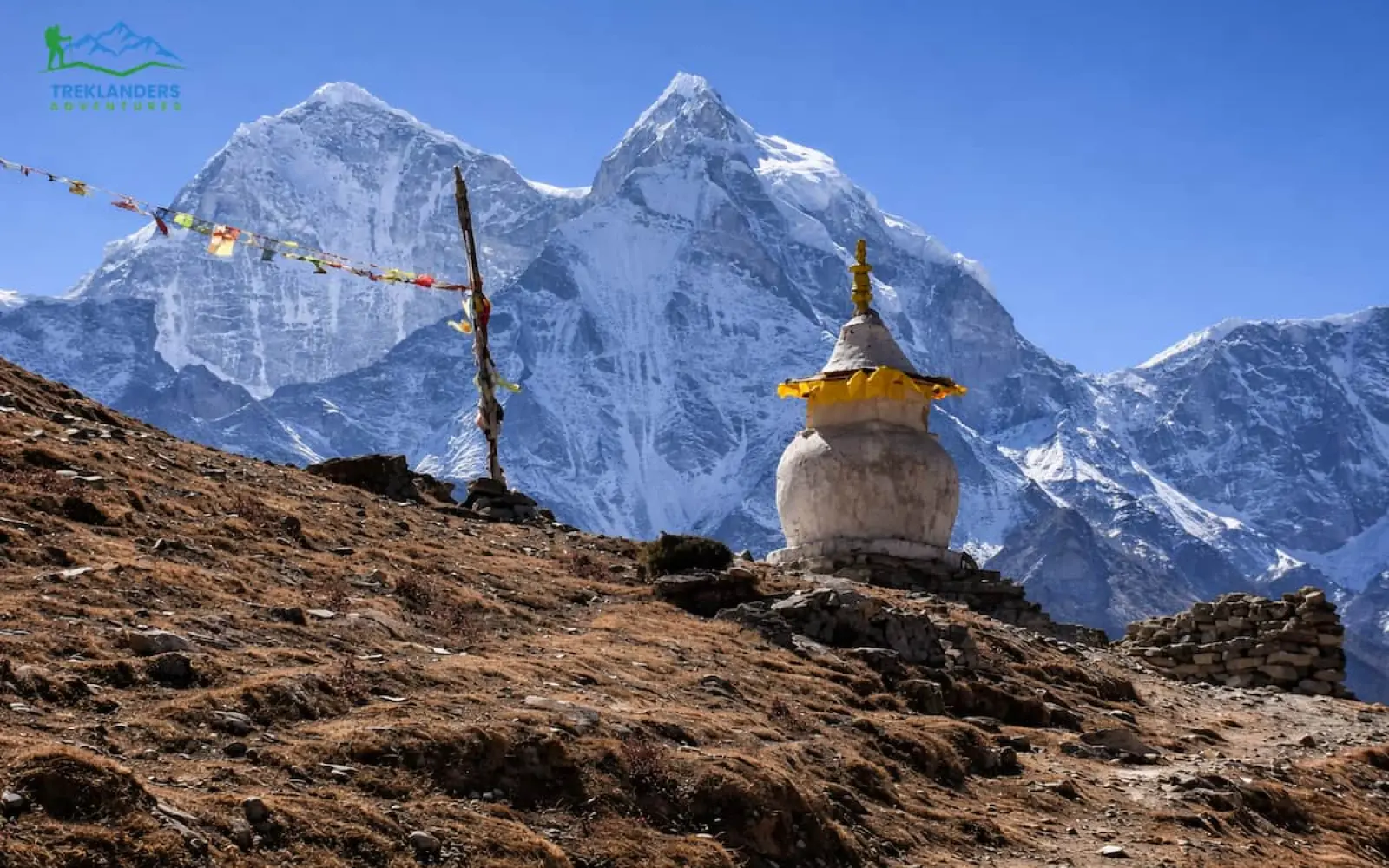
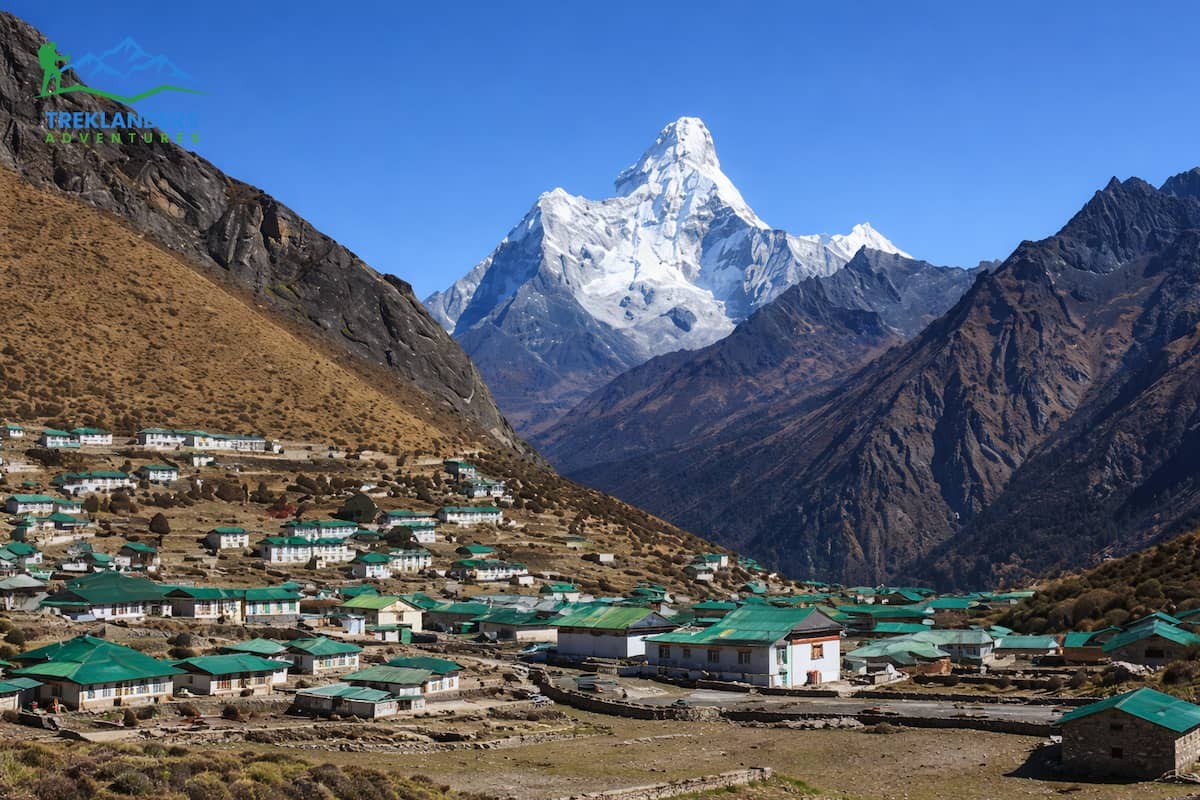
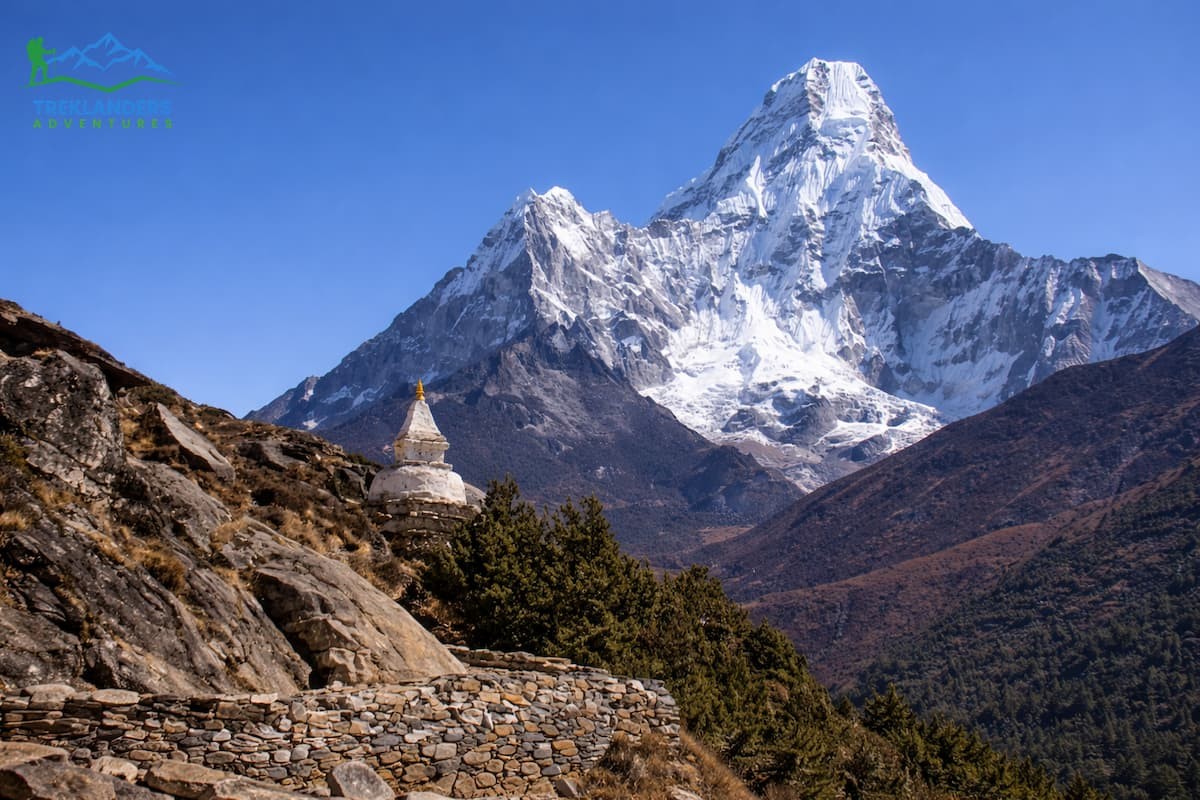
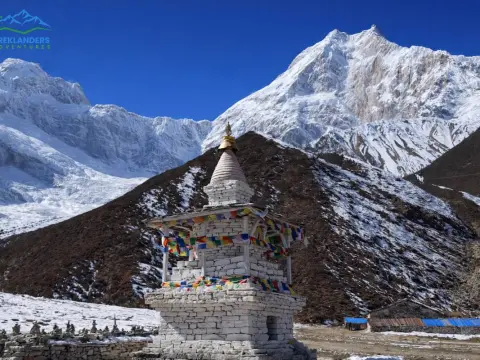
Stupa in front of Mt. Ama Dablam.
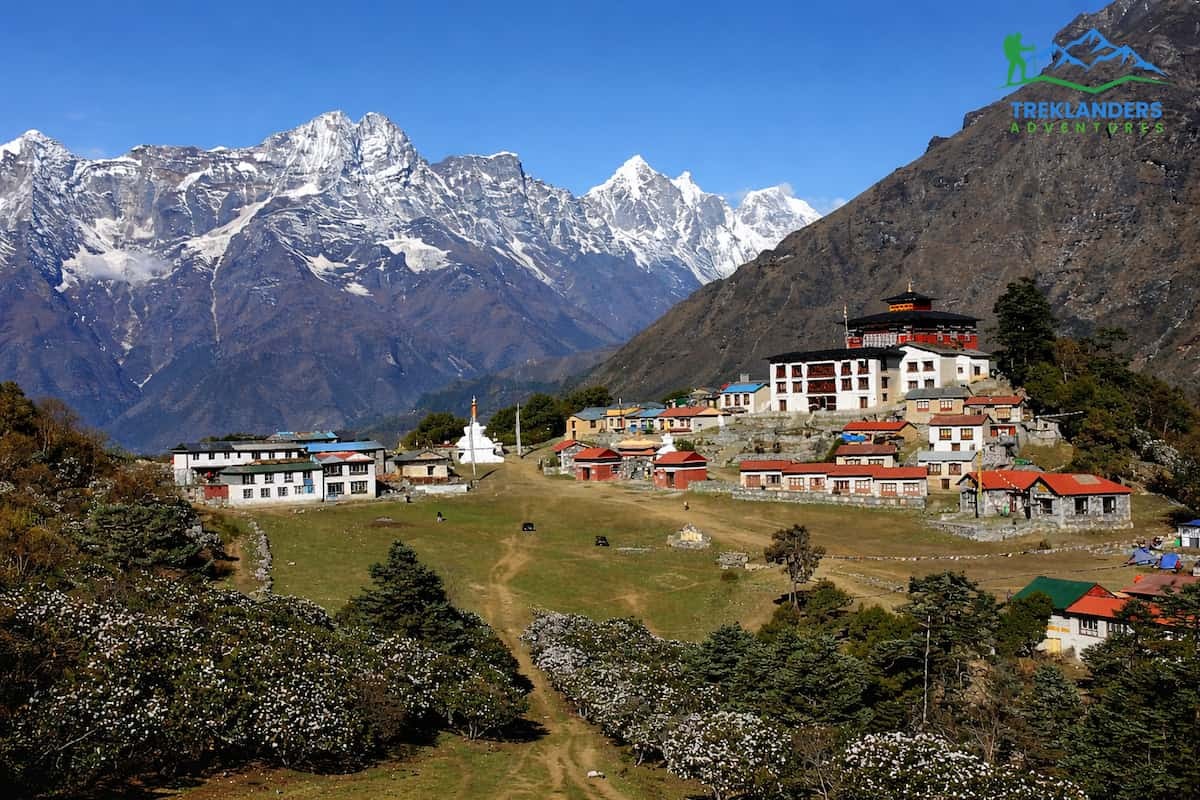
The Sherpa indeed attach a deep meaning to religion. Most of them are devotees of Tibetan Buddhism. Having monasteries, prayer flags, and mani stones are typical features of their village landscapes. Monastic ceremonies inform the functioning of everyday life, celebration times, and even community resolutions. Besides spiritual centers, monasteries like Tengboche also hold great importance in this respect. Mani Rimdu, a festival, is an occasion when the communities unite as well as manifest their faith and spiritual customs.
Sherpas traditionally depended on farming, herding and trade for their livelihood. They cultivated crops like potatoes and barley and also raised yaks for transport and dairy products. Besides this, trade routes between Nepal and Tibet also enabled their economy. However, with the rise of mountaineering and trekking in the 20th century, their role was changed drastically.
Currently, a good number of Sherpas are engaged in trekking and mountaineering tourism. They play the roles of guides, porters, and climbing experts. Their expertise in glacier navigation, altitude risk management, and assisting climbers is a lifeline in Himalayan expeditions. The worldwide image of Sherpas was established after the first Everest expeditions, especially through the person of Tenzing Norgay.
Although affected by modernization, Sherpas continue to preserve their cultural essence strongly. Their language, religious beliefs, and social organization still dominate their lifestyle. Historically, they have been a reflection of human migration, changes, and endurance in the world's harshest environments.
2. Importance of Buddhism in Sherpa Culture
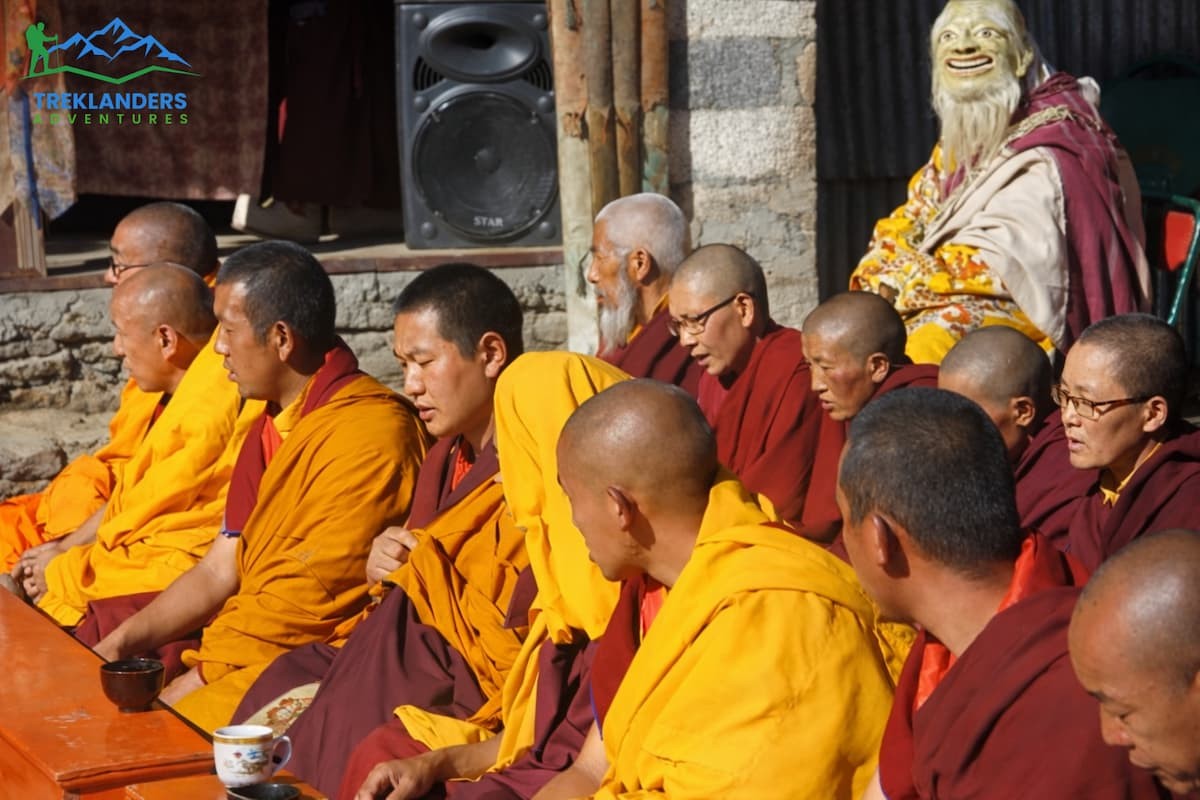
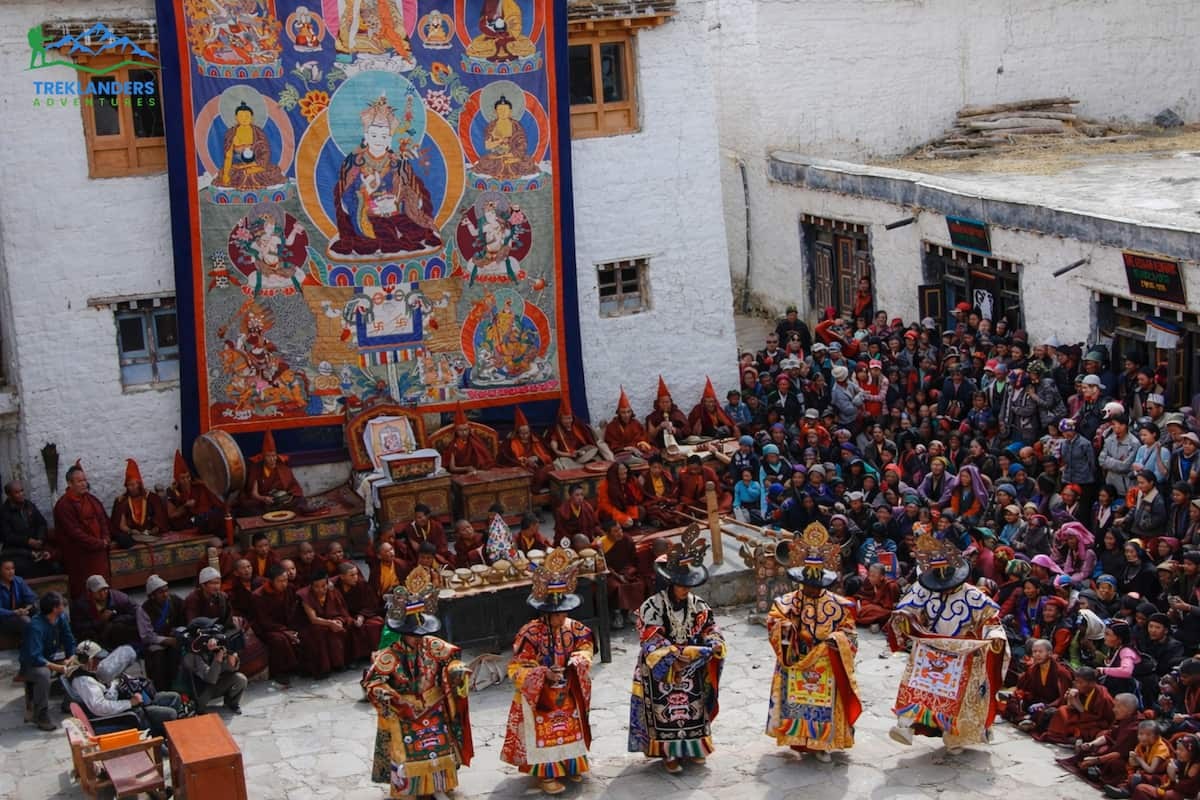
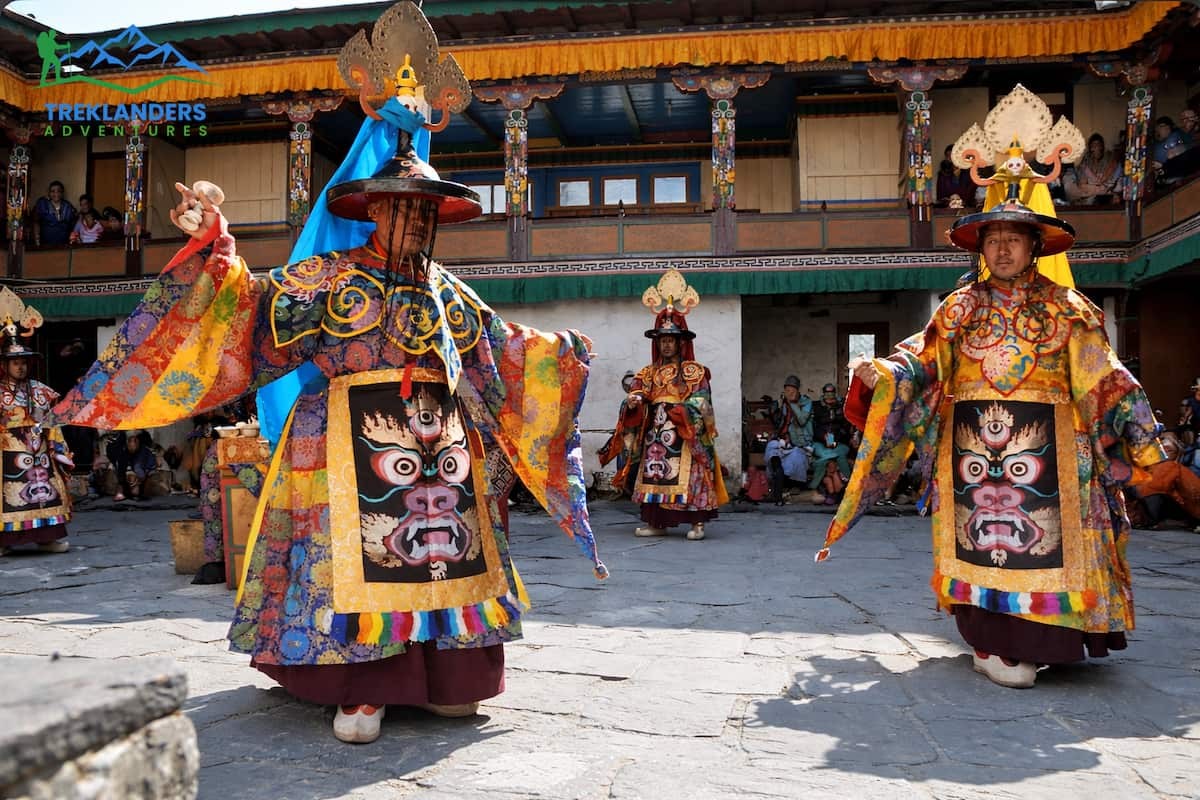
Sherpa people celebrating the Mani Rimdu Festival inside Tengboche Monastery.
Buddhism is deeply embedded in the Sherpa culture and lifestyle. Most Sherpas are adherents of Tibetan Buddhism, which not only influences their daily activities and moral values but also governs their social behavior. The presence of religion is evident in personal dwellings, local communities, and remote trekking paths. It is never a separate aspect of life; on the contrary, it permeates the entire existence - the way people think, their conduct, and even their relationship with the environment.
Along with serving as places of worship, monasteries or gompas also play the role of hubs for spiritual activities. One of the prominent monasteries is the Tengboche Monastery. The monks residing there are engaged in learning and meditation, besides chanting hymns and performing religious ceremonies and festivals. People from nearby villages come to gompas to receive blessings, especially when they are setting off on journeys or during significant moments. Visitors sometimes catch the sound of chanting or see the warm glow of butter lamps inside these holy places.
You may notice that there are prayer wheels at different points on the mountain trails. These are cylindrical objects that contain the written mantras inside them. People turn them in a clockwise direction while they are walking. It is believed that every rotation sends out a prayer into the universe. This tradition is an embodiment of a simple thought that prayers need to be ongoing and integrated with the movement. Mani stones are another typical element. These are slabs of stone on which sacred scriptures have been inscribed, most commonly the chant "Om Mani Padme Hum."
This mantra stands for compassion and wisdom and is connected to Avalokiteshvara, the Bodhisattva who represents compassion. Sherpas trust that saying or seeing this mantra will be spiritually beneficial to them. Mani stones are usually piled up into long walls. You have to pass them on your left side, which is the way you walk clockwise around them.
Besides, prayer flags are an excellent way to decorate and give meaning to the environment. Flags with prayers and symbols are rolled up in each of the five colours. Blue for sky, white for air, red for fire, green for water, yellow for earth. When the wind blows, the blessings are sent to the whole land. Like Sherpas, you can also hang flags on your home, bridge, or mountain pass if you want to have more peace and harmony.
Religious traditions also shape one's moral compass. Respect is paramount. Stupas, mani walls, and prayer wheels should always be circumnavigated in the clockwise direction. This is in accord with the natural order of Buddhist practice. It is forbidden to sit, step, or climb on mani stones. These are sacred, not ornamental, objects.
For the Sherpas, Buddhism is not a mere theory but a way of life. It changes the way they interact with others, how they endure difficulties, and how they discover the mountains. If you decide to do trekking in Sherpa villages, you will not see religion only, but actually will experience a vibrant religion living and breathed every day.
3. Sherpa Villages and Community Life
Khumjung Village
Sherpa village life mainly depends on altitude, climate, and communal relationships. Most settlements are located at altitudes of more than 3,000 meters in the Khumbu region. The natural environment is very challenging. Winters are very cold. The amount of land is minimal. People rely on each other and on careful usage of the available resources.
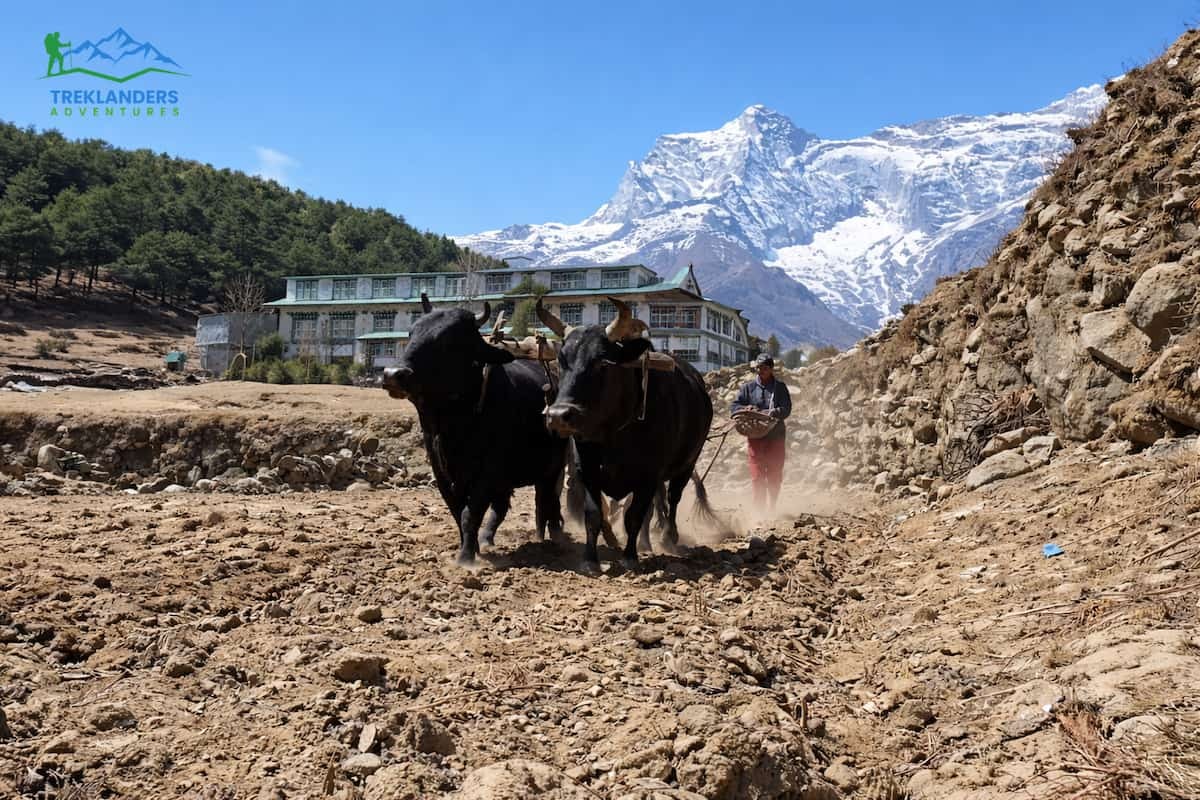
Farm work is the most important activity. Sherpas cultivate a variety of crops that can endure cold weather and nutrient-poor soils. Potatoes constitute the main food since they are easy to keep and supply a regular source of nutrients. Barley is also widely grown. Apart from food, it is used for making traditional drinks. Due to short growing seasons, families have to work around the clock during planting and harvesting times.
Animal farming is another aspect that contributes to the Sherpa way of life. Besides yaks and nak, the female of the species, Sherpas also keep these animals. In addition to transporting heavy goods along mountain paths, yaks also yield milk, butter, and wool. Naks are more milk-productive than males, which is very much necessary for both sustenance and trade. As firewood is limited at this height, dried yak dung serves as a very common source of fuel.
Sherpa people farming and ploughing fields in Namche.
The community is both close-knit and practical. It is very common for a family to reside near each other. They cooperate by sharing the work that arises when farming, building houses, or organizing festivals. The influence of the elders and of local customs is very strong in making the final decisions. For living in such isolated places, helping each other is a must.
Most children receive their education in the mountain villages. Schooling has gradually become better, especially when tourism and foreign assistance have helped. Besides the Nepali and English languages, the curriculum also includes local culture. Many students go on foot for miles every day just to get to school. Education nowadays is the key to paths different from traditional work. Several villages are well known. Namche Bazaar is the main trading hub. It has markets, bakeries, and trekking shops. Khumjung is quieter and known for its school and monastery. Pangboche is one of the oldest settlements, with strong religious traditions. Each village reflects a balance between tradition and change.
Tourism is now a major source of income. Many Sherpa people work as guides, porters, lodge owners, or shopkeepers. Teahouses provide food and accommodation to trekkers. Income from tourism supports education, healthcare, and infrastructure. It has improved living standards, but also increased dependence on seasonal visitors.
Sherpa villages show a clear pattern. People adapt to a difficult environment through cooperation, practical skills, and strong cultural values. Tradition remains important, but modern influences continue to grow through tourism and education.
4. Sherpa Food and Daily Diet
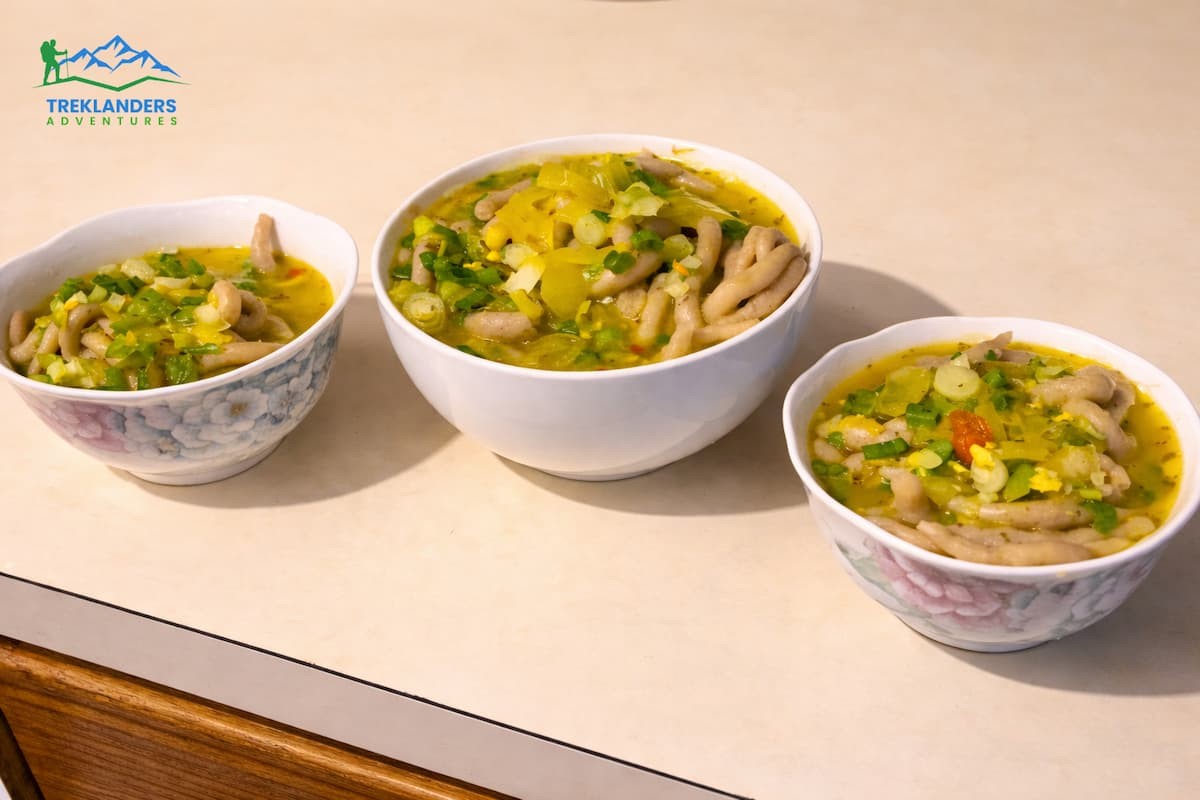
Traditional Sherpa food: Towa.
Sherpa food is practical, rich in energy and is a lifestyle-friendly option for high-altitude living. Besides the harsh weather, long distances on foot, and lack of agricultural land, the diet of the people is also influenced by the availability of food items. Nutritional factors such as calories, heat, and ease of digestion are taken into account when planning a meal.
Dal Bhat is one of the most important meals in their diet. It consists of rice, lentil soup, vegetables, and occasionally pickles or meat. The meal is an excellent source of a healthy combination of carbohydrates and proteins. Rice supplies the body with instant energy, while lentils help in muscle recovery. Sherpas commonly consume dal bhat twice a day because it is nutritious, filling, and a safe bet.
Making barley flour by roasting is the first step in preparing Tsampa. It can be mixed with tea or water. Since it is ready to eat, it is a great option if you are in a completely isolated place. Kal Tsampa is small and loaded with energy. Travellers can eat it on the go. The high glucose yield of the product supports the ongoing energy needs that are highly critical when one is at a very high altitude.
Sherpa stew, often a variation of thukpa, is regularly found in the rural settlements and the places where tourists are served their meals. Noodles, vegetables, and sometimes the meat of the yak are present in it. The broth is a great source of warmth and is very refreshing at the same time. It can be used for maintaining one's body temperature and serves as a substitute for fluids that are lost through the dry air of the mountains. Ingredient variety offers the best combination of nutrients.
Every day consumption of yak butter tea is a habit among Sherpas. The basic ingredients of the tea are tea leaves, yak butter, water, and salt. It is quite different in flavor from normal tea. Drinking it is like having something that is thick and has a little grease in it. This beverage is very high in fats and calories, which are necessary for survival in cold temperatures. It is also an excellent means of hydration as one has frequent drinks throughout the day.
These foods fulfil certain requirements. Your body uses more energy when you are at a high altitude. Since there is less oxygen, your body has to exert more effort. You require simple, energy-rich, and easy-to-prep meals. Sherpa food fits these requirements. It is based on local products that can be cultivated or survive in difficult conditions.
Food is also a means of showing hospitality. Sherpa tradition is that the offering of food and tea is a sign of respect and affection. Even in remote areas, guests are greeted with hearty food.
As a hiker, you should sample local cuisine in mountain lodges. You get to taste fresh and functional food that is well adapted to the place. Besides, through sharing meals and simple customs, you also get to know the real Sherpa hospitality.
5. Festivals and Traditions in Khumbu
Mani Rimdu Festival at Tengboche Monastery.
Most of the festivals in the Khumbu region reveal Sherpa customs, religion, and the rhythm of life through the seasons. The majority of festive occasions adhere to the calendar of Tibetan Buddhism. They integrate prayer, ritual music, and the coming together of the community. These cultural performances are not simply for entertainment. They channel the spiritual path and keep the social ties alive.
The chief festival is Mani Rimdu. It takes place at Tengboche Monastery along with a few other monasteries in the vicinity. Monks enact the Cham dances wearing masks. These dances depict good triumphing over evil. Besides that, there are rituals involving prayers, blessings, and symbolic ceremonies. Local people and tourists congregate to watch and get the blessings. The timing of Mani Rimdu is in the fall, which is the peak trekking season.
Dumji is the other major holiday. It is observed in places like Namche Bazaar, Khumjung, and Pangboche. Dumji is all about the safeguarding and prosperity of the community. For a few days, families unite. Dances, feasts, and communal rituals take place. Different villages may celebrate on their respective days as per their local customs.
Tengboche Monastery
Losar is the Sherpa New Year celebration. Most of the time, it happens in February or March. Family members clean their houses, make special dishes, and go to monasteries. Prayer flags are changed. Old stuff is disposed of to make space for a new beginning. Essentially, Losar is about renewal, good luck, and setting a positive mindset for the coming year.
These festivals are structured in a very specific way. Religious ceremonies led by monks. Villagers engage by making offerings, singing, and dancing. Traditional attire is a must. Usually, the style is very rich with ornaments and hand-woven fabrics. There is a huge emphasis on food. Large meals are being lovingly made by families and then shared with neighbors and guests.
Festivals also have various functions. One of them is to gather scattered village people together. This, in turn, has the effect of strengthening cooperation and the sense of common identity. In isolated areas, such a social bond is a lifeline.
The growth of tourism has added a new dimension to the festivals. It is a common thing for trekkers to make a Mani Rimdu or any local festival a priority in their travel itinerary. The result is that the villages benefit economically as their lodging facilities get occupied and guides are employed. At the same time, the soul of the matter is the spiritual one. Sherpas do the religious celebrations primarily for their own spiritual fulfilment and not for the sake of performance.
If you travel to a festival, behave in a manner that befits the situation. During the ceremonies, keep the noise level down, be very respectful, and if possible, try not to take pictures. You will get permission to take photos only if you ask first. When you visit temples, wear decent clothes. Such things serve as a sign of recognition of local customs.
Khumbu's festivals provide a window into the Sherpa's world. Through them, you get to witness faith at its fullest, how the community comes together, and cultural traditions that have not changed for many years.
6. Respectful Behavior for Trekkers
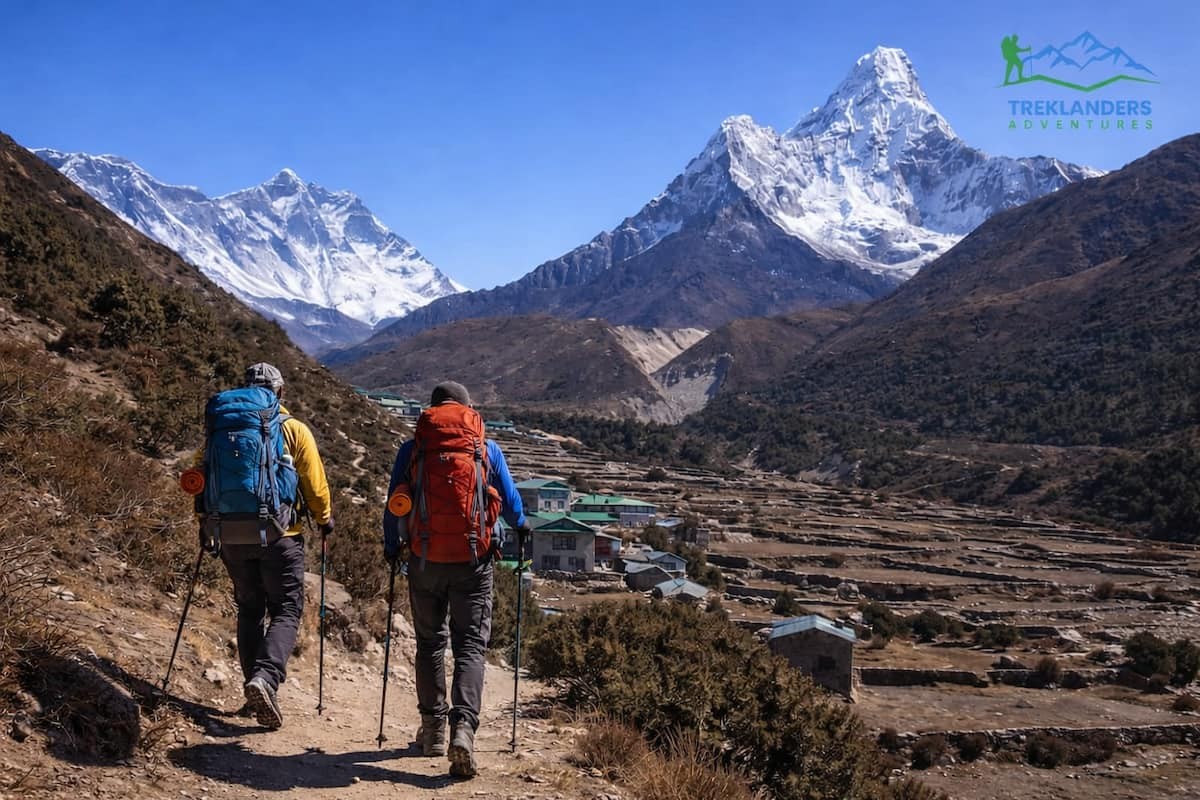
Trekkers walking along the Dingboche Valley.
Respectful behavior in the Khumbu region is practical and visible. Your actions affect how locals receive you. Sherpa communities value humility, awareness, and quiet conduct, especially in religious and social spaces.
Ask permission before photographing people
Always make eye contact and gesture or ask politely. Many Sherpas are open to photos, but consent matters. Respect a refusal without debate.
Walk clockwise around religious structures
This applies to stupas, mani walls, and prayer wheels. Passing on the correct side shows you understand local practice. For example, when you pass mani walls in villages like Namche Bazaar, keep the wall on your right.
Dress modestly inside monasteries
Cover shoulders and knees. Avoid tight or revealing clothing. Monasteries such as Tengboche Monastery are active religious spaces, not tourist attractions.
Remove hats and sunglasses when entering temples
This shows respect. It also signals that you are attentive and present during rituals or visits.
Avoid loud behavior near religious sites
Keep your voice low. Do not play music or create distractions. Monasteries and shrines are places for prayer and reflection.
Do not touch or step on sacred objects
Mani stones, prayer books, and altars have religious meaning. Observe without interfering. Never sit on or climb over these items.
Supporting the local economy and businesses
Accommodate at locally owned teahouses. Employ locals as guides and porters. Purchase regionally made goods. This keeps money circulating in the community and supports a sustainable future.
Be respectful of eating habits and culture
When you are offered food or tea, accept it with your right hand or with both hands. Only take as much as you can eat. Paying attention to such small things will get you noticed positively.
These are very easy ways of doing things. They only need you to be mindful and not exert yourself. Simple gestures will lead to the establishment of trust and positive communication. You will have a better time when respecting the local culture, and at the same time, you will be contributing to the development of responsible tourism.
Sherpas are the backbone of Himalayan mountaineering. Almost every major expedition in the Everest area relies on their work. They not only help climbers by showing them the way but also carry out many organizational tasks. Without their support, high altitude travel would simply not be possible.
On Mount Everest, they are the ones who know the way best. They work as guides for foreign climbers who, of course, do not have the experience of locals. Being knowledgeable of the terrain, weather patterns, and safe routes is a great help in lowering the risk associated with operating in such a dangerous environment.
Sherpas are like the backbone of expeditions in a way, as they are the ones who carry and transport all the heavy and necessary equipment. This way, the load of tents, ropes, oxygen cylinders, and food supplies is taken from the base camp to higher camps, very often in the midst of extreme conditions. Given that a single load can weigh 20 to 30 kilograms or even more, the work entails not just strength and endurance but also the ability to handle the stress at high altitude, where oxygen levels are extremely low.
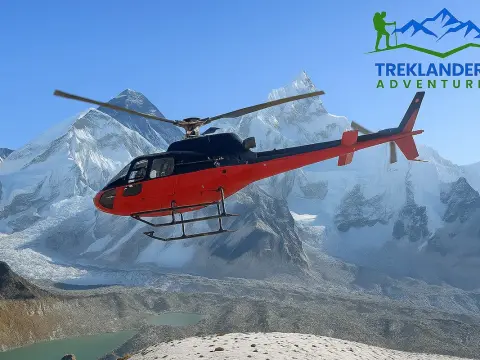
Everest Base Camp Trek and Returning via Heli | 13 days
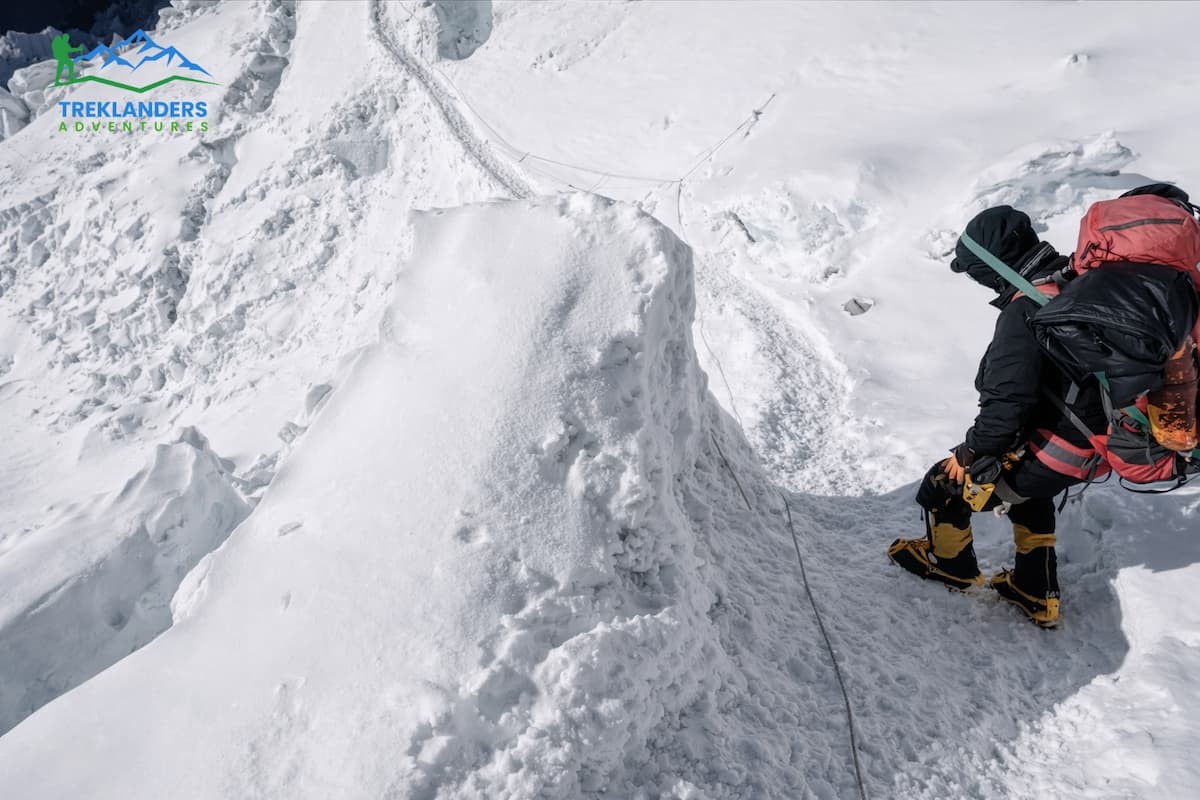
Besides these, they are the ones fixing the climbing routes. At places such as the Khumbu Icefall, Sherpa groups are seen setting up ladders and ropes. These preparations enable climbers to move across deep crevasses and steep ice walls. Without such arrangements, likely very few expeditions would be able to carry on. Fixing the routes is one of the riskiest tasks on the mountain.
Aside from the fact that they are the ones who know the ways leading to the summits. They are also the most incredibly talented climbers and have produced some of the best climbers on the planet. The world-famous Tenzing Norgay is undoubtedly one of the top names. Together with Edmund Hillary, he summited Everest in 1953 during a historic expedition. That climb was the first confirmed ascent of the world's highest peak. It gave worldwide fame to Sherpa climbers.
Sherpas keep setting records for themselves. Many have been to the summit of Everest numerous times, much more than most foreign climbers. Their continuous successes are a result of their gained experience, physical adaptations and their intimate knowledge of the mountain.
Sherpas' capability is not only physical but also technical. They can walk swiftly at very high altitudes. Their bodies use oxygen more efficiently that leads to better performance in thin air. Besides, they gain practical skills such as map reading, carrying heavy loads, and judging risks since childhood.
Besides climbing, Sherpas are in charge of mountain expedition logistics. They arrange camp settings, cook food, and check safety conditions. They even make on-the-spot decisions based on changes in weather and terrain.
Without Sherpas, mountaineering in the Himalayas would be very hard and almost impossible to gain success. They are not only the support but also the leaders, packed with skills and knowledge at hand.
8. Why Understanding Sherpa Culture Enhances Your Trek
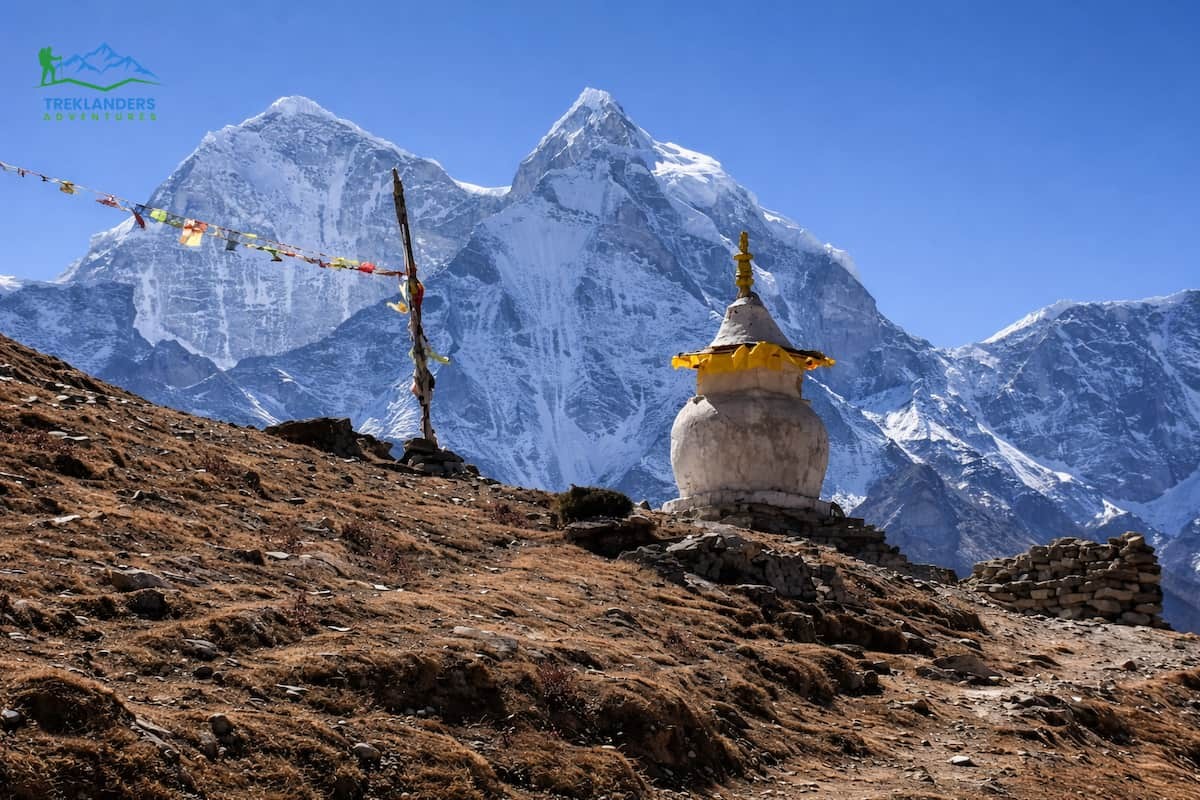
Stupa in front of Mt. Ama Dablam.
Knowing about Sherpa culture makes your trekking experience not only enjoyable but also sensible. You can navigate the area smoothly and efficiently instead of feeling lost. Besides, your social skills would get better. You will hardly commit any errors.
There are a lot of ways you could improve your conversation and rapport with local people. Even a bit of awareness about typical customs can prevent you from embarrassing yourself. For instance, you are familiar with the right way to initiate greetings, the etiquette of asking for someone's photo, and the proper conduct around monasteries. These simple behaviors help establish trust swiftly.
Your comprehension of the things around you becomes more meaningful. The sight of prayer flags, mani stones, and monasteries is not only a pleasure to the eye but also a source of spiritual nourishment. A grasp of the message conveyed by the chant "Om Mani Padme Hum" instantly links you to the Sherpa community, as it helps shed light on their emphasis on compassion and harmony as guiding principles of life. It therefore converts a mere visual indulgence into a cultural immersion.
9-Day Everest Base Camp Trekking with Helicopter Return | 9 days
The quality of your interaction with local people will be significantly enhanced. Sherpas are naturally friendly and hospitable, particularly when visitors demonstrate respect towards them. It will no longer be difficult for you to strike up a conversation. Moreover, guides will be more willing to disclose lesser-known aspects of the area, including its history and customs. Such kind of information serves as an extra gain that complements the actual trekking.
The knowledge about Sherpa culture you have acquired will be instrumental in your decision-making during the trek. The local lifestyle fundamentally revolves around concepts like patience, taking one's time, and being reverential towards the environment. These values can be considered as the basis for a safe trekking mentality. By adopting such a philosophy, you are consequently minimizing exposure to hazards, including the effective management of altitude.
When you support the local economy in an impactful way through tourism, it shows your understanding of the Sherpa communities. By opting for local teahouses, guides, and other services, you are not only preserving the income of the region but also paving the way for its long-term development.
On the other hand, you receive intangible benefits such as self-growth and enrichment. Your hiking expedition is no longer a mere act of reaching a destination. You witness the lifestyle of the people living in an extremely challenging environment with innovative community structures and firm value systems. This insightful view remains with you even after your trekking experience.
Thanks to cultural understanding, a simple trekking excursion has the potential to transform into a thoroughly immersive experience. Mere physical presence in the Khumbu region is not enough. Armed with knowledge and a proper attitude, you connect to it on a spiritual level.
9. Sherpa Hospitality and Teahouse Culture
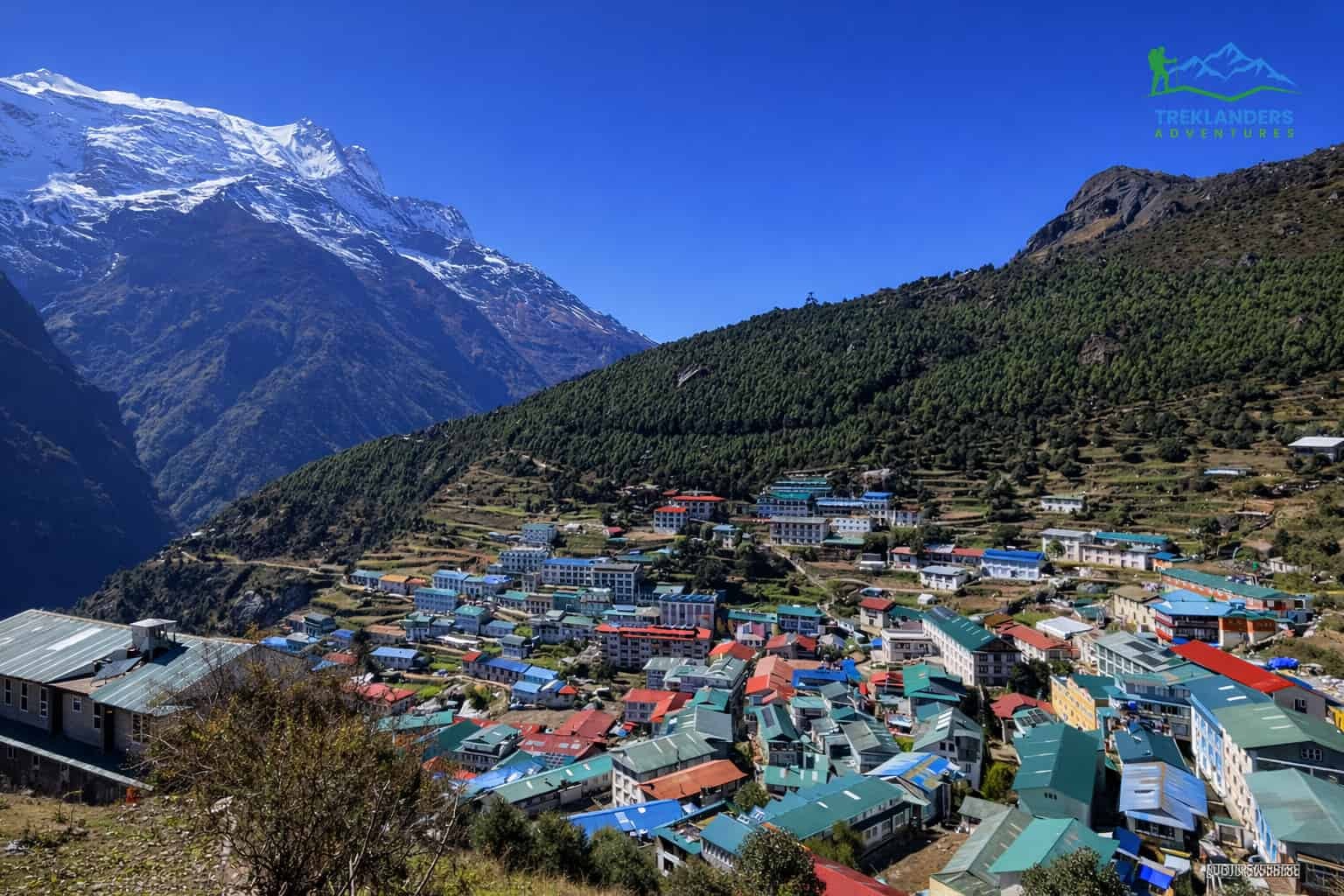
Teahouse lodges in Namche Bazaar
Sherpa hospitality forms an essential aspect of trekking experiences in the Khumbu region. It is through the teahouse system, which is the backbone of almost all routes in the Everest region, that you come to know the Sherpa hospitality. Teahouses are little, family-run lodges. They offer basic accommodation, meals, hot drinks, and a place to unwind after a long day of hiking.
Most of these lodges are run by Sherpa families. Their service is very much in a personal and direct manner. You will be eating where they eat; you will be staying in their homes or in the buildings attached to the house. This will lead to a very strong rapport between the trekkers and the hosts. The main area is the dining room. The stove is at the center and serves as a source of heat as well. People usually come here in the evenings. Trekkers exchange their stories, enjoy tea, and relax after the day. Talk can be heard in these rooms between guides, porters, and travellers from all over the world.
Everest Base Camp via Cho la Pass from Gokyo Valley Trekking | 18 days
Food is straightforward and nutritious. Meals like dal bhat, noodles, and soup are typical. Hot beverages, like tea and coffee, are generally at hand. These are not only good for warming but are also very helpful for hydration at high altitude. Being respectful is of utmost importance in these situations. Say "Namaste" when you meet hosts. Complement them after meals. Keep the noise down when it is late. Obey the house rules. These little gestures are signs of one's understanding and appreciation.
In conclusion, the culture of the teahouses is both efficient and hospitable. It makes it possible for you to go through these remote areas while at the same time, you remain linked with the local life.
Conclusion
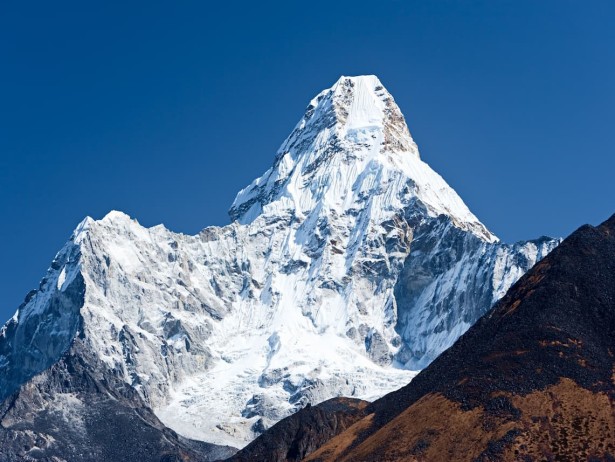
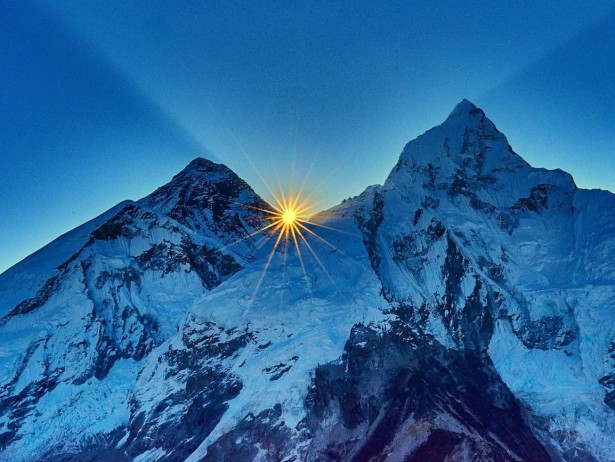
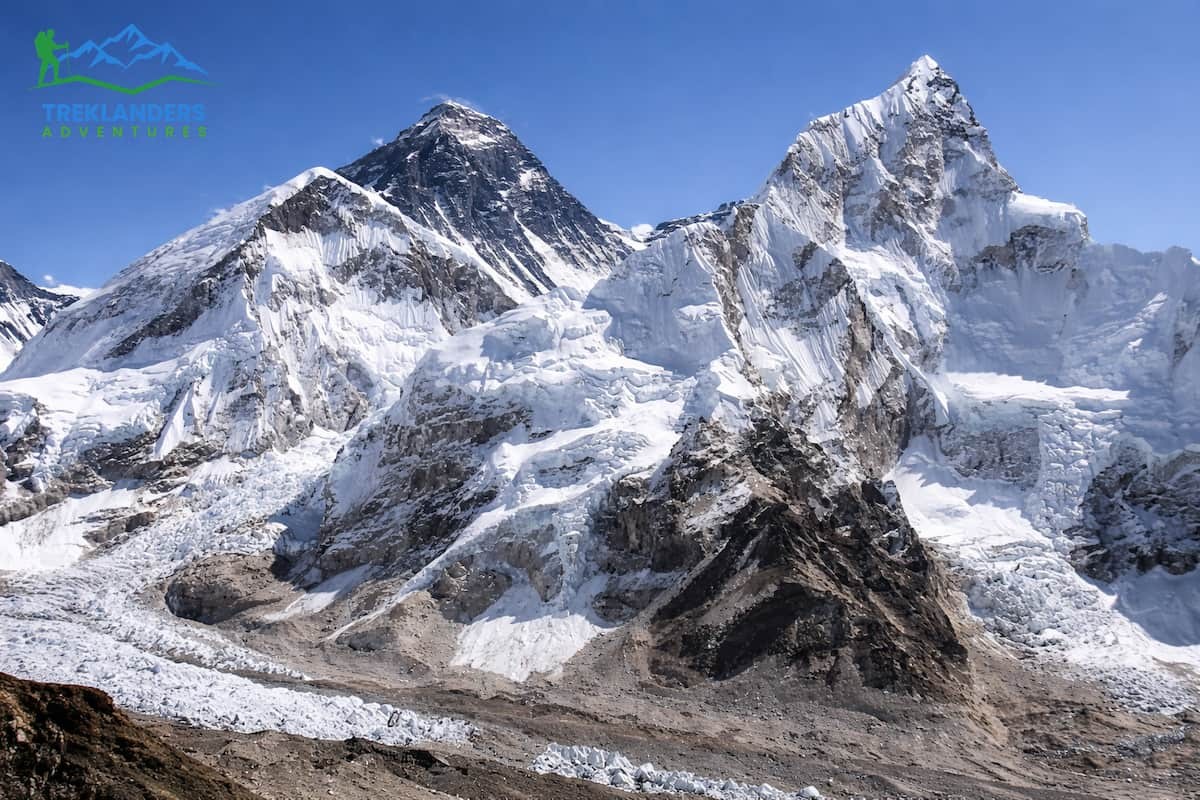
Mt. Everest
Sherpa culture shapes every aspect of trekking in the Khumbu region. It defines how people live, work, and interact with the mountains. From their Tibetan roots to their strong Buddhist beliefs, Sherpas maintain a clear identity built on tradition, adaptation, and community.
You see this culture in daily life. Farming, yak herding, and village cooperation show practical survival in a harsh environment. Monasteries, prayer flags, and rituals show a deep spiritual system that guides behavior. Food, festivals, and teahouse hospitality reflect both necessity and generosity.
Sherpas also play a critical role in mountaineering. Their knowledge, strength, and experience make Himalayan expeditions possible. Their contribution goes beyond support. It is leadership in extreme conditions.
For trekkers, understanding this culture changes the experience. You move with awareness. You respect local customs. You build better connections with people you meet along the trail. Simple actions, such as greeting locals, following religious practices, and supporting local businesses, have a real impact.
The Khumbu region is not only about landscapes or reaching high-altitude destinations. It is a living cultural space. When you recognize this, your trek becomes more meaningful and responsible. A successful trek is not measured only by distance or altitude. It is also defined by how well you understand and respect the people who call these mountains home.