Mandatory Guide Trek Rules in Nepal: Essential Regulations and What You Need to Know
27 Sep 2026
Explore Nepal’s latest trekking guide rules, permits, and regulations for a safe and legal Himalayan adventure.

A senior Treklanders guide has spent sixteen years walking the three biggest trekking corridors in Nepal. He started as a porter on the Everest trail at nineteen, moved up to assistant guide within three seasons, and has led groups to Everest Base Camp, Annapurna Base Camp, and the Manaslu Circuit more times than he can count on both hands. He grew up in a village two days’ walk from Namche Bazaar, which means the Khumbu trail was his childhood backyard before it became his job.
What makes him worth sitting down with isn’t just the number of summits or the years on the trail. It’s that he has watched all three regions change, watched trekkers make the same mistakes year after year, and developed opinions about which trail fits which kind of person. He has carried clients through snowstorms at Thorong La, talked first-timers out of panic at 4,900 meters near Lobuche, and sat with a group in a Sama Gaon teahouse while a storm sealed off Larkya La for two full days.
He’s also one of the few guides at Treklanders Adventures who has led every single one of the three flagship routes within the same calendar year, moving from spring departures on Everest to autumn groups on Manaslu without much of a break between. That kind of back-to-back exposure gives him a comparison most guides don’t get, since many specialize in one region and stay there. Ask him which trek is “the best,” and he’ll tell you the question itself is the wrong one. Ask him which trek fits a specific person, a specific fitness level, and a specific amount of time off work, and he’ll give you a straight answer in under a minute.
We caught up with him between seasons, in the short window after the autumn groups come home and before spring bookings start again. He speaks the way guides tend to speak after years on the trail: direct, a little blunt, with no patience for sugar-coating a hard day. Before he joined Treklanders Adventures full time, he spent two seasons supporting climbing expeditions on Island Peak and Mera Peak, which is partly why he’s so particular about altitude discipline now. He’s seen what happens when a climbing team ignores the same warning signs a trekking group might shrug off. Here’s what he had to say about altitude, gear, mistakes, and the trail he still can’t stop thinking about.
People ask me this constantly, and the honest answer is that they’re different enough that comparing them head-to-head doesn’t always work. The Everest Base Camp trek is the most famous for a reason. You fly into Lukla, and from that moment the mountains are right there, close and enormous. The trail through Namche, Tengboche, and Dingboche climbs steadily, and by the time you’re standing at Everest Base Camp at 5,364 meters, you’ve earned every step. It’s a trek built around one long push upward, with Kala Patthar at the end as the real reward.
Annapurna is a completely different mood. On the Annapurna Base Camp trek, you start in warm rice paddies around Pokhara and finish inside a natural amphitheater of 7,000 and 8,000-meter peaks within about a week. The climate changes faster than on any other trek I know. You leave Ghandruk in a t-shirt and you’re in a down jacket by the time you reach Machhapuchare Base Camp. It’s shorter, gentler on the lungs since the highest point is only 4,130 meters, and it suits families and first-timers far better than people expect.
Manaslu is the one I’d send an experienced trekker who wants something that still feels wild. The Manaslu Circuit Trek crosses a genuinely restricted area, so you need a permit and a licensed guide just to walk past Jagat. Villages like Samagaon and Samdo have kept their Tibetan character because so few outsiders pass through compared to Everest or Annapurna. Then there’s Larkya La at 5,106 meters, which is a longer and tougher pass day than almost anything on the other two treks. If someone tells me they’ve done Everest Base Camp and Annapurna and wants a bigger challenge with fewer crowds, I point them toward Manaslu every time, sometimes paired with Tsum Valley if they have the extra days.
The culture shifts as sharply as the landscape does, and that surprises people more than the scenery. On Everest you’re almost entirely in Sherpa territory, with Buddhist monasteries like Tengboche shaping daily life around the trail. On Annapurna, the lower and middle villages belong to the Gurung and Magar communities, and the religious mix leans toward a blend of Hindu and animist tradition before it turns more Tibetan-Buddhist higher up near Annapurna Circuit country. On Manaslu, you cross from Hindu hill villages near the trailhead into fully Tibetan-influenced settlements once you pass Jagat, and the architecture, the prayer wheels, and even the food change within a single day’s walk. If a client wants to understand Nepal’s cultural variety and not just its mountains, I tell them honestly that no single trek shows it all, and that’s part of why repeat clients often come back for a second or third region, sometimes adding on something further east like the Gokyo Valley or further out like Kanchenjunga once they’ve caught the habit.
They think fitness protects them. It doesn’t, not fully. I’ve guided marathon runners who got hit hard by altitude sickness at 4,000 meters and watched sixty-year-olds with modest fitness levels sail through because they respected the pace. Altitude doesn’t care about your gym routine. It cares about how fast you go up and how well you listen to your own body.
The second mistake is treating acclimatization days as wasted days. On the Everest Base Camp trek, we build in rest days at Namche and Dingboche specifically so your body can produce more red blood cells and adjust to lower oxygen. Clients sometimes ask if we can skip them to save time. I always say no, and I mean it. Those days aren’t filler. On the Annapurna Base Camp route, people underestimate altitude because the base camp itself sits at only 4,130 meters. I’ve seen trekkers push too hard between Chhomrong and Machhapuchare Base Camp because they assume the lower altitude ceiling means the normal rules don’t apply. They still do.
Manaslu is where I’m the strictest about this, because the margin for error on Larkya La day is small. Getting a headache at Dharmasala at 4,450 meters, the night before crossing a 5,106-meter pass, is a signal I take seriously every time. I’ll slow the whole group down or, if needed, send someone back down with a porter. On the Manaslu Circuit, there’s no quick escape route near the pass, so prevention matters more than it does anywhere else I guide.
My rule for every trek is the same: drink more water than feels necessary, walk slower than feels necessary, and tell your guide the moment something feels off, not three hours later when it’s worse. The people who finish strong are almost never the fittest ones in the group. They’re the ones who take acclimatization seriously from day one.
A lot of clients ask me about Diamox before they fly to Nepal, and I always give the same answer: talk to your own doctor about it weeks before departure, not the night before you leave. It’s not a substitute for proper acclimatization, and it won’t mask serious symptoms safely. What it does is support the gradual ascent plan we already build into every itinerary. I’ve guided people who swore by it and people who never touched it and did fine on the same schedule. The medication isn’t the variable that decides your trip. Your pace is.
Overpacking, without question. I’ve unpacked duffel bags with three pairs of jeans, a hair dryer, and enough snacks to feed a small group for a month. Your porter can only carry so much weight, and every extra kilogram you bring is a kilogram someone else has to haul up a mountain on your behalf. On Everest Base Camp, porters are limited to reasonable loads for their own safety, and Treklanders Adventures takes that limit seriously because it protects the people doing the hardest physical work on the trek.
The second mistake, and this one surprises people, is underestimating how cold the nights get versus how warm the days can be. Trekkers pack like they’re heading into a single climate zone. On the Annapurna Base Camp route especially, you go from subtropical warmth near Pokhara to near-freezing nights at Machhapuchare Base Camp within four or five days. I tell every client the same thing: layering beats bulk. Three good layers that you can add or remove outperform one heavy jacket every time, and they weigh less in your bag.
Third, and I say this every season, people forget that a trek is mostly about your feet. New boots that haven’t been broken in cause more trip-ending blisters than altitude sickness does. I’ve had clients on the Manaslu Circuit arrive with boots straight out of the box, and by day three they’re limping. Break your boots in for weeks before you fly to Nepal, not days. Wear the exact socks you’ll wear on the trail when you do it, because the fit changes with sock thickness.
Last one: cash. Every trekker assumes there will be an ATM or a card machine somewhere along the trail. There isn’t, not reliably, not past the first few villages. Carry enough Nepali rupees for the whole trek before you leave Kathmandu or Pokhara, because charging your phone, buying a hot shower, or getting extra snacks at altitude all run on cash.
I’ll add one more, because it comes up constantly with clients heading toward restricted areas like Upper Mustang or the Manaslu valley: passport photos and photocopies. Permit checkpoints want paperwork, and if a client hands me a single crumpled photocopy at the first post, I know we’re going to have a slower morning than planned. Bring two or three extra passport-sized photos and a couple of photocopies of your passport’s main page before you leave home. It’s a five-minute errand in Kathmandu that saves real time once you’re on the trail.
For Everest Base Camp, I tell people spring, March through May, or autumn, late September through November. Autumn gives you the clearest skies of the year, right after the monsoon washes the dust out of the air. Spring brings rhododendrons blooming along the trail and slightly milder nights, though afternoon clouds build up more than in autumn. Winter is doable for experienced cold-weather trekkers, but temperatures at Gorakshep and Lobuche drop hard after dark, and some high lodges close.
Annapurna has a wider window than people expect, because the Annapurna Base Camp trek tops out lower than Everest or Manaslu. Spring and autumn are still the strongest choices, but I’ve guided good winter treks here too, from December through February, with cold mornings but reliably clear daytime views. The one season I steer everyone away from, on all three treks, is the summer monsoon from June through August. Trails turn to mud, leeches show up in the lower forested sections, and cloud cover can block the mountain views you came for.
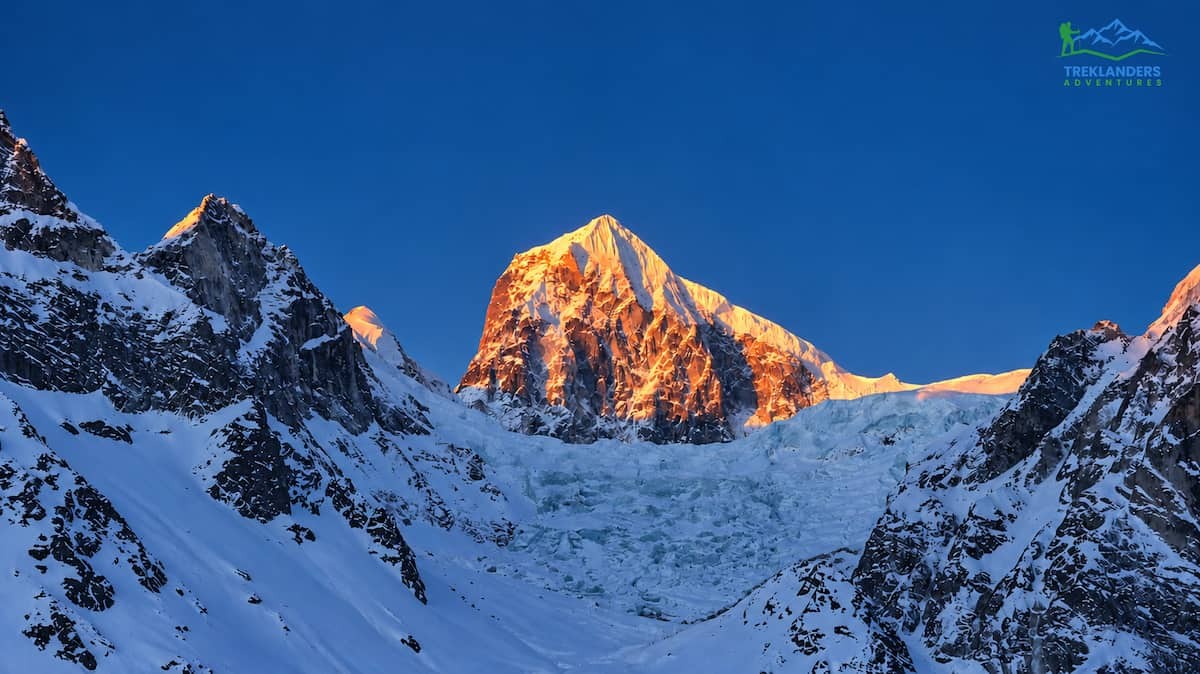
Manaslu is pickier. The Manaslu Circuit really wants late spring, April into May, or autumn, September through early November. Winter is risky because Larkya La can close entirely under heavy snow, and there’s no alternate route around it. If you’re asking me to pick one single trek-and-season combination out of everything I guide, it’s Manaslu in early October. The post-monsoon air is clean, the rhododendrons aren’t a factor that far into the year, but the Himalchuli and Manaslu views from Lho Gaon on a clear October morning are the best mountain scenery I’ve seen anywhere in Nepal, and that includes Everest.
People also ask me whether booking early matters for season timing, and it does more than most clients expect. Peak autumn weeks on Everest and the first half of October on Manaslu fill up the better teahouses fast, and flights to Lukla get fully booked days in advance during the busiest stretch. If your dates are fixed around a specific October or November window, book your spot on something like the Everest Base Camp trek with Lobuche East Peak climbing or a Manaslu departure well ahead of time rather than a month out. Shoulder season, the few weeks right before or after the main windows, can actually work in your favor if you want a quieter trail and don’t mind a slightly higher chance of a cloudy afternoon.
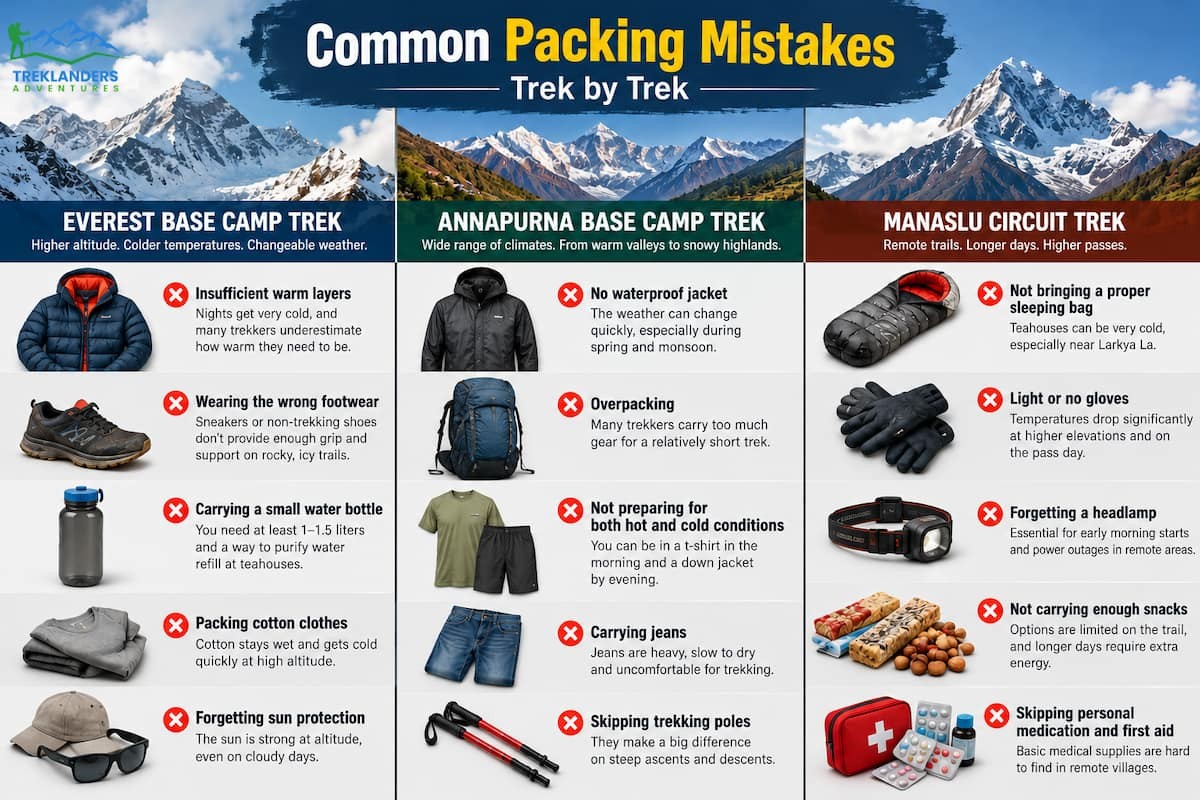
On Everest, it’s sleeping bags rated for the wrong temperature. People bring a bag rated to zero degrees Celsius because that’s what they used trekking somewhere warmer, and then they’re miserable at Dingboche or Lobuche where nights regularly drop well below freezing. For the Everest Base Camp trek, I recommend a bag rated to at least minus fifteen or twenty, and if you’re trekking in winter, go colder still. Teahouse blankets help, but they’re not a substitute for proper gear at 4,900 meters.
On Annapurna, the mistake is lighter boots. Because the Annapurna Base Camp trail is shorter and the altitude lower, trekkers assume they can get away with trail runners or lightweight hiking shoes. The stone steps between Chhomrong and Bamboo are relentless, and the descent back down the same steps is harder on your knees and ankles than people expect. You need real ankle support, not a running shoe, even on this shorter trek.
On Manaslu, the mistake is treating it like a base camp trek instead of a crossing. People pack for a there-and-back trip, but Manaslu is a point-to-point route over a genuine high pass, and the logistics are different. You need enough warm layers for Dharmasala, where the lodge facilities are genuinely basic, plus trekking poles for the long descent off Larkya La, which drops around 1,600 meters of elevation in a single day on loose moraine. I’ve watched trekkers without poles struggle badly on that descent, and by the time they reach Bhimthang their knees are done for the day.
Across all three treks, sunscreen and a good hat get forgotten more than anything else. The UV exposure above 3,000 meters is intense, and snow glare multiplies it. I’ve had clients with sunburned lips and raw noses by day five simply because they didn’t think mountain sun needed the same respect as beach sun. It needs more.
Water purification is another spot where clients either over-pack or under-pack, with almost nothing in between. Some arrive with a heavy filter system plus tablets plus a UV pen, more redundancy than the trek calls for. Others arrive planning to buy bottled water the whole way, which gets expensive fast and adds to the plastic waste problem in areas like the Manaslu Conservation Area that genuinely can’t handle it. My advice is simple: bring a reusable bottle and one reliable purification method, tablets or a filter straw, and refill from the boiled or filtered water teahouses already provide. It’s cheaper, lighter, and better for the villages you’re passing through.
Pace yourself from the very first hour, not from the first time you feel tired. On every trek I guide, whether it’s the gentle start out of Phakding toward Namche on Everest Base Camp, the climb out of Syali toward Ghandruk on Annapurna, or the long overland drive to Machha Khola before the Manaslu Circuit even begins, the trekkers who struggle most are the ones who go fast on day one because they feel strong and have energy to burn. Save that energy. You’ll need it later, and the trail doesn’t reward early speed.
I also wish people understood that a guide isn’t just there for navigation. A good guide reads your breathing, your color, your mood, and catches problems before you notice them yourself. When I ask “how are you feeling” six times a day, it’s not small talk. It’s how I track every person in the group without them having to volunteer that something’s wrong, because trekkers under-report symptoms more often than they over-report them. Nobody wants to be the one who slows the group down, so they stay quiet about headaches or nausea longer than they should.
Last thing: trust the itinerary. Treklanders builds in the rest days, the shorter first days, and the gradual elevation gain for a reason, based on years of watching what actually works and what sends people home early. When clients ask to compress a fourteen-day Everest itinerary into ten days to save money or time, I tell them honestly that it raises their risk of altitude sickness significantly, and I’d rather lose the booking than put someone in danger at 5,000 meters.
I also wish more clients arrived understanding that the first two days in Kathmandu aren’t just paperwork and sightseeing filler. The short cultural tour we run before most treks, including stops that are part of the trekking in Nepal experience as a whole, gives your body a chance to adjust to the time difference and the basic altitude of the Kathmandu valley before you’re flying into Lukla or driving toward Pokhara. Trekkers who try to skip straight from their international flight into the mountains, without even one buffer day, start the trek more jet-lagged and more run down than they realize.
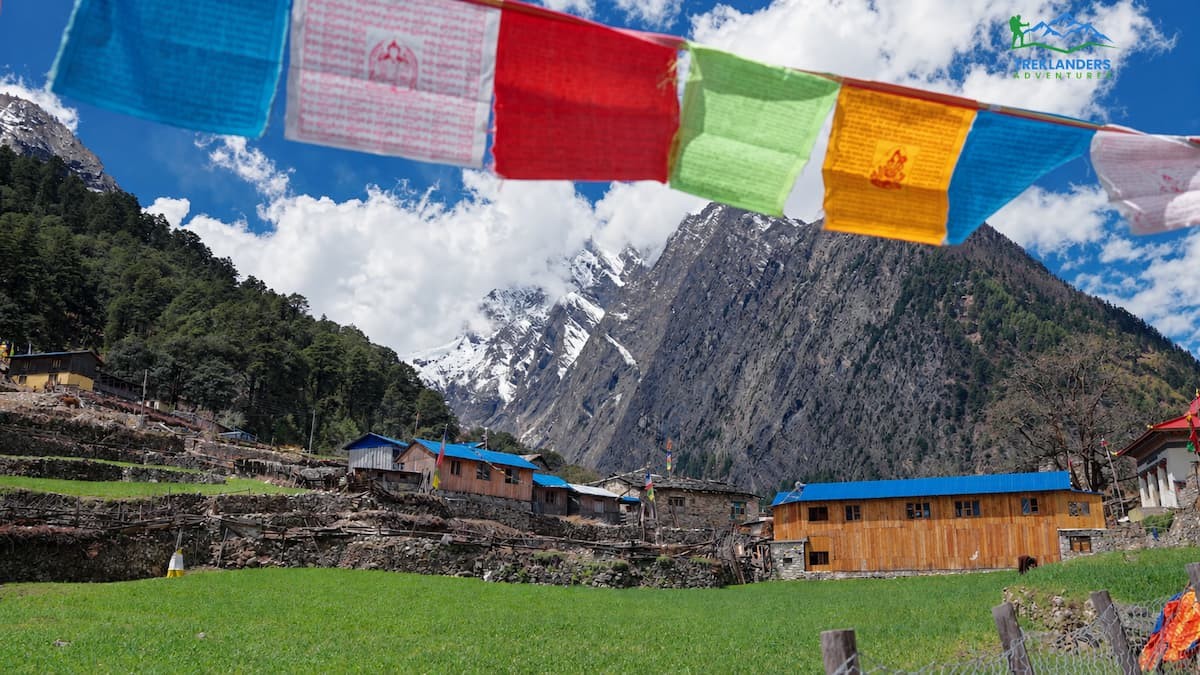
Honestly, it’s the stretch between Namrung and Lho Gaon on the Manaslu Circuit. It’s not the most famous viewpoint on any of the three treks, and it doesn’t get the attention that Kala Patthar or the Annapurna Sanctuary gets. But something about that particular section, walking through pine and rhododendron forest with the first real views of the Manaslu range opening up above Lho village, feels like Nepal fifty years ago. The villages are small, the Buddhist monuments are weathered in a way that feels earned rather than restored for tourists, and the trail itself is quiet enough that you can hear the river the whole way.
He grew up near the Everest trail, and he loves it deeply. Standing at Everest Base Camp with a first-time trekker who’s just realized what they’ve accomplished never gets old, not after sixteen years. But Everest is busy now, especially in peak autumn weeks, with hundreds of trekkers moving through Namche and Tengboche on the same days. Manaslu still has room to breathe. When he’s walking into Lho Gaon in the late afternoon light with Manaslu’s north face catching the last sun, he remembers why he became a guide instead of staying a porter.
If he had to pick a second favorite, it’s the hot spring at Jhinu Danda on the way back down from Annapurna Base Camp. After nine or ten days of walking, sitting in a natural hot spring with the Modi Khola running past is one of the best feelings in trekking. It’s a small thing, but after the cold at Machhapuchare Base Camp, it means more than it sounds like it should.
On Everest, if he’s being asked for a specific moment rather than a whole trail, it’s the short detour up to Everest View Hotel above Namche during the acclimatization day. Most trekkers on the standard itinerary, or the shorter Everest Panorama Trek for people who don’t want to go all the way to base camp, get their first unobstructed look at Everest, Lhotse, and Ama Dablam together from that ridge. He’s watched that moment land on first-timers more than almost any other single viewpoint on the whole route, including base camp itself, because it’s the first time the mountain stops being an idea and becomes something actually in front of you.
Be honest with yourself about time and fitness, and let that decide the trek, not the other way around. If you have ten to twelve days total including flights, Everest Base Camp through our standard sixteen-day itinerary or a shorter twelve-day version fits well. If you only have a week or so free and want a genuine high-mountain experience without the altitude commitment, Annapurna Base Camp through Pokhara, especially a shorter seven-day route, gives you real Himalayan scenery without needing two full weeks away from home.
Manaslu needs more time and more trekking experience than most first-timers bring. I don’t say this to discourage anyone, but the restricted-area permits mean you can’t easily shorten the itinerary, and Larkya La is a serious pass day regardless of your fitness level. If someone’s first trek is going to be Manaslu, I want to know they’ve at least done multi-day hiking before and understand what eight hours of walking at altitude actually feels like.
Fitness-wise, none of the three treks require technical climbing skills. They’re all walking treks on established trails with teahouse accommodation. What they require is cardiovascular endurance, strong legs for sustained ascents and descents, and mental patience for repetitive days. I tell people to start training at least two to three months out, mixing cardio with hill walking carrying a loaded daypack, because the trek itself is the best training for the trek, and simulating it beforehand makes a real difference.
If you’re choosing between Everest and Annapurna purely on scenery, understand that they offer different things. Everest gives you the tallest mountain on earth and genuine Sherpa culture in the Khumbu. Annapurna gives you a dramatic amphitheater of peaks packed into a shorter distance, plus Gurung villages like Ghandruk and Chhomrong along the way. Neither is objectively better. It depends on what kind of experience you’re after and how much time you have to spend getting it.
One more thing worth saying to first-timers: you don’t have to choose alone. A short call or message with an agency before booking tells you more than a dozen blog posts, because we can match the trek to your actual fitness, your actual schedule, and what you actually want to see, rather than what looks best in photos. I’ve talked plenty of people out of their first choice and into a better fit, including steering a few toward a gentler route like Ghorepani Poonhill for a shorter introduction to the Himalayas before they commit to something bigger the following year.
More involved than most clients expect before they arrive. On the Everest Base Camp trek, I’m checking in with every single trekker multiple times a day, not just asking “how’s it going” but actually watching how people walk, how they’re breathing on climbs, whether their appetite has changed. Loss of appetite at altitude is one of the quieter warning signs people miss in themselves. I don’t miss it, because I’ve seen what happens when it’s ignored.
We also carry first aid supplies, and our guides are trained to recognize the early signs of acute mountain sickness, HAPE, and HACE, the two serious and potentially fatal complications of altitude illness. On Manaslu, where help is further away and the terrain is more remote, this matters even more. We know the evacuation points along the route, because a plan only works if you’ve actually thought it through before you need it, not after.
Permits are another piece people don’t think about until it matters. Manaslu requires three separate permits, the Restricted Area Permit, the Manaslu Conservation Area Permit, and the Annapurna Conservation Area Permit for the stretch near Dharapani, and Treklanders Adventures handles all of that paperwork before the trek even starts. On Annapurna, it’s the ACAP permit, and on Everest it’s the Sagarmatha National Park permit along with the local Khumbu municipality permit. None of this is complicated when an agency handles it properly, but it becomes a real headache for independent trekkers who show up without the right paperwork at a checkpoint.
Group size matters for safety too, more than people assume before they book. A smaller group moves at a more even pace and lets a guide actually notice when someone’s struggling. On a large group spread out over a long section of trail, it’s easier for a problem to go unnoticed for an hour or more. I generally prefer groups capped at a manageable size on anything above 4,000 meters, and Treklanders will split larger bookings into smaller moving groups with their own support staff rather than push everyone along as one unwieldy unit. It costs a little more in logistics, but it’s the difference between catching a problem early and catching it late, and it’s a trade-off Treklanders has decided is worth making on every departure, even when a bigger single group would be easier to manage on paper.
The part of the job that matters most, though, isn’t the paperwork or even the medical training. It’s judgment. Knowing when a client’s “I’m fine” actually means they’re fine, and when it means they’re pushing through something they shouldn’t be. That judgment only comes from years on the trail, which is why Treklanders puts experienced guides like me on the harder routes and pairs newer guides with mentors before they lead groups solo on something like Everest Three Passes or the full Manaslu Circuit.
Porter welfare is part of the safety conversation too, even though clients don’t always think of it that way. A tired, underfed, or overloaded porter is a safety risk for the whole group, not just for him. Treklanders keeps porter loads within sensible limits and pays above minimum wage on every trek we run, from the shorter Mardi Himal routes to the longest Manaslu departures. I tell clients this not to lecture them, but because tipping fairly and respecting load limits actually protects everyone on the trail, including you, since a well-treated support team works better as a team.
Walk your own pace, not the pace of the fastest person in your group. This sounds obvious, but it’s the advice people ignore most often, and it’s the one that causes the most trouble. I’ve watched strong, fit trekkers burn out by day four because they matched strides with someone faster on day one and never recovered the energy they spent trying to keep up. On the Everest Base Camp trek, the climb from Phakding to Namche is deceptively long, and I’d rather see someone arrive an hour after the group feeling strong than arrive with everyone else completely drained.
The trail will still be there in an hour. Your body won’t recover as fast if you push past its limits early in a multi-day trek. This applies whether you’re walking the gentler climb toward Ghandruk on Annapurna or grinding up toward Namrung on the way into Upper Manaslu. Slow and steady isn’t a cliché on these trails. It’s the actual strategy that gets people to Everest Base Camp, into the Annapurna Sanctuary, and over Larkya La in one piece, feeling like they want to do it again rather than relieved it’s finally over.
And when in doubt, ask your guide. That’s what we’re there for. Whether it’s a question about the trail ahead, a strange symptom you’re not sure matters, or just wanting to know how much further to the next teahouse, there’s no such thing as a bad question on the trail. The clients I worry about are never the ones who ask too much. They’re the ones who stay quiet.
I’ll leave people with one last observation from sixteen years of doing this. The trekkers who come back changed aren’t always the ones who summit Kala Patthar at sunrise or stand at the Annapurna Sanctuary in perfect weather, though those moments matter. They’re the ones who learn something about their own limits along the way, usually on a hard, ordinary afternoon somewhere between two villages nobody’s heard of. That’s true whether you’re walking toward Everest Base Camp, into the Annapurna amphitheater, or across Larkya La into Manang. The mountain doesn’t owe you a perfect day. It owes you an honest one, and that’s usually enough.
Our guide still goes back to Everest, Annapurna, and Manaslu every season, season after season, and says he hasn’t gotten tired of any of them yet. For anyone weighing which of these three legendary Himalayan routes to walk next, his advice distills down to something simple: know your own limits, respect the mountain’s pace rather than your own, and trust the people who’ve walked the trail more times than they can count.
Treklanders Adventures has built its guiding teams around exactly that kind of experience, whether you’re heading toward Kala Patthar on the classic Everest Base Camp route, into the Annapurna Sanctuary on the Annapurna Base Camp trek, or over the prayer flags on top of Larkya La on the Manaslu Circuit. Browse the full range of routes, including add-ons, shorter versions, and the restricted-area treks our guides handle personally, on the Treklanders Adventures trip pages, or get in touch directly through the About Us page to ask the same kind of questions we put to our guide here. More interviews, trail updates, and season-by-season guides like this one are posted regularly on the Treklanders blog.
Explore Nepal’s latest trekking guide rules, permits, and regulations for a safe and legal Himalayan adventure.
Explore Nepal’s top 10 travel destinations for 2027, featuring breathtaking Himalayas, rich culture, wildlife, and unforgettable adventures.
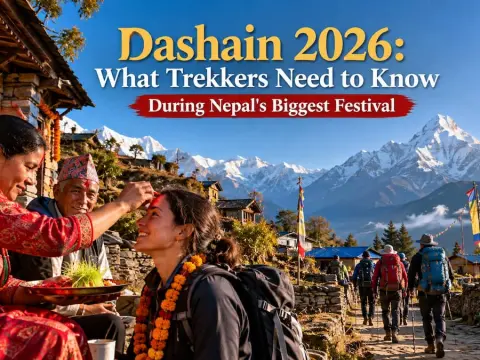
Trekking in Nepal during Dashain 2026? Explore essential travel tips, festival experiences, and Himalayan adventures.



