
Top Benefits of a Luxury Everest Base Camp Trek
24 Sep 2026
Experience Everest Base Camp with premium comfort, expert support, and unforgettable Himalayan adventure.

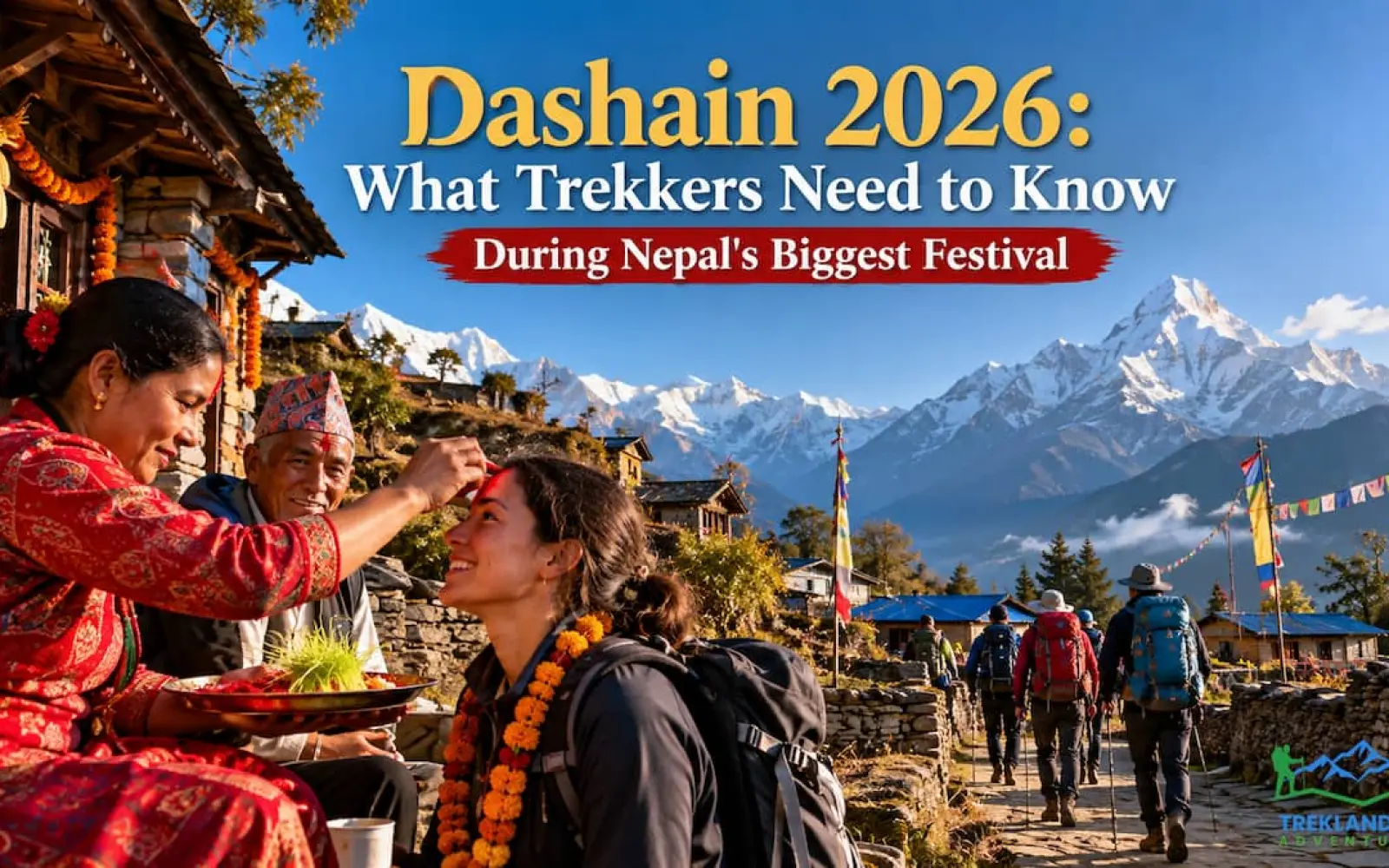
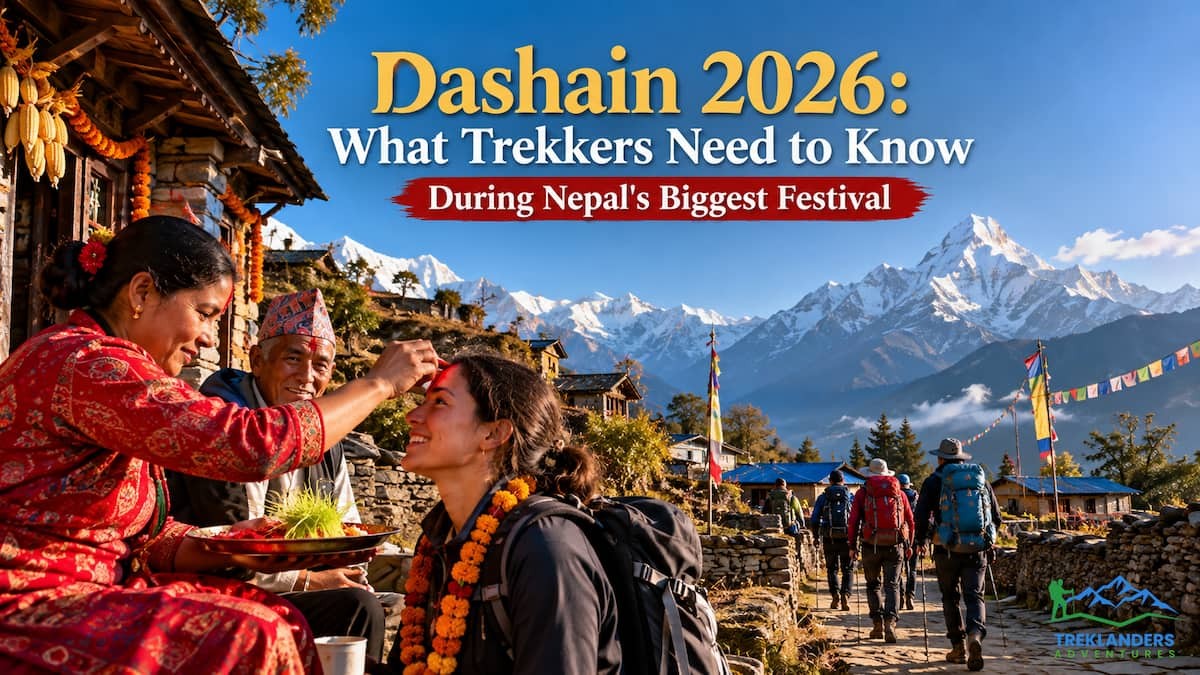
Dashain changes the rhythm of the whole country, and if you're trekking in Nepal in October 2026, it will change your trip too. Offices close. Flights fill up weeks in advance. Villages empty out as people head home for family gatherings, then fill back up with color, kites, and the smell of goat curry drifting out of every kitchen. None of this has to derail your plans. It just means you plan differently, and the earlier you start, the smoother everything downstream tends to go, from the flight you book to the lodge where you'll sleep on day six.
This guide walks through exactly what shifts during Dashain 2026, from the paperwork you need to finish before the holiday hits to what actually happens on the trail once you're above Lukla or climbing out of Pokhara. If you're booking an Everest Base Camp trek, an Annapurna Base Camp trek, or anything in between, the festival will touch your itinerary somewhere. Here's where, and what to do about it.
Most of what follows comes down to timing rather than risk. Nepal doesn't become harder to trek in during Dashain so much as it becomes a country where everyone, residents and visitors alike, wants the exact same flights, the exact same permit appointments, and the exact same autumn weather window all at once. Trekkers who know that ahead of time and plan around it tend to have one of their best trips of the year. Trekkers who don't are the ones stuck rebooking a Lukla flight from a hotel lobby in Kathmandu.
Dashain 2026 runs from Sunday, October 11, through Sunday, October 25. The festival opens with Ghatasthapana, when families plant barley seeds (jamara) that grow into golden shoots by the festival's end. The middle days build toward Maha Ashtami and Maha Nawami, the two days of animal sacrifice and worship that most affect shops and transport. The main event, Vijaya Dashami, falls on Wednesday, October 21. This is Tika day, when elders place a mix of rice, yogurt, and vermillion on the foreheads of younger family members along with jamara and a blessing. The festival closes on Kojagrat Purnima, the full moon day, on October 25.
For fifteen days, Nepal is not operating at full capacity. Government offices, banks, and many private businesses shut down for a stretch of roughly five days around the Ashtami-to-Dashami period, usually somewhere between October 17 and 23, though the exact window can shift slightly by sector. Trekking companies, hotels, and airlines keep running because tourism doesn't pause for anyone, but the people who staff immigration counters, permit desks, and government ticket windows do go home.
If none of your trip touches Kathmandu logistics during that window, you might not notice much difference beyond quieter streets. If it does, and for most trekkers it does, you'll want a plan.
Banks follow the same closure pattern as government offices, which catches some travelers off guard. ATMs generally keep working since they're machines rather than staffed counters, but branch services like wire transfers, large currency exchanges, or replacing a lost card can stall for several days. Withdraw and exchange whatever cash you'll need for your trek before the main holiday days arrive, and don't count on a bank branch bailing you out mid-festival if you run short.
The timing is almost unfair to trip planners. October sits squarely inside autumn, the single best season for trekking in Nepal. The monsoon has washed the dust out of the sky, mountain views run clear for days on end, temperatures at altitude are tolerable, and the trails aren't buried in mud or snow. It's the same reason Dashain and Tihar both land in this stretch of the Nepali calendar. Farmers plan their harvest festivals around clear skies too.
So you end up with two things happening at once: the busiest tourist season on the Nepali trekking calendar, and the busiest domestic travel season of the year. Every Nepali working in Kathmandu, Pokhara, or a trekking lodge wants to go home for Dashain. Every international trekker wants autumn weather. Both groups are fighting for the same limited seats on planes and the same limited rooms in guesthouses. That's the root of almost everything else in this guide.
The weather itself doesn't change because of a festival, but it's worth separating out from the logistics, since October's weather is exactly why so many people want to be on a trail in the first place. Early October can still carry a tail end of monsoon moisture, with the occasional afternoon cloud build-up or short burst of rain at lower elevations. By the time Dashain's main days arrive in the third week of the month, the air has usually cleared for good. Mornings are crisp, visibility stretches for tens of kilometers, and the sky over ranges like Everest, Ama Dablam, and Annapurna stays mostly free of haze through the middle of the day.
Daytime temperatures on routes like the Everest Base Camp Trek sit in a comfortable range at lower elevations, while nights above 4,000 meters drop well below freezing regardless of how clear the day was. Pack for both extremes rather than assuming good daytime weather means a mild night at Dingboche or Lobuche. None of this shifts because of Dashain, but it does explain why the flight and lodge pressure described above exists in the first place. Everyone wants to be on the trail during exactly this window.
Given everything above, a natural question is how early you actually need to lock things in. For a Dashain-season trek, three to four months ahead is a reasonable target for both your flights and your trekking package, especially for flight-dependent routes through the Everest region. That gives your operator time to confirm permits, secure reliable lodges along your route, and book Lukla or Pokhara seats before the heaviest demand hits in September and October.
Treklanders Adventures keeps running trips straight through Dashain, including the main Tika days, so a festival-season booking isn't a problem on our end. Our office and guiding team stay reachable throughout the holiday to confirm your dates, lock in permits, and handle any last-minute flight changes, even while other businesses in Kathmandu are closed for the week.
If you're booking closer to the date, it's not a lost cause, but your options narrow. Shorter, overland routes like the Langtang Valley Trek or the Ghorepani Poonhill Trek are easier to arrange on short notice since they don't depend on a contested flight route. Flight-dependent treks booked only a few weeks out during Dashain week itself carry real risk of delay, so if your dates are fixed and close, talk to your operator honestly about which routes still have realistic flight availability rather than committing to Everest and hoping a seat appears.
This is the single most important planning point for Dashain-season travel. Nepal's government offices, including the Department of Immigration in Kathmandu and the regional immigration office in Pokhara, close for several days around the main festival dates. If you need a visa extension, or if you're applying for a permit that requires a government counter rather than a trekking agency, you cannot assume you'll be able to walk in and get it handled on October 19.
Trekkers who plan a long Nepal itinerary, spanning more than the standard 30- or 90-day tourist visa, run into this most often. If your visa is due to expire anywhere near the holiday window, go to the immigration office well before October 17 rather than cutting it close. Lines get longer in the days immediately before a closure as everyone else has the same idea, so give yourself a cushion of a week if you can.
Visa extensions in Nepal are normally a same-day process at the Department of Immigration in Kathmandu, provided you have the right paperwork and fees ready. During Dashain week, same-day turnaround isn't a safe bet. Staffing drops, queues lengthen, and the office itself may be closed outright for a portion of the holiday period.
The fix is simple: extend your visa before October 14 or 15 if your current visa is close to its limit and your travel dates put you anywhere near the festival. If you're arriving in Nepal for the first time during Dashain, your entry visa on arrival isn't affected, since that process runs through immigration desks at the airport rather than the city office. It's extensions and renewals, not initial entry, that get caught by the closure.
Most trekkers booking through an operator never see a permit office in person. Treklanders Adventures handles permit paperwork as part of every package, whether that's a TIMS-style municipality permit for the Everest region or a restricted-area permit for somewhere like Upper Mustang. That part of your trip isn't something you need to chase down yourself.
Where it matters is timing. Permit offices that process restricted-area paperwork, including the ones covering Kanchenjunga, Manaslu, and Upper Dolpo, run on the same government calendar as immigration. If your trek start date falls right after the main Dashain holidays, build in a few extra days of lead time when you book, so your agency has room to get the paperwork through before office closures rather than racing the clock afterward. Flag your travel dates to your operator early and let them manage the timeline. That's exactly the kind of thing a tailored itinerary is built to absorb.
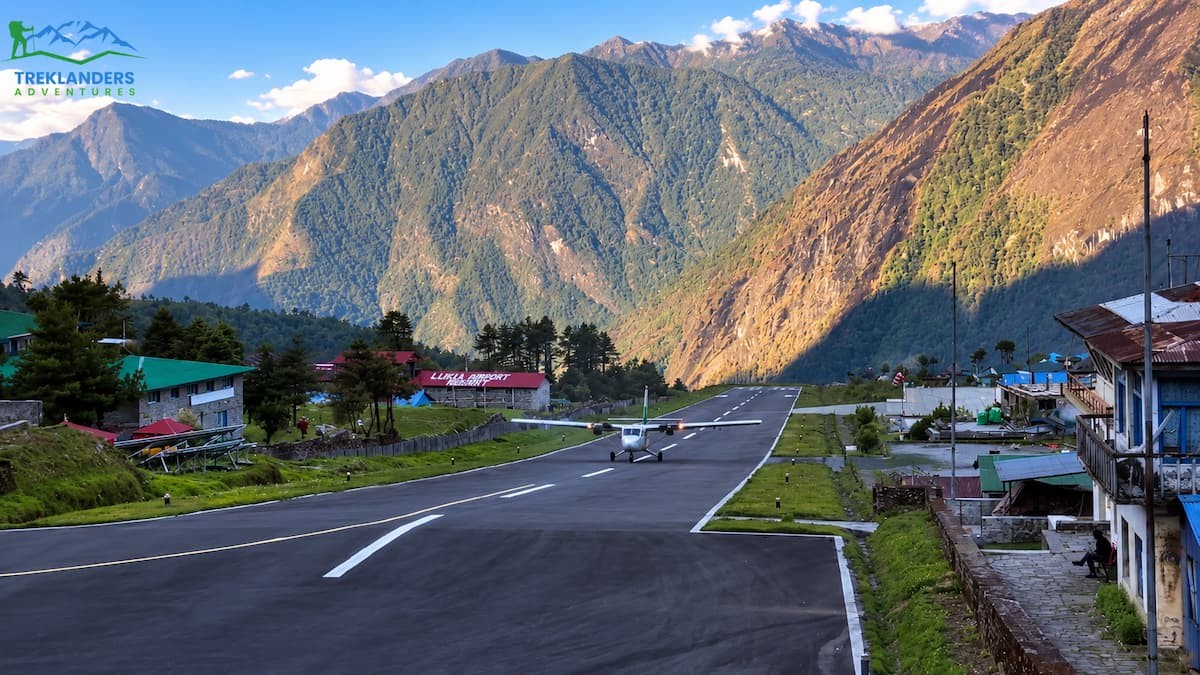
The Kathmandu-Lukla route is already one of the most oversubscribed flight corridors in Nepal during peak autumn. Add Dashain to the mix and it gets tighter still. Every seat on every flight into the Khumbu becomes contested territory: trekkers chasing clear October skies, Sherpa families flying home for Tika, lodge staff heading back to their villages, and porters and guides trying to get home for a few days with their own families before the next booking starts.
Airlines run a full schedule of small Twin Otter and Dornier aircraft to Lukla's Tenzing-Hillary Airport, but seats are limited by design and weather delays stack up fast. During the busiest stretches of spring and autumn, flights are often rerouted through Manthali Airport in Ramechhap, roughly 130 kilometers from Kathmandu by road, which adds a 3- to 4-hour drive before you even reach the tarmac. That diversion is standard practice for trips like the 12-Day Everest Base Camp Trek, the 14-Day Everest Base Camp Trek, and the 9-Day Everest Base Camp Trek with Helicopter Return even in a normal October. During Dashain week, expect it to happen more often, not less, since every available seat gets claimed earlier in the booking cycle.
If Everest is your goal this October, book your flights and your trekking package as early as you can, ideally months ahead rather than weeks. Build at least one buffer day into your schedule before any international flight home, since a cancelled Lukla flight during a high-demand week can take longer to rebook than it would in a quieter month. Trekkers flying out via helicopter, such as those on the Everest Base Camp Trek and Returning via Heli or the 9-Day Everest Base Camp Trekking with Helicopter Return, face less exposure to the Lukla bottleneck on the return leg, though outbound flights still need early booking. Helicopters operate on a more flexible schedule than fixed-wing flights and can fly in some conditions that ground the smaller planes, which makes them a reasonable backup plan if your dates are fixed and your budget allows for the higher cost. They're not a substitute for booking early, just a safety net if the worst-case scenario of a sold-out or cancelled flight actually happens.
Everest gets most of the attention, but the Kathmandu-Pokhara route carries its own Dashain-season pressure. Pokhara is both a trekking gateway for the Annapurna region and a major domestic travel hub in its own right, so it absorbs tourist demand and holiday-travel demand at the same time. Families from Kathmandu head to Pokhara and onward to their home villages in the hills around it, while trekkers are trying to reach the start point for routes like the 7-Day Annapurna Base Camp Trek from Pokhara, the 9-Day Mardi Himal Trek, or the shorter 4-Day Ghorepani Poonhill Trek from Pokhara.
Road travel between Kathmandu and Pokhara is an option year-round, and the drive itself is scenic, but during Dashain the Prithvi Highway carries heavier traffic than usual as the whole country moves at once. If you're relying on the drive as a backup to a sold-out flight, expect it to take longer than the usual six to seven hours. Booking your Pokhara flight early solves most of this problem outright, and it's worth doing regardless of which Annapurna itinerary you've chosen, since even short routes depend on getting to Pokhara on schedule in the first place.
Here's the good news buried in all this logistics: the trekking trails do not close for Dashain. Sagarmatha National Park, the Annapurna Conservation Area, and every other trekking region in Nepal keep operating through the festival. Lodges stay open. Guides keep guiding. If your permits are sorted and your flights are booked, there's no reason a Dashain-season trek can't go ahead exactly as planned on routes from Langtang Valley to the Manaslu Circuit.
What changes isn't access, it's staffing. Lodge owners, kitchen staff, and porters are Nepali citizens with families of their own, and Dashain is the one time of year when going home matters more than almost anything else. A trekking company with government-licensed, well-organized staff, like the teams running the Langtang region treks and Manaslu region treks, plans around this rather than ignoring it, which is exactly why booking through an established operator rather than piecing a trek together independently matters more in October than in most other months.
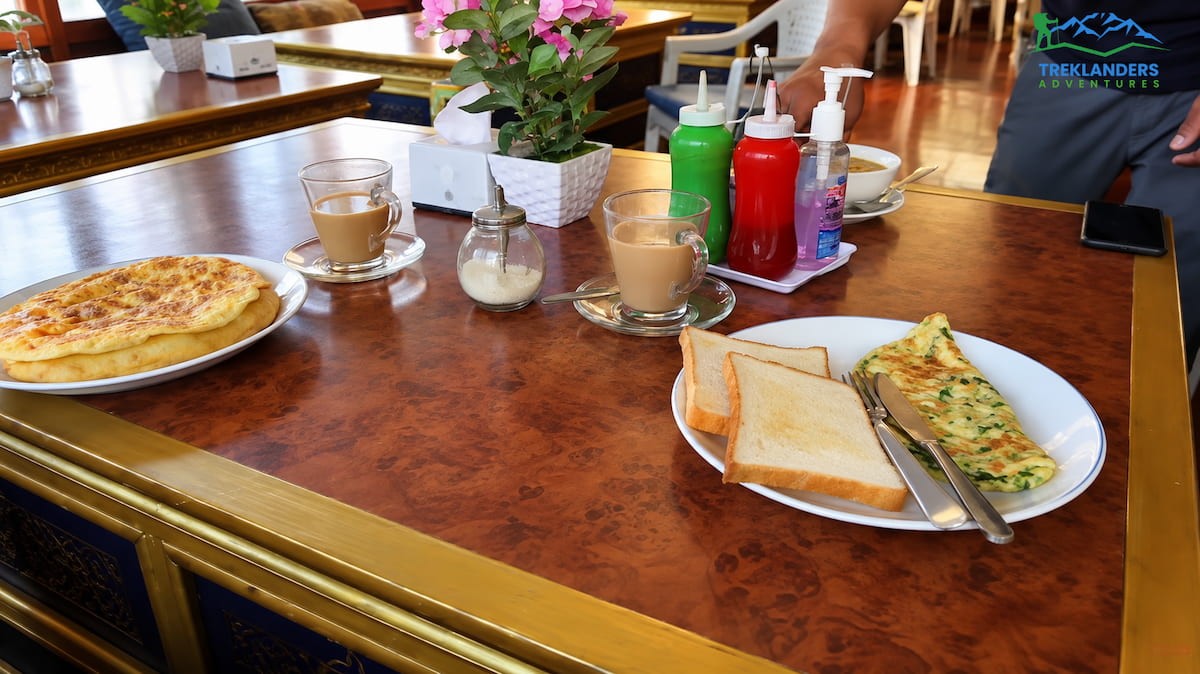
Individual teahouses along popular routes sometimes run with a skeleton crew during the peak Dashain days, particularly in smaller villages where the owner's extended family also runs the kitchen. A lodge that normally has three people cooking and cleaning might be down to one for a few days while the rest of the family celebrates in a nearby village. Service can be slower. Menus might shrink slightly if the usual supply run into the village didn't happen because the shop owner also went home for Tika.
None of this is a reason to avoid trekking in October. It's a reason to trek with a guide and an operator who already knows which lodges are reliably staffed through the festival and which ones to route around. On a guided trip with Treklanders Adventures, your itinerary and lodge bookings are arranged with this in mind, so you're not the one finding out at 6 p.m. that the kitchen closed early. Independent trekkers without that local knowledge are the ones most likely to get caught out, especially on quieter routes like Gosainkunda or Helambu where there are fewer lodges to begin with and less redundancy if one shuts its kitchen for a night.
The pattern plays out a little differently depending on the region. In the Khumbu, where tourism income is central to most households, lodge owners tend to rotate staff rather than close outright, so you'll usually still get a hot meal even if the person serving it has changed from the day before. On quieter Annapurna-region trails away from the main Base Camp route, a family-run lodge might close for a day or two around Tika itself, with a neighboring teahouse picking up the overflow. Guides who know a route well plan meal and overnight stops around this ahead of time rather than discovering a locked door at the end of a long walking day.
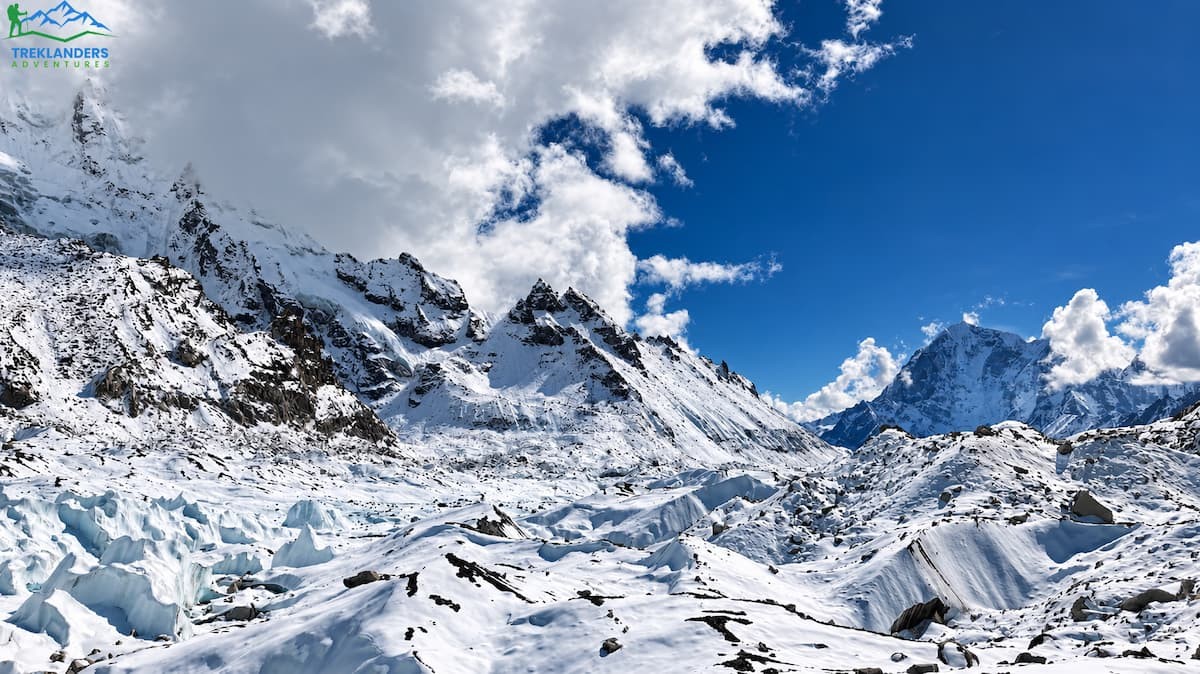
To make this concrete, walk through what an EBC trek actually looks like if your dates land across the main festival days. Say you fly into Lukla on October 15, ahead of the worst of the holiday crush, and start the standard route that most Everest Base Camp itineraries follow: Lukla to Phakding on day one, a short first day that eases you into the altitude and the rhythm of the trail.
Day two takes you from Phakding into Sagarmatha National Park and up to Namche Bazaar, the trading hub of the Khumbu, for two nights while your body adjusts to 3,440 meters. This is where Dashain becomes visible rather than theoretical. Shops in Namche may keep shorter hours as families gather, and you might catch a bamboo swing (ping) set up in a courtyard, built specifically for the festival and taken down again once it ends. From Namche, the trail climbs through rhododendron and pine forest to Tengboche, home to the largest monastery in the Khumbu, before continuing to Dingboche for a second acclimatization stop near 4,410 meters.
From Dingboche, the route pushes higher through Lobuche and on to Gorak Shep, the last settlement before Everest Base Camp itself at 5,364 meters. An early climb to Kala Patthar at 5,643 meters delivers the trek's best unobstructed view of Everest's summit, weather permitting, before the long walk back down through Pheriche, Pangboche, and Namche to Lukla for the flight home. If your trip timing lines up so that your days in Namche or Khumjung fall right around October 21, you're in one of the better possible places to see Dashain as a trekker rather than just reading about it, since Sherpa communities observe the festival alongside their own Buddhist calendar of celebrations, and village life slows down and opens up a little for visitors who happen to be passing through. Treklanders runs this same route as the 12-Day Everest Base Camp Trek, with longer versions available through the 14-Day Everest Base Camp Trek for trekkers who want extra acclimatization margin, which is worth having in a month when flight delays are already more likely than usual.
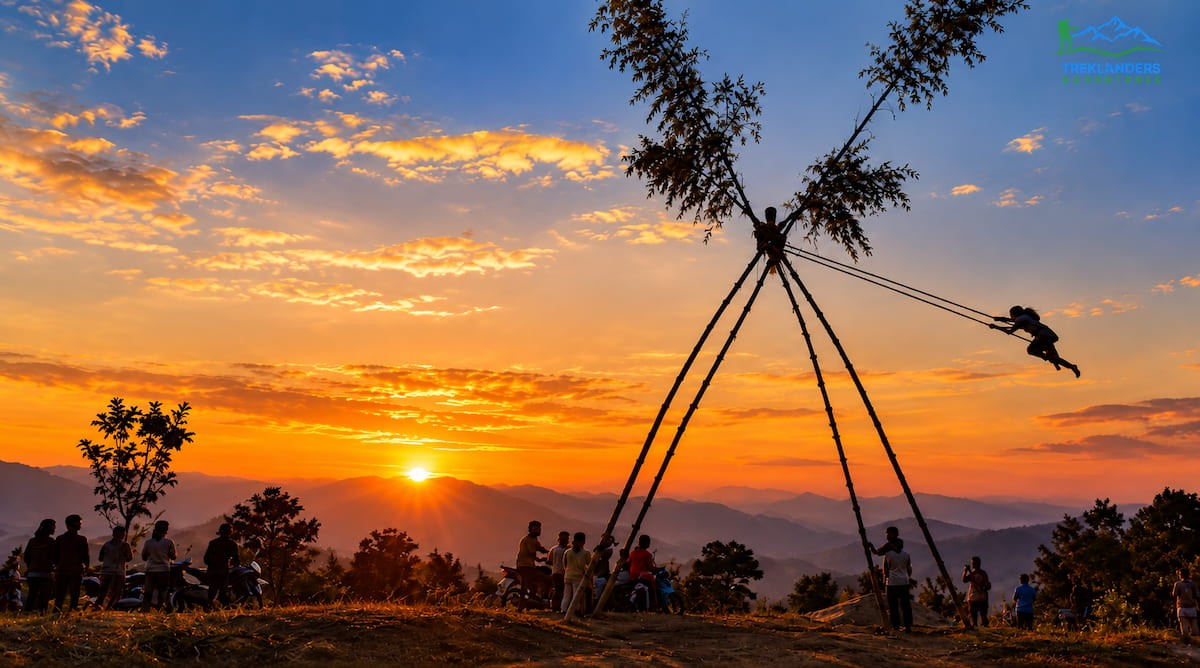
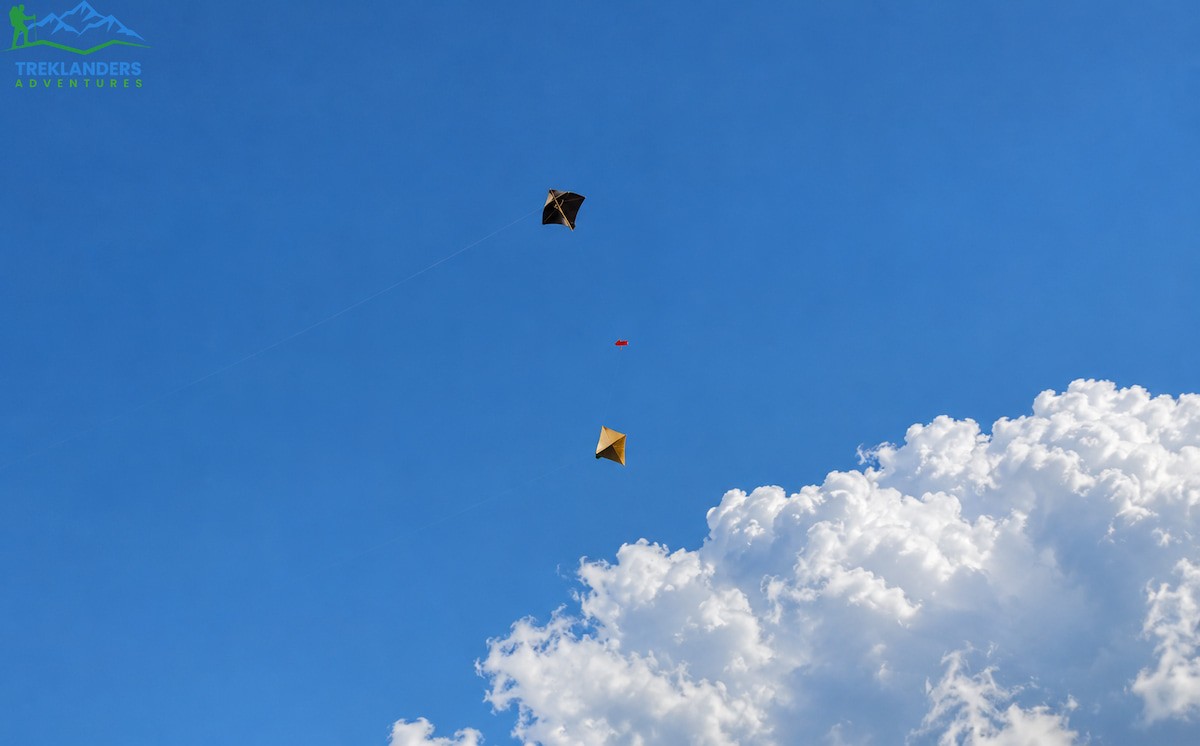
Dashain in a trekking village looks different from Dashain in Kathmandu, but a few things carry through everywhere. Tall bamboo swings go up in open spaces, and kids and adults alike take turns on them, a tradition tied specifically to this festival and nowhere else in the Nepali calendar. Kites appear over rooftops and open fields, flown mostly by children but taken just as seriously by grown adults who've been doing it since their own childhood. Families that have been apart all year sit down to shared meals, often centered on goat meat, since Dashain is the one time many households eat meat regularly across several days running.
If you're trekking with a Nepali guide or porter team, as you would on any Treklanders itinerary, don't be surprised if your guide asks for a Tika blessing from an elder in a village you're passing through, or shows you a photo of the jamara shoots growing on his family's altar back home. It's a small window into a side of the trek that has nothing to do with summit views, and most trekkers who experience it say it's one of the parts of the trip they remember best.
The soundtrack changes too. Madal drums and the occasional burst of singing carry across villages in the evening, especially once the main worship days have passed and the mood shifts toward celebration rather than ritual. Lodge dining rooms that are normally quiet by 8 p.m. might stay livelier a little longer, with staff and local guests swapping stories about family back home. None of it interferes with an early trekking start the next morning, but it does mean a Dashain-season trek has a different texture in the evenings than the same route would in, say, quiet November.
Along the Annapurna routes, the picture looks a little different again. Gurung and Magar villages along paths like the Ghorepani Poonhill Trek and the Mardi Himal Trek often combine Dashain with their own local harvest traditions, so you might see terraced fields being worked right alongside festival preparations, a reminder that for most of rural Nepal, Dashain lines up with the end of the rice harvest as much as it does with any religious calendar.
If you're invited into the Dashain celebration, even briefly, a little awareness goes a long way. Accepting a Tika blessing from a village elder or your own guide is a genuine honor, not a tourist photo opportunity, so treat it the way you'd treat being welcomed into any family tradition: with a quiet thank-you rather than a string of questions about what it means mid-ceremony. If you'd rather not receive Tika yourself, a polite decline is completely fine. No one will press you on it.
Dress a notch more modestly than you might on a normal trekking day if you're passing through a village mid-celebration, since people are dressed up for their own family gatherings and photos. Ask before photographing someone's Tika ceremony or home shrine, the same way you would at any private family event back home. And if you're offered food, even a small plate during what's clearly a family meal, know that declining outright can come across as more awkward than accepting a small portion and eating it. Hospitality during Dashain runs deep, and a guide can usually tell you in the moment what the expected response is if you're ever unsure.
Dashain isn't Nepal's only major October-November festival. Tihar, the festival of lights, follows roughly two to three weeks later and brings its own smaller wave of celebration, with homes lit by oil lamps and string lights, and a day specifically dedicated to honoring the bond between brothers and sisters. Tihar doesn't carry the same nationwide shutdown that Dashain does, so it has a much lighter effect on flights, permits, and government offices. Most trekkers planning a late-October or early-November trip only need to account for Dashain directly.
Once Dashain's main days pass and Kojagrat Purnima closes out the festival on October 25, things return to normal fairly quickly. Government offices reopen, flight demand eases as the domestic holiday travelers head back to the cities, and lodge staffing returns to its usual rhythm within a few days. If your schedule is flexible, trekking in the final week of October or into early November gives you nearly all the same clear-sky benefits of peak Dashain-season trekking, with noticeably less competition for flights and beds. It's one of the better-kept secrets of Nepal's autumn season: the days right after Dashain are often just as good for trekking as the festival period itself, minus most of the crowding.
Anyone who has sat in Kathmandu traffic knows it doesn't quiet down easily. Dashain is the exception. As the holiday approaches, the roads empty out noticeably, since so much of the city's working population heads to ancestral villages elsewhere in Nepal for the festival. Thamel, the tourist district most trekkers pass through before and after their trip, feels different too. Fewer tour groups moving through, shorter queues at gear shops, and a calmer overall pace.
For trekkers arriving in Kathmandu right before or after the main festival days, this quiet stretch is a decent time to handle errands: picking up last-minute gear, confirming your trek with your operator, or simply resting before a flight to Lukla or Pokhara. It's also a reasonable window to fit in a day of sightseeing without the crowds that usually come with Kathmandu's main heritage sites.
If your trek dates leave you with a free day or two in the capital, this is a good stretch to use them. A Kathmandu full-day sightseeing tour covering Pashupatinath, Boudhanath, and Swayambhunath runs with noticeably thinner crowds than you'd find in peak non-festival weeks. The Patan and Bhaktapur sightseeing tour is worth it specifically during Dashain, since both Durbar Squares see extra foot traffic as families stop to pay respects at local temples on their way to visit relatives, a small but visible piece of the festival beyond what happens inside private homes.
If you have more time, the Seven UNESCO Heritage Sites day tour covers the valley's major sites in a single day, which suits trekkers trying to balance festival-season sightseeing against a tight pre-trek schedule. For something outside the city, a Nagarkot sunrise tour or a short Nagarkot day hike gets you Himalayan views without the flight logistics of Lukla or Pokhara, useful if your main trek dates haven't started yet and you want a taste of the mountains early.
If Lukla flight pressure during Dashain week makes you nervous, or if you're simply looking for a region with less competition for seats and beds, several alternatives are worth considering. The Annapurna Circuit and its shorter 13-day version are accessible overland from Kathmandu or Pokhara, which removes the flight bottleneck entirely. The Langtang Valley Trek starts with a drive from Kathmandu rather than a flight, and it's close enough to the capital that it fits neatly into a tighter schedule.
Trekkers drawn to quieter trails altogether might look at the Manaslu Circuit or its 14-day variant, both road-accessible and consistently less crowded than Everest or Annapurna even in peak season. For something shorter and gentler, the Ghorepani Poonhill Trek and Mardi Himal Trek both deliver big Annapurna views without the flight dependency or the altitude demands of a full base camp route. None of these routes solve every Dashain-related wrinkle, since permit offices and some staffing issues apply everywhere, but they remove the single biggest headache: fighting for a seat on a small plane during the one week of the year when everyone else wants the same seat.
Trekkers whose international flights happen to land right in the middle of Dashain week, when permit offices are shut and longer treks are harder to kick off smoothly, have a reasonable fallback in the short routes close to the capital. The 4-Day Trekking Adventure near Kathmandu and the Chisapani-Nagarkot to Dhulikhel Hiking route both start and end without needing a domestic flight, which sidesteps the worst of the Dashain travel crunch entirely.
These shorter routes also happen to pass through Tamang and Newari villages where Dashain celebrations are easy to observe up close, often more so than on the busier long-distance trekking routes where lodges cater heavily to foreign trekkers. If your main goal this trip is experiencing the festival rather than reaching a specific base camp, a short hike timed around the main Tika days might actually serve you better than a three-week trek that only brushes past the festival in its first or last few days.
A few steps make the difference between a smooth Dashain-season trek and a frustrating one. Book your domestic flights to Lukla or Pokhara as early as your plans allow, since seats disappear fastest in the weeks immediately before the festival. If your visa needs extending, get to the immigration office before October 14, rather than assuming you can handle it closer to your departure date. Confirm your trek start date with your operator early enough that any restricted-area permits clear government offices before the main closure window.
Build at least one buffer day into any itinerary that depends on a Lukla or Pokhara flight, ideally more if your return flight home is tightly scheduled. Choose an operator with local staff who already know which lodges run smoothly through the festival, rather than booking independently and hoping for the best. And if your dates genuinely conflict with the festival's busiest days, consider shifting toward a road-accessible region like Langtang or the Annapurna Circuit, or toward a shorter hike near Kathmandu, rather than forcing a flight-dependent itinerary into the single most congested travel week of the Nepali year.
Pack a little extra patience into your trip alongside your usual gear. Delays happen on the Kathmandu-Lukla and Kathmandu-Pokhara routes in any given October, Dashain or not, and the festival simply raises the odds slightly. Travelers who build slack into their schedule, both in terms of days and in terms of expectations, tend to look back on a Dashain-season trek as a highlight rather than a headache. The ones who try to run a tight, back-to-back schedule through the single busiest travel week of the year are the ones who end up frustrated by something that was predictable from the start.
Dashain doesn't have to work against your trip. Most of what makes it tricky comes down to timing decisions you can make months in advance: when you book your flight, when you extend your visa, which lodge network your operator uses. Handle those early, and what's left is a festival most visitors to Nepal never get to see up close, playing out in Sherpa villages, Gurung farmhouses, and quiet Kathmandu streets while you're there to watch it happen.
Plenty of trekkers deliberately time their trip to overlap with Dashain for exactly this reason. Reaching Everest Base Camp or standing on a ridge above the Annapurna foothills is one kind of achievement. Doing it in a year when the villages along the way are dressed for their biggest celebration, with swings in every courtyard and kites overhead, is a different kind of memory entirely, and not one you can book on demand outside of this particular window each year. Treklanders Adventures runs trips through the Everest, Annapurna, Langtang, and Manaslu regions all through October, and building a Dashain-aware itinerary into your trip plan is a normal part of how we put together any booking for this time of year.
Experience Everest Base Camp with premium comfort, expert support, and unforgettable Himalayan adventure.
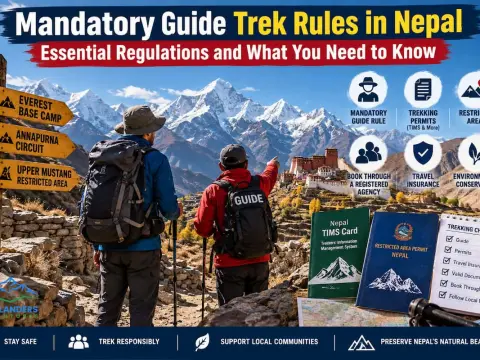
Explore Nepal’s latest trekking guide rules, permits, and regulations for a safe and legal Himalayan adventure.
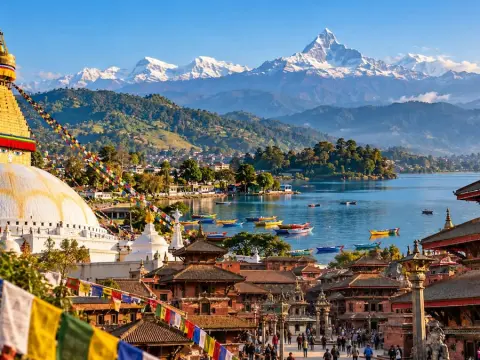
Explore Nepal’s top 10 travel destinations for 2027, featuring breathtaking Himalayas, rich culture, wildlife, and unforgettable adventures.



