
The 10 Most Breathtaking Viewpoints on the Langtang Valley Trek
14 Dec 2025
Explore the best viewpoints on the Langtang Trek, including Kyanjin Ri and Tserko Ri, for stunning Himalayan views and unforgettable scenery.

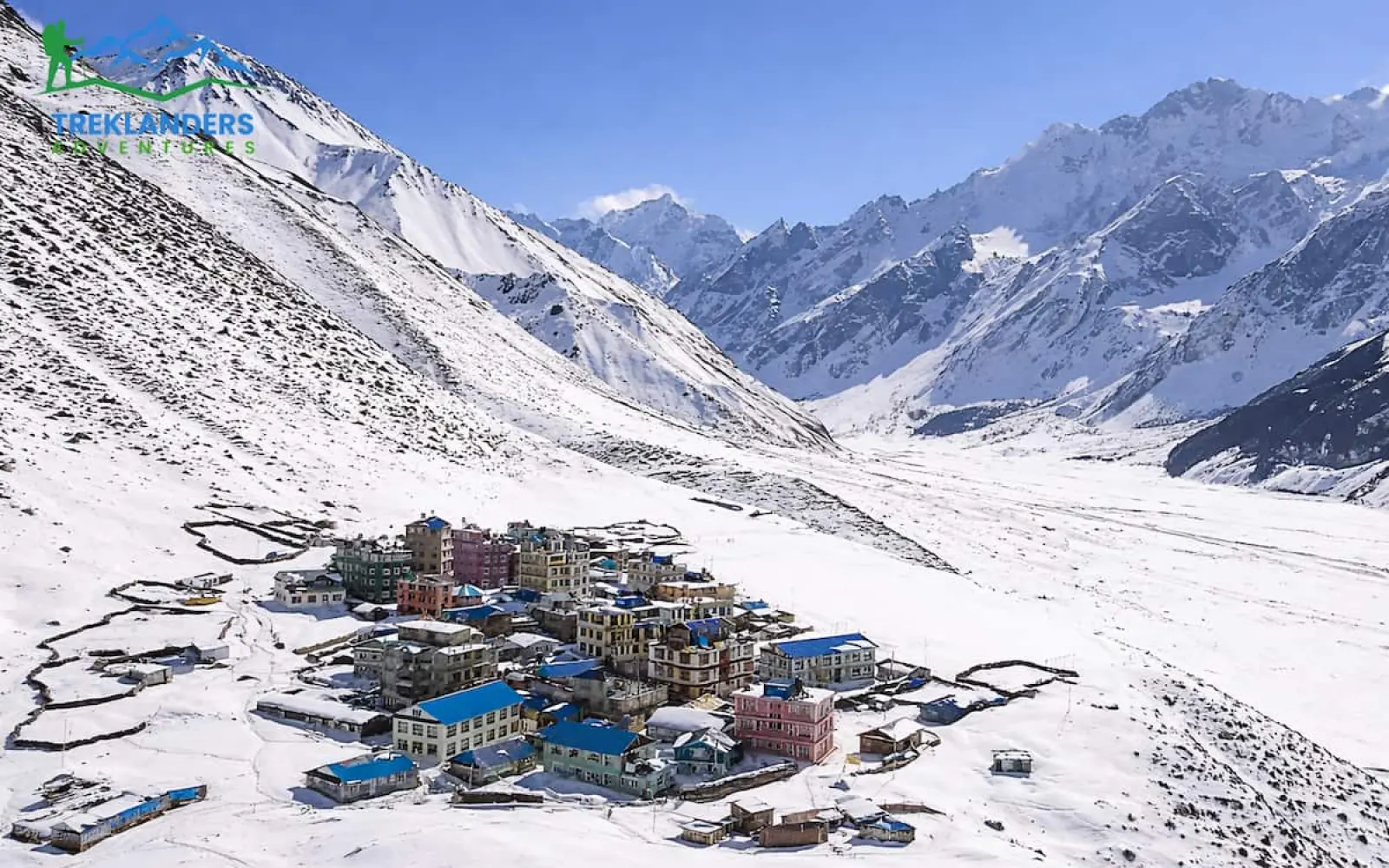
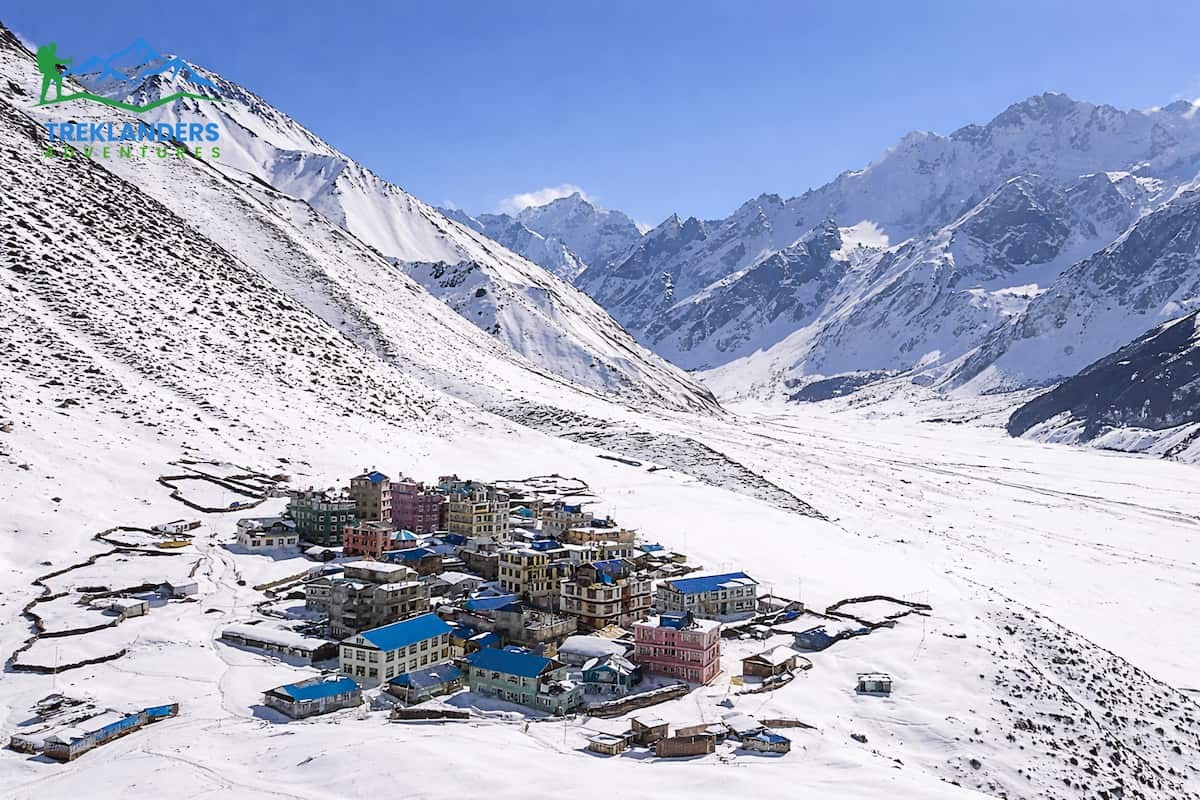
Explore Kyanjin Gompa, a tranquil Himalayan hamlet in the Langtang Valley, which has stunning views of the mountains and is a perfect place to get used to the high altitude.
Climbing the Himalayas of Nepal is a dream for many adventure enthusiasts, and the Langtang Valley Trek is recognized as one of the most rewarding trips near Kathmandu. Upper Valley is the main attraction of the trip, but the experience is worth just as much for the extraordinary places you can visit along the way.
Every stop on the Langtang trail is different - it is a change from the rich Tamang culture, old monasteries, dramatic alpine scenery, to the calm mountain life. The villages not only deepen the trekking experience by culture and breathtaking landscapes, but also provide the necessary rest and recovery as the altitude is getting higher.
Kyanjin Gompa is one of the most significant and beautiful villages on the way of Langtang Valley trek, and it is the center of the upper Langtang region. This peaceful village situated at an altitude of about 3,870 meters is a primary acclimatization stop for trekkers before going to Kyanjin RI, Tserko RI, and other higher viewpoints. Kyanjin Gompa is a good combination of rest, getting to know the place, and adjusting to the high-altitude as it is surrounded by towering peaks, glaciers, and extensive yak pastures.
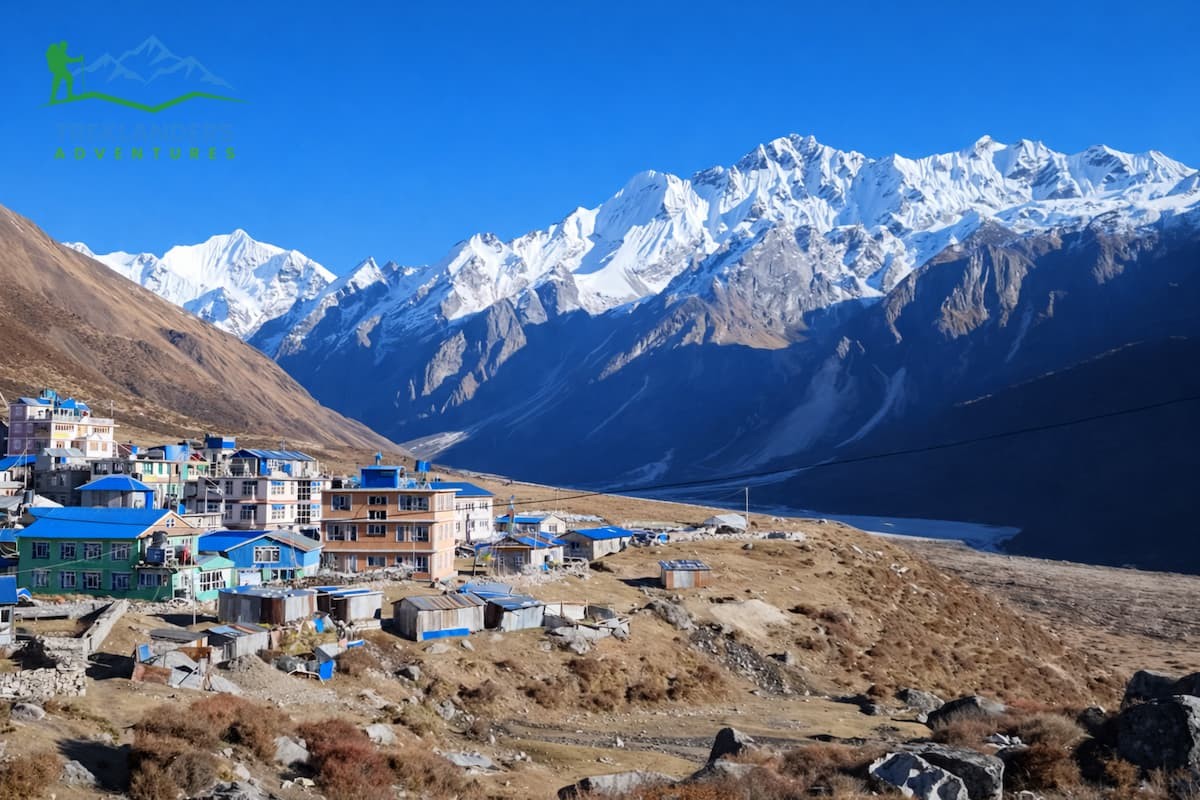
Kyanjin Gompa is a high-altitude Himalayan settlement located in the upper reaches of the Langtang Valley in north-central Nepal. Situated at an altitude of around 3,870 meters (12,697 feet) above sea level, the village is in the Langtang National Park, which is Nepal's first Himalayan National Park. As the area is adjacent to the Tibetan Autonomous Region of China, Kyanjin Gompa has a significant trans-Himalayan influence, which is a result of factors like its location, climate, and the cultural interactions that have taken place across the border for centuries.
The village is in a large alpine basin that was the result of glaciers that existed many years ago, and it is surrounded by high mountain walls and vast yak pastures. To the north, Langtang Lirung (7,227 m), the highest peak in the area, can be seen dominating the skyline, and its immense glaciers descend quite steeply to the valley floor. Besides Kyanjin Gompa, other mountain peaks that surround it are Gangchempo (6,387 m), Dorje Lakpa (6,966 m), Yala Peak (5,520 m), and Naya Kanga (5,844 m), thus forming a natural amphitheater of snow-covered summits that are the trademark of the mighty Himalayan range.
Kyanjin Gompa is situated on the route taken by the Langtang Khola, a river fueled by melting glaciers and snows that comes from the Langtang Lirung glacier system. This river is carving the valley and is a very important water source for the local people, animals, and plants that grow at high altitudes. The area surrounding the village is relatively flat and without trees, consisting of alpine meadows, rocky moraines, and glacial deposits. These high pastures are mainly used for yak grazing, particularly in the summer, which strengthens the area's traditional pastoral lifestyle.
According to the climate classification, Kyanjin Gompa has the usual high Himalayan alpine climate. Summers are neither hot nor cold, but only slightly warm, and the winter season is long, cold, and usually covered with snow. The temperature can vary a lot between day and night because of its height and being in the middle of the mountains. Most of the precipitation occurs during the summer monsoon period when the district is rainy, while in autumn and spring, the weather is mostly dry and calm, which is perfect for trekking and acclimatization.
From a geographical point of view, Kyanjin Gompa is the last natural spot of the Langtang Valley Trek where the valley opens up before getting steep, and glacial corridors follow. Due to its position, it is a perfect starting point for side trips to higher and thus more scenic places like Kyanjin Ri and Tserko Ri that are located in the immediate vicinity of the valley. From these points, one can see a vast expanse of glaciers, icefalls, and Himalayan ridgelines, thus underlining the village's strategic geographic position.
In summary, the geography of Kyanjin Gompa, with its glacier landscapes, towering peaks, alpine ecosystems, and rivers flowing from the mountains, is integrally linked to the trekking experience as well as the cultural identity of the upper Langtang region. Due to its central location in the valley, besides being a beautiful place, it is also an important hub for acclimatization of those on the Langtang trek.
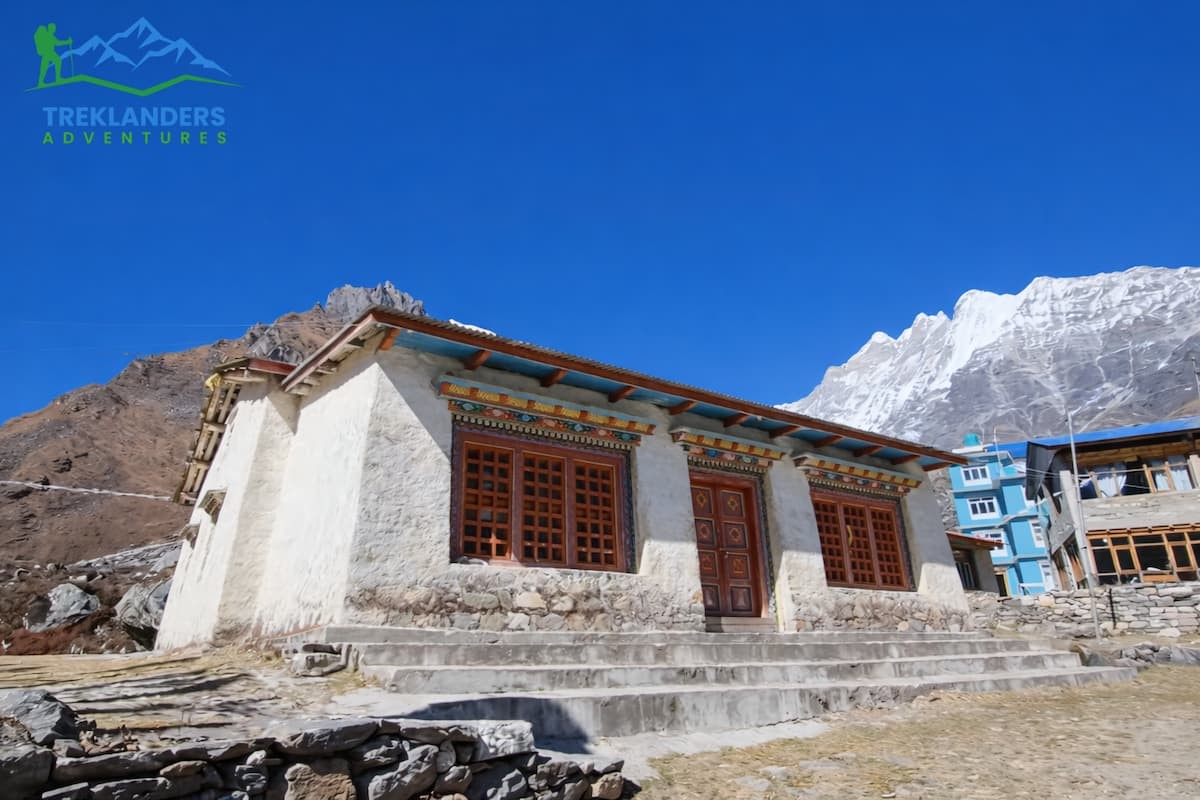
Kyanjin Gompa is not only a culturally rich and historically deep-set village in upper Langtang Valley but also the center of both the spiritual and social lives of the region. Its name comes from the ancient Buddhist monastery (Gompa), which has been the religious life guide here for centuries. In the past, Kyanjin Gompa evolved around the traditional trade routes crossing the Himalayas that connected Nepal with Tibet, along which communities were selling salt, wool, and livestock. These routes were instrumental in determining the economic and cultural face of the area.
The people of Kyanjin Gompa are mostly from the Tamang ethnic group, one of the oldest indigenous Himalayan communities of Nepal. Their way of life, language, and customs are highly influenced by Tibetan Buddhism, and the entire village reflects that. The landscape of the village is dominated by the spiritual elements, such as sacred inscriptions on the Mani walls, prayer flags, chortens, and small monasteries, which represent the strong bond of spirituality with the mountains and nature.
Religion is still the mainstay of daily life in Kyanjin Gompa. Besides being a hub for communal worship, the monastery is also the center of seasonal ceremonies and festivals. One such festival is Lhosar (Tibetan New Year) that binds the community together through traditional dancing, music, and communal feasting. These social events serve as a means of cultural continuity and strengthening of social ties, which is very important in such a secluded high-altitude region.
For a long time, the people of Kyanjin Gompa have sustained themselves through yak herding and alpine pastoralism. The local economy has been supported mainly by seasonal migration with livestock, dairy production, and trade. It was an important moment that marked the establishment of the Kyanjin Cheese Factory in the mid-20th century, a milestone that helped in the creation of a steady income source alongside the keeping of the old traditions. At present, the factory is not only an icon of culture but also a symbol of mountain-level self-reliance.
The 2015 earthquake that hit Kyanjin Gompa left the place in ruins and took many lives. The locals’ determination to bounce back has, however, been amazing since then. The community, through unity and hard work, restored the houses, lodges, and temples, and at the same time, they respected their traditions by using the local architectural styles and keeping up with cultural values. Now, even with the influx of trekking tourists, Kyanjin Gompa is still an authentic place. Trekkers can expect good service and hospitality from the hosts who provide them with rest and acclimatization, and at the same time, offer them a valuable cultural experience grounded in Himalayan history.
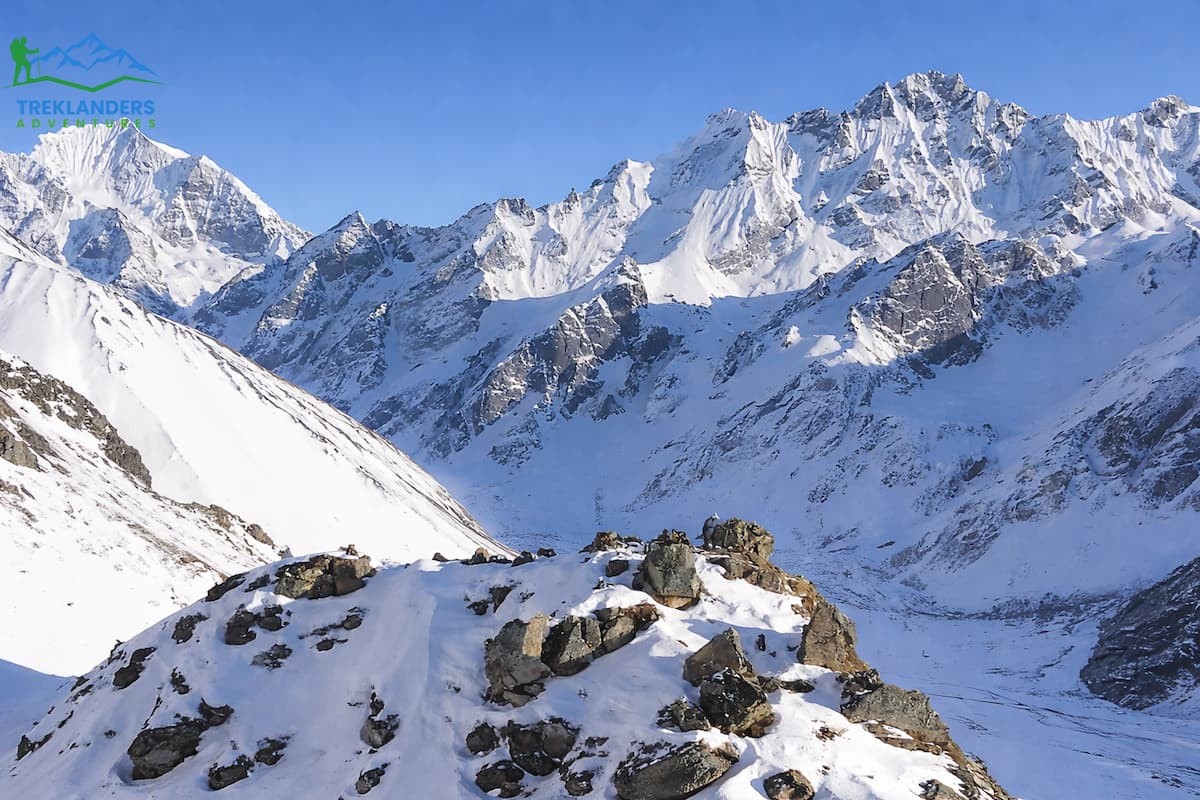
The best time to visit Kyanjin Gompa is in spring (March to May) and autumn (September to November) when the weather is stable and one can see the mountains clearly. These two periods are characterized by clear skies and daylight temperatures that are comfortable, thus good for trekking and acclimatization.
The trail is full of rhododendron and alpine flowers that are blossoming, especially in the lower parts, during spring. The temperatures are moderate, snow starts to melt from higher parts, and the overall atmosphere for trekking is lively and scenic. This season is also suitable for side hikes to viewpoints like Kyanjin RI and Tserko RI.
Autumn is the best trekking season that most people opt for because of dry weather, fresh air, and mountain views that are always clear. The time after the monsoon provides the clearest views of Langtang Lirung and the peaks around it, and the cooler nights are offset by the nice daytime conditions for trekking.
The winter (December to February) period is for those who seek loneliness and snow-covered landscapes that are dramatic, but the temperatures go down considerably, and heavy snow may close the high passes or viewpoints. Monsoon (June to August) is a time for verdure, but also for rain, clouds, and leeches at lower altitudes, thereby making trekking difficult.
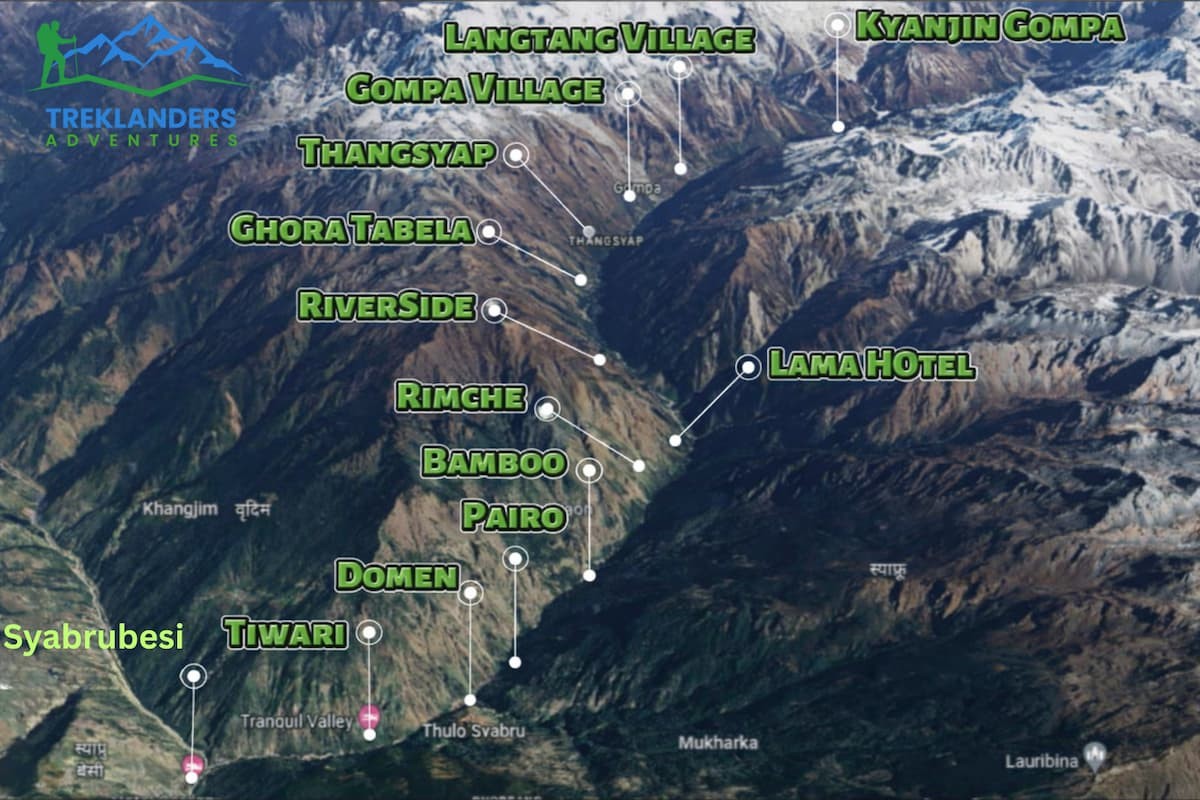
To get to Kyanjin Gompa, you need to first drive from Kathmandu to Syabrubesi and then hike up the Langtang Valley. The first part of the road trip is from the capital city of Nepal to the trailhead of the Langtang Valley Trek, which is in Syabrubesi. The time of the car journey is about 6–8 hours, and you will get to see different sceneries from Nepal, such as the winding mountain roads, river valleys, terraced hillsides, and small rural towns.
However, there is no way for vehicles to reach Kyanjin Gompa from Syabrubesi; hence, the only option is trekking. Following the Langtang Khola River, the trek gradually ascends the hills covered with bamboo, oak, and rhododendron forests. On your way, you can stop for the night at Bamboo, Lama Hotel, Ghodatabela, and Langtang Village, where teahouses are available for lodging and meals. While the trek goes on, the trees give way to the huge alpine meadows and glacier-covered mountains.
Usually, it takes people 3 to 4 days to get to Kyanjin from their starting point in Syabrubesi, but the time will vary depending on one's pace and need for acclimatization. What’s more, the trekking trail is well-established, and there are lodges where you can stay, but you can’t take a plane or a car to get there after Syabrubesi. I recommend that you get a guide with a license and a porter to help you, so as to be safe, learn the local culture, and for easy management. In brief, the road to Kyanjin Gompa isn’t far from the most difficult routes, and it is, therefore, one of the easiest and most beautiful high-altitude places in the Nepal Himalayas to visit.
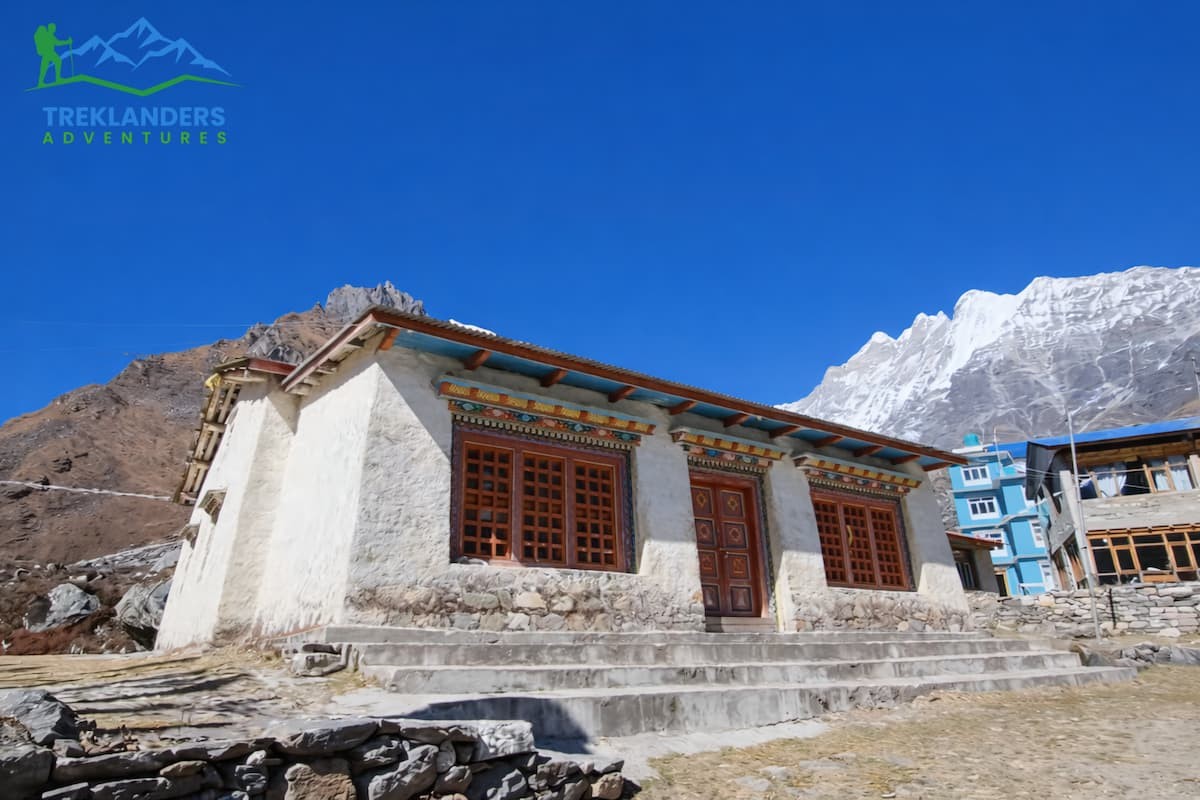
The monastery can be considered the core of the village, not only from the spiritual point of view but also as one of the heritages of the Tibetan Buddhist traditions in the Langtang region. Being embraced by prayer flags, Mani walls, and chortens, it is accessible for visitors to enjoy the calmness of daily prayers and get familiarized with the religious rituals of the Tamang community that is native to the region.
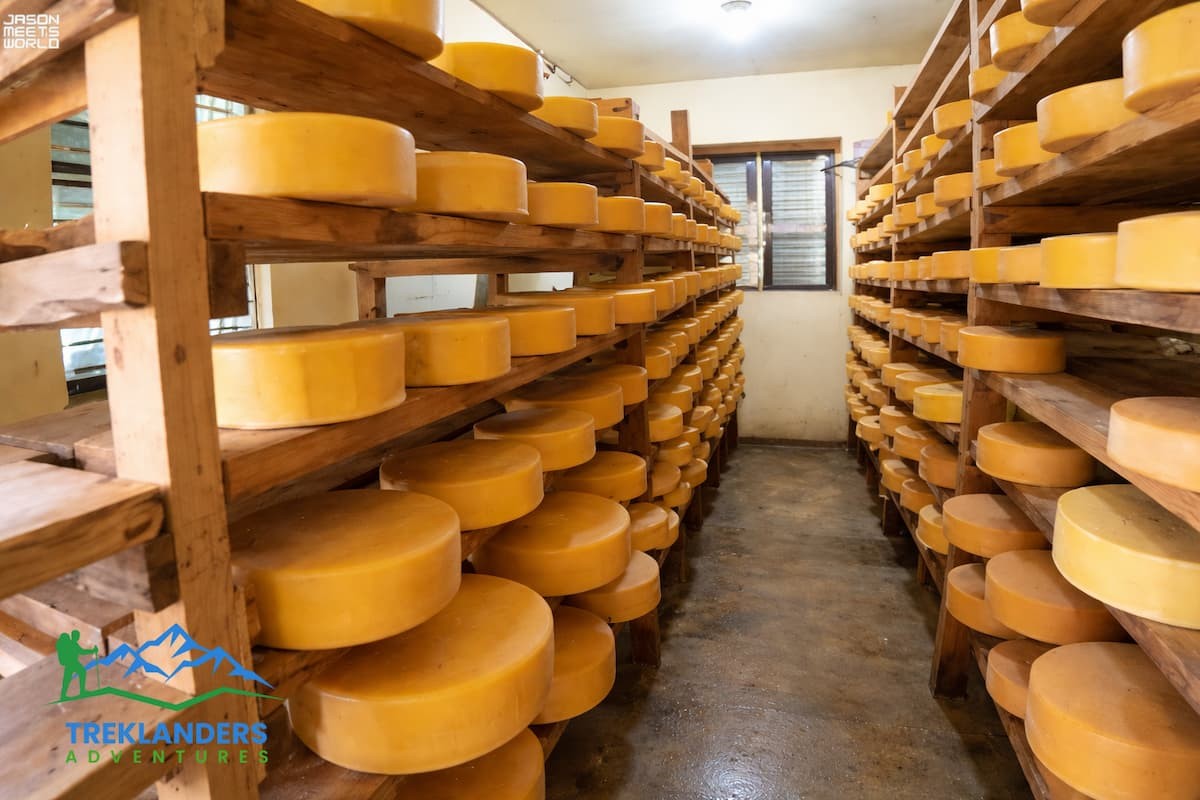
This is a great yak cheese factory at high altitude located in Nepal, and it is very interesting to note that it uses almost 100% traditional methods for the production of hard and soft cheese made from yak and cow milk. Tourists are allowed to see the production and taste the fresh cheese, which is also a unique cultural and culinary attraction.
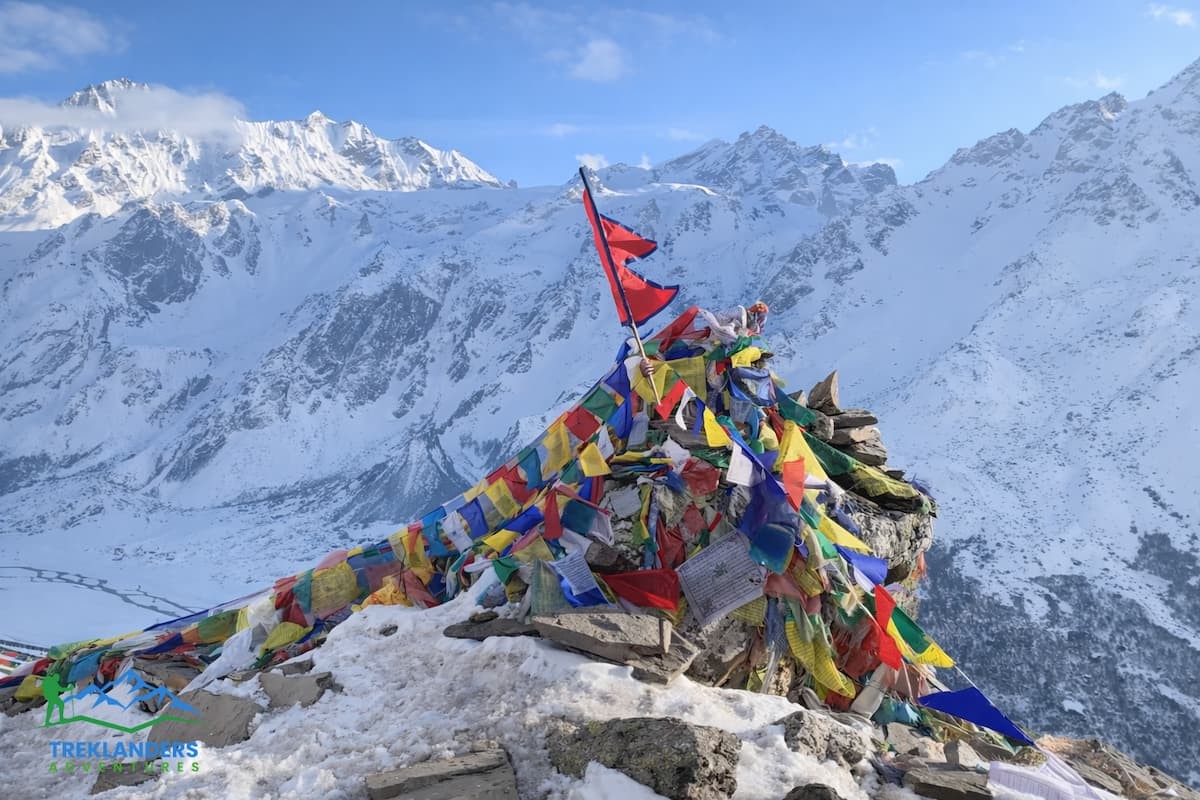
The hike to Kyanjin Ri is quite popular as a local acclimatization trek from here, and it guarantees, in return, spectacular views of ice-capped peaks like Langtang Lirung or Gangchempo, and glaciers too. The lower summit is not so steep and more accessible, whereas the upper summit unveils more dramatic panoramic views.
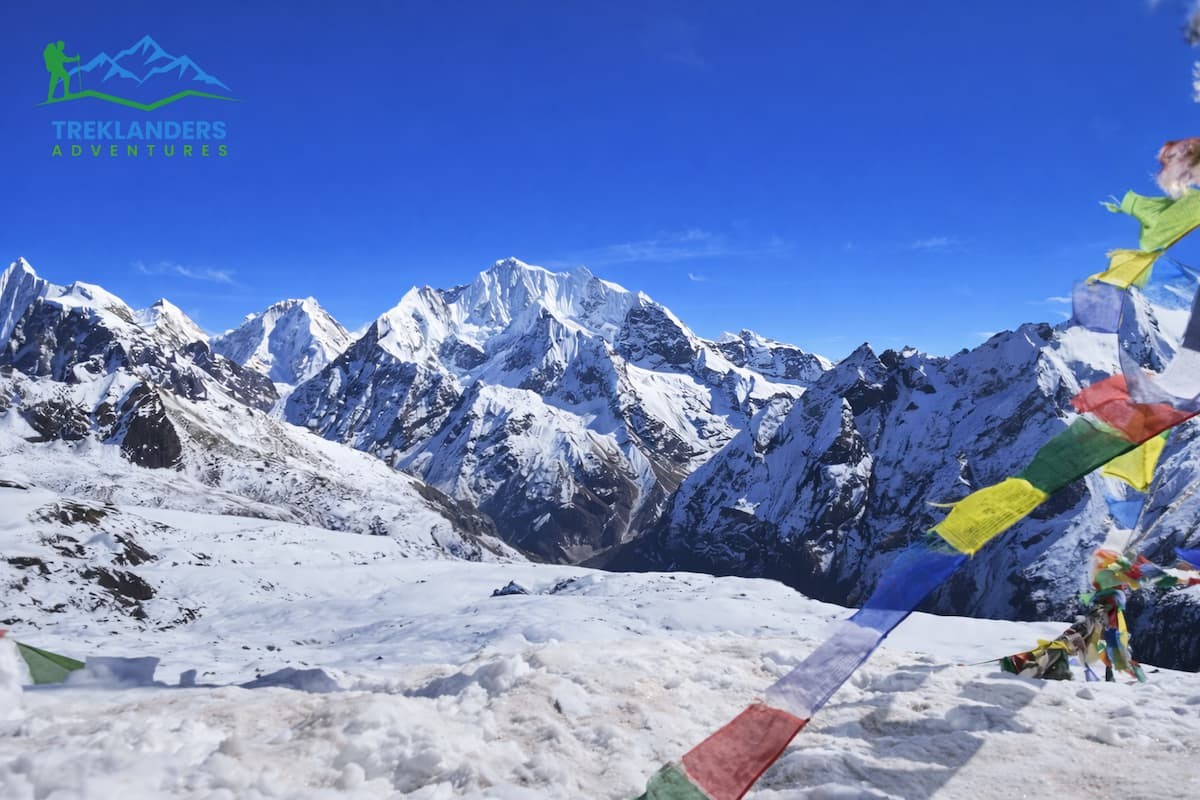
Tserko RI is the most elevated lookout point near Kyanjin Gompa that is situated at nearly 4,900 meters. The main drawback of a tough hike is quickly ignored when the trekkers are greeted with stunning 360-degree views of the snow-capped peaks, glaciers, and the whole Langtang Valley.
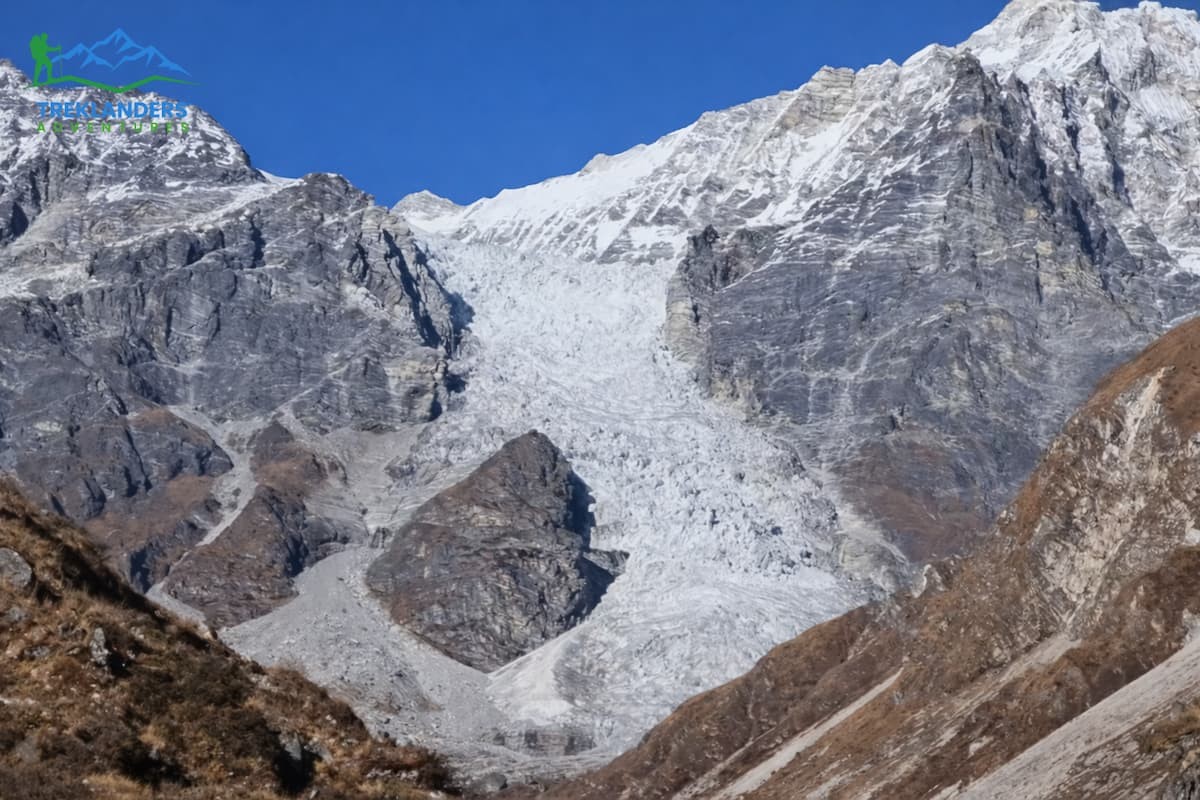
This ice mass is a valley glacier that goes down from the Langtang Lirung and is the main character for the scene with its breathtaking ice formations, moraines, and glacial streams. It presents the raw and spectacular alpine environment of the area.
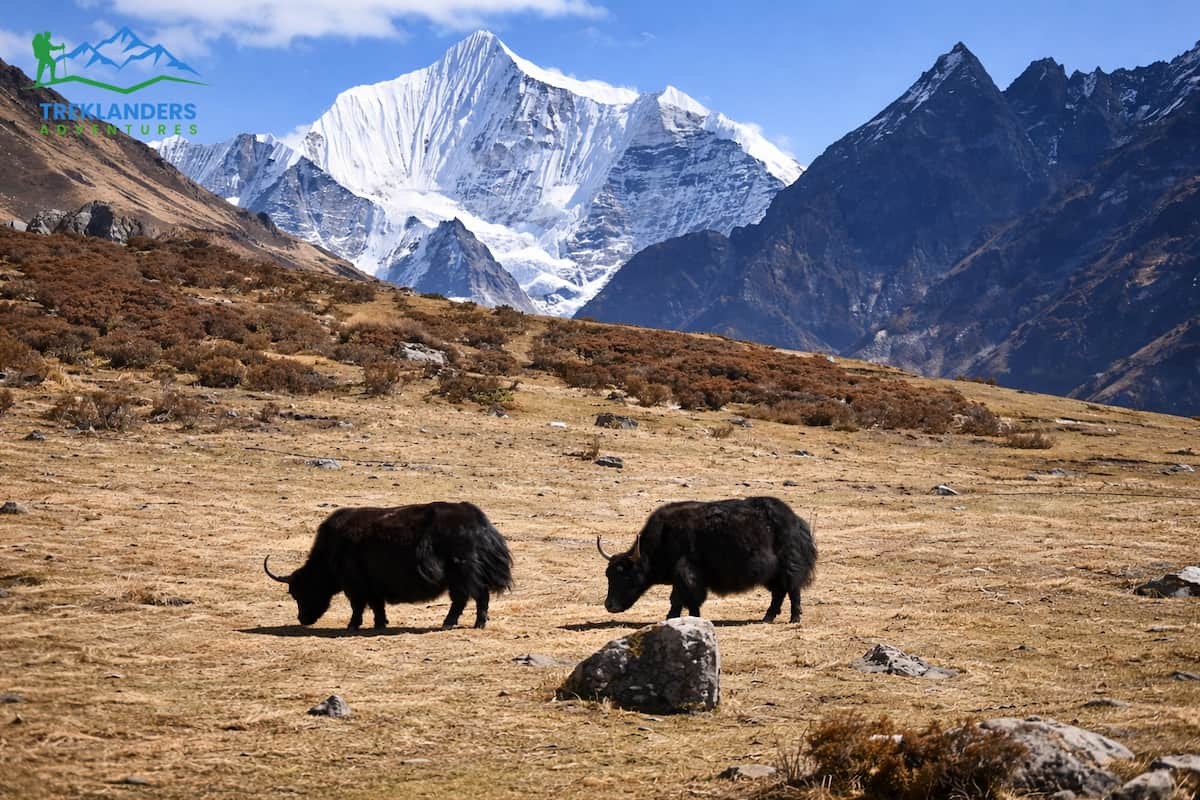
Not far from the village are lovely verdant pastures holding the yaks that are led there for grazing during the summer and autumn seasons. The meadows are not only great walking areas but also provide an opportunity to learn about the traditional lifestyle of local people in high mountain areas.
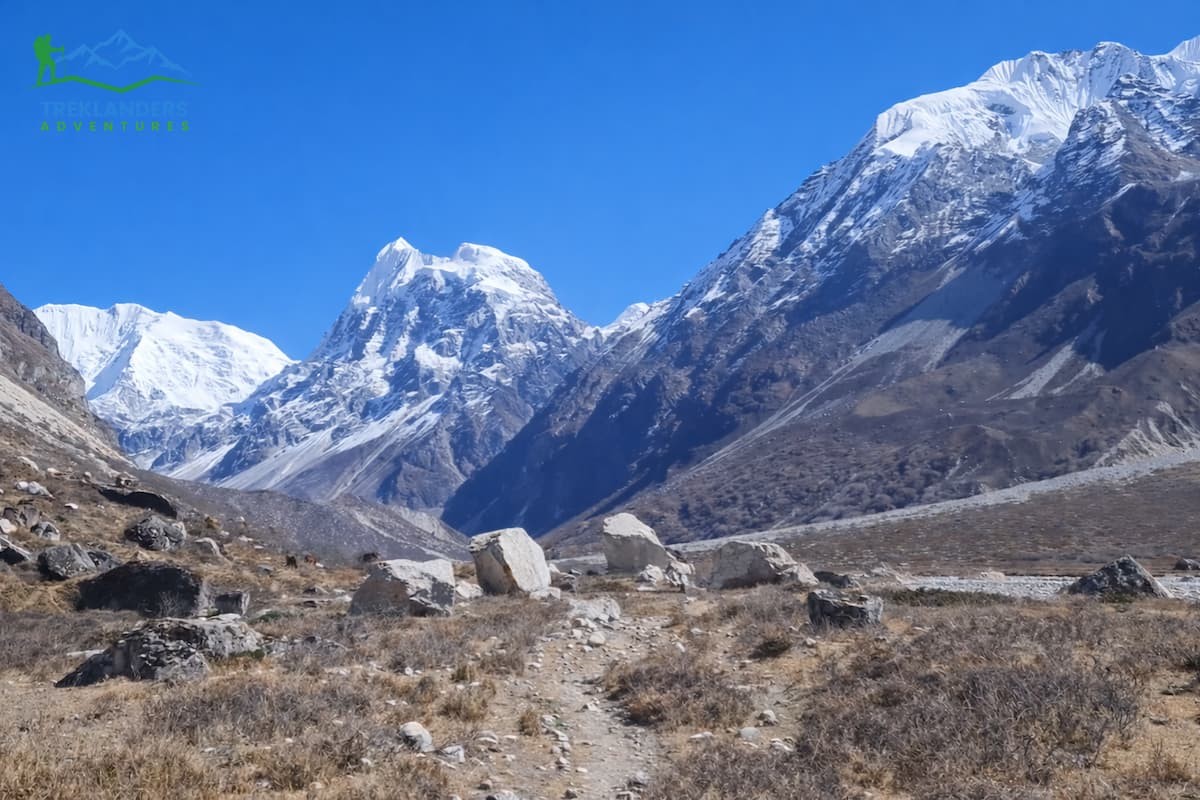
Langshisa Kharka is a picturesque and less crowded day trekking route starting from Kyanjin Gompa and offering nature lovers very close views of glaciers and towering peaks. It is perfect for those who are looking for peace and natural beauty during their trekking tour.
One can reach Kyanjin Gompa as the final and most rewarding destination of the Langtang Valley Trek. A Kathmandu to Syabrubesi drive full of stunning scenery through hills, rivers, and villages takes about 6–8 hours. The trekking trail from Syabrubesi goes along the Langtang Khola and slowly climbs through the forest.
The first trekking day is usually a walk to Lama Hotel via bamboo and riverside trails, with the walk going through oak and bamboo forests. On day two, the trail keeps going uphill to Langtang Village. Ghodatabela is passed on the way where the valley opens, and the mountains can be seen more clearly. At Langtang Village, one can experience the local Tamang culture and also rest overnight comfortably.
The next day, the trek from Langtang Village to Kyanjin Gompa. This is a walk that goes by yaks' pastures, prayer wheels, and glacier streams. Some people who are trekking there will spend a day or more at Kyanjin Gompa for acclimatization. Staying at Kyanjin Gompa, they can see local attractions, or they can take short hikes to Kyanjin Ri or Tserko Ri. The schedule here offers gradual altitude gain, suitable acclimatization, and a pleasurable trekking experience in the core of the Langtang Valley.
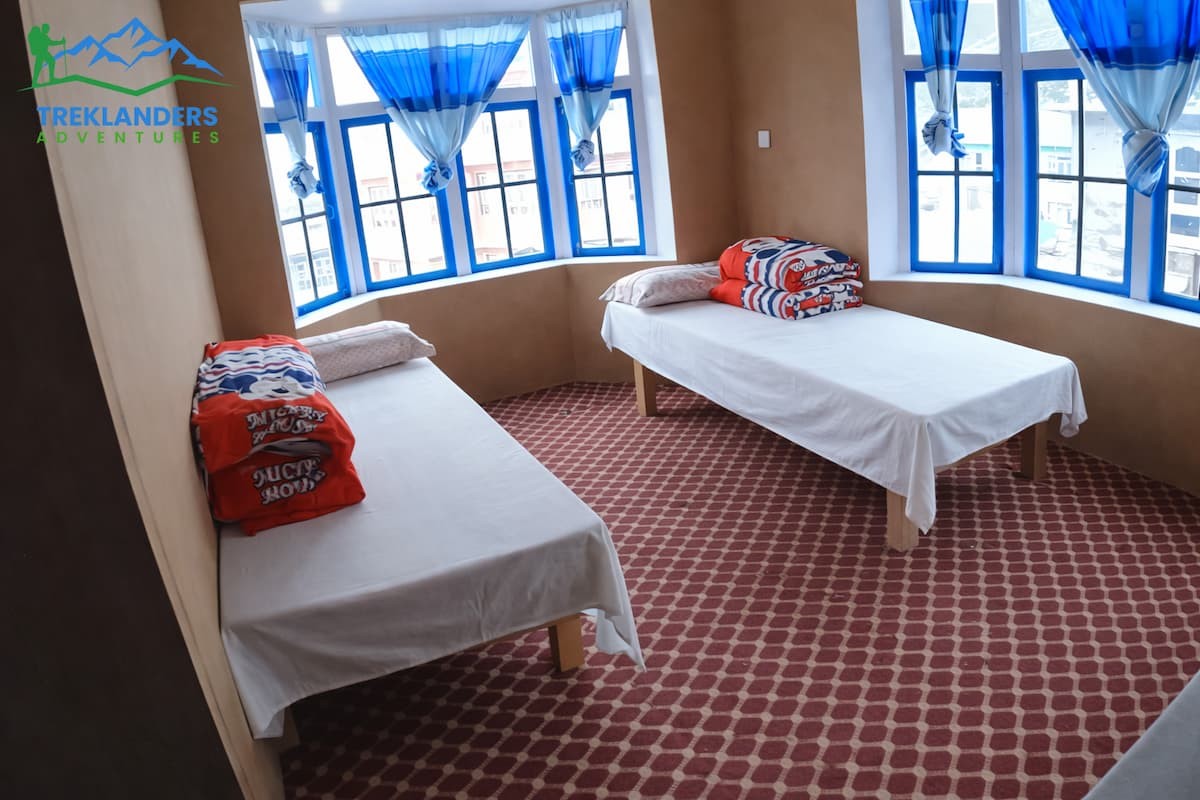
Kyanjin Gompa is equipped with some of the most luxurious and comfortable trekking facilities in the entire Langtang Valley and is, therefore, the perfect place to rest and acclimatize. The parameter of accommodation is mostly made up of family-run teahouses and mountain lodges that provide clean, simple, and cozy rooms. Most are twin-shared with basic beddings, warm blankets, and shared bathrooms, while a few lodges have attached toilets and solar-heated hot showers. The facilities may be humble, but they are perfectly adequate for high-altitude trekking conditions.
Teahouses in Kyanjin Gompa cook and serve fresh meals comprising traditional Nepali dal bhat, noodles, soups, fried rice, potatoes, momos, and a variety of hot drinks. The meals are healthy and energizing, thus necessary for trekkers to keep their energy levels up and stay warm in the cold alpine climate. Safe drinking water can be had from boiled water, water refilling stations, or bottled water, and trekkers are advised to use purification tablets to minimize plastic waste.
Most lodges offer charging facilities for electronic devices that are usually solar-powered and come at a nominal charge. It is also possible to get very limited Wi-Fi or mobile network, though the connection speed can be at its worst, and the connection can be dropped frequently because of the secluded location. There are a few small shops which provide basic medical supplies, snacks, and trekking essentials, but it is advisable to bring all necessary items from Kathmandu.
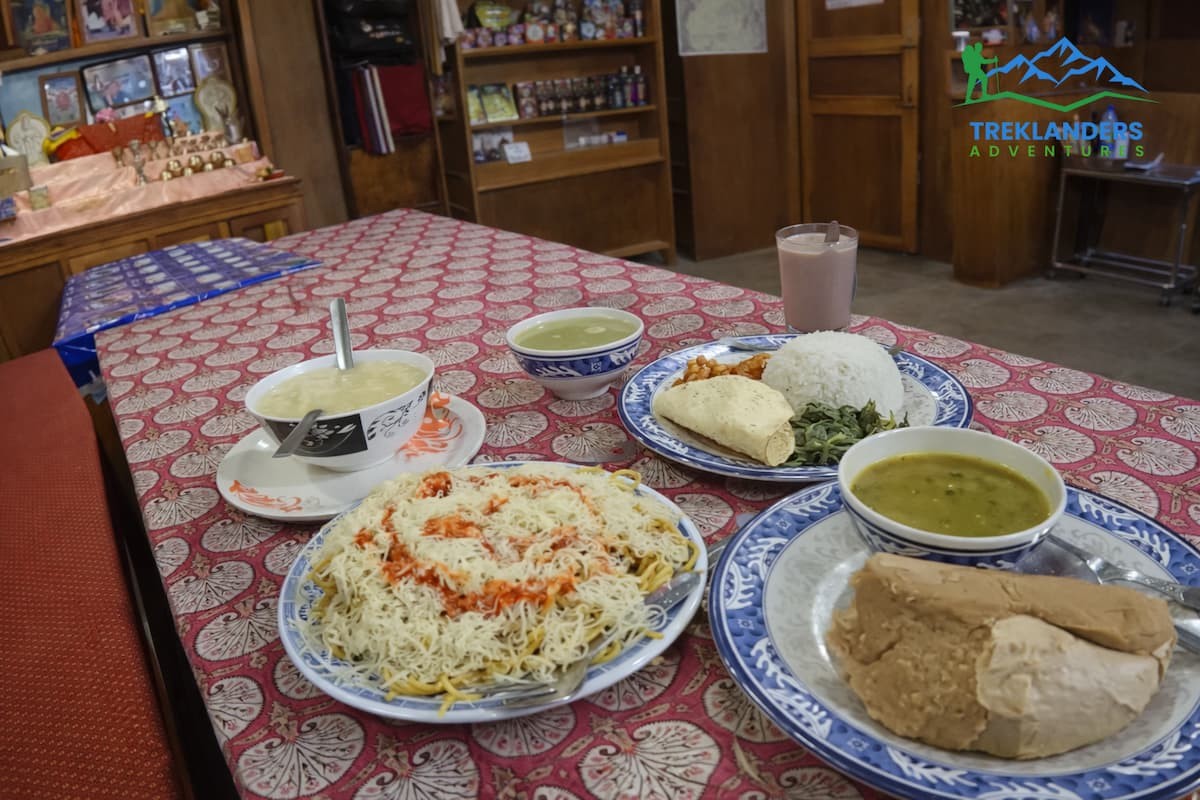
Food options in Kyanjin Gompa are simple, nutritious, and quite appropriate for a high-altitude trek. Freshly made meals are served in most teahouses and lodges, among which dal bhat (rice, lentils, and vegetables) is the most common and energy-packed meal for a trekker's diet. Other standard menu items are noodles, fried rice, pasta, soups (garlic soup is highly recommended at altitude), pancakes, eggs, potatoes, momos, and porridge. To keep warm and hydrated, hot drinks like tea, ginger lemon honey, coffee, and hot chocolate are very popular and easily available.
With altitude, digestion becomes slower, so it is better to eat warm, light, and carbohydrate-rich food. There is non-vegetarian food in some lodges, but vegetarian meals are generally considered safer at higher elevations.
Drinking water is provided through boiled water, refill stations, or bottled water at teahouses. To lessen plastic waste and trekking costs, trekkers should bring a reusable bottle and use water purification tablets or filters. Acclimatization requires proper hydration, and hence, drinking plenty of water throughout the day is highly advised.
Kyanjin Gompa is roughly 3,870 meters above sea level, so altitude awareness is a must if you want to have a safe and fun time there. As you go higher in the Langtang Valley, the probability of getting Acute Mountain Sickness (AMS) gets higher as well, particularly if the body isn't given enough time to acclimatize. Among the symptoms are headache, dizziness, nausea, loss of appetite, and fatigue. It is very important to understand those signs on your body at an early stage.
If you want to be safe, you have to keep a slow and steady pace, not hurrying, and sprinkling your days with rest for acclimatization. That place serves great purposes for those intents, as trekkers can relax or take a short day hike and then come back to sleep at the same altitude. Drinking enough water, eating hot and healthy meals, and refraining from alcohol or cigarettes are some of the things that aid the body in its adjustment process.
In case your symptoms aggravate or don’t get better by resting, the best thing to do is to go down to a lower altitude straight away. It is also a good idea to hire a licensed guide, carry some basic medical supplies with you, and have travel insurance that covers trekking at high altitudes. If you do it right and stay alert, you can have a safe trip in Kyanjin Gompa while at the same time lessening the chances of getting into trouble because of the altitude.
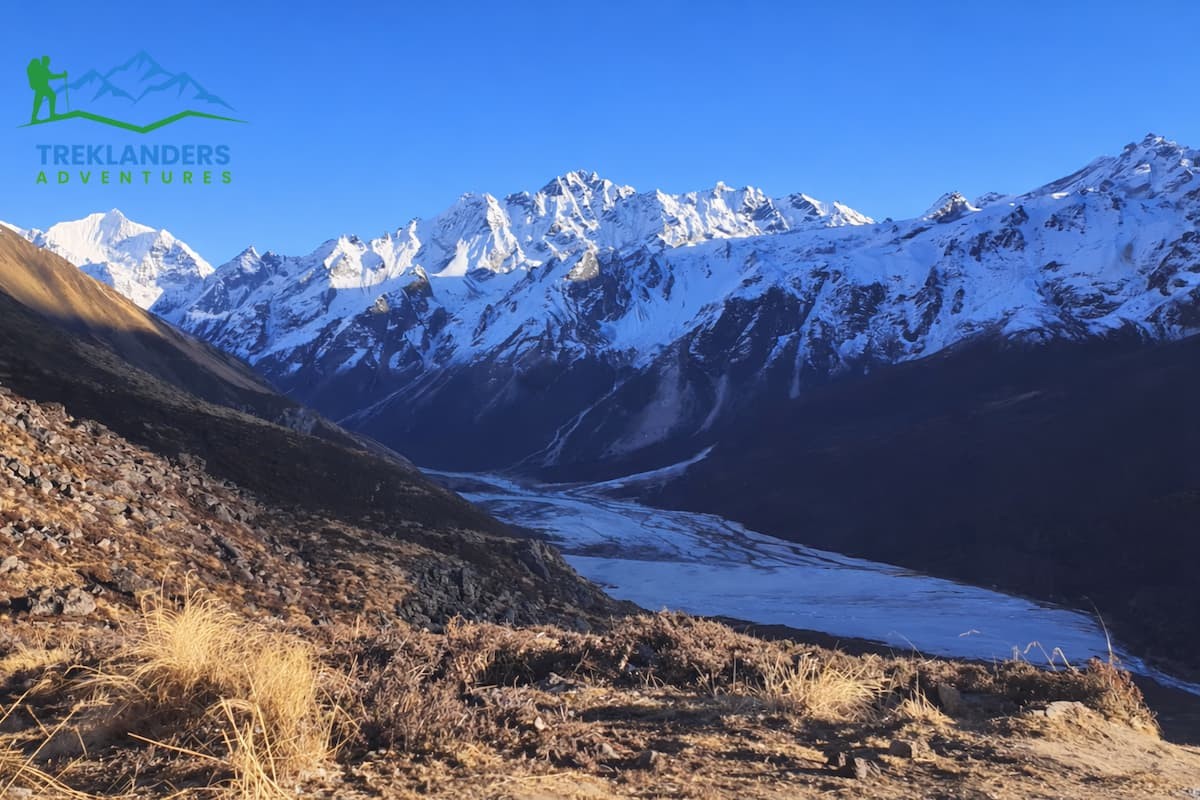
Kyanjin Gompa helps trekkers safely adjust to the Langtang Valley’s altitude. At around 3,870 meters, the village is at the perfect height to stop and rest. This pause allows the body to adjust before heading to higher viewpoints. Staying an extra night here lowers the chance of altitude illness. It also makes trekking safer and more comfortable.
Kyanjin Gompas location makes it ideal for acclimatization. Several peaks are within reach with open land around. Trekkers can follow the 'climb high, sleep low' rule by going up Kyanjin Ri or Tserko Ri on a day trek, then returning to the village to sleep. This gradual approach helps the body adapt without overworking it.
Moreover, Kyanjin Gompa is offering visitors neat and clean teahouse lodging facilities, tasty food, and a quiet place to get a good sleep and keep themselves hydrated with water apart from the natural setting. The tranquility of the place, together with the stunning Himalayan views, makes it the perfect setting for both the body to recover and the mind to relax. It is for these reasons that Kyanjin Gompa is considered a major stop for acclimatization on the Langtang Valley Trek and an indispensable element in a high altitude journey, which is safe and successful.
Kyanjin Gompa is a great place to do side trips and day hikes, which are very rewarding, help you get used to the altitude, and give you some of the best views in the Langtang area. You can do these hikes without changing your accommodation, so they are safe and convenient.
The number one choice is Kyanjin Ri, which can be found directly above the village. This hike is perfect for acclimatization and can be done in a few hours. On the summit, Langtang Lirung, Gangchempo, and glaciers around can be seen clearly by the trekkers. There are lower and upper viewpoints, so hikers can decide based on their fitness and weather.
Moreover, Tserko Ri is the most difficult and rewarding day hike from Kyanjin Gompa that only deeply experienced trekkers should consider. It offers a stunning 360-degree panoramic view of the Langtang range, glaciers, and deep valleys as it ascends close to 5,000 meters. Due to weather and altitude, an early start is strongly advised.
Besides that, you can take a quieter path by going on a hike to Langshisa Kharka. It is a remote and less-crowded alpine area. This way you will go through large glacial valleys and yak pastures, enjoy a tranquil atmosphere, and have close-up views of the icefall and the giant peaks.
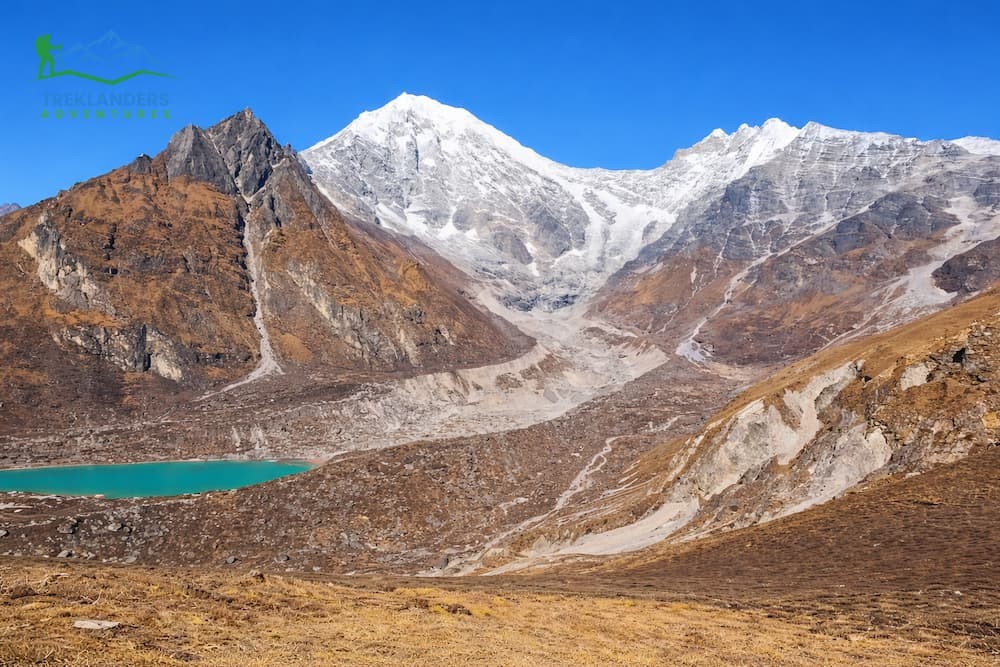
The Kyanjin Gompa is the most amazing place that you can visit while hiking the Langtang Valley and still have many other great views, experience the local culture, and have fun in the mountains. It is located in the valley of Langtang. It looks like it has been there for a long time, but it can be reached as easily as by trekking to many other places in the Himalayas, and you practically get there for free.
First of all, Kyanjin Gompa is a place that is necessary to visit because of its stunning nature. The small village of Kyanjin can boast such views of the Langtang Lirung, Gangchempo, Yala Peak, and so on that no one can doubt after looking at them that those are the highest mountains in the world. The ice fields, mountain pastures, and small valleys around Kyanjin Gompa make up the quintessential Himalayas, which are both pristine and tranquil.
Not only that, but the place is a must-stop for the purpose of a safe high-altitude trek because Kyanjin Gompa is an acclimatization center. This small town has, in fact, some short side trails to the viewpoints of Kyanjin RI and Tserko RI, which are perfect for those who want to acclimatize and at the same time enjoy the beautiful views.
From the cultural point of view, Kyanjin Gompa is deeply rooted in the Tamang and Tibetan Buddhist Traditions. The local monastery, prayer flags, Mani walls, and sincere hospitality represent a spiritual life in the mountains. A visit to the famous Kyanjin Cheese Factory is yet another way to bring visitors closer to the region’s distinct lifestyle.
Kyanjin Gompa is not only the last point of the Langtang Valley Trek, but it is also the place where the trip really feels finished. A village enclosed by the towering Himalayan peaks, glaciers, and vast alpine landscapes, offers an unforgettable mixture of Mother Nature, culture, and a thrilling adventure at high altitude. Indeed, its location makes it a perfect place to get used to the altitude, go on further expeditions, or simply relax in the middle of the Langtang Himalayas.
Kyanjin Gompa is the place that provides the most balance: the difficult but still doable hikes of Kyanjin Ri and Tserko Ri, the tranquility of the monastery, and the precious local Tamang community contacts. The infectious spirit of the village, especially after the 2015 earthquake, adds an extra layer of motivation to every visit.
If you are a first-time trekker, a mountain photographer, a culture lover, or someone who is looking for a less-crowded alternative to the Everest region, Kyanjin Gompa will give you a rich and rewarding Himalayan experience. The stay here is not merely about arriving at a destination, it is about getting to know mountain life, loving nature, and taking with you memories that will last forever.

Explore the best viewpoints on the Langtang Trek, including Kyanjin Ri and Tserko Ri, for stunning Himalayan views and unforgettable scenery.
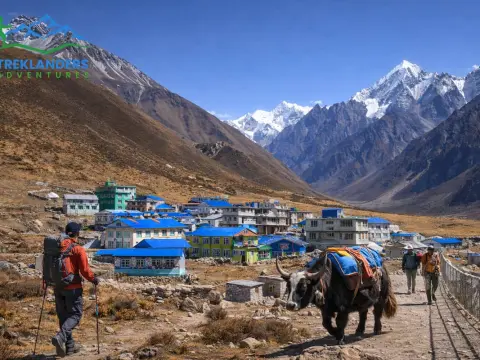
The Langtang Valley Trek hides rich culture, sacred mountains, and untouched landscapes that most trekkers overlook.
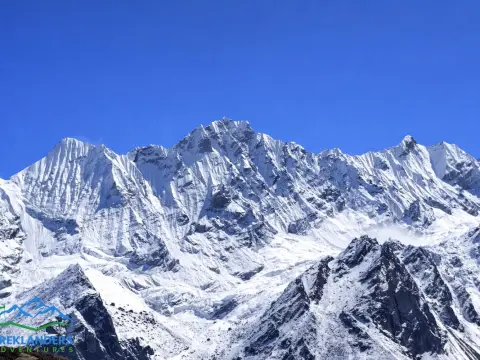
A complete day-by-day guide to the Langtang Valley Trek, including key highlights, altitude details, and must-visit places for an unforgettable Himala...



