Mardi Himal Trek vs Khopra Ridge Trek: Which Short Annapurna Trek Is Best for First-Time Trekkers?
3 Jul 2026
Compare Mardi Himal and Khopra Ridge to choose the best short Annapurna trek for your first Himalayan adventure.

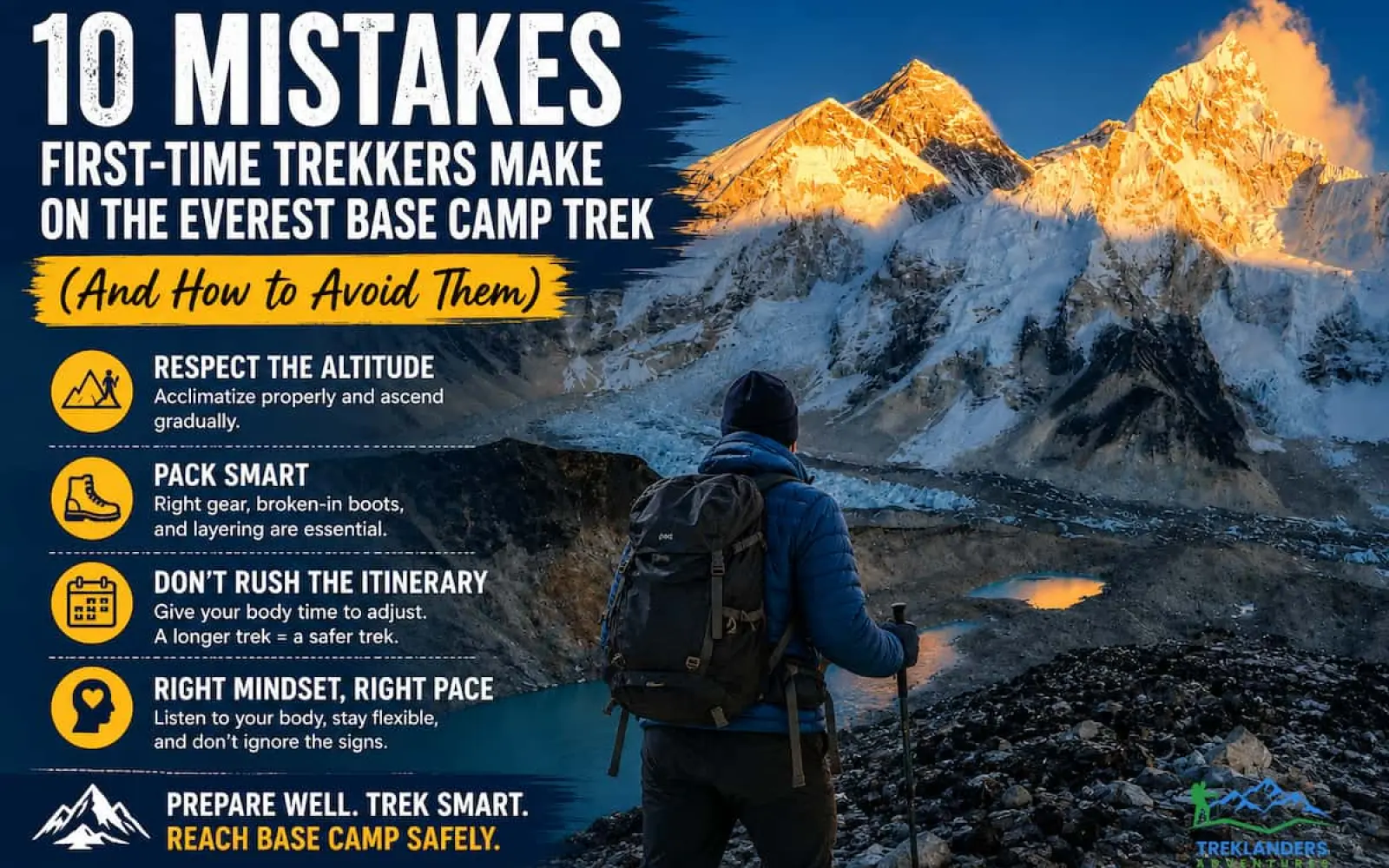
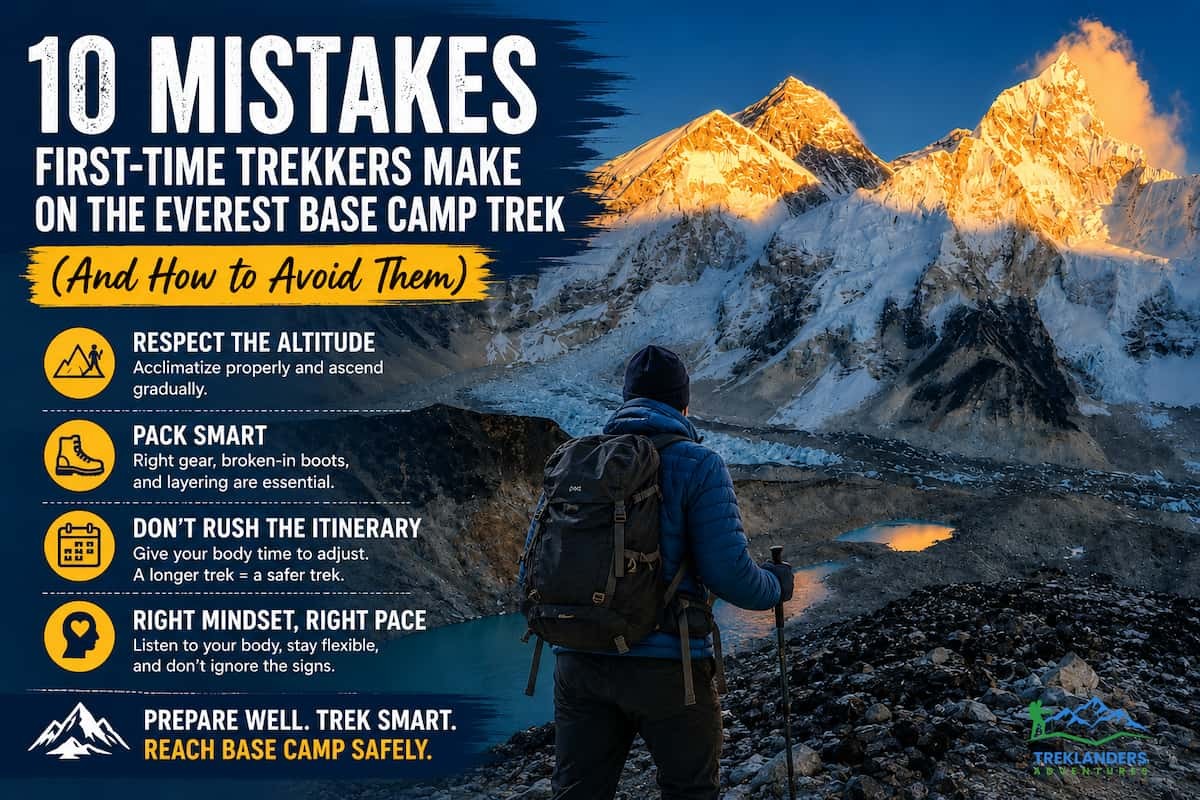
The Everest Base Camp Trek pulls in more first-time high-altitude trekkers than any other route in Nepal. That's exactly why so many people get it wrong. You don't need mountaineering experience to reach Base Camp, but you do need to respect the altitude, the distance, and the unpredictability of the Khumbu region. This is a trek where enthusiasm and a decent gym membership aren't enough on their own.
Every year, guides in Namche Bazaar and Dingboche watch the same mistakes play out. Trekkers fly into Lukla with a five-day itinerary squeezed into three. They pack running shoes instead of broken-in boots. They push through headaches because they paid for the trip and don't want to "waste" a day. Some of these mistakes cost a trekker a few uncomfortable nights. Others end a trek at 4,000 meters with a helicopter evacuation and a bill running into thousands of dollars.
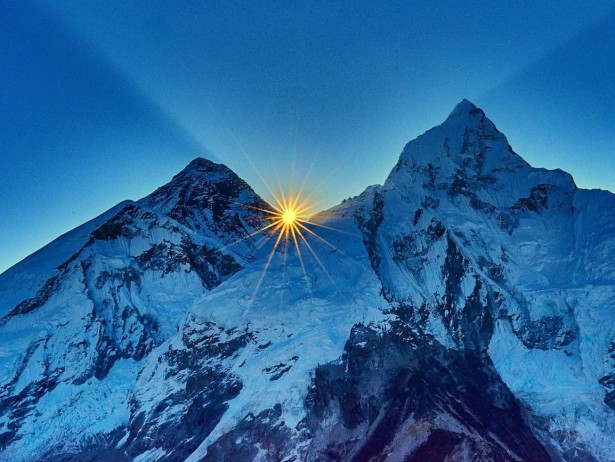
None of this is meant to scare you off the trek. Tens of thousands of people reach Everest Base Camp every year without major incidents, and most of them are ordinary hikers, not elite athletes. The difference between a smooth trek and a miserable one usually comes down to preparation, not luck. Most of the trekkers who struggle badly on this route made one of a handful of predictable decisions weeks before they ever set foot on the trail, whether that was booking a rushed itinerary, skipping training, or picking an agency based on the cheapest quote in their inbox.
This guide breaks down the ten mistakes that trip up first-timers most often, why they happen, and exactly what to do instead. Some of these mistakes are about gear and logistics. Others are about mindset and pacing, which matter just as much once you're several days into the trek and the novelty has worn off. If you're planning your first trip to Everest Base Camp, read this before you book your flights, not after you've already committed to an itinerary that sets you up to fail.
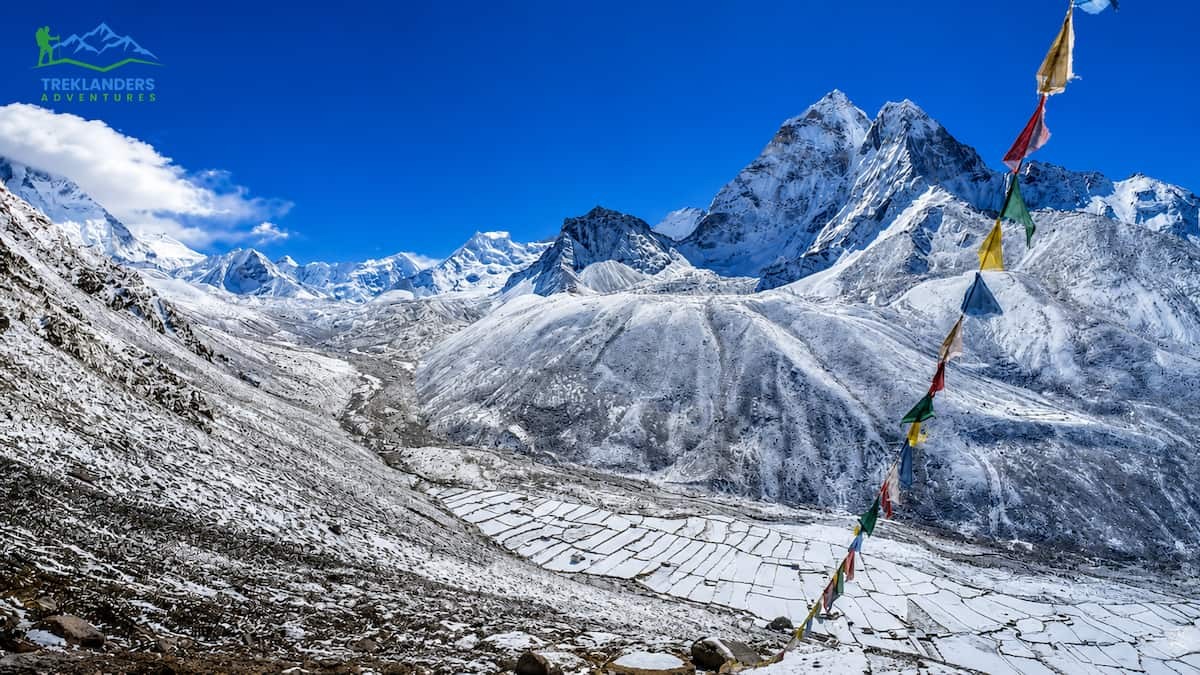
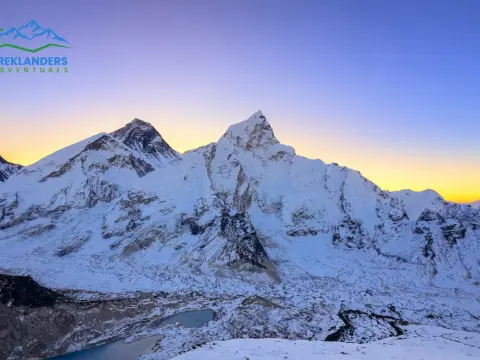
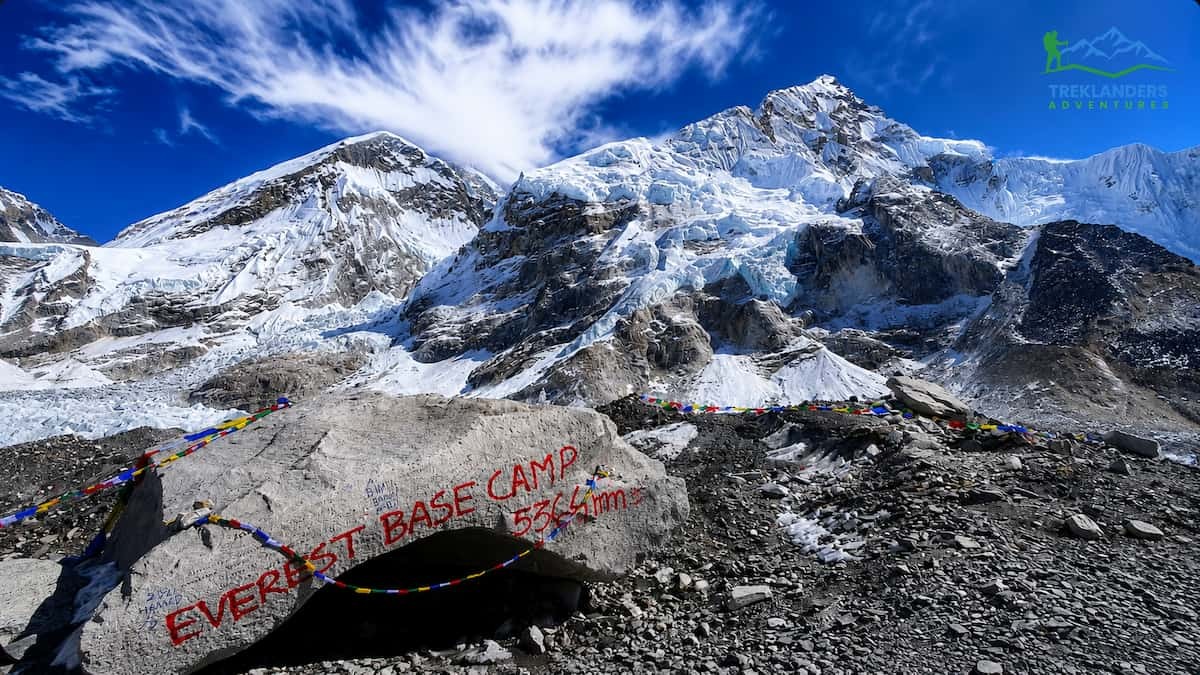
This is the mistake that ends more treks than any other. Everest Base Camp sits at 5,364 meters. Kala Patthar, the viewpoint most trekkers add to their itinerary for the classic sunrise view of Everest, sits even higher at 5,545 meters. Your body needs time to adjust to that thin air, and no amount of fitness changes that fact.
Altitude sickness doesn't care if you ran a marathon last month. It affects strong hikers and casual walkers at similar rates, because it's a physiological response to reduced oxygen availability, not a fitness problem. Some of the fittest people on the trail get hit hardest, partly because their fitness lets them ascend faster than their bodies can actually adapt. The standard guideline is to gain no more than 300 to 500 meters of sleeping altitude per day once you cross 3,000 meters, and to take a full rest day for every 1,000 meters gained.
The classic EBC itinerary builds in two acclimatization days: one in Namche Bazaar (3,440m) and one in Dingboche (4,410m). These aren't rest days in the sense of staying in bed all day. You hike up during daylight hours, often to Everest View Hotel or the Khumjung ridge from Namche, then sleep back down at the lower altitude that night. From Dingboche, most itineraries add a hike up toward Nagarjun Hill or Chukhung. This "climb high, sleep low" pattern is what actually helps your body build red blood cells and adjust to the reduced oxygen, rather than simply resting in place.
First-time trekkers often see a 12-day itinerary and think they can compress it to save money or annual leave. Cutting acclimatization days is the single most common way to trigger acute mountain sickness. Symptoms start as a mild headache, nausea, and loss of appetite, similar to a hangover. Ignored, they can progress to High Altitude Pulmonary Edema or High-Altitude Cerebral Edema, both of which are medical emergencies that require immediate descent and, often, evacuation.
Book a minimum 12-day Ebc Trek itinerary for the standard Everest Base Camp route, or 14 to 16 days if you're adding Gokyo Lakes or the Everest Three Passes extension. Treat the acclimatization days as fixed, not optional, when you're comparing itineraries between agencies. If your guide suggests an extra day because you're not adjusting well, take it, even if it disrupts your onward travel plans. The extra night in a teahouse cost far less than a helicopter evacuation, and it costs nothing at all compared to your long-term health.
Learn the difference between normal trekking fatigue and early AMS before you leave home, not while you're already at 4,000 meters trying to decide what's happening to you. A mild headache that responds to rest; water, and paracetamol is common and not automatically dangerous. A headache that gets worse despite rest, paired with vomiting, loss of coordination, or confusion, is a different situation entirely and means immediate descent, not a wait-and-see approach. Tell your guide the moment you notice symptoms rather than downplaying them to avoid slowing the group down. Guides in this region would rather deal with an honest report of a mild headache than discover a serious problem hours later because someone didn't want to make a fuss.
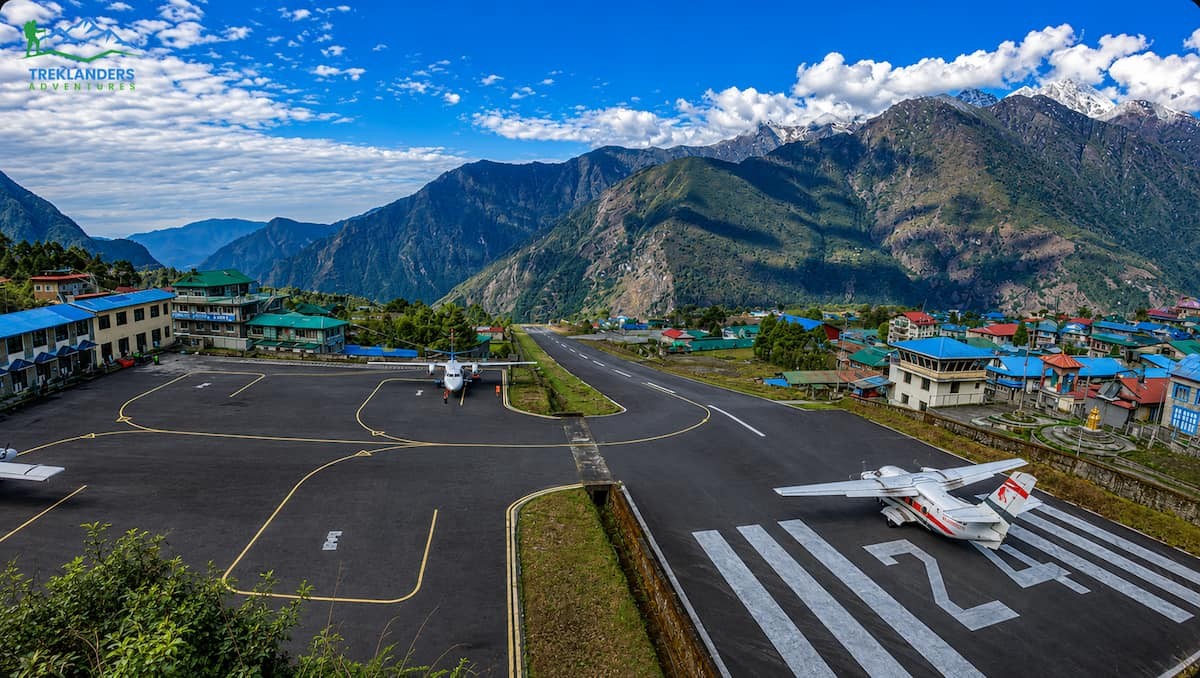
Lukla airport is regularly ranked among the most dangerous airports in the world, not because of poor maintenance but because of its short runway, mountainous approach, and constantly shifting weather. Flights get delayed or cancelled often, sometimes for two or three days in a row during cloudy periods, particularly during the monsoon shoulder months of May, June, and early September.
First-time trekkers frequently book flights home the day their trek is scheduled to end, with no buffer for delays. When the return flight from Lukla gets grounded by fog, they either miss their international flight home or pay for an expensive last-minute helicopter transfer to Kathmandu, which can run into several hundred dollars per seat and still depends on weather clearing enough for a helicopter to fly.
Build at least two buffer days into your trip on both ends of the trek. Book your international departure flight at least three days after your scheduled trek completion date. If everything goes smoothly, you get extra time in Kathmandu to relax, shop in Thamel, or visit Bhaktapur and Patan. If your flight gets delayed, you have room to absorb it without missing your connection home.
This applies to your inbound flight, too. If you fly into Lukla the same day your trek starts, a delay eats directly into your itinerary and puts pressure on you to skip an acclimatization day just to stay on schedule. Arrive in Kathmandu at least one full day before your scheduled Lukla flight, so a weather delay doesn't force a rushed decision later in the trek.
Some agencies now offer the option to fly via Manthali or Ramechhap during peak season, when flights are redirected there to reduce Kathmandu airport congestion. Ask your agency in advance whether this applies to your dates, since it adds a few hours of driving before the flight and is worth planning around rather than discovering on arrival, often at four in the morning when you're already tired and disoriented.
If your flight does get delayed, resist the urge to pressure your guide into rushing the itinerary to make up lost time once you finally reach Lukla. This is exactly how acclimatization days end up getting cut, which trades one problem, a delayed start, for a much more serious one, altitude sickness later in the trek. A good agency builds enough slack into the overall schedule that a one- or two-day delay at the start doesn't force a compressed itinerary later. Ask about this contingency plan specifically before you book, rather than assuming it exists.
You don't need to be an athlete to trek to Everest Base Camp, but you do need a baseline of cardiovascular fitness and leg strength. The trek involves five to seven hours of walking most days, often on uneven stone steps, loose scree, and steep inclines, at altitudes where every physical task takes noticeably more effort than it would at sea level.
Trekkers who show up without preparing often find themselves exhausted by day three, struggling to keep pace with their group, or dealing with knee and ankle strain from the long descents, particularly the steep drop from Namche back down toward Phakding on the return leg. Fatigue at altitude is also a risk factor for altitude sickness itself, since an exhausted body handles the physiological stress of low oxygen worse than a well-rested one.
Start training at least eight weeks before your trek, longer if your current fitness level is low. Focus on three areas: cardiovascular endurance, leg strength, and load-bearing hikes on varied terrain. Build up to hiking three to four hours at a stretch on hilly terrain, ideally wearing a daypack loaded to the weight you'll carry on the trek, usually 5 to 8 kilograms. Add stair climbing, a step mill machine, or hill repeats to your gym routine to prepare your legs for the constant elevation changes on the trail, since EBC involves as much descending as climbing.
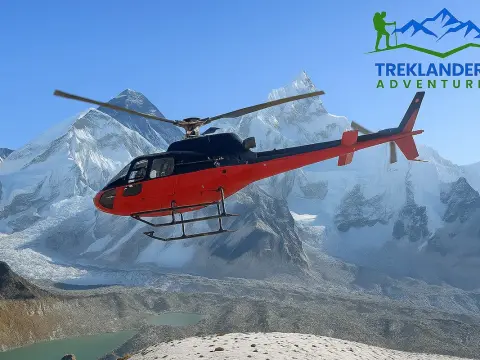
If you have access to hills or mountains near home, use them instead of a treadmill. Simulating the up-down nature of Himalayan trails, rather than training only on flat ground, prepares your joints and muscles for what the Khumbu will actually demand, particularly the stone stairs that make up long sections of the trail between villages.
Strength training for your core and legs, two to three sessions a week, also helps protect your knees on the descents, which is where most trekking injuries actually happen rather than on the climbs.
A simple eight-week plan might start with two to three hikes a week of 60 to 90 minutes, building to full-day hikes of five to six hours by week six or seven, with a daypack progressively loaded closer to your actual trekking weight. Add two strength sessions a week focused on squats, lunges, and step-ups, since these movements directly mirror the muscle patterns used on long, steep descents. If you're coming from a mostly sedentary routine, give yourself twelve weeks instead of eight, and don't schedule your first long training hike for the same week you plan to fly to Kathmandu.
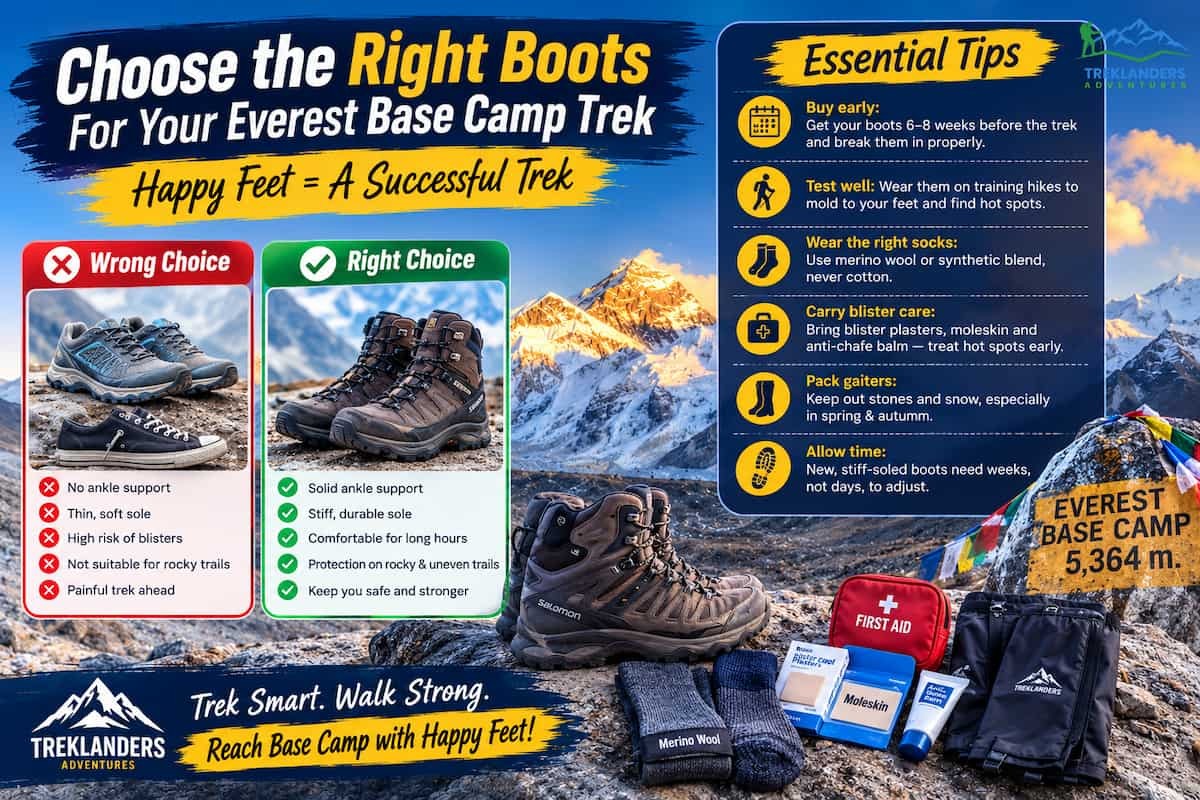
Footwear mistakes are among the most preventable problems on the trail, and among the most common. Trekkers show up in brand-new boots straight out of the box, in trail running shoes with no ankle support, or in boots that fit fine at home but feel completely different after six hours of walking with swollen feet at altitude.
Blisters, black toenails, and ankle strain from inadequate support can turn a trek into a genuinely painful ordeal, and there's no way to swap boots mid-trek in most villages along the route. Unlike altitude sickness, which depends on physiology you can't fully control, footwear problems are almost entirely preventable before you even leave home.
Buy your trekking boots at least six to eight weeks before departure. Wear them on every training hike so the leather or synthetic upper molds to your feet and you identify hot spots before they become blisters on the trail itself. Choose boots with solid ankle support and a stiff enough sole to handle rocky, uneven terrain, since the trail from Lukla to Everest Base Camp is rarely flat or smooth and includes long stretches of loose rock and stone steps.

Pack at least two pairs of hiking socks made from merino wool or a synthetic blend, never cotton, since cotton holds moisture and significantly increases blister risk in cold, damp conditions. Bring blister plasters, moleskin, and a small tube of anti-chafe balm in your daypack and treat any hot spot the moment you feel it rather than waiting until it's already a full blister, since by then you're dealing with days of discomfort rather than minutes of prevention.
Gaiters are worth packing too, particularly if you're trekking in the shoulder seasons when snow can appear on higher sections of the trail, since they keep small stones and snow out of your boots without you having to stop constantly to empty them.
If you're buying boots specifically for this trek and have never worn a stiff-soled leather or hybrid boot before, expect an adjustment period of several weeks, not several days. Wear them around the house in the evenings before committing to a full training hike, and pay attention to any pressure points around your heel or the top of your foot, since these are the spots most likely to blister once you're walking for hours at a stretch. A boot that feels fine for a one-hour walk can still cause problems on hour five, which is exactly the length of a typical trekking day between villages.
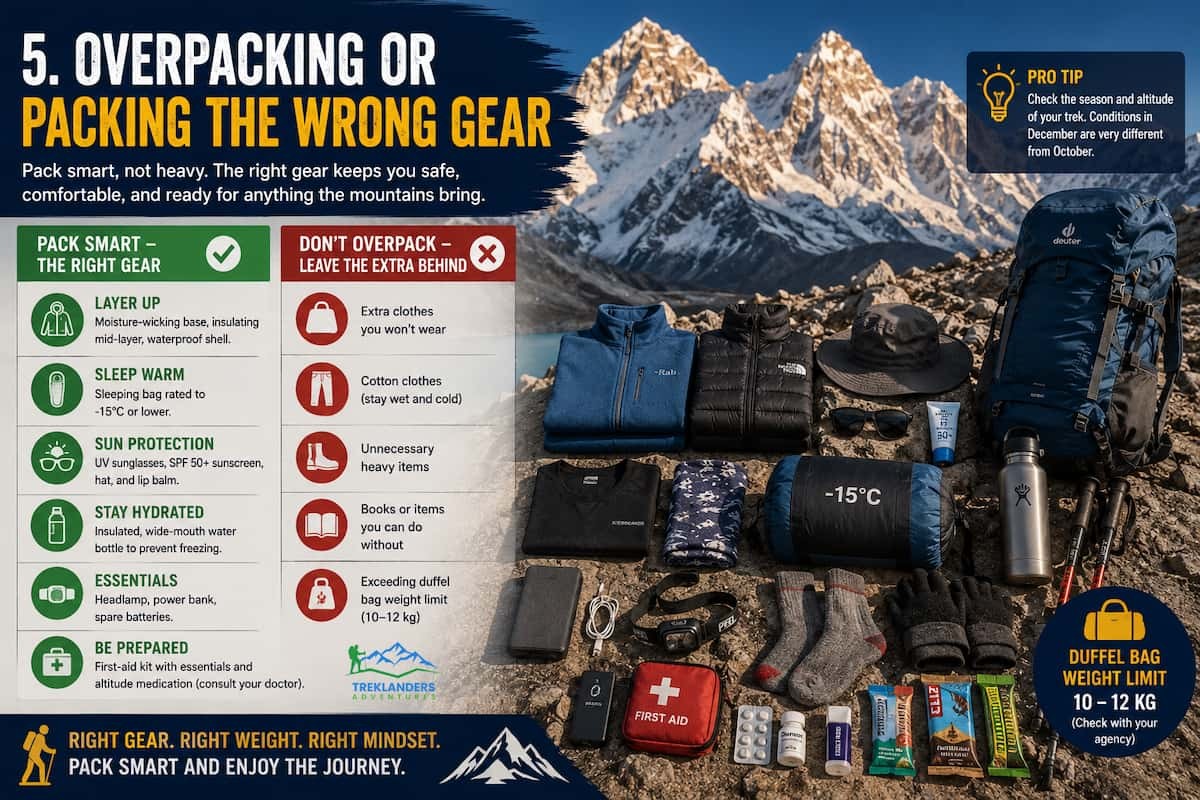
New trekkers tend to either overpack, hauling gear they'll never touch, or under pack, missing items that matter in a region where you can't simply buy a replacement at the next village. Both mistakes are common because it's genuinely hard to judge what a two-week trek at altitude requires if you haven't done one before.
Overpacking means your porter, or you, are carrying unnecessary weight over difficult terrain for no benefit. Under packing means showing up without a warm enough sleeping bag when teahouses at higher elevations have no heating outside the dining room, or without proper sun protection at an altitude where UV exposure is significantly stronger than at sea level.
Pack in layers rather than bulk. A solid system includes a moisture-wicking base layer, an insulating mid-layer like fleece or light down, and a waterproof, windproof outer shell for the top half of your body, with a similar approach for legs. Bring a sleeping bag rated to at least minus 15 degrees Celsius, since teahouse rooms above Dingboche get genuinely cold at night even with the extra blankets most teahouses provide.
Sun protection matters more than most first-timers expect. UV exposure increases with altitude, and snow reflection intensifies it further once you're above Dingboche. Bring sunglasses with UV protection rated for glacier travel, high-SPF sunscreen you reapply throughout the day, and a hat that covers your neck and ears. A headlamp with spare batteries is essential for early starts and teahouses with unreliable electricity, and a reusable water bottle with a wide mouth prevents your water from freezing shut in a narrow-necked bottle at the higher camps near Base Camp.
A few smaller items make a bigger difference than their size suggests: a lightweight power bank for charging devices where electricity costs extra, hand and toe warmers for the coldest mornings, and a basic first-aid kit with altitude sickness medication like acetazolamide, discussed with a doctor before you travel.
Keep your duffel bag within the weight limit your porter or agency specifies, typically around 10 to 12 kilograms, and carry your own daypack with essentials like water, snacks, sun protection, and a spare layer for sudden weather changes, since porters and trekkers don't always walk at the same pace.
Lay out everything you plan to pack at least two weeks before departure and go through it item by item against the season and altitude, you're actually trekking in, rather than copying a generic packing list found online without checking whether it matches your specific dates. Trekkers heading out in December need significantly more insulation than those trekking in October, and a list built for one season can leave you badly underprepared in the other. If you're unsure about a specific item, ask your agency directly rather than guessing, since they deal with these exact questions every week and know what current conditions on the trail actually require.
Dehydration at altitude happens faster than most trekkers expect, and it directly worsens the symptoms of altitude sickness. Cold, dry mountain air increases fluid loss through breathing alone, and the physical exertion of trekking multiple hours a day adds to it further. Many first-timers drink the same amount of water they would at home and end up dehydrated within a few days without realizing why they feel so drained.
You need at least 3 to 4 liters of water per day on the trail, more on longer or higher-altitude days. Dehydration symptoms, including headache and fatigue, overlap closely with early altitude sickness symptoms, which makes it harder to tell what's actually wrong with you if you're not drinking enough water in the first place.
Carry water purification tablets or a filtration system rather than relying only on bottled water, since plastic bottle waste is a serious and visible environmental problem in the Khumbu, and bottled water becomes noticeably more expensive the higher you climb. Boiled water is available in most teahouses for a small fee and is a reliable, cheaper option that also supports the local economy directly.
Nutrition matters just as much as hydration, and it's just as easy to get wrong. Your appetite often decreases at altitude, but your body needs more calories, not fewer, to fuel the physical demands of trekking and to support ongoing acclimatization. Eat regularly even when you don't feel hungry, and favor carbohydrate-heavy meals like dal bhat, pasta, and porridge, which are staples on teahouse menus for good reason. Dal bhat in particular is often served with unlimited refills, making it one of the most practical options on the entire route. Garlic soup is a local remedy widely believed to help with acclimatization, and it's worth trying even if the supporting evidence is mostly anecdotal rather than clinical.
Avoid alcohol entirely during the trek. It dehydrates you, disrupts sleep quality at a time when your sleep is already affected by altitude, and impairs your body's ability to acclimatize properly, on top of masking the early symptoms of altitude sickness that you need to notice clearly and quickly.
Watch your urine color as a rough daily check. Pale, clear urine generally means you're drinking enough. Dark yellow urine is a sign to drink more immediately, not at the next tea break. Some trekkers set a simple rule of finishing a full liter before lunch and another before dinner, which removes the guesswork on long trekking days when it's easy to forget to drink regularly. Caffeine in moderation is fine for most trekkers, but it's worth cutting back if you notice it's affecting your sleep at altitude, since sleep quality already tends to suffer above 3,500 meters regardless of what you drink.
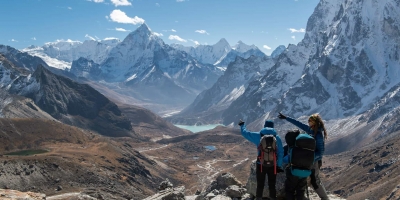
The EBC trekking market has a wide range of prices, and first-time trekkers often book with whichever agency offers the lowest quote without asking what that price includes or excludes. This mistake shows up later in the trek, when it turns out the guide has minimal altitude sickness training, the itinerary skips a critical acclimatization day to save on costs, or the porters are inadequately equipped for the conditions they're working in daily.
A cheap trek that cuts corners on acclimatization days or hires undertrained guides isn't actually cheaper if it increases your risk of a medical evacuation, or if it means an unsafe descent decision gets made by someone without proper training to recognize the warning signs in time.
Look for agencies registered with the Nepal Tourism Board and affiliated with the Trekking Agencies' Association of Nepal. Ask directly about the guide's Wilderness First Aid training and their specific experience with altitude sickness recognition on this exact route. Ask what happens if a member of your group shows signs of AMS: does the guide have a clear protocol for descent, or is the itinerary rigid regardless of how anyone is actually feeling?
Check how the agency treats its porters, including whether they provide appropriate clothing, footwear, and insurance for the work. This isn't only an ethical question, though it matters on those grounds alone. A porter without solid gear and fair treatment is a porter more likely to be undertrained, overloaded, or distracted by their own discomfort, all of which affect the safety of your trek indirectly but meaningfully.
Read reviews that specifically mention how the agency handled a problem, not just reviews praising good weather and nice views. A trek that goes perfectly doesn't tell you much about an agency's actual competence. How they respond when something goes wrong, a sick client, a flight cancellation, an injured porter, tells you everything you actually need to know before you commit.
Before booking, ask the agency directly how many people will be in your group, whether the itinerary can flex if someone struggles with altitude, and what communication equipment the guide carries above Namche, where mobile signal becomes unreliable. A guide with a satellite phone or reliable radio contact can call for help faster in an emergency than one relying solely on village-to-village messages carried by other trekkers. These are reasonable questions for any agency to answer clearly, and hesitation or vague answers on basic safety questions is itself useful information.
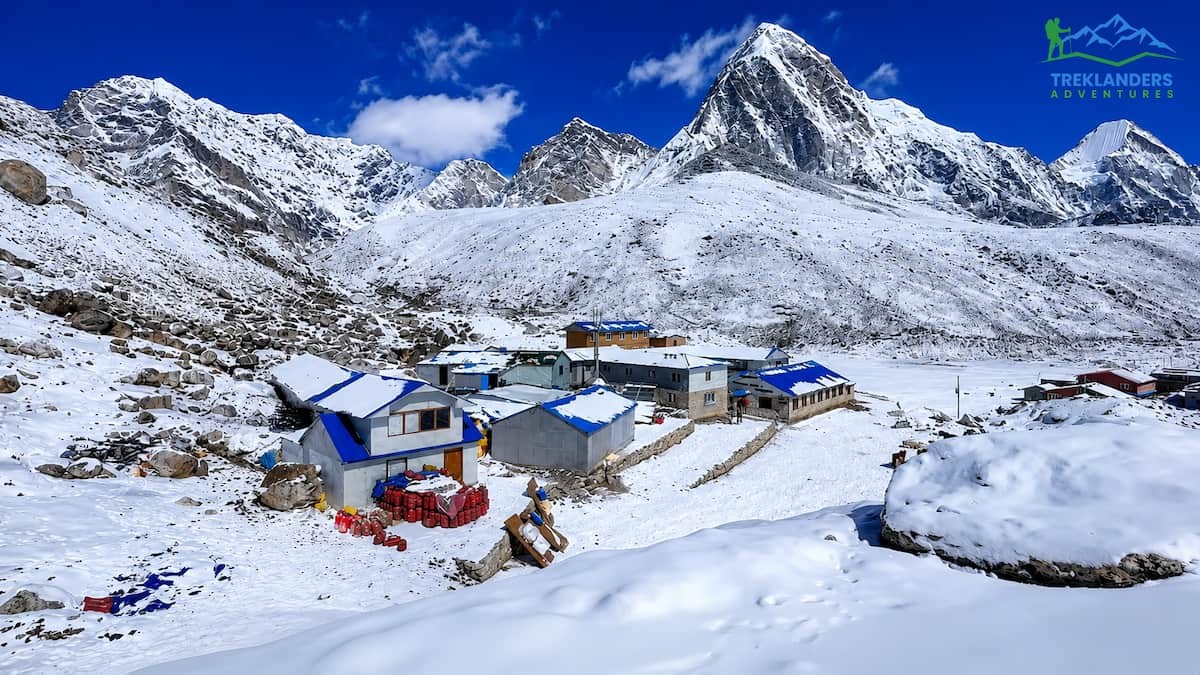
The Khumbu region's weather changes fast, and temperature swings between day and night are dramatic even outside of winter. A clear, sunny afternoon at Dingboche can be a comfortable 15 degrees Celsius, and the same location can drop well below freezing a few hours after sunset. First-time trekkers who check average daytime temperatures before their trip often show up unprepared for how cold the mornings, evenings, and higher elevations actually get once the sun disappears.
Teahouses generally don't have heating in the bedrooms, only in the shared dining area, and usually only in the evening hours when everyone gathers around the stove. Trekkers who pack based on daytime trekking temperatures alone are often cold and uncomfortable at night, which affects sleep quality and, indirectly, how well they acclimatize over the following days.
The weather above 4,000 meters can shift within an hour. Clear skies can give way to snow, wind, or fog with little warning, particularly in the shoulder seasons of March to April and late September to November, which are otherwise the best trekking windows for visibility and generally stable weather overall.
Pack for a wider temperature range than you expect, not just the range you read about in a single blog post before booking. Down jackets rated for sub-zero conditions, thermal base layers, and a genuinely warm pair of insulated gloves are not optional extras, even in months considered peak season. Check the seasonal forecast for your trek dates before you go but treat any single day's forecast as provisional rather than fixed, since mountain weather at this scale is genuinely unpredictable even with modern satellite forecasting available to guides on the ground.
By the time you reach Lobuche and Gorak Shep, nighttime temperatures regularly drop to minus 10 or minus 15 degrees Celsius even in the peak trekking months of October and November. Trekkers who packed based on Kathmandu's mild climate or Namche's relatively comfortable evenings are often caught off guard by how much colder it gets in the final two or three days before Base Camp. Sleep in your warmest layers if a room feels too cold rather than assuming extra blankets alone will be enough and keep tomorrow's clothes inside your sleeping bag overnight, so they aren't freezing cold when you put them on before dawn.

Standard travel insurance policies often exclude trekking above a certain altitude, sometimes as low as 3,000 meters, which is below Namche Bazaar and well below Everest Base Camp itself. First-time trekkers frequently buy a generic travel policy, assume it covers their trip in full, and only discover the gap in coverage after an emergency occurs, when it's far too late to do anything about it.
Helicopter evacuation from the Khumbu region is expensive, often costing several thousand dollars depending on the specific location and weather conditions at the time of the rescue. Without insurance that specifically covers high-altitude trekking and emergency evacuation, you're personally responsible for that entire cost, on top of dealing with a medical emergency far from home and far from familiar hospitals.
Buy a policy that explicitly states coverage up to at least 6,000 meters, since Everest Base Camp itself sits at 5,364 meters and Kala Patthar at 5,545 meters, both above the cutoff of many standard policies. Confirm the policy covers helicopter evacuation specifically, not just general medical treatment, since evacuation and treatment are often listed as separate coverage items with different limits and different trigger conditions.
Carry a printed copy of your insurance policy number and emergency contact details with you on the trek, not just a digital copy on a phone that might run out of battery, lose signal, or get damaged. Share this information with your guide before you start walking, since they're often the person coordinating a rescue if you're unable to communicate clearly yourself in an emergency.
Read the claims process before you leave home, not after you need it. Some insurers require you to call a specific emergency number before a helicopter is dispatched, in order to authorize the cost directly, while others expect you to pay upfront and claim reimbursement afterward. Knowing which applies to your policy in advance saves confusion and delay during an actual emergency, when neither you nor your guide wants to be reading fine print on a phone with one bar of signal.
Physical preparation gets most of the attention, but the mental side of a two-week high-altitude trek catches many first-timers off guard. The days are long, the terrain is often repetitive, the food is limited compared to home, and the isolation from regular internet access and phone signal can be harder than expected for people used to constant connectivity in daily life.
Altitude also affects sleep quality, mood, and mental clarity, even without full-blown altitude sickness setting in. Trekkers who expected a straightforward, scenic walk sometimes find themselves frustrated or discouraged by day six or seven, when the initial excitement wears off and the physical grind of daily walking sets in properly.
Go into the trek expecting discomfort as a normal part of the experience, not a sign that something has gone wrong with your plan. Cold rooms, basic bathroom facilities, limited menu variety at higher elevations, and slow, deliberate pacing are standard parts of trekking in this region, not problems specific to your trip or agency.
Talk to your guide honestly about how you're feeling, both physically and mentally, throughout the trek rather than only when something feels seriously wrong. Guides in the Khumbu region see altitude sickness and mental fatigue constantly and can usually tell the difference between normal tiredness and something that needs attention. Don't treat asking for a slower pace or an extra rest day as a personal failure. It's a normal part of trekking at altitude, and the trekkers who finish comfortably are often the ones who adjusted their pace early rather than pushed through against their guide's advice.
Give yourself permission to have a bad day without deciding if the whole trek is a mistake. A rough night's sleep at Lobuche or a tough climb up to Kala Patthar in the cold doesn't mean you're not cut out for this. It usually just means you're doing exactly what the trek demands and tomorrow tends to feel different once you've descended slightly or rested properly.
Reduced connectivity is worth preparing for mentally as much as practically. Most teahouses now offer paid Wi-Fi or local SIM data, but the connection is often slow and unreliable, particularly above Dingboche. Tell family or work colleagues in advance that you may go a day or two without responding to messages, so their silence on the other end doesn't turn into unnecessary worry, and so you don't feel pressure to chase a signal instead of resting when you have the chance.
Getting It Right the First Time
Most of these mistakes come from the same root cause: treating the Everest Base Camp trek like a standard hiking trip rather than a high-altitude expedition with its own rules and its own margin for error. The trail itself isn't technically difficult in the way a rock climb or a glacier crossing would be. What makes it demanding is the altitude, the remoteness, and the narrow room for error once you're several days' walk from the nearest road and the nearest hospital.
Build a realistic itinerary with proper acclimatization days built in from the start, not added later if things go wrong. Train your body in the months before you go, focusing on the descents as much as the climbs. Pack for the cold you'll actually encounter at 5,000 meters, not the cold you expect based on a single weather chart. Choose an agency and guide based on competence and safety protocols, not just the lowest price on a comparison page. Buy insurance that actually covers what you're doing, at the altitude you're actually going to. And go in with the mindset that discomfort and a slower pace are part of the deal, not signs that your trek has gone wrong somewhere.
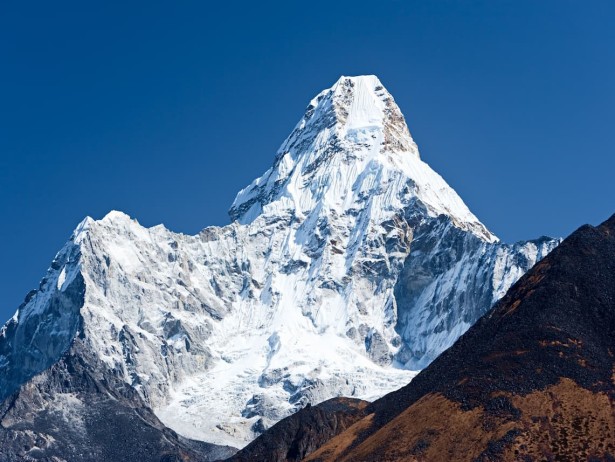
Trekkers who prepare this way don't just avoid the common mistakes covered here. They tend to enjoy the trek considerably more, because they're not fighting exhaustion, cold, or unnecessary risk the entire way to Everest Base Camp and back. The Khumbu region rewards preparation more than any other trekking destination in Nepal, precisely because the margin for improvisation is so much smaller once you're above 4,000 meters. Everest Base Camp is demanding enough on its own terms, and there's no real reason to make it harder than it already has to be.
None of these ten mistakes require special skill to avoid. They require planning ahead, being honest with yourself about your fitness and timeline, and choosing an itinerary and agency built around safety rather than the lowest price or the fastest schedule. Do that, and the trek becomes what it's meant to be: a demanding, memorable walk through some of the most striking mountain scenery on earth, not a test of how much discomfort and risk you can absorb along the way, and not a story you tell later mostly about everything that went wrong instead of everything you actually got to see up there.
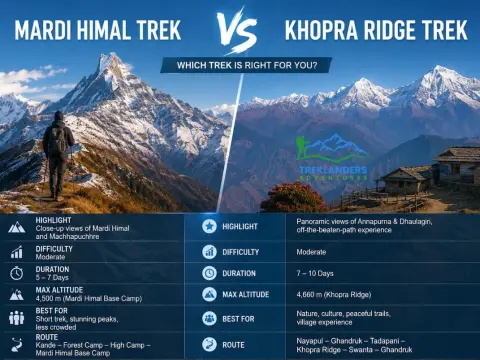
Compare Mardi Himal and Khopra Ridge to choose the best short Annapurna trek for your first Himalayan adventure.
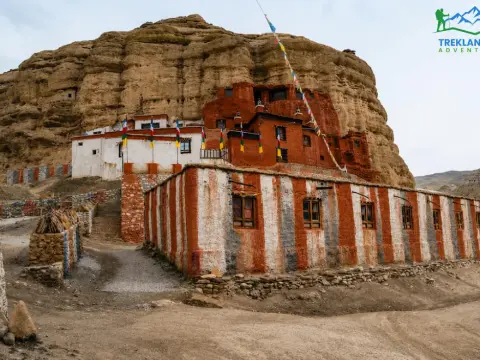
Trek Upper Mustang in winter and discover the weather, trail conditions, permits, and whether the off-season adventure is worth it.
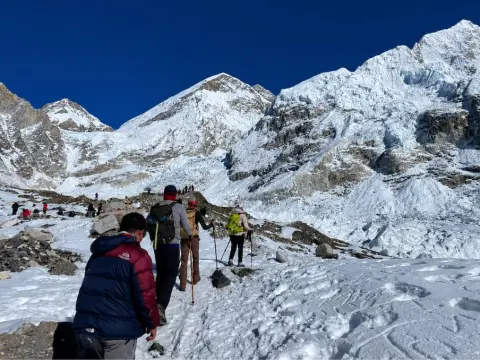
Learn what changes above Namche Bazaar during the Everest Base Camp Trek in winter, from icy trails to stunning Himalayan views.



