Nar Phu Valley vs Upper Mustang Trek: Which Restricted Area Trek in Nepal Is Right for You?
1 Jul 2026
Compare the Nar Phu Valley Trek and Upper Mustang Trek to find the best restricted-area trek in Nepal for your adventure.

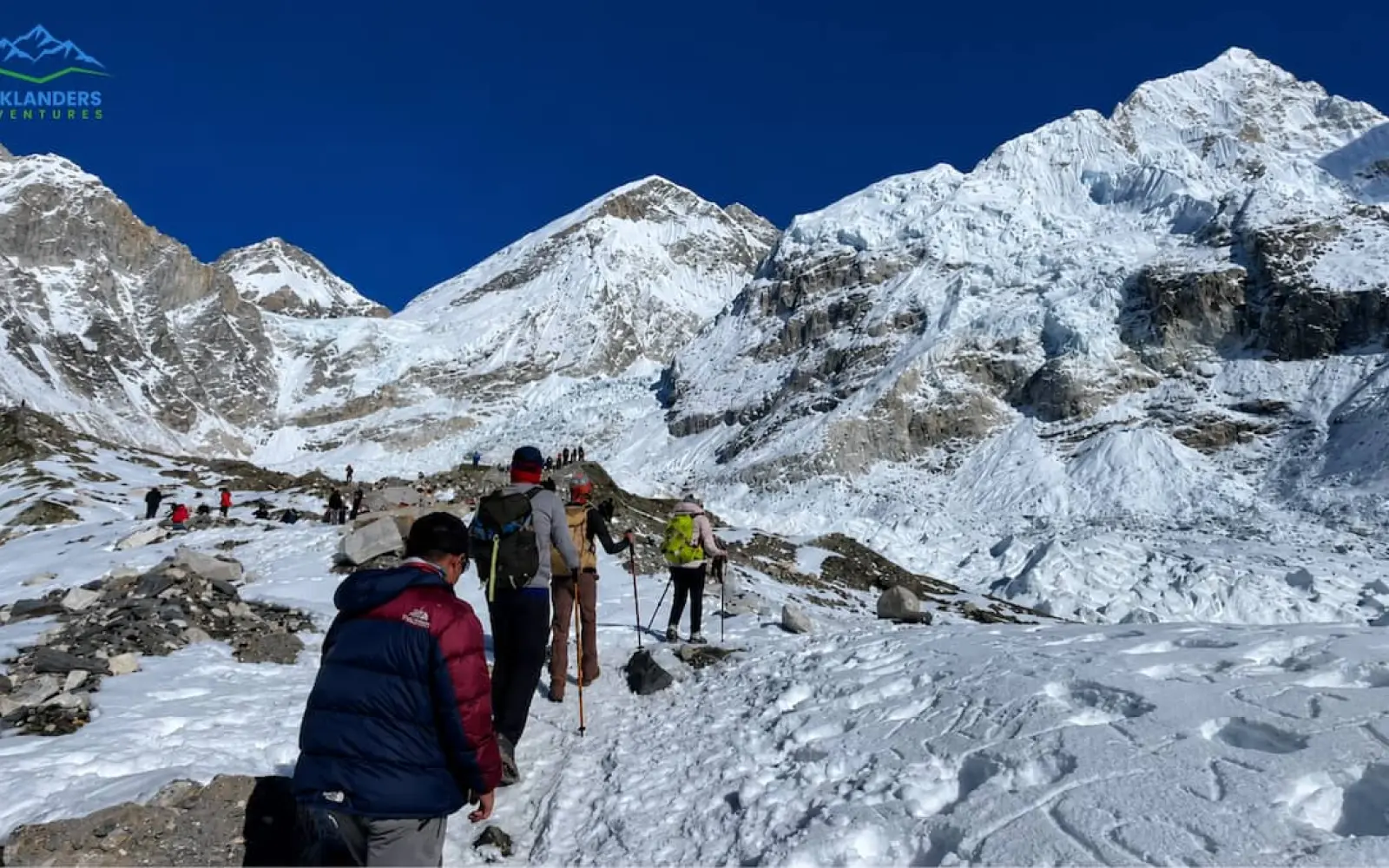
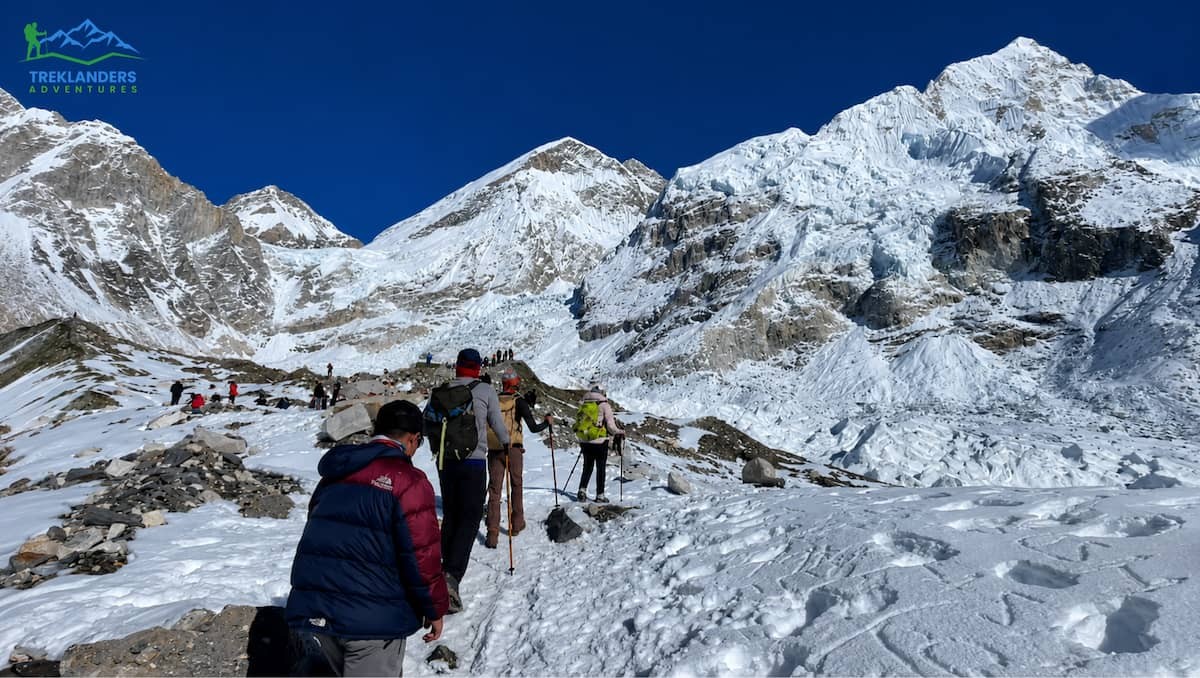
A city for hikers. From December through February, Namche Bazaar, at 3,440m, largely functions like any other lively mountain town, filled with bakers slinging bread for trekkers and stores touting last-minute trekking necessities. Porters and yaks traverse its narrow stone lanes, carrying their burdens, while trekkers of all levels meander, soaking in the alpine air. But as winter descends on the Khumbu, the trek above Namche shifts dramatically.
If you are one of the trekkers thinking about taking on the Everest Base Camp trek in winter, it's a different trek entirely. From its higher altitude perches, winter makes the Everest region - a dramatic panorama of jagged peaks - altogether starker, quieter and more intense. The changes in this remote Himalayan high altitude become apparent as soon as you crest the bowl that houses Namche and begin heading north toward Tengboche, Dingboche, and even higher toward Everest Base Camp itself.
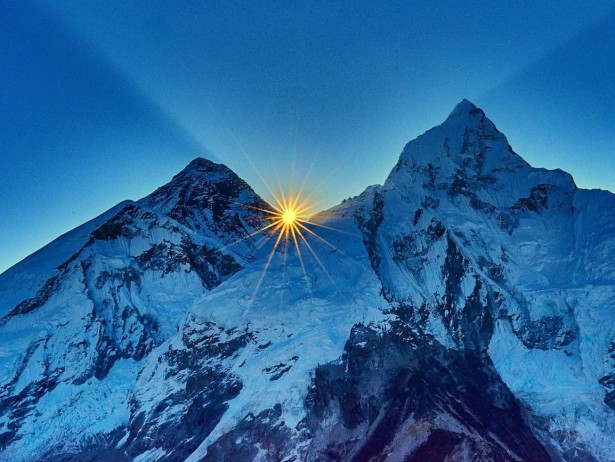
To better understand the differences between winter, fall, and spring treks in the Everest Base Camp region, we have to understand what it is that changes above Namche. The terrain and trail, the weather conditions, and how these factors alter each other is the name of the game. From a cold forest near Tengboche to a windswept plateau above Dingboche, this is what the EBC Trek above Namche is like in the winter months.
What changes above Namche? Not that there’s necessarily anything wrong with the busy spring and autumn trek, especially since winter offers a more tranquil alternative. Whether it’s due to cold weather, the increased chance of snow, or the higher possibility of wind, winter can be challenging in many ways. In order to ensure that your Everest Base Camp Trek experience will be pleasant rather than miserable, it is necessary to understand the modifications that the trek will undergo.
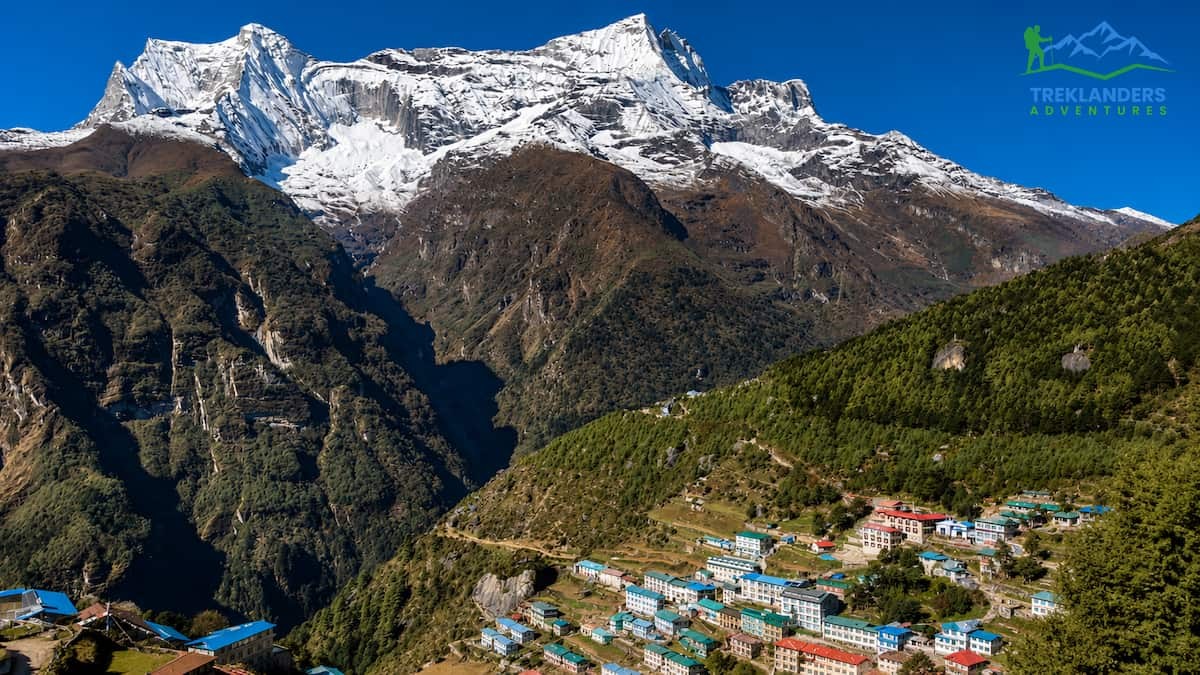
More than a mere resupply post, Namche Bazaar represents a very real climatic divide in the winter months. To the south of Namche, the valley floor remains comparatively sheltered by trees, a lower elevation and a microclimate that allows for fairly mild temperatures during the day, even during the coldest weeks of the year. North of Namche, the trail gradually strips away much of the vegetation and climbs towards a more exposed landscape and open valley floor dominated by the vast walls of the high Himalayas.
This is where the influence of the winter weather truly begins to take hold.
Exposure to the wind noticeably increases after Namche as the trail rises towards Everest View Hotel and the ridgelines that bear the full brunt of high-altitude air currents. Temperatures that felt comfortable in Namche an hour or two earlier might dip by several degrees, particularly once the sun dips behind the ridge in the early afternoon. The same can be said of the facilities; Namche has a well-stocked array of shops and communication services, all of which operate fully through winter, whereas this is often the last place where accommodation facilities can be guaranteed to be open through the entire off-season months. The vast number of trekkers passing through during the trekking seasons naturally keeps accommodation and services in the larger Namche settlements functioning. While above this, some smaller lodges can be shut up for much of the year.
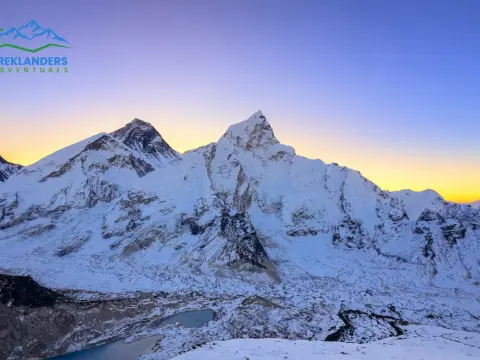
For this reason, Namche is not just a geographic milestone on the EBC trek but also a psychological one – it's the last "normal" and relatively populated settlement on the journey.
While there are many treks in this region, in peak season, the area around Namche is lively and full of people. During winter, the vibe is similar in Namche as there are always some trekkers who remain there. Further up the valley, you'll begin to feel very alone indeed and very much part of a small expedition.
Those trekkers who trek in peak season would consider this to be a very busy village where there are a great number of shops to visit for gear and communication facilities. You would be very silly to skimp on provisions, as your choices will be very much restricted as you continue onwards into the high country. Even the cooks and owners of the lodges make adjustments for the winter season.
You'll notice porters carrying extra blankets and fuel supplies to the lodges up ahead, and many conversations that you may overhear at Namche’s restaurants and bakery concern the conditions on the path above and snow, ice or wind forecasts from villagers at higher altitudes.
The short hike from Namche up to the Everest View Hotel provides a useful acclimatization day, and you’ll be exposed to a taste of the exposure and temperature changes to come as the path continues north.
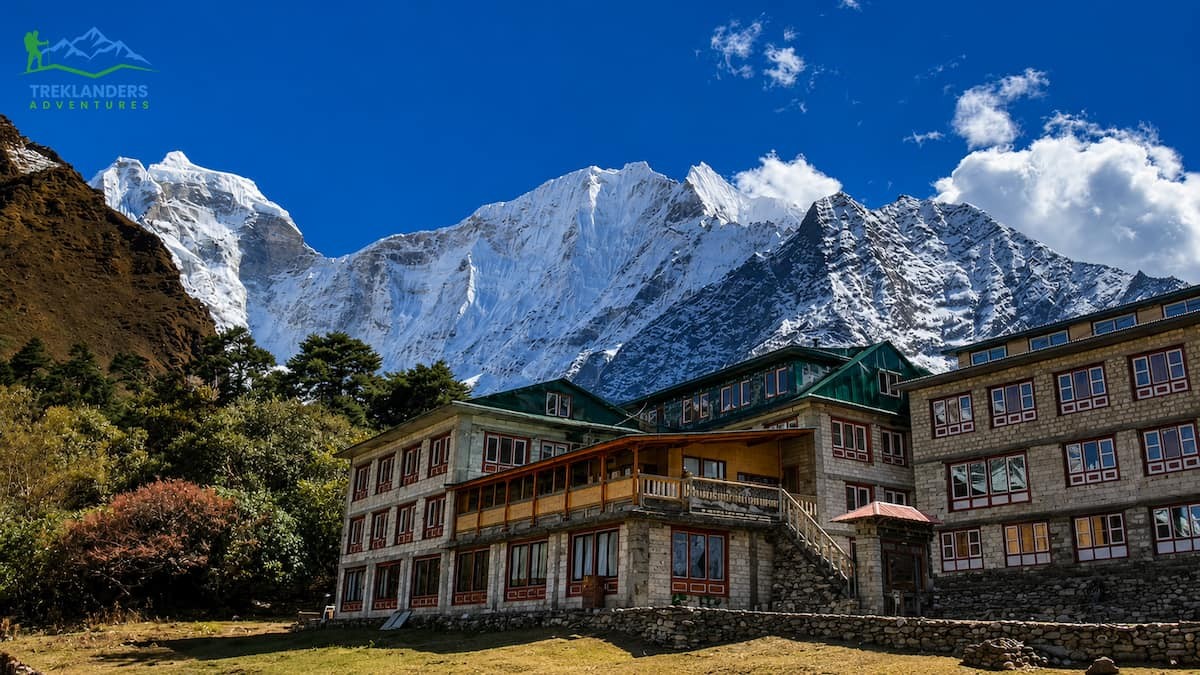
The walk from Namche to Tengboche marks the first big change in the trek when it's done in the winter. Normally full of the songs of birds and fellow trekkers taking photos, the woods before you reach Tengboche Monastery are transformed in December and January. These paths, with the rhododendron and juniper trees usually shrouded in leaves and green, are now often covered in a layer of snow. Depending on the section of the trail, where the sun is a little slower to reach in the shorter winter days, the trail could even be a little icy.
At over 12,000 feet, the biggest monastery in Khumbu is vastly changed. Instead of busy crowds of people snapping photos of the building with the majestic Ama Dablam as a backdrop in the usual tourist seasons, it's now a very different place. Prayer flags snap against the frigid air, and the ever-famous views of Ama Dablam and the neighboring mountains are at their finest on clear winter mornings when the air has a very different humidity to it. Night temperatures here dip well below zero in the peak months of January and December and given its higher altitude of roughly 3,860 meters (12,664 feet), the transition from day to night here happens very quickly, so that afternoon temperatures become properly cold even in the mid to late afternoon.
The monastery means that Tengboche remains open throughout the winter, although a lot of smaller guest houses do not. That means there are not so many options, but it also means a more intimate experience with your hosts, as the owners, often in longer periods of downtime during the winter, tend to have more time to engage and offer local insights. Monks still follow their daily rituals in Tengboche, and those who manage to arrive in the late afternoon will be able to experience their afternoon prayers, complete with horns and low chants. Unlike the busy tourist months where it is easy to get blocked out, this comes across as a much more intimate and peaceful experience with only a handful of people present to witness it. Combine this with the fast-falling light, cold mountain air and chants of prayer, and it's easy to see why many winter trekkers mark this part of the trip as the highlight.
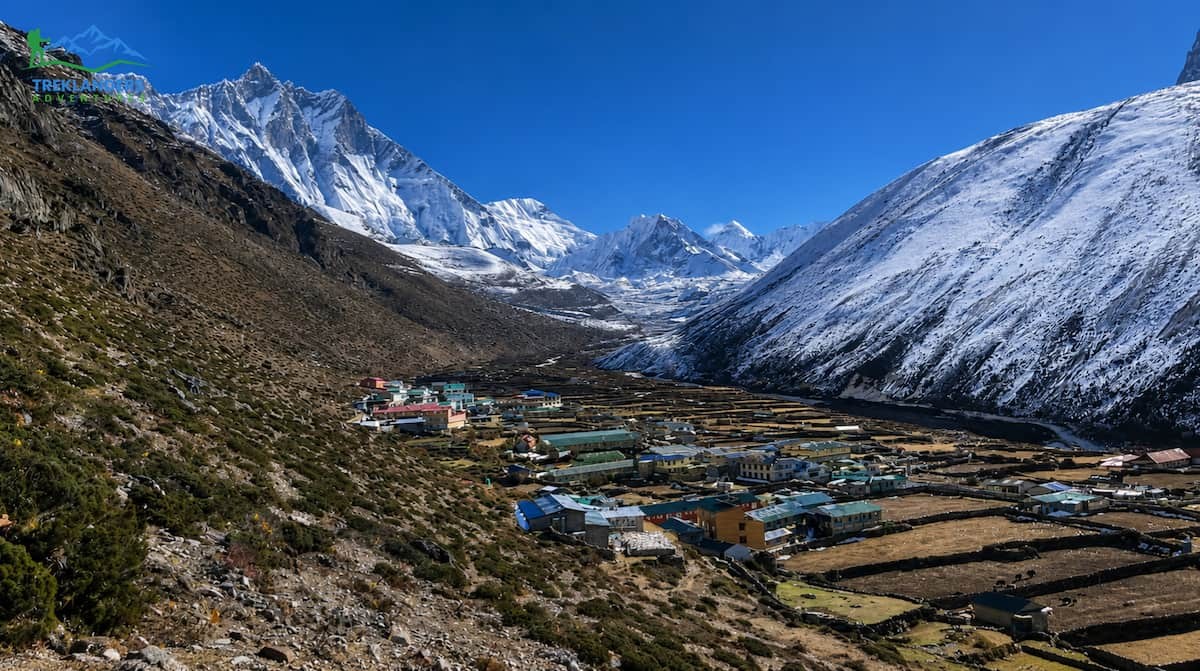
Beyond Tengboche, the trail diverges. One fork heads toward Dingboche, the other toward Pheriche - both excellent stops for acclimatization as you begin the steep ascent to even higher elevations. And at this point in the trek, the winter cold begins to make its presence known.
Dingboche, sitting in an open, exposed valley of about 4,410m, offers very little natural wind protection.
And in December, January, and February, the winds here can become brutal in the late afternoons and evenings - gnawing right through a warm jacket and making it thoroughly uncomfortable to move about outdoors in anything other than serious winter attire. During these winter months (December-February), nighttime temperatures in both Dingboche and Pheriche drop well below freezing - and you may find yourself shivering as you emerge for early-morning tea or coffee. While teahouses in both villages are warmed by the central heating of a yak-dung stove, this only keeps the main dining area warm. As soon as the stove is extinguished for the night, your room inside will quickly mimic the outdoor temperatures - so it's important to have a good sleeping bag!
And yet, one of the surprising joys of mornings in Dingboche and Pheriche during the winter is visibility.
With so much less humidity and a lack of clouds in the atmosphere, peaks like Ama Dablam, Lobuche Peak, and the ridge lines connecting Cholatse and Tawoche can often be seen in crisp, high-contrast detail. I've heard multiple winter trekkers and photographers' comments that one of the most significant advantages of trekking during the colder months is the outstanding clarity of views. Haze and cloud cover, which can block mountain vistas during busy trekking season, are minimized in December and January. You can still do side treks to these locations, even in the winter - with an acclimatization hike to Nangkartshang Peak from Dingboche being the classic example.
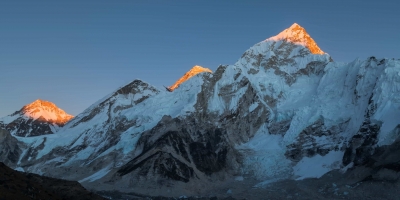
Of course, you will be trekking over snow at the higher elevations, and wind may also be stronger along the ridges, but these excursions remain an important aspect of your altitude adjustment. Just aim to do these side trips after the initial cold of the day, rather than the first thing in the morning. If you prefer to stop at the other settlement of the two, Pheriche, about 3.5 kilometers west of Dingboche, you will find conditions very similar to Dingboche: very cold at night, but crystal clear and crisp during the mornings.
One slight difference in the configuration of the valley will provide marginally better protection from the wind compared to Dingboche.
Pheriche is home to a small medical aid post, run by doctors volunteering seasonally and available to assist with altitude sickness queries, although its hours may be more restricted in winter compared to peak seasons. Whichever stop you choose for your acclimatization in this part of the Himalayas, one thing will certainly remain the same: expect frigid nights followed by utterly spectacular, and remarkably clear, mornings with some of the most memorable mountain photo opportunities on the entire route.
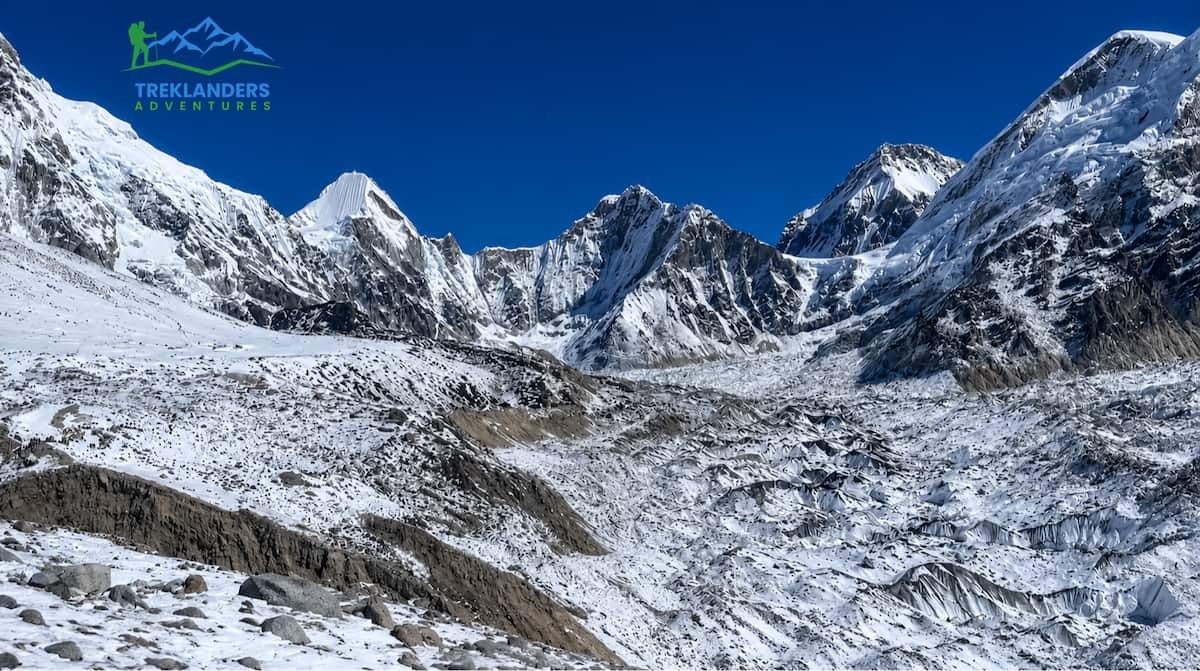
First, let's talk about the path itself. Below Namche, there's not too much snow in the winter months - usually nothing too dramatic beyond a light dusty film. Above Namche, however, particularly beyond Tengboche and heading to Dingboche, Lobuche, and Gorak Shep, snow cover becomes much more probable and persistent.
Winter storms are often quick, short bursts rather than long-lasting events in the Khumbu.
When the snow lands higher up, it can sit for a while in shaded parts of the trail because there's just not much sun up there, and the temps stay well below freezing. Icing up the stone steps, ridge sections and shaded forest trails, all of which demand you pay a lot more attention to your footing than you do the rest of the year. This is also why Trekking poles become a much more critical accessory above Namche in winter, as you can plant your feet more securely on iced and uneven terrain. Many people use microspikes or some kind of grip device - they're not strictly necessary everywhere but can offer peace of mind on some of the icy bits around Dingboche, Lobuche, and as you approach Gorak Shep, since the sun is never quite strong enough even mid-day to thaw the ice formed overnight.
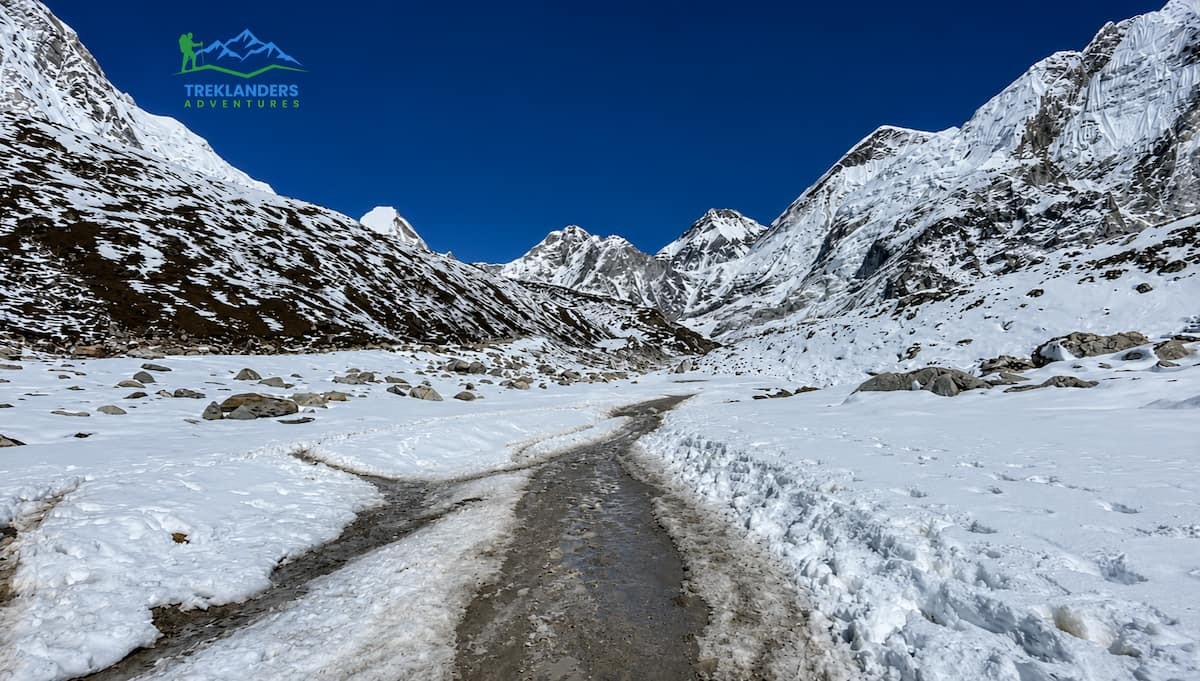
The suspension bridges and river crossings, which are iconic on the lower parts of the Everest Base Camp Trek, aren't really impacted much structurally, but the path leading up to the bridges, especially if you are going down into shady gorges, will be more likely to be icy.
Expect to take more time on these sections than you would in spring or fall. Having said that, all in all, if you're of reasonable fitness, you'll find winter conditions above Namche quite manageable. The Everest Base Camp Trek route itself is not technical, and the snow rarely gets so deep that you'll need anything beyond well-fitting trekking boots that can handle cold and potentially slick conditions.
Your trekking partners will move more slowly and carefully across these sections than in autumn and spring. Having local guidance in winter is a major advantage. These are folks who walk the trail every day and know which parts are likely to be icy before you get there, so they can suggest where to walk, or if you should slow down a bit more.
While trail markers are year-round, there's a bit less traffic, so if there's fresh snow, it can cover the path sometimes, especially between Thukla and the trail into Lobuche.
This is why having an experienced local guide can make a big difference between Dec–Feb. There's less room for error with finding the trail compared to peak season.
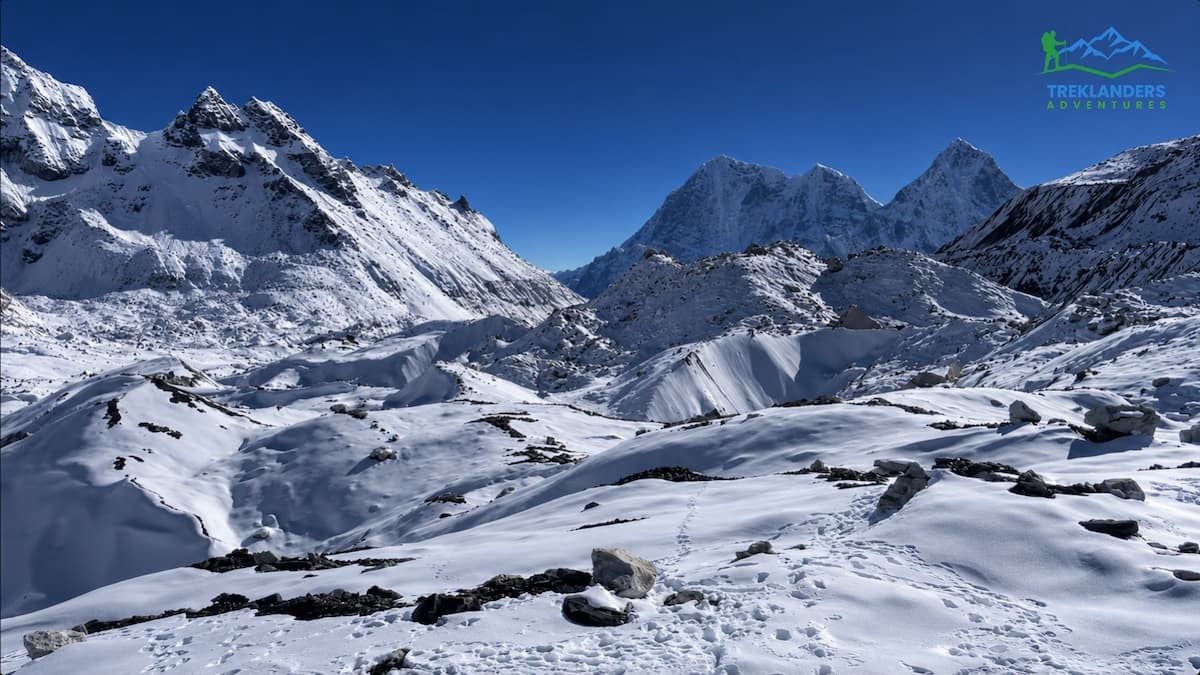
Winter weather above Namche follows a fairly consistent daily pattern that differs meaningfully from other trekking seasons. Mornings typically begin cold but often clear, with skies that have been swept out of moisture and haze overnight. As the sun rises over the eastern ridgelines, temperatures climb relatively quickly during late morning, and midday hours, particularly when hiking in direct sunlight, can feel surprisingly warm even at altitudes above 4,000 meters.
This midday warmth, however, is short-lived. As the sun begins dropping behind the western ridges in early-to-mid afternoon, temperatures fall sharply, sometimes within the space of thirty minutes. This daily temperature swing is far more pronounced above Namche than below it, and it becomes especially noticeable from Dingboche onward. Trekkers frequently describe the sensation of hiking comfortably in a base layer during midday sun, only to need a full down jacket less than an hour later once shadows fall across the trail.
Wind is another defining feature of winter weather at altitude in Khumbu. Above Namche, particularly in exposed sections near Dingboche, Lobuche, and the approach to Everest Base Camp itself, wind speeds can increase significantly during afternoon hours. This wind chill effect means that actual felt temperatures are often considerably lower than what a thermometer alone would suggest, reinforcing the importance of proper layering and wind-resistant outer shells.
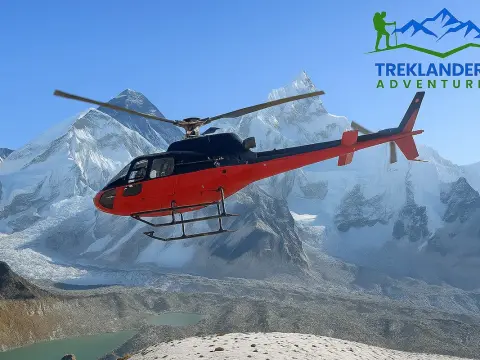
Precipitation in winter is generally lower than during the monsoon-influenced summer months, and the Khumbu experiences relatively dry conditions overall from December through February. When snowfall does occur, it tends to be associated with brief weather systems rather than prolonged storms, and clear weather typically returns within a day or two. This relative stability is one reason experienced trekkers consider winter a viable, if cold, option for reaching Everest Base Camp.
Altitude compounds every one of these weather effects. As trekkers climb from Namche toward Everest Base Camp, each additional few hundred meters of elevation gain intensifies the daily temperature swing, sharpens the wind, and thins the air further, all of which interact with the cold in ways that can catch unprepared trekkers off guard. A windless, sunny morning in Dingboche can give way to a biting, overcast afternoon by the time trekkers reach Lobuche, simply because of the additional elevation and the funneling effect of the narrower valley near the glacier. Understanding this pattern in advance allows trekkers to plan daily start times more effectively, generally favoring an earlier departure to take advantage of calmer morning conditions before wind and cold intensify later in the day.
It is also worth noting that winter weather in Khumbu, while colder, tends to be more predictable day-to-day than the sometimes-unpredictable cloud buildup associated with spring or the frequent afternoon precipitation of the pre-monsoon months. Many experienced trekking guides consider this predictability an underrated advantage of the winter season, since it allows for more confident planning around the summit push to Kala Patthar and the final approach to Everest Base Camp, where clear visibility matters most.
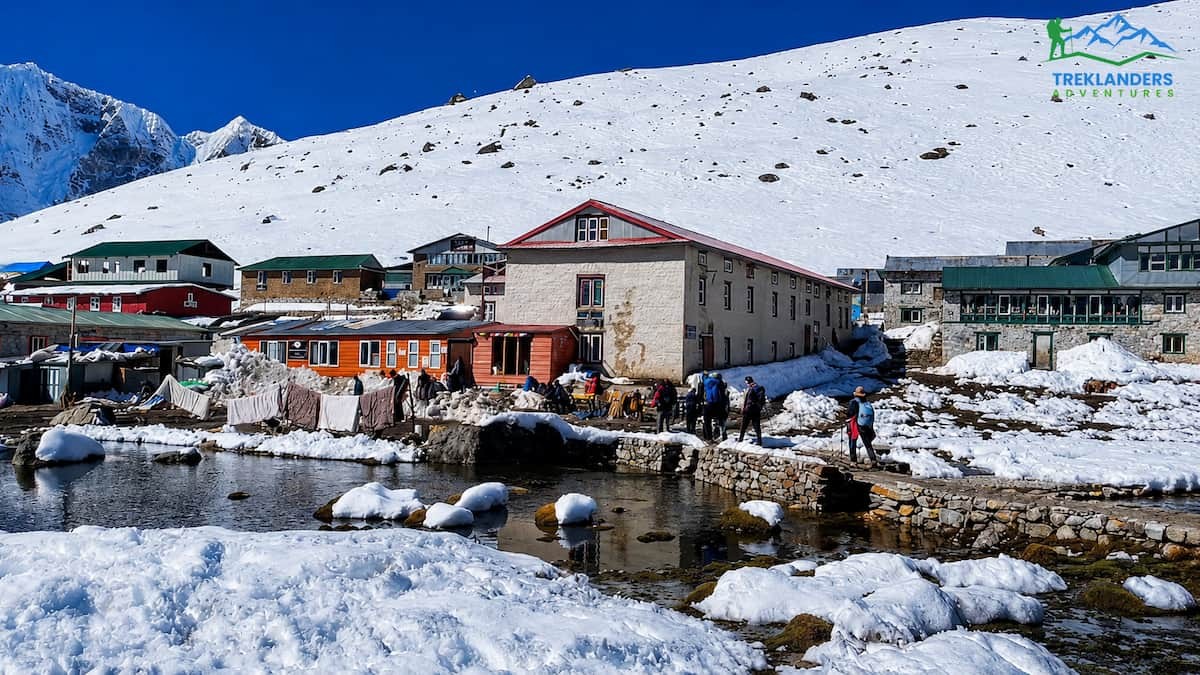
The character of teahouse life changes substantially above Namche during winter months. In peak seasons, dining rooms at lodges in Tengboche, Dingboche, Lobuche, and Gorak Shep are often crowded, loud, and social spaces filled with trekkers from around the world comparing notes on the day's trek. In winter, these same rooms take on a far quieter atmosphere, with smaller groups of trekkers, more personal conversations with lodge owners, and a slower overall pace to each evening.
Teahouses in these higher settlements are often less well staffed or offer a reduced menu to cater for a smaller number of guests. It is generally still possible to find hot meals, beds and essential provisions along the main Everest Base Camp Trek route in January and February, though you shouldn't expect the same variety as is found in a teahouse during the busy autumn months.
The main heating source in the vast majority of high-altitude teahouses remains the traditional dung-fueled stove that heats the communal dining room. In winter, this stove becomes the literal heart of the teahouse, and trekkers cluster around it during the early evening before retiring to chilly bedrooms. While this is true for much of the year, it is much more impactful during winter, where the temperature contrast between the warm dining room and unheated bedroom can be immense.
Exposed water pipes and storage tanks in the higher settlements of Dingboche, Lobuche and Gorak Shep can freeze overnight in the winter months. Teahouse owners are used to dealing with this and commonly move water into heated areas or supply thermoses of hot water for washing or drinking, but this shouldn't be interpreted as poor quality service and is simply a feature of teahouse life in these extreme environments during winter.

An undervalued feature of teahouse life above Namche during winter is the greater availability of beds and the relaxed pace of your day. In low season, you don't need to book beds weeks or even months in advance, and you will find more opportunities to have longer, more in-depth conversations with owners and other trekkers.
In common with many features of teahouse life, electricity and charging above Namche can also be inconsistent during winter. Many of the lodges above Namche rely on solar power to generate electricity, which is much less effective during the shorter daylight hours and more persistent cloud cover of the winter months. Expect to pay for charging facilities and limited access to electricity, so make sure you carry a solar-powered power bank with you or charge devices whenever you're able. Internet access and mobile coverage are generally good through the purchase of SIM cards even at the highest villages but will be less reliable during severe weather in winter, contributing further to a more 'remote' feel in this higher region.
Food remains hearty and calorie-dense, with staples like dal bhat and noodles, and warming drinks of ginger, lemon and honey being as vital in winter for warming up from the outside as they are for providing fuel to keep going. Teahouse owners at altitude are experienced in preparing dishes that help you combat the cold, and you will frequently find trekkers ordering multiple hot drinks in the early evening just to extend their time spent near the stove.
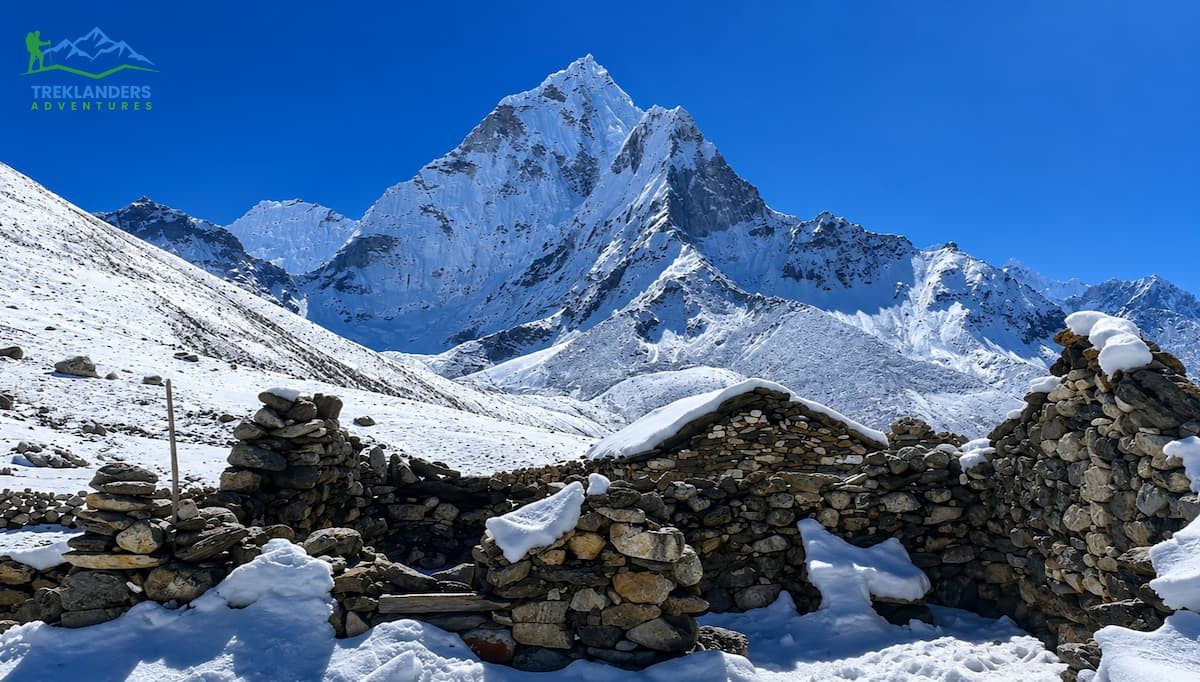
Acclimatization remains just as critical on a winter Everest Base Camp Trek as it does in any other season, and the fundamental principles of gradual altitude gain, rest days, and attentiveness to symptoms of altitude sickness do not change based on the calendar. What does change above Namche in winter is the environment in which acclimatization takes place.
Cold temperatures can sometimes mask or complicate the early symptoms of altitude sickness, since fatigue and reduced appetite, common early warning signs, can also simply be attributed to cold-weather discomfort. This makes it especially important for winter trekkers to pay close attention to headaches, disrupted sleep, and unusual breathlessness, rather than assuming such symptoms are purely weather-related.
The traditional acclimatization stops on the Everest Base Camp Trek, including the extra night in Namche itself and the rest day in Dingboche, remain just as important in winter. However, the activities associated with these rest days may need adjustment. Acclimatization hikes to higher viewpoints, such as the climb above Dingboche or the walk up to the Everest View Hotel near Namche, are still recommended in winter, but trekkers should expect colder, windier conditions on these side excursions and should time them to avoid the coldest parts of the day.
Sleep quality can also be affected by winter conditions above Namche, since unheated rooms and colder overnight temperatures can make restful sleep more difficult even with a quality sleeping bag. This is worth factoring into overall acclimatization planning, as poor sleep can compound the normal challenges of adjusting to altitude. Trekkers who use appropriately rated sleeping bags, generally suited for temperatures well below freezing, tend to report a noticeably better experience adjusting to the altitude changes above Namche during winter months.
Hydration is another factor that deserves extra attention during winter acclimatization. Cold air is naturally drier, and the combination of altitude-induced fluid loss with reduced thirst sensation in cold conditions means trekkers can become dehydrated more easily than they might expect, even without feeling particularly thirsty. Dehydration can worsen the symptoms of altitude sickness and mask the body's normal warning signs, so maintaining a consistent hydration schedule above Namche, rather than relying solely on thirst as a cue, is a practical habit worth adopting throughout the winter trek.
Pacing also deserves reconsideration in winter. The shorter daylight hours of December and January mean trekkers have a narrower window in which to comfortably complete each day's walking distance before the sharp afternoon temperature drop sets in. Starting each day's trek earlier than might be typical in autumn or spring helps ensure arrival at the next lodge while there is still useful daylight and before the coldest part of the afternoon begins, giving the body more time to settle and acclimatize in relative comfort rather than arriving cold, tired, and racing against fading light.
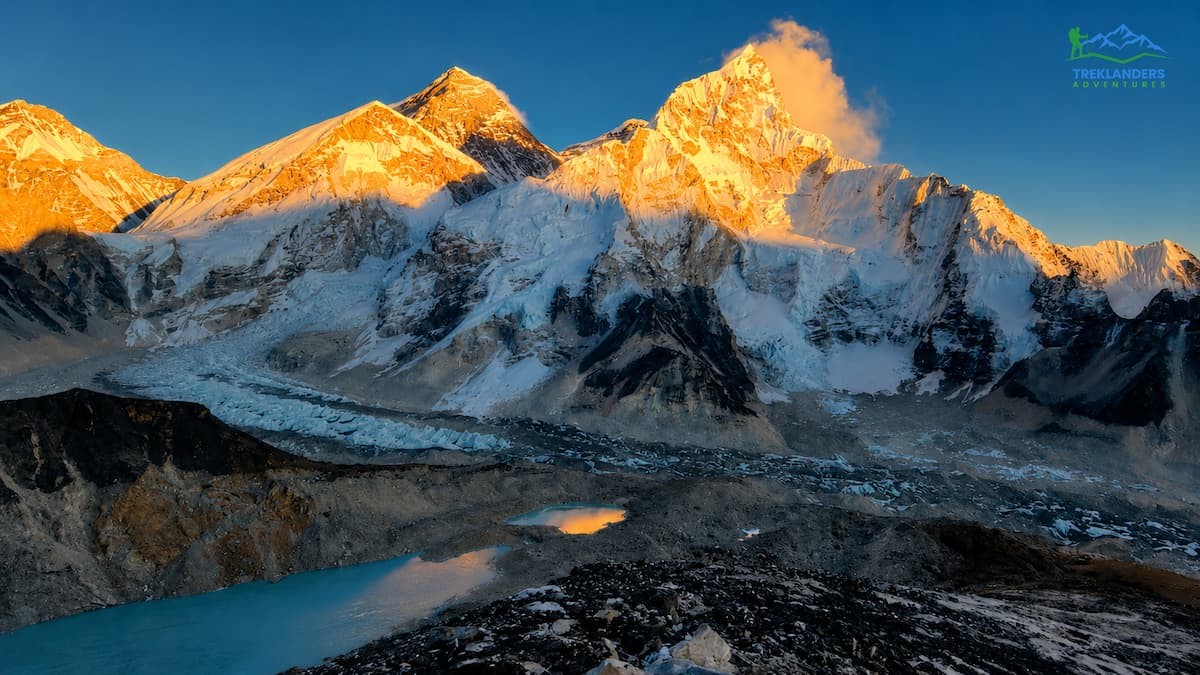
Reaching Everest Base Camp and Kala Patthar remains the central goal of the trek regardless of season, but winter transforms the visual and emotional character of these final destinations. Everest Base Camp itself, located at approximately 5,364 meters, sits empty of the large expedition camps that define it during the spring climbing season. Instead of the colorful tent cities and bustling activity associated with April and May, winter visitors find a stark, silent expanse of glacial moraine framed by the Khumbu Icefall in the distance.
This absence of expedition infrastructure gives Everest Base Camp in winter a very different atmosphere: less a staging ground for mountaineering ambition and more a quiet monument to the scale of the surrounding peaks. Many trekkers who visit during December through February describe this stripped-down version of Base Camp as more powerful precisely because of its emptiness.
Kala Patthar, the popular viewpoint above Gorak Shep offering the classic close-up view of Everest's summit pyramid, presents its own winter-specific challenges and rewards. The pre-dawn climbs to Kala Patthar, already demanding in any season due to elevation and darkness, becomes considerably colder in winter, with temperatures at the summit often falling far below freezing before sunrise. Wind chills at this exposed viewpoint can be severe, making proper winter gear essential for anyone attempting the climb during these months.
The reward for this cold ascent, however, is often an exceptional visibility. Winter's drier atmosphere and reduced cloud cover mean that views from Kala Patthar during December, January, and February are frequently sharper and clearer than during the hazier months of spring or the cloud-prone monsoon season. Photographers in particular favor winter for the clarity it offers of Everest, Nuptse, and the surrounding Himalayan giants, even accounting for the physical discomfort of the cold.
Gorak Shep, the final settlement before Base Camp and the base for the Kala Patthar climb, experiences some of the harshest winter conditions on the entire route. Sitting at roughly 5,164 meters in a barren, wind-exposed basin, this village sees dramatic overnight temperature drops and limited lodge operations compared to peak season. Trekkers typically spend only one night here, using it purely as a staging point before completing the final push to Base Camp and Kala Patthar.
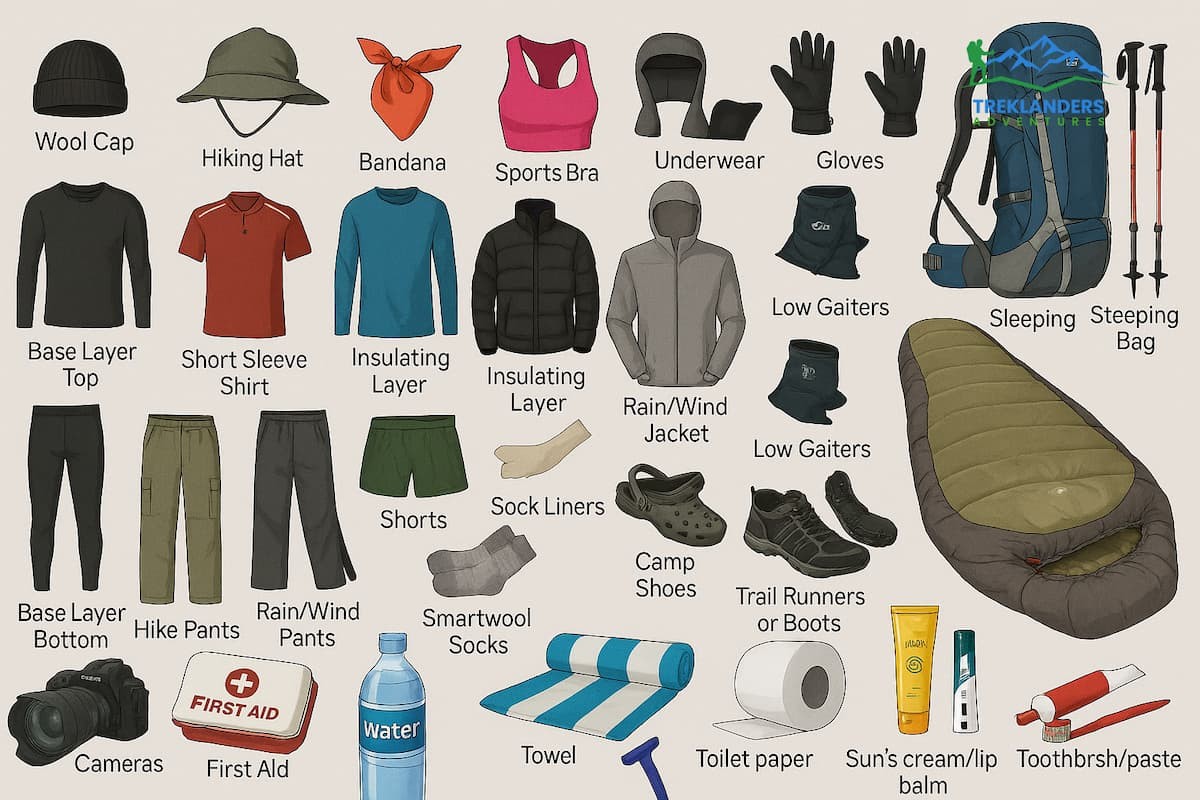
Bearing all of the above in mind, above Namche in winter is where kit choices are worth paying special attention to, since what was sufficient gear for the spring and autumn trek isn't sufficient for the temperature fluctuations and wind chill encountered from December to February.
A good quality down jacket suitable for cold temperatures becomes non-negotiable above Namche in winter, especially when travelling in exposed locations like Dingboche, Lobuche and Gorak Shep. However, layer the most appropriate system, and you'll be fine: use moisture-wicking base layers, then insulated mid layers, topped off with a windproof and, preferably, waterproof outer shell to keep the significant fluctuations between bright midday sun and bitterly cold evenings under control.
A sleeping bag suitable for temperatures well below zero is a must in the higher villages, as teahouse rooms above Namche routinely drop well below freezing indoors in winter months, so a decent sleeping bag liner is a sound additional investment for the extra thermal protection.
On the way above Namche, keep an eye out for a snowy, icy trail. Pack an insulated, waterproof trekking boot that offers excellent ankle support, and several trekkers consider adding microspikes to their bag to have an extra boost of safety on icy sections between Tengboche and Dingboche, as well as on the approach to Gorak Shep.
Both hands and feet are of special concern to ensure that they stay warm. With the significant windchill you'll experience at higher elevations in winter, gloves will be your friend. A warm pair of insulated gloves will be key. Many find that it's helpful to pack a lighter pair of gloves or liner gloves inside them to use while performing tasks that require a bit more dexterity.

Your socks should be warm, sweat wicking, and consider packing at least three pairs so you can wear a fresh pair each day and allow some socks to air out. You still need to worry about the sun at higher altitudes. Even with cold weather in winter, the sun can be incredibly intense at higher altitudes. Even though the air may be chilly, you are closer to the sun at higher altitudes. Combined with reflective snow and clear skies above Namche, this makes sunglasses and sunscreen critical for a winter Everest Base Camp Trek.
These changes above Namche should influence trekking strategies and packing lists for the Everest Base Camp trek from December through February. The overall itinerary for EBC is fixed - that is, gradual altitude gains, acclimatization days and eventually making our way to Base Camp and Kala Patthar remain part of the trekking recipe regardless of the time of year. But beyond Namche, the nature of the trek changes significantly. You'll face harsher, icy conditions, sparse but cozy teahouses, thinner crowds and surprisingly often, crisp, crystal-clear views of the mountains.
However, for anyone looking to spend more time in solitude, focus on photography or a truly wild and visceral experience of the Khumbu high-altitude terrain, trekking during the winter months provides some distinct benefits not found in the peak seasons. These come at the cost of much better winter clothing and realistic expectations about what daily life looks like above Namche in the depths of winter. If you've done your homework, packed adequately, and prepared your mindset accordingly, the winter EBC trek may well become the most unforgettable experience of your journey in the Himalayas.
Every trekker's relationship with the mountains above Namche will differ depending on how they respond to cold, silence, and solitude, but the pattern holds across the route from December through February: fewer crowds, sharper views, colder nights, and a deeper connection to a landscape that, for a few months each year, largely returns to itself. Trekking with an experienced local operator familiar with winter conditions in the Khumbu makes navigating these changes considerably smoother, from selecting the right lodges to timing each day's walk around the season's distinct weather patterns, ensuring that the challenges of winter above Namche remain part of the adventure rather than an obstacle to completing it.
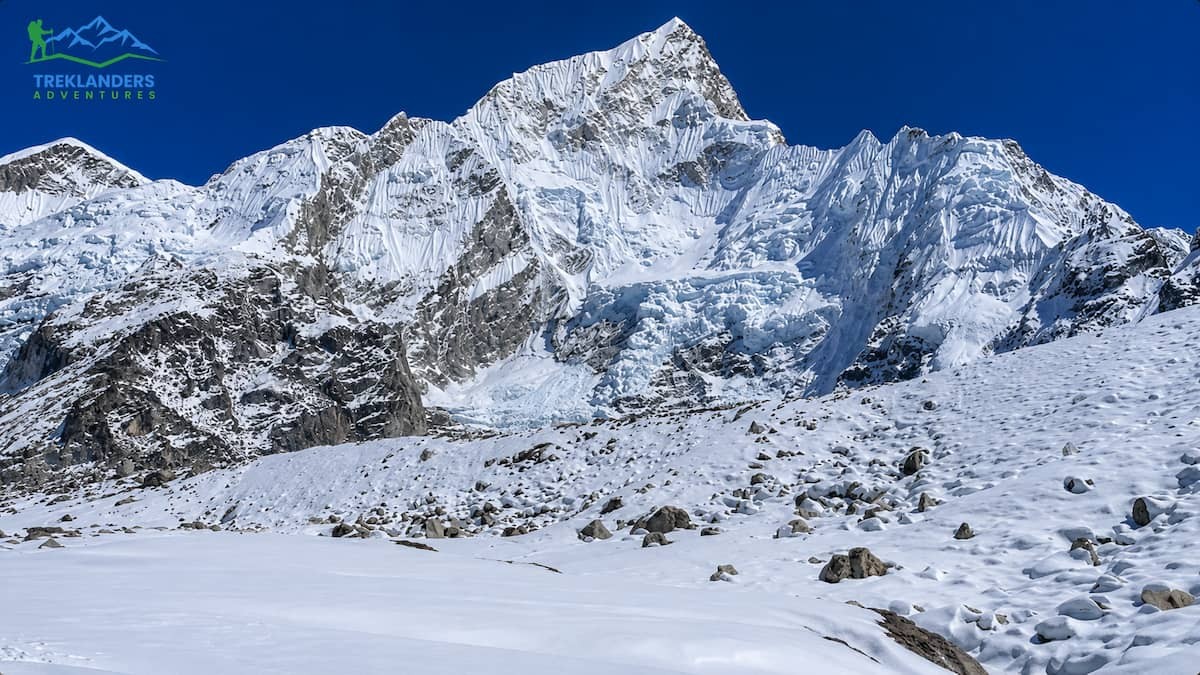
While the Everest Base Camp Trek does not have a different route for December through February, the experience of that route is completely transformed once you get up high beyond Namche Bazaar. What is a lively mountain town becomes a more broken-up, colder, and more exposed Khumbu experience, due to icy trail sections, large differences of daytime versus nighttime temperatures, decreased teahouse services, and generally clearer skies compared to any other time of year.
For those trekkers who are up for a bit of prep, winter comes with a perk that is becoming more and more elusive on this route: space. Less crowded time at the Tengboche Monastery, uninterrupted views from Kala Patthar, and absolute peace at Everest Base Camp that is not brimming with expedition tents; all help make this trek feel more authentic, closer to the way early climbers experienced the valley.
None of this is without its compromises. The nights will be colder. Rooms are unheated.
The trail icy and more difficult.
Fewer hours of daylight. All these things will require higher levels of preparation, better equipment, and a more pragmatic approach. But for the explorer who prefers solitude to noise and serenity to comfort, the benefits of winter above Namche far outweigh these disadvantages.
At the end of the day, the Everest Base Camp Trek in winter is not a less amazing version of the regular route; it is a whole different experience. If you really understand how life above Namche is, from the tranquility of Tengboche, to the bitter wind chill of Dingboche and the after-dark starkness of Gorak Shep, then you won't be leaving the highest forest in the world unsure about your winter holiday, but ready for it. You will find that the winter months of December through February are one of the best months in Everest Base Camp.
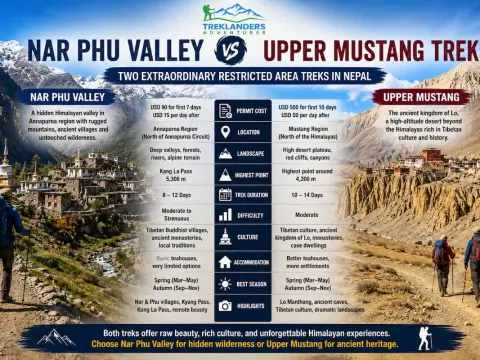
Compare the Nar Phu Valley Trek and Upper Mustang Trek to find the best restricted-area trek in Nepal for your adventure.
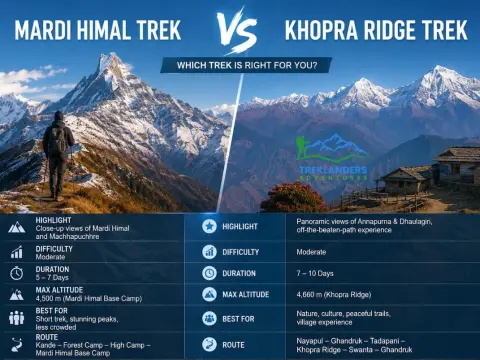
Compare Mardi Himal and Khopra Ridge to choose the best short Annapurna trek for your first Himalayan adventure.
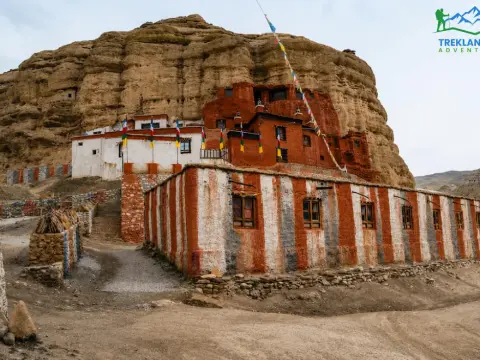
Trek Upper Mustang in winter and discover the weather, trail conditions, permits, and whether the off-season adventure is worth it.



